Category Archives: food

Pausing to reflect

I prepared a new post for today, but with the grotesque events happening in Ukraine, the invasion worsening by the hour as Russia attacks daycare centers and residential housing, it seems so wrong to post it.

For that matter, I feel that over the past couple of years I haven’t seriously acknowledged the effects of Covid on restaurants. When it all began – which now seems long ago – I wrote a post on the effects of the 1918 influenza pandemic on restaurants, noting a number of responses similar to what has happened recently. But since then I haven’t really dealt with the difficulties contemporary restaurants have been having, with staff miseries and shrinkage, shifts to carry out, disappearance of printed menus, mass closings, etc. I hope to come up with some new themes that touch upon historical precedents. For example, there was terrific difficulty in hiring restaurant kitchen and dining room staff during WWII. I could look at how restaurants dealt with that problem.

If you want to read something new today, I recommend some of my “old” posts that still seem to hold up. Since I’ve been doing this since 2008, there are many to choose from. Some have few likes which is because when I started blogging there was no “like” button!

Here are some of my personal favorites:

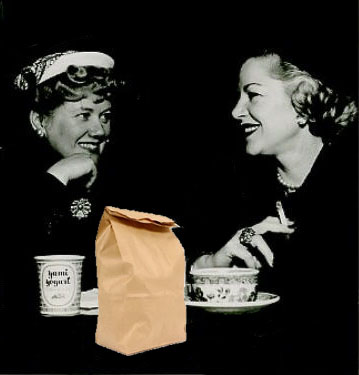
The (partial) triumph of the doggie bag
Once upon a time it was embarrassing to ask for a doggie bag.

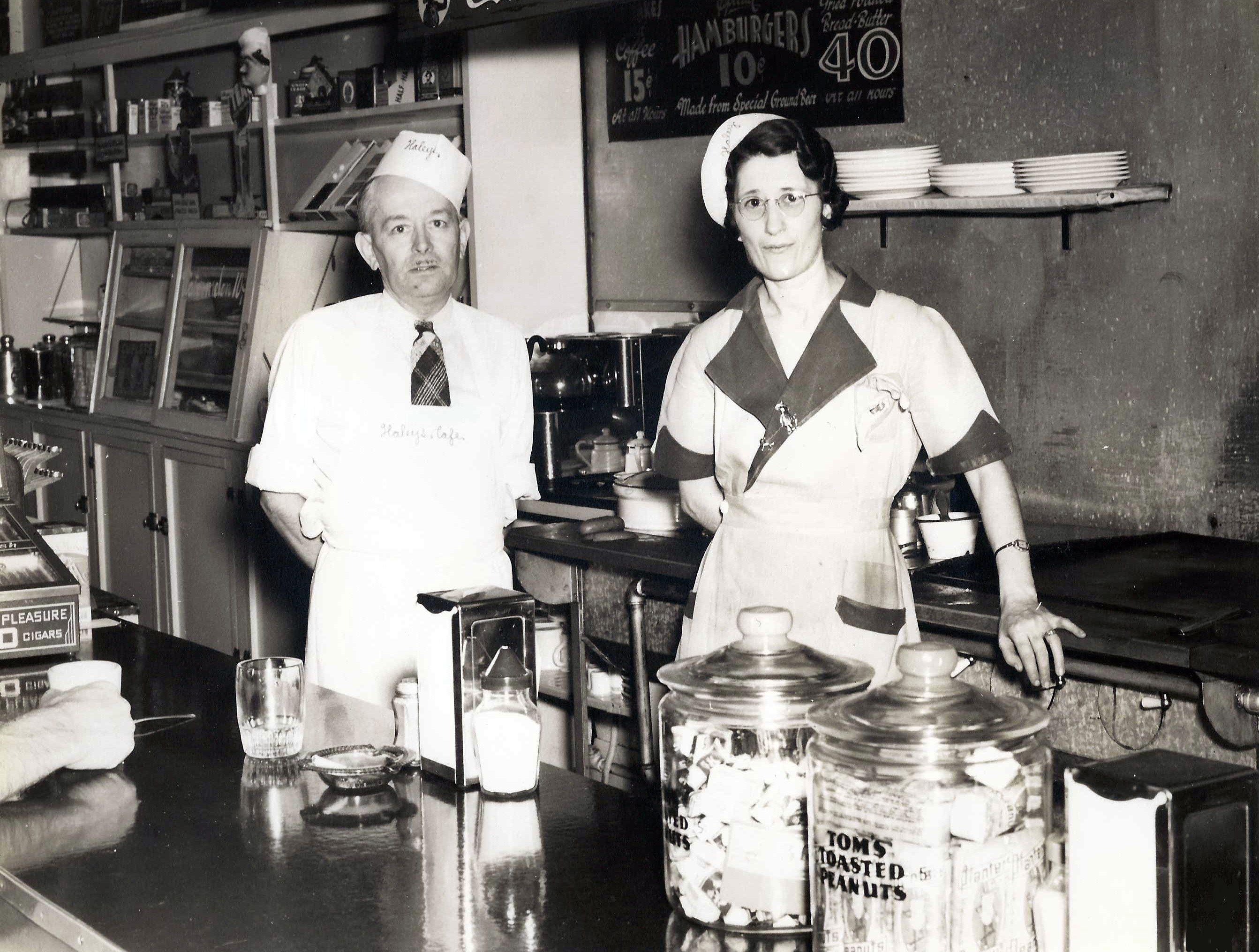
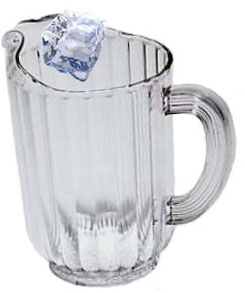
That glass of water
Visitors from other countries are always surprised at getting a glass of water without asking.

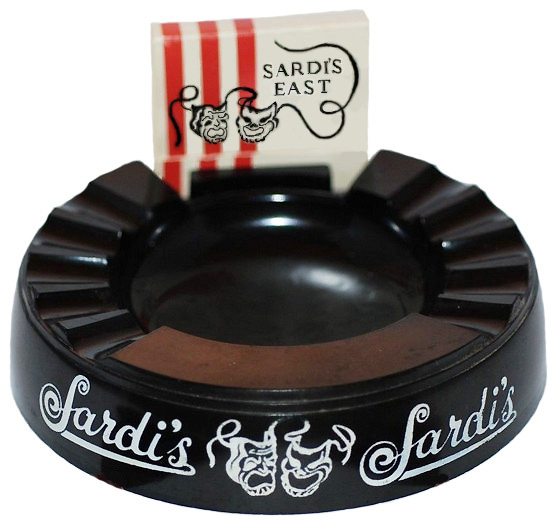
No smoking!
Ending smoking in restaurants was a long struggle.

Deep fried
Where would restaurants be without deep frying?

You want cheese with that?
Everything’s better with cheese, right?

Chocolate on the menu
It all started with cups of hot chocolate.

Basic fare: club sandwiches
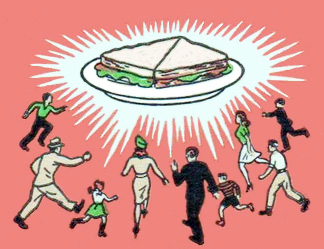
How a mere sandwich became a classic.

Take care,

9 Comments

Filed under blogging, food, restaurant customs

Sugar on the table

Probably most patrons never give sugar a thought when they are visiting cafes and restaurants, but it is a subject that has been somewhat vexing for proprietors and guests over time.

Sugar in restaurants has figured as a health concern, an aesthetic concern, a monetary concern – and just a plain old nuisance.

For decades in the 19th and early 20th centuries, when tables were shared by strangers, a bowl of sugar was put on the table to be used by all. In the average eatery of 1830s Boston, as elsewhere, a table would typically hold a sugar bowl along with salt, butter, and other condiments.

By the late 19th century, the new-style help-yourself lunchrooms had a novel way of grouping condiments together. These were three-tier revolving trays placed in the center of round tables and holding napkins, silverware, sugar and salt, etc. They looked prim and neat – at least before the “quick lunchers” arrived.

But whether the sugar bowl resided on an 1830 oak table or a “modern” nickel-plated “Waldorf” revolving tray in a 1910s lunch room, it posed a sanitation problem.

It doesn’t take much imagination to see how shared sugar bowls could go wrong. The salty journalist who wrote under the name Fanny Fern expressed her disgust vividly in the 1850s when she described a scene at New York’s popular and well-known Taylor’s Saloon. “J-u-l-i-u-s C-ae-s-a-r! look at that white-aproned waiter pulling out his snuff-box and taking a pinch of snuff right over that bowl of white sugar, that will be handed to me in five minutes to sweeten my tea!” she exclaimed.

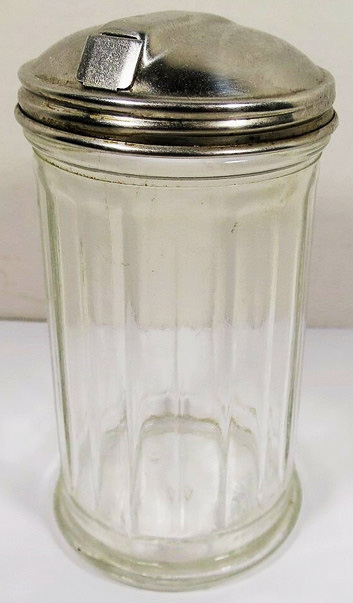
Along the same lines, complaints about sugar bowls that had signs of careless use were common. The cheaper the restaurant, the better the odds that the ugly cracked bowl of sugar would have coffee stains or fly specks. In the 19th and early 20th centuries, sugar bowls usually had no lids and often customers used their own spoons to dip into them. When lump sugar was used, as was often the case, diners would take pieces out of the bowl with their fingers.

Concerns about public health brought changes in the 20th century. In 1912 the U.S. Surgeon General suggested that if people would not use tongs to remove lump sugar from bowls then restaurants should switch to loose sugar, which required a spoon.

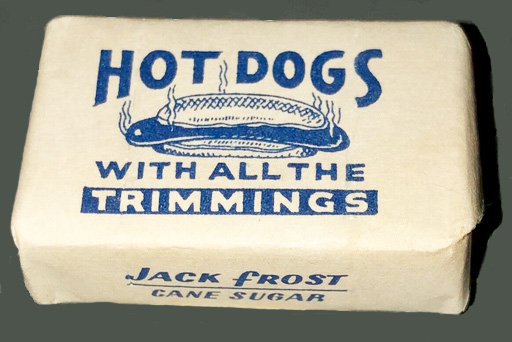
During World War I, many restaurants removed sugar bowls from their tables. Not for sanitary reasons but because they were severely restricted in the amount of sugar they were allotted. Some restaurants served no sugar while others served it only if asked, limiting the amount to one teaspoon per customer. In others, the staff put the sugar in diners’ coffee or served it in small paper packets.

By the end of the war municipal health departments around the country began to order restaurants to use covered sugar bowls, a move probably made more urgent by the nation’s deadly flu epidemic. The postwar years marked several other changes in restaurants’ ways of handling sugar, partly because prices were higher than before. Some introduced wrapped sugar cubes that were often smaller than the lumps of old, while others set out shakers rather than bowls, another method meant to discourage overuse.

Meanwhile, though, tea rooms – and fine restaurants — continued to use sugar bowls, often matching their china patterns, suggesting this was considered more refined and attractive than shakers. During the Depression a tea room consultant advised proprietors who wanted to attract male customers not to use wrapped sugar cubes because “somehow they do not know what to do with that bit of paper.” Likewise, a columnist in 1941 pitied the tired businessman seeking a restaurant meal who couldn’t “dip his spoon into a good old sugar bowl.” Instead he had to fumble with unwrapping a cube and waiting for it to dissolve in his coffee, wasting time and fraying his nerves. Poor guy, who knew?

Another age-old issue with sugar was that when its price went up, customers stole it. No doubt this occurred in the 19th century but it became a focus in news reporting beginning in World War II when sugar was rationed. Waitresses began to notice diners dumping bowls of sugar cubes into their pockets and purses. Some came prepared to steal sugar, bringing along paper bags. It didn’t take long before managers decided not to use lump sugar or discontinued placing any sugar on tables. Some began to furnish saccharin.

Stealing occurred again in 1963 and in the fall of 1974 when sugar prices tripled. The fact that many restaurants were using sugar packets by then actually made stealing easier. This time, many restaurants returned to using loose sugar. A few began to have servers provide sugar only when asked, occasionally going so far as to add a charge on the customers’ checks. [cartoon, 1975]

Things have changed since then. Sugar shakers continue to be associated with diners and lunch counters. But cubes have come up in the world. In the late 1980s a restaurant critic expressed dismay when he went to Justine’s, a restaurant that had long been regarded as one of the finest in Memphis. Among the disappointing details he noticed was the restaurant’s sugar delivery system. “Do people spending hundreds on food and wine really want to use sugar from a paper packet rather than sugar cubes?” he asked.

Today I suspect that the reduced custom of drinking coffee with meals means that restaurants provide far less sugar to customers than they used to.

© Jan Whitaker, 2022

Wishing you a sweet Valentine’s Day!

9 Comments

Filed under food, patrons, restaurant customs, sanitation

Native American restaurants

Although there has been growing interest in exploring native foodways in the past twenty or so years, it seems there’s been little research into the history of Native American restaurants, that is, those serving traditional Indian dishes and/or those run by Indians.

The earliest one with a Native American proprietor that I found was in Coweta, Oklahoma, around 1906. It was run by Frank Oliver, a member of the Muscogee Creek Nation. A very brief newspaper item reported, “There are few Indians in the restaurant business but Mr. Oliver likes to feed ‘em and is prosperous.” It was not unusual for Indian restaurants in the Southwest to serve Mexican dishes, especially in later decades.

That same year another Indian proprietor was running a restaurant in Sapulpa, Oklahoma. His name was given simply as Antoine, born a Mohican in New York state but adopted into the Creek tribe. Sometime later a woman named Elizabeth Sapulpa, probably the wife of the tribe’s chief, also had a restaurant in Sapulpa where she served Sofky (corn soup made of hominy, bits of meat and blue corn dumplings) as well as cornbread made of cornmeal soaked overnight in buttermilk.

Many of the references to Indian restaurants I found did not lead anywhere. For instance, despite much searching, I could not determine if the Santa Fe movie studio, opened in Monrovia CA in 1927, ever established its planned Hopi Indian restaurant. And I’d love to know how the Hollywood actor Don Porter fared with his restaurant. It was to be built in Hollywood in 1951 with an open firepit vented through a hole in the roof. For years he had collected recipes from many tribes and planned to feature buffalo, bear, venison, wild greens, wild rice, and corn – along with cook-it-yourself fish wrapped in leaves and mud. Also, I wondered if the plans reported about a 1970s graduate of a culinary training program in Albuquerque had succeeded. She hoped to establish a restaurant on her reservation serving game such as quail, rabbit, and deer, along with blood pudding and her tribe’s oversized homemade tortillas.

Her endeavor would have been in contrast to many Indian-run restaurants on reservations that featured mainstream American fast food. As Ruben Silverbird would observe in the 1980s, “On the reservation we have restaurants run by Indians, but they sell hot dogs, hamburgers, ham and eggs.” Similarly, at the Tigua reservation’s cultural center in El Paso TX in 1986, a restaurant called Wyngs drew non-Indian tourists and served fajitas, seafood platters, and barbecued ribs.

It has been said that Native Americans don’t have a restaurant culture, but I have the sense that there were many native people who for decades wished there were more Indian restaurants. Especially among Indians living in cities there was a strong desire for gathering places and ways to stay connected to their culture, including foods. In 1968 a Queens resident, an Otoe-Pawnee from Oklahoma, observed, “There’s no place for Indians to gather in New York (City) – no Indian restaurants or anything like that.” Buoyed by the Black Power movement, she and other native women had recently joined together to promote their Indian identities.

In the mid-1960s, a food court representing many different cuisines in a Phoenix shopping mall included “The Hogan,” which was claimed – somewhat unconvincingly – to serve the only authentic Indian food in Arizona outside a reservation. It was run by a Scandinavian proprietor who served corn on the cob impaled on arrows. The second incarnation of an Indian restaurant there was named Tiny Teepee where posole, a hominy and pork stew, was prepared and served by Native Americans.

Also in the 1960s Native Americans began to urge the creation of cultural centers that would honor their heritage. By decade’s end a number of Indian restaurants began to open as part of complexes that included motels and cultural centers with museums and craft demonstrations. The Cherokee Heritage Center opened in Tahlequah, Oklahoma, in 1967 with an associated restaurant, the Restaurant of the Cherokees shown here. Although hamburgers and other common “American” dishes dominated the menu, the restaurant also served traditional Indian food such as shuck bean bread (corn and bean dough, steamed in cornhusks), sorrel, watercress from local streams, poke salad, fried huckleberries, crawdads, and “squaw” bread made with sour milk. In the spring, it hosted wild onion dinners.

Building Indian community took a hit in Baltimore when an Indian restaurant failed to open, despite being fully set up and ready to open its doors. The problem was that the U. S. Labor Department claimed it had been a mistake to permit the grantee to buy restaurant equipment with a 1974 job training grant for an American Indian Study Center. The government removed the equipment, sinking what would have been the only Native American restaurant in the Washington-Baltimore area.

1986 marked the opening of what claimed to be New York City’s first Native American restaurant, Silverbird. Its proprietor, Ruben Silverbird Ortiz, a professional singer and entertainer of Indian/Mexican/white heritage, said it would serve New Mexico food, including “green and red chile, blue corn chips, salsa, all that good stuff.” As was true of most Indian restaurants, the menu accommodated non-Indian patrons with American dishes, but held weekly dinners serving rattlesnake stew. The restaurant employed a diverse crew, with servers and kitchen staff made up of Comanches, Navajos, Blackfeet, Italians, Irish, and Mexicans.

Some Indian restaurants were decorated with Southwestern art or murals of buffaloes and teepees. Silverbird was decorated with Kachina dolls and tables inlaid with sand paintings. However, some, such as Dovecrest [shown at top], gave little visual indication they were Indian.

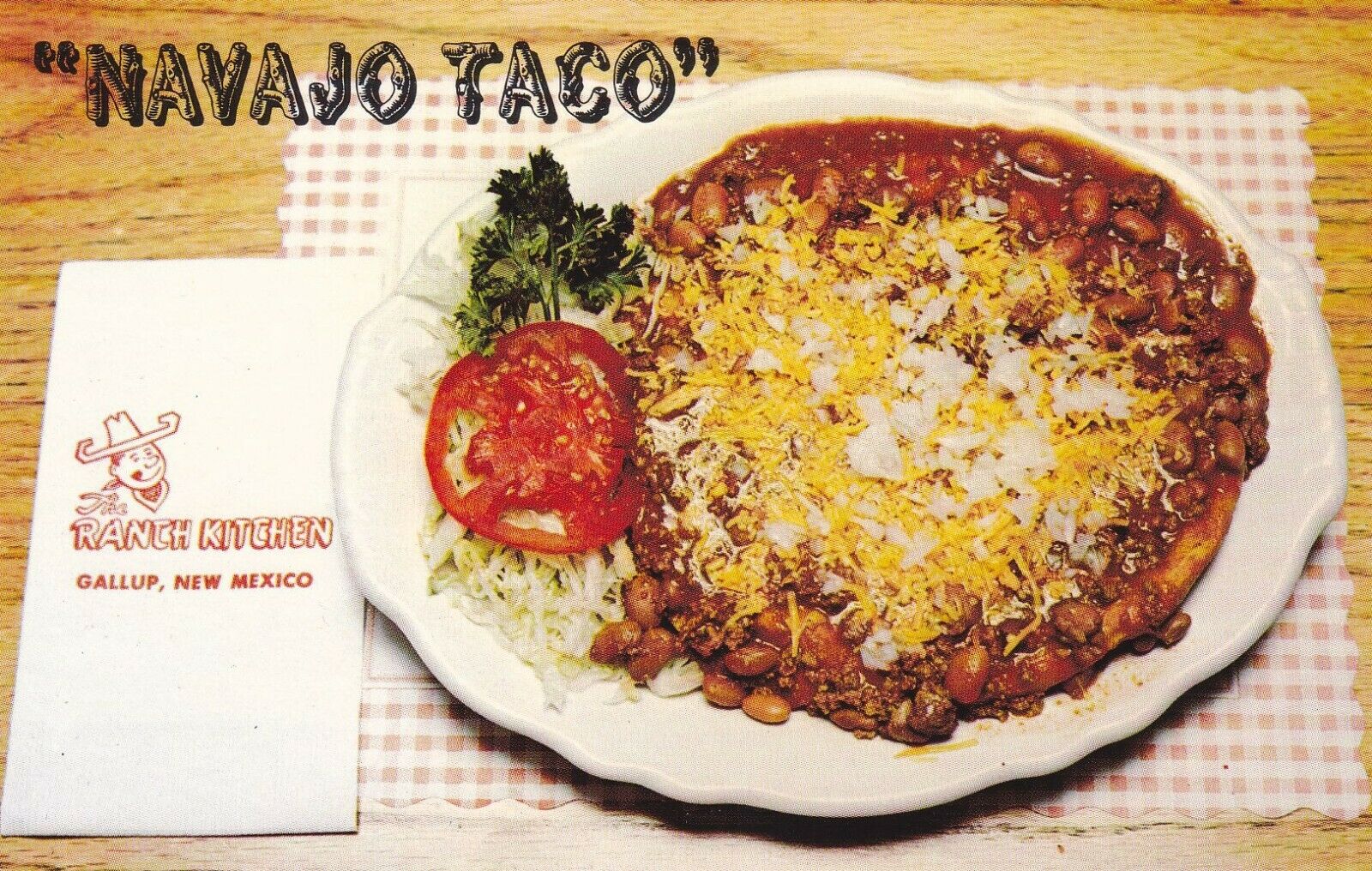
Probably the most celebrated Indian restaurant of the 20th century was Loretta Barrett Oden’s Corn Dance Café in Santa Fe, New Mexico, that ran from 1993 to 2001. Before opening her fine-dining restaurant, Oden, a member of the Citizen Patawatomi Nation, spent three years researching tribal recipes and cooking methods, which can vary considerably according to region. She is a proponent of healthier dishes such as bison, wild-caught salmon, trout, quail, venison, corn, beans, and squash. She has also been a vocal critic of deep-fried fry bread, a popular Indian item in itself as well as serving as the bottom layer of “Navajo tacos,” popular in eating places throughout the Southwest. She has tried to convince Indian-run casinos to offer native dishes, but has found that a hard sell considering the strong attachment of their patrons, both white and Indian, to steak, hamburger, pizza, etc.

The 2000s seem to have raised interest in indigenous chefs and restaurants, but they have continued to face a rocky road in terms of widespread acceptance.

© Jan Whitaker, 2022

16 Comments

January 16, 2022 · 12:47 pm

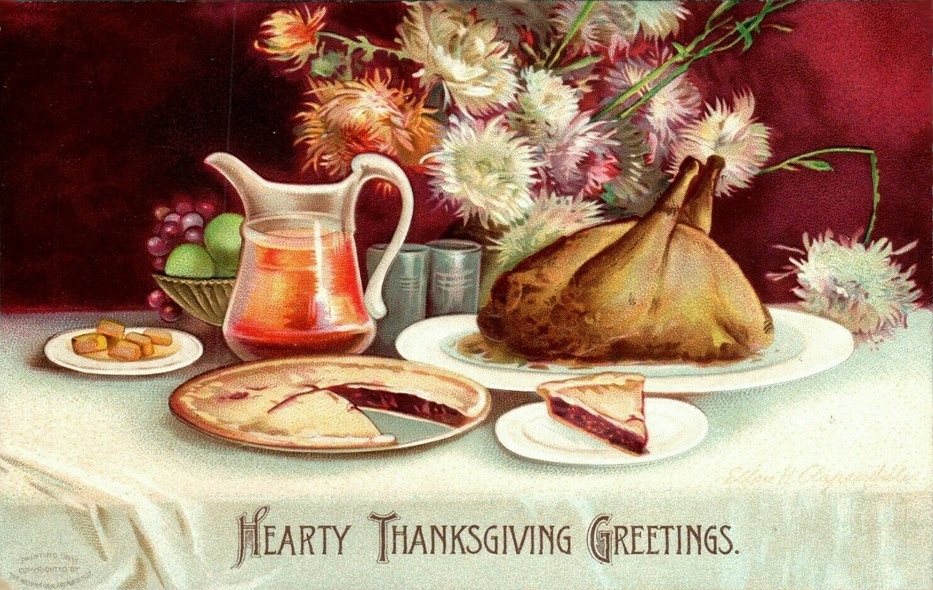
Thanksgiving dinner at a hotel

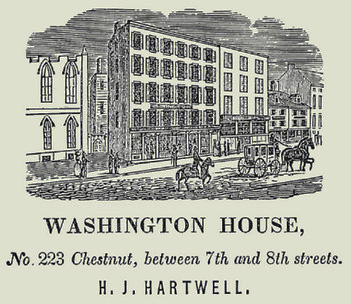
In 1843, when the most enthusiastic celebrators of Thanksgiving were New Englanders, the Sons of New England – who were living in Philadelphia — decided to hold a Thanksgiving dinner at a hotel there. They chose the Washington House, which had recently been taken over by a new manager who emphasized that he provided recherché fare.

What little is known about the dinner gives a peak at a strange, lost holiday custom.

The Sons of New England were men from the two states that were known for their enthusiastic celebrations of Thanksgiving, Connecticut and Massachusetts. As evidence, in 1817 a report circulated about the lavishness of Thanksgiving dinners in Connecticut. The source of the story’s figures listing the quantities of food is a mystery, but it’s impressive how much Wine, Brandy, Gin, Rum, Cider, and Whiskey was said to be consumed. It’s also interesting how the most popular food items mentioned differ from those regarded as traditional today. Geese outnumbered turkeys by a factor of 10, and apple sauce was 12 times more plentiful than cranberry sauce.

The Washington House dinner was held at 4:30 p.m. on November 30, with about 130 in attendance. The Sons were said to be men of prominence in Philadelphia. Obviously they were not poor if they could pay the $3 ticket charge, easily equal to $100 today.

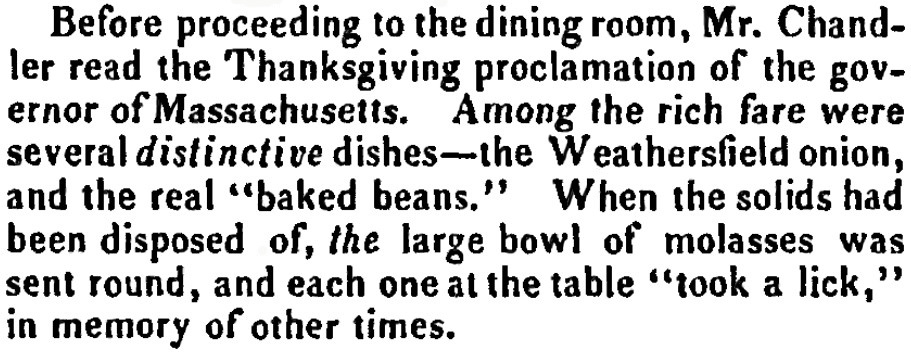
The bill of fare for the 1843 dinner is unfortunately not available, but a newspaper story describing it revealed that it included red onions cultivated in Connecticut and baked beans — then practically the official dish of Boston.

The beans seem like an odd dish for Thanksgiving, but the big surprise was that bowl of molasses passed around so everyone could take a lick! I puzzled over how it might have reminded them of “other times.” What could that mean? Turns out I guessed right — that it brought back memories of childhood. According to accounts from that time, young children would go to wharves with small sticks that they would insert repeatedly into molasses barrels and then lick them off.

Have a wonderful holiday and be thankful that your dinner won’t include sharing a bowl of molasses.

© Jan Whitaker, 2021

4 Comments

Filed under food

Romanian restaurants

Historically, the Romanian* restaurants that received the greatest attention from the press have been those in New York City. In 1901 the population of Romanians in New York City as a whole was estimated to be 24,000, with about 15,000 of those in the Romanian quarter on the Lower East Side. There were said to be 150 restaurants, 200 wine cellars, and 30 coffee houses kept by Romanian Jews. Favorite foods included broiled meats, goose pastrami, cabbage rolls, polenta, and spicy skinless sausage. Seltzer and red wine figured largely as drinks.

Not all Jewish-operated Romanian restaurants followed kosher law, but they were unlikely to have pork on the menu, the principal meat of Romanian cuisine and used in cabbage rolls (sarmale).

Immigration to this country began in the 1880s. It’s likely that the earliest Romanian restaurant in New York was one that began as a wine cellar in 1884 on Hester Street, and soon evolved into an eating place. Romanian immigrants were disproportionately male, working during the day and renting crowded floor space to sleep at night. Restaurants and coffee houses were not only places for meals and refreshment, but also community centers for these men, who were essentially homeless.

In his memoir An American in the Making (1917), Marcus Ravage explained that when he arrived in New York City in 1901, as soon as he made a few cents peddling on the streets he headed for a Romanian restaurant on Allen Street, where he ordered a ten-cent dinner of “chopped eggplant with olive-oil, and a bit of pot-roast with mashed potato and gravy.” Ravage expressed the difficulty he had in accepting American food and eating habits. When he went to college in Missouri in 1905, he reported that everything tasted “flat” to him, and that he “missed the pickles and the fragrant soups and the highly seasoned fried things and the rich pastries made with sweet cheese” he grew up with.

A Romanian dish from an East Side restaurant described in 1905 was a “hot and very piquant” round steak with peppers. The steak was cut into 3-inch-wide strips, slashed with a knife and marinaded in lemon juice and oil before being pan fried. Small red peppers were fried with it. Each diner took a pepper, opened it, and sprinkled the seeds on the meat.

According to author Konrad Bercovici in Around the World in New York (1924), many of New York City’s Romanian restaurants were run by Jews, but often the proprietors were Greeks, Hungarians, or Germans, as was the case in Romania’s capital, Bucharest. Over time, it seems as though the fare served in these restaurants merged with what was becoming known as Jewish cuisine rather than remaining strictly Romanian. (Of course Romanian cuisine itself strongly reflected a blend of traditions.)

Some of New York’s Romanian restaurants developed into night clubs, with a grab-bag of acts bordering on vaudeville. Joseph Moskowitz was a world-famous cymbalom player, who began his restaurant career in 1913 with a wine cellar on Rivington street. Later he had restaurants with music and dancing on Houston, and then on 2nd Avenue in 1938 at Moskowitz & Lupowitz where dinners began at 85 cents. He sold his share in that restaurant a short time later and moved to Akron OH, where he often played at Gruhler’s Romany Restaurant.

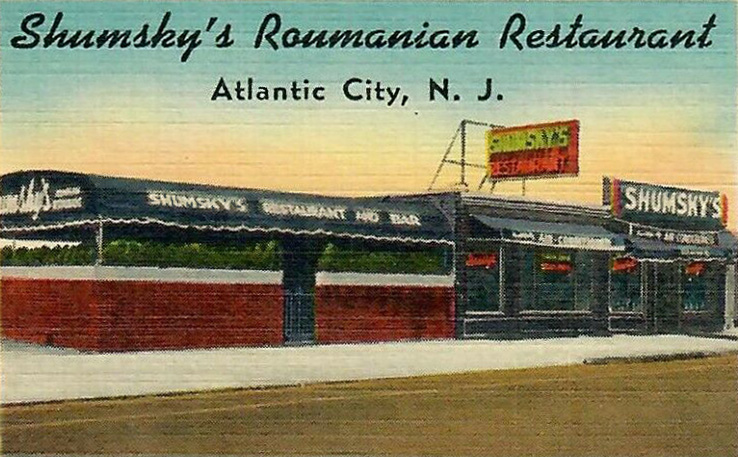
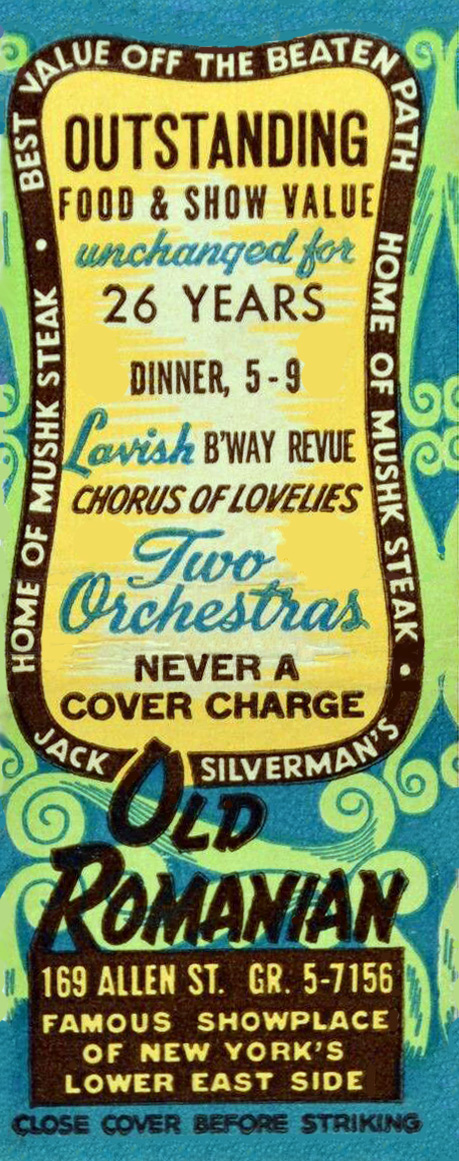
Other popular East coast night spots included Old Roumanian on Allen Street in New York and Shumsky’s Roumanian Restaurant and Bar in Atlantic City, established 1925, which advertised “New Kishka (sausage) Room” and “Dinner ‘Muscat’ Music” in 1952. At Sammy’s, on NY’s Chrystie street, which opened in 1975 and closed quite recently, entertainment was mainly in the form of extras placed on the table. They included a pitcher of chicken fat, fizz-your-own-seltzer, and for dessert a bottle of Fox’s U-Bet chocolate syrup, milk and two glasses for making an egg cream.

A bohemian version of a Romanian Restaurant was operated by Romany Marie in Greenwich Village. Sculptor Isamu Noguchi characterized it as “a sort of a transfer of the Paris café life to New York.” It’s likely this was true to some degree of many Romanian eating places which tended to exude a sense of good cheer and camaraderie all their own. [above: 1924 advertisement]

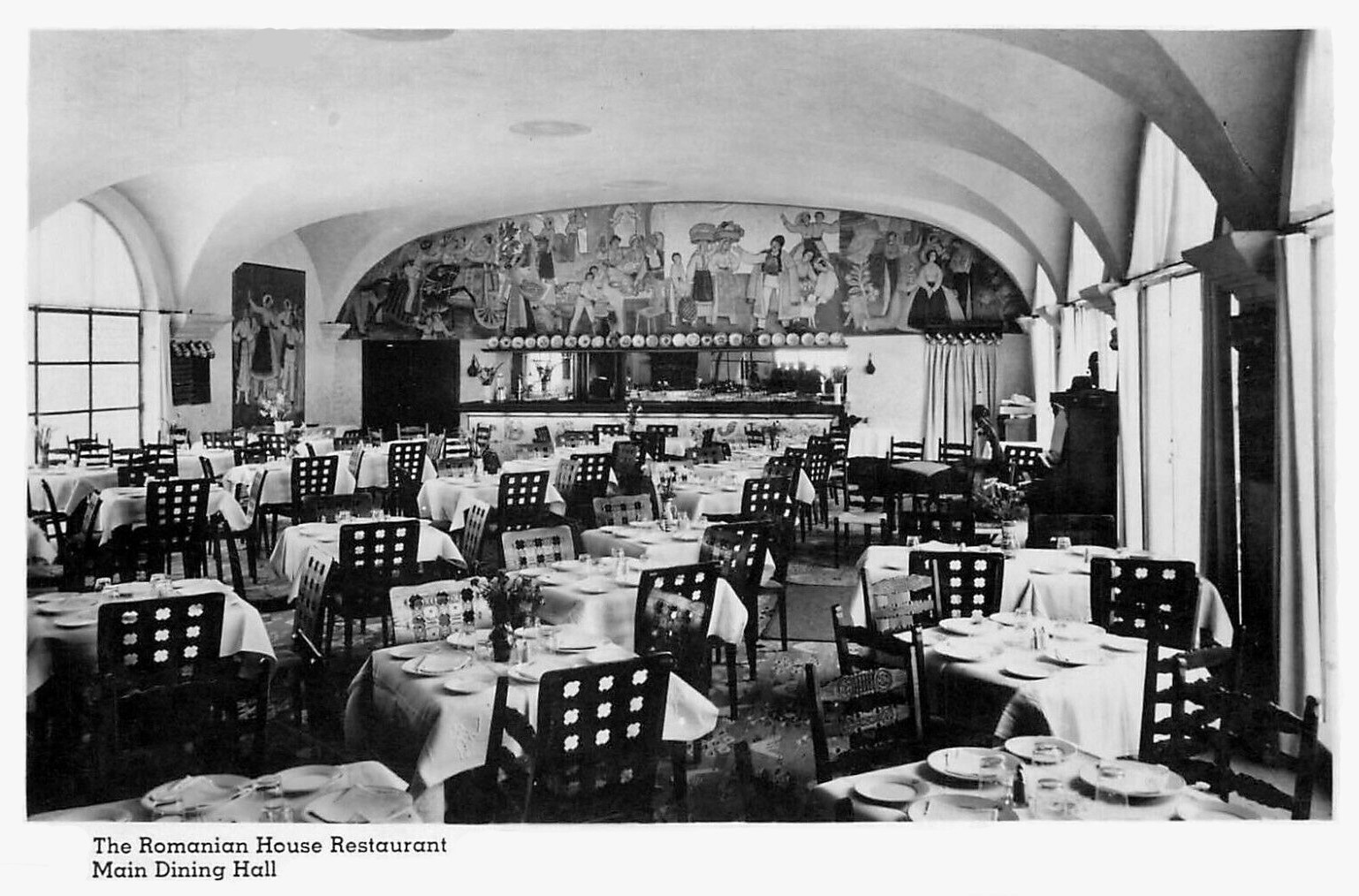
Many Romanian restaurants had prices in the reasonable range, with full dinners running from $1.00 to $1.25, but that was far from the case for the elegant restaurant in the Romanian House at the 1939 NY World’s Fair [shown above]. There the menu was in French, fresh caviar was $2.50, and a dinner was priced at $3.50, minus wine.

Outside of New York – in the late 19th and early 20th centuries before many Romanians dispersed into the larger population – there were Romanian colonies in other cities, both in the East and in the upper Midwest. Some were composed of Romanian Jews, but others, perhaps most, were communities whose members belonged to Catholic and Orthodox religions. Immigration to the U.S., almost nil from 1920 until the 1940s, resumed after World War II when the Soviets took over and continued through the 20th century and into the present.

It becomes harder to track Romanian restaurants in the later 20th century since they became less inclined to use Romanian as part of their names. But they certainly existed in Trenton, Chicago, Detroit, Cleveland, Miami, Los Angeles, and many other cities. One reason they might not have been clearly identified as Romanian was expressed in 1990 by Felicia Zanescu, proprietor of Mignon European Restaurant in Los Angeles. When asked why she called it European rather than Romanian, she replied, “Who ever heard of Romania?” Nonetheless the menu was convincingly Romanian with its carp roe dip, eggplant paté, dill-accented white bean broth, fried cheese, sausages, cabbage rolls, etc.

© Jan Whitaker, 2021

* Before 1975 Romania was usually spelled Roumania or Rumania.

13 Comments

Filed under atmosphere, ethnic restaurants, food, kosher, menus, night clubs

Fish & chips & alligator steaks

The menu shown here caught my eye as I was browsing the internet. Of course, I wanted to know more about it. The first thing I discovered was that it is available as a reproduction.

Evidently the Trebor Dinner was a specialty menu for complete dinners of multiple courses. Three dollars was a steep price for the Depression when this menu was introduced, at least double what a comparable meal would have cost in a moderately-priced good restaurant then.

The illustrated menu shows 14 entrees. But the restaurant almost certainly did not have all the exotic items available at all times. Another fish & chips, inc. menu from 1937, for example, offered one appetizer, one soup, and only four entrees.

The menu could date any time from the opening of the restaurant in 1936 into the 1940s. Its clever design may have been due to owner Bob Winter’s background in advertising. Why the menu is named “Trebor Dinner” is a mystery. It’s possible that Trebor is a play on the owner’s name Robert.

Fish & chips, inc. was conveniently located in the Loop, across the street from the central Chicago library, now the Chicago Cultural Center. It was a handy location for a 1943 dinner of the literary members of the Boswell club, admirers of Doctor Samuel Johnson. In their honor the restaurant posted one of Johnson’s quotations over their table in which he criticized French menus, requesting “thy knaves to bring me a dish of hog’s pudding, a slice or two from the upper cut of a well roasted sirloin, and two apple dumplings.”

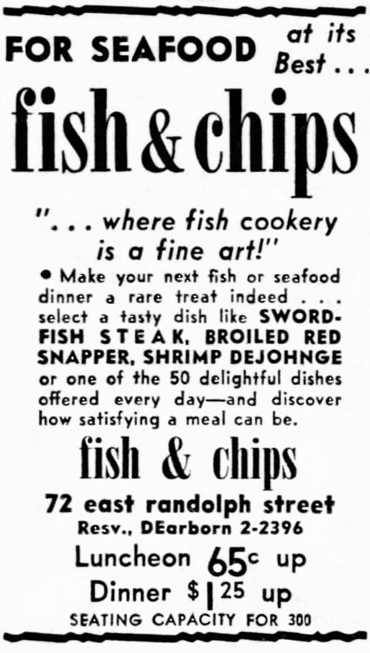
It was a popular restaurant, said to be especially well liked by male patrons. In 1944, during World War II, lines formed at the door. The following year it was enlarged to seat 300. [1949 advertisement shown]

With no meat on the menu, the restaurant would have had the advantage of escaping wartime food restrictions and shortages.

Advertising that it had 50 varieties of fish on hand daily, a lunch or dinner could include sunfish, crappies, smelts, cod, brook trout, sea bass, shrimp, and lobster among many others. The restaurant advertised heavily during the Lenten season.

Bob Winter died in 1953 and the entire contents of the restaurant were auctioned, including groceries.

© Jan Whitaker, 2021

16 Comments

Filed under alternative restaurants, food, menus, Offbeat places, patrons, popular restaurants

Appetizer: words, concepts, contents

Appetizers became a prelude to a meal when many Americans suffered digestive problems in the 18th and 19th centuries. The idea was that appetizers were various items of fare that would help stimulate an appetite in those who were out of sorts. They could be foods, medicinal tonics, or alcoholic drinks.

Due to the strong influence of English customs in early America, the notion of taking something before a meal as a digestive stimulant more often than not meant an alcoholic drink rather than food. So the English term most often used – whets – referred primarily (though not exclusively) to drinks before dinner. The French equivalent of whets would be aperitifs.

As a term, however, “whets” did not appear on printed menus as far as I’ve discovered.

Drinks that usually served as whets/appetizers/aperitifs included rum, brandy, sherry, vermouth, champagne, and Dubonnet. In the 20th century especially, cocktails became a favorite pre-dinner drink.

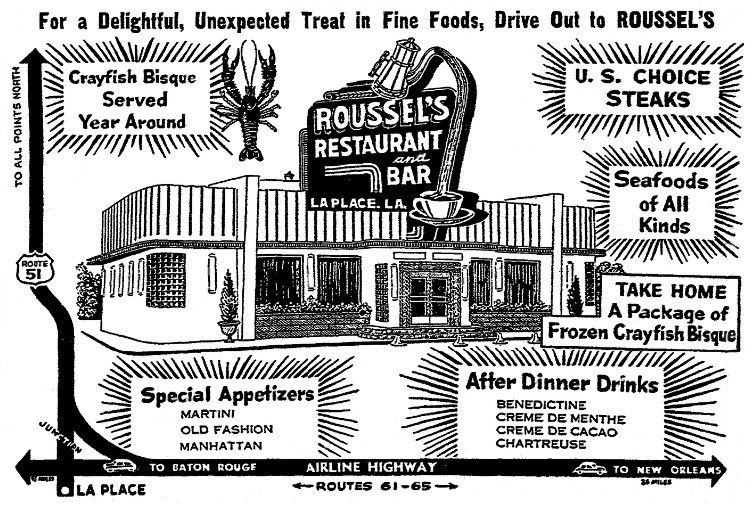
While many diners began their restaurant meals with a cocktail, the drink itself was rarely referred to as an appetizer or whet after the 19th century. So I was quite surprised to find a Louisiana roadhouse restaurant listing Martinis, Old Fashion[ed]s, and Manhattans as appetizers in a 1956 advertisement!

As food, appetizers were usually lighter things consumed before the heavier Fish, Entrées, and Roasts courses typical of formal meals of the 19th century.

The word “Appetizer” itself though does not seem to have come into common use in American restaurants until the early 20th century. The term “Hors d’Oeuvres” was also used, as was “Relishes.” The French “Hors d’Oeuvre” tended to be used by higher-priced restaurants, such as New York’s Cafe Martin [1903], that sought to create an aura of continental elegance and sophistication.

Relishes initially referred to light vegetable foods, sometimes sauces. In the mid-19th century they were sometimes served just before the sweet courses, but by the early 20th century the category had risen to near the top of menus. Over time, the foods that had once appeared separately as Relishes tended to become included under the heading Appetizers.

But it’s almost impossible to firmly settle the question of what kinds of foods are found in the various categories – Relishes, Hors d’Oeuvres, Canapes, Appetizers, etc. The categories are loose and highly variable. One restaurant’s Relishes are another’s Hors d’Oeuvres.

A distinction is often made between Hors d’Oeuvres and Appetizers, stressing that the latter are eaten at the table in restaurants while Hors d’Oeuvres are one-bite morsels offered by servers to standing guests before they are seated. This distinction may hold for catered events but not for restaurants where there is no hesitation about using Hors d’Oeuvres as a general category.

Also confusing are the menus listing “Hors d’Oeuvres” as a selection under the headings Appetizers or Relishes. In 1917 a menu from San Francisco’s Portola Louvre actually put Hors d’Oeuvres under the heading Hors d’Oeuvres, along with caviar, sardines, celery, etc. Imagine a waiter asking, “Would you like some Hors d’Oeuvres for your Hors d’Oeuvres?

Until the 1960s and 1970s, the food items that were most commonly offered as beginnings to restaurant dinners were prepared simply and usually served cold. They have included: Fresh vegetables such as celery, radishes, artichoke hearts, and spring onions. Fresh fruits, including grapefruit and melons. Pickled and preserved vegetables, whether olives, beets, peppers, or traditional cucumber pickles. Preserved fruit combinations such as chutney and chow chow. Juices of tomato, grapefruit, pineapple, sauerkraut, and clams. Fresh seafoods — oysters, shrimp, lobster, scallops, and crab. And cured, smoked, pickled, deviled, and marinated meats and seafood/fish, including Westphalia ham, sausages, prosciutto, caviar, paté de foie gras, eels, herring, sardines, salmon, anchovies, and whitefish.

I am impressed that celery – en branche, hearts, a la Victor, a la Parisienne, Colorado, Kalamazoo, Pascal, Delta, stuffed, etc. – stayed on menus from the 19th century until long after World War II.

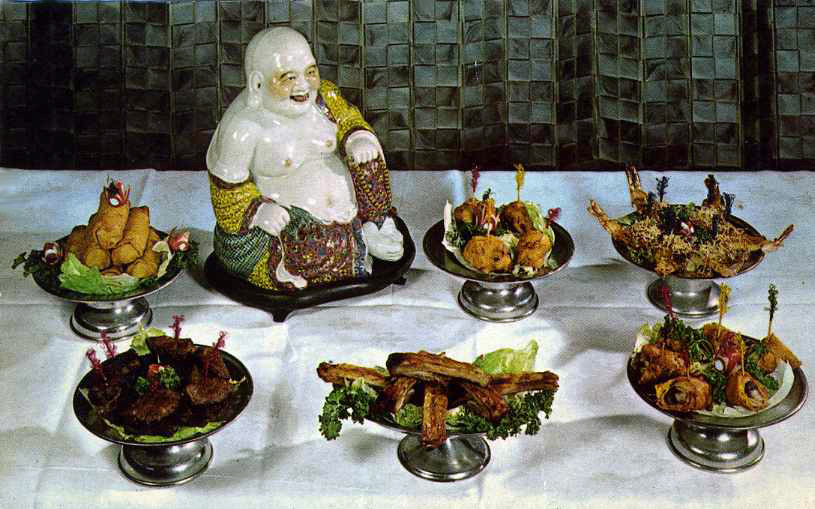
Heavier, more substantial, and often heated Appetizers seem to have been introduced post-WWII mainly by restaurants designated as Polynesian, Cantonese, and Mexican/Latin. In 1960 New York’s La Fonda del Sol offered appetizers such as Avocado Salad on Toasted Tortillas, Little Meat and Corn Pies, Grilled Peruvian Tidbits on Skewers, and Tamales filled with chicken, beef, or pork. A 1963 menu from a Polynesian restaurant called The Islander dedicated a whole page to its “Puu Puus (Appetizers)” that included ribs, chicken in parchment, won tons, and fried shrimp. The assortment was quite similar to the offerings at Jimmy Wong’s Cantonese restaurant in Chicago shown above.

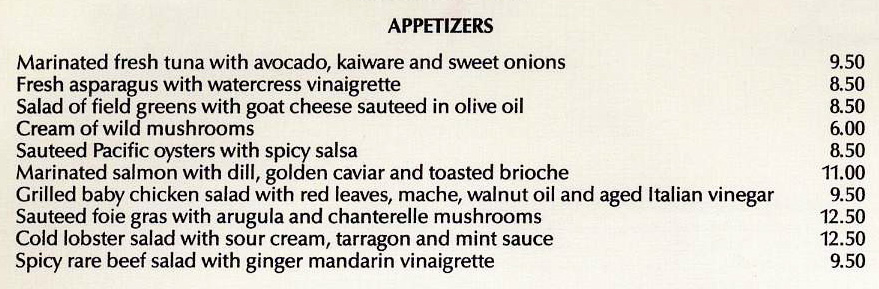
By the 1980s, many restaurants featured appetizers that would now likely be called “Small Plates” or items for “grazing.” Two or three were substantial enough to make up a dinner in themselves, as demonstrated here by a rather expensive Spago menu from 1981.

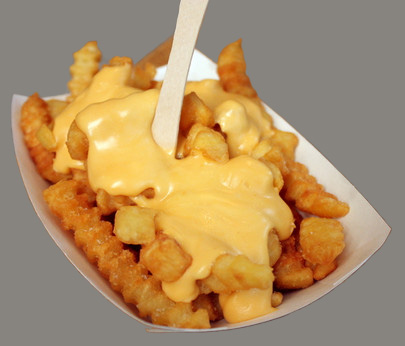
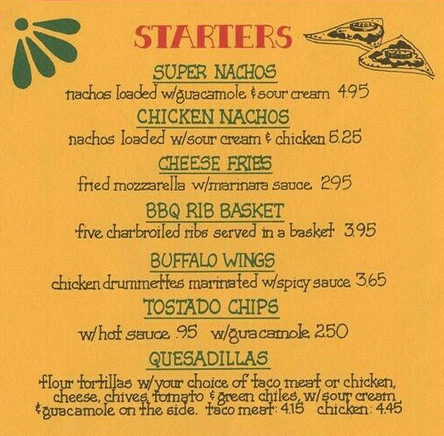
If grazing was a form of “light eating,” that could not be said of the appetizers introduced in the 1970s and 1980s by casual dinner house chains such as TGI Friday, Chili’s [1987 menu above], and Bennigan’s. Now the idea of an appetizer was completely turned on its head. Far from a light morsel that would induce appetite in someone with digestive issues, it became a digestive issue in its own right — deep fried and loaded with fat. The menus of leading casual dinner chains overflowed with “Starters” such as deep-fried breaded cheese, “loaded” potato skins, cheese fries [pictured at top of post], and heaping piles of nachos laced with pico de gallo and cheese. Diners might need a 19th-century digestive tonic after dinner.

© Jan Whitaker, 2021
5 Comments

Filed under chain restaurants, elite restaurants, ethnic restaurants, food, menus, restaurant customs

French fried onion rings

It’s hard to say just how long french fried onion rings have been on restaurant menus. But it’s likely that they were served at the Grove Park Inn, in Asheville NC, shortly after it opened in 1913. A few years later politician William Jennings Bryan’s recipe for them appeared in a Boston newspaper in which he said that the inn was the first place he – a frequent traveler – had ever encountered them.

Women had been preparing them in their homes before that. A recipe appeared in Women’s Home Companion in 1905, but I’m sure they were known earlier.

Bryan’s recollection as well as the 1905 recipe settle the question of whether french fried onion rings were the 1920s invention of a Pig Stand in Texas as frequently claimed on the internet. They were not.

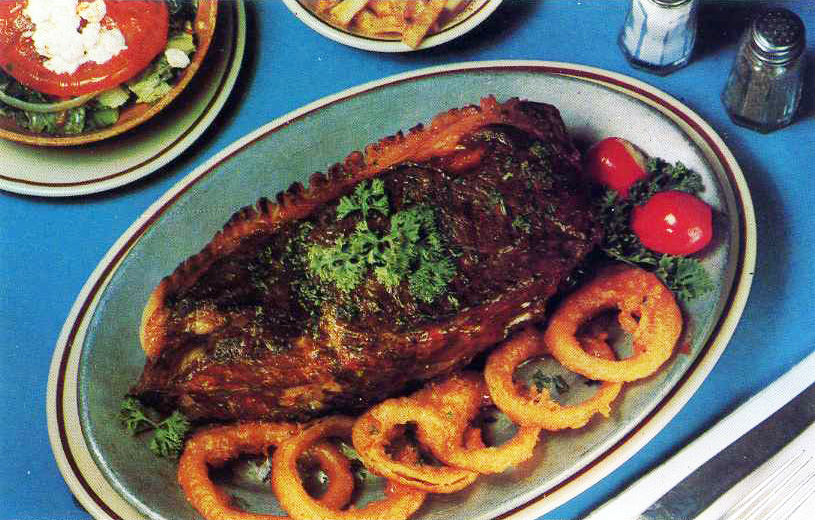
In the 1930s onion rings became more common in restaurants, probably aided by improvements in cooking oil (though many used lard) and deep fryers. Then, and for several decades later, they were usually featured as an accompaniment to a steak. In the heart of the Depression Schrafft’s advertized its Sizzling Steak Combination, saying, “With it you get generous helpings of French fried potatoes, onion rings or a fresh vegetable, a green salad, and a pot of Schrafft’s coffee, $1.50.” It ended with the tagline, “A Man’s Meal.”

They were often specifically marketed to men. Whether women shied away from them because of fear of breath contamination or some other stigma is unclear. Or maybe they enjoyed them just as much as men did, but were less likely to order steak because of price.

Despite the fact that men liked onion rings, onions in general carried a stigma. At various times in the last century they were characterized as “ordinary and even common,” as breath contaminators, and as food that restaurant kitchen workers did not like to handle. A 1966 handbook recommended that restaurant operators drawing up menus “shun” onions, along with lamb kidneys, pig’s knuckles, parsnips, turnips, and rutabagas. In 1969 a Gallup Poll found that potatoes were Americans’ favorite vegetables, followed by green beans, asparagus, corn, and tomatoes. French fried onions were ranked as slightly more popular than broccoli, lima beans, and peas.

Prejudices aside, onion rings grew more popular over time.

The arrival of pre-breaded frozen onion rings, which saved kitchen labor, was almost certainly part of their rising popularity. Their production began in the early 1950s when food companies contracted with fish processors who had learned the art of breading and freezing. Contra the Gallup poll, in 1969 one writer acknowledged that, after french fries, onion rings “must be the all time favorite accompaniment to hamburgers.”

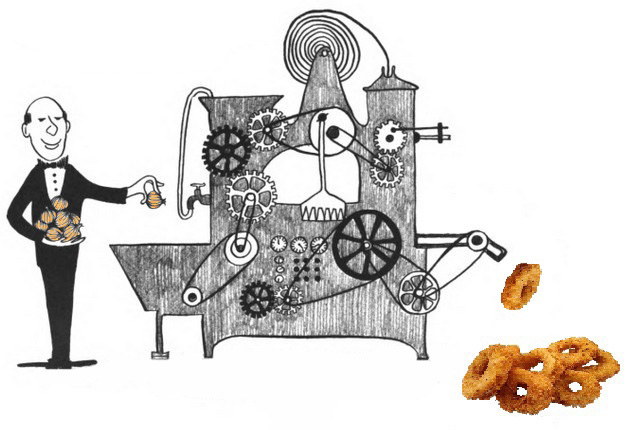
Use of the ready-to-heat rings increased in the 1970s when fast food chains began to serve them. Some, such as those sold at Burger King, were made of ground onions that had been extruded through tubes in factories. Their uniform size and shape, suited for “portion control,” did not sit well with a restaurant reviewer in 1977. He complained that a Burger King in Seattle served onion rings that were “those pressed-onion jobs that come out all one size and lacking a great deal of onion taste.” What an ingrate! Didn’t he realize that extrusion meant he could count on always receiving the exact same number of grams of breading and ground onion as the next customer?

In 1978 McDonald’s began test-marketing their own version of deep fried onions, using chunks instead of rings and calling their “french fried chopped onion product” Onion Nuggets. But the nuggets didn’t make it past the test stage, reputedly because they got cold too quickly. Restaurant onion rings, in general, were often criticized for being served cold – as well as for being limp and greasy.

Overall, the historic trajectory of onion rings in restaurants seems to be:

  1. Beginning in the early 20th century primarily as a garnish or accompaniment to a steak
  2. Especially as onion prices rose, becoming a separately priced side order, often where hamburgers were popular such as drive-ins and fast food outlets.
  3. Ascending to the top of the menu — with inflated prices — as appetizers at dinner-house chains such as TGI Friday.

Though not ring-shaped, Outback Steakhouse’s “Bloomin’ Onion” may have propelled deep fried onions to their historic pinnacle both in terms of fat and calorie load as well as price.

© Jan Whitaker, 2021
17 Comments

Filed under food, popular restaurants, technology

Hash house lingo

Odd – often humorous – names for simple restaurant orders were long associated with cheap eating places such as hash houses, beaneries, and lunch wagons. In addition to inexpensive food, patrons got free entertainment, while newspaper reporters never ran out of light copy.

In cheap restaurants it was customary through much of the 19th century and early in the 20th for servers to convey orders to the kitchen by shouting them out from the dining area. It’s highly likely that many, maybe most, of the servers as well as the cooks, were unable to read and write.

The colorful stories began to fill papers’ pages in the 1880s. In 1881 U.S. President Chester Arthur was reported to have visited a “coffee and cake saloon” in lower Manhattan – probably Hitchcock’s — where waiters shouted out his order of coffee and rare corned beef to the kitchen in slang.

Judging by how often it was repeated in the press, the public was endlessly amused by the tale of the clever Bowery hash house waiter who bested the patron who tried to confuse him by asking for two poached eggs on toast by adding that he wanted the yolks broken. Without a pause, the waiter shouted out “Adam and Eve on a raft. Wreck ‘em.”

Eggs merited the most jargon of all foods, probably because there are so many ways of preparing them. Two terms remain in almost universal use today and are so commonly used that probably no one suspects they were once regarded as unfamiliar waiter slang. I’m sure you will spot them easily in the list of egg orders.

Many of these terms make no sense at all, and some have more than one reference. Why were they used? Clearly they are not necessarily shorter or easier to yell than if they were straightforward. According to the 1945 article Soda Fountain Lingo, “An exclusive language – racy, picturesque, humorous – understood only by the initiate, adds zest to the monotony. Further, it lends pride to the job and provides an esprit de corps. It gives incentive to the new waiter, mystifies the general public, and furnishes satisfaction to the enlightened professional hasher.”

Eggs
Ham and eggs – Kansas City chicken and Adam and Eve
Scrambled eggs — Adam and Eve shipwrecked; Agitated eggs; Storm tossed eggs; Eggs around the curve; Wreck Noah
Scrambled eggs with chili sauce – Ship wreck in the Red sea
Scrambled eggs on toast – Wreck on a raft
Fried eggs unturned — With eyes open; Sunny side up; Straight up; Two white wings turned down
Fried eggs turned over – In the dark; With a black eye; Over easy; Eyes closed
Fried eggs scalded in hot grease — Blindfold two
Poached eggs – Sleeve buttons
Poached eggs on toast – Two ladies on horseback; Adam and Eve on a raft
Soft boiled eggs – A light on the ocean wave; In the sea/ocean
Hard boiled eggs – A light under the waves; Two in the water like a brick

Meat/fish/main dishes
Dozen oysters stewed plain — Drown a dozen
Dozen oysters in the loaf — One in the coffin
Oyster stew – Two in a bowl; Stew-o-o-oo
Chicken stew — Springer in the mud
Corned beef hash – Brownstone front (can also refer to pancakes); Mystery
Wienerwurst and sauerkraut — A Dutchman’s paradise
Ham and beans – Ham an’
Beef and beans – Beef an’
Beans – Plate of Bostons; Thousand on a plate
Baked beans without the pork — Brass band without the leader
Beefsteak – Patent leather; One sole without a shoe
Mutton chops – Whiskers
Codfish ball – Sinker (also refers to doughnuts and to pancakes)
Spring chicken on toast and boiled potatoes — Foul tip and a hot grounder
Fried catfish (quickly) — Railroad a hot swimmer

Other
Macaroni — A son of Italy; Put up the flag
Buttered toast — Butter the gash
Pancakes — Brownstone front; Brown the wheats; String o’ flats; Stack ‘em up
Pancakes and coffee – Bootleg and sinkers
Buckwheat cakes – Brown the buck
Hot biscuit — Order of the boat heels
Doughnuts – Sinkers; Life preservers; Fried holes
Shredded wheat biscuits and a glass of milk – Couple o’ bales of hay & squeeze the cow
Milk toast – Cemetery stew
Chicken soup – Hen in the bowl
Slice of watermelon — The Red Man
Mince pie with powdered sugar on top — Indigestion in a snowstorm
Pie a la mode – Freeze out; Snow on the open face
No gravy – Make it dry
Keep it hot – In a hot box

Beverages
Hot tea — Cup of China; On the Chinaman
Tea without milk – Hong Kong on crutches
Iced tea — One in the mountains
Cup of coffee — One in the dark; Draw one
Glass of milk — One in the light; Squeeze the cow
Ice water – One Arctic

Customers often contributed to the lingo by inventing their own, both for ordering and asking someone to pass something.
Pass the sugar – Give the sand box a kick down this way
Request for butter – Pass the dope
Milk – Drive the cow down this way
Beans and molasses – Short and sweet
Fried pigs’ feet – A Trilby foot [Trilby was a popular 1894 novel about an artist’s model with beautiful feet]
Coffee and doughnuts – Slop and sinkers
Sandwich with a liberal allowance of ham – One boxing glove with plenty of lining

Hash house lingo died a slow death in the 20th century with the arrival of automated eating places, cafeterias, and other serve-yourself places, and was pretty much gone by the 1930s. It has been artificially revived here and there as a novelty attraction, the former Ed Debevics diners being a prime example.

© Jan Whitaker, 2021
13 Comments

Filed under atmosphere, food, patrons, restaurant customs, waiters/waitresses/servers

The golden age of sandwiches

In their restaurant career sandwiches came from humble beginnings. They could sometimes be found in eating places as far back as the early 1800s, such as at the Ring of Bells, a porter and oyster house in New York. But they became more popular when they teamed up with beer joints after the Civil War. They also flourished in Boston’s “sandwich depots” of the 1880s — bean sandwiches included. And they were among the edibles offered by lunch wagons, saloons, and stand-up buffets in the late 19th century.

But it was the trend toward lighter mid-day meals in the early decades of the 20th century, spurred by the growth of cities, that gave sandwiches their big boost. Then, as light meals replaced hot dinners at noon, they found their niche, furnishing a quickly prepared menu item available in a variety of styles and combinations. Sandwiches of all kinds – named after celebrities, toasted, clubs, St. Paul’s — continued to flourish until after WWII when hamburgers began to take center stage.

While some eating places stuck with hot meals at noon in the early 20th century, others were quick to embrace sandwiches, particularly lunch rooms, tea rooms, drug stores, and delis. The sandwich shop was declared the winner among fast food restaurants. To critics the proliferation of this slapped-together fare was a sign of cultural decline. “The postwar decade might be known as the era of the sandwich,” declared cultural observer Eunice Fuller Barnard in a New York Times article of 1929 with the mournful headline, “We Eat Still, But No Longer Do We Dine.”

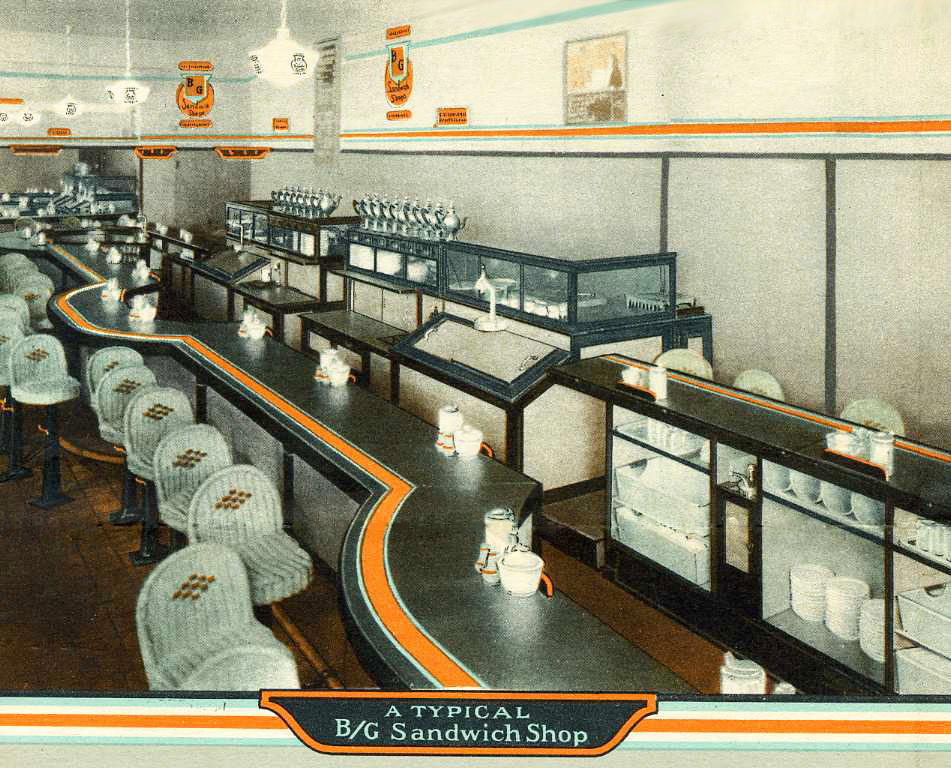
Among new developments was the formation of sandwich chains such as the Tasty Toasty and the Hasty Tasty. The B/G System was one of many in that category, which also included R&C, C&L, S&S, and no doubt other alphabetical combos across the USA. In 1924, the “Purely American, Meal in a Minute, No Tipping” B/G chain claimed to pay wages allowing their workers to “live according to American standards.” It had outlets in 16 large cities and was about to spread further. Was St. Louis the champion host of sandwich shops? Included among the city’s 52 sandwich shops in 1938, there were at least 6 “sandwich systems,” the Continental, Hollywood, Nickel Plate, Night Hawk, Ure-Way, and Yankee.

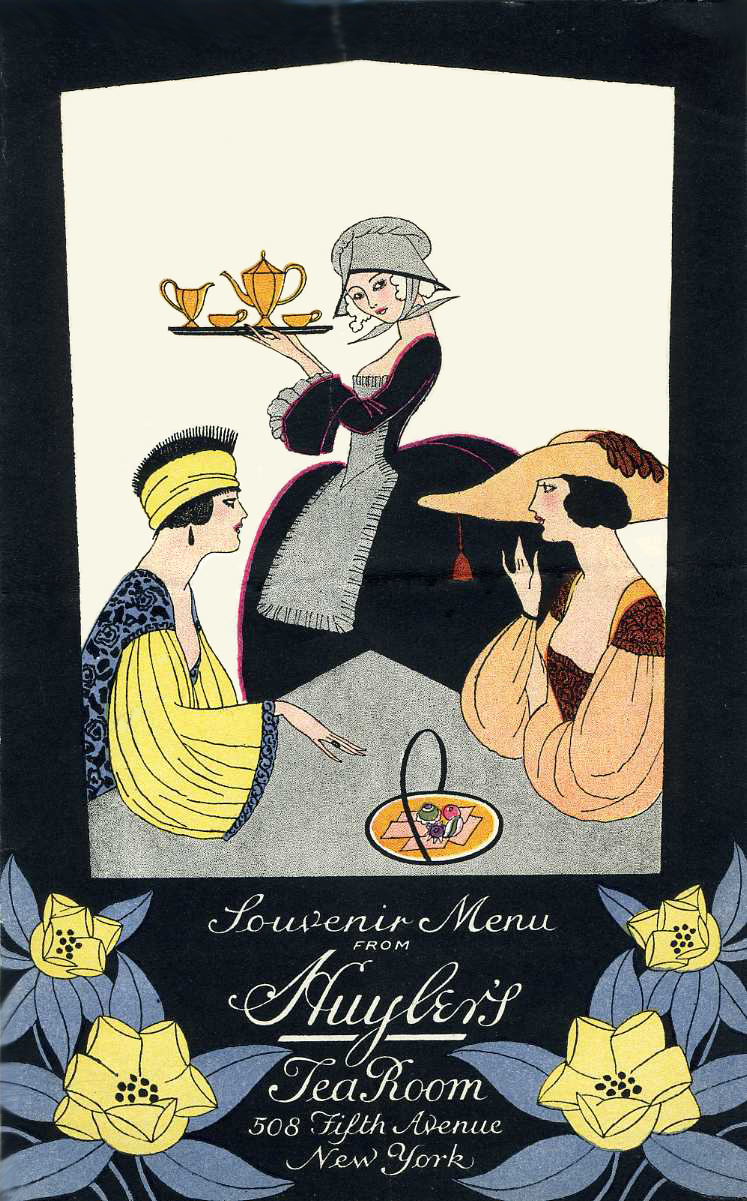
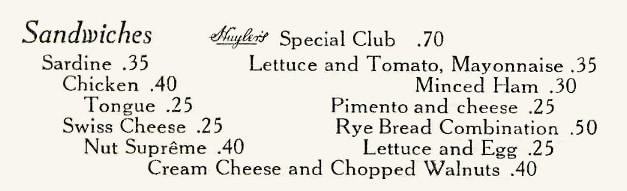
The sandwich selections on the menu shown here are from the Huyler’s confectionery-based chain. Tongue and Cream Cheese sandwiches, rarely (ever?) seen today, were quite popular in those early years (1921 menu above).

Polly’s Cheerio Tea Room’s Ham and Jam on French Toast would seem to be unusual, though perhaps Los Angelenos would have disagreed (1932 menu above).

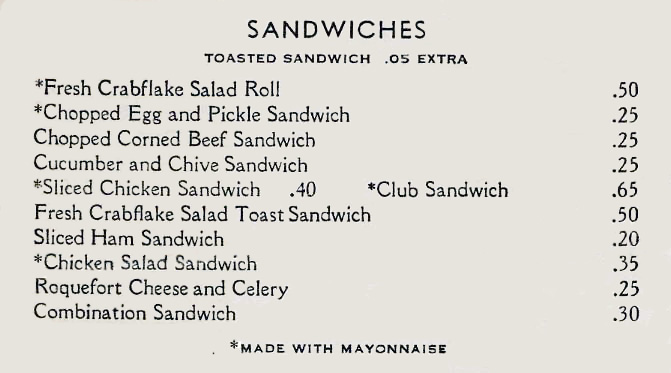
I can’t account for why Schrafft’s in New York City felt the need to indicate which sandwiches were made with mayonnaise (1938 menu above). I’ve found one other tea room, located in St. Joseph MO, that included the same annotations.

Among the other interesting sandwich combinations I’ve found are Cucumber & Radish (25c at The Cortile in NYC in 1928); Egg and Green Pepper with Mayonnaise on Whole Wheat Gluten Bread (25c at Schrafft’s in 1929); “Chef’s Pride,” Smoked Tongue, Sliced Chicken, and Deviled Eggs double decker (50c at Townsends, San Francisco in1933); Peanut Salad (10c at The Candy Box in Winona MN in 1935); Peanut Butter, Sliced Tomato, Bacon, and Lettuce triple decker on toast (25c at The Little White House in NYC in 1936); and Marshmallow and Peanut Butter (15c at The Bookshop Tearoom in Springfield MA in 1946).

I prefer my BLTs without peanut butter. Hold the marshmallows, please.

© Jan Whitaker, 2021
17 Comments

Filed under food, menus, restaurant customs, tea shops