This past weekend at the giant Brimfield flea market I found the charming small menu shown above and below.
The menu is for a tea house that operated seasonally from 1928 through 1940. I’m guessing it may date from the mid-1930s since the prices match those in an advertisement from 1937 [shown below].
I couldn’t determine if the Providence Airport owned the tea house, renting it to the two women who ran it, or if the women were the owners. Despite the airport’s name, both it and the tea house were actually located in Seekonk MA, 7 miles from Providence RI.
The air field was private, offering flying lessons, short touring flights, and airplane storage. Its owners also sold the newly developed Aeronca monoplane.
The two women who ran the tea house for most of its years, Mildred Burrell and Lyle Lincoln, were from Fall River MA. They seemed to enjoy the status of socialites, being free to pursue that lifestyle in the months they were not running the tea house. They were able to make a success of the business for at least 10 years, which was greater than the lifespan of most eating places. It was offered for sale in 1939, but its new operator only kept it open for a year.
According to a 1932 feature story about women and aviation, women had no place in the early days of aviation, and were not expected to ever become passengers. However, that had changed by the time of the story when they had begun to learn to fly, and made up an increasing percentage of passengers and in-flight hostesses. According to the story, the operators of the tea house had made “occasional flights, [but] neither has a license or even any interest in obtaining one.”
Various newspaper stories of groups patronizing the tea house suggest that most came from Providence. Patrons could watch the airfield’s activities, but how many of the field’s plane owners, tour takers, or students taking flying lessons patronized the tea house is uncertain. Yet this 1929 advertisement suggests that there may have been some interest in an air tour followed by dinner on weekends.
By the time the tea house closed after the 1940 season, public airports were well established, and many featured full-scale restaurants that drew the public to dine while watching planes take off and land.
A few days ago I read a fascinating article by Jill Lepore in the New Yorker. It was about Ruth Stout, author of How to Have a Green Thumb, Without an Aching Back, originally published in 1955. It has been reissued and is still quite popular.
There were many engaging aspects to Stout’s life, such as her affair with the radical Scott Nearing, her career as a writer, the fact that her brother was the mystery novelist Rex Stout who created Nero Wolfe, her involvement with ‘no-plow’ gardening, and the fact that lived to be 96. [Below: Ruth in 1923, age 39.]
But what especially interested me was that Stout had been briefly involved in owning and running two tea rooms in Greenwich Village around 1917. They didn’t last long, but that was true — almost typical — of many tea rooms.
The first was the Will o’ the Wisp which she opened with a family friend. It was appropriately named, being short-lived. It was ridiculed by the New-York Tribune in a 1917 story about an imaginary visitor from afar searching NYC for the “real Bohemia.” He and the writer go to “the Wisp” (as it was known), where the “young ladies” (actually about 32 and 50 years old) that operated it invite them to come back the next night and help wash dishes around 1 or 2 a.m. The sardonic piece ends with the trite observation that Bohemia is a fantasy.
If the Tribune writer had known that the two women running the Wisp were both from small towns in Kansas, that would have been another sign of how misplaced his dismissive attitude was. They actually represented the adventurousness and talent of many New York transplants. In this case they were writers, world travelers, and free spirits.
The Greenwich Village tearooms before World War I served mainly as hangouts for local residents, many of whom were artists and who liked to gather with friends in the evening. Alas, they didn’t spend much, so the advent of visitors from outside the Village was a financial boon. The Wisp tagged itself in advertising as a place for writers, “the poets’ favorite,” not a slogan likely to draw the masses.
As the photo at the top shows (by the Village’s photographer Jessie Tarbox Beals), tea rooms were plentiful, with three in the building in this photo. And the building itself is none too impressive, even looks somewhat structurally unsound. The Wisp is on the ground floor.
Not much later, or maybe simultaneously with the Will o’ the Wisp, Ruth opened a second Village tea room called The Klicket, this one with dancing. The Quill, the Village’s magazine, promoted it saying, “Ruth Stout’s ‘Klicket’ has a good floor, and say! Ruth CAN cook!” No doubt she was amused by that since she wasn’t much of a cook.
At the Klicket, Ruth found herself keeping even later hours, but there was little monetary reward. As she indicated in her advertisement she mainly hoped her customers would end the evening by paying for their tea. It was not a financial success and she kept it going only for about a year.
In a 1917 book about the Village, author Anna Alice Chapin outlined the “phases” which the Village was going through, which included not only “the tea-shop epidemic,” but also psychoanalysis, arts and crafts, masquerade balls, and support for labor activism and anarchy. Ruth took up the call to radicalism. She and Rex were on the editorial board of a leading socialist-communist periodical The New Masses. She also visited Russia as a Quaker volunteer helping alleviate famine there in 1923 and became a helper and romantic partner of Scott Nearing for several years, living with him on his farm.
She published four books in the 1950s and 1960s, including her garden book and Company Coming: Six Decades of Hospitality, Do-it-yourself and Otherwise, in which she mentioned her tea rooms. Until her death in 1980 she spent her elder years in Connecticut where she and her husband Fred Rossiter had acreage.
Slim pickings for a restaurant ephemera collector at the giant Brimfield flea market recently, but at least I turned up a few finds. Among them were two small menus and a business card, all from eating places run mainly by women. The size of the two menus makes me wonder if male-owned restaurants ever employed any this tiny.
The Henniker Tea Room
The oldest of the three finds was a menu from The Henniker Tea Room in 1932. It took me a while to realize that its location “Midway between Westfield and Brocton” put it in New York state.
I discovered that it is a relic of hard times in a double sense. The front of the menu says “Tenth Season,” so it was begun in 1922. That was the year that the owner’s husband, a superintendent of schools, died of tuberculosis, which probably meant that she had to earn a living for herself and her two daughters.
The second hardship associated with this menu is that it dated from the depths of the Depression. I suspect that is the reason she stopped charging an extra 15 cents for salad with Sunday dinner specials, and reduced the price of potato salad from 30 to 25 cents.
Possibly the tea room failed in the Depression because by 1940 Frances Swain was living in a lodging house and working as a secretary for the YMCA. But her fortunes must have improved after that because in 1950, at age 66, she had become director of the YMCA and headed her own household with additional income from three roomers.
The Salmagundi
The Salmagundi was a seasonal tea room that probably opened in the late 1920s. It was located on Beacon Street in Boston, in a rooming house that the married couple who operated it lived in. I’m guessing the menu shown here is from the early 1950s, an era when tomato juice appetizers were still popular.
The word salmagundi was an old-fashioned but rather artsy word. It could apply to many kinds of mixtures, whether art, collections of short stories or poems, or a multi-ingredient salad.
The Salmagundi was a frequent meeting place for women’s clubs, bridal showers, business and professional groups, and gatherings of college alums.
Duncan Hines, in the 1946 edition of Adventures in Good Eating, declared The Salmagundi “One of the most popular places in Boston,” and praised its “unusual food combinations, delicious hot breads, and good desserts.”
A student at the Massachusetts Institute of Technology took his girlfriend to dinner there in 1950. He said it was a quiet place with three small dining rooms and a limited menu but one he approved of since it included lobster, steak, and chicken. They ordered duck and found it delicious, and liked the “fancy rolls.” But the check totaled a bit over five dollars, so he had to borrow some money from his “chick.”
Around 1960 it passed into new hands, and the owner tried to get a license to serve wines and malt beverages. I found no trace of it after 1962.
Mary Hartigan Restaurant
Although Mary Hartigan’s business card is the smallest of the day’s finds, I discovered that hers was the most successful business of the three. She established it in 1933 in what was formerly a Dutchland Farms that she had run. [above, front and back of business card]
The Dutchland Farms chain in New England, beginning as dairy stores, developed into restaurants quite similar to Howard Johnson’s shortly before the chain failed in the Depression. Some were converted to Howard Johnson’s, but Mary Hartigan, who also ran one in Harwich Port MA, decided to run her Dedham place independently under her own name.
Nevertheless Mary Hartigan’s and Howard Johnson’s shared a similar appearance as well as a similar menu. A Hartigan menu from 1952 shows that she kept the strong link to dairy products in her new restaurant, dedicating an entire page to ice cream concoctions such as sodas, sundaes, freezes, frappes, floats, and malted milk. In addition to the standard steak and chicken entrees, the menu also presented a variety of seafood, including seafood plates, baked lobster, Cape scallops, broiled swordfish, and fried clams. Tomato, grapefruit, and pineapple juice served as appetizers.
1952 was also the year that the restaurant acquired a liquor license. In 1959 the building was enlarged and remodeled. [above, business card interior]
When Mary Hartigan died suddenly in 1961 her obituary in the Boston Globe observed that the restaurant was “one of the best known in the state.” She left it to a niece who ran the business until 1970 when it was sold to a new owner who said he planned to keep the staff, some of whom had worked there for three decades.
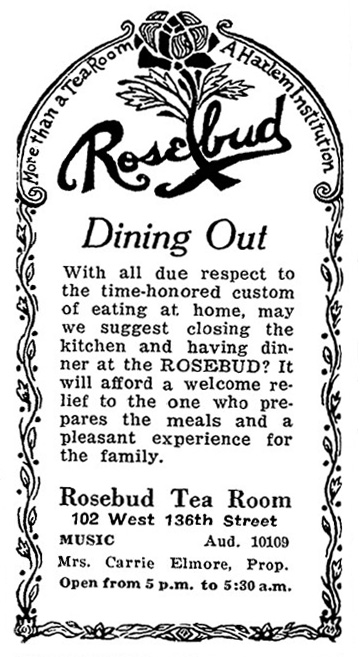
In 19th-century America most eating places were named for their owners. But in the 20th century, despite the continuing prevalence of proper names, more creative names began to appear. For instance, a 1912 directory of Black-owned restaurants in Chicago included the Crazy Corner Café and the Wa-Wa.
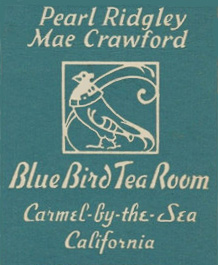
Greenwich Village of the 1920s pushed the vogue further. Columnist O. O. McIntyre was one who sneered at names of eating places there such as the Purple Pup, the Mauve Moon, and the Cerise Cat. In fact, they heralded a trend soon popping up everywhere, especially in casual eateries and tea rooms. Names linked to colors, birds, and animals proved especially popular with tea room proprietors.
Newspaper columnists were alert to new and strange restaurant names. In 1927 a Seattle writer noted, “The bluebird and the red robin both sing the song of food. Being an especially noble bird the eagle soars over four hamburger houses, and thus is more active than any other animal as far as eat signs are concerned.”
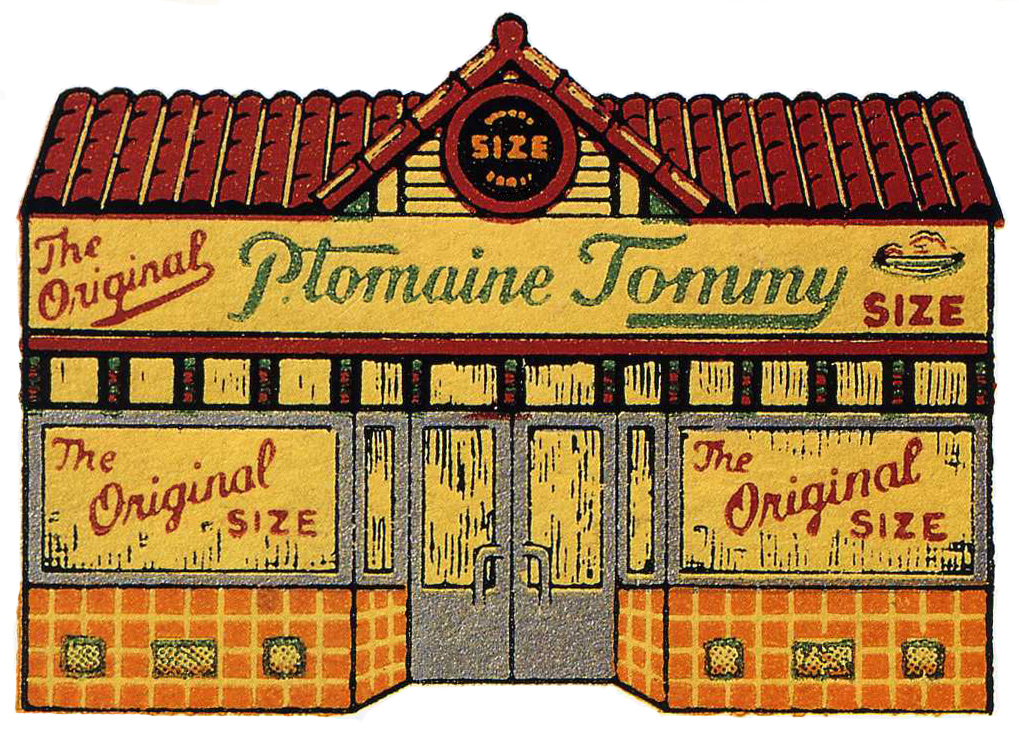
Other eateries went further, with names that were attention-getting but far from charming such as the O-U-Pig Stand in Knoxville TN or Ptomaine Tommy’s in Los Angeles.
Busy Bees were found in almost every city, but they didn’t seem to head into the countryside much.
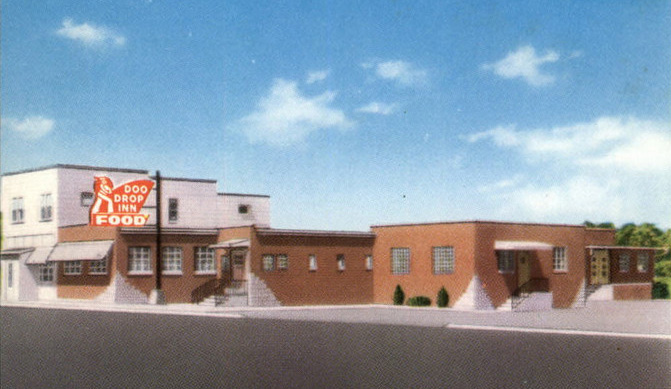
Restaurant names grabbed the attention of visitors from England. In 1929 the husband and wife authors of On Wandering Wheels noted inns and tea rooms in Connecticut with names such as Steppe Inn, Kumrite Inn, Wontcha Drive Inn and others they dubbed collectively “Ye Old Roade House.” A few years later another English vacationer marveled over a long list of “strange names” he compiled including Do Drop Inn, Dew Drop Inn, and Due Drop Inn. [Doo Drop Inn, Muskegon MI]
Why the rise of fanciful — and often hopelessly corny — names? I suspect it was competition that drove small businesses to attempt to stand out from the crowd. But it’s also probable that some proprietors who came from foreign lands were quite eager to hide their surnames during the anti-immigrant 1920s.
If anything, the Depression of the 1930s stimulated the use of creative names, as a glance at city directories reveals. Columbus OH had a Zulu Hut and a Pig Stile. Buffalo patrons could choose Da Nite Diner or Just-A-Mere Grille or one of seven “new” places, whether New Buffalo Lunch, New Chicago Lunch, New Genesee Restaurant, New Haven Lunch, New Main Lunch, New Popular Lunch, or New Texas Lunch. Exactly what about them was new is lost in time.
Even the trade magazine The American Restaurant got into the habit of collecting strange names in 1947, calling attention to lists that included Grabateria, Dizzy Whiz, and Blu Baboon. The columns also added to the growing list of names using the word “inn” with Weasku Inn, Hello Inn, Venture Inn, Brother-in-Law Inn, and Welcome Inn.
Continuing the once-irresistible urge to combine punning names with “inn,” here are others I’ve found, dating from the teens through the 40s: Always Inn, Bungle Inn, Chick Inn, Duck Inn, Du-Kum-Inn, Fiddle Inn, Fly Inn, Jitterbug Inn, Kum Inn, Pour Inn, Ramble Inn, Stumble Inn, Tip Toe Inn, Toddle Inn, and Tumble Inn.
Perhaps the long-lasting attraction to bizarre names actually peaked in the 1970s when restaurant groups spread themed chains across the country, often with names I would nominate for the most absurd of all, exemplified by Baby Doe’s Matchless Mine [Denver location pictured].
By now we’ve grown accustomed to many names that once drew attention, but have become ordinary. It’s unlikely that anyone still thinks of Drive Inn, now usually without the second “n,” as an originally punning name. Maid Rite and White Castle seem unremarkable as does Applebee’s, especially since deleting the initials T. J. which, thankfully, had fallen out of fashion.
Not only have American’s favorite desserts changed over the course of history, but so has the meaning of the word dessert as used on menus.
In a series of articles in 1879, Lorenzo Delmonico explained the meaning of courses as presented in a proper French dinner. For a start, he explained, “when people believe that each dish served separately is a course in itself they have got the whole matter dreadfully mixed up.” There were only three courses, he stated. The first two comprised the “whole dinner” and the third, he wrote, “contains only the dessert.” Just how many dishes were presented in each course was entirely up to the host.
Sounds simple, but here’s where it gets confusing: the second course is accompanied by “Entremets” that are “the smaller dishes of the second course, including such puddings and pastries as may be served . . .” The third course – Dessert — comes last and “consists of ices, fruits, nuts, coffee, etc.” Today, we would consider the Entremets as Dessert.
Under Charles Ranhofer, Delmonico’s chef for most of the years from 1862 to 1896, Sweet Entremets continued to be presented with the Roast course, followed by Desserts as laid out by Lorenzo. At Delmonico’s Beaver Street location in 1899, for instance, an a la carte menu listed Entremets consisting of such things as Charlotte Russe, Peach Pie, and puddings, while Desserts included the subheadings Fancy Creams, Creams, Water Ices, Sorbets, Fresh Fruit, and Cheese.
Not surprisingly, cheap eating places had completely done away with courses decades earlier. For instance, at Milliken’s Beefsteak & Coffee Room in New York in 1849, there were only two categories: Dinner (i.e., meat) and Dessert. Dessert consisted of a choice of one custard and seven pies — Cocoa Nut, Plum, Mince, Peach, Apple, Indian, and Rice.
But even in far-off San Francisco end-of-meal choices reflected something like a formal menu, but with a different organization. In 1887, the ever-busy Royal Dining Saloon presented five categories of sweets in this order: Fruit, Puddings, Pies, Cakes – and then Desserts! Desserts included Peaches and Cream, Cranberry Sauce, Apple Sauce, New Comb Honey, Hot Mince Pie, various stewed and baked fruits, and Ice Cream. So, Mince Pie was a Dessert but other Pies were not?
Across the land there were other logic-defying variations. But probably no one really cared about logic. They saw what they wanted, ordered it, and that was that.
Overall, it would be cheap eateries such as Milliken’s that prefigured a 20th-century in which all the end-of-meal categories would be boiled down into one: Desserts. Not only that – the offerings in that category at popular eateries, as at Milliken’s, would remain primarily Pie and Pudding for decades.
But it seems that women preferred cake. As more unescorted women patronized restaurants in the 20th century, and tea rooms catering especially to them opened, this difference in their dessert preferences made itself known. Tea rooms began to specialize in cakes, selling them whole to take away as well as portioned for meals. For example, a pop-up Suffrage kitchen opened in Chicago’s Loop in 1914 offered a 35-cent lunch of salad, sandwich, and beverage, plus a dessert of cake and ice cream for an extra 15 cents. A notice read, “if the luncheon is served to men pie a la mode.”
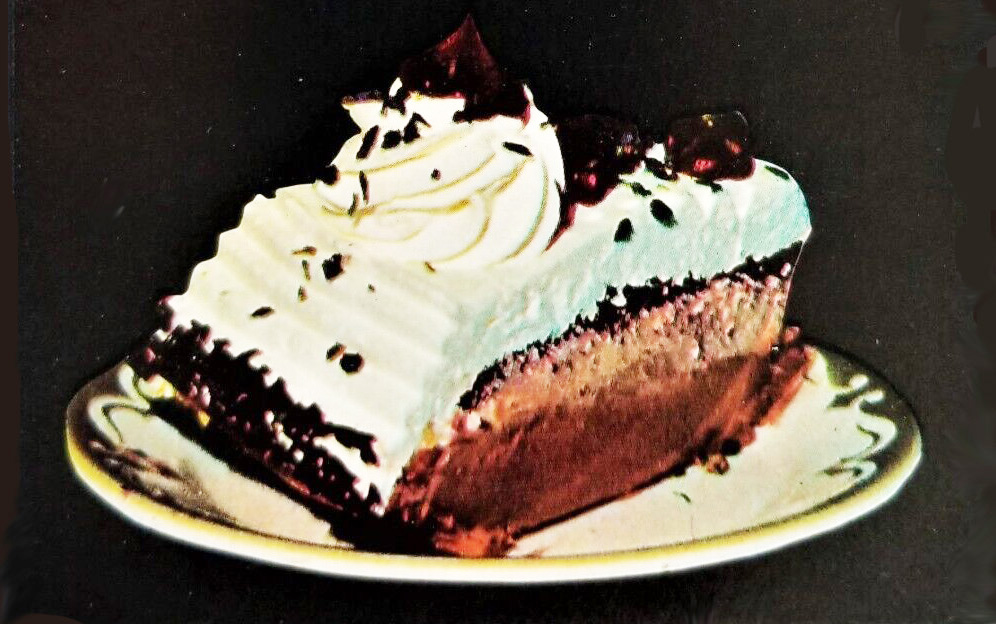
Of course tea rooms did serve pie, and other desserts too, but it is striking that many lunchroom menus did not include cake. Perhaps for the average eating place layer cake was too difficult to frost, slice, or keep moist when portioned in advance. My sense is that it was also considered a more refined dessert suited to female tastes, whereas pie was an older, heartier, basic food.
Tea room proprietors were well aware of women’s attraction to cake. As Fanny Evans of Mary Elizabeth’s in New York said in 1923, her tea room knew how to cater to American women’s love of unusual salads, creamed chicken, croquettes, and “delicious home-made cakes.” In 1933 the proprietor of the Ipswich Tea House in Massachusetts, a graduate of Miss [Fannie] Farmer’s School of Cooking, prepared special menus titled “A Meal for Men” and “A Ladies Luncheon.” The men’s meal ended with Ice Cream Pie and the women’s finished with Meringue Cake.
In the Depression Americans turned to desserts to cheer themselves up. According to a 1932 NYT story “the American’s Real Desire Is More Dessert,” driven by a wish for glamor, romance, and “the desire for escape from the standardization of the machine age.” Plus desserts yielded high profits. Schrafft’s was way ahead of the game. As early as 1929, the 181 Broadway location in New York offered 34 different desserts!
After WWII, returning soldiers as well as civilians were hungrier than ever for desserts. A 1946 manual advised restaurateurs that a winning menu formula was to have as many desserts as entrees, 7 to 9, but no more than 4 green vegetables.
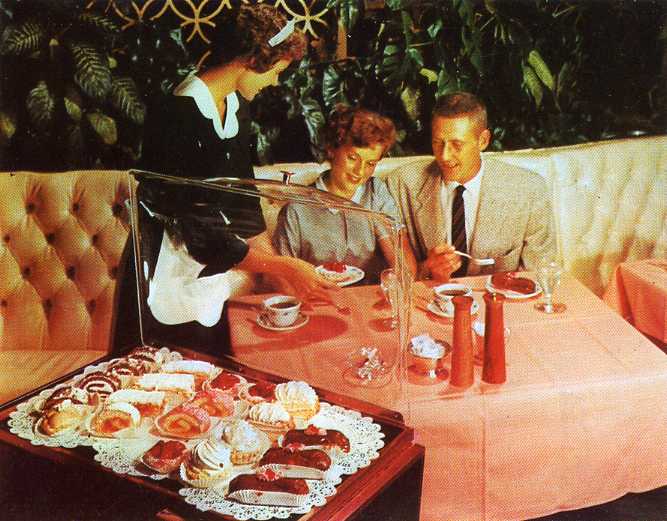
In the average eating places, apple pie was crowned the favorite American dessert until the 1970s, while layer cakes tended to vanish from the restaurant scene. But pie would not do for luxury diners. As demonstrated on a 1951 menu from Ciro’s in Hollywood, expensive restaurants gravitated to less common, fancier desserts such as Parfaits, Crepes Suzettes, and Baked Alaska. Dessert trays and carts bearing French pastries also came into use, while a flaming dessert was always a possibility worth considering.
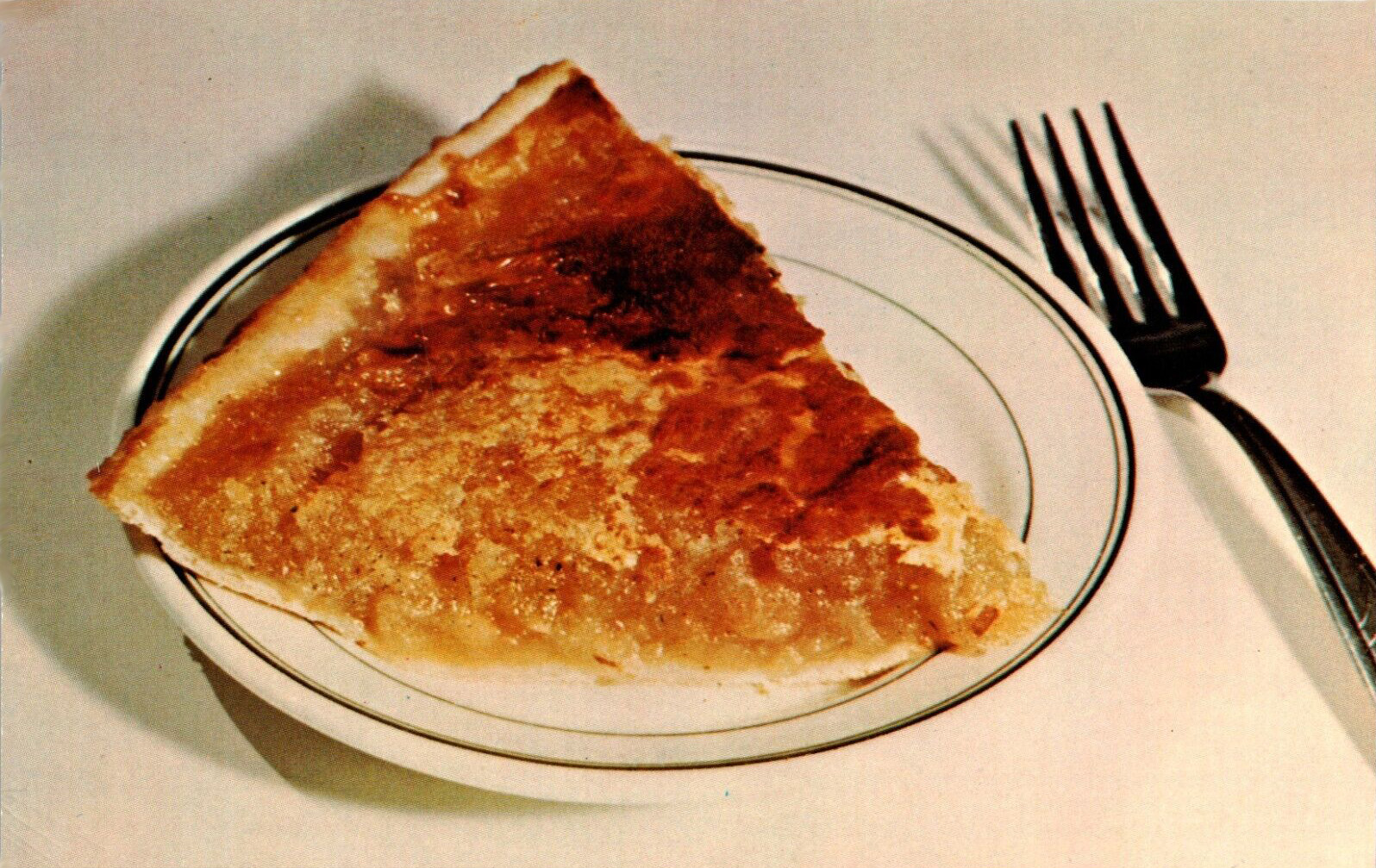
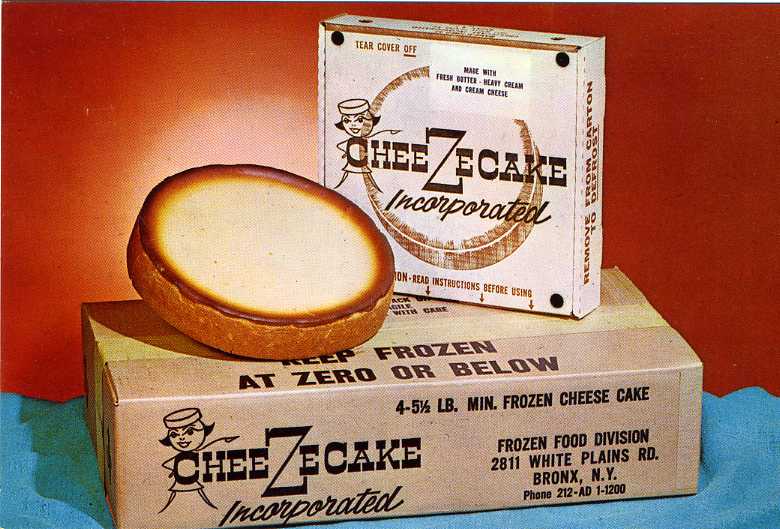
In 1996 a National Restaurant Association survey of restaurants found that the most popular desserts were cheesecake and pie. That is, cheesecake of the sort most commonly served today, made with cream cheese rather than cottage cheese. The latter was a very old sweet dish dating back to the early 1800s or earlier. Unlike some other factory-made desserts, cheesecake has the advantage of being regarded as genuine even when it comes frozen in a box. I am somewhat skeptical about this survey, though. How could it be possible that chocolate desserts weren’t mentioned when they had been advancing rapidly in popularity since the 1970s?
Fine table settings were not to be taken for granted in pre-Civil War American eating places. In 1843 an English visitor was delighted to find a Charleston hotel with “clean table cloths and silver forks.” He recommended the Jones Hotel, run by a Black proprietor named Jehu Jones, the son of a freed slave. Thick dishes, often chipped, and crude forks were more typical of many hotels then.
According to Junius Henri Browne’s The Great Metropolis, in 1869 there were many restaurants in New York City but only in the most expensive, such as Delmonico’s, did the diner find “silver, and porcelain, and crystal, and fine linen.” Common basement eateries, on the other hand, had “broken earthen-ware, soiled table-cloths, and coarse dishes.”
Coarse dishes had become the definitive sign of a cheap restaurant. But in the later 19th century, when early fast-food chains began to form, they attempted to break the equation that thick dishes and bowls indicated filth by being insistent about cleanliness. They stuck with thick dishes that didn’t break or chip simply because they were more practical.
Founded in the late 1880s, Baltimore Dairy Lunch was an early challenger to the old assumptions about thick chinaware. The first unit was opened in Baltimore by a postal clerk. By 1920 there were about 140 locations in large cities through much of the Northeastern U.S. Menus were simple and prices were low. Customers went to a counter to get their food, and consumed it quickly, either while standing at a high counter-type table or sitting in a one-arm chair similar to a school desk. This thick, shallow bowl – possibly used for milk toast – expresses the spartan simplicity of Baltimore Lunches. Despite some yellowing along the edges, it has held up well over the decades.
Ontra Cafeteria
The Ontra (pronounced “on tray”) was a cafeteria begun as a working women’s lunch club, one of four operated by Mary Dutton in Chicago in the 1910s. Like the Baltimore Dairy Lunches they were meant to be affordable and appealed to those who did not want to spend much for a noonday meal. Undoubtedly, like most women cafeteria owners who had studied home economics, Mary Dutton put a high stock on practicality and thrift. This Ontra plate, date unknown, is sturdy but not as thick as dairy lunch dishware.
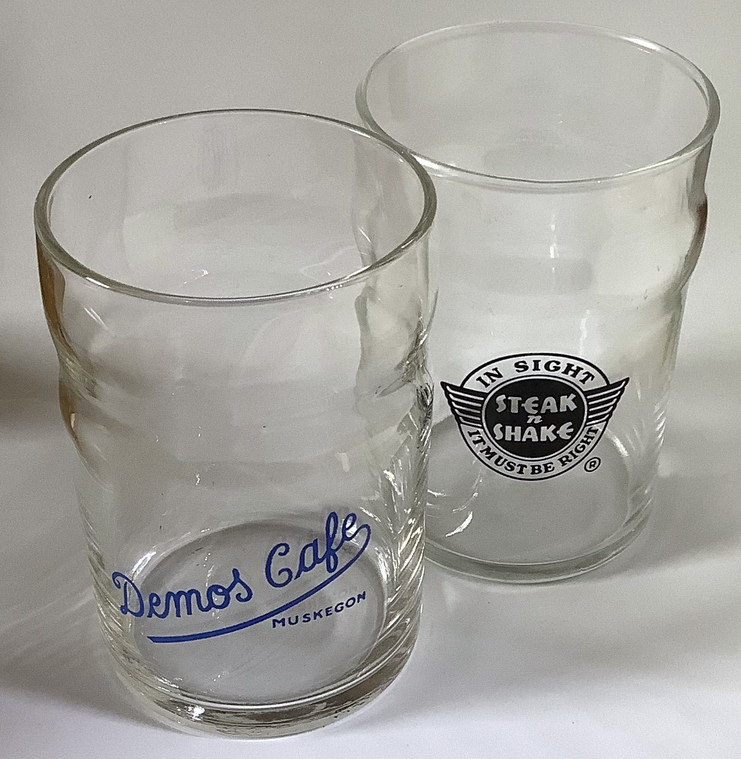
These sturdy glasses are typical of mid-century restaurant glassware with their non-chip rims and their dents and bulges that make them slip proof as well. It’s likely they were produced by Libbey, a major advertiser of glassware in mid-century restaurant trade journals. An advertisement assured restaurant buyers that “Libbey Safedge glassware offers you a wide selection of patterns in all sizes, for beverage and bar service. And because of its durability, you are assured of economy in operation . . . with every glass backed by the famous Libbey guarantee: ‘A new glass if the rim of a Libbey ‘Safedge’ glass ever chips.’”
The Woolworth plate came from my local dime store when it was closing for good in 1990. Its pattern is one of the endless variations on a theme of this sort, one that could appear in any of a number of colors. Again, a sturdy plate for customers who never gave it a second look.
Cheap dishes, glasses, and flatware simply wouldn’t do for upscale restaurants. The better-off classes demanded finer table settings. This had always been true for the wealthy, but in the early 20th century, the middle-class also raised its expectations.
Good taste expressed in restrained design suggestive of nature was the motto of The Craftsman in New York City from 1913 to 1916. Lunch and dinnerware was Onondaga white china with a light brown pinecone design forming a border. For afternoon tea, Lenox furnished an off-white china featuring the Stickley “Als Ik Kan” symbol and motto that promised integrity of method and materials.
Women’s tea shops tended to stress individuality. This meant rejecting standardized restaurant ware, instead establishing a unique identity with decor and tableware. Alice Foote MacDougall — who called her tea shops coffee shops to attract men — complained loudly about thick cups and dishes. In her 1929 book, The Secret of Successful Restaurants, she described how, formerly, she had to eat in restaurants “where china, white, thick, and hideous was used.” In them, food was served “naked on a bold, pitiless plate half an inch thick and consumptive in its whiteness . . .” By contrast, she said, the plates in her restaurants were colorful with shades of yellow, blue, turquoise, and lilac.
Shown above is the Graziella pattern used in her Italian-themed coffee shops. Like all the imported china in her restaurants it was also for sale ($2.50 for a dinner plate or a cup and saucer).
The Four Seasons
In 1966 a well-known restaurant consultant explained how people with good incomes preferred to dine when they went out. They liked fine restaurants, appreciated good food, and ate out often. “They expect the restaurant decor to be as nice as the decor in their own homes!,” he explained, adding, “They like fine china.”
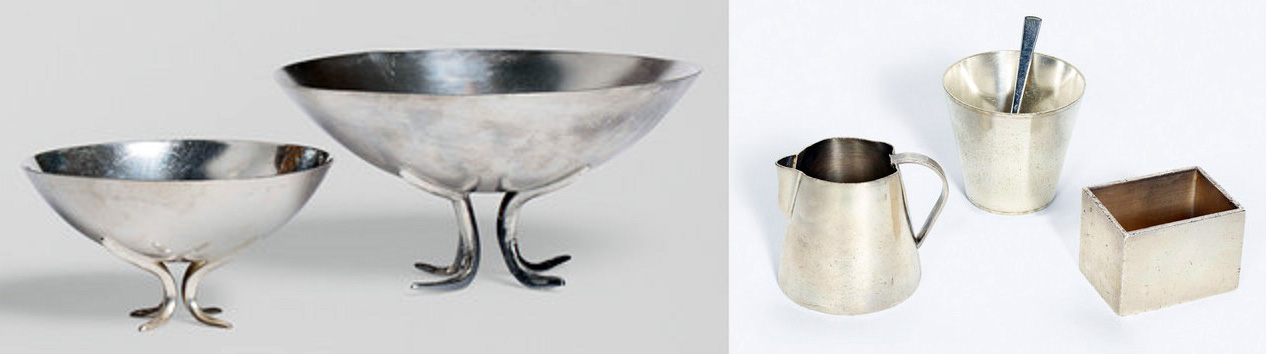
Given that The Four Seasons was a power-lunch site, I’m sure there were some guests who paid absolutely no attention to the fine design of the hundred items designed by Garth and Ada Huxtable, nor did they notice that unlike the glasses used in dime stores and lunch counters, their wine glass had no reinforced edges. Others guests no doubt were pleased with the elegant simplicity of the designs.
When the restaurant closed and the furnishings and serving pieces were auctioned in 2018, bidders paid goodly sums for items such as the bread servers (as much as $6,250) and cream and sugar sets (more than $2,000) shown above. I do find it humorous that the cream and sugar set included so plebeian an object as a container for packets of sugar substitutes.
Today, collectors of restaurant ware value a wide range of china, including the thick kind often bearing the logo of a once-popular eating place.
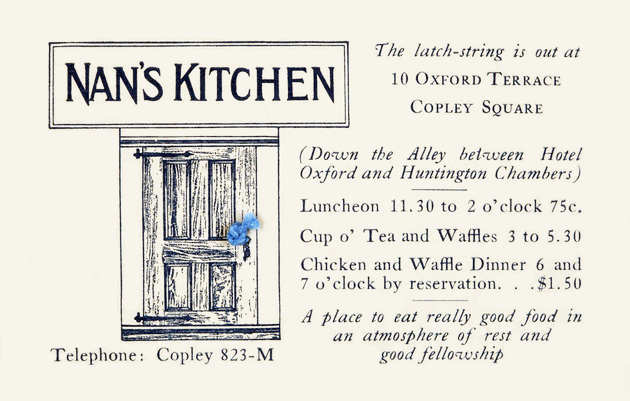
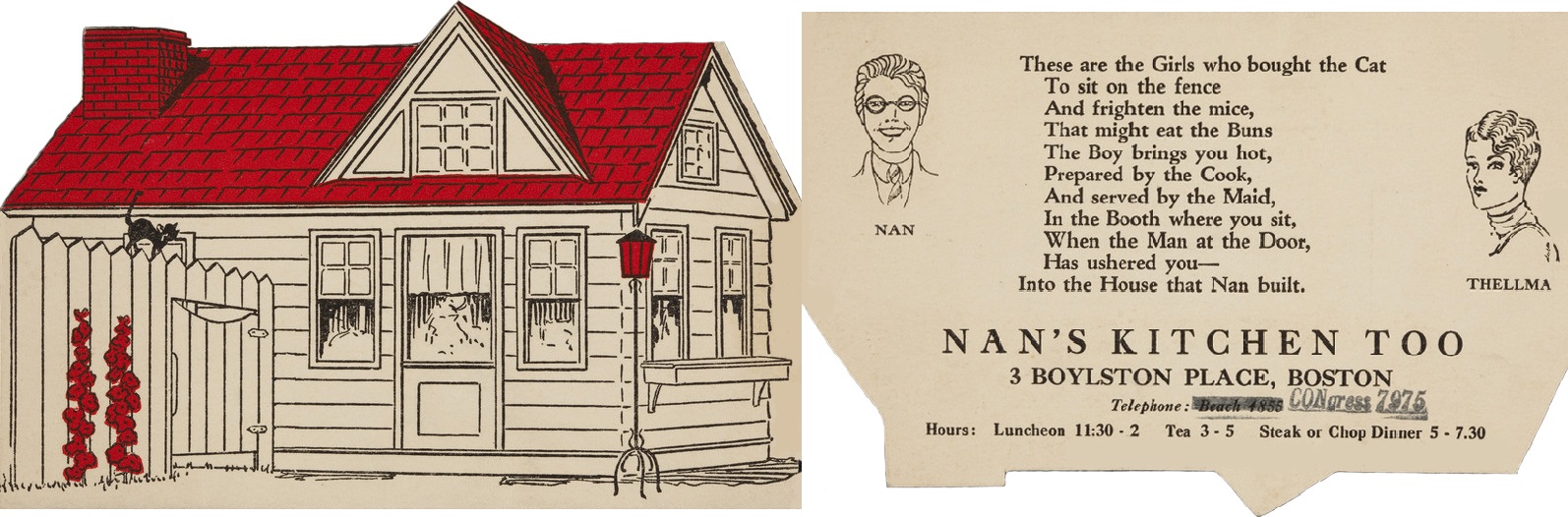
In 1919 two women opened a small tea room in Boston with just four tables. It was something of a lark. They had virtually no money to outfit it so they bought used furnishings. The location was a candlelit basement on Oxford Terrace in Boston, a romantic name for what would generally be known as an alley.
Anyone reading about their opening might have predicted they would fail spectacularly – especially after noting their rather boastful claims: “Such a place as we are about to open to the public is rare in New England. We are just trying out an idea and are seeking an answer to it by actual experiment rather than to obtain profits. If this is a success we will open others in large cities of the country.”
Despite being in an unpretentious building in a lowly area it turned out to be a very favorable location, in walking distance of the central Boston Public Library and Copley Square with all its hotels and nearby shops.
They named it Nan’s Kitchen after Nan Gurney, one of the founders. The two had met while in the Navy during World War I. Before that Nan had been married, but left her husband behind to join the service. Claiming desertion, he divorced her. Nan’s partner Thellma McClellan had worked as an astrologer before joining the Navy. Both enjoyed performing and were involved with vaudeville and amateur theatrics.
Nan’s Kitchen was an instant success, popular with members of the Professional Women’s Club to which they belonged. It also attracted fellow vaudeville performers. Publicity helped, particularly newspaper stories that made the tea room sound like a haven for romantic trysts at lunch and afternoon tea. They added more tables, but continued to specialize in one dish, chicken and waffles.
They must not have made much in the way of profits initially because they continued their side jobs as freelance teachers of music and elocution for several years. They were generous with the servers (who wore smocks, Oriental pantaloons, and artists’ caps), giving them a share of profits and paying them over the summer when the tea room closed.
In 1925 the pair seemed to become more serious about the restaurant business, opening a second tea room called Nan’s Kitchen Too at 3 Boylston Place. The next year the original Nan’s remained open all summer for the first time. The following year it was remodeled to resemble an outdoor garden containing a small cabin where a Black woman prepared the waffles, an arrangement also in use at the Boylston Place Nan’s. (Shades of Georgia’s Aunt Fanny’s Cabin? I would hope that Nan’s Black cooks were not costumed as Mammys!)
Although Nan and Thellma lived together in the 1920s, in 1930 they no longer did. In 1931 Nan went to New York where she worked as steward in an “exclusive Manhattan club,” according to an advertisement for Birds-Eye frozen foods. From 1934 to 1936 she ran Nan Gurney’s Inn, in her home town of Patchogue, Long Island, where she had grown up as Lettie L. Smith. After that, in 1937, she opened Nan Gurney’s Restaurant on Northern Blvd. in Flushing NY, specializing in “Long Island food.” [Flushing restaurant shown below later when it was Villa Bianca]
In 1932 Thellma, who had managed Nan’s Kitchen Too, was living in Connecticut. A version of Nan’s moved to the Motor Mart Building on Park Square and remained in business until 1935, but whether Thellma or Nan had any connection with it then is unknown.
In their restaurant career sandwiches came from humble beginnings. They could sometimes be found in eating places as far back as the early 1800s, such as at the Ring of Bells, a porter and oyster house in New York. But they became more popular when they teamed up with beer joints after the Civil War. They also flourished in Boston’s “sandwich depots” of the 1880s — bean sandwiches included. And they were among the edibles offered by lunch wagons, saloons, and stand-up buffets in the late 19th century.
But it was the trend toward lighter mid-day meals in the early decades of the 20th century, spurred by the growth of cities, that gave sandwiches their big boost. Then, as light meals replaced hot dinners at noon, they found their niche, furnishing a quickly prepared menu item available in a variety of styles and combinations. Sandwiches of all kinds – named after celebrities, toasted, clubs, St. Paul’s — continued to flourish until after WWII when hamburgers began to take center stage.
While some eating places stuck with hot meals at noon in the early 20th century, others were quick to embrace sandwiches, particularly lunch rooms, tea rooms, drug stores, and delis. The sandwich shop was declared the winner among fast food restaurants. To critics the proliferation of this slapped-together fare was a sign of cultural decline. “The postwar decade might be known as the era of the sandwich,” declared cultural observer Eunice Fuller Barnard in a New York Times article of 1929 with the mournful headline, “We Eat Still, But No Longer Do We Dine.”
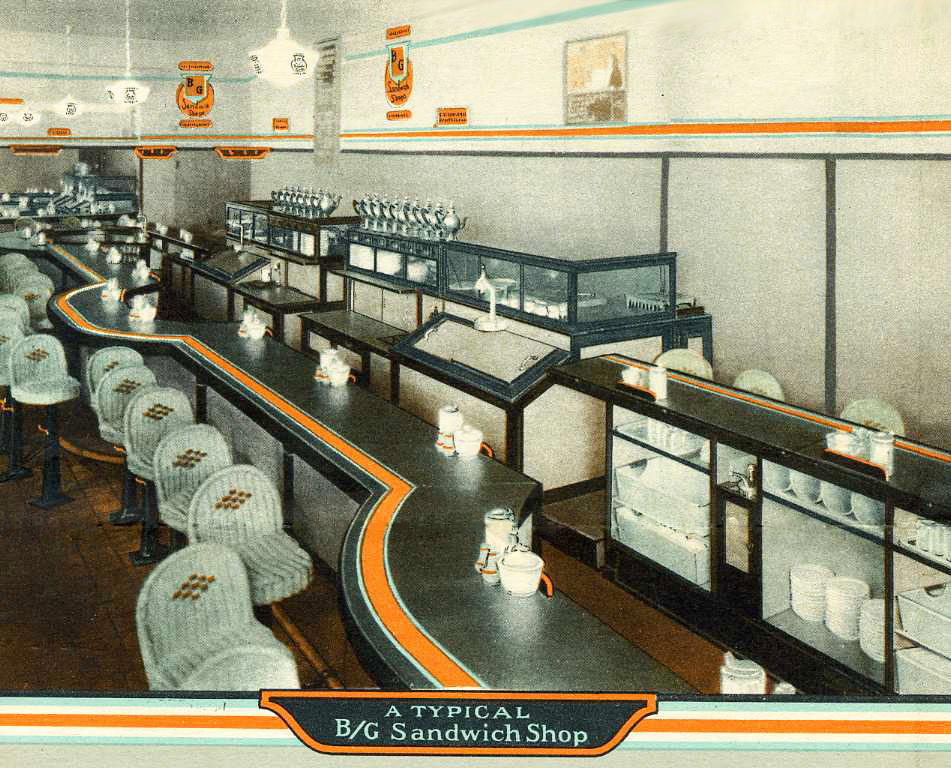
Among new developments was the formation of sandwich chains such as the Tasty Toasty and the Hasty Tasty. The B/G System was one of many in that category, which also included R&C, C&L, S&S, and no doubt other alphabetical combos across the USA. In 1924, the “Purely American, Meal in a Minute, No Tipping” B/G chain claimed to pay wages allowing their workers to “live according to American standards.” It had outlets in 16 large cities and was about to spread further. Was St. Louis the champion host of sandwich shops? Included among the city’s 52 sandwich shops in 1938, there were at least 6 “sandwich systems,” the Continental, Hollywood, Nickel Plate, Night Hawk, Ure-Way, and Yankee.
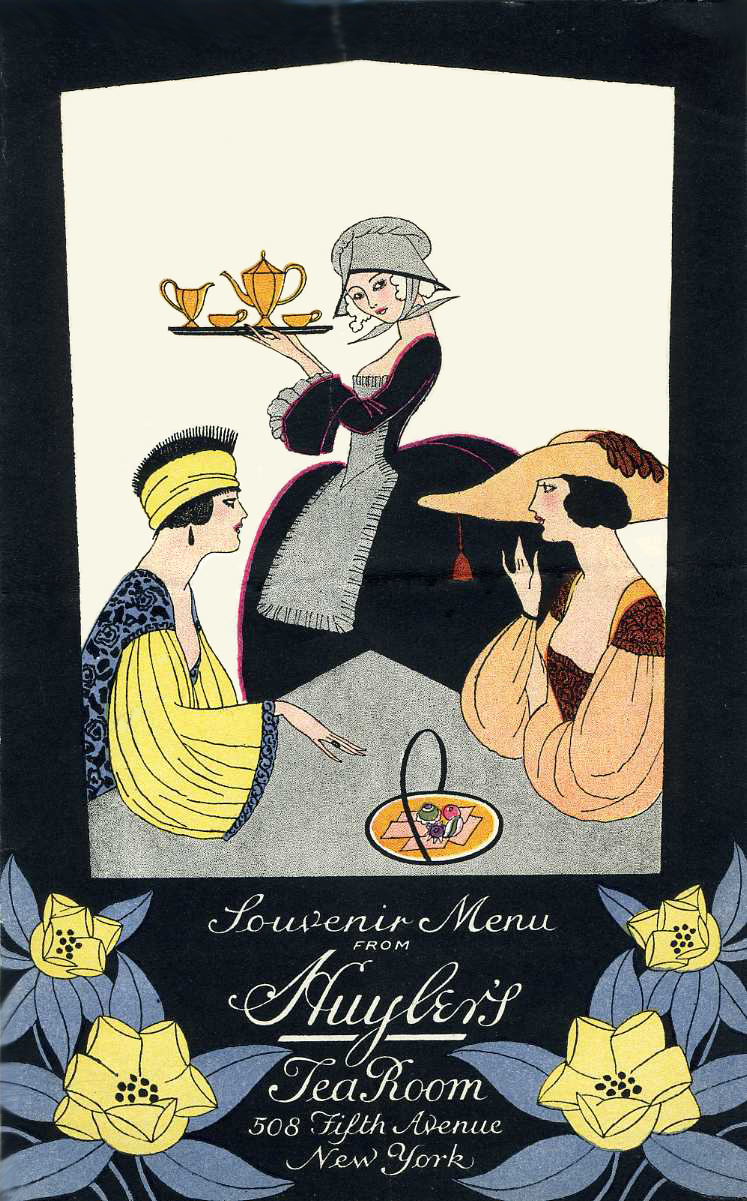
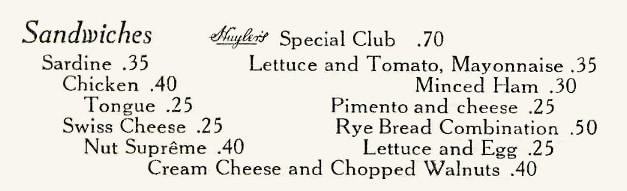
The sandwich selections on the menu shown here are from the Huyler’s confectionery-based chain. Tongue and Cream Cheese sandwiches, rarely (ever?) seen today, were quite popular in those early years (1921 menu above).
Polly’s Cheerio Tea Room’s Ham and Jam on French Toast would seem to be unusual, though perhaps Los Angelenos would have disagreed (1932 menu above).
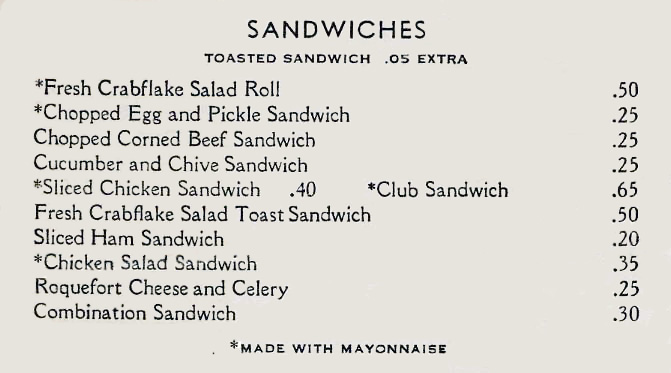
I can’t account for why Schrafft’s in New York City felt the need to indicate which sandwiches were made with mayonnaise (1938 menu above). I’ve found one other tea room, located in St. Joseph MO, that included the same annotations.
Among the other interesting sandwich combinations I’ve found are Cucumber & Radish (25c at The Cortile in NYC in 1928); Egg and Green Pepper with Mayonnaise on Whole Wheat Gluten Bread (25c at Schrafft’s in 1929); “Chef’s Pride,” Smoked Tongue, Sliced Chicken, and Deviled Eggs double decker (50c at Townsends, San Francisco in1933); Peanut Salad (10c at The Candy Box in Winona MN in 1935); Peanut Butter, Sliced Tomato, Bacon, and Lettuce triple decker on toast (25c at The Little White House in NYC in 1936); and Marshmallow and Peanut Butter (15c at The Bookshop Tearoom in Springfield MA in 1946).
I prefer my BLTs without peanut butter. Hold the marshmallows, please.
In the 1890s old wayside inns and roadhouses removed the horse troughs and replaced them with bicycle stands. A new day was dawning!
For years, ever since railroads had reduced horse-and-carriage traffic on the old colonial turnpikes, roadside eating and drinking places outside cities had been in serious decline. After the Civil War they were visited mostly by farmers and marketmen taking their produce to the city by horse and wagon. But, due to the popularity of bicycling beginning in the late-1880s, city people became the favored customers, both because they came in larger numbers and because they spent more.
Bicycling was fast becoming the favorite leisure-time activity of the American public. They couldn’t wait to take a spin in their free time, often on a route with wayside inns and roadhouses. The oldest inns were in the East, mostly found in states such as Massachusetts and Pennsylvania. The Red Lion inn at Torresdale PA, for example, was built in 1730.
For those preferring shorter rides, city parks were attractive, perhaps none so much as Philadelphia’s Fairmount Park. It was well supplied with places to stop for a bite [such as The Dairy, shown here]. New Yorkers liked to tour the good roads on Staten Island or pedal out to Long Island and Coney Island, often making a stop at the beach. Bicyclists in Oregon were drawn to a rose farm outside Portland, site of the Ah Ben roadhouse where chicken dinners were served.
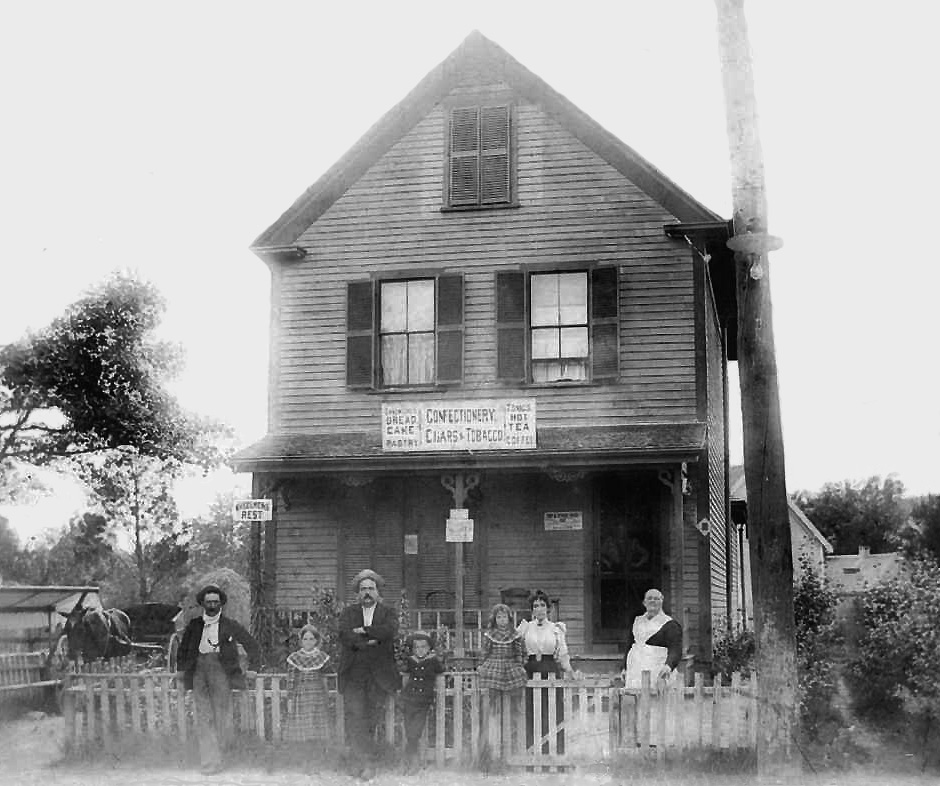
There were also eating places set up in homes along the wayside, and homemade refreshment stands in fields. Often these eating and drinking places were dubbed “Wheelman’s Rest.” One in Malden MA was offering light snacks in 1896, but apparently no beer or liquor, an activity that landed many proprietors who had no liquor licenses in jail.
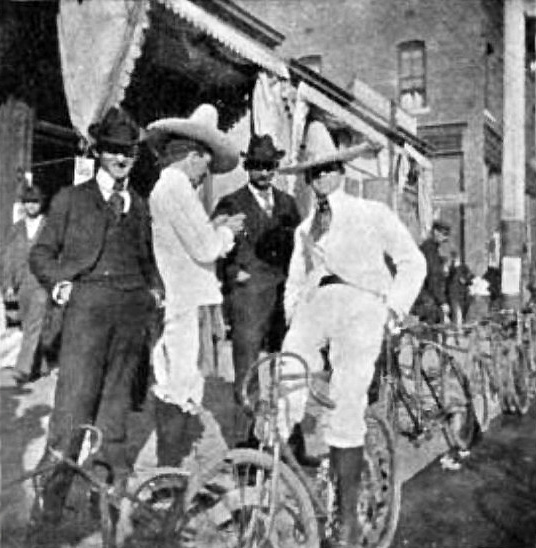
Californians boasted that bicycling was possible year round in “the land of sunshine.” Country trips might be planned around visits to old missions. Pictured above are members of San Diego’s Crown City club, wearing white suits and sombreros on a tour in 1896.
Bicycling was popular across the country with men and women, both white and Black. Black cyclists, however, were banned from some local clubs and, after 1894, from membership in the national League of American Wheelmen. That did not stop them from cycling, but I can’t help but wonder whether they were welcome at most inns and roadhouses.
White women, however, were welcome, despite those who criticized them for showing their ankles or adopting non-ladylike postures. For years feminists had tried and failed to reform constricting women’s clothing. Almost overnight, opposition faded as bicycling women began wearing split skirts and bloomers. Beyond clothing, it seemed as though the new past time had a freeing effect. A journalist visiting a Bronx beer garden one evening wrote: “The bicycle has made ‘new women’ of them. They lean their elbows on the table and call for beer, or, leaning back, cross their legs man fashion and sip from the foaming mug.”
More conventional “wheelwomen” might prefer tea-roomy places serving nothing alcoholic where menus included milk, root beer, and lemonade, along with sandwiches, cheese and crackers, and cakes. Servers there were women who, according to one account, were ready to repair a sagging hem, brush dirt off a costume, or attend to a minor wound. The short-lived Greenwich Tea Room in Connecticut, operated by two young society women, offered dainty sandwiches of tongue, ham, chicken, or lettuce, plus home-made cake and ice cream. Drinks included café frappe and café mousse, both 10 cents.
Bike paths were crowded from April through October, especially on Sundays, the most popular day of the week for cycling. Christian ministers were horrified, particularly if stopping at roadhouses was involved. As one wrote in 1897, this inevitably led to “blunting the moral sense, dulling the moral perceptions, and tainting the purity of the moral character . . .”
Shore dinners also attracted bicyclists. In 1899 a cyclist traveling along the shore from New York City to Boston stopped at Hammonasset Point in Madison CT for a dinner that included clam chowder, bluefish, steamed clams, boiled lobster, potatoes, corn, tomatoes, cucumbers, pudding, ice cream, coffee, and milk – all for 50 cents. And an abandoned church turned restaurant and bowling alley in Undercliff NJ [pictured] did a brisk summer business in clam chowder with cyclists traveling along the Hudson River cliffs.
In the early years of the 1900s, the fad began to slow somewhat. Bicycling on roads became more dangerous as the number of cars multiplied. Through the years bicycling organizations had lobbied ceaselessly for improvement of the nation’s roads, most of which were unpaved. But they did not reap full benefit. As roads were improved, cars soon took over and bicycling accidents, often fatal, increased. However, automobile drivers continued the Sunday habit of heading out to country inns, tea rooms, and roadhouses that bicyclists had begun.
In roughly the ten years preceding passage of the 19th amendment giving women the vote in 1920, suffragists ran tea rooms and lunch rooms to raise funds for the cause and to publicize their arguments for why women should have the right to vote.
Most major cities – New York, Boston, Baltimore, Hartford, Charleston, Atlanta, D.C. [see above illustration], etc. – had a suffrage tea or lunch room, many located in the local suffrage headquarters. In smaller towns they might be temporary, running only for a week or so in order to get money for something such as sending a delegate to a meeting out of town. There were other related ways to make money: in San Francisco suffragists sold a specially packaged Equality Tea, with a booth in the Emporium department store.
Some groups served only tea but in larger cities tea and lunch rooms also provided food. When a suffrage tea room opened in Chicago in 1914, it offered a variety of salads and sandwiches with a beverage for 35 cents. Desserts could be added for another 15 cents, but evidently pie a la mode was reserved for male guests. Men were warmly invited to patronize suffrage tea and lunch rooms, and treated very well, since they would be the ones deciding whether women would get the vote. Lifelong peace activist Mildred Scott Olmsted [shown here at age 29], interviewed at age 97, said she had been a volunteer waitress at Philadelphia’s suffrage tea room, where they “lured men in for a good cheap business lunch.” “Then,” she said, “you could hand them literature and talk.” No doubt she did a lot of talking. Over and over she heard the argument that women should rely on husbands, fathers, and brothers to vote for them.
At Boston’s suffrage lunch room on Tremont Street [shown below] substantial meals were available, such as corned beef hash with beets and a muffin or boiled salmon with egg sauce and potatoes, both for about 30 cents. The back of the menu was used to inform diners that if the lunch room succeeded in adding another 40 daily patrons to its usual 160, it would make enough profit to cover its office rent. Yellow was the color most often associated with the suffrage cause, explaining the Sunflower name adopted by the Boston suffragists.
Undoubtedly, the most eye-catching of the pro-suffrage tea and food dispensaries was the yellow and black lunch wagon that showed up in the Bronx near Fordham College in the summer of 1911. Suffrage volunteers worked in it, selling lemonade and sandwiches. The plan was to have one wagon in each of the five boroughs; one showed up in Brooklyn in 1915, though I couldn’t determine if there were others.
The lunch wagon was only one of New York’s suffrage eating places. At 70 Wall Street was the Votes for Women lunch room run by the Empire State Suffrage Campaign Committee, in a space donated by the husband of one of the suffragists. When a promise of homemade food was made on September 16, 1915, the place was mobbed, with men crowding the tables and “against the walls.” A menu published later promised “Real Home Cooking,” featuring Chicken Salad, Corn Bread, Waffles with Real Maple Syrup, and Home-made Ice Cream.
The offer of “homemade” food was politically strategic in that it reinforced the idea that suffragists were feminine women, not pseudo men as argued by the anti-suffragists. Using the same logic a suffrage group in Washington state put out a cookbook with 700 recipes. [1917 ad for Philadelphia’s lunch room show here]
Multi-millionaire Alva Belmont financed another New York City suffrage lunch room on East 41st street, at the headquarters of her Political Equality League. There middle-class women who could afford to spend 50 cents for lunch ate in one room, while working-class women ate inexpensive sandwiches in a second room.
Along with suffrage groups, probably every city also had an organization of women opposed to equal suffrage. They also tried to gain support through teas and lunches, though these tended to be occasional events held at the antis’ headquarters or in someone’s home. In February 1917, the District of Columbia Association Opposed to Woman Suffrage, for instance, created a pink tea room – pink being the antis’ color — at their Pennsylvania Avenue offices for visitors attending the inauguration of Woodrow Wilson. In Des Moines IA, the local anti-suffrage association held a tea reception at Younker’s Department Store to host a prominent anti-suffragist from Pennsylvania.
Just how helpful suffrage eating places were in boosting the cause is impossible to assess, but they surely must have helped build bonds among feminist activists such as Mildred Olmsted.
It's great to hear from readers and I take time to answer queries. I can't always find what you are looking for, but I do appreciate getting thank yous no matter what the outcome.
So, e-mail me!