Category Archives: food

Chinese for Christmas

Readers may be familiar with the custom among many Jews of going to a Chinese restaurant on Christmas Day. Hard as I tried I could not determine when this custom began, although based on advertisements I did get the sense that the tradition of going to the movies on Christmas Day may have begun in the 1920s.

That is the same decade for which I found the earliest advertisements by Chinese restaurants in Jewish newspapers. [Wong Yie, American Israelite, 1922, Cincinnati] I didn’t find any Chinese restaurant ads that invited readers to visit on Christmas Day, though I saw some that reminded them to make reservations for New Year’s Eve. Some also mentioned that they were near movie theaters. In the 1930s some wished readers of Jewish papers happy new year at Rosh Hashanah.

So, even though I don’t know when Jews began going to Chinese restaurants on Christmas Day, I suspect that the affinity between Jews and Chinese restaurants became notable in the 1920s.
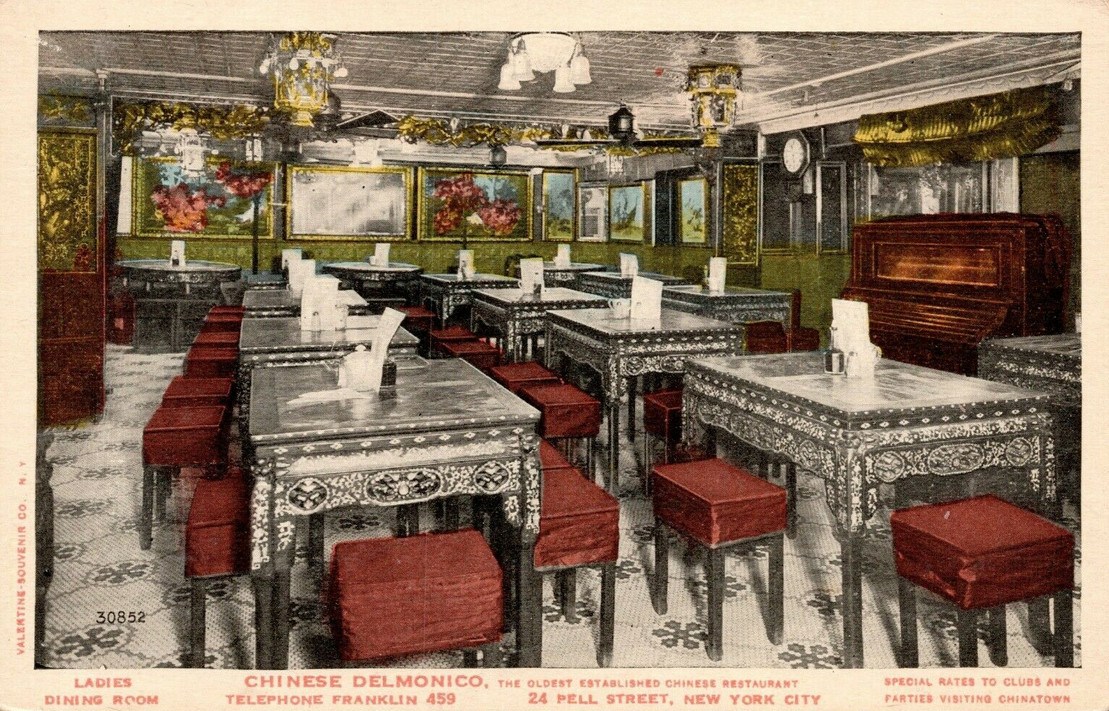
While the 1920s may have marked the blossoming of Jewish patronage of Chinese restaurants, I did find one earlier example of a Chinese restaurant said to be patronized by Jewish businessmen. According to a New York Tribune story of 1907, Chinese Delmonico’s on Pell Street near the wholesale center was kosher. At “Kosher Delmonico’s,” as it was called in the story, a French chef prepared mushroom delicacies, lotus lily seed soups, and other dishes for lunch using no dairy products or “game of the kind that is shot.”
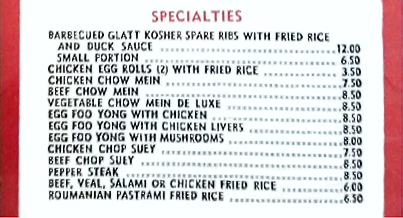
Bernstein-on-Essex, a deli that opened in the 1920s on New York’s lower East Side, is often credited with being the first restaurant serving kosher Chinese food – a 1959 addition to the menu [above menu fragment from a later date]. But it may not have actually been the first: Aside from Chinese Delmonico’s, there was said to be a kosher Chinese restaurant on Temple Street in the Jewish section of Los Angeles in 1929.

What Bernstein’s might have been an early example of, though, was a Jewish restaurant that served kosher Chinese food – in contrast to a Chinese restaurant that was kosher, which was rarer. Although Chinese restaurants generally did not feature dairy dishes, typically they would serve pork, as well as shellfish, meat that wasn’t from kosher butchers, and noodles cooked in lard.

For the most part Jews had to be willing to make whatever adjustments they found necessary in order to enjoy Chinese restaurants. This could mean not ordering pork, shrimp, or lobster dishes, or, as many writers have pointed out, accepting dishes with pork that had been minced and “hidden” in wontons. Nonetheless, not everyone was so careful. According to Haiming Leu, author of A History of Chinese Food in the United States, one of the most popular dishes with American Jews was moo shu pork. Such behavior brought an angry comment from a rabbi writing in Newark’s Jewish Chronicle in 1929: “The writer has seen families leaving an orthodox synagogue on Sabbath noon and taking the new Bar Mitzvah, who has just pledged his allegiances to Jewish tradition, into a Chinese restaurant for a salt-pork chop suey meal.”

While the topic of Jews and Chinese restaurants has been a popular one with scholars and journalists, it’s worth noting that historically Jews were not the only non-Chinese cultural group that heavily patronized Chinese restaurants. Even though in the early 1930s Jews were estimated to make up 60% of the white clientele of Chinese restaurants in Philadelphia and New York, the estimate was that white customers totaled a minority of patrons. The rest of non-Chinese customers were Black.

After WWII Jews began moving from the inner cities and into the suburbs. Meanwhile, most African-Americans stayed behind. Many Chinese proprietors courted their Jewish customers, often opening suburban restaurants with pleasant interiors. In Black neighborhoods often the facilities tended to be poorer, many for carry-out only, and some even outfitted with protective bars and orders taken and delivered through small hatches.
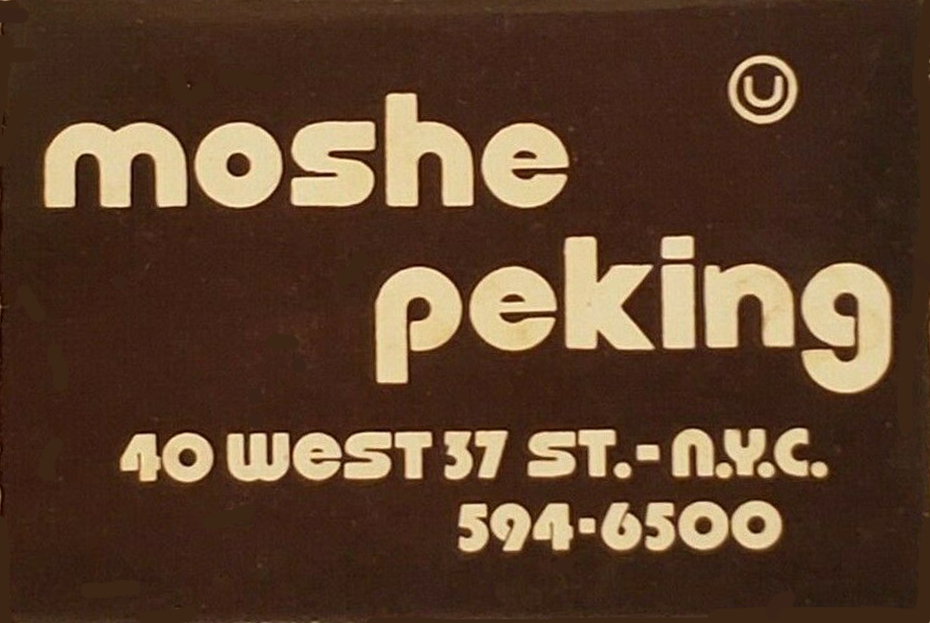
Another change in the postwar years was the increase in the number of kosher Chinese restaurants, some, such as Sabra and the popular Moshe Peking, with Jewish owners. The 1970s and 1980s saw a rise of kosher Chinese restaurants adhering to what appeared to be a stricter standard in how food was obtained and prepared and also in hours of operation, being closed on the Jewish Sabbath as well as holidays. Additionally, they had a rabbi on hand to inspect food preparation.

Happy Holidays to readers, whatever you may be eating on December 25!

© Jan Whitaker, 2019

12 Comments

Filed under alternative restaurants, food, kosher, patrons, restaurant customs

Turkeyburgers

If the turkey growing industry had one marketing mission in the early 20th century it was to get consumers to eat more turkey, and to eat it year-round.

So, during the Depression turkeyburgers arrived upon the dining scene.

In the mid-1930s humorists found rich material in California cuisine, notably in the range of burgers found at weird and fanciful roadside eateries. Among them chickenburgers, nutburgers, onionburgers, lobsterburgers, even mysterious huskyburgers. And on Los Feliz Boulevard in Los Angeles a commentator spotted a neon sign advertising “The Snack with a Smack – Our Toasted Turkeyburger.”

The stories that appeared in the press attributed turkeyburgers to California’s bizarre culture. But what they didn’t say was that in the 1930s California was becoming a major turkey producer. Production had moved westward from its East Coast home of origin. In California, dry weather conditions were more favorable for turkey raising. But in 1936 overproduction resulted in a serious drop in prices. This was bad for producers but good for Depression-era drive-ins and roadside stands. And now producers were more interested in increasing turkey consumption than ever before.

Gonzales, Texas, was another important turkey-raising area. A local newspaperman there had a product placement idea about how to stimulate turkey sales. He suggested that since the comic strip character Wimpy was known for his love of hamburgers, it would make sense to introduce turkeyburgers into the strip. Wimpy started eating them in December of 1939.

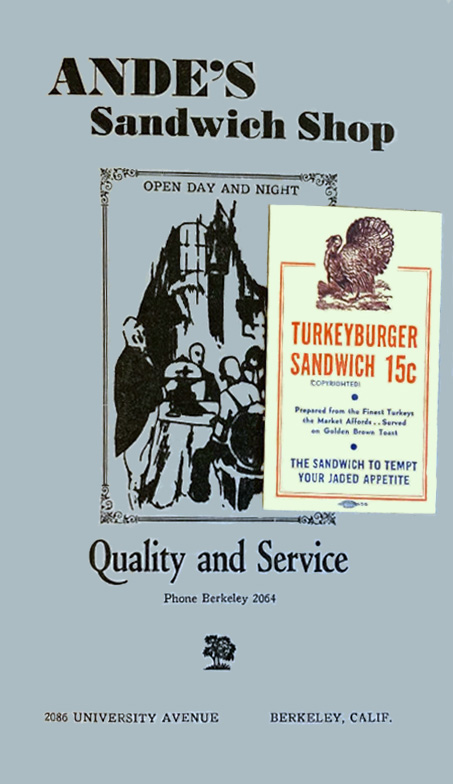
Meanwhile, in Corpus Christi, Texas, a drug store was offering a December holiday lunch of sorts, “Something New”: a Turkey-Burger with waffle potatoes and cranberry sherbet, for 19 cents. Also in 1939, someone in Phoenix registered the trade name Turkey-Burger with the Arizona Secretary of State. It’s interesting, too, that the Berkeley, California, menu shown below, possibly from the 1930s, says “copyrighted!” following “Turkeyburger Sandwich.” (Thanks to the reader who sent me a scan of this menu and inspired this post.)

With rationing of beef, pork, veal, and lamb in World War II more restaurants added turkeyburgers and other turkey dishes to their menus. In 1941 the magazine Chain Store Age tested recipes for turkeyburgers and turkey salads on behalf of in-store soda fountains and luncheonettes. It showed that turkeyburgers had high profit potential: if a turkeyburger on a bun was served with cranberry sauce, sliced tomato, and potato salad, the magazine reported, it could be priced at 25 cents while costing only 6.55 cents. A few years later Payless stores in Albany, Oregon, cashed in on the idea, boldly charging 40 cents for their sandwich.

In the 1950s drive-ins served turkeyburgers. In 1950 they were up to 65 cents at Vogel’s Drive-In in Ogden, Oregon, though only 30c a few years later at Moeby’s Hamburger Palace in Eureka, California. A Texas drive-in revived the idea of burger variety, offering sandwiches made of chicken, turkey, rabbit, shrimp, or pork, all for 40 cents. Somewhat surprisingly, in 1969 Ferdinand’s in Honolulu’s Coral Reef Hotel, which specialized in 16 kinds of burgers, offered a Turkey Burger Deluxe on Thanksgiving Day.

Starting in the 1970s and especially in the 1980s – and continuing today — turkeyburgers came to represent a healthier substitute for a hamburger, one with less fat and fewer calories.

Have a delicious Thanksgiving!

© Jan Whitaker, 2019

8 Comments

Filed under drive-ins, food, restaurant customs, roadside restaurants

Coffee and cake saloons

When it came to cheap ready-to-eat food that was available around the clock, butter cakes sold in coffee and cake saloons were king. By the mid-19th century they had become food of urban lore. They were said to be favorites of people of the night such as newsboys, newspaper printers, policemen, volunteer firemen, and prostitutes.

Until the 1880s when they widened their menus, coffee and cake saloons served nothing but those two items. Although called saloons, they were not drinking places. Saloon then simply meant a room.

There was no hint of elegance in these places. Many were run by Irish proprietors, at a time when the Irish were pretty much at the bottom of the class order. Usually they were in basements, but those were the more established coffee and cake saloons. Other sellers occupied market stands or peddled butter cakes on the streets with trays strapped over their shoulders.

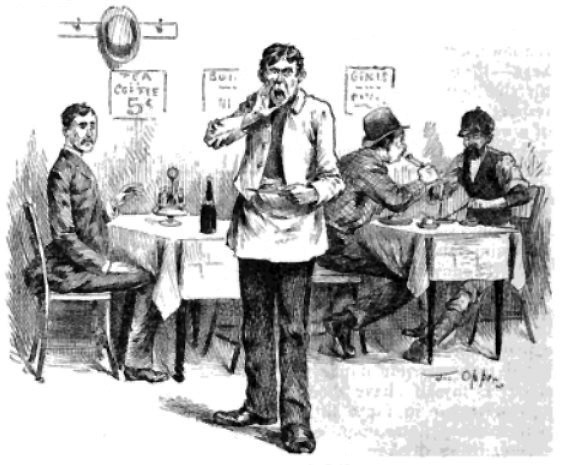
The lack of niceties in coffee and cake saloons was celebrated in a joke that described a waiter’s shock when asked for a napkin in one of these places. He had a quick comeback, inquiring whether the patron wanted his napkin fringed or unfringed. (Surely there were no tablecloths as in this 1889 illustration.)

Among the well-known proprietors of New York City were George Parker, who opened a place on John street in 1832 and “Butter-cake Dick,” whose full name was Dick Marshall. Oliver Hitchcock took over from Dick, who turned to a life of crime. Pat Dolan, starting business in the 1860s, reputedly invested in real estate and had amassed a quarter of a million by his death in 1889, while a couple of the Meschutt brothers later opened hotels.

Lore surrounding these establishments grew as they became rarer in the late 19th century. By the early 1900s the memory of coffee and cake saloons was tinted with nostalgia. It was often said that proprietors retired with fortunes — an unlikely story in the majority of cases. Another notion was that they were “peculiar to New York.” This, too, is inaccurate. I have found them in St. Louis, Sacramento, New Orleans, San Antonio, and San Francisco. Undoubtedly they could be found in most large cities.

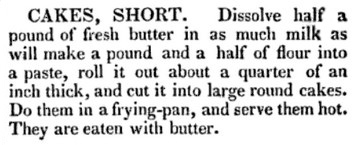
Just what was a butter cake? That isn’t totally clear. They are described differently, to the point where it’s anyone’s guess what they really were. Sometimes they sound like doughnuts, sometimes griddle cakes, sometimes like carnival-style fried dough – but without sugar. In St. Louis waiters referred to them as a “stack of whites.” Often they are referred to as biscuits. Sometimes they are called short cakes, as in the 1850s recipe shown here. I believe that initially they were made of little more than dough and were nearly indigestible, leading to the nickname “sinkers.” After bakers started adding yeast, they became lighter.

An 1890 story in the New York Sun explains that butter cakes could be either “wet” or “dry.” It said that the wet ones “were saturated with lard or grease of some sort, called butter for the purposes of trade.” But possibly some places really did use butter. A San Francisco restaurant advertised in 1856 that they used “none other than California Butter, fresh from the best Petaluma Ranches.” Their menu called them “New York Butter Cakes,” selling for the high price of 12 cents. In New York an order cost 3 cents. Butter-cake Dick was said to make his sinkers on the griddle and to store them in a kettle of melted butter until orders came in. The three Meschutt brothers sampled Dick’s but found a way to lighten them by adding yeast, splitting the cakes (biscuits?), and letting customers add the butter.

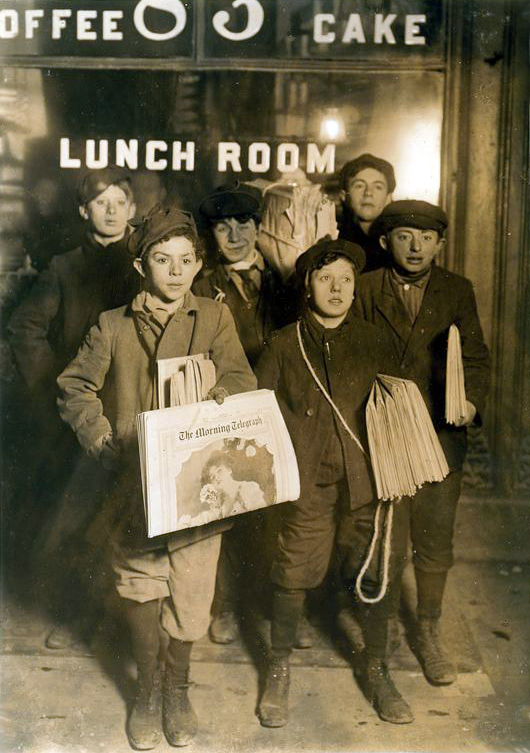
Although coffee and cake saloons were just about extinct by the 20th century, Lewis Hine managed to capture a view of newsboys exiting one in 1908. [shown at top]

© Jan Whitaker, 2019

5 Comments

Filed under alternative restaurants, food, Offbeat places, patrons, popular restaurants, proprietors & careers

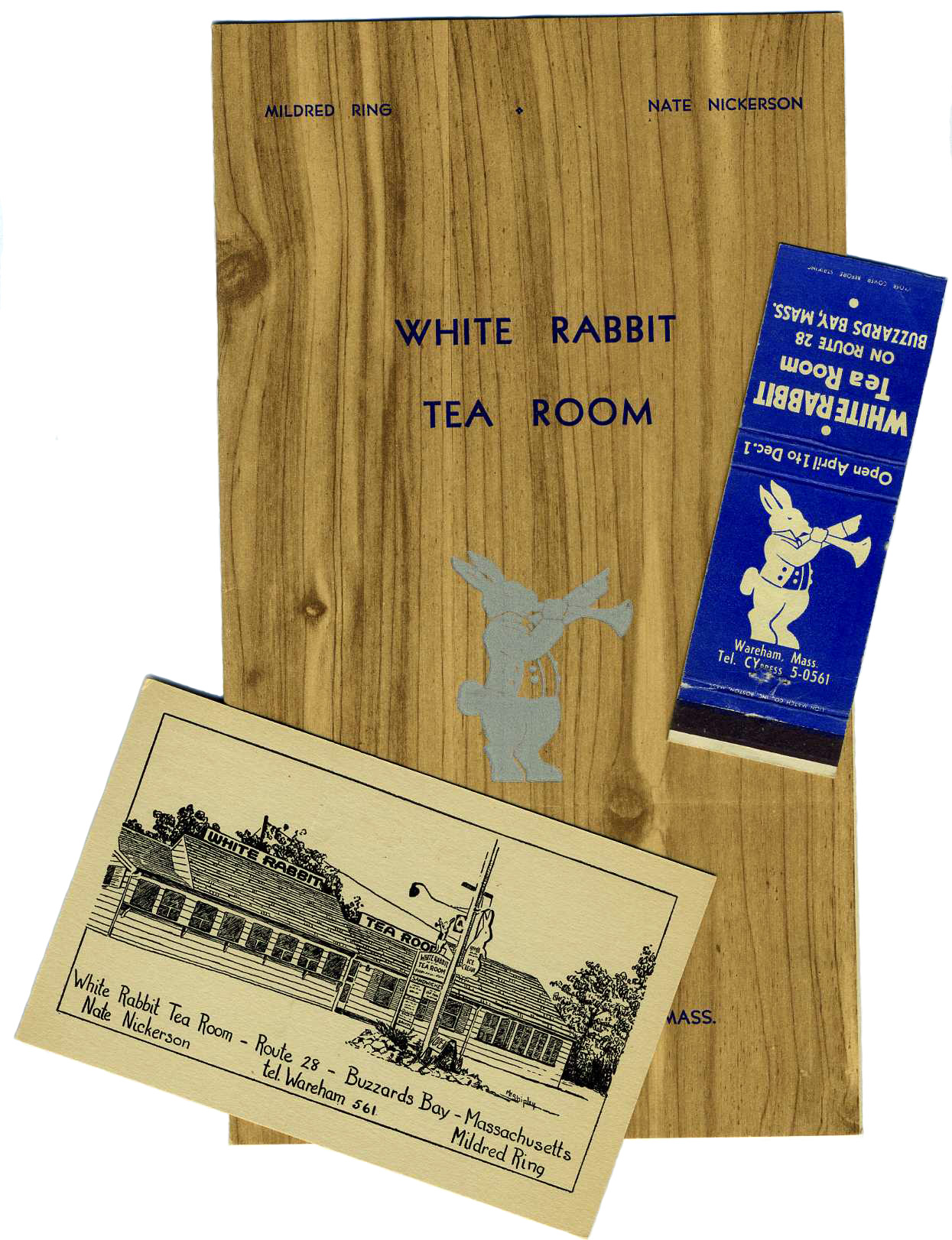
Lobster stew at the White Rabbit

On the menu shown here a bowl of lobster stew cost 70 cents and came with crackers, pickles, and chips. Oyster stew was 50 cents, while fried clams with french fries, cole slaw, and coffee cost 60 cents.

The menu is undated but is probably from the 1940s. Fried lobster was one of the White Rabbit’s most popular dishes, according to Duncan Hines’ 1947 guide book, Adventures in Good Eating. With a fruit cup, tomato, pineapple, french fries, rolls, dessert, and tea or coffee, it came to $1.35. And, of course, they threw in pickles and chips.

In addition to lobster fried, sautéed, or stewed, it was also available as a salad.

Admiring patrons quoted in the 1948 edition of Gourmet’s Guide to Good Eating explained that the reason the Rabbit was always mobbed with people on their way to and from Cape Cod was due to its high standards, excellent food, and, specifically, “plates of hot buttered rolls.”

On Saturday nights the White Rabbit offered a traditional Massachusetts dinner of baked beans for 50 cents. Other interesting dishes on the menu include a vegetable salad sandwich (35¢), a sardine and horseradish sandwich (25¢), and a side order of tomato and cucumbers (15¢).

The tea room got its start in 1931, in West Chatham on the Cape, about 37 miles from the Buzzards Bay location which became its long-term home. Prior to its beginning, owner Nate Nickerson was a taxi driver in Brockton MA, where co-owner Mildred Ring may have worked as a waitress.

Nickerson’s two sons were waiters at the restaurant which was open only from April through November.

In 1966, the final year in which I found advertisements for it, the White Rabbit had evidently abandoned the tea room theme. It then featured liquor and steaks. Nickerson had died in 1950 and it’s likely that it was under different management.

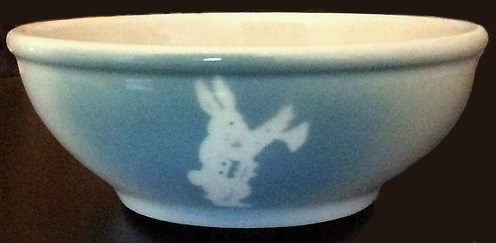
A few years ago I received a nice surprise when a stranger sent me this bowl by Syracuse china used in the tea room.

© Jan Whitaker, 2019

13 Comments

Filed under food, menus, popular restaurants, roadside restaurants, tea shops

Restaurants in the family: Doris Day

I’ve often been struck by how many American families have some relationship to restaurants other than as patrons. It’s not at all unusual to have a family member who has worked for a restaurant or has owned one.

Reading the lengthy obituary for Doris Day in the NY Times this week I discovered this was true for her also. Both her father and one of her husbands worked in or owned restaurants and related businesses.

For most of his life her father, William J. Kappelhoff, had a career in music, whether as a church organist, piano teacher, or choral director in Cincinnati where Doris and her family lived. But by the late 1950s he was operating a place in Cincinnati called the Mound Café, and in 1960 he owned the Melburn Bar. Exactly what was served in either place is unclear but, like many taverns, their menus may have included light food along with drinks.

Kappelhoff divorced Doris’ mother in 1935 and then married the woman he had been having an affair with when Doris was growing up. After his second wife died he married his tavern manager, Luvenia Bennett, in 1961. Because he was Doris Day’s father, and was white, the fact that his new wife was a Black woman was considered unusual and newsworthy and reported widely across the USA.

In 1976 Day married her fourth husband, Barry Comden, who had worked in various aspects of the restaurant business. In the 1960s he was involved with a restaurant dining club which sold coupon books enabling buyers to get two dinners for the price of one at member restaurants. Called Invitation Dinners, in 1965 it operated in nineteen cities around the U.S. including Los Angeles, San Francisco, New Orleans, and Boston.

In the 1970s Comden was hired to open the Old World Restaurant in the Westwood neighborhood of Los Angeles. He also supervised the building of Tony Roma’s, a rib place in Palm Springs CA.

He was also maître d’ or manager (or both) of the Old World Restaurant in Beverly Hills, which was dedicated to serving fresh natural foods without preservatives. Day met him at the restaurant, after she went there on a recommendation from her dentist who was part owner. The Beverly Hills location was the second in the Old World chain which at one time had locations on Los Angeles’ Sunset Strip, as well as in Beverly Hills, Westwood Village, Newport Beach, and Palm Springs.

In a 1976 interview Comden said that Day disliked sauces of any kind. “She likes plain hamburgers, vegetables, plain fish!” he said. It is true that Day was often described as a down-to-earth, no frills woman who rejected glamour, for instance wearing no makeup in public. She said in the interview that one of her favorite dishes at the Old World was the round-the-clock Belgian waffle special, a popular selection that included a whole wheat waffle with sausage, bacon, Canadian ham, or vegetables, plus cottage cheese, two eggs, and a Mimosa cocktail – all for $4.50.

As Day said in her 1976 as-told-to autobiography (Doris Day, Her Own Story, by A. E. Hotchner), when she visited the Old World, Comden would give her scraps to take home for her dogs. The two tried to create a pet food brand that would raise money for an animal foundation she wanted to create, but that project failed as did the marriage. Day and Comden were divorced in 1981.

An interesting footnote: The original Old World, on Sunset Strip, was begun by Jim Baker, creator (with his wife) of a natural-foods restaurant, The Aware Inn, and later The Source, a vegetarian restaurant. Known as Father Yod, he became leader of a commune that eventually moved to Hawaii. Coincidentally, like Day, Baker was born in Cincinnati in 1922.

© Jan Whitaker, 2019

5 Comments

Filed under food, patrons, proprietors & careers

Eye appeal

Long before the internet, color photography became a factor that restaurants had to take into account. In the 1974 book Focus on . . . adding eye appeal to foods, author Bruce H. Axler noted, “The dramatic four-color, full-spread photos of food appearing in magazines have set visual standards for the restaurateur.” Perhaps he was thinking of Gourmet magazine in particular.

Color photography began to be used for advertisements in magazines in the 1930s, and consequently became identified with commerce rather than art. It was used mostly in women’s magazines, frequently to advertise food products at a time when major brands and ad agencies were hiring home economists to oversee product promotion and photography.

After decades of viewing photos of brightly colored food arranged artistically in attractive settings, the American public, possibly women in particular, expected food to look as good as it tasted. With the increase in restaurant patronage in the 1960s and 1970s, restaurants began to realize they needed to focus more on the appearance of what they served.

Bruce Axler, building on considerable experience in the hospitality industry, set out to assist restaurateurs in dealing with vexing problems such as too much whiteness or brownness, shapeless blobs and piles, flat sandwiches, and the empty-plate look. Perhaps most important, he addressed the issue of commonplace food that didn’t look worth its high price considering how much cheaper it was at the place down the street.

Given patrons’ high expectations regarding visuals, Axler set out a depressingly cynical scenario on page 1: “If it [restaurant food] is any less luscious looking, it suffers by comparison to such photos; especially when the guest has had three ice-cold martinis and cannot really taste the difference between a prickly pear and a mashed rutabaga.” He seemed to suggest that restaurateurs couldn’t even count on taste and texture working for them anymore.

He also observed that some of the old-time fixes could no longer be relied upon. Broken potato chips couldn’t fill a void, he noted. Nor could food displays be enlivened by the old standbys parsley and paprika. “Buffets are loaded with mystery meats and salads similarly garnished with parsley and rouged with paprika like so many ancient chorines.”

He should have counseled against overuse of lettuce garnishes and potato borders too.

Axler’s suggestions included ladling soup from a tureen and serving sandwiches opened up, both to fill the plate and to display their innards. He advised that “Mounds are better than blobs, rolls better than slices, shingled layers better than piles,” and that vegetables should be portioned in odd numbers. To give the impression of increased worth, he recommended anchovy or grated cheese toppings.

At times his suggestions bordered on the desperate, such as “planting sparklers in food items” and floating small lit candles on soup croutons. I, for one, am not among the many customers he believed “would enjoy the visual appeal of a bright red tulip stuffed with chicken salad.”

Nonetheless, there is no doubt that restaurants were eager to adopt ideas such as his. Many have become standard practice, yet by now it has become clear that chefs have many more tricks up their sleeves, especially when it comes to making a dish look deserving of a high price. Some seem to go against the wisdom of the past. Who in the 1970s could have foreseen how powerfully miniature food artfully arranged on a king-size plate could signify a $$$$ restaurant?

© Jan Whitaker, 2019

3 Comments

Filed under food, restaurant customs, women

Writing food memoirs

I attended a wonderful panel moderated by Cara De Silva at the past weekend’s Food Writing Forum at the New School in New York. The panelists – all with rich careers in food and writing — had so many interesting things to say, a handful of which are excerpted below. Not exactly restaurant history, but close enough.

Elissa Altman

“I grew up in a home that was tied in knots over food.” Her mother, who was afraid of food, gave her diet pills while her father, a “fresser,” smuggled her off to secret meals at La Grenouille.

Among other books, she is author of POOR MAN’S FEAST and the upcoming MOTHERLAND: A Memoir of Love, Loathing, and Longing.

Mark Russ Federman

“A fish monger from the lower East Side,” he observed that when word got out that he was writing a book about his family’s famed business, “All the literary agents showed up and bought an eighth pound of lox.”

As the third generation of the Russ family to own and operate the family appetizing store, he published a combined memoir/history titled RUSS & DAUGHTERS: Reflections and Recipes.

Madhur Jaffrey

As a memoir writer, she realized that “When I looked back on my life it was all about food.” Reflecting that the name given to her at birth means honey, she commented, “God connected me to food.”

She is author of cookbooks and CLIMBING THE MANGO TREE: A Memoir of a Childhood in India.

Anne Mendelson

Writing a biography of the mother-daughter cookbook authors of The Joy of Cooking she admits, “I was flying blind.” But she considers this a “necessary condition” for writing a biography.

She has written STAND FACING THE STOVE about Irma Rombauer and Marion Rombauer Becker, as well as cookbooks and other food books.

Laura Shapiro

“You can tell any life if you know the food,” she observed. Working on her recent book, she knew she was onto something when she discovered that feminist Inez Haynes Irwin had once confessed that preparing Sunday dinners had “set a scar on my soul.”

Among her books are PERFECTION SALAD and the new one, WHAT SHE ATE: Six Remarkable Women and the Food That Tells Their Stories.


See my new-ish blog on childhood food memories, Archaeology of Taste.


2 Comments

Filed under food, writing

Soul food restaurants

Before the 1960s, the term “soul food” wasn’t used in reference to food. Until then the words had religious connotations for Protestants.

What became known as edible soul food, such as chitterlings, pigs’ feet, greens, black-eyed peas, cornbread, and cobbler (to name just a few), had been popular in the South long before the words soul food were applied. But the diet gained a charged meaning in the 1960s when proponents of Black Power affirmed eating soul food as a political statement.

By any name, soul food was not often found in restaurants outside the South until African-Americans began migrating northward before, during, and after World Wars I and II. Walker’s Café in Wichita KS advertised chitterlings and catfish in 1910. That same year the Gopher Grill in St. Paul MN claimed to be “headquarters for chitterlings and corn bread.” Similar menus were often found at dinners at Black churches and homes. Women belonging to the Social and Literary society of a Baptist church in St. Paul MN dressed in Colonial costumes and hosted a chicken and chitterlings dinner in 1916 to celebrate Lincoln’s birthday, an event where the identity politics were quite different than what would develop in the Black Power movement.

There were also numerous restaurants owned and patronized by Blacks in the North that did not serve soul food, or at least didn’t specialize in it. It’s difficult to find menus from restaurants of the migration periods, but when their advertisements mentioned specialties, they were often similar to dishes in white restaurants. A Chester PA restaurant specialized in oysters in 1910. In Black’s Blue Book for 1923-1924 — which listed Chicago’s prominent African-American citizens, along with recommended businesses — there were only four restaurants that advertised what kinds of dishes they served. Those dishes were Barbecued Chicken, Duck, and Squab; Chicken Salad; Club Sandwiches; Sea Foods; and Chili Con Carne (at two restaurants).

The spectrum of eating places found in New York’s Harlem, Chicago’s Black Belt, and Black urban neighborhoods across the North ranged from down-home, all-night eateries serving factory shift workers to elegant tea rooms lodged in old mansions that hosted patrons with more money and leisure. In Chicago, leaders of the N.A.A.C.P., the Urban League, and visiting foreign dignitaries were inevitably entertained with dinners at top Black tea rooms such as The Ideal, the Bird Cage [pictured, 2018], and the University tea rooms. In Spring 1923, the University Tea Room (“The Most Beautiful Spot in Chicago”) advertised the following menu:

65c – Special Table de Hote Dinner – 65c
Cream of Tomato Soup
Roast Chicken with Dressing
Spring Lamb with Peas
Snowflake Potatoes
June Peas in Cases
Salad
Head Lettuce and Tomatoes
French Dressing
Dessert
Apple Pie with Cheese
Rice Pudding
Coffee
Strawberry Shortcake, 25c
Ice Cream, 10c

Strangely enough, the 1966-1967 version of the Green Book failed to list some prominent Black restaurants with barbecue such as Arthur Bryant and Gates in Kansas City, and soul food places such as Soul Queen and H & H in Chicago. For New York City, it broke restaurant listings into the categories Steaks, American Specialties, Seafood, and Chinese – but not Soul Food.

While some Northern Blacks slowly accepted soul food, others were more resistant. This seemed to hold especially true for those higher in social status. Some of Chicago’s Bronzeville residents who held themselves superior to migrants expressed criticism of newcomers’ food customs, such as eating chitterlings. A journalist writing in the New York Amsterdam News in 1931 claimed that Harlemites rejected the “Fried Chicken, Pork Chop, Hog Maw and Chitterlings Theories” that assumed all Blacks liked rural Southern food. He also disavowed any special attraction to watermelon.

In 1945 another reporter from the Amsterdam News set out to find chitterlings in Harlem restaurants. He found only one restaurant serving them (Rosalie’s and Frances’ Clam House and Restaurant). He reported that Harlemites were just as likely to eat Chock Full O’ Nuts’ nutted cream sandwiches, Chicken Fricassee, Weiner Schnitzel, or Oysters Casino. At the same time, he observed that whites visiting Harlem enjoyed spare ribs with red beans, concluding, “there are no fundamental points of difference between eating habits of Harlemites and those of the lighter-skinned folk downtown.”

Most soul food histories note that some prominent Black leaders have rejected soul food, pointing to Eldridge Cleaver of the Black Panthers and Nation of Islam leader Elijah Muhammad. In his book Soul Food, Adrian Miller observed that Cleaver wrote in Soul on Ice (1968), “The emphasis on Soul Food is counter-revolutionary black bourgeois ideology.” Instead, wrote Cleaver, “The people in the ghetto want steaks. Beef Steaks.” Elijah Muhammad denounced soul food as a legacy of slavery that should be decisively rejected.

Miller laments the decline of restaurants that serve soul food, marked by the closure of landmarks such as Army and Lou’s and Soul Queen in Chicago. “Across the country, legendary soul food restaurants are disappearing at an alarming pace,” he writes, attributing it to health concerns and reduced business prospects due to the scattering of African-American communities and the popularity of fast food.

With a few exceptions, I don’t think the views of critics such as Cleaver are seen as valid now. And there seems to be a renaissance of interest in soul food among Black chefs and restaurateurs who celebrate it as part of a heritage of resilience and creativity under slavery. Somewhat surprisingly, even vegan soul food restaurants can be found now.

© Jan Whitaker, 2019

9 Comments

Filed under food, menus, patrons, restaurant controversies, tea shops

Effects of war on restaurant-ing

This is such a big subject that I’m focusing only on the two world wars of the 20th century. Both wars made restaurants more central to modern life. The restaurant industry emerged larger and with a more diverse patronage. It was more organized, more independent from the hotel industry, more consolidated, more streamlined in its practices, and less European in its values and orientation.

World War I

● The effects of World War I were felt before the US declared war against Germany in spring of 1917. Americans living abroad, such as artists in Paris, returned to the U.S. Some of them returned to Greenwich Village to develop and nurture something quite foreign here, namely café culture.

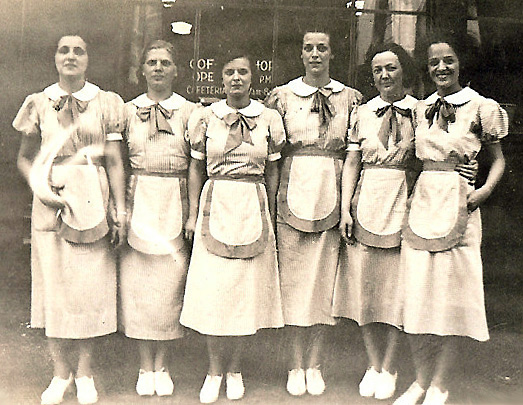
● In Washington DC, wartime bureaucracy required more office workers, increasing the ranks of working women, a new and lasting restaurant clientele. As the female workforce grew nationwide, women’s restaurant patronage from 1917 to 1927 went from 20% of all customers to 60%, and became foundational to the future growth of modern restaurants. Around the country low-priced restaurants accustomed to male patronage were forced to add women’s restrooms.

● Many foreign nationals who had worked as cooks, kitchen help, and waitstaff in restaurants left to join armies of their native lands. The restaurant labor shortage worsened when the draft began in 1917 and foreign immigration ceased. Immigrants were replaced by Afro-American and white women who migrated to cities. Serving in restaurants became female dominated.

● The war brought women to the forefront of food service. Home economists rallied to the cause by opening restaurants. In Washington DC, a graduate of Cornell’s home economics program began a cafeteria for war workers nicknamed the “Dom Econ Lunchroom.”

● Wartime prohibition followed by national prohibition in 1919 dealt a blow to fine dining. The culinary arts of European-trained chefs fell into disuse as many elite restaurants closed after a few lean years.

● Immigrant tastes were reworked by WWI. Those who served in the US military became accustomed to the American diet of beef and potatoes, white bread, and milk, as did Southerners used to “hogs and hominy.” Meanwhile on the homefront, certain “foreign” foods, such as pasta and tomato sauce, were admitted into the mainstream middle-class diet, in this case because Italy was an ally.

● Wartime also stimulated a more business-like attitude on the part of restaurants which now had to work smarter to produce profits. They adopted principles of scientific management — for example, they began keeping books! And they standardized recipes to turn out consistent food despite changes in personnel.

● The decade after World War I saw the rise of sandwiches, salads, milk, and soft drinks replacing the heavy restaurant meals served before the war.

● During the Depression WWI veterans demonstrated and lobbied for their long-overdue soldiers’ bonuses. Many used the bonuses to open hamburger stands and other roadside businesses such as the Kum Inn on Long Island.

World War II

● Many of the same kinds of effects were felt after the Second World War, sometimes more strongly because of the increased duration of the conflict. Immigration came to a halt, furthering the “Americanization” of restaurants. Women trained in institutional management and home economics continued to enjoy expanded opportunities and prestige. Two home economists in Minnesota saw their quantity cooking manual adopted by the military.

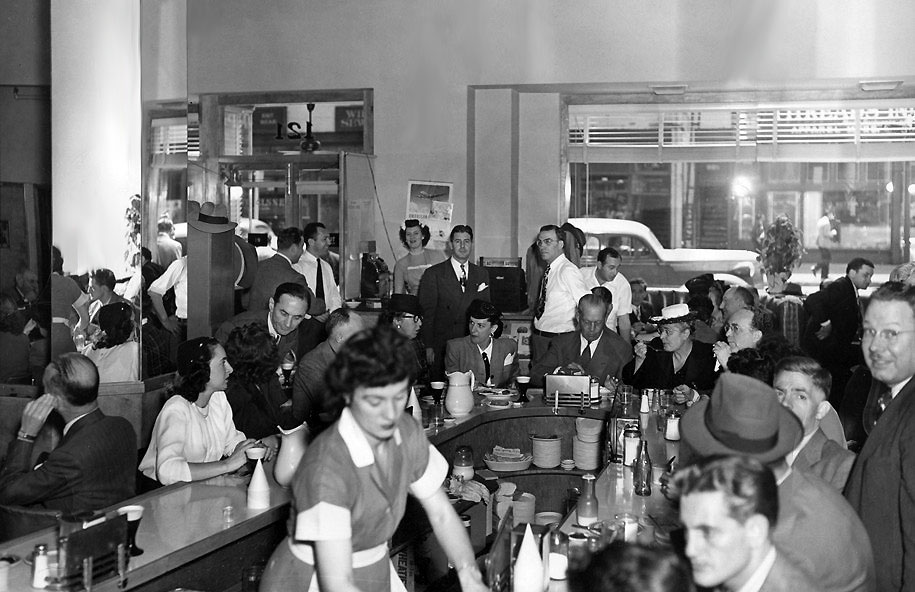
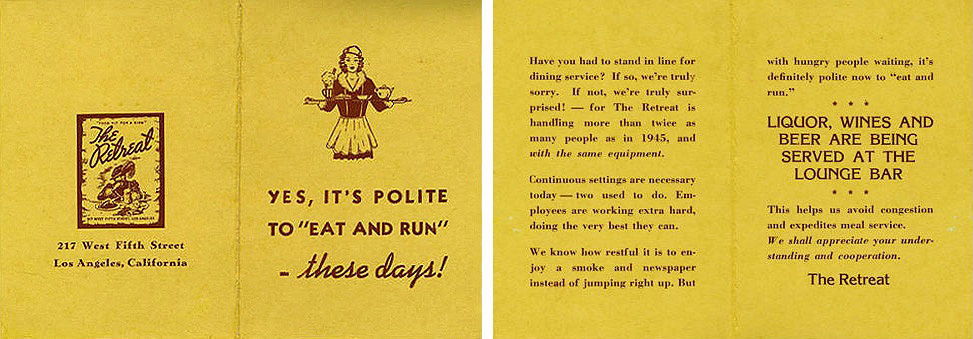
● During the war, the average American patronized restaurants as never before. Southern California restaurants were overwhelmed as an estimated 250,000 workers in war plants who lacked housekeeping facilities turned to public eating places for their meals.

● Food rationing dramatically increased restaurant patronage. In January 1943 the Office of Price Administration announced that the public would not need ration coupons in restaurants. Within weeks after rationing began restaurants were mobbed. In Chicago, Loop restaurants experienced a 25% increase in business. By October of that year patronage in NYC restaurants had doubled.

● Also stimulating the eating-out boom were generous business expense accounts which, said the NYT, “grew into a fat-cat fringe during World War II.” These benefits were meant to compensate workers who could not be granted raises because of government-imposed wage and salary freezes and employers’ wish to avoid paying excess-profits taxes. To retain valued employees they instead gave pensions, medical care plans, stock options, and generous expense accounts. Expense accounts led to the creation of the first nation-wide credit card, sponsored by The Diner’s Club.

● Already in 1944 the National Restaurant Association was looking forward to augmenting short staffs with some of the estimated 300,000-500,000 military cooks and bakers to be demobilized at war’s end. Tuition under the GI bill lured thousands into further training as restaurant cooks, managers, and proprietors.

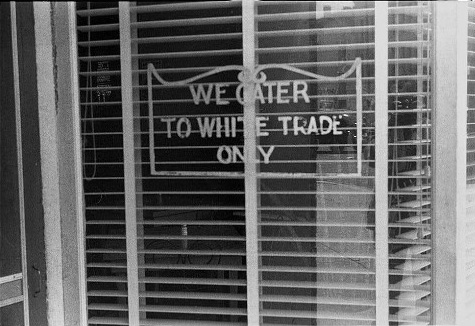
● After fighting a war against a “master race” ideology, returning black GIs strongly resisted racial discrimination in American restaurants. In Seattle the NAACP filed complaints when “white only” signs appeared or blacks experienced deliberately poor service. The signs were meant for Japanese returning from internment camps as well. [Ben Shahn photo, FSA]

● Unlike before the war, eating in restaurants was no longer an unfamiliar experience for most Americans. A manual issued by the New York State Restaurant Association in 1948 proclaimed that restaurants were serving more than 15.5B meals annually. A sociologist attributed the emergence of the sassy waitress to wartime’s broadening clientele which included a “new class of customers, who were considered particularly difficult to deal with.”

● Family patronage, encouraged by a wartime increase in employment of married women, continued to grow after the war. A trade journal counseled operators of suburban restaurants to “be especially nice to children.” In Denver, the average family was said to eat out three or four times a month, a rate unheard of before the war.

● Another lasting effect of wartime eating-out habits was increased restaurant patronage in the South, a region where there had been few restaurants and little restaurant culture. Northern industries were already moving south in 1941, but also, as the restaurant industry noted in May of that year, “most of the Army activity is in the Southern States,” a fact they believed made it the area with the “greatest opportunity for restaurant expansion.”

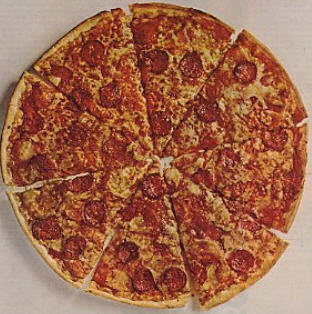
● A number of common menu items can be attributed to World War II. Restaurant patrons learned how to eat lobsters, which were plentiful because they were not rationed. Pizza parlors proliferated because pizza was also simple to serve. Conscripted country dwellers were introduced to sea foods in military service. Veterans who had served in the South Pacific discovered a liking for Polynesian food.

● War spurred the use of new food products by the military, including frozen food. In a remarkably short time, the restaurant industry, which had previously preferred fresh to processed food, adopted frozen foods and by 1955 they accounted for 20 to 40% of their supplies. With the rise of frozen food and other war-facilitated convenience foods came restaurant stalwarts of the 1960s: French fries, breading mixes, and cheese cake.

● Along with frozen foods came new technologies for their preparation, in particular microwave ovens and quick-recovery griddles, both military spinoffs. The RadarRange, presented at the National Hotel Exposition in 1947, was developed by Raytheon using principles of infrared technology developed during the war. It not only permitted food to be cooked lightening fast but also made reheating pre-cooked frozen entrees possible. Another marvel was the Rocket Griddle which featured fast heat recovery that enabled frozen food to be cooked without defrosting.

● The development of the air freight industry following WWII, stimulated by the availability of trained pilots and surplus airplanes, permitted restaurants to obtain foods from locations around the world. A restaurant called Imperial House in Chicago was approached by two former Air Force fliers who proposed to fly in king crabs from Alaska by freezer plane. By 1952 the restaurant was bringing strawberries from Florida and California, bibb lettuce from Kentucky, salmon from Nova Scotia, pheasant and venison from South Dakota, grouse from England, and paté from France.

● Last but not least, the ideal of organizational efficiency was stimulated by both wars. The World War II postwar period saw the rise of a much larger food service industry.

And, of course, this brief survey is far from complete.

© Jan Whitaker, 2019
10 Comments

Filed under family restaurants, food, patrons, Polynesian restaurants, proprietors & careers, restaurant industry, roadside restaurants, waiters/waitresses/servers, women

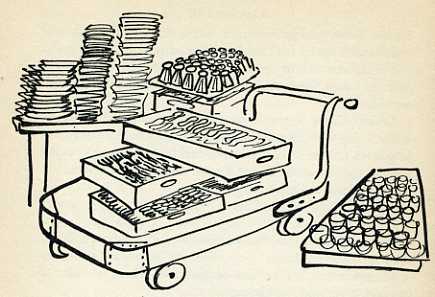
Behind the scenes at the Splendide

Ludwig Bemelmans, well known author and illustrator of the Madeline books for children, began his life in the United States in hotel food service. In the book Life Class (1938), he reveals how perceptive an observer he was of the workings of a deluxe hotel’s dining operations in the early decades of the 20th century.

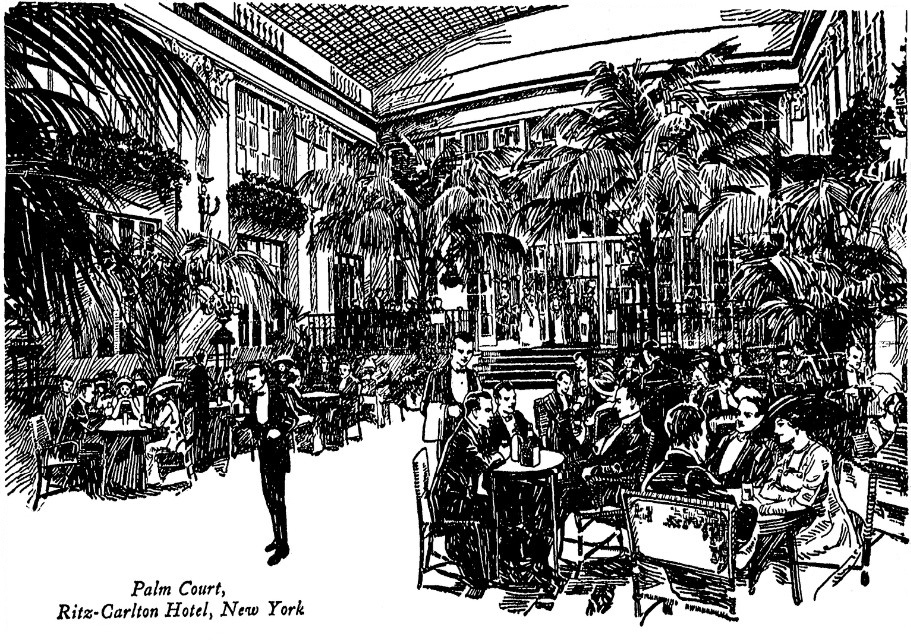
With a few strokes, he paints a vivid portrait of the “Hotel Splendide,” otherwise known as the Ritz-Carlton on Madison Avenue between 46th & 47th streets in New York. The hotel was part of a worldwide chain of luxury hotels that defined “ritziness” by providing fine food and service that attracted people of wealth and social status, some with aristocratic titles that dazzled wealthy Americans. [shown above, Palm Court, 1914]

Bemelmans arrived in this country from Rotterdam in December, 1914, with letters of introduction from his European hotelier uncle. He was only 16 years old, but with a troubled past. Had he been from a family of lesser stature he might well have been classed as a juvenile delinquent. He had a rocky start in New York, too; he was fired by the first two hotels that hired him in New York, the Astor and the McAlpin. But, despite some perilous incidents at the Ritz, he managed to hang on there for years, working in the restaurant, the café, and the banquet department before leaving for a career as an artist and author around the late 1920s.

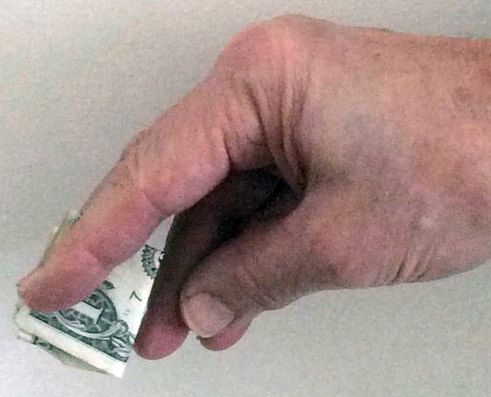
In Life Class he frequently observes how the hotel’s gatekeepers sorted out patrons by social class. The hotel’s restaurant manager, Monsieur Victor, “knew who was in Society, who was almost in Society, and, what is most important, who was not” and treated them accordingly. Those with the highest status gave him no tips or honor, but at the other end of the social spectrum he collected handsome tolls from those who wanted a decent table. Bemelmans judged that Victor took in a fabulous sum for that time, about $40,000 a year.

However, those who slipped Victor a too-small bill found themselves among the “untouchables” seated at an awkward table near a service station or in a drafty corner. Although Bemelmans can be warmly egalitarian about the hotel’s staff, he can be as dismissive as Victor when describing guests. Among the untouchables are “Westchester housewives in gray squirrel coats and galoshes on rainy days. They order an oeuf Bénédict and a glass of milk before going to a matinee.” A woman who he imagines is “the wife of some street-car magnate,” he writes, is “dressed with costly despair.”

Faring worse than the untouchables were “innocents” who didn’t understand how things worked at all, such as those who “just walked in off the street, thinking that this was a restaurant.” They were soundly humiliated and turned away with great haughtiness by Monsieur Victor who then watched them depart “with the detachment of a bullfighter who has done his routine work and waits until the horses have dragged the animal out, ready to start on the next.”

Since I have always thought that hotels were among the most likely businesses to follow Prohibition laws, I was surprised how much trade the Ritz did with bootleggers in the 1920s. Bemelmans explains that banquets were furnished with high quality alcohol from the “most reputable bootleggers” who delivered cases clearly marked Champagne and Whisky during the daytime while the police blandly looked on. More surprising, the police did not demand a payoff, settling instead for a few late-night drinks and leftover food after banquets ended, along with maybe a couple of bottles at Christmas.

The serving staff was expert at squirreling away food and drinks in their own private icebox for later use. In some cases they cleverly “rescued” cases of booze during parties, yet still received lavish tips from satisfied guests who had paid for far more wine than they consumed. As the manager remarked, the banquet business at the Ritz was a “goldmine.”

Even while in the midst of serving, waiters managed to enjoy delectable snacks. They snatched “little fried things” such as scallops, frogs’ legs, and fried potatoes from serving platters and ate them in the middle of the dining room without anyone noticing. According to Bemelmans, they had “learned to eat so that their cheeks and jaws do not move.”

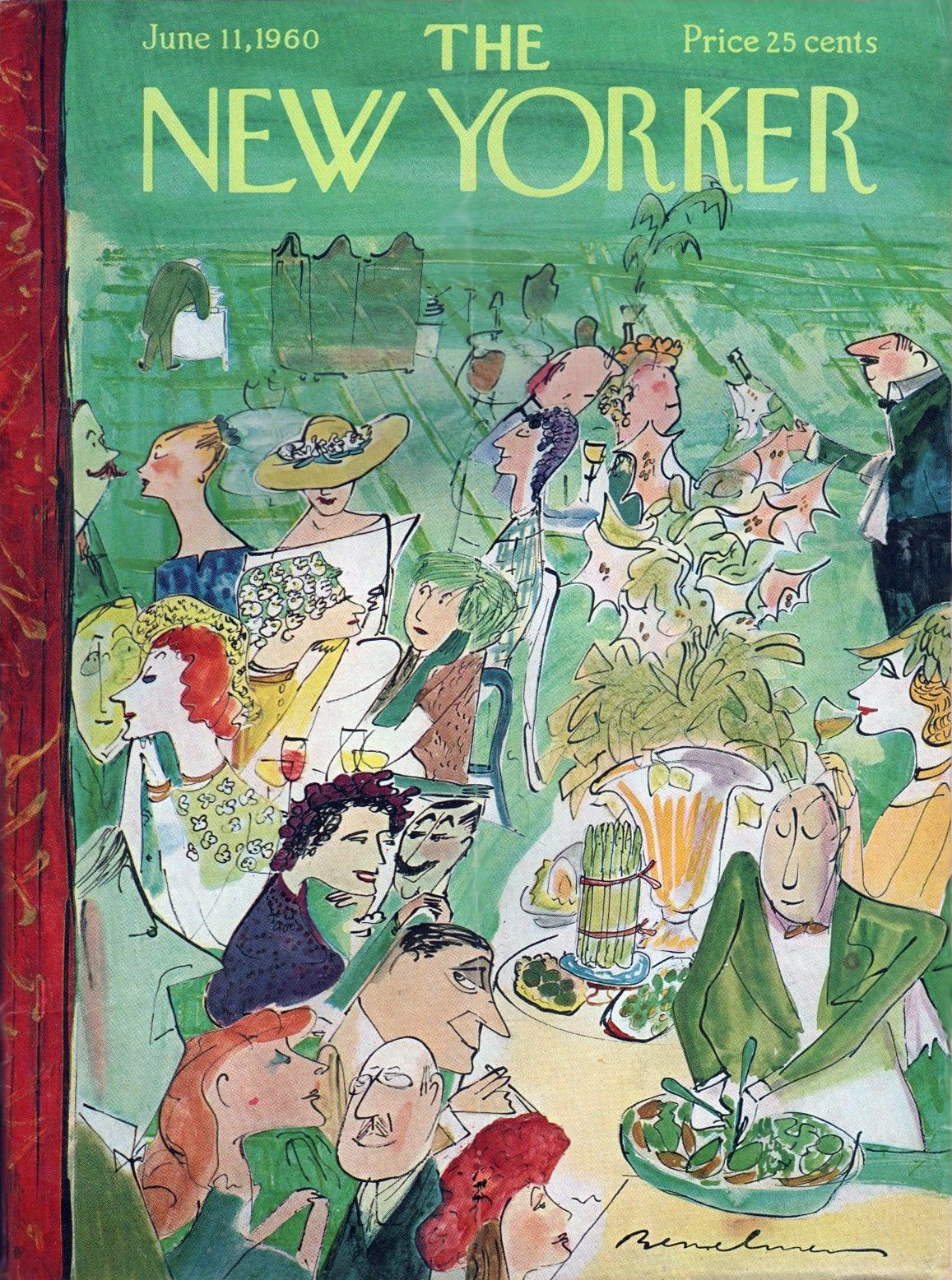
After he left the Ritz-Carlton, the epicurean Bemelmans stayed closely connected to fine food and restaurants. He painted murals for several restaurants, illustrated menus and wine cards, depicted them in advertisements and on New Yorker covers, and owned or was closely associated with four places (all of which may be the subject of a future post).

© Jan Whitaker, 2019
14 Comments

Filed under elite restaurants, food, patrons, restaurant customs, waiters/waitresses/servers