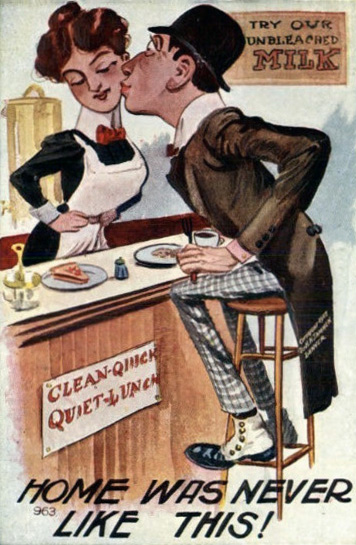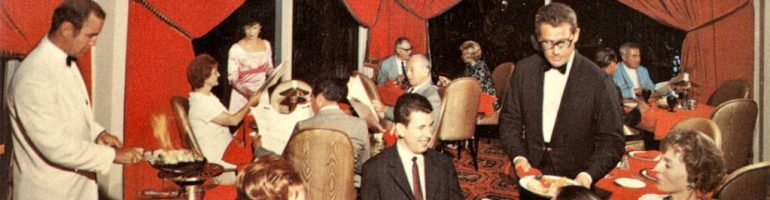
Dining alone

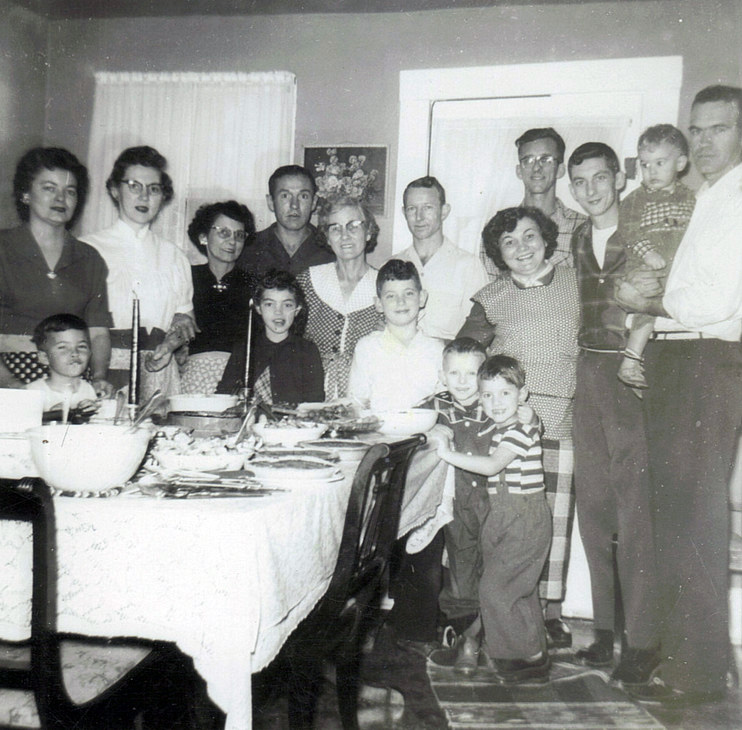
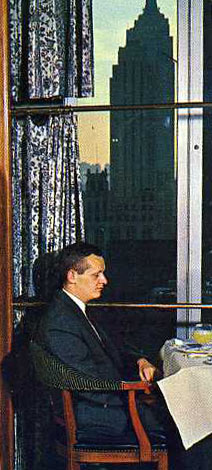
loneDinerWithViewRecently the online reservations service OpenTable.com announced that their reservations for solo diners had gone up 62% over the past two years. Just how meaningful this increase was is hard to judge from so little information, but the press release conjectured that “the stigma surrounding dining solo may be starting to lift and . . . consumers are eager to savor unique culinary experiences alone.”

I can’t say with certainty that no one ever felt the stigma of eating alone in the 19th century but I believe that certain patrons were eager to savor any and all culinary experiences alone.

Why? In the early 19th century communal dining was the norm and there was little sense of privacy in public halls and dining rooms. An Englishman wrote in 1843 of his visit to America where he often felt he was “a fraction . . . of a huge masticating monster” as he dined “with people to whom he is bound by no tie but that of temporary necessity, and with whom, except the immediate impulse of brutal appetite, he has probably nothing in common.” An escape from the crowd was desirable to those who could afford to pay the price for a private dining room.

Stigma came later. It was the development of the luxury restaurant after the Civil War that created problems for the solo diner. Now there were no communal tables. Every table was private and the assumption was that no one dined alone. Portions were meant for two, so patrons made sure to arrive with a dinner companion. An article in the New York Sun in 1890 reported that this practice was so well known that “if a man comes in alone the waiters at once conclude that he is a countryman or unused to restaurant life, and treat him accordingly.”

By contrast it was true then and has been since that in casual and self-service eateries where meals are quick and unceremonious – such as lunchcounters, diners, and fast food outlets –  patrons typically eat alone entirely free of stigma or self-consciousness.

lonedineremptylunchroom

The history of dining alone has been a different story for women than for men, both in the 19th century and through most of the 20th. Until 1910 or so, the meaning of a phrase such as the following 1894 New York Herald headline “Lone Women Not Wanted [in First Class Restaurants]” is ambiguous. Usually what was meant by a “lone woman” was a woman unaccompanied by a man. Thus “lone women” could apply to a woman totally alone or several women together. None would be admitted to a fine restaurant.

Men often felt lonely eating by themselves in a restaurant, or that they were being treated as second class customers, but they were not turned away under suspicion of being prostitutes. The idea that a lone woman entering a restaurant might be in the sex trade was the reason given for barring her from first-class restaurants in the evening. Generally in the early 20th century fine restaurants and hotels in NYC reversed their policy, stating they would serve any lone woman they judged to be a “lady.” Yet, even as late as the 1960s, some restaurants would not seat a solitary woman at the bar for fear she was soliciting.

Even as it became more common and acceptable for women to dine alone, they continued to feel unwelcome even into the 1970s. In that decade, when more women had careers in which they traveled for business, they began to protest publicly about the difficulties they had in restaurants. Like men, they complained that they were given poor service, often ignored, or seated by the restrooms.

lonediner1962There are pragmatic reasons why restaurants have been less than thrilled about single diners. They occupy tables that could accommodate more guests, thus ordering less food and usually fewer drinks and producing lower tips. And lone diners have been painted as social rejects. Ann Landers wrote in 1962 that men eating alone had character flaws. It has even been suggested that solitary diners depress other diners. According to a 1976 columnist, a lone woman in particular “suggests disappointment, a failed rendezvous, an empty heart; she subtly alters the ambience of the restaurant like the scent of old pressed roses.”

Little wonder that a survey in 1979 reported that most women found gynecological exams more pleasant than eating alone in a restaurant.

lonedinerbirdcagewestchester1950Just as there have always been some people who prefer eating alone, there have always been some restaurants that advertise special attention paid to lone diners. Lord & Taylor’s Birdcage in Westchester NY provided tables for one [pictured, 1950]. In the 1980s many restaurants stepped up their efforts. Even though 1980 Gallup survey interviews showed that 71% of men and 66% of women said they would rather not be seated at a table with other diners, a number of restaurants in the 1980s created communal tables. As far as I know it did not become a big trend. On the other hand, dining clubs such as “Fine Diners over 40″ in NYC may prove more appealing.

© Jan Whitaker, 2015

23 Comments

Filed under patrons

Coppa’s famous walls

coppa'sBlackCat2

The San Francisco restaurant Coppa’s became legendary in the early 20th century as a gathering spot for bohemian artists and writers, especially after they decorated its walls with curious and intriguing murals. Though the murals remained in existence for scarcely a year, because of the devastating fires that followed the earthquake of April 1906, they have been forever tied to the restaurant’s mystique.

coppaincoppa'sBlackCatOver the course of months in 1905 the murals were drawn in chalk crayon by artists who frequented the restaurant on Montgomery Street. Legend has it that proprietor Giuseppe “Joseph” Coppa papered (or painted) his walls a hideous red that offended their esthetic sensibilities, impelling them to mask it with their humorous, nonsensical drawings. An alternative explanation is that Coppa asked the artists to draw on the walls and that he chose red as a good backdrop. I find this more convincing since Coppa himself was a painter.

A row of stenciled black cats at the original location, by Xavier Martinez, was inspired by Le Chat Noir in Paris, the city where Martinez had studied painting. They gave the restaurant its nickname, The Black Cat, which was also used at its new post-fire location.

While I was at the Library of Congress a few weeks ago I had a chance to look at the hard-to-find book The Coppa Murals, by Warren Unna (1952). He interviewed some of the artists involved and also Felix Piantanida, Coppa’s early partner who was responsible for preserving the photographs shown in the book. It’s likely the photos were taken for use in an article by Mabel Croft Deering not published until June 1906 in The Critic, but written before April’s destruction caused Coppa’s closure. The murals themselves were at some point scrubbed off or painted over by the landlord.

coppa'sphoto1906

Though the restaurant was looted by vandals, the building Coppa’s restaurant was in actually somehow escaped destruction [shown above]. With few buildings intact, its value rose and Coppa’s landlord raised the rent, leading Coppa to vacate and open another Black Cat on Pine Street in November. He and Piantanida split up, and for a short time Piantanida conducted a restaurant called La Boheme in the space formerly occupied by Coppa’s.

The artists and illustrators who contributed drawings included some who would become prominent, such as Maynard Dixon, Xavier Martinez, and Gelett Burgess. The artists, along with poets and writers, contributed puzzling sayings and quotations that adorned the walls, fascinating – and insulting – customers (“Philistines”) who came to gawk at the bohemians.

coppa'sbook

The cover of Unna’s book shows a crude rendering of a mural by Xavier Martinez depicting the restaurant’s core group of regulars. Martinez is seated at the far right. Standing behind him is poet Bertha Brubaker, wife of Perry Newberry, smoking a cigarette. Her nickname “Buttsky,” which referred to her habit of saving cigarette butts, appears in the “hall of fame” of names that run beneath the black cats. The names of Coppa’s regulars are interspersed with those of famous writers such as [Johann Wolfgang] Goethe, [François] Villon, and [Guillaume] Apollinaire. The few women named are hard to identify since their last names do not appear, but Maisie was freelance writer Mary Edith Griswold and Isabell was allegedly a newspaper writer.

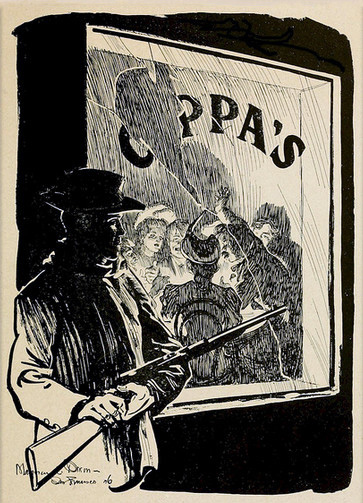
coppa'sMaynardDixonSimpleLifeinBohemiaWhen Coppa moved to Pine Street, a new row of cats appeared, but now marching in the opposite direction. Maynard Dixon also contributed several new images. One of his shows Coppa unfurling a scrolled menu to a crowd that includes regulars who were violinists, writers, poets, and artists. On another wall Dixon commemorated Coppa’s “Last Supper” at his old location, celebrated soon after the fire and necessitating official approval and protection from a marshal who stood guard outside. Another notable feature of the Pine Street murals were two works by a woman, painter and jewelry designer May Mott-Smith.

coppa'sredpaint

Coppa’s second Black Cat closed in 1913, after which Joseph and his son Victor launched Neptune Palace, a more commercial cabaret restaurant. In 1916 Joseph returned to a bohemian theme with The Red Paint, a short-lived restaurant on Washington Street that went out of business at the start of Prohibition, stopping the flow of “red paint,” i.e., wine. It too had murals, never completely finished and lacking the inspiration of those at the earlier Black Cats, despite Maynard Dixon’s participation once again. Many in the old gang had moved to Carmel by the Sea and things were not the same.

coppasaug231933In 1922 Coppa opened yet another restaurant, at 120 Spring Street, offering “old-time dinners,” possibly so-called because they were paired with illicit wine. Joseph was often arrested in raids by prohibition agents, and Victor once escaped by running out the back door. It’s possible the restaurant was officially padlocked for a time because in 1933 it “re-opened,” with the unveiling of a painting by the ever-faithful Maynard Dixon of a nude woman dressed only in shoes, stockings, and a large-brimmed hat with her legs crossed atop the table, toasting an obese man opposite her [see 1933 advertisement]. The same image was used on the cover of the restaurant’s menu at its final location, 241 Pine. That closed in December 1939, marking the end of Joe Coppa’s long culinary career.

Joseph’s wife, Elizabeth, who had been the dining room manager and cashier, died in 1938. After his retirement he took up painting, focusing on portraits of men such as business magnates, Italian dictator Benito Mussolini, and poet George Sterling.

© Jan Whitaker, 2015

12 Comments

Filed under atmosphere, Offbeat places, restaurant decor

Image gallery: insulting waitresses

waitressinsultJudging from postcards and cartoons, the early 20th century was not a fun time to be a waitress. However hard working, competent, or skilled in dealing with demanding situations they may have been [see recent op-ed on how much skill serving takes], there was no recognition of that in popular images.

Quite the contrary. The images were of two basic types. Either female servers were shown as incompetent or as objects of fantasy who were open to the sexual advances of their customers.

waitressflirting

All but two of these images in this post are from 1906 to about 1915. The gum chewer is from the 1920s.

waitressspillingwaitressbeingkissedwaitress&Lecher

waitress1908BeaneryButeThe reasons for these degrading images could be many. Joke-style postcards were designed to get men to send postcards, an activity that they were less inclined to do than were women. Almost all joke postcards derived humor from insulting others, whether women, Blacks, immigrants, or the poor. On several of the cards in the post, the women illustrated are Irish immigrants, a status that was generally portrayed as both stupid and ugly. Women who were in the public eye, such as actresses, department store clerks, or restaurant workers, were evidently considered fair game, possibly out of resentment that they strayed outside the realm of church and home or because they appeared in public without male protection.

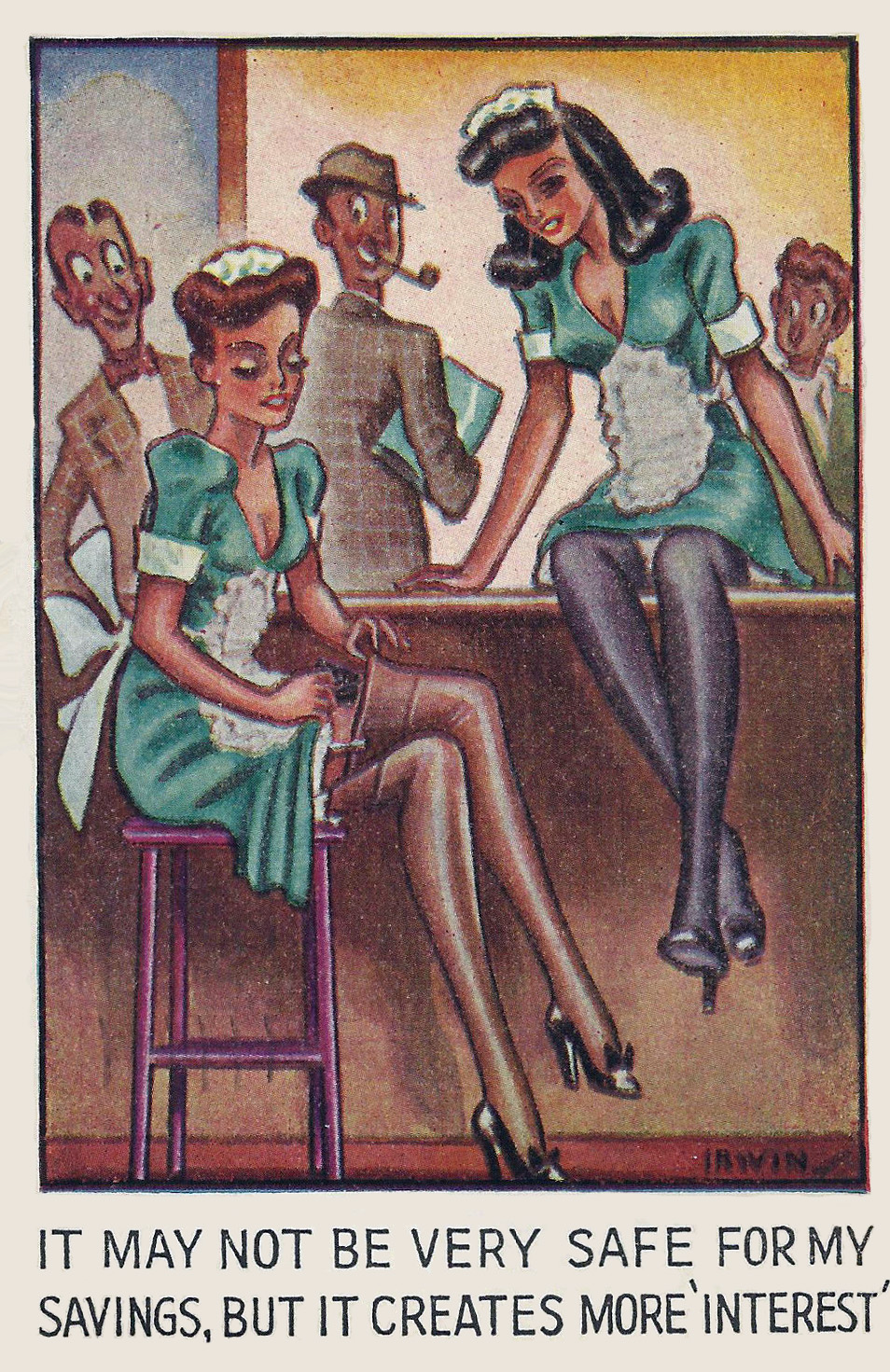
waitressstockings1946Later postcards mostly dropped the theme of incompetence but images of sexy bimbo waitresses persisted for decades, as for example on this postcard mailed in 1946.

© Jan Whitaker, 2015

6 Comments

Filed under proprietors & careers, women

Famous in its day: Partridge’s

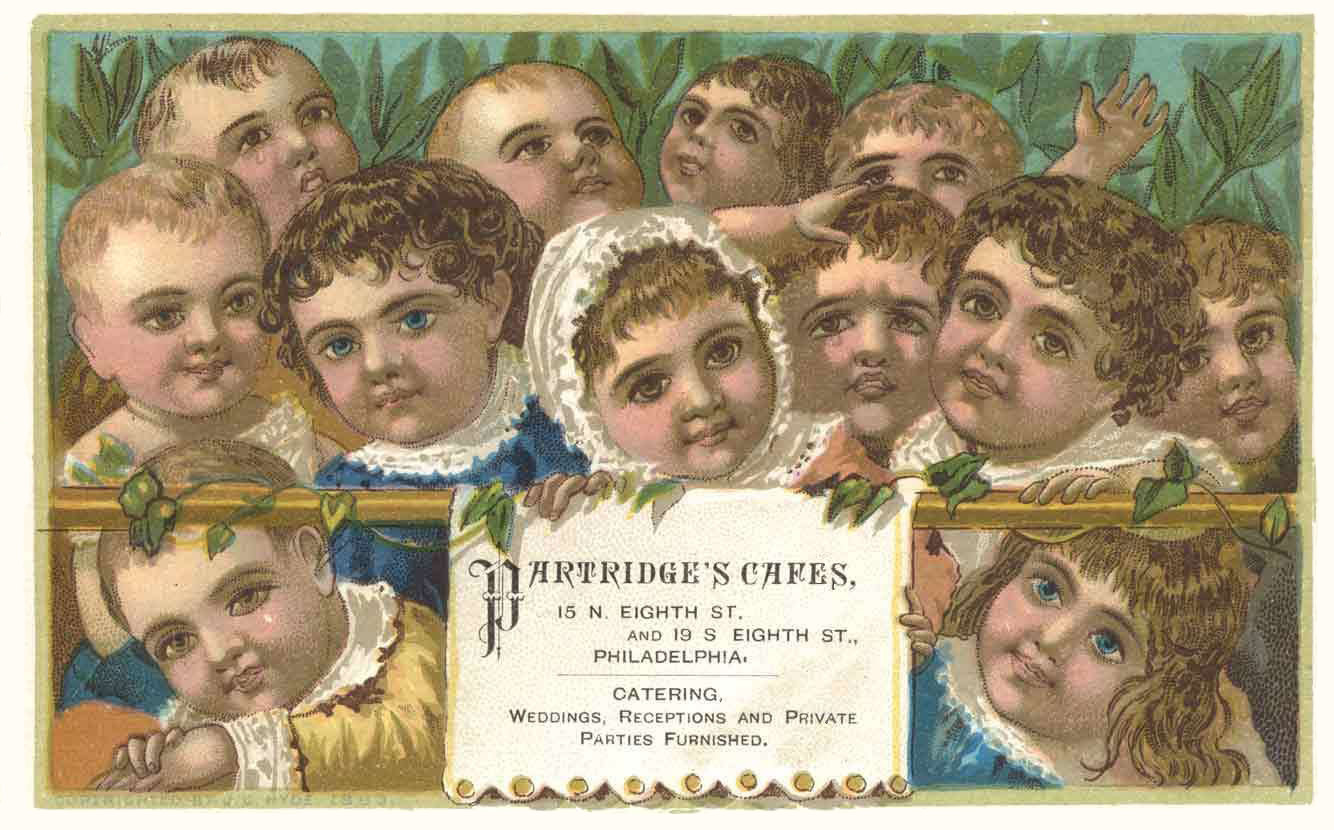
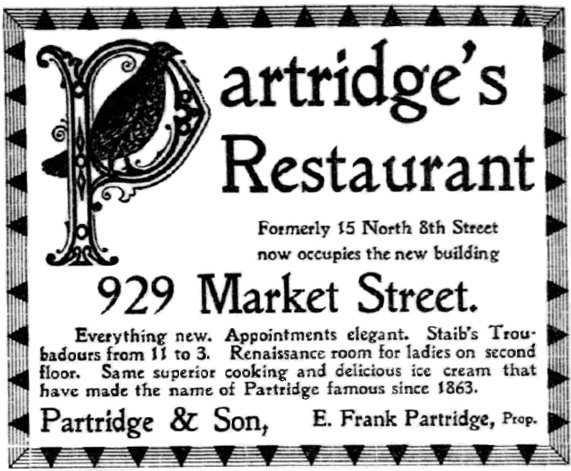
partridgesTradeCardI began this post intending to present some of the history of Partridge’s restaurant that is advertised on many Victorian trade cards of the 1870s and 1880s, such as the one shown above. Despite their age, many of the cards still exist; those in this post are only a few of over a dozen different designs I’ve seen.

As is often the case, sorting out the story of that restaurant became harder the more I learned. In fact, the two restaurants on 8th street, operated by Edward Partridge and his son E. Frank Partridge, turned out to be only part of the story.

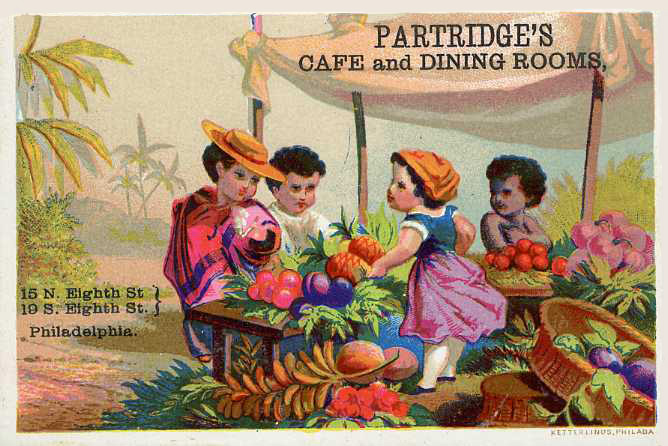
partridge'sdoubleIn the Philadelphia city directory of 1858 there are five different Partridges operating restaurants, Edward not included. At that time Edward apparently was a seller of cheeses in the city’s food market on the corner of Fourth and Market. He also sold “Cakes, Pies, and Beverages, such as will suit the most delicate and fastidious taste.” I suspect that most of the Partridges were related and had come from Medway in Massachusetts, but haven’t been able to substantiate this.

In 1862 or 1863 Edward moved to North Eighth street near Filbert and opened a restaurant in the heart of the shopping district. It occupied several stories, with a ladies’ dining parlor seating 100 on the second floor. In the early 1880s it acquired a fancy ceiling of Lincrusta wallpaper that mimicked molded decorations of game and fruit. It became one of the city’s best known first-class restaurants, serving three meals a day as well as catering weddings, receptions, and large parties on and off the premises. It also specialized in fancy cakes, ice-creams, and ices. Edward was a generous benefactor to his Presbyterian church, so I seriously doubt that alcoholic drinks were served at his restaurant.

partridges947Partridge’s was not a luxury restaurant but a respectable full-service restaurant with moderate prices and no French on the menu. In the second half of the 19th century American cities large and small had at least one such restaurant and Philadelphia undoubtedly had quite a few. In almost all respects it was nearly identical to Thomas Hill’s in Trenton NJ and Barr’s in Springfield MA.

partridges948As the back of this trade card states, Partridge’s was proud of its drinkable water, at a time when public water could not be trusted. A story in the Public Ledger said that the restaurant displayed two bottles of water in its windows, “one as clear as crystal, the other the color of weak coffee, due to the mud held in suspension in it.” The crystal-clear bottle, of course, held filtered water that Partridge’s served, the other water came directly out of the tap.

In 1893, the restaurant established by Charles D. Partridge, which had long operated in the old Eastern and Farmers’ Markets, opened as the Reading Terminal Restaurant, in a space attached to the new Reading Terminal Market. Charles, who may have been Edward’s brother, had died in 1877 and his restaurant was taken over by a longtime employee yet it retained the company name of C. D. Partridge & Co. (In much the same way, Frank Partridge retained the name Partridge & Son after his father’s death in 1896.)

When Edward died in 1896, no one knew that disaster was about to strike his landmark restaurant on North Eighth. On the day before Thanksgiving in 1899, a fire started in the neighboring Bee Hive dry goods store, aka Partridge & Richardson (co-owned by yet another Partridge). The massive fire swept through the block, destroying Partridge & Richardson, Strawbridge & Clothier, the J. B. Lippincott publishing offices, Partridge’s restaurant, and numerous other businesses.

partridgesJuly1900ADVPartridge’s restaurant was rebuilt on Market Street in “elaborate Renaissance style,” opening in July of 1900. But less than a year later Frank Partridge died, and his widow closed the restaurant a short time later. The like-new fixtures and furnishings, including electric chandeliers, Wilton carpets, and French mirrors, were sold at auction in 1902.

© Jan Whitaker, 2015

5 Comments

Filed under confectionery restaurants

Find of the day: Mrs. K’s Toll House Tavern

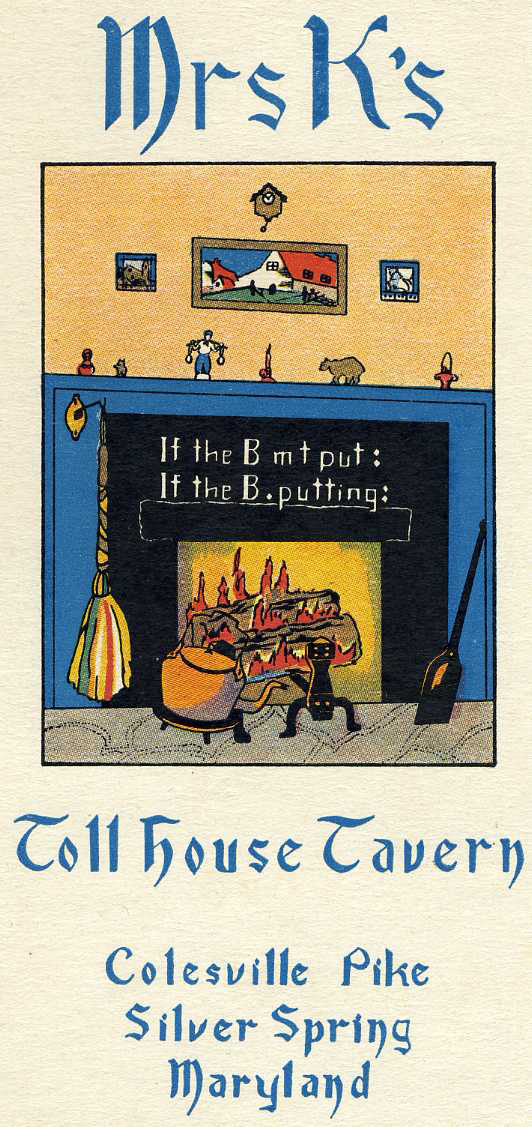
MrsKs943

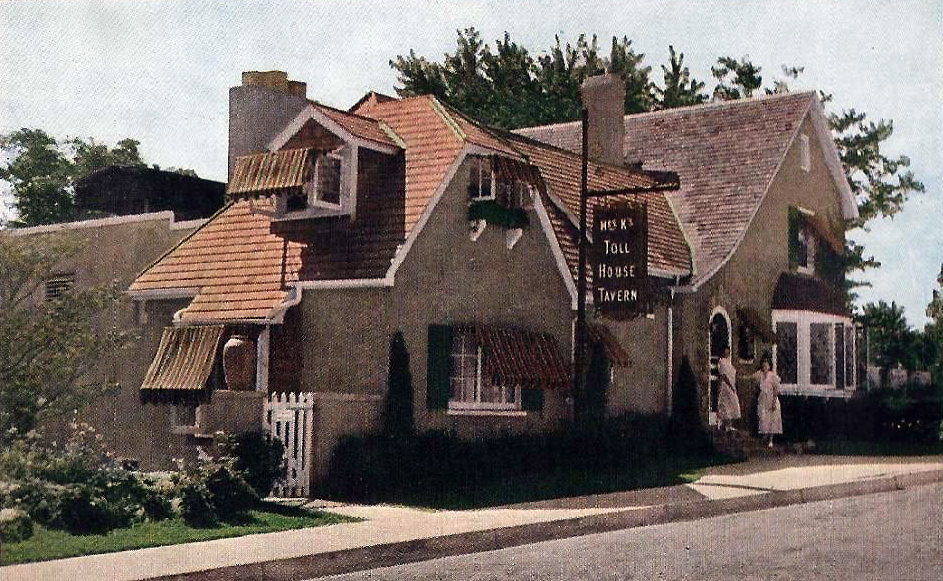
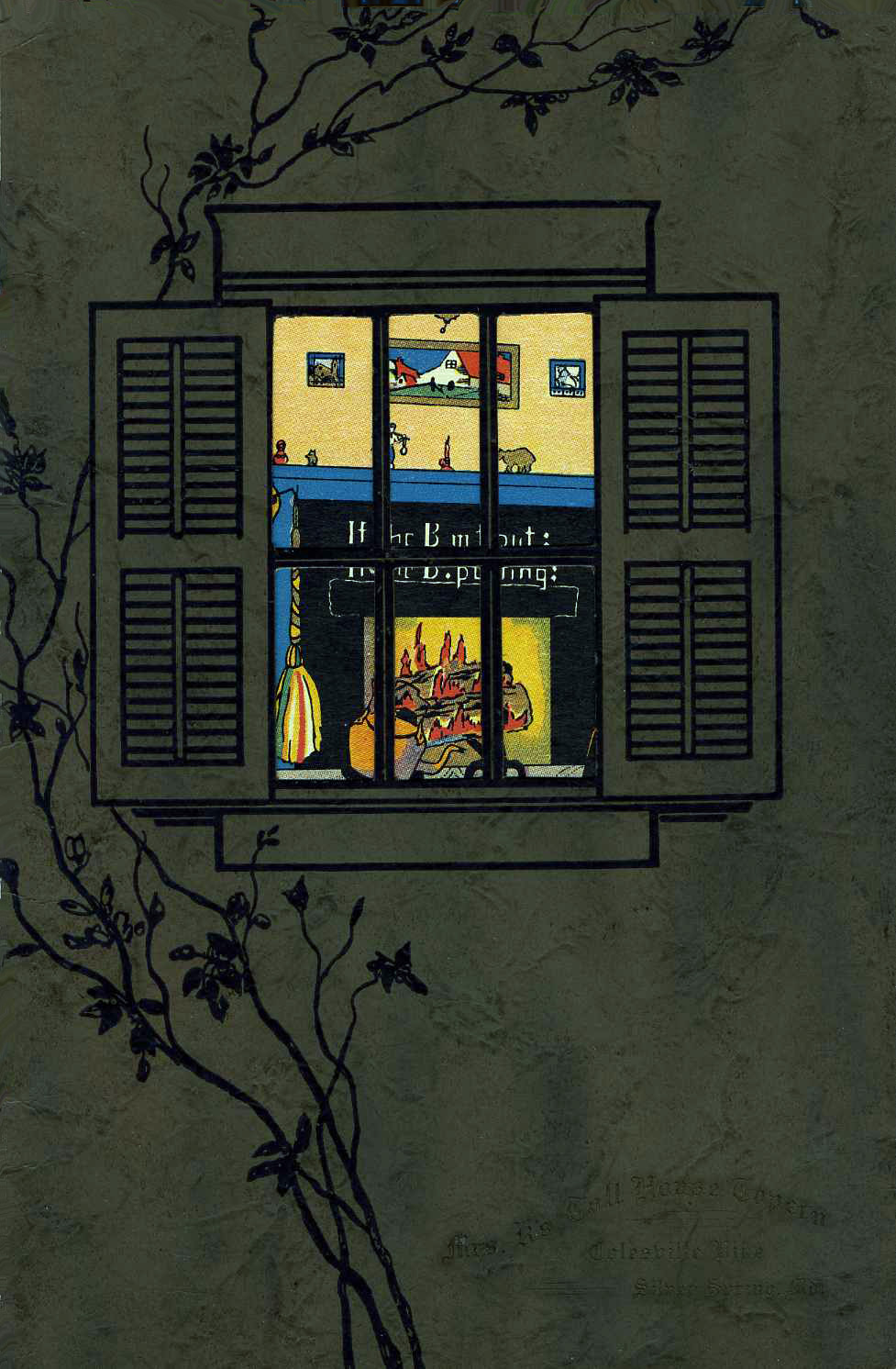
Over the weekend, at a vintage paper and postcard show in Boxborough MA, I found a charming diecut menu from a restaurant in Silver Spring MD. Established in 1930 by Olive and Harvey Kreuzburg, the landmark restaurant is still in operation today though no longer owned by the founding family.

Shown through the window is page 2 of the menu illustrated with a fireplace inscribed with a cryptogram. Can you figure it out? Hint: the riddle is said to have originated in England. (Click to enlarge. Answer below.)

MrsKs941Judging by the prices, this menu is from around 1950. A Tenderloin Steak dinner accompanied by French Fried Onions or Fresh Mushrooms, cost $2.25. It was served with soup, fruit relish, salad, three vegetables, a sherbet course, hot bread, dessert, beverage, and after dinner mints. By 1962, when the Kreuzburg’s son Richard ran the restaurant, that dinner had gone up to $6.00. Burgundy, Sauterne, Claret, and Blue Ribbon beer were available. All meals were served family style with bowls filled with enough for the entire table. Mrs. K assured guests that everything was prepared from scratch on the premises and under her supervision.

Olive Kreuzburg was not new to the restaurant business when she and her husband took over the old toll house that had previously been the home of two other failed tea rooms. In 1923 it operated as the Seven Oaks Tavern where sky high prices must have contributed to its demise. Olive’s prior experience included running the dining room of the Hotel Wellesley in Clayton NY, a tea room in Miami FL called Mrs. K’s, and two tea rooms in Washington DC, one named Mrs. K’s, and the other Mrs. K’s Brick Wall Inn. Clearly using her abbreviated name served her well.

At its opening in 1930 the Silver Spring Toll House was listed in a DC newspaper under “Where to Motor and Dine.” At that time development had not sprung up around Mrs. K’s; although only “a 30-minute drive from the White House,” it was in the country. The early advertisement read: “This old Toll House with its charming furnishings and Terraced Gardens marks a delightfully smart Country Dinner Place.”

mrs.K'sTollHouseILL

Getting through the Depression was no doubt aided by Duncan Hines’ recommendation of Mrs. K’s in his very first list of his favorite restaurants that he sent out to friends in a 1935 Christmas card. Later he expanded the list and published it as a book. In the 1937 edition, he said of Mrs. K’s, “You dine in the past here – so far as furnishings are concerned. Nothing is changed apparently from the Revolutionary days when it was built. Even the pretty girls who wait on you in Colonial dress seem to have been miraculously preserved from a more leisurely age when dining was a rite not to be passed over casually.”

Whether or not the building dated from the Revolution, the quaint restaurant was filled with antiques collected by the Kreuzburg’s.

The cryptogram explained:
If the grate be [great B] empty (m t), put coal on [colon].
If the grate be full, stop [ . ] putting coal on.

© Jan Whitaker, 2015

6 Comments

Filed under family restaurants, proprietors & careers, roadside restaurants, women

Automation, part I: the disappearing server

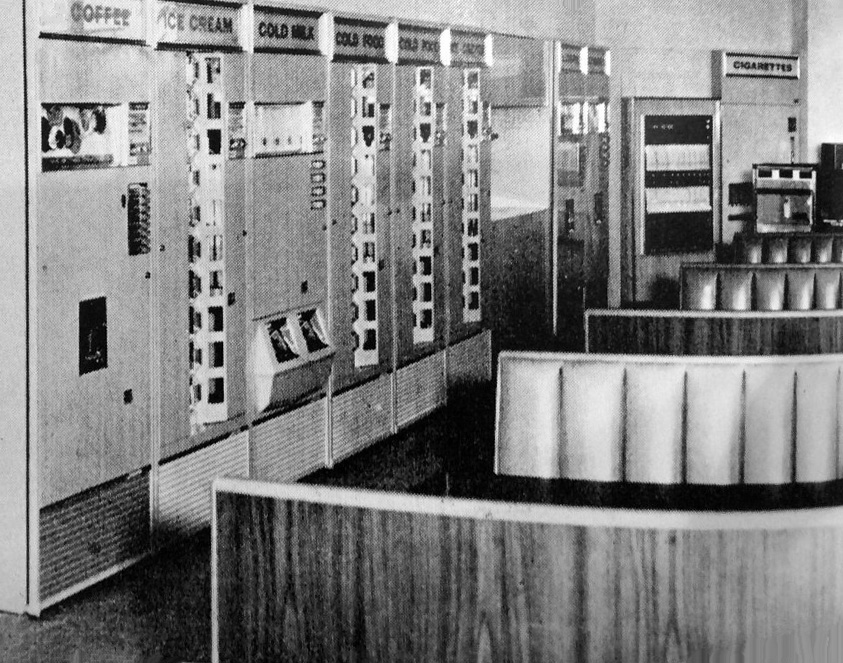
automacrestaurant1940How is it that the same culture that loves diners, with their friendly interchange between customers at a counter and cooks and servers on the other side, also idolizes the Automat, with food delivered in metal boxes that are filled by workers hidden from sight?

Through the years proponents of restaurant automation have argued that it’s more sanitary and efficient and results in lower prices for customers. Yet from the start — in the 19th century —  automating restaurants was motivated primarily by a wish to eliminate servers.

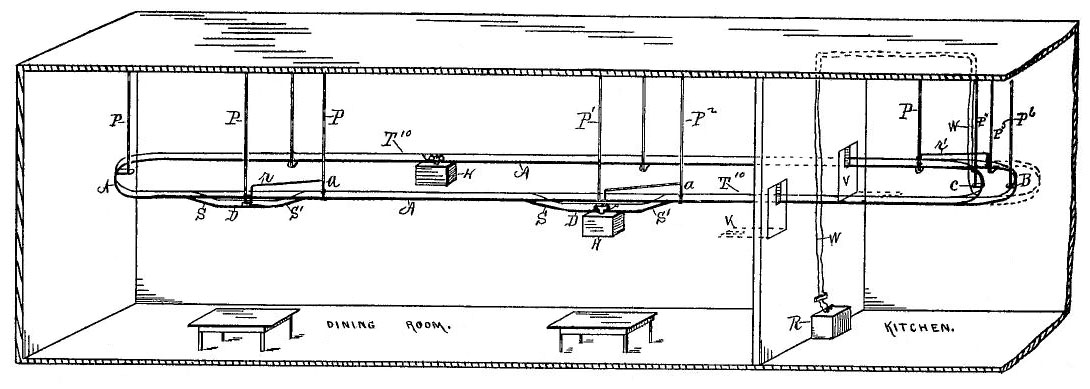
That this was a desirable goal was never debated. Servers were depicted as annoying, manipulative pests who demanded tips and grew angry if they were too small. As long ago as 1885 a New York Times story hailed a newly invented “waiterless” system that permitted diners to select dishes from a card, place it in a receptacle that wafted it to the kitchen, and be served their food via an overhead railway system. The customer, said the story, “is not preyed upon by the thought that the menial is hovering over him, watching his every movement, and ready to ‘size him up’ in proportion to the amount of his order.” Whether this automation scheme ever materialized is something I have not been able to determine, but it presumably would have looked like this.

automaticbutterfieldPatent93

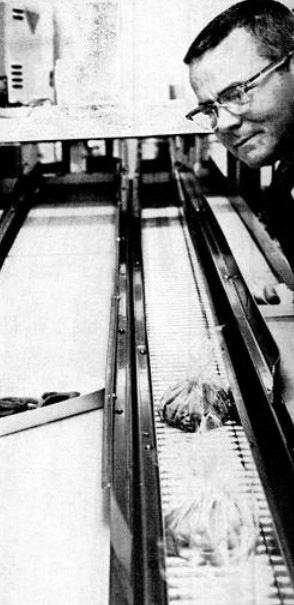
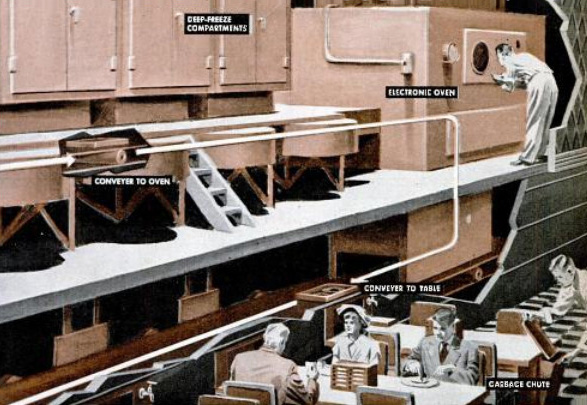
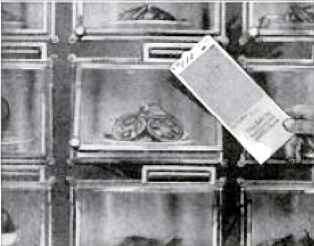
There were two basic types of automated restaurants: with one the patrons came to the food, as in the classic Horn & Hardart Automat, and with the other the food came to the patrons. In the latter case, it came in a container/cabinet that arrived (1) from wires overhead, (2) on a conveyor belt, or (3) up through the center of the table. The systems were inventors’ dream projects, resulting in many patents, though actually used in very few restaurants and even fewer successful restaurants. Most of the projects to automate service proved unsuccessful after the novelty wore off.

A sampling of the projects:

1895 – Exhibits of automated “push button” restaurants begin to appear at international fairs in Holland and Germany; soon they are found all over Germany.

1897 – Rumors start that automatic restaurant apparatus from Germany will be installed in Philadelphia’s business district enabling business men to eat more quickly

1899 – An advertisement appears in the Philadelphia Inquirer by a New York man who is seeking backers for an Automatic Lunch Room invented in France.

1901 – Buffalo’s Pan-American Exposition is said to have an automatic lunch room.

1902 – A natural food company in Niagara Falls allegedly runs a restaurant with 600 tables served by “five hundred little electric cars” operated by a switchboard.

1902 – Horn & Hardart open an Automat in Philadelphia.

1902 – The Harcombe Restaurant Co. opens an Automat in New York City.

1907 – An automated quick lunch opens on F street in Washington DC where customers get sandwiches, pie, or coffee by depositing a coin and moving a lever.

1908 – An announcement is made that a waiterless restaurant with Assyrian decor will open in NY on Broadway between 43rd and 44th where guests will receive their meals from a dumbwaiter in the center of their table that will be serviced from a kitchen below.

1909 – A notice by a self-described “first-class man” appears in a Seattle paper seeking partners for a “first-class automatic lunch room.”

1912 – The first NYC Horn & Hardart Automat opens, in Times Square.

1913 – An article in Scientific American proposes that a corporation should be formed to run a central kitchen that can send food to homes throughout cities via pneumatic tubes.

1915 – At least seven saloons in Chicago’s Loop have “free lunch machines” in operation.

1917 – The Automat Company of New England runs three automats in Boston.

1917 – An article in The Hotel Monthly hails a newly invented “Cafetourner” in which food is delivered in “thoroughly clean,” sterilized steel boxes on conveyor belts.

automaticbellLunchNYC

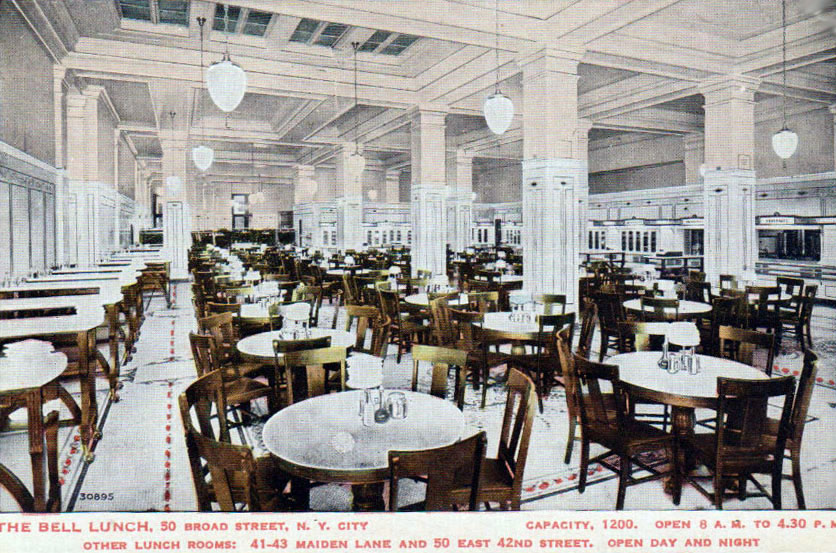
Ca. 1917 – Bell Lunch operates three lunchrooms in New York City, at least one of which appears to be an automat.

1921 – The Automatic Lunch Corporation opens Automatic Lunch Room No. 1 in Detroit, with plans for more in other Michigan cities.

1922 – Horn & Hardart are operating two Automats and five Automat-Cafeterias in Chicago.

1925 – An exhibition in Seattle hosts a booth by the Quick Lunch Company with machines that deliver pie or sandwiches at the drop of a coin.

automaticILL1925cardsystem1925 – Rather than utilizing coins in a slot, The Auteria in St. Paul MN replaces them with a card that is stamped with the price after the customer removes the dish from the device.

1926 – After a couple years in business the National Autometer Restaurant Corp. that ran two automatic restaurants in Washington DC declares bankruptcy.

1928 – A New York hotel exposition features a waiterless dining room with tables equipped with dumbwaiters set into tables.

1929 – Hall’s Mechanafe No. 1, which delivers food in cabinets on a conveyor belt, opens on Main Street in Boise ID. Along with the Horn & Hardart Automats in Philadelphia and New York it survives far longer than most restaurants with automatic service.

1930 – The first Merry-Go-Round café, in which a conveyor belt circulates along a counter, opens in Los Angeles.

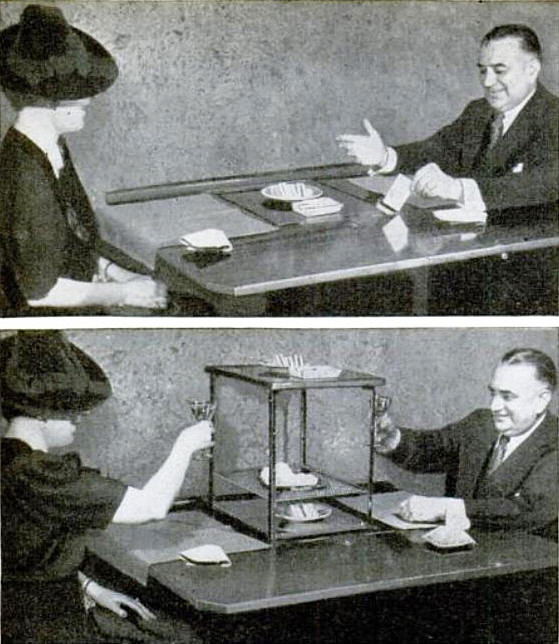
1931 – The Hotel Warren in Worcester MA installs “auto-magic” tables where food comes up on a dumbwaiter set into the table. [pictured at top]

automaticyeeatShoppecounterbelt

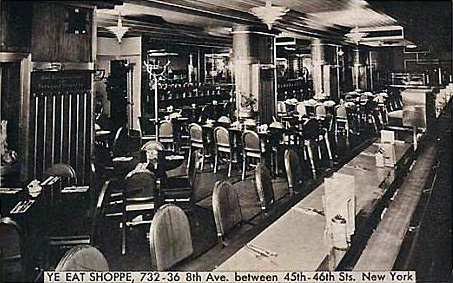
1933 – NYC’s Ye Eat Shoppe installs a conveyor belt that serves orders to patrons seated at the counter.

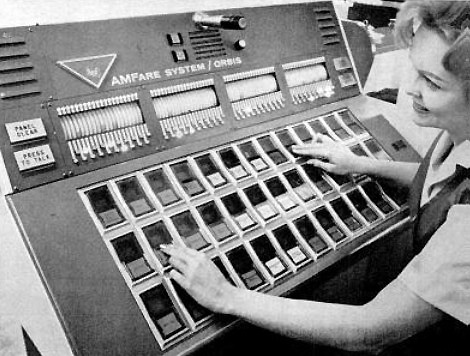
Beginning in the 1930s, but mainly after World War II in the 1940s, 1950s, and 1960s, the second stage of automating the restaurant began, focused on streamlining food preparation in the restaurant kitchen. By the end of this stage computers had changed the meaning of “automatic.”

As for the fabled Horn & Hardart Automats, when the nation’s original one closed in 1969, in Philadelphia, the new president of Horn & Hardart said the concept had reached its peak before and after WWII. With only ten left in business, he acknowledged, “They are not really automatic.” As a story in the Los Angeles Times said, the Automat had become “a museum piece, inefficient and slow, in a computerized world.”

© Jan Whitaker, 2015

7 Comments

Filed under technology

Find of the day: Moody’s Diner cookbook

moodysdinerbookAt a weekend flea market I found a copy of What’s Cooking at Moody’s Diner, a book of recipes and reminiscences published in 1989 (it was revised and redesigned in 2003). Although it is neither rare nor valuable in monetary terms, I consider it a “find” because of how I happened upon it when I was about to give up.

moodysdinercolor2The Route 1 diner in Waldoboro ME dates back to a small food stand built and operated by Percy Moody and his family in the early 1930s. After many additions and updates it is still going strong today as a substantial restaurant with a menu probably far more diverse than it was in the beginning, judging from a sample 1930s lunch menu included in the book. Then, hungry travelers on a budget might select plain sandwiches such as Bread & Butter (5c) or Fried Egg (10c). If they wanted something grander they could have Lobster or Crabmeat sandwiches at 20c apiece. Toasted sandwiches cost an additional 5c.

moody'sdinerjune1941Many people associate diners with prefab structures of stainless steel but Moody’s Diner is an example of a vernacular design constructed of wood. Before it was moved to Route 1, the initial Moody food stand accompanied Moody’s Cabins, a few of which had been built in 1927, a year when many a farmer in or near a vacation area decided to try to capture some of the tourist trade speeding by in their newly purchased cars. No doubt a roadside business helped offset some of the effects of the Depression.

The 1989 edition of What’s Cooking at Moody’s Diner, by Nancy Moody Genthner and edited by Kerry Leichtman, contains a wealth of recipes for “home-made” style dishes, desserts, salads, and breads. Twenty-five casserole recipes, many using canned soup, stand out for being far removed from routine restaurant fare.

8 Comments

Filed under diners, roadside restaurants

“To go”

TakeoutcolorSelling prepared food ready to be eaten off the premises, known as carry-out or take-out, is as old or older than the restaurant itself. In Colonial days, James Hearn of New York City advertised that “families may every day be provided with plates of any dish, that may happen to be cooked that day, by sending their servants for the same.” In addition to full meals, early “restorators” and restaurateurs were also happy to deliver oysters and sweets such as freshly made ice cream, sherbets, and pastries.

After the Civil War, advertisements appeared offering “lunches put up” for travelers and tourists. Such ads became more common in the 1920s as many first-time car owners took to the roadsides for vacations and Sunday outings. With relatively few restaurants outside cities, the service was a welcome one. The ads continued into the 1950s in areas that attracted seasonal fishers and hunters.

takeoutmetalsignFor most customers, carry-out was an added service meant to accommodate them. Not so if the customer was Black, though. Under Jim Crow in Southern states, Black customers were unwelcome in dining rooms and at lunch counters – and could only obtain food to go (if that).

takeoutJeri'sDetroit

The post-World War II era produced not only a baby boom but also a television boom. TV-watching suburban families with young children fueled the advance of a carry-out trend in the 1950s and 1960s. By the early 1950s the restaurant industry realized it had a “television problem” keeping people from going out to restaurants, but found a way to deal with it. A restaurant consultant offered 2-day seminars detailing how smart restaurateurs were actually increasing business volume through carry-out. He explained for the slow learners that “people telephone in orders, pick up their food at a set time, then go home to eat before their television sets.” [menu shown is from a Detroit restaurant]

The carry-out trend was well established by the mid-1950s. A restaurant in New York’s Grand Central Station offered a commuter’s dinner, while an inn in Nebraska was set up like today’s fast food restaurants with a speaker post in the driveway for dictating orders and packaged food ready to go at the check-out window farther along.

takeoutBoxIn the 1960s certain foods achieved greater popularity with diners on the dash than with sit-down restaurant customers, particularly fried chicken and pizza. Other favorites were Chinese, Mexican, and barbecue. Regular “meat and three” dinners did not fill the bill, it seemed, plus fast food chains were able to deliver the goods faster. Why take-out orders are so common in Chinese restaurants, which do offer full meals, is still something of a mystery to me.

takeout1962McDonald'sSo, little wonder that in the early 1960s before adding indoor seating, McDonald’s dubbed itself “McDonald’s Carry Out Restaurant.” In 1963 the chain released a report claiming that one-fourth of all restaurant orders nationwide were “to go,” with drive-ins at the top and pizza parlors not far behind.

The popularity of food to go, already well established in the 1950s, was undoubtedly one of the factors propelling the growth of fast food eateries in that decade and the next.

© Jan Whitaker, 2015
1 Comment

Filed under restaurant customs

Pepper mills

peppermill1964ILLEver wonder why restaurants make such a big to-do with pepper mills? Obviously many people like freshly ground pepper but it goes beyond that. It’s a grand gesture that suggests hospitality and attention to detail. Diners may reason that if a restaurant will bother with fresh ground pepper it must bring the same degree of attention to its cooking.

Throughout the 19th century, Americans were lukewarm to the idea of grinding their own pepper. The custom was mainly followed in restaurants run by German or Italian proprietors. Around 1900 some people questioned whether modern Americans wanted to grind peppercorns. So Old World! A story in the New York Sun in 1903 reflected this attitude: “Beginning with the little boxes on the table where you can grind your own pepper while you wait – imagine having time to grind your own pepper – everything in the Teutonic eating places is a protest against the American idea of life.”

peppermillminuetmanorILLSo pepper mills were un-American, at least for a while. But then, in the 1950s and early 1960s, competitive restaurateurs returned to the practice. For some reason – world travel? the rebirth of gourmet dining? – some guests had begun to carry around their own portable grinders. Restaurants may have felt a need to respond if they were to appear sophisticated. And so, along with Beef Wellington and large padded menus, the pepper grinder made its appearance. If it seemed European now, so much the better. Evidently pepper mills were quite the thing in Los Angeles around 1955 because there were at least two manufacturers there.

Trouble was, though, when small grinders were placed on tables initially patrons had a way of walking off with the cute little things. Early adopter Peter Canlis found that when he began supplying each table with 4-inch-tall mills at his Charcoal Broiler in Honolulu, they all disappeared in the first three days.

peppermillTown&CountryDallas1960

The solution: large, unpocketable grinders deployed only by the wait staff. How large? At the Town & Country restaurant in Dallas TX, which prided itself on Cuisine Français for discriminating diners, a special stand was required for propping a 9-foot pepper mill over the table. [pictured]

Beginning in the 1970s, pepper mills the size of fire plugs or in the shape of baseball bats became a source of humor and critique. Some also noted that pepper mills enabled servers to appear as though they were giving superior service in hopes of bigger tips. Mimi Sheraton objected to how restaurants pounced on diners with the pepper mill before they’d had a chance to even sample their food.

Now pepper mills have shrunken to a manageable size, criticism has died away, and it seems to be standard operation for restaurants of a certain price and service level to equip servers with them.

© Jan Whitaker, 2015

16 Comments

Filed under restaurant customs

Little things: butter pats

butterpat921

There are many ways to handle butter service in restaurants. Toast may be buttered in the kitchen, doing away with the establishment’s need to decide among curls, balls, rosettes, wrapped servings, pats or, whipped butter put in tiny ramekins. Alternatively, olive oil may take the place of butter on the table.

butterpat923Over the decades butter has given restaurant managers plenty of headaches, whether due to its cost, its scarcity, and/or complaints from patrons that they didn’t get enough. Not to mention that it melts when it gets warm and turns hard when it’s cold.

What form butter usually took when diners received it in the 19th century is not clear, maybe in lumps, possibly piled in a communal bowl on each table, a habit that customers would reject in the 20th century.

Bread and butter was viewed as a necessary complement to a meal in the early 1800s, and it often served as an entire meal for those with little to spend. Some restaurants charged separately for bread and butter, while in others it came along with a regular meat or fish order. A good restaurant or tavern might have fresh butter, but others did not. Even if they struck it rich, the early California gold diggers had to wait for Eastern butter to travel around Cape Horn before it reached San Francisco in poor shape. But soon California had dairies that supplied fresh butter, as an 1856 advertisement boasted, “From this date we shall use none other than California Butter, fresh from the best Petaluma Ranches, daily.”

Melting butter became a problem in the summer. The sickening description of “butter the consistency of salad-oil, dotted with struggling flies” can only inspire pity for summertime patrons of Chicago restaurants in the 1880s. To prevent melting, restaurants often placed butter pats upon chipped ice, making it a bit difficult for patrons to butter their bread, but still clearly preferable to the alternative.

butterpat1915HotelMonthlyAlbertPickButter making was rapidly becoming industrialized in the late 19th century, at which time inventors began working on butter cutters that would produce neatly cut chips for use in restaurants and hotel dining rooms. Although many eating places bought butter pre-cut into pats and stamped with their logo by a large dairy, others used mechanical cutters that permitted them to buy butter in bulk and cut it themselves, “untouched by human hands.” All-new-improved models came on the market in the early 20th century, such as the American Butter Dispenser that held 9 pounds capable of being turned into “clean, firm, equal” butter pats in only 2½ minutes. Another feature was that the machine could produce from 28 to 54 pats per pound, permitting a restaurant to economize on butter as needed.

butterpat926

The size of butter pats varied with national conditions and other pressures. During World War I the Food Administration advised serving no more than ½ oz. per person (actually a generous serving). After the war the dairy lobby in Minnesota tried and failed to push through legislation that would have boosted the standard restaurant serving to 2 oz. Butter pats grew slim once again due to shortages during World War II, and some restaurants began charging extra for butter as its cost rose. Customers complained bitterly.

Perhaps the most curious complaint about butter was that of a patron at a Denny’s restaurant in the 1970s. When served toast with a cold, right-from-the-refrigerator butter pat on top – rather than melted butter as advertised on the menu — Malcolm Douglas Stroud deducted 25 cents from his check. A Denny’s employee made a citizen’s arrest; Stroud countered with a suit for malicious prosecution and was awarded $10,600 in damages by an Oregon court.

© Jan Whitaker, 2015

5 Comments
Filed under food, restaurant customs