Find of the day: Iffland’s Hofbrau-Haus

Iffland'sPC

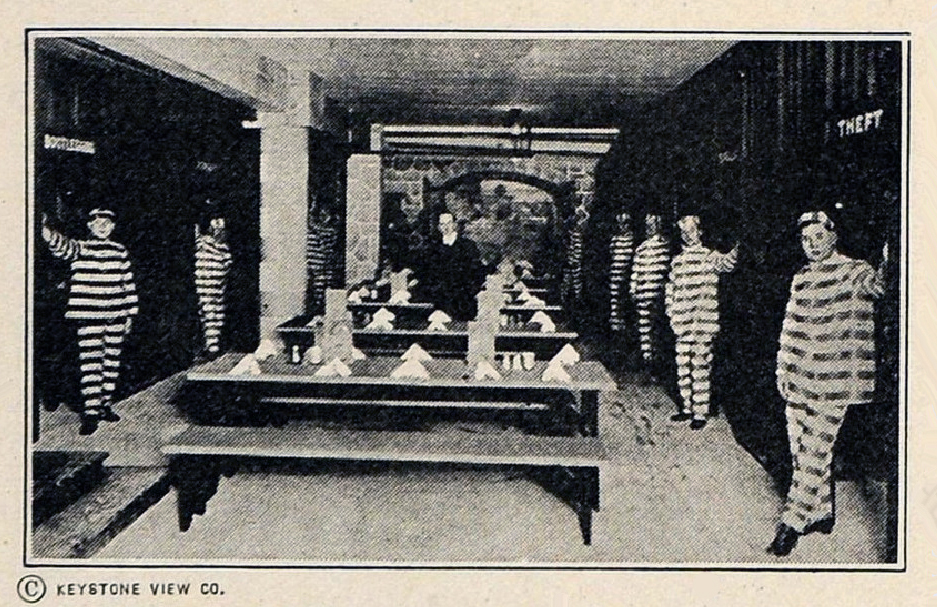
Summer is the season for flea markets. A day at Brimfield this week yielded few thrills, unfortunately, yet I did find this interesting postcard of a Newark NJ restaurant.

iffland'sjohnIffland1893Iffland’s was established on Market street in Newark in 1867, just one year after John Iffland immigrated from Germany at the age of 25. [He is pictured here at about 51.] A few years later he moved to 187 Market, the location shown on the postcard.

Many of his patrons were businessmen, possibly of German heritage. Newark had a large German population. It also had many breweries, most of them run by German-Americans. Undoubtedly he served local beer, but he also imported beer from Germany. In the 1880s, when his business seemed to be more saloon than restaurant, Iffland ran advertisements in the German-language newspaper New Jersey Deutsche Zeitung announcing that he was serving beer imported from Munich. He also imported Salvator, a strong beer created to fortify those fasting during Lent.

It’s quite likely that by the time the postcard was produced, probably ca. 1910, John Iffland had retired and turned the business over to his two sons, Henry and John Jr. Perhaps it was they who installed the restaurant’s “beef-steak garret,” taking advantage of the popular fad for groups of men to hold dinners where they bonded while drinking beer and eating steaks with their bare hands. Possibly the restaurant’s kitchen was located in the basement, explaining why Iffland’s had a beefsteak garret rather than the typical “beefsteak dungeon” or “den” in an ominous looking cellar.

John Iffland died in 1917 and the business closed about that same time, allegedly because anti-German sentiment occasioned by the country’s entry into World War I on the side of the Allies against Germany, along with the impossibility of importing beer from Germany, had made it unprofitable.

© Jan Whitaker, 2016

5 Comments

Filed under popular restaurants, proprietors & careers

Find of the day: Hancock Tavern menu

hancocktaverndoublemenu

When I found this menu from Boston’s Hancock Tavern [shown front & back] at a flea market my first question was how old it was. As soon as I began researching I learned that proprietor Wadsworth & Co. had taken over in 1897 and that the building pictured was torn down in the spring of 1903. That narrowed things down.

At that point I thought I knew enough to consider the question of the tavern’s history, starting with “Built 1634″ as noted on the menu.

Then, everything began to unravel, including the menu’s date.

hancocktavern1867corncourtI discovered that Edward & Lucina Wadsworth had reopened the Hancock Tavern in 1904 at “the identical site of the original historic structure.” Which had been razed. It took a while to figure that one out but I eventually determined that the reborn Hancock Tavern was located in the rear, Corn Court side, of a new office building facing on State Street. [sketch of map fragment shows Corn Court and Hancock Tavern in 1867]

Then I found a story about a menu like mine found in a collection of items related to the Hancock Tavern — similar except that it said “Visit the Historic Tea Room Up Stairs. In this room the ‘Boston Tea Party’ made their plans, and dressed as Mohawk Indians to destroy the tea in Boston harbor, Dec. 16, 1773.” Since mine simply says “Private Supper Rooms Up Stairs for Ladies and Gentlemen,” I decided that it probably dates from the reincarnated Hancock Tavern, which would put it between 1904 and approximately 1910.

Much bigger mysteries surrounded the history of Hancock Tavern. By the late 19th century legends about the tavern abounded, beginning with the notion that it dated from 1634 as the continuation of a tavern begun by Samuel Coles. It was also said to have hosted John Hancock, exiled French king Louis Philippe, George Washington, Benjamin Franklin, and French foreign minister Talleyrand. But the grandest legend concerned the conspirators in the “Boston tea party.” Beginning in the 1880s, the various proprietors of the Hancock Tavern spun historic tales about this.

hancocktaverndec1898In December of 1898, the Daughters of the American Revolution, dressed as Colonial maids, met at the Hancock Tavern to celebrate the 125th anniversary of the tea party. On the wall was a somewhat more detailed inscription, likely put there by the Wadsworths: “In this room the Boston tea party made their plans and dressed as Mohawk Indians, and went to Griffin’s (now Liverpool) wharf, where the ships Beaver and Eleanor and Dartmouth lay, and threw overboard 342 chests of tea, Dec. 16, 1773.” Later, the Wadsworths produced a souvenir booklet of historic lore.

But the link between the tavern and the Revolution, as well as its ancient status, were thrown into doubt in 1903 when City Registrar Edward W. McGlenen announced that the just-razed building that had housed the Hancock Tavern had been erected between 1807 and 1812. Furthermore, he said, its predecessor on the same site, a two-story house, had not been granted a tavern license until 1790, ruling out any associations with the Revolution. He also showed that Samuel Coles’ Inn, reputedly built in 1634, was an entirely separate property, thereby demolishing the Hancock Tavern’s claim to be Boston’s oldest tavern. The legends, he said, had developed from a number of fanciful books and articles from the 19th century that were in conflict with town records.

And so my menu, though still more than 100 years old, lost some of its charm.
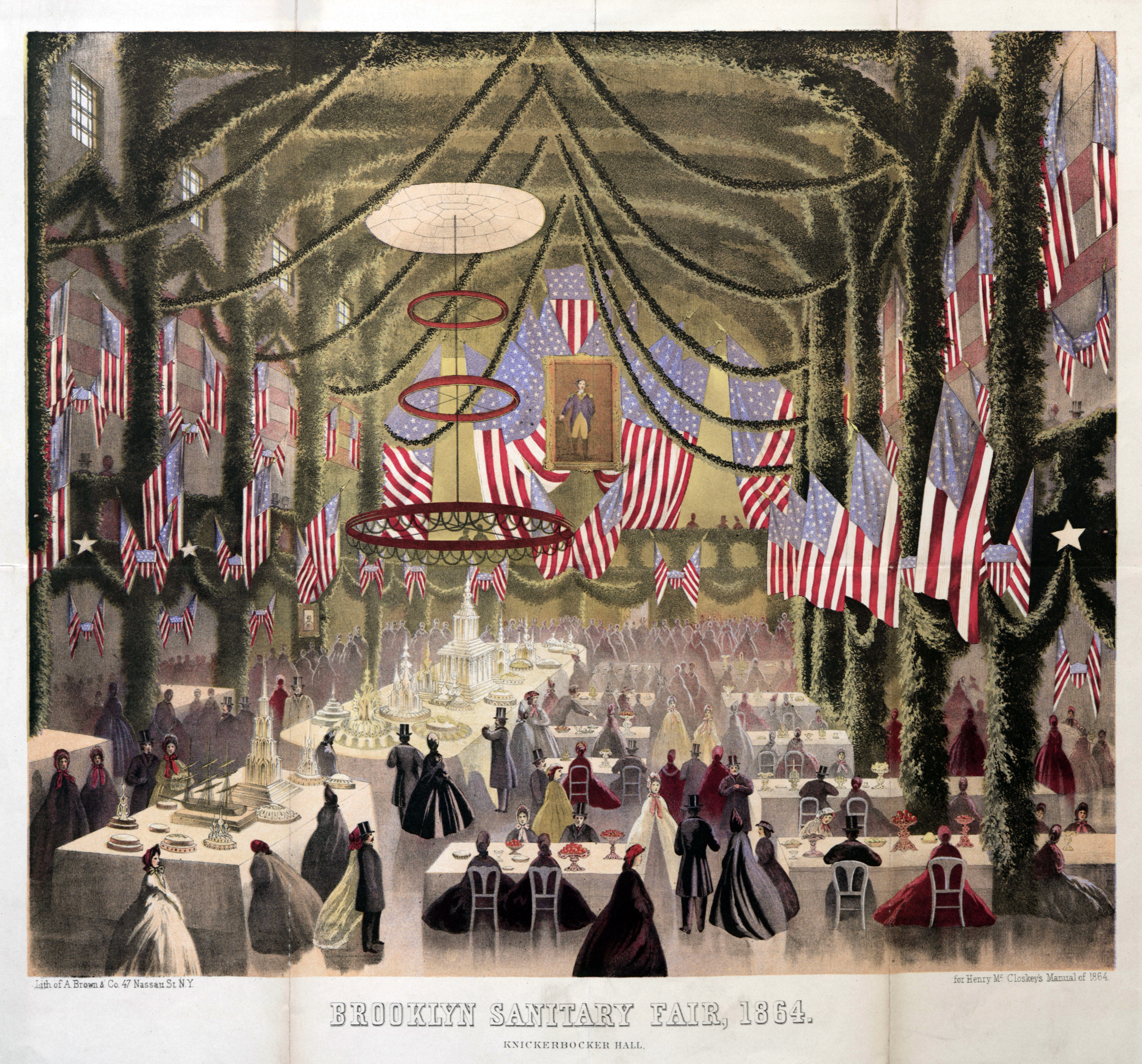
On the bright side, though, I learned a few things about the operation of 19th-century taverns. I learned that Mary Duggan, widow of the first licensee, ran the tavern for a number of years after her second husband died. In addition to supplying the finest liquors, she advertised in 1825 that she had engaged a “professed COOK” who would have soup ready from 10 to 12 o’clock (then the standard time to eat soup), and would prepare supper parties “at the shortest notice.”
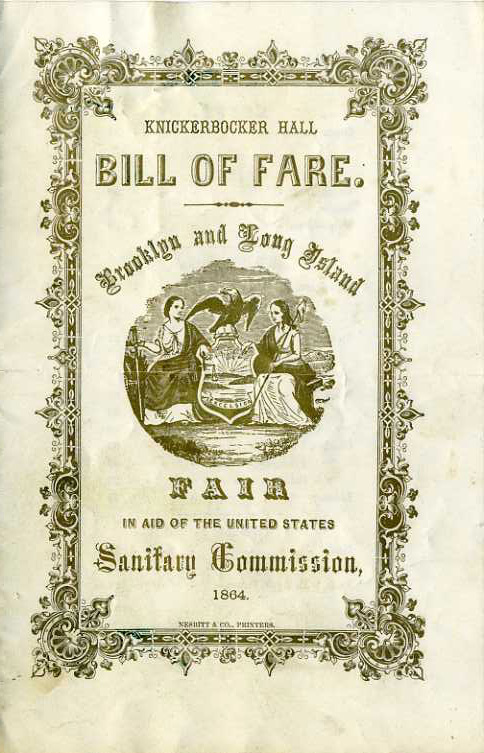
I also realized how much turnover there was in the tavern business. During most of the 19th century the Hancock Tavern was leased out to a succession of proprietors who either handled its alcohol and food service or the entire operation, which included lodging.

It fell on hard days sometime before the Wadsworths took over in 1897. Their energetic attempts to raise its historic value may have sprung in part from the fact that it had spent some years as a gambling den. In a city with many old buildings, most Bostonians did not care about it.

Having the bad luck to be located in what was fast becoming Boston’s financial district, the building was doomed, but the legend of Hancock Tavern’s link to the tea party lived on. The Arkansas Gazette reported in 1976:

hancocktavern1976© Jan Whitaker, 2016

6 Comments

Filed under atmosphere, history, menus, odd buildings, Offbeat places, proprietors & careers

Cooking with gas

stoveposterstampsAs part of my research into how restaurants worked in past times, I’ve looked into their cooking methods, in particular the kind of fuel they used. Like all nuts and bolts questions, it has been difficult to nail down.

stove1879NewHavenI wondered when public eating places began to switch from wood and coal to a more modern fuel such as gas. In the 19th century and well into the 20th, “artificial” gas was manufactured by heating coal. Gaslights were available as early as the mid-1810s in some places, and the first patent for a gas stove was given in the 1820s, but cooking with gas was rare, and didn’t occur in any public eating places that I could find.

At least 50 urban areas had gas works making gas by 1850. In that decade a number of patents were granted for gas cooking stoves. Stoves were marketed for domestic use, but there is evidence that some commercial users were interested in them too. In 1853 the Astor House in New York City experimented with gas cooking by roasting a turkey. In 1855 a manager of the National Hotel in Washington, D.C., applied for a patent for a gas stove. By the late 1850s Shaw’s Gaslight Cook Stove was available. It could be attached to a gas line with a hard rubber tube and was described as useful in restaurants, especially in the summer because “the heat arising from it is scarcely perceptible.”

But coal remained the fuel most often used in restaurant and hotel kitchens for most of the 19th century and even into the 20th – despite its drawbacks. Roger Horowitz described in his book Putting Meat on the American Table how difficult cooking with coal could be, particularly for baking and roasting. Not only was the cook unable to see what was happening but also, he wrote: “The fire had to be monitored carefully, as opening the ‘drafts’ to admit oxygen could lead coals to burn too fast, but limiting the drafts too much made it hard to reach good cooking temperatures. As coal was slow and difficult to light, enough had to be introduced to supply sufficient temperatures and cooking duration; on the other hand, putting in too much coal could burn the meat or even damage the stove by overheating the fire box.”

stovekitchenDaly'sRestCoalRange1916MCNYA vivid picture of how coal stoves operated was painted by a NYT story in 1903. The reporter visited a large hotel with a battery of over 20 stoves lined up in a row. The heat was overpowering and it took four or five “firemen” to stoke the stoves so that the heat never flagged. The fires needed to be rebuilt about three times a day and two of the stoves were kept going at all times in case the kitchen received an order. Of course kitchens became dirty [see photo from 1916] and quantities of ashes had to be hauled out.

StoveADV1910TheChef

Whatever the shortcomings of coal, it would appear that most chefs preferred it, especially when grilling meat. Although a New Haven CT stove company advertised gas as “the fuel of the future” in 1879 [see above], it would remain merely a concept in professional kitchens for some time. Far more kitchens used French-inspired coal stoves such as those sold by the Duparquet company [pictured, 1910] or  manufactured in San Francisco by the John S. Ils company. Delmonico’s adopted gas ranges but Chef Charles Ranhöfer announced in 1894 that he was going to have gas removed from the restaurant’s kitchen. He much preferred to cook with house-made charcoal. The Waldorf tried electric ranges but rejected them after a few weeks. Only a few chefs interviewed in a NYT story spoke up for gas, though the Hoffman House’s chef G. N. Nouvel overcame his reluctance and adopted gas in 1895, doing away with the problem of “having fires ready and just right.” He predicted its use would become universal in hotels and restaurants “sooner or later.”

stoveschrafft'skitchen1938The use of professional gas stoves advanced somewhat during World War I when coal prices went up. In New York City, the Consolidated Gas Company reported that it had replaced coal stoves in a large number of professional kitchens within a two-week period in 1917. The Hotel Knickerbocker’s three kitchens took out all coal-burning appliances, replacing them with 84 feet of gas ranges, nine salamanders, three broilers, and a number of smaller gas appliances. Healy’s, Browne’s, and Pabst’s were a few of the restaurants that got rid of coal and installed five or more sections of gas ranges. Similar events were taking place in Boston’s large kitchens. [see Schrafft’s modern gas kitchen, 1938, when NYC still depended on manufactured gas]

Though it was available in certain areas sooner (Pittsburgh was the center of the industry in the 1880s), natural gas made its debut through much of the United States in the 1920s, encouraging its  use in restaurants. It arrived in San Francisco in 1929, at a price lower than manufactured gas; in 1930 a survey revealed that gas was the main fuel for restaurant cooking in San Francisco, with coal a distant second. Electricity was commonly used for smaller appliances such as coffee urns, toasters, and waffle irons.

stoveAncestrySantaCruz1937In the 1930s, two periodicals came out dedicated to the use of gas and electricity in restaurant and institutional kitchens. Cooking for Profit was launched in1932 by Gas Magazines, Inc., and Food Service, published by Electrical Information Publications, began in 1938. Both were filled with stories and advertisements for their respective energy sources and appliances, including Vulcan, Garland, and Hotpoint ranges. Stories in Food Service hailed restaurants and chains with all-electric kitchens such as the B&W Cafeteria in Nashville, while Cooking for Profit championed gas users such as the Greenbrier resort in West Virginia and the Nation of Islam’s Salaam restaurant in Chicago.

Natural gas was slow to arrive everywhere, including some large cities. New York City, Philadelphia, Boston and the rest of New England, Portland OR, Spokane and Seattle WA, Wisconsin, and Florida were not served with natural gas until after World War II, no doubt delaying the broad adoption of gas appliances in those places.

stovekitchencharcoalbroil41sfToday, most restaurants have both gas ranges and a variety of electric cooking devices, and perhaps a charcoal broiler too [pictured]. Might there even be a few chefs who swear by coal?

© Jan Whitaker, 2016

19 Comments

Filed under restaurant customs, technology

Ladies’ restrooms

ladiesroomsignPublic restrooms have been in the news lately because of conflict over transgender rights, but I have been wondering about them for quite a while as part of my project to understand how restaurants developed.

We assume that restaurants will have restrooms for their customers today, but when did they become commonplace? And when did restaurants make an effort to specifically accommodate women with separate toilets? I am still not 100% sure about the answers.

Researching the history of sanitary facilities in restaurants has proved to be very difficult, starting with what terms to search for. Even today both “bathroom” and “restroom” are somehow inadequate. Yet restroom is better to capture the historical fact that those restaurants that had facilities for women usually were outfitted with more than toilets and sinks. They also had space – and many still do – where women could take care of little chores such as repairing their hairdos, or simply rest. [restroom shown below, ca. 1920s]

ladiesroomWV
Prior to the 1860s, most public toilets were outdoors, behind saloons and restaurants, and the same was true of private dwellings. Flush toilets were quite rare in the United States until the 1880s, according to Suellen Hoy’s 1995 book Chasing Dirt: The American Pursuit of Cleanliness. Outhouses were commonplace  throughout the 19th century and well into the 1930s in homes in rural areas and poor neighborhoods.

The earliest ladies’ restroom I’ve found in a restaurant was in an elegant Chicago hotel. It’s likely that other hotels were similarly equipped, even though hotel bedrooms with private bathrooms were rare.  According to a story in 1864, the Chicago restaurant welcomed women diners and invited them to simply “call in for a rest, without intrusion, or being thought an intruder.” “Every provision has been made for the convenience of ladies,” the story said, “and a toilet-room specially apportioned to their use.” This would have been welcome news to women at a time when public accommodations for them were sorely lacking.
LadiesroomCincinnati1878

The restaurants that had toilets and restrooms for women seem to have been the more substantial ones that enjoyed prominence in their communities, as was often true of restaurants in leading hotels. So it was surprising to discover that an inexpensive lunch room, Cincinnati’s Alderney Dairy, had a toilet room for women in 1878.

Though still rare, the number of ladies’ rooms in restaurants grew in the 1880s with the spread of indoor plumbing and city sewers. According to a story from 1889, restrooms in fashionable restaurants were “sumptuously furnished” with velvet couches, floor to ceiling mirrors, and marble basins. Perfumes, face powders, rouges, lotions, ivory brushes and combs, as well as hat pins were supplied.

Yet, to put the lavish restroom described above into context, the supply of ladies’ rooms in restaurants and offices was still inadequate in the 1890s. In 1891 a restaurant in Portland ME felt justified to advertise that it had “the finest Ladies’ room east of Boston,” a considerable area. Often tall office buildings were constructed with ladies’ rooms only on the top floor. Even though women were increasingly taking jobs as clerical workers in offices, developers did not want to give up income-earning space to facilities for women on each floor. (Men, on the other hand, were supplied with small closets with a urinal-sink on each floor.)

ladiesrestroom1930CharlotteNC

Although the 1890s is often cited as the decade in which indoor plumbing took huge leaps, it is notable that restaurants continued to advertise ladies’ rest rooms throughout the 1920s [above advertisement, 1930]. Although they had become more common during the World War I as more women patronized restaurants, the advertisements seem to suggest that the presence of restrooms still could not be taken for granted.

© Jan Whitaker, 2016

13 Comments

Filed under elite restaurants, sanitation, women

All you can eat

allyoucaneatFjordsSmorg-Ette

Except for the patrons of rarefied restaurants for whom exquisitely hand-crafted miniature food represents the triumph of artistic appreciation over animal hunger, most people like food in quantity. Even if they do not eat a great deal, they like the idea that they could if they wanted to.

allyoucaneatJPG1896ElyriaOHRestaurants advertising free seconds — or thirds — can be found in the 19th century, one example being the City Restaurant in Elyria OH in 1896 [shown here]. But it wasn’t until the Depression of the 1930s that the all-you-can-eat idea became a newsworthy phenomenon. In response to declining business, restaurants such as Childs in the East and Boos Brothers in the West took advantage of falling food prices by offering patrons as much of whatever they wanted for a set price of 50 or 60 cents.

In this Depression experiment restaurant proprietors learned something important about how people react when offered unlimited food. A few people went crazy, stuffing down as much as they could [below: Peter Rabbit cartoon by Harrison Cady, 1933], but most didn’t eat more than they normally would. If they overindulged in anything, it was desserts.

allyoucaneatJPG1933PeterRabbitHarrisonCady

All-you-can-eat as an adaptation to challenging economic conditions did not altogether disappear with the end of the Depression. Many restaurants found that having one night a week when they offered a special deal on a particular food, especially fried chicken or fish, could fill the house on a perpetually slow weeknight or help to build business generally.

Smorgasbords based on Swedish hors d’oeuvres tables also grew popular in the 1930s. At Childs and other Depression all-you-can-eat restaurants patrons relied on a server to bring their order, but smorgasbords introduced a novel approach: patrons helped themselves to relishes and appetizers from an attractively laid out table, and were then served with their main course as in a traditional restaurant.

allyoucaneatJPGKewanee95cents

The smorgasbord idea, it turned out, was a step on the way to the all-you-can-eat buffet. In the 1950s and 1960s chains developed whose entire business plans were based on bargain-priced buffets abounding with macaroni and cheese, chow mein, fried chicken wings, and “sparkling salads,” i.e. jello. Chains divested smorgasbords of their ethnic overtones even as some continued to call themselves by that name. In California, the word “smorgy” emerged (variations included smorga, smorgee, & smorg-ette). Rather than using round smorgasbord serving tables with food presented in decorative bowls and platters, high-volume chains tended toward cafeteria-type service with stainless steel pans.

allyoucaneatEric'sSwedishSmorgasbordGlendoraCA

California smorgys displayed seeming cultural diversity, with Ramona’s Smorgy, Mario’s Smorgy, and Gong Lee’s Smorgy. I’m still trying to grasp the concept behind Johnny Hom’s Chuck Wagon/Hofbrau/Smorgy in Stockton CA, the town that may have merited the title of smorgy capital of the U.S.A.

Along with the Swedish smorgasbord tradition, the spread of buffets and smorgys nationwide may have been aided by the $1.50 midnight spreads in Las Vegas casinos, which in the 1950s gave all-you-can-eat a popular culture imprimatur.

Opinion has been divided as to whether all-you-can-eat (or the more genteel “all-you-care-to-eat”) restaurants tended to serve cheap and inferior food. Many restaurants stressed that they baked daily, made their own sauces, or used fresh vegetables. “At Perry Boys’ Smorgy Restaurant, an inexpensive price doesn’t mean a cheap product,” according to an advertisement listing brand name foods in use. Yet, a 1968 restaurant trade journal seemed to suggest otherwise judging from its advice that “attractive buffet fare based on low-cost foods is essential.” For Quick Chicken Tetrazzini, it recommended mixing pre-cooked diced chicken with condensed mushroom soup and serving it over noodles.

As popular as all-you-can-eat restaurants were in the 1960s and 1970s, they suffered in the public relations department. They often undermined their own mini-industry with insults slung at each other. Is it helpful while touting your own restaurant to remind the public that “the words ‘all you can eat’ often mean quantity at the expense of quality”? And what does it say about the many restaurants advertising fried perch specials when a competitor says of its fish: “This is NOT frozen perch”?

AllyoucaneatJPGPhoenix&MesaPaulPerry'sSmorgee

Likewise some operators took an unfortunate “the customer is not always right” stance by posting signs that warned patrons to take no more than they could eat [see above: “Take all you want. Eat all you take.”]. This was directed at those, admittedly a small minority (but still!), who came equipped with plastic-lined handbags or special pouches in their coats in which to stow food to carry away. Meanwhile, other proprietors denounced these warning signs as an insult to guests.

Customers with huge appetites were another species of problem that most all-you-can-eat restaurants tried to be philosophical about, figuring above-average consumption would be balanced by the light eaters. Proprietors told themselves that the man who downed 90 steamed clams, or the one who swallowed 40 pieces of fried chicken, would provide free advertising when he boasted at work how much he ate. Families were prized customers, construction gangs less so. And they dreaded school football teams. Some restaurants located near the University of Michigan in Ann Arbor found it necessary to put restrictions on salad bars.

allyoucaneatFL

Let’s face it, since the fall of Rome, gorging has been seen as unattractive. Restaurant owners and employees sometimes expressed disgust at customer behavior such as grabbing food off trays as staff tried to replenish buffets. “It’s disgusting,” said the proprietor of a Dallas all-you-can-eat steak restaurant, adding, “Some of them just ought to be led off to a big, old hog trough.” Another manager admitted that workers called customers “animals” in private. “You lose your appetite working in a place like this,” said one.

As a reporter wrote of Las Vegas buffets in 1983, “If I ever see another metal pan of mashed potatoes awash in melted margarine, another sea of macaroni salad, another ‘medley’ of canned corn, carrots and peas . . .” Stop right there!

© Jan Whitaker, 2016

20 Comments

Filed under chain restaurants, family restaurants, food, patrons, popular restaurants, restaurant etiquette

Taste of a decade: 1880s restaurants

1880sFrankLentine

In the 1880s a wider range of foods became available to people living in cities, allowing restaurant menus to became more varied. Cold storage warehouses and refrigerated rail cars brought cheaper Chicago beef and out-of-season produce. Mechanically frozen ice, free from the impurities of lake ice, became available. Cheese and butter, once made on farms, now came from factories. Fresh fruits and vegetables remained luxuries for most people, however, and meat and potatoes dominated menus.

Larger, better capitalized restaurants installed electric plants that provided brighter lighting and badly needed ventilation systems.

1882HartfordHalfDimeLunchThe public demanded, and began to get, lower restaurant prices, quicker service, and more flexible meal times. The dining public expanded. Boarding houses that furnished meals as part of the rent were replaced by kitchenless rooming houses whose residents went to restaurants for dinner. More hotels switched to the European plan, freeing guests to eat wherever they chose rather than pay an inclusive charge for room and meals. New types of ready-to-eat food purveyors came on the scene, such as all-night lunch wagons and dairy cafes that specialized in simple, inexpensive meals such as baked beans and cereal with milk.

New ethnic groups arrived on American shores, among them Eastern European Jews and Southern Italians. Many settled in the East but others spread to cities throughout the westward-growing nation. They brought with them new cuisines, tempting the more adventurous eaters among the settled population.

Temperance coffee houses and soda fountains continued to thrive, particularly in Boston where authorities were always looking for ways to curb drinking.

As the rise of department stores and downtown retail shops brought women into city centers, restaurants catering specifically to them appeared on the scene.

But not everyone was welcome at restaurant tables, or in the society at large. Southern states made segregation the law, keeping Black Americans out of white-owned restaurants. Racially motivated legislation cut off Chinese immigration to the U.S. and encouraged hostility toward Chinese already in the country, mostly in the West, motivating many to move eastward and  introduce curious diners to new foods.

Highlights

1883Macy'sNY1880 On the second floor of its newly expanded NYC department store, Macy’s restaurant for shoppers seats 200. [pictured] – In the silver-mining town of Virginia City NV, restaurants serve food from all over the world, including “fruits from every country and clime.”

1881 In December, Edmund Hill, proprietor of Hill’s confectionery restaurant in Trenton NJ totals up the proceeds of what he calls a “very satisfactory” year in which the business took in $18,146, netting him the handsome sum of $677.33 in wages and profit.

1880sRichmondCafe1882 Richmond’s Café in New Bedford MA informs customers that “The Café will be in charge of a lady . . . who will bestow especial pains upon lady patrons, taking charge of whatever parcels may be left in her care while the owners are out shopping.” – In Boston Charles Eaton and a partner open a temperance soda fountain and lunch room called Thompson’s Spa which goes on to become a local institution.

1883 One year after passage of the Chinese Exclusion Act, the Rockaway Oyster and Chop House in Fresno CA advertises to prospective customers that it has “all white help.” Everyone, of course, understands that white means “not Asian.”

1889Chicago1885 In Boston and other large cities customers flood into cheap restaurants near railroad depots and wharves for 10-cent noon meals. Menus are chalked up on boards and customers eat rapidly without removing coats or hats.

1886 It is considered newsworthy when a federal judge orders a restaurant in Little Rock AR to serve a Black juror along with his fellow white jurors. A report notes that it was “the first time a negro enjoyed his repast at the leading hotel in the state and among white people.”

1887 After gathering menus from 40 prominent hotels from all over the country, a collector determines that salmon is the fish most often listed, and that it is found on menus across the United States, including Knoxville TN, Detroit MI, Milwaukee WI, Salt Lake City UT, and Cheyenne WY.

1883brooksdiningroom1888 At Chicago’s New York Kitchen, where a nickel buys Ham and Beans Boston Style or “One-third of a Pie, any kind,” the dining room is lighted by a Mather Incandescent Electric System and cooled by a steam-powered exhaust fan. — In Boston Brooks’ Dining Rooms is equipped with a telephone.

© Jan Whitaker, 2016

12 Comments

Filed under lunch rooms, patrons, racism, technology, women

Anatomy of a corporate restaurant executive

corpexecJPG1966Jan14localrestaurateurnowRAvpIt strikes me that much more has been written about and by chefs than those restaurant personnel who mostly work behind a desk. Business people lack the glamour of knife wielding chefs. They are not surrounded by flames. They have no dishes named after them.

But Frederick Rufe’s career in restaurants was as interesting as many chefs’ and he was undoubtedly more influential in shaping the dining experiences of countless restaurant patrons over his career of nearly 40 years. His entire working life had a single focus. In a 1974 interview he stressed, “Everything I’ve ever done has been with food.” As a management executive he was closer to the soul (or soullessness, depending how you see it) of both the upscale and the midscale American corporate-owned restaurant of the 1960s and 1970s.

Born in New Jersey in 1922 he came from a humble background, growing up in a one-parent household with his mother, who was a factory worker, and a brother. While a student at a teachers’ college, he spent one summer as a waiter for a Pennsylvania resort, leading him to detour from a teaching career to one in food service. Following WWII army duty (working in food supply), he obtained a degree from Cornell’s School of Hotel Administration, which excelled in turning out top hospitality industry executives.

He then went to work in Miami Beach as food and beverage manager at large hotels there, among them the Monte Carlo, Algiers, and Deauville. He was not shy about promoting himself. Aiming for a catering manager job in a hotel without such a position, he “invented” it for himself. He took over a vacant room, bought a desk, put up draperies, and hung out a “Catering Manager” sign. When challenged by his boss, he successfully convinced him that the hotel needed someone – him – in that position.

corpexecFourSeasonsAlbertStockli1960He joined Restaurant Associates in New York in the mid-1950s as the company was entering its most creative phase. RA was going from managing coffee shops and cafeterias to developing theme restaurants, some in the luxury class. In 1956 Rufe was made general manager of RA’s Newark Airport restaurants which included the famed Newarker, its kitchen headed by the inventive Swiss chef Albert Stöckli who would go on to the Four Seasons [pictured here]. Rufe helped develop the Four Seasons, the Forum of the Twelve Caesars, and La Fonda del Sol. At a time when out-of-season fruits and vegetables equalled the height of luxury, he obtained shipments of melons and new asparagus from the West for the Four Seasons, as well as miniature vegetables that allowed power-lunching VIPs to minimize awkward bites. With James Beard’s help he brought the blind cook Elena Zelayeta from California to plan Mexican and Spanish dishes for La Fonda del Sol.

corpexecJPG1960LaFondaDelSolMenuAmiable and worldly, Rufe could be mistaken for a European sophisticate. He was on James Beard’s holiday dinner guest list, and had easy access to the food columns at major newspapers where he promoted RA’s restaurants with recipes and interviews. While manager of the Latin-themed La Fonda del Sol, he explained to a reporter that a “broiling wall” of revolving stuffed flank steaks was based on a setup he had observed at an inn in Peru on a menu-collecting tour of South America with La Fonda’s chef John Santi. He was known for focusing on detail, so much so that his travel notes were said to look like research for a doctoral dissertation.

In 1964 he took on the task of rescuing the Top of the Fair, a failing de luxe restaurant atop the Port Authority’s heliport building adjoining the World’s Fair grounds. He was made a RA vice-president in 1967 and two years later put in charge of food operations at LaGuardia and Kennedy air terminals, as well as other airports in the Northeast. “Our places are genuine restaurants,” he insisted, “not just places to grab a quick meal and dash to your plane.”

corpexecJPG1978MayADVAfter a shift in RA’s direction, Rufe left for the Marriott Corporation where he was soon made VP of its dinner house division of moderate-priced theme restaurants in the DC area. The recession of the 1970s was on and Rufe explained in the press that Americans wouldn’t pay for $25 French dinners any more. Marriott’s new dinner houses were geared to more modest lifestyles. Phineas Prime Rib, Joshua Tree, Franklin Stove, Port O’Georgetown, and Garibaldi’s were management-driven eating places where every detail was arrived at through consumer research and economic calculation. Lunch was not profitable, so dinner only. No reservations because that resulted in less than 100% occupancy. Short menus with only America’s favorites, beef and seafood. All-you-can-eat salad bars. Fireplaces and ceiling beams evoking old-time hospitality. Friendly college student servers speaking from scripts. Cooking by step-by-step recipe cards. No chefs.

corpexecJPGADV1971At first the formula was wildly popular with modal guests – suburbanites with $15,000 annual incomes who ordered $6.95 meals and cleared out in 1.5 hours. “Seventeen million dollars and no chefs,” Rufe boasted in January of 1975. However, by 1978 competition was up and profits were down. Marriott decided to sell off its dinner house division and some of the restaurants closed under the new owner.

After a few years as director of food and beverage planning and development for Hilton International, Rufe retired, returning to Stroudsburg PA where he continued as a consultant.

Needless to say, the chain dinner house formula he helped develop prevails today, demonstrating that there is a sizable market for restaurants with pleasant decor, parking, clean bathrooms, and palatable fare that is affordable.

© Jan Whitaker, 2016

12 Comments

Filed under chain restaurants, food, proprietors & careers, theme restaurants

Surf ‘n’ turf

Surf&turftogetherIn the 1960s steak and seafood dinners became popular across the U.S. The lobster component of the dinner was frozen lobster tails from South Africa. Since the 1930s South African lobster tails had been appearing on restaurant menus. In 1937 Naylor’s Sea Food Restaurant in Washington D.C. offered a simple $1.00 Lenten special of  Broiled African Lobster Tails with Drawn Butter, French Fried Potatoes, and Sliced Tomatoes.

surf&turfMaineLobster1930sThe imported lobster tails roused Maine to mount a campaign to convince consumers to stick with Maine’s lobsters. Advertisements appeared in newspapers in 1937 stating that frozen lobster tails were inferior to Maine lobster, and in fact weren’t lobster at all! Rather, the notices said, they were clawless crawfish, aka spiny or rock lobsters. At that time, South African lobster tails – the only edible part as far as humans were concerned – were being sold at 1/3 the price of Maine’s. In 1938 Maine lobsters appeared in the marketplace with an aluminum disk attached to the claw stating they were a product of Maine.

surf&turf1968bookletDespite the campaign, imported lobster tails did not stop arriving from South Africa. After WWII a NY importer began flying them in from Cuba. Soon big shipments were also coming from Brazil, Australia, and New Zealand.

I had hoped to figure out why it was not until the early 1960s that restaurants began to combine lobster tails with beef, calling the combination surf ‘n’ turf, beef ‘n’ reef, etc. So far I haven’t been able to “crack” that one. It wasn’t a totally novel idea: in 1931, for instance, the LaJolla Beach & Yacht Club offered a “special steak and lobster dinner” for $1. Yet it took 30 more years after the cheaper lobster tails came to America for the surf ‘n’ turf vogue to begin.

Even though they could be dry and somewhat tough compared to Maine lobsters, ever-practical American diners liked rock lobster tails because it was easier to get the meat out of the shell without making a mess.

surf&turfRockford1968In 1964, a restaurant in Van Nuys CA combined steak and lobster tails for $3.00, making the combo cheaper than a steak dinner and affordable enough that it quickly caught on around the country as a “special dinner,” one likely to be chosen by middle-class diners for an anniversary or New Year’s Eve. Surf ‘n’ Turf was not likely to appear on the menus of luxury restaurants — but let’s be honest – there were very few luxury restaurants then, and even now they make up a small percentage of all restaurants. It was a dish more suited to a middle-class restaurant such as Schrafft’s, which in 1970 ran humorous advertisements suggesting their “Beef and Reef” platter was perfect “for executives who are tired of making important decisions.”

surf&turf1975ADVportionThe public’s love of lobster tails paired with steak continued through the 1970s, even as prices rose. By the late 1970s Surf ‘n’ Turf could easily run to $11.95 and more, and in Washington, D.C. restaurants were caught substituting Florida tails for the superior South African ones. By the 1990s, S&T’s desirability had faded. No doubt it can still be found today here and there, but, like cheesecake and baked potatoes with sour cream and chives, it would scarcely be the restaurant sensation it was in the 1960s and 1970s.

© Jan Whitaker, 2016

14 Comments

Filed under food

Odd restaurant buildings: “ducks”

ducksfredafarmsBerlinCT

Ducks are commercial buildings that look like what they sell, as illustrated by the Freda Farms ice cream stand in Berlin CT. The term was actually inspired by a Long Island store that sold ducks (to eat). It has been generalized to apply to any buildings that looks like some familiar object or animal, etc, whether or not their merchandise is related. These types of buildings are also known as programmatic or mimetic architecture.

duckstamaleThough they reached a peak of popularity in the late 1920s and early 1930s, ducks trace back much further in history. An introduction to Jim Heimann’s book California Crazy by David Gebhard links the mimetic architecture of the last century to garden buildings of the 18th century and even earlier. One of the first examples in the United States was the 65-foot elephant of Margate NJ built in1881 to attract attention to a real estate development.

In addition to housing stores and offices, many ducks have featured restaurants over the decades. They have taken the shape of all kinds of animals, kegs, barrels, ships, castles, cups, coffee pots, bowls, hats, chuck wagons, dirigibles, items of food, shoes, and windmills.

DucksbulldogLA

The earliest restaurant duck I have found was a café planned for Cincinnati in the shape of a huge beer cask in 1902. Unlike later examples, though, it was meant to occupy a location in a row of Main Street storefronts. Most later ducks, arriving with the spread of car ownership in the late 1920s and early 1930s, occupied empty lots in developing areas of cities. Not too surprisingly, southern California’s car culture provided a nurturing environment. In addition the climate was favorable to the somewhat makeshift carnival-type structures, while the city’s movie industry supplied inspiration. As Los Angeles grew, giant dogs, toads, ice cream freezers, shoes, and other bizarre apparitions sprang up along the roadside, vying for the business of passing motorists.

Ducks4patentdrawingsDucksVandeKamp'sDutchbakers

The link between the movie industry and roadside fantasy was straightforward in the case of Harry Oliver, a leading designer who brought magic to sets for movies such as Scarface, The Good Earth, and Mark of the Vampire. Oliver designed windmill-shaped buildings for the Van de Kamp bakeries and drive-ins as well as a storybook building occupied by the Tam o’ Shanter Inn.

If architecture is about the enclosure of space, ducks are architecture only secondarily. In most cases mimetic architecture describes a building that serves more as advertising sign than as an innovative enclosure of space. Once a customer stepped inside a giant pig or coffee pot, all whimsy faded away as the interior revealed itself to be a standard rectangle as shown here in one of the many coffee-pot ducks that could be found across the U.S.

DucksTXCoffeePotExt&INT

If ducks say anything about American restaurants, it is that they are only partially about food.

© Jan Whitaker, 2016

5 Comments

Filed under odd buildings, roadside restaurants

Dining with the Grahamites

sylvesterGrahamANNature'sOwnBookIn the early 19th century many Americans had fairly wretched meals at home. No doubt some fared better but the historical record is full of spoiled meat, rancid butter and fats, sour bread, and rotting fruit. Diets were heavy with meats, fried food, and pastries, but few fresh fruits or vegetables. Strong condiments were used to hide bad tastes. Heavy drinking was common as was “dyspepsia” (indigestion).

In this context, the dietary reforms advocated by Sylvester Graham in the 1830s seem somewhat less extreme than they are often portrayed. A graduate of Amherst College and a Presbyterian minister, he began his career at a church in New Jersey but soon left to take a job with a temperance organization. Upon expanding his belief that drinking was morally and physically unhealthy by including foods and non-alcoholic beverages that should also be avoided, he went on the circuit as an independent lecturer.

Hoping to curb “unnatural appetites”(yes, of all kinds), Graham identified foods that should not be eaten because they were overstimulating. In addition to alcohol, they were coffee, black and green tea, and condiments such as pepper and mustard. He also targeted all meat and foods that were indigestible, among them raw cucumbers and radishes, gravies, melted butter, pastry, and cakes. He believed the perfect consumables were bread and water, assuming the bread was unbuttered, made of whole wheat flour, and baked by a female family member, not by a servant or commercial baker.

sylvestergrahamhouse1839Graham was disliked for being overbearing and ridiculed as a scientific fraud, but his lectures and books nonetheless won fervent disciples, including a number of well-known abolitionists. A few of his followers started boarding houses for “Grahamites.” So far I have found three in New York City, two in Boston, and one in Rochester NY in the 1830s and 1840s.

Like all boarding houses, Graham houses often operated as small hotels, with some guests staying for months, maybe years, but also transients who might be there for only a couple of days. Some guests only ate at the house, either regularly or for a single meal. The houses were small and could not accommodate many diners; certainly they were not full-scale restaurants, yet they were public eating places of a sort.

Graham boarding houses ascribed to Graham’s scientific system of living. Though mostly focused on diet, it also emphasized taking daily cold showers and sleeping on straw mattresses rather than feather beds. Meals – consisting of no more than three items — were to be eaten six hours apart at the same precise time every day. A sample Graham diet for one of the boarding houses was advertised in the New York Tribune in 1843 as follows:
Monday – Pea soup, vegetables, fruit and plum pudding.
Tuesday – Baked peas, vegetables, fruit and apple custard.
Wednesday – Vegetable soup, rice and prune pie.
Thursday – Vegetables, boiled bread pudding, cream and fruit.
Friday – Vegetables, fruit, pumpkin or potato pie.
Saturday – Bean soup, vegetables, rice or sweet potato custard.
Sunday – Baked beans, Yankee bread, cream pie and fruit.

The sweet items listed above would have used a small amount of molasses rather than sugar. No butter or lard was used in baked desserts. All dishes were served warm, not hot, without seasonings other than a bit of salt. A recipe for pea soup was given by Asenath Nicholson, founder of the Graham Boarding House on Beekman Street in New York City, and author of Nature’s Own Book [frontispiece at top]. For pea soup, she wrote, “Boil [peas] till beginning to be soft, with a little pearlash [to reduce acid content] – then change the water, and when well cooked, add a little thickening of flour.” She gave two recipes for “coffee,” one made of burnt bread, the other of potatoes.

Nicholson also codified other food rules for Graham boarding houses. Mashed potatoes were out because they did not involve chewing. Stale bread, on the other hand, was desirable because it did require chewing. Pastry was “an abomination.” Warm bread and buckwheat pancakes were “both highly injurious.” Butter was “at best . . . a questionable article.”

sylvester'sexterior

The house that Graham and his family lived in is in Northampton MA [pictured here as it looks today] and since 1984 has been a popular restaurant open for breakfast and lunch. Looking over its current menu, I note very few things Graham would permit on his table. It’s likely that only one dish would meet his approval, though it might violate the rule against too many heterogeneous foods in the same meal:

Veggies, Fruits and Nuts Salad – A large salad with tomato, red onion, green peppers, corn, sunflower seeds, candied  walnuts, fresh apple slices and dried cranberries… 12.00

I’m pretty sure he would order the red onion removed and certainly would not like the choice of dressings, especially Honey Mustard. Please!

[below: pitchers of coffee at Sylvester’s Restaurant today]

sylvester'sCoffee

© Jan Whitaker, 2016

8 Comments

Filed under alternative restaurants, food