A hair in the soup

hairinfoodUntil the 1920s the catchphrase “hair in the soup” referred to something that was a trivial problem. In other words, just remove it and keep on eating.

And then women started wearing their hair short.

Manufacturers of hairpins, barrettes, and hairnets felt desperate as sales of their products fell off drastically. But Edward Bernays, a pioneer in the new field of public relations, had an idea of how to revive business. He found safety experts who warned of the dangers of women working without hairnets and getting their hair caught in machinery. Also, under his guidance health experts emerged who recommended hairnets for waitresses to avoid contaminating food.

hairnetheadband

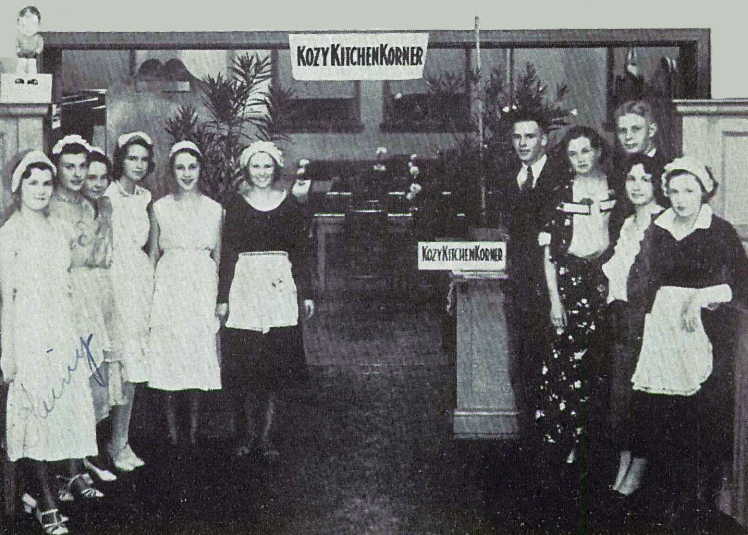
State legislatures and municipalities began to pass laws and ordinances requiring servers, mainly women, to wear hairnets or headbands [shown above, 1920s]. In Richmond VA the health commissioner advocated a hairnet requirement, saying he had witnessed waitresses with bobbed hair shake their heads to get hair out of their eyes, risking loose hair falling in food.

hairnets1967greensboroncIn the decades that followed consumers became hairnet watchdogs, sending off letters to newspapers asking why waitresses weren’t wearing hairnets or restraining hairbands. Newspapers took up the role of consumer protectors, asking health departments to investigate. Health departments around the country responded to complaints by making special visits to targeted restaurants.

Did the agitation about hair in restaurant food result in more sanitary conditions? Probably not, and not even when it resulted in waitresses covering or restraining their hair.

The reason was that special visits to restaurants interrupted the regular health inspection work by strapped health departments, stealing time from monitoring more serious issues.

In 1967 a Greensboro NC paper’s “Hot Line” surveyed 19 restaurants and found widespread noncompliance with state regulations calling for head coverings. In this case, however, the county health director said he felt head coverings were a minor health concern compared to issues such as improper refrigeration or spoiled food. In fact, he said, in annual restaurant inspections the absence of head coverings accounted for only a 10 point loss out of a total 1,000-point perfect score. He concluded that it was a misuse of time for his department to make special visits to check for head coverings.

Today, in fact, the federal Food and Drug Administration does not generally require restaurant wait staff to adopt hair restraints, though it does require restraints for those who prepare food. And there is the question of whether there are actually any negative health effects of swallowing a stray hair. Probably not.

hairnets1971nancyOn the other hand, there is little doubt that most Americans find it disgusting.

Usually when diners find a hair in food at a restaurant, they immediately stop eating it. Researchers have found that “contamination psychology” is deeply irrational and not influenced by logic. Experiments in which a cockroach was brought into contact with food resulted in disgust so deep that subjects could not overlook even the briefest contact. If the food was later decontaminated they still would not eat it, even if they recognized that all traces had been removed. According to Richard Beck in Unclean: Meditations on Purity, Hospitality, and Mortality, “The rule seems to be “once in contact, always in contact.’”

hairnetswaitressesidealcafechicago

A significant aspect of the disgust reaction to hair in food seems to be that it was once part of someone else’s body. (One’s own hair does not elicit the disgust response.) The reaction may be stronger if the body or behavior of the other person is viewed as socially unacceptable. In the 1920s some people disapproved of bobbed hair on women; in the 1960s there were people offended by long hair. Take the woman from Pulaski IL who wrote to a newspaper about the lack of hairnets in 1968: “When we enter a restaurant and notice a loose long-haired employe we leave. There is no law YET that we have to eat hair, nor eat with the Hippies, nor anything that resembles them.”

In the 1970s male servers were also sometimes the target of complaints if they had long hair or bushy beards.

But times change. Some restaurant patrons did not object at all to servers with long hair, especially if they were young and attractive like the “Grog Shop girls.” Grog Shops were part of the Stouffer’s company, a restaurant chain that had a history of strict policies on waitress garb, banning seamless hose and requiring waitresses to wear lace-up oxfords, girdles, and hairnets. However, when the Grog Shops opened in 1970, Stouffer’s dressed waitresses in micro-mini skirts, boots, and blouses with plunging necklines and asked them to wear their hair long and loose. I seriously doubt that health departments got a lot of complaints about the absence of hairnets.

© Jan Whitaker, 2016

14 Comments

Filed under food, sanitation, uniforms & costumes

When presidents eat out

presidentskennedyn-joy

By now Americans are used to seeing presidential candidates chomping on corn dogs, pizza, Philly cheese steaks, and other hearty food of the people. For some – but not all — food eaten on the campaign trail has been quite a departure from their usual preferences when eating out.

presidentsjockeyclubdc1964It is certainly hard to imagine that John F. Kennedy normally patronized down-home restaurants such as the N-Joy Restaurant in Cornell WI which he visited on a campaign stop. The N-Joy was known for its homemade salad dressing and chicken dumpling soup, but not for chicken in champagne sauce, a specialty of the elite La Caravelle in New York. La Caravelle also supplied a French chef for the Kennedy White House and edibles for JFK’s airplane trips. He also enjoyed Washington’s Jockey Club, which he made famous through his patronage and later became a favorite of the Reagans.

Like the Kennedys, the Reagans enjoyed dining in the best restaurants, at least before Ronald Reagan was wounded in a 1981 assassination attempt. They liked Le Cirque in NYC and Jean-Louis in Washington, the latter visited by the Reagans just eight days before the shooting. But even apart from security pre-checks, a presidential visit to a restaurant could be a very complicated matter. Before the Reagans dined with friends for an after-theater repast at Le Cirque the restaurant was visited multiple times by the city’s health and fire departments as well as FDA inspectors. Ronald Reagan’s birthday dinner at Jean-Louis required that the restaurant accept no other guests that night.

presidents1903It’s hard to know how often presidents ate in restaurants in the 19th century. Possibly it was easier for them then, before 1902 when the Secret Service was created following President McKinley’s assassination in 1901. Probably many of them made their way to Delmonico’s and many, many hotel dining rooms. Harvey’s in Washington claimed it had been the “Restaurant of the Presidents since 1858” – the administration of James Buchanan – and it became famous in the Civil War when the Lincolns ate there. Presidents Garfield and Grant were said to enjoy Francesco Martinelli’s table d’hôte in New York City. Martinelli’s and Harvey’s were pretty nice restaurants compared to the cheap New York cellar where Chester Arthur ate corned beef and coffee just as he was about to take office in 1881.

Theodore Roosevelt showed a taste for lively night spots. As Governor of New York, he patronized Shanley’s, a popular NYC resort, and as president was known to frequent the Café Boulevard [pictured above]. He also visited Antoine’s in New Orleans, as did Presidents Taft, Harding, and Coolidge.

Miserable meals on the campaign trail were a hallmark of the failed presidential campaign of William Jennings Bryan in 1908, and of his political career generally. According to a Collier’s magazine article, in over 12-years traveling the country he had earned the dismal honor of being a “Quick Lunch Hero.” He had eaten at over 1,700 railroad lunch counters, gulping down “mummified food” and “historical eggs.”

President Wilson might have applauded Bryan for his no-frills meals. During WWI Wilson called upon the country to embrace “the simple, wholesome, nourishing dishes which mother used to make,” gladdening the managers of the earnest, squeaky-clean Childs restaurant chain which quickly shifted to a wheatless wartime menu by substituting rice and corn meal dishes.

presidentharrytrumandixonschiliWhether by circumstance or taste, Harry Truman was a humble diner. He was a fan of Dixon’s Chili Parlor in Kansas City MO, where the chili was made without onions, garlic, tomatoes, or chili powder. He is shown above visiting Dixon’s on his way home for the holidays, on December 23, 1950. After leaving office he and his wife Bess drove across country, according to a 2009 NY Times story, eating “a lot of fruit plates at roadside diners.” One of their stops was at the Princess Restaurant in Frostburg MD, still in business today complete with a “Truman booth.” In 1958 Truman’s finances improved when Congress passed the Former Presidents Act, ensuring former presidents would get pensions and Secret Service protection, but somehow I doubt that this transformed him into a gourmet diner.

presidentjimmycarterarthurbryants80

Although it’s probably true that Truman genuinely enjoyed Dixon’s chili and JFK really liked La Caravelle’s chicken in champagne sauce, it’s hard to know how much presidential restaurant choices were based on esthetic as opposed to political factors. President Carter had a tendency to eat in popular restaurants – such as KC’s Arthur Bryant’s [pictured above], NYC’s Mama Leone’s, and (surprisingly) Aunt Fanny’s Cabin. Were those strategic choices? If still in business today, it’s certain that Aunt Fanny’s Cabin would not be on the approved list.

According to John Mariani in America Eats Out, Presidents Johnson, Nixon, Ford, and Carter generally weren’t big on restaurant going. Nixon, who came from a restaurant family, would sometimes go for dinner at Trader Vic’s in the Capitol Hilton near the White House. He was also said to be a devotee of NYC’s Colony where he was allowed to bring his dog into the main dining room. But the president who was hardest to keep in the White House was George H. W. Bush who enjoyed Italian (I Ricchi, DC), Chinese (Peking Gourmet Inn, Falls Church VA), seafood (Mabel’s Lobster Claw, Kennebunkport ME), and Tex-Mex (Rio Grande Café in Texas).

Apart from patronizing restaurants, often making them famous overnight, presidents can greatly influence the entire industry. For example, Franklin Roosevelt’s election was responsible for the repeal of prohibition in 1933, so critical to restaurants’ survival, while President Carter’s dislike of the three-martini lunch led him to champion cutting the deduction on business meals as part of a tax reform plan. He failed but eventually the deduction was reduced to 50%. Apparently the reform was not as disastrous to the industry as they had predicted.

© Jan Whitaker, 2016

25 Comments

Filed under patrons

Spooky restaurants

spookycolumbusohnightclub

Montmartre in Paris was the birthplace of what would come to be known in the U.S. as the theme restaurant. In the late 19th and early 20th centuries, Parisian entrepreneurs conjured up fantasy atmosphere in strange and unsettling forms. Themes included assassination, imprisonment, death, hell, and that harbinger of bad luck, the black cat.

As much devoted to drinking and entertainment as food, Montmartre’s ghoulish restaurants, cafes, and cabarets inspired Americans to duplicate them. Needless to say, both in France and in America such places were heavily geared to tourists and considerably short of good taste.

One Paris establishment, the Cabaret du Néant, deliberately transgressed the boundaries of decency serving wine in skulls (thankfully artificial), using coffins for tables and x-rays to turn patrons into skeletons, and – worst of all, in 1915 – digging trenches in the backyard so patrons could experience World War I warfare conditions while dining by candlelight.

spookycabaretduneantIn 1896 the Cabaret du Néant, renamed the Restaurant of Death, had been recreated in the Casino in New York’s Central Park, right down to a candelabra made of “skulls and bones.”

spookymoulinrougecavequillsept1921


Greenwich Village’s Moulin Rouge used coffins and skulls in its advertising, though whether it carried the theme over to its interior is unknown. It was padlocked in 1924 for serving liquor illegally. Columbus OH had a nightclub known as The Catacombs in the Chittenden Hotel [at top of page] but I was not able to learn anything about it other than that it was doing business in 1941.

spookyblackcatgreenwichvillageOn the whole, black cats and jails gained greater popularity in the U. S., both themes inspired by Montmartre. New York City’s Black Cat had many lives [shown above], being declared dead with regularity and then reappearing. San Francisco also had a Black Cat, opened in 1911, but it sounds as though it was quite tame, filled with ferns and potted palms and an orchestra hidden behind a screen. Perhaps another Black Cat Café in San Francisco, or maybe this one transformed, operated from the 1930s into the 1960s as a center for bohemians and beats as well as a gay clientele.

As sinister animals go, rats and bats were also celebrated. Greenwich Village’s café, The Bat, was said to have a “macabre interior” similar to Paris’s famed Le Rat Mort (The Dead Rat). It’s likely that the advertising of both made them out to be far more sinister than they were.

spookysfjailrestaurant1921

As for jail restaurants and cafés, they were fairly numerous in this country. The first, labeled dungeons, opened in New York City and were places where patrons sat on crude boxes in cellars and ate steaks with their hands. They were particularly popular with men’s groups and conventioneers. In the 1920s and 1930s, restaurants and drinking places with jail themes, often with servers dressed as jailers or prisoners, appeared in Los Angeles, Indianapolis, and even a small town in Iowa. Strangely, San Francisco’s Dungeon restaurant of the 1920s, complete with cells and wardens, etc., served waffles rather than steak. But then sometimes it’s hard to keep themes on track.

I’ve been working on a future post on truly scary restaurants, ones where outbreaks of food poisoning have occurred.

Meanwhile, whether or not you find a spooky restaurant to hang out in for Halloween, have a good holiday!

© Jan Whitaker, 2016

5 Comments

Filed under alternative restaurants, atmosphere, night clubs, Offbeat places, restaurant decor, theme restaurants

The “mysterious” Singing Kettle

singingkettlepcA veil of ominous mystery has spread over the remains of a California roadside tea room once known by the homey name Singing Kettle.

It was located near the summit of Turnbull Canyon, high above the San Gabriel Valley, on a winding road running through the Puente Hills in North Whittier. The road was completed in 1915, opening up a route filled with what many regarded as the most impressive views on the entire Pacific Coast.

singingkettle3781tcrstreetview

Today young people drive into the “haunted” canyon at night determined to be frightened to death. Gazing out car windows they eagerly tell each other tales they’ve heard of satanic rituals, murders, and human sacrifice, hoping that behind that fence are unspeakable horrors they might be lucky enough to witness. Even the Singing Kettle tea room, perhaps because remnants of its entrance are visible from the road, has become enmeshed in dark fantasies.

Why am I laughing?

Because it strikes me as funny that a tea room from the 1920s and 1930s could be associated with horror and paranormal events. Or even that people would find its existence mysterious, wondering why it was ever there or what it really was.

I suppose that given enough time and imagination mysterious auras can envelop any mundane place, even a deserted mall or a parking garage. But still, finding a tea room scary is like being frightened by a club sandwich.

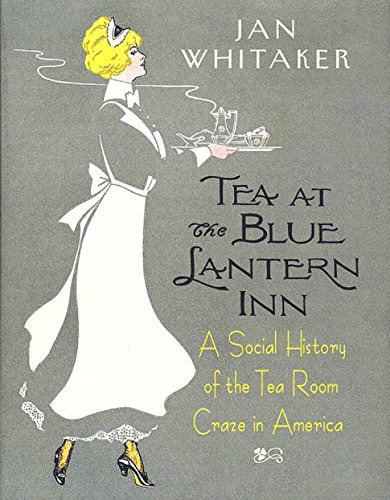
I have experienced a somewhat similar attitude before. I gave a talk on tea rooms of New York City when my book Tea at the Blue Lantern Inn came out in 2002. Afterwards a man in the audience came up and asked me why I didn’t mention the darker aspects of tea rooms. He was fixated on the idea that a lot of them had been speakeasies and houses of prostitution.

Really? If that had indeed been the case, why would I not have mentioned it? It would be a good story. I’ve found little evidence of prostitution in tea rooms. It’s true that some, a minority, of tea room proprietors were found selling liquor during Prohibition. A few places in Greenwich Village were raided in the early 1920s, and here and there the mob would open a joint and call it a tea room, though that was purely a ruse. They were totally fake. I feel certain it was impossible to order a diet plate or a Waldorf salad in a mob tea room.

singingkettleentireproperty

The dining area of the Singing Kettle tea room was up the hill from the pergola entrance shown on the black and white postcard above. As can be seen from a bird’s-eye view of the property, terraced stairs with fountains and shrubbery led up to the main tea room which today appears to be a residence. The view while dining would have been spectacular.

The tea room was frequented by students and staff from Whittier College, the Whittier Chamber of Commerce, and women’s clubs. It was a popular place for business meetings, card parties, wedding receptions, and bridal showers. Weddings were held in the inner courtyard of its entrance pergola.

singingkettlehartwhittierheights1927I have not been able to discover exactly who ran the Singing Kettle. It was said to be owned and operated by a major Southern California agricultural land developer, Edwin G. Hart, but I can’t establish if he was headquartered on the property or was directly involved in the business. He did promote the tea room in a 1927 advertisement for his new residential development, Whittier Heights.

The Singing Kettle was in business from 1926 until at least 1939, but probably not much longer. It surely would not have survived gasoline rationing during WWII.

© Jan Whitaker, 2016

With many thanks to the reader who told me about the Singing Kettle.

21 Comments

Filed under atmosphere, odd buildings, Offbeat places, roadside restaurants, tea shops

Famous in its day: Aunt Fanny’s Cabin

auntfannyscabinouthouse

Famous, but also infamous in its day because of how it portrayed the South before the Civil War and Emancipation as a world of smiling slaves who loved serving the kindly white people who held them captive.

Beyond its costumed mammy servers and the Black children who boisterously recited the menu, sang, danced, and proclaimed the South would rise again, the proprietors of Aunt Fanny’s Cabin restaurant in Smyrna GA created a legend regarding its name and building which appropriated and falsified the life story of a living woman.

According to an oft-told tale, the restaurant’s core building was a relic of the Civil War era and the home of a former slave, Fanny Williams, who spent her last years sitting on the restaurant’s front porch telling of the war and its aftermath. At her death in 1949 legend had it that she was very old, her age ranging from somewhere in the 90s to much older. She was “about 112 years old” when she died, restaurant owner George Poole told a reporter in 1982.

Indeed there was a real Afro-American woman named Fanny Williams. However it was revealed after the restaurant closed in the 1990s that she was born after the Civil War and had never lived in the cabin, which itself dated from the 1890s. Poole’s estimate of her 112 years had been preposterous – only a few dozen people worldwide were known to have attained that age — but newspapers had been much inclined to lax reporting when it came to Aunt Fanny’s Cabin. Far from an ancient rural yokel, she was about 81 when she died, a city dweller in Atlanta, and active in raising funds for her church there. How willingly or why she adopted the ex-slave persona is unknown.

auntfannyscabin1953jpg

Fanny Williams was a servant to a wealthy Atlanta family named Campbell. She was in service to socialite Isoline Campbell McKenna in 1941 when McKenna opened a tea room-style eating place on family property near their summer home. She named it Aunt Fanny’s Cabin, hosting ladies’ luncheons, bridge clubs, and bridal showers. She leased the business in 1947, selling it to lessees Harvey Hester [pictured above instructing his employees] and Marjorie Bowman in 1954. They elaborated the Aunt Fanny legend, enacted in what are known as “Blacks in Blackface” scenes where cheerful servers sang, danced, and even joined patrons in singing “Dixie,” the anthem of the ante-bellum South. According to a newspaper report in 1977 the restaurant’s decor included framed advertisements for slaves.

The restaurant’s third owner, George “Pongo” Poole, continued the song and dance tradition into the 1980s, although when a cabaret tax was demanded, dancing by the Black boys stopped. However, they continued to carry yoke-style wooden menu boards around their necks while they shouted out the menu offerings [child waiter shown below in 1949 before the menu boards were used].

The restaurant drew Georgians from Smyrna and Atlanta, as well as visitors from all over the country and the world. It was a tour bus stop, and a favorite of President Jimmy Carter and conventioneers such as members of the American Bar Association. Those who complained about the roles played by Black servers and the implicit celebration of slavery were characterized by proprietors as “Northern liberals,” though there is evidence that some Southerners and Westerners were also critical.

auntfannyscabin1949lifewoodburysoapadvIt became standard procedure when reporting on the restaurant to quote Poole about how his staff loved working there and was part of a big happy family. When interviewed, Black women servers would invariably attest to their love of the job and how they never felt insulted. To what extent this was a genuine expression on their parts is unknown.

What is known is that many of the elements that characterized the restaurant had been subjects of contention for a long time. A 1964 survey by Wayne State University researchers showed that most Black respondents found terms such as Sambo, Aunt Jemima, auntie, mammy, spook, and darkie offensive. Many white people, especially in the South, did not understand this, and thought that calling an elderly Black man or woman Uncle or Aunt/ie was a mark of respect. As for “mammy,” despite the affection many Southerners felt for the Black women who had cared for them when they were children, it had been rejected by many Americans long before the 1960s. In the 1920s the National Organization of Colored Women’s Clubs mobilized massive opposition to a Washington, D.C. memorial to mammies proposed by the United Daughters of the Confederacy. “One generation held the black mammy in abject slavery; the next would erect a monument to her fidelity,” said the club women’s official statement in 1923.

Georgia Senator Julian Bond said in the 1980s that he had little attraction to Aunt Fanny’s Cabin but could imagine that younger Blacks might find it “cute.” A journalist with the Atlanta Constitution who visited the restaurant in 1984 reported that he saw numerous Black patrons.

So, what’s the story? Did the degree of tolerance or even liking that some Black people expressed for Aunt Fanny’s Cabin mean that it held no offense to people of color? Did it mean that those who complained were thin-skinned trouble makers with an elevated sense of their own dignity who couldn’t take a joke? Did it mean, as a 1982 Washington Post story argued, that the years after the Civil Rights Act of 1964 were part of a post-racial age in which slavery, forced segregation, and lynching had largely ended and any remaining blatant prejudice was due simply to a few “obnoxious rednecks”?

mammy1959milwaukeeI think not.

I cannot be absolutely certain that there has never been a Black-owned restaurant that celebrated plantations, “pickaninnies,” and “mammies” of the Old South, but all the mammy restaurants I know of, mostly in business from the 1930s to the Civil Rights era of the 1960s, were white-owned. And dressing Black women servers in mammy get-ups was so commonplace back then that at times I’ve wondered if wearing that costume was a waitressing job requirement for dark-skinned women.

auntfannyscabin1954jpg

After the death of owner George Poole, Aunt Fanny’s Cabin struggled and subsequent owners could not revive it. It closed for the last time in 1994, sometimes recalled as partly a victim of “political correctness.” Based on the understanding that the original portion of the restaurant’s building had been a slave cabin, the city of Smyrna proposed to move it downtown to be used as a visitors’ center. After a historic structures report revealed it dated from the 1890s, the city decided to go ahead with the project on the grounds that the restaurant had itself been a significant part of the city’s history.

© Jan Whitaker, 2016

Update regarding comments: From now on I will approve only thoughtful comments that address the theme of this blog post which is the restaurant’s portrayal of history and how that shaped the roles available to Black staff. I will not approve comments that assert that everyone loved working there or that rave about the fried chicken. I have already held some back for these reasons — along with some hate comments — but now it is my policy. March 5, 2021

December 16, 2021 update: The remaining Aunt Fanny’s Cabin is going to be torn down! Thanks to “MadamC” for sending this link to the Atlanta Journal-Constitution story.

103 Comments

Filed under odd buildings, Offbeat places, popular restaurants, racism, restaurant decor, uniforms & costumes

Faces on the wall

caricaturessardis

People love seeing celebrities in a restaurant. Trouble is, celebrities can’t sit around in restaurants all the time. Solution: put a photograph or a cartoon of them on the wall, suggesting that they are regulars, liable to walk in at any moment.

In the United States the custom developed first in urban theater districts, in places visited frequently by publicity-seeking performers after the show.

Sardi’s in New York City [shown above] is still famous for its walls of caricatures of stars of the moment and of the past. Sardi’s tradition began in 1927, reportedly inspired by the custom in Parisian cafes. But Vincent Sardi could have found precedents in the United States too.

An early instance was Chicago’s Chapin & Gore’s of the 1870s. Located in the vicinity of McVicker’s Theatre, it was a place where “exceedingly well dressed, fast-looking men” hung out with women suspected of questionable character (a suspicion that applied to any woman without a male escort). Not only did actors make it onto Chapin & Gore’s wall but also the city’s mayor, newspaper publishers, and leading industrialists. Another room displayed what temperance advocates described as “indecent and obscene” caricatures of European notables, which a court ordered removed in 1878.

Another 19th-century precedent, dating back to at least the early 1890s, was Otto Moser’s café in Cleveland, still in business today but not at its original location. Once within walking distance of seven theaters, its walls were lined with playbills and autographed photos of performers.

caricaturesblueribbonIn New York City, as early as 1910 Joel’s Bohemian Refreshery adorned its walls with cartoons and photographs of entertainers, some drawn by Carlo de Fornaro. The café was not only popular with Broadway performers but also with Mexican rebels and others opposed to the presidency of Porfirio Diaz, aided by de Fornaro’s pen and brush. The Blue Ribbon, opened near Times Square in 1914 and closed in 1975, was also decorated with caricatures and photographs.

caricaturesbrownderbynvineChallenging Sardi’s for nationally-known wall fame was Hollywood’s Brown Derby restaurant, which opened in 1929 and closed in 1985. Lore has it that caricatures of movie star patrons from the nearby studios began to go on the walls after a Polish artist agreed to exchange his artwork for meals. He achieved fame as “Vitch,” later mailing his sketches from London where he had a career as a pantomimist. Like Sardi’s, the Brown Derby employed many a sketch artist over the decades, however few restaurant artists stayed on the job as long as the Detroit London Chop House’s Hy Vogel [“Prince” Mike Romanoff shown below].caricaturesromanoff2

Today, a repro Brown Derby lives on, so to speak, on the grounds of Disney Studios, complete with caricatures (of course). Which reminds me of the inquiring reporter exploring a number of Dallas restaurants adorned with celebrity photos. He asked the manager of a national chain restaurant in 1982 whether it was really true that Cary Grant had eaten there, in Dallas. Not exactly, admitted the restaurant’s publicity director, but the actor had been to one of the chain’s other units. Somewhere.

It’s rather surprising that Cary Grant’s picture was even on a restaurant wall in 1982 since he made his last movie in 1966. Given that fame doesn’t last long, those who manage picture walls tend to rearrange them from time to time. What to do with outdated celebrities, stars no one has heard of? In the 1970s Sardi’s moved old-timers to “memory lane” on the second floor, while the owner of Miller’s Coffee Shop in Little Rock AR admitted at the restaurant’s closing in 1970 that a few years earlier many of its caricatures had been given away or simply papered over.

caricaturespalm4

An equally sad fate has befallen regular patrons of Palm steak houses. The tradition of drawing and painting caricatures of famous and faithful customers directly on the walls began at the original Palm on 45th street in New York City [shown above] during the Depression. Later, it continued at locations around the country, but in recent years many of the images have been destroyed due to remodeling and closures.

When you think about it, restaurants’ fortunes are as shaky as those of celebrities.

© Jan Whitaker, 2016

17 Comments

Filed under atmosphere, patrons, restaurant decor

Dining for a cause

SanitaryFairKnickerbockerHall

During the Civil War, fairs were held in over twenty Northern cities to raise funds for the United States Sanitary Commission, a private organization that supplemented the Union Army Medical Corps’ efforts to care for wounded soldiers.

New York state held five fairs, in Albany, Poughkeepsie, Rochester, Brooklyn, and New York City. The Brooklyn and New York City “Sanitary Fairs” were massive endeavors resulting in donations of enormous amounts — $300,000 and $1,000,000, respectively — to the Sanitary Commission.

SanitaryFair1The fairs featured music, displays of art and curiosities, tableaux vivants, and other entertainments. Restaurants were an especially popular attraction. This week, a friend whose ancestors were involved with the Brooklyn fair gave me a wonderful printed-in-gold bill of fare from that fair’s Knickerbocker Hall Restaurant.

There were two main eating places at the two-week-long Brooklyn & Long Island fair, the larger one located in the temporary, specially built two-story Knickerbocker Hall located next to the Brooklyn Academy of Music [shown above]. The other restaurant, The New England Kitchen, occupied another temporary building across the street [shown below].

SanitaryFair2The Refreshment Committee in charge of the two restaurants was quite successful in getting donations of food supplies, including almost $20,000 worth of wine. But public opinion nixed serving wine, along with holding raffles, as improper for a fair in the “City of Churches.” So the wine was given instead to the New York Metropolitan Sanitary Fair which was held about a month after Brooklyn’s, in April of 1864.

Despite the absence of wine, the Brooklyn fair outdid the Metropolitan NYC fair in how much money its SanitaryFair3eating places cleared. Compared to the Metropolitan NYC fair, the Brooklyn menu was simplified, with no relishes or fruit, and few soups, cold dishes, or pastries. Brooklyn netted $24,000 for the cause, while the Metropolitan fair cleared only a little over $7,000 because, unlike Brooklyn, they received little donated food (uh, what happened to the wine?). Brooklyn’s New England Kitchen added perhaps as much as another $10,000 for the Sanitary Commission.

SanitaryFair4Brooklyn’s Knickerbocker Hall Restaurant, which could seat 500 at a time and took in about $2,000 a day, was under the direction of the men’s refreshment committee, while the New England Kitchen was run by a committee of women. The Kitchen was tremendously popular, serving 800 to 1,000 persons daily. But it occupied too small a space and, as the commemorative volume issued by the fair noted, would have made a greater profit had it been able to accommodate larger crowds.

sanitaryfairfrankleslie'sillustnewspaper

Unlike the Knickerbocker, the Kitchen’s bill of fare did not replicate that of a fine restaurant. Nor did the Kitchen follow the prevailing custom of hiring Afro-American men as waiters. The Kitchen used (white) women volunteers who served meals dressed in mid-18th-century costumes that visitors found ugly yet fascinating. For a set price of 50 cents, considerably less than a typical dinner composed from the Knickerbocker Hall’s a la carte menu, they served a down-home meal of such things as pork & beans, brown bread, applesauce, baked potatoes in their jackets, hasty pudding, and cider. Food was eaten from old china with a two-tined fork. The Kitchen also hosted events such as spinning wheel demos, apple paring bees, and an actual wedding.

Though it’s hard to draw a straight line from The New England Kitchen to women’s tea rooms of the early 20th century, it is notable how many tea rooms adopted a similar theme, right down to the old-style cooking fireplace and spinning wheel. It was also significant that so many women assumed executive and managerial positions on fair committees, especially in the New England Kitchen, and it’s probable that many of them remained active in public life after it ended.

© Jan Whitaker, 2016

8 Comments

Filed under alternative restaurants, menus, odd buildings, Offbeat places, proprietors & careers, uniforms & costumes, women

“Come as you are”

ComeasyouAreFayettevilleNC

Before restaurants adopted the expression, it was used by churches, with a double meaning that referred both to dress and to the shame of past deeds.

However, in restaurants it simply meant that patrons could wear their everyday casual clothes.

In the hospitality field, the slogan took hold first in the West. In the teens and 1920s, it was commonly used by hotels and resorts. It may seem odd that a resort where people swim, golf, and play tennis would require women to wear dresses and men to wear jackets to dinner, but that was not uncommon in the 1920s, especially in the East. In fact, the custom can still be found today, but it stands as a quaint re-enactment of past times as much as anything.

comeasyouareLeaderMC

The western attitude toward casual dress in hotels, resorts, and restaurants spread slowly and was not without some resistance. Oddly, it met the greatest resistance from a business operating in the West: the Fred Harvey company that ran eating houses for the Santa Fe railroad.

The Harvey company required men to wear jackets in its dining rooms – even before electric fans and regardless of hot weather. If a man refused to wear a jacket, he would be served only at an adjoining lunch counter. In the early 1920s the Harvey company fought an Oklahoma Corporation Commission decision that threw out Harvey’s jacket rule. But Oklahoma’s supreme court ruled in favor of Harvey, declaring that the company had the right to require jackets. “Unlike the lower animals, we all demand the maintenance of some style and fashion in the dining-room,” said the decision.

Full-scale formal dress – white tie and tails for men and women wearing long evening gowns – was never common in this country. Nonetheless etiquette advisors who wrote for women’s magazines liked to suggest the opposite, flattering (and confusing) their readers with rules followed only by the upper, upper reaches of high society. However, even if formal wear was rarely necessary, there was an expectation that diners in a nice restaurant or hotel dining room would at least wear what we now refer to as business attire. The St. Regis Hotel in New York City advertised widely in 1908 that it was a comfortable, homey hotel opposed to snobbish dress rules, yet making it clear that “The wearing of a business suit bars no one from admission or service.”

As widely as she was published and read, etiquette maven Emily Post never seemed to be in tune with most Americans. During the depths of the Depression she continued to insist that women should wear suits, hats, and gloves to a restaurant lunch and dinner dresses in the evening. Even at a summer resort, she declared, women should wear cover-up shoes when dining out. “Bare-toed sandals with evening dresses are too revolting to mention,” she wrote.

comeasyouarePortland1952

Following World War II as young families were established and the suburbs spread, things began to change radically. The restaurant industry realized that finding a babysitter or dressing up the whole family was a barrier to restaurant going for many. Instead families were turning to informal roadside places. “Drive-ins, with their motto of ‘Come as You Are, Eat in Your Car,’ have a siren call for parents with insoluble sitter problems,” observed the Cleveland Plain Dealer in 1960.

Chains also got the message. A 1963 Bonanza advertisement proclaimed low-priced steak dinners plus “No tipping – Children ½ price – Come as you are – Western atmosphere.”

comeasyouarelittleblackdressMeanwhile, in the late 1960s, in the midst of the hippie upheaval, Gloria Vanderbilt recommended the “little black dress” as always correct for dining in a fine restaurant. But informality was winning as women wearing pants gained acceptance even in luxury New York City restaurants in the early 1970s, a rule change stimulated no doubt by a damaging recession.

By the late 1970s dress codes had been relaxed to the point that many upscale restaurants were minimally satisfied if their customers at least wore “dressy casual,” which usually meant designer jeans, shirts with collars, and no short-shorts, tank tops, or halter tops. Some chains accepted t-shirts as long as they weren’t white, but everyone agreed that patrons had to wear some kind of shirt and shoes.

Today, as Alison Pearlman has written in her fine book Smart Casual, the bond between fancy formal restaurants and gourmet dining has been loosened further by affluent young professionals in the creative industries. If they wear hoodies and jeans to work they expect to do the same as they sample innovative dishes at a hip restaurant.
comeasyouare1899
And yet, along with the relentless trend toward casual dress, the tendency to show off in public persists, possibly as strongly as in the late 1890s when women of New York’s “smart set” took to the cafes to display the latest fashions.

© Jan Whitaker, 2016

5 Comments

Filed under chain restaurants, drive-ins, elite restaurants, family restaurants, patrons, restaurant customs, restaurant etiquette

The Gables

gablesMC

I have a weak spot for corny roadside attractions, such as the scaled down lighthouse in front of The Gables restaurant in South Deerfield, Massachusetts, pictured here on a matchbook cover. The first time I saw it a while ago I wondered why it was there, and what the story was about the little commercial complex that appeared to be a bit down and out at that time.

And now I know – sort of. The lighthouse and its connected cottage were a gas station, while the main building was run as a roadside lunch spot when it began in business. Combination gas station/lunch rooms became commonplace in the 1920s and 1930s when more and more people began taking recreational drives through the countryside.

Exactly when the twin businesses were launched remains a question. My guess is the late 1920s, definitely by 1930, at which time they were operated by Charles M. Savage. He had long been a co-owner/manager of the Hotel Lathrop in South Deerfield, which was sold in 1928.

gablesADVMay31931In 1931 a local builder completed a large building next door, south of The Gables. Oddly enough, it was intended as an indoor golf course, but instead was run as a dance hall by Dennis Shea, owner of the Shea Theater in Turners Falls, and later by a succession of others. Rudy Vallee and other nationally known acts performed there. In the 1950s it became a roller rink and then, in the 1970s, an auction house [pictured below as it looks now]. During its tenure as a dance hall and roller rink it was also known as The Gables, just like the restaurant (to confuse future researchers I’m sure!).

gablesballroomrollerrink

At the time the matchbook shown above was produced, The Gables restaurant was conducted by William Wade who also ran the Wade Inn on State Street in Northampton MA.

gables1939ADV

By 1936, The Gables restaurant had passed into the hands of Edward J. Chicky, also of Northampton. If the illustration in the advertisement from 1939 is accurate, the building had been extended on the left by then. It was now known as The Gables Food Shop, “food shop” being a popular name for a restaurant at the time.

Gables1940s

After Chicky, it was owned by others, including Guido “Guy” Zanone, previously proprietor of the Bernardston Inn, who bought it in 1941 [see above], then Frank and Veronica Shlosser in 1946. The Shlossers built a new, larger restaurant across the street in 1955, advertising in 1956 that it had colonial atmosphere and facilities for 350. It was a popular place for wedding receptions, club lunches, and business organization meetings.

The Gables South Deerfield, MA

The Shlossers continued to run the new place shown above until the early 1970s, when it was sold. It stayed in business as a restaurant and banquet house through most of the 1980s, serving beef, seafood, and chicken parmesan, among other dishes. Today it serves as housing for faculty and staff at Deerfield Academy.

gablesNOW2

Recently the original Gables has gone on the market once again. I wish someone would reopen it as a 1940s film-noirish roadhouse.

Thanks to Historic Deerfield librarian David Bosse for helping to clear up an area of confusion in my research.

© Jan Whitaker, 2016

15 Comments

Filed under night clubs, odd buildings, proprietors & careers, roadside restaurants

Find of the day: Iffland’s Hofbrau-Haus

Iffland'sPC

Summer is the season for flea markets. A day at Brimfield this week yielded few thrills, unfortunately, yet I did find this interesting postcard of a Newark NJ restaurant.

iffland'sjohnIffland1893Iffland’s was established on Market street in Newark in 1867, just one year after John Iffland immigrated from Germany at the age of 25. [He is pictured here at about 51.] A few years later he moved to 187 Market, the location shown on the postcard.

Many of his patrons were businessmen, possibly of German heritage. Newark had a large German population. It also had many breweries, most of them run by German-Americans. Undoubtedly he served local beer, but he also imported beer from Germany. In the 1880s, when his business seemed to be more saloon than restaurant, Iffland ran advertisements in the German-language newspaper New Jersey Deutsche Zeitung announcing that he was serving beer imported from Munich. He also imported Salvator, a strong beer created to fortify those fasting during Lent.

It’s quite likely that by the time the postcard was produced, probably ca. 1910, John Iffland had retired and turned the business over to his two sons, Henry and John Jr. Perhaps it was they who installed the restaurant’s “beef-steak garret,” taking advantage of the popular fad for groups of men to hold dinners where they bonded while drinking beer and eating steaks with their bare hands. Possibly the restaurant’s kitchen was located in the basement, explaining why Iffland’s had a beefsteak garret rather than the typical “beefsteak dungeon” or “den” in an ominous looking cellar.

John Iffland died in 1917 and the business closed about that same time, allegedly because anti-German sentiment occasioned by the country’s entry into World War I on the side of the Allies against Germany, along with the impossibility of importing beer from Germany, had made it unprofitable.

© Jan Whitaker, 2016

5 Comments

Filed under popular restaurants, proprietors & careers