Category Archives: roadside restaurants

The Gables

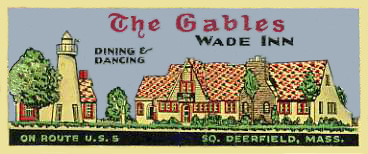
gablesMC

I have a weak spot for corny roadside attractions, such as the scaled down lighthouse in front of The Gables restaurant in South Deerfield, Massachusetts, pictured here on a matchbook cover. The first time I saw it a while ago I wondered why it was there, and what the story was about the little commercial complex that appeared to be a bit down and out at that time.

And now I know – sort of. The lighthouse and its connected cottage were a gas station, while the main building was run as a roadside lunch spot when it began in business. Combination gas station/lunch rooms became commonplace in the 1920s and 1930s when more and more people began taking recreational drives through the countryside.

Exactly when the twin businesses were launched remains a question. My guess is the late 1920s, definitely by 1930, at which time they were operated by Charles M. Savage. He had long been a co-owner/manager of the Hotel Lathrop in South Deerfield, which was sold in 1928.

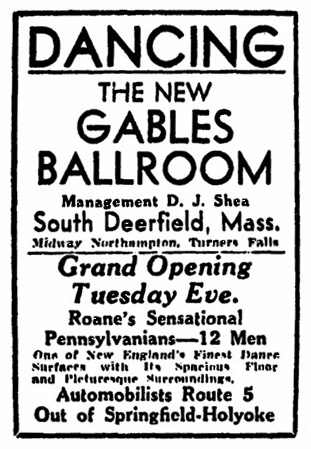
gablesADVMay31931In 1931 a local builder completed a large building next door, south of The Gables. Oddly enough, it was intended as an indoor golf course, but instead was run as a dance hall by Dennis Shea, owner of the Shea Theater in Turners Falls, and later by a succession of others. Rudy Vallee and other nationally known acts performed there. In the 1950s it became a roller rink and then, in the 1970s, an auction house [pictured below as it looks now]. During its tenure as a dance hall and roller rink it was also known as The Gables, just like the restaurant (to confuse future researchers I’m sure!).

gablesballroomrollerrink

At the time the matchbook shown above was produced, The Gables restaurant was conducted by William Wade who also ran the Wade Inn on State Street in Northampton MA.

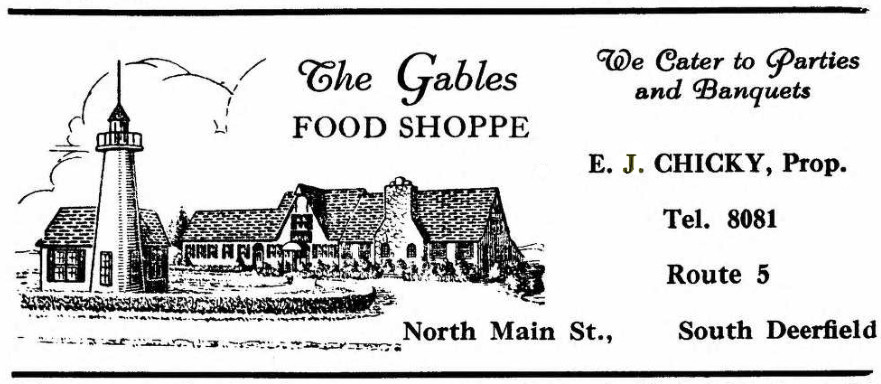
gables1939ADV

By 1936, The Gables restaurant had passed into the hands of Edward J. Chicky, also of Northampton. If the illustration in the advertisement from 1939 is accurate, the building had been extended on the left by then. It was now known as The Gables Food Shop, “food shop” being a popular name for a restaurant at the time.

Gables1940s

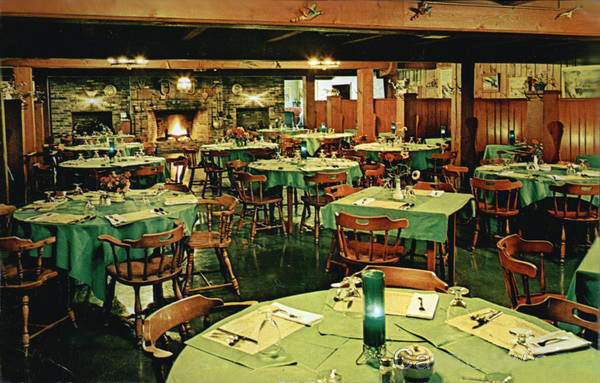
After Chicky, it was owned by others, including Guido “Guy” Zanone, previously proprietor of the Bernardston Inn, who bought it in 1941 [see above], then Frank and Veronica Shlosser in 1946. The Shlossers built a new, larger restaurant across the street in 1955, advertising in 1956 that it had colonial atmosphere and facilities for 350. It was a popular place for wedding receptions, club lunches, and business organization meetings.

The Gables South Deerfield, MA

The Shlossers continued to run the new place shown above until the early 1970s, when it was sold. It stayed in business as a restaurant and banquet house through most of the 1980s, serving beef, seafood, and chicken parmesan, among other dishes. Today it serves as housing for faculty and staff at Deerfield Academy.

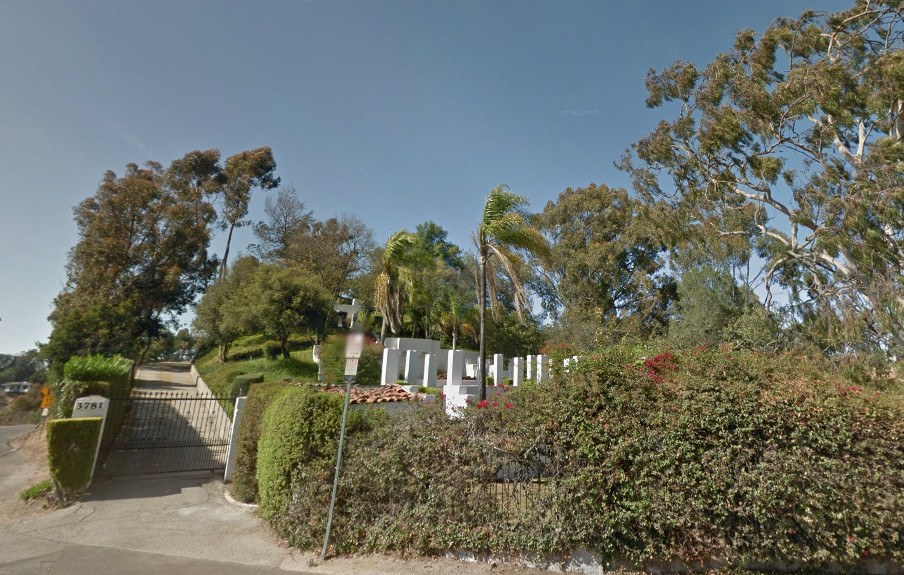
gablesNOW2

Recently the original Gables has gone on the market once again. I wish someone would reopen it as a 1940s film-noirish roadhouse.

Thanks to Historic Deerfield librarian David Bosse for helping to clear up an area of confusion in my research.

© Jan Whitaker, 2016

15 Comments

Filed under night clubs, odd buildings, proprietors & careers, roadside restaurants

Odd restaurant buildings: “ducks”

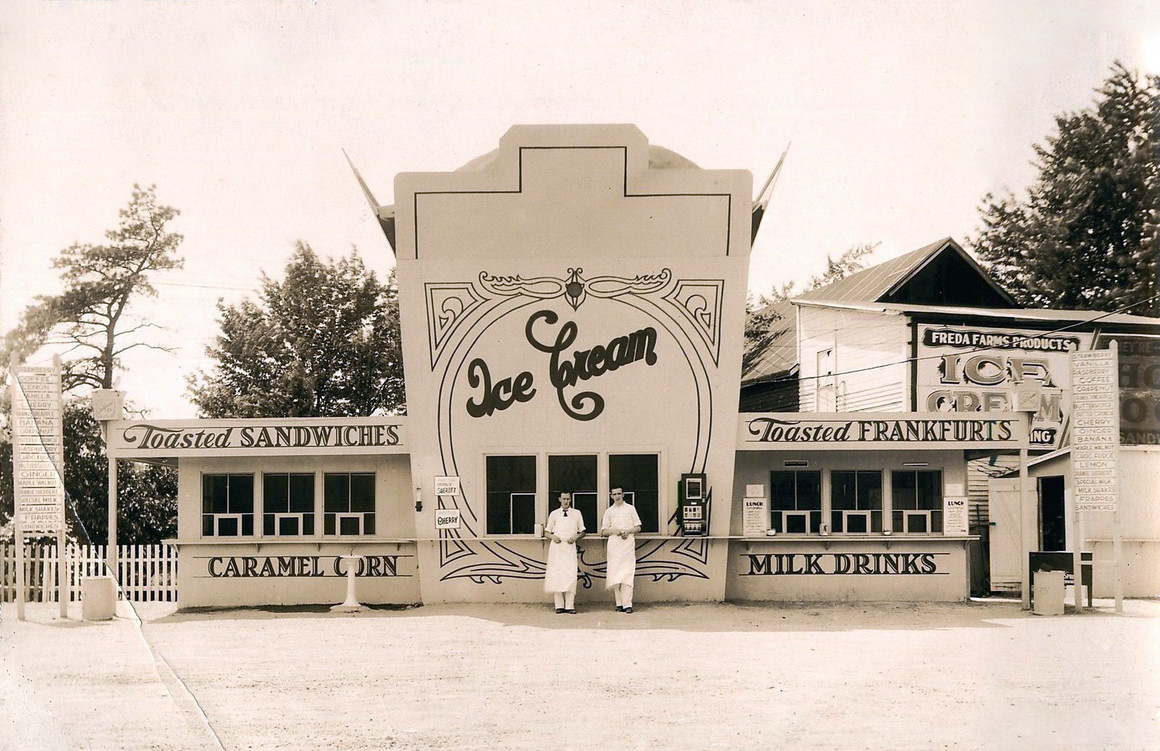
ducksfredafarmsBerlinCT

Ducks are commercial buildings that look like what they sell, as illustrated by the Freda Farms ice cream stand in Berlin CT. The term was actually inspired by a Long Island store that sold ducks (to eat). It has been generalized to apply to any buildings that looks like some familiar object or animal, etc, whether or not their merchandise is related. These types of buildings are also known as programmatic or mimetic architecture.

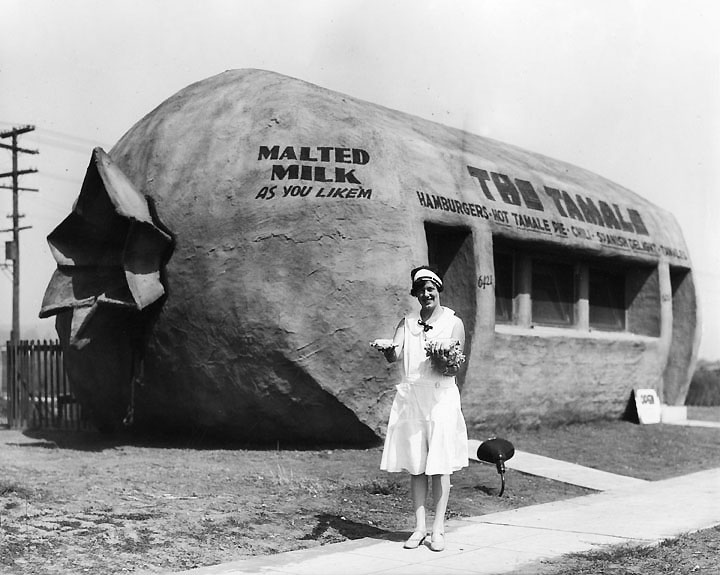
duckstamaleThough they reached a peak of popularity in the late 1920s and early 1930s, ducks trace back much further in history. An introduction to Jim Heimann’s book California Crazy by David Gebhard links the mimetic architecture of the last century to garden buildings of the 18th century and even earlier. One of the first examples in the United States was the 65-foot elephant of Margate NJ built in1881 to attract attention to a real estate development.

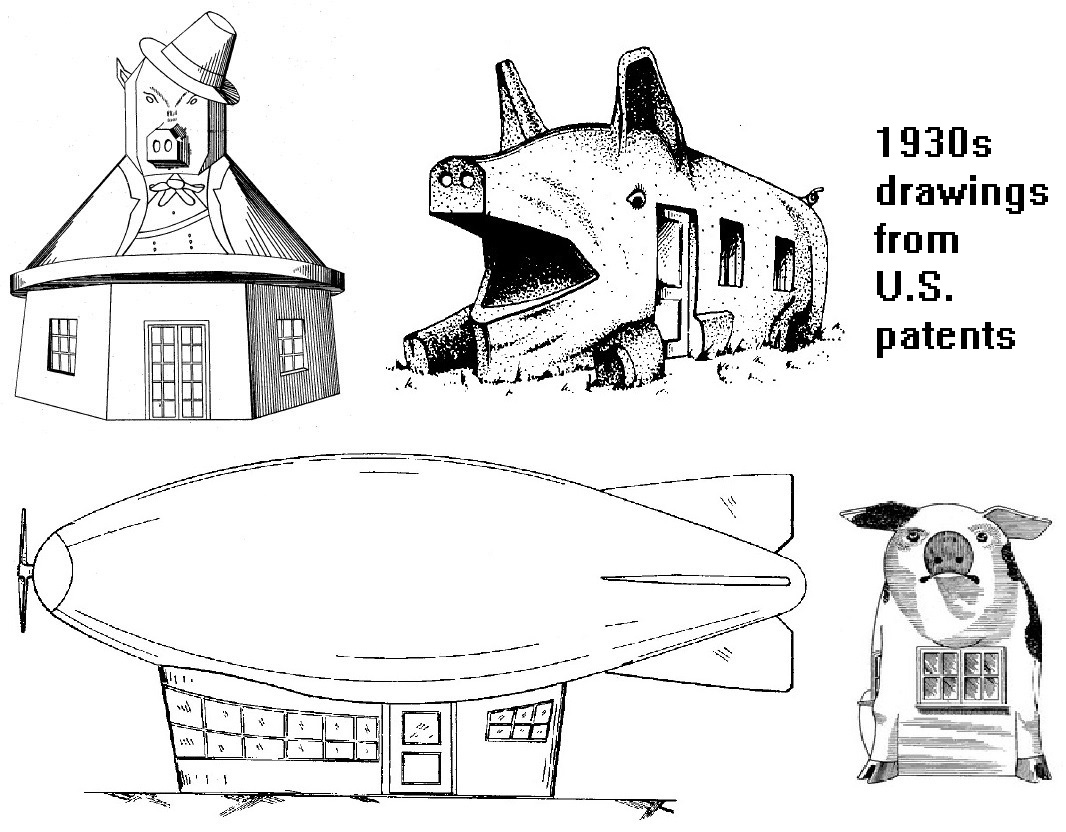
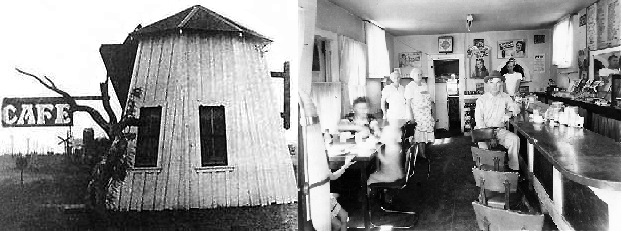
In addition to housing stores and offices, many ducks have featured restaurants over the decades. They have taken the shape of all kinds of animals, kegs, barrels, ships, castles, cups, coffee pots, bowls, hats, chuck wagons, dirigibles, items of food, shoes, and windmills.

DucksbulldogLA

The earliest restaurant duck I have found was a café planned for Cincinnati in the shape of a huge beer cask in 1902. Unlike later examples, though, it was meant to occupy a location in a row of Main Street storefronts. Most later ducks, arriving with the spread of car ownership in the late 1920s and early 1930s, occupied empty lots in developing areas of cities. Not too surprisingly, southern California’s car culture provided a nurturing environment. In addition the climate was favorable to the somewhat makeshift carnival-type structures, while the city’s movie industry supplied inspiration. As Los Angeles grew, giant dogs, toads, ice cream freezers, shoes, and other bizarre apparitions sprang up along the roadside, vying for the business of passing motorists.

Ducks4patentdrawingsDucksVandeKamp'sDutchbakers

The link between the movie industry and roadside fantasy was straightforward in the case of Harry Oliver, a leading designer who brought magic to sets for movies such as Scarface, The Good Earth, and Mark of the Vampire. Oliver designed windmill-shaped buildings for the Van de Kamp bakeries and drive-ins as well as a storybook building occupied by the Tam o’ Shanter Inn.

If architecture is about the enclosure of space, ducks are architecture only secondarily. In most cases mimetic architecture describes a building that serves more as advertising sign than as an innovative enclosure of space. Once a customer stepped inside a giant pig or coffee pot, all whimsy faded away as the interior revealed itself to be a standard rectangle as shown here in one of the many coffee-pot ducks that could be found across the U.S.

DucksTXCoffeePotExt&INT

If ducks say anything about American restaurants, it is that they are only partially about food.

© Jan Whitaker, 2016

5 Comments

Filed under odd buildings, roadside restaurants

Restaurant-ing with Mildred Pierce

mildredpierceaswaitress

Many Americans are familiar with the story of the fictional Mildred Pierce, the mid-century wife and mother who kicks out her unemployed, philandering husband and becomes the family’s breadwinner so she can support her two daughters, especially her musically talented older daughter Veda.

Mildred Pierce was the main character in James M. Cain’s novel of the same name, the star of a melodramatic 1945 black & white film-noir with Joan Crawford, and the protagonist in a color HBO miniseries with Kate Winslet.

Lacking experience other than housewifery, Mildred turns to restaurants for work. Starting as a waitress, she builds a home-based business as purveyor of pies to restaurants, then opens a restaurant of her own, building it into a small chain in greater Los Angeles.

Although the three renditions of the story differ, they all feature Mildred’s restaurant career. Why did Cain choose this line of work for Mildred? I suspect he wanted something that readers would believe a woman could succeed in. Though I have no direct evidence, I feel sure he based Mildred’s career on that of the much-publicized Alice Foote MacDougall of 1920s fame whose success story was told repeatedly in magazines and syndicated newspaper columns. In the 1927 column “Girls Who Did,” MacDougall, then pushing 60, was headlined as “A Girl Who Never Expected to Enter Business and Who Has Become a Dealer in Wholesale Roasted Coffee and Owner of Four Restaurants.”

But – oh dear – MacDougall’s empire went into receivership in the early Depression, shortly after Mildred Pierce launched her restaurant chain. Of course most movies demand suspension of disbelief on the part of viewers, but let’s just admit that 1931 was not a favorable time to go into business. The 1935 National Handbook of Restaurant Data dismally reported that “75% of the women who open restaurants fail within the year.” Mainly, it said, due to lack of capital and knowledge of business management.

mildredpierceherrestaurarantMaybeCain, who stuffs his novel with copious details about running restaurants, must have been aware of this problem because he had Mildred, er, entertain her husband’s former business partner Wally to insure a favorable start-up. In the book she builds up to a total of three restaurants. The first, located in a house and specializing in chicken and waffles, actually conforms to the path many women of the 1920s and 1930s took starting small restaurants and tea rooms that served home-like dishes in domestic settings. Her second, a luncheonette in Beverly Hills, is somewhat believable despite being in a high rent area. Her third, on the other hand, a swanky beachside resort, is a reach.

Advancing farther on the unlikelyhood scale, the 1945 movie threw caution aside and had Mildred with five restaurants in only four years. Even the fantabulous Alice took 10 years to get to four! What’s more, all but one of Mildred’s had drive-in curb service, even though women rarely owned drive-ins. Plus, many drive-ins closed during the war because of gasoline rationing that limited driving.

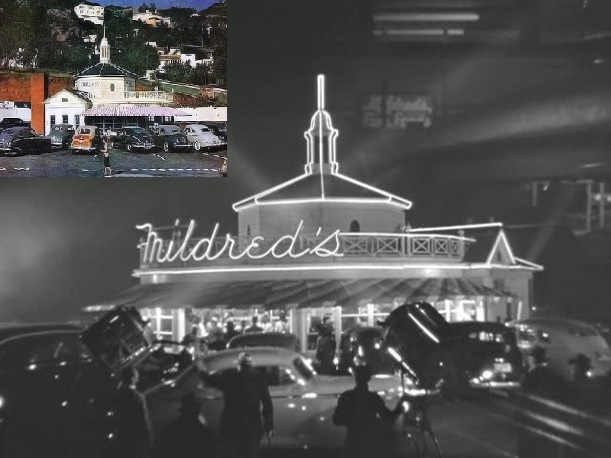
Of the five restaurants depicted in the 1945 film, three are identifiable as actual restaurant locations, while the identity of the other two is unclear.

MildredpierceDoloresdrive-inInset#1 – the new Dolores drive-in on Sunset Blvd. & Horn (inset top left; movie still in b&w)
MildredPierceexteriorofRestaurant4#2 – supposed to be Beverly Hills, but location unknown and possibly not an actual restaurant at all (movie still)

mildredpierceExteriorofRestaurant3 – unidentified but appears to be a real drive-in (movie still)

MildredPierceexteriorofrestaurant5#4 – exterior shot filmed at Carl’s Sea Air on the Pacific Coast Highway (movie still on left; Carl’s postcard on right)

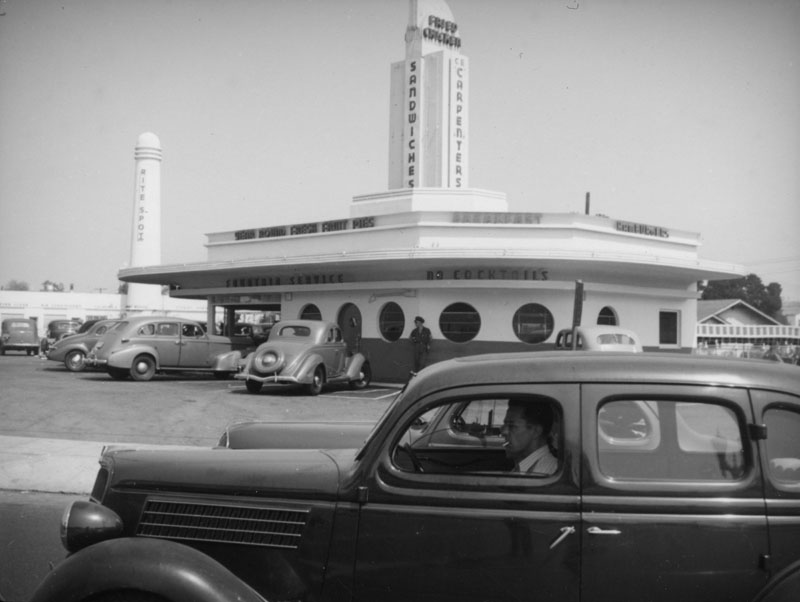
mildredpiercecarpenter'sGlendale1938E.Colorado#5 – Carpenter’s restaurant on Glendale & Colorado shown fleetingly (not a movie still)

The slow-moving HBO series follows Cain’s book more closely than the 1945 movie. (As in the book, there is no murder.) There are only three restaurants, all movie creations: 1) the model house from the Pierce Homes development once owned by Mildred’s ex-husband; 2) the Beverly Hills luncheonette; and, 3) a seaside estate which doesn’t look a bit like it’s in California.

In the book and at several points in the 1945 movie Mildred, who we are told comes from the lower-middle class, runs up against the upper class, always getting bruised in the encounters. As a restaurant historian, one of the most interesting lines to me occurs when she meets the snobby mother of her daughter’s boyfriend. Mildred recognizes her but forgets that she had once interviewed to be her housekeeper and was humiliated by the woman. She tries to place her, asking if she has ever been to her restaurant and the woman replies haughtily, “But I don’t go to restaurants, Mrs. Pierce.” It would have been more believable in the East, around 1900, but still an interesting comment on the unexalted status of restaurant-ing.

Cain, who was also a gourmet, an amateur cook, and a magazine food writer on topics such as “Midnight Spaghetti,” “Crepes Suzette,” and “Carving Game Duck,” befriended Alexander Perino when he was headwaiter at The Town House and suggested Perino open his own restaurant which he famously did in 1932. Restaurants also figured in Cain’s books The Postman Always Rings Twice and Galatea, both of which involve the betrayal and murder of husbands.

In Cain’s Mildred Pierce, Mildred ends up broke, restaurantless, alienated from Veda, and living with her ex-husband, both of them ready to pursue a life of heavy drinking.

© Jan Whitaker, 2016

12 Comments

Filed under drive-ins, proprietors & careers, roadside restaurants, women

Find of the day: Wayside Food Shop

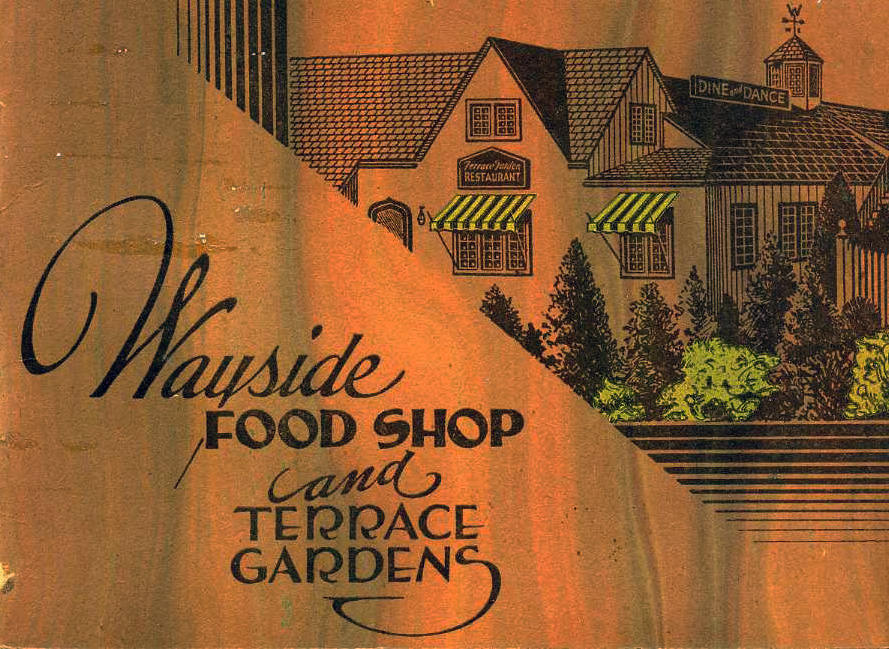
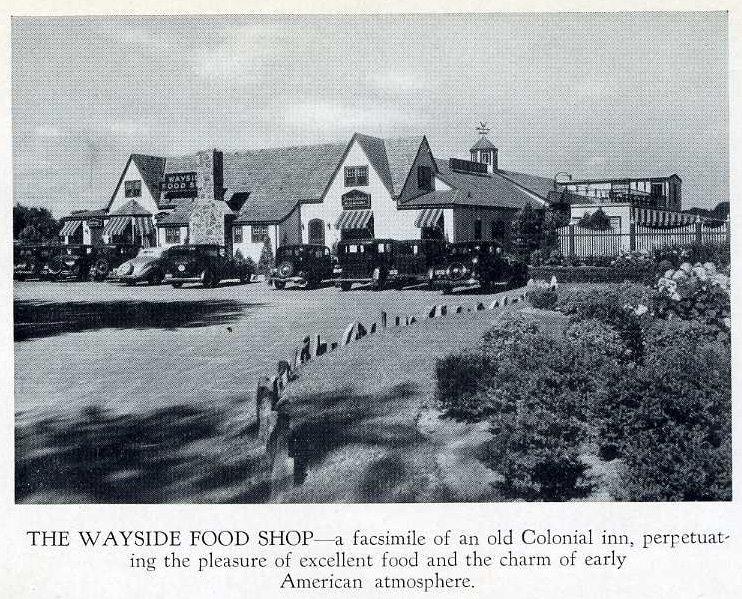
WaysideFoodShopCov990The historic Wayside Inn in Sudbury MA, a national landmark operating as an inn and restaurant, was memorialized by Longfellow and became famous throughout the world. Less famous was the other Wayside Inn in business in West Springfield MA from 1932 to 1967.

It was established as the Wayside Food Shop and Terrace Gardens by the head of a wholesale baking company, Colonial Fried Products, that came to Springfield in 1921 as a branch of a Worcester business called Edgerly Crullers.

Brothers Howard S. and Ralph C. Edgerly opened the Wayside Food Shop at 1363 Riverdale Road on a site that was previously occupied by a diner. At the time Riverdale Road had not been developed commercially and was still mainly farmland and residences.

WaysideFoodShopCov995

This past weekend at the Northampton Book and Book Arts Fair held at Smith College I found the impressive 18-page brochure from the Wayside Food Shop whose pages are shown here. It dates from around 1935, about the time the business was awarded a full liquor license.

WaysideFoodShopCov993

WaysideFoodShopCov994

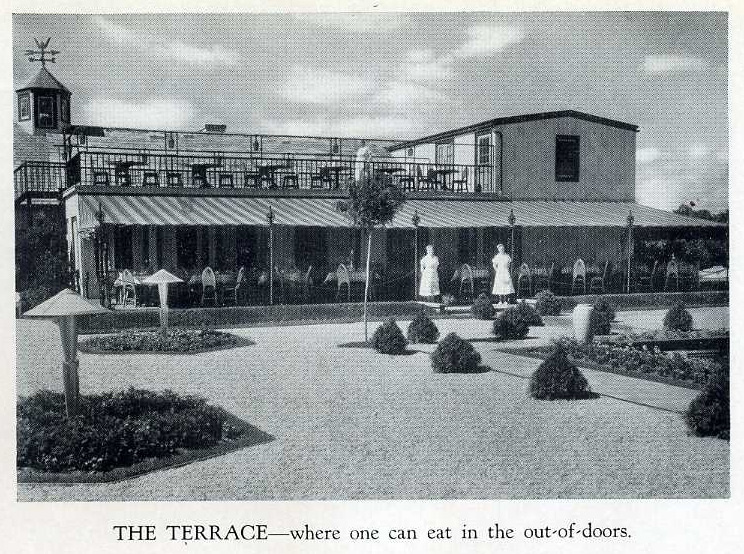
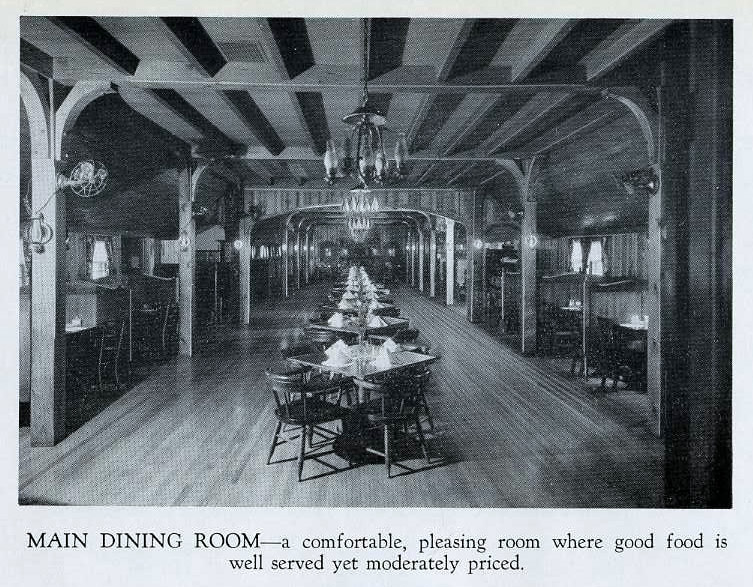
The Wayside was elaborate and designed to host up to 600 people simultaneously in its facsimile Colonial inn (did it serve Colonial doughnuts?). It contained a dining room, an outdoor terrace and garden, a tap room, a dance salon, a banquet room, a soda fountain/bar room, and a club room for card parties.

WaysideFoodShopCov991

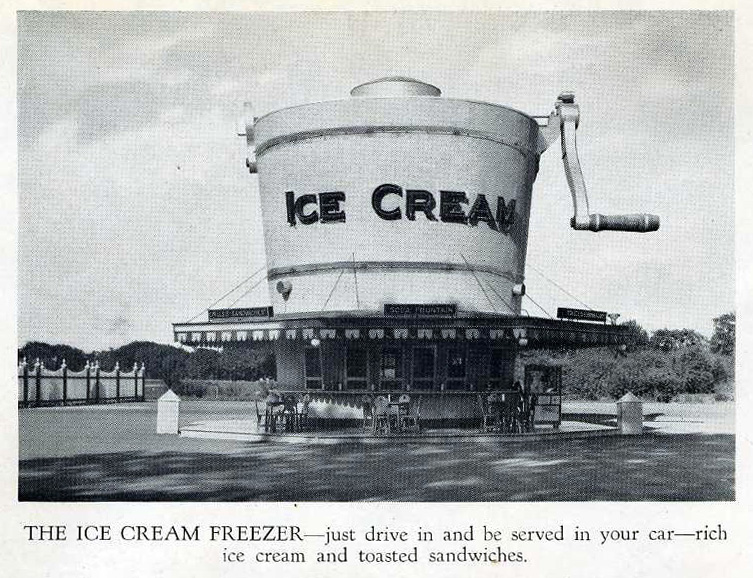
Next door, at 1353 Riverdale, was an associated ice cream and sandwich stand in the shape of an ice cream freezer, known as the Algonquin Freezer. In May of 1933 the ice cream stand advertized that its 30-piece Algonquin Boys’ Band would give two evening concerts. It’s not clear whether this was an ongoing feature or a grand opening event.

WaysideFoodShopCov992

The Wayside hosted wedding parties, clubs, and business and alumni groups. The brochure shows an 8-piece orchestra led by Ray Deleporte, whose nightly performances were played on WBZ radio. Alice May was the group’s “radiant songster.” Over the years many orchestras played there. The Wayside also hosted “New York floor shows” that included striptease acts, yet retained its reputation as a place ideal for family Thanksgiving and Sunday dinners.

In 1938, song writer Irving Berlin sued the Wayside Food Shop for copyright violations, asking $250 in damages for each of three of his songs: Goody, Goody; Let Yourself Go; and, Is It True What They Say About Dixie? Not long after this Howard Edgerly, who was not in good health, sold the business.

The business then passed through a number of hands. In 1957 its owner announced that the Wayside would close in early 1958 and be demolished to make way for a motel. Yet, though it did close in January of 1958, it was refurnished and in December it re-opened under new management. It continued in business until April 1967. The building was razed in 1968.

© Jan Whitaker, 2015

1 Comment

Filed under night clubs, roadside restaurants

Find of the day: Mrs. K’s Toll House Tavern

MrsKs943

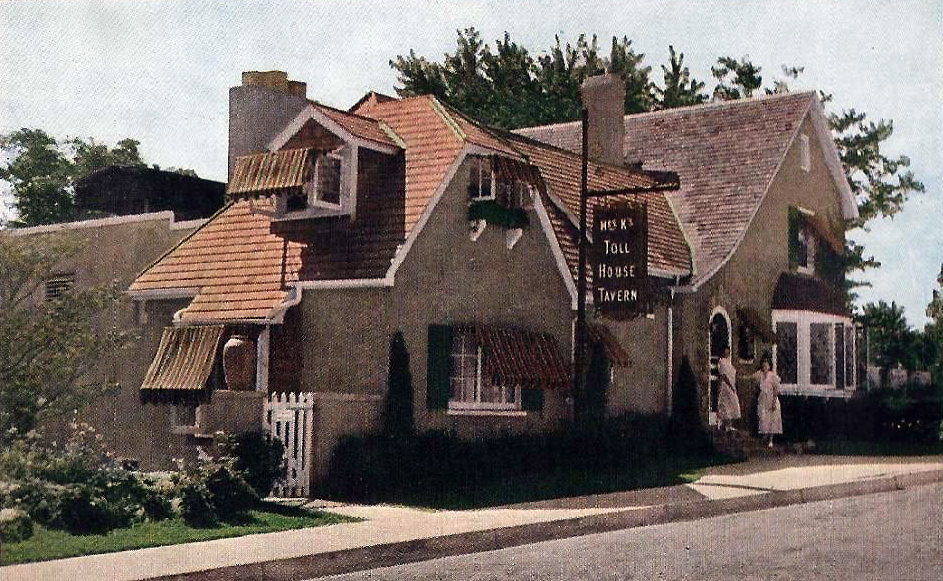
Over the weekend, at a vintage paper and postcard show in Boxborough MA, I found a charming diecut menu from a restaurant in Silver Spring MD. Established in 1930 by Olive and Harvey Kreuzburg, the landmark restaurant is still in operation today though no longer owned by the founding family.

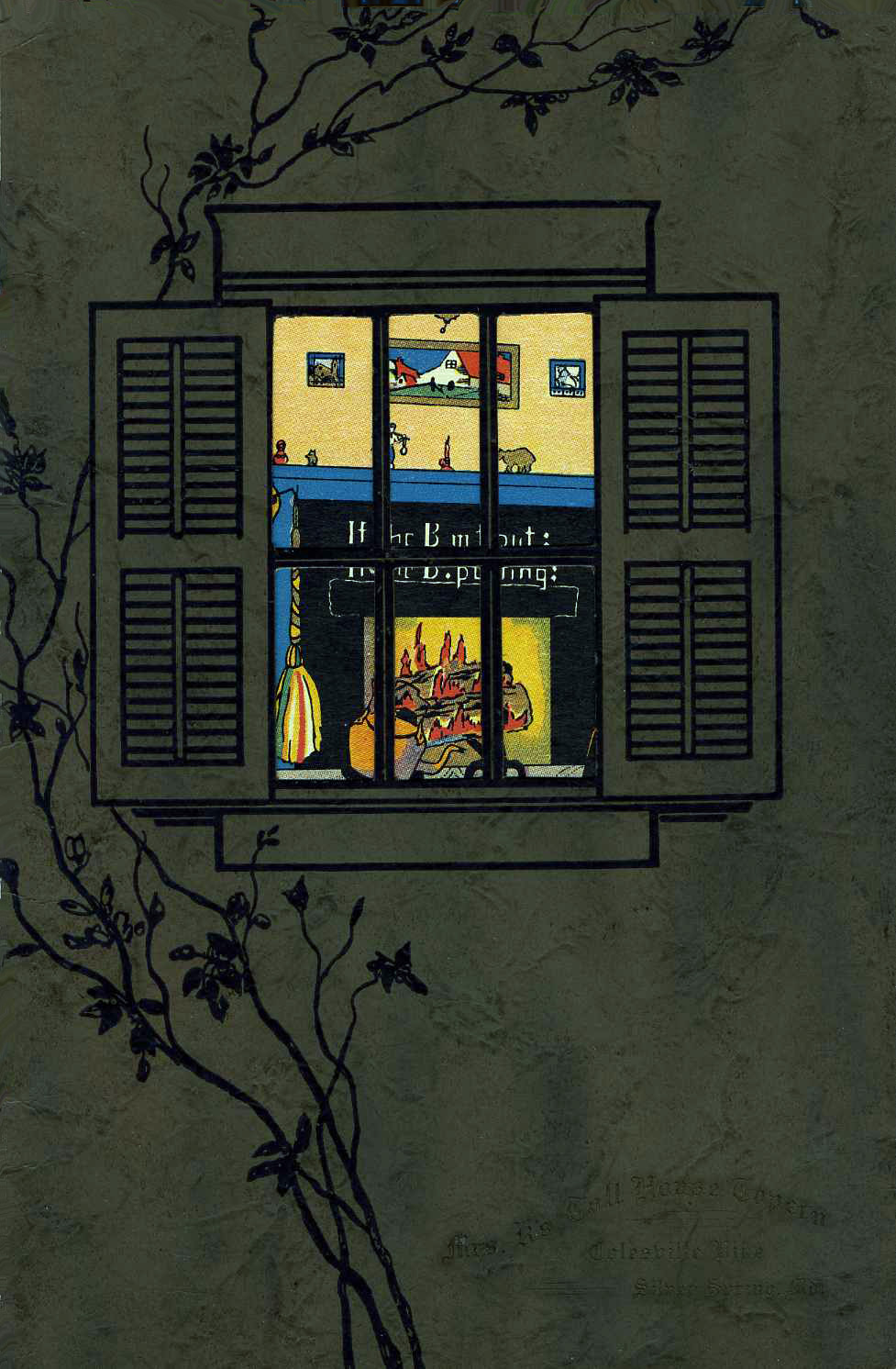
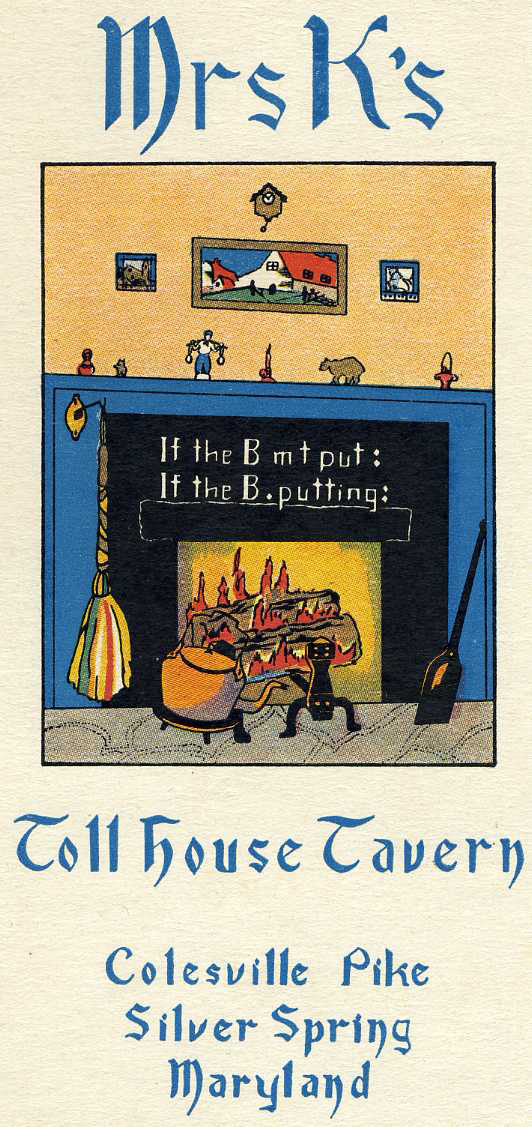
Shown through the window is page 2 of the menu illustrated with a fireplace inscribed with a cryptogram. Can you figure it out? Hint: the riddle is said to have originated in England. (Click to enlarge. Answer below.)

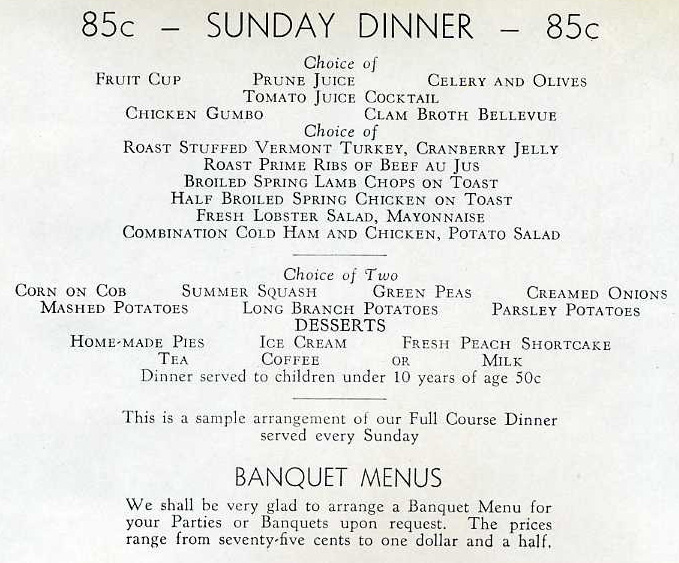
MrsKs941Judging by the prices, this menu is from around 1950. A Tenderloin Steak dinner accompanied by French Fried Onions or Fresh Mushrooms, cost $2.25. It was served with soup, fruit relish, salad, three vegetables, a sherbet course, hot bread, dessert, beverage, and after dinner mints. By 1962, when the Kreuzburg’s son Richard ran the restaurant, that dinner had gone up to $6.00. Burgundy, Sauterne, Claret, and Blue Ribbon beer were available. All meals were served family style with bowls filled with enough for the entire table. Mrs. K assured guests that everything was prepared from scratch on the premises and under her supervision.
Olive Kreuzburg was not new to the restaurant business when she and her husband took over the old toll house that had previously been the home of two other failed tea rooms. In 1923 it operated as the Seven Oaks Tavern where sky high prices must have contributed to its demise. Olive’s prior experience included running the dining room of the Hotel Wellesley in Clayton NY, a tea room in Miami FL called Mrs. K’s, and two tea rooms in Washington DC, one named Mrs. K’s, and the other Mrs. K’s Brick Wall Inn. Clearly using her abbreviated name served her well.

At its opening in 1930 the Silver Spring Toll House was listed in a DC newspaper under “Where to Motor and Dine.” At that time development had not sprung up around Mrs. K’s; although only “a 30-minute drive from the White House,” it was in the country. The early advertisement read: “This old Toll House with its charming furnishings and Terraced Gardens marks a delightfully smart Country Dinner Place.”

mrs.K'sTollHouseILL

Getting through the Depression was no doubt aided by Duncan Hines’ recommendation of Mrs. K’s in his very first list of his favorite restaurants that he sent out to friends in a 1935 Christmas card. Later he expanded the list and published it as a book. In the 1937 edition, he said of Mrs. K’s, “You dine in the past here – so far as furnishings are concerned. Nothing is changed apparently from the Revolutionary days when it was built. Even the pretty girls who wait on you in Colonial dress seem to have been miraculously preserved from a more leisurely age when dining was a rite not to be passed over casually.”

Whether or not the building dated from the Revolution, the quaint restaurant was filled with antiques collected by the Kreuzburg’s.

The cryptogram explained:
If the grate be [great B] empty (m t), put coal on [colon].
If the grate be full, stop [ . ] putting coal on.

© Jan Whitaker, 2015

6 Comments

Filed under family restaurants, proprietors & careers, roadside restaurants, women

Find of the day: Moody’s Diner cookbook

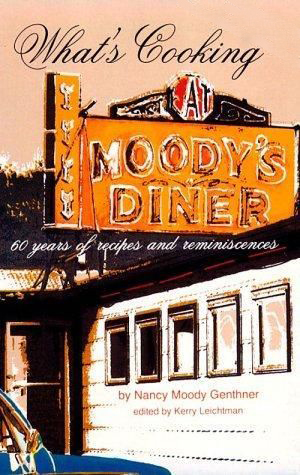
moodysdinerbookAt a weekend flea market I found a copy of What’s Cooking at Moody’s Diner, a book of recipes and reminiscences published in 1989 (it was revised and redesigned in 2003). Although it is neither rare nor valuable in monetary terms, I consider it a “find” because of how I happened upon it when I was about to give up.

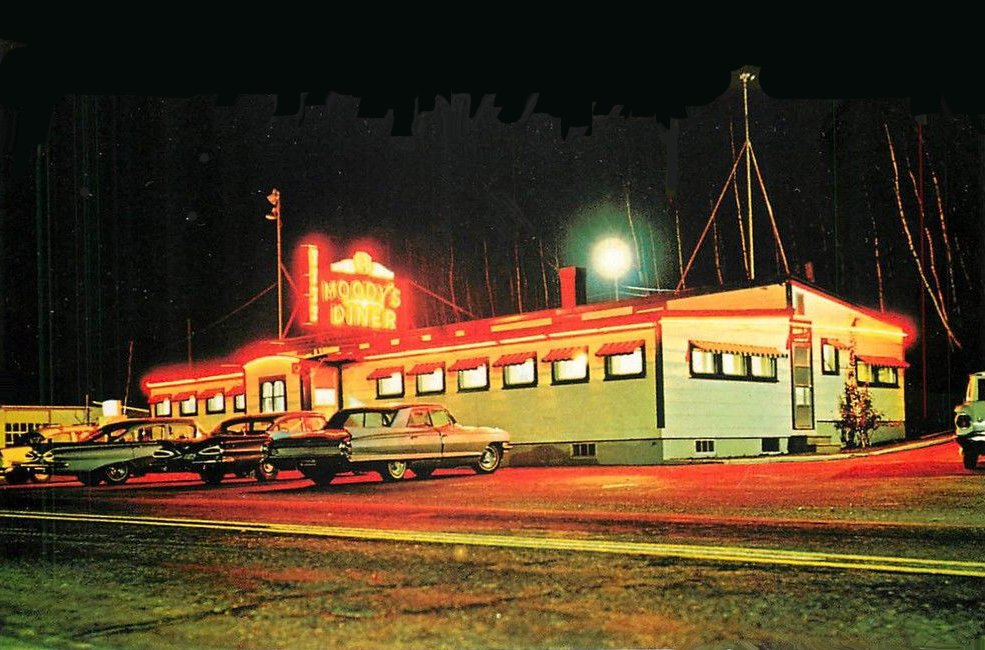
moodysdinercolor2The Route 1 diner in Waldoboro ME dates back to a small food stand built and operated by Percy Moody and his family in the early 1930s. After many additions and updates it is still going strong today as a substantial restaurant with a menu probably far more diverse than it was in the beginning, judging from a sample 1930s lunch menu included in the book. Then, hungry travelers on a budget might select plain sandwiches such as Bread & Butter (5c) or Fried Egg (10c). If they wanted something grander they could have Lobster or Crabmeat sandwiches at 20c apiece. Toasted sandwiches cost an additional 5c.

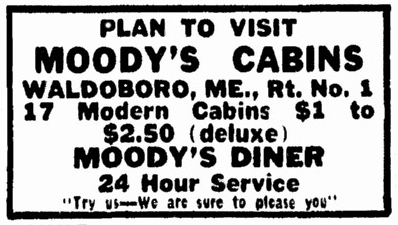
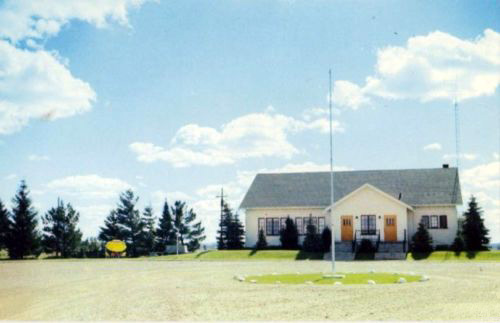
moody'sdinerjune1941Many people associate diners with prefab structures of stainless steel but Moody’s Diner is an example of a vernacular design constructed of wood. Before it was moved to Route 1, the initial Moody food stand accompanied Moody’s Cabins, a few of which had been built in 1927, a year when many a farmer in or near a vacation area decided to try to capture some of the tourist trade speeding by in their newly purchased cars. No doubt a roadside business helped offset some of the effects of the Depression.

The 1989 edition of What’s Cooking at Moody’s Diner, by Nancy Moody Genthner and edited by Kerry Leichtman, contains a wealth of recipes for “home-made” style dishes, desserts, salads, and breads. Twenty-five casserole recipes, many using canned soup, stand out for being far removed from routine restaurant fare.

8 Comments

Filed under diners, roadside restaurants

Image gallery: supper clubs

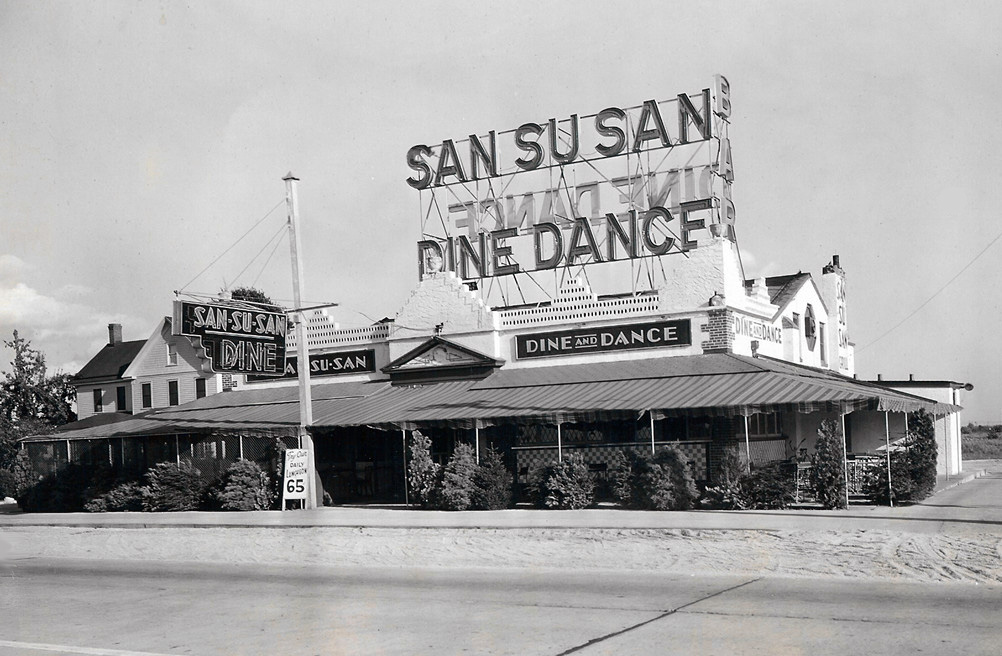
supperclubdine&dance813Supper clubs, night clubs where meals are accompanied by live music and (usually) dancing, began as private clubs rather than as businesses. Groups of people who knew each other, often socialites or theater performers, met regularly for late-night meals and entertainment, at either a single restaurant or at a succession of restaurants. The revelry might last until 2 or 3 A.M. if not later.

By the 1920s the habit had developed into a type of restaurant catering to fun seekers and open not to the select few but to the general public. Perhaps because supper clubs had once been associated in many people’s minds with capital-S Society, these restaurants enjoyed an aura of glamour.

Although a supper club is a night club that serves food, there are many variations. Some were urban, such as NYC’s well-known nightspots El Morocco, the Stork Club, and the Copacabana. But from the 1920s until the decline of supper clubs in the 1970s, many across the U.S. were located on roads outside settled areas. This is particularly true in the upper Midwest. In Wisconsin, where supper clubs have particularly flourished, they have ranged from rustic roadhouses serving barbecue to swanky resort-area clubs.

In movies of the 1930s and 1940s, supper clubs were portrayed as places where big stars and popular bands such as Glenn Miller’s played, but far more common were the sort that hosted local musicians. Still, patrons dressed up and enjoyed a night out, dining and dancing, perhaps even a forbidden cocktail or two during Prohibition, and maybe a floor show, without spending a fortune. Many a wedding and anniversary party was held at supper clubs across the country.

Despite the low point reached in the 1980s and 1990s, supper clubs showed an ability to incorporate trends such as the Tiki-mania of the 1960s and are reportedly making a comeback, now as retro-deco revivals with gourmet food. This has not always been true. According to menu-planner Lothar Kreck the wise supper club manager of the 1970s saw to it that the menu selections – whether stuffed lobster tails or capons — were prepared in advance of the arrival of guests.

The Gallery

supperclubThePyramid

The winner of the title “Dairy Princess of Dodge County” was announced at a dairy banquet at the Pyramid Supper Club in Beaver Dam WI in June, 1973. The illustration’s proportions would appear to be a tiny bit exaggerated.

SupperClubTesch'sSC,AntigoWI

At the other end of the glamour spectrum was the very modest looking Tesch’s Supper Club in Antigo WI, one of the many mom&pop operations.

supperclubTeaneckNJ

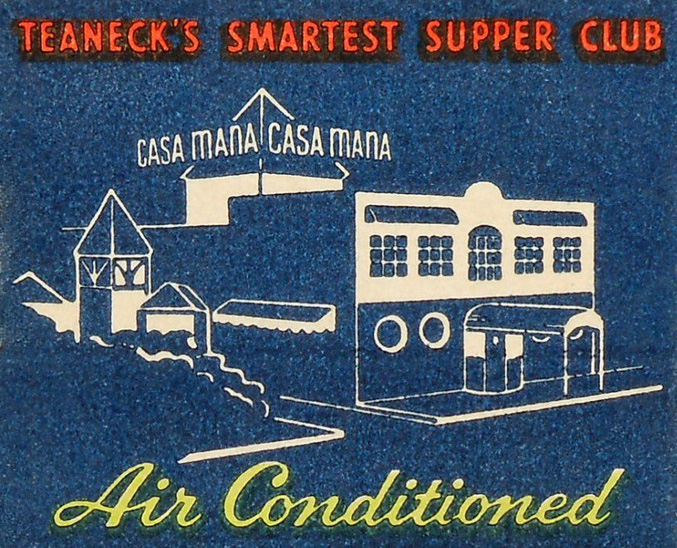
In the 1950s and 1960s The Casa Mana in Teaneck NJ  hosted the Lions Club, United Steel Workers, and Democratic Party functions.

SupperClubSilverDomeWI

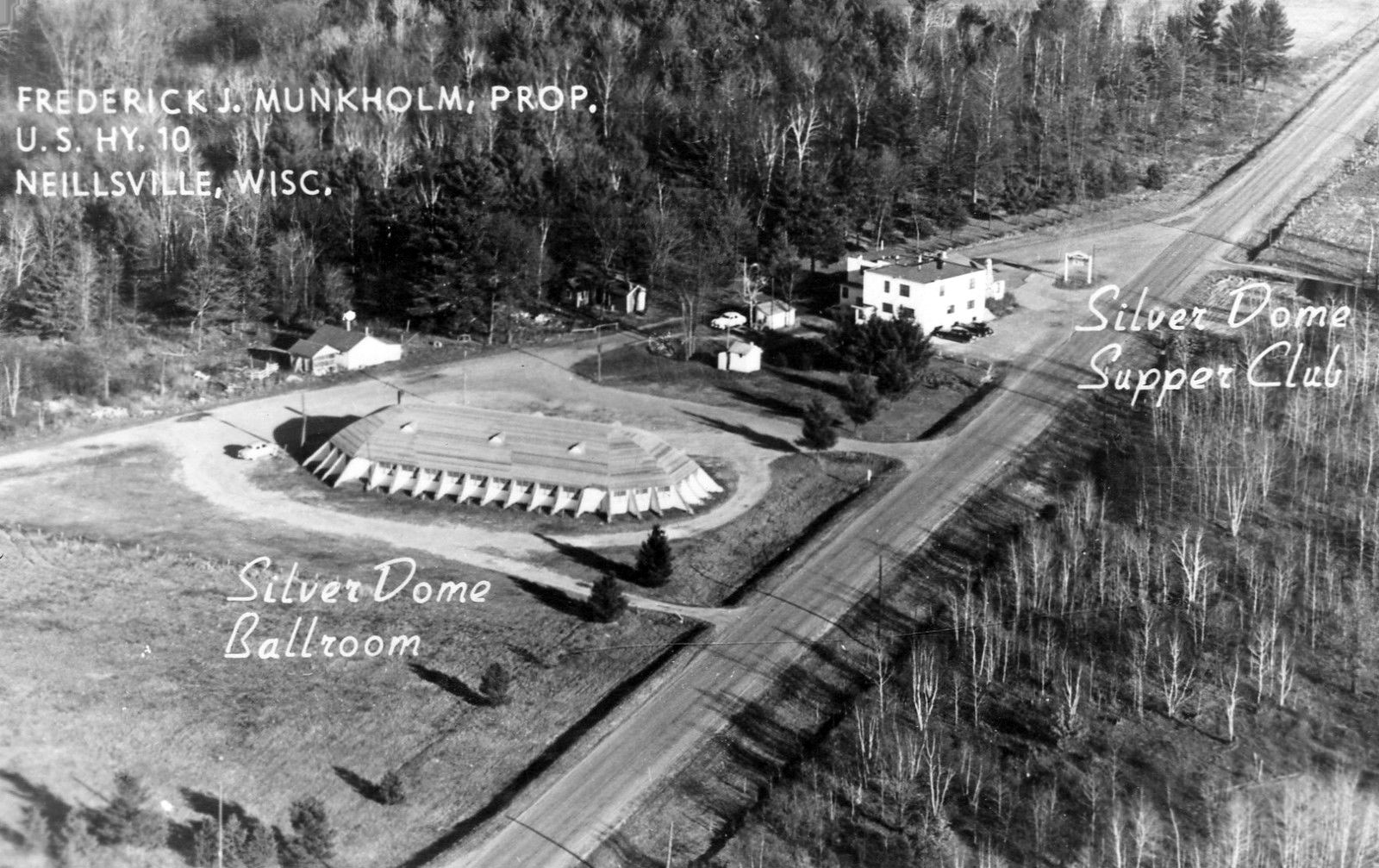
The Silver Dome Supper Club and Ballroom featured dining and dancing in two separate buildings.

SupperClubMardiGrasOaklandCA

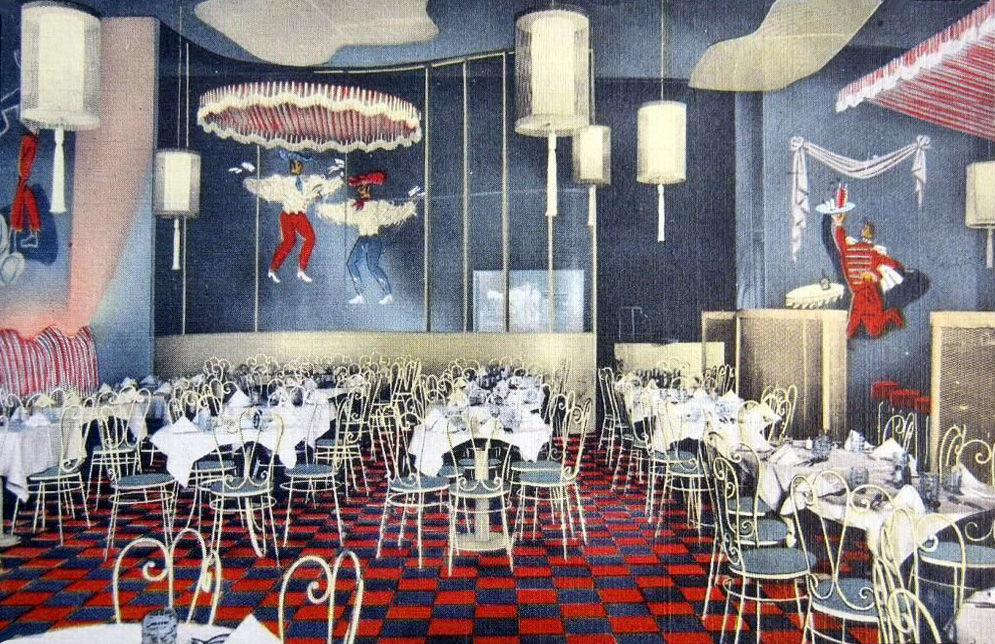
In Oakland CA, the Mardi Gras Supper Club offered music in a raucous setting.

supperclubElMorocco

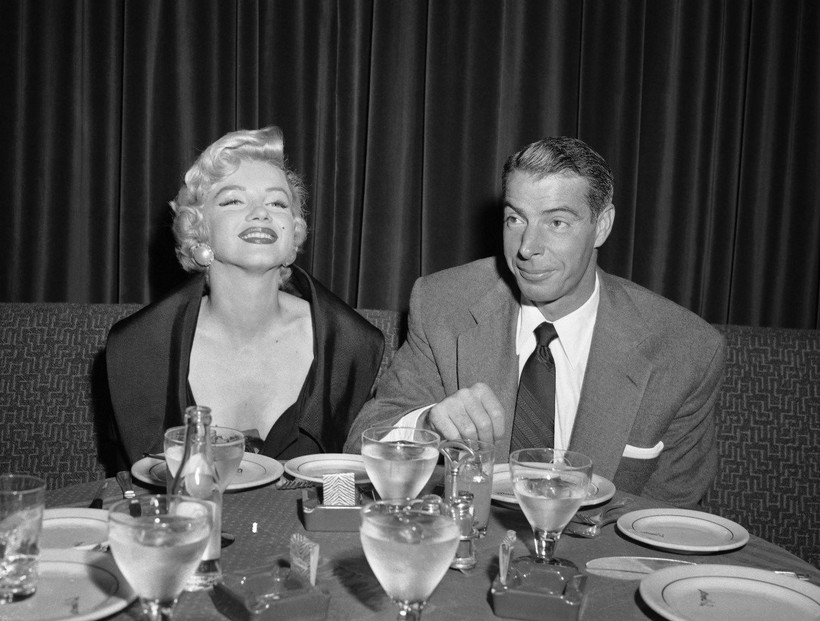
El Morocco in NYC was visited by celebrities such as Marilyn Monroe and then-husband Joe DiMaggio. Did they stay long enough to get some food on their plates?

SupperClubAmato'sPortlandORAn

Most supper clubs patrons were not celebrities. In an earlier incarnation Amato’s Supper Club had been the Roseland Ballroom owned by one of Portland Oregon’s leading restaurateurs, Larry Hilaire.

SupperClubDallas

Menu of the El Tivoli, established in 1929 on a former golf course west of Dallas on the Fort Worth Pike.

SupperClubMineolaNY1933An

Tiny Tim, famous for his falsetto rendition of “Tiptoe Through the Tulips,” played this Long Island supper club in 1970, a year before the Mineola NY property was put up for sale.

supperclubLotus814

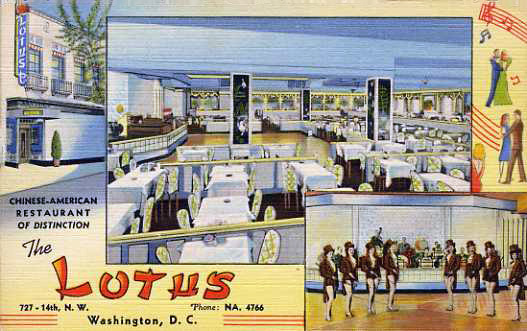
The Lotus, a Chinese supper club, was one of the many that did not use supper club in their name, preferring the term Cabaret Restaurant. Chinese and Afro-American supper clubs were numerous in big cities. In his book Historic Restaurants of Washington, D.C., John DeFerrari documents both. Club Bali, opened in 1943, featured Sarah Vaughn, Erroll Garner, Dinah Washington, and many other topnotch Black performers.

© Jan Whitaker, 2014

7 Comments

Filed under night clubs, roadside restaurants

Famous in its day, now infamous: Coon Chicken Inn

coonchickeninnpc3

The long-gone Coon Chicken Inn restaurant chain claimed in its advertising that it was “nationally famous.” I believe that was a bit of an exaggeration – then – but it might be true now. Its present-day fame, more accurately its notoriety, is based on its objectionable name and use of a grotesque racist image on buildings, delivery trucks, china, glassware, and printed advertising pieces.

To whatever degree it was nationally famous it can only have been for its racist depictions. Certainly it could not have achieved fame for its food. The menu of the Coon Chicken Inn reveals selections only a few degrees more ambitious than the drive-ins of the 1930s. Other than chicken dinners, the menu included chili, burgers, and ice cream desserts.

coonchickeninnphoto1947

Nonetheless, in its time it was a popular chain of four roadhouse restaurants with one each in Salt Lake City (est. 1925), Seattle WA (est. 1929), Portland OR (est. 1930), and Spokane WA. According to one account there were also Coon Chicken Inns in Denver, Los Angeles, and San Francisco but I’ve been unable to find any trace of them.

In 1930 Seattle’s NAACP protested against the restaurant’s racist imagery. Under threat of prosecution the chain’s owners, Maxon Lester Graham and Adelaide Graham, repainted the grotesque black faces on their restaurants’ entryways blue. They also obliterated the words “Coon Chicken Inn” painted on the figures’ teeth.

coonchickeninnSLCDec291926Having avoided prosecution they changed nothing else, keeping the chain’s name and logo, all of which seemed not to bother the restaurants’ white patrons at all. I would guess most people gave little thought to the large grinning heads, having already accepted the caricatures as merely another instance of the widespread “comical” portrayal of black Americans. They probably also saw them as just another example of an eye-catching building feature employed by roadside restaurants to attract motorists’ attention. Few white people perceived the restaurants as racist.

The Coon Chicken Inns regularly hosted meetings of clubs, civic organizations, and sororities ranging from a Democratic Club to the Junior Hadassah. They were the sites of wedding, anniversary, and birthday parties. In 1942 they were listed in Best Places to Eat, a nationwide guidebook published by the Illinois Auto Club. I can’t help but think that the restaurant in Portland was a peculiarly appropriate location for an Eastern Star group that chose it for their “Poor Taste” party in 1937.

mammy'scupboardLike the word “mammy” and its stereotyped image, “coon chicken” was supposed to communicate that the restaurant specialized in Southern cuisine, in this case fried chicken. Mammy names and images were widely used by restaurants in the early and middle 20th century. The crudely constructed Mammy’s Cupboard in Natchez MS was another example of roadside “building as sign.” There was a Mammy’s Shanty in Atlanta, Mammy’s Cafeterias in San Antonio TX, and others in the South. Nor was the East without its Mammys: in Atlantic City was Mammy’s Donut Waffle Shop while Brooklyn had Mammy’s Pantry.

Several good articles have been published analyzing the Coon Chicken Inn’s everyday racism and the white public’s blithe tolerance of it. I recommend Catherine Roth’s essay for the Seattle Civil Rights & Labor History Project. Because of the volume and quality of what’s been written I hesitated at first to publish this post. I also hate the thought of increasing the desirability of Coon Chicken Inn advertising artifacts. Although there are good reasons to preserve historic racist ephemera, the extreme popularity of these images is disturbing. So great is the demand for them that the marketplace is flooded with fakes, including newly dreamed-up objects that were never used by the chain. Black faces have made a comeback along with “Coon Chicken Inn” on the teeth.

The Portland and Seattle branches of the Coon Chicken Inn closed in 1949 but the Salt Lake City unit remained in business until 1957.

© Jan Whitaker, 2014

11 Comments

Filed under racism, roadside restaurants

Don’t play with the candles

nightingalepartialfrontmenu

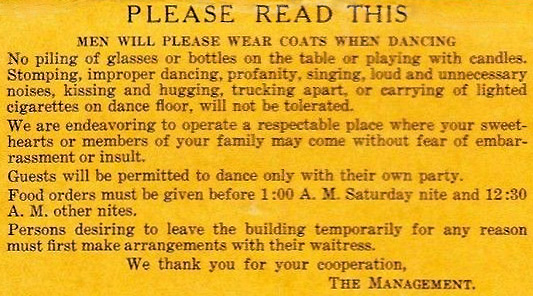
It’s not often that you run across a menu that tells patrons how to behave, right on the front. It seems to project the message Welcome! . . . or maybe not.

In case you were wondering what “trucking apart” means, I think it refers to flirting with someone other than who you came with.

nightingaleMenufrontdrawingThe menu, which probably dates from the 1950s, is entertaining inside too: Pop Corn as an appetizer, Toast (under Specials, .20), Pickled Egg Salad with Crackers (.50), and Blackberry Wine from Ohio (.30 per glass).

The Nightingale’s finest and most elaborate offering is clearly its Chicken Dinner ($1.25). The potatoes, tomatoes, and biscuits get glowing modifiers while the chicken has none.

Tomato Soup or Tomato Cocktail
French Fried, Golden Brown Potatoes
Sliced Field Ripe Tomatoes
Peas or Beans
Piping Hot Biscuits
Coffee or Tea
Ice Cream

nightingaleclubMarch251940In 1940 Luther L. Dixon, an enterprising factory worker at American Tobacco Co. who made money in real estate, opened a restaurant/club called the Nightingale on the outskirts of Richmond, Virginia. He had left the business by the mid 1950s, so the owner of the Nightingale with the menu advice, located south of Alexandria, may have been someone else.

© Jan Whitaker, 2014

12 Comments

Filed under night clubs, patrons, roadside restaurants

Truckstops

truckstop1943vachonIt seems that everyone has heard that truck drivers know all the best places to eat along the highway. [John Vachon, Farm Security Administration photo]

It also seems that no one believes it and never has. I suspect that the rumor was created by magazine writers so that they could debunk it. For instance, a writer in 1951 described the belief as “one of the most insidious myths in the folklore of American travel.” Anyone who is gullible enough to follow a truck to a restaurant or diner, he wrote, can expect to end up with “an acute case of gastritis and an awesome respect for the incredible powers of survival exhibited by the U.S. truck driver.”

truckstopAlbanyFew truck drivers have claimed to know the best places to eat. For drivers of 18-wheelers, eating, like everything on the job, has to fit into a punishing schedule if he/she wants to make money. About the only places a driver can stop are those with diesel fuel, big parking lots, and handy locations. Everything else is secondary, including food, which leads to heavy use of antacids and sentiments such as “I wouldn’t feed some truck stop food to a dog.”

Another aspect of restaurant-ing in trucker world is a breakdown of meal categories. Meals become interchangeable and can take place at any hour in a revolving day and night work schedule. Is 3 a.m. breakfast, lunch, or dinner time?

TruckStopGoldenGrill

Reputedly truckstop patrons might encounter fluffy biscuits and fresh vegetables now and then, but I have the sense they were/are the exception. Overall, accounts point to dismal food choices. One of the worst examples was given in a 1962 story that described deep-fried chicken with a coating of cracker crumbs: “You strike a chicken leg and the crust falls away in a curved sheet to disclose a sight best forgotten.”

Although drivers would have been wise to follow the advice to “Never order anything fried at a truckstop,” many plunged ahead with chicken-fried steak smothered in cream gravy. Along with bacon and eggs and hash browns, chicken-fried steak held a high place on truckstop menus. Does it still?

TruckStopFreeportIL

Occasionally truckstop restaurants bought locally and did their own baking, though you can bet that most of the time drivers ate the same fare they hauled in their refrigerated trucks: frozen food. Nonetheless, some stops were known for their specialties. A 1969 guidebook recognized the 350 best truckstop restaurants, among them The Platter Restaurant in the Bosselman Truck Plaza near North Platte, Nebraska, that featured a parchment menu with catfish and “pastel fruit plates”; a New Mexico stop offering Mexican food; and a New Jersey truck plaza with a Ranch Hand Special of three eggs, three pancakes, and two ham steaks, all for $1.75 in 1970.

Earlier, in the 1930s and 1940s when long-haul trucking became established, truckers traveled on state roads and stopped at now-nostalgic though often mediocre “mom and pop” cafes. But with construction of interstate highways and vastly more trucks on the road by the 1960s, their limited hours and small parking lots could not handle demand. Roadside restaurants grew into full-service truck plazas, complete with motels, stores, laundromats, and 24-hour restaurants.

truckstophalf-wayWaddyKY

But whether eating took place in a small stand-alone café or a 200-seat restaurant in a 14-acre plaza, three constants held true. Waitresses had to be friendly and food had to be inexpensive and plentiful. The third? Coffee had to be strong. In truck driver slang, a restaurant was a “coffee pot” and coffee was “diesel fuel.”

Truckstop eateries have made up a significant part of the country’s restaurant industry. In 1977 Restaurant Hospitality magazine listed the Ohio 70-37 truckstop in Hebron OH as one of the biggest grossing independent restaurants in the U.S, despite its low check average of just $1.14 and the fact that all its revenue derived from food sales. (Needless to say, cocktails and 80,000 lb trucks are a bad combination.) According to Ron Ziegler, former Nixon press secretary and then-president of the National Association of Truckstop Operators, in 1986 truckstops were surpassed only by fast food chains as “the largest feeders of the United States.”

© Jan Whitaker, 2014

13 Comments

Filed under roadside restaurants