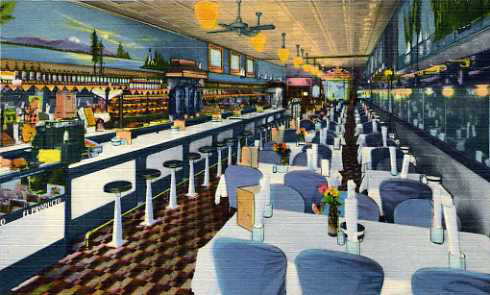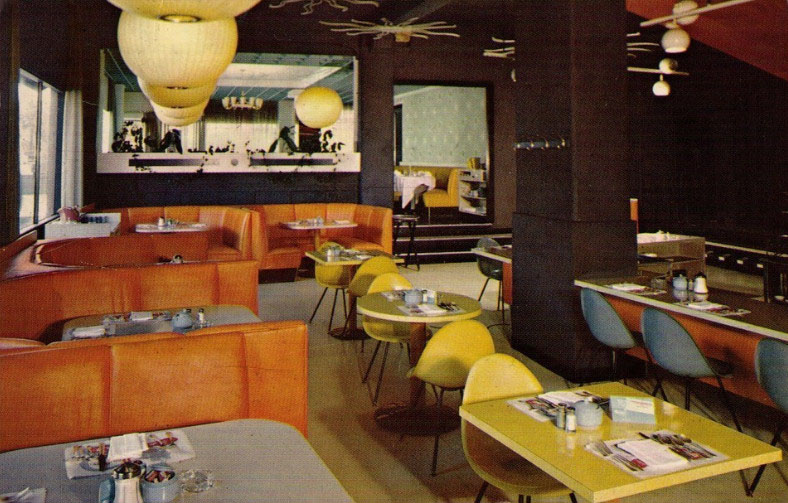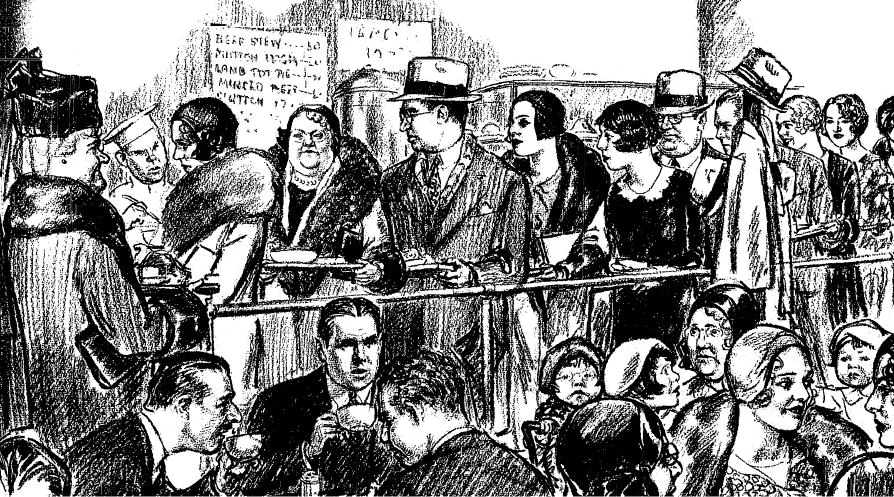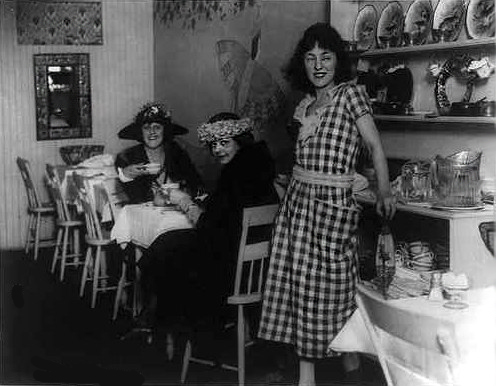
Regulars

The modern idea of eating out revolves around choice. Where shall we go? What shall we order? We are looking for change, novelty. We want to vary our routine.

It hasn’t always been this way.

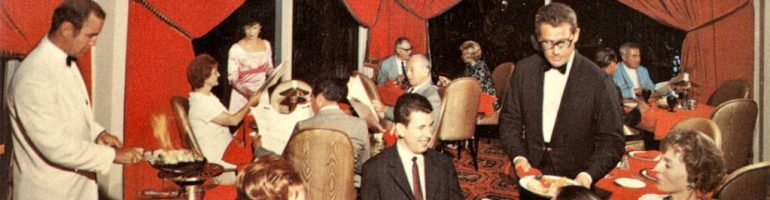
Choice in dining out did not become the norm to any great extent until the second half of the 19th century, and then slowly and incompletely. Before that patrons were divided into “regulars” and “transients,” with the first category making up the backbone of the fledgling restaurant business.

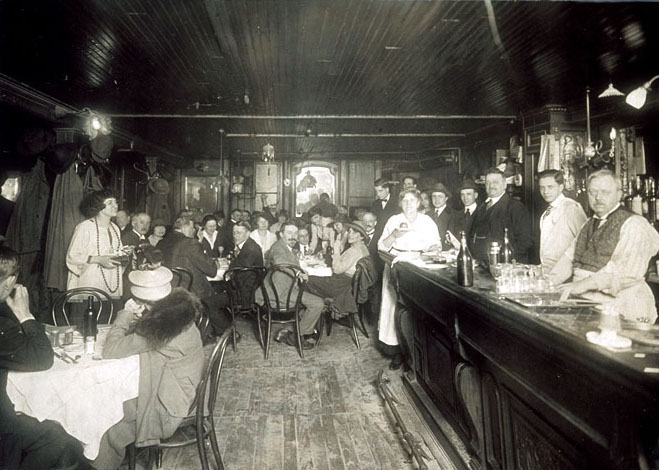
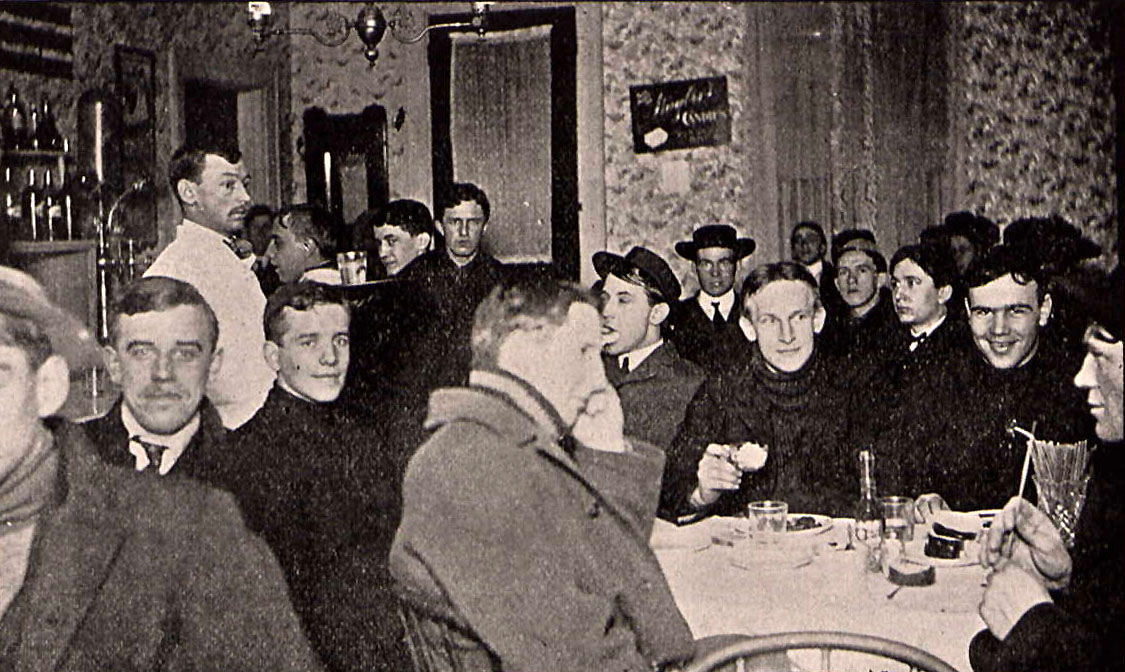
In early American taverns the regulars were male groups such as firemen, clubs, or religious societies who turned up on a scheduled basis and were served group meals for a prearranged price. To put it in other words, much of the business of a tavern or eating house was conducted on a catering basis. Male college students, in the decades before dormitories and dining halls, grouped together in dining clubs that operated similarly.

By the 1870s restaurants filled with the same old people eating the same old food day after day came to be regarded as somewhat archaic. A visitor to a chop house in lower Manhattan that served steaks and baked potatoes observed patrons who, curiously, “did not give any order.” He reasoned that they were habitues and learned that one, a dry goods merchant, “has dined there every day for the last seventeen years.”

The system of regular diners and regular meals worked effectively during an era when there was not a large dining public like today. But even by the time things had changed significantly, in the early 20th century, many small cafes tried to take the guesswork and risk out of their business by cultivating regular customers. They sold meal tickets for which patrons paid in advance for a number of meals in order to receive a discount.

Even today there are probably still some individuals who would rather eat at the same place on a frequent, even daily basis. There are those who order the same thing every time or are automatically served the day’s special without even glancing at the menu. Is there an invisible straight line in NYC connecting the 1859 eatery where “regular patrons at the sandwich counter merely sit down and their sandwich is placed before them” and The Colony, where in the 1950s a woman was enjoying her 28th year lunching on lamb chops, salad, and grapefruit? Likewise in that same decade regulars at a Mississippi City restaurant were fond of sitting down and telling the proprietor, “Joe, fix us up.”

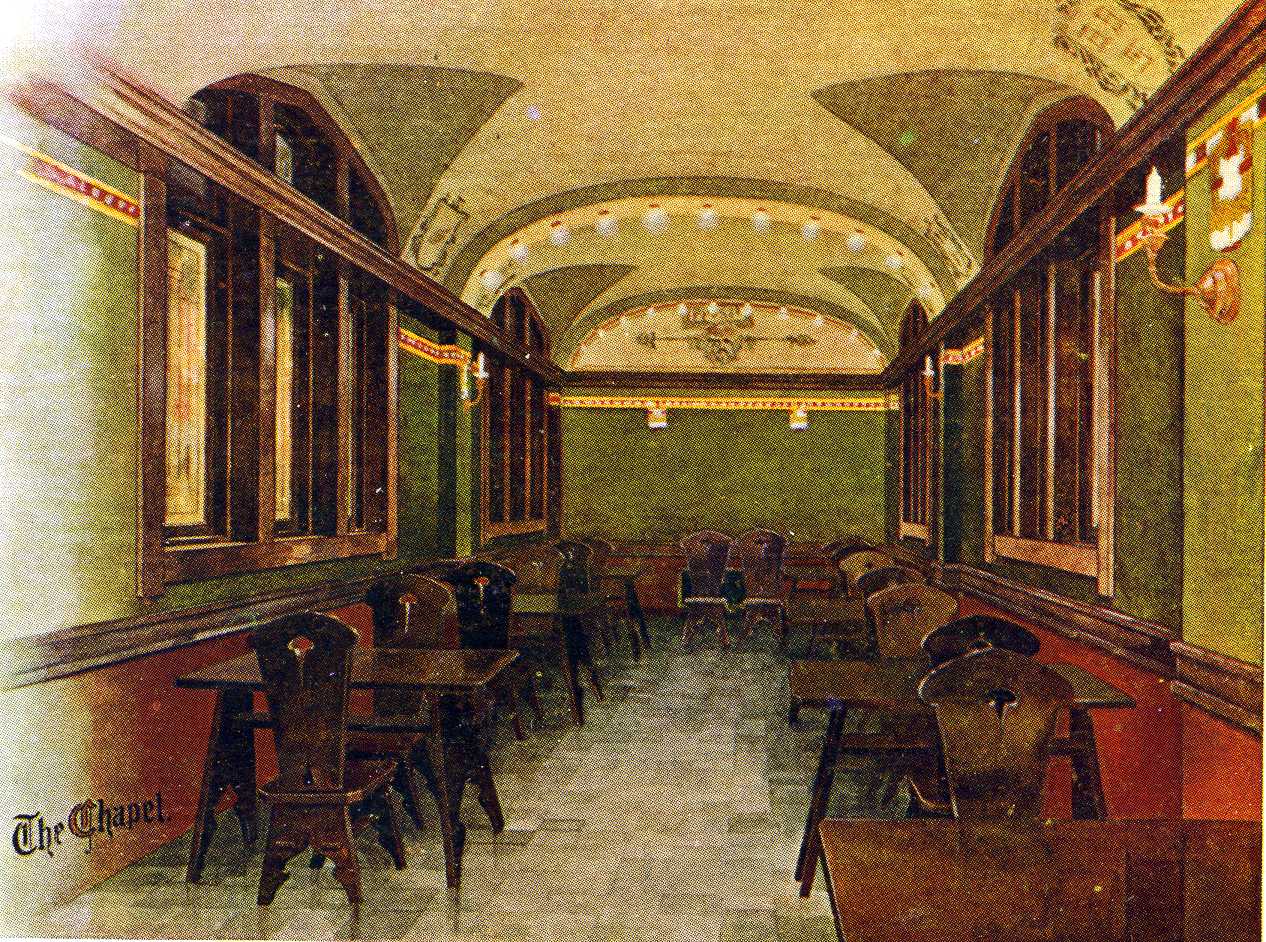
Another vestige of the old system that lingered on for decades was that of men’s professional groups who ate together regularly at the same restaurant – and the same table – for years on end.  Around the turn of the century insurance adjustors — members of the Firebug Club (whose name commemorated the olden days when adjusters colluded with policyholders to commit arson for profit) – used to meet at Mike Lyons’ in NYC’s Bowery. About the same time St. Louis’s Lippe’s was set up with alcoves for trade groups. There was a “Hoo-Hoo” decorated with a painting of a black cat that was designated for lumbermen, and another called “The Roost” decorated with a goose and other birds, meant for tailors. Might “The Chapel” have been intended for ministers? The tradition continued into the 1940s at the century-old Speck’s in that city where there was a bankers’ table, a doctors’ table, etc.

Journalists were well-known for socializing together in restaurants. In Chicago, Ric Riccardo hosted correspondents for the major national magazines and newspapers in his restaurant’s imitation jail called the Padded Cell in the early 1950s. By the 1970s the room had become dedicated to the weekly luncheons of the St. Louis Browns fan club.

Restaurants highly esteemed their regular patrons, none more so than Maylie’s in New Orleans, which closed its doors in 1920. The all-male restaurant admitted patrons each day at 11:00 a.m. and 6:00 p.m., seating them at long communal tables. When a regular died, his chair was left empty for several days.

© Jan Whitaker, 2012

6 Comments

Filed under patrons

Steakburgers and shakes

After recently reading Roger Ebert’s wonderful book Life Itself, I decided to write this post and dedicate it to him. I loved his depictions of his childhood, which included his first restaurant meal, a steakburger at Steak n Shake, near the campus of the University of Illinois in Champaign where his father worked as an electrician. He has also written about the restaurant on his Sun Times blog.

Even though I grew up in St. Louis, where there were many Steak n Shakes, most with curb service in the early years, I knew nothing about the chain’s history then and mistakenly believed it originated in St. Louis. I’m embarrassed to admit that I held a widespread St. Louis prejudice that few good things came from Illinois, the chain’s first home.

The chain was founded by Gus Belt and his wife Edith. Their basic problem was the Depression. The gas station Gus operated in the town of Normal, Illinois, was not thriving. In 1932 he and Edith decided to extend into the restaurant business by converting a house on the property to an eating place serving Edith’s fried chicken and beer, which was about to become legal in the first stage of Repeal. They called it the Shell Inn.

According to Robert Cronin’s Selling Steakburgers, beer was a bigger hit than chicken. Because Normal was the home of a state college that trained teachers, who were supposed to be morally upright, the town had a long history of forbidding the sale of alcoholic beverages. After a brief wide-open period following Repeal, the town voted 2 to 1 to remain dry. Seeing what was about to befall their eatery, Edith and Gus decided to turn it into a hamburger joint.

They followed an honored tradition in the restaurant business of studying the successful practices of others and copying them like crazy.

The Shell Inn’s prime customers were the students at the nearby teachers college. No doubt the Belts had observed how much college students in the neighboring town of Champaign enjoyed hamburgers at the White Spot, the White House Lunch, Wimpy’s, and Maid-Rite. With the switch to burgers, the Belts renamed their place “Whitehouse Steak n Shake.” Later, they would adopt another idea from Champaign’s hamburger sellers, that of selling burgers by the bag (“Buy ‘Em by the Sack” advertised White Spot), borrowing the “Takhomasak” slogan from a Colorado restaurant. The idea of advertising that your hamburgers contained higher grades of steak was not unique to Steak n Shake. In Detroit during the Depression, there were a couple of places advertising this: the Marcus All Steak Hamburger Restaurant chain, and Meyers Real Steak Hamburgers. I wonder too if the Belts got the idea of serving food on china from Champaign’s Wimpy’s.

Their timing was good. Led by youthful first adopters, hamburgers, once shunned by the middle class who associated them with poverty and adulteration, were gaining respectability. Also reassuring was Steak n Shake’s squeaky clean white tile interior characteristic of 1920s lunch rooms and hamburger chains such as White Castle.

Theirs was among a number of hamburger chains that proliferated in the Midwest and other non-coastal areas during the Depression. Among the chains that got their start then were Little Canary Castle (Winston-Salem NC, 1931), Krystal (Chattanooga TN, 1932), Wimpy Grills (Bloomington IN, 1934), White Hut (Toledo OH, 1935), and Rockybilt (Denver CO, 1936). So the 1930s, which had begun so poorly for the couple, turned out well for them.

By 1940 the Belts had units in Normal’s twin city of Bloomington, as well as Champaign [1937 advertisement above], Decatur, E. Peoria [pictured at top], Galesburg, Danville, and Springfield. In the late 1940s Steak n Shake moved into St. Louis and in 1959, five years after Gus’s death, with Edith at the helm, there were 14 units in that city. Indianapolis [pictured 1965] and Florida were other early markets. By the time Edith sold the family’s controlling interest to the Longchamps corporation in 1969, there were 50 or so units.

After that the story shifts to corporate history, with decades of ups and downs, aborted openings in Chicago and Texas, modernizations and returns to roots, changes in ownership, and further expansion until today when there are almost 500 units in 22 states.

© Jan Whitaker, 2012

15 Comments

Filed under drive-ins, popular restaurants

A famous fake

. . . but not quite famous enough because many people still mistake the image shown here, dubbed “America’s first restaurant,” as a reproduction of a genuine Delmonico’s menu from 1834.

It makes me realize how little sense of restaurant history most people have because this “menu” (probably not a menu at all but a newspaper advertisement or handbill) is definitely not from the genuine Delmonico’s, one of the country’s most elegant establishments. In 1831 Delmonico’s expanded from its original status as a confectioner’s shop into a Parisian-styled “Restaurant Francais.” In stark contrast, the “menu” shown above (this particular example was used to promote a modern-day restaurant) originates with one of the lowliest dives in New York City. Plus it’s nearly 50 years later than alleged.

The prices shown are a fraction of what a Delmonico’s meal would have cost. The dishes shown are scarcely French fare. “Hamburger steak” was unknown by that name in the 1830s, first appearing in the 1880s. Although, like all fine restaurants, Delmonico’s could provide a guest with just about anything on demand, items like Pie, Crullers, Mutton Stew, and Pork and Beans would most certainly not have appeared in print. But then restaurants did not use printed menus in 1834.

The true status of the advertisement above was unraveled by Ellen F. Steinberg and Jack H. Prost in an article called “A Menu and a Mystery” appearing in the Spring 2008 issue of Gastronomica. Recently, after consulting a book in which the fictitiously identified facsimile is treated as a valid Delmonico’s menu, I was inspired to dig up a few additional details.

After exhaustive research, Steinberg and Prost discovered that the likely origin of this advertisement was an establishment at 494 Pearl Street in lower Manhattan run by “R. Barnabo.” His was a place where the poor and down-and-out found cheap offerings, possibly acquired by the proprietor as leftovers from other restaurants and hotels.

The duo also discovered that the typeface on this document was not in use until the 1880s. They determined that this image made its modern debut as a facsimile of a genuine Delmonico’s menu in the 1930s, and was used in advertising campaigns for restaurants in the 1940s. Distributed by wire services, stories about the “legendary” low prices found on “America’s first menu” have cropped up as filler items in countless newspapers from the 1930s until the present. Syndicated columnist Hal Boyle made use of it repeatedly.

And yet nobody, nobody!, ever asked, “Can it be true that America’s finest restaurant served cheap doughnuts and whopping great halves of pies?” And hamburger, a despised food for the poor until mid-20th century? Pigs’ heads?

Here is what I can add to the story of R. Barnabo’s eating place known, perhaps humorously, as “Small Delmonico’s”: First, his name was actually Francisco Bernabo, born in Italy and naturalized as a U.S. citizen in 1882. He operated an eating place at 46 Franklin until 1879 when the property was sold and the restaurant was taken over by William S. Pontin. He then moved to 494 Pearl Street where he stayed until 1887 at which time he took a three-year lease at 6 Chatham-Square. He is listed at that address in 1888 but after that I cannot find a trace of him.

Strangely enough, the prices shown on this 1880s “menu” are actually lower than would have been found in a cheap restaurant of the 1830s. They are typical of the “5-cent restaurants” of New York City in the 1880s which were located in Chatham Square where Bernabo moved in 1887. He may have bought food secondhand, but it’s also noteworthy that in the 1880s the bottom ranks of butchers were selling the cheapest cuts of Chicago beef to lowly restaurants for 1 and 2 cents per pound. According to MeasuringWorth.com a 10-cent hamburger steak in 1884 would be about the equivalent of one costing $2.29 today.

© Jan Whitaker, 2012

11 Comments

Filed under menus

Music in restaurants

Because they traveled quite a bit musicians must have made up a notable percentage of early patrons of public eating places. It’s easy to imagine them playing a few tunes in return for their dinner, but if this happened I’ve found no trace of it. The first mention of music I’ve discovered was in 1866, in a description of a small French restaurant in New York with an oyster-shell framed alcove where “sometimes a boy with a violin will seem to afford music to the feast.”

Note the negatively tinged words “seem to afford.” Throughout history there have been plenty of critics of musical “din” in restaurants.

Music in restaurants was apparently a continental custom that migrated to these shores. At first it was highly associated with German restaurants such as Lauber’s at the 1876 Centennial Exhibition in Philadelphia. But by the late 1890s musical accompaniment with dinner became quite popular and all kinds could be found. “Wild” gypsy music as was played at NYC’s Café Boulevard was a favorite at Hungarian restaurants. Such places were known for their bohemian atmosphere — Why, people even talked to strangers! Later in the evening, the combined effect of food, wine, beer, and strolling musicians would have everyone singing choruses.

Orchestras of young women were also popular. In Boston, D. S. McDonald’s on Tremont  Street served dainty chafing dish specials such as Lobster a l’Americaine and Oyster a la Poulette en Blazer to the tunes of such a group. “This is a touch of Bohemia right in the heart of Boston,” proclaimed a 1903 advertisement.

American restaurant-goers of the turn of the century were evidently longing for the music of exotic others to invigorate and entertain them. On the West coast that often meant Hawaiian hulas. Everywhere else it meant the music of African Americans, especially ragtime.

The naysayers pleaded for quiet with their dinners. Articles in 1904 and 1905 issues of Town and Country, noting that potted palms and Hungarian bands expressed “the spirt of the age,” nonetheless complained that even the Third Avenue Delmonico’s had become “a hall of artificial palms, red paper, gilding and ragtime.”

Some hoped the early, pre-WWI tea room would provide a haven from the “garishness of strong lights, deafening music,” and restless thrill seekers found at the average restaurant. Instead music spread everywhere. Chinese restaurants installed Chinese orchestras which played all the latest rags. Even cafeterias joined the bandwagon.

It wouldn’t be long before clever minds figured out how to automate music in cafes and restaurants. At NYC’s Kalil’s in 1909 recorded voice of Caruso and other famous singers could be played on the Victor Auxetophone loudly enough to be accompanied by a live orchestra. The jukebox would not be far behind. In 1927 an advertisement advised cafeteria owners that the colorful Electramuse stimulated people “to have a good time – to spend MORE money!”

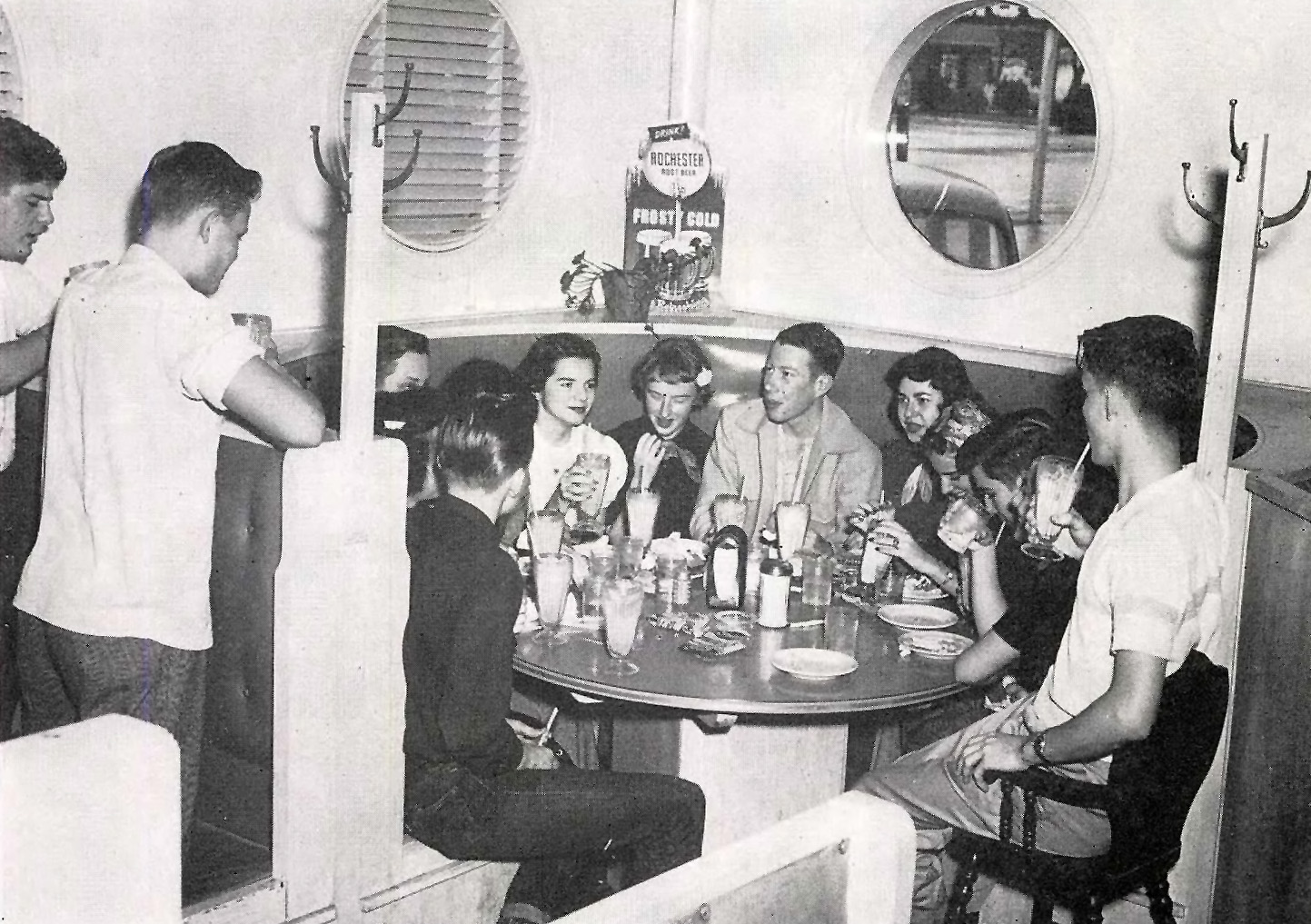
But jukeboxes ran afoul of polite society in short order. They were popular in teen hangouts – and that was part of the problem. Adults shunned these cafes, and neighbors complained about loudness. Fights broke out over musical selections. The jukebox took on associations of low life, not helped one bit by stories like the one that appeared in 1954 about a feuding North Carolina drive-in restaurant operator blasting super-amplified “Shake, Rattle and Roll” at an evangelical meeting across the street. The final straw for the jukebox was its takeover by racketeers.

Muzak fared much better in the restaurant industry than did jukeboxes. It started operation in NYC in 1936 with 40 restaurants as clients. Among its early customers were the dining room in the Algonquin Hotel and the Kungsholm Swedish restaurant on E. 55th Street. At first limited to large cities, technical advances in 1954 permitted Muzak franchises to spread to smaller towns throughout the country.

Today we have the full panoply of music. Rarely do we hear orchestras, but string quartets, harpists, strolling musicians, and canned music are plentiful. Even jukeboxes have been scrubbed clean of their dark past to the delight of patrons of retro diners.

© Jan Whitaker, 2012

4 Comments

Filed under restaurant customs, technology

Co-operative restaurant-ing

Although it is a footnote to restaurant history, the notion that restaurants could provide a solution to social and domestic problems is one that has cropped up quite a few times in American history, beginning in the 1840s, continuing into the 1970s, and not totally extinct even today.

The idea of community dining began with Frenchman Charles Fourier’s plan for a society organized into communes (phalanxes) where people both lived and worked. Several were established in the United States in the 1840s and 1850s, in Ohio, Texas, Wisconsin, New York, and New Jersey. The North American Phalanx in Red Bank NJ, which continued for 12 years, may have been the longest lasting. Its phalanstery, a kind of hotel or apartment building, had 85 rooms and a “refectory” where members gathered at long tables and chose their meals from a bill of fare with prices.

The Fourier-inspired communes did not survive, but the idea of collective dining did. From the 1870s until World War I feminists saw commercial restaurants as the next, virtually inevitable, step in evolutionary progress that would liberate women from kitchens. Suffragist Tennessee Claflin observed in 1871 that women’s chores such as teaching children and making clothes were leaving the home and becoming special trades. Noting that men were becoming accustomed to eating their midday meal in restaurants, she expected food preparation to be next.

Others observed the same thing, especially with the growing popularity of kitchenless apartments. An 1876 article in The American Socialist viewed NYC apartment buildings where meals were served in ground floor dining rooms as an outgrowth of Fourier’s ideals. Although limited to fairly affluent families then, apartment living was regarded as a step toward universal cooperative housekeeping.

A goal of some futurists and feminists, such as Edward Bellamy and Helen Starrett, was to have complete meals delivered to the home ready to eat. Starrett wrote in 1889 that the solution need not be a non-profit enterprise. Rather, just as butter and soap making had been commercialized, she expected that the business world would find a way to do this profitably. Indeed, in Knoxville, Tennessee, a woman started a meal delivery service as early as 1896, sending out “steaming hot” food to families. The idea got a boost during World War I when a surging war economy drew hired cooks out of affluent households (e.g., Florence Hulling).

Author and social thinker Charlotte Perkins Gilman knew of three cooked food companies in operation, in New Haven, Pittsburgh, and Boston. She fully expected efficient restaurants and food services to replace the home as a site of production, which, she wrote in 1903, “lingers on inert and blind, like a clam in a horse-race.” In her 1909 novel What Diantha Did, the enterprising heroine not only runs a hotel for working women, she also operates a lunchroom for business men, a cooked food delivery service, and a mini-maid service.

Other than supporting utopian societies and liberating women from household chores, the goals of “public service” style restaurants in the 19th and 20th centuries also variously encompassed providing inexpensive lunches for young working women, luring alcoholics away from saloons, resolving labor strife, reducing the cost of living, and promoting healthy diets.

Social motives often lay behind the start of commercial restaurants also, such as the Dennett’s chain whose funding came in part from missionary societies. And some eating places that had their starts as community co-operatives developed into commercial ventures, such as the Hollister Cooperative Coffee Club or the Mission Cafeteria in Long Beach [shown], both in California.

A curious outgrowth of the interest in communal dining occurred in Cleveland OH, where Richard Finley established Finley’s Phalansterie shortly after the turn of the century [pictured above]. Eventually he presided over six eating places in Cleveland and grew rich. Although he chose the generally unfamiliar name to pique interest in his restaurant, it turned out that he did in fact have communitarian motives in mind. His plan, reminiscent of Elbert Hubbard’s Roycroft in East Aurora NY, was to establish a colony in California where workers would live and produce arts and crafts furniture and objects. I was unable to discover how far he succeeded beyond building a hotel and cottages in La Canyada and publishing a magazine called Everyman.

The story of restaurants and eating places with social motives is not complete without mentioning the hippie and communal restaurants of the 1960s and 1970s – but that will be another chapter.

© Jan Whitaker, 2012

17 Comments

Filed under alternative restaurants, Offbeat places

Dainty Dining, the book

From my vantage point I can tell you that at any time of day or night hundreds of thousands of souls are searching for recipes from their favorite restaurants of old. Perhaps they are hoping to relive their pasts or to recall happy moments spent with departed loved ones. Or maybe they simply remember THAT Steak Diane or Chicken Salad as being the most delicious they ever tasted. And who can say it wasn’t?

Among the searchers, the most dedicated may well be those pining for dishes from long-gone department stores. For them, I have a fix, a new book by Angela Webster McRae called Dainty Dining: Vintage Recipes, Memories and Memorabilia from America’s Department Store Tea Rooms. In it are recipes, tested personally by Angela, from 20 of the country’s historic department stores, all gone except for two, Macy’s and Younkers (although the Des Moines flagship closed in 2005). Among others, readers will find favorites such as Cream of Cauliflower and Cheese Soup from Lazarus (Columbus OH), “Mr. Bingles” desserts from Maison Blanche (New Orleans), Mrs. Herring’s Chicken Pot Pie from Marshall Field in Chicago, and Rich’s Magnolia Room Frozen Fruit Salad (Atlanta).

In addition to providing brief histories and vintage images of each department store, Angela has photographed her culinary productions quite attractively.  Dainty Dining is not yet available on Amazon but it can be purchased from Scott’s Bookstore in Newnan, Georgia (770-253-2960) or via Angela’s blog Tea with Friends.

5 Comments

Filed under miscellaneous, tea shops

Famous in its day: Miss Hulling’s Cafeteria

In 1978 two of the nation’s top grossing independent restaurants were New York’s Tavern on the Green and Mama Leone’s, according to Restaurant Hospitality magazine. At the first, guest checks averaged $14.50, while at Mama Leone’s the average was $13. A big aspect of both restaurants’ business was alcohol, accounting for 30% of revenues in the case of Warner LeRoy’s Tavern on the Green.

Meanwhile, a sturdy favorite in downtown St. Louis, the venerable Miss Hulling’s, home of chicken livers, creamed spinach, and carrot marshmallow salad — with a negligible drinks business – had a check average of $2. Yet it still managed to rank #58 out of the 500 restaurants in the survey.

Miss Hulling’s was the creation of Florence Hulling, who came to St. Louis around 1907 as a teenager from rural Illinois to work as a private cook. After a few years in domestic service she went to work for the Childs restaurant chain. Eventually she was promoted to manager, a rare status for a woman at that time. Childs closed in 1928 and she and her sister Katherine took over management of the cafeteria in the Missouri Hotel. When it closed in 1930 Florence bought the failed restaurant on the opposite corner and named it the Missouri Cafeteria.  It would stay in business there for the next 62 years [shown just before razing].

Florence married Stephen Apted in 1931 and in 1934 the Apteds opened a second cafeteria at 8th and Olive, calling it Miss Hulling’s, a name that would eventually apply to the Missouri Cafeteria as well. The Olive Street restaurant occupied a basement site that had previously held the Benish cafeteria [entrance shown] and before that – I think — Lippe’s, a restaurant operated by Detlef van der Lippe.

How well I remember a job I once held chauffeuring an alcoholic boss to Miss Hulling’s, his regular eating place and virtually his true home when he wasn’t bunking in the office of his advertising agency. I suspect he was not the only St. Louisan who relied on Miss Hulling’s for more than just food.

A 1939 Miss Hulling’s menu reveals the kinds of homelike dishes featured there. In addition to those shown, a mimeographed attachment lists a number of dishes not found much in restaurants now. Among the choices are Stuffed Baked Veal Hearts and Braised Ox Joints. If a complete dinner was ordered, for about 50 cents, the diner also got soup or salad, bread and butter, a vegetable such as Creamed Kohlrabi or Fried Egg Plant, a beverage, and a dessert such as Peach Rice Pudding. (See Miss Hulling’s Sour Cream Noodle Bake and her German Chocolate Cake on my Recipes page.)

In the 1940s and 1950s Miss Hulling’s was just the kind of place that earned high ratings from Duncan Hines and Gourmet’s Guide to Good Eating, the latter reporting, “Everybody in St. Louis swears by Miss Hulling’s. Food is exceptionally delicious, clean, and of high standard.” The cafeterias served their own ice cream and baked goods, used fresh fruit for pies, and prepared food in small batches.

Through succeeding decades the Miss Hulling’s enterprise, headed by the couple’s son Stephen J. Apted, grew large. It acquired Medart’s (turning it into the Cheshire Inn), and opened numerous restaurants in the metro area, among them The Cupboard and the Open Hearth, as well as running food services at two hospitals. Headquarters, including a bakery, were at 11th and Locust above the two-floor cafeteria. At the same location were the more formal dining spot Catfish and Crystal, His Lordship’s Pub, and a bakery and ice cream shop. In 1993 the entire operation at this site was closed down, the same fate having befallen the Olive Street cafeteria some years before.

© Jan Whitaker, 2012

107 Comments

Filed under cafeterias, popular restaurants, proprietors & careers, women

Celebrating in style

Take a good look at Henry Voigt’s site The American Menu to which he has just added an excellent post about how some people dined on New Year’s Day in 1885. He displays a truly sensational menu from the Coolidge Hotel located in the small town of Emporia, Kansas, where the Central Kansas Live Stock Association held a banquet that day. The menu lists some unusual dishes, with sauces and cooking methods whose names are quite unknown in the hallowed halls of haute cuisine, such as Fillet of Grizzly Bear, au Terrible; Prairie Chicken, Cyclone Dressing; and Peacock, Gaudy Gravy. There’s more.

Leave a comment

Filed under menus

2011 year-end report

This has been a good year for my blog. My daily hits were up, as were the numbers of comments and subscribers. I heard from a few reporters and researchers plus had interesting correspondence with several dozen readers. Via my blog quite a few descendants of restaurateurs found long-lost relatives, sometimes continents apart. When I started writing the blog in July 2008, it did not occur to me that writing about restaurant history would create a platform for people seeking information about their families, much less that this would be a way for them to contact each other. I love it.

When I learned from a subscriber that an advertisement for how to get rid of belly fat was attached to the post he received automatically via email I decided instantly that I was willing to pay a fee to WordPress for the privilege of having NO ADVERTISEMENTS on my site. Think of me like public TV, penniless but proud (I won’t be fundraising).

All 185 of my posts were viewed this year, although some received scant attention – at the very bottom of the heap was ham sandwiches with a mere two. My “home” page, which contains the most recent six posts at any given time, had 24,262 hits. WordPress statistics do not enable me to say how many individual persons that represents nor how long they stayed on my site. Note that the figures given here contain a certain percentage of misguided viewers on the one hand, but on the other hand, happily, do not include views by subscribers.

The top posts continued to be the Tastes of the Decades, with the 1920s out front for reasons I still haven’t grasped. Could it be that droves of school children are studying the 1920s? The 1920s got 4,621 hits this year, followed by the 1960s, 1950s, 1930s, and 1940s. Alas, the nineteenth century continues to be a hard sell.

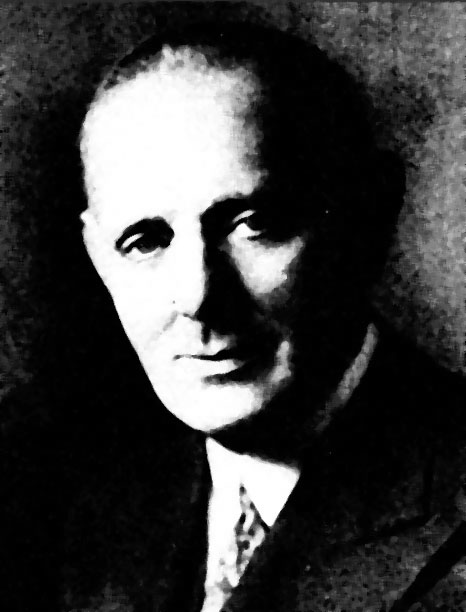
Posts on individual restaurants that garnered the most attention were, in descending order: Detroit’s London Chop House, New York’s Maxwell’s Plum, the Chicago-based John R. Thompson chain, the New York-based Schrafft’s, and Miami’s Wolfie’s. Judging from the number of hits, 2,238, I give the Chop House the award for the historic restaurant with the most loyal former patrons. The high level of interest in it inspired me to buy this photo of the Chop House’s well-dressed proprietor, Lester Gruber, taken in February 1974 shortly after he learned his restaurant had won its fourth Holiday Magazine Dining Distinction Award.

As for posts on more general, cross-decades subjects, number one focused on bloomers as waitress costumes, followed by “Birth of the theme restaurant” in which I discover the source in 19th-century Paris cabarets. I am pleased that interest in Afro-Americans and restaurants remains strong, with a goodly number of hits being registered on the topics of discrimination, fighting for rights, the role of black women, and Afro-American tea rooms.

Shortly after I began the blog a friend asked if I was afraid I’d run out of topics. I am happy to report that my to-do list remains as long as ever. I think of new topics every day. My desk is a flurry of notes that say things such as Coca-Cola, mob restaurants, interior designers, and Repeal.

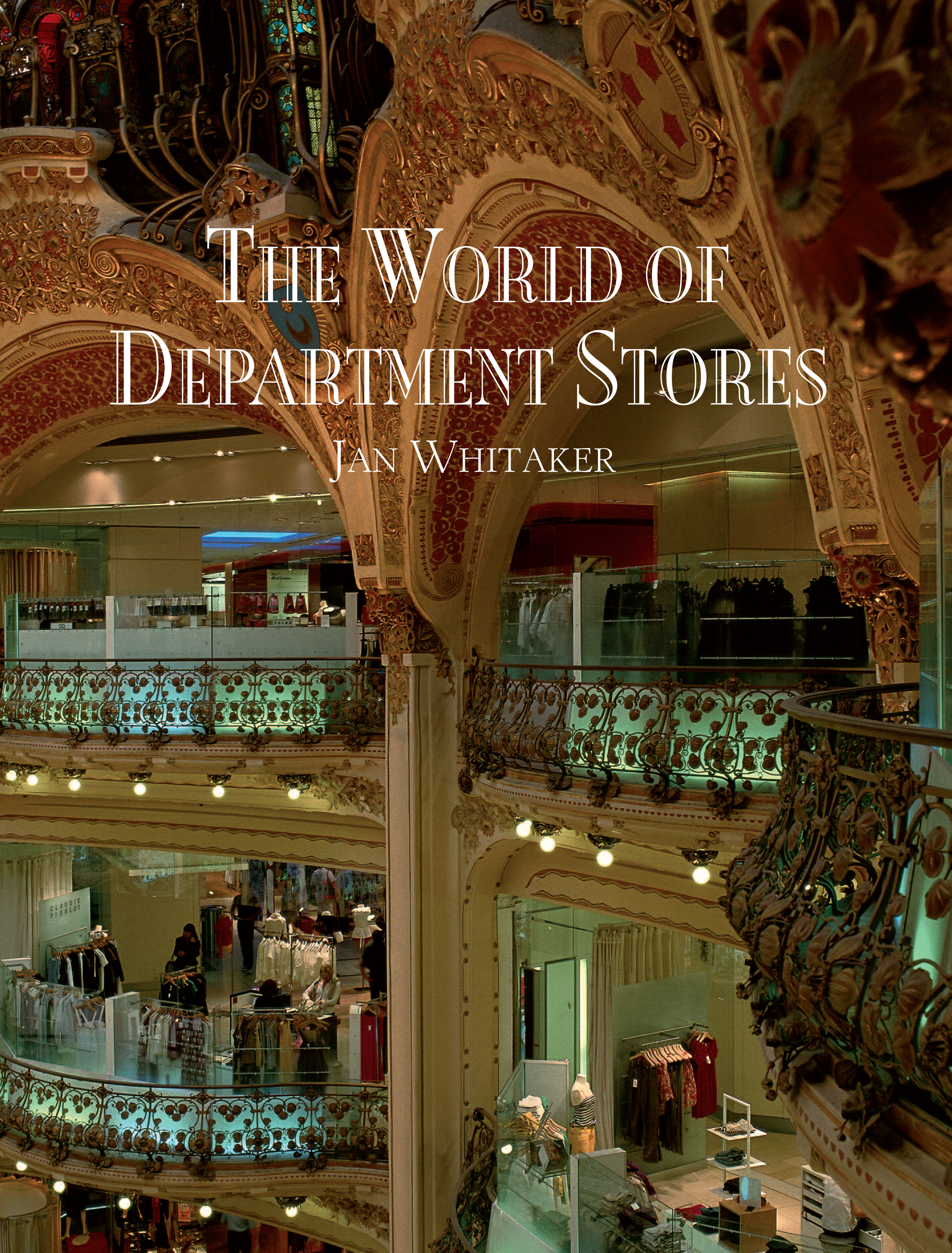
Another year has passed and I am still ambivalent about doing a book, mainly because I’m plagued by two highly related questions: 1) whether I could get a contract with a good publisher,  and 2) how well it would sell. Meanwhile I have published a second, extravagantly illustrated book on department stores, The World of Department Stores. It does have some restaurants in it.

Best wishes to all for 2012!

14 Comments

Filed under miscellaneous

Famous in its day: Reeves Bakery, Restaurant, Coffee Shop

The renowned Reeves of Washington, D.C. was a many splendored thing. So much so that for lack of space I had to leave out its other historical identities as Grocery Store, Tea Room, Confectionery, and Soda Fountain. Though called a restaurant, it was really a lunch room of the bakery/confectionery type which closed for the evening.

Over its eleven decades in business the homely eating place expanded, changed focus, remodeled, went through three generations of Reeveses plus two or three other owners, burned, rebuilt, closed and disappeared for a few years, reopened at a new location, and through it all managed to build and hold onto an army of loyal followers who still miss it four years after it closed for good in 2007.

How old was it when it closed? I figure it had been 112 years since its founding as a grocery store by Sewell A. Reeves in 1895. Although the restaurant itself as well as newspaper stories usually dated Reeves’s beginnings to 1886, I have found no evidence for that. In 1887, and up to at least 1892, the 1209 F Street site was occupied by G. E. Kennedy’s grocery store, while Sewell Reeves was identified in city directories as a clerk for other businesses. But whatever … Reeves was D.C.’s oldest surviving restaurant when it closed. According to a 1989 column by restaurant reviewer Phyllis Richman, its nearest competitor for longevity was Napoleon’s, established in 1925.

During its first three years of existence, Reeves expanded his grocery store by adding coffee roasting and candy making operations, a bakery, and a lunch counter which at first seated only 12 people. By 1902 he had enlarged the building with the bakery and candy departments occupying the second and third floors and the lunch counter lengthened to seat 150. At Sewell’s death in 1941 his son Algernon, who had managed the business since 1916, took ownership.

After Algernon died the business was sold in 1966 by his son John to the Abraham brothers who remodeled the premises and successfully broadened the clientele from its traditional feminine base which had largely deserted F Street stores in favor of suburban shopping centers. The middle and late 1960s, characterized by racial unrest and downtown desolation, marked a low point for Reeves, and it would not have been at all surprising if had met its end around 1970 – but in fact it still had close to 40 years of life left in it.

Reeves remained the kind of comforting eating place known for waitresses with long tenure and a menu untouched by the latest food fashions. Affordably priced dishes such as chicken salad sandwiches and pie, especially strawberry pie, were dependable favorites.

Reeves went through the 1970s with its somewhat dowdy appearance intact. High ceilings were equipped with fans and brass chandeliers, while Tiffany lamps hung over the 100-foot dark cherry counter. [pictured] Then, in 1984, a disastrous fire destroyed the interior. When Reeves reopened in 1985 it had an entirely new look, with blond counters, exposed brick walls, and a dropped ceiling effect with recessed lighting. The old booths were gone, replaced with more comfortable ones padded in dull maroon. Of the original fixtures only the wooden counter stools remained.

Customers had barely adjusted to the modernization when the next blow came in 1988 when the property was sold for $7 million to a developer planning an office building. But Reeves wasn’t finished yet. In 1992 the restaurant’s former general manager reopened it barely a block away on G Street, rehiring much of the old staff and for the next 15 years turning out thousands more strawberry pies.

I have no doubt that even now the occasional visitor can be found on F or G streets looking for Reeves.

© Jan Whitaker, 2011

33 Comments

Filed under confectionery restaurants, popular restaurants