Category Archives: food

Take your Valentine to dinner

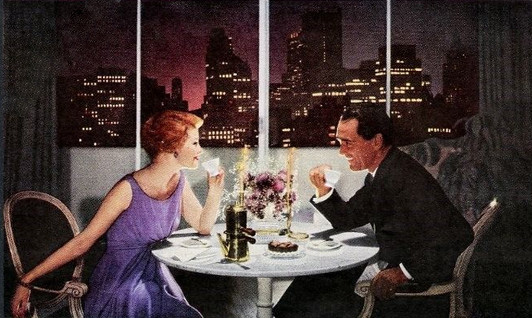
Dinner in a romantic restaurant is a popular way to celebrate Valentine’s Day. But that would have been far from true in the nineteenth century when going to what was known as a romantic restaurant meant something entirely different. Something disreputable.

It took decades before a romantic restaurant dinner became part of an evening primarily meant to please the woman rather than the man.

As late as the 1920s young single women had to guard their reputations closely when they went out in public, especially in restaurants in the evening. Emily Post advised in 1923 that “It is not good form for an engaged couple to dine together in a restaurant, but it is all right for them to lunch, or have afternoon tea . . . They should take a chaperon if they motor to road-houses for meals.”
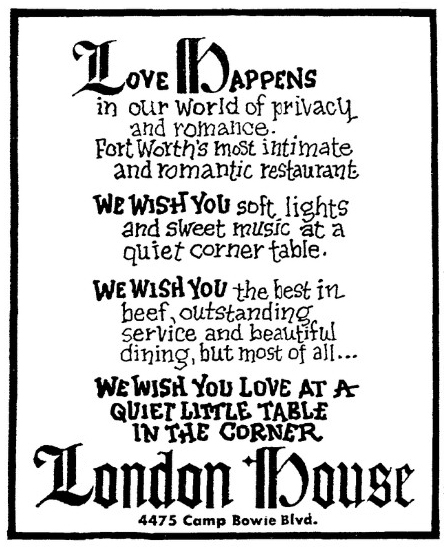
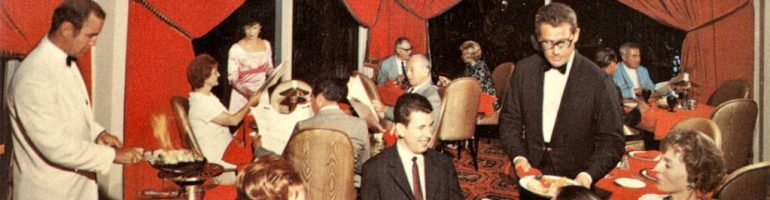
Things loosened up not long after Emily’s edict, and celebrations in romantic restaurants increased in the 1960s. Yet it wasn’t until the 1970s that the typical Valentine’s Day restaurant experience we know today with its wine, candlelight, and soft music became popular. [see London House, Fort Worth TX, 1971] In the late 1970s and 1980s February ads for candlelit dinners “for lovers only” appeared frequently.

But earlier, when many married women were primarily homemakers, it was enough just to get a night off from cooking, even if the destination restaurant was nothing more than a cafeteria or a drive-in. How odd now to see a 1930s advertisement saying, Take Your Valentine to Dinner at Mrs. Adkins’, a cafeteria where “we never embarrass your pocketbook!” What? no service, no splurging, no Champagne, no tableside theatrics?

Even that pedestrian cafeteria meal was a celebration of sorts then. Being taken out for a Valentine’s dinner was still fairly unusual in the 1940s and 1950s. For many women, the day meant more cooking, not less. Newspaper food columns of the 1950s and even the 1960s gave the impression that mothers were expected to show love for their families by making special dinners for them.

But by the late 20th century, newspapers had changed their focus from family dinners at home to romantic couples-only dinners in restaurants. Even readers living in a city less blessed with romantic restaurants could find a hotel that filled the need. A writer in the Huntsville Times admitted that “the selection of truly romantic restaurants . . . is limited in Huntsville,” but at least there was a Radisson, or a Marriott offering a Sweetheart Dinner for Two consisting of Chateaubriand, Champagne, and Strawberries Romanoff.
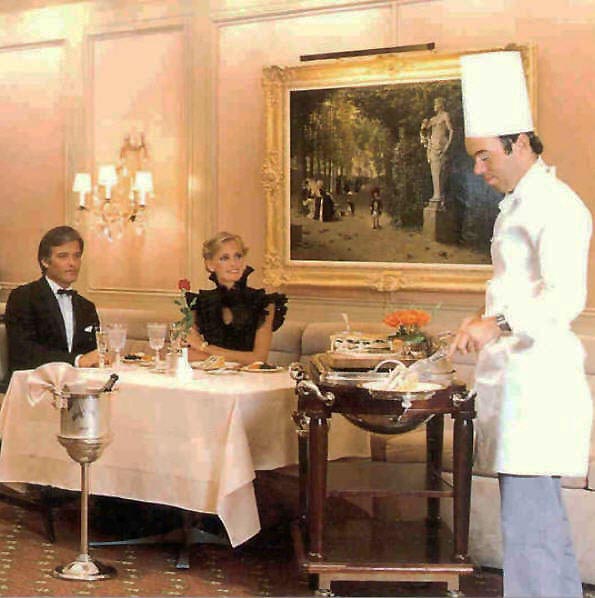
In 1979 a Cleveland journalist convinced his wife to travel with him all over the U.S. to verify the romantic value of ten of the country’s restaurants as recommended in an airline magazine. Several failed the test, but they were delighted with Maxim’s de Paris in Chicago, with its “beautiful wall sconces and tiny, rose-colored table lamps, all imported from Paris, and gold service plates that were originally designed for Sarah Bernhardt.” They ate Rack of Lamb that “looked like a picture from a gourmet magazine.”

Guess what kind of food was deemed most romantic – at least by those newspaper food writers who assembled lists of best places to celebrate the day? It certainly wasn’t beef stew or mixed vegetables. Better to be served something sauced, stuffed, or puffed. Many restaurants, in fact, stuck to the old standbys, steak and prime rib, but they didn’t score as high on the romance scale as did those purveying food with French names. Ah, bisque, terrine of lobster, pommes duchesse, tournedos de beef, and Grand Marnier soufflé!

Champagne and long-stemmed roses aside, could it be that the ladies especially enjoyed that their dinners had been fretted and fussed over by male chefs?

© Jan Whitaker, 2019

7 Comments

Filed under atmosphere, food, restaurant customs, women

Lunching at the dime store

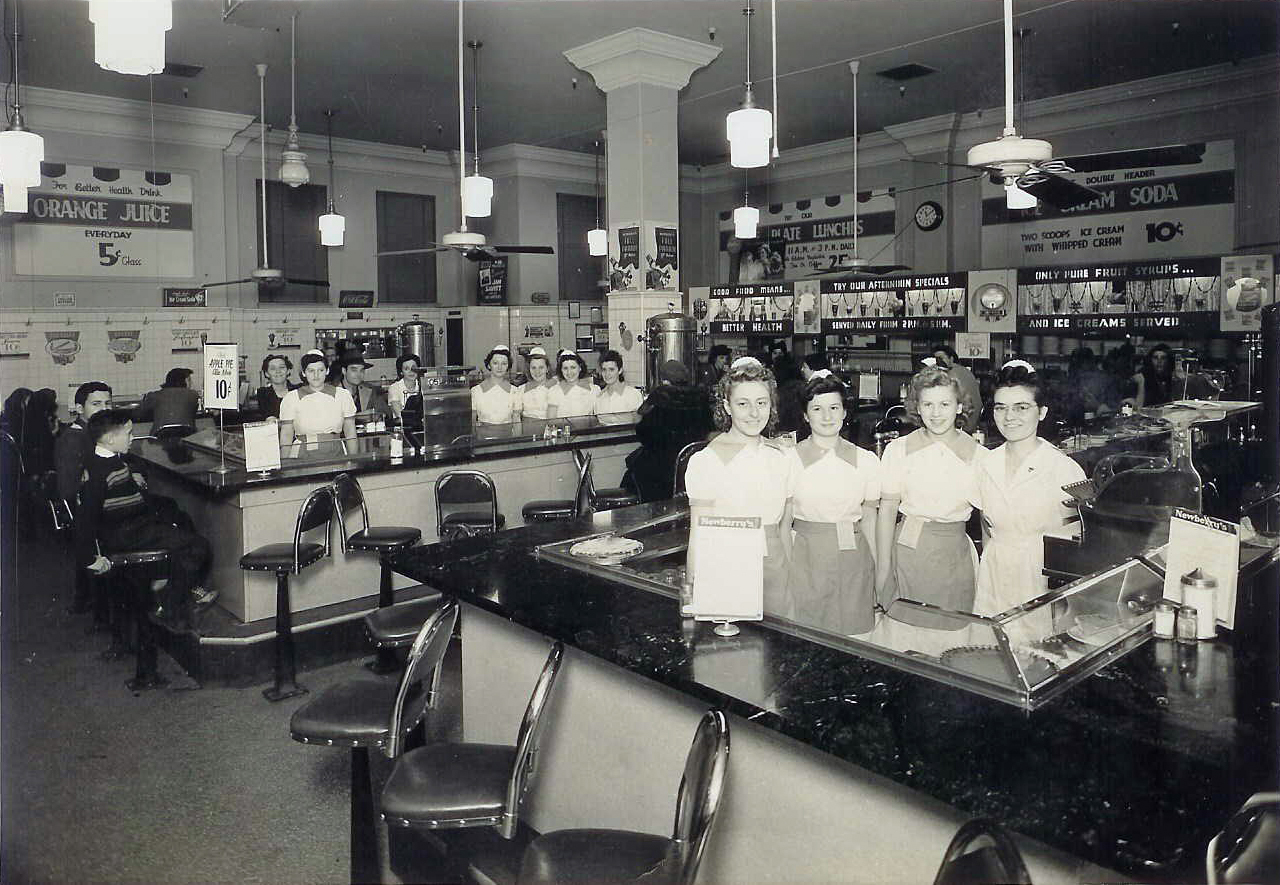
Waves of nostalgia about lunch counter menus, low prices, friendly waitresses, and non-pretentious hospitality surged when dime stores began closing their counters in the 1970s and 1980s. [photo ca. 1930]

Nostalgia was mostly confined to former patrons who were white and not involved in the 1960s protests to integrate variety store lunch counters. In fact, some black activists still had criminal records on the books for participating in sit-ins.

It isn’t surprising that dime store lunch counters were chosen as sites of protest in 1960 and 1961 if you realize that they were among the top food service chains in the country then. A report from 1964 showed that F. W. Woolworth Co. and McDonald’s Systems, Inc. were neck and neck in the chain restaurant race. McDonald’s was ahead in sales with $114M while Woolworth was at $100M, but Woolworth dominated the landscape with 1,950 units across the country as compared to McDonald’s 611. And though not in the top ten, other dime store chains also had notable lunch counter sales, particularly Kresge, Grant, Newberry [shown below, 1940], and McCrory.


Dime store lunch counters dated back to the 1910s. The earliest lunch counters were probably the ones associated with the railroads, going back at least several decades into the 19th century. But dime stores added something new to their lunch counters – soda fountains — giving them wider appeal and the ability to attract customers between mealtimes.

Their installation involved significant capital investment. As dime store advertisements proclaimed, they were modern and sanitary. Through the first half of the 20th century, the stores constantly reminded the public that they were outfitted with the latest in modern gas and electric appliances for cooking, refrigeration, cleaning, and sterilization. [Kresge, Louisville, 1922]

When a new Woolworth store opened in Abilene TX in 1939, a lengthy story reported that “All utensils touched by food are of stainless, seamless steel.” Plus, it said, the food was kept at the correct temperatures at all times, dishes were washed and sterilized automatically, and the kitchen was lit by fluorescent fixtures.

I have no doubt that due to their expensive kitchen and counter equipment, dime store food service far exceeded the typical under-capitalized independent lunch room or restaurant of the same time in terms of sanitation.

Another modernizing feature was promoting women into lunch counter management. Although I’ve seen no numbers, Woolworth’s claimed that the majority of their lunch counters and bakeries had women managers. When a new Woolworth store opened in Butte MT in 1928, the opening of the lunch counter was under the supervision of a woman who managed a busy lunch counter in a Denver Woolworth store. This was surely a role not often played by women in the world of business then. She predicted that with 62 stools and quick service, the Butte store should easily be able to serve 1,000 persons at lunch.

Dime store lunch counters have been seen as early versions of fast food restaurants and to a degree this is true. They depended on fast delivery of food, high turnover of each counter stool, and price breaks for quantity buying. But there were also many ways in which they were not like the fast food chains that helped put them out of business.

Baking on the premises and selling baked goods in the store certainly set them apart from burger chains of the later 20th century.

So did using fresh produce and buying locally. When a new counter at the Newberry store was opened in Fremont OH in 1941, an advertisement stated, “Daily there arrives, fresh from the finest markets, a big assortment of garden vegetables and fruits; from the best local dairies come rich milk and cream and palate-tempting butter . . .” Local dairies and food purveyors often co-sponsored advertising when a new store was built or a new counter installed. A new Kresge store in St. Louis acknowledged its suppliers in 1919, “reliable firms, such as Freund Bakeries, Carpenter’s Ice Cream, Thomas L. Tierney Tea and Coffee Co., Sixth Street Grocery Co., Bentzen Commission Co., Harry E. Grafeman, Foerstel Bros. Meat Co., Herz-Oakes, Swift.”

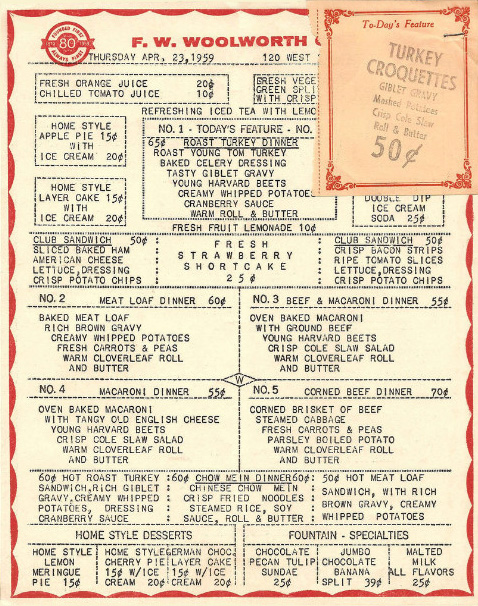
Their menus included sandwiches and desserts, but also substantial hot meals. A remodeled Kress store in Fort Worth TX announced its menus for April 1931 would include a number of 25c plate lunches such as Roast Chicken with Dressing, Cranberry Sauce, Creamed Potatoes, Buttered English Peas, Lettuce and Tomato Salad, Corn Sticks, Butter, and Rolls. There was also a vegetable plate with Mustard Greens, Creamed Potatoes, Buttered English Peas, Lettuce and Tomato Salad, Corn Sticks, Butter, and Rolls. [Woolworth menu, 1959 — click to enlarge]

Woolworth had a love affair with turkey, serving it on plate lunches throughout the year. The explanation, according to Karen Plunkett-Powell in Remembering Woolworth’s, was that the store bought up farm surpluses for good prices – whether vegetables, dairy products, or turkey. Turkey seemed to appear frequently at Kress and Kresge also.

As dime stores experienced declines in business, their lunch counters were often the first sign of cutbacks, with the last ones closing in the late 1990s. Among the mourners were older patrons who took part in informal lunch counter coffee clubs. [Northampton MA, 1990]

© Jan Whitaker, 2019

13 Comments

Filed under chain restaurants, food, lunch rooms, menus, popular restaurants, sanitation

Square meals

It’s likely that the term square meal originated in the restaurant culture of the California Gold Rush.

Most of the single men that were drawn to California then were temporary dwellers dependent on restaurants and hotels for their meals, so it is not surprising that “square meal” would first be applied to meals served in restaurants.

One of the earliest uses of the phrase I’ve found was in an advertisement for the What Cheer House in Marysville CA in 1858. The What Cheer said it offered three square meals a day for a moderate charge.

The term evidently was not known in the East. Most of the news about life in California was delivered by newspaper correspondents who wrote long stories about their experiences. One of those was J. Ross Browne, a frequent contributor to Harper’s magazine, who wrote in 1863 about a small shanty eatery called “The Howling Wilderness Saloon” that offered “a good square meal” for fifty cents. Browne explained that a square meal “is not, as may be supposed, a meal placed upon the table in the form of a solid cubic block; but a substantial repast of pork and beans, onions, cabbage, and other articles of sustenance that will serve to fill up the corners of a miner’s stomach.” [Above advertisement, California, 1861]

Other writers also felt it was necessary to explain to faraway readers what square meal meant. In the mid-1860s the term was often included in lists of colorful and unfamiliar Western slang such as shebang, grub, and muk-a-muk, plus sayings such as You bet, or Bet your bottom dollar.

By the end of the Civil War, the term had begun to spread across the country. A Union soldier from Wisconsin referred in summer of 1865 to enjoying his first square meal since joining the regiment. The reporter asked what he meant by that and he answered, “Four cups of coffee, all the ham I can eat, with bread, butter, pies, cakes, pickles and cheese . . .”

A few years later a restaurant in Memphis TN celebrated the opening of a new eating saloon where “A ‘square meal’ is served up smoking hot for fifty cents.”

What is most revealing about the slang term – suggesting what the mainstream American idea of a good meal was – is what did NOT qualify as a square meal.

For many diners, a meal in a Chinese restaurant did not qualify. Samuel Bowles, publisher of the esteemed Springfield (MA) Republican, who wrote of his travels to the West in 1865, explained that a square meal was “the common term for a first rate one.” He described a Chinese dinner he attended in San Francisco where the “the universal odor and flavor soon destroyed all appetite.” He was rescued from the situation by the chief of police who took him to an American restaurant where he enjoyed mutton chops, squab, fried potatoes, and a bottle of champagne.

Another New England paper ratified Bowles’ disdain for a Chinese dinner, stating, “An American generally has to go and get a ‘square meal’ after thus dining.” A possible reason for the rejection of Chinese food may lie in an editorial in 1872 in the New York Evening Post that referred to a political campaign amounting to a “dish of hotch-potch, instead of a square meal of honest viands.” In other words, people wanted chunks of meat [i.e., viands], not bits of food mixed together.

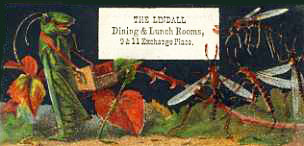
It was also clear that a square meal was not the same thing as a lunch. Back in 1858 the What Cheer House advised that in addition to three squares a day, regular diners there might also get “a lunch between meals, if they can keep on the right side of the Cook.” A lunch was regarded then almost as a snack. Boston’s Lindall “Dining & Lunch Rooms” had three departments, one “for the ‘regular square meals,’ one an oyster counter, and one “devoted to hot lunches of smaller orders of almost every dish.”

Guests from abroad were not always pleased with the squareness of American meals. The Londoner Walter Scott wrote in Our American Cousins (1883) about struggling with square meals in hotels where typically an enormous number of dishes of food were served, not in courses but all at once. As a waiter told another visitor, “What people want here is a good square meal; they are not particular about what they eat, if only they have a lot of things placed in front of them.” This style of service reportedly led to huge amounts of dumped food floating in the NY harbor.

In the 20th century some people began to mourn the loss of the good old pre-modern square meal – which was increasingly seen as the opposite of “fancy food.” A street reporter in Chicago in 1924 asked a woman whether she preferred home cooking to what was served in a “high class” restaurant and she answered that she preferred a good square meal with “fewer fancy frills.”

I think her answer would still resonate today, and I’d guess that many would say a diner was the best place to get a square meal.

© Jan Whitaker, 2019

9 Comments

Filed under food, restaurant customs

Tea rooms for students

College and high school students of the 20th century led many eating-out trends and customs. Not only did they help make certain foods popular, they also influenced meal habits and adopted frequent restaurant-going as part of their social lives.

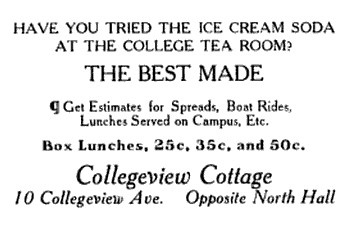
Drive-ins, coffee houses, and vegetarian restaurants were some of the types of eating places heavily shaped by student patrons in the middle and later decades of the last century. But a bit earlier, in the early 20th century, the eating places of choice for many college students were tea rooms that attracted women students. Not that men students didn’t also like tea rooms. An example was The Cactus Tea Room, built in 1917 with weird carvings of university types adorning its eaves, and serving both male and female students at the University of Texas in Austin.

Although tea rooms were more likely to be found near residential colleges, high school students also enjoyed them for after-school stops. In the 1920s students at Decatur High School in Decatur GA hung out at the Elite Tea Room, while Haverling High School students in Bath NY gravitated to the Chat-A-Wile Tea Room.

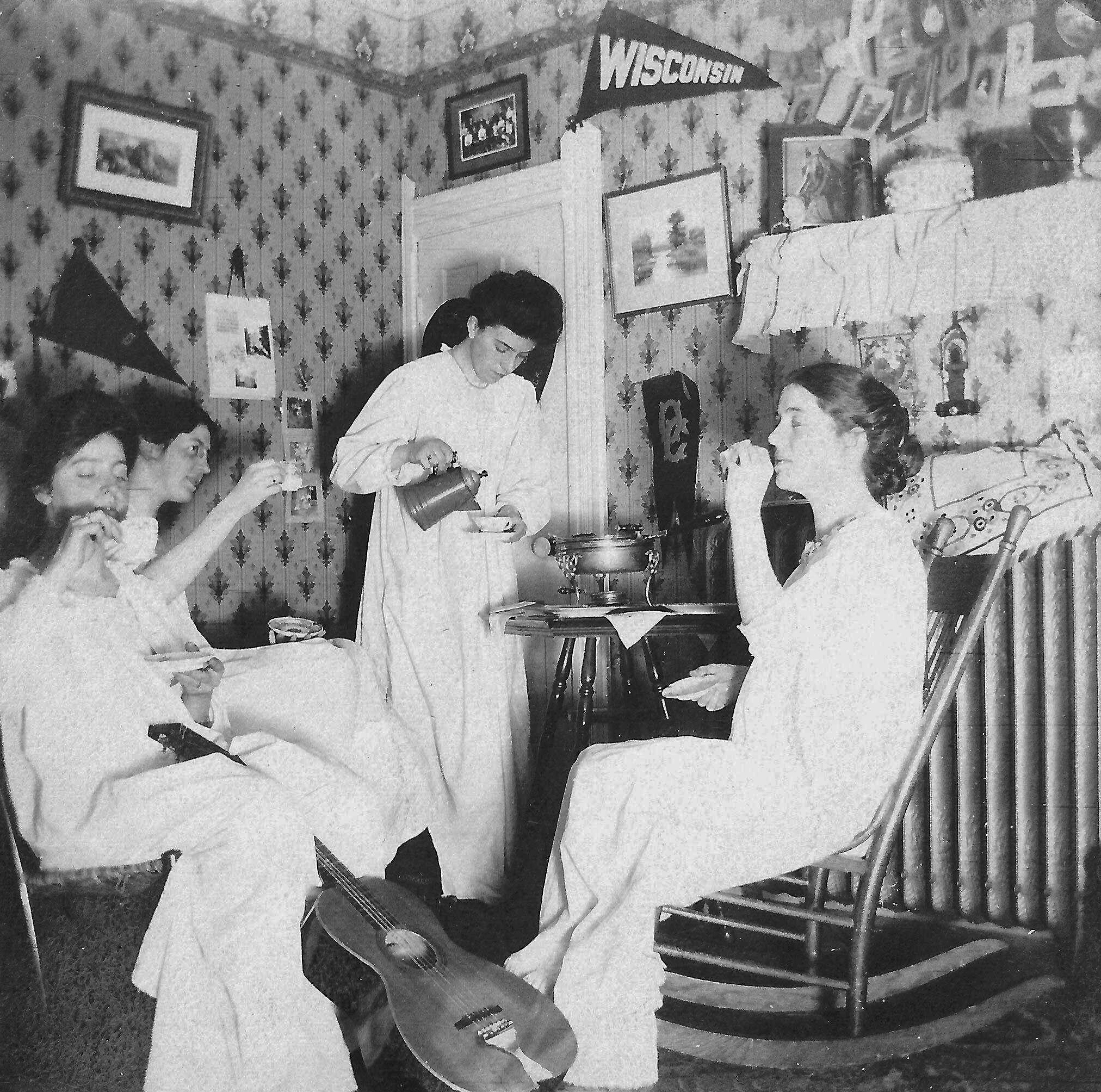
Rather than being stuffy and proper, many tea rooms that catered to students were relaxed and informal. They carried on college traditions such as midnight “spreads,” at which foods pilfered from the school’s dining halls were remade into chafing dish repasts. The feasts were occasions for casual attire, sprawling on the floor, and high spirits at the thought of evading detection while breaking college rules. [shown here is an Oberlin College dorm room spread, 1905]

Tea rooms also carried on the tradition of college dining clubs, which involved groups of friends joining together to hire a local woman to prepare their meals. The clubs adopted humorous names such as Vassar College’s Nine Nimble Nibblers, Grubbers, and Gobbling Goops of the late 19th century.

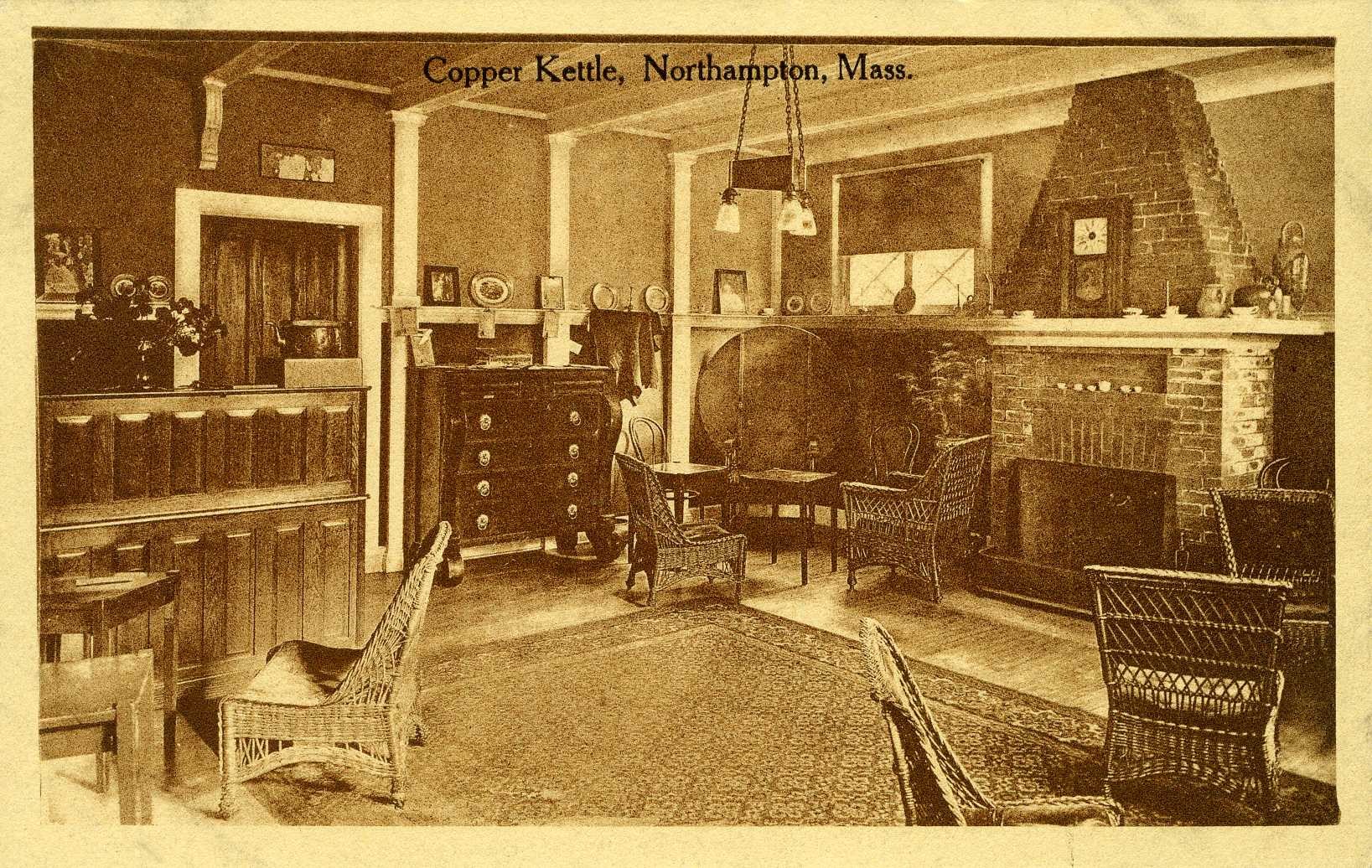
For example, a popular spot for students from Smith College was the Copper Kettle, which played a role much like the coffee shops of today. Students hung out there, read, chatted, and snacked on popcorn, ice cream, and tea. Its decor was cosy, shabby-chic style with mismatched furniture, wicker lounge chairs, posters, and window seats. Smith students were also enamored of the Rose Tree Inn, where full meals were served in a Bohemian atmosphere created by the intriguing Madame Anna de Naucaze.

Some colleges were almost surrounded by tea rooms. That was true in Western Massachusetts where both Smith College and Mount Holyoke College are located. Northampton, home of Smith College, was described in 1922 as having “more tea-houses than churches.” Not so far away, Mount Holyoke College was also well supplied with tea rooms, among them The Croysdale Inn, The Mary-Elin Tea Shop, and The Art Nook. I find it interesting that the Mary-Elin advertised in 1921 that it would stay open until 10 p.m., which was quite late for a tea room.

Parents did not always approve of their free-wheeling daughters’ behavior. In 1912, a mother wrote a critical article titled “One Disintegrant of Our Home Life,” about the typical college girl who socialized constantly, ignored rules of proper dress, and loved going to “the Green Coffee Pot or the Carnation Tea Urn.” “I tell my husband that college doesn’t breed home-building girls,” she wrote.

Among the most notable changes that tea rooms brought was simply that of providing a welcoming and friendly place for unescorted women to gather. This, of course, encouraged women and girls to spend more time eating away from home.

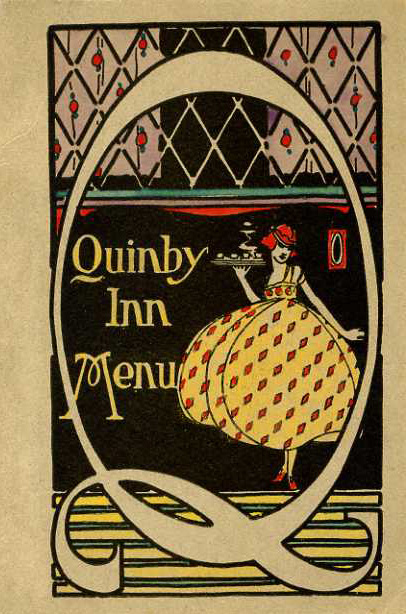
As for food, apart from popularizing eating cake and ice cream at any time of day or night, tea room food was a departure from typical lunch rooms and restaurants of the early 20th century that served fairly heavy meals based around meat. Although meat was certainly served in tea rooms, patrons also had many other choices. A 1920s menu from The Quinby Inn (shown above) — popular with students at Goucher College near Baltimore — offers Tenderloin Steak and Roast Pork, but also many other choices, with quite a few of them revealing the popularity of sweet food. Among them are 12 desserts, 22 salads, many of which involved mixed fruits and whipped cream, and 22 sandwiches, including Olive & Egg and Sliced Pineapple (no, not together!).

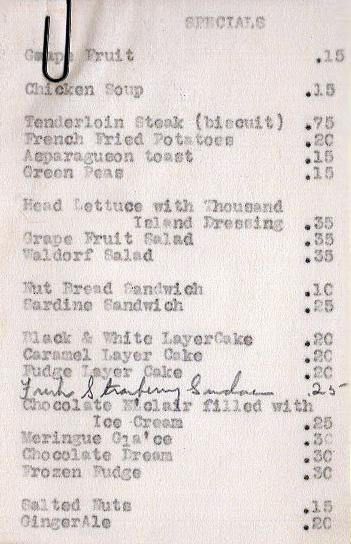
The list of specials clipped onto a 1920s menu from The Mary-Elin Tea Shop near Mount Holyoke College also shows its patrons’ fondness for sweets [thanks to Donna Albino for scans of the menu from her Mount Holyoke College collection].

A number of college women opened tea rooms of their own either as a summer project or after graduation. But that will be another post.

© Jan Whitaker, 2019

4 Comments

Filed under alternative restaurants, food, menus, patrons, restaurant customs, restaurant fads, tea shops, women

Basic fare: meat & potatoes

Meat and potatoes were so characteristic of eating places in the 19th century we could call it the Meat and Potatoes Century. But of course that title could apply to most of the 20th century as well.

In 1829, the Plate House, a cheap New York City eating hall, offered steaks with potatoes by the dish and half dish, 4 cents for the latter.

Chop houses of the 19th century were also based on meat and potatoes. They could be considered forerunners of today’s steakhouses, with their dark interiors, male patrons, and baked potatoes as accompaniments to meat. One difference, though, was that in the 1800s patrons were as likely to order mutton as beef.

The chop house was regarded as an antiquated type of eating place in 1873 when a journalist wrote that Farrish’s and others were “sought out by Britishers who like places off the beaten track and humble, dark and without glitter.” Old fashioned or not, it was still loved for its “mealy” baked potatoes, probably even in the 1930s when this postcard was produced.

Little surprise that “meat and potatoes” became a metaphor for no-frills reliability. To call someone a meat-and-potatoes “man” – always a man — was more than a commentary on his diet; it also meant he was a regular guy. Similarly for a meat-and-potatoes town. As Chicago columnist Bob Greene would put it in 1983, as the world capital of meat and potatoes, his hometown was “tough, brawling, no-nonsense, rugged.”

The metaphor – that came into use after World War II — could extend to almost anything. Business success relied upon sure-thing “meat and potatoes” products and services. For Gloucester MA, odd as it sounds, the town’s meat-and-potatoes industry was ground fish. For a symphony orchestra their meat and potatoes might be a popular Beethoven sonata.

Nineteenth-century restaurants featured potatoes either mashed, boiled, baked, stewed, fried, Lyonnaise, scalloped, mousseline, or au gratin. In the 20th century the choices tended to narrow down to mashed, baked, and French fried. Meat meant mostly beef in the 19th, but extended to chicken in the 20th.

In 1885 it was standard for potatoes to come free with a meat order. As noted then, “An unordered boiled potato, with the skin on, is the second grand characteristic of an American dining saloon. It matters not what meal it is, the boiled potato will always appear, if the establishment is truly legitimate.”

But this “legitimate” entitlement was about to end. Where would fast food restaurants be today if they didn’t charge extra for French fries? As far back as the early 20th century, restaurant operators realized there was additional profit to be made by charging separately for potatoes.

In the 1950s and 1960s, fast food burger chains, hotel rib rooms, and chain and independent steakhouses began to proliferate. Steakhouses proved popular with lunching business men while families chose economy cuts at Bonanza or Ponderosa. “Advances” took place, such as foil wrappings that allowed the potatoes to remain under infra-red lamps longer without drying out. By the early 1960s sour cream and chives were considered essential additions to baked potatoes. By that time, the favorite All-American meal was shrimp cocktail, followed by steak, baked potato with sour cream, an iceberg lettuce salad thickly coated with Thousand Island dressing, and cheesecake for dessert.

In 1971 a Gallup survey measuring the popularity of “international cuisine” confirmed the timidity of most American palates. The strangest aspect of the survey were the dishes Gallup offered up as international. Among them were Beef Stroganoff (ranked highest), Swedish Meat Balls, Lasagne, Veal Parmigiana, Chili Con Carne, and Hungarian Goulash. A full 10% of respondents found nothing among the 22 selections that they liked.

Nevertheless . . . around the late 1970s the whole meat-and-potatoes dining complex began to be questioned. Increasingly it ran against new notions of health and fitness. The cholesterol, the heaviness! Also, it was such a limited diet. Did its fans have no interest in other cuisines? Meat-and-potato towns – Chicago, Cleveland, Kansas City, St. Louis, Denver, Fort Worth – were shamed and ridiculed even though, occasionally, someone admitted there were plenty of steakhouses on the coasts too — New York, San Francisco, even New Orleans.

In the next phase, not surprisingly, many meat-and-potatoes towns struggled to refurbish their reputations by boasting of restaurants of all kinds. Omaha touted its seafood, Japanese, Korean, and French restaurants. Minneapolis was still conservative, wrote Jeremy Iggers and Karin Winegar in John Mariani’s 1986 Coast to Coast Dining Guide, yet they identified seventeen Vietnamese restaurants, three Thai, two Ethiopian and many other nationalities represented as well, along with examples of “yuppies” taking fresh approaches to American cuisine.

Plus, pizza had actually become the new meat and potatoes.

How are steakhouses doing today? Although there are still many around and some Americans nurture a wish to return to the 1950s, I’m guessing that it’s unlikely the golden years of the steakhouse will return. Burgers and fries, too, may have seen their better days.

© Jan Whitaker, 2018

10 Comments

Filed under chain restaurants, food, patrons, popular restaurants

Dining with Chiang Yee in Boston

Chiang Yee was a travel writer, born in China but a resident of London since 1933. In 1953 he came to the U. S. to research his book The Silent Traveller in Boston (1959). In 1955 he immigrated to the U.S. and taught at Columbia University for 16 years.

While in London he had published 21 books, many of them which he illustrated with paintings and drawings. Some were about travel but all of them interpreted aspects of Chinese culture for non-Chinese readers, reflecting upon similarities and differences with Western culture. In the travel books, for which he adopted the persona of Silent Traveller, he avoided political criticism and controversy while presenting himself as a serene, meditative man who walked slowly, looked closely, and enjoyed the simple pleasures of life.

Of course his visit to Boston involved quite a few restaurants, including a number of well-known places. He made influential friends — intellectuals and cultural elites — who took him to clubs and fine restaurants such as the Parker House, Locke-Ober, and the hidden-away 9 Knox Street, then run by two men in their antique-filled home at that address.
He went to popular spots such as Durgin-Park, Purcell’s, Jimmy’s Harborside, and Union Oyster House where he made a drawing of himself with a lobster and bib [shown above]. He was eager to sample local dishes such as cod, baked beans, and clam chowder. He never criticized the restaurants he patronized, though he admitted he was not fond of raw seafood.

A darker and far less serene Chiang Yee was revealed in 2010 with the publication of Chiang Yee: The Silent Traveller from the East – A Cultural Biography. Its author, Da Zheng, examined Chiang’s correspondence and interviewed friends and family, painting a complex portrait of his subject. In the Foreword, Arthur Danto reminded readers that “the Silent Traveller itself is a mask he wore that enabled him to survive under skies very different from those under which he was born.” Danto related that after visiting China in 1975, Chiang proclaimed to a group of friends, “Nobody knows who I am!! Nobody! I am a REVOLUTIONARY!!!!.”

Chiang had left his wife and four children behind when he went to London at age 30, confessing to his closest associates that his marriage was unhappy. Born into a wealthy family, he was trained in the classical arts as well as science which he studied in college. He had been a magistrate in China but in the West he built his career around Chinese art and high culture.

According to Da Zheng, when one of his sons immigrated to the U.S. in 1960, Chiang advised him to expect hardships and to be forbearing. His son observed that his father’s New York apartment was filled with signs saying “Forbearance,” suggesting that his father had much need of his own advice.

Chiang Yee told his son to stay away from Chinatown or he might end up running a restaurant there, advice he had earlier given his older son in London. Given the prejudice against Chinese in the U.S. and England – of which he was strongly critical — Chiang told them it was wise to cultivate relationships with non-Chinese.

In the light of revelations in his biography of Chiang’s strong feelings about politics, society, and the vicissitudes of his own life, I interpreted some of his words in a different light than on my first reading of The Silent Traveller in Boston. It is interesting how suggestive his stories of restaurants are in particular.

Although he admired Chinatown residents’ determination and drive, he did not share their language or cultural background. He showed some irritation that his non-Chinese friends and acquaintances in Boston expected him to be an expert on American Chinese restaurants. He wrote that a Frenchman would not “be asked to suggest which French restaurant in Boston is the best as I was asked to do in the case of Chinese restaurants almost as soon as I had arrived in the city.”

He also told of experiencing his first clam chowder in San Francisco but being greeted with silence when he told his Boston friends about this. At first he did not realize why, but later, when they asked if he thought food in Chinatown restaurants was genuine, he reminded them of their reaction to his story of eating Boston clam chowder in San Francisco. I now see this as a kind of mild dig at them, a subtle reminder that the food of American Chinatowns was as foreign to him as it was to them.

I also find it interesting that he tells of a dinner with the family of Harvard professor Yang Lien-sheng at the Old Wright Tavern. He was pleased that the waitress complimented the good behavior of the Yangs’ 5-year old son, but also wrote, “Neither the manageress nor the waitress bothered to tell us the history of the inn . . . Perhaps the people of the Wright Tavern had no time to spare from catering. Or they took for granted our knowledge of Concord history.” I suspect that he felt they had been slighted.

He must have experienced numerous “microaggressions.” Surely experiences such as the one he related about Durgin Park accounted for at least some of his Forbearance signs. Given a huge plate of food that he could not finish, a waitress addressing him as “young man” (he was 53), loudly commented, “Can’t you finish your plateful? If you can’t you should not have come here to waste your money; if you don’t like the food, we want to know why. We don’t like people who don’t like our food.” He said that when she laughed he realized she was joking, but admitted to feeling embarrassed. I’m certain that he knew that the “joke” contained a jibe about his being a foreigner.

It is a shame he had to travel silently and could not be as frank about his estimations of American culture as the Soviet authors of Little Golden America.

© Jan Whitaker, 2018

5 Comments

Filed under food, patrons, popular restaurants

Picturing restaurant food

Restaurants have long tempted the public with displays of food, but in the 20th century it became possible to replace actual food with images of desirable dishes on colored postcards and illustrated menus.

Color photochrome postcards became standard after WWII, yet it wasn’t until the 1970s and 1980s that menus illustrated with full-color photographic images of food came into common usage.

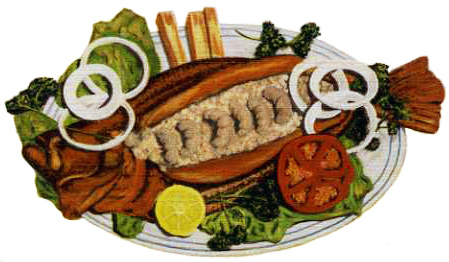
In the 1930s and early 1940s, before photochrome postcards came into widespread production, linen-finish postcards were the norm. Their cartoonish coloring often lacked realism. For example, the grayish shrimp topping stuffed flounder at Manuel’s in Galveston TX look distressingly like worms.

Even as quality photography and printing became more available in the 1950s, restaurants weren’t always successful in portraying food attractively. Professional food stylists had yet to arrive on the scene to solve problems such as poor plating, monochromatic food combinations, and runny gravies.

Regarding poor plating, a large portion is all very fine but should an order of meat or fried fish be bigger than the plate?

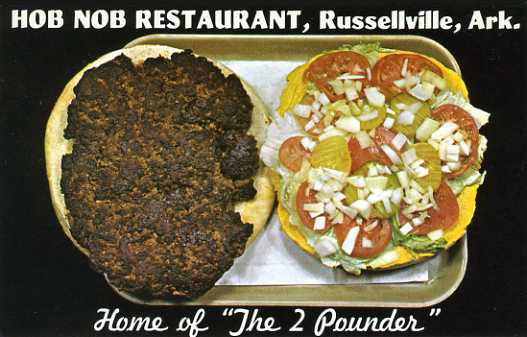
Gargantuan food itself can be questionable, not only to consume but also to look at. How attractive are french fries almost as big as baked potatoes? Is a two-pound burger eight times better looking than a quarter pounder?

On menus, photos of food play multiple roles, providing information about “exotic” dishes, invoking desire, and steering choices. In the case of restaurants whose dishes – or drinks in the case of Polynesian theme restaurants — might be unfamiliar to some patrons, pictures serve as visual description.

As far back as the 1930s, some restaurants used illustrated menus but with images that appeared to be hand drawn and colored and almost comical compared to the realistic photographs that dominated chain restaurant menus by the 1980s. Full-color, laminated menus are most often found in 24-hour coffee-shop restaurants and present all the meals and dishes that are available; breakfast, lunch, and dinner often have no clear demarcation.

Laminated menus cost more to produce than others yet are relatively long-lasting because they can be wiped off — though, as often noted, rarely are. Their lifespan is about 3 to 6 months, after which prices and dishes need updating.

Unlike Indian, Chinese, or Mexican restaurants (especially in the years when they were new to many diners), dishes found on illustrated menus of chain restaurants – such as bacon and eggs, pancakes, or burgers — are not the least bit unfamiliar. Quite the opposite.

Which seems to raise the question of why such ordinary food needs to be illustrated at all.

Not too surprisingly the main role of photos is to encourage customers to order the restaurant’s more profitable dishes. It’s always possible to order a single pancake or fried egg, but it is certain that what will be pictured is instead a stack of three pancakes or two eggs with sausage or bacon.

Featured dishes are positioned to follow the paths typically taken by customers’ eyes. Prized locations include the menu’s center and top right. Another tactic, one that turns the whole menu into an eye-catching circus, is to place featured dishes inside brightly colored boxes.

As for dishes that don’t get top billing, a Denny’s advertising director observed that a hopelessly slow seller like a grilled cheese sandwich would be line-listed, no photograph. On a 1970 Tops Big Boy menu [shown here], beef and shrimp achieved center feature status but ham and fish dinners failed to make the cut, languishing in a line-list.

I am still left wondering why many dishes on illustrated menus look so unattractive, especially considering that the menus are often produced after extensive research and consultation with experts. On a three-panel 1985 Friendly’s menu a “100% Sirloin Steak Burger” looms over the center column at a scale larger than other features such as a Clamboat Platter and a Seafood Salad Plate, yet it utterly fails to project charisma.

Contrary to wished-for results, many diners view laminated, illustrated menus as a signal that a restaurant’s offerings are going to be bland and uninteresting. An Orlando FL restaurant reviewer complained in 1988 that many restaurants there used laminated menus: “It seems that no matter what type of restaurant I go to, or how much is charged for the average meal, the menu is plastic coated. It reminds me of the people who buy really nice furniture and then cover it in plastic.”

Illustrated menus have become so strongly associated with mediocre food that it is a huge mistake for an establishment aiming for the fine-dining category to use such a menu, even temporarily. But, believe it or not, such a restaurant existed in Phoenix AZ in 1983, with expensive entrees pictured in shiny plastic while the wine list was calligraphied and covered in velvet.

© Jan Whitaker, 2018

8 Comments

Filed under chain restaurants, food, menus, restaurant customs

Delicatessing at the Delirama

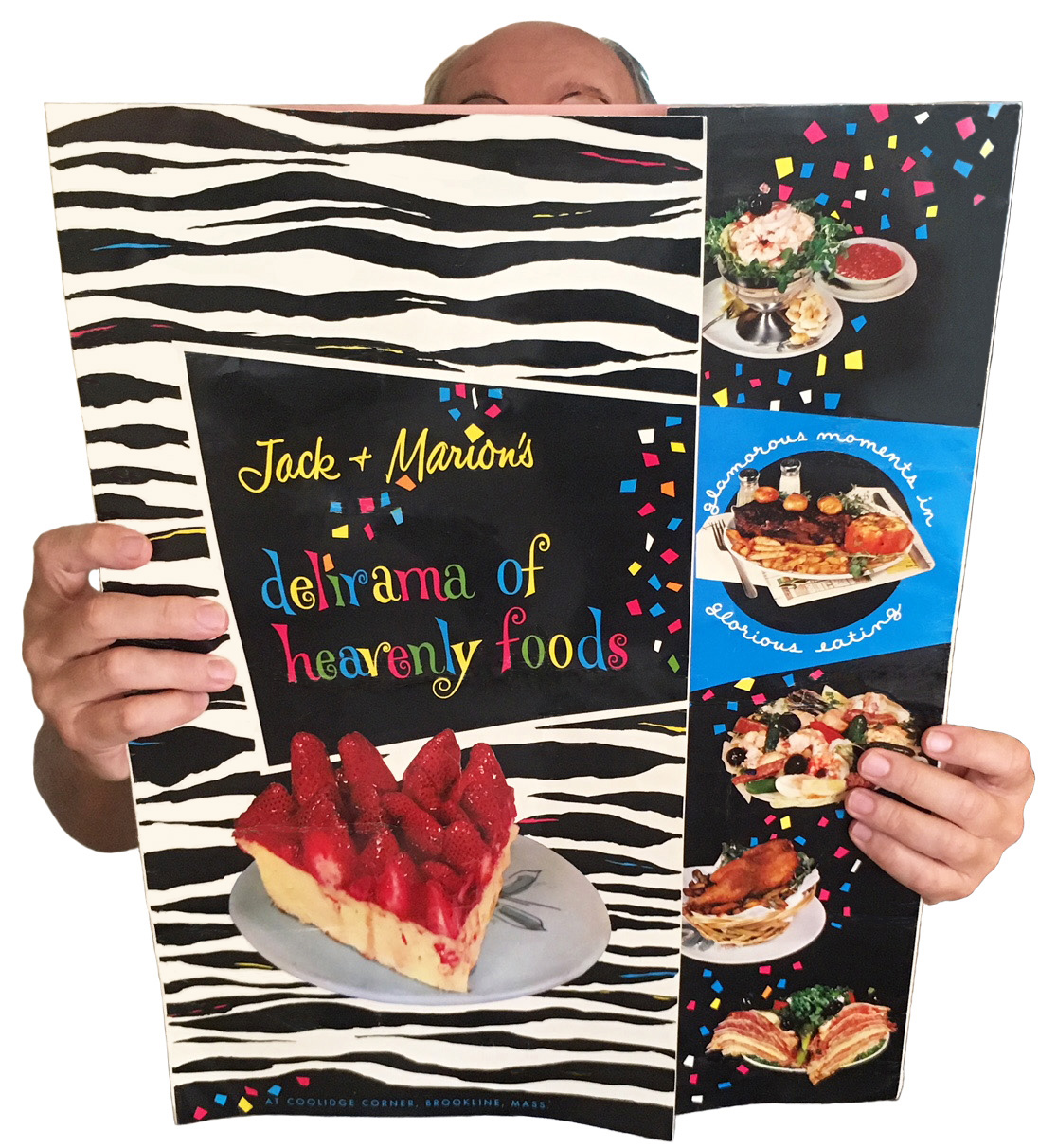
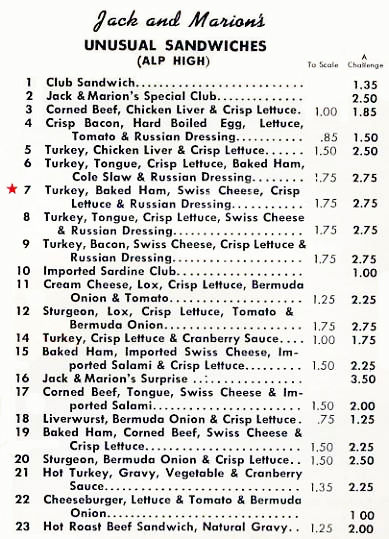
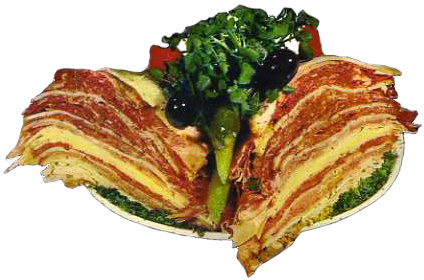
The gigantically oversized menu shown here from Jack & Marion’s Delirama in Brookline MA is 21.5 inches tall, 34 inches wide fully opened, and contains over 230 items not counting drinks, desserts, or carry-out Delicacy Platters.

Digesting its pink and white interior is a dizzying, yet entertaining, exercise. Some items, such as the Hot Roumanian Pastromi Sandwich, are marked with a red star indicating “good profit item for Jack and Marion’s (Please order).” The Empire State Skyscraper Sandwich comes with a warning “Sissies, Please Don’t Order!” There is a “Jewish Dictionary” that explains that a “Zedeh” is “a grandchild’s press agent” while “Mein Bubbe’s Tahm” means “chopped herring at Jack’s and Marion’s.”

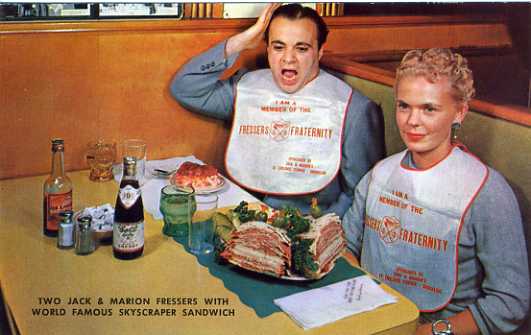
Patrons might join the “Fressers Fraternity” if they cared to admit that they had gluttonous appetites.

Hungry patrons could feast on bowls of sour cream with banana, fresh vegetables, or cottage cheese. Or on “Forshpies (before getting serious . . . a treat!”), in other words appetizers ranging from a dish of Sweet Gherkins (.35) to Chopped Herring (.65) or a Jumbo Shrimp Cocktail (.95). Along with shrimp, the deli also served non-kosher dishes such as Canadian Bacon Steak and Lobster Surprise, one of the most expensive choices at $5.95. Parties of six could feast on a $25 “Sandwich Supreme, served on a sterling silver platter (which remains our property.)” Like delis generally, sandwiches formed the bulk of menu offerings.

The deli on Harvard Street in Brookline’s Coolidge Corner was owned by Jack and Marion Solomon who opened it in 1950, advertising themselves as “designers and builders of the famous Skyscraper Sandwiches.” Jack, who had previously operated a deli in Brighton, explained that he modeled the Delirama on the famous Raymond’s on Boston’s Washington Street. Raymond’s was a bargain store that used corny advertising by a fictitious Unkle Eph who coined the store’s slogan “Where U Bot the Hat.” Jack Solomon said he, much like Raymond’s, had “done everything to make this the most talked-about restaurant.”

For a number of years the deli kept late hours, staying open until 3 a.m. It drew celebrities doing shows in Boston, such as players from the musical revue Bagels and Yox, who performed songs in Yiddish and other languages. In the 1950s it was often mentioned in entertainment columns in Boston newspapers. It was also a popular place for college students and couples on dates.

Despite suffering two bad fires and having the safe stolen, the Delirama persisted. It did, however, eventually withdraw from the entertainment scene and begin to keep earlier hours. The business did not survive long after the death of Jack Solomon in 1971. Despite attempts by his second wife, Valda, to keep it going, it went bankrupt and closed around the mid-1970s.

© Jan Whitaker, 2018

9 Comments

Filed under food, menus, Offbeat places, popular restaurants, proprietors & careers

Dining on a dime

To celebrate my blog’s 10th anniversary, I’m looking at what a dime would buy in American restaurants of the 19th and 20th centuries.

It’s not too surprising that a meal could be bought for a dime through much of the 19th century. BUT, does that mean that a restaurant meal was much cheaper then than today?

Not necessarily. For example, compare the situation of unskilled laborers in 1869 and now.

In New York City in 1869, when the average hourly wage for an unskilled laborer was about 15 cents, a meal of meat or fish with two slices of bread and a potato could be had for 10 cents. Adding pie, the bill came to 15 cents. A laborer had to work one hour to pay for this meal. And, any restaurant with prices this low – most were more expensive – was almost certainly dirty and smelly.

Today, by contrast, the U.S. Bureau of Labor Statistics reports that $16.60 is the median hourly wage for an unskilled construction worker, meaning half of workers surveyed make less than that and half make more. Using this as a typical wage, we also have to consider that various taxes are taken out resulting in a smaller net amount, something that was not the case in1869. Subtracting $5.00 gives a net wage of $11.60. At McDonald’s a regular hamburger costs .95, but let’s make it a double for $1.89; small fries are $2.09, and an apple pie is $1.14. The total comes to $5.12. So a laborer has to work less than one-half hour to pay for what is probably a more substantial meal than in 1869. And – this is not intended as an advertisement for McDonald’s — the restaurant is undoubtedly cleaner.

Before Prohibition cheap restaurants had a hard time competing with saloons’ free lunches in many parts of the country. According to research on urban working-class saloons (Jon M. Kingsdale, American Quarterly, October 1973), along a 4-mile section of a major street in Chicago in the 1890s there were 115 saloons with free lunches, but only five 10-cent restaurants and twenty five charging 20 to 35 cents. Brewers bought food cheaply in large quantities and furnished it to saloons at cost.

Not surprisingly, it became harder to find 10-cent meals, or even single dishes, in 20th-century restaurants. And, of course, even in the Depression people who had jobs made more per hour than they did in the 19th century, making a 10-cent sandwich, for example, a better deal.

But in the 1970s it was basically impossible to find anything on a menu for ten cents. (But, keeping in mind the McDonald’s example above, it was possible to find something in a restaurant that cost no more than one hour’s wages.)

Here are some samples of what you could get for a dime in American eating places over the years:

1854 A New York City temperance restaurant tried to lure patrons away from strong drink with plates of meat for 10 cents, as well as tea, coffee, and cocoa for 3 cents a cup. Since a typical laborer’s wage was even lower then than in 1869, this was a bargain only in the sense that prices were higher in most other restaurants.

1869 In contrast to New York City, a workman could do pretty well in San Francisco, according to one newspaper account that asked, “Where else in the world can a man sit down to green-turtle steak, bread and butter, celery, sauces, etc., . . . with but ten cents in his pocket? A very popular cheap eatery was in the What Cheer House which served over 1,000 patrons a day in dining rooms crowded with people waiting to grab a vacated seat. On average, workers in California made 60% more than New Yorkers, about $2.00 a day.

1884 At the Novelty Lunch Room in Grand Rapids MI a hungry worker could get Hot Griddle Cakes and Maple Syrup or Pork and Beans for 10 cents. A nickel more bought pie or cake. Michigan’s median daily wage for a laborer was then $1.42.

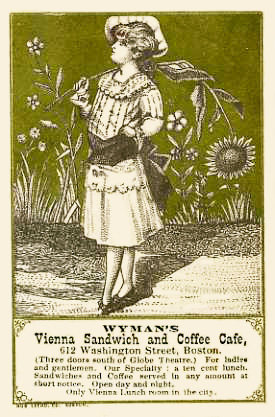
1889 Boston was said to be the home of sandwiches of all kinds, with Wyman’s taking credit as originator of the Fried Egg Sandwich. As noted on this trade card from the 1880s, Wyman’s specialty was a ten-cent lunch. At this time Massachusetts’ median daily wage for a laborer was only $1.22, about 12 cents an hour.

1895 Eating places known as “Beefsteak Johns” in NY sold single dishes such as roast beef and potato for 10 cents, while a regular dinner costing 20 cents had meat and potato plus soup, tea or coffee, and pie or pudding. But a few years later a letter to the editor of the Daily People signed “Hamburger Steak” charged Beefsteak Johns with paying low wages and serving bad food. It ended with “Forward! To the days of the Socialist Republic when the food of the workers will not be adulterated by the little business man in the restaurant line.”

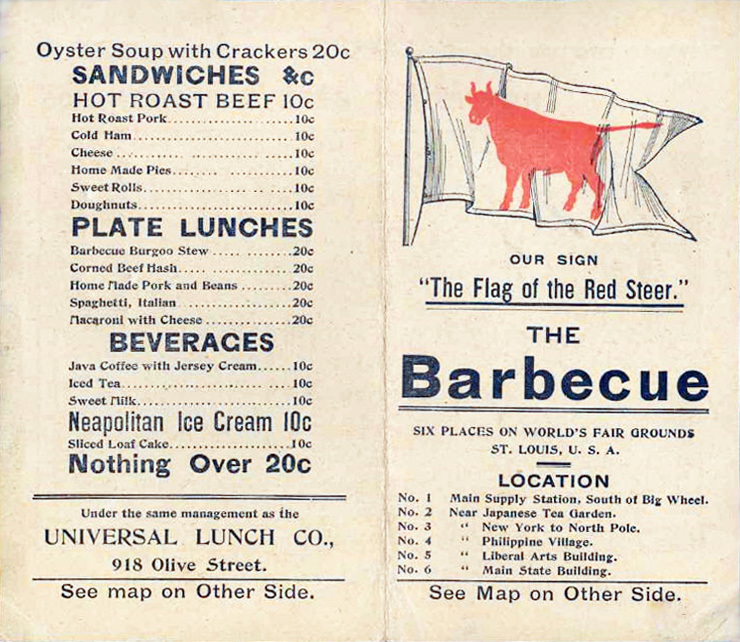
1904 Fairgoers generally expected high prices for food at world’s fairs, but at the St. Louis World’s Fair the Universal Lunch Co. ran barbecue stands selling hot beef sandwiches for ten cents.

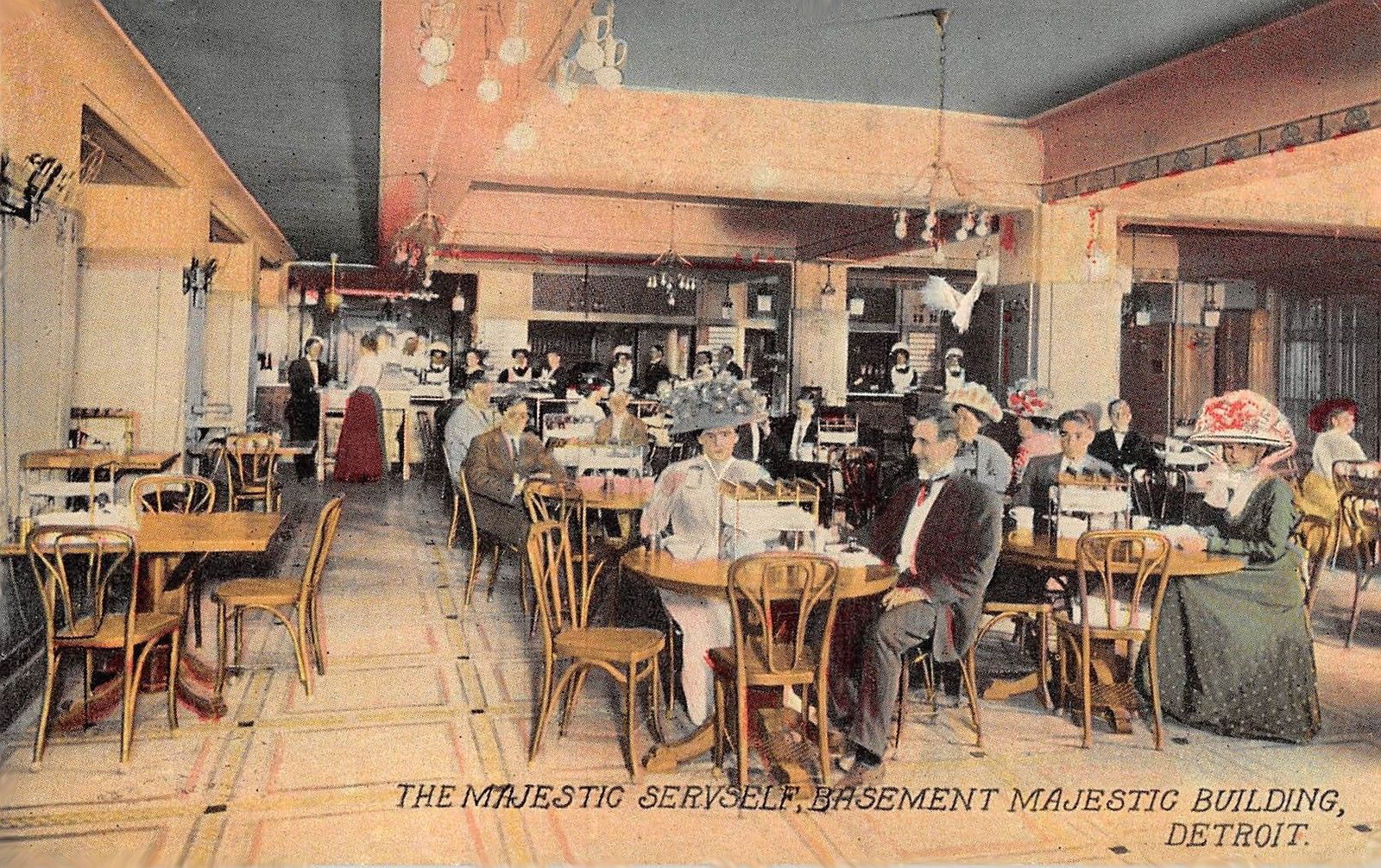
1910 Prices were lower in self-service eating places such as the newly opened Servself Lunch in Detroit’s Majestic Building which billed itself as the finest quick lunch in America. Most items, including soup, corned beef hash, pork and beans, macaroni and cheese, chicken pie, boiled eggs, sandwiches, corn flakes, baked apples, griddle cakes, and pastry, cost a dime each.

1922 Cooper’s Cafeteria in the college town of Champaign IL offered weekend specials such as Veal Loaf with Tomato Sauce or Creamed Chicken on Toast for 10 cents, while most side dishes and desserts cost 5 cents.

1928 and 1929 At Macy’s Department Store in New York, where it was “Smart to Be Thrifty,” the store shaved a penny off items that would have been 10 cents in most restaurants, such as Vegetable Soup, almost all pies and cakes, and a variety of beverages including Coca-Cola and Orange or Raspberry Phosphate. Each cost 9 cents. But a 1929 menu from Schrafft’s at 181 Broadway in New York listed absolutely nothing for 10 cents. The average hourly wage for manufacturing workers before taxes was about 56 cents in both years.

1932 The White Castle chain adopted a promotion to attract women customers (who generally avoided the restaurants). They were mailed coupons by a hostess named “Julia Joyce” that offered five small hamburgers to carry out for only a dime. The economy was depressed and the average hourly pre-tax wage for factory workers had dropped to 47 cents.

1941 With the U.S. supplying food to Great Britain for the war effort, the cost of food went up. Restaurants responded by raising prices. In Springfield IL a Wimpy’s hamburger stand increased the price of its 10-cent burgers to 12 cents.

1950 In New York City the Automat raised the price of coffee from 5 to 10 cents. At the Children’s Milk Bar in the Lord & Taylor department store, children could snack on milk and crackers for 10 cents.

1951 In Beaumont TX the Pig Stand was selling hamburgers that cost 10 cents before WWII for 25 cents. The average hourly pre-tax wage for manufacturing workers was $1.59.

1962 Even at inexpensive restaurants and drive-ins, beverages such as coffee or a small soda were usually the only items priced at 10 cents.

1965 A Burger Chef in Baton Rouge LA celebrated its 6th anniversary with 10-cent hamburgers. Ordinarily they cost 15 cents.

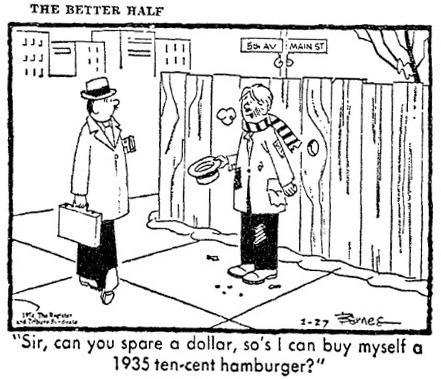
1974 See cartoon.

8 Comments

Filed under cafeterias, chain restaurants, department stores, food, lunch rooms

Catering

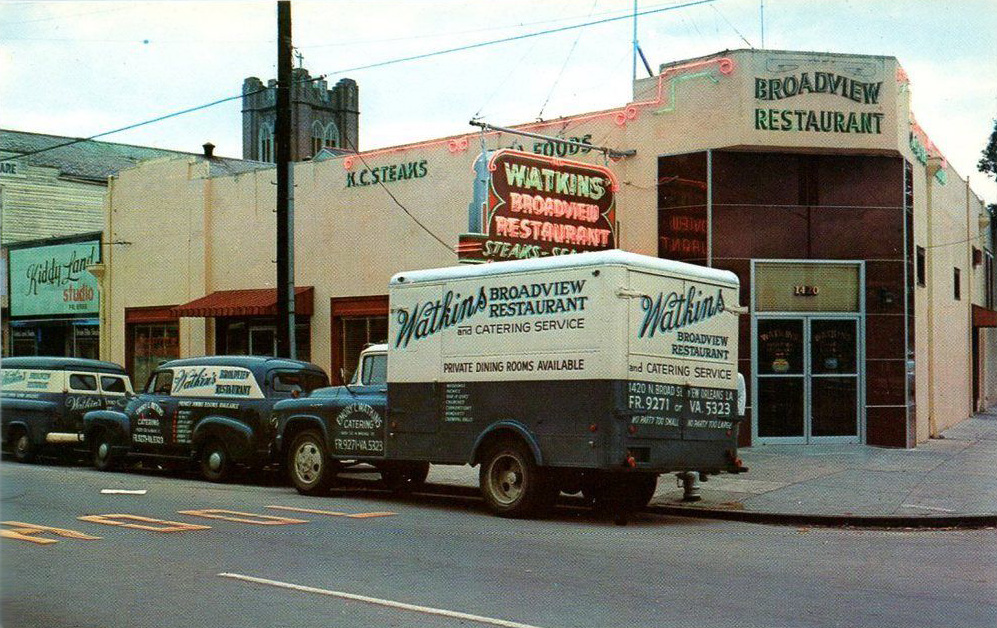
The catering business is closely related to restaurants, though many caterers work from a rented or home-based kitchen. Frequently caterers have been – and are — cooks or waiters; many later enter the restaurant business as proprietors. Then as now catering provides an important financial supplement to restaurants.

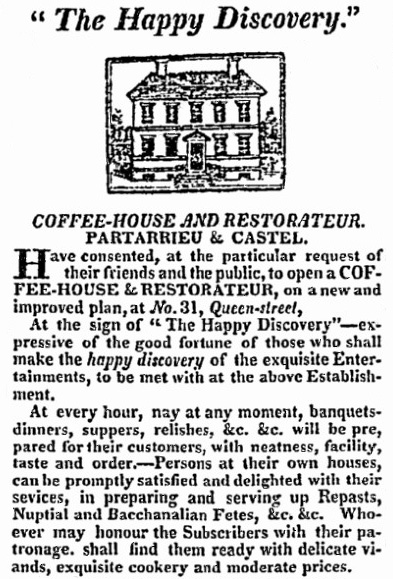
In the 18th and 19th centuries many coffee houses, taverns, eating houses, refectories, etc., not only catered to groups in their own banquet rooms or off-site, but also delivered food to homes and workplaces. Monsieur Lenzi, recently arrived in New York from London advertised in 1773 that he could provide jams, preserved fruits, pâtés, and “sugar plumbs” and could handle balls and masquerades as he had done in “most of the principal cities of Europe.” The early Delmonico café of the 1830s supplied meals to residents of a small hotel located next door on Broad street in New York.

Confectioners, who often ran eating places too, were especially likely to be in the catering business because, unlike many restaurant proprietors, they were skilled in turning out elegant cakes and ice cream. For most of the 19th century ice cream could only be obtained from a confectioner.

African-Americans were quite prominent in the catering business until the latter part of the 19th century. They could be found in Boston, Salem, New York, Washington, Baltimore, Charleston, and other cities along the East Coast, but especially in Philadelphia. Quite a few earned prestige catering to elite white patrons, often being referred to as “princes.” They were often rumored to have become quite wealthy.

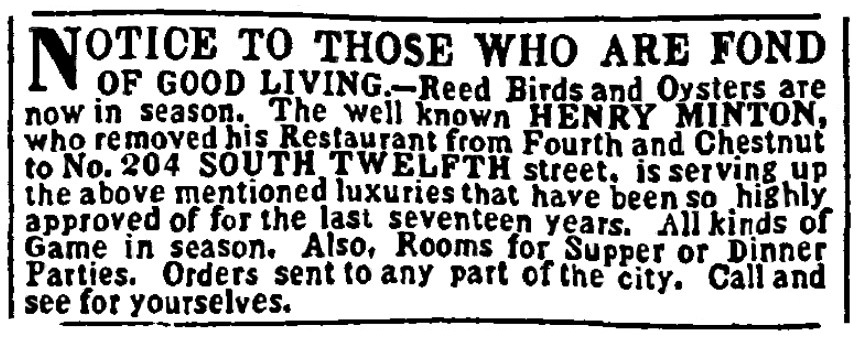
According to W. E. B. DuBois in The Philadephia Negro (1899), “the triumvirate [Henry] Jones, [Thomas] Dorsey and [Henry] Minton ruled the fashionable world from 1845-1875.” Dorsey had been a slave, as had the celebrated caterer Joshua B. Smith, who was Boston’s top man in the field. At the opening of Smith’s new restaurant in 1867, the entire city government was present and former mayor Josiah Quincy gave a speech.

But despite the prominence and success of Black caterers, the fact that they served clients in high society, and the praise heaped upon them for their astute management and taste, they were still regarded as second-class citizens banned from public transportation in Philadelphia as well as theaters and cemeteries there and elsewhere.

According to the 1870 U.S. federal census, there were then about 154 caterers (undoubtedly an undercount), 129 of whom were born in the U.S. The majority of those born in this country whose race was identified were Black (56) or Mulatto (29). But by the end of the 19th century, Black caterers had become less numerous, with much catering having been taken over by the big hotels that by then were dominant in the field, particularly for large banquets.

Only two caterers identified in the 1870 census were women, both white. I feel certain, however, that many more women were caterers in the 19th century. Catering was common among women tea room proprietors of the early 20th century whose clients included civic organizations, women’s clubs, and wedding parties. Harriet Moody was a very successful caterer in Chicago of the 1890s, with a remarkable career that included opening a notable restaurant, Le Petit Gourmet, decades later when she was at an advanced age.

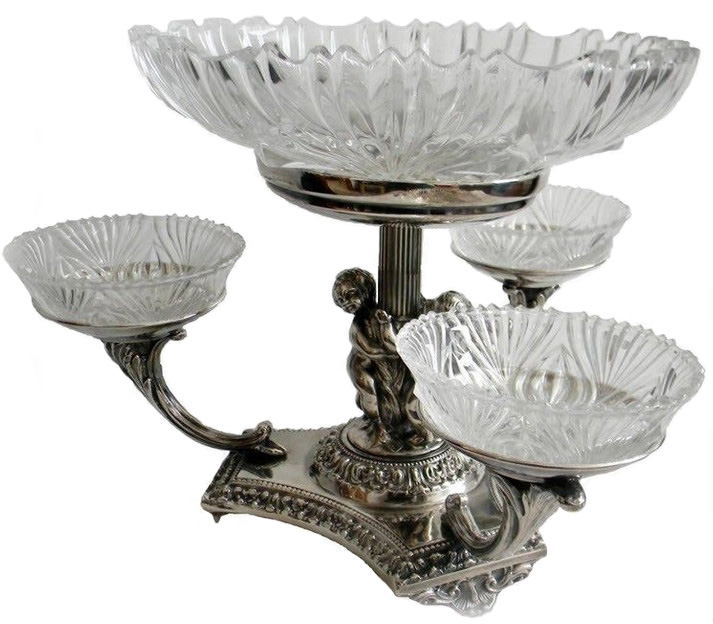
In addition to food, caterers usually supplied linens, china, and silver, as well as decorations, even when the dinner was held in a client’s home. In his book Catering for Private Parties, Jessup Whitehead explained that caterers obtained most of their linens and table ware at auctions, being careful not to acquire monogrammed pieces. A prized item was a large epergne which made a grand appearance on a table. Trenton NJ caterer Edmund Hill spent a good deal of time traveling to other cities to keep up with the latest trends in his field. He recorded in his diary on September 26, 1883: “Went to Wilmington, Del. to see about a Vienna Bread baker. Did not get him. Stopped in Phila on way home. Bought a silver epergne $20.00.”

Hotel catering, with its backstage mishaps, staffs of curious characters, and endless haggling over costs and contracts was described with humor by Ludwig Bemelmans who worked as a busboy at the fictitiously named New York “Hotel Splendide” before World War I. In the book Life Class (1938) he described how a group of well-bred but penniless blue bloods bargained for reduced rates based on their status and decrepitude, while accepting a simple supper menu of nothing but consommé and scrambled eggs.

After World War II catering continued on as before, distributed among hotels, restaurants, and independent caterers, the main change being the incorporation of frozen convenience canapes and better equipped kitchens to simplify and speed up the work. Some restaurants, and especially deli restaurants, such as Wolfie’s in St. Pete FL, offered party platters. By then large hotel banquets tended to lose their appeal for many people who had experienced too much Chicken a la King. Thanks to glittering parties thrown by Hollywood stars, it become clear that status accrued to the host or hostess who hired a famed restaurant’s celebrity chef to present novelties that piqued guests’ interest.

© Jan Whitaker, 2018

9 Comments

Filed under food, patrons, proprietors & careers, restaurant customs