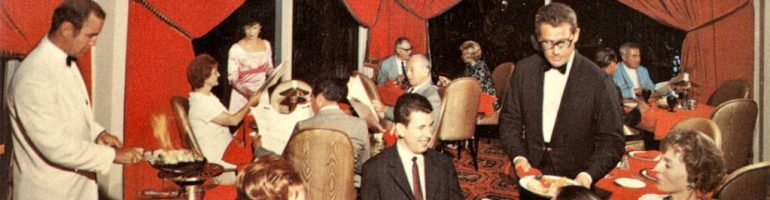
 I question whether there are huge gender differences in food preferences but I’ve seen plenty of evidence that many restaurants have marketed menus on this basis, especially by playing to the idea that men have manly tastes. This idea seems to have grown stronger in the 20th century when more women patronized restaurants on an equal basis with men.
Many people believe that men like heartier food than women do. In the 19th century, of course, men dominated restaurants and women were often viewed as special guests. Since eating places were accustomed to catering to men then, menu staples such as oysters, beef, and pie came to be seen as men’s favorite dishes. Perhaps they were, but then again they may have been regarded as “masculine” simply because men were the ones who usually ate them out in public.
In the early 1900s articles began to appear in newspapers that offered ideas of what food men liked best. Restaurants designed menus to appeal largely to male diners. Pollution of oyster beds brought growing distrust and beef came to top the list. “Quick lunch” spots noticed that men ordered more meat dishes than women. Louis Sherry said that women guests in his deluxe Fifth Avenue restaurant did not like to draw blood so they avoided red meat and game.
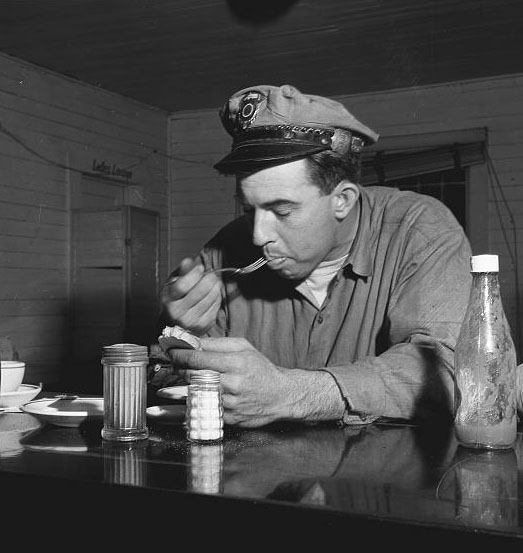 In the many places that served “business men’s lunch,” the favorite meal was meat and potatoes, pie, and coffee. If the lunch was served in a tavern setting, the pie and coffee might be replaced by a glass of beer. But men had other favorites as well, such as griddle cakes, corned beef and cabbage, beef stew, chili con carne, bean soup, fried potatoes, and ham and eggs.
With the advent of national Prohibition in the 1920s, observers noticed that men were eating lighter meals, more sandwiches, and even the occasional salad. While nutritionists hailed the change as healthier, some restaurant owners longed for the return of the heavy eater. When beer became legal again in 1933 the executive chef of Chicago’s Palmer House said, “With the stein on the table, masculine foodstuffs are bound to come into their own.” In 1934 a New York guide book tipped off men about where they could enjoy “man-sized” food “served without fancy gegaws.”
 After Prohibition men who preferred no women in the dining room could go to bar & grill restaurants in hotels such as the Esquire Restaurant in the Penn-Harris Hotel in Harrisburg PA or the men’s bar at the Waldorf Astoria where they could enjoy their Martinis and Mutton Chops minus female company. In the men’s bar at the Mayflower Hotel in Washington, D.C., the dining room captain personally prepared Cannibal Sandwiches of raw beef, onion, egg yolk, and Worcestershire sauce at guests’ tables.
Known as the Rib Room, the men-only Mayflower bar was also host to FBI chief J. Edgar Hoover, who lunched there daily in the 1960s, always at the same table facing the door. His favorite meal, consumed with only the slightest variation, was cream of chicken soup, coffee, and Jello. While he was President, in 1970, Richard Nixon and four of his staff dropped in at the Rib Room for breakfast after Nixon’s early morning visit to Vietnam War protesters at the Washington Monument. Nixon ordered corned beef hash with an egg on top which, according to his press secretary, marked the first time he had eaten this dish in five years.
© Jan Whitaker, 2010

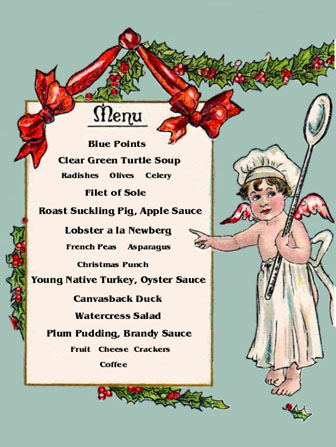
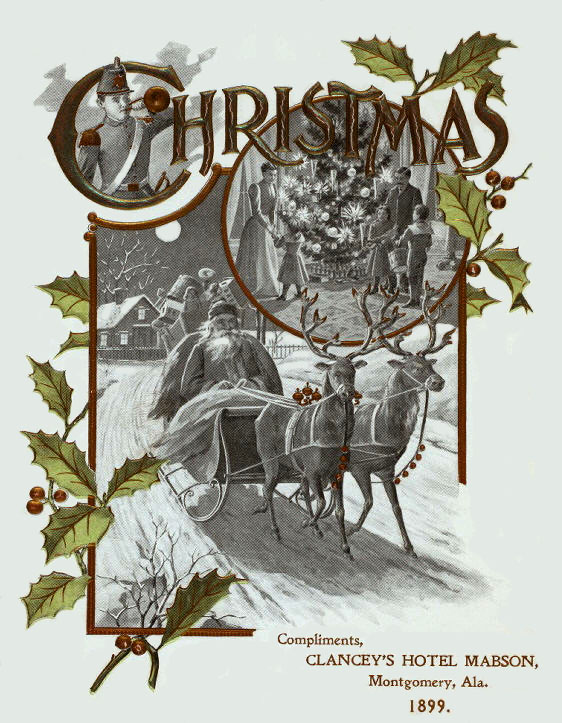
 It seems as though almost all of history’s food forces have cooperated to give cheese top billing in restaurant meals today. Only one cheesy custom failed to catch on, that of finishing a meal with cheese and fruit as was done in small French and Italian restaurants in the later 19th century. Craig Claiborne argued in 1965 that even the best New York restaurants didn’t know how to handle the cheese course. They had poor selections which tended to be old, overripe, or served too cold. One restaurant admitted their chef was in the habit of popping cheese straight from the fridge into the oven to soften it. Restaurateurs that Claiborne interviewed insisted that Americans didn’t like cheese after a meal. I’d agree that most prefer their after-dinner cheese in the form of cheesecake.
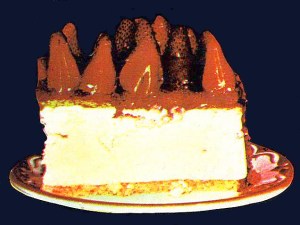 Cheese has been a staple food in American eating places probably since the first tavern opened. Regular meals were served only at stated hours but hungry customers could get cheese and crackers at the bar whatever the hour. For “Gentlemen en’passant,” the Union Coffee House in Boston promised in 1785 that it could always furnish the basics of life: oysters, English cheese, and London Porter. Across the river in Cambridge, the renowned
 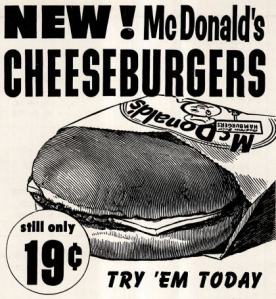 Cheeseburgers were a product of the fast food industry of the 1920s, claimed as inventions by both the Rite Spot of Southern California and the Little Tavern of Louisville. Strange there aren’t thousands of other contenders because what was there to invent, really? Cheeseburgers were strongly associated with Southern California before WWII — Bob’s Big Boy of LA introduced cheeseburgers in 1937. Another step forward came in the 1930s when a bill was introduced in the Wisconsin legislature requiring restaurants and cafes to serve 2/3 oz. of Wisconsin cheese with every meal costing 25 cents or more. In the same decade Kraft Cheese was among major food producers providing restaurants with standardized recipe cards.
 It was after WWII that cheese spread its melted gooeyness everywhere — on
 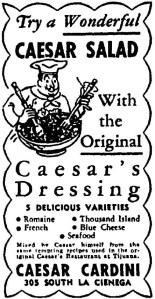 When we get into questions of the origins of certain dishes we have left history behind and entered into the murky depths of lore and legend.
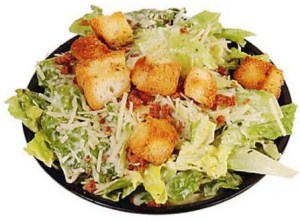 A strong inventorship claim was presented by Caesar’s brother, Alexander, in the 1960s. Caesar died in 1956, while running a grocery store in Los Angeles where he produced and bottled Caesar salad dressing. According to Alexander’s son, who ran Cardini’s in Mexico City, the two brothers had developed the salad together in a Tijuana restaurant in their younger days, improvising on a recipe their mother used when they were boys in Italy. In this “Mother’s recipe” account, the salad was initially called “Aviator’s salad” in honor of their customers who were soldiers, sailors, and airmen.
 In the 1850s the great landscape architect Frederick Law Olmsted, designer of New York’s Central Park, traveled through the South to investigate the institution of slavery. His observations were published in three volumes which were influential in turning readers against slavery. Around 1857 he traveled to Memphis, Tennessee, where he stayed at the Commercial Hotel. Although it was considered a first-class establishment, things did not go well for Frederick in the dining room as his journal entry for March 20, below, reveals. Among the dishes appearing on the not-too-elegant menu were “Beef heart egg sauce,” “Calf feet mushroom sauce,” “Bear sausages,” “Fried cabbage,” and, for dessert, “Sliced potatoe pie.” Better than whole potato pie, I guess.
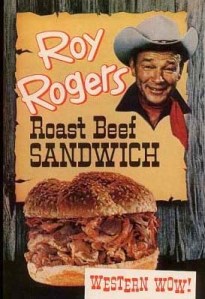 People have strong feelings about their favorite dishes from restaurant chains. I am thankful to all those who poured their hearts out on the subject on Jane & Michael Stern’s ever-fascinating Roadfood forums. I have excerpted the following wistful memories from “Long-gone regional franchises” which took on a life of its own and ran for years. After each snippet is the pertinent chain restaurant.
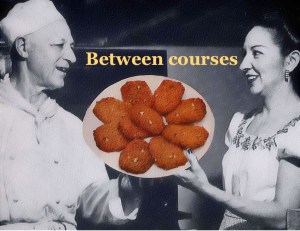
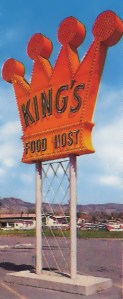 — The Cheese Frenchies were unique. [King’s Food Host]
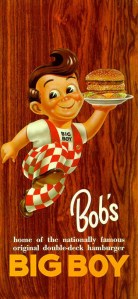 — Pickles, diced onion, relish, mustard, ketchup and mayo were all available. [25 Cent Hamburger]
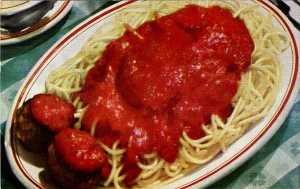 In the 1890s it was considered daring to go to an Italian restaurant and eat spaghetti. The restaurants were not in affluent neighborhoods and some middle-class people worried (largely needlessly) about how clean they were. Non-drinkers didn’t approve of the “red ink” (wine) that came with the spaghetti. Some women felt it was not ladylike to eat spaghetti in public. Then there was the garlic, which was considered seriously foreign by many Americans. But others, especially offbeat types – artists, musicians, and free spirits known as “bohemians” — loved the whole experience: spaghetti, wine, garlic, low prices, and the friendly atmosphere found in most Italian places. The future of spaghetti belonged to them.
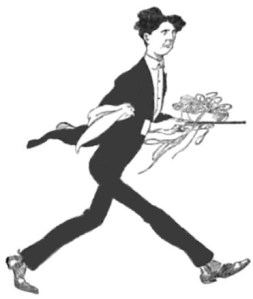 The bohemian fad for spaghetti grew stronger in the early 20th century, particularly in lower Manhattan and San Francisco. Diners flocked to Gonfarone’s in Greenwich Village. Despite its low prices, the restaurant made money because a 50-cent dinner with a complimentary glass of wine cost but pennies to put on the table – about 2 cents for the spaghetti and a few cents for a carafe of the red California claret bought by the barrel, 40 or 50 at a time.
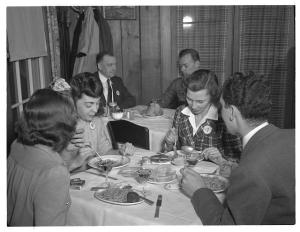 Spaghetti, Italian and non, continued as a staple restaurant dish during successive decades, in speakeasies of the 1920s, Depression dives and diners, and a variety of restaurants during the meatless months of World War II. Next came pre-cooked meatballs and prepared sauces in the 1960s and 1970s which meant even virtually kitchenless restaurants could serve spaghetti. Its cheapness and the fact that children like it also made spaghetti a favorite of family restaurants, and the basis of chains such as the Old Spaghetti Factory, the original of which was started in Portland OR by a Greek immigrant in 1969.
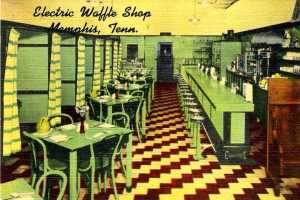 In the early 19th century Philadelphians enjoyed driving their carriages to the falls on the Schuykill River, the area now known as East Falls, then lined with hotels and restaurants. Eating places there specialized in a favorite dish associated with Philadelphia long before the advent of cheese steaks, namely catfish and waffles. (I’d like to believe that the dish did not include maple syrup.)
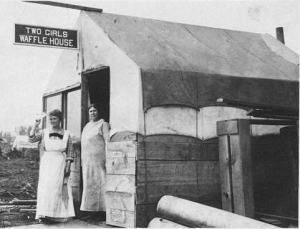 Well into the 20th century waffles were familiar fare in boom towns such as Anchorage, Alaska, and the oilfields of Oklahoma. Around 1915 two young women from Seattle decided to seek their fortune in Alaska with the Two Girls Waffle House (pictured). In what was not much more than a shack with a canvas roof they could handle only eight customers at the counter. But after a year they had made enough money from railroad construction workers to build a permanent structure. A similar success story could be told about the two young men who ran the Kansas City Waffle House in Drumright, Oklahoma, before graduating to a bigger enterprise in Tulsa.
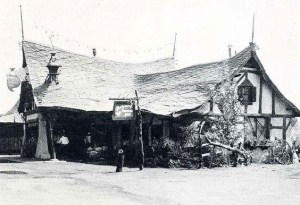 Waffles were also a staple of tea rooms in the early 20th century. In places as varied as big city afternoon tea haunts and humble eateries in old New England homesteads, waffles attracted patrons. In 1917 New Yorkers could choose among the
 It's great to hear from readers and I take time to answer queries. I can't always find what you are looking for, but I do appreciate getting thank yous no matter what the outcome.
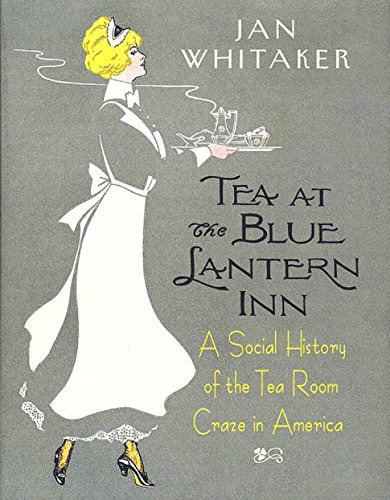
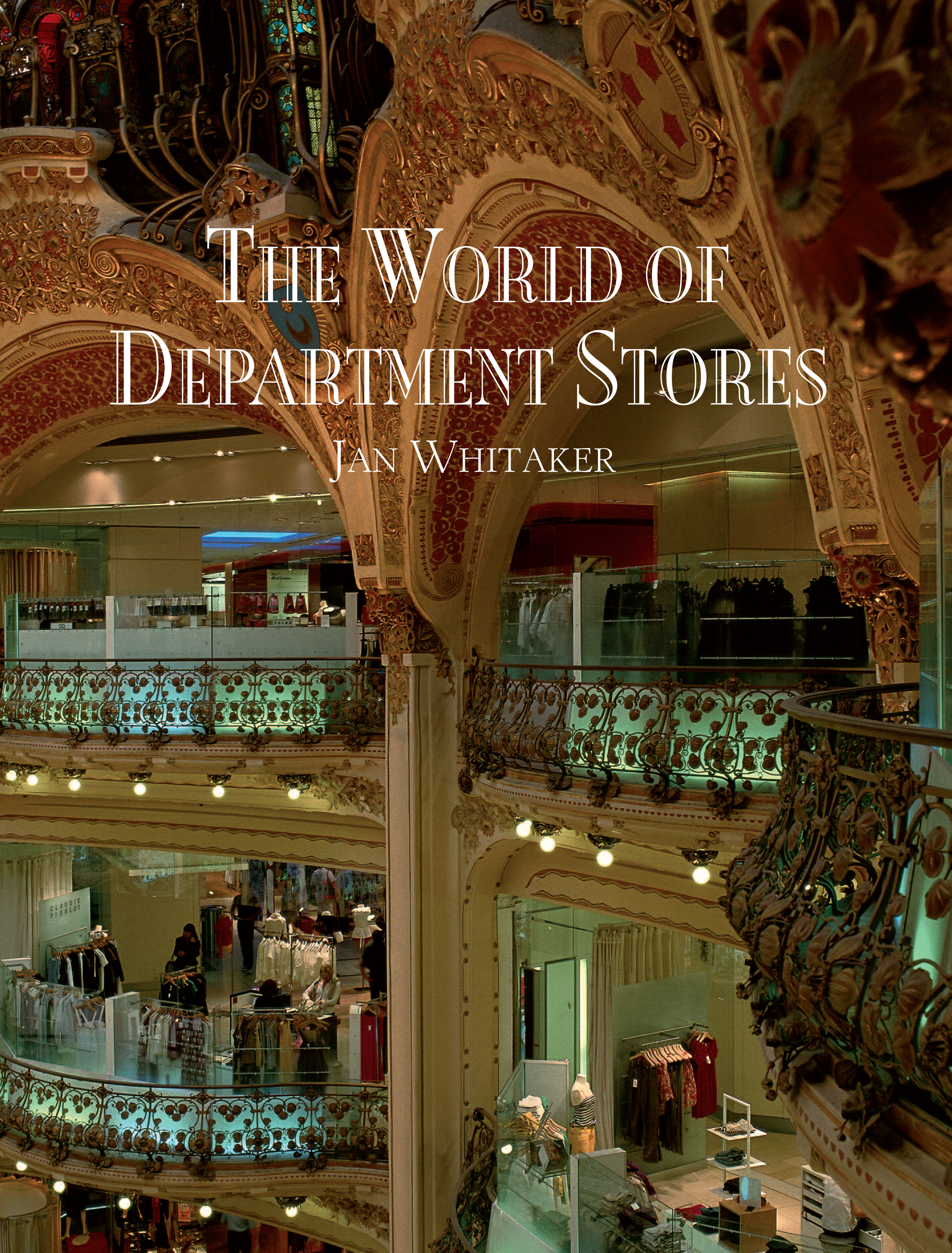
 Restaurant-ing through history