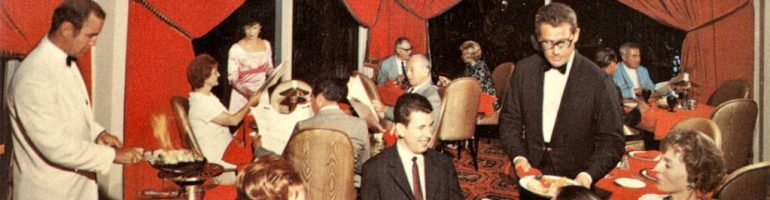
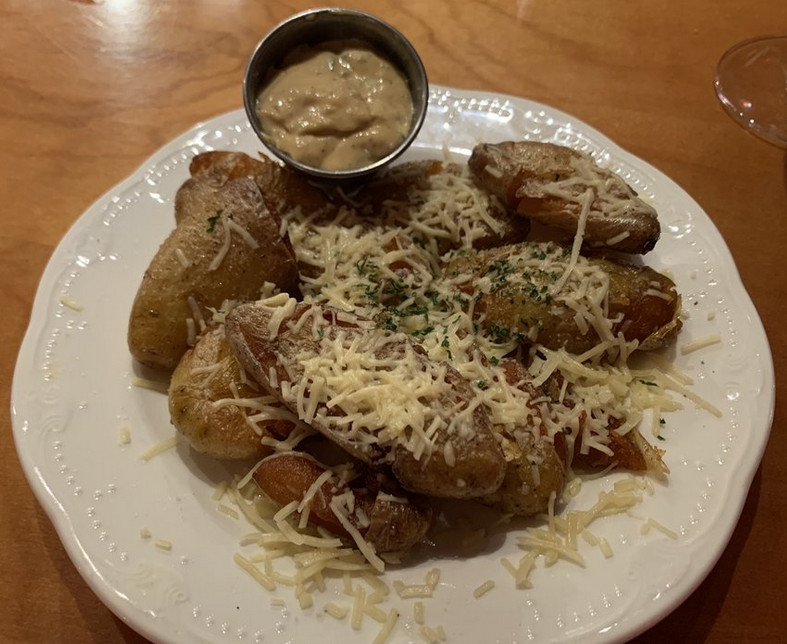
Were 19th century European visitors to the United States inclined to be super critical about the food they ate in restaurants and hotels? It’s hard to know the answer, but they were often negative. An example was a woman from Scotland who grew so used to bad food that she was surprised to find a good breakfast in La Junta, Colorado, in the 1880s. She bonded with the proprietor, a German who had been trained in Paris, agreeing that Americans were mainly interested in quantity, not quality. [Note: old images were impossible to find, so I have used a variety of some I have collected over time, all from the latter 20th century.]
Delmonico’s in New York was, of course, a glowing exception. Outside of New York, however, the Delmonico name lost its majesty. A typical example was the Delmonico restaurant in Walla Walla WA. The local newspaper advised the new owner to change the name, noting that it had been eagerly adopted “by so many inferior restaurants and hotels about the country.”
Most Boston restaurants were judged bad. A Boston paper declared in the 1890s that “in no city of the same size are there such inferior restaurants, so little tavern life, and so little appreciation of good cookery . . .”
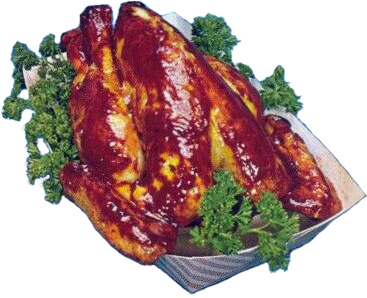
Widespread criticism continued into the 20th century when keeping fresh food in cold storage for extended periods was targeted as a major culprit, added to the fact that Americans didn’t know how to order in a restaurant and bolted down their food.
In a 1920s essay, food writer Elizabeth Robins Pennell viewed cafeterias and the automats as proof that Americans cared little for food. The automat was perfect for those who didn’t want to waste time eating, she declared, “since after you put your money in the slot, the sandwich or salad, the coffee or chocolate that comes out may be swallowed as you stand – not one fraction of a second lost in a hunt for a seat.” She judged that “The man who first wrote ‘Eats’ above his restaurant door spoke the truth better than he knew, in one word pointing out to us the depths to which we have sunk.”
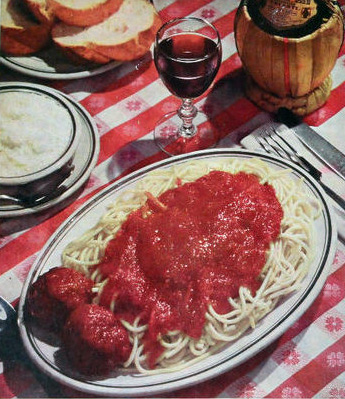
Duncan Hines criticized the nation’s restaurant mercilessly in the 1940s. He felt it was more dangerous to eat your way across the country than to drive across it. He admitted that he “would like to be food dictator of the U.S.A. just long enough to padlock two thirds of the places that call themselves cafes or restaurants.” He was expressing a common view of the food available to highway travelers, as also expressed in a 1951 Life magazine article which concluded that “In whatever region he is traveling, the American tourist soon finds that good simple American cooking is an elusive myth.”
But it wasn’t as though the dining public was necessarily going to fare better in cities. Occasionally restaurant reviewers revealed how unenthusiastic they were about a restaurant, without exactly trashing it. In a review a San Antonio oyster restaurant’s food, decor, and service were branded in turn as okay, inoffensive, and not exciting or depressing. The conclusion was that “You can pay a lot more for a lot less, and that’s the most exciting news of this review.”
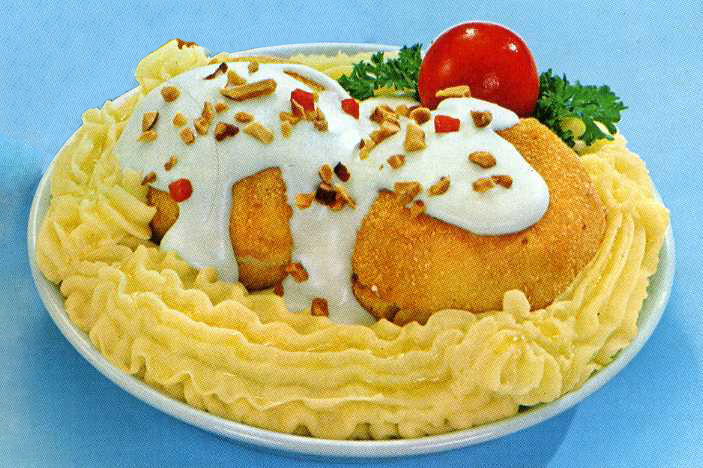
In 1968 a columnist summed up restaurants of that time by agreeing with an experienced professional that mediocre restaurant food had become the norm. As examples he mentioned ‘The drive-in eatery, the Ma-and-Pa hash-house, the roadside ‘Stop-and-Eat’ wagon, the Main Street ‘Greasy Spoon.’ Hamburger. Ham-and-eggs. Canned fruit salad. Buns and coffee, and suggested diners might as well just “Take what they put before you. Slather it with ketchup. Eat and hurry on.’
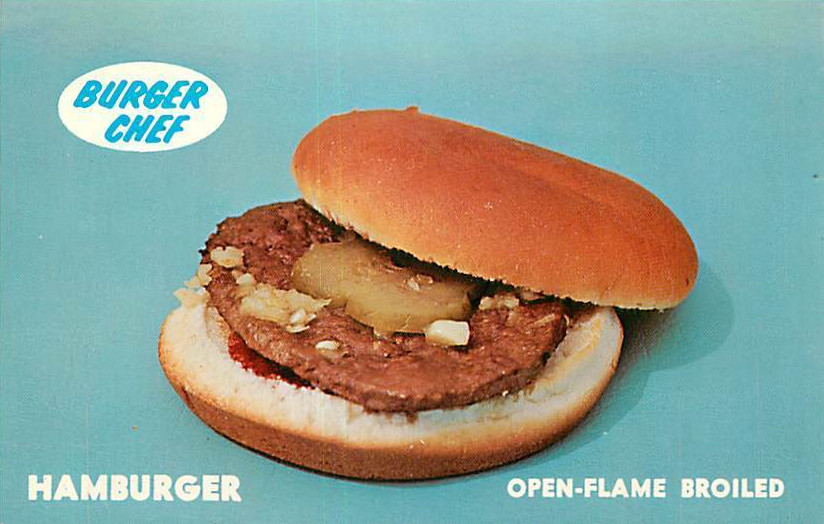
By the 1980s, chain restaurants had become omnipresent across the nation. Two Chicago Tribune critics ranked 15 chains. They agreed that overall the quality of food in them was “mediocre.” The bottom five, which included the Ground Round (fatty, flavorless, and overcooked beef), Howard Johnson’s (rubbery clams, over-breaded shrimp, too much fried food), the International House of Pancakes (nothing-special crepes, old toppings, tough steak, plain lettuce salads), Shakey’s (substandard pizza, starchy buffet), and Wag’s (withered salad greens, chili tasting like canned), came in for heavy criticism.
However much patrons might complain about food (or service) in a restaurant, they tended to make their peace and accept less than perfection at restaurants that they frequently patronized. They kept their criticisms to themselves – even though restaurateurs say they would have preferred to hear them.
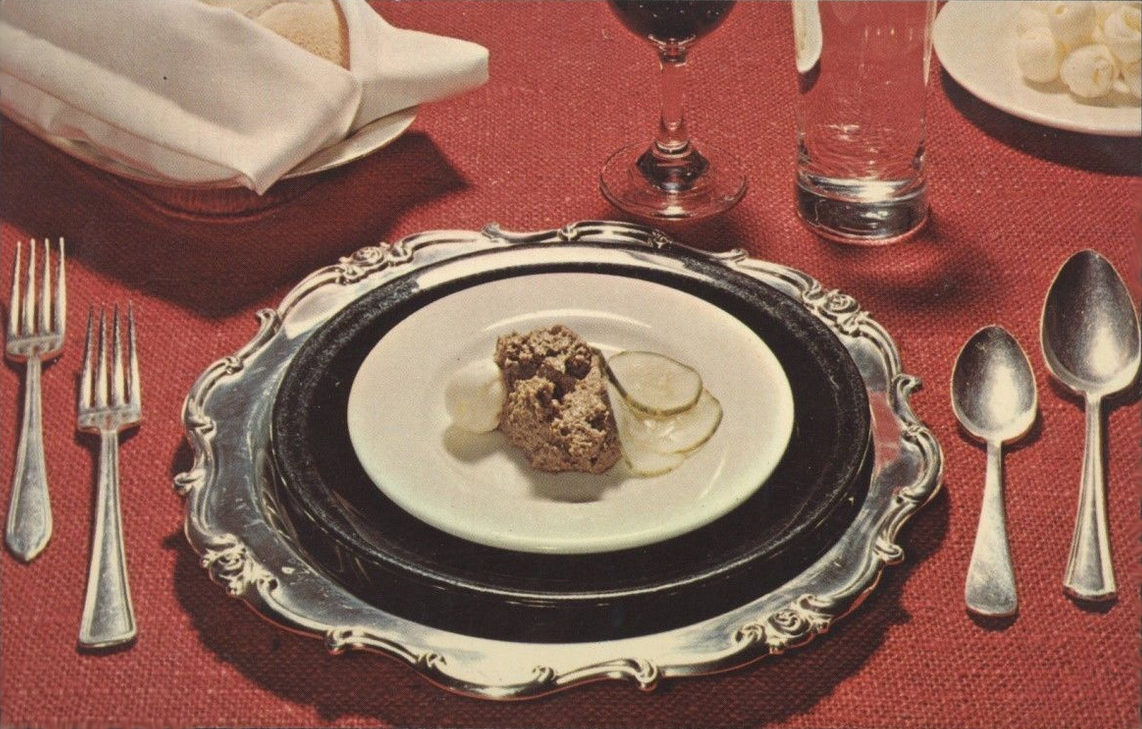
In 1993 columnist Kevin Cowherd described a fantasy eruption of anger that might occur after taking a bite of bad food in a restaurant: “. . . it’s so awful that you spit the food into your hand and fling it angrily at the ceiling and then stand up, backhand all the silverware and glasses off your table and scream . . .” He admits he never threw a fit like this but says, “Just once I want to react to lousy restaurant food with a major, king-hell tantrum that shakes the walls and peels the paint and makes everyone around me cringe.”
Whew!
© Jan Whitaker, 2026

 It's great to hear from readers and I take time to answer queries. I can't always find what you are looking for, but I do appreciate getting thank yous no matter what the outcome.



I remember feeling that way about restaurants in the ‘50s. We almost never went to them. And 60s, for the most part.
I tried to comment, but your page wouldn’t allow me to do so even with multip
I have it set up so that comments don’t appear until I approve them.
An interesting sidebar to the American food story. Were the Duncan Hines et al right though? Menus of the last century and the 19th, even in middle of the road and more modest restaurants, often had long lists of dishes, many more than the average restaurant, any class today. With such attention to gastronomic diversity, could it all have been bad? Doubtful, imo. Also, the critiques don’t account for ethnic and regional diversity in American eating, some of which was probably mistaken for bad quality. One must too factor cost in the quality picture. A HoJo, say, in its classic era, offered good food for the money asked.
I remember meals of all classes in the 1960s and 1970s and think the food was better on average than today’s, more accomplished, closer to European methods even if not patently ethnic/
Gary, You are correct that not everything was bad, but I do believe a great deal of it was — but bad in different ways over time. In the 19th and early 20th century, there were many problems with cleanliness, or lack of it. Difficulties with refrigeration before electricity was available. Probably cities were better off than rural areas on the whole, but traveling across country would surely mean encountering bad food. Then with the arrival of chains, bad took on a new meaning, standardized, over processed, etc., but not so much unsanitary or spoiled. You are right it is a complicated subject.
My wife and I will be driving across historic Route 66 this summer. Let’s hope roadside food has improved!
Hi Jan – What an interesting and fun article!!It seems nowadays people like to look back at “The Good Old Days” but in so many cases they really weren’t all that good. Kinda of a sidebar — the restaurant that has been around forever and has a fiercely loyal clientele BUT really serves mediocre food. I remember trying some of these places in the metro Detroit area that had been around for decades and were always mentioned in glowing terms by their fans, but when we tried them they were pretty lame and mediocre. Some people would admit, well, the food’s not that great, BUT they’ve been in business for 50 years or some such nonsense. Longevity is not reason enough for me to want to patronize a restaurant; they may have been serving lousy food for 50 years. Food for thought!!! Thanks for another thought provoking, interesting article!
Best regards, Bob
Hi Bob, As you say the old favorites of any particular city or area are usually given an exemption by their long-time patrons, possibly because they have many good memories of those places from the past. But for someone who is new to them, they may not hold up so well!