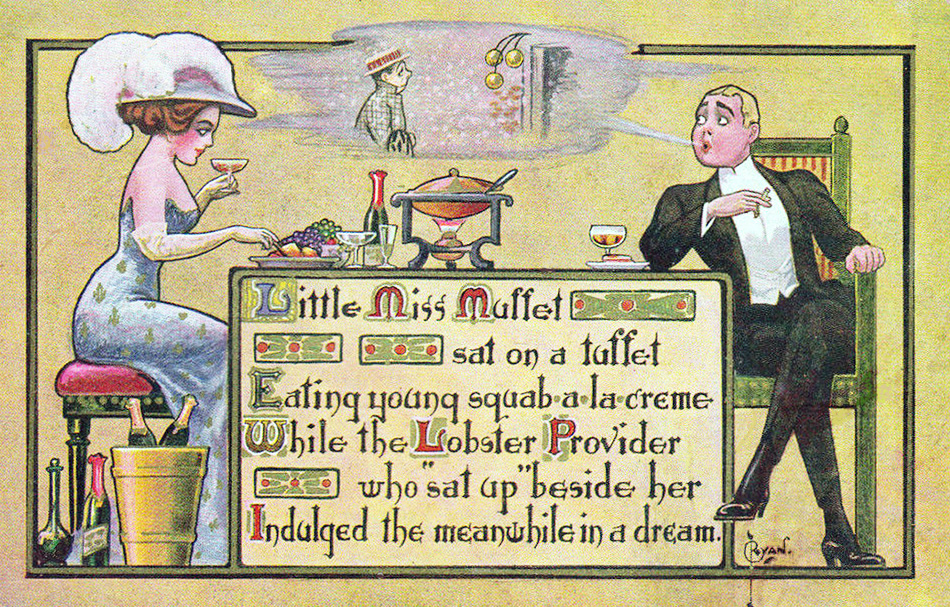
Author Archives: Jan Whitaker

Jan Whitaker's avatar

About Jan Whitaker

A frequent restaurant patron who knows a lot of fascinating things about the history of American restaurants based on years of research, and who is also interested in how people relate to food, what it means to them, and how they form memories about meals in the past. I started my blog in 2008 (!) and by now have a huge number of posts. The early ones are just as good as the new ones, so look around.

Women’s lunch clubs

Lunch clubs for working women appeared in American cities in the 1890s and early 20th century. In a fairly short time they stimulated the development of commercial cafeterias, as well as employee cafeterias in large companies.

Chicago was regarded as a prime incubator of the lunch club idea. In 1891 a group of alumnae of the prestigious Ogontz finishing school near Philadelphia opened a space for women workers on an upper floor of Chicago’s Pontiac Building. At the start the club charged 10 cents a year for membership, and sold sandwiches for 4 cents and milk, tea, or coffee for 2 cents each.

By the end of the nineteenth century, women’s lunch clubs could be found in other major cities, including New York, Philadelphia, Boston, Cleveland, and San Francisco, but not in the South. Some, such as three in NYC, were affiliated with churches. In Indianapolis, temperance supporters – members of the W.C.T.U. — ran a lunch club.

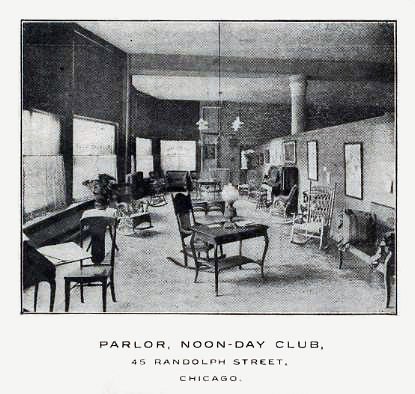
The lunch clubs were meant to provide not only inexpensive noontime meals for working women, but also to give them a place to enjoy a little leisure in “rest rooms” supplied with sofas, rocking chairs and desks, as well as libraries and other amenities. Some offered evening lecture series.

The clubs came at a time when the number of office workers in cities was on the increase. The clubs mainly catered to “business women,” which then meant young white-collar workers in offices and department stores. Although women factory workers had a greater need for restful and inexpensive lunches than did office workers, their shorter lunch breaks and lower pay made it difficult to accommodate them.

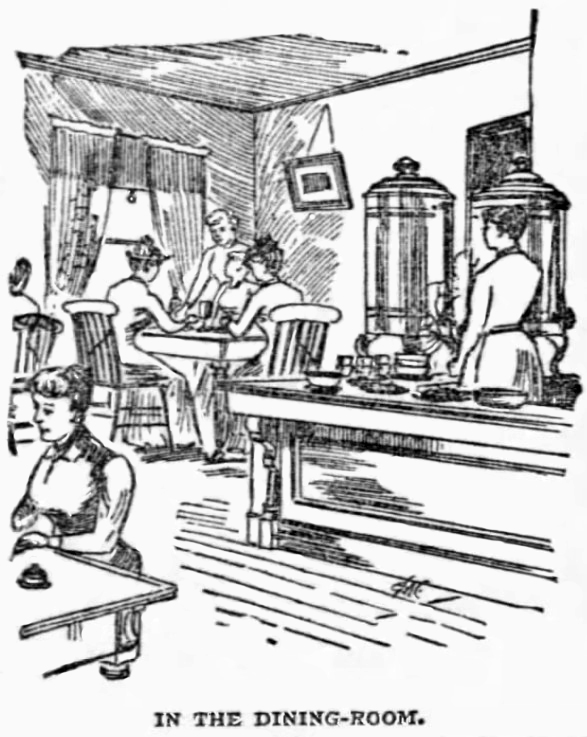
The earliest lunch clubs were launched by elite women as philanthropic projects to assist workers with affordable lunches, give them a place to hang out at noon, and to uplift them culturally. The food was not cooked on site, but supplied by other kitchens, such as that at Jane Addams’ Hull House in Chicago. To avoid the cost of hiring servers, food was set out on counters and diners selected what they wanted, a novel arrangement in the 1890s. [Above: Chicago’s Ursula lunch club, 1891] Prices were meant to cover costs but not to make a profit.

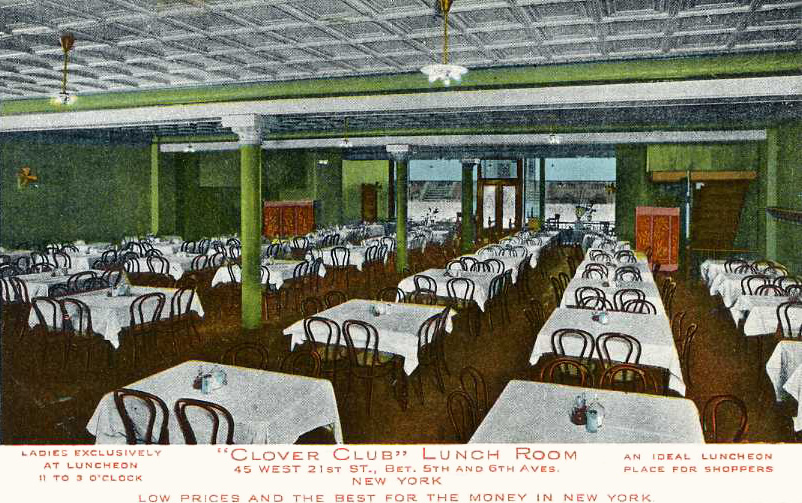
Lunch clubs had to tread a fine line in terms of how philanthropic backers related to the working women. At least one of the philanthropic lunch clubs made its lunchers feel pitied and failed to attract enough women. Those who had stuck with it then took it over as their own co-operative enterprise. Some other lunch clubs were begun as co-operatives. [Above: postcard of a commercial lunch club that admitted men]

A humorous turn-of-the-century story characterized the uneasy feeling of some working women toward philanthropy. In it, a wealthy man approaches a young sales clerk in a department store to say that he is thinking of starting a Noon-Day Rest Club, “where you and the others may come and drink Tea and listen to me read Advice to the Young.” She replies, “That would be lonely Billiards, wouldn’t it? We don’t want to be rounded up and sozzled over. Not on your Leaflards. The Poor Working Girl draws a line on having a kind-hearted Gentleman pull the Weeps on her. I think I can struggle along without having you come around to hold my Hand.”

Despite this obstacle, lunch clubs proliferated. The Klio Club’s Noon-Day Rest expanded its menu, adding dishes such as soup, baked beans, and salmon salad. In 1899 a sample menu in one of Chicago’s six lunch clubs might have looked like this:
Two slices of bread or two rolls, with butter 5c
With jam or cold meat 6c
Extra butter 1c
Tomato soup, beef hash, Spanish stew 5c
Potato salad, sliced tomatoes, cucumbers, cottage cheese 5c
Tea or coffee, with cream 5c
With milk 3c
Iced tea, buttermilk 3c
Raspberry ice, lemon ice 5c
Vanilla ice cream, tutti-frutti ice cream 5c

The success of serve-yourself lunch clubs spurred the development of commercial cafeterias. Over time it became harder for lunch clubs to attract large numbers of women patrons. Some began to accept men who, after all, tended to spend more for lunch. For-profit help-yourself businesses proliferated. In one case, a dispute at Klio’s Noon-Day Rest led its caterer, Kate Knox, to leave and start her own self-service lunch club business. [Mrs. Knox’s lunch club pictured above] Another enterprising woman, Mary Dutton, operated four cafeterias by 1915 after beginning with a single lunch club.

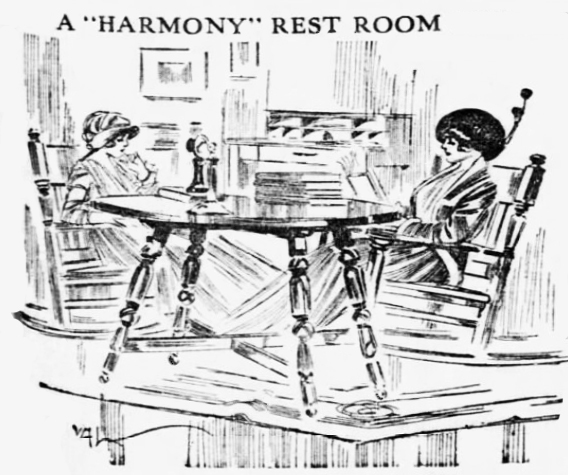
But the lunch clubs made an impact, for a time at least. Boston’s original noon-day lunch club closed because it felt it had elevated the standards of common restaurants. And businesses borrowed ideas from the lunch clubs. For example, The Harmony Cafeteria in Chicago, a commercial business, advertised in 1913 that it featured a basement rest area, with a drawing showing two women in rocking chairs reading books.

© Jan Whitaker, 2022

6 Comments

Filed under cafeterias, food, Offbeat places, patrons, restaurant prices, women

The long life of El Fenix

In 1958, an advertisement celebrating 40 years in business made the claim that El Fenix was “The Oldest Mexican Restaurant Chain in the U.S.” According to the family of founder Miguel Martinez, he opened his first restaurant in 1918 in Dallas TX. [El Fenix on McKinney Ave. pictured above, ca. 1954]

Of course Mexican eating places, including stands, were not a new thing in Texas. They had been around throughout the 19th century in San Antonio – which of course was part of Mexico for part of that time. A Mexican man and his French wife in Los Angeles were serving tamales, enchiladas, carne con chile, and albondigas in 1881 — along with French dishes!

Martinez had come to the U.S. around 1911 during the upheaval of the Mexican revolution. Then about 21 years old, he left behind a life of hard labor that began early in childhood, with no time for school. Before opening a small café in Dallas, he had worked as a streetcar track layer, a dishwasher, cook, pool hall operator, and barber.

It’s remarkable that he was so successful in the restaurant business – where failure within five years is the norm — and that he and his family altogether carried on the business for 90 years. But I am not convinced that El Fenix was the first Mexican restaurant chain in the U.S., since its true chain development took place after WWII.

Miguel’s first café – not yet named El Fenix — was located in the center of Dallas’ “Little Mexico” barrio, a part of the city virtually abandoned in terms of city services, without paved streets, and full of poorly constructed rental properties, many of which lacked plumbing.

About seven years later, Miguel — who adopted the name Mike – moved his restaurant to a new location, in a brick building that had been a food market. Although I’ve seen earlier dates quoted, the 1926 advertisement shown here suggests it was that year that the restaurant moved to 1608 McKinney Street, an address that would be a primary location until 1965 when construction of the Woodall Rodgers Freeway necessitated moving – across the street. The name Phoenix/Fenix referred to the mythical bird associated with rebirth and survival.

By the 1930s, Mike Martinez was regarded as the big success story of Little Mexico. According to a 1931 account his restaurant had become quite popular with visiting Northerners who came to Dallas to escape cold winters and were looking for something different in the form of enchiladas and chicken mole.

Within five years he had three restaurants. In addition to the El Fenix Café on McKinney [pictured] there was an El Fenix Coffee Shop on Oak Lawn Ave. and a Mexico City Café on Pacific Ave. However, within a few years, the group was down to just one, the McKinney Street address. The manager of the Mexico City Café had bought the business and moved to a new address. About the same time, the Coffee Shop’s manager joined rival El Chico and a grocery store took over its location.

Until the mid-1940s, when Mike Martinez turned over El Fenix to his eight children, the McKinney Street location remained the sole restaurant. It had become a popular place, equipped with a large banquet room and a ballroom annex and hosting many civic and social groups. The restaurant’s owners, now the second Martinez generation, soon began to build El Fenix into a chain. [Oak Cliff location, opened 1948]

Despite the popularity of Mexican food with certain Texans and out-of-town visitors, it appears that many patrons were not fans. El Fenix, like other Mexican places, found it necessary to offer standard American restaurant fare as well. Judging from advertisements, the American menu was often promoted more actively than the Mexican, suggesting that it took a while for many Dallasites to develop a taste for Mexican food, even when it was prepared to appeal to “Tex-Mex” preferences. Although the McKinney café redecorated with a Mexican theme in the mid-1930s, the menu featured standard American restaurant fare such as steak, fried chicken, fish, and shrimp, spaghetti and meat balls, combination salads, and french fries in addition to Mexican dishes. With the end of Prohibition, it began to offer alcoholic drinks, which no doubt expanded its appeal as a dinner venue.

In 1950 the family opened the first Oklahoma City restaurant [see above advertisement], then came new locations in shopping plazas. Meanwhile, the chain also produced much of its own food for sale, including candies, tacos, tamales, and canned chili. [below, Casa Linda Plaza El Fenix, ca. 1957]

By the 1960s, Mexican dishes formed a more prominent place in El Fenix advertising, with specialties such as “crispy” puffed tortillas filled with spiced beef, chili con quezo, or fried beans. With the opening of their restaurant at Lemmon and Innwood in 1960, tagged the “most elegant Mexican restaurant in the Southwest,” an advertisement touted its fare as “the ultimate in authentic . . . extraordinary Mexican cuisine.”

The chain continued to grow. By 1984 there were 18 El Fenix-owned/franchised restaurants, 11 of them in Dallas, 4 in other Texas cities, and 3 in Oklahoma City. Two went by other names: Don Miguel’s, in Addison TX; and Taco Burrito, in Oklahoma City. [pictured above, Galleria Mall, Houston]

In 1998 newspapers reported that the other venerable Dallas chain, El Chico, was set to buy El Fenix, but the deal fell through. Ten years later El Fenix – then consisting of 15 restaurants — was sold to the Firebird Restaurant Group which continues to own it.

© Jan Whitaker, 2022

Thanks to Daniel Arreola for lending the postcard of El Fenix in Houston’s Galleria Mall.

9 Comments

Filed under chain restaurants, ethnic restaurants, food, popular restaurants, proprietors & careers

Pausing to reflect

I prepared a new post for today, but with the grotesque events happening in Ukraine, the invasion worsening by the hour as Russia attacks daycare centers and residential housing, it seems so wrong to post it.

For that matter, I feel that over the past couple of years I haven’t seriously acknowledged the effects of Covid on restaurants. When it all began – which now seems long ago – I wrote a post on the effects of the 1918 influenza pandemic on restaurants, noting a number of responses similar to what has happened recently. But since then I haven’t really dealt with the difficulties contemporary restaurants have been having, with staff miseries and shrinkage, shifts to carry out, disappearance of printed menus, mass closings, etc. I hope to come up with some new themes that touch upon historical precedents. For example, there was terrific difficulty in hiring restaurant kitchen and dining room staff during WWII. I could look at how restaurants dealt with that problem.

If you want to read something new today, I recommend some of my “old” posts that still seem to hold up. Since I’ve been doing this since 2008, there are many to choose from. Some have few likes which is because when I started blogging there was no “like” button!

Here are some of my personal favorites:

The (partial) triumph of the doggie bag
Once upon a time it was embarrassing to ask for a doggie bag.

That glass of water
Visitors from other countries are always surprised at getting a glass of water without asking.

No smoking!
Ending smoking in restaurants was a long struggle.

Deep fried
Where would restaurants be without deep frying?

You want cheese with that?
Everything’s better with cheese, right?

Chocolate on the menu
It all started with cups of hot chocolate.

Basic fare: club sandwiches
How a mere sandwich became a classic.

Take care,

9 Comments

Filed under blogging, food, restaurant customs

Sugar on the table

Probably most patrons never give sugar a thought when they are visiting cafes and restaurants, but it is a subject that has been somewhat vexing for proprietors and guests over time.

Sugar in restaurants has figured as a health concern, an aesthetic concern, a monetary concern – and just a plain old nuisance.

For decades in the 19th and early 20th centuries, when tables were shared by strangers, a bowl of sugar was put on the table to be used by all. In the average eatery of 1830s Boston, as elsewhere, a table would typically hold a sugar bowl along with salt, butter, and other condiments.

By the late 19th century, the new-style help-yourself lunchrooms had a novel way of grouping condiments together. These were three-tier revolving trays placed in the center of round tables and holding napkins, silverware, sugar and salt, etc. They looked prim and neat – at least before the “quick lunchers” arrived.

But whether the sugar bowl resided on an 1830 oak table or a “modern” nickel-plated “Waldorf” revolving tray in a 1910s lunch room, it posed a sanitation problem.

It doesn’t take much imagination to see how shared sugar bowls could go wrong. The salty journalist who wrote under the name Fanny Fern expressed her disgust vividly in the 1850s when she described a scene at New York’s popular and well-known Taylor’s Saloon. “J-u-l-i-u-s C-ae-s-a-r! look at that white-aproned waiter pulling out his snuff-box and taking a pinch of snuff right over that bowl of white sugar, that will be handed to me in five minutes to sweeten my tea!” she exclaimed.

Along the same lines, complaints about sugar bowls that had signs of careless use were common. The cheaper the restaurant, the better the odds that the ugly cracked bowl of sugar would have coffee stains or fly specks. In the 19th and early 20th centuries, sugar bowls usually had no lids and often customers used their own spoons to dip into them. When lump sugar was used, as was often the case, diners would take pieces out of the bowl with their fingers.

Concerns about public health brought changes in the 20th century. In 1912 the U.S. Surgeon General suggested that if people would not use tongs to remove lump sugar from bowls then restaurants should switch to loose sugar, which required a spoon.

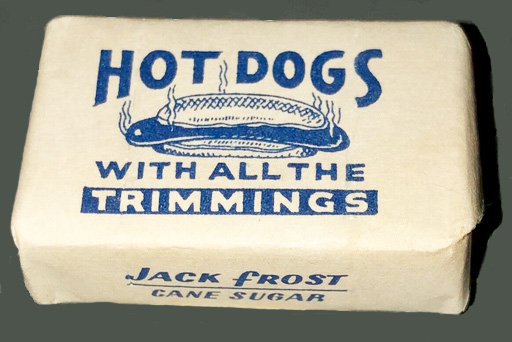
During World War I, many restaurants removed sugar bowls from their tables. Not for sanitary reasons but because they were severely restricted in the amount of sugar they were allotted. Some restaurants served no sugar while others served it only if asked, limiting the amount to one teaspoon per customer. In others, the staff put the sugar in diners’ coffee or served it in small paper packets.

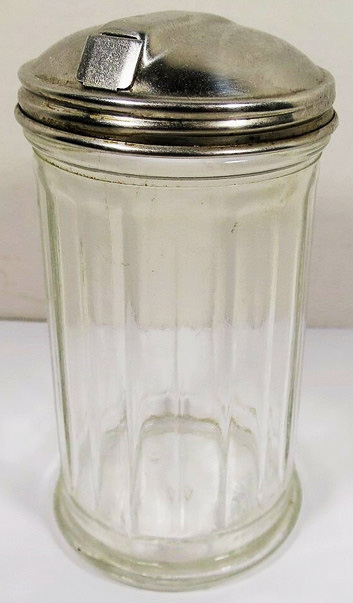
By the end of the war municipal health departments around the country began to order restaurants to use covered sugar bowls, a move probably made more urgent by the nation’s deadly flu epidemic. The postwar years marked several other changes in restaurants’ ways of handling sugar, partly because prices were higher than before. Some introduced wrapped sugar cubes that were often smaller than the lumps of old, while others set out shakers rather than bowls, another method meant to discourage overuse.

Meanwhile, though, tea rooms – and fine restaurants — continued to use sugar bowls, often matching their china patterns, suggesting this was considered more refined and attractive than shakers. During the Depression a tea room consultant advised proprietors who wanted to attract male customers not to use wrapped sugar cubes because “somehow they do not know what to do with that bit of paper.” Likewise, a columnist in 1941 pitied the tired businessman seeking a restaurant meal who couldn’t “dip his spoon into a good old sugar bowl.” Instead he had to fumble with unwrapping a cube and waiting for it to dissolve in his coffee, wasting time and fraying his nerves. Poor guy, who knew?

Another age-old issue with sugar was that when its price went up, customers stole it. No doubt this occurred in the 19th century but it became a focus in news reporting beginning in World War II when sugar was rationed. Waitresses began to notice diners dumping bowls of sugar cubes into their pockets and purses. Some came prepared to steal sugar, bringing along paper bags. It didn’t take long before managers decided not to use lump sugar or discontinued placing any sugar on tables. Some began to furnish saccharin.

Stealing occurred again in 1963 and in the fall of 1974 when sugar prices tripled. The fact that many restaurants were using sugar packets by then actually made stealing easier. This time, many restaurants returned to using loose sugar. A few began to have servers provide sugar only when asked, occasionally going so far as to add a charge on the customers’ checks. [cartoon, 1975]

Things have changed since then. Sugar shakers continue to be associated with diners and lunch counters. But cubes have come up in the world. In the late 1980s a restaurant critic expressed dismay when he went to Justine’s, a restaurant that had long been regarded as one of the finest in Memphis. Among the disappointing details he noticed was the restaurant’s sugar delivery system. “Do people spending hundreds on food and wine really want to use sugar from a paper packet rather than sugar cubes?” he asked.

Today I suspect that the reduced custom of drinking coffee with meals means that restaurants provide far less sugar to customers than they used to.

© Jan Whitaker, 2022

Wishing you a sweet Valentine’s Day!

9 Comments

Filed under food, patrons, restaurant customs, sanitation

Famous in its day: Le Pavillon

Alternative headings for this post could be Former Busboy Becomes Famous Restaurateur, Best Mid-Century French Restaurant in the U.S., or The Restaurant that Set the Standard for Fine Dining.

In other words, everyone who has known or researched Le Pavillon agrees that it produced this country’s finest French cuisine for most of its 22 years under Henri Soulé. It’s also significant that throughout that time numerous employees of the restaurant left to found some of New York’s other top French restaurants.

Not that the city was devoid of fine French restaurants when Le Pavillon arrived on the scene. French restaurants were well established and plentiful, both as independents and in hotels. Among those competing for the most discriminating and well-heeled diners were Voisin, Café Chambord, and La Belle Meunière. But they were soon outdone.

Because its story has been written about so often and so well, it is challenging to approach Le Pavillon as a topic. For a thorough history that gives a good appreciation of its cuisine, I recommend Ten Restaurants That Changed America by Paul Freedman.

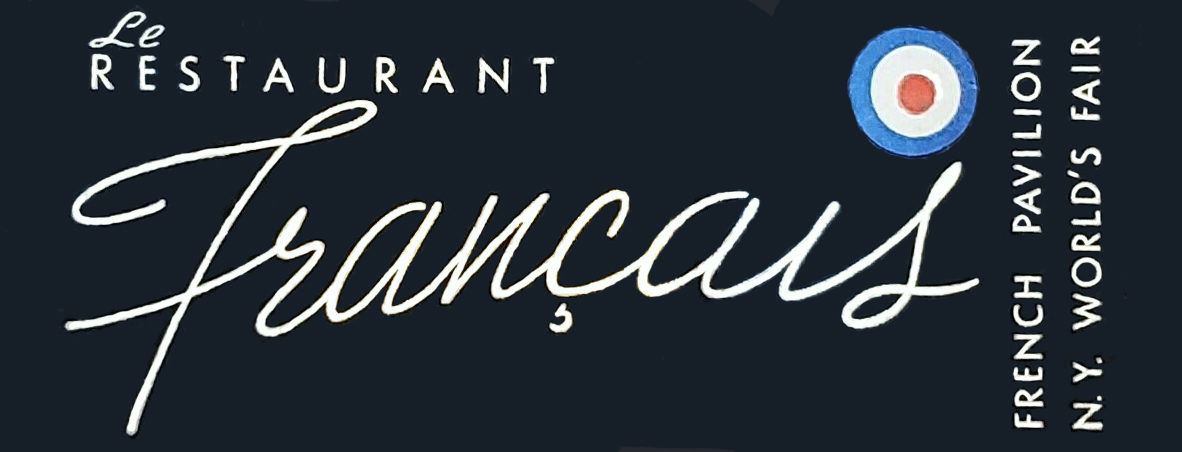
Le Pavillon opened in New York City in 1941, after a spectacular two-year run at the 1939-1940 New York World’s Fair. Located near the top of the Fair’s French Pavilion, it had a dramatic spot overlooking the Lagoon of Nations where a light and fireworks show took place each night at 9 p.m. Despite being the Fair’s most expensive eating place, it was wildly popular and booked for weeks in advance. Because the Fair was difficult to get to by car, New Yorkers had to want to go there badly enough to take public transportation. Yet many returned again and again to dine at the Restaurant Français.

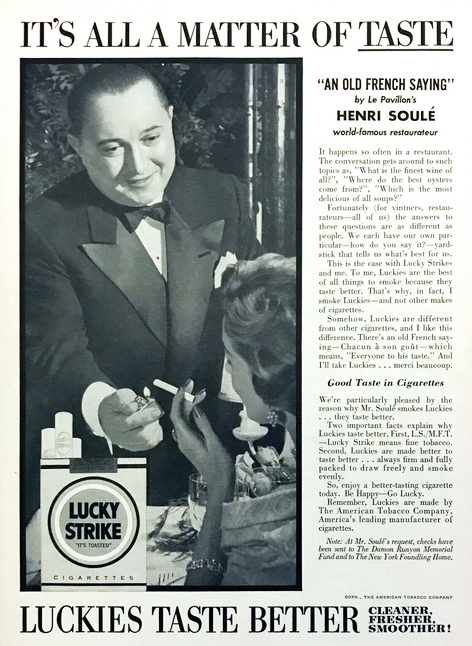
The French Pavilion’s restaurant was provisioned with food and wines brought from France and was staffed by French cooks, maitre d’s, and waiters. It was backed by the French Line and a number of prominent Paris restaurants owned by the Drouant family. Jean Drouant ran the show, hiring Soulé [pictured here], a maitre d’ at one of his Paris restaurants, to manage the dining room.

During the Fair’s tenure, Germany advanced on France, occupying Paris. When the Fair ended, Soulé decided to stay in New York. It has been said that he did not want to return to France under enemy occupation, but it’s likely he was also swayed by the stunning success of the Restaurant Français.

Since many of the restaurant’s French waiters had decided to return to France, Soulé had to hire a good number of French waiters already living in New York. He would soon become known for disputes with his staff, some resulting in resignations of chefs and temporary closure of the restaurant. His authoritarian attitudes may have been shaped by his history with Drouant, who occupied a powerful position in the French restaurant industry. He was president of the Syndicate of French Restaurants as well as the General Owners Union and was not sympathetic to waiters’ rights. He had fully supported military force used to stop a 1938 workers’ strike in response to elimination of the 40-hour week in France. He was critical of French waiters working in America, describing them as “contaminated.”

Soulé’s negative attitudes also included dislike of smoking at the table, women drinking, and the widespread American habit of eating quickly rather than slowly savoring the meal. Perhaps because of his general air of disapproval, regular patrons sought signs of his favor, which he gave sparingly. His was a notable ability to confer status on people who were as hungry for that as they were for Chateaubriand with sauce Béarnaise. One of his ways of winning the loyalty of valued patrons was to offer them special dishes not on the menu. [Note that his dislike of smoking in his restaurant did not keep him from appearing in a Luckies’ advertisement in 1954.]

In a 1962 review of a book about Le Pavillon, a clever journalist summed up how to become approved by Soulé. She wrote: “When you go to Le Pavillon you should be famous, if you can manage it, if not, you should at least be rich, elegant, chic and witty. Beautiful, if a woman, dintingué, if a man. If you can’t manage that, then maintain a balance between hauteur and quiet rapture and for heaven’s sake be careful of your manners and careless of your money.”

Yes, the restaurant was exceedingly expensive, beginning at the Fair. According to Craig Claiborne, in 1960 it was possible to spend as little as $6 there for a meal without drinks, equivalent to about $52 today. But with drinks it could cost ten times that. However, in the era of expense accounts, it was standard that a power lunch would be written off as a business expense.

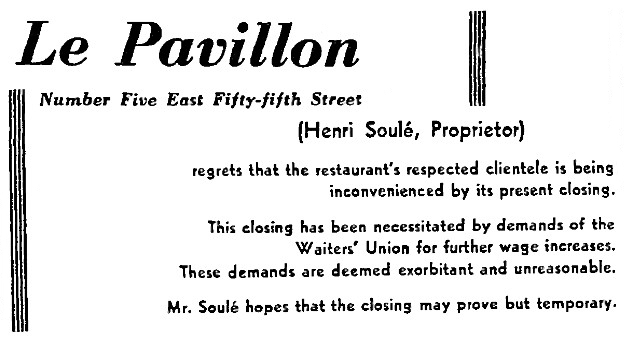
1960 was the year that a dispute between chef Pierre Franey and Soulé over working hours resulted in Franey’s resignation, followed by that of seven of the kitchen staff and leading to a temporary closure of the restaurant. It was not the first time the restaurant closed in response to a dispute. [1955 notice above]

Soulé died in 1966, at age 62. I find it interesting that he willed his watch to frequent patron and “dear friend” J. Edgar Hoover, director of the FBI, whose favorite dishes included Filet of Beef Periogourdine accompanied by a bottle of vintage Romanée Conti.

After Soulé’s death, attempts were made to keep Le Pavillon going but it closed for good in 1971.

© Jan Whitaker, 2022

6 Comments

Filed under elite restaurants, patrons, proprietors & careers, restaurant issues

Native American restaurants

Although there has been growing interest in exploring native foodways in the past twenty or so years, it seems there’s been little research into the history of Native American restaurants, that is, those serving traditional Indian dishes and/or those run by Indians.

The earliest one with a Native American proprietor that I found was in Coweta, Oklahoma, around 1906. It was run by Frank Oliver, a member of the Muscogee Creek Nation. A very brief newspaper item reported, “There are few Indians in the restaurant business but Mr. Oliver likes to feed ‘em and is prosperous.” It was not unusual for Indian restaurants in the Southwest to serve Mexican dishes, especially in later decades.

That same year another Indian proprietor was running a restaurant in Sapulpa, Oklahoma. His name was given simply as Antoine, born a Mohican in New York state but adopted into the Creek tribe. Sometime later a woman named Elizabeth Sapulpa, probably the wife of the tribe’s chief, also had a restaurant in Sapulpa where she served Sofky (corn soup made of hominy, bits of meat and blue corn dumplings) as well as cornbread made of cornmeal soaked overnight in buttermilk.

Many of the references to Indian restaurants I found did not lead anywhere. For instance, despite much searching, I could not determine if the Santa Fe movie studio, opened in Monrovia CA in 1927, ever established its planned Hopi Indian restaurant. And I’d love to know how the Hollywood actor Don Porter fared with his restaurant. It was to be built in Hollywood in 1951 with an open firepit vented through a hole in the roof. For years he had collected recipes from many tribes and planned to feature buffalo, bear, venison, wild greens, wild rice, and corn – along with cook-it-yourself fish wrapped in leaves and mud. Also, I wondered if the plans reported about a 1970s graduate of a culinary training program in Albuquerque had succeeded. She hoped to establish a restaurant on her reservation serving game such as quail, rabbit, and deer, along with blood pudding and her tribe’s oversized homemade tortillas.

Her endeavor would have been in contrast to many Indian-run restaurants on reservations that featured mainstream American fast food. As Ruben Silverbird would observe in the 1980s, “On the reservation we have restaurants run by Indians, but they sell hot dogs, hamburgers, ham and eggs.” Similarly, at the Tigua reservation’s cultural center in El Paso TX in 1986, a restaurant called Wyngs drew non-Indian tourists and served fajitas, seafood platters, and barbecued ribs.

It has been said that Native Americans don’t have a restaurant culture, but I have the sense that there were many native people who for decades wished there were more Indian restaurants. Especially among Indians living in cities there was a strong desire for gathering places and ways to stay connected to their culture, including foods. In 1968 a Queens resident, an Otoe-Pawnee from Oklahoma, observed, “There’s no place for Indians to gather in New York (City) – no Indian restaurants or anything like that.” Buoyed by the Black Power movement, she and other native women had recently joined together to promote their Indian identities.

In the mid-1960s, a food court representing many different cuisines in a Phoenix shopping mall included “The Hogan,” which was claimed – somewhat unconvincingly – to serve the only authentic Indian food in Arizona outside a reservation. It was run by a Scandinavian proprietor who served corn on the cob impaled on arrows. The second incarnation of an Indian restaurant there was named Tiny Teepee where posole, a hominy and pork stew, was prepared and served by Native Americans.

Also in the 1960s Native Americans began to urge the creation of cultural centers that would honor their heritage. By decade’s end a number of Indian restaurants began to open as part of complexes that included motels and cultural centers with museums and craft demonstrations. The Cherokee Heritage Center opened in Tahlequah, Oklahoma, in 1967 with an associated restaurant, the Restaurant of the Cherokees shown here. Although hamburgers and other common “American” dishes dominated the menu, the restaurant also served traditional Indian food such as shuck bean bread (corn and bean dough, steamed in cornhusks), sorrel, watercress from local streams, poke salad, fried huckleberries, crawdads, and “squaw” bread made with sour milk. In the spring, it hosted wild onion dinners.

Building Indian community took a hit in Baltimore when an Indian restaurant failed to open, despite being fully set up and ready to open its doors. The problem was that the U. S. Labor Department claimed it had been a mistake to permit the grantee to buy restaurant equipment with a 1974 job training grant for an American Indian Study Center. The government removed the equipment, sinking what would have been the only Native American restaurant in the Washington-Baltimore area.

1986 marked the opening of what claimed to be New York City’s first Native American restaurant, Silverbird. Its proprietor, Ruben Silverbird Ortiz, a professional singer and entertainer of Indian/Mexican/white heritage, said it would serve New Mexico food, including “green and red chile, blue corn chips, salsa, all that good stuff.” As was true of most Indian restaurants, the menu accommodated non-Indian patrons with American dishes, but held weekly dinners serving rattlesnake stew. The restaurant employed a diverse crew, with servers and kitchen staff made up of Comanches, Navajos, Blackfeet, Italians, Irish, and Mexicans.

Some Indian restaurants were decorated with Southwestern art or murals of buffaloes and teepees. Silverbird was decorated with Kachina dolls and tables inlaid with sand paintings. However, some, such as Dovecrest [shown at top], gave little visual indication they were Indian.

Probably the most celebrated Indian restaurant of the 20th century was Loretta Barrett Oden’s Corn Dance Café in Santa Fe, New Mexico, that ran from 1993 to 2001. Before opening her fine-dining restaurant, Oden, a member of the Citizen Patawatomi Nation, spent three years researching tribal recipes and cooking methods, which can vary considerably according to region. She is a proponent of healthier dishes such as bison, wild-caught salmon, trout, quail, venison, corn, beans, and squash. She has also been a vocal critic of deep-fried fry bread, a popular Indian item in itself as well as serving as the bottom layer of “Navajo tacos,” popular in eating places throughout the Southwest. She has tried to convince Indian-run casinos to offer native dishes, but has found that a hard sell considering the strong attachment of their patrons, both white and Indian, to steak, hamburger, pizza, etc.

The 2000s seem to have raised interest in indigenous chefs and restaurants, but they have continued to face a rocky road in terms of widespread acceptance.

© Jan Whitaker, 2022

16 Comments

January 16, 2022 · 12:47 pm

Restaurant ware

Fine table settings were not to be taken for granted in pre-Civil War American eating places. In 1843 an English visitor was delighted to find a Charleston hotel with “clean table cloths and silver forks.” He recommended the Jones Hotel, run by a Black proprietor named Jehu Jones, the son of a freed slave. Thick dishes, often chipped, and crude forks were more typical of many hotels then.

According to Junius Henri Browne’s The Great Metropolis, in 1869 there were many restaurants in New York City but only in the most expensive, such as Delmonico’s, did the diner find “silver, and porcelain, and crystal, and fine linen.” Common basement eateries, on the other hand, had “broken earthen-ware, soiled table-cloths, and coarse dishes.”

Coarse dishes had become the definitive sign of a cheap restaurant. But in the later 19th century, when early fast-food chains began to form, they attempted to break the equation that thick dishes and bowls indicated filth by being insistent about cleanliness. They stuck with thick dishes that didn’t break or chip simply because they were more practical.

The Baltimore Dairy Lunch

Founded in the late 1880s, Baltimore Dairy Lunch was an early challenger to the old assumptions about thick chinaware. The first unit was opened in Baltimore by a postal clerk. By 1920 there were about 140 locations in large cities through much of the Northeastern U.S. Menus were simple and prices were low. Customers went to a counter to get their food, and consumed it quickly, either while standing at a high counter-type table or sitting in a one-arm chair similar to a school desk. This thick, shallow bowl – possibly used for milk toast – expresses the spartan simplicity of Baltimore Lunches. Despite some yellowing along the edges, it has held up well over the decades.

Ontra Cafeteria

The Ontra (pronounced “on tray”) was a cafeteria begun as a working women’s lunch club, one of four operated by Mary Dutton in Chicago in the 1910s. Like the Baltimore Dairy Lunches they were meant to be affordable and appealed to those who did not want to spend much for a noonday meal. Undoubtedly, like most women cafeteria owners who had studied home economics, Mary Dutton put a high stock on practicality and thrift. This Ontra plate, date unknown, is sturdy but not as thick as dairy lunch dishware.

Steak n Shake and Demos Café

These sturdy glasses are typical of mid-century restaurant glassware with their non-chip rims and their dents and bulges that make them slip proof as well. It’s likely they were produced by Libbey, a major advertiser of glassware in mid-century restaurant trade journals. An advertisement assured restaurant buyers that “Libbey Safedge glassware offers you a wide selection of patterns in all sizes, for beverage and bar service. And because of its durability, you are assured of economy in operation . . . with every glass backed by the famous Libbey guarantee: ‘A new glass if the rim of a Libbey ‘Safedge’ glass ever chips.’”

Woolworth’s lunch counter

The Woolworth plate came from my local dime store when it was closing for good in 1990. Its pattern is one of the endless variations on a theme of this sort, one that could appear in any of a number of colors. Again, a sturdy plate for customers who never gave it a second look.

The Craftsman restaurant

Cheap dishes, glasses, and flatware simply wouldn’t do for upscale restaurants. The better-off classes demanded finer table settings. This had always been true for the wealthy, but in the early 20th century, the middle-class also raised its expectations.

Good taste expressed in restrained design suggestive of nature was the motto of The Craftsman in New York City from 1913 to 1916. Lunch and dinnerware was Onondaga white china with a light brown pinecone design forming a border. For afternoon tea, Lenox furnished an off-white china featuring the Stickley “Als Ik Kan” symbol and motto that promised integrity of method and materials.

Alice Foote MacDougall coffee shops

Women’s tea shops tended to stress individuality. This meant rejecting standardized restaurant ware, instead establishing a unique identity with decor and tableware. Alice Foote MacDougall — who called her tea shops coffee shops to attract men — complained loudly about thick cups and dishes. In her 1929 book, The Secret of Successful Restaurants, she described how, formerly, she had to eat in restaurants “where china, white, thick, and hideous was used.” In them, food was served “naked on a bold, pitiless plate half an inch thick and consumptive in its whiteness . . .” By contrast, she said, the plates in her restaurants were colorful with shades of yellow, blue, turquoise, and lilac.

Shown above is the Graziella pattern used in her Italian-themed coffee shops. Like all the imported china in her restaurants it was also for sale ($2.50 for a dinner plate or a cup and saucer).

The Four Seasons

In 1966 a well-known restaurant consultant explained how people with good incomes preferred to dine when they went out. They liked fine restaurants, appreciated good food, and ate out often. “They expect the restaurant decor to be as nice as the decor in their own homes!,” he explained, adding, “They like fine china.”

Given that The Four Seasons was a power-lunch site, I’m sure there were some guests who paid absolutely no attention to the fine design of the hundred items designed by Garth and Ada Huxtable, nor did they notice that unlike the glasses used in dime stores and lunch counters, their wine glass had no reinforced edges. Others guests no doubt were pleased with the elegant simplicity of the designs.

When the restaurant closed and the furnishings and serving pieces were auctioned in 2018, bidders paid goodly sums for items such as the bread servers (as much as $6,250) and cream and sugar sets (more than $2,000) shown above. I do find it humorous that the cream and sugar set included so plebeian an object as a container for packets of sugar substitutes.

Today, collectors of restaurant ware value a wide range of china, including the thick kind often bearing the logo of a once-popular eating place.

© Jan Whitaker, 2022
18 Comments

Filed under chain restaurants, elite restaurants, lunch rooms, restaurant customs, tea shops

An early French restaurant chain

Sometimes you need to leave your own country in order to get some perspective on it. Along with going back in time, that is what I’ve done. I’ve gone to France — though only through texts and pictures — to explore a restaurant chain begun in the 19th century known as Bouillon Duval.

I tend to think of the United States as the home of restaurant chains, and that they are quintessentially American. There is some truth to this, but it is also full of blind spots as the existence of the Duvals shows. They came before American chains, and showed that a highly rationalized, business-like approach to running restaurants is not solely American. [pictured, rue Poissonniere, 1882]

Looking at Bouillon Duval, which began as a soup restaurant, also dispels a bit of romanticism about French restaurants. As much as Duvals emphasized quality, they were eating places for the frugal masses, not temples of haute cuisine. In the beginning they were meant for poor workmen, but soon they became popular with the middle class. To put it in the language of the day, the “black coats drove out the blouses” who were embarrassed to be in the presence of the better dressed.

The Bouillons were the idea of Baptiste Adolphe Duval. He had a butcher shop in Paris and came from a family that ran a brasserie in the north of France. According to legend, around 1857 he opened a small soup restaurant near his shop using the unsalable meat scraps, and went on from there to become fabulously successful and wealthy. By 1867 he had eight Bouillons Duval in the city as well as at least one at that year’s world’s fair.

Of course it wasn’t quite that simple, and he might have failed if it hadn’t been for his wife’s assistance. According to the most thorough account of the chain’s development, the business was headed for failure as soon as it expanded beyond the small shop. With an enlarged menu and a lot of ideas, M. Duval had moved to a location in a former ballroom on the rue Montesquieu [shown at top of page in 1882, when it had reinstated male waiters]. There he installed a steam-heat system of cooking, along with elaborate piping that served every table with seltzer water. Both innovations were disastrous failures that cost a fortune to tear out. Add to this the lack of an accounting system that made it hard to calculate sales and permitted chiseling on the part of employees and the business was soon drowning in debt.

His wife Ernestine helped set up an accounting system and suggested replacing the questionable male servers with married women of irreproachable character who she dressed in uniforms resembling nuns’ habits [pictured, 1902]. The business began to show a profit and soon expansion was underway. Not surprisingly, when M. Duval died in 1870 shareholders chose Ernestine to take over the corporation and expand it further.

The Duval company had incorporated in 1868, by then consisting not only of eating places but also its own butcher shops, slaughter houses, bakery [pictured, 1882], large laundry, and caves that stored wine.

The company achieved heroic status in 1870 when it somehow managed to stay open during the “Siege of Paris” when German forces surrounding the city cut off food supplies. Their continuing in operation was significant not only for providing meals but also in boosting morale. In 1900 the French government awarded the Duvals’ son Alexandre, then manager, with the medal of the Legion of Honor. By then the company ran 32 restaurants.
The Duval system was based on keeping prices low while serving a large volume of customers quickly and efficiently. It was thoroughly a la carte right down to an extra charge for a tablecloth if wanted. During the Siege a London man recorded what he ordered at one of the 14 Duvals. He and his companion ordered bread for 1 cent, potato soup for 2 cents, as well as roast mutton, puréed potatoes, green beans in white sauce, and a pint of Mâcon wine. The total bill – with tablecloth – came to 18 cents. [Above, a menu that was to be filled out by the customer, ca. 1882; See The American Menu blog for several Duval menus.]

Needless to say, the fact that wine and other alcoholic beverages appeared on menus set the Bouillons Duval apart from most early chains that later developed in the U.S., such as Childs.

Numerous Americans as well as English citizens frequented the Bouillons when visiting Paris [above, diners at the 1878 Paris International Exposition; the objects with handles on the tables are menus], and expressed a wish to have something like them in their own countries. In addition to serving quality food and decent wine at low prices they were known to be spotlessly clean, quite unlike most of the cheap fixed-price cafes that working people had frequented before the Bouillons came along. The major criticism against them was that portions were small. Some critics said that if a hungry diner ordered all they wanted they would find that their bill was as expensive as in a finer restaurant. Other guests complained about the crowds and the “deafening din of knives and forks clinking against plates and dishes.”

Nonetheless the Bouillons Duval were invariably recommended in guide books for visitors to the international fairs held in Paris in 1867, 1878, 1889, and 1900. In 1878 the Duval restaurants were said to have served 5M meals that year. Pictured above is one of several Duval locations at the 1889 Exposition.

At some point a Bouillon Duval was opened in London, and in the 1880s there was one advertised in Los Angeles that offered “hot soup and schooner lager beer, five cents.” I couldn’t determine whether it was connected to the Paris restaurants or not.

The last mention of the Paris Bouillons Duval I found was in 1924, when the chain was still said to be all over the city.

© Jan Whitaker, 2021

1 Comment

Filed under chain restaurants, patrons, proprietors & careers, restaurant prices, waiters/waitresses/servers, women

“Biblical” restaurants

This week an unknown person found my blog by searching for “restaurants in the bible.” I found this humorous because, needless to say, I am 99.99999% certain there are no restaurants mentioned in the bible.

I wondered why a search engine would have directed this person to my site. Could it be because of a post I published in 2017 called Christian restaurant-ing?

Since I found it funny, I went to Facebook and posted a note about the search term.

Next thing I knew, my clever friends had started inventing imaginative names for biblical restaurants. Here they are in alphabetical order:

The Ark

Calvary (not very popular, limited cuisine)

The Last Supper Bar & Grille

The Last Supper Club

Loaves and Fishes

Manna Nirvana

Mary and Martha’s Place

Not Just Another Room at the Inn

Olive Garden

Olive Garden of Eden

Olives of Gethsemane

The Stable, a Family Restaurant

Suspicious Fish

3 Wise Guys Pizzeria

12 Hungry Men

Water & Wine

Do you have any ideas for names?

© Jan Whitaker, 2021

11 Comments

Filed under restaurant names

Thanksgiving dinner at a hotel

In 1843, when the most enthusiastic celebrators of Thanksgiving were New Englanders, the Sons of New England – who were living in Philadelphia — decided to hold a Thanksgiving dinner at a hotel there. They chose the Washington House, which had recently been taken over by a new manager who emphasized that he provided recherché fare.

What little is known about the dinner gives a peak at a strange, lost holiday custom.

The Sons of New England were men from the two states that were known for their enthusiastic celebrations of Thanksgiving, Connecticut and Massachusetts. As evidence, in 1817 a report circulated about the lavishness of Thanksgiving dinners in Connecticut. The source of the story’s figures listing the quantities of food is a mystery, but it’s impressive how much Wine, Brandy, Gin, Rum, Cider, and Whiskey was said to be consumed. It’s also interesting how the most popular food items mentioned differ from those regarded as traditional today. Geese outnumbered turkeys by a factor of 10, and apple sauce was 12 times more plentiful than cranberry sauce.

The Washington House dinner was held at 4:30 p.m. on November 30, with about 130 in attendance. The Sons were said to be men of prominence in Philadelphia. Obviously they were not poor if they could pay the $3 ticket charge, easily equal to $100 today.

The bill of fare for the 1843 dinner is unfortunately not available, but a newspaper story describing it revealed that it included red onions cultivated in Connecticut and baked beans — then practically the official dish of Boston.

The beans seem like an odd dish for Thanksgiving, but the big surprise was that bowl of molasses passed around so everyone could take a lick! I puzzled over how it might have reminded them of “other times.” What could that mean? Turns out I guessed right — that it brought back memories of childhood. According to accounts from that time, young children would go to wharves with small sticks that they would insert repeatedly into molasses barrels and then lick them off.

Have a wonderful holiday and be thankful that your dinner won’t include sharing a bowl of molasses.

© Jan Whitaker, 2021

4 Comments

Filed under food