Tag Archives: coffee shops

California coffee shops

With the end of World War II, the United States became the undisputed world power as well as the leading economy, producing the largest share of the world’s goods.

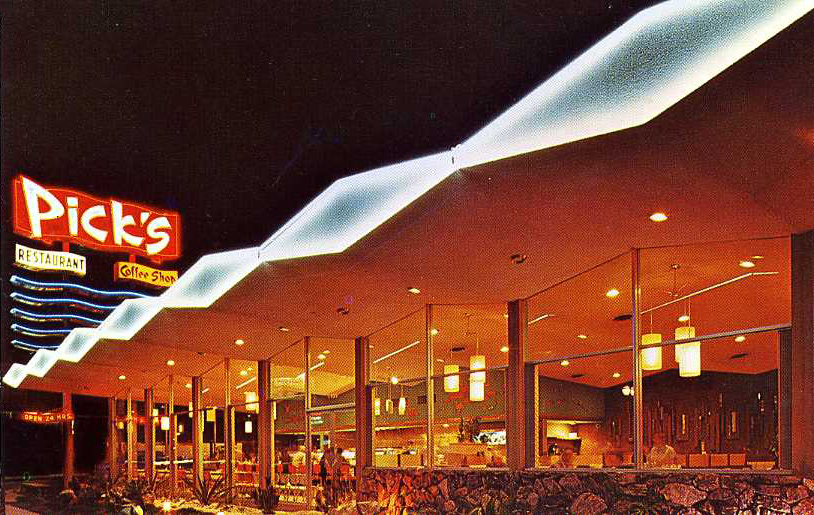
Many changes took place in American society as the soldiers returned. Suburbs sprang up with housing for growing families, shopping centers appeared, and many workers enjoyed prosperity. And a new type of eating place came into being, known as the “California coffee shop.” There had been coffee shops before that, but Southern California introduced new features, particularly in terms of design.

Triumph at the war’s end was celebrated with ticker-tape parades, but also in the design of cars and buildings, including the exuberant design of coffee shops in Southern California. The style of restaurant buildings that has also come to be known as “Googie” was modern, but without the severity of International Style. It used a wide range of materials developed in wartime, and forms inspired by the angles of fighter planes, the energy of the atom, and the bursts of bombs.

The inspiration for the striking designs of California coffee shops – known as Coffee Shop Modern – is frequently attributed to the space age, but over time the realization has grown that it was equally inspired by U.S. world ascendancy rooted in warfare. It may seem strange to attribute inspiration for a sprightly and bright type of architecture and interior design to something as ominous and deadly as the bomb, but a number of writers have made this connection.

In the words of Michael Sorkin’s essay “War is Swell” [in World War II and The American Dream, 1995]:
“That the atom so readily became a chipper symbol of American modernity in the immediate aftermath of its use as the greatest instrument of mass death in human history speaks volumes about the relationship of the accomplishments of war to the formal culture of peace. The decor of the fifties is all bursts and orbits, nuclei and energetic spheres. The atom was fully relegated to the class of things, isolated from life.”
[See also Elizabeth Yuko’s “Why Atomic Age Design Still Looks Futuristic 75 Years Later”]

Elements of coffee shop design can be seen in the look of automobiles of the same time. Some of the striking elements of California coffee shop design were echoed in the fins of Cadillacs inspired by the P-38 fighter plane. In Googie Redux, author Alan Hess, who has been largely responsible for recognition and appreciation of the creativity of Coffee Shop Modern, notes that Time Magazine called the 1959 Cadillac design the “ICBM [Intercontinental Ballistic Missile] look,” and also that “The Olds Rocket, the Olds Cutlass, and the Buick LeSabre were all names borrowed from aeronautics.”
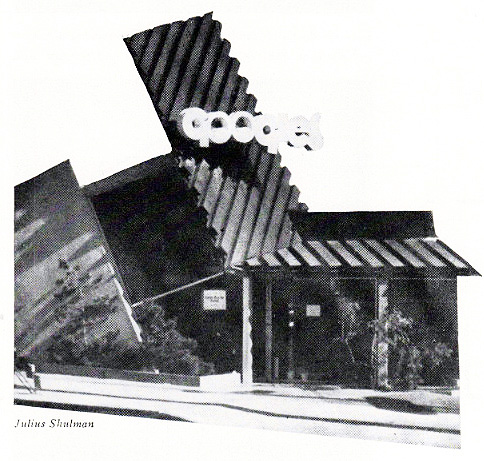
The design of coffee shops was nicknamed “Googie” after architect John Lautner’s 1949 unique Los Angeles creation bearing that name. It featured expansive glass window walls, unusual angles and roof lines, prominent signs, and bright colors. [partial view shown above — it extended farther to the right]

The vocabulary of Coffee Shop Modern signals its inventiveness. Terms in a glossary by Alan Hess in his book Googie Redux include: amoeboid, boomerang, cantilevered canopy, diagonals, dingbat, flagcrete, folded plate roof, free form, hyperbolic paraboloid, starburst, steel web lightener, structural truss, and tapering pylon.

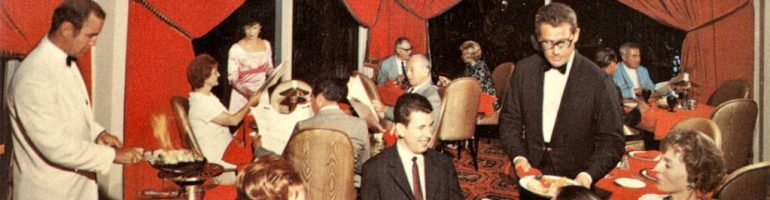
California coffee shops, often bearing nicknames of their owners (Norm’s, Biff’s, Ship’s, Hody’s, Sherm’s, etc.), were casual, unpretentious, comfortable, moderately priced, and open 24 hours. Compared to the inexpensive eating places of the Depression, they offered a cheerful example of luxury for the masses, or what has been termed “populuxe” (See Thomas Hines’ book of the same name). Contrary to the usual negative public reaction to modern architecture, the upstart designs of the coffee shops were well accepted.
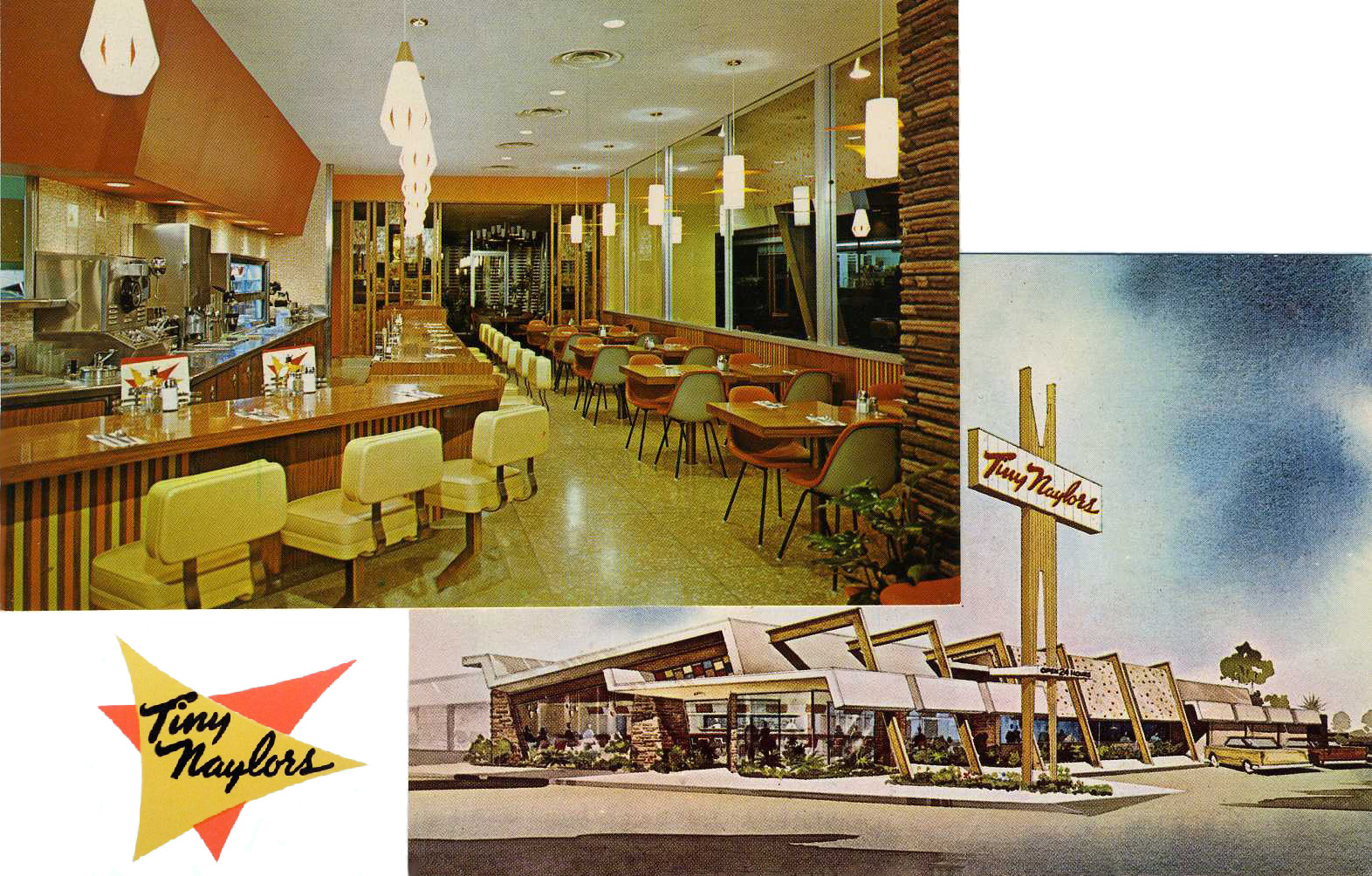
Counter seats were usually spaced generously and built with cantilevered supports allowing for unobstructed floor cleaning. [see above] Many had walls of decorative stone. A 1955 news story about the newly built Carolina Pines Jr. at LaBrea and Sunset noted its imported Italian mosaic tile columns, Palos Verde stone walls, and custom-designed wall plaques, among other features. It also had a carpeted dining room and an outdoor patio eating area in a garden protected from road noise and dirt with decorative fencing. [see below]

The coffee shops also introduced exhibition cooking. Although Eastern diner-style eateries had long done their cooking in sight of patrons, coffee shops introduced stylish designs and materials to the cooking areas and kept them sparkingly clean.

And, oddly enough, considering that the coffee shops were open all night, many of them had cocktail lounges.

Coffee shops designed along the lines of Southern California’s soon spread across the country. In St. Louis there was the Parkmoor, Cleveland had Manners, and Denny’s, with its beginnings in California, flourished everywhere.

Of course, as was true with neon signs, there were critics, notably Peter Blake in his 1964 book God’s Own Junkyard. He lumped Googie-style designs with neon, billboards, subdivisions, and a general decline in the built environment.
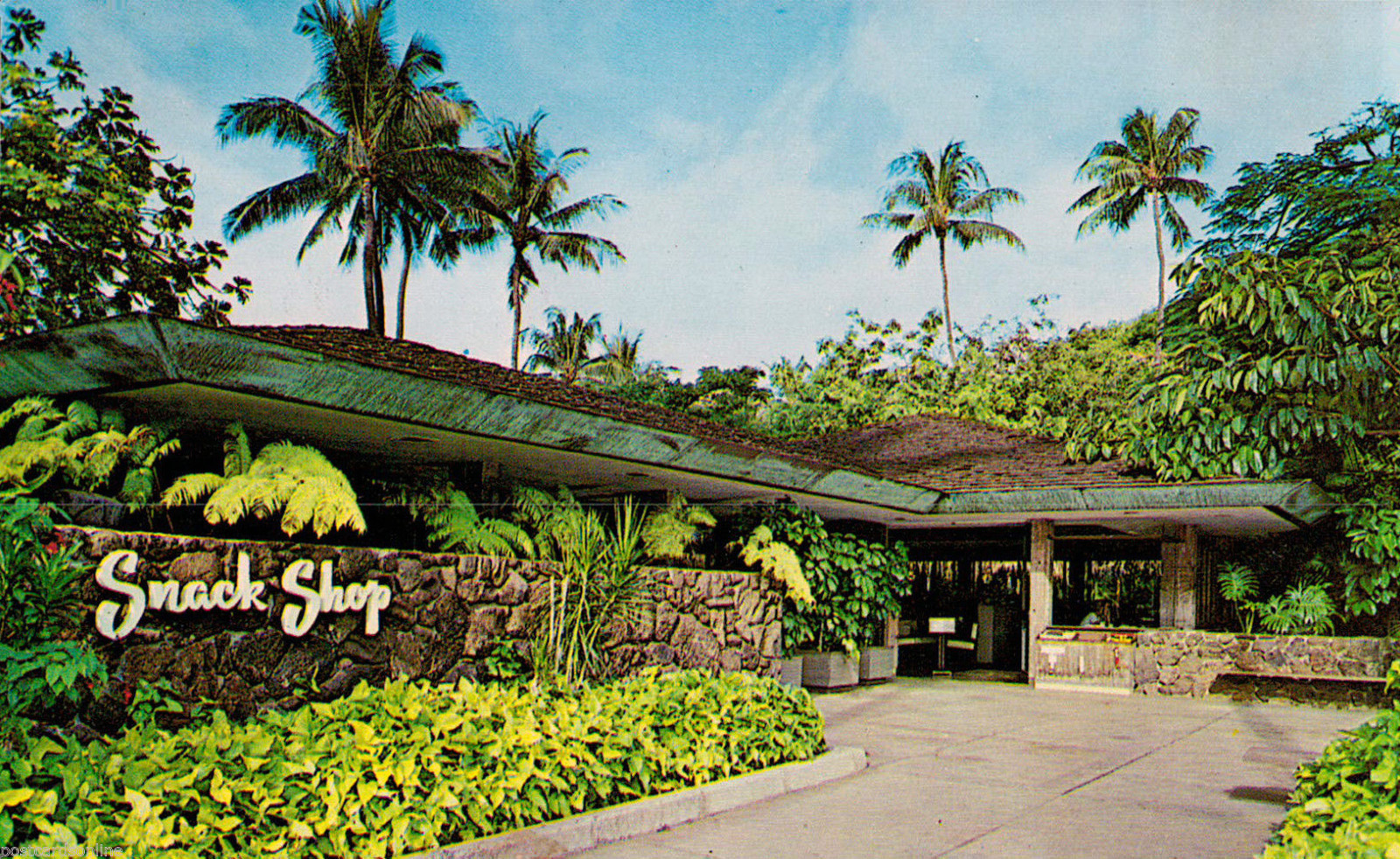
Starting in the mid 1960s but gaining in the 1970s Googie style was rejected, and what has been dubbed the “browning of America” by Philip Langdon had begun. Now chain restaurants of the coffee shop type began featuring earth tones, mansard roofs, exposed wooden beams, hanging plants, and subdued lighting. The coffee shop type of suburban restaurant continued in chains such as Denny’s despite competition by fast food establishments. McDonald’s, which had itself begun with Googie styling, toned down its buildings.

The change was due in part to the Vietnam War, but I can’t help but wonder if Americans hadn’t already become disenchanted with power and wealth based on military might.

© Jan Whitaker, 2024
22 Comments

Filed under chain restaurants, decor, family restaurants, popular restaurants, restaurant decor, restaurants

When coffee was king

coffeeSignkelly'scafeFor decades coffee was the beverage most restaurant patrons drank with their meals.

In the Colonial era, though, coffee may have been more of an occasional beverage. Coffee houses were popular gathering spots for business men in the Colonial era and in the early Republic but there is no way of knowing how often coffee accompanied meals in those times. Many coffee houses advertised that it was available all day long, but it’s likely it was outsold by alcoholic drinks.

Then coffee began to gain greater importance as the temperance movement developed in the 1830s. A restaurant owner in Providence RI was an early convert to the role of coffee in reforming heavy-drinking Americans. A religious magazine hailed him for his decision to replace liquor with coffee, stating “If a man must, from habit, drink at 11 o’clock, let him drink ‘Hot Coffee’ and patronize Mr. Dinneford.” In those days 11:00 a.m. was the traditional time for a ‘dram.’

So almost from the beginning coffee was associated with a sober, alert, and morally superior approach to life.

CoffeeTrentonNJdiner

From the mid-19th century into the 1890s most inexpensive restaurants charged 5 cents for a cup, though it might cost a couple of cents more or less. Move up a step to a higher grade eating place, such as Mouquin’s, a popular French table d’hôte in New York City, and a cup would cost 10 cents. Luxury restaurants of the 1890s, such as Delmonico’s, were likely to charge 25 cents for coffee, a sum that would buy a whole dinner in a common lunch room.

The importance of coffee to restaurants grew in the 20th century, especially at popular-priced eateries where the price of a cup remained 5 cents. By the early 1920s, the amount of coffee imported into the U.S. had more than tripled since 1880. At “quick lunch” places, individual table & chair combos that looked like school desks were designed with a hole in the top to hold the all-important coffee mug. Already by 1904, some horse-drawn lunch wagons provided cardboard containers for coffee orders to go.

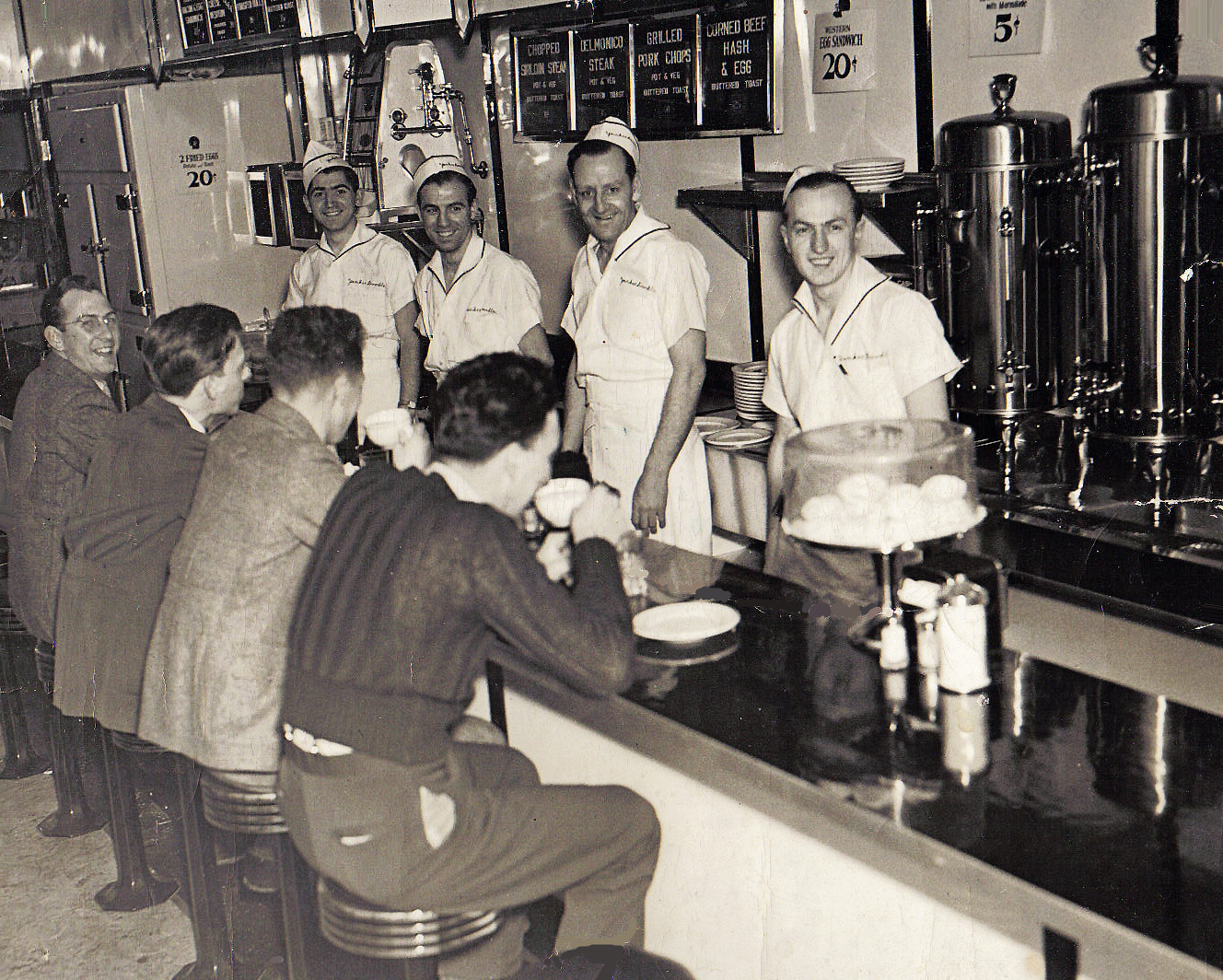
coffeewithmealRestaurant proprietors and customers alike agreed that “coffee makes the restaurant” and that you could tell a good restaurant by its coffee. Even when sold at a low price it was profitable, especially at lunch counters where service costs were low. Most diners ordered coffee with their meals in the 1920s, even at the ritzy Waldorf Astoria. No one, it seemed, cared that famous French chef Auguste Escoffier had laid down the rule, “Never serve coffee except at the end of the meal.”

In the 1930s and 1940s, a nickel a cup didn’t seem enough to many restaurateurs who raised their prices to 10 cents. Those that did not had reason to regret it in 1944 when the war caused the federal government to order that restaurants not charge more for coffee that they had in October 1942. For most places this meant 10 cents, but chains such as the Automat, Bickford’s, Thompson’s, B&G Sandwich Shops, and the Waldorf System were stuck with nickel-a-cup until late in 1950.

Prices continued to tick upwards after that. By the mid-1970s 25 cents a cup was standard in the average restaurant. (Even then, there were customers who bristled at paying more than 5 cents!) Often restaurants softened the blow of price increases by offering free refills to those ordering full meals. Still prices rose, and even chains such as Wendy’s raised their price to 30 cents while Friendly’s went up to 35 cents in 1977. Ten years later, one dollar a cup was commonplace.

coffeeCory1960In the 1970s and 1980s, higher priced coffee beans, along with fast food chain competition, and the rise of soft drinks with meals reduced the popularity of coffee and dealt a blow to coffee shop restaurants. Coffee shops had been the fifth most popular type of eating place according to a 1976 National Restaurant Association survey, but by the mid 1980s they were slipping badly. Philip Langdon, author of a book on chain restaurants titled Orange Roofs and Golden Arches, observed that many coffee shops had restyled themselves as “family restaurants” in an attempt to draw the dinner crowd.

Around the same time a series of SCTV comedy sketches made fun of the mythical polka-loving residents of Leutonia and their fondness for “cabbage rolls and coffee,” marking a new attitude to coffee with lunch or dinner that branded it as the choice of unhip elderly diners.

Coffee retains its popularity as a stand-alone beverage today, but less as an accompaniment to meals. Gone are the days when Maxwell House coffee and Cory coffeemakers reigned – when 90% of restaurant customers ordered coffee with their meals (1935) – and when the trio “Cleanliness, Comfort, Coffee” were enough to assure a restaurant of success (1955).

© Jan Whitaker, 2016

14 Comments

Filed under food

“Time to sell the doughnuts”

donutsMayflower796Doughnuts are a food that has rarely been taken seriously by the media. After encountering loads of silly stories about doughnut holes and dunking I have decided the reason is that throughout the last century the doughnut industry was amazingly successful in promoting its products, often through humor. Most of what appeared in papers and magazines was the work of publicity agents for the manufacturers of doughnuts, equipment, and mixes.

No doubt people would enjoy doughnuts even without publicity, but the endless promotional events and stories helped make their consumption year-round rather than concentrated in fall and winter.

donuts1939World'sFair

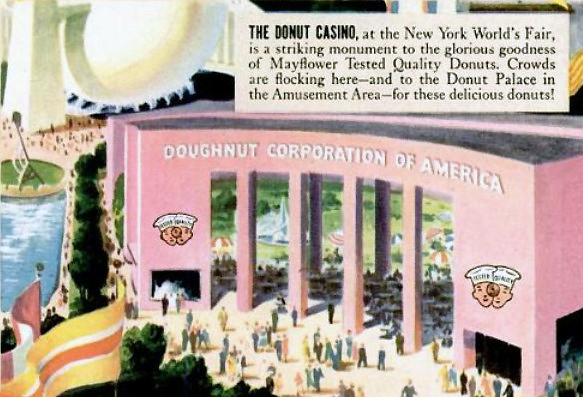
Starting in the 1930s the publicity directors of one of the largest producers, The Doughnut Corporation of America, organized dunking contests, created a National Dunking Association, sponsored displays at World’s Fairs [1939 advertisement shown], and planted photos of celebrities eating doughnuts in newspapers and magazines along with cartoon-illustrated stories such as one about a character named “Ima Dunker.”

One of the corporation’s publicity directors claimed that doughnuts were the first food to have a week proclaimed for it. National Doughnut Week began in the 1930s. To the annoyance of some who felt it was frivolous, mayors of cities and towns around the country would receive a kit with a membership card for the National Dunking Association and a bib along with a request to proclaim doughnut week.

The Doughnut Corporation of America grew out of a small baking business in NYC owned by Adolph Levitt. He is often credited with inventing the first automatic doughnut machine in 1920, but in fact there were numerous machines on the market then as well as in earlier years. Doughnut making machines were popular with bakeries and lunch rooms which placed them in their windows so that people on the street could see the (cake) doughnuts being made and feel drawn to buy some. But Levitt was clever and soon his rapidly growing company was supplying the whole country with machines as well as Downyflake doughnut mix, and backing it all up with publicity support.

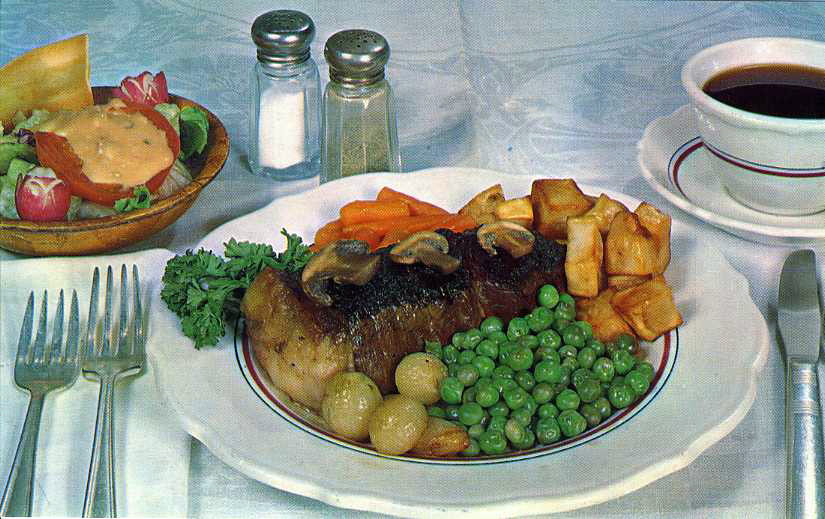
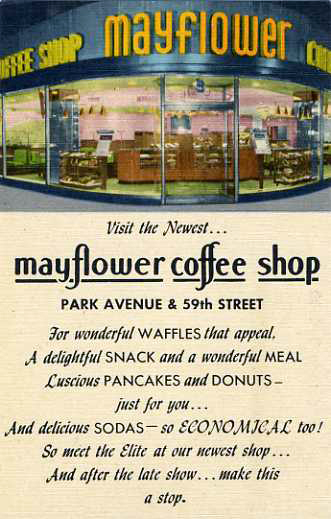
donuttimessquaremenu1949In 1931 the Doughnut Corporation created a Mayflower Coffee Shop in Times Square. It was followed by one each in Boston and Chicago the next year, and another in Springfield MA in 1934. By 1936 there were 15 around the country, and in 1949 there were 24. The Mayflower Shops menu featured popular dishes such as Hamburgers, Corned Beef Hash, and fountain specialties, but also Waffles (the company made waffle mix too), Pancakes, and of course Donuts (as they came to be spelled). Plain, sugared, and cinnamon donuts cost 5 cents each in 1949, 10 cents for a frosted donut, and a Donut a la Mode came to 15 cents.

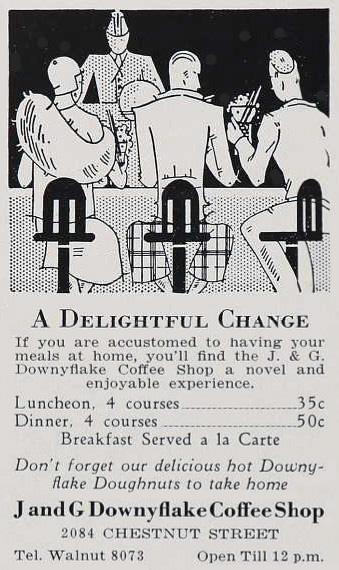
donutdownyflakeADV1932The Doughnut Corporation also franchised Downyflake Shops. In 1931 there were 36 in Boston and surrounding towns in eastern Massachusetts, out of a nationwide total of about 400. They appear to have been sandwich shops for the most part, but some may have only sold doughnuts. The Doughnut Corporation also built doughnut plants around the country. A plant in Fort Worth TX in 1932 produced an important doughnut ingredient, dried egg powder, a product which had for decades come exclusively from China.

I am unsure how long the Doughnut Corporation’s restaurants stayed in business, however by the mid-1970s the company, now DCA Food Industries, still produced doughnut making equipment. By then the doughnut-plus-coffee shop business was led by Dunkin Donuts (750 franchises) and Winchell’s Donut House (530 units).

© Jan Whitaker, 2014

12 Comments

Filed under chain restaurants, food

Famous in its day: Wolfie’s

Wilfred Cohen was an opener. He’d buy or start up a restaurant and once it became a success he would sell it for a nice profit. The former Catskills busboy came to Miami Beach around 1940 and bought Al’s Sandwich Shop on 23rd St. off Collins Ave., selling it after turning it into a popular spot “known coast to coast.”

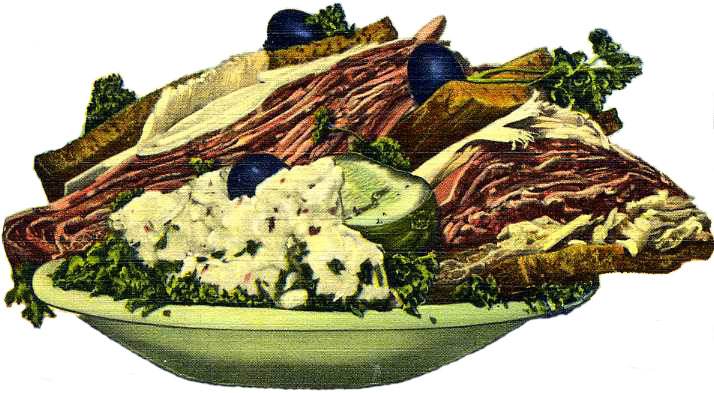
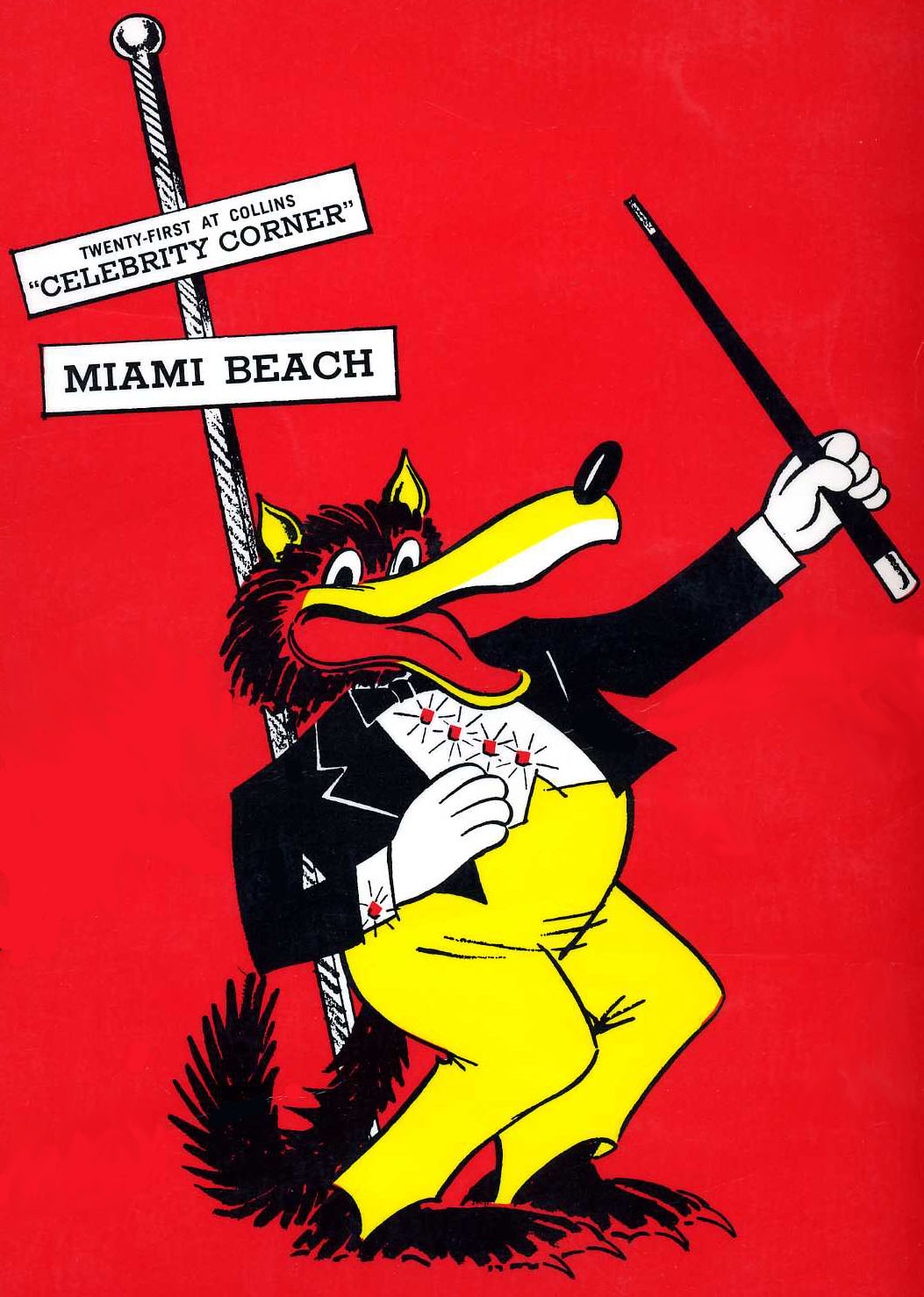
Overstuffed sandwiches were his ticket. In a short ten years or so he opened and sold not only Al’s but four other restaurants, among them Wolfie’s at Collins and 21st St., which would become a landmark and continue until 2002. Wilfred “Wolfie” Cohen would keep just one of his restaurants, The Rascal House, located on motel row at 172nd St. Wolfie Cohen died in 1986 but his Rascal House survived until 2008.

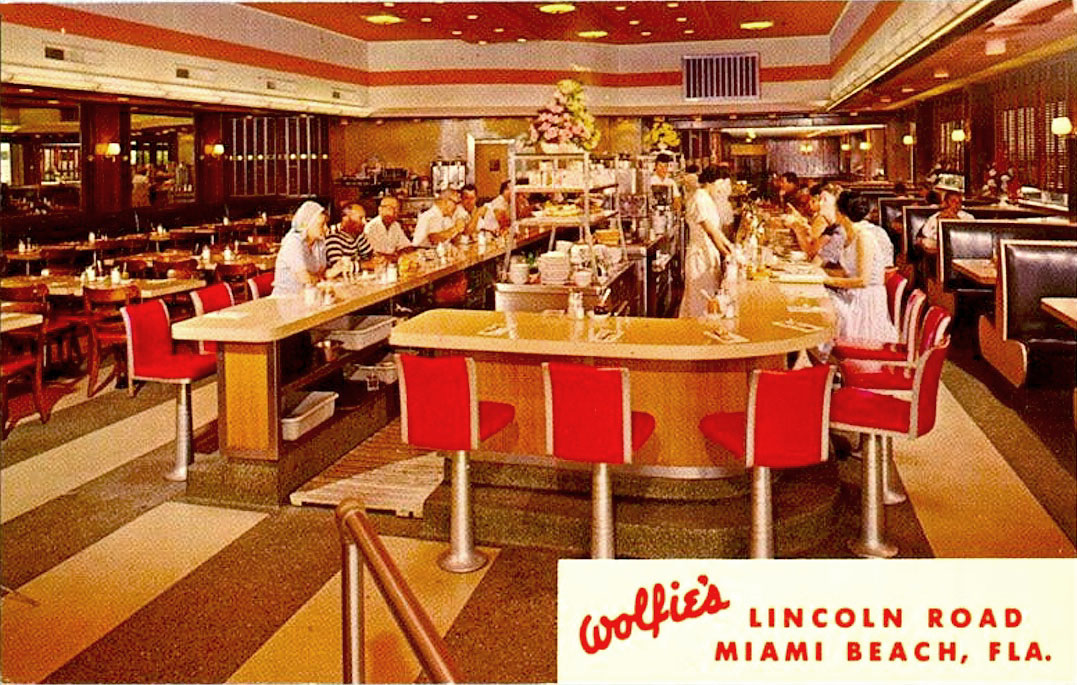
In the end the original Wolfie’s at 21st Street became known as “the” Wolfie’s, but at one time there were at least two others of significance, a flashier Wolfie’s at Collins and Lincoln Rd. and another in North Miami Beach. Both closed around 1983. Whether Cohen was involved with all three is unclear but I am fairly sure that the Wolfie’s, original included, were backed by financial syndicates. There were also, at various times, Wolfie’s branches or franchises in St. Petersburg, Boca Raton, Fort Lauderdale, Gainesville, Cocoa Beach, and Jacksonville. Brooklyn NY’s Wolfie’s, though, was an entirely different operation.

The boom years for Wolfie’s and all of Miami Beach’s deli-style eateries came after World War II when Jewish veterans and retirees, mostly from New York and the Northeast, flowed into Miami Beach by the thousands as permanent residents, snowbirds, and tourists. Then, lines of people often wound around the block waiting to get into Wolfie’s. So closely was Wolfie’s identified with Miami Beach that in 1959 Northeast Airlines chose it to cater meals for Miami-to-NY passengers; Lindy’s supplied delicacies to those flying south.

Wolfie’s was a 24-hour-a-day haven for the elderly living in kitchenless beachfront rooming houses (destined to be restored as art deco boutique hotels in the 1990s). It also attracted politicians looking for the liberal vote and visiting borscht-belt performers such as Milton Berle and Henny Youngman, as well as big and little gangsters and bookies with a yen for chicken livers, pastrami, and cheesecake. In the 1970s mobster Meyer Lansky, pursuing the simple life of a philosophical, Chevrolet-driving, book-borrowing library patron, was often spotted noshing in Wolfie’s.

By the mid-1980s, after the original Pumperniks closed (another Wolfie Cohen 1950s start-up), Wolfie’s was one of few, or perhaps the only, large-scale deli left on the South Beach. Pumperniks’ owner Charles Linksman attributed Wolfie’s survival to its proximity to theaters and boxing ring. That and tourism helped it get through the next decade, but a sense of decline was inescapable. The Beach’s population of Jewish retirees dropped dramatically, due to natural causes as well as a flight northward to Broward and Palm Beach counties to escape a perceived threat of crime and a cultural shift.

In its waning days Wolfie’s still managed to draw foreign and domestic tourists, such as moi, seeking vestiges of the old Miami Beach. I can’t remember what I ordered but I’m certain it wasn’t a Bowl of Sour Cream with Cottage Cheese ($4.75). I wasn’t quite in the “what’s a blintz?” category of so many patrons then, but close.

© Jan Whitaker, 2011

293 Comments

Filed under popular restaurants

Restaurateurs: Alice Foote MacDougall

Alice, shown in this 1929 book frontispiece at least 20 years younger than her true age at the time, was one of the most carefully crafted restaurant personas of her day. Due to numerous magazine stories spun by her publicity agent, she was widely known as the poor widow with three children who built a coffee wholesaling and restaurant empire on $38. Even she had to admit (or was this PR also?) that the story was overplayed. “How tired I did get of that woman and those interminable three!” she confessed. Quite honestly, I’ve always felt her much-vaunted opposition to suffrage for women was a publicity stunt too.

She was from a distinguished New York City family. Her great grandfather, Stephen Allen, was mayor of New York City in the 1820s, while her wealthy father Emerson Foote was a charter member of the Union League. Alice, her daughter, and her two sons were listed in the city’s Social Register in 1918. Her career in the coffee wholesaling business began in 1909 with the death of her husband Allan MacDougall. In the 1920s she was said to be the only woman expert in coffee grading and blending in the U.S.

She opened her first eating place, The Little Coffee Shop, in Grand Central Station in New York in December 1919. Waffles were the specialty in her homey café which was decorated with a plate rail and shelves holding decorative china. (Evidently tips were good, because MacDougall had the nerve to charge her waitresses $10 a day to work there.) By 1927 she had signed a $1 million lease for her fifth coffee house, Sevillia, at West Fifty-seventh Street. Her places became known for their Italian-Spanish scene setting. The reason, she said, was that it provided a way to disguise long, narrow spaces, as was clearly the case with the Cortile (shown here).

At Firenze, reputedly used as a movie set, she dressed her black servers like Italian peasants in bright uniforms and head scarves and had them go about filling copper jugs with water from a stone well. Tables were set with imported pottery which she sold as well, along with her Bowling Green Coffee. The Mediterranean village style mimicking courtyard interiors became wildly popular throughout the U.S. in the 1920s and countless women were inspired by MacDougall to open tea and coffee shops of their own. The chain went bankrupt in the depression and new management took over for a time, lowering prices and adding cocktails to the menu.

© Jan Whitaker, 2008

9 Comments

Filed under tea shops, women