Tag Archives: 1940s

Dining sky-side

airportO'Hare

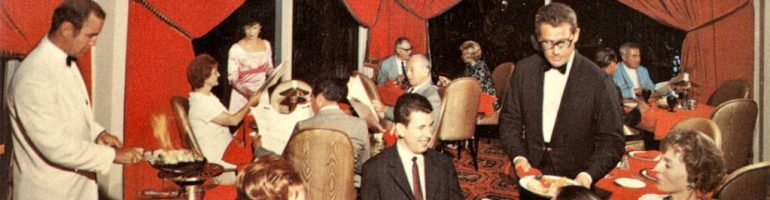
Although a number of superior restaurants have opened in airports in the past several years, their run-of-the-mill food purveyors are often just passable. Customer comments reveal praise for certain restaurants, but opinions overall sound a negative note, rising to weak compliments such as “actually somewhat good” or “standard innocuous restaurant/hotel fare.”

In the beginning, there was no food at all. In the 1920s airports had no restaurant facilities. There were scarcely any commercial flights, facilities consisted mainly of fields and a hangar or two, and the few commercial passengers were lucky if they could get a cup of coffee.

By the mid-1930s more commercial flights were offered and airport conditions improved. The number of passengers multiplied more than 100 times between 1926 and 1935. To win greater traffic, bigger cities vied to create terminal facilities that could match those of their transportation rival, trains. Restaurants figured prominently among the amenities offered.

Most passengers in the 1930s, 1940s, and 1950s were businessmen or wealthy travelers who were unwilling to settle for bad food. Even though all air travel was essentially first-class then, passengers frequently rejected what was served on the plane and tried for something better in the terminal. Their demands, combined with the need to put airports in the black financially, brought about efforts to create first-rate airport eating places.
airportburbankskyroom (2)

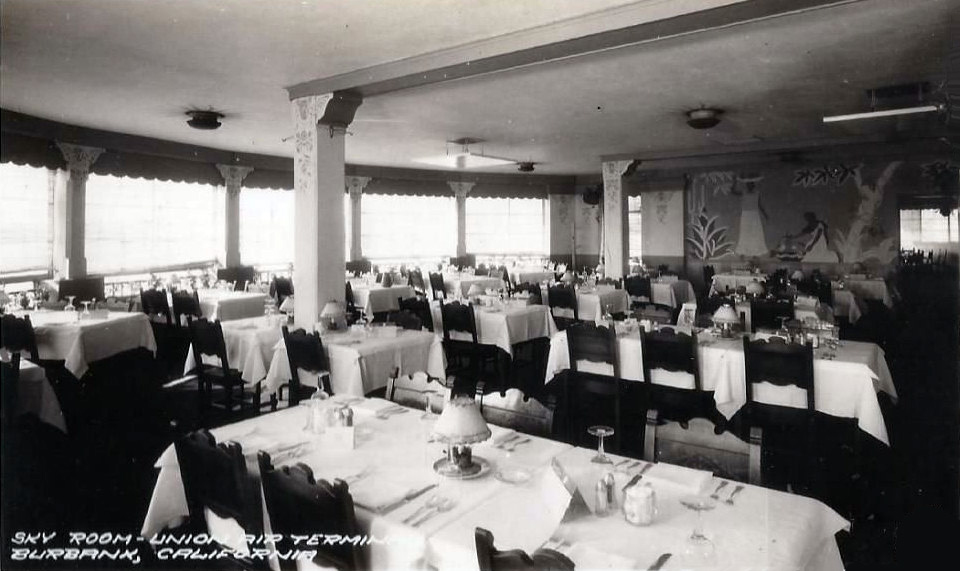
The earliest image of an airport restaurant I’ve found is that of the Sky Room in Burbank CA’s Union Air Terminal (now Bob Hope Airport), in 1940, showing tables with white linens, goblets, and boudoir-style table lamps.

Airports were costly for cities and towns to build and run so income from concessions was needed badly. Managers expected income from non-aviation concessions at New York’s Idlewild airport to make up one third of revenues in 1949. Restaurants and coffee shops were the biggest single contributors of concession revenue in most airports.

But restaurants found it hard to operate profitably when serving only “captive customers,” particularly when their numbers were still relatively small. Beyond pleasing airline passengers, the solution for many airports was to reach out to customers living nearby. In 1947 the airport restaurant in Albuquerque NM went so far as to hire a chef who had studied with Escoffier and cooked for US presidents and royal families in Europe. His mission was to make the terminal restaurant one of the nation’s best known restaurants.

The early 1950s saw the debut of what might have been America’s premier airport restaurant, The Newarker in the Newark NJ terminal. With Joe Baum as manager and Albert Stockli as chef, it soon became famous, launching Restaurant Associates which owned many of NYC’s top dining establishments. Duncan Hines lauded The Newarker for its “flaming sword specialties, authentic East Indian curries, [and] regional Swiss specialties.”

airportCleveland1965Seattle1941

Evidently the tactic of pulling in locals worked, partly because even through the 1960s people were thrilled to see planes take off and land. Dining rooms typically overlooked the airfield. In 1953 Fort Worth’s new terminal at Amon Carter Field was touted as “a wonderful, quiet spot to have a leisurely evening meal and then sit on the observation deck and look at the bright lights of booming Dallas nineteen miles away.” Now it may seem an odd idea to go to an airport restaurant to celebrate a birthday or, even stranger, a holiday such as Thanksgiving or New Year’s Eve, yet these festivities did indeed take place [advertisements: Cleveland, 1965; Seattle, 1941].
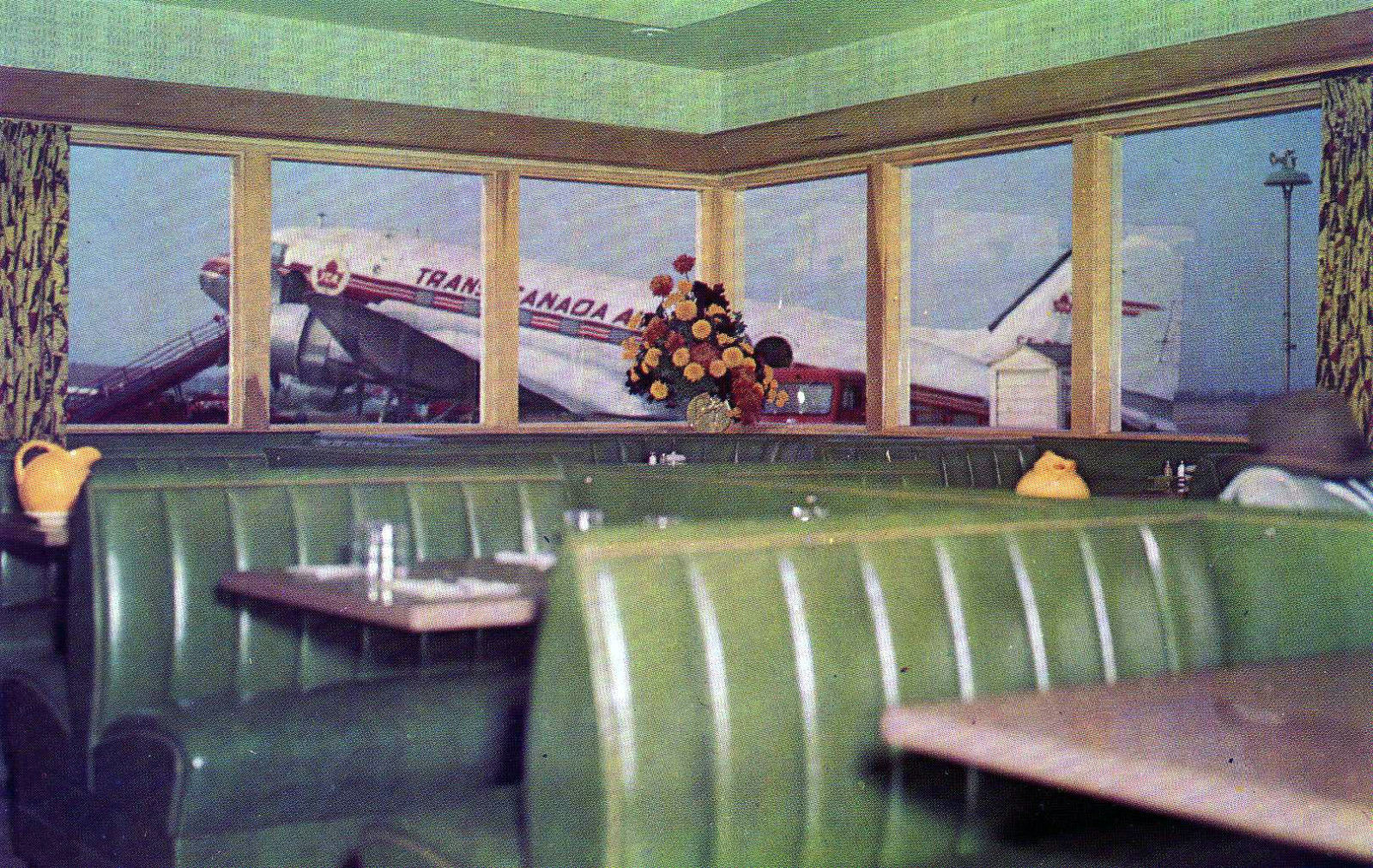
airportClevelandshreiberrestaurantSome airport restaurants were operated by local restaurateurs. Among them was Marie Schreiber, who became a restaurant operator for Statler hotels after providing meals in Cleveland’s airport restaurant [pictured] as well as on-board meals for departing United Airlines flights. Food service operations of two Chicago departments stores, Marshall Field and Carson, Pirie & Scott, handled meals at O’Hare for years.

At the same time, chains that ran airport restaurants and prepared meals for service during flights developed rapidly. Some, such as Skychef restaurants, were operated by the airlines (in this case American Airlines), but existing chains such as Dobbs House and railroad caterers Fred Harvey and Interstate Hosts also migrated into airports. Dobbs House units in airports from Wichita to Miami also earned praise from Duncan Hines in 1959 for dishes such as pompano en papillote and Colorado mountain trout.

Southern airports were protest sites because of their discriminatory treatment of Black passengers. Until summer of 1961, Blacks were not served in Interstate Hosts’ main dining room or the coffee shop in New Orleans’ Moisant International airport, but only at the snack bar. After lawsuits, Black customers gained equal patronage at all airport restaurants in recognition that airports, like bus terminal facilities, were fundamental to interstate commerce.

In the 1980s theme restaurants – often flight-themed – began to locate in the vicinity of airports. But that’s a subject for a future post.

© Jan Whitaker, 2014
6 Comments

Filed under family restaurants, Offbeat places

Who was the mystery diner?

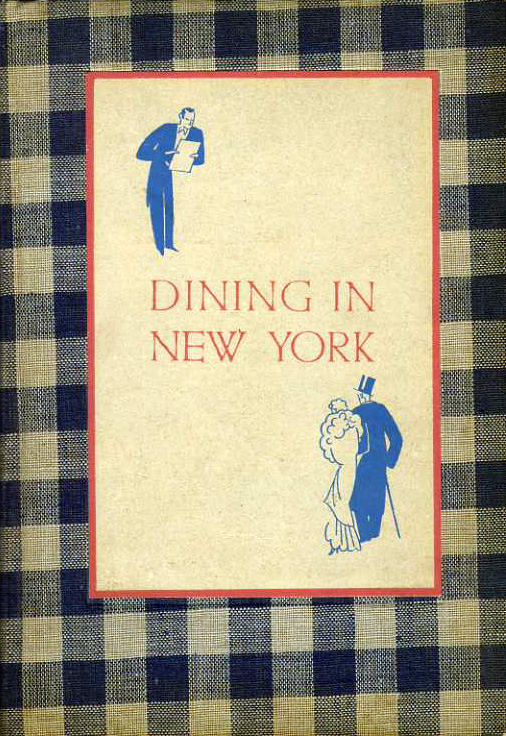
Jamescover795I am now the happy owner of Rian James’ Dining in New York published in 1930. When I opened it, I discovered a nice surprise: someone had penciled notes next to many of the restaurants described in the book.

This is a big deal to a restaurant historian because it is so hard to find out what consumers thought about restaurants in the past. Today it is easy, but in 1930, for instance, few people recorded their restaurant experiences and opinions in writing, possibly because it seemed trivial.

jamesName794

As I looked at the comments I wondered who wrote them. Was it the person whose name is inside the cover? And just what is that name? M. Z. Mells? Or, were the notes made by someone other than the book’s owner?

Jamesreview793

I puzzled over whether the writer was a man or a woman. There seems to be conflicting “evidence.” I find the handwriting ambiguous. As for content, on the one hand MZM used words such as “delightful” and “yummy,” went to lunch with Mother, Aunt Frances, and Mother’s friend Mrs. Claggett, and enjoyed the Gypsy Tea Shop (“Went here often with Mother – lots of fun”), all suggesting that MZM was female. But, then again, MZM loved the thick lamb chops at Keen’s Chop House, appreciated the Maitre d’ at the Roosevelt Grill, and often went to ice hockey games with Uncle Frank after dining at the Hotel Astor, hinting at maledom.

JamesrooseveltgrillThe surname Mells is uncommon. I found no M. Z. Mells, but did find a few women named Mells in NYC whose first names began with M. The strongest candidate was Mildred Mells. Born in New York City around 1910, in 1930 she worked as a model for a dress manufacturer and lived with her widowed mother and an older sister who was a supervisor for the telephone company. Her age meshed with the book’s publication and with the comment next to Enrico and Paglieri’s: “went there from childhood till 1945.”

JamesDivanParisienMZM added glowing comments, not only about the Roosevelt Grill (above), but also Keen’s (“Loved this place!”), The Lafayette and The Brevoort (both “old N.Y.C. landmarks”), Cavanagh’s (“A favorite place!”), Divan Parisien (“So good!”), and Charles French restaurant (“Excellent food and service”). In MZM’s minus column were The Wivel (“I liked other Swedish restaurants better.”), Luchow’s (“This was a very famous place but I didn’t care much for it or its food.”), and the Brass Rail, which merited the only comment written in the present tense (“don’t like this place”).

The writer couldn’t remember if s/he ever went to the Village Barn or Billy the Oysterman. S/he had eaten at Sardi’s, Zucca’s, Barney Gallant’s, The Commodore Grill, and Feltman’s on Coney Island but had no comments on them. And MZM regretted never making it to The Marguery or The Claremont Inn on Riverside Drive and 126th Street (“Went by this place hundreds of times but never got there. It looked so inviting.”)

I wonder why MZM passed by the Claremont Inn so often. Is that a clue? Now you know almost as much as I do. Any ideas about this little mystery?

© Jan Whitaker, 2014

5 Comments

Filed under miscellaneous

Once trendy: tomato juice cocktails

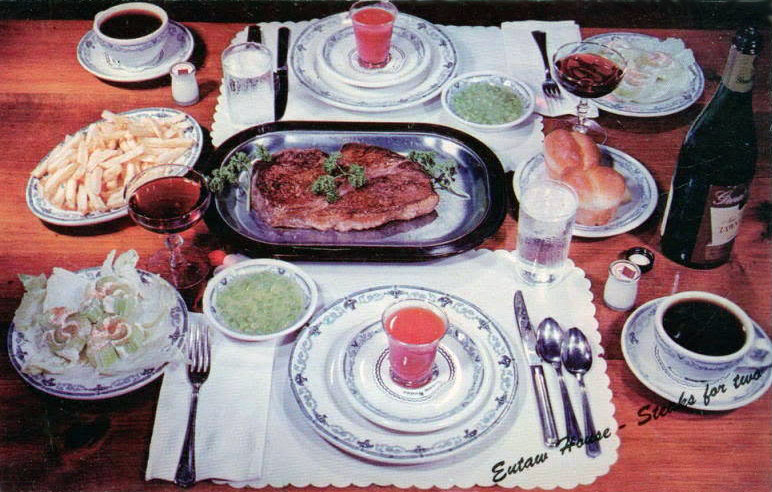
eutawhouse

Recently I acquired a 1947 menu from the Algonquin Hotel of “round table” literary fame. I noticed that one of the appetizers was tomato juice and I thought to myself how commonplace a selection that once was and how rarely it is seen today.

No doubt there are restaurants that still have it on the menu – nothing really ever goes away totally. It reminds me strongly of an old standby restaurant in Massachusetts that closed about ten years ago. I was fascinated by the quaint metal contraptions on each table holding little pots of appetizers such as cottage cheese, olives, and pickles. There must have been tomato juice on the menu, too, despite it being decidedly out of style by then.

I was so convinced that tomato juice was hopelessly unimaginative that I was taken by surprise when I did a little research and discovered that it was considered a fashionable snob drink in the 1920s and 1930s. It came into vogue in the 1920s along with other good-for-you foods such as Melba toast, cottage cheese, pineapple, and sauerkraut juice. Women’s magazines touted it as smart, healthful, and perfect for anyone wanting to lose pounds just like a Hollywood movie star.

It is said that a chef at the French Lick resort hotel in Indiana introduced tomato juice to  American diners in 1917. It MIGHT be true that he was first to serve it in a public dining room – it does not seem to appear on American menus prior to World War I. However tomato juice was well known and available in cans in the 19th century so he clearly did not invent it (as is often reported).

A tomato juice cocktail could be made by the addition of tobasco sauce, paprika, sauerkraut juice, clam juice, etc. Mix well, shake until foamy, and pour over crushed ice. Restaurants tried all sorts of combinations. The Wrigley Building Restaurant in Chicago came up with clabbered tomato juice which was tomato juice mixed with a goodly amount of cottage cheese. Denver’s Blue Parrot Inn blended orange and tomato juices, while The Colony in New York mixed clam and tomato.

tomatojuice

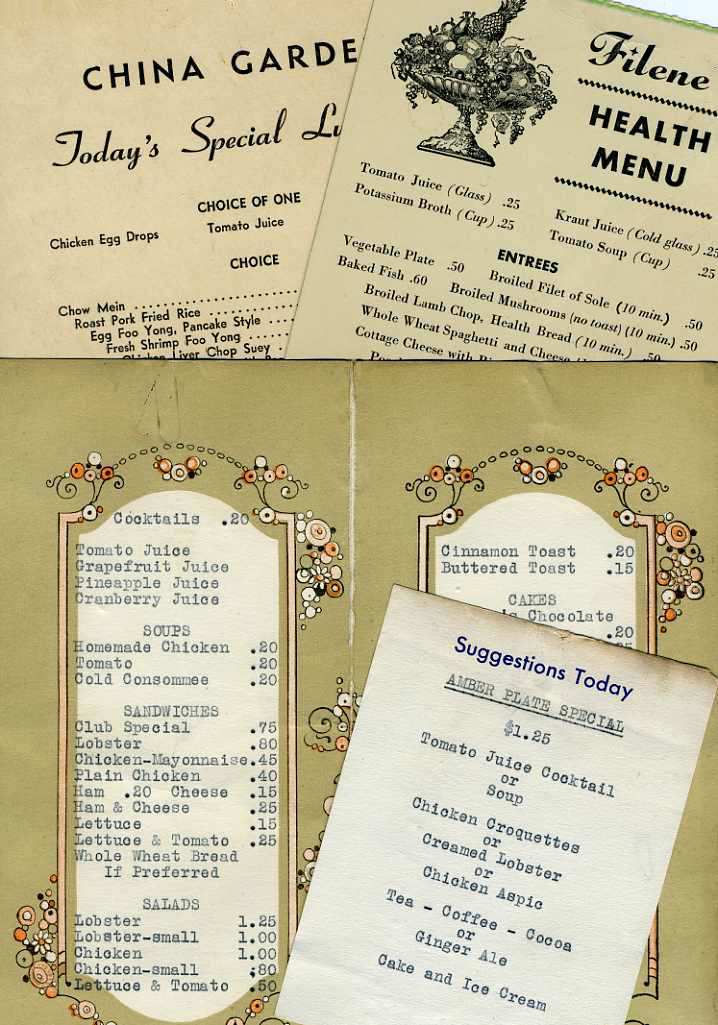
Although tomato juice could be found on menus of all kinds of eating places, even Chinese-American restaurants, it tended to be an appetizer favored by those who eat luncheon, not lunch. It was especially popular in restaurants that appealed to women then such as tea rooms, quaint inns, and department store restaurants. [illustration shows portions of menus from China Garden, Filene’s department store, and Willow Tea Cottage]

Arriving on the scene as it did during Prohibition, tomato juice clearly served as a non-alcoholic cocktail. Non-drinkers appreciated it, as did serious imbibers who had overdone things at their neighborhood speakeasy. It was a well known morning-after tonic continuing into the 1950s (and perhaps the present). In 1939 a restaurant in Shawnee OK allegedly served a “hangover breakfast” of tomato juice with hot sauce, soft-boiled egg, whole wheat toast, coffee, and two aspirins.

Tomato juice was so popular by the mid-1930s, both in homes and restaurants, that government scientists were said to be working on disease-resistant tomato varieties that would yield more juice. But by the 1980s it was considered an appetizer totally lacking in sex appeal, analogous to vanilla ice cream as a dessert. But, who knows? It could make a comeback. Tomato and kale juice cocktails?

© Jan Whitaker, 2014

28 Comments

Filed under food, restaurant customs

Famous in its day, now infamous: Coon Chicken Inn

coonchickeninnpc3

The long-gone Coon Chicken Inn restaurant chain claimed in its advertising that it was “nationally famous.” I believe that was a bit of an exaggeration – then – but it might be true now. Its present-day fame, more accurately its notoriety, is based on its objectionable name and use of a grotesque racist image on buildings, delivery trucks, china, glassware, and printed advertising pieces.

To whatever degree it was nationally famous it can only have been for its racist depictions. Certainly it could not have achieved fame for its food. The menu of the Coon Chicken Inn reveals selections only a few degrees more ambitious than the drive-ins of the 1930s. Other than chicken dinners, the menu included chili, burgers, and ice cream desserts.

coonchickeninnphoto1947

Nonetheless, in its time it was a popular chain of four roadhouse restaurants with one each in Salt Lake City (est. 1925), Seattle WA (est. 1929), Portland OR (est. 1930), and Spokane WA. According to one account there were also Coon Chicken Inns in Denver, Los Angeles, and San Francisco but I’ve been unable to find any trace of them.

In 1930 Seattle’s NAACP protested against the restaurant’s racist imagery. Under threat of prosecution the chain’s owners, Maxon Lester Graham and Adelaide Graham, repainted the grotesque black faces on their restaurants’ entryways blue. They also obliterated the words “Coon Chicken Inn” painted on the figures’ teeth.

coonchickeninnSLCDec291926Having avoided prosecution they changed nothing else, keeping the chain’s name and logo, all of which seemed not to bother the restaurants’ white patrons at all. I would guess most people gave little thought to the large grinning heads, having already accepted the caricatures as merely another instance of the widespread “comical” portrayal of black Americans. They probably also saw them as just another example of an eye-catching building feature employed by roadside restaurants to attract motorists’ attention. Few white people perceived the restaurants as racist.

The Coon Chicken Inns regularly hosted meetings of clubs, civic organizations, and sororities ranging from a Democratic Club to the Junior Hadassah. They were the sites of wedding, anniversary, and birthday parties. In 1942 they were listed in Best Places to Eat, a nationwide guidebook published by the Illinois Auto Club. I can’t help but think that the restaurant in Portland was a peculiarly appropriate location for an Eastern Star group that chose it for their “Poor Taste” party in 1937.

mammy'scupboardLike the word “mammy” and its stereotyped image, “coon chicken” was supposed to communicate that the restaurant specialized in Southern cuisine, in this case fried chicken. Mammy names and images were widely used by restaurants in the early and middle 20th century. The crudely constructed Mammy’s Cupboard in Natchez MS was another example of roadside “building as sign.” There was a Mammy’s Shanty in Atlanta, Mammy’s Cafeterias in San Antonio TX, and others in the South. Nor was the East without its Mammys: in Atlantic City was Mammy’s Donut Waffle Shop while Brooklyn had Mammy’s Pantry.

Several good articles have been published analyzing the Coon Chicken Inn’s everyday racism and the white public’s blithe tolerance of it. I recommend Catherine Roth’s essay for the Seattle Civil Rights & Labor History Project. Because of the volume and quality of what’s been written I hesitated at first to publish this post. I also hate the thought of increasing the desirability of Coon Chicken Inn advertising artifacts. Although there are good reasons to preserve historic racist ephemera, the extreme popularity of these images is disturbing. So great is the demand for them that the marketplace is flooded with fakes, including newly dreamed-up objects that were never used by the chain. Black faces have made a comeback along with “Coon Chicken Inn” on the teeth.

The Portland and Seattle branches of the Coon Chicken Inn closed in 1949 but the Salt Lake City unit remained in business until 1957.

© Jan Whitaker, 2014
11 Comments

Filed under racism, roadside restaurants

Restaurant history day

KittyFoyleLifeMagazine1940Yesterday I was fully immersed in restaurant history. Starting off the day I had an e-mail exchange with a local 1970s activist about a feminist restaurant that once operated in Northampton MA. Next I had an interesting phone call from a researcher in Minneapolis who has unearthed the early 20th-century history of Greek immigrant restaurant and confectionery proprietors in Sioux Falls, South Dakota. Then, while surfing a Facebook page about my former hometown of Webster Groves, Missouri, I discovered a discussion about a long gone restaurant there that refused to serve Afro-Americans.

manhattanX3The name of the restaurant was the Toll House. I never went inside but as a child I formed the impression that it was a place where old-line Webster Grovesians went to eat club sandwiches and fruit cocktail appetizers on the nights their maids were off. Since Webster Groves was a dry town then, it was a restaurant that my parents would never have chosen – no Manhattans!

TollHouseWebsterGrovesAn undated menu reveals that the Toll House had some surprisingly (to me) upscale dishes considering its rather drab appearance and its location in a dry, Waspy suburb of St. Louis – Oysters Rockefeller (.75), Pompano (.85), Lobster (1.25), Chateaubriand (1.35), and Baked Alaska (.40).

The Toll House was the site of pickets and sit-ins against racial discrimination in 1961 and 1962. Sadly, the city of Webster Groves seemed all too ready to arrest protestors. Just how many protests took place there is unclear, but I have found evidence of at least four. In the summer of 1961, two women picketers were arrested outside the restaurant after the proprietor Myrtle Eales, who ran the restaurant with her husband Forrest, claimed they had pushed her in a scuffle. In January of 1962 thirteen black and white members of the Congress of Racial Equality (CORE) were arrested for trespassing after they occupied the restaurant for four hours without being served. Although it was a cold winter day, the owners turned the heat off and the air conditioning on in an attempt to get them to leave. That same month a group of four protestors were locked in the restaurant’s vestibule for two hours. Then in April of 1962 three white protestors, all airmen from an Illinois military base, were arrested by Webster Groves police on suspicion of being AWOL (they weren’t).

The embattled restaurant did not survive the protests. I believe it closed in 1962.

Strangely enough, the otherwise obscure Toll House had made the national news earlier when it was featured in a 1944 Life magazine article about (white) teen-age social life. At that time it was a lunch counter popular with teens for hanging out. According to a letter sent to Life after the article appeared, whoever owned the restaurant then wanted young patrons to keep out. In a large advertisement in a local newspaper the management informed parents that their unruly children were bending silverware, breaking glasses, setting napkins on fire, carving up tabletops, and destroying stools.

In 1966 the CBS documentary “Sixteen in Webster Groves” appeared, portraying the suburb’s teenagers as spoiled, conformist, and more concerned about having a nice house with gleaming silverware than with the Vietnam war or civil rights. Residents were unhappy with what they felt was a false portrayal but, I wonder, was it completely off base?

© Jan Whitaker, 2013

4 Comments

Filed under racism

Banquet-ing menus

As those of us who collect menus know, people are more likely to preserve menus from restaurants related to memorable occasions than those from ordinary, everyday eating places. As a result, there are more menus in the ephemera market that come from famous restaurants, voyages on ships, and banquets than from humble eateries. I tend to concentrate on the latter group, but once in a while I will buy a banquet menu that interests me.

I particularly like ones that are from professional and business trade groups, unions, and organizations such as the three shown here. Even better if they have a humorous slant, as is surprisingly often the case.

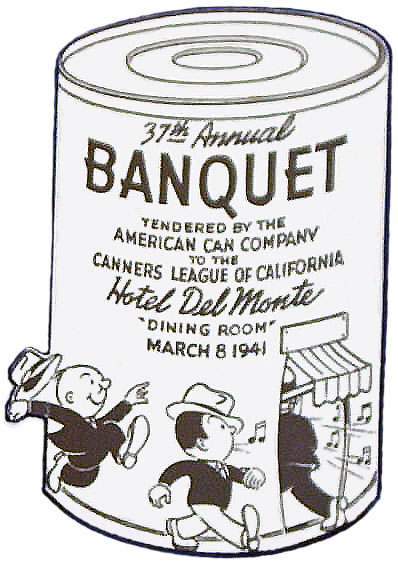
The 1941 menu at the top, from a dinner presented by the American Can Company to a California trade group at the Hotel Del Monte, shares something in common with the dinner given for the Golden Jubilee of the Oakland Typographical Union in 1936. The site of the canners’ banquet, the Hotel Del Monte in Monterey CA, like the union’s locale, the Oak Knoll Country Club in Oakland CA, was soon to become a property of the U.S. Navy. The canners may have enjoyed one of the last banquets held at the historic hotel, originally opened in 1880, but rebuilt in the 1920s after a disastrous fire.

The Oakland “Typos’” menu is one of my favorites because of its design as a proof adorned with proofreader’s corrections. It is not only clever but reminds me of a job I once had back in the days of linotype when I marked up proofs using the very same marks indicating lines to be deleted and transferred, as well as misspelled words, broken type, etc.

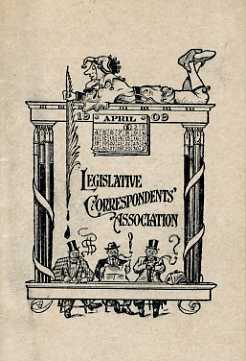
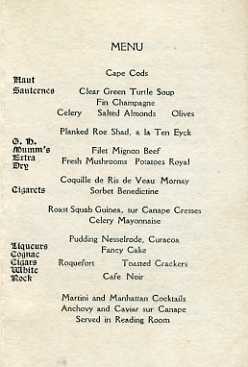
The Legislative Correspondents’ Association, which still exists, held its first dinner in 1900, so this menu is from its tenth, held in Albany at the Hotel Ten Eyck – on April Fools Day, 1909. Throughout it is filled with wry commentary and comical rules for the banquet governing issues around table companions and drinking. Judging from the menu, I’d think everyone got plenty to drink. Not only is the dinner accompanied by wine, champagne, liqueur, and cognac, it’s topped off with cocktails. Whoa.

I don’t know if the canners were served canned food at their banquet, but I’d say that the journalists undoubtedly enjoyed the finest cuisine of the three groups.

© Jan Whitaker, 2012

5 Comments

Filed under menus

Restaurants and artists: Normandy House

With the recent publication of the book Edgar Miller and the Handmade Home has come renewed appreciation of Miller’s talents and of the central role he played in the birth of Chicago’s Old Town arts colony in the 1920s and 1930s. Often seen as “Chicago’s forgotten Renaissance man,” Miller is mainly admired for his imaginative renovation of apartments and studios, with Sol Kogen, employing materials from demolished buildings.

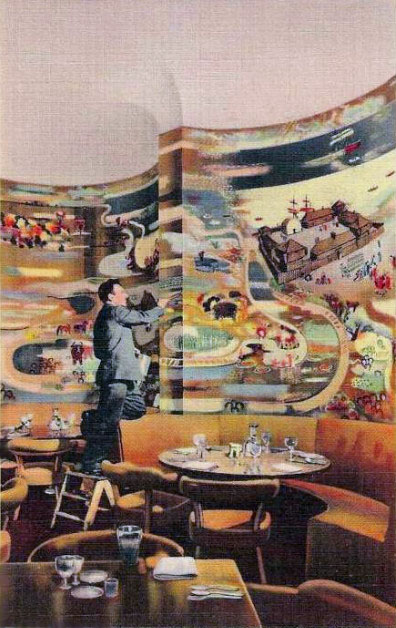
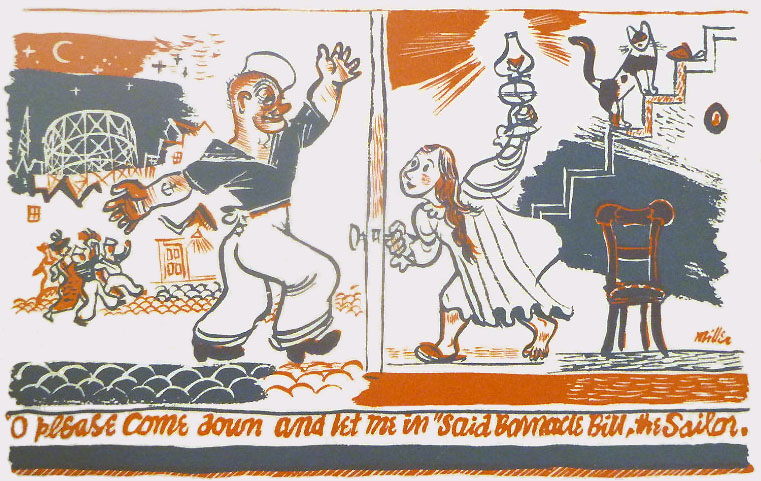
His work encompassed mural paintings [portion of Black Sheep mural below], stained glass windows, wood and stone carvings, ceramics, wallpaper, and fabrics. In addition to dwellings, his playful virtuosity in the decorative arts was bestowed upon a number of Chicago’s eating and drinking places, including Harry’s New York Bar and the several outdoor cafes at the Streets of Paris complex in the 1933-34 Century of Progress Exposition. Following Repeal, when money poured into updating bars and restaurants, he worked with architects such as Andrew Rebori, painting murals for bars in the Northern Lights hotel, the 885 Club, and a Fred Harvey restaurant in Dearborn Station [pictured below]. At the Tavern Club, where Miller was a member and his precocious young son Skippy would later hold “one-man” shows, he created a renowned mural called Love Through the Ages.

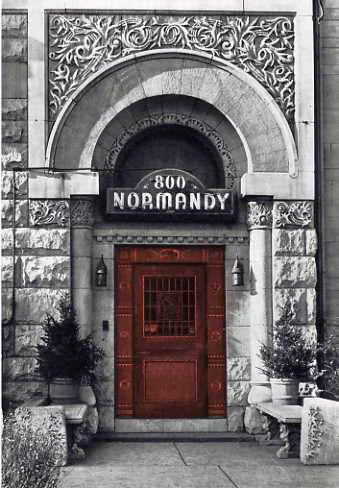
Normandy House on Chicago’s near north side became his ongoing project in the late 1930s and through the 1940s. The restaurant occupied the corner structure in a row of five apartment buildings, each four stories in height, at the southern end of Tower Court (aka Tower Place and North Michigan Ave.) opposite the historic water tower. Once the home of the city’s blue-bloods, by the 1920s the entire row had become a commercial property. A restaurant called the Charm House occupied the corner site until about 1937 when Grace Holverscheid bought the business, renaming it Normandy House.

Grace, a widow, operated it with her friend Helen Wing, also widowed. Grace would soon marry a third partner, Richard Tallman. All three were involved with music, Richard as a composer, Grace as a concert vocalist, and Helen as her arranger and accompanist. While running Normandy House, Helen also wrote books and composed operettas for children.

Edgar Miller lived upstairs over the restaurant, perhaps trading his artistic work in exchange for rent. During its incarnation as Charm House, the restaurant had been renovated in quaint style with beamed ceilings, etc., to resemble a sister restaurant in Cleveland OH. An Old English taproom and grill installed in the basement in 1934 – named the Black Sheep Bar by its new proprietors — became the focus of Miller’s decorative elaborations. Over the years when he, and later his family, lived on the third floor, he carved a front door, painted murals, and made stained glass windows, wood sculptures, ceramic plaques, and wall paper for the restaurant. He was assisted by his brother Frank who became the Black Sheep’s bartender.

The Millers’ quarters, up the stairs past the restaurant’s cashier, also served as studio space for Edgar and his wife, the former Dale Holcomb, who translated many of Edgar’s designs into fabrics. At any given moment the whole family, including the two young sons, might be painting portraits, squeegeeing silk screens, or engaging in any number of artistic endeavors. Other artists, musicians, and classes of art students from the Art Institute frequently paid visits.

The Normandy House, like Chicago’s Le Petit Gourmet, attracted a clientele that included club women and professional groups of architects and academics. Its menu featured favorites such as the Pink Squirrel (broiled beef tenderloin with Roquefort sauce) and Eggnog Pie, as well as 1950s innovations such as salad in wooden bowls and individual loaves of bread served on cutting boards.

Helen Wing and the Tallmans closed Normandy House and retired in the summer of 1956. Then, under the management of a long-time employee and with backing from a Florida hotel mogul, it was reopened. In 1960 it moved to Rush Street, reinstalling at least some of Miller’s pieces.

The Tower Court building housing Normandy House along with the other four buildings in the row were razed to make room for a multi-story hotel. In the 1960s Miller and his wife moved to Florida where they ran a motel until her death. Edgar lived in Taos NM, Australia, and San Francisco, then returning to Chicago where he died in 1993 at age 94.

© Jan Whitaker, 2012

Read more about Edgar Miller’s life and work.

1 Comment

Filed under restaurant decor

Reuben’s: celebrities and sandwiches

Once upon a time there was a famous NYC restaurant called Reuben’s. Today there is a famous grilled sandwich of corned beef, Swiss cheese, sauerkraut, and Russian dressing on pumpernickel called a Reuben. Wouldn’t it make a nice story if the sandwich came from the restaurant?

The connection has been well researched yet it remains unresolved. For anyone who wants to examine the matter in detail, I recommend Jim Rader’s excellent account. He has the last word, inasmuch as there is one.

Two important points. 1) No one has come up with an early menu from Reuben’s that lists the Reuben sandwich as it is known today. It does appear under the name “Reuben’s Pioneer” on a 1971 menu but by then the sandwich could be found everywhere. 2) Despite being a publicity hound – and despite an Omaha woman winning a national contest for creating the sandwich in 1959 — founder Arnold Reuben never laid claim to it as his restaurant’s creation.

What is certain is that the fame of Reuben’s restaurant and delicatessen was built upon sandwiches — and the celebrity patrons who ate them.

I have seen a menu from Reuben’s said to be from 1922. Under the top heading “Reuben’s Famous Sandwiches” are listed 42 sandwiches. Nine are named after celebrities of stage and screen of that time. What is striking about the named sandwiches is that they cost more than the others. At the low end are ordinary sandwiches priced at 35 cents such as Salami, Corned Beef, and Liver Wurst. The special celebrity sandwiches range from 75 cents to a dollar, amounts that would then buy a whole dinner in many restaurants. The specially named sandwiches probably had more ingredients and may have been larger, but the aura of celebrity around them must have added a few cents too.

Naming sandwiches for celebrities was a publicity gimmick probably thought up by a press agent. The columnist Westbook Pegler claimed that Reuben’s initially acquired fame because of publicity generated by the audacious Harry Reichenbach who encouraged Arnold to sue a well-known New Yorker over the price of a ham in 1920. Thereafter, like Lindy’s and the Stork Club, Reuben’s was constantly in the nationally syndicated gossip columns of the 1920s, 30s, and 40s.

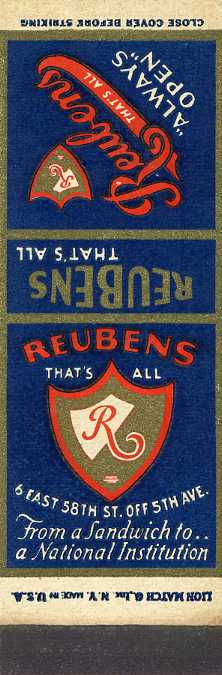
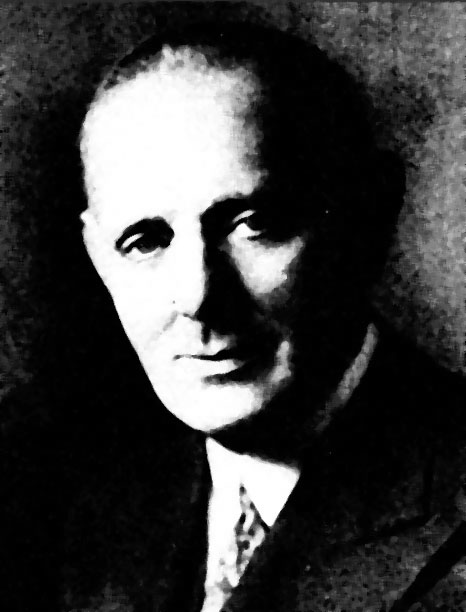
Arnold Reuben was a German Jew who, with his family, immigrated to the US as a young child around 1886. He helped out by peddling produce, then worked at a delicatessen. In 1908 he opened his own deli, which he later referred to as a “shtoonky little store.” By the end of the teens, he was thriving; he had incorporated his Pure Food Shop at 2102 Broadway and opened an eating place at 622 Madison Avenue which was popular with Broadway performers and stars from Hollywood. (Transitions from food store to restaurant are not uncommon and, as was also the case with Texas butcher shops-to-barbecues, often begins with sandwiches.) In 1928 he had a third restaurant in Philadelphia and was said to be “enormously rich.” Adopting the slogan “From a Sandwich to a National Institution,” he often told a story about the first celebrity sandwich he created – ham, cheese, turkey, cole slaw, and dressing — for a struggling young actress.

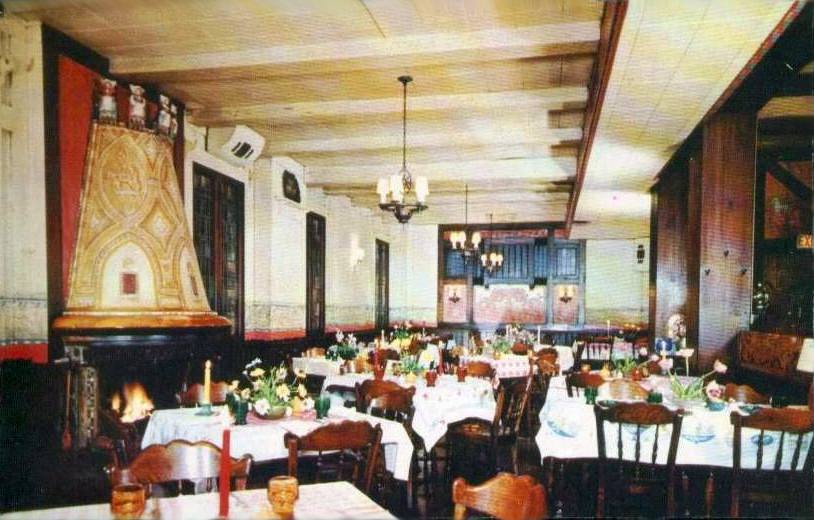
He experienced some financial difficulties in 1933 and filed for bankruptcy but only two years later was back on course with a bigger and better restaurant [pictured] to replace the one on Madison Avenue. Of critical importance to his comeback was the end of Prohibition. His opening announcement in the New York Times attested to this with a prominent display of the names of Reuben’s “friends,” seven liquor manufacturers and distributors.

In 1946 he opened a restaurant on West 57th near Carnegie Hall, with a front nearly identical to East 58th Street. Like his others it was open 24 hours. No doubt it, too, had a doorman who greeted patrons with the bywords “Reuben’s, that’s all.” Larger than the East 58th place, it was billed “A City in Itself,” and contained shops for delicatessen, flowers, chocolates, cigars, and theater tickets, as well as a perfume bar and a barber shop. Despite all, it silently disappeared a couple years later.

Arnold retired to Florida in the mid-1960s and sold the business, which he had turned over to his son to manage years earlier. Reuben’s in NYC continued under new ownership at various locations until 2001. A Reuben’s was also opened in Miami in the 1940s but I have not been able to determine its subsequent fate.

© Jan Whitaker, 2012

4 Comments

Filed under food, popular restaurants, proprietors & careers

Find of the day: Demos Café

It’s pretty cool when you can stroll over to an antiquarian book and ephemera show only a few blocks from your house and, barely 10 feet into the room, come upon a trove of restaurant memorabilia. That’s what happened a few days ago when I found a collection of photographs and water glasses from one of Muskegon’s premier cafés.

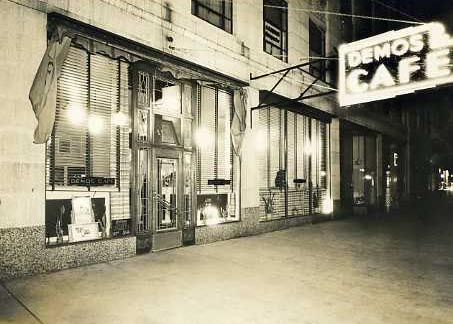
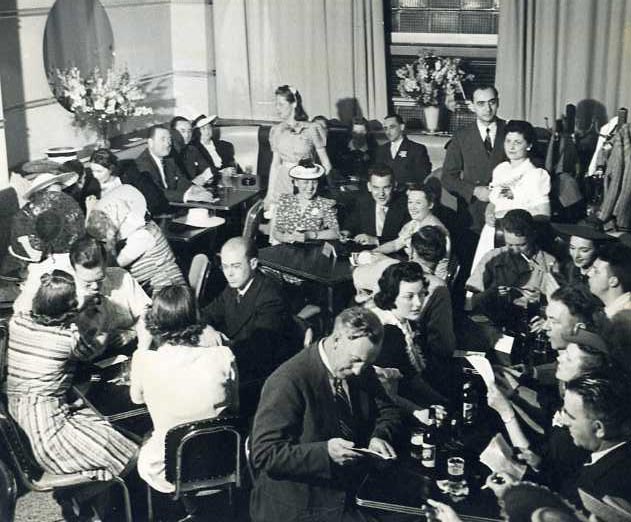
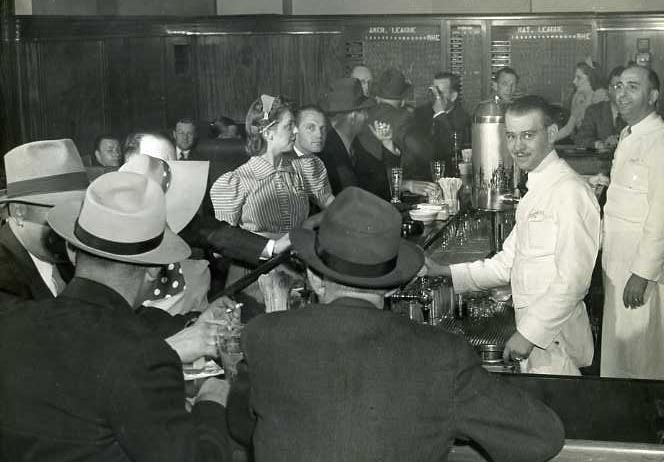
Judging from the hubbub in some of the photos of the bar area, the moderne-style Demos Café was a real Michigan hotspot in 1939 and 1940 when these were taken. Some of the patrons seem to be hiding from the camera and one man’s face was deliberately blacked out in the darkroom. Hmmm…

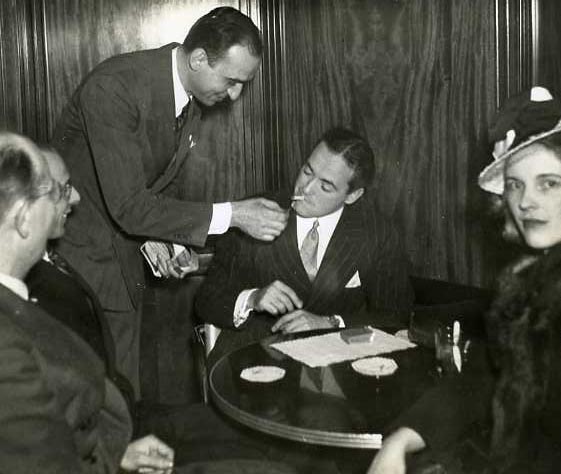
Located at 415-419 W. Western Avenue, the café was owned and run by the Greek-American Demos brothers, Spyros, Theodore (Ted), and John. Ted is shown behind the bar in two of these photos while John stands in the back of a crowded room in one and in another lights a cigarette for visiting Hollywood celebrity Buddy Rogers, husband of Mary Pickford. The café’s cocktail lounge often hosted touring jazz bands. And, as can be seen, it kept customers up to date on baseball scores.

The café’s wood veneer backbar was almost certainly a product of local industry. The Brunswick-Balke-Collender company’s main plant, which manufactured bar fixtures, was located in Muskegon. As soon as beer was legalized in 1933 the factory geared up with 1,500 new workers in anticipation of renewed business.

In addition to serving zombies (“only 2 to a person”) and frozen daiquiris, and apparently pouring quantities of Four Roses bourbon, the Demos Café specialized in steaks, chops, and sea foods. Signs placed in the front windows advertise a blue plate special for 50 cents, “genuine Italian spaghetti with Roman cheese” for 35 cents a plate, and “sizzling steaks,” a Depression-era culinary gimmick across the U.S. As was true of most Greek-American restaurants, the menu would have been thoroughly Americanized, without any dishes common to the owners’ native land.

During its heyday in the 1940s the Demos Café, along with the Causeway Café and the Lakos Café – all Greek-American owned – was one of the big three restaurants in Muskegon. But by 1951 or 1952 the café apparently went out of business after a tax investigation and lawsuit.

© Jan Whitaker, 2011

14 Comments

Filed under proprietors & careers

Footnote on roadhouses

Is Casablanca one of the unluckiest names a restaurant could have? Granted, there is a fair amount of mayhem surrounding restaurants and cafes generally, at least judging from newspaper stories, but places with this name seem to have attracted more than their share of violent crime.

There is a fascination with the dark side of restaurants, witnessed by interest in revelations of filth, chaos, and bad tempers in the kitchens, not to mention the popularity of such topics as  gangster affiliations. This post is inspired by a reader living near Palatine IL outside Chicago, the location of the old Casablanca referred to in an earlier post on roadhouses. He wrote that he would “love to hear about the old-school ‘joints’ that used to pepper the ‘quiet’ suburbs.”

He is not alone. When I recently posted a photo of an old no-tell motel, the Coral Courts, on my hometown’s Facebook page, interest was notable. Likewise someone’s FB post recalling a horrid massacre at a roadhouse called Cousin Hugo’s just outside the borders of that formerly dry and ultra-proper suburb attracted comments like a magnet.

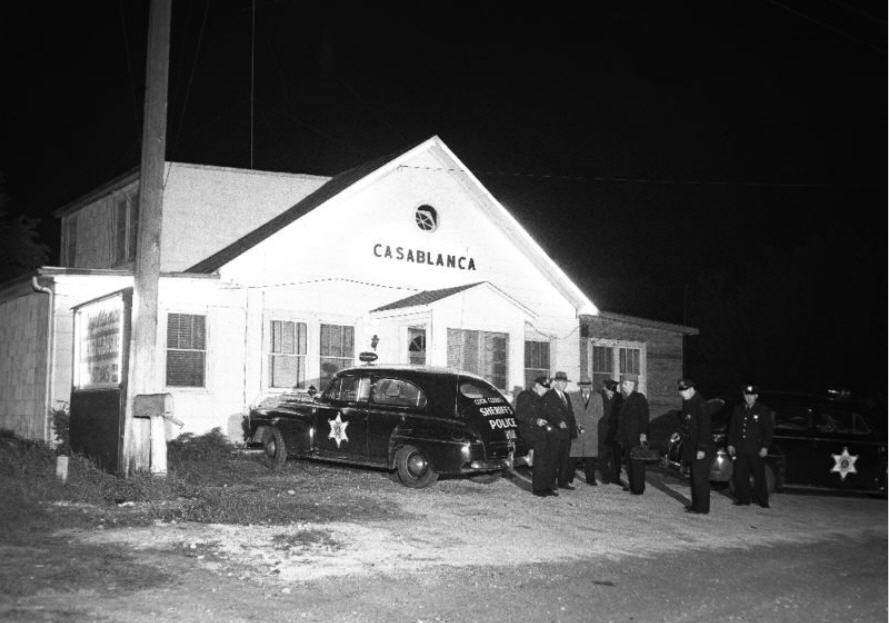
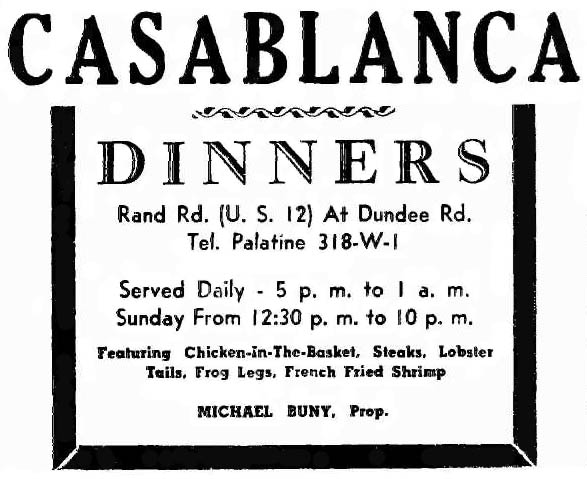
The Casablanca on Rand and Dundee Roads in Palatine was begun by Loretta Cooper, daughter of Polish immigrants in Chicago. She may have opened it in the early 1940s, but under another, unknown name. She would have been about 25 years old and already 7 years into her restaurant career. She started her first cafe, the Star Tavern in Chicago, around 1935 when she was only 18. Being underage she needed her older brother to act as the nominal manager.

Loretta proved to be a “survivor” in the restaurant business, owning a number of establishments over at least a 30-year period. She didn’t run the Casablanca for long, though, because by 1943 she had taken over the old Eddie’s Castle Café on Evergreen in Arlington Heights IL and renamed it Loretta’s Castle Café. It stayed in business until the late 1960s when the building was demolished. She and her husband Edward also ran a place in Arlington Heights called Cooper’s.

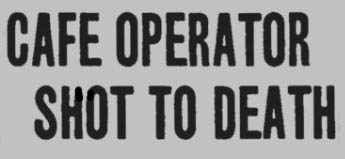
Loretta sold the roadhouse to Michael Buny around 1944 and he renamed it Casablanca after the Humphrey Bogart film that had come out two years earlier (thanks to his family member for this piece of the story). In May of 1949 he was killed in a holdup. When two hooded men entered the roadhouse one night with shotguns, he attempted to foil them by sneaking outside through the kitchen and getting a gun, evidently planning to ambush them when they left. He was shot by lookouts watching from the getaway car. Although the police rounded up suspects who went on trial in the early 1950s no convictions were secured. Years later one of the suspects was apprehended for home repair fraud.

Michael Buny’s wife and daughter ran the Casablanca after his death. In 1951, about two years after her father’s slaying, daughter Darlene was shot in the shoulder as she struggled with a tall scar-faced robber who broke into the café one night. It’s uncertain how long she kept the Casablanca going after that.

Quite by coincidence, I assume, a nightclub restaurant opened on Dundee Road in Palatine in the 1980s called Bogie’s, with decor inspired by the film Casablanca. Local history would have made for a riskier theme.

© Jan Whitaker, 2011

3 Comments

Filed under roadside restaurants