I am republishing this post that I originally presented ten years ago, because of the September 4 death of Joseph McNeil, age 83. The Greensboro lunch counter has been on exhibit at the Smithsonian’s National Museum of American History in Washington, D.C. since the 1990s when it was acquired from Woolworth’s. It will be one of 250 items featured in a show of “revolutionary objects” at the museum in 2026.
Actually there was no lunch. But there was plenty of heroism when four college students sat at a Greensboro NC lunch counter in February 1960. [Above photo: Joseph McNeil is seated on the left.]
The students were told to go to the segregated snack bar in the back of the Woolworth 5 & 10 cent store, but they refused. And although the Woolworth staff would not serve them, the students also refused to leave until closing time and pledged to come back every day until they won the right to eat there.
It was an honor to hear one of the organizers of the protest at the 9th Annual Northeast Regional Fair Housing and Civil Rights conference in Springfield MA. Joseph McNeil [shown above at the conference] told a room of 500 attendees how much had hung in the balance for him at the time. A first-year student at the North Carolina Agricultural and Technical State University, he feared that he could end up in jail and disastrously interrupt his college career. (Fortunately, his fears were not realized and he went on to graduate and eventually become a major general in the U.S. Air Force.)
McNeil related how the Greensboro protest grew as students from area schools joined with the initial four, then more student protests erupted at Woolworth stores around the South. In July 1960 Woolworth reversed its policy, which had been to let local managers decide whether or not to serve Black customers based on local customs.
He explained that the sit-down protests served as “a down payment on our manhood and womanhood” for him and his fellow students. The action, he said, was driven by their belief in the “dignity of men” and “the moral order of the universe.”
In the Q & A after his talk, a woman in the audience asked what his mother had thought about his decision to join a sit-in at the lunch counter. He said she had been uneasy about it but had to agree that it was the right thing to do based on the values she and his father had taught him.
McNeil received repeated standing ovations from conference goers. Everyone laughed when he said that he had always wanted to order coffee and apple pie at a Woolworth lunch counter but when he did, “The apple pie wasn’t very good.”
After prohibition ended gangsters were in search of a new game. It didn’t take much time to discover the solution, in fact it was already in progress in Chicago by the late 1920s. [Above, Howard Johnson’s, Chicago, 1954]
As I mentioned in an earlier post on rackets, the new game involved getting protection money from weak sectors of the economy, namely businesses that had low-paid workers such as, but not limited to, restaurants. Unions wanted to recruit the workers but owners resisted. One solution seemed to be a bombing campaign that would soften the owners’ resistance. Some unions hired hoodlums to do the deed.
According to an account by Louis Adamic in his classic 1931 book Dynamite: The Story of Class Violence in America, workers wanting better pay and shorter hours were threatening to strike. The racketeers, according to Adamic, began to “‘muscle’ their way into the union offices and affairs, and in not a few cases took over the control of the organization.” The racketeers made more money and the unions thrived, at least in terms of growing membership.
To avoid the bombs, restaurant owners also paid gangsters protection money. If not, a bombing campaign might begin, perhaps starting with a weaker bomb, maybe a “stink bomb” or a mild explosive. If those didn’t work, it escalated to dynamite, resulting in heavier structural damage.
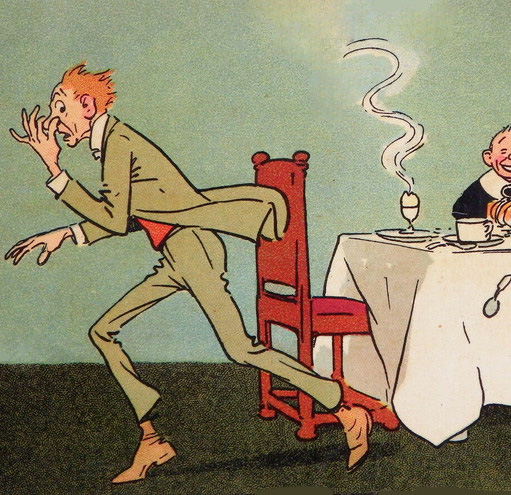
Often the bombings occurred late in the night or very early morning, but at other times, especially when stink bombs were used, it was during business hours. Even a stink bomb could put a restaurant out of business, since frequent customers, whose clothes might be ruined in the episode, would probably never return. Plus the restaurant could get a bad reputation. [Above, “humorous” letter sent to a newspaper in 1963]
Although workers unionized at numbers of restaurants in the 1920s and 1930s, especially in New York and Chicago, it’s not clear how much they benefitted. There is no doubt that they needed better pay and shorter hours. Many were working 12-hour days for very low pay.
Sometimes minor improvements did occur. A 1937 trial in NYC showed that if a restaurant owner chose to pay for protection against the mob there was one set monthly fee, but a lower one “if he contracted for increases of 50 cents or $1 a week for his workers and signed a closed shop contract,” that is, hired only unionized workers.
Famous New York restaurants such as Lindy’s were assessed with lower fees for joining protection plans because their fame helped persuade other restaurants to cooperate. A number of New York City restaurants resisted and were bombed., including Childs on 43rd street, many cafeterias, Park Lane, Ye Eat Shoppe, Rectors, Eatomat, Silver Dollar and Marine Grill, and Grant Lunch. Of course, there were many more.
New York succeeded in calming gangster infiltration (to what degree is unclear), but in Chicago it continued in restaurants into the 1970s. Union membership declined, but restaurant owners were still threatened and bombed, with racketeers seeking payment to make it stop.
Invariably, Chicago restaurant owners declared that they had no idea whatsoever about who had bombed them or why. More surprisingly, police also seemed strangely mystified. Very few bombers were ever caught or convicted. [Above, the owner of Wilkos in the Chicago suburb of Berwyn is comforted after 1964 bombing of his restaurant]
In 1964 Chicago Daily News columnist Mike Royko reported that the Illinois Fire Marshall William Cowhey said he was puzzled about what was going on. During a press meeting, Royko wrote, “Cowhey’s eyes squinted, as if he were peering into the distance for something. ‘The . . . rhyme . . . or . . . the . . . reason,’ he said, slowly. ‘If we could . . . get . . . the . . . rhyme or . . . reason.” In another column Royko explained, “The duties of the fire marshal included going to the restaurant, viewing the gaping hole in the door, the shattered windows, the rubble in the street, and announcing to newsmen: ‘This is arson.’ This job out of the way, it is the fire marshal’s duty to crouch and pick up a piece of rubble and stare at it so a picture can be taken.” [Above, owner inspects damage at his Ivanhoe restaurant in Chicago, 1964]
Although union membership and racketeering had declined by the 1980s, protection shakedowns, sometimes involving bombs, continued in that decade, and possibly still occur today.
This post was inspired by a 1959 Life Magazine feature story on the Chicago underworld. The magazine created a fictitious café to show the goods and services that actual mobsters forcibly provided to restaurants. The illustration above indicates those areas of mob involvement commonly found in restaurants then – and probably now to some extent.
In the magazine, a brief description of some of the real life gangsters who had invaded restaurants was linked to the illustration, complete with headshots of them (not shown here).
Here is a summary of who furnished what: 1 Former Capone lieutenant operates in laundry (and produce) unions. (See my earlier post about gangsters in the restaurant laundry business.) 2 Hit man handles steam cleaning of beer tap coils. 3 Slot machine operator also gets a cut of juke box revenues. 4 Former Capone gunman is boss of bartenders. 5 & 8 Two gangsters push Fox Head beer and get a cut. 6 Another juke box boss also handles vending machine merchandise. 7 A third juke box boss runs 15 Teamster locals and handles delivery drivers. 9 Meat supplies are furnished by the syndicate nightclub controller. 10 Man who handles syndicate bookkeeping also sells glass-washing machines through a front. 11 Former Prohibition-era bootlegger handles liquor distribution. 12 Glassware and glass-washing boss handles machines that happen to break glassware, stimulating his business.
The movement of mobsters into these fields began at the end of Prohibition, when bootlegging became obsolete. The mob had infiltrated the Teamsters Union in Chicago, and used it to their own advantage, doing little if anything for the workers, who saw little benefit and in many cases did not even know they were members.
Strangely enough, Life seems to have left out mobsters in the trash removal business.
As the story explains, if the restaurant owner “balks, the syndicate can harass him by ordering pickets to scare off customers. If this fails, the mob, which controls waiters and bartender union locals, can call members out. Since the mobsters also control Teamster locals who deliver, they can put the owner out of business by cutting of his supply of beer or by stopping his garbage pick-up.”
The next step would be violence such as burning down the restaurant, dramatically so in the case of suburban Chicago’s Allgauer’s Fireside Restaurant in 1958, whose owner was being punished for testifying at a Senate hearing on organized crime. The “workers’ union” at Allgauer’s was under the control of a local underworld leader. The crime was never solved. I would say “curiously unsolved” except that was always the case.
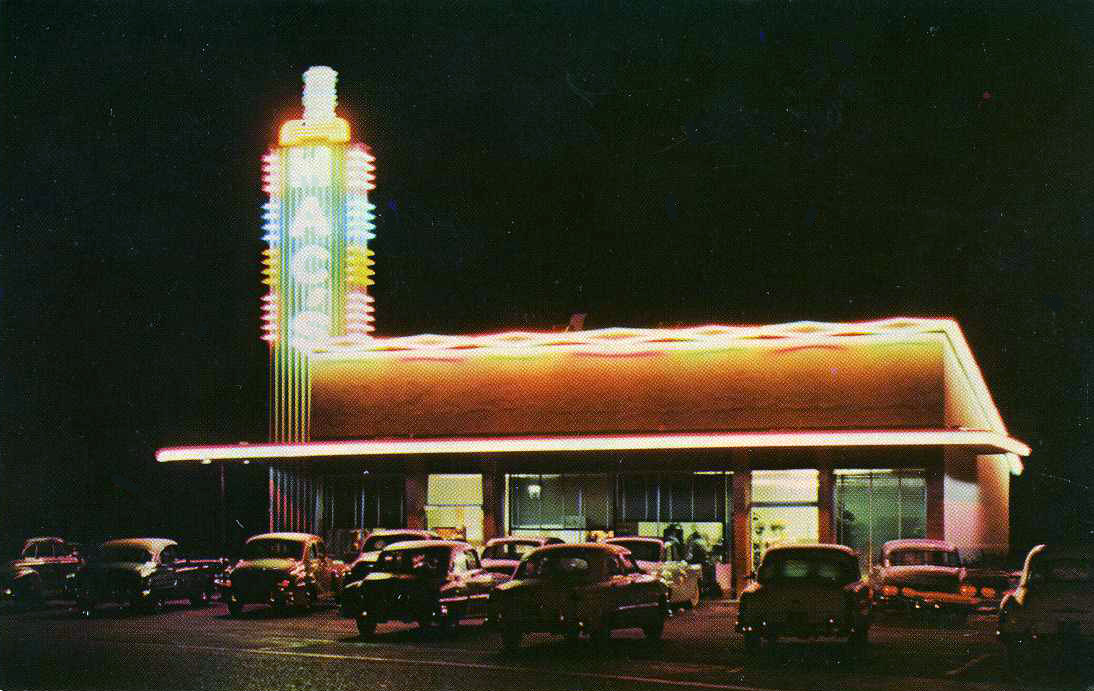
The four gases used initially by neon signs – neon, argon, krypton, xenon – were discovered by English scientists in the 1890s and adapted for use in signs by Frenchman Georges Claude a short time later. Though not the first, an early neon sign was used in Paris in 1913 to advertise Cinzano vermouth. [shown above: Mac’s, Corpus Christi TX]
But it wasn’t until the late 1920s that the signs became popular with restaurants in America. Particularly in the West where car culture was developing, the eye-catching signs helped attract the attention of drivers.
In the early days neon signs in a town’s business district could also be taken as a sign of progressiveness. A 1929 advertisement for an electrical display company in Great Falls MT advised businesses that their adoption of a neon sign would impress people, encourage progress, and “beautify Great Falls.”
Their use became well established in the 1930s. In the 1934 book Curious California Customs, the author commented, “To the casual visitor, Wilshire Boulevard, after dark, is a flashing cavern of Neon signs, most of which are calling attention to eating places.” A later postcard of Hollywood Boulevard at night in the 1950s demonstrates the effect of a street full of neon signs [shown above].
In the late 1920s the signs began moving across the country. Among early adopters were eight Benish Restaurants in St. Louis, four White Way Hamburger outlets in Colorado, the Horn & Hardart Automats in Philadelphia, and four Janssen’s Hofbraus in New York City. Salt Lake City outfitted multiple New York Coney Island Sandwich Shops with the signs.
Bright neon signs and images remained quite popular throughout the country into the 1940s. But if they were meant to make a business stand out from the crowd, that became more and more difficult as the numbers grew.
Neon signs were undoubtedly most effective for roadside restaurants on dark roads that stayed open at night [above: [Bratten’s Grotto, Salt Lake City, 1956]. Or for eating places in somewhat obscure locations that required signs that could be seen from afar. Unfortunately, they didn’t look as impressive during the daylight hours [below: Bratten’s Grotto, daytime].
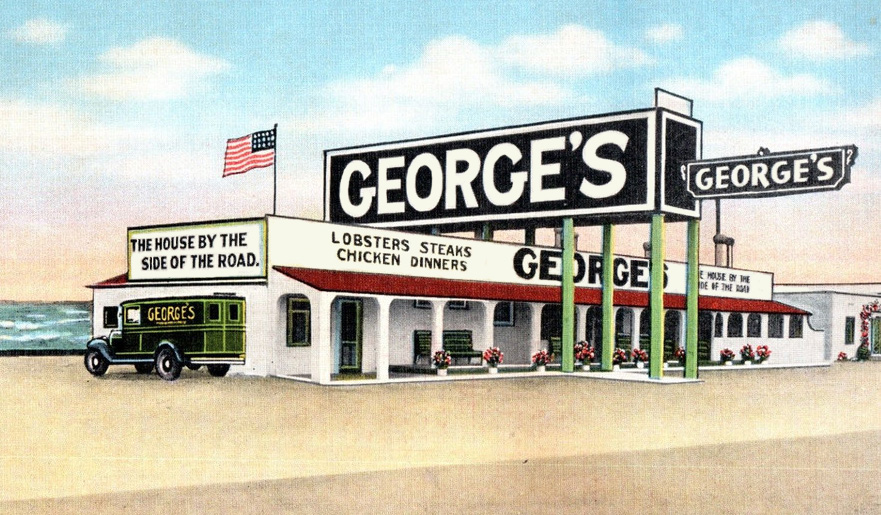
Before neon, efforts to craft signs that could attract distant or speeding traffic were undoubtedly less successful, less visible in the dark. George’s grotesquely large sign shown below, for example, was neither attractive nor sufficiently visible at night. As a slightly later version of this postcard revealed, the restaurant soon found it necessary to add spotlights atop the sign.
Neon wasn’t for every eating place. To critics it lacked artistic pedigree and dignity. Elite restaurants wanted nothing to do with it. It might announce the presence of the Green Frog or the Zig Zag Sandwich Shop, but certainly not New York’s La Chaumiere.
A 1960 book on restaurant decor pronounced neon in bad taste, saying, “Incandescent lighting is more expensive but has a kindlier glow and, thanks to the bad association arising from the tasteless use of neon, is generally considered ‘classier.’” As cities declined with the growth of suburbs, such attitudes toward neon grew more negative.
Nor was neon welcome in classy towns and communities such as Palm Springs, Carmel-by-the-Sea, and Sonoma in California; Santa Fe, New Mexico; the Hamptons on Long Island; and Cohasset, Massachusetts, to name but a few that banned it.
Rejection of neon grew in the 1960s and 1970s. In 1965, food critic and editor Craig Claiborne was uneasy about eating in the one (barely) acceptable restaurant he could find in Roswell NM, which he said had “the air of something once removed from Las Vegas or Miami Beach with its neon-silhouetted champagne glass and flashing neon bubbles.” His unease increased upon stepping inside and seeing a lighted goldfish tank, male customers not wearing coats, and bartenders with “narrow, abbreviated ties.”
Antipathy to neon in the 1970s, as before, was associated with urban decay and seedy neighborhoods characterized by run-down buildings and businesses such as bars and strip clubs. More cities and towns banned it.
Soon there were few “tube benders” left who could create or repair neon signs, which were increasingly being replaced with lighted plastic signs that were easier and cheaper to make and less prone to damage outdoors. Yesterday’s real neon signs that had survived soon showed up as quaint wall decor in warehouse-style theme restaurants.
A few commentators, such as a reporter for the Fort Wayne News-Sentinel, began to wonder about the return of neon. She speculated in 1975 that “that much-maligned symbol of everything that’s bad about American commercial districts” might “someday be recognized as art.”
Sure enough, in 1976 the Smithsonian put on an exhibit that included neon signs, among them examples from a Kosher restaurant, a foot-long hotdog place in Cleveland, and from a Spanish-American restaurant in Greenwich Village, a many-colored creation that combined a lobster, pig, fish, chicken, crab, and a steaming coffee cup.
Nowadays, vaguely quaint-looking plastic “neon” signs might show up as interior wall decor in the sort of restaurants that want to suggest they are fun places.
Most people realize that the expense and hassle of opening a restaurant in New York City is daunting, but a 1980 New York Magazine story by Paul Tharp laid it out in excruciating detail.
Generally new restaurants have a short run, but the piece underscored this observation by noting that the city’s Restaurant Association claimed that three of every four places shut down or had new owners within five years. Tharp added that a real estate broker said that one out of ten operating restaurants was for sale “at any given time.”
New York was a particularly tough city for restaurant operators. Higher food costs there meant that the consumer was going to pay four times the cost of a meal’s raw materials rather than three times, then the national norm.
Expenses involved in opening a new restaurant were staggering. Although the total estimate for a 40-seat restaurant of $162,018 given in the article seems quite low by today’s standards, it wasn’t then. The biggest chunks of money were for payroll, kitchen equipment, rent, and remodeling costs.
But that was just the monetary total. Tharp also outlined a time factor, noting that the amount of time spent getting set up was often not anticipated by those lacking previous experience.
The article observed that few new owners expected to be putting in 14-hour days the first year working in the kitchen or waiting on tables, virtually abandoning their personal life. Nor did they realize how much time and patience would be required to obtain licenses and satisfy city regulations, such as taking and passing a 15-hour Health Department course in sanitation and food handling.
And then there were the exasperating bureaucratic hurdles. For some it was a surprise that stove vents were required to extend to the top of buildings. If the Buildings Department found that the restaurant had not obtained a permit and met city standards for remodeling, an owner might need to tear out all the work that had already been done and start over.
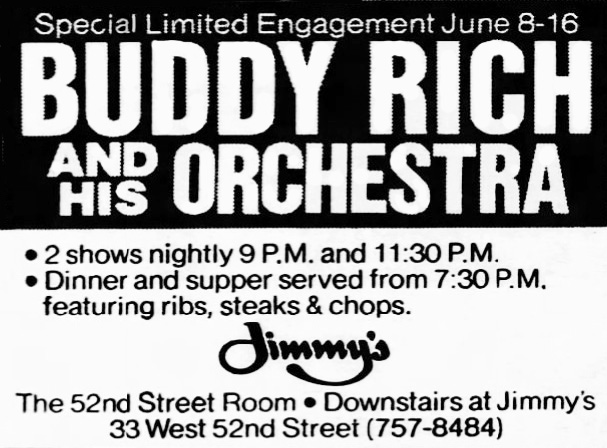
Taking over an existing restaurant may have avoided the hassles of remodeling, but its costs were likely much higher and brought their own hazards. Tharp relates a horror story involving two inexperienced men, elsewhere termed “babes in the gastronomic woods,” who wanted to take over a former Toots Shor restaurant for a bargain price if the new owners also assumed the restaurant’s debt. They teamed with major investors who pulled out and left them at sea. They renamed it Jimmy’s after soon-to-vanish partner Jimmy Breslin. Although at first it was quite popular, business then fell off with the recession and they realized they couldn’t handle the large staff or deal with unexpected costs such as credit card service charges, electricity rate hikes, and a temporary loss of their liquor license. Even adding an upstairs cabaret and a downstairs jazz club and hiring Jack Lemmon as Monday night bartender failed to attract the disappearing crowds. After about 34 months capped by a flooded basement, Jimmy’s shut down.
If Tharp’s report didn’t contain enough warnings, a published letter from a Manhattan realtor added another note of caution. He pointed out that owners of “quality buildings,” fearful of restaurant failure rates, tacked on security deposits equal to as much as five months rent, plus additional payments to make up for premiums required by insurers who assessed a higher fire risk for a restaurant tenant. Altogether, he estimated the operating budget should be 30% to 40% higher than Tharp’s.
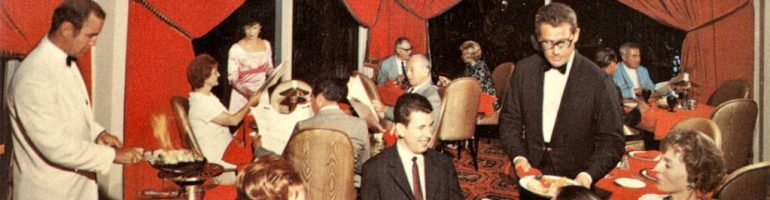
Perhaps to offset all the bad news, the story included five thumbnail sketches of restaurateurs who overcame obstacles. I took a closer look at their subsequent careers, which raised some questions about just how well they all did. Three seemed to be well-connected pros who, despite disappointments with some ventures, did well overall. One of those briefly profiled was Peter Aschkenasy who had a number of successes including Charley O’s and U.S. Steakhouse, but who hit a snag trying to revive the classic New York restaurant Lüchow’s [pictured at top].
One restaurateur had a place I could find absolutely no trace of anywhere, and another had a single tiny restaurant with a short life. It was operated by the only woman mentioned in the story, chef Leslie Revsin, whose professional biographies unfailingly cited that she was the first woman chef to be hired by the Waldorf-Astoria. She opened Restaurant Leslie in Greenwich Village in 1979. With only nine tables and no liquor or wine license, it lasted only a few years despite critical praise. Following that she cycled through about nine New York restaurant kitchens including Argenteuil, One Fifth Avenue, and The Inn at Pound Ridge, often as executive chef. Eventually she turned to writing cook books.
It seems pretty certain that restaurants of the 19th century were far less sanitary than they are today, and that employee hygiene, though still a factor now, was far worse. There were few mechanical dishwashers, no electrical refrigeration, and little understanding of the dangers of foodborne illnesses.
It wasn’t until the 1880s that science threw a spotlight on the subject and the concept of “ptomaine poisoning” developed, identified as alkaline substances formed during animal decomposition. The term ptomaine continued in use in the popular media even into the late 1970s, despite being scientifically questioned for decades and totally discredited by the 1930s. Scientific authorities pointed out that although ptomaines were real, meat would need to be in such an advanced state of decomposition at that point that no human, no animal, would touch it.
Soon after the ptomaine theory of illness was introduced in the 1880s, newspapers began reporting on its victims, many of them restaurant goers. For example, in 1899 the San Francisco Chronicle produced a story about a man who experienced cramps, vomiting, headache, and dizziness two hours after eating ham in a restaurant. A doctor said he had suffered ptomaine poisoning.
Given the documented history of food adulteration, it’s certainly believable that bad meat was often knowingly served in cheap restaurants. Some patrons believed they had been served decomposing meat that was smothered in sauce to hide it. Americans were generally averse to sauces, and whether it was due to fear of poisoning or the sense they were “foreign” is a good question. Probably both.
Eggs also fell under suspicion. Advice given to women shoppers by Harper’s Bazaar magazine in 1896 seems wise. It observed that “One hears of more sick results from salads than any other dish.” Salad at that time did not typically refer to vegetable salad but rather to chicken or other meat salads dressed with mayonnaise. In these cases it was likely that eggs used in mayonnaise caused Salmonellosis. The article recommended ordering “something hot, and better still if it is cooked for you,” which was reasonable advice.
What may have limited the overall incidence of foodborne illness in the 19th century was simply that then fewer people ate in restaurants, most restaurants were small and served few meals, and food production was smaller in scale and more localized so that the reach of contaminated food was reduced. Of course, since symptoms of foodborne illnesses don’t show up until between 10 hours to days later, it was unlikely then, as now, that most were identified or reported as such.
The association of sickness with restaurants began to play on the public’s imagination in the early 20th century. In summer 1908 a lunchroom waiter offered his thoughts: “If you must eat meat [in] this hot weather, select anything but hash or a Brunswick stew. If you insist on a finger bowl, have the man who serves you fill it in your presence. If you drink water at meals, make a private arrangement with your waiter. And if you must have buttered toast with your breakfast, don’t read this story.”
No doubt the waiter’s warnings were correct. A 1929 article in Restaurant Management magazine claimed that 25 years earlier few restaurants could have met modern sanitary regulations. The author said that most used lard cans for cooking, had no dishwashing machines and kitchens full of flies. Most also saved scraps from customers’ plates, left them sitting out for hours, and served them a second time – which explains why customers were suspicious of hash and stews.
As of 1925 the biggest known outbreaks of foodborne illness in the U.S., with the most fatalities, resulted from typhoid-infected oysters from polluted Long Island waters. The problem was not uncommon in the early 20th century, and caused a drop in oyster consumption. Yet in 1925 outbreaks sickened more than 1,500 people in New York, Chicago, and Washington D.C., with 150 deaths. There is no report of how many of those afflicted ate the oysters in restaurants, but it’s likely most did.
Generally, tracing reported cases to their source has always been quite difficult and most are not reported at all. Victims often think they have the mythical “24-hour flu.” Or they might attribute their distress to the last meal they ate in a restaurant when the source could well have been something consumed days earlier. In the case of Campylobacter, it has been estimated that as many as 2M people are afflicted each year (though not solely from restaurant meals), leading to more than 10,000 hospitalizations. Salmonella may afflict somewhat fewer people but causes more hospitalizations and deaths. [Above: 1989 cartoon still using the term “ptomaine”]
If restaurants seem to loom large in food poisoning history, that is at least partly explained by the greater ease in identifying cases when there is an outbreak where a group of people have eaten the same thing.
In more recent decades restaurant outbreaks have received quite a bit of public attention. And, although restaurants are cleaner and more careful than in the past, food perils have not gone away. In fact pathogens recognized after 1990 such as E. coli O157:H7, Listeria, and Campylobacter are some of the most dangerous. And it is not just protein food that is risky, but also fresh produce that has been contaminated by exposure to infected animals or water.
Norovirus is the most common variety of foodborne illness, and is found in fruits and vegetables and oysters. Its symptoms are flu-like, and, unlike bacterial agents, its spread is aided by transmission from infected persons, particularly in close environments such as cruise ships.
As news of outbreaks goes, it tends to focus on chain restaurants such as McDonald’s, Jack in the Box, Sizzler, Burger King, and others. Often that is less an indicator of their bad practices than it is a result of a massive industrial food processing system they are part of, marked by risky methods of raising animals, long distance transport, and other profitable economies of scale.
In the case of one large supplier, Hudson Foods, outbreaks resulted in a 1997 recall of 25M lbs. of beef patties possibly contaminated with E. coli. As a result as many as a fourth of Burger Kings nationwide had no burgers to sell for up to two days. After Listeria was discovered in its turkey deli meats, processor Pilgrims Pride set a new record in 2002 by recalling 27.4M lbs. of its products that had been distributed to restaurants, food stores, and school cafeterias.
And yet it wasn’t just large suppliers and distributors that were to blame. Outbreaks of E. coli and Salmonella in Chipotle outlets across the county in 2015 were not believed to be linked to large-scale suppliers but to the company’s mission of sourcing fresh food from small, local farmers.
Despite today’s threats, however, it’s probably as safe to eat in restaurants as it is at home.
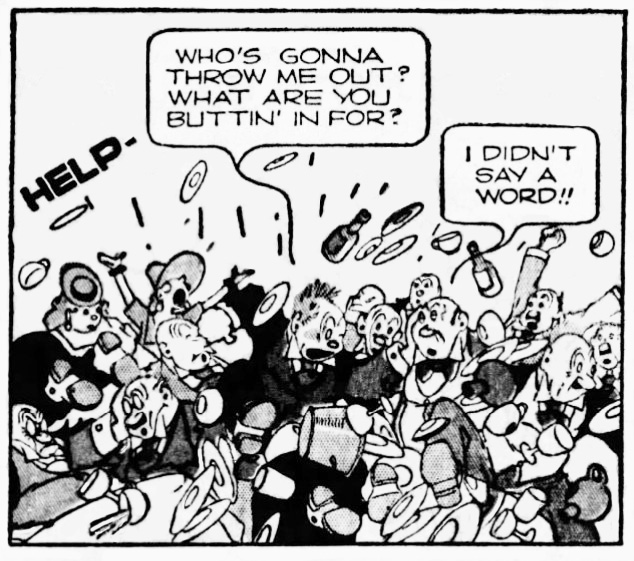
All the discussion about guns in public places these days has me thinking about restaurant security, a subject that, as a patron, I never actually consider. Specifically, I began to wonder for the first time whether ordinary eating places all the way up to elite restaurants have armed employees or a gun stashed away somewhere. Or, might patrons be armed? [shown above is a 1946 Jiggs comic strip scene]
Given that the answer has been “yes” back into the 19th century, and that more Americans are armed now, it’s likely to still be true.
But a more common type of violent incident that occurs in restaurants is a brawl which, thankfully, hasn’t usually involved guns.
Of course restaurants have always had a certain number of problem patrons to deal with. According to one 19th-century account, even Delmonico’s had a man employed to handle difficult guests, such as those who arrived inebriated. He headed off trouble by not admitting them or by whispering a “word of advice” to patrons who drank too much while in the restaurant. Mainly, he said, his job was to recognize by sight the city’s “bunko steerers and confidence men”: “I just meet them at the door and tell them it won’t do, and they know it won’t, so they go away quietly. There is no bouncing or knocking out required.”
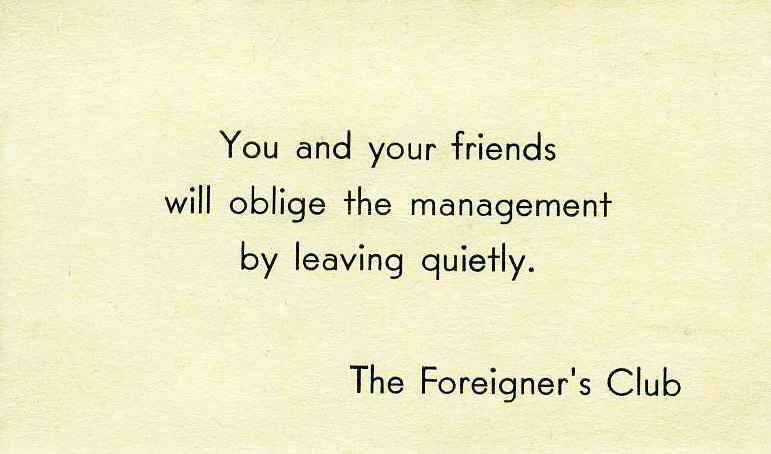
His genteel method was similar in tone to that of “The Foreigner’s Club” of Sorrento, Italy, where this card was used.
Alas, such methods were only available in certain restaurants. At others, there were no door keepers, subtle ushers, or “convertible waiter bouncers.” It seemed from time to time that nothing could stop patrons from fighting other patrons or a server or even instigating a mass brawl.
I started thinking about restaurant brawls when I read a story in this year’s January 29 issue of the NYTimes Magazine. It described the scene of a Waffle House in Texas where a melee erupted and was captured on video. It involved patrons standing on the counter, throwing dishes and chairs, and attacking workers who fought back in like manner. Other popular videos show similar scenes in Popeyes and sub shops.
The author, Niela Orr, expressed a degree of longing for the days of Edward Hopper’s famous 1942 painting Nighthawks, where patrons sit glumly in isolation from other sad sacks at the counter. Like the Waffle House patrons, they are alienated but unlike them they aren’t throwing crockery.
They could have been though. Restaurant customers were documented hurling dishes as early as the 1860s.
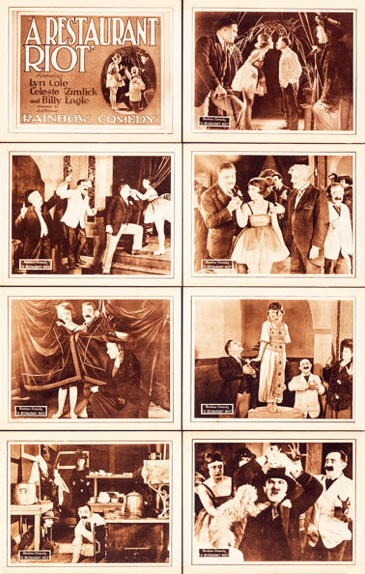
In 1920 movie patrons laughed at the subject of riots in restaurants.
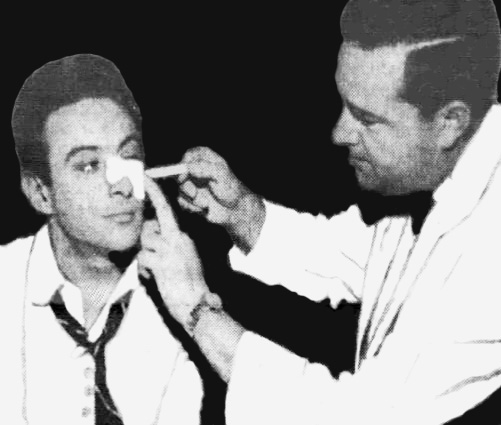
Restaurant brawls are diverse. Undoubtedly many of the sites where they occurred were lowly eateries but others were mainstream chains, such as the International House of Pancakes, Child’s, and White Castle. And Googie’s – where comedian Lenny Bruce went through a plate glass window. [1957 photo]
Not even Grandma’s Family Restaurant and Pancake House in Rockford IL was safe from disruption. In a 1992 melee there, an estimated 30 patrons “went wild,” breaking out four plate glass windows, jumping over booths, and throwing whatever they could get their hands on.
Incidents sometimes involved brawlers you might not expect, such as students at elite colleges (Harvard vs. Dartmouth in one case), or men in tuxedos upset that a server refused to give them more sugar during WWII rationing. Generally participants have tended to be young, white, male, and intoxicated.
Few incidents could outdo the brawl in New York City’s Bryant Park Grill said to be a repeat of a similar event in DC three years earlier. To quote a 1998 story in the Jersey (City) Journal, 40 of NYC’s firemen celebrating Medal Day in their finest uniforms “annoyed patrons, exposed themselves, urinated in public and invaded a women’s restroom.” They also threw a policeman over a row of planters when he tried to break them up. And, as so often happens, no one was arrested.
Personally, I will try to push all this to the back of my mind when I’m visiting restaurants.
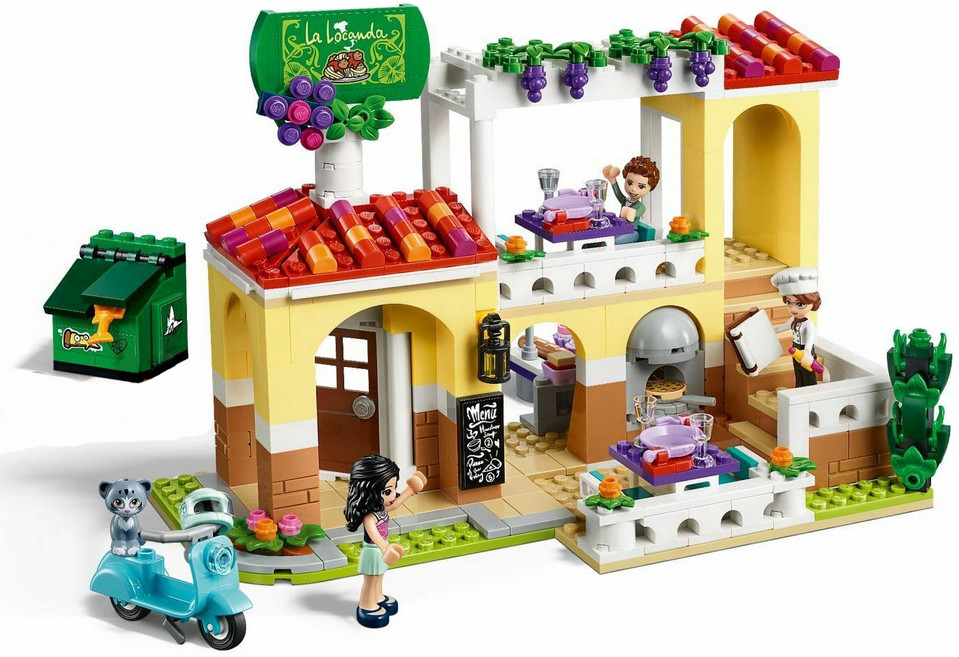
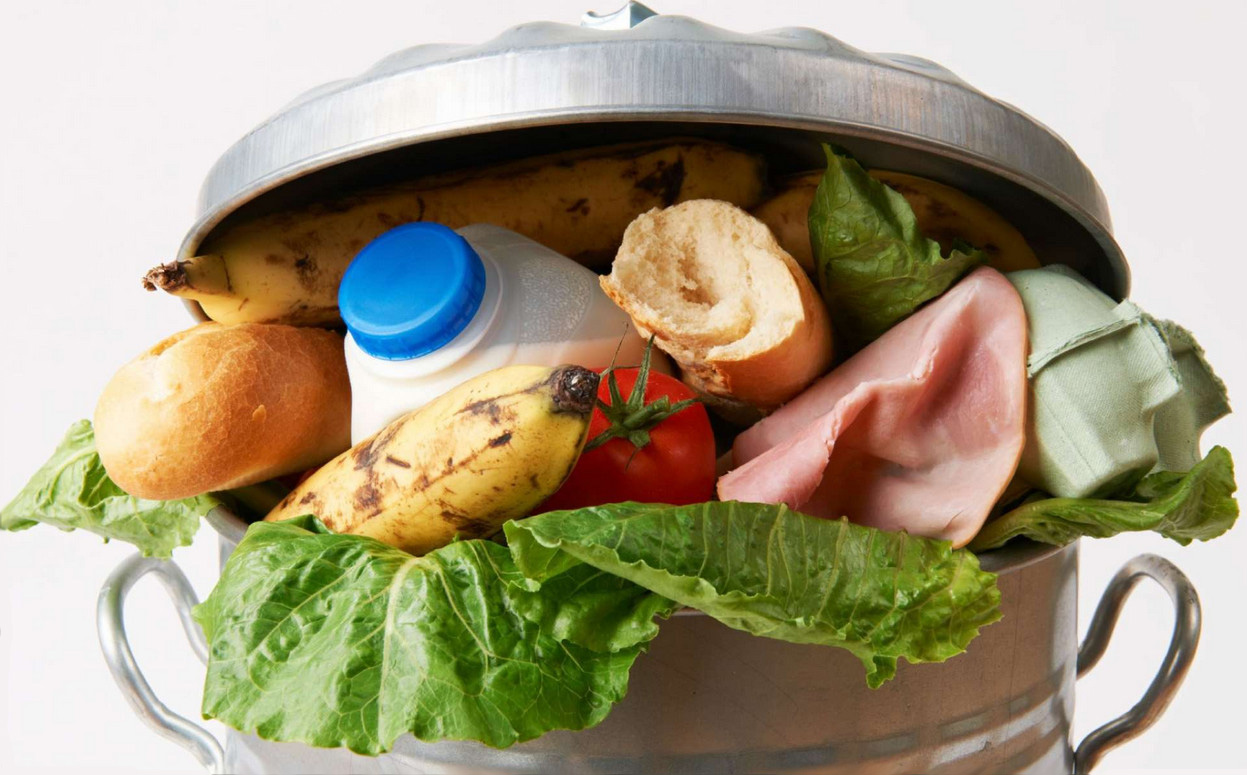
Running a restaurant is messy. Dealing with garbage, trash, grease, unsold food, and food left on patrons’ plates is unpleasant, expensive, and depressing. [above: toy dumpster]
This topic has been haunting me ever since I read the following sentence in an 1877 newspaper: “The harbor of New-York is made unhealthy by the decaying food of hotels.”
That was still the era of American-plan hotels where meals were included with lodging. It cost nothing extra if a hotel guest ordered everything available, saying, “Bring me some oysters on the half-shell, green turtle soup, some clam chowder, some halibut steak, green goose and apple sauce, lambs’ fries, sweet potatoes, egg-plant, succotash, stewed tomatoes, Roquefort cheese, lemon pudding, cranberry pie, cakes, watermelon, and French bread.” Most of the dishes ended up sampled but otherwise uneaten and were thrown out. European visitors were invariably horrified.
The notable exception to the American waste of food was the Chinese cook, commonly found in restaurant kitchens throughout the West in the 19th century. He was hailed for being “the most economical buyer imaginable,” one who “uses up what he has and wastes almost nothing.” When he was in the kitchen, little garbage resulted.
But there was not always a clear definition of garbage, revealing another, less savory way of reducing its output. Some lowly restaurants, even as late as the 1930s, considered food left on patrons’ plates perfectly okay to serve to guests once again, though possibly in a different format such as soup or hash. This practice led discriminating guests to avoid ordering hash unless it was on the menu of a first-class, shiny modern restaurant.
Over time, it became a violation of sanitary codes to serve anything left anywhere on a guest’s table, which would include untouched baskets of bread. And, increasingly, the practice of feeding kitchen scraps and plate scrapings to pigs or – in the case of unordered entrees – donating them to churches and centers providing charity meals, was ruled out.
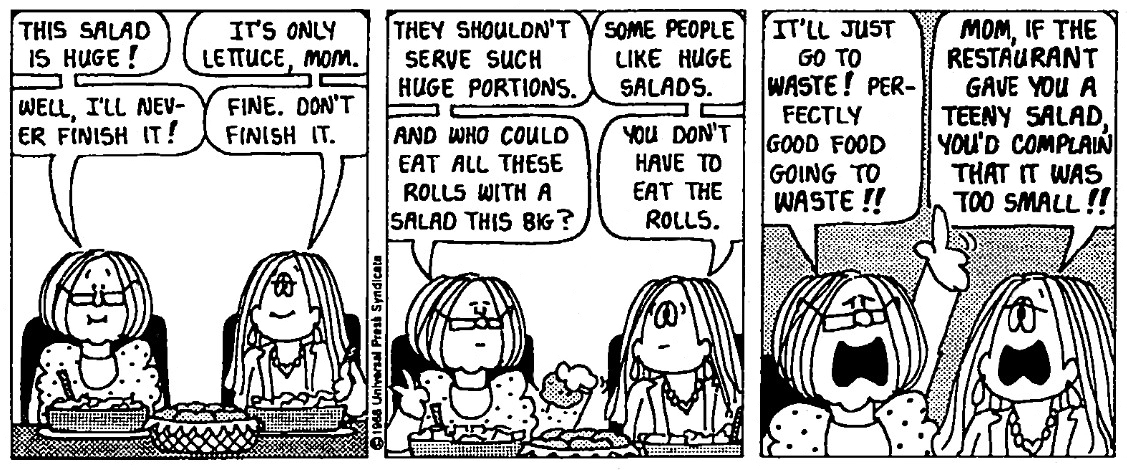
The prevention of edible food waste in restaurants has become a goal at various times in past history. Both of the 20th-century’s world wars, when food and restaurant prices rose, brought attention to food waste in homes and eating places. Another decade of concern was the 1970s when rapid inflation caused consumer prices to soar at the same time Americans became aware of the problem of hunger here and around the world. [above: Cathy comic strip]
Most of the time, though, everything went into trash cans, or dumpsters. They arrived on the scene thanks to the Dempster brothers who developed their Dempster Dumpster in the 1930s. But note the fish hanging out of the toy dumpster shown above. That would cause problems for a restaurant manager who would be certain to get complaints from neighbors about the stench if the lid wasn’t kept firmly closed. In 1968 a Chicago neighbor of Chances R begged a newspaper’s help column to “use your magic wand” to deal with the eatery’s “fetid” smelling garbage cans that were “overflowing and left uncovered.”
Another problem restaurants – and municipalities — had to deal with was kitchen grease building up and clogging drain pipes. As early as 1883, some cities took action to keep grease out of city systems. That year St. Paul MN adopted a requirement that a grease trap “be constructed under the sink of every hotel, eating house, restaurant or other public cooking establishment.”
Traps are designed to separate water from a sink from the grease floating in it, permitting the grease to build up into a semi-solid block that can be removed periodically by a service that disposes of it. Disposal, though, could be a thorny problem of its own at times as town dumps closed down. Also, fly-by-night collectors sometimes deposited grease along roadsides.
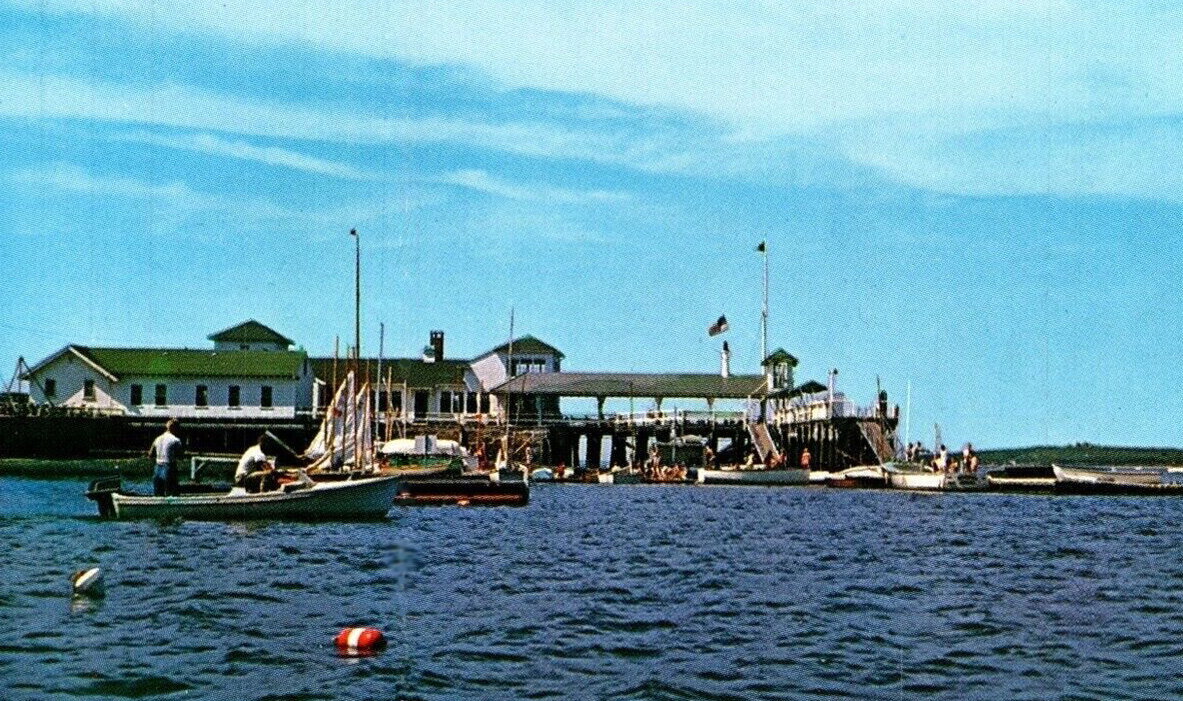
Eventually, slowly, other states, cities, and towns enacted grease trap ordinances similar to St. Paul’s. And yet trapless restaurants continued to exist. It was only in the 1980s, after years of official pressure, that half a dozen restaurants in Hingham MA installed grease traps. The harbor was too handy! About that same time restaurant grease threatened operation of the sewage treatment plant in Fort Myers FL. [restaurant at the Hingham Yacht Club shown above]
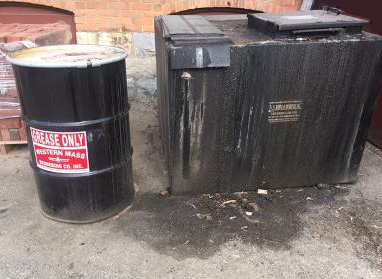
Fortunately, getting rid of cooking oil turned out to be easier since the contents of an outdoor rendering can may be recycled and used for fuel. [above: grease and oil containers]
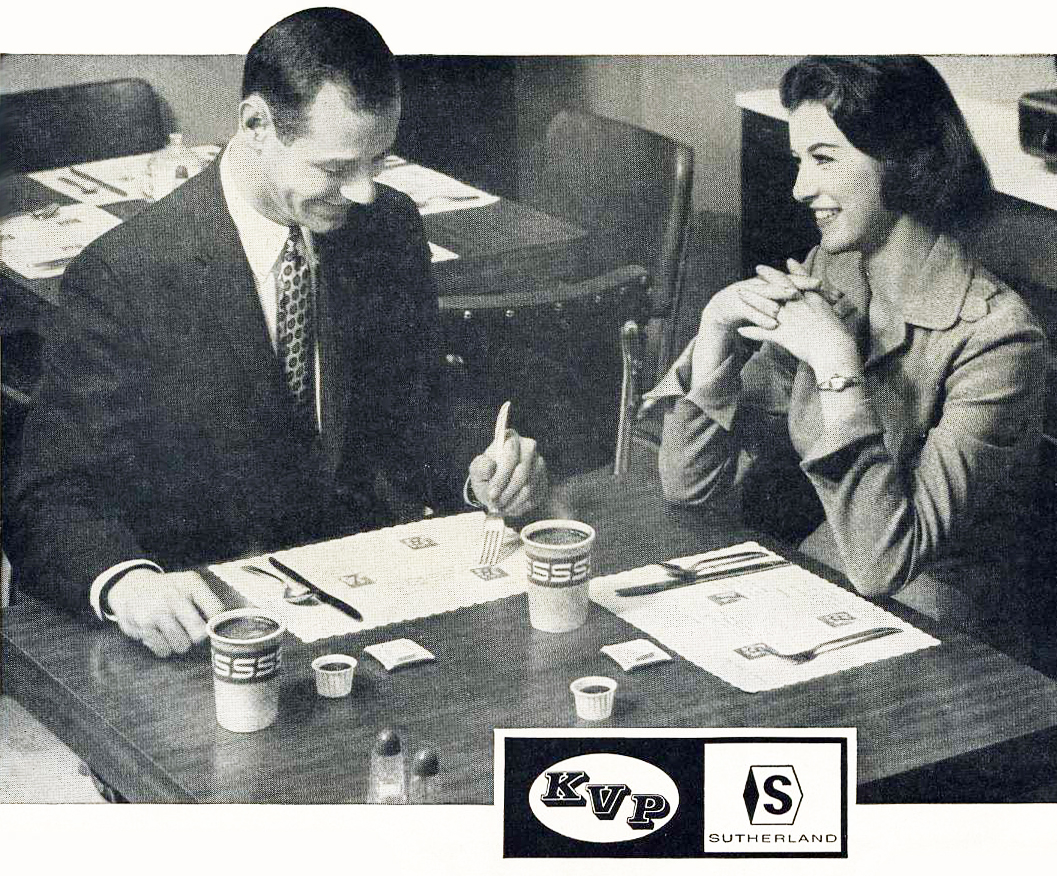
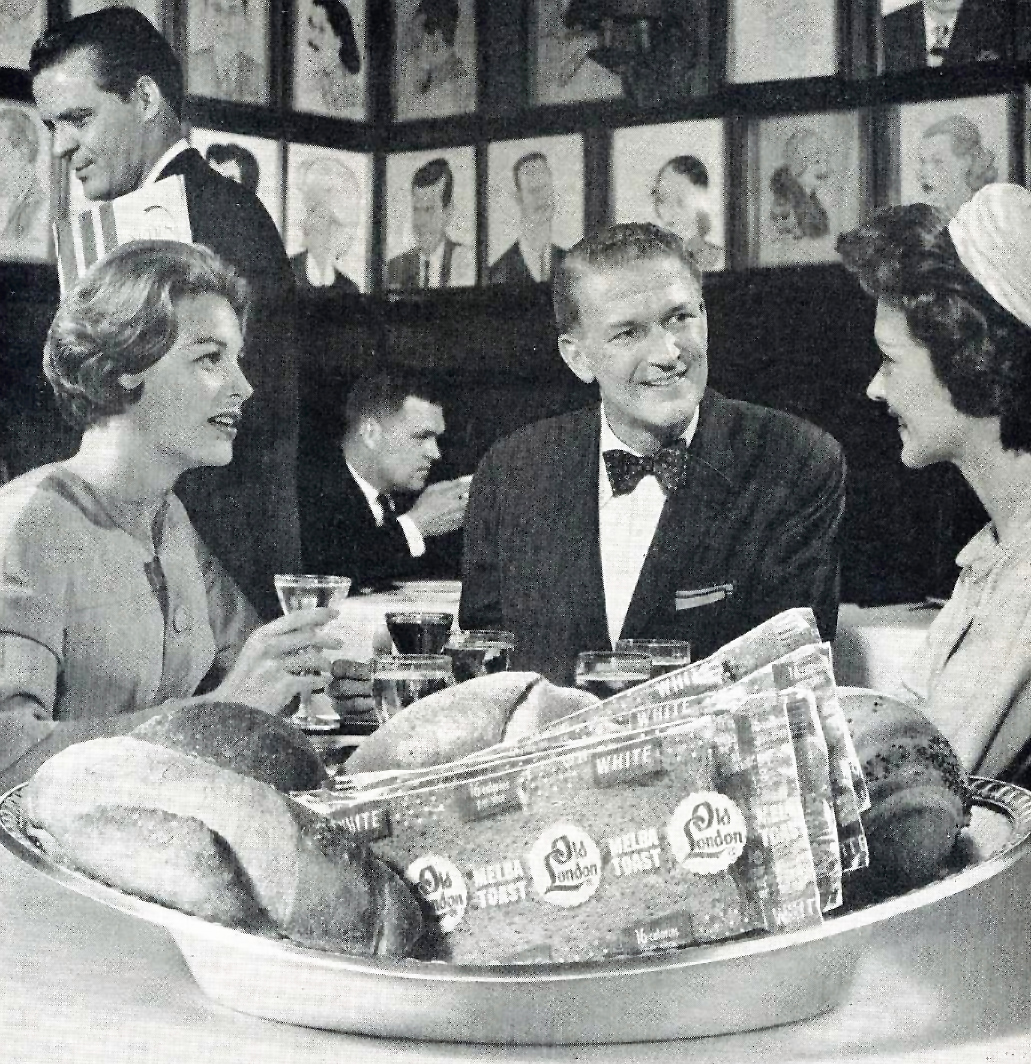
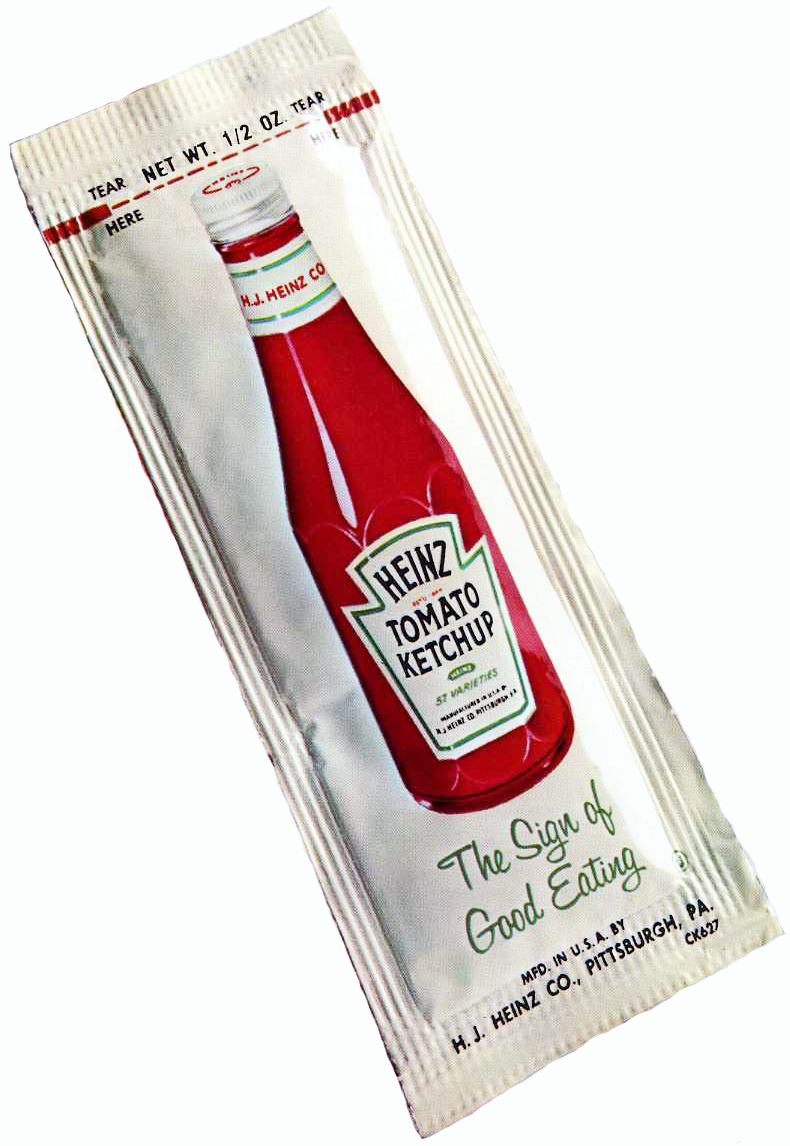
In the 1960s throwaway paper bags, napkins, cups, and straws, as well as plastic lids and small servings of sugar and condiments proliferated, especially with the spread of fast food outlets that eliminated dish washing and laundry. Even table-service restaurants got into the act with custom printed placemats and individual packets of crackers and breadsticks. [below, Sardi’s, NYC, 1962]
Litter at drive-in restaurants was a chronic problem that led neighbors to complain. Towns drafted ordinances to control the problem, such as one in Michigan in 1965 that targeted “paper cups, straws, napkins, garbage, beverages and all other waste matter intended for disposal which, if not placed in a proper receptacle, tends to create a nuisance by rendering property unclean, unsafe and unsightly.”
Although single-serve packages caused waste, they were advertised as a solution to waste in that they prevented restaurants from having to throw out leftover or mishandled condiments, crackers, etc. That was also a frequent claim made by companies that produced frozen entrees for restaurants that would not be taken out of the freezer until ordered by a patron, preventing the restaurant from preparing food that no one wanted.
What is fascinating is industry’s response to restaurants’ problems with waste, smells, and general ickiness. There was no end of advertisements in trade magazines promising to do away with all the problems. One that made me laugh with its slogan “Smash Your Trash” was the Can-O-Rid Can and Bottle Crusher that reduced trash volume and hauling charges by crushing jugs and bottles “to bits.”
The Stomach, a 1970s counterculture vegetarian restaurant in Portland OR, found a different kind of solution to handling garbage. They composted it and suggested customers who were organic gardeners should feel free to “raid the restaurant’s garbage pail.” In 1973 a grease hauling company in Houston adopted the slogan “Recycling for a Better Tomorrow for the Benefit of Mankind”.
Alas, today restaurants still struggle with waste, trash, grease, and garbage.
Through the years a number of writers have described deceptive practices and foul scenes in restaurant kitchens where they have worked. Probably the best known authors are George Orwell (Down and Out in London and Paris, 1933) and Anthony Bourdain (Kitchen Confidential, 2000).
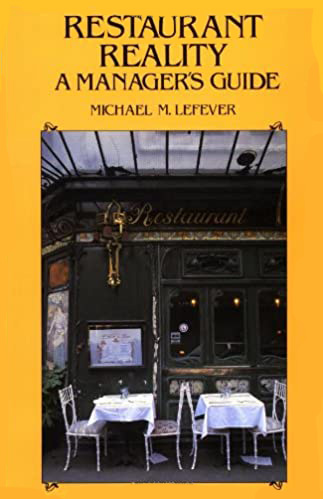
In those books, and in periodicals, I’ve read many reports of bad restaurant food, along with dishes misrepresented on menus. But I’m still a bit stunned after reading Restaurant Reality: A Manager’s Guide by Michael M. Lefever (1989). One of the biggest surprises is that he reveals his own willing involvement in kitchen tricks and horrors inflicted on guests — even in restaurants he and his wife owned and operated.
The book has a puzzling disclaimer on the copyright page: “This book is a composite of the author’s own experiences. Names, characters, places, and incidents are the product of the author’s imagination or are used fictitiously and any resemblance to actual persons, living or dead, or locales is purely coincidental.” But, whether absolutely factual or not, and despite being aimed at college students interested in restaurant management, the book seems to sanction questionable activities.
In his preface to Restaurant Reality the author makes several statements that seem to undermine the disclaimer somewhat. He says that he tried to present “an authentic overview” that was “a real eye-opener for anyone who has ever eaten in a restaurant.” He adds that while the content may be shocking, “that’s how things really are.”
Starting at age 14, Lefever had at least a 23-year career in a number of restaurant roles, including dishwasher, server, cook, and bartender for an Italian restaurant, followed by unit manager and district manager for a fast-food chain, and regional manager for a dinner-house chain. Plus, in between the chains, he and his wife were owner-operators of three independent restaurants. Following his restaurant career, he held academic positions both as Associate Dean of the Conrad Hilton College of Hotel and Restaurant Management at the University of Houston and as head of the Department of Hotel, Restaurant and Travel Administration at UMass Amherst.
Although no names of individuals, places, or restaurants are given in the book, I have discovered that the third restaurant the Lefevers owned briefly was The Balcony in Folsom, CA. According to a 1983 story in the town’s paper, their two previous restaurants were in Bend OR and Salt Lake City, probably in that order.
How things really were
At age 16 Lefever became head cook at an Italian restaurant. It was before microwave ovens were common so hot water was used for parboiling and defrosting items such as lobster tails. The same water might be used for multiple items, such as pasta, chicken, and fish, as well as frozen steaks before they went on the broiler. He remarks, “This may be of some interest to readers who are strict vegetarians.”
No matter what the customer ordered at the Italian restaurant, all steaks were delivered to guests rare and cooked further only if they complained. If the customer insisted on a well-done steak the kitchen took revenge by putting it in a deep-fat fryer, followed by treatment with a blowtorch which caused it to burst into flames. Just before it burned to a crisp they would throw it on the floor and smother it in salt, then shake off the salt, put it on a platter and brush it lavishly with butter. He claims – and maybe it was true – that customers loved these steaks and some started asking for theirs charred.
As a fast-food unit manager, he oversaw (or witnessed? or heard about?) some truly disgusting practices. For instance, afternoon employees hired mainly to clean toilets and dispose of trash often did some off-hour cooking as well — but they weren’t always terribly sanitary. If no fresh lettuce was available, he writes, “the afternoon employee might fish out of the garbage can some discarded outer leaves.” They were oversized with tough spines, so the worker would “simply place his palm on the assembled sandwich and smash it downward.” When condiments squished out, he would “take a dirty cleaning rag” and wipe off the bun.
Since Lefever’s monthly bonus was based on keeping costs down, he recycled sandwiches that had officially expired as often as he could, even though this subverted the chain’s system. Eventually they began to look inedible. Then the workers would replace limp lettuce, spray the dry bun with water, and make other repairs. If that didn’t work they would disassemble the sandwiches and salvage the valuable parts for remakes during the off-hours, and so much the better if the customers were nighttime drive-thrus who had spent their evenings in a bar.
At the Lefevers’ own restaurant, The Balcony, servers were instructed to tell customers that all dishes — Veal Piccata, Beef Wellington, and so on — were prepared on site though they actually came from a supplier of frozen entrees. The cooks were highschool students who defrosted them in a microwave while doing their homework.
He declares that customers who found eggshells in their omelets should have been grateful since this meant the restaurant used fresh eggs rather than processed omelet mixes. But it could also mean that they came from the bottom of containers they used to store hundreds of cracked eggs in water. And, he reveals, “The bottom also collected the heavier eggs, which result when hens are sick, given a strange diet, or frightened.” Customers requesting decaffeinated coffee didn’t necessarily get it, since servers randomly grabbed the handiest pot, switching the red or green plastic bands that indicated type of coffee.
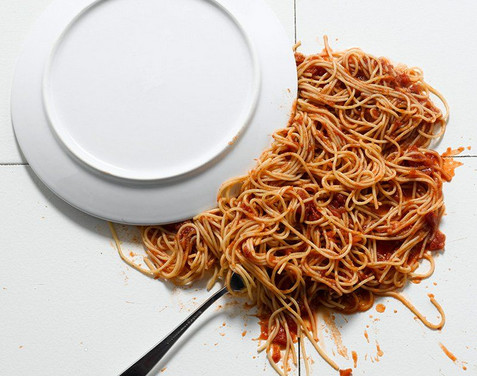
In discussing food spilled on the floor, he writes, “I have served . . . entrees spilled and then salvaged such as lasagne, beef stew, chili, pasta, and scrambled eggs. Steaks and chops are no problem at all. Simply put them back on the grill or in the pan to freshen them, after washing them under the faucet.” But he advises cooks to inspect the entree “looking for hairs and foreign pieces of food that do not complement the dish.”
It is said that the sense of smell became less important when proto-humans began to walk upright. Yet it has played a significant role in restaurant history, for better and for worse.
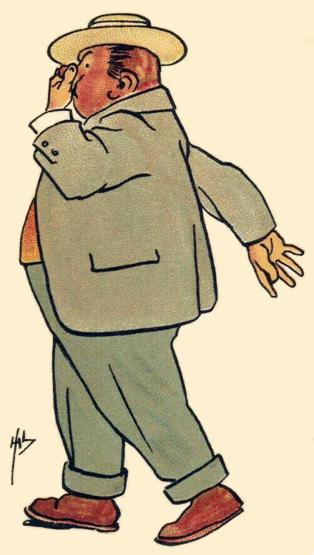
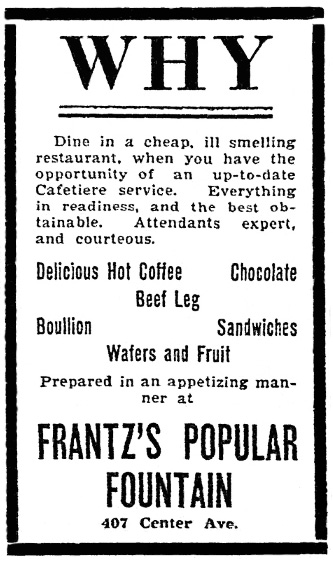
While not limited to the 19th century, complaints about bad odors in eating places abounded then. In that century, unwanted smells might come from the building itself, accumulated cooking odors, or the humans in the rooms. Worst of all were the cheap eating places located in damp and windowless basements where all three perils came into play.
A self-styled researcher in 1849 cancelled a plan to visit common eating houses in New York City, writing, “We once undertook to count these establishments in the lower part of the City, but got surfeited on the smell of fried grease before we got half through the first street, and were obliged to go home in a cab.”
Even Taylor’s, Broadway’s mid-19th-century hot spot where fashionable ladies went to consume fricandeaus and meringues, failed the smell test. It had a deluxe interior with 18-ft-high ceilings, gold leaf, fountains, and mirrors, leading journalist Fannie Fern to exclaim, “What a display of gilding and girls.” And yet, upon its close in 1866, a critic put things straight, admitting “there was always the restaurant odor, the mingled essence of many past dinners, and precisely the same from month to month and year to year.”
If Taylor’s wasn’t free of bad odors, what restaurant was? Well, according to a British visitor, the answer was just about none! In 1868 the author, after visiting New York, gave 99.9% of the city’s eating places a no-star rating when it came to smelliness. “The restaurants, with the exception of Delmonico’s on Fifth Avenue, generally speaking, are dingy and warm, and have a sickly smell about them,” he wrote. Not much later the Prince of Wales traveled to the U.S. and quickly grew sick of the sight and smell of one of the country’s most beloved foods: oysters. “During his sojourn he was always endeavoring to escape from the smell of them,” according to one chronicler. Obviously, one person’s bad odor might be another’s delicious aroma.
Old-fashioned chophouses, revered as hyper-masculine shrines to meat-eating, also came in for criticism. One critic denounced New York’s Old Tom’s, a venerable dining spot, as “the humbug of the century.” He characterized its atmosphere as “fat and greasy,” adding, “You breathe it, smell it, taste it.”
On the whole, though, it was unusual for men to criticize the smell of meat cooking. It was so enticing that the owner of an 1890s NYC ballroom arranged to pipe in the kitchen’s odor of steaks being grilled at the end of the night’s entertainment, ensuring a crowd for his dining room a floor below.
The restaurant foods usually singled out as unacceptably smelly tended toward fried, greasy things, as well as garlic, onions, cabbage, and, in certain cases — when they perfumed residential neighborhoods — hamburgers and hot dogs. Los Angeles regarded tamale wagons as “odor factories” and Scarsdale fought to remove a “smelly” stand operated by Castel Hitaltakides, aka ‘Hot Dog Joe.’
But it wasn’t until after the first world war that real improvements were made with ventilation and kitchen design. Wood surfaces were replaced with harder materials such as “Monel metal,” forerunner to stainless steel. And the use of vents and exhaust systems grew commonplace except in the poorest eating places. Air conditioning in the 1930s also made a big difference. However, improvements in air quality were always in order. A 1946 customer survey revealed that restaurant patrons’ biggest complaint after noise and clatter was still bad odors. They almost certainly would have included cigars and cigarettes, which would draw even more complaints as the movement to ban smoking in restaurants grew.
What could restaurants do to control odors? There were range hoods as far back as the 1880s, though I don’t know enough about them to judge their effectiveness. Another method employed by restaurateurs who could afford it was to locate their kitchen on the top floor of a building, with the dining room a floor below so the kitchen’s greasy hot air and odors would float inoffensively skyward.
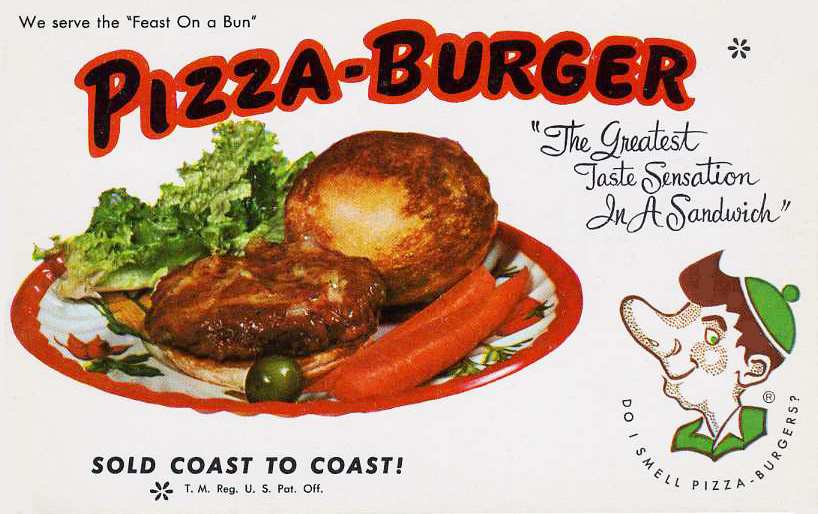
But then attitudes to food smells began to shift. An overlooked feature of the food “revolution” taking place in the late 1970s and 1980s was that cooking aromas – which, apart from beef, had rarely been regarded as a positive attraction in restaurants – became a plus, particularly when they emanated from the kitchens and platters of ethnic restaurants. Fast food smells, such as the pizza-burger’s, were also redeemed as pleasant.
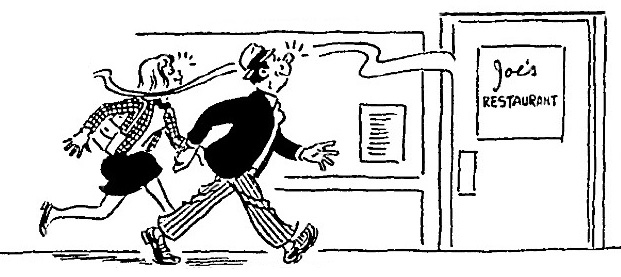
At Joe’s, yes, but not so much in luxury restaurants.
Remember that smelling was long associated with lowly creatures. And for decades the standard had been that proper middle class homes should be entirely free of cooking smells, even if this required a series of doors between kitchen and dining room as well as frequent daily airings of the kitchen. In the 1920s a genteel residential hotel in Cleveland went so far as to design suites in its new building with no kitchenettes “so that one family will not inconvenience other occupants with cooking odors.”
It seems this standard was adopted by luxury restaurants as well. I have been unable to find any reviews of elite restaurants that mentioned odors or aromas. Evidently the only time customers’ noses were allowed to come into use was in sniffing wine offered by the sommelier.
What would Julia (Child) have thought about this? In a 1972 interview, she was asked how, when traveling, she identified a good restaurant. Her answer: “If you poke your nose in, the smell will tell you something. A good restaurant smells good – of fresh food and butter and fresh olive oil.”
It's great to hear from readers and I take time to answer queries. I can't always find what you are looking for, but I do appreciate getting thank yous no matter what the outcome.
So, e-mail me!














 It's great to hear from readers and I take time to answer queries. I can't always find what you are looking for, but I do appreciate getting thank yous no matter what the outcome.
 Restaurant-ing through history