Category Archives: Offbeat places

Psychedelic restaurants

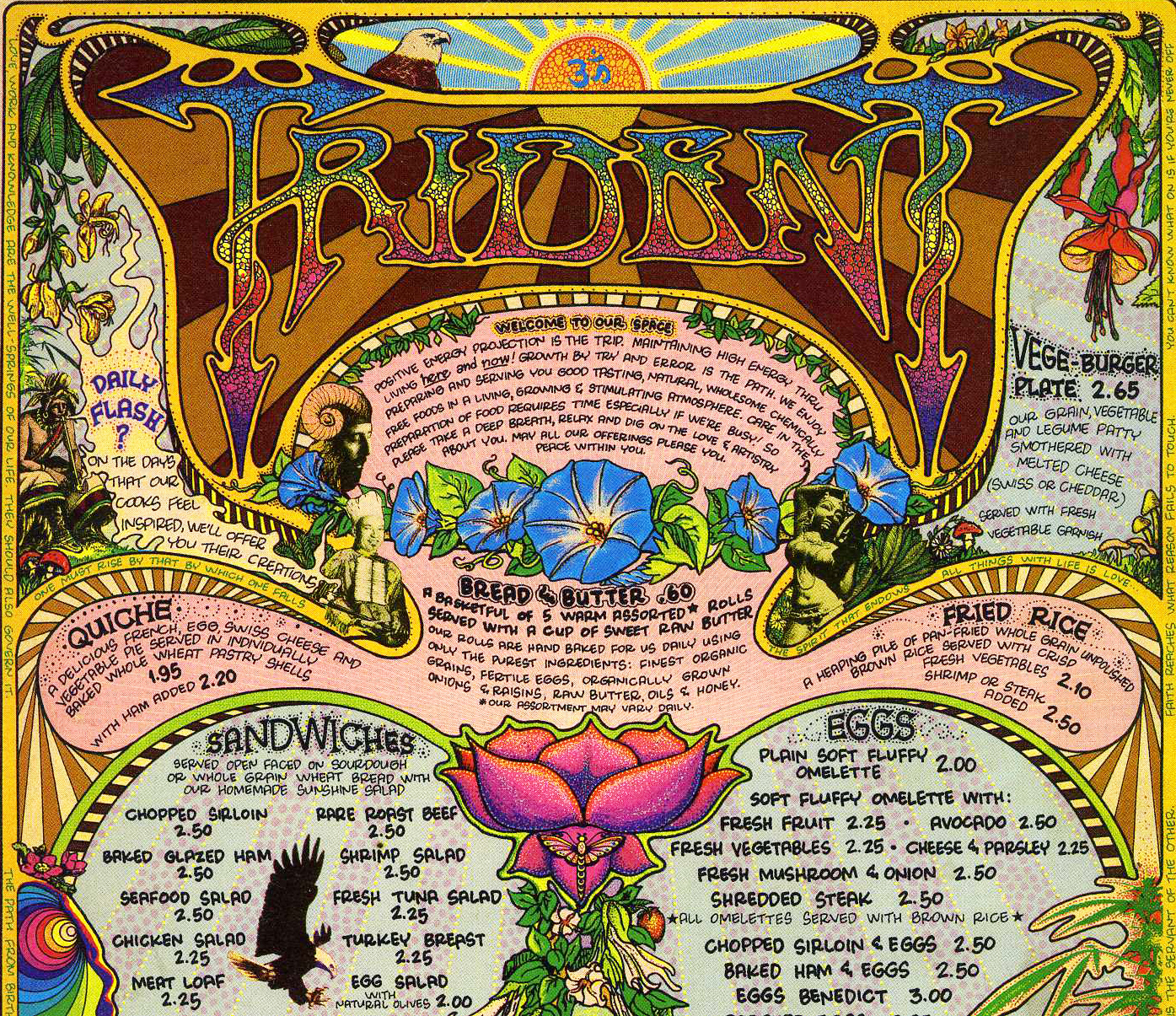
The short-lived psychedelic “theme” did not become popular in restaurants to the same degree that it did in the music world. But when you think about it, that’s not too surprising. [Trident menu, ca.1969]

As decor, a psychedelic interior made generous use of strobe lights and brightly colored paint. The decor was most likely to turn up in a teen club or a nightclub, such as Mother’s in San Francisco in 1969. Just reading a one-sentence description of Mother’s interior “with walls that modulate, colors that pulsate to music, hallucinatory lights . . .” is enough to make me queasy. Scarcely an environment for dining!

Interiors were meant to mimic the effects of LSD without the aid of drugs. This makes sense for music clubs, but it’s hard to see what it might lend to a café’s ambience.

Nevertheless there were a scattering of restaurants and cafes throughout the country in the late 1960s and early 1970s that were referred to in the press as being psychedelic in some sense. It was not always clear what that meant other than having psychedelic decor with bright colors or swirls.

The psychedelic Uptown Café in Madison WI, for instance, was decorated with fist-sized rocks “handpainted psychedelically [with] pop swirls.” But surely it took more than that to categorize the café as psychedelic. What that might have been is unknown.

Like the “Uptown Café,” some so-called psychedelic eating places had names that weren’t at all suggestive of grooviness, such as Dino’s in Tampa FL, the Great Society in Minneapolis, and the Feed Store in Chicago. In 1969 the Feed Store was firebombed, with police assuming that the perpetrator was someone in the neighborhood who disliked hippies and their psychedelic decor.

Although the natural food movement emerged at the same time as the interest in exploring consciousness via drugs, it would seem that not all psychedelic restaurants embraced it. Haight-Ashbury’s main gathering spot for the area’s hippies was The Drogstore, so named to avoid the obligation to fill prescriptions. Tabletops there may have featured “psychedelic linoleum” but the menu was centered on ordinary hamburgers, minestrone, and soft drinks.

Other eating places shown on a Haight-Ashbury tourist map of the late 1960s could have been just about anywhere judging from their commonplace designations, such as Mexican Restaurant, Pizza Joint, and Grinder Joint.

Outside of San Francisco, the 1969 Temptations’ hit pop song Psychedelic Shack inspired several places to adopt that name, one in Belle Glades FL and another in Salt Lake City. Like so many psychedelically inspired eating places and clubs, they were aimed at young people.

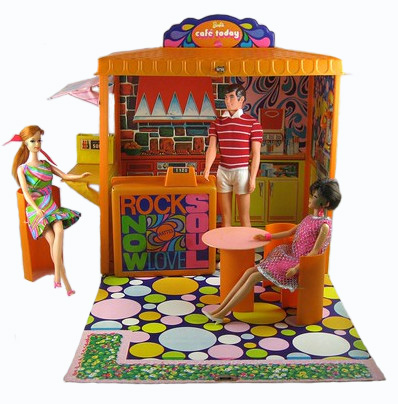
A bit later, after the Haight-Ashbury scene had dispersed, mainstream commerce discovered psychedelics – and it was odd. Burger King’s “Love” postcards and Mattel’s Barbie embraced a watered-down version evidently acceptable to the majority of Americans in a way that hippies were not. The “vibe” was detached from all meaning other than swirling color and made its appearance slightly after the movement had lost its center in San Francisco. Yet it was undoubtedly an attempt to appeal to teens. Burger King gave away its postcards for patrons to send on Valentines Day, 1972.
The best known psychedelic restaurant was Sausalito’s Trident, owned for a number of years by the Kingston Trio. It had a swirling ceiling and wild-looking menus. The early menu shown above listed natural foods but later ones featured many conventional items such as steak, plus alcoholic beverages said to be generally rejected by hippies. By 1970 it had become a favorite of tourists, and reportedly entertained “the hip and many society names trying to be hip.”
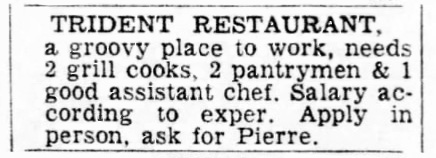
The Trident’s early menus were filled with cosmic advice in tiny type, dispensing such pseudo wisdom as “One must rise by that which one falls,” and “You can’t know what is in if you’re never off.” However, the messages at the menu’s bottom brought the patron back to earth with a thud, advising, “Sorry we do not accept checks,” and “When necessary, table service minimum of $3 per person.” [Click to see later Trident menus]

Nonetheless, another message from the Trident menu contains a wish for 2024: “May all our offerings please you. Peace within you.”

© Jan Whitaker, 2024

16 Comments

Filed under alternative restaurants, atmosphere, decor, Offbeat places

Caves, caverns, and grottos

I would have said that restaurants made to resemble caves represented a proprietor’s desperate attempt to rescue a windowless, underground space. Except . . . many restaurants of the early 20th century, when these sorts of restaurants became popular, had few or no windows yet they were not rigged up to resemble caves.

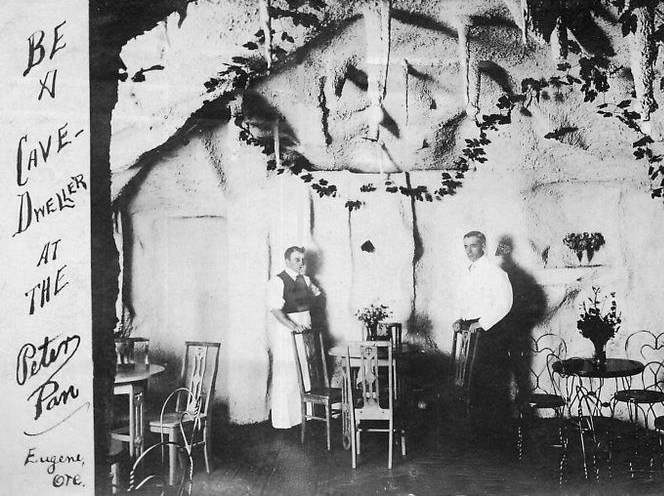
But it seems that the American public was discovering a fascination with caves and cave men in the early decades of the 20th century. In 1915 the Peter Pan, in the college town of Eugene OR, did seem to appeal to wannabe cave men, and possibly cave women too.

Perhaps the cave restaurants were spiritually related to beefsteak dungeons of a similar era where men sat on crates and ate steaks with their claws, er, hands.

I suspect another reason that cave-themed restaurants and clubs appeared in the teens was as a way to attract patrons during a time when drinking was becoming less popular. Prohibition of alcohol was not yet national law but many localities had banned it.

Or, if I wanted to get psychoanalytical about it, I might think that locating these night-clubby spots underground revealed a degree of shame in a culture once ruled by Puritanism.

Close to the turn of the century two hotels already had cave-like grottos built underground. In 1900 architect W. E. Loyer of Philadelphia designed a grotto for the Hotel Rudolph in Atlantic City. Five years later his grotto for a Boston hotel, the Revere House, opened. Like the Rudolph, it featured an all-women orchestra. According to Revere House advertising, light bulbs in the grotto sparkled “like jewels in an Aladin [sic] cave” where dining was “both weird and entrancing.” Even in August, cool breezes were said to “sweep across the room” where its “jagged sides” resembled “what might be found in some large underground cavern.”

Other hotels with caves and grottos for dining and entertainment in the teens and 1920s included the Ambassador in Atlantic City with its underground Neptune and Dolphin Grills, the latter filled with marble, cut glass, sea-green furniture, fish nets, life belts, shells, and more.

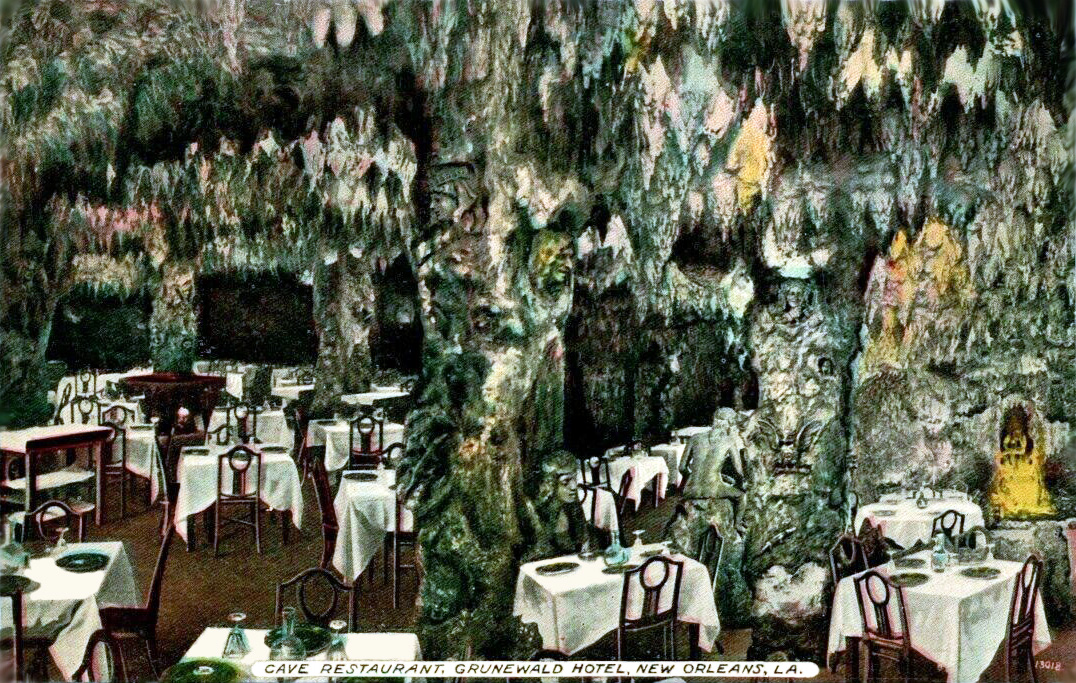
The Grunewald in New Orleans [shown here], the Mt. Washington Hotel in Bretton Woods NH, and the Redwoods Hotel in Grants Pass OR carried on the cave tradition.

New York City was a little short on cave/grotto restaurants but it did at least have one. According to The Grotto’s advertising it was a “romantic cave.”

Of course there were also eating stations in genuine caves designated as National Parks. I am hesitant to refer to some of their facilities as restaurants – particularly that of Carlsbad Caverns with its accommodations for 1,000 lunchers at a time, pictured here ca. 1962.

The whole idea of a cave-themed restaurant seems strange enough to me that I might have imagined they went out of fashion long ago. But of course they did not, and undoubtedly can be found today. In 1928 columnist O. O. McIntyre declared that Los Angeles was the foremost city for “stunt cafes and trick eating places . . . built in every fantastical and baroque shape imaginable.” However, since then cave-like eateries, though always sparse, showed up in a variety of cities and towns.

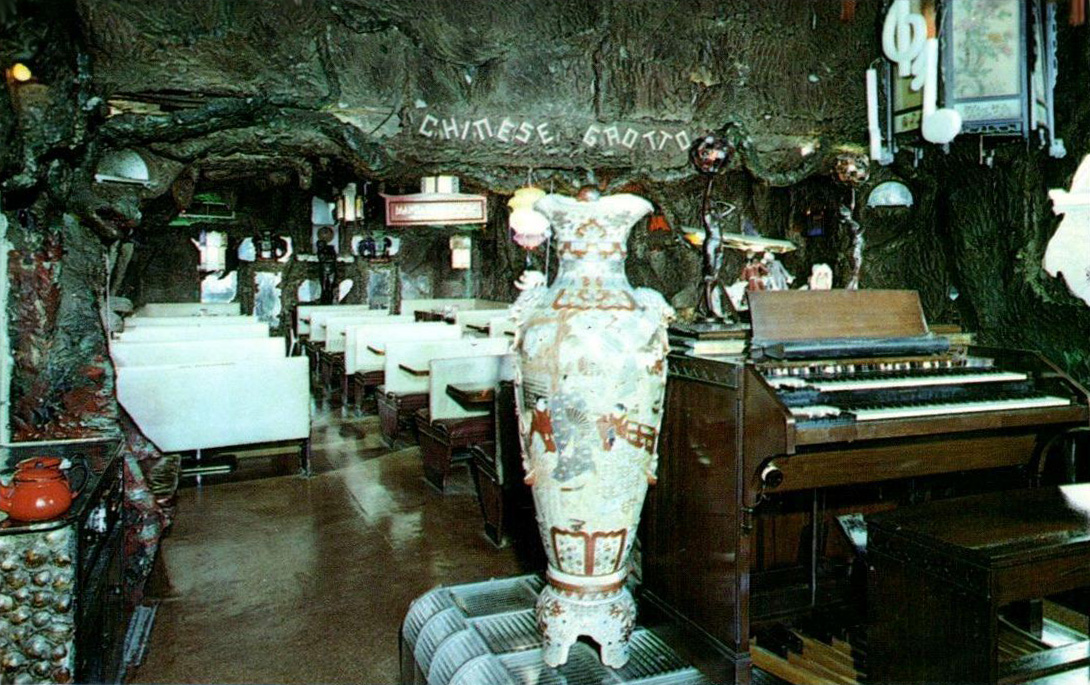
In the early 1930s, for instance, Binghamton NY had a restaurant called The Barn, which encompassed a Shell Room and a Chinese Grotto. The Grotto, whose special effects were the creation of its originator, David Stewart, offered the only Chinese food in Binghamton — accompanied by organ playing. I was surprised to discover that the restaurant’s cooking was applauded by a number of 1940s guidebooks.

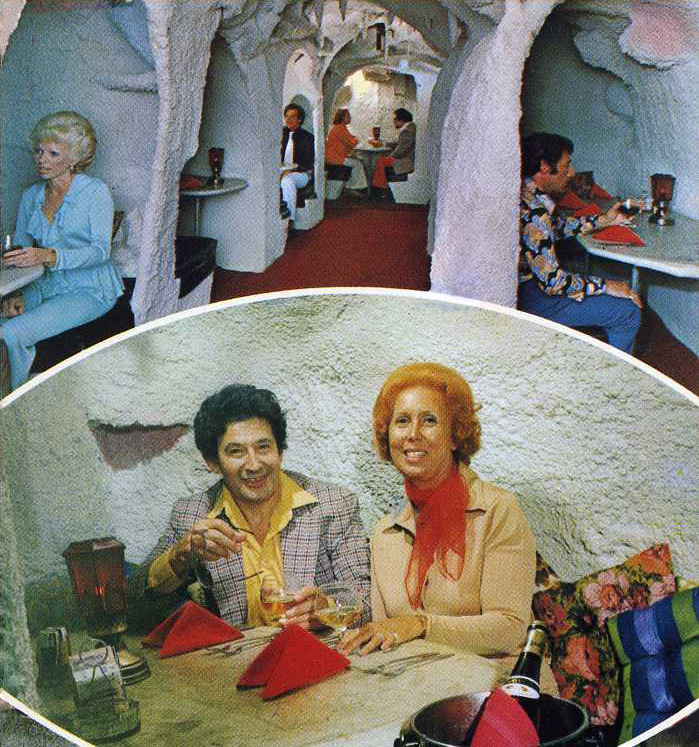
The 1960s and 1970s saw restaurants such as The Cave in Cleveland which declared itself “a cave to end all caves.” An article revealed that its conversion from a pool hall involved the application of 16 tons of gray plaster accompanied by a poured Polyrock floor speckled with gold. The total effect, said the account, was “somewhat eerie and fascinating.”

In Fort Lauderdale FL, The Caves restaurant was designed to encourage diners to “journey to prehistoric days via the stone-age decor and hearty feasting.” But, they were assured, they would be made comfortable with “luxurious pillows” and “soft lighting,” two things seriously lacking in nature’s version.

© Jan Whitaker, 2023

7 Comments

Filed under alternative restaurants, atmosphere, decor, Offbeat places, theme restaurants

Glamming in Booth One

Before non-stop coast-to-coast air travel became common, actors and performers relied on the railroad to cover long distances. Usually this involved changing trains in Chicago. Arriving there, weary celebrities were more than happy to be scooped up and whooshed off for lunch or dinner at the Pump Room.

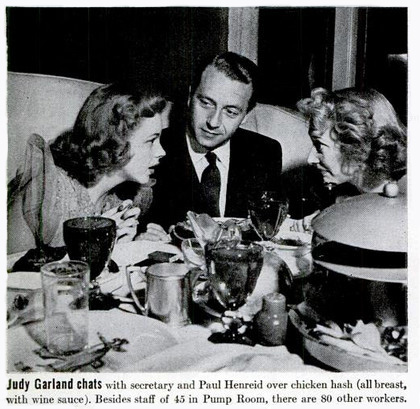
Top celebrities were escorted to Booth One, a cushy white leather nest where their job was to field calls from gossip columnists and smile as the flashbulbs went off. Their lunch may have been on the house, but they earned it. [It’s likely Judy Garland is talking with a columnist in the above Life magazine photo, 1943] Of course both the stars and the restaurant got publicity out of the deal.

The Pump Room stood out as a notable publicity mill in part because it was in the middle of the country. On the coasts there were plenty of such venues – the Stork Club and El Morocco in New York, and Chasen’s and Romanoff’s in Los Angeles to name but a few.

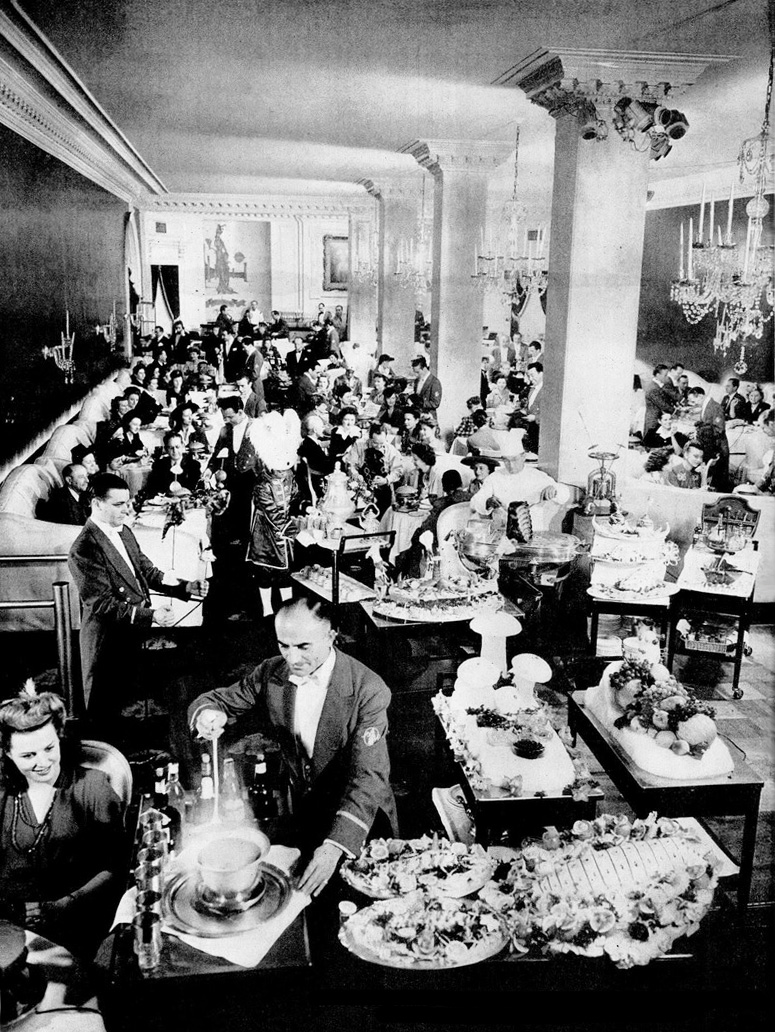
But the Pump Room had a vibe all its own. [Life magazine photo showing a very crowded room, 1943]

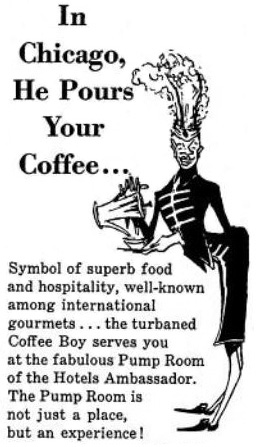
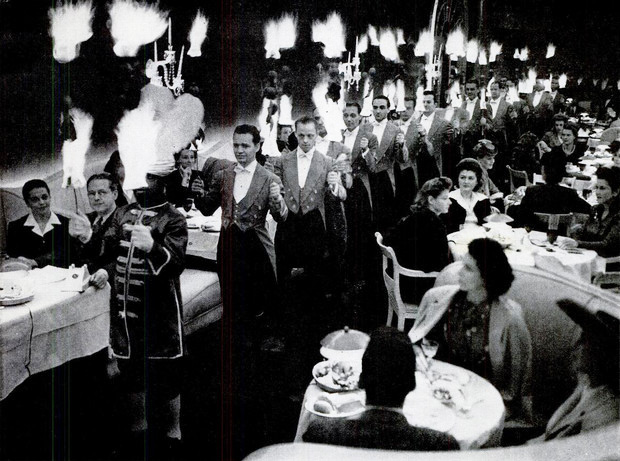
In addition to being swanky — with dark blue walls, white leather upholstery and crystal chandeliers — and well connected to the gossip pipeline, the Pump Room drew attention for its culinary burlesque shows featuring costumed staff, flames, and choreography. Waiters – all white men – wore scarlet jackets and black satin knee pants, while the “coffee boys” – all young black men – wore emerald green or white uniforms with giant ostrich plumes seeming to spring from their foreheads. [see grotesque caricature shown below, 1957] There were also “curry boys” dressed in gold. Food was served from wagons except for that skewered on flaming swords.

The coffee servers took it upon themselves to compete in the art of coffee pouring. Competition involved seeing how far they could hold the pot and still manage to pour the coffee neatly into the cups. Management did not approve and stopped the contest, but not before the winner set a record of 5 feet. He said customers asked him to do it. Not unbelievable since it was, after all, in keeping with the spirit of the place. According to one observer, customers watching servers with flaming swords make their entrance secretly hoped “the adroit waiter will slip and ignite one of the highly combustible hats being worn this season.” This never happened.

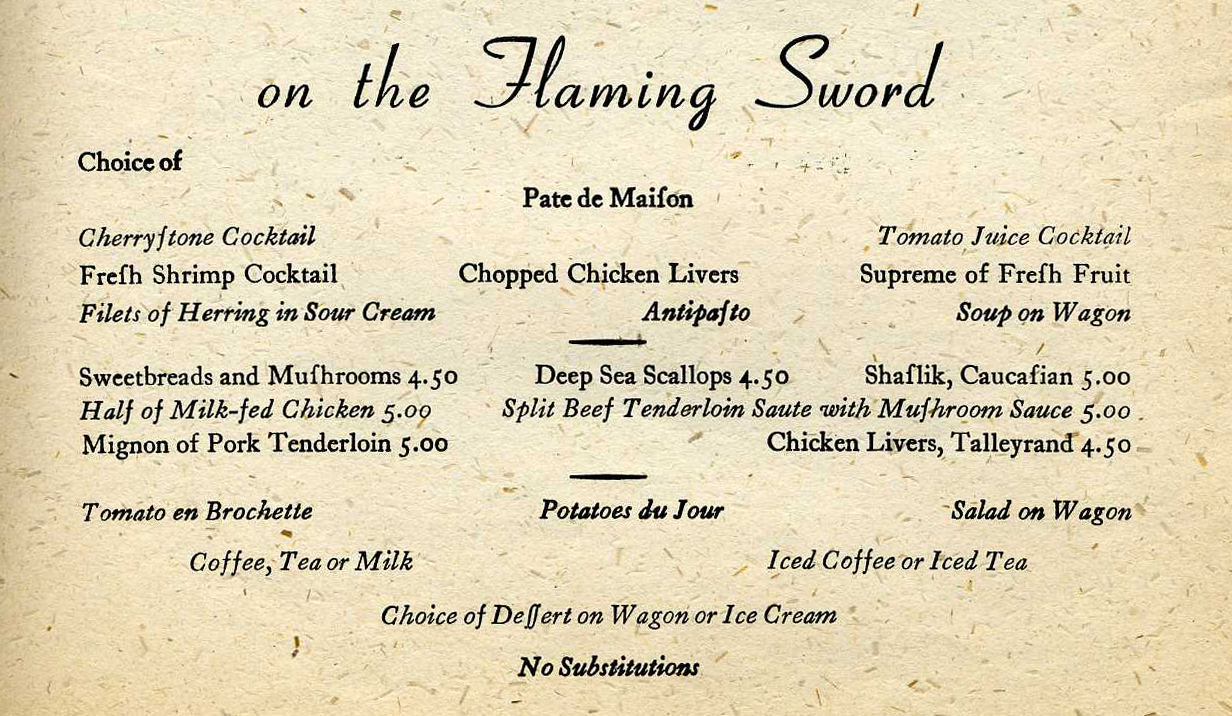
In 1943, Life magazine visited the Pump Room, photographing a number of spectacular scenes, some of which were undoubtedly contrived for the sake of the story. The crowning photo was certainly that of the procession of waiters holding flaming swords. A flaming-sword dinner cost $3.50 at the time of the story, going up to $4.50 or $5.00 by 1949 according to the menu shown below.

The Pump Room emblemized the sardonic humor of its creator, Ernie Byfield, who also owned its home, the Ambassador East Hotel. Its 1938 creation may have been a desperation attempt to survive during the Depression, but Byfield had long been in the habit of befriending show business stars back when he headed the Sherman Hotel. In the Sherman’s night clubby College Inn, he had entertained actors, musicians, and others on “theatrical nights.” Through the years Byfield made friends with an extensive roster of Hollywood stars that included James Cagney, Bette Davis, and William Powell in the 1930s and Douglas Fairbanks, Mary Pickford and a long list of others in earlier times.

Ernie Byfield’s death in 1950 seemed to mark the beginning of a long decline. The Ambassador East and the two other hotels Byfield owned changed hands repeatedly while the Pump Room sagged. A few months after Byfield died, columnist Lucius Beebe noted in a Holiday magazine story that Ernie had always said, “I don’t want grim gourmets around my place. I want laughing eaters.” Beebe’s story made it clear that the Pump Room was meant to be amusing, even moderately ridiculous. Without its creator at the helm, it became difficult to set the tone while maintaining quality.

In 1962 a reviewer for the Michelin Guide visited the Pump Room and, according to a devastating Life magazine account, had a miserable dinner described as deviled turkey breast accompanied by “canned peas and what looked exactly like potato chips.” Equally horrid, Life reported, was the incompetent waiter who recommended a red wine that “not only foamed but tasted as though it were composed of a second-grade detergent.” Learning of the story, an Ambassador Hotel executive dug through that day’s food checks and found, according to a rapidly produced account in a Chicago newspaper, that the reviewer and his Life magazine companion (the story’s author) had each consumed a cocktail and then shared two bottles of wine. He also insisted that the turkey steak on the menu was never served with anything but grilled sweet potatoes and wild rice.

But the damage was done and the restaurant’s reputation continued to crumble. Not much after the Michelin bomb dropped, Irv “Kup” Kupcinet, its number one gossip columnist, who had created a version of the Pump Room in his own dining room, admitted that it wasn’t what it used to be. Cross-country airplane flights were becoming commonplace, eliminating Chicago stopovers and reducing the flow of celebrities into town. Even though the room was remodeled in the mid-sixties by new managers, it was unable to recapture the past glory.

Although loyal Chicagoans continued to support it, the Pump Room closed in 1976, after some years of low ratings and, it was said, grease-spotted menus and chipped glassware. Everything was auctioned, included Booth One. Then came a new owner, Rich Melman, of the Lettuce Entertain You restaurant group which included Jonathan Livingston Seafood, Lawrence of Oregano, and others. He remodeled it in glamorous fashion and ran it for 22 years. After that it had various owners, including Melman once more who ran it as Booth One.

© Jan Whitaker, 2023

3 Comments

Filed under atmosphere, decor, elite restaurants, Offbeat places, uniforms & costumes, waiters/waitresses/servers

America’s literary chef

One way or another Othello Pollard found ways to make a big impression in Cambridge MA in his relatively short tenure there as a caterer and restaurateur.

In 1794 he was listed as a member of The African Episcopal Church of St. Thomas, in Philadelphia, said to be the first “African” church in America. A short time later he came to the Boston area, marrying a woman in 1799 who kept a boarding house there.

Although I couldn’t find anything about where he was born, I suspect he may have been a freed slave from Haiti, then known as Saint Dominigue.

In 1801 he and his wife moved to a site on Tremont Street in Cambridge MA across from “the mall,” a shaded walk. They were near the Columbian Museum, which housed wax figures and advertised “curiosities” that included an elephant that drank liquor.

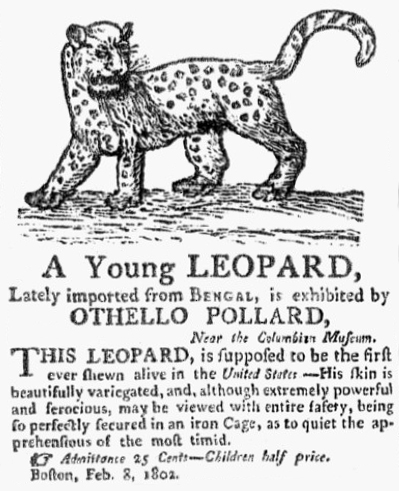
Othello knew how to get attention, for instance by wearing a diamond pinkie ring. In 1802, about six months before he established his eating place “for ladies and gentlemen,” he advertised an attraction perhaps inspired by the Museum: a live leopard.

Maybe the leopard was not as big a draw as he had hoped, though, because in August 1802 he placed an elaborate advertisement for his “Attic Bower” supplied with “epicurean dainties” such as bread, butter, cheese, ham, tongue, ice cream, custards, “whip syllabubs,” pies, jellies, olives, pickles and all kinds of fruit, along with wine, brandy, gin, ice punch, cordials, spirits, bitters, and porter.

His advertisement was peppered with classical allusions and Latin phrases, such as in the above excerpt, roughly translated, “Where are you taking me, Bacchus?” According to The Wine Bible, ancient Falernian wine was so sought after in its time that “you practically had to be the emperor of Rome to get a taste,” so his claim to have some might have been a gimmick.

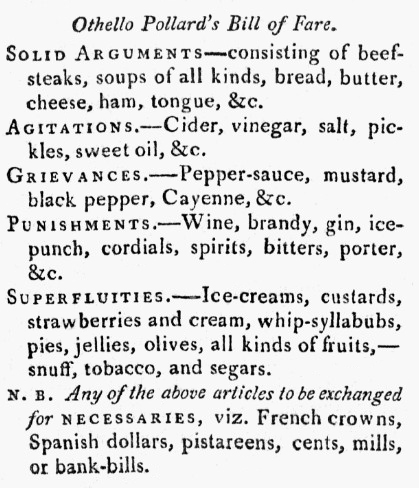
A short time later, he ran a longer advertisement with an expanded bill of fare [shown above] that included heartier food – introduced under intriguing headings – and indicated to patrons what kinds of money he would take in exchange.

No one could quite decide if he had composed his unusual advertisements himself, or whether the author was one of his regular visitors from Harvard who, perhaps, offered his writing skills as payment while short of funds.

When a fire wiped out his Attic Bower in 1803 he moved farther along Tremont, next door to a tavern, and appealed once again to “gentlemen of delicate taste, and well educated appetites.”

A little more than a year later, he moved again in the same general vicinity. In 1805 he notified Harvard students that he would not be able to entertain graduates as he had done for the past four years because he did not have enough space.

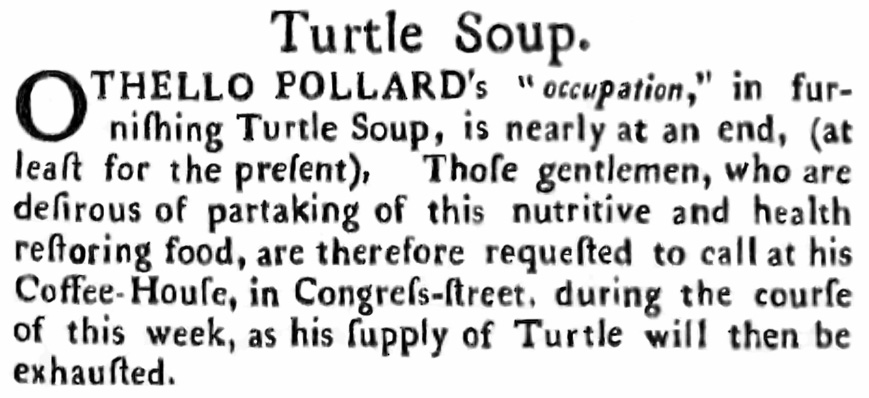
His last location seemed to be in Boston, where I found an advertisement for his coffee house in 1805. He simply mentioned having turtle soup, worded with what could be read as a resigned tone. Then he just seemed to disappear. He still remains a mystery, even though articles recalling him continued to appear as late as 1908.

© Jan Whitaker, 2023

6 Comments

Filed under food, Offbeat places, proprietors & careers

Digesting the Madonna Inn

The Madonna Inn complex in San Luis Obispo CA, including a fantasyland motel, wedding venue, shops, and restaurants, represents the genius and determination of a rugged male individual – assisted by his wife — conquering all obstacles to build a dream.

Alex Madonna had been planning his project from 1953 if not earlier. The motel opened in the full sense of the word in early 1959, but it was not until a couple of years later that the complex was furnished with eating facilities.

Although all along it has had plenty of overnighters, honeymooners, lunch and dinner patrons, banqueters, and gawkers who love it, the place has also had detractors. Among their assessments: “a fantasy run amok,” “the epitome of lousy taste,” and “a crazy, outrageous Hansel-and-Gretel complex.”

Madonna Inn lore credits its unorthodox design to Alex and Phyllis Madonna’s untutored creativity. Alex, according to legend, speedily dismissed the architects he initially consulted. Yet, up until the end of 1958 Madonna worked with plans developed by Beverly Hills architect Louis Gould, a former Hollywood film set designer. And as late as 1966 an advertisement for an apartment complex Gould designed credited him with other “outstanding landmarks . . . including the famed Madonna Inn.” To the extent that the Inn’s exterior achieved any coherence, it may be due to his early influence.

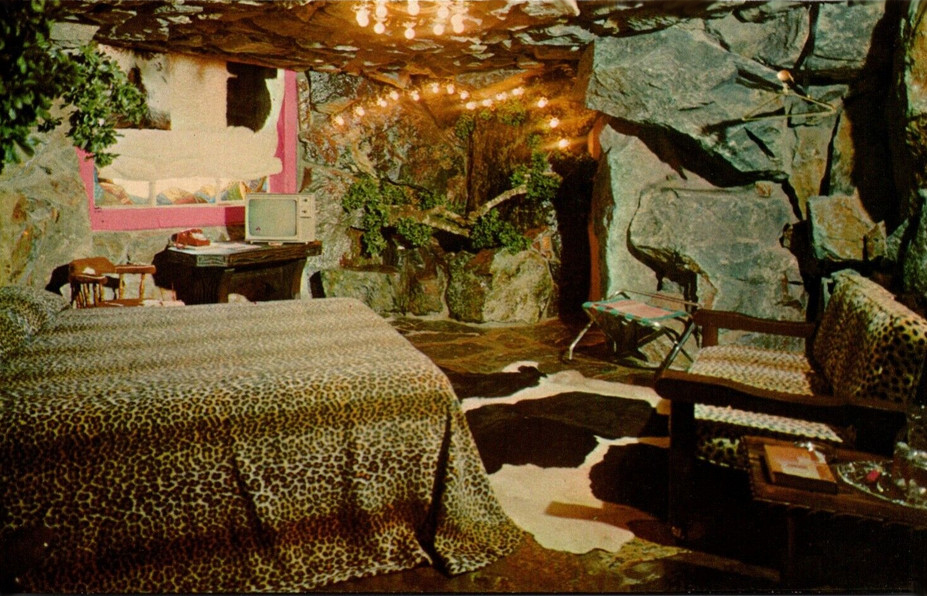
Yet there was a point where no professionals guided the design, as revealed especially in the striking – to me jarring – use of large stones and boulders. The two most celebrated rooms – a men’s public bathroom with a urinal flushed by a waterfall and the Caveman Room [shown above] – prominently feature these materials.

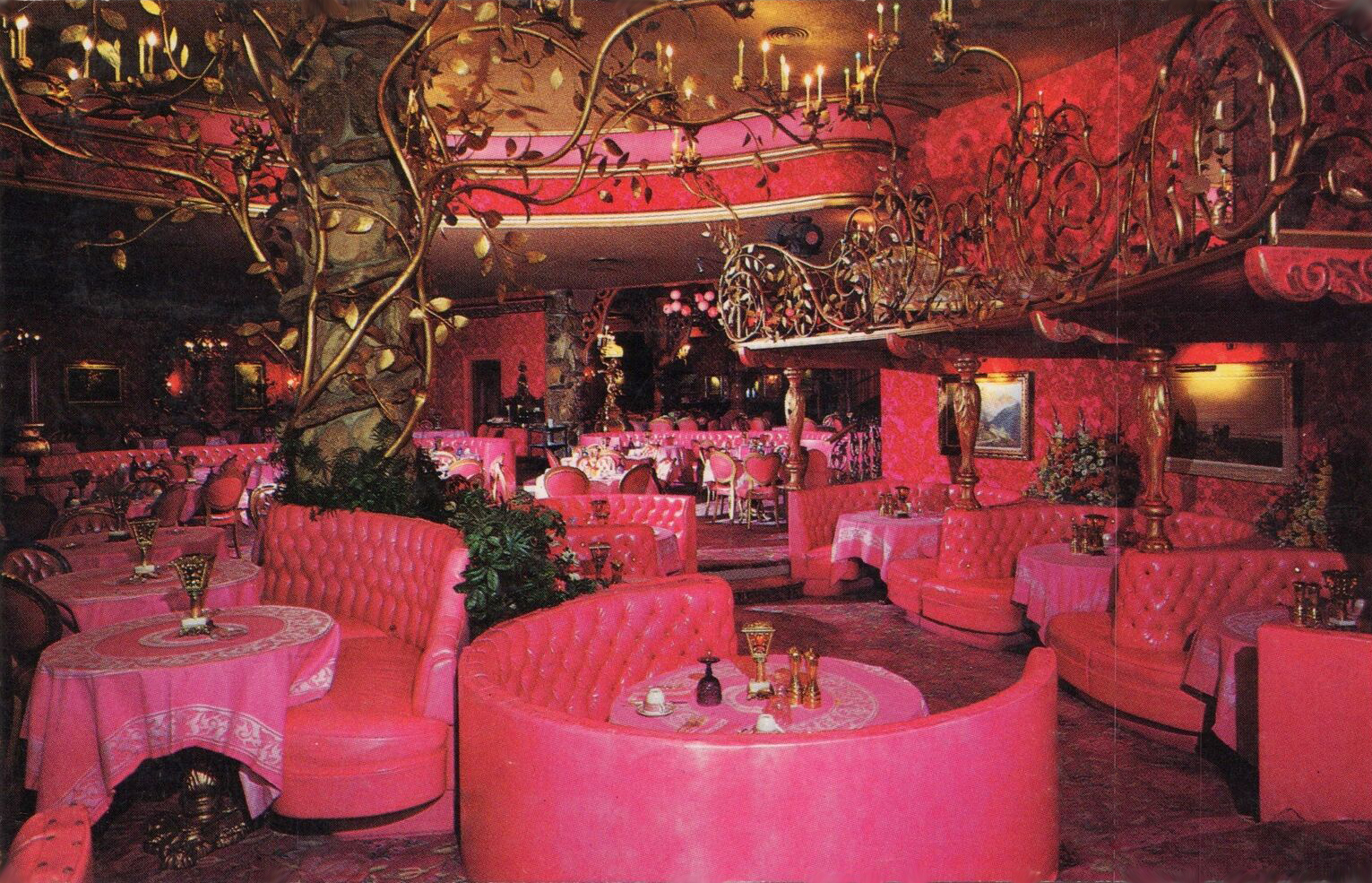
Throughout the interior, the combination of stones and boulders with bright primary colors, artificial flowers and vines, gilded cupids, figured textiles, and plush carpeting is disturbing. The Inn’s eating places exemplify the common observation that many American restaurants are more about decor than food. This was especially true of the primary dining room, the Gold Rush Room [shown below]. Its jangling decor, superficially suggesting luxury but not allowing the eye to rest, is out of keeping with fine dining where food is the star.

A Los Angeles Times reviewer said he lost his appetite in the Gold Rush Room after viewing the giant tree with “fat, glossy, grinning cherubs, spray-painted gold and swimming in Pepto-Bismol.” Alex Madonna responded with a letter defending the room’s centerpiece. The 25-foot tall tree, he pointed out, had been “hand-crafted” on the spot out of “electrical conduit and copper remnants left over from building projects.” The pink, he wrote, was inspired by a visit to Hawaii where it was used lavishly in hotels and restaurants. At one point, even the Inn’s bread and sugar were pink.

The images of the Madonna Inn shown here are difficult to date, but most are probably from the 1960s and 1970s. Everything was subject to change and frequently overhauled. As a 1973 story in the Los Angeles Times observed, Alex Madonna perpetually thought up new ideas, one being an indoor lake featuring a floating cocktail bar that patrons would reach by canoe. The room would have been furnished with a snowflake machine and a three-story fireplace that burned entire trees. That dream did not materialize, nor did the plan to build another motel complex atop the San Luis Mountain behind the Inn that he bought from the city of San Luis Obispo in1972.

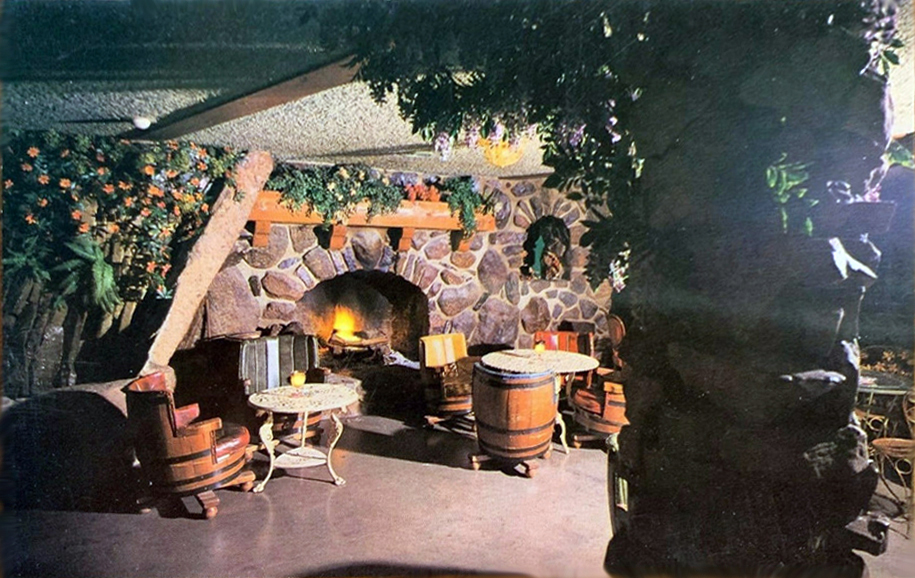
The Inn’s basement Wine Bar below the Gold Rush Room featured boulders incongruously festooned with vines and blooming flowers, a beamed ceiling, and chairs fashioned from barrels. If the wine list was anything like the coffee shop’s, it too would have specialized in Lancers and Paul Masson selections such as Rosé and Sparkling Burgundy, along with Port and Sherry aperitifs.

Lunch and supper specials on a ca. 1960s coffee shop menu were also uninspired. They included low-calorie choices such as Ground Beef Patty with Cottage Cheese, and entrees like Top Sirloin Steak with Cottage Cheese and Peaches. “Chilled” Tomato Juice as an appetizer.

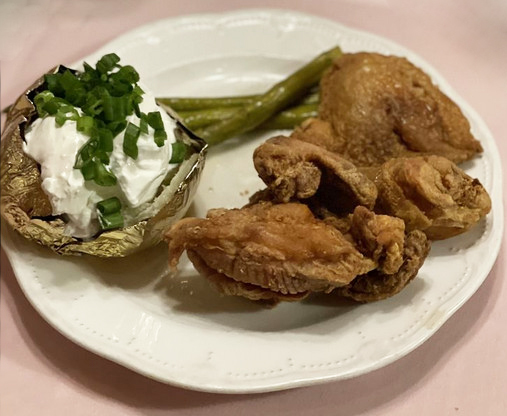
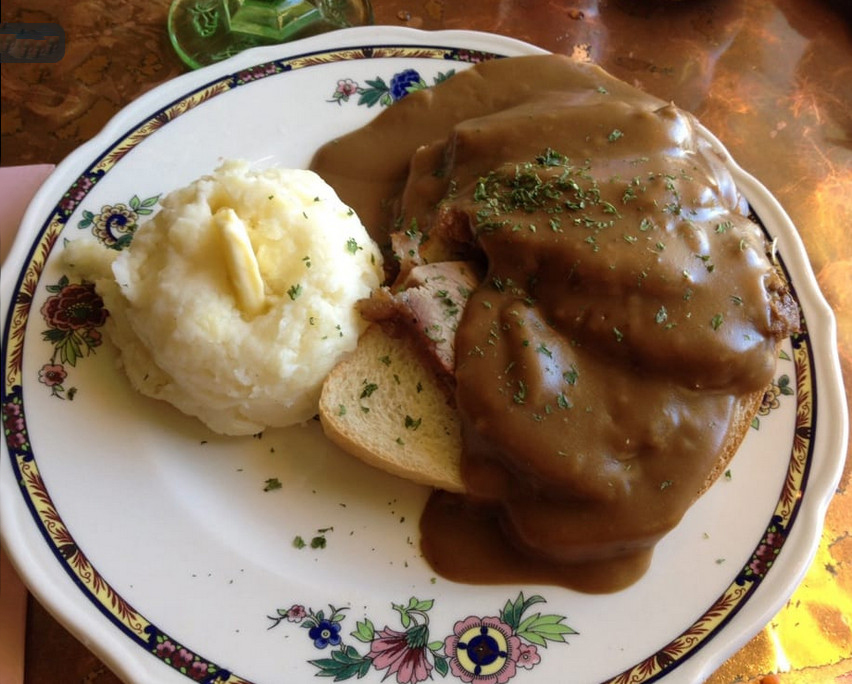
The 1960s and 1970s were not distinguished decades gastronomically, and in that sense the Inn was typical. Patrons might be thrilled with the oversized pastries available in the coffee shop, but otherwise the fare did not receive many comments. A few observed that it was nothing special and overpriced. Recent photos taken by guests are not flattering, though it’s only fair to admit that they may reflect Covid-era staffing issues.

The Inn was hailed in the 1970s by fans of vernacular roadside architecture, such as John Margolies, as well as some influential writers and scholars. Not only did Margolies declare the Inn’s meals “delicious,” he considered the complex “a labor of love” designed to make people happy” and “a place where things that don’t go together go together.”

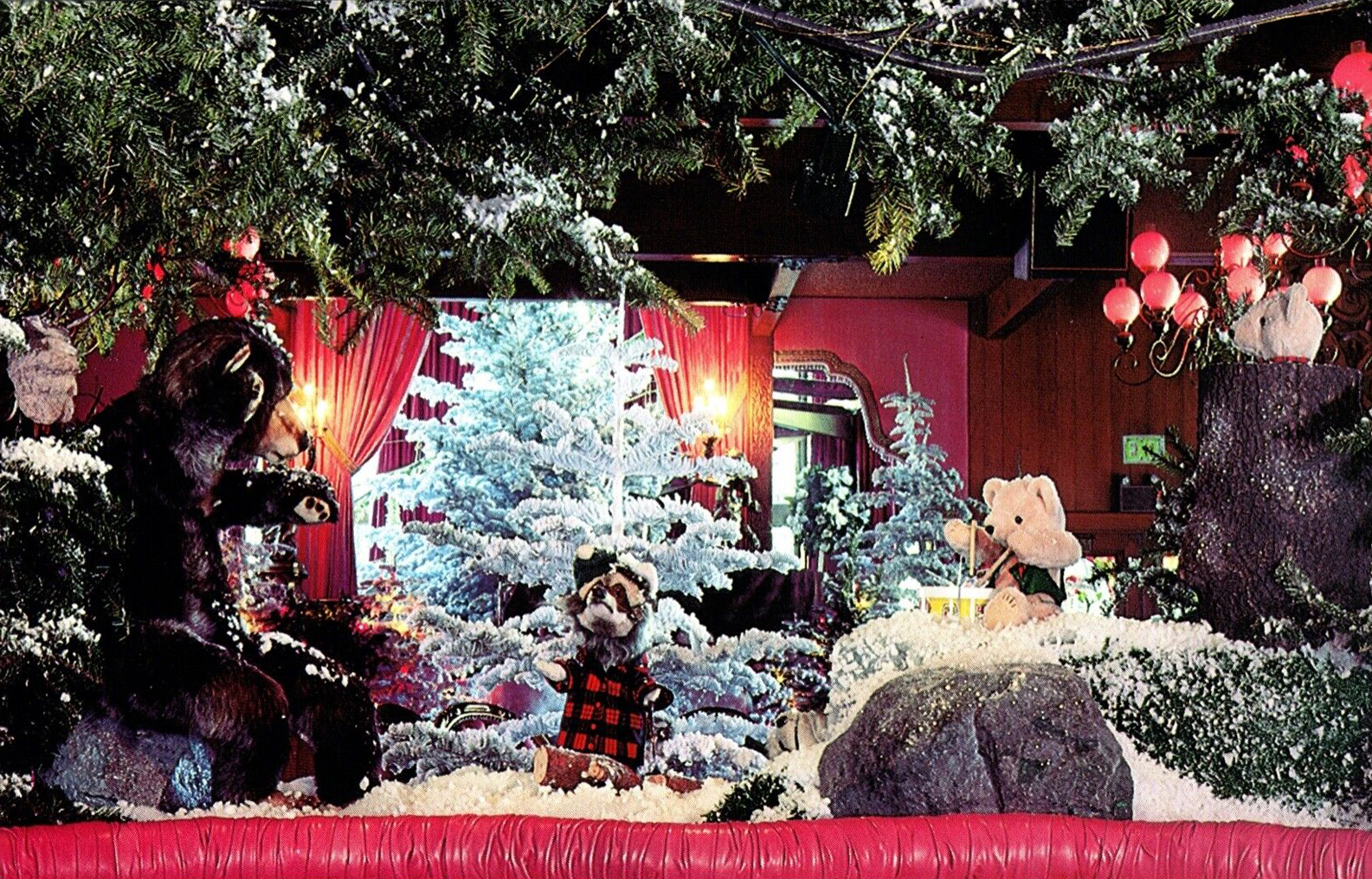
Hmm. I’d say that in the Gold Rush Room’s Christmas scene, among others, things could never go together.

© Jan Whitaker, 2022

13 Comments

Filed under decor, food, odd buildings, Offbeat places, popular restaurants, proprietors & careers

Women’s lunch clubs

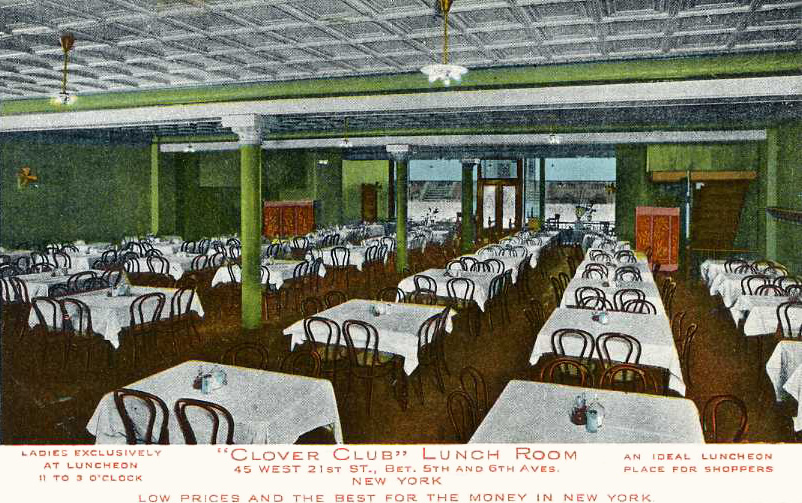
Lunch clubs for working women appeared in American cities in the 1890s and early 20th century. In a fairly short time they stimulated the development of commercial cafeterias, as well as employee cafeterias in large companies.

Chicago was regarded as a prime incubator of the lunch club idea. In 1891 a group of alumnae of the prestigious Ogontz finishing school near Philadelphia opened a space for women workers on an upper floor of Chicago’s Pontiac Building. At the start the club charged 10 cents a year for membership, and sold sandwiches for 4 cents and milk, tea, or coffee for 2 cents each.

By the end of the nineteenth century, women’s lunch clubs could be found in other major cities, including New York, Philadelphia, Boston, Cleveland, and San Francisco, but not in the South. Some, such as three in NYC, were affiliated with churches. In Indianapolis, temperance supporters – members of the W.C.T.U. — ran a lunch club.

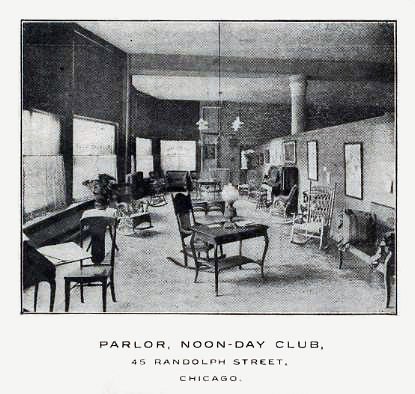
The lunch clubs were meant to provide not only inexpensive noontime meals for working women, but also to give them a place to enjoy a little leisure in “rest rooms” supplied with sofas, rocking chairs and desks, as well as libraries and other amenities. Some offered evening lecture series.

The clubs came at a time when the number of office workers in cities was on the increase. The clubs mainly catered to “business women,” which then meant young white-collar workers in offices and department stores. Although women factory workers had a greater need for restful and inexpensive lunches than did office workers, their shorter lunch breaks and lower pay made it difficult to accommodate them.

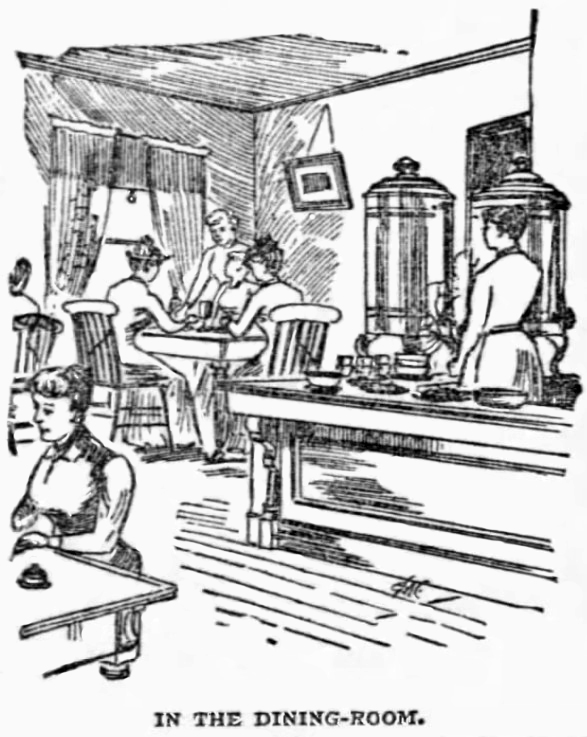
The earliest lunch clubs were launched by elite women as philanthropic projects to assist workers with affordable lunches, give them a place to hang out at noon, and to uplift them culturally. The food was not cooked on site, but supplied by other kitchens, such as that at Jane Addams’ Hull House in Chicago. To avoid the cost of hiring servers, food was set out on counters and diners selected what they wanted, a novel arrangement in the 1890s. [Above: Chicago’s Ursula lunch club, 1891] Prices were meant to cover costs but not to make a profit.

Lunch clubs had to tread a fine line in terms of how philanthropic backers related to the working women. At least one of the philanthropic lunch clubs made its lunchers feel pitied and failed to attract enough women. Those who had stuck with it then took it over as their own co-operative enterprise. Some other lunch clubs were begun as co-operatives. [Above: postcard of a commercial lunch club that admitted men]

A humorous turn-of-the-century story characterized the uneasy feeling of some working women toward philanthropy. In it, a wealthy man approaches a young sales clerk in a department store to say that he is thinking of starting a Noon-Day Rest Club, “where you and the others may come and drink Tea and listen to me read Advice to the Young.” She replies, “That would be lonely Billiards, wouldn’t it? We don’t want to be rounded up and sozzled over. Not on your Leaflards. The Poor Working Girl draws a line on having a kind-hearted Gentleman pull the Weeps on her. I think I can struggle along without having you come around to hold my Hand.”

Despite this obstacle, lunch clubs proliferated. The Klio Club’s Noon-Day Rest expanded its menu, adding dishes such as soup, baked beans, and salmon salad. In 1899 a sample menu in one of Chicago’s six lunch clubs might have looked like this:
Two slices of bread or two rolls, with butter 5c
With jam or cold meat 6c
Extra butter 1c
Tomato soup, beef hash, Spanish stew 5c
Potato salad, sliced tomatoes, cucumbers, cottage cheese 5c
Tea or coffee, with cream 5c
With milk 3c
Iced tea, buttermilk 3c
Raspberry ice, lemon ice 5c
Vanilla ice cream, tutti-frutti ice cream 5c

The success of serve-yourself lunch clubs spurred the development of commercial cafeterias. Over time it became harder for lunch clubs to attract large numbers of women patrons. Some began to accept men who, after all, tended to spend more for lunch. For-profit help-yourself businesses proliferated. In one case, a dispute at Klio’s Noon-Day Rest led its caterer, Kate Knox, to leave and start her own self-service lunch club business. [Mrs. Knox’s lunch club pictured above] Another enterprising woman, Mary Dutton, operated four cafeterias by 1915 after beginning with a single lunch club.

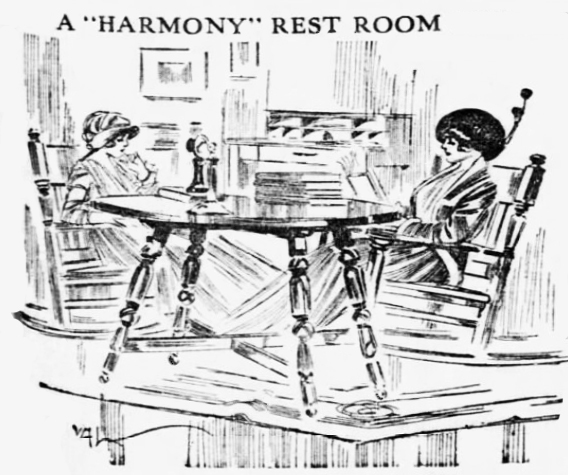
But the lunch clubs made an impact, for a time at least. Boston’s original noon-day lunch club closed because it felt it had elevated the standards of common restaurants. And businesses borrowed ideas from the lunch clubs. For example, The Harmony Cafeteria in Chicago, a commercial business, advertised in 1913 that it featured a basement rest area, with a drawing showing two women in rocking chairs reading books.

© Jan Whitaker, 2022

6 Comments

Filed under cafeterias, food, Offbeat places, patrons, restaurant prices, women

Native American restaurants

Although there has been growing interest in exploring native foodways in the past twenty or so years, it seems there’s been little research into the history of Native American restaurants, that is, those serving traditional Indian dishes and/or those run by Indians.

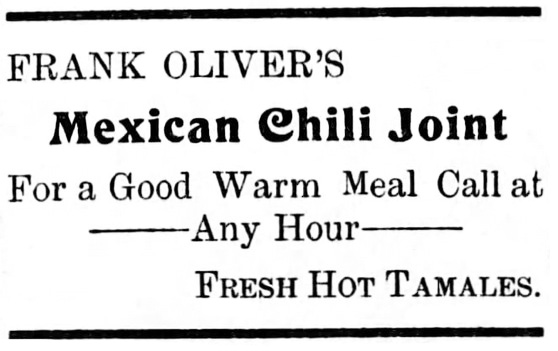
The earliest one with a Native American proprietor that I found was in Coweta, Oklahoma, around 1906. It was run by Frank Oliver, a member of the Muscogee Creek Nation. A very brief newspaper item reported, “There are few Indians in the restaurant business but Mr. Oliver likes to feed ‘em and is prosperous.” It was not unusual for Indian restaurants in the Southwest to serve Mexican dishes, especially in later decades.

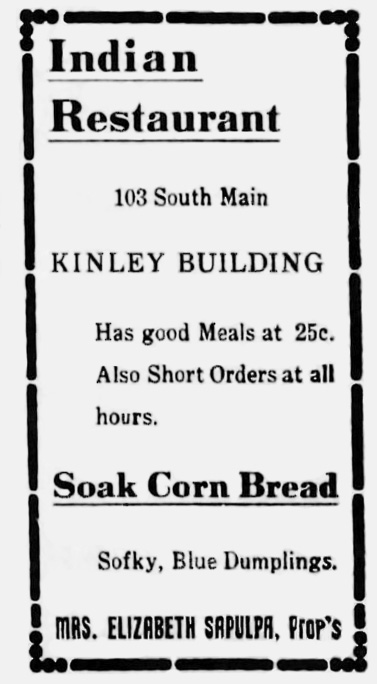
That same year another Indian proprietor was running a restaurant in Sapulpa, Oklahoma. His name was given simply as Antoine, born a Mohican in New York state but adopted into the Creek tribe. Sometime later a woman named Elizabeth Sapulpa, probably the wife of the tribe’s chief, also had a restaurant in Sapulpa where she served Sofky (corn soup made of hominy, bits of meat and blue corn dumplings) as well as cornbread made of cornmeal soaked overnight in buttermilk.

Many of the references to Indian restaurants I found did not lead anywhere. For instance, despite much searching, I could not determine if the Santa Fe movie studio, opened in Monrovia CA in 1927, ever established its planned Hopi Indian restaurant. And I’d love to know how the Hollywood actor Don Porter fared with his restaurant. It was to be built in Hollywood in 1951 with an open firepit vented through a hole in the roof. For years he had collected recipes from many tribes and planned to feature buffalo, bear, venison, wild greens, wild rice, and corn – along with cook-it-yourself fish wrapped in leaves and mud. Also, I wondered if the plans reported about a 1970s graduate of a culinary training program in Albuquerque had succeeded. She hoped to establish a restaurant on her reservation serving game such as quail, rabbit, and deer, along with blood pudding and her tribe’s oversized homemade tortillas.

Her endeavor would have been in contrast to many Indian-run restaurants on reservations that featured mainstream American fast food. As Ruben Silverbird would observe in the 1980s, “On the reservation we have restaurants run by Indians, but they sell hot dogs, hamburgers, ham and eggs.” Similarly, at the Tigua reservation’s cultural center in El Paso TX in 1986, a restaurant called Wyngs drew non-Indian tourists and served fajitas, seafood platters, and barbecued ribs.

It has been said that Native Americans don’t have a restaurant culture, but I have the sense that there were many native people who for decades wished there were more Indian restaurants. Especially among Indians living in cities there was a strong desire for gathering places and ways to stay connected to their culture, including foods. In 1968 a Queens resident, an Otoe-Pawnee from Oklahoma, observed, “There’s no place for Indians to gather in New York (City) – no Indian restaurants or anything like that.” Buoyed by the Black Power movement, she and other native women had recently joined together to promote their Indian identities.

In the mid-1960s, a food court representing many different cuisines in a Phoenix shopping mall included “The Hogan,” which was claimed – somewhat unconvincingly – to serve the only authentic Indian food in Arizona outside a reservation. It was run by a Scandinavian proprietor who served corn on the cob impaled on arrows. The second incarnation of an Indian restaurant there was named Tiny Teepee where posole, a hominy and pork stew, was prepared and served by Native Americans.

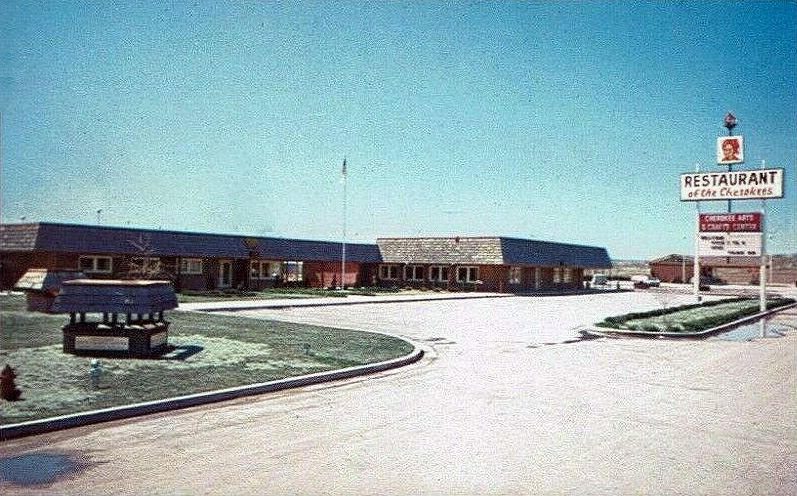
Also in the 1960s Native Americans began to urge the creation of cultural centers that would honor their heritage. By decade’s end a number of Indian restaurants began to open as part of complexes that included motels and cultural centers with museums and craft demonstrations. The Cherokee Heritage Center opened in Tahlequah, Oklahoma, in 1967 with an associated restaurant, the Restaurant of the Cherokees shown here. Although hamburgers and other common “American” dishes dominated the menu, the restaurant also served traditional Indian food such as shuck bean bread (corn and bean dough, steamed in cornhusks), sorrel, watercress from local streams, poke salad, fried huckleberries, crawdads, and “squaw” bread made with sour milk. In the spring, it hosted wild onion dinners.

Building Indian community took a hit in Baltimore when an Indian restaurant failed to open, despite being fully set up and ready to open its doors. The problem was that the U. S. Labor Department claimed it had been a mistake to permit the grantee to buy restaurant equipment with a 1974 job training grant for an American Indian Study Center. The government removed the equipment, sinking what would have been the only Native American restaurant in the Washington-Baltimore area.

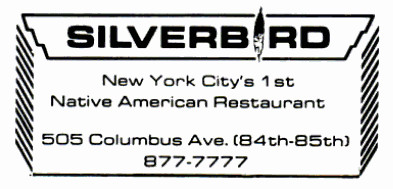
1986 marked the opening of what claimed to be New York City’s first Native American restaurant, Silverbird. Its proprietor, Ruben Silverbird Ortiz, a professional singer and entertainer of Indian/Mexican/white heritage, said it would serve New Mexico food, including “green and red chile, blue corn chips, salsa, all that good stuff.” As was true of most Indian restaurants, the menu accommodated non-Indian patrons with American dishes, but held weekly dinners serving rattlesnake stew. The restaurant employed a diverse crew, with servers and kitchen staff made up of Comanches, Navajos, Blackfeet, Italians, Irish, and Mexicans.

Some Indian restaurants were decorated with Southwestern art or murals of buffaloes and teepees. Silverbird was decorated with Kachina dolls and tables inlaid with sand paintings. However, some, such as Dovecrest [shown at top], gave little visual indication they were Indian.

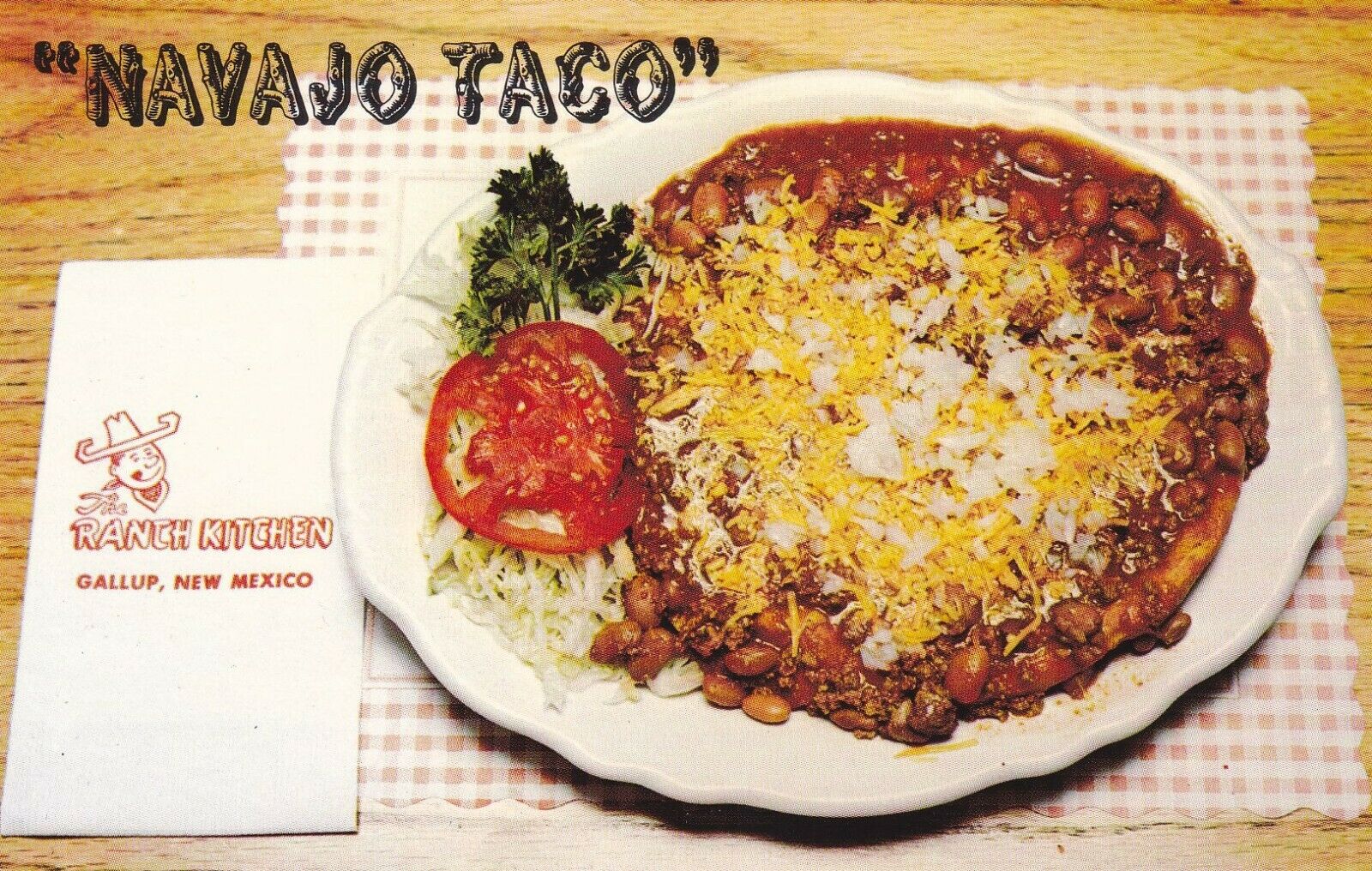
Probably the most celebrated Indian restaurant of the 20th century was Loretta Barrett Oden’s Corn Dance Café in Santa Fe, New Mexico, that ran from 1993 to 2001. Before opening her fine-dining restaurant, Oden, a member of the Citizen Patawatomi Nation, spent three years researching tribal recipes and cooking methods, which can vary considerably according to region. She is a proponent of healthier dishes such as bison, wild-caught salmon, trout, quail, venison, corn, beans, and squash. She has also been a vocal critic of deep-fried fry bread, a popular Indian item in itself as well as serving as the bottom layer of “Navajo tacos,” popular in eating places throughout the Southwest. She has tried to convince Indian-run casinos to offer native dishes, but has found that a hard sell considering the strong attachment of their patrons, both white and Indian, to steak, hamburger, pizza, etc.

The 2000s seem to have raised interest in indigenous chefs and restaurants, but they have continued to face a rocky road in terms of widespread acceptance.

© Jan Whitaker, 2022

16 Comments

January 16, 2022 · 12:47 pm

Dinner and a movie

The first time anyone thought of combining film and food may have been about 100 years ago. In the early 1920s, organizers of the annual “renegade” Paris art exhibition, the Salon d’Automne, added both cinema and gastronomy to its notion of art. And then – voila! – they combined the two. In 1924, right in the middle of the grand salon, guests watched a film while they dined. The Salon’s novel idea did not migrate to the U.S., however.

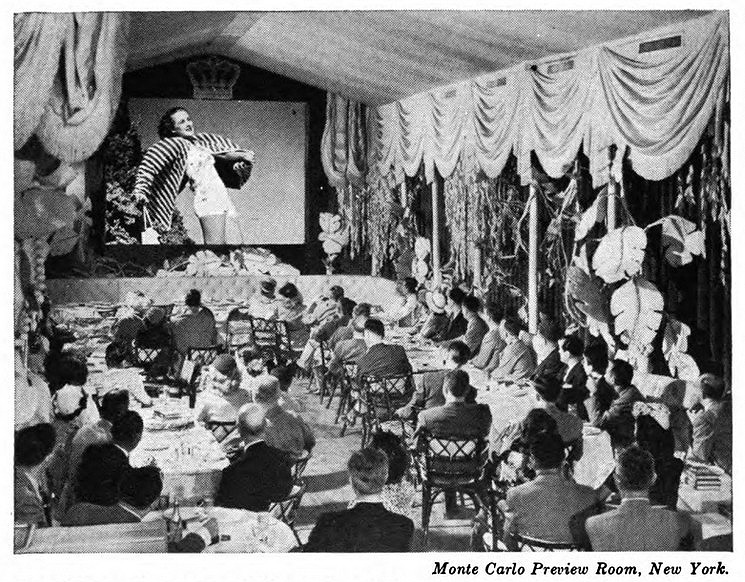
It was an entirely different motive that brought the two together here. In the 1940s, entrepreneurs created small movie projection rooms available for rental by companies that wanted to screen films for their employees or the public, and to serve meals. Usually the films were training or promotional films, but evidently major Hollywood studios also used these screening rooms at times, perhaps for managers of movie houses. In NYC, for example, the Monte Carlo was used by Paramount in 1946. [Shown above, 1945, and during a ca. 1949 screening below]

The broader concept of combining food and film for the entertainment of the general public began to emerge in the 1970s. The Ground Round chain showed silent films and cartoons in the mid-1970s. About the same time, the New Varsity Theater in Palo Alto CA granted free movie admission to diners at its associated restaurant (though the dining area was not in the theater’s viewing area). Popular films included Reefer Madness, and Ladies and Gentlemen, The Rolling Stones. The restaurant was also a place for meetings of the French Cine Club, which followed its dinner with a French film. It’s likely that the theater and restaurant often hosted students.

In Boston a bit later, a combination restaurant/bar/theater named Play It Again, Sam, served as a popular student hangout, especially for those attending Boston College. Mexican-American food was served.

At the same time, in 1975, two brothers in Florida conceived the idea of a way to fill new malls with nighttime entertainment for adults. This took the form of a restaurant-theater called Cinema ‘n’ Drafthouse showing movies rather than live performances, and selling beer, pizza, and sandwiches. By 1980 they had created four, three in Florida and one in Atlanta GA. One of them was franchised.

By 1994 the Duffys had created 22 Cinema ‘n’ Drafhouses, twenty of them franchised. In their prospectus they asserted that theirs was “a proven recession-proof product – food, drink and film – combined in a stylish, art deco theater.” They also suggested to franchisees that the theaters could be rented for private parties as well as being used in the daytime for business seminars. Another 1980s start-up was the Cabaret Pictures Show in St. Petersburg FL where the menu emphasized finger foods such as pizza and sandwiches.

The concept of the combined restaurant-theater really took off as downtown movie theaters began to fail and sit empty in the 1980s and 1990s. Theaters had become more dependent on strong concession sales, and selling drinks and dinners was an extension of this type of revenue. Typically these combo-businesses showed second-run movies that appealed to viewers of drinking age.

The franchised theater-restaurants, such as those created by the Duffy brothers of Cinema ‘n’ Drafthouse (Cinema Grill Systems) seemed to fare better than some individual attempts. Expertise in running a restaurant did not usually extend to theater management. Cinema Grill Systems helped by handling movie selection and distribution, permitting operators to focus on the restaurant and bar.

The Cinema Grill franchise in Harrisburg PA, depicted here in 1997, showed two movies a week on a large high-resolution screen. Its menu included burgers, pita specialties, jalapeno poppers, and even sangria. The seating setup is shown here, and it is clear that the space is not as dark as in traditional theaters.

The winning formula has emphasized comfortable seating in cushy non-stainable leather lounge chairs, and a menu with popular casual dining/brewpub fare. Over time a number of chain-restaurant favorites have appeared on menus, such as fajitas, wraps, and chicken tenders. Despite a fairly high failure rate, theater-restaurants have proven popular with customers who are looking for a reasonably affordable and enjoyable night out, but are not overly demanding about the fare, whether food or film.

© Jan Whitaker, 2021

4 Comments

Filed under alternative restaurants, chain restaurants, Offbeat places

Nan’s Kitchens

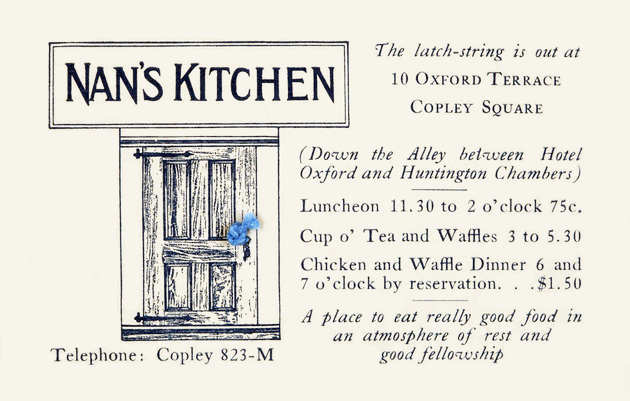
In 1919 two women opened a small tea room in Boston with just four tables. It was something of a lark. They had virtually no money to outfit it so they bought used furnishings. The location was a candlelit basement on Oxford Terrace in Boston, a romantic name for what would generally be known as an alley.

Anyone reading about their opening might have predicted they would fail spectacularly – especially after noting their rather boastful claims: “Such a place as we are about to open to the public is rare in New England. We are just trying out an idea and are seeking an answer to it by actual experiment rather than to obtain profits. If this is a success we will open others in large cities of the country.”

Despite being in an unpretentious building in a lowly area it turned out to be a very favorable location, in walking distance of the central Boston Public Library and Copley Square with all its hotels and nearby shops.

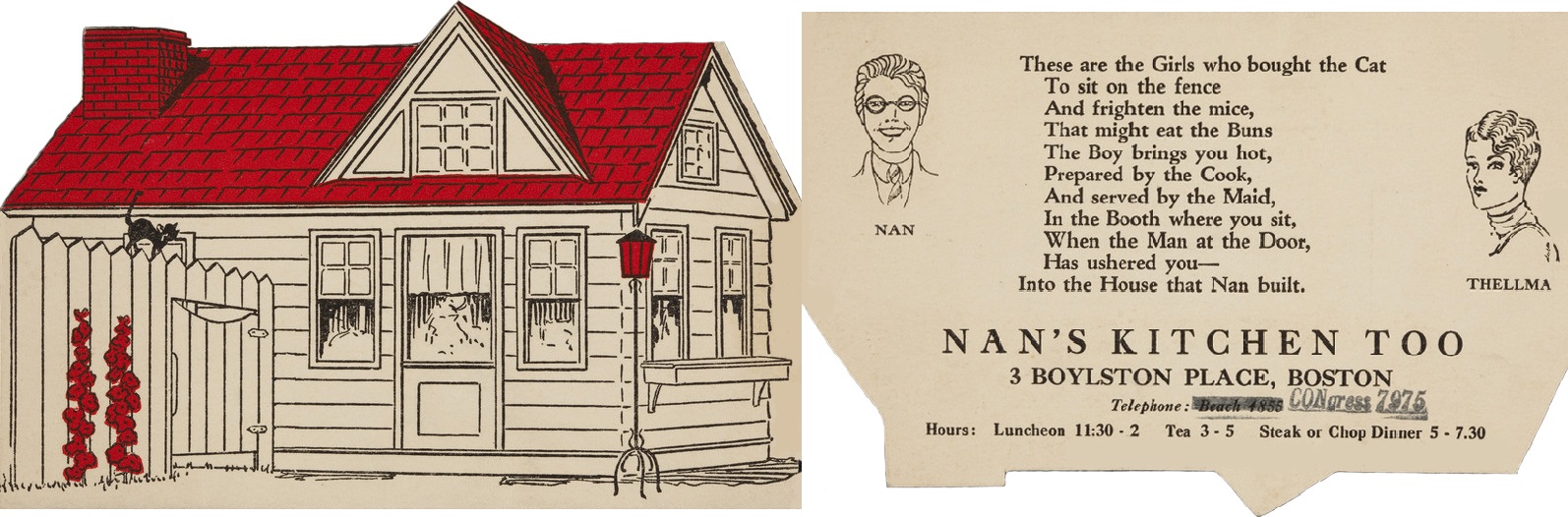
They named it Nan’s Kitchen after Nan Gurney, one of the founders. The two had met while in the Navy during World War I. Before that Nan had been married, but left her husband behind to join the service. Claiming desertion, he divorced her. Nan’s partner Thellma McClellan had worked as an astrologer before joining the Navy. Both enjoyed performing and were involved with vaudeville and amateur theatrics.

Nan’s Kitchen was an instant success, popular with members of the Professional Women’s Club to which they belonged. It also attracted fellow vaudeville performers. Publicity helped, particularly newspaper stories that made the tea room sound like a haven for romantic trysts at lunch and afternoon tea. They added more tables, but continued to specialize in one dish, chicken and waffles.

They must not have made much in the way of profits initially because they continued their side jobs as freelance teachers of music and elocution for several years. They were generous with the servers (who wore smocks, Oriental pantaloons, and artists’ caps), giving them a share of profits and paying them over the summer when the tea room closed.

In 1925 the pair seemed to become more serious about the restaurant business, opening a second tea room called Nan’s Kitchen Too at 3 Boylston Place. The next year the original Nan’s remained open all summer for the first time. The following year it was remodeled to resemble an outdoor garden containing a small cabin where a Black woman prepared the waffles, an arrangement also in use at the Boylston Place Nan’s. (Shades of Georgia’s Aunt Fanny’s Cabin? I would hope that Nan’s Black cooks were not costumed as Mammys!)

Although Nan and Thellma lived together in the 1920s, in 1930 they no longer did. In 1931 Nan went to New York where she worked as steward in an “exclusive Manhattan club,” according to an advertisement for Birds-Eye frozen foods. From 1934 to 1936 she ran Nan Gurney’s Inn, in her home town of Patchogue, Long Island, where she had grown up as Lettie L. Smith. After that, in 1937, she opened Nan Gurney’s Restaurant on Northern Blvd. in Flushing NY, specializing in “Long Island food.” [Flushing restaurant shown below later when it was Villa Bianca]

In 1932 Thellma, who had managed Nan’s Kitchen Too, was living in Connecticut. A version of Nan’s moved to the Motor Mart Building on Park Square and remained in business until 1935, but whether Thellma or Nan had any connection with it then is unknown.

© Jan Whitaker, 2021

5 Comments

Filed under alternative restaurants, atmosphere, Offbeat places, proprietors & careers, tea shops, women

Fish & chips & alligator steaks

The menu shown here caught my eye as I was browsing the internet. Of course, I wanted to know more about it. The first thing I discovered was that it is available as a reproduction.

Evidently the Trebor Dinner was a specialty menu for complete dinners of multiple courses. Three dollars was a steep price for the Depression when this menu was introduced, at least double what a comparable meal would have cost in a moderately-priced good restaurant then.

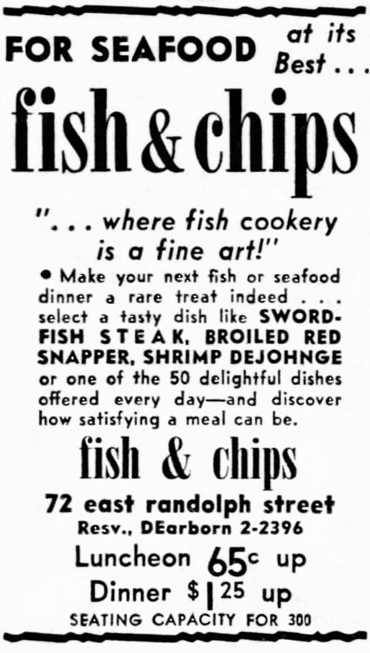
The illustrated menu shows 14 entrees. But the restaurant almost certainly did not have all the exotic items available at all times. Another fish & chips, inc. menu from 1937, for example, offered one appetizer, one soup, and only four entrees.

The menu could date any time from the opening of the restaurant in 1936 into the 1940s. Its clever design may have been due to owner Bob Winter’s background in advertising. Why the menu is named “Trebor Dinner” is a mystery. It’s possible that Trebor is a play on the owner’s name Robert.

Fish & chips, inc. was conveniently located in the Loop, across the street from the central Chicago library, now the Chicago Cultural Center. It was a handy location for a 1943 dinner of the literary members of the Boswell club, admirers of Doctor Samuel Johnson. In their honor the restaurant posted one of Johnson’s quotations over their table in which he criticized French menus, requesting “thy knaves to bring me a dish of hog’s pudding, a slice or two from the upper cut of a well roasted sirloin, and two apple dumplings.”

It was a popular restaurant, said to be especially well liked by male patrons. In 1944, during World War II, lines formed at the door. The following year it was enlarged to seat 300. [1949 advertisement shown]

With no meat on the menu, the restaurant would have had the advantage of escaping wartime food restrictions and shortages.

Advertising that it had 50 varieties of fish on hand daily, a lunch or dinner could include sunfish, crappies, smelts, cod, brook trout, sea bass, shrimp, and lobster among many others. The restaurant advertised heavily during the Lenten season.

Bob Winter died in 1953 and the entire contents of the restaurant were auctioned, including groceries.

© Jan Whitaker, 2021

16 Comments

Filed under alternative restaurants, food, menus, Offbeat places, patrons, popular restaurants