Category Archives: racism

Beer & barbecue at the fair

The 19th century was the century of world’s fairs, but the United States did not have a fair to call its own until 1876 when Philadelphia celebrated the 100th anniversary of U.S. independence. After Philadelphia, Chicago’s, in 1893, was the largest in this country. [above, outdoor beer garden at the Tyrolean Alps]

So . . . for St. Louis organizers of the Louisiana Purchase Exposition in 1904, when St. Louis was the fourth largest American city, second-largest Chicago figured as the one to beat. St. Louis fair organizers hoped to surpass the Chicago fair in all ways, particularly attendance.

The St. Louis fairgrounds occupied an immense 1,200 acres, double the area of Chicago’s. Not only was the area very large but so were the buildings. A hotel on the fairgrounds, the Inside Inn, had 2,357 rooms and dining rooms accommodating 2,500 at a time. The Palace of Agriculture building alone covered 23 acres. Big money too: the entire outlay for the city, U.S. government, participating nations and states, exhibitors, and concessionaires came to over $500M in today’s dollars.

Planning the fair’s restaurants, with enough variety in fare and price to please fairgoers, was a formidable task. In St. Louis, those interested in being considered included owners of existing city restaurants, experienced professionals who made a career of running restaurants at fairs, various exhibitors who wanted to include a themed restaurant as an added attraction, some state and foreign nation buildings and exhibits, and food and drink companies and promoters.

The offerings ranged from about 50 stands selling sandwiches to 75 full-scale restaurants, some of them expensive. There were also oddities such as a proposed underground eating spot in the Anthracite Mining exhibit’s coal mine with waiters dressed as miners. Or, the restaurant in Hereafter — a tour through Dante’s Inferno — where diners ate off coffins in the Café of the Dead, probably an imitation of the Café of Death in Paris’ Montmartre.

Without a doubt the most lavish, expensive, huge, and overall outstanding restaurant was the Tyrolean Alps, organized by two prominent restaurateurs, New York’s August Luchow and St. Louis’ Tony Faust, plus three other experienced St. Louis caterers, and with many backers including St. Louis brewer Adolphus Busch. Like several others it could handle an estimated 2,500 diners at a time. Despite all the banquets it catered, the famous people who dined there, its extensive menu, its general popularity, and its gross receipts of nearly $1M, like so many concessions it managed to lose money by fair’s end. It carried on for a time post-fair, into the summer of 1905.

Even before the fair ended some restaurant concessions had failed. The two owners of the Japanese restaurants [shown above], overcome with debt, filed for bankruptcy. The German Wine restaurant that charged $2 for a lunch with wine, proved to be far too expensive for fairgoers. Also, beer, not wine, was the preferred beverage at the fair, costing a nickel for a glass or a dime for a stein. Beer pavilions, such as Falstaff’s and Blatz’s, competed with the almighty Budweiser, widely available and practically the official beer of at least 17 of the restaurants.

I haven’t found reports on how well the food stands did, but I’m guessing they fared better than many of the full-scale restaurants. The Barbecue, with six stands spread around the fairgrounds, was quite popular with the crowds. A reporter from Wichita KS let her readers know that it was a good deal, not requiring much money or time in being served, whether ordering hot beef, pork, mutton or sausage sandwiches. Plus, she reported, they supplied free paper cups and spoons (!).

Another winner was the enormous Inside Inn, the only hotel on the fairgrounds and the biggest financial success of the fair. A ham sandwich was 10 cents, while a complete dinner was 75 cents, and breakfast and lunch each cost 50 cents. At fair’s end, the Inn showed a sizable profit.

There were about a half dozen women operating restaurants. Prominent among them was well-known cookbook author Sarah Tyson Rorer who had also been at the Chicago fair. She ran a large restaurant seating 1,200 prominently located in the East Pavilion building [shown above], and she taught cooking classes. Harriet McMurphy, a food reformer and domestic science lecturer from Omaha, ran an eating place designed for people with digestive difficulties. She had very definite ideas of what was best to eat, rejecting pastry as something that should not be eaten more than once a year. Instead she offered baked apples with almonds and whipped cream. A local woman, Mrs. Reid, operated a breezy tea room called The Bungalow designed for women guests.

A few of the women restaurant operators also did the catering for some of the many banquets given during the fair, possibly including wedding ceremonies held in Ferris wheel gondolas [visible above] accommodating 60 persons.

The St. Louis fair has often been criticized for its disrespectful treatment of Philippine tribal people brought there to demonstrate the U.S.’s beneficial domination of developing nations considered inferior. Evidently they adjusted to modernity very quickly, soon tiring of the rice diet they were fed at the fair and demanding an American diet such as found at the restaurants. They were granted their wish.

A lesser known scandal was how Black fairgoers were treated. In June, a group of Black visitors observed notices posted by restaurants on the Pike that read “No colored people served in this restaurant.” Then complaints were received that white servers were refusing to sell glasses of water to Black visitors, claiming that if they did they would lose their white customers. The fair organizers expressed dismay and there was discussion about hiring a Black woman who would run a stand to greet visitors of color, but that did not materialize and the number of Black visitors declined. The water issue was supposed to be “solved” with separate tanks of water and distinctively marked glasses. Unsurprisingly, the Black press denounced the fair. The Cleveland Gazette, for instance, advised “Our people had better stay away from the St. Louis World’s fair. There is much discrimination on the grounds.”

In the end, the St. Louis World’s Fair drew about 8 million fewer visitors than had Chicago’s exposition. The sideshow amusements lost so much money that the chairman of the Pike Financing Co. reported, “So universal has been the losing on the Pike that not one of the St. Louis shows will be taken to Portland,” the site of the next big fair. Despite all the losses for private investors who naively expected to make money, the fair’s Exposition Company managed to break even after paying back government loans.

© Jan Whitaker, 2024

10 Comments

Filed under food, Offbeat places, racism, women

Black-owned drive-ins

Despite the documentary absence of postcards, I’ve discovered that there were others — after a lot of searching. And I’m glad, because in nostalgic American culture, drive-ins are seen as deeply and exclusively white.

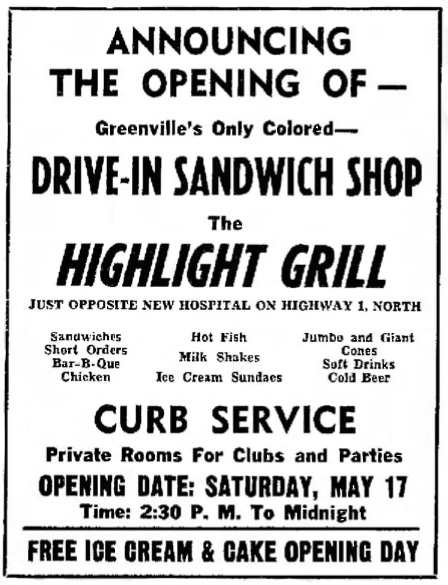
Most I’ve located got their start in the 1940s and 1950s, the same years that white-owned drive-ins made their first appearance many places, particularly warmer climates. More people in those years, especially after WWII, had cars and a little extra money to spend. [Highlight Grill, Greenville MS, 1952]

The earliest reference I’ve found was to The Drag, on Lyons Avenue in Houston. In an advertisement for its sale in 1941 it was described as a “famous colored drive-in.”

Black drive-ins were most likely to be found in Southern cities before the Civil Rights Act of 1964 made Jim Crow segregation illegal and all public restaurants had to serve everyone regardless of race. Although they could be found in Northern cities, it seems they were more likely to be in good-sized Southern cities such as Chattanooga, Memphis, and Nashville TN, Louisville KY, Little Rock AK, and Birmingham and Tuscaloosa AL.

Altogether I’ve run across 54 Black-owned drive-ins in this country, which is not many but surely an undercount. I have not found any in the Northeast. Nor in the land of drive-ins, Southern California, where they dated back to the 1930s. No doubt there were some, but probably fewer than elsewhere.

It was mainly in the 1960s that they began to show up in the yearly Green Books that advised Black travelers on places to stay, eat, fill up with gas, etc., in unwelcoming parts of the U.S. – i.e., most of it. (I cannot be 100% certain that every drive-in listed in the Green Books had a Black owner since sometimes white-owned restaurants that welcomed Black customers were also listed.) [Shown here, a Green Book advertisement from the 1961 edition.]

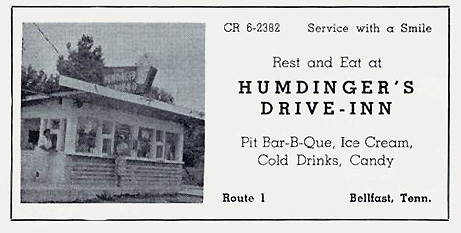
Many, maybe most, of the drive-ins served barbeque. For example, Nichol’s Drive-In in East St. Louis IL specialized in hickory-smoked Beef Ribs, Snoots, Pork and Chicken. It mentioned Soft Drinks, but a number of Black drive-ins served beer. Selling beer to underage customers seemed to get some of them into trouble.

I noticed that when a new Black-owned drive-in opened, it was usually greeted with enthusiasm in Black newspapers. White newspapers, on the other hand, often only reported on them in association with disorderly incidents and legal violations.

When a Black-owned drive-in was proposed for a location near a white residential area, it was unlikely the plan would be approved. (The same held true for Black-owned drive-in movie theaters.) In 1951 a Black man seeking official approval to build a drive-in restaurant in Memphis faced a hostile lawyer representing whites who opposed it. The opposition’s lawyer referred to the drive-in as a “Negro night club,” and when the applicant’s lawyer objected, maintained that a drive-in was “the same thing.”

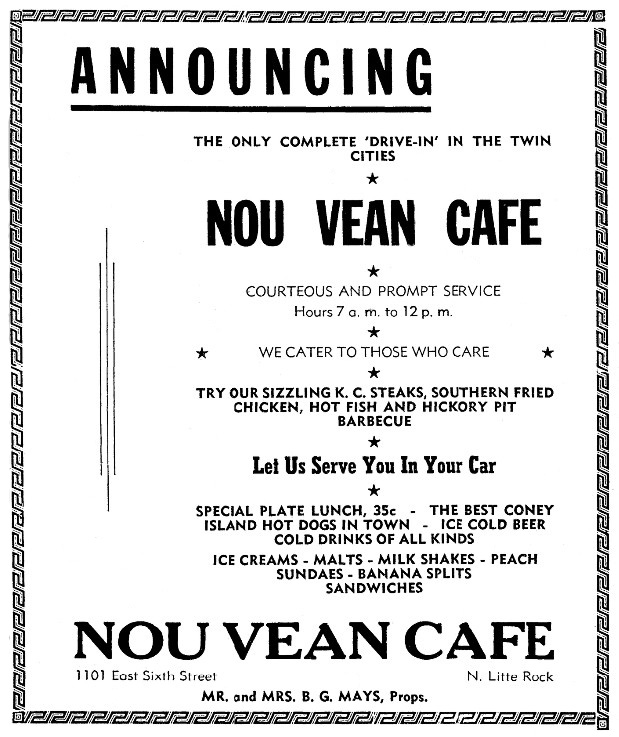
The drive-ins that seemed to fare the best were those owned and run by prominent figures in Black communities. In the 1940s Little Rock’s Nou Vean Drive In was owned by Barnett G. Mays, a realtor, developer, and liquor store owner. He encountered numerous roadblocks throughout his business career, but seemed to press onward despite them. In Milwaukee a drive-in called Robbys appeared to have a promising future when it opened in the late 1960s. It was named after the son of owner J. C. Thomas, a community leader who was also a realtor, operated two billiard parlors named Ebony Cue, and published a newspaper called Soul City Times. [Above: Nou Vean, 1945; Below, Robbys 1969]

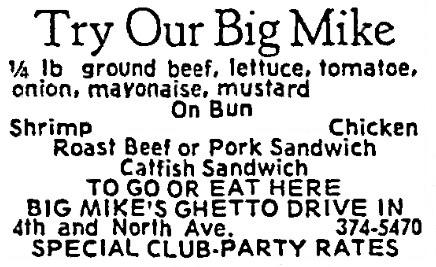
However, drive-ins generally – both Black and white – met major competition in the late 1960s when fast-food chain restaurants spread across the country. In Milwaukee Robby’s as well as Big Mike’s Ghetto Drive-In faced off with national chains and lost.

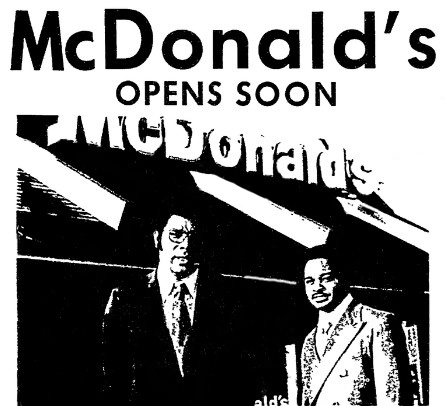
Big Mike’s owner Mike Watley, a social activist and close associate of comedian Dick Gregory, explained that he could not compete with a national corporation. With lower sales volume, he paid higher prices for food, a situation intensified by being given less financial support. His meat supplier, he said, capped his credit at $100, while white customers could run up their bill to three or four thousand. Although Watley blamed his failure on competition from a “white-owned corporation,” the nearby McDonald’s franchise was owned by two Black men, one of them Wayne Embry, a former player with the Milwaukee Bucks. Their McDonald’s venture was quite successful. [Above: Big Mike’s, Milwaukee, 1969; Below: Wayne Embry, left, and his partner, 1971]

Independent Black-owned drive-ins have not totally disappeared, however. In Longview TX White’s Drive-In, established in 1952 in conjunction with the White’s motel, has recently been re-opened by younger members of the family.

© Jan Whitaker, 2023

13 Comments

Filed under drive-ins, food, guides & reviews, racism, restaurant advertising, roadside restaurants

Taste of a decade: the 1990s

The decade began in an economic slump, putting a damper on the expensive dining trends of the 1980s. Informal dining venues met the situation by crafting new “casual cuisine” menus featuring less expensive, quickly prepared pasta dishes and grilled meat, all tailored for the Baby Boomers who formed the prime market for dining out.

Although surveys showed that Americans want healthful food choices in restaurants, beef remained extremely popular, and sales at casual steakhouses rose.

In the early 1990s restaurant chain operations emphasized efficiency and speed with microwave ovens, automatic dishwashers, and computerized systems that integrated taking orders with food preparation, as well as managing accounts and inventory. Coordination of operations enabled customers at drive-up windows to order, pay, and pick up their food rapidly.

Unable to compete with fast-food chains’ quick service and low prices, old-style casual eateries such as Horn & Hardart automats, Woolworth lunch counters, and cafeterias were disappearing. New York’s last remaining Automat, at E. 42nd St. and Third Ave., closed in 1991.

As the economy improved it became clear that luxury restaurants hadn’t vanished. The December 1990 announcement that the James Beard Foundation was forming an awards program was a sign that top chefs were not to be forgotten. Yet, despite the boost to fine dining given by the awards, fine-dining establishments continued to struggle.

New, artsy trends in plating meals emerged, among them the brief but dramatic art of stacking food into towers that wowed the eye but proved difficult to eat gracefully.

Even as elite food fads came and went, one trend appeared unstoppable: the gathering up of thousands of chain restaurants by regional owners and giant food corporations. While the media focused on top chefs and their novel dishes created in landmark restaurants, huge corporations such as Tricon Global grew even larger with many venturing into worldwide operations.

Mexican immigration doubled, reaching a new high of 8.8 million by the end of the decade and furnishing a large number of restaurant kitchen workers. Small Mexican restaurants opened to supply traditional food to the new immigrants, but by 1999 Taco Bell’s 7,000 U.S. outlets had captured 90% of the thoroughly Americanized Mexican restaurant market, serving 55M customers a week, with sales of $5.1 billion annually.

Black restaurant workers and customers had their day in court in 1993 with successful discrimination suits against Shoney’s and Denny’s. Shoney’s was found liable of charges it had set a limit to the number of Black workers it would hire in some of its restaurants, as well as hiring all-Black staffs in Black communities and all-white staffs elsewhere. Denny’s faced multiple law suits.

Highlights

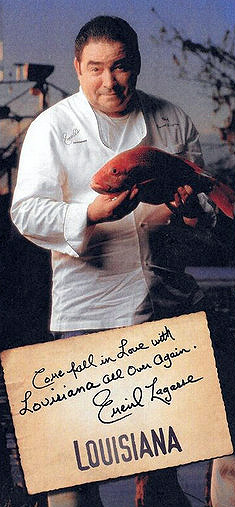
1991 Six men and one woman are the first regional chefs to be honored by the newly formed James Beard Awards: Jasper White (Boston), Jean-Louis Palladin (D.C.), Emeril Lagasse (New Orleans), Rick Bayless (Chicago), Stephan Pyles (Dallas), Joachim Splichal (Los Angeles), and Caprial Pence (Seattle).

1992 A U.S. Department of Labor report on technology announces that due to increases in productivity, chain-owned restaurants “for the first time . . . exceeded the number of independently owned restaurants.”

1993 Shoney’s, at the time the third-largest chain, is fined an unprecedented $105M for racial discrimination in hiring, while Denny’s pays $54M for refusing service to Black customers, insulting them, and overcharging them.

1993 The new Food Network spotlights restaurant chefs and methods of preparation. Viewers become interested in new restaurant dishes, while rising use of garlic at home is attributed to viewers watching Emeril. Despite the interest in inventive cuisine, 1991 James Beard winner Stephan Pyles feels forced to close his Routh Street Café in Dallas.

1994 Sensing that Black patrons may have been offended by revelations regarding Denny’s discriminatory behavior, the corporate owner hires a Black Chicago advertising firm to create an image of the restaurants’ friendliness to Black customers and workers.

1995 Stacked food – aka vertical or tall food – is reportedly now passé in New York’s trendy restaurants, replaced by layering food on the plate. However, a short time later vertical food is said to be “sweeping the country.”

1996 Taco Bell is the country’s leading Mexican restaurant, with 6,867 stores.

1997 PepsiCo.’s spinoff Tricon Global, based in Louisville KY, racks up more than $7 billion in sales with its major chains Pizza Hut, Taco Bell, and KFC.

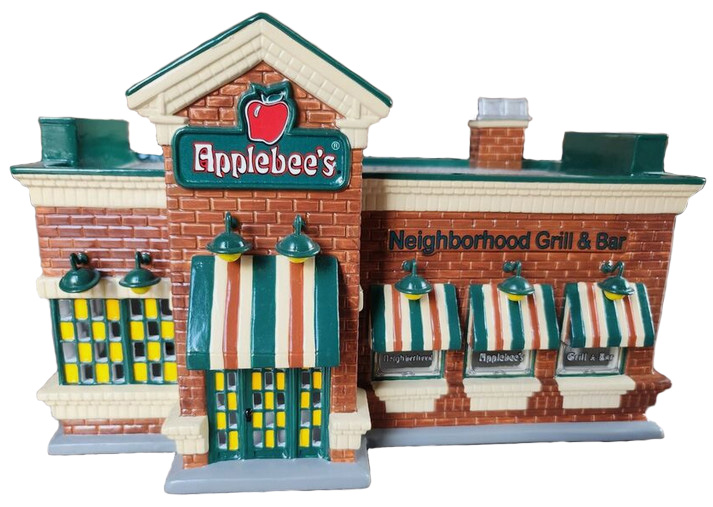
1998 In a survey, Applebee’s and Cracker Barrel tie for 8th place as family favorites among the country’s 30 largest chain restaurants.

1999 The U.S. Department of Commerce declares this “The Year of the Restaurant” and the Beard award for Outstanding Restaurant goes to NYC’s Four Seasons.

© Jan Whitaker, 2023

10 Comments

Filed under chain restaurants, chefs, elite restaurants, family restaurants, food, popular restaurants, racism, restaurant fads, technology

In their own words

I’ve collected numerous provocative comments about restaurants over time. Most of the following samples are excerpts from diaries, others from newspaper interviews. I selected them mostly because they were informative about restaurant conditions and practices at various times in the past, as well as patrons’ experiences.

There are some recurring themes. A number of the comments reveal women’s opinions of restaurants and their roles in them. Others show how unfavorably foreign travelers tended to view American eating places during the 19th century. Several comments reveal the high prices and deteriorated conditions that prevailed in the South during the Civil War.

1825, a Boston portrait engraver: “In the evening, at 8 P.M. we called on Mr. Allston at Rouillard’s Restorator. Found him at dinner; we sent up our letters . . . ; after waiting a few minutes Mr. Allston entered the parlour, and received us very cordially. He took us up to his dining room (quite private) and invited us to partake of his wine and cigars.”

1850, daughter of James Fenimore Cooper, in Cooperstown: “Then, again, there are seven taverns in our village, four of them on quite a large scale. As for the eating-houses – independently of the taverns – their number is quite humiliating; it looks as though we must needs be a very gormandizing people: there are some dozen of them – Lunches, Recesses, Restaurants, etc., or whatever else they may be called . . .”

1861, a Confederate clerk, in Richmond VA: “Mr. Tyler then invited me to join him at breakfast at a neighboring restaurant, where we had each a loaf of bread, a cup of coffee with milk (but brown sugar), and three eggs. The bill was sixteen dollars!”

1861, an Irishman visiting Montgomery AL: “Then, as to food – nothing could be had in the hotel – but one of the waiters led us to a restaurant, where we selected from a choice bill of fare, which contained, I think, as many odd dishes as ever I saw, some unknown fishes, oyster-plants, ‘possums, racoons, frogs, and other delicacies, and, eschewing toads and the like, really made a good meal off dirty plates on a vile table-cloth . . .”

1861, and then the Irishman visited Washington: “I dined at a restaurant kept by one Boulanger, a Frenchman, who utilised the swarms of flies infesting his premises by combining masses of them with his soup and made dishes.” [To be fair, Joseph Boulanger was in ill health and had been trying to sell his restaurant for a while when the visitor from Ireland came along.]

1864, a visitor to New Orleans: “Charges for living were most exorbitant; a simple breakfast at a restaurant, one dollar; a frugal dinner, two dollars; two small slices of dry toast, fifteen cents; the same for a cup of tea or coffee; ten cents for ice and butter; sixty cents for one small mutton chop. The simplest fare cost six dollars a day.”

1883, a touring Englishman in San Francisco: “After dressing, we all went to the ‘Poodle Dog’ restaurant to dinner. Here my sister Sarah behaved in an extraordinary way, affecting a morality which appeared to me immoral, and questioning the propriety of dining at this place.”

1893, a woman attending the Chicago World’s Fair: “Then we went to Rector’s Marine Restaurant [shown here], and on its breezy gallery had the swellest sort of little dinner. (The first glimpse of the menu made me faint. All the salads were .60 & .75, the fish all .60 & .75, relishes .25 & .30, vegetables .30 & .40, ice cream .25 . . .)”

1921, a European woman visiting New York: “We ordered some steak for our dinner, and when the waiter brought enough for a school treat I exclaimed, and he said, ‘In Broadway they serve the dishes — here we serve the food!’ They did indeed; even sharing it with a starving cat I couldn’t get through with it. The restaurant was rather a good one and very clean. I reproached Kenneth for not having taken me somewhere with more local color. I hate being treated as a Bourgeoise.”

1951, a male peace activist traveling across the country: “Another group, two whites and a Negro, stopped for coffee at a lunch counter in Maryland. The counter woman brought two porcelain cups and one paper cup. When the white man gave the paper container to the white woman and not to the Negro, the counterwoman said, ‘We’re not allowed to serve colored, it’s against the law.’. . . On the wall, all red-white-and-blue, was a poster which read, ‘If you don’t like this country, there are boats leaving for Russia every hour.’”

1970, a New York book editor: “First we went to Chez Vito and all I had was spaghetti and wine and iced tea. And the check was $6. My God.”

1973, a group vice-president of Howard Johnson’s: “I think anybody who’s not using convenience foods is out of it. And some of the prepared food around today is top quality. You’d never know the difference. We’re going to open a restaurant a week this year, and where could we get cooks and chefs for this kind of expansion? Even if we could get them we couldn’t train them fast enough.”

1989, a woman chef trained at the Culinary Institute of America: “Interviewers tell me, ‘You don’t look like a chef. You look like a hostess. How can people work around you? Or they ask, ‘Do you mind getting dirty?’”

© Jan Whitaker, 2023

5 Comments

Filed under food, patrons, racism, restaurant prices

Black waiters in white restaurants

In the 19th century Black waiters staffed most Northern restaurants and hotel dining rooms, particularly as hotels grew larger and better appointed beginning in the 1840s. Earlier, Black waiters in the North were mostly employed in private residences or for catered events.

Before the Civil War, the hotels were run on the American plan where meals were included with lodging and served family style. Mealtime was often a mad scramble, putting waiters under great pressure to bring out the dishes. They were often ridiculed, or seen as having no other virtue than being imposing-looking in uniforms.

After the Civil War, when the tipping custom spread, they were suspected of being interested solely in tips. Nevertheless, jobs as waiters were sought after and those who held them were highly respected in Black communities. Headwaiters, occupying a role similar to that of maitre d’, enjoyed the highest status.

A number of Black waiters rose in their profession and took the role of advisor and trainer of their fellow servers. An early example was Tunis Campbell who published The Hotel Keepers, Head Waiters, and Housekeepers’ Guide in 1848. He presented the headwaiter’s role as similar to an officer whose troops need a lot of drilling lest they became undisciplined and boisterous when facing a mob of impatient guests. His advice was put into practice, judging from an English traveler’s description of a remarkably choreographed scene in the 1850s. He reported that, “At a given signal, each [waiter] reaches over his arm and takes hold of a dish . . . at another signal, they all at the same moment lift the cover, all as if flying off at one whoop, and with as great exactness as soldiers expected to ‘shoulder arms.’”

Some patrons preferred Black servers to white ones, and it was said that the better restaurants and dining rooms of the post Civil War period preferred them to whites, particularly the Irish. But praise was often blended with condescension. A prominent Chicago hotelier noted that Black waiters were the “best.” But he added, “They are waiters by nature, and are peculiarly adapted to servitude.” Another admirer of Black waiters commented in a similar way: “White waiters always have an idea that they are doing a man a great favor if they serve him promptly and are polite and respectful. Colored waiters know their place and keep it, give themselves no airs, and take no liberties.”

Never did it seem to occur to white commenters that the best Black waiters had actually chosen to dedicate themselves to their profession and constantly improve their skills. Nor that they were performing a role rather than conforming to their nature.

Unsurprisingly, given the lack of a wide range of job opportunities, many Black men were known for their long tenure as waiters. Still, it is interesting that a Chicago restaurateur noted with surprise in 1899 how many Black waiters “find their way to the variety stage.” Perhaps they had been drilled in the Campbell method. [Blaney Quartette poster, 1898]

The position of headwaiter was especially coveted, particularly if a Black man was tall and impressive looking in a uniform, often a tuxedo in the 20th century. However, although some remained, by then the position of Black headwaiter was being replaced by restaurant owners and hostesses taking over the job of greeting and seating guests.

In the late 19th and early 20th centuries a white backlash against Black Americans generally reduced work opportunities even further, threatening Black predominance as waiters. Immigrant men arriving in this country proved willing to accept jobs as waiters. However, there was a notable reason to favor Black men, one that hindered them at the same time. As a Black waiter explained in 1903, for Black men being a waiter was “usually the zenith of his industrial possibilities” and because of this there was strong competition among them for these positions. This allowed hotels and restaurants to pay them less than white waiters.

By the 20th century, white women also took jobs serving in restaurants, often replacing Black men. Actually, though, the Fred Harvey organization may have pioneered the shift from Black men to white women. In 1883 the men – considered troublesome – were replaced at one of the eating houses on the Santa Fe Railroad line, launching the phenomenon of the “Harvey girls.” Unlike white women, Black women were not often found waiting in white restaurants, but were more likely to be working in the kitchens. When they did occupy waitress roles, white patrons seemed to enjoy seeing them dressed in mammy costumes.

Black waiters organized mutual aid societies and employment bureaus as early as the 1820s, but many were skeptical of labor unions. When strikes failed, their distrust was intensified and they felt they had been betrayed by the white unions, particularly after losing their jobs and being replaced by white men and women. A failed strike at a lunchroom chain in Chicago in 1903 was long remembered with bitterness. Leading Black waiters supported advancement for Black waiters, but not of joining unions. John B. Goins wrote in his book (The American Waiter, 1908) that “unions will never be of any benefit to a colored waiter.” In an even stronger vein, he advised, “Keep out of strikes. If you are asked to join in a strike for better wages refuse point blank. And I would advise you to offer to quit; but first explain why you do so, stating your reason for quitting is to keep out of strikes.” His ally, Forrest Cozart (author of The Waiters’ Manual), was another strong proponent of improvement, urging Black waiters in American plan hotels to learn to read and write because such hotels were disappearing. [Forrest Cozart shown below]

Though there were still an appreciable number of Black waiters through the 1920s, competition with whites increased during the Depression of the 1930s. Then, even native-born whites who had long objected to taking service jobs began to compete successfully, significantly reducing the number of Black waiters.

After World War II, when the economy had improved, dining out for pleasure increased substantially in this country. Black waiters discovered that they were often shut out of waiting jobs in fine restaurants where there was a chance to make good tips. Possibly, though, Black waiters were favored in Southern restaurants such as the elegant Justine’s in Memphis, which hired a strictly Black waitstaff from its beginnings in 1948 until closing in 1995. The restaurant made much of the fact that many of its waiters stayed on the job for many years, yet there were signs of dissatisfaction on their part such as walkouts and complaints about low wages. Many had full-time day jobs.

A 1985 case study found that, unlike immigrants, Black men were not eager to be waiters in low-priced restaurants and that they were not often hired in the better eating places. How much this was due to racist attitudes on the part of managers and/or patrons was not clear. But the study noted that even “when the supply of European waiters fell during the sixties, New York City’s full-service sector did not hire blacks into these relatively high paying jobs, but used artists and actors instead.”

By 1970 Black servers, either male or female, made up only 16% of all waitstaff according to research by Dorothy Sue Cobble (Dishing It Out, 1991).

© Jan Whitaker, 2022

9 Comments

Filed under racism, restaurant customs, waiters/waitresses/servers

Black Tulsa’s restaurants

(This post is a footnote to Robin Caldwell’s fine essay on Black grocers in the Greenwood community – my attempt to give some sense of the community by sketching a little about the area’s many restaurants.)

Before the Greenwood district’s destruction in 1921 – evaluated at $536M in property damage in today’s dollars — the area had become home to a prosperous Black business district filled with brick buildings, many of them housing eating places. Its leading citizens had done very well and a Black newspaper, the Tulsa Star, had begun publishing in 1913, with its office located near the heart of the business district at N. Greenwood and E. Archer avenues.

Nonetheless, like all of Tulsa, the area had its share of problems, no doubt due in large part to its rapid growth and the city’s attractiveness to transients and people on the make in both a good and a bad sense. Though generally striking a positive note, The Star complained of inadequate city services reflected in a failure of police to shut down gambling, prostitution, and bootlegging, and the lack of sewers in some parts of the community. Shortly before the massacre area residents petitioned the city, urging annexation of that part of the Black community outside the city limits and lacking modern improvements such as water, street lights, railroad crossings, fire stations, sidewalks, and paved streets. [Shown above: ca. 1915 photo of flooding in the 300 block of N. Frankfort street; Russell & Co. was a black-owned business.]

One of the most successful Black restaurant proprietors was Texas-born Joe Lockard who moved to Tulsa from his farm in Muskogee Indian Territory (Oklahoma). In 1914 he opened The People’s Café near Tulsa’s Frisco train depot. In 1920 he became president of the board of directors of a newly created investment company. That same year a white customer got into an argument with Lockard’s cook, shooting and killing the cook in the cafe’s dining room. Lockard’s café was destroyed by white rioters in 1921, but he continued in the café business into the 1930s, possibly later.

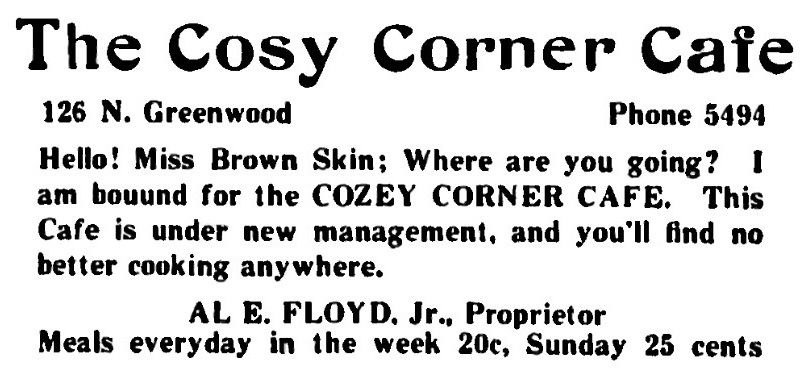
In contrast to Lockard, another Texan, Al Floyd, operator of the Cosy Corner [shown at top, 1915 advertisement from The Tulsa Star], was in business for at most a few years before relocating to Oklahoma City where he managed a railroad café.

The Busy Bee Café was run by Texas-born Savannah Elliott, also known as ‘Mother Elliott” despite only being in her 30s. In 1918 the newspaper mentioned that she entertained groups, such as teachers, and birthday dinners with as many as 17 guests. She sold the 112 N. Greenwood location at the end of that year, and moved to a new place that she operated briefly before again moving to Kansas City MO. In KC she and her husband ran a café called the Blue Goose. [1917 advertisement]

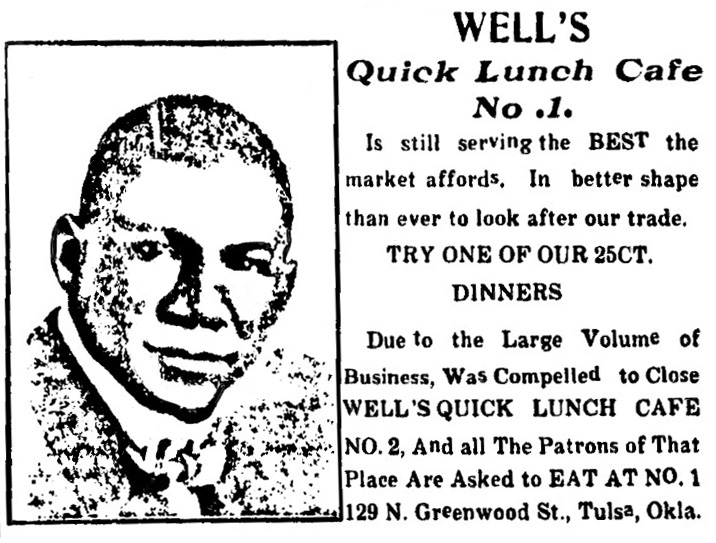
L. W. Wells ran a café in Okmulgee OK in 1914. The following year he moved to Tulsa, working in a white-owned restaurant called the Ever Eat Café. By 1918 he was running two quick-lunch cafes of his own in the Greenwood area where he provided “classy lunches” according to advertisements. It was wartime and business was booming, possibly because soldiers were passing through on the railroad. As the above advertisement indicates he was unable to keep his second location open because of the business crunch which probably meant increased patronage and a simultaneous shortage of help. In 1918 he had a dangerous brush with a drunken customer, engaging in a fist fight with him and pulling a gun. Like Lockard, he owned a farm in Oklahoma and was considered well off. The Star paper noted that for Christmas 1918 he presented his wife and daughter with a piano costing $475. His restaurant on Greenwood Avenue was destroyed in the 1921 attacks. [1918 advertisement]

Most of the cafes in the Greenwood district were basic, pricing meals reasonably, often charging 25 cents for a plated hot dinner. Many were open day and night. Their advertising stressed cleanliness. Most went by their owners’ names but there were also plenty of colorful names such as Busy Bee, Cosy Corner, Crystal, Ideal, Liberty, Little Pullman, Lone Star, Minute, Olympia, Palace, People’s, Red Rose, Square Deal, Star, and Sunny Side. (Because Tulsa was a Jim Crow city, it’s easy to identify which were Black restaurants – they were marked (c) in the city’s business directories.)

The greatest number of restaurants over the years 1913 through 1920 were on North Greenwood avenue. It intersected with East Archer to form the heart of the area’s business district, as well as bearing the brunt of destruction in 1921. East Archer had the second largest number of restaurants. I counted about 30 on North Greenwood during the 8-year period and 15 on East Archer, with another couple dozen on other streets.

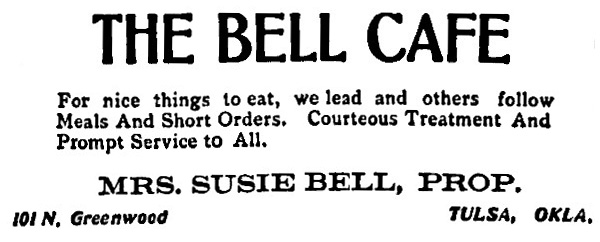
Overall, the cafes went through a great deal of turnover and geographical churn – as was common throughout the US. They changed hands or moved to new addresses with some frequency. For example, Susie Bell’s cafe suffered fire damage when the Waffle House next door caught on fire in 1920. Although she had already moved several times, she was not defeated. She went out scouting for a new location early the next morning, confident she would be back in business by evening. In all likelihood she had “regulars” who counted on her to provide their daily meals. Her cafe was destroyed in the massacre. [1913 advertisement]

I had hoped to get an idea of what foods restaurants served, but that turned out to be difficult. Many advertised “home cooking” but almost never mentioned specific dishes. Usually when applied to basic cafes, home cooking referred to plain meat-and-potatoes dinners of the sort preferred by people who relied on restaurants for most of their meals. It’s likely that a fair number of residents of the Greenwood area lived in rooming houses and residential hotels with no cooking facilities. According to the 1920 federal census, about a tenth of Tulsa’s Black population were lodgers.

Though advertising did not offer much idea of what was served in the cafés, two foods were mentioned fairly frequently: Barbecue and Chili. Aside from the Black population born in Oklahoma, the next largest percentage were transplants from Texas, so it isn’t at all surprising that these two foods would be staples. There was also frequent mention of confectionery, pies, and cakes.

The one and only menu I discovered was for a 1918 Christmas dinner, billed as home cooking, at the Sunny Side Café. An advertisement also referred to it as a “Conservation” dinner, reflecting wartime rationing. In addition to a “Christmas Oyster Loaf,” the dinner included: Baked Turkey with Roquefort Dressing; Baked Chicken with Corn Dressing; Roast Goose with Sage Dressing; Smothered Duck with Brown Gravy; Cream Potatoes; Cream Peas; Griddle Corn; Macaroni; Stuffed Tomatoes; Stewed Prunes; String Beans; Cream Cabbage; Cranberry Sauce; Cherry Cobbler and Whip Cream; and the following pies: Pumpkin, Potato Custard, Mince Meat, Lemon Custard, Apple, and Cocoanut Custard.

Despite the enormity of the disaster in which possibly more than 300 Black lives were lost and there was extensive property destruction, survivors went to work almost immediately. Cafes that had been turned into rubble were rebuilt and reopened, and new locations were found. The area rebounded.

© Jan Whitaker, 2021

12 Comments

Filed under food, proprietors & careers, racism, women

Lunch in a bus station, maybe

In November, 1961, new Interstate Commerce Commission (ICC) rules took effect requiring all interstate bus terminals to integrate their lunch and waiting rooms. The new regulations went against Jim Crow laws in the South that required separate “white” and “colored” facilities.

Although travel on interstate buses had been integrated by the ICC in 1955, the regulations had not covered restaurants or restrooms in the terminals.

The new rules were issued just months after the Congress of Racial Equality organized “Freedom Rides” with groups of Black and white members who rode buses to Southern states — Alabama and Mississippi in particular — with the intention of challenging segregated bus station facilities. In May, 1961, the Freedom Riders were attacked by violent white mobs who beat them and firebombed one of their buses while it was stopped with a flat tire outside Anniston AL. [photo above]

Twelve days after the ICC rules took effect a Black journalist, Bettye Rice Hughes, set out on a bus trip through the South to observe firsthand what had changed – and what hadn’t. She was a graduate of Lincoln University in Jefferson City MO where she majored in journalism. She and her husband, Albert Hughes, a photographer for the Associated Negro Press [ANP], lived in Los Angeles. She was a reporter for the ANP, but it is unclear if that was her job at the time of her tour. In 1964 she was editor of the women’s page of the San Francisco Sun-Reporter. That year she took part in a panel at a conference on Black writers sponsored by the University of California, Berkeley. In 1966 she left the Sun-Reporter and may have moved to New York City. I was not able to trace her any further than that. [photo: Bettye Jean Hughes at 1964 conference, talking with LeRoi Jones (Amiri Baraka)]

Her six-week tour took her through Oklahoma, Arkansas, Tennessee, the Carolinas, Florida, Georgia, Alabama, and part of Mississippi. Her story, “A Negro Tourist in Dixie,” was published in April, 1962, and continues to be read today.

The bus she took avoided going through all but a corner of Mississippi – where it made no stops – and her tour did not include Louisiana, the birthplace of segregated railroad travel.

In her report of the bus tour it’s clear that she is a close observer, paying attention not only to the reaction of white people to her, but also to the reaction of other Black people, on the bus and in the stations, including kitchen workers. Clearly she is an object of curiosity, but also hostility. “I felt that the threat of violence was always there – particularly in South Carolina, Georgia, and Alabama – but somehow it never erupted,” she writes. She is served in the lunch rooms, though often grudgingly. On a couple of occasions she has to insist on her right to eat in what were still considered by many to be “white” lunch rooms.

The first direct challenge to her presence in a lunch room came at a Greyhound station in Florence, South Carolina. There, the white cashier as well as a white counterman yelled at her to go to the station’s other lunch room, “the one for you.” She stood her ground, despite her growing fear, and succeeded in getting served, but the episode filled her with dread about the next stops. During the encounter, white patrons, she noted, were silent and “pointedly staring at their food.” In Tallahassee FL, the “problem” of serving her was solved by having a Black cook do it.

Throughout her experiences in lunch rooms she felt the eyes of Black travelers on her as much as those of whites, though evidently few dared to order food. She concluded her essay expressing hope that Black passengers would assert their rights in the future and that white Southerners would become accustomed to eating in lunch rooms with them.

I was curious about how lunch room integration proceeded in other parts of the South that she did not visit, and how things developed after her tour. I found that in quite a few cities officials refused to integrate, insisting that local Jim Crow laws took precedence over ICC rulings. The major of Shreveport LA put it bluntly: “We don’t care about the ICC.”

In Birmingham, the manager of the Greyhound cafeteria was fined and given a suspended sentence for allowing Black and white people to be served together. The manager of the lunch counter in the McComb MS bus station took down the signs indicating separate lunch rooms but refused to serve five Black customers in what had been the white room. When they began banging on the counter for service, a gang of white males ran in and attacked them as well as chasing off a TV cameraman.

In some cities and towns local authorities closed their bus stations’ eating facilities rather than integrate. Federal authorities stepped in and prevented Birmingham from closing its Greyhound restaurant. But in Crossett AR a lunch room closure left a Black woman traveling with a 2-year old stuck on a Continental Trailways bus with little food for two days in a snow storm. White passengers had found rooms in a local hotel, but the hotel told the Black woman they were full. After a radio station ran a story about their plight, Black families offered a room and neighbors brought “enough food for a banquet.”

By the time Bettye Hughes’ essay came out, it was generally possible for Black travelers to get a meal in a Southern bus station, though resistance continued in some places. An Associated Press story declared that Virginia and the Carolinas had accepted bus station integration, but Birmingham had integrated “in name but not in practice.” It also reported that Black people were staying away from bus station restaurants generally. They knew they still were not welcome.

© Jan Whitaker, 2020

14 Comments

Filed under atmosphere, lunch rooms, racism, restaurant issues, waiters/waitresses/servers

Name trouble: Aunt Jemima’s

Of all the Black representations found in American white-owned restaurants, the mammy figure has been by far the most common. Many women in the restaurant business of the past have been known as Mama or Mother, but Mammy was reserved for Black women.

The mammy figure, usually grinning broadly in its corporate version, was meant to be a symbol of hospitality universally appreciated by white Americans. Early restaurants using Mammy as part of their name and/or as a visual trademark started appearing in the 1920s in Massachusetts, California, Pennsylvania, and Florida, among other states, with the word Mammy often paired with Shanty, Shack, or Log Cabin. The name and trademark continued in use through the 1970s.

In 1955, probably the best known of all the mammy restaurants opened in Disneyland as Aunt Jemima’s Pancake House, using the sponsorship and trademark of the Quaker Oats Company. The other eating places in Frontierland – among them Pepsi-Cola Golden Horseshoe, Swift’s Chicken Plantation, and Casa de Fritos – also reflected name-brands.

In 1960 Quaker Oats began to franchise Aunt Jemima’s Kitchens, a name variant that signaled wider menu offerings. The first opened in the Chicago suburb of Skokie IL. In 1963 there were 21 in operation in the U.S., plus one each in England and Canada. Among the states, New York led with seven Aunt Jemima’s in the first few years. Pancake restaurants, largely inspired by the high profit potential of pancakes, were the latest food trend in chain eateries at that time, with an estimated 150 around the country. One Aunt Jemima’s franchisee, Pancake Kitchens, Inc., had optimistic plans to open 36 units in the Eastern U.S. I doubt that they were all built, or that the total number of Aunt Jemima’s Pancake Houses and Kitchens across the country ever topped 100.

Protests against Aunt Jemima’s restaurants began in 1962. But there had been objections to the Aunt Jemima image on pancake mix boxes much earlier. Black newspapers ran an editorial in 1937 saying that Aunt Jemima was an “insulting caricature,” in particular criticizing the bandanna she wore over her hair, saying, “The fight against ‘Aunt Jemima’s’ bandanna is one of self-respect.” (Quaker did not get rid of Aunt Jemima’s bandanna until 1968.) Yet, apparently not all Black people were offended by the Aunt Jemima portrayal. In 1952 the Afro-American newspaper in Baltimore hired a marketing company to research the use of Aunt Jemima pancake mix by their Black readers. The company surveyed 501 Black families and 501 white families whose house values or rents were similar. Both groups chose Aunt Jemima pancake mix as their favorite, but it was preferred by a higher proportion of Black respondents (38.1%) than white (31.7%).

It would be interesting to know whether the results would have been the same if the survey had been carried out in the 1960s. The NAACP led the protests, joined by the Congress of Racial Equality (CORE). The biggest victory seems to have been in an affluent suburb of Rochester NY, Brighton, where an Aunt Jemima’s restaurant was proposed in 1963. The two organizations criticized Aunt Jemima for her degrading costume, calling her “a negative stereotype of a Negro subservient to a white family.” The restaurant was not built but once again opinion was not unanimous in Rochester’s Black community. The editor of a city paper, The Frederick Douglass Voice, contended that “These symbols are part and parcel of our heritage.”

The Rochester protest was widely ridiculed in opinion pieces in the white press that characterized protestors as humorless and oversensitive. Writing in Chapel Hill NC’s Daily Tar Heel, author Armistead Maupin called it “comical” and “absurd,” arguing that the mammy was not a negative stereotype but a historical figure to be proud of.

Still, the tide was turning. In 1966 members of the American Federation of Teachers voted at their annual convention at Chicago’s Edgewater Beach Hotel to picket the hotel’s Aunt Jemima restaurant unless it agreed to allow its workers to unionize and get rid of the mammy costume worn by the Black hostess. The delegates then resolved to urge Quaker Oats to drop the Aunt Jemima symbol on its products or face a possible boycott. According to an article in Jet magazine, the restaurant’s hostess expressed unhappiness that her heritage was attacked and that she could no longer wear the Aunt Jemima costume, which she had designed. Obviously the AFT was unsuccessful in asking Quaker to get rid of the Aunt Jemima trademark, which did not happen until this year.

In 1968 and 1969 a number of Aunt Jemima restaurants closed. The restaurant in Grand Rapids MI became Colonial Kitchen, while one in Mount Prospect IL was renamed Village Inn Pancake House. Many across the country became part of the Calico Kitchens chain. In 1970 Disneyland ended its contract with Quaker Oats and renamed its Aunt Jemima restaurant Magnolia Tree Terrace, changing that in 1971 to River Belle Terrace.

© Jan Whitaker, 2020

8 Comments

Filed under chain restaurants, family restaurants, food, racism, restaurant controversies, theme restaurants, uniforms & costumes

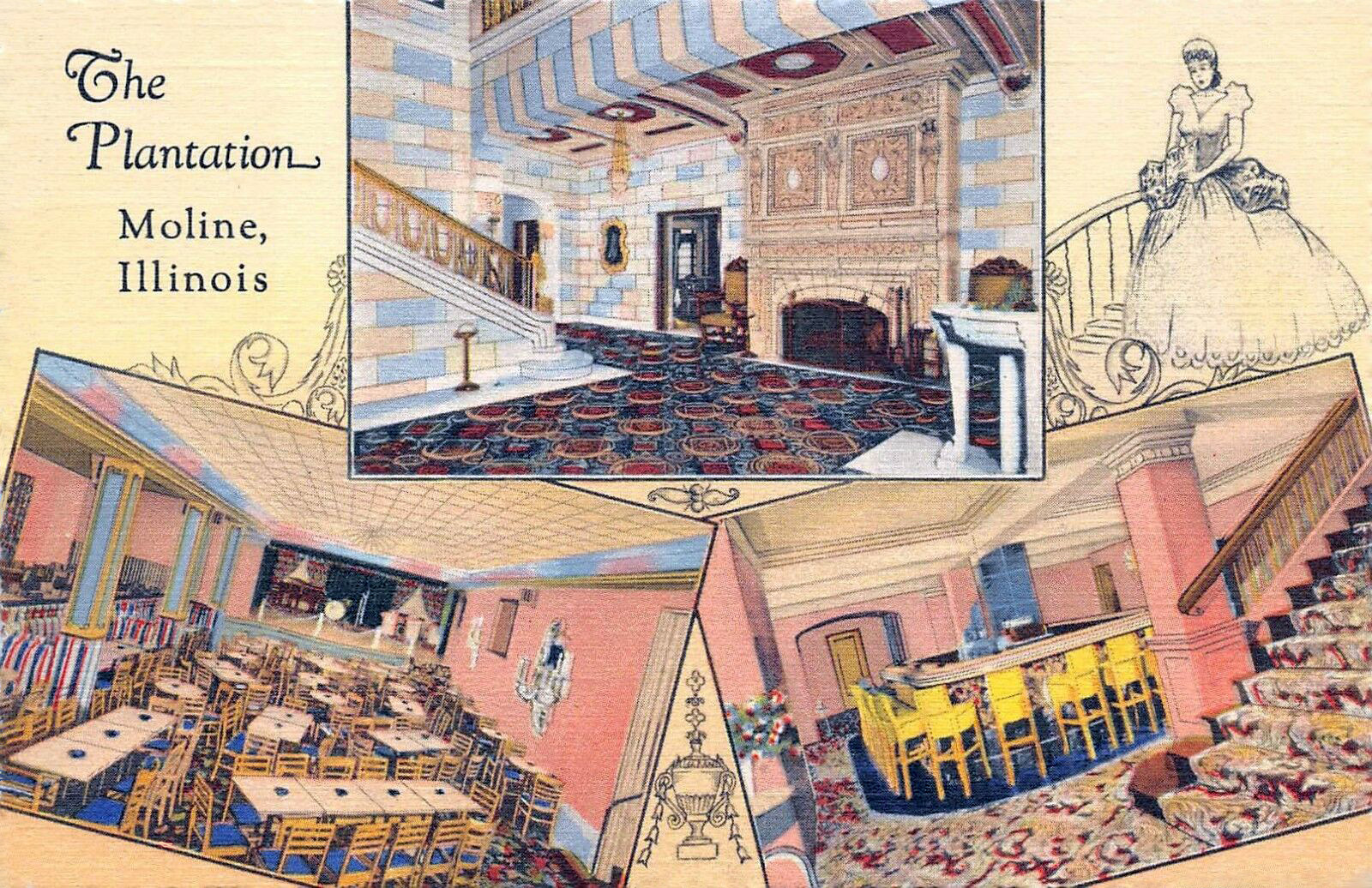
Reflections on a name: Plantation

Restaurant names such as Plantation, Old/Ole Plantation, and Southern Plantation leave me wondering why. Why adopt a name that references slavery and is offensive to a lot of people, particularly if they are Black?

Plantation names are similar to ones such as Sambo’s, Mammy’s Kitchen, or those with the initials KKK. Maybe not all who have chosen such names intended to insult anyone, but were unaware of their resonance. But, really, how much reflection does it take to realize that such names carry deeply negative historical associations?

Isn’t it just plain bad business to have an offensive name? Evidently the Disney company thought so. They tried hard to create a fictitious, slavery-free history of their Louisiana resort Dixie Landings by avoiding the name plantation. Eventually they shed “Dixie Landings” as well, becoming Port Orleans Riverside. Of course, white-washing history is controversial in its own right, but clearly Disney recognized that “plantation” held liabilities.

Ostensibly, restaurants named Plantation were meant to convey gracious Southern hospitality. But, again, the question is for whom? If your ancestors were enslaved and forced to do hard labor for white people who lived graciously off their profits, would you be charmed by this concept?

Although it might be assumed that most Plantation Restaurants were in the South, this is not the case. Since the early 20th century, and especially after World War II, they have appeared in Michigan, Wisconsin, California, Illinois, Ohio, New Jersey, Massachusetts, Colorado, Connecticut, and other northern, western, and midwestern states. In the 1920s and 1930s the Seattle WA environs were fertile ground for restaurants with racially offensive names. In addition to The Plantation, there was Mammy’s Shack, Henry the Watermelon King, Coon Chicken Inn, and Uncle Tom’s Cabin.

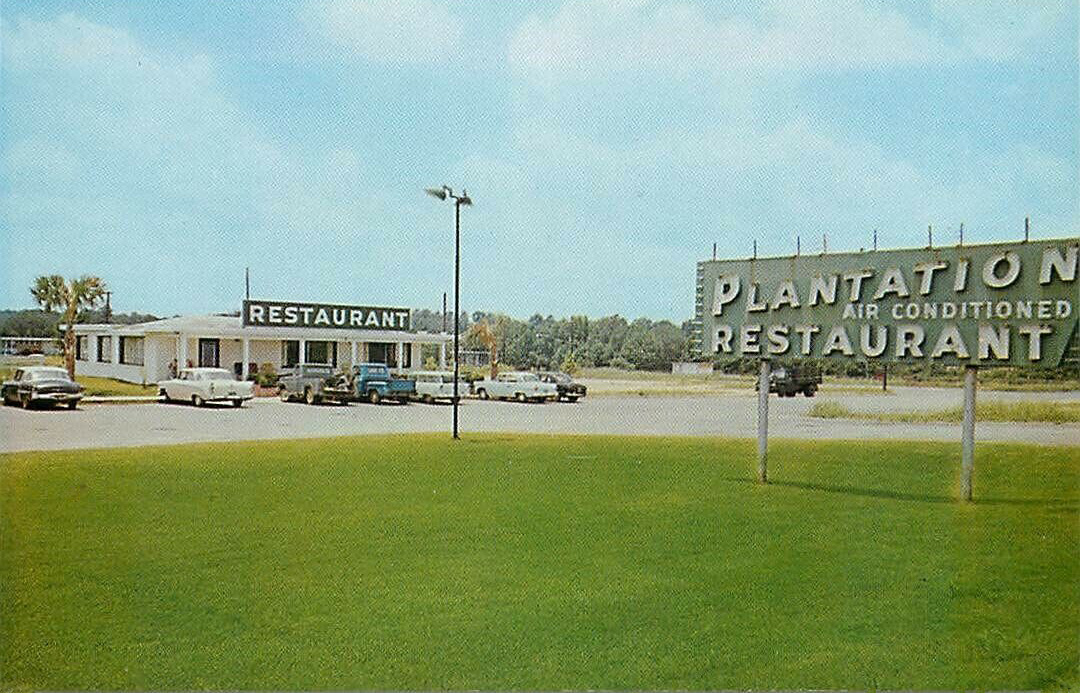
Why would anyone choose the name Plantation? Perhaps because they had access to a building that looked like a Southern manor house, so it seemed “natural’ to name it that. But then, how to explain restaurants that had no magnolias, no romance whatsoever and looked more like roadhouses than elegant mansions [above, Auburn IN].

Others added “columns” in a not-very-convincing attempt to mimic a plantation mansion.

And then there were the Plantation Restaurants that exhibited confused identities not expressive of their name with respect either to cuisine or ambiance. What were patrons to make of New York City’s Old Plantation on West 47th in the 1920s with its Mexican dishes? The Old Plantation Restaurant near Lawton OK served bratwurst and schnitzel in the 1960s. Nor is there anything about pancakes or a vaguely early American exterior that would seem to suggest the name Pancake Plantation. Equally odd, Charleston’s 1970s Plantation Restaurant was decorated with wagon wheel light fixtures and red tablecloths.

It seems more likely that the popularity of the name can be explained by large numbers of white people who actually loved the “moonlight and magnolias” aura that surrounds plantations. Many advertised for banquet trade, and may have wanted to attract wedding parties. Even today many white women reportedly associate plantations primarily with romance as portrayed in the film Gone With the Wind.

When – and if – proprietors were informed that quite a few Americans were offended by such a name, how would they respond? The answer is not on record. But having received many comments to this effect on other race-related posts, I can imagine many would reply: it was long ago, don’t be so negative, get over it.

There are still quite a few restaurants named Plantation in business today. I’d say it’s way past time to reject that as a name.

© Jan Whitaker, 2020

19 Comments

Filed under atmosphere, patrons, racism, restaurant issues, theme restaurants

Anatomy of a restaurateur: Woo Yee Sing

While looking for something else one day, I came upon Yee Sing [full name: Woo Yee Sing], a Chinese-American who ran a restaurant in Minneapolis in the late 19th century and early decades of the 20th. In 1902, he was interviewed by a reporter from the Minneapolis Journal in which he revealed an anti-racist perspective that was sadly uncommon among white America at the time.

Chinese restaurants were some of the very few spaces in the United States where the “races” mixed. The reporter observed that at the four Chinese restaurants in Minneapolis at that time a black patron “gets just as cordial a greeting from the proprietor as is accorded to a white man.” Woo asked, “And why shouldn’t they? They are men like you or me. They have got to eat and there must be some place for them to do so.” He looked around his restaurant, observing, “They are all brothers, and there is no room for race prejudice.”

The story made me want to know more about Woo Yee Sing.

He arrived in the United States in 1882, evidently just before the United States prohibited the immigration of Chinese laborers with the signing of the Chinese Exclusion Act. He was admitted – but scarcely welcomed. He reported years later that when Chinese came to America “their baggage is turned topsy turvy and probably stolen, they are locked up as if they were criminals and are sent back many times without any kind of a show.” It is likely he experienced something like this himself.

He established an import store in Minneapolis in 1882, and the Canton restaurant in 1883. A brother arrived in 1884 and joined the businesses, and they opened a couple of laundries. Woo cut off his long braid, joined a Protestant congregation, and embraced his new country. He set about to acquire citizenship, which proved not an easy process (although he said he was naturalized, he is identified as an Alien on U.S. censuses and was not allowed to take an oath of allegiance in 1898).

He evidently made quite a favorable impression on a number of people in Minneapolis. He was often quoted or interviewed in the newspaper and his minister defended him against those who physically assaulted him in 1890, saying he was “a thorough business man, a gentleman and a Christian, and one of the best members of my church. In my opinion he is better than 90 per cent of those [who] are so vindictively persecuting him.”

As the minister’s remarks reveal, Woo experienced hostility in Minneapolis. In 1892 Congress extended the Exclusion Act with the Geary Act which required Chinese to carry resident permits or be deported. Although Geary was supposed to apply only to laborers and not to merchants, in practice it became necessary for all Chinese to carry permits or risk deportation — based on the widely accepted belief that it was impossible to tell one Chinese person from another.

The Canton restaurant was picketed by the cooks’ union in 1902, which asked union members to boycott it and other Chinese restaurants in Minneapolis. The union charged that Woo and the others underpaid their Chinese cooks and this made it impossible for white-owned restaurants to compete with equally low prices. Woo responded that he paid his cook well. He rejected the union’s claim that powerful Chinese in San Francisco furnished money for others to open Chinese restaurants all over the country, calling this “the old California cry [i.e., propaganda].” Note that a Chinese cook could not join a union, nor be paid at the same rate as others when cooking in a white restaurant.

The head of the cooks’ union disliked hearing Woo claim that he was a citizen. During the boycott he complained to a reporter, “It is silly to hear him talking of being a naturalized American citizen. All know why a Chinaman gets naturalized – not for love of the country, but for the lust of gold.”

Woo and his brother did not let discrimination keep them from progressing. In 1905 they opened a new restaurant named Yuen-Faung-Low Chop Suey House [see 1916 advertisement above], but popularly known as “John’s Place.” It was damaged by a bomb in 1909, but reopened. In 1916, the restaurant advertised the addition of a second-floor tea room “for ladies” that catered to “a strictly high-class clientele.”

Woo Yee Sing died in 1925. His funeral, attended by 700 people, was accompanied by a 25-piece band playing a Chopin funeral march. He left an estate valued at $41,200, and his was said to be the first “Chinese” will filed in Hennepin County probate court. Woo Yee Sing’s brother Woo Du Sing continued to operate John’s Place, and opened another, The Sea Food Grill, in the early 1930s.

© Jan Whitaker, 2019

For more about the Woo family and photos of Yee Sing and the Yuen-Faung-Low restaurant, see the article about his socially prominent wife in Minnesota History. Some of the dates in that story are discrepant with those I found.


8 Comments

Filed under ethnic restaurants, proprietors & careers, racism