Category Archives: food

Deep fried

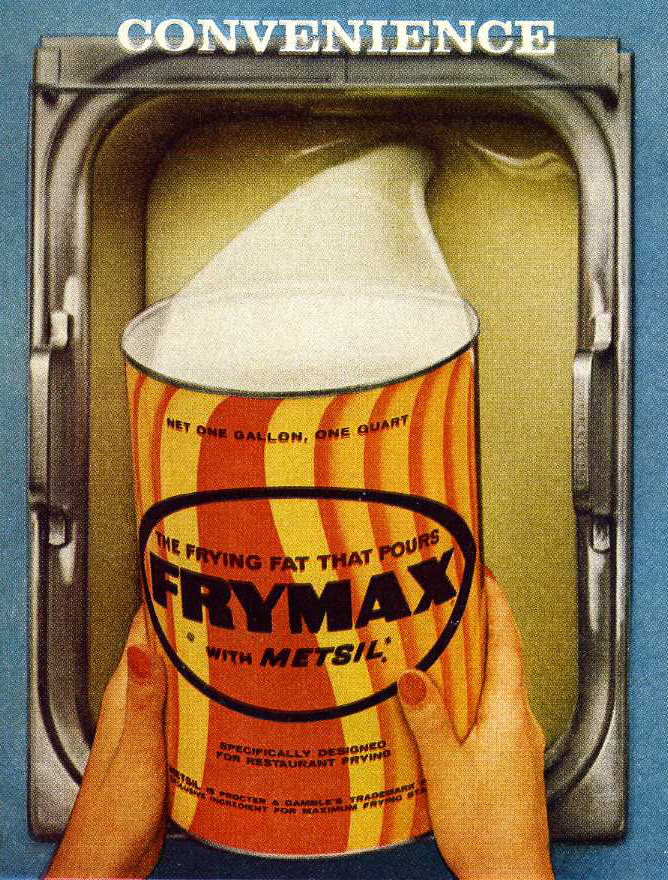
deepfriedfrymax1961As I read the morning newspaper a sentence by the head of a local restaurant dynasty caught my attention. “We all have fryolator oil running through our blood veins,” he said.

The speaker was Andrew Yee. His family enterprise includes a newly acquired retro diner, several popular bars & grills, a sushi restaurant, and a venerable Polynesian showplace, the Hu Ke Lau, begun by his father in the mid-1960s.

I was delighted to find the quotation because I was in the midst of researching deep-fried food in American restaurant history. Also because it is rare that topics such as cooking oil come up in reviews and discussions of restaurants. Yet nearly every restaurant kitchen contains a bubbling vat of it.

And always has.

deepfried1941PrimexADV

Think about how often you have been enveloped in a miasma of aged cooking oil fumes while passing a restaurant’s outdoor ventilating fan. In 1978 restaurant reviewer Phyllis Richman visited a regional restaurant expo filled with demonstrations of deep frying; she subtitled her Washington Post story “The smell.” Her experience was nothing new. In 1887 neighbors complained about the odor coming from a Cleveland OH “French fried cake baker” using cottonseed oil, which had recently come on the market as a replacement for high-priced lard.

Not that lard fumes would have smelled much better. In 1849 a journalist’s plan to survey the flourishing “eating houses” of lower Manhattan was cut short by the overpowering “smell of fried grease before we got through the first street.” Not surprising when you consider that fried oysters were a top menu attraction and had been for at least a century, probably longer.

The number of deep-fried foods eaten in the 19th century was extensive, including oysters, doughnuts, fish and fish balls, clams, potatoes, all kinds of fritters, “corn dodgers,” brains, chicken, and even parsley.

Deep fat frying in the home in the 1800s was frequent, as far as I can tell. But that changed as kitchens were transformed from rough workrooms to adjunct living areas. For some time now the restaurant industry has benefited from the fact that most home cooks dislike deep frying in their own kitchens and would rather have restaurants prepare their French fries and onion rings.

deepfried1929BostonWhen the Pitco Frialator was invented in 1918 it quickly became standard equipment in restaurant kitchens because it extended the life of cooking oil, reducing costs and improving food quality. Oils were developed that would not break down under high temperatures. Then frying kettles came out with built-in thermostats adjusted to type of food.
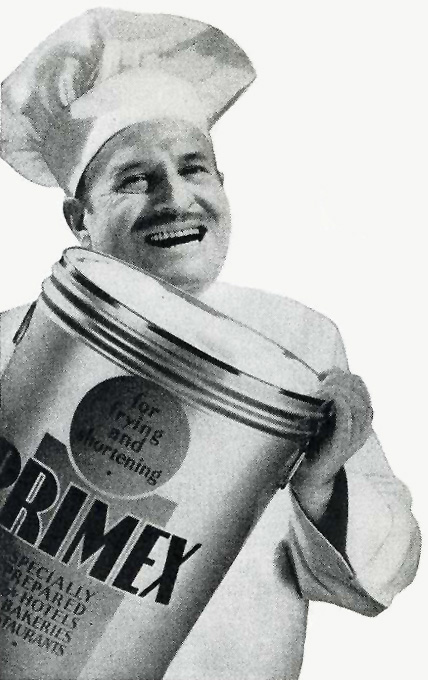
deepfriedprimex1938Profits from the value added to inexpensive foods by deep frying in the 1930s were a boon to  struggling restaurants. A 1938 article in The American Restaurant, a trade magazine, estimated that many deep-fried dishes – among them sole, potatoes, oysters, and croquettes – could be priced at four or five times their cost. A restaurant in Duluth MN, The Flame, boasted in an advertisement (to the trade, not the public!) that it had built an “enviable reputation” for fried food through using “tons and tons of Primex.”

deepfriedmelvoshortening1968The successful marketing of frozen foods in the 1960s expanded restaurants’ deep-fried selections. Breaded, frozen French-fried shrimp became a top seller. Once only available in Gulf Coast restaurants, by 1960 shrimp appeared on restaurant menus all over the U.S. In 1969 a Gallup Survey rated it America’s favorite deep-fried food in the fish category; in 1973 it ranked #1 among all deep-fried foods.

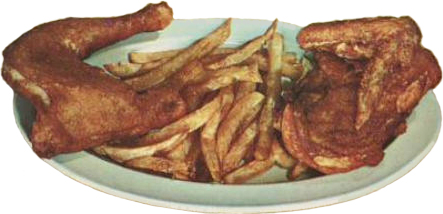
deepfriedchicken&potatoes1968Deep-fried chicken ranked third favorite, after shrimp and potatoes, to the disappointment of fans of pan-fried chicken, which was becoming a rarity in restaurants in the 1960s.

Drive-in restaurants relied heavily on deep frying. According to a 1961 Drive-In Magazine, “There was a time not long ago when a deep fat fryer and a neon sign were practically all you needed to put yourself in the drive-in business.” But competition was becoming fierce as fast food chains challenged drive-ins’ popularity with young diners, the customers most attracted to deep-fried food and least afraid of its dietary consequences.

Despite the profitability of deep-fried food, two perils faced restaurants: dark breading and sogginess. Both were due to incorrect frying temperatures, and frying kettles and oil that had not been maintained properly. Customers had a strong preference for fried food that was “golden brown,” but not too dark or hardened into a shell. As an article about “lethal” truck stop fare put it: “You strike a chicken leg and the crust falls away in a curved sheet to disclose a sight best forgotten.” The problem of greasy, limp French fries was cited by Gallup as customers’ second biggest complaint.

deepfriedappetizersFroggy'sCafe1980

But neither darkness, greasiness, nor calories dampened the popularity of deep-fried food. Deep-fried appetizers dominated menus of 1980s chain restaurants designed to appeal to a young adult demographic. At West Coast Froggy’s Cafés (specializing in “food and fun” – and fat) seven out of eight appetizers on a 1980 menu came out of the frialator.

It’s likely we all have oil in our veins.

© Jan Whitaker, 2016
9 Comments

Filed under food

When coffee was king

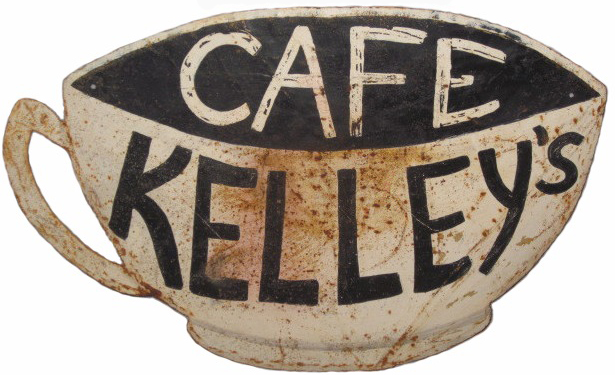
coffeeSignkelly'scafeFor decades coffee was the beverage most restaurant patrons drank with their meals.

In the Colonial era, though, coffee may have been more of an occasional beverage. Coffee houses were popular gathering spots for business men in the Colonial era and in the early Republic but there is no way of knowing how often coffee accompanied meals in those times. Many coffee houses advertised that it was available all day long, but it’s likely it was outsold by alcoholic drinks.

Then coffee began to gain greater importance as the temperance movement developed in the 1830s. A restaurant owner in Providence RI was an early convert to the role of coffee in reforming heavy-drinking Americans. A religious magazine hailed him for his decision to replace liquor with coffee, stating “If a man must, from habit, drink at 11 o’clock, let him drink ‘Hot Coffee’ and patronize Mr. Dinneford.” In those days 11:00 a.m. was the traditional time for a ‘dram.’

So almost from the beginning coffee was associated with a sober, alert, and morally superior approach to life.

CoffeeTrentonNJdiner

From the mid-19th century into the 1890s most inexpensive restaurants charged 5 cents for a cup, though it might cost a couple of cents more or less. Move up a step to a higher grade eating place, such as Mouquin’s, a popular French table d’hôte in New York City, and a cup would cost 10 cents. Luxury restaurants of the 1890s, such as Delmonico’s, were likely to charge 25 cents for coffee, a sum that would buy a whole dinner in a common lunch room.

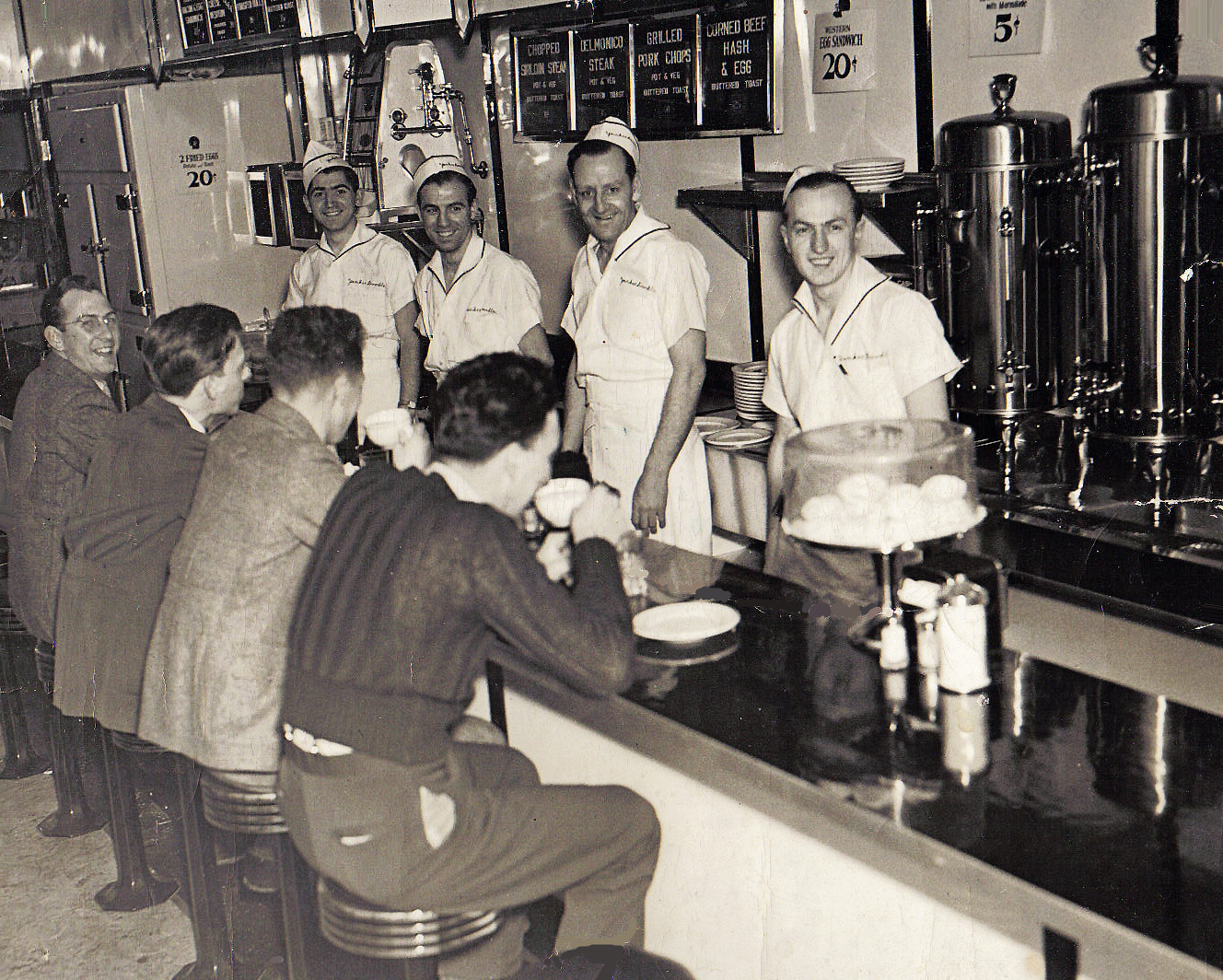
The importance of coffee to restaurants grew in the 20th century, especially at popular-priced eateries where the price of a cup remained 5 cents. By the early 1920s, the amount of coffee imported into the U.S. had more than tripled since 1880. At “quick lunch” places, individual table & chair combos that looked like school desks were designed with a hole in the top to hold the all-important coffee mug. Already by 1904, some horse-drawn lunch wagons provided cardboard containers for coffee orders to go.

coffeewithmealRestaurant proprietors and customers alike agreed that “coffee makes the restaurant” and that you could tell a good restaurant by its coffee. Even when sold at a low price it was profitable, especially at lunch counters where service costs were low. Most diners ordered coffee with their meals in the 1920s, even at the ritzy Waldorf Astoria. No one, it seemed, cared that famous French chef Auguste Escoffier had laid down the rule, “Never serve coffee except at the end of the meal.”

In the 1930s and 1940s, a nickel a cup didn’t seem enough to many restaurateurs who raised their prices to 10 cents. Those that did not had reason to regret it in 1944 when the war caused the federal government to order that restaurants not charge more for coffee that they had in October 1942. For most places this meant 10 cents, but chains such as the Automat, Bickford’s, Thompson’s, B&G Sandwich Shops, and the Waldorf System were stuck with nickel-a-cup until late in 1950.

Prices continued to tick upwards after that. By the mid-1970s 25 cents a cup was standard in the average restaurant. (Even then, there were customers who bristled at paying more than 5 cents!) Often restaurants softened the blow of price increases by offering free refills to those ordering full meals. Still prices rose, and even chains such as Wendy’s raised their price to 30 cents while Friendly’s went up to 35 cents in 1977. Ten years later, one dollar a cup was commonplace.

coffeeCory1960In the 1970s and 1980s, higher priced coffee beans, along with fast food chain competition, and the rise of soft drinks with meals reduced the popularity of coffee and dealt a blow to coffee shop restaurants. Coffee shops had been the fifth most popular type of eating place according to a 1976 National Restaurant Association survey, but by the mid 1980s they were slipping badly. Philip Langdon, author of a book on chain restaurants titled Orange Roofs and Golden Arches, observed that many coffee shops had restyled themselves as “family restaurants” in an attempt to draw the dinner crowd.

Around the same time a series of SCTV comedy sketches made fun of the mythical polka-loving residents of Leutonia and their fondness for “cabbage rolls and coffee,” marking a new attitude to coffee with lunch or dinner that branded it as the choice of unhip elderly diners.

Coffee retains its popularity as a stand-alone beverage today, but less as an accompaniment to meals. Gone are the days when Maxwell House coffee and Cory coffeemakers reigned – when 90% of restaurant customers ordered coffee with their meals (1935) – and when the trio “Cleanliness, Comfort, Coffee” were enough to assure a restaurant of success (1955).

© Jan Whitaker, 2016

14 Comments

Filed under food

Farm to table

farmtotableWashingtonMarket

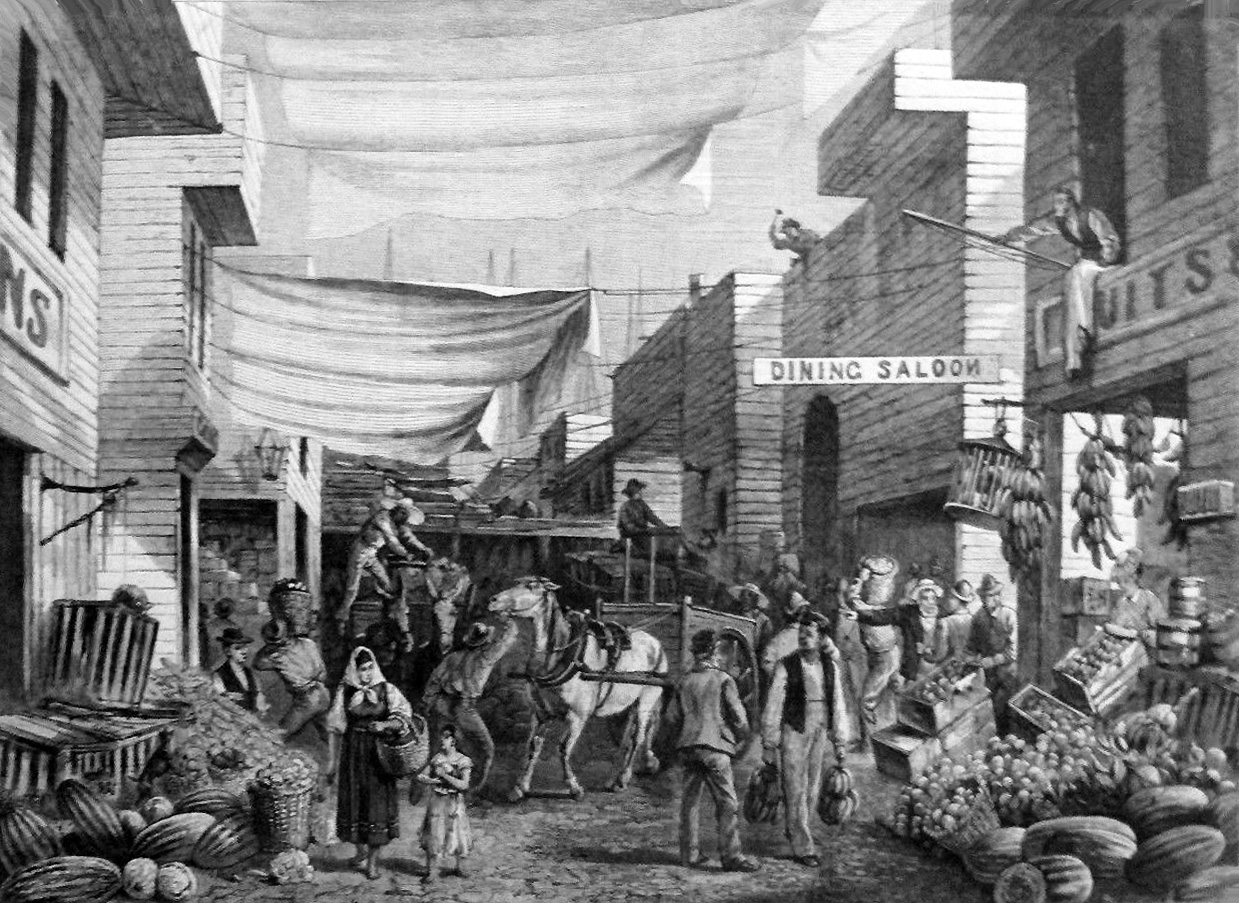
We might imagine that in the past the food served in restaurants was grown or raised fairly close to where it was consumed, perhaps that it came from farm to table without delay. Undoubtedly this was true in much of the 19th century when sellers brought their produce as well as live animals to city markets. [NYC’s Washington Market above, ca. 1850s]

Also, some 19th-century restaurants obtained fresh foods directly from farmers and hunters. A Detroit proprietor solicited suppliers with an advertisement in 1861 that said, “Farmers, hunters and others with game of any kind will please call upon William Carson, Carson’s Dining Saloon.”

Yet people living in cities still longed for food grown and raised in front of their eyes. They loved vacationing at country resorts that grew their own food. In 1858, for example, a typical notice appeared in a Baltimore paper about The Seven Fountains in the Blue Ridge Mountains where “The Table is abundantly supplied with Vegetables, Butter and Milk fresh from our own Farm and Dairy.”

Dairy products were perhaps the least satisfactory foods for city dwellers who did not keep their own cows, mainly because of the threat of sick cows kept penned up in cities and fed with swill. Milk that arrived from afar also presented dangers since there was always a good chance it might not be fresh.

Dissatisfaction with the milk supply opened up opportunities for dairies near cities. In the 1870s some began to operate urban “dairy lunch” rooms which became quite popular in the following decades. Washington, D.C., was full of them. One near the Treasury building adopted a decorating scheme with hanging baskets of plants, cages of canaries, and papier mâché cow heads. In Boston, the new Oak Grove Farm café seemed almost too good to be true. A reporter admitted he thought at first it was “a con.” But the café was indeed supplied by an 800-acre farm with 150 cows, as well as hothouses where lettuce and tomatoes were grown.

farmtotableChildsBaltimore

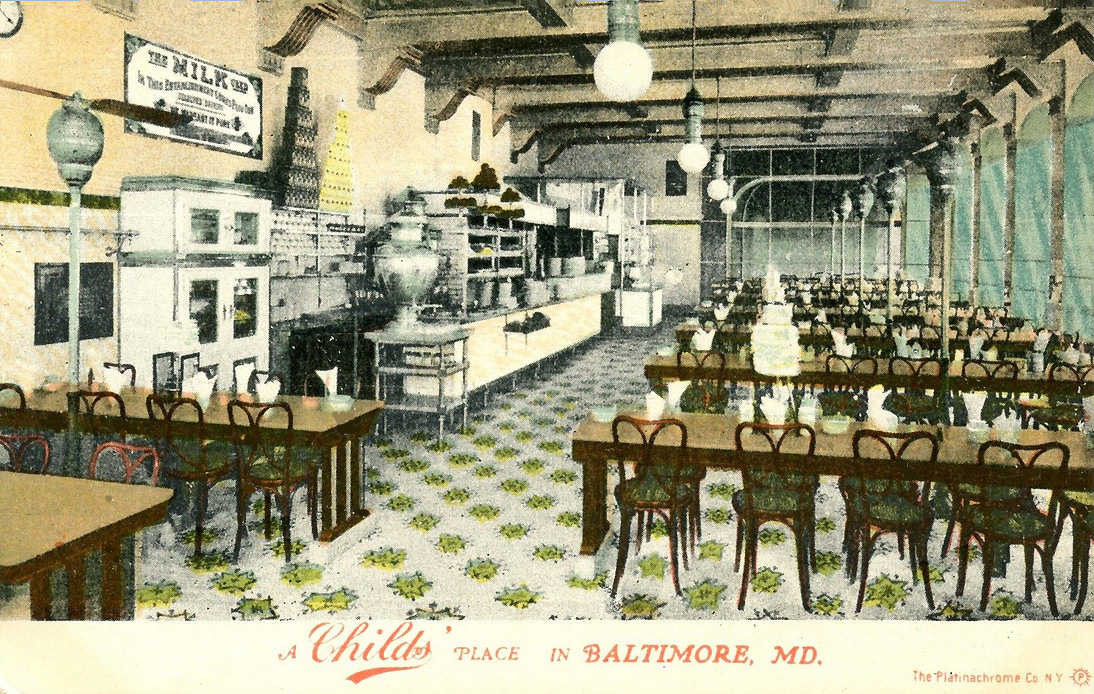
Childs, the first sizable chain of restaurants in the US, built its reputation on its dairy farms in New Jersey. Started by six farm-raised brothers in 1889, three ran the lunch rooms while the other three managed the chain’s dairies and truck farms.

In the late 19th-century some Americans balked at the modern food system altogether. Food traveled great distances by rail, much of it ending up parked for indefinite periods in cold storage warehouses. In them it suffered from fluctuating temperatures that damaged taste and texture, as well as sometimes causing the growth of bacteria. A prominent NYC physician declared that when he ordered game in a restaurant, “I make the waiter interview the chef to make sure that no cold storage game will be sent to fill my order.”

As the century turned, people were paying more attention to where their food came from. Due to the growth of the meat packing industry, factory production of butter and cheese, improved transportation, and cold storage facilities, traditional farm industries had largely disappeared. Despite seemingly positive pronouncements such as, “It is to the modern methods for the preservation of foodstuffs that we owe in great measure the lengthy bills of fare provided by our hotels and restaurants,” many people felt food had lost something. Some had come to fear it.

The Pure Food and Drug Act of 1906 addressed impurities in food, but critics wanted more. A few years later efforts were mobilized to subject cold storage warehouses to periodic inspections, to label all food with the date it arrived, and to set limits on how long food could be stored. Foreshadowing the “Truth in Menu” laws of the 1970s, which wanted to bar restaurants from claiming that frozen food was fresh, some laws demanded that restaurants inform patrons if food had come from cold storage.

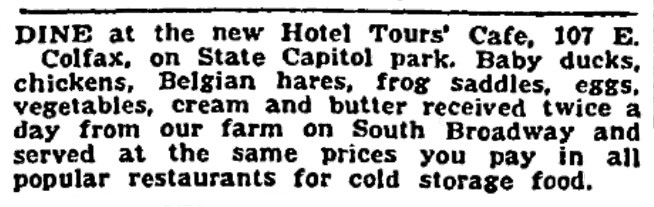
farmtotableAug1911DenverIn this context restaurants supplied by their own farms proudly proclaimed that fact. A restaurant operator in Harrisburg PA who used home-grown food hit upon a novel slogan: “Farm to face.” In Denver a café advertised that its farm food cost no more than food that had been stored. In NYC the Craftsman restaurant promised that patrons would enjoy “all the wholesome products people crave in a city” delivered daily from their farm.

During World War I, eating places linked to farms served all social classes — from the quick lunch in Flint MI that promised lower prices by “cutting out the middle man” to fashionably smart tea rooms such as “At the Sign of the Golden Bull” in Boston. Its tea room, grill room, and affiliated Deerfoot Farm store were designed by Tiffany Studios, and outfitted with Grueby tiles, Flemish oak tables, and leather benches.

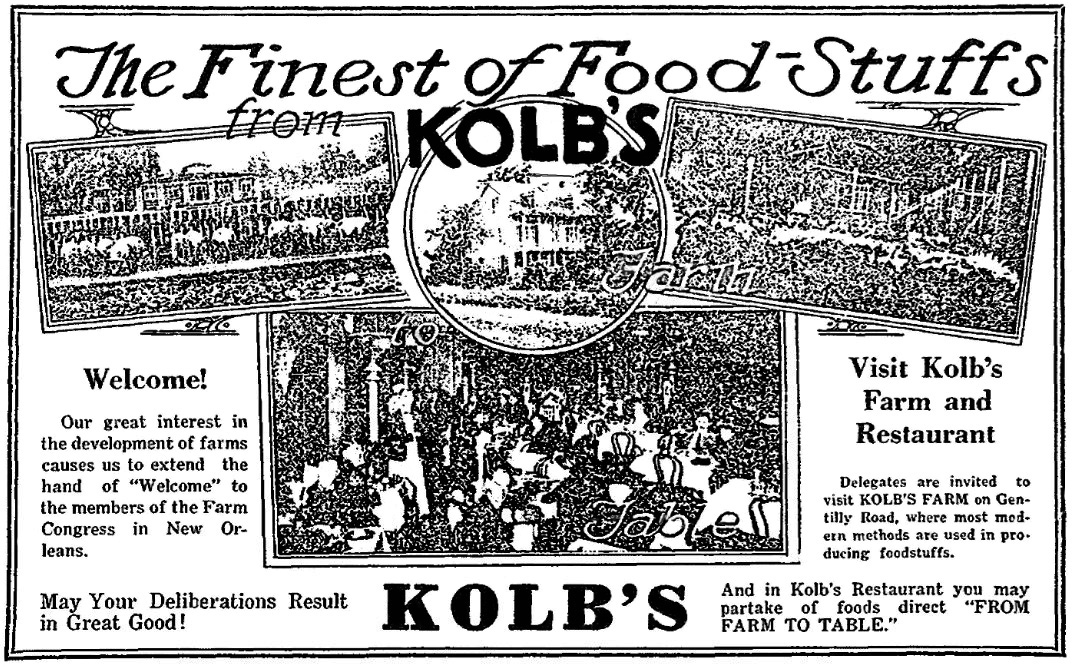
FarmtoTableKolb'sSept111921Starting around 1915 and lasting into the early 1920s, a US Post Office-backed “Farm to Table” movement encouraged consumers to have farmers ship them fresh food via parcel post. Its goals were to lower food costs while aiding farmers. In November of 1919, the B. F. Goodrich company supported a Farm to Table week in which consumers were to drive to rural areas to buy provisions from farmers. At least one restaurant which ran a farm, Kolb’s in New Orleans, adopted the slogan. In the late 1920s the Miami FL chamber of commerce encouraged restaurants to buy local, arguing that it was not only healthy to serve more fruits and vegetables but good for farmers and the Dade County economy.

Although there continued to be some restaurants that grew their own food throughout the US, the movement petered out in the Depression. A 1932 correspondence course for those interested in opening a rural inn warned that growing one’s own food or buying it in the country did not pay. Instead, it advised, it was best to buy groceries, meats, and dairy products from city wholesale dealers. Greater status was attached to having foods available year round. According to Susanne Freidberg’s book Fresh: A Perishable History, in the 1930s the Schrafft’s chain listed how many miles the food they used traveled. Freidberg writes that “the makings of a vegetable salad together racked up 22,250 miles,” demonstrating “technology’s conquest of borders, distance, and seasons.”

After the Second World War, industrial food production grew rapidly as did the restaurant industry which turned increasingly to convenience food products made specifically for commercial and institutional meal service. By the 1960s frozen foods included pre-prepared heat-and-serve entrees.

farmtotablefarmhouserestaurantBanningCA

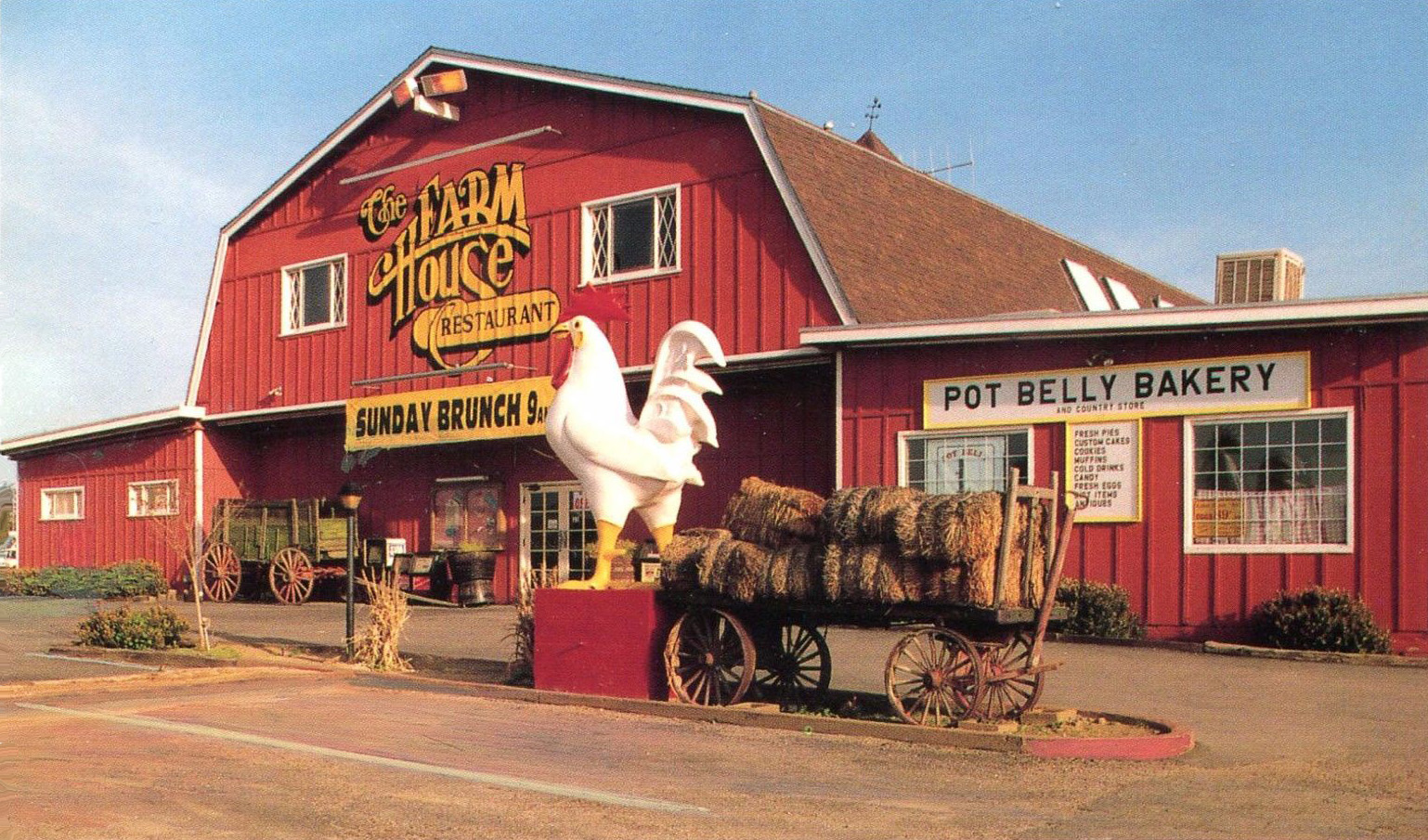
In the 1970s convenience foods became controversial as their use spread. The decade saw the advance of farm-themed restaurants using convenience foods, on the one hand, and, on the other, a growing number of restaurants and consumers rejecting factory food. In 1973 architecture critic Ada Louise Huxtable expressed displeasure with “the unfulfilled promise [of] the American way of life,” one symptom of which was “the oversize restaurant menu suggesting farm-fresh succulence and delivering precooked food .” Meanwhile, even as farm-theme restaurants hung farm implements on their walls of recycled barn siding, Alice Waters at Chez Panisse and other California restaurateurs were buying produce from local farmers, leading a movement that would burgeon in the 1980s and continue into the 21st  century.

© Jan Whitaker, 2016

6 Comments
Filed under food

Cooking up Thanksgiving

pumpkinpieturkey20thcentury

The history of Thanksgiving is much more interesting than the mythical Pilgrims and Indians tale we all learned in grade school, even though restaurants actually have played only a small part.

For much of the 19th century Thanksgiving was considered a predominantly Yankee holiday, which to Southerners implied domination by the North, particularly when Abraham Lincoln declared Thanksgiving a national holiday in 1863 to honor the Union victory at Gettysburg.

Previously, Thanksgiving holidays were proclaimed by governors, who also set the date each year. In 1815, however, President James Madison declared a Thanksgiving Day to celebrate peace with England. Still, it retained strong association with New England and a Thanksgiving dinner in Philadelphia that year was composed of New Englanders “got up in Yankee style, and finished with a compliment of Yankee toasts and hymns.” In 1821 a state outside New England, New York, officially recognized the holiday.

Thanksgiving spread slowly in the 1820s and 1830s. By 1839 the holiday was celebrated in Connecticut, Maine, Massachusetts, Michigan, New Jersey, New York, and Rhode Island. Homecoming was a popular theme, especially in Massachusetts where abandonment of rocky farms was a growing trend. By 1858 it was reported that in New York City alone at least 10,000 New Englanders had returned home for Thanksgiving.

pumpkinpieDave'stableThe holiday spread faster in the 1840s and 1850s. The New York Times reported that by 1859 all the Eastern and middle Atlantic states, and the Western territories, plus five Southern states celebrated Thanksgiving.

But the spread was uneven. Although the governor of Missouri proclaimed a day of Thanksgiving in 1843, it was observed only seven times over the next 20 years, and many citizens of that state knew nothing of Thanksgiving until after the Civil War, despite President Abraham Lincoln’s 1863 proclamation declaring Thanksgiving a national holiday to occur on the last Thursday in November.

So, although by 1890 Thanksgiving was officially recognized by 42 of 44 states and territories then part of the United States, it is unlikely that people of all regions, social classes, and religions celebrated it to an equal degree.

According to historian Elizabeth Pleck (“The Making of the Domestic Occasion: The History of Thanksgiving in the United States,” Journal of Social History, Summer 1999), many working class men regarded Thanksgiving as a holiday like any other, that is, a time to drink, parade noisily through the streets, and demand treats from the gentry. In 1859 the board of aldermen of the District of Columbia refused to set a date for Thanksgiving because it had become an occasion for widespread lawbreaking. In the late 19th century the rowdiness tradition was channeled into Thanksgiving Day football matches. In the West, Pleck writes, Thanksgiving dinner tended to be  simple and the day largely devoted to hunting.

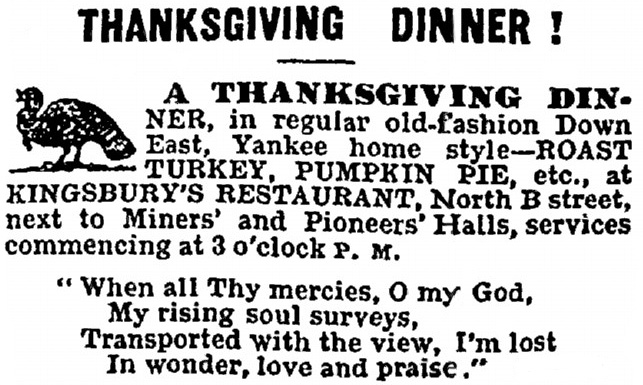
pumpkinpie1874VirginiaCityNVNor was it a big restaurant day in the 19th century, though I have found a few advertisements for Thanksgiving dinner in the 1850s, and more after Lincoln’s proclamation [above, menu from Virginia City NV restaurant, 1874]. Restaurants also supplied cooked food to homes and catered philanthropic dinners for the needy. Edmund Hill, a New Jersey restaurateur and caterer, wrote in his diary: Thanksgiving, Thursday 30. 1882: Busy sending out orders all the morning. – Closed store at noon. Dinner at two. Mother improving, for which we give thanks. – We furnished a newsboys’ dinner – fifty at the reading rooms. The Trenton Times paid for it. Lots of fun.”

Pleck suspects that “Thanksgiving celebration was most common among the middle and upper classes in New England and the middle-Atlantic states, and among Protestants.” The job of integrating everybody else was a task for late-19th-and-early-20th-century patriotic societies, public schools, and popular magazines. Immigrants were subtly encouraged to see themselves as modern-day Pilgrims being welcomed by the natives. The strategy worked.

© Jan Whitaker, 2015

Leave a comment

Filed under food, miscellaneous

Little things: butter pats

butterpat921

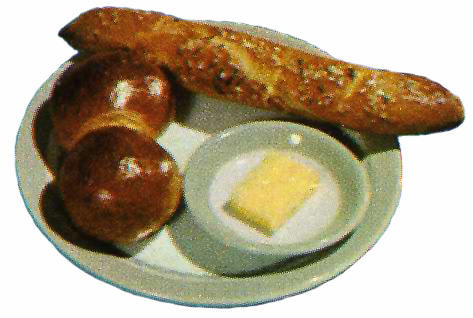
There are many ways to handle butter service in restaurants. Toast may be buttered in the kitchen, doing away with the establishment’s need to decide among curls, balls, rosettes, wrapped servings, pats or, whipped butter put in tiny ramekins. Alternatively, olive oil may take the place of butter on the table.

butterpat923Over the decades butter has given restaurant managers plenty of headaches, whether due to its cost, its scarcity, and/or complaints from patrons that they didn’t get enough. Not to mention that it melts when it gets warm and turns hard when it’s cold.

What form butter usually took when diners received it in the 19th century is not clear, maybe in lumps, possibly piled in a communal bowl on each table, a habit that customers would reject in the 20th century.

Bread and butter was viewed as a necessary complement to a meal in the early 1800s, and it often served as an entire meal for those with little to spend. Some restaurants charged separately for bread and butter, while in others it came along with a regular meat or fish order. A good restaurant or tavern might have fresh butter, but others did not. Even if they struck it rich, the early California gold diggers had to wait for Eastern butter to travel around Cape Horn before it reached San Francisco in poor shape. But soon California had dairies that supplied fresh butter, as an 1856 advertisement boasted, “From this date we shall use none other than California Butter, fresh from the best Petaluma Ranches, daily.”

Melting butter became a problem in the summer. The sickening description of “butter the consistency of salad-oil, dotted with struggling flies” can only inspire pity for summertime patrons of Chicago restaurants in the 1880s. To prevent melting, restaurants often placed butter pats upon chipped ice, making it a bit difficult for patrons to butter their bread, but still clearly preferable to the alternative.

butterpat1915HotelMonthlyAlbertPickButter making was rapidly becoming industrialized in the late 19th century, at which time inventors began working on butter cutters that would produce neatly cut chips for use in restaurants and hotel dining rooms. Although many eating places bought butter pre-cut into pats and stamped with their logo by a large dairy, others used mechanical cutters that permitted them to buy butter in bulk and cut it themselves, “untouched by human hands.” All-new-improved models came on the market in the early 20th century, such as the American Butter Dispenser that held 9 pounds capable of being turned into “clean, firm, equal” butter pats in only 2½ minutes. Another feature was that the machine could produce from 28 to 54 pats per pound, permitting a restaurant to economize on butter as needed.

butterpat926

The size of butter pats varied with national conditions and other pressures. During World War I the Food Administration advised serving no more than ½ oz. per person (actually a generous serving). After the war the dairy lobby in Minnesota tried and failed to push through legislation that would have boosted the standard restaurant serving to 2 oz. Butter pats grew slim once again due to shortages during World War II, and some restaurants began charging extra for butter as its cost rose. Customers complained bitterly.

Perhaps the most curious complaint about butter was that of a patron at a Denny’s restaurant in the 1970s. When served toast with a cold, right-from-the-refrigerator butter pat on top – rather than melted butter as advertised on the menu — Malcolm Douglas Stroud deducted 25 cents from his check. A Denny’s employee made a citizen’s arrest; Stroud countered with a suit for malicious prosecution and was awarded $10,600 in damages by an Oregon court.

© Jan Whitaker, 2015

5 Comments

Filed under food, restaurant customs

Famous in its day: Fera’s

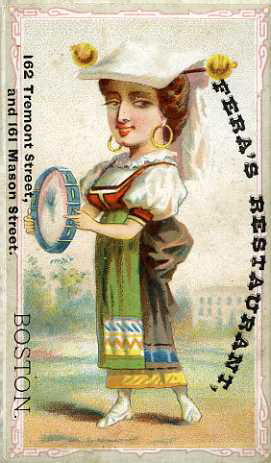
fera'sfrontIn the second half of the 19th century wealthy families patronized Fera’s Confectionery and Restaurant in Boston, which had earned a reputation for high quality pastries and candies throughout the East. The business was established ca. 1855 in the basement of the Temple Club on West Street, and after 1876 was located on Tremont across from the Common and near the Boston Theatre. [The trade card shown front and back in this post is probably from the 1880s.]

At Fera’s, patrons could enjoy dainty luncheons or after-theater suppers or could arrange to have the firm cater their next dinner party, complete with table ornaments. Women shoppers might stop there for lunch or bon bons after a visit to the shopping district where, in 1866 for instance, they could consult a clairvoyant or pick up such things as freckle lotion, a new perfume from Mexico called Opoponax, potted meat, or library slippers. Fera’s was especially popular with female patrons, as was always the case with confectioneries in the days when many other kinds of restaurants were considered off-limits to respectable women. [see 1866 advertisement below]

fera's1866

Respectability in eating places was not easily achieved then and it’s surprising that Fera’s was able to rescue its reputation from a scandal it was caught up in not long after opening. It was constantly in the newspapers in 1857 because of a sensational divorce case in which a husband alleged that his wife had committed an “adulterous act” in Fera’s. Although the defendant’s lawyer argued that no such occurrence took place since the restaurant was “a wide hall” that was “open all the way through” (i.e., not divided into small private rooms or boxes), the divorce was granted, branding the defendant as an adulteress and leaving in doubt what had occurred where.

Somehow Fera’s survived the scandal, as well as George Fera’s own marital breakup, fires, robberies, changes of address, and a couple of bankruptcies.

At the Tremont address Fera’s was divided into two sections with the restaurant occupying space behind the confectionery and separated by an arched doorway. After redecorating in 1887, the restaurant was painted in cream and gold, with lower walls in marble and upper walls hung with large mirrors. Electric lights were installed, producing a  bright and glittering style that emulated a Paris café.

fera'sback

Like many Europeans in the culinary trades who came to this country, George Fera had traveled a prestigious career path before arriving on U.S. soil in his early 20s. Born in Lübeck, Germany, he compressed a lifetime into a few years. Starting out at a young age he had trained in confectionery in Paris, succeeding so well that he was appointed confectioner to the Czar of Russia in St. Petersburg, where he remained for a number of years. Upon his arrival in the United States, he went to work at a New Orleans hotel, moving from there to New York City where he was employed by the famed confectioner Henry Maillard. He was said to have made for Maillard’s the first caramels produced in this country.

George Fera retired around 1890 and his two sons, who had been working with him for years, took over. In 1892 Fera’s closed and the furnishings and equipment were auctioned, including in part: “30 marble-top saloon tables, 75 bentwood chairs, 5 nickel plated show cases, one show case with deck, one square [show case] with fancy chocolates, two large mirrors, candy jars, 50 doz. wine, cordial and hot water glasses, decanters, Eper[g]nes punch bowl, triple plated spoons, knives and forks, plated castors, water pitchers and cold water urn, 600 decorated French china plates, platters, compotes, pitchers, cups and saucers, &c., Jap. plates, fine lot candies, French wedding cake ornaments, fruits and marmalades in jars, costume crackers, candy machines, bon bons, ice cream apparatus, &c.”

© Jan Whitaker, 2008, revised 2015

Leave a comment

Filed under confectionery restaurants, food, history, proprietors & careers

Why the parsley garnish?

parsleyNchicken

Nothing decorated more restaurant plates in the 20th century than parsley, most of it by all accounts uneaten.

Why use so much of what nobody wanted? The best answer I can come up with is that parsley sprigs were there to fill empty spaces on the plate and to add color to dull looking food.

Parsley was not the only garnish around, but it has probably been the most heavily used over time. It has shared the role of plate greenery with lettuce, especially after WWII when lettuce become readily available, and to a lesser extent with watercress.

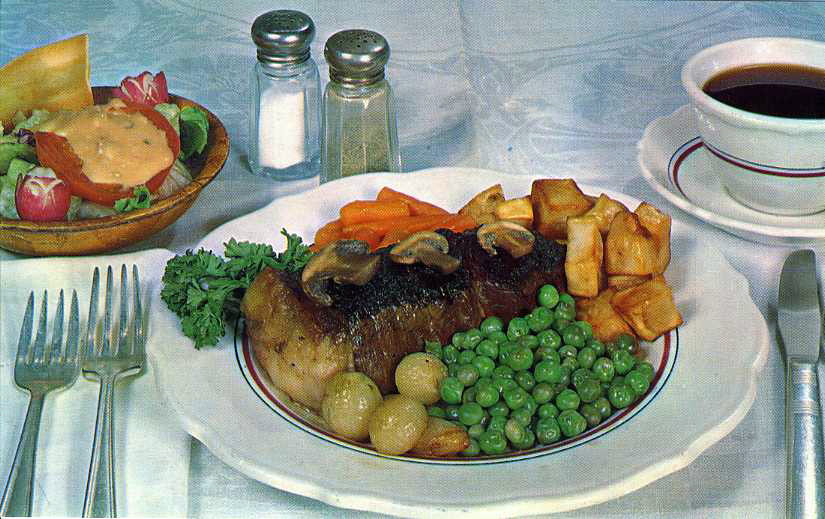
Parsley has long been a favorite in butcher shops where it is tucked around steaks and roasts. As early as 1886 restaurants were advised to emulate butchers and decorate food in their show windows with “a big, red porterhouse steak, with an edge of snow-white fat, laid in the center of a wreath of green parsley.” By the early 20th century, almost the entire U.S. parsley crop, more than half of which was grown in Louisiana and New York, went to restaurants and butchers. By 1915 parsley sprigs were a ubiquitous restaurant garnish that many regarded as a nuisance. Diners sometimes suspected that the parsley on their plate had been recycled from a previous customer.

While European chefs use garnishes as edible complements to the main dish, Americans have focused primarily on their visual properties.

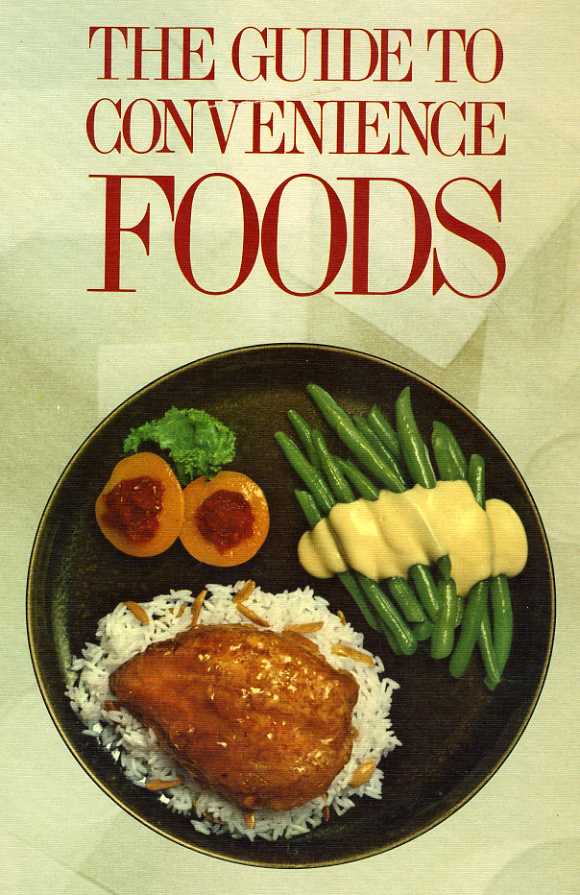
parsleyGuidetoConvenienceFoodscvrAround 1970 when convenience foods invaded restaurant kitchens, garnishes took on heightened significance in jazzing up lackluster, monochromatic frozen entrees. In the words of Convenience and Fast Food Handbook (1973),“The emergence of pre-prepared frozen entrees on a broad scale has revived the importance of garnishing and in addition, has led to innovative methods of food handling, preparation and plating. If an organization is to achieve sustained success in this field, emphasis must be placed on garnishing and plating. These are the two essentials that provide the customer with excitement and satisfaction.” [partial book cover shown above, 1969]

Excitement?

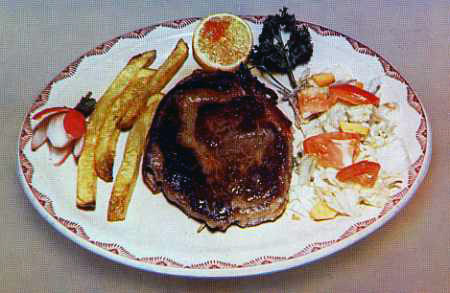
parsleyNOThe head of the Southern California Restaurant Association admitted in 1978 that he hated to see all the food used as garnishes go to waste in his restaurant, including “tons” of lettuce. But this was necessary for merchandising, he said: “We have to make food attractive. It’s part of the cost of putting an item on the table.” It was – and is – probably true that an ungarnished plate such as shown here looked unattractive to most Americans.

parsleyNfiletmignon

So many garnishes decorated food in American restaurants in the 1970s that food maestro James Beard got very grumpy about it, calling it stupid and gauche. He could allow watercress with lamb chops or raw onion rings on a salad, but put a strawberry in the center of his grapefruit half and he was outraged. Next to orange slices and twists, his most detested “tricky” garnishes were tomato roses and flowers. Funny that he didn’t mention radish roses such as the one shown above.

© Jan Whitaker, 2008, revised 2015

17 Comments

Filed under food, restaurant customs

Early vegetarian restaurants

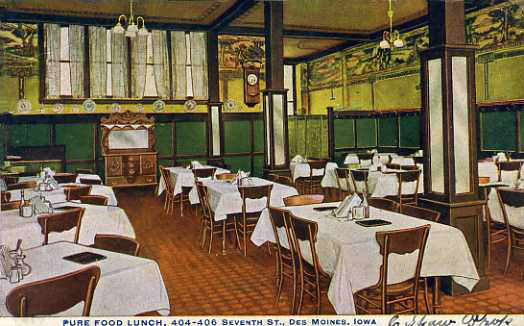
vegetarianpurefood880

As early as the 1830s in the U.S., the Graham Journal of Health and Longevity espoused a regimen called “Nature’s Bill of Fare.” It advocated meatless meals that contained no more than three different articles of food, and no desserts, condiments, or beverages except water. Diners were to eat at precisely the same time each day and chew very thoroughly. Needless to say, the “Grahamites” were very much at odds with the majority of Americans who expected to eat meat three times a day.

Some of the followers of Sylvester Graham lived in special boarding houses where no meat was served, but it wasn’t until the 1890s that the first public vegetarian restaurants appeared in this country.

The first was the well-named “Vegetarian Restaurant No. 1” opened on West 23rd Street in New York City in 1895. It was sponsored by the New-York Vegetarian Society, which did not tolerate either taking life for food or drinking alcohol.

One of the co-founders of No. 1 was its manager Louise Volkmann, a remarkable 50-year old German-born woman who was active in the women’s suffrage movement, the labor movement, and the peace movement, as well as being a music teacher and a volunteer in prisons and hospitals. However, not even such a force of nature as Louise could make the restaurant succeed. It closed due to insufficient patronage in less than a year.

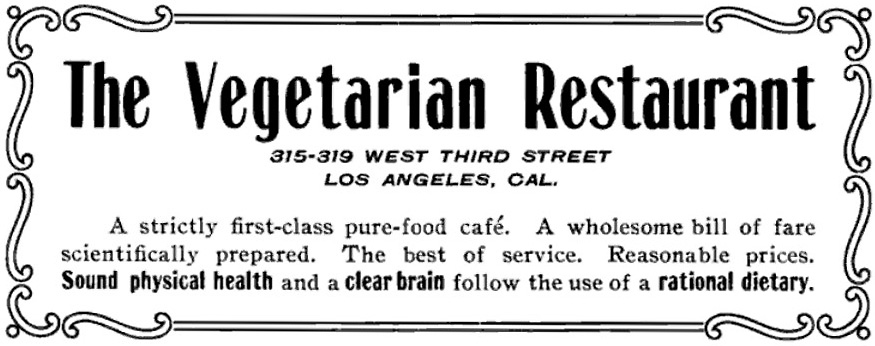
vegetarianrestOutWest1902

VegetarianCafeteriaLA

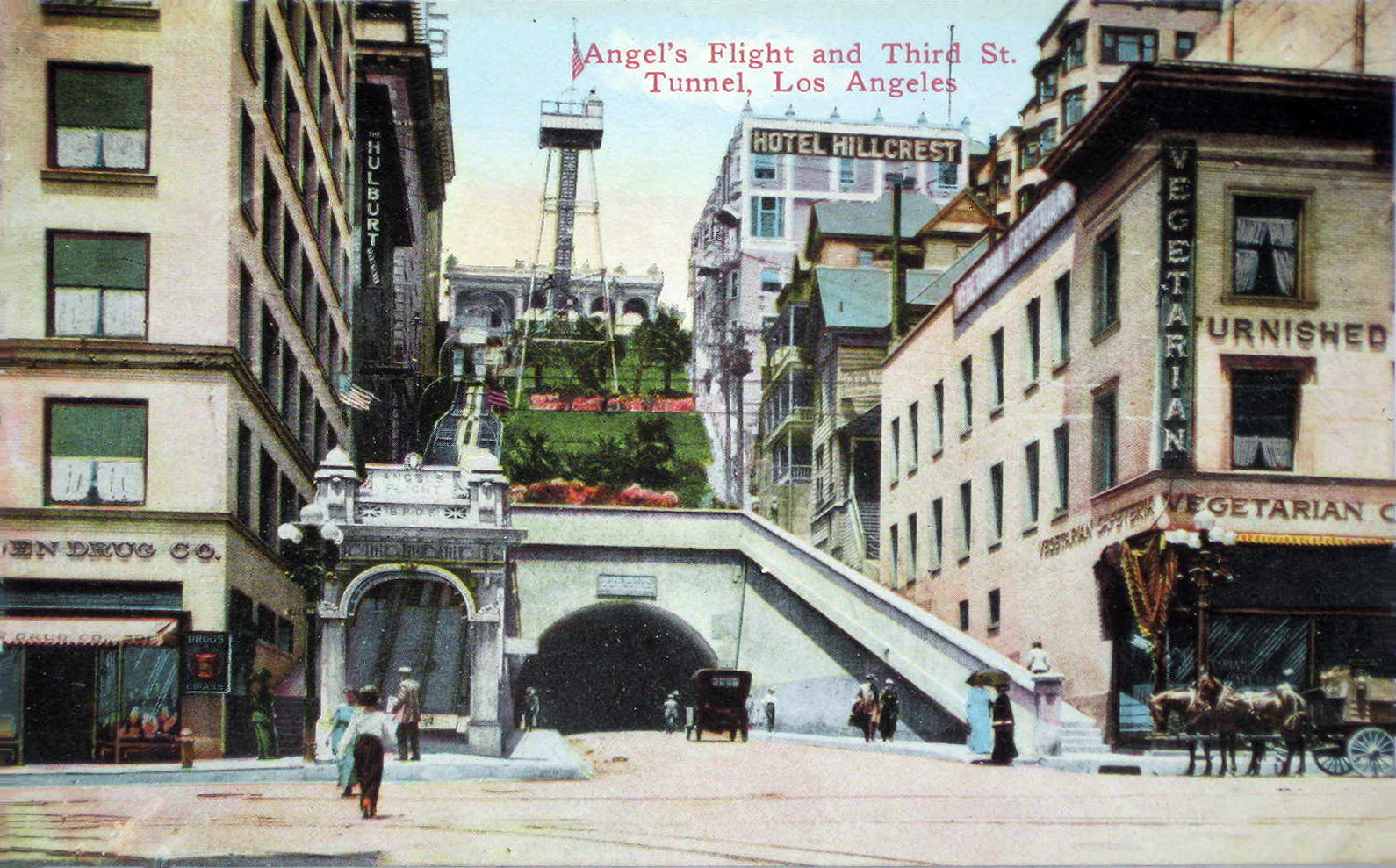
By 1899 a few more vegetarian restaurants had opened around the country. In Minneapolis a restaurant operated by two partners, Peterson and Mataumura, made the concession of supplementing the menu of Vegetable Turkey and a roast made of crushed nuts with a few meat dishes for non-vegetarians. Detroit and Boston also had restaurants catering to vegetarians, while San Jose actually had two, one of which also accommodated meat eaters. Detroit’s vegetarian café evidently was vegan; its macaroni was served with nut paste rather than cheese and its eggs were made of cereal or nuts and served boiled, curdled, or scrambled with lemon or, presumably fictitious, “cream.” [illustration of Los Angeles’ Vegetarian Cafeteria, ca. 1910]

Many of the early vegetarian restaurants served nut and grain-based food products – Granose, Nuttose, Wheatose, and others made by the Battle Creek Sanitarium Health Food Company in Michigan. Well-off people, not necessarily all vegetarians, would sign up for a stint at the Sanitarium to improve their health. A vegetarian dinner there in 1900 featured items with remarkably unattractive names such as Gruel, Dry Gluten, and Protose Salad.

vegetarian1912Cleveland

The vegetarian movement and its restaurants got a boost from rising meat prices and stockyard scandals shortly after the 20th century began. A 1904 directory listed 57 vegetarian restaurants nationwide, and the passage of the Pure Food and Drug Act in 1906 encouraged more to open. New customers mobbed vegetarian restaurants while eating places of all kinds added meatless dishes such as spaghetti and omelets to their fare, an exercise they would repeat under the austerity measures of World War I. Up to and during the war, vegetarian cafes flourished and chains began to form, such as the Physical Culture Restaurants in New York, with branches in Boston, Philadelphia, Pittsburgh, Buffalo, and Chicago. In addition to the Battle Creek connection, a number of pre-WWI vegetarian restaurants were connected to the Seventh-Day Adventist religion.

Often going under names such the Hygienic Restaurant or the Pure Food Restaurant, a typical vegetarian restaurant menu of 1902 or 1903 might have included selections such as these from Chicago’s Mortimer Pure Food restaurant:

Asparagus on toast, 15
Roosevelt [vegetable] cutlet, with mushroom sauce, bread and butter, 20
Poached eggs, with rice and currie sauce, bread and butter, 25
Spinach, with poached eggs on toast, 25
Broiled new potatoes on toast, 20
Spaghetti a la Mortimer, 10
Broiled fresh mushrooms on toast, 25
Baked beans, 10

Burl's1950sLA2How well vegetarian restaurants fared in the 1920s is unclear. The Childs restaurant chain, by then a public corporation, embraced vegetarianism briefly but changed its policy after its stock prices dropped in response. On the other hand, restaurant industry leader Myron Green, a Kansas City cafeteria proprietor, claimed in 1928, somewhat unbelievably, that meat eaters constituted less than 25% of food service patrons. In the early 1920s Los Angeles added two raw food restaurants and a Sephardic Kosher café to its list of meatless eating places. Also in this decade, a chain of vegetarian cafeterias appeared in the South, including one in Knoxville TN. In New York City Herman and Sadie Schildkraut operated a vegetarian hotel in the 1920s and by 1933 were directors of Schildkraut’s Vegetarian Food Emporiums, headquartered at 225 W. 36th.

Although meat rationing during World War II would bring back menus featuring vegetable plates, the vegetarian movement would not experience another boom until the counter-culture-inspired food revolution of the 1970s.

© Jan Whitaker, 2008, revised 2015

29 Comments

Filed under alternative restaurants, food

Basic fare: club sandwiches

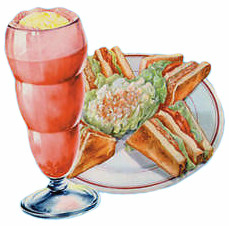
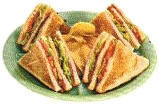
clubsandwichCOLORAmong sandwiches, the club sandwich stands out by having a strong association with restaurants for more than a century. It was not often eaten at home and probably still isn’t. It is unusual, too, in that it was considered both delicate and hearty, making it a favorite with men and women alike when it became popular in the 1890s.

Its versatility included being appropriate for almost any time of day. It was considered an excellent late-night supper, good with beer, healthful, refreshing in hot weather, and perfect for ladies’ luncheons. The sandwiches appeared widely on menus – in hotel and department store dining rooms, after-theater restaurants, men’s grills, railroad dining cars, and tea rooms.

clubsandwichADVSpfld1913

The origin of the word club, which still gives it a certain cachet, is a mystery. One account attributes the creation of the sandwich to an engineer who introduced it to his “lunch club” cronies on a day when they were suffering from hangovers, but the occasion seems to have taken place years after the sandwich had achieved recognition.

For instance, at least five year earlier, shortly after the Palm Tea Room opened in New Haven’s Edward Malley store in 1898, an advertisement notified customers that in addition to ham sandwiches and chocolate eclairs, several items “New to New Haven” were available, among them Club Sandwiches at 15 cents each.

clubsandwichADVBatonRouge1914By 1900 the sandwich’s form and composition were largely standardized. It was made with three slices of toasted white bread, spread with mayonnaise, layered with thinly sliced chicken, bacon, tomato, and lettuce, and cut twice diagonally into wedges. Fresh tomatoes were not always available inexpensively year round, so the full-scale club sandwich may have been a seasonal specialty until after WWII. Other variations included ham instead of bacon and turkey instead of chicken; crusts could be trimmed off for a daintier appearance.

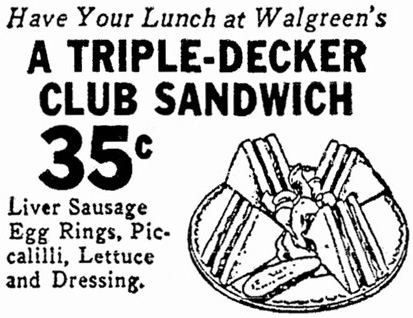
clubsandwichADV1934Over time almost anything could be used to fill a club sandwich, but few variations on the classic combination endured. In 1935 Walgreen’s offered one made of liverwurst, perhaps reflecting that it was the Depression.

Club sandwiches recommended themselves to lunch rooms by their good profit margin. The Childs’ restaurants, the largest chain of the early 20th century, found in 1910 that it could prepare a double-decker club for 4.6 cents and sell it for 20 cents. It went for the same price at drug stores which began adding it to their soda fountain menus. Its popularity at soda fountains was also reflected in the creation of an ice cream club sandwich made in a special mold. The trade journal National Druggist reported in 1911 that in terms of sales the novelty was “a wonder.”

The club sandwich was given a reprieve during the government’s food prohibitions of World War I. Initially targeted along with meat pies and liver & bacon because it contained more than one kind of meat, the ban was quickly lifted.

Another obstacle club sandwiches faced seems truly quaint today. Judging from the number of times women sought advice from newspaper etiquette columns on how to eat them in the 1920s and 1930s, many of them found the club sandwich embarrassing to eat in public. Should they pick it up or eat it with a knife and fork? Strangely – and unimaginably – the latter method was advised.

ClubSandwichwoolworth67But it overcame these minor problems. In the 1920s commercial bakers produced a bread specially made for club sandwiches in restaurants. It was a square “cream bread” with a thin crust, meant for toasting, and sized a bit larger than the smallest sandwich loaves.

Though scarcely considered exciting today, the club sandwich has become a menu classic that can be ordered almost anywhere.

© Jan Whitaker, 2015

9 Comments

Filed under food

See it, want it: window food displays

windowDisplayofmeat

To the degree that restaurants are about theater, food is one of the starring players. Putting it on stage has long been considered a way to sell it.

There are many opportunities to display food, one of them being the simple delivery of an attractive plate to a neighboring table. But there are also buffets, cafeteria shelves, dessert carts, flaming swords, etc., all of which have been featured or will appear as posts on this blog.

There are also several ways to attract potential customers passing along the street. One of the oldest, popular in the 19th century, was to string up game near the front door. Today that would probably be guaranteed to drive people away, but men of the 19th century responded positively. The Shakspeare Saloon in 1847 New York lured judges, lawyers, merchants, and men about town by displaying “a splendid buck, a couple of bear hams, haunches of mutton, . . . fatted capons as large as turkeys, . . . glittering fish and sirloin steaks marbled with fat.”

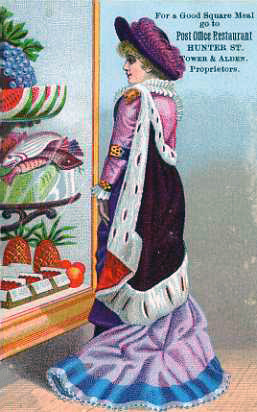
windowdisplayThe Shakspeare was below street level as were many eateries of the early 19th century. But as more eating places moved above ground, fitted out with windows that grew ever larger as the century proceeded, new display possibilities arose. In 1868 French rotisserie restaurants in San Francisco decorated their windows with marbled beef, vegetables, and live frogs in glass globes, displays that might have resembled the one portrayed in the 1880s trade card shown here. In it a woman gazes at fruit, as was appropriate for her gender. An article advised that women’s restaurants tempted the fair sex by fruit and delicate pastries, while “Meats are never shown, and the suggestion of anything so gross is studiously avoided. This is left to the restaurants patronized by men, who are supposed to find a stronger appeal in more solid and healthier food.”

And so meat and fish were especially popular to put on display. Up until the mid-20th century they might still have been on ice but increasingly they were displayed in refrigerated cases. Ice and refrigeration showed respect for the food, balancing two of restaurants’ prime virtues: a sense of extravagant plenty, communicated by large amounts of fine food, and a sense of order, demonstrated by methods that insured freshness.

Some restaurants placed in their windows food that had been frozen inside a large block of ice. Imagine two shad, each with a lemon in its mouth, that appeared to be swimming toward the bottom of the block, forming a V, with a red lobster between them. Or the 20-pound pig encased in ice by “gourmet artist” and restaurateur George Pundt that made such a hit with people passing the Parlor Restaurant in Columbia, South Carolina, in 1897.

windowfoodfakeonionringsAlong with meat, anything that was overlarge or brightly colored might appear in a window. Big yellow squash, pumpkins, melons, decorated cakes. Chicago’s Toffenetti’s piled up its much ballyhooed Idaho potatoes in the 1940s.

Despite the spectacular effects that could be attained with displays, there were also risks involved. As early as 1886 an article noted that “really first-class restaurants” did not engage in window displays. The pots of baked beans found in New York’s Bowery restaurants were proof, as was the “tired display of sliced tomatoes” placed in the smeared window of an eatery whose location was home to one failed business after another. In the 1920s a Niagara Falls cafeteria owner observed that he avoided putting food in windows because picky patrons felt that “sooner or later, they, as patrons of the restaurant, will have to eat that ‘window’ food” and so they tended to shun restaurants with food displays.

windowfoodfakesoupIt’s hard to pinpoint when window food displays began to wane. A Seattle newspaper columnist declared in 1965 that the city’s old-time Olympia Café was the last to feature refrigerated steaks in its windows. I can’t recall seeing real food in restaurant windows for the past several decades. Today food shown in restaurant windows is likely to be artificial. Japan, perhaps the biggest user of window food displays, specializes in making the most realistic and highest quality items. They don’t make me hungry, yet the collector in me wants to acquire the fake food for my collection.

© Jan Whitaker, 2014

4 Comments

Filed under food, restaurant customs