Category Archives: chain restaurants

Early chains: John R. Thompson

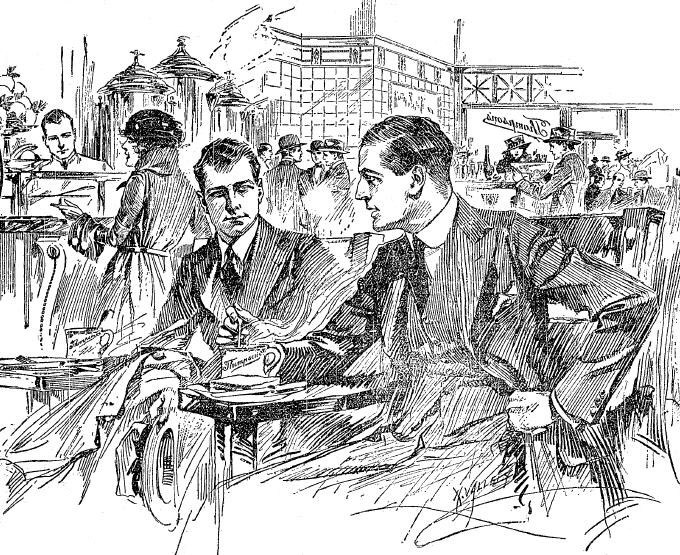
Although it is largely forgotten today, the Chicago-based John R. Thompson company was one of the largest “one arm” lunchroom chains of the early 20th century. We so strongly associate fast food chains with hamburgers that it may be surprising to learn that Thompson’s popular sandwiches included Cervelat, smoked boiled tongue, cold boiled ham, hot frankfurter, cold corned beef, cold salmon, and Herkimer County cheese, served on “Milwaukee Rye Bread” baked by the chain’s bakery. Thompson was proud that his meals were suited for sedentary office workers of the 1900s and 1910s. A 1911 advertisement claimed that lunch at Thompson’s “won’t leave you logy and lazy and dull this afternoon.”

Thompson, an Illinois farm boy, ran a rural general store as his first business. He sold it in 1891, moved to Chicago, and opened a restaurant on State Street. He proved to be a modernizer in the restaurant business as well as in politics.

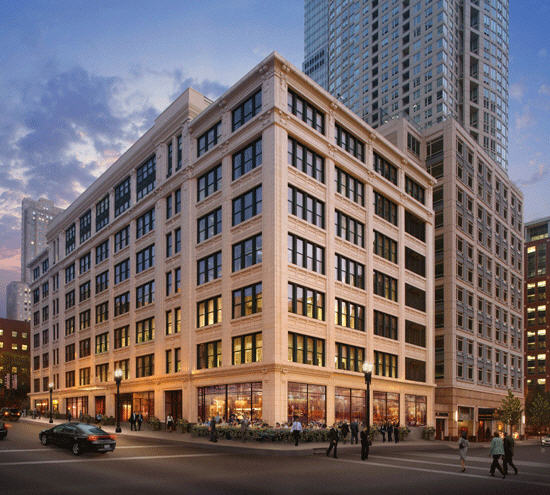
He operated his restaurants on a “scientific” basis, stressing cleanliness, nutrition, and quality while keeping prices low. In 1912 he moved the chain’s commissary into a premier new building on North Clark Street (pictured, today). Thompson’s, then with 68 self-service lunchrooms plus a chain of grocery stores, became a public corporation in 1914, after which it expanded outside Chicago and into Canada. By 1921 there were 109 restaurants, 49 of which were in Chicago and 11 in New York (with a commissary in NYC). By the mid-1920s Thompson’s, Childs, and Waldorf Lunch were the big three U.S. chains, small by comparison to McDonald’s but significant nevertheless.
In politics Thompson served as a Republican committeeman and managed the campaign of a “good government” gubernatorial candidate in 1904. A few years later he failed in his own bid to run for mayor, promising he would bring efficiency to government while improving schools and roads. In the 1920s he financed a personal crusade against handguns.

Despite John R. Thompson’s progressive politics, his business would go down in history as one that refused to serve Afro-Americans. Or, as civil rights leader Marvin Caplan put it in 1985, “If the chain is remembered today, it is not for its food, but for its refusal to serve it.” J. R. died in 1927. Where he stood on the question of public accommodations is unclear but the chain faced numerous lawsuits by blacks in the 1930s. However the best known case occurred in 1950 when a group of integrationists led by Mary Church Terrell was refused service in a Washington D.C. Thompson’s. The group was looking for a case that would test the validity of the district’s 19th-century public accommodations laws. After three years in the courts the Thompson case (for which the Washington Restaurant Association raised defense funds) made its way to the Supreme Court which affirmed the so-called “lost” anti-discrimination laws of 1872 and 1873 as valid.
Over the years the Thompson chain absorbed others, including Henrici’s and Raklios. At some point, possibly in the 1950s, the original Thompson’s concept was dropped. By 1956 Thompson’s operated Holloway House and Ontra cafeterias. In 1971, as Green Giant prepared to buy Thompson’s, it had about 100 restaurants, including Red Balloon family restaurants, Henrici’s restaurants, and Little Red Hen Chicken outlets.

© Jan Whitaker, 2010

131 Comments

Filed under chain restaurants, lunch rooms, proprietors & careers

With haute cuisine for all: Longchamps

Staked by his brother-in-law, gambler Arnold Rothstein, Henry Lustig expanded from the wholesale produce business into restaurants in 1919. His first location, at 78th and Madison Avenue, was a property that belonged to Arnold. By 1924 he had two more restaurants, one conveniently near Saks Fifth Avenue. An advertisement informed “Madame or Mademoiselle” that at Longchamps they would find light French dishes as well as “soothing quiet, faultless service and a typically ‘Continental’ cuisine” that was above average “yet … not expensive.” While not exactly cheap, Longchamps was considered easily affordable by the middle-class.

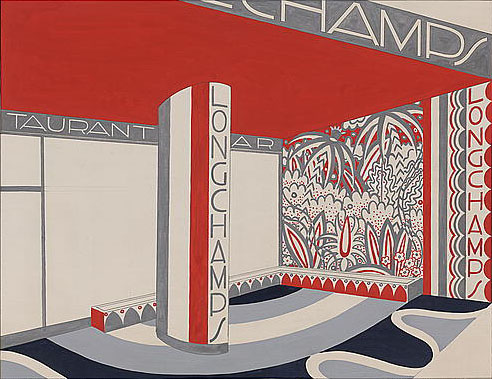
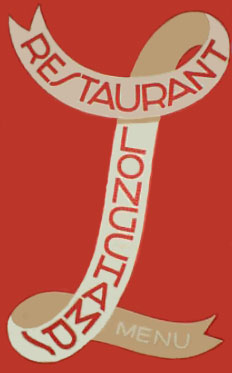
The chain continued to grow rapidly after the repeal of Prohibition when it hired top modernist decorators and architects to give it ultra-sophisticated chic. With the assistance of German-born artist and designer Winold Reiss and architects Louis Allen Abramson and Ely Jacques Kahn, New York City gained some of its most glamorous restaurant interiors of the period. Reiss showed considerable talent in disguising irregular spaces with mirrors and murals, multiple levels, dramatic lighting, and flashy staircases that lured people cheerfully downward to dine below ground (see his interior sketch and menu cover below). From 1935 to 1940 Longchamps opened seven new restaurants, including two on Broadway, one at Lexington and 42nd Street, and one in the Empire State Building.

Cocktail bars were no small part of the slick 1930s Longchamps formula. The chain’s ninth unit at Madison and 59th Street, a site vacated by Reuben’s, had a long oval bar stationed above floor level in the middle of the dining room. With 50 bartenders staffing the bar, the restaurant itself seated 950 diners. When it opened in 1935 a Longchamps advertisement immodestly called it “The Outstanding Restaurant Creation of the Century.” Architectural critic Lewis Mumford found its red, black, gold, and yellow color scheme — carried out even on chair backs and table tops — overdone, but he sensed that his was a minority opinion and he was almost certainly right. Among others, it soon became a meeting place for James Beard and his old friends from Oregon.

During the war Longchamps’ did a booming business. Lustig, it turned out, was siphoning off cash as fast as he could and keeping two sets of books, one for him and one for the IRS. Keep in mind that he owned racehorses and had named his restaurants after a famous Paris racetrack. The game was up in 1946 when he was handed a bill for delinquent taxes and fines of more than $10M and sentenced to four years in federal prison. Nine restaurants, along with a good stock of wine (the Times Square unit alone was said to have 120,000 bottles in the cellar), miscellaneous pieces of Manhattan real estate, and the chain’s bakery, catering business, ice cream plant, candy factory, and commissary, then passed into the hands of a syndicate which owned the Exchange Buffet.

In 1952 a Longchamps was opened in Washington, D.C., becoming one of the few downtown restaurants in that city that served Afro-American patrons. About this time another Longchamps opened in the Claridge apartments on Philadelphia’s Rittenhouse Square. In 1959 the chain was acquired by Jan Mitchell, owner since 1950 of the old Lüchow’s. He revealed that the chain, which consisted of twelve red and gold restaurants, a poorly trained kitchen staff, and a diminishing patronage, had been losing money for the past five years but that he could revive it as he had done with Lüchow’s. Under his ownership the New York units began offering guests the dietary concoction Metracal in their cocktail lounges, as well as free glasses of wine and corn on the cob with their meal. After a couple of years the chain was in the black.

In 1967 Mitchell sold it to the Riese brothers, who owned the Childs restaurants and, with new corporation president Larry Ellman, were in the process of buying up classic New York restaurants – Cavanagh’s in 1968, Lüchow’s in 1969, and others. In 1969 the old Longchamps were mostly turned into steakhouse theme restaurants. The restaurant at Madison and 59th, though, was renamed the Orangerie, dedicated to “hedonistic New Yorkers,” and given a “festive mood of Monte Carlo.” Its $8.75 prix fixe dinner came with free wine, “Unique La ‘Tall’ Salade,” and after-dinner coffee with Grand Marnier. In 1971 a single Longchamps operated under that name, at Third Avenue and 65th Street, but I doubt it had anything in common with the classic Longchamps of the 1930s. The holding company “Longchamps, Inc.” vanished in 1975.

© Jan Whitaker, 2009

32 Comments

Filed under chain restaurants

(In)famous in its day: the Nixon’s chain

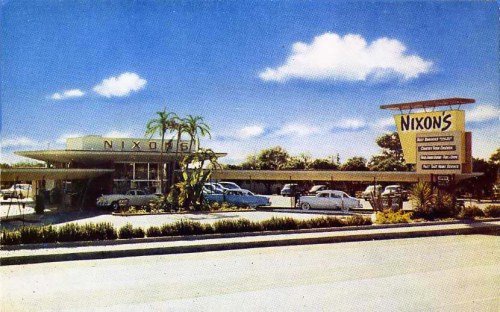
nixonsDriveIn338Since the 35th anniversary of Richard M. Nixon’s 1974 resignation from the presidency was commemorated this past weekend, it’s as good a time as any to focus on his brother Donald’s brief career as a restaurateur in Southern California. In the short span of five years in the 1950s, Don managed to go out of business while doing some serious damage to brother Richard’s political fortunes.

He got into several pickles but the biggest issue concerned a 1956 loan of $205,000 he received from Howard Hughes’s tool company to rescue his failing restaurants. Richard Nixon was VP in the Eisenhower administration at the time. Although Don denied that his brother had any involvement in soliciting the loan, critics were not convinced and persisted in raising questions about several decisions the government made that were beneficial to defense contractor Hughes. The toxic issue dogged Nixon in his unsuccessful 1960 presidential campaign against John Kennedy and again in his failed 1962 California gubernatorial run.

nixonburgerREVThe chain of five Nixon’s restaurants began modestly in 1943 when the Nixon family’s grocery store, established in 1922 by father Francis Nixon in Whittier, added a coffee shop. Although Don was involved in running the coffee shop, his first real business venture took place in 1952 when he opened a drive-in on East Whittier Blvd. (shown above). Two years later he opened Nixon’s Family Restaurant, also on East Whittier, home of the “Nixon Burger” whose unfortunate, opportunistic name would be used to taunt Richard Nixon during his two terms as President. Next Don opened a drive-in near Disneyland, in Anaheim, and a restaurant and bakery in Fullerton. In 1957, despite the Hughes loan and proceeds from the sale of Nixon’s Market to a supermarket chain, Don Nixon put all five restaurants up for sale to settle the chain’s debts.
The Nixon’s at 822 E. Whittier became a Whirly’s Drive-in, which itself went out of business in 1962 or early 1963. The Anaheim Nixon’s, at Harbor Blvd. and Katella Ave., was taken over by the Harris chain of Portland OR in 1958 after it was remodeled to include a cocktail lounge. Cocktails had been prohibited in the Nixon’s restaurants judging from a 1954 ad which proclaimed, “Since children are most welcome at Nixon’s – liquor is never served.”

In subsequent years as President, from 1969 to 1974, Richard Nixon kept close tabs on Don. At one point he had the Secret Service wiretap his phone. Richard also found Don a job that he hoped would keep him out of trouble. In 1970 staunch Republican J. Willard Marriott, founder of the Hot Shoppes and CEO of the Marriott Corporation, agreed to do the President a favor. Marriott appointed Don vice president in charge of franchises and acquisitions on the West Coast. Marriott officials denied that Don had any influence in helping the company win government contracts.

© Jan Whitaker, 2009

59 Comments

Filed under chain restaurants, drive-ins

Ode to franchises of yesteryear

royrogersREVPeople have strong feelings about their favorite dishes from restaurant chains. I am thankful to all those who poured their hearts out on the subject on Jane & Michael Stern’s ever-fascinating Roadfood forums. I have excerpted the following wistful memories from “Long-gone regional franchises” which took on a life of its own and ran for years. After each snippet is the pertinent chain restaurant.
— The burgers were awesome, the onion rings superb and the soda cold. [Charco’s]

— Oh, those hot dogs steamed in beer. [Lums]

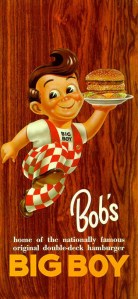
— Loved those frosty mugs of root beer and Big Boy hamburgers! [A&W]

— I went for the Ollie Burger. They bought the sauce from “Ollie’s Trolley.” [Lums]

— Shrimp salad. Chili spaghetti size. Navy bean soup. [Bob’s Big Boy]

— Frothy orange drinks and orange chili dogs. [Orange Julius]

— Tuesday night 10-cent “Coney Island Dogs.” [A&W]

— Orange colored cheese on their cheeseburgers, not the pale yellow stuff of today. [Wetson’s]

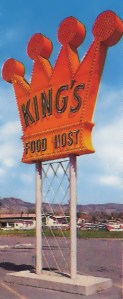
king'sFoodHostsign— The Cheese Frenchies were unique. [King’s Food Host]
— They also had a Tuna Frenchie, a Hot Dog Frenchie. [King’s Food Host]

— Greasy fish and plank-style chips. [Arthur Treacher’s]

— Orange drink with pulp in it. Tuna sandwiches. What fast food chain would have a tuna sandwich today? [Chock Full O’Nuts]

— How exotic it was to have a sandwich on a bagel. [Bagel Nosh]

— Good hot dogs. Never touched, cooks used plastic gloves. [Chock Full O’Nuts]

— My first straight cut fry. [Wetson’s]

— I remember eating and loving my first Apple Fritter there! [Hamburg Heaven]

— Coffee and Apple Fritters (hush-puppy shaped apples in dough, deep-fried and powdered sugar coated). [Dutch Pantry]

bobsbigboyREV— Pickles, diced onion, relish, mustard, ketchup and mayo were all available. [25 Cent Hamburger]

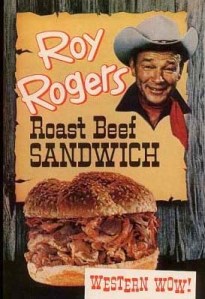
— Yummmm. A cheeseburger with ham and barbecue sauce. [Roy Rogers]

— Broasted chicken and french fries with a sweet sauce to die for. [Arctic Circle]

— I can remember stopping in for a soft drink and a basket of crumbs. [Squire Jacks]

— Ketchup was free. The fries weren’t like the “wavy,” half-fried or quick fried potatoes of today’s ilk. [Toot ‘n Tell]

— I haven’t had the heart to stop in and see if they still had Strawberry Pie. [Big Boy]

6 Comments

Filed under chain restaurants, food

The Automat, an East Coast oasis

automatlogoIn the late 19th century owners of large popular-price restaurants began to look for ways to cut costs and eliminate waiters. The times were hospitable to mechanical solutions and in 1902 automatic restaurants opened in Philadelphia (pictured below) and New York. In both cities, a clever coin-operated set-up – and a name – were imported from Germany. There was, however, a striking difference between the two operations. The Philadelphia Automat, run by Joseph Horn and Frank Hardart, served no alcoholic beverages, while the New York Automat, true to its European origins, did.

automatphil3051The Automat in NYC was owned by James Harcombe, who in the 1890s had acquired Sutherland’s, one of the city’s old landmark restaurants located on Liberty Street. The Harcombe Restaurant Company’s Automat was at 830 Broadway, near Union Square. Reportedly costing more than $75,000 to install, it was a marvel of invention decorated with inlaid mirror, richly colored woods, and German proverbs. It served forth sandwiches and soups, dishes such as fish chowder and lobster Newburg, and ice creams. Beer, cocktails, and cordials flowed from its faucets. A bit too freely. The Automat’s staff had to keep a sharp lookout for young boys dropping coins into the liquor slots.
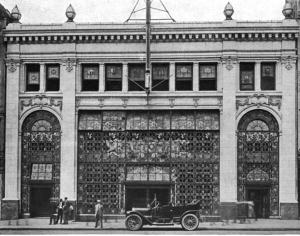
While the Philadelphia Automat thrived, the New York counterpart ran into financial difficulties shortly after opening, possibly because of a poor location. It advertised in an NYU student magazine in 1904: “Europe’s Unique Electric Self-serving Device for Lunches and Beverages. No Waiting. No Tipping. Open Evenings Until Midnight.” The disappearance of the Harcombe Automat ca. 1910 seemed to fulfill pessimistic views that an automatic restaurant couldn’t succeed in New York, allegedly because machinery would malfunction and customers would cheat by feeding it slugs.

1912bdwyautomatUndeterred by the first Automat’s fate, Horn & Hardart moved into New York in 1912, opening an Automat of their own manufacture at Broadway and 46th Street (pictured). It turned out that New Yorkers did indeed use slugs, especially in 1935 when 219,000 were inserted into H&H slots. But despite this, the automatic restaurant prospered, expanded, and became a New York institution. By 1918 there were nearly 50 Automats in the two major cities, and eventually a few in Boston. Horn & Hardart tried Automats in Chicago in the 1920s but they were a failure. On an inspection tour in Chicago, Joseph Horn noted problems such as weak coffee, “figs not right,” and “lem. meringue very bad.”

Part of the lore of the Automat derives from the unexpected forms of sociability it inspired among strangers. Others found in it a unique entertaining concept. Jack Benny hosted a black tie dinner in a New York Automat for 500 friends in 1960, but he was scarcely the first to come up with the idea. As early as 1903 a Philadelphia hostess rented that city’s Automat for a soirée, hiring a caterer to replace meatloaf and coffee with terrapin and champagne. In 1917 a New York bohemian group calling themselves “The Tramps” took over the Broadway Automat for a dance party, inserting in the food compartments numbered slips corresponding to dance partners. For most customers, though, the Automat meant cheap food and possibly a leisurely place to kill time and watch the parade of humanity.

automatmysteries3041The Automats hit their peak in the mid-20th century. Slugs aside, the Depression years were better for business than the wealthier 1960s and 1970s when some units were converted to Burger Kings. In 1933 H&H hired Francis Bourdon, the French chef at the Sherry Netherland (fellow chefs called him “L’Escoffier des Automats”). In 1969 Philadelphia’s first Automat closed, being declared “a museum piece, inefficient and slow, in a computerized world.” That left two in Philadelphia and eight in NYC. The last New York Automat, at East 42nd and 3rd Ave, closed in 1991.
© Jan Whitaker, 2009

23 Comments

Filed under chain restaurants

Early chains: Vienna Model Bakery & Café

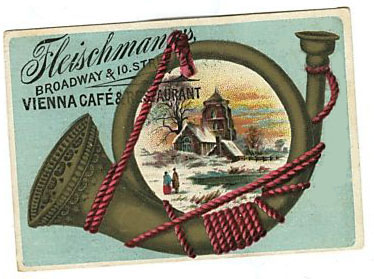
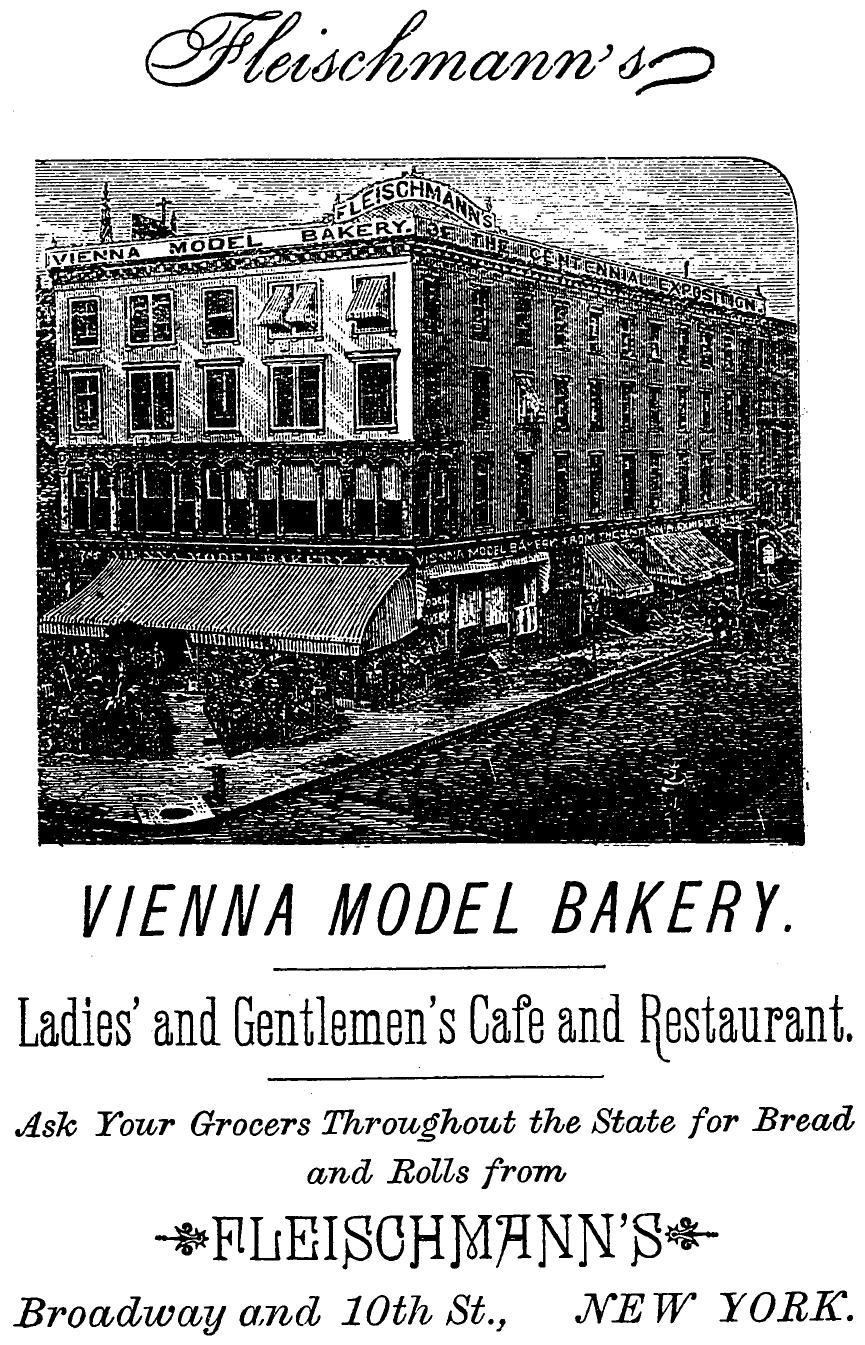
Contemporary bakery restaurant chains such as Au Bon Pain and Panera Bread may have more units but they are scarcely the sensations that Vienna bread cafés were in the 1870s. America was a country that many considered plagued with inferior bread, whether commercial or home baked. The Fleischmann brothers, Charles, Maximillian, and Louis, were determined to improve American bread with their compressed yeast. Although they manufactured it as early as 1872 – as a byproduct of distilled spirits (another Fleischmann enterprise) – its fame was established at the 1876 Centennial Exposition in Philadelphia. There the crusty Vienna-style bread produced with Fleischmann’s yeast won a prize for excellence and attained international renown. Although the fair’s Vienna Model Bakery café which served this bread was intended mainly to showcase the baked goods that could be made with the company’s yeast, it became a runaway hit in its own right. Some said the bakery café’s fame was as great as the fair itself.

A short time after the Centennial ended, Vienna Model Bakeries and cafés were opened in Philadelphia, New York City, San Francisco, St. Louis, and Chicago, very likely making this the country’s first restaurant chain. The cafés, whose coffee was as prized as their baked goods, were modeled on European coffee houses and furnished guests with comfortable seating and newspapers from all over the world. The St. Louis branch was so popular it had to move to larger quarters within months of opening. In Chicago, as in New York City, the cafes were located close to the cities’ major dry goods firms, Field & Leiter and A. T. Stewart, respectively, thereby attracting women customers as well as men. In the 1880s New Yorkers could enjoy their refreshments outdoors amidst planters of flowers under a large awning stretching in front of the 10th and Broadway café, which also had a full-scale restaurant on the second floor.

Another distinction of the Manhattan Fleischmann’s was its practice of giving away bread to anyone who would wait in line at midnight. Dubbed “the bread line,” it continued until around 1918 when the bakery café closed.

© Jan Whitaker, 2008

4 Comments

Filed under chain restaurants

When ladies lunched: Schrafft’s

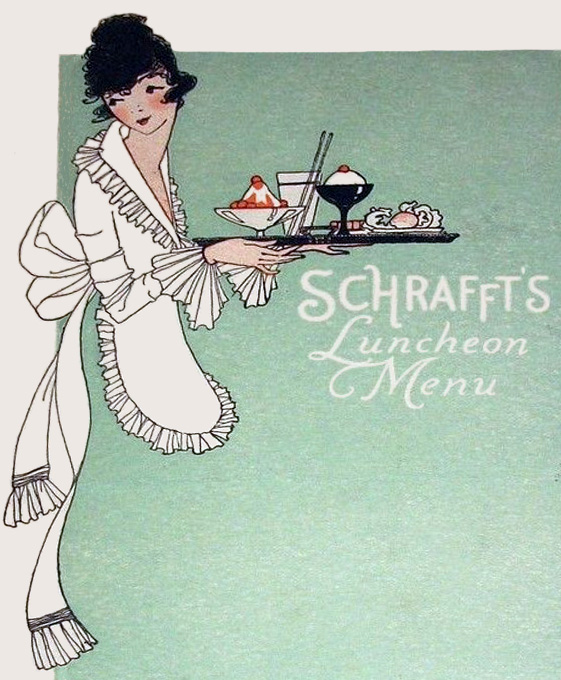
Schrafft’s began as a candy manufacturer in Boston but over time morphed into a well-known restaurant chain. In 1898 Frank G. Shattuck, a salesman for the Schrafft company from upstate New York, opened a candy store at Broadway and 36th in New York. His sister, Jane Shattuck, was largely responsible for the introduction of light lunches into the stores. The first to serve food was the Syracuse store in 1906 where a “Japanese Tea Room” (shown here) was boldly advertised as “the daintiest luncheon spot in all the State.” By 1909 Jane also introduced meals to the second NYC Schrafft’s, at 54 West 23rd Street in the heart of a thriving shopping district. By 1927, when there were 25 units, most located in NYC, the Wall Street Journal estimated that around 75% of Shattuck’s business was in the restaurant trade, with the rest candy-related.

schrafft's1920Schrafft’s was known for reproducing an air of gentility typical of the upper middle-class WASP home. Cooks, supervisors, and even some executives were women. Menus of the 1920s and 1930s included many salads, more desserts than entrees, and non-restaurant-y vegetable selections such as creamed cauliflower and fried eggplant. Frank claimed Schrafft’s cuisine was inspired by his mother’s cooking. Repeated efforts to overcome connotations of a “women’s restaurant” and attract men met with disappointing results despite customers such as James Beard. Women dominated even after some units began to serve cocktails in 1934.

Rent cuts in the depression encouraged chain expansion and by 1937, when Frank died, there were 43 Schrafft’s, most in metro NYC but a few in Boston and Philadelphia. At its peak there were about 50 units in greater NYC. In 1961 the chain played briefly with the idea of selling frozen dinners on the roadside. In the late 1960s the Schrafft’s candy company was sold to Helme Products while Pet, Inc. took over the restaurants. Pet made a renewed effort to renovate Schrafft’s image and attract men. At the Fifth Ave location (between 45th & 46th) the soda fountain was removed and a bar installed. The second floor, men-only dining room was given dark wood paneling, zebra-stripe carpeting, and named “The Male Animal.” The 1970s saw confusion as a Schrafft’s opened in Los Angeles (sporting a Chinese room and an Elizabethan room), new ownership took control, and numerous NYC locations were shut down. In 1981 the candy company ceased while the few restaurants remaining were in various hands.

© Jan Whitaker, 2008

147 Comments

Filed under chain restaurants, tea shops, women

Chain restaurants: beans and bible verses

Although the restaurants run by Alfred W. Dennett in the 1880s and 1890s were popular and earned him a cool million in just a few years, some people took a strong dislike to them because of the framed bible quotations which covered the walls. Newspapers regularly ridiculed them, noting for instance that burglars who cracked the safe at the Park Avenue Dennett’s in New York City did so right under a sign that read, “Be ye strong, therefore, and let not your hands be weak, for your work shall be rewarded.” But no one took such a negative position against the Northeastern coffee/dairy/beans & fishcakes-based chain as did Terrence Powderly, head of the Knights of Labor. In a talk in Brooklyn he offended some audience members when he declared, “I, temperance man as I am, would go into the lowest rumhole in the city, and get blind, rolling drunk, rather than go into that restaurant where they have such signs as ‘Love Thy Neighbor as Thyself,’ to get a cup of coffee.”

Founder Dennett, born in 1840 the son of a storekeeper in Topsham, Maine, was a zealous religious believer and temperance advocate who required his waitresses to attend daily prayer services and took a leading role in citizen vice squads. In New York City he disguised himself — as streetcar conductor, laborer, or man about town — to conduct surveillance and collect evidence against suspected sites of immorality. He gave away his fortune to charity, was forced out of his company by stockholders, and had numerous mental breakdowns, culminating in a declaration of insanity after being found wandering the streets of San Francisco with a pillowcase over his head. When the Childs brothers took over the chain in 1900 evidently they retained the Dennett’s name and left the bible verses on the walls. The chain of about 16 outlets continued until at least 1912.

At various times Dennett and his son George tried for a comeback on the West Coast, operating several places in San Francisco and Los Angeles in the early 20th century (and possibly earlier) but they did not succeed and some of the San Francisco locations were taken over by the Puritan restaurant chain, which continued in a religious vein under the management of the appropriately named Mr. Goodbody.

© Jan Whitaker, 2008

2 Comments

Filed under chain restaurants, Offbeat places

Fried chicken blues

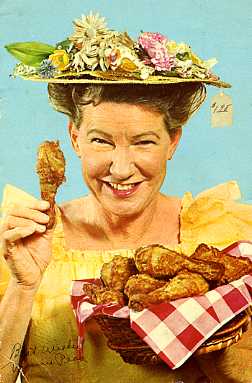
The 1960s were a boom decade for marrying fast food to franchise businesses christened with celebrity names. Chicken seemed like the up-and-coming successor to hamburgers in a business more about marketing concepts and stock quotations than food or hospitality. Following the success of Harlan Sanders, whose 500-unit Kentucky Fried Chicken chain mushroomed to 1,700 when he sold to a corporate buyer, entrepreneurs looked around for other celebrities to hitch their schemes to. Performers Minnie Pearl, Mahalia Jackson, James Brown, and Eddy Arnold, along with many sports figures, were persuaded to lend their names, rarely assuming any further involvement.

Minnie Pearl’s Chicken System, Inc., was the creation of Tennessean John Jay Hooker whose political ambitions included becoming governor, then president. Minnie Pearl, a Grand Ole Opry comedien whose frumpy stage persona suggested down-home eating, covered the white market, while gospel singer Mahalia Jackson lent her name to the black-owned side of the enterprise aimed at black inner-city consumers. Around the same time, ca. 1969, “king of soul” James Brown figureheaded the Gold Platter soul food chain which failed to get beyond the pilot stage in Macon, Georgia. Minnie’s and Mahalia’s ventures, too, lasted only a few years. Hooker, chicken systems mastermind, did not make it into office, but Benjamin Hooks, co-owner of Mahalia Jackson’s Gloree-Fried chicken (carryout only), went on to become executive director of the NAACP.

Though hailed as a restaurateur, Jackson received royalties for the use of her name but did not choose to invest in the Mahalia Jackson Chicken System, Inc. Perhaps she did not approve of its slogan: “It’s Gloree-Fried, and that’s the gospel truth.” The Minnie Pearl system totaled several hundred locations at its peak but it’s not clear how many outlets the Jackson chain comprised, probably many fewer. Chicago had only two units, paired with gas stations. The chain also operated in Memphis, Cleveland, Jacksonville, and Detroit. In addition to chicken, menus included fish sandwiches, sweet potatoes, fried pies, and a ‘Soul Bowl’ of chicken giblets in gravy on rice.

Minnie Pearl’s chicken — and later roast beef sandwiches — business went bankrupt in 1970.

© Jan Whitaker, 2008

Leave a comment

Filed under chain restaurants, food