

Actually chicken, however it was prepared, was not so basic until well into the 20th century. Only then were poultry raising and marketing streamlined to produce the tender, year-round, low-cost product which made chain restaurants such as Kentucky Fried Chicken and Chicken Delight feasible. Until after World War II chicken was not terribly popular in most restaurants, often being rather expensive yet tough and stringy.
The chicken found on the menus of most American eating places of the 18th and 19th centuries was not fried, but roasted, boiled, or broiled. Fried chicken seemed to be limited to the South for many decades. The first instance of fried chicken in a restaurant that I have found occurred at the 1876 Centennial fair in Philadelphia where one of the concessions specialized in Southern dishes such as fried chicken and hominy. Despite this, fried chicken did not catch on in restaurants for some time. It could be found mainly in small, down-home style cafés run and patronized by Afro-Americans. An example in the 1890s was a small cabin called the Café Du Chat Noir in Washington, D.C., run by a former slave who went by the name Madame Early. A bit later, in San Francisco, a black restaurant provided possum and yams in season, corn pone, watermelon and chicken, fried, boiled, or roasted. Another type of early 20th-century fried chicken venue was the Chinese restaurant.
The third kind of eating place that made a specialty of fried chicken was the country tea room. In fact chicken of all kinds – fried, in salads, or creamed on waffles – dominated tea room menus. It’s likely that the substantial increase of women restaurant patrons in the 20th century, tea rooms’ main clientele, was behind the rise in chicken’s popularity. Restaurateurs often noted that while men preferred steak, women favored chicken. Taking the family for a Sunday automobile ride into the countryside for a fried chicken dinner at a tea room or family-style inn was a major form of entertainment for millions of Americans well into the 1950s.
The reason that fried chicken became popular primarily in out-of-the-way places, whether Afro-American, Chinese, or tea rooms, may have been due to these places having access to freshly killed chickens at a time when so much poultry served in restaurants had been ruined by long stays in cold storage. Cold storage chicken –- i.e., frozen — so dominated the market that in 1909 California law required restaurants to inform patrons if their chicken came from that source. On the other hand, restaurants run by blacks and Chinese often kept live chickens in cages, while rural tea rooms had local suppliers.
© Jan Whitaker, 2008




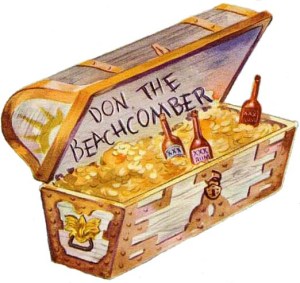 Don ran into trouble with the postwar longshoremen’s strike and decided to limit his Honolulu Beachcomber to a drinking spot. By the early 1960s he was also in the restaurant business, operating a South Seas Cabaret Restaurant, a Colonel’s Plantation Steak House, a Colonel’s Coffee House, and at least one restaurant boat. Cora’s popular Chicago Don the Beachcomber was named one of the top 50 US restaurants in 1947. She soon opened another location in Palm Springs and by 1972, when it was acquired by Getty Financial, the chain had 6 or 7 units.



 It's great to hear from readers and I take time to answer queries. I can't always find what you are looking for, but I do appreciate getting thank yous no matter what the outcome.