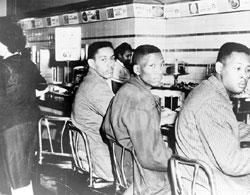
 This year marks the 50th anniversary of the Woolworth’s lunch counter sit-ins in Greensboro NC (pictured) which set off a wave of similar protests across the South and turned the tide against segregated eating facilities. But these were far from the first such actions. Integration of American eating places came about from a patchwork of regulations that sometimes successfully impeded discrimination and by the courageous actions of individuals and groups, black and white, who negotiated with, sued, picketed, and physically occupied restaurants beginning in the 1870s.
The Civil Rights Act of 1964, which offered the strongest protection against discrimination in restaurants up to then, was neither sudden nor was it evidence of the steady march of progress. A federal Civil Rights Act of 1875 was repealed by the Supreme Court just eight years later, after which Southern states enacted separate accommodations laws (Jim Crow), while other states passed or amended civil rights acts.
 Few state civil rights laws covered eating facilities, the most controversial area of public accommodations. White public opinion was strongly against blacks and whites eating together in restaurants. Segregationist sentiment grew stronger around the turn of the last century and again in the World War I period when many black Americans migrated North for jobs. Blacks lodged relatively few protests because the odds of winning in court were poor. Also, anyone brave enough to challenge discrimination needed enough social stature to refute the accusation of simply being a low-class ruffian. By the “Catch-22″ logic that long prevailed, any black person who went into a white-only restaurant was considered of poor character since proper black people knew better than to go where they were not wanted.
The following are examples of challenges against racism in restaurants that nevertheless occurred in the 20th century before passage of the Civil Rights Act of 1964.
1926 Organized by a cook, the black staff of an Alice Foote MacDougall tea room in NYC unites behind a black waitress discharged for serving a black customer. They all walk out, forcing MacDougall to change her policy.
1929 The president of the United Colored Socialist party is accosted by a waitress as he and a black associate enter the Mills Restaurant in Cleveland. Restricted to a table on the mezzanine, they are treated hatefully and a hefty service charge is added to their bill. They win in court after refusing to give up despite six postponements.
1935 Black activists test a new PA civil rights law in Philadelphia, leading to the arrest of four employees at Horn & Hardart’s Automat who seat five white parties while two black people stand by and wait for an hour. At Stouffer’s three black patrons receive their meals smothered in salt. The manager asserts that all Stouffer’s meals are “highly seasoned.”
1936 After two black New Yorkers are refused service at a restaurant in Bel Air MD, 17 bus loads of fellow (but white) WPA workers en route to a Washington conference protest. The demonstration is peaceful yet 40 state police armed with machine guns and tear gas arrive and arrest the two blacks.
1943 Howard University students sit-in at a “white trade only” eatery in DC, a city in which few restaurants are open to people of color including the cafeteria in the Department of Justice.
 1943 The newly formed Congress of Racial Equality (CORE) initiates a sit-in at the Jack Spratt café in Chicago where one of CORE’s founders, executive director James Farmer (pictured in 1965), had been treated rudely the previous year.
1946 The United Packinghouse Workers union (CIO) files charges against Hackney’s Seafood restaurant in Atlantic City on behalf of two black delegates refused admittance and files false-arrest charges against the police department which arrested protesting union picketers.
1947 After 11 bias suits against Bullock’s department store in Los Angeles fail to alter the store’s discrimination policy, CORE initiates sit-ins in the store’s tea room. Several white bystanders join the protest by informing waitresses they will wait to be served after the black patrons.
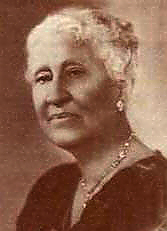
 1951 Long-time civil rights activist Mary Church Terrell (pictured), in her late 80s and using a cane, joins picketers in front of Washington DC’s Hecht’s department store, which does not permit its many black customers to use its cafeteria. The store changes its policy in 1952.
1958 Dime store lunch counters are integrated in Louisville KY after unpublicized sit-ins, but other restaurants continue to refuse to serve blacks.
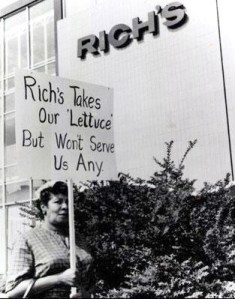
1960 Martin Luther King is among the 51 protesters arrested at the famed Magnolia Room at Rich’s Department store in Atlanta. A few months later the store changes its policy.
1964 As passage of the bill nears in the House, Ku Klux Klan members sit-in at a Krystal Hamburger stand in Atlanta to prevent SNCC (Student Nonviolent Coordinating Committee) members from occupying it.
Read more about discrimination in American restaurants.
© Jan Whitaker, 2010
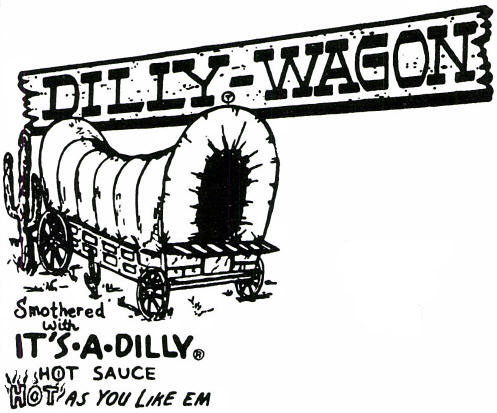 Dilly-Wagon drive-ins, which looked like oversize prairie schooners, were certainly eye-catching enough in the 1960s but their main attraction was the “It’s a Dilly” sauce served on burgers and hot dogs. People still remember it longingly. I wish somebody would describe it. Was it a mayonnaise-based sauce with dill in it like that used with fish? What made it hot?
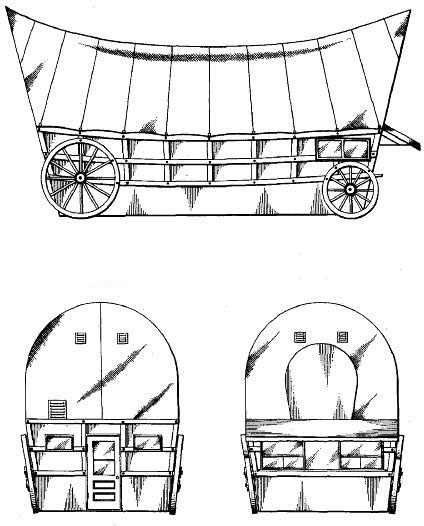 In February of 1961 Charles applied for a patent for the design of his drive-in structure [see illustrations]. In the early 1960s local and regional drive-ins were still popular, not yet squeezed out by national fast-food franchises. Why he chose a Conestoga wagon style is unknown, but as was true of all roadside businesses, being able to catch the eye of passing motorists was critical.
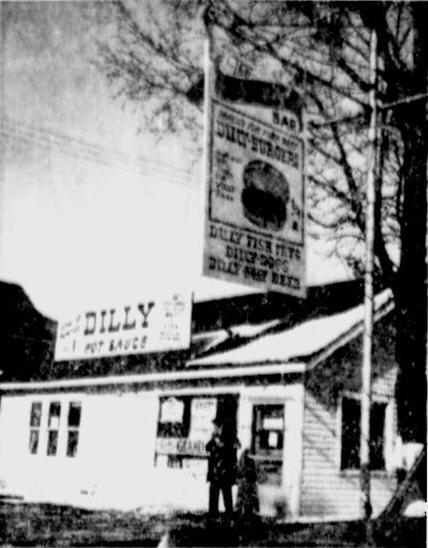 Exactly how many Dilly-Wagons were franchised, and where, is unknown. I’ve been able to locate one in New Hartford NY and one as far away as Sheboygan WI. The Wisconsin Dilly-Wagon, purchased in 1963, was run in conjunction with a Dairy Queen stand. There was also a Dilly Bar operated by Charles Weinstein and a partner on Curry Road in Schenectady NY (pictured, 1966). Curiously, this operation, which was not in the form of a covered wagon, specialized not just in burgers and hot dogs but also Chinese egg rolls, Southern fried chicken, and “dilly root beer,” whatever that might be.




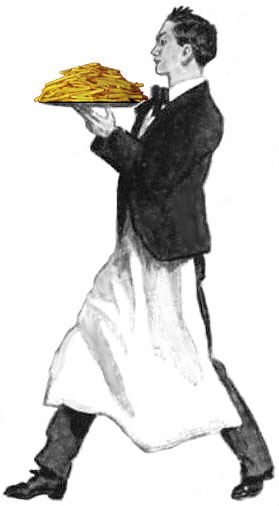



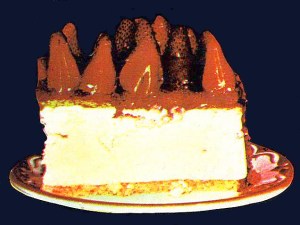
 It seems as though almost all of history’s food forces have cooperated to give cheese top billing in restaurant meals today. Only one cheesy custom failed to catch on, that of finishing a meal with cheese and fruit as was done in small French and Italian restaurants in the later 19th century. Craig Claiborne argued in 1965 that even the best New York restaurants didn’t know how to handle the cheese course. They had poor selections which tended to be old, overripe, or served too cold. One restaurant admitted their chef was in the habit of popping cheese straight from the fridge into the oven to soften it. Restaurateurs that Claiborne interviewed insisted that Americans didn’t like cheese after a meal. I’d agree that most prefer their after-dinner cheese in the form of cheesecake.
 Cheese has been a staple food in American eating places probably since the first tavern opened. Regular meals were served only at stated hours but hungry customers could get cheese and crackers at the bar whatever the hour. For “Gentlemen en’passant,” the Union Coffee House in Boston promised in 1785 that it could always furnish the basics of life: oysters, English cheese, and London Porter. Across the river in Cambridge, the renowned
 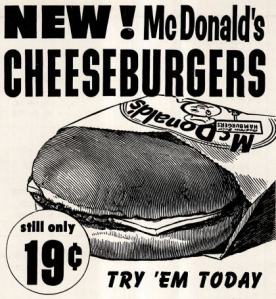 Cheeseburgers were a product of the fast food industry of the 1920s, claimed as inventions by both the Rite Spot of Southern California and the Little Tavern of Louisville. Strange there aren’t thousands of other contenders because what was there to invent, really? Cheeseburgers were strongly associated with Southern California before WWII — Bob’s Big Boy of LA introduced cheeseburgers in 1937. Another step forward came in the 1930s when a bill was introduced in the Wisconsin legislature requiring restaurants and cafes to serve 2/3 oz. of Wisconsin cheese with every meal costing 25 cents or more. In the same decade Kraft Cheese was among major food producers providing restaurants with standardized recipe cards.
 It was after WWII that cheese spread its melted gooeyness everywhere — on
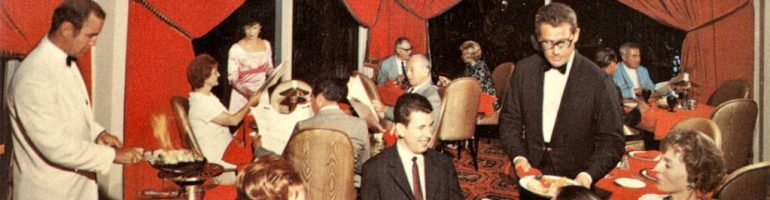
 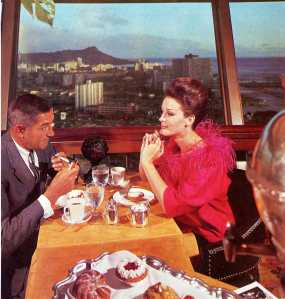 They are so clever and, yes, so corny in a circus-y way that revolving restaurants seem like they must be a product of American ingenuity – but they aren’t. The restaurant in Seattle’s 1962 World’s Fair Space Needle was not the first. Nor was it the second, third, or fourth. According to Chad Randl in A History of Buildings that Rotate, Swivel, and Pivot, the first revolving tower with a restaurant opened in 1959 in Dortmund, Germany. Sometime in 1961 came spinning restaurants in Frankfurt, Cairo, and Honolulu (pictured), in about that order.
 The revolving building itself actually came earlier and was rather simple technologically. In 1898 a leading attraction in Yarmouth, a seaside resort in England, was a rotating observation tower on the beach. Decades later designer Norman Bel Geddes proposed a restaurant set atop a rotating column for the Chicago World’s Fair of 1933 (pictured). Unlike his, though, the design used by most restaurants features an interior ring containing the restaurant’s kitchen that does not rotate.
 Despite being fairly easy to engineer and not really all that new, in the 1960s revolving buildings became symbols of progress. Often set atop communications towers, they were intended to help defray costs of tower construction and operation. Today, whether in towers or on hotel roofs (where they look like flying saucers that have landed), they continue to represent modernity in developing countries around the world. While North America has largely stopped building them or has shut down forever their little 1-HP motors, still they spin on in Kuala Lumpur, P’yongyang, and countless other places.
 For diners gazing from on high – whether upon the Pyramids, distant mountains, or, more often, streets clogged with traffic – revolving restaurants are pleasant. Who doesn’t enjoy the feeling of god-like detachment while sipping a martini and surveying a cityscape? Yet, on the whole revolving restaurants are geared more to “peak” dining occasions than to the consumption of haute cuisine. Their forgettable yet expensive food has tended not to win them steady local trade. Plus, tackiness such as found in Florida hotels with Polynesian restaurants twirling in the sky, or “Certificates of Orbit” such as once were given out at Butlin’s Revolving Restaurant in London’s post office tower (detail pictured), have branded them cheesy tourist traps in many people’s minds.
 What could be more starkly different from the somber coffee shops of today with their earnest and wired denizens than the beatnik coffeehouses of the 1950s? Could Starbucks be anything but square to the beat generation?
 Although the word beatnik came into usage around 1958 (inspired partly by Sputnik), the phenomenon of dropping out of the “rat race” to lead an existentialist, non-consumerist life was part of the aftermath of World War II akin to the “Lost Generation” after World War I. The first coffeehouses sprang up in Greenwich Village in the late 1940s, but the beats weren’t averse to hanging out in cafeterias either — their “Paris sidewalk restaurant thing of the time.” When coffeehouses began levying cover charges for performances, beatniks tended to drop out of them too.
 The heyday of the coffeehouse was the late 1950s into the early 1960s. Few did much cooking so they weren’t restaurants in the true sense, but many of them offered light food such as salami sandwiches (on exotic Italian bread) and cheesecake, along with “Espresso Romano,” the most expensive coffee ever seen in the U.S. up til then. Of course the charge for coffee was more a rent payment than anything else since patrons sat around for hours while consuming very little. Other then-unfamiliar food offerings included cannolis at La Gabbia (The Birdcage) in Queens, Swiss cuisine at Alberto’s in Westwood CA, Irish stew at Coffee ’n’ Confusion in D.C., les fromages at Café Oblique in Chicago, “Suffering Bastard Sundaes” at The Bizarre in Greenwich Village, and snacks such as chocolate-covered ants and caterpillars at the Green Spider in Denver.

 It's great to hear from readers and I take time to answer queries. I can't always find what you are looking for, but I do appreciate getting thank yous no matter what the outcome.
 Restaurant-ing through history