It was a dilly

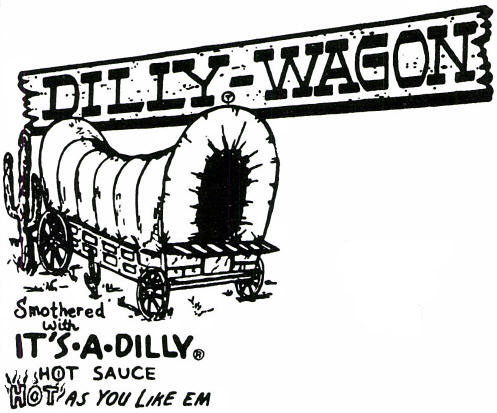
Dilly-Wagon drive-ins, which looked like oversize prairie schooners, were certainly eye-catching enough in the 1960s but their main attraction was the “It’s a Dilly” sauce served on burgers and hot dogs. People still remember it longingly. I wish somebody would describe it. Was it a mayonnaise-based sauce with dill in it like that used with fish? What made it hot?

The sauce was created by Charles Weinstein who experimented with it in his Potsdam NY kitchen after an illness prevented him from continuing with his former business, selling apparel. The sauce, which was guaranteed to “perk up … just about any meat or meat dish,” was also sold in food stores, with three degrees of hotness, Pleasing, Extra, and Triple “for those who like a sauce that sizzles.”

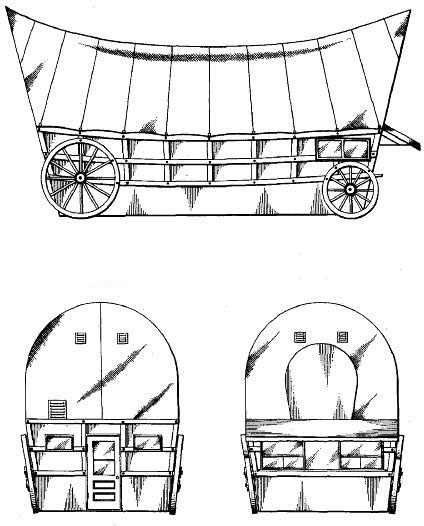
In February of 1961 Charles applied for a patent for the design of his drive-in structure [see illustrations]. In the early 1960s local and regional drive-ins were still popular, not yet squeezed out by national fast-food franchises. Why he chose a Conestoga wagon style is unknown, but as was true of all roadside businesses, being able to catch the eye of passing motorists was critical.

Later in 1961 an advertisement appeared in the South Burlington High School yearbook for a Dilly-Wagon drive-in at 1907 Williston Road. That same year Charles ran an ad in the Oneonta NY paper saying that the drive-ins cost only $12,750, could be opened in three short weeks, and were ideal for a college town. By August there were Dilly Wagons not only in Burlington but in Rutland VT and in Potsdam NY, and he was hoping to place more in the Lake George area.

Strangely, by summer 1962 the price of a Dilly Wagon had inexplicably jumped up to $20,000, according to a franchise advertisement that appeared in a Pennsylvania newspaper.

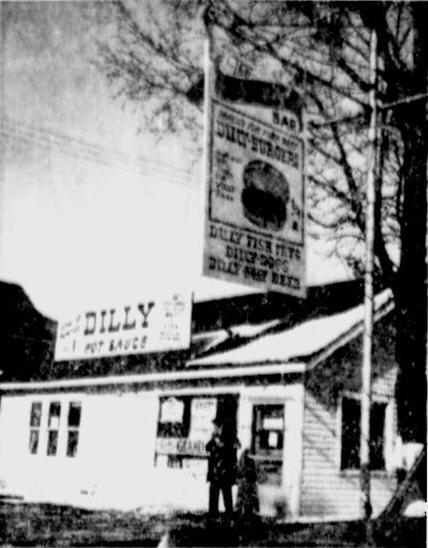
Exactly how many Dilly-Wagons were franchised, and where, is unknown. I’ve been able to locate one in New Hartford NY and one as far away as Sheboygan WI. The Wisconsin Dilly-Wagon, purchased in 1963, was run in conjunction with a Dairy Queen stand. There was also a Dilly Bar operated by Charles Weinstein and a partner on Curry Road in Schenectady NY (pictured, 1966). Curiously, this operation, which was not in the form of a covered wagon, specialized not just in burgers and hot dogs but also Chinese egg rolls, Southern fried chicken, and “dilly root beer,” whatever that might be.

© Jan Whitaker, 2011

117 Comments

Filed under drive-ins, food

Wayne McAllister’s drive-ins in the round

Architects who design restaurants often have labored in anonymity, and that goes ten-fold for those whose work involved drive-in restaurants. In the beginning drive-ins were simple shacks plastered with signs, as were other buildings of the early automobile age. Like the chicken coups converted to motor courts and the farmers’ fields rigged out for overnight camping, they served as temporary fixes for seat-of-the-pants entrepreneurs looking to make a quick buck from the passing traffic.

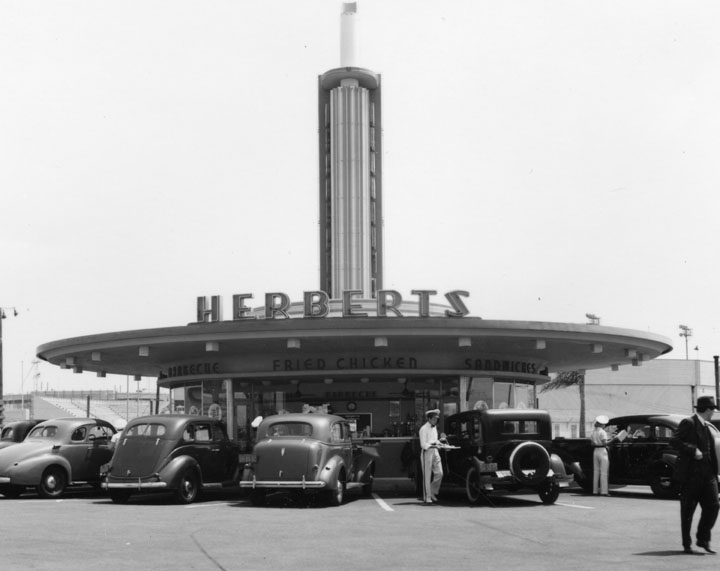
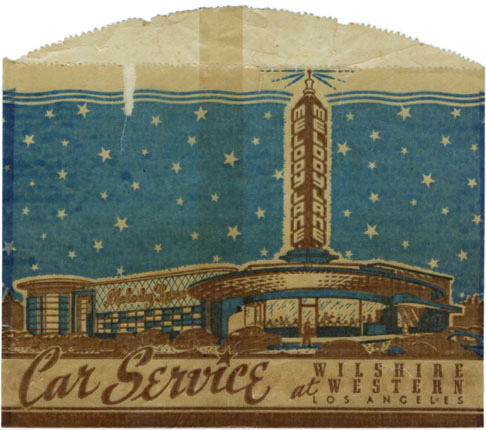
The couple of dozen Los Angeles drive-ins Wayne McAllister designed in the 1930s – the Wich Stand, Simon’s, Robert’s, Herbert’s, Melody Lane — were likewise ephemeral, tumbling into ruins with rising real estate values. Yet, despite the ephemerality of the form, he was one of the few designers who managed to develop a functional and aesthetically satisfying style for an inexpensive roadside building type.

This post is based mostly upon Chris Nichols’ The Leisure Architecture of Wayne McAllister, a book that traces McAllister’s career and conveys his genius at transforming crude vernacular building forms into sophisticated expressions of car culture.

Born in San Diego, Wayne McAllister and his wife Corinne, then both 20, took on a major project in 1927 with the Moorish Moderne design of Agua Caliente, a Prohibition-era Tijuana gambling mecca. Wayne was a self-taught high school dropout whose first job was designing houses, a task he was able to execute handily. According to his own account, he regularly completed a new design each day. In the course of a roughly 30-year architectural career, his work focused on the design and remodeling of hotels and restaurants in Los Angeles and Las Vegas. Among his Las Vegas hotel projects were El Rancho Vegas, the Desert Inn, and the Sands Hotel, while a partial list of his LA restaurants includes Café Caliente, Mike Lyman’s, Richlor’s, Lawry’s, Clifton’s, and Bob’s Big Boy. From 1956 to 1961 he was an architect for the Marriott Corporation.

Although he is best known for the Sands, his circular drive-ins are considered significant in architectural history. Alan Hess, author of Googie, noted that thanks to Wayne McAllister, “Commercial vernacular design developed a respectable architecture that stands on its own right, not simply as a second-rate version of high art design.” It is interesting that even a lofty modern architect like Ludwig Mies van der Rohe developed a drive-in restaurant design, in 1945 (it was never built).

Wayne’s circular drive-ins typically had 20-foot pylons on the roof on which the drive-in’s name was spelled out, with horizontal louvers partially concealing neon tubes that made the signs glow. While his early designs had no doors – the businesses stayed open 24/7 and evidently had no need of heating or air-conditioning – this element was eventually modified. For a time his styles were influential, but after World War II when drive-ins expanded throughout the country, round buildings with overspread roofs were scrapped for rectangular structures from which long canopies stretched outward.

Noir crime novelist Raymond Chandler referred to Los Angeles’ drive-ins “gay as circuses” in The Little Sister (1949), leading Alan Hess to remark: “In almost anyone’s mental map of Los Angeles, the drive-ins of the thirties had become indelible landmarks.” Their images remain no less powerful today.

© Jan Whitaker, 2011
5 Comments

Filed under drive-ins, odd buildings

Making a restaurant exciting, on the cheap

This post was inspired by an Eater.com story called Ten Ways to Make Your NYC Restaurant Less Boring. I decided to match their suggestions with examples from the past. I am presuming that author Greg Morabito had tongue in cheek when he thought up his ten tips, so I am doing the same. My suggestions have been tailored for present economic conditions.

10. Hire a Forager – This is a great idea and bound to add interest. But go beyond greens. In 1884 an enterprising Chicago restaurant forager stalked snow birds (juncos) along the city’s cable car lines. Delicious on toast. Look around. Think pigeons!

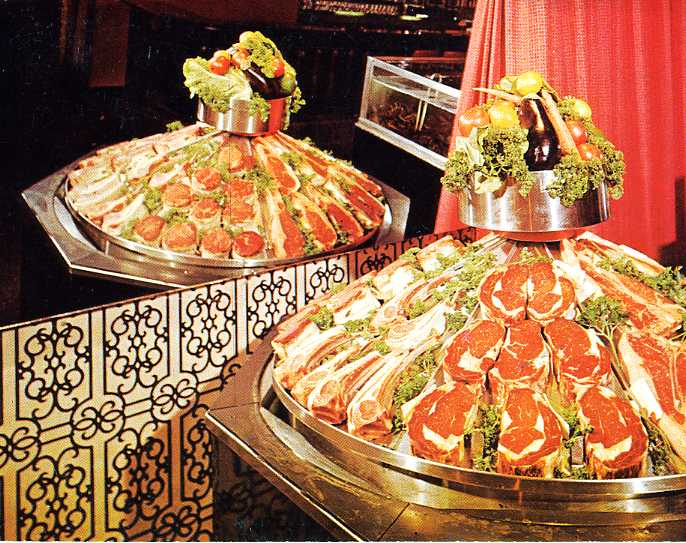
9. Serve Whole Animals – Yes, and display them prominently. Dead animals – whole bears and bison — strung up around the entrance, and raw meat generally, have always been irresistible to restaurant goers. Live animals too. Keep in mind the 1941 restaurateur who took delivery of a giant sea turtle and stored in it the restaurant window for several days before putting it on the menu. Another idea: on those really hot days set up a few premier tables in the meat locker.

8. Hire a Chef from Portland – Or, whatever place is trendy at the moment. So happens in 1922 the management of the Mandarin Inn in the college town of Champaign, Illinois, went all the way to California to import a chef who could “give the students the best possible in Chinese dishes.” And, by the way, they don’t have to be from Portland literally. Many of the French chefs of the 19th century were from Germany and China.

7. Don’t Play the Same Music Everyone Else Plays – A children’s choir would be notable and might draw in parents and grandparents. As another entertainment idea, don’t rule out fortune-tellers. They are always a hit during economic downturns and will work for tips.

6. Give Your Guests Garlic Bread Instead of Regular Bread – Ok, but don’t overdo it. Just keep in mind some people are leery of garlic – and strange music, which they tend to associate, if Irvin S. Cobb is still to be believed. He ate in restaurants often, all the while longing for corn bread. He complained in 1913, “I have been howled at by a troupe of Sicilian brigands armed with their national weapons – the garlic and the guitar. I have been tortured by mechanical pianos and automatic melodeons.”

5. Start a Chef’s Counter – Make cooking your floor show. Consider hiring a man in a tuxedo to mix salads under a spotlight. Flames and knives are popular. I think public butchering is going too far but don’t be afraid to bring some of the behind-the-scenes jobs out front, such as dishwashing. This hasn’t ever been done that I know of.

4. Invest in a Serious Mixology Program – A good bartender can come high, so don’t underestimate the appeal of great cocktail names, especially during election season. Try updating some used at Brigham’s Oyster House and Restaurant in Boston in the 1830s, 1840s, and 1850s, such as Fiscal Agent, I.O.U., and those that commemorated politicians and political events, like Free Soiler, Clay Smash, and Webster Eye-Opener. Mr. Brigham retired very, very rich.

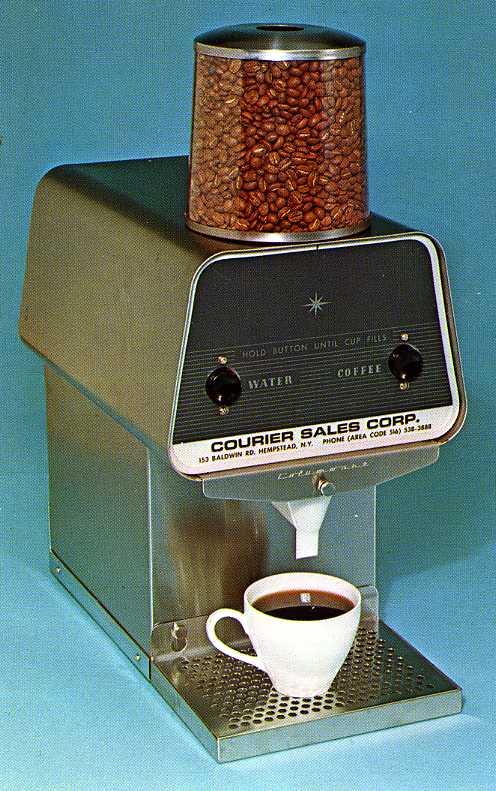
3. Invest in a Serious Coffee Program – I like the idea of a coffee sommelier, and you can definitely charge more for your coffee drinks this way. If you’re going to do this you absolutely must not use instant coffee. Ever. Not even if you have one of those instant coffee machines with the beans showing on top.

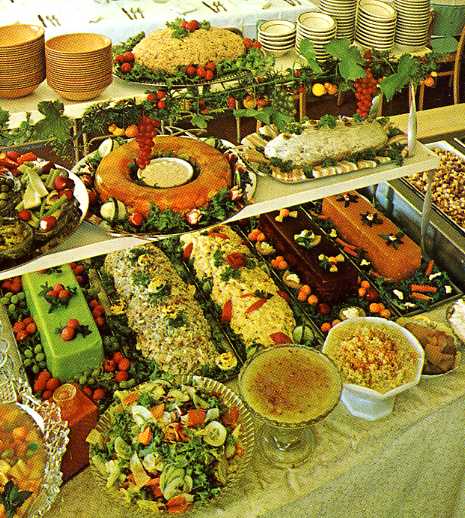
2. Serve More Vegetables – Given the high price of farmers’ markets, it makes sense in these tough times to look for ways to reduce costs. The advice given in the June 1968 edition of Cooking for Profit still makes sense. No one can tell you’re using canned vegetables if you encase them in gelatin. And please, describe your creation as “en gelée.”

1. Offer a Great Deal Every Night of the Week – A few deals used in previous downturns that are ripe for recycling: offer free second helpings, especially of gelatin; no charge for (gelatin) desserts; sell meal tickets to frequent diners; decorate with antiques – that are for sale; hold poker tournaments during the afternoon cocktail hour; invite celebrities to eat for free if they agree to wear their best clothes.

© Jan Whitaker, 2011

5 Comments

Filed under miscellaneous

Duncan’s beefs

Duncan Hines celebrated simple, home-style American food. But as a printing salesman whose territory covered the entire country he ate in enough restaurants that by his 60s he had accumulated quite a few dissatisfactions with cuisine and service. “Every day on the road adds to my list of pet peeves,” he told an interviewer in 1947. In retrospect it’s clear that the decades in which he rated restaurants for the Adventures in Good Eating directories, the 1930s and 1940s, were not the country’s finest for restauranting. Some of his complaints are dated but others still ring true today.

● Chef’s specials: “Most Chef’s Specials are ground-up leftovers.”

● Chicken a la king: “I always dodge chicken a la king, if it is offered at bargain prices.”

● Cover-ups: “Foods doused with gravies or sauces.”

● Warmed-up baked potatoes.

● French fries kept warm under a heat lamp: “The grease soaks through.”

● Restaurants that steer patrons into the bar while they wait for their table.

● Being seated at a table that hasn’t been cleared of the previous patrons’ dirty dishes

● Restaurants that crowd patrons “like sardines.”

● Certain small towns: “The states between the Mississippi River and the Pacific Coast are pretty much the Gobi Desert as far as good cooking in the small towns goes.”

● “Maryland fried chicken” which is widely advertised but often turns out to be “old chickens covered with thick batter.”

● Long menus that contain nothing outstanding.

● Roadside stands: “Never eat at hot dog or hamburger stands.”

● Drug store counters: “How in God’s name can anyone who regularly eats drugstore snacks ever be expected to recognize a good meal when it’s served?

● Restaurants that ignore local specialties, such as those on the Gulf that feature chicken and steak rather than red snapper. Why no fiddleheads on menus in Maine? he asked.

Leave a comment

Filed under guides & reviews

Anatomy of a restaurateur: Anna de Naucaze

In 1908 two women adventurers opened The Rose Tree Inn, a tea room in a 200-year old house in Northampton, Massachusetts. Both called themselves “Madame” and claimed to be related to European nobility by birth or marriage. They were used to supporting themselves and living by their wits. One, Anna [pictured], a widow, was a former British stage actress, while the other, Marie, who had an 11-year old son, was married to a criminally inclined soldier of fortune who masqueraded as a German baron and was exiled to a British penal colony.

Each had arrived in New York City from London in 1907 to cover the sensational Harry Thaw murder trial for British papers. Almost immediately they became involved in what might be termed attempted “capers.” Madame Anna de Naucaze, 52, claimed she knew the secret to winning at roulette and could prove it if only someone would back her at Monte Carlo, while Madame Marie von Veltheim, about 38, said she had a treasure map showing where $4 million in gold was buried in mountains in South Africa’s Transvaal.

Next they got in trouble with the courts for misappropriating a photo album that was evidence in the Thaw trial. The album contained photographs of Thaw’s wife Evelyn Nesbit who had been having an affair with Thaw’s victim, architect Stanford White. With a possible charge of larceny hanging over them, Anna returned the album to Thaw’s lawyer.

And then they went to Northampton. By comparison with their pasts, the small college town must have seemed dull. It’s not clear what drew them there, though if they were looking for a way to make money, they found it. The RTI, as it was known by its primary patrons, Smith College students, became a very popular place known for its sumptuous desserts and continental, “bohemian” atmosphere. Marie, who claimed to be the inn’s originator, stayed around until about 1913 when, after looking for a location for a new tea room, she evidently left for New York to “save her husband.”

Anna ran the tea room for the next 10 years, catering to students from Smith, Amherst College, and the Massachusetts Agricultural College. She took out advertisements as far away as Yale and also entertained visitors from her stage and literary past. She did well enough to warrant additions to the inn, one a screened-in section known as “the bird cage.” She opened two annexes in town, the Rose Tree Hut and the Rose Tree Den. At some point there was also a summer branch of the RTI in Old Orchard, Maine.

In addition to the attractions of delicious food and the quaint house with its old world charm, everyone was intrigued with the eccentric person of Anna herself, particularly because her gender was ambiguous. She dressed like a man and seemed mysterious. As one student put it, “Some say she is fleeing from justice, that she married a Frenchman and were greatly in debt so left France and came to America.” She was reported at various times to have been born in France, Belgium, and Russia. For several years she published a magazine called “4 All,” and she occasionally appeared in local theater productions. She was also known for writing her own humorous and folksy advertising copy, such as, “If you descend in an aëroplane we will be ready for you, but we much prefer to have you telephone.” According to a 1915 story about her, after business hours she spent evenings “alone with her dog and her revolver.”

In the early 1920s Anna fell afoul of Smith’s good graces over issues such as the inn’s cleanliness and reports that Smith students were smoking, and maybe drinking and meeting boys there. In 1923, when the college still had the power to control which off-campus restaurants students could patronize, the RTI was removed from the approved list. The RTI could not go on and, at age 69, Anna was deprived of her income. She lived in Maryland for a while but died in NYC in 1924. For many years later the building was occupied by the Rose Tree Filling Station.

© Jan Whitaker, 2011
7 Comments

Filed under proprietors & careers, tea shops, women

The checkered career of the roadhouse

Before the Civil War roadside drinking and eating places on the outskirts of cities were visited by people who enjoyed making them the destination of a leisurely buggy ride. In winter sleighs full of young people from Boston would go to North Cambridge or Arlington for steak dinners and dancing. Although they sometimes drew a rough crowd, such as the pickpockets and grifters who gathered for cattle fairs and races, these places were generally considered respectable.

As railroads spread across states such as Massachusetts following the war, fares fell and roadhouses drew an undesirable, rowdy crowd. They gradually began to fade away as cities grew. Yet their unsavory reputation lingered and grew more intense with suburbanization in the late 19th century. Minnesota legislated against roadhouses in 1915, and towns around Chicago fought them and often succeeded in having their liquor licenses taken away. Others, however, survived and became legit — for instance Busch’s Grove originally located on the outskirts of St. Louis.

The same reform fervor that attacked drinking (and prostitution) in roadhouses brought new life to them as they were turned into colonial-style “wayside” tea houses by middle-class women in the teens and 1920s. As a writer for Good Housekeeping magazine observed in 1911, these were just the sort of places to appeal to “quieter folks of good taste.” The most famous example, the Wayside Inn of Sudbury, Massachusetts, was bought in 1923 by Henry Ford to rescue it from its alcoholic past.

There were risks in opening a teetotalling establishment in an old watering hole. As the proprietor of a Pennsylvania roadhouse converted into the Huckleberry Inn discovered, old customers had a habit of coming by and demanding their accustomed drinks.

Was this the reason why liquor was found at the Nine Owls Tea Room in Pembroke, Massachusetts, when town police raided it in 1927? The Nine Owls, on Mattakeesett street, was run by Elizabeth Buxton, who had moved to town from Somerville with her family in the 1920s. Had it once been a roadhouse? It is not clear whether she founded the tea room or took it over from someone else, or exactly how long she was its proprietor. In 1932, a year after her husband was struck by a car and killed, she advertised for boarders but I have found no trace of her after that date.

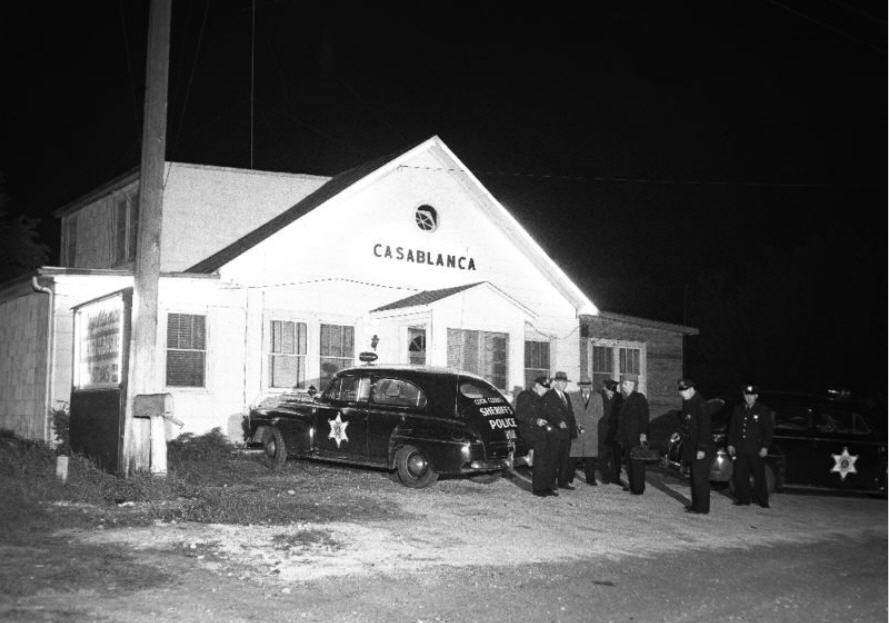
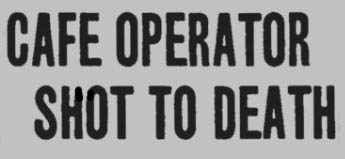
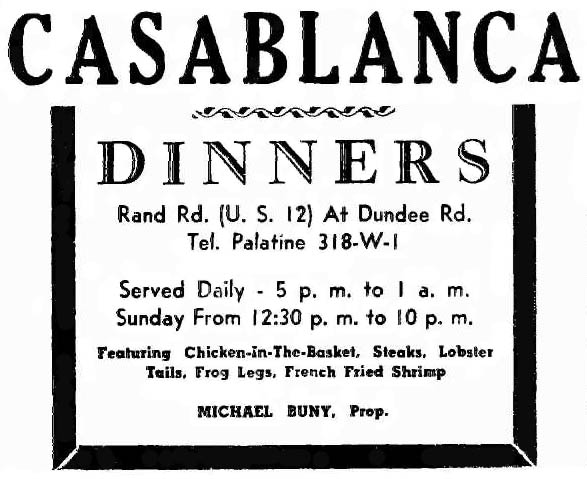
As shown in the accompanying illustration, the Nine Owls eventually reverted to a roadhouse. In this photo, genteel elements from its tea room past such as window boxes, canvas awnings, and flower gardens are missing. A Budweiser sign is prominent. The reputation of the Nine Owls may have been pristine — but to me it has the look of a roadhouse in a Hollywood film noir. Its moodiness reminds me of the image of Casablanca in Palatine, Illinois, scene of a murder in 1949.

The Nine Owls was in operation under that name at least until 1970 when its owner, Edwin Mason, was killed in a motorcycle accident. At some later point the building burned down.

© Jan Whitaker, 2011
4 Comments

Filed under roadside restaurants

Famous in its day: the Aware Inn

Whether or not it was the first organic restaurant of the post-WWII era, it is clear that Los Angeles’ Aware Inn significantly predated the late ’60s beginnings of the natural food movement in restaurants. When Jim and Elaine Baker (pictured below in 1955) opened it in 1957 they were dedicated to providing meals using fruits, vegetables, and meats produced without pesticides, artificial fertilizers, and hormones.

Jim Baker, a decorated WWII marine who trained soldiers in jujitsu during the war, came to southern California in 1951 to audition for Tarzan movies. When his film career failed to materialize, he joined the Nature Boys, a small cult of body-building health devotees who ate organic foods. Over the next two decades, he transferred his knowledge of organic food and cooking to a number of Los Angeles restaurants that he and Elaine started, including two Aware Inns, The Old World, and The Source.

Soon after its opening, the original Aware Inn, at 8828 Sunset Boulevard on the Strip (shown above ca. 1981), became a magnet for Hollywood stars concerned with their health and beauty. Although the menu at the Aware Inn was organic it was pretty standard in other regards. True, it included fresh-squeezed carrot juice and brown rice, but the menu was also filled with organic versions of popular dishes such as burgers, beef stroganoff, and veal Marsala. Baker insisted in 1959 that he was no extremist. He aimed to serve “well rounded meals, but without the fats, carbohydrates and adulterants that you get in most restaurant food.” However in 1969, after his divorce from Elaine, he established The Source, a vegetarian restaurant where raw foods were served almost exclusively.

The Inn’s most famous dish was a hamburger interestingly named “The Swinger” which combined ground beef with cheese and chopped vegetables (see Recipe page). What inspired the name is uncertain but Jim was notably attractive to women. He reciprocated. It was at an apartment above the Aware Inn where in 1963 an irate husband came for revenge. A black belt in judo, Jim disabled his attacker, then used his foe’s gun to kill him (marking the second time he had killed a man in a dispute). His amorous career was just beginning – at the time of his hang-gliding death in 1975 Jim lived in Hawaii with 13 young women.

Following the divorce, Elaine carried on at the Aware Inn on Sunset (the second Aware Inn, in Sherman Oaks, had been sold to Al Kaiser in 1961). She kept the restaurant’s organic foods emphasis but cultivated the flavor of a European café rather than following Jim’s path at The Source which would lead him to develop a cult following and start a commune. A 1969 restaurant review praised the Aware Inn for dishes that were “consistently good and sometimes superb.” In addition to the Swinger, some of the restaurant’s signature items were chicken molé, roast brisket and kasha, and, for dessert, créme de Cassis over blueberry ice cream.

By 1970 the Aware Inn was one of a growing number of health food restaurants thriving in Los Angeles, but at the end of the decade it was getting poor reviews and went up for sale. In 1981 it was rechristened La Petite Maison. Later it became Rama Garden, a Thai restaurant.

© Jan Whitaker, 2011
48 Comments

Filed under alternative restaurants, proprietors & careers

Waiters’ games

Since this post is about server dishonesty I’ll start off with a couple of disclaimers. First, I don’t mean to imply that all, or even most, servers – or kitchen staff – are dishonest. Also, the stories I’ve found are mostly about men but I don’t take that to mean that men are more dishonest than women or that women are less skilled in larceny and chicanery then men.

The history of servers and kitchen staff cheating and stealing reveals an extraordinary degree of laxity in restaurant management, which did not begin to change significantly until the Prohibition era when the idea of system and efficiency took hold in some eating places, especially chains.

For most of the 19th century and well into the 20th many restaurants operated on a cash basis and kept no records whatsoever. Servers didn’t even use written customer checks. Under a (non)system such as this, exemplified in restaurants such as Gonfarone’s in Greenwich Village as described in the book Papa’s Table d’Hôte, waiters needed little larcenous intent to end up with money that should have gone to the house. As author Maria Sermolino recounts, “even a waiter who tried to be honest might find his pockets unaccountably bulging with dinner money which, somehow, got confused with his tip money. There was so much of it pouring in, that everybody shared.”

Waiters at Gonfarone also regularly made off with bottles of wine, roasts, and chickens, according to Sermolino, daughter of one of the restaurant’s owners. Her father refused to crack down on the practice, claiming that there was plenty to go around and if the waiters felt distrusted they would steal even more. A similar winking attitude evidently prevailed at the New York hotel described by Gay Talese in A Writer’s Life. There, in the 1950s, the waiters routinely did their daily grocery shopping from the kitchen provisions, taking home whatever was on their list. The practice was referred to as “valising” and was so strongly identified with the waiting occupation that the staff referred to each other as valises, as in “Who’s that new valise the chef just hired?”

Probably pilfering has gone on as long as there have been restaurants, yet complaints about it seem to begin with the influx of immigrant waiters in the later 19th century. Written checks and checkers who wrote down and totaled up whatever food orders waiters carried out of the kitchen came into use in some restaurants around the 1880s. Waiters were required to pay cash for their checks when they came on duty; at the end of the shift their used checks would be totaled and they would receive change and/or a commission if that was due to them.

The check-checker system was supposed to put an end to the days when waiters palmed off sirloin steaks as porterhouses, pocketing the difference, or colluded with patrons to charge 25 cents on the dollar for a meal and receiving a very generous tip in return.

But, of course, it didn’t.

At first checks weren’t always written in ink, numbered, or marked paid, permitting them to be altered, discarded and replaced, or reused – with the end result of unaccounted for cash going into the waiter’s pocket. But even when these gaps were remedied, the games continued. Food was held under the tray and smuggled out of kitchens right under the eye of the checker. Worse yet, for the patrons, their meals might be assembled, completely outside the system, from uneaten scraps left behind on the plates of departed diners. A penciled check would be presented, then erased after payment was taken.

As more safeguards were put in place, collusion became necessary. Waiters conspired with checkers who would leave certain items off the tally. At the Chicago’s World Fair, where waiters were required to buy a set amount of tickets each day with which to pay for food orders from the kitchen, the workers who collected the tickets resold them at a steep discount off face value to restaurant managers who then resold them to waiters at a discount. The syndicate of ticket takers, managers, and waiters all made money at the expense of the Fair’s restaurant concessionaires.

Bartenders, too, have enjoyed lucrative schemes, such as pouring drinks from their own bottles of liquor and keeping the payments. Proof that larceny behind the bar hasn’t ended is found in a 2009 book The Hungry Cowboy. Its author Karla Erickson reveals how a bartender in collusion with a server and an assistant manager diverted a significant amount of cash by ringing up a large number of sales as voids. The manager noticed liquor costs rising in relation to receipts but didn’t investigate further until his usual sales bonus was withheld.

The beat goes on. Computerized orders and credit cards have created new barriers but have not, I have no doubt, foiled cheating completely.

© Jan Whitaker, 2011

2 Comments

Filed under restaurant customs

Anatomy of a restaurateur: Harriet Moody

It’s a good bet that there have not been many women, or men, who have opened their first restaurant at age 68 – and, furthermore, made a success of it.

Harriet Tilden (Brainard) Moody [pictured below at about age 20] was exceptional in many ways. She built a culinary reputation long before she opened Le Petit Gourmet in 1920 in Chicago’s Italian Court at 615 North Michigan Boulevard. She had been one of the city’s premier caterers since 1890 when she founded the Home Delicacies Association. Despite her status as a divorcée, she managed to stay afloat in Chicago society, catering teas for charitable affairs and remaining a member in good standing of elite clubs such as the Fortnightly, the Twentieth Century, and the Chicago College Club. Working with her friend Bertha (Mrs. Potter) Palmer, she was one of the “lady managers” of the Chicago World’s Fair.

When her father, a once-wealthy cattle shipper, died in 1886, the recently divorced Harriet was forced to put her Cornell degree to work to support herself and her mother. She took a job teaching high school English but found she needed more income. Although she had never cooked, she deployed her refined tastes to produce dainty salads and baked goods of the sort appreciated by women of the upper classes. She supplied delicate dishes to Marshall Field’s department store tea room, to dining cars in trains departing from Chicago, and to fashionable private clients. Rising at 4:00 a.m. she spent several hours before she left for the classroom each morning supervising the Home Delicacies crew which numbered about 50 by 1899.

She became so successful that she not only supported her mother’s household, but also bought a second house where she lived and ran the catering business on the top floor until transferring it to larger quarters. She also owned a Greenwich Village townhouse on Waverly Place and a summer place, the historic William Cullen Bryant homestead in Cummington MA.

Harriet married poet William Vaughn Moody in 1909 and after his death the following year began to befriend other poets, often putting them up at her places in Chicago, New York, and Cummington, sometimes for months-long stays. At Le Petit Gourmet in the 1920s she organized poetry nights at which Carl Sandburg, Robert Frost, Edna St. Vincent Millay, and many others, read their work.

In 1911 Harriet established a branch of the Home Delicacies Association in London. Harry Gordon Selfridge, who as former manager of Marshall Field’s had jump-started her catering business in Chicago by ordering gingerbread and chicken salad from her, now asked for dishes for Selfridge’s, his department store which opened that year in London.

Seven years after establishing Le Petit Gourmet, Harriet and a woman partner opened another Chicago restaurant, Au Grand Gourmet, in a modern setting on the ground floor of a new building at 180 East Delaware. But her luck changed and in 1929 financial exigency required her to sell out. She attempted to recoup her losses a couple of years later with the publication of Mrs. William Vaughn Moody’s Cookbook.

Le Petit Gourmet, known simply as Le Petit, survived for decades under various owners, most notably Grace Pebbles, who also ran similar restaurants in Oak Park, Miami, Denver, and Hollywood. The Italian Court, constructed from 1919-1926 as a complex of shops and apartments for artists, was razed in 1968 to make way for an office building.

© Jan Whitaker, 2011
1 Comment

Filed under proprietors & careers, women

Basic fare: salad

To paint a complete portrait of the restaurant’s history, the iconic image of Man Carving a Roast should be accompanied by Man Mixing a Salad. For in haute restaurant-ology it is Man, not Woman, who rules the salad bowl.

In the 19th century wealthy men who styled themselves epicures often impressed their dining companions by rising from the table and mixing the salad. In the 20th century the custom passed into the hands of headwaiters at chi chi venues.

The tradition can be traced to peripatetic Frenchmen who wandered around Europe solemnly ministering to urban dinner parties with the contents of their small yet sacred chests of salad ingredients which included flavored vinegars, soy, caviar, truffles, anchovies, and other delectables.

In the 18th century sallad (spelled in the British manner) referred to a mixture of greens and herbs, possibly radishes, dressed with vinegar and oil and perhaps a raw egg. It could also mean chopped cabbage, known in the early 19th century as “cold” slaw. How many taverns, coffee houses, and other early eating places served salads is unknown but the number was probably very small and their salad days limited to springtime.

Although some green salads appeared on 19th century menus, the word salad more often referred to cold chopped meat or fish dressed with mayonnaise. Lobster and chicken were favorites. Combination salads and fruit salads did not come into popularity until the 20th century, largely due no doubt to the lower price of greens, vegetables, and imported bananas and pineapples.

The type of restaurant that did most to advance the green salad as a basic component of the American diet was the table d’hôte, a small French or Italian restaurant serving a fixed-price meal of about five courses. In 1844, patrons at the Café Tortoni in NYC enjoyed dinners of soup, stew-like entrees, roast meat, salads “mixed a la des Jardins,” and desserts. Head lettuce was rare, so typical salads featured romaine, chicory, dandelions, or field greens. Salad lovers particularly lauded Italian restaurants for their salads, both in the 19th and 20th centuries (despite the common appellation “Wop salad” ca. 1940-1970). In 1909 a patron wrote that Italian restaurant salads “are almost always good, and the dressing, made from red wine vinegar, is usually delicious. The mixed salad, in spring includes tomatoes, peppers, lettuce, celery, sometimes spinach and usually chives. Beet tops are also served as salad.”

In the New England countryside, on the other hand, salads were rare – and unsatisfactory. As a patron in a hotel dining room noted in 1881, “If by any chance there is lettuce on the table – for this happens rarely – and you manifest a desire to eat of it, the waiter puts before you the vinegar cruet and the sugar bowl. If you want to make a fool of yourself, call for salad oil. It will take some time to explain your meaning, and when you have done so the attendant will sneeringly inform her companions that ‘That feller eats grease on his lettis.’”

Although some thought salads were gaining popularity in the 1890s as sedentary city dwellers woke up to the wisdom of lighter fare, hotel cook Jessup Whitehead remarked in 1901 that “salads are not among the common popular dishes, and the average public seldom seems to think of them.” Many cooks had no idea how to prepare them, he added.

Salads became feminized in the 1920s. Perhaps it was the popularity of fruit salads in tea rooms, or the increasing use of flavored gelatin salads, but some male gourmets denounced women for preferring “comic salads” chosen for eye appeal rather than taste. Indeed there were some bizarre ones such as the Candlestick (illustrated), and others with names such as Clara Barton, Bon Ton, Butterfly, and Martini. Even a female tea room proprietor had to admit that “Atrocities have been committed in the name of salad.”

In the mid-20th century the tossed salad smothered under a layer of thick dressing became the standard start of a regulation meat and potatoes restaurant dinner. The high incidence of mediocre salads led syndicated columnist Inez Robb to launch a one-woman campaign in the 1960s against the two-pronged “red menace” to restaurant salads: chopped red cabbage and sludgy red-orange “French” dressing. Relief was on the way, for in the 1970s field greens returned, and ingredients rarely (but sometimes) found in salads of previous decades, such as olive oil, radicchio, and arugula came into wider use.

© Jan Whitaker, 2011
See also: salad bars, caesar salad

5 Comments

Filed under food