Category Archives: women

Famous in its day: Miss Hulling’s Cafeteria

In 1978 two of the nation’s top grossing independent restaurants were New York’s Tavern on the Green and Mama Leone’s, according to Restaurant Hospitality magazine. At the first, guest checks averaged $14.50, while at Mama Leone’s the average was $13. A big aspect of both restaurants’ business was alcohol, accounting for 30% of revenues in the case of Warner LeRoy’s Tavern on the Green.

Meanwhile, a sturdy favorite in downtown St. Louis, the venerable Miss Hulling’s, home of chicken livers, creamed spinach, and carrot marshmallow salad — with a negligible drinks business – had a check average of $2. Yet it still managed to rank #58 out of the 500 restaurants in the survey.

Miss Hulling’s was the creation of Florence Hulling, who came to St. Louis around 1907 as a teenager from rural Illinois to work as a private cook. After a few years in domestic service she went to work for the Childs restaurant chain. Eventually she was promoted to manager, a rare status for a woman at that time. Childs closed in 1928 and she and her sister Katherine took over management of the cafeteria in the Missouri Hotel. When it closed in 1930 Florence bought the failed restaurant on the opposite corner and named it the Missouri Cafeteria.  It would stay in business there for the next 62 years [shown just before razing].
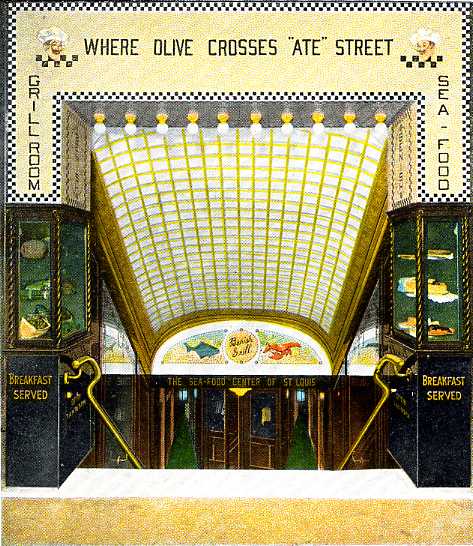
Florence married Stephen Apted in 1931 and in 1934 the Apteds opened a second cafeteria at 8th and Olive, calling it Miss Hulling’s, a name that would eventually apply to the Missouri Cafeteria as well. The Olive Street restaurant occupied a basement site that had previously held the Benish cafeteria [entrance shown] and before that – I think — Lippe’s, a restaurant operated by Detlef van der Lippe.

How well I remember a job I once held chauffeuring an alcoholic boss to Miss Hulling’s, his regular eating place and virtually his true home when he wasn’t bunking in the office of his advertising agency. I suspect he was not the only St. Louisan who relied on Miss Hulling’s for more than just food.

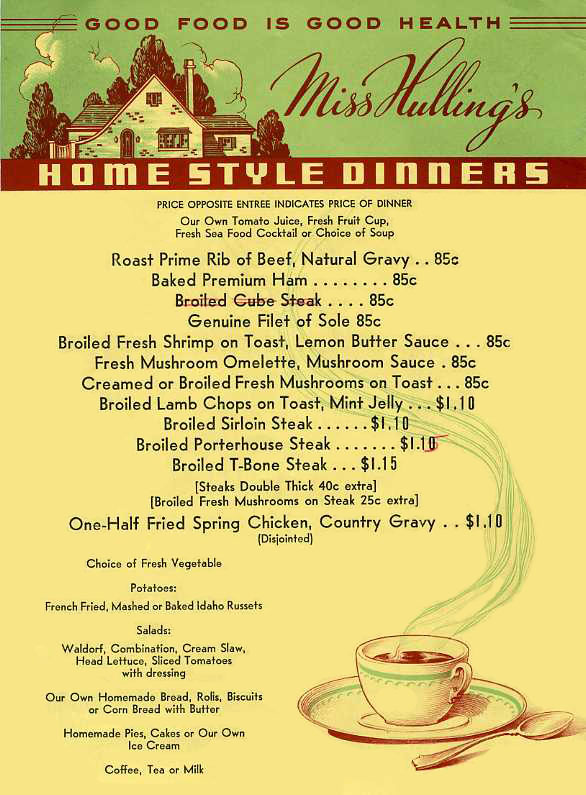
A 1939 Miss Hulling’s menu reveals the kinds of homelike dishes featured there. In addition to those shown, a mimeographed attachment lists a number of dishes not found much in restaurants now. Among the choices are Stuffed Baked Veal Hearts and Braised Ox Joints. If a complete dinner was ordered, for about 50 cents, the diner also got soup or salad, bread and butter, a vegetable such as Creamed Kohlrabi or Fried Egg Plant, a beverage, and a dessert such as Peach Rice Pudding. (See Miss Hulling’s Sour Cream Noodle Bake and her German Chocolate Cake on my Recipes page.)
In the 1940s and 1950s Miss Hulling’s was just the kind of place that earned high ratings from Duncan Hines and Gourmet’s Guide to Good Eating, the latter reporting, “Everybody in St. Louis swears by Miss Hulling’s. Food is exceptionally delicious, clean, and of high standard.” The cafeterias served their own ice cream and baked goods, used fresh fruit for pies, and prepared food in small batches.

Through succeeding decades the Miss Hulling’s enterprise, headed by the couple’s son Stephen J. Apted, grew large. It acquired Medart’s (turning it into the Cheshire Inn), and opened numerous restaurants in the metro area, among them The Cupboard and the Open Hearth, as well as running food services at two hospitals. Headquarters, including a bakery, were at 11th and Locust above the two-floor cafeteria. At the same location were the more formal dining spot Catfish and Crystal, His Lordship’s Pub, and a bakery and ice cream shop. In 1993 the entire operation at this site was closed down, the same fate having befallen the Olive Street cafeteria some years before.

© Jan Whitaker, 2012

107 Comments

Filed under cafeterias, popular restaurants, proprietors & careers, women

Anatomy of a restaurateur: Anna de Naucaze

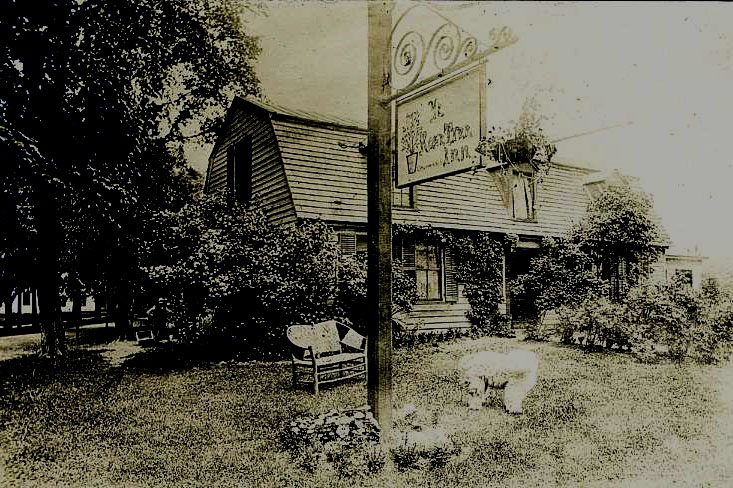
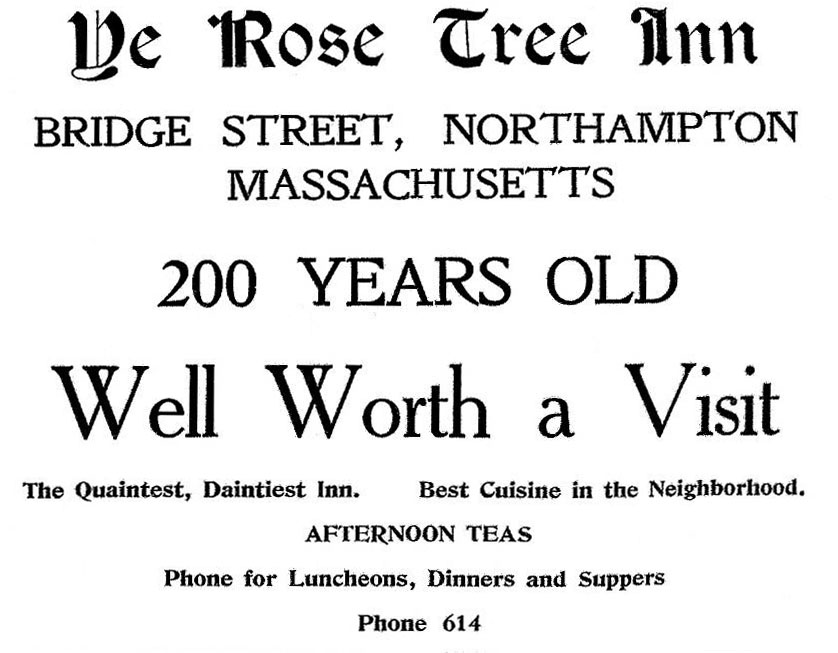
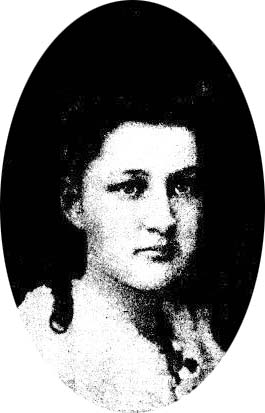
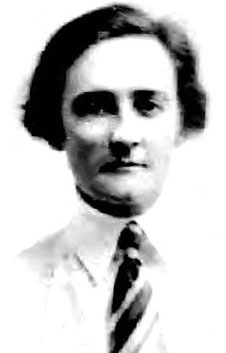
In 1908 two women adventurers opened The Rose Tree Inn, a tea room in a 200-year old house in Northampton, Massachusetts. Both called themselves “Madame” and claimed to be related to European nobility by birth or marriage. They were used to supporting themselves and living by their wits. One, Anna [pictured], a widow, was a former British stage actress, while the other, Marie, who had an 11-year old son, was married to a criminally inclined soldier of fortune who masqueraded as a German baron and was exiled to a British penal colony.

Each had arrived in New York City from London in 1907 to cover the sensational Harry Thaw murder trial for British papers. Almost immediately they became involved in what might be termed attempted “capers.” Madame Anna de Naucaze, 52, claimed she knew the secret to winning at roulette and could prove it if only someone would back her at Monte Carlo, while Madame Marie von Veltheim, about 38, said she had a treasure map showing where $4 million in gold was buried in mountains in South Africa’s Transvaal.

Next they got in trouble with the courts for misappropriating a photo album that was evidence in the Thaw trial. The album contained photographs of Thaw’s wife Evelyn Nesbit who had been having an affair with Thaw’s victim, architect Stanford White. With a possible charge of larceny hanging over them, Anna returned the album to Thaw’s lawyer.

And then they went to Northampton. By comparison with their pasts, the small college town must have seemed dull. It’s not clear what drew them there, though if they were looking for a way to make money, they found it. The RTI, as it was known by its primary patrons, Smith College students, became a very popular place known for its sumptuous desserts and continental, “bohemian” atmosphere. Marie, who claimed to be the inn’s originator, stayed around until about 1913 when, after looking for a location for a new tea room, she evidently left for New York to “save her husband.”

Anna ran the tea room for the next 10 years, catering to students from Smith, Amherst College, and the Massachusetts Agricultural College. She took out advertisements as far away as Yale and also entertained visitors from her stage and literary past. She did well enough to warrant additions to the inn, one a screened-in section known as “the bird cage.” She opened two annexes in town, the Rose Tree Hut and the Rose Tree Den. At some point there was also a summer branch of the RTI in Old Orchard, Maine.

In addition to the attractions of delicious food and the quaint house with its old world charm, everyone was intrigued with the eccentric person of Anna herself, particularly because her gender was ambiguous. She dressed like a man and seemed mysterious. As one student put it, “Some say she is fleeing from justice, that she married a Frenchman and were greatly in debt so left France and came to America.” She was reported at various times to have been born in France, Belgium, and Russia. For several years she published a magazine called “4 All,” and she occasionally appeared in local theater productions. She was also known for writing her own humorous and folksy advertising copy, such as, “If you descend in an aëroplane we will be ready for you, but we much prefer to have you telephone.” According to a 1915 story about her, after business hours she spent evenings “alone with her dog and her revolver.”

In the early 1920s Anna fell afoul of Smith’s good graces over issues such as the inn’s cleanliness and reports that Smith students were smoking, and maybe drinking and meeting boys there. In 1923, when the college still had the power to control which off-campus restaurants students could patronize, the RTI was removed from the approved list. The RTI could not go on and, at age 69, Anna was deprived of her income. She lived in Maryland for a while but died in NYC in 1924. For many years later the building was occupied by the Rose Tree Filling Station.

© Jan Whitaker, 2011

7 Comments

Filed under proprietors & careers, tea shops, women

Anatomy of a restaurateur: Harriet Moody

It’s a good bet that there have not been many women, or men, who have opened their first restaurant at age 68 – and, furthermore, made a success of it.

Harriet Tilden (Brainard) Moody [pictured below at about age 20] was exceptional in many ways. She built a culinary reputation long before she opened Le Petit Gourmet in 1920 in Chicago’s Italian Court at 615 North Michigan Boulevard. She had been one of the city’s premier caterers since 1890 when she founded the Home Delicacies Association. Despite her status as a divorcée, she managed to stay afloat in Chicago society, catering teas for charitable affairs and remaining a member in good standing of elite clubs such as the Fortnightly, the Twentieth Century, and the Chicago College Club. Working with her friend Bertha (Mrs. Potter) Palmer, she was one of the “lady managers” of the Chicago World’s Fair.

When her father, a once-wealthy cattle shipper, died in 1886, the recently divorced Harriet was forced to put her Cornell degree to work to support herself and her mother. She took a job teaching high school English but found she needed more income. Although she had never cooked, she deployed her refined tastes to produce dainty salads and baked goods of the sort appreciated by women of the upper classes. She supplied delicate dishes to Marshall Field’s department store tea room, to dining cars in trains departing from Chicago, and to fashionable private clients. Rising at 4:00 a.m. she spent several hours before she left for the classroom each morning supervising the Home Delicacies crew which numbered about 50 by 1899.

She became so successful that she not only supported her mother’s household, but also bought a second house where she lived and ran the catering business on the top floor until transferring it to larger quarters. She also owned a Greenwich Village townhouse on Waverly Place and a summer place, the historic William Cullen Bryant homestead in Cummington MA.

Harriet married poet William Vaughn Moody in 1909 and after his death the following year began to befriend other poets, often putting them up at her places in Chicago, New York, and Cummington, sometimes for months-long stays. At Le Petit Gourmet in the 1920s she organized poetry nights at which Carl Sandburg, Robert Frost, Edna St. Vincent Millay, and many others, read their work.

In 1911 Harriet established a branch of the Home Delicacies Association in London. Harry Gordon Selfridge, who as former manager of Marshall Field’s had jump-started her catering business in Chicago by ordering gingerbread and chicken salad from her, now asked for dishes for Selfridge’s, his department store which opened that year in London.

Seven years after establishing Le Petit Gourmet, Harriet and a woman partner opened another Chicago restaurant, Au Grand Gourmet, in a modern setting on the ground floor of a new building at 180 East Delaware. But her luck changed and in 1929 financial exigency required her to sell out. She attempted to recoup her losses a couple of years later with the publication of Mrs. William Vaughn Moody’s Cookbook.

Le Petit Gourmet, known simply as Le Petit, survived for decades under various owners, most notably Grace Pebbles, who also ran similar restaurants in Oak Park, Miami, Denver, and Hollywood. The Italian Court, constructed from 1919-1926 as a complex of shops and apartments for artists, was razed in 1968 to make way for an office building.

© Jan Whitaker, 2011

1 Comment

Filed under proprietors & careers, women

Waitress uniforms: bloomers

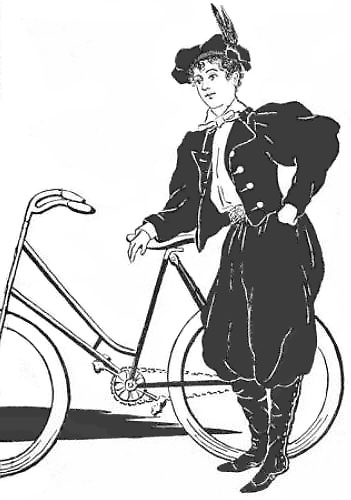
The bicycling craze of the mid-1890s brought “wheelwomen” dressed in bloomers into public view. It didn’t take long for enterprising restaurant men to latch onto the sensational pants-like garment as a waitress uniform. It was the middle of a nationwide depression and they hoped that male customers would flock to their establishments and the money would pour in. And this proved true, sort of.

Bloomers were originally a pragmatic garment of the 1850s woman’s rights movement intended to permit women to conduct everyday affairs without dragging 50 pounds of skirts and petticoats over filthy floors and streets. They were designed to do this by raising the skirt hem up to the shoe tops — with long gathered trousers worn underneath to modestly hide the ankles. But because of relentless ridicule, prior to the bicycle craze they had been worn only in private or in exceptional situations: doing gymnastics, while housecleaning, or by Westward-bound women crossing prairies and mountains.

The bloomers worn by female cyclists in the 1890s were more daring than those of the 1850s because they ended just below the knee, revealing stocking-covered calves and ankles. When “waiter girls” (as waitresses were known then) wore them, crowds of men gathered on sidewalks outside restaurants, jostling for a view. Although some restaurant owners claimed that bloomers were more practical than long dresses, it was pretty clear that most were motivated by a wish for publicity.

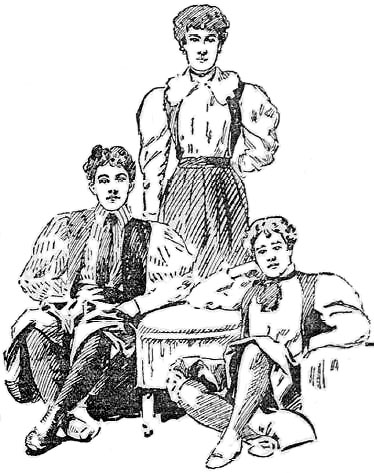
The bloomer uniform typically consisted of full-cut navy, brown, or black serge pants gathered at waist and knees and worn with a short matching vest (pictured on San Francisco waitresses) or “Zouave” jacket, and a colored blouse with leg o’mutton sleeves. Often the outfit was accessorized with black stockings, patent leather slippers, and caps imprinted with the restaurant’s name.

The first restaurant to adopt the fascinatingly curious uniform, in 1895, was the Bloomer Café in San Francisco. It was rapidly followed by restaurants in St. Louis and NYC. In 1896 and 1897 a few more opened in NYC, in Oakland CA, Chicago, and — gasp! — Boston. The police immediately closed the Chicago café on moral grounds. But they all seem to have been short-lived, usually because the crowds stopped coming once the sensationalism wore off.

Waitresses sometimes balked at bloomers because they feared they would be “on exhibit” and treated crudely by male patrons. Those who did agree to wear them, under threat of losing their jobs, reported that although they missed the “swish” factor of layers of starched skirts, they liked the new style because it enabled them to move quickly without trailing hems to get stepped on or slammed in doors.

Restaurant bloomers were an interesting example of a style crossing under coercion from one social class to another. Bloomers were seen as symbolic of the “new woman” – a decidedly privileged, well-educated, independent-minded daughter of the middle class. The new woman loved riding bicycles and engaging in sports. Working class women, by contrast, did not typically ride bicycles, play tennis or golf, or exercise in gyms. More than one bloomer waitress disclosed upon being interviewed that she had never been on a bicycle.

By 1898 the restaurant bloomer fad was over, but the idea of dressing waitresses in eye-catching costumes was only beginning.

© Jan Whitaker, 2011

11 Comments

Filed under uniforms & costumes, women

Romantic dinners

No respectable person in the 19th century would have dreamed of even mentioning such a thing as a romantic dinner in a restaurant. The whole topic of “romance” and restaurants was scandalous. Basically it implied a man having sex – and maybe dinner – with a disreputable woman, probably a prostitute, in a private room in the basement or on an upper floor of a restaurant. For decades the term “French restaurant” was widely taken as a euphemism for a brothel, especially in San Francisco. There, at the start of the 20th century, the mayor and his legal counsel made thousands of dollars by shaking down restaurant owners engaged in this trade by having their liquor licenses withheld until they paid for “protection.”

The idea of private dining rooms was an explosive one. An expensive new French restaurant in New York City that wished to be patronized by best society in 1861 felt it necessary to run a special notice explaining its policy: “The Proprietor … fearing that the public has misunderstood that announcement in the papers of the opening of his house, begs leave to notify those who have already favored him with their patronage, and the public generally, that the PRIVATE ROOMS in his house are exclusively for families or dinner parties to order.” Meanwhile, to insure its reputation with society elites, particularly women, Delmonico’s banned even married couples from dining in its private rooms unless they were accompanied by others.

It seems that for a very long time in America’s history there was only one type of food purveyor that might be deemed acceptable for a romantic twosome, and that was not really a restaurant but a place that specialized in ice cream. In late-18th-century NYC this would be a pleasure garden, such as Vauxhall or Contoit’s, dotted with little vine-covered bowers with individual tables inside. There were also some bright and glittery mirrored cafes modeled on those in Paris that attracted young couples and were considered somewhat acceptable.

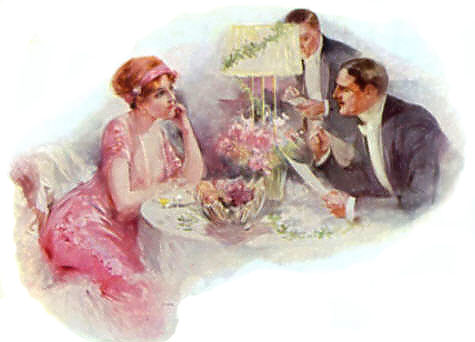
As late as the World War I era, when restaurants were becoming more respectable, a typical scene in today’s popular media featuring a man proposing to a woman in a restaurant would have been seen as improper. For one thing, it wasn’t really considered totally ok for an unmarried couple to have dinner unchaperoned in a restaurant until the later 1920s. In 1913 a waitress confessed that she was shocked to witness a man proposing marriage. She felt a strong negative reaction to the spectacle:“That was too much for me, and I made up my mind then that if any man ever asked me at the dinner table to marry him I would refuse him on the spot.”

Of course there were plenty of people who defied convention and went to restaurants two by two anyway, and there were restaurants that had romantic attractions such as strolling musicians in the early 20th century. Yet, it wasn’t until fairly recently that restaurants began to specifically and proudly advertise that they were the perfect spot for a romantic dinner. This began to occur in the 1960s, a decade in which more and more Americans went to restaurants in the evening for entertainment.

A popular restaurant in the college town of Columbia, Missouri, exemplified the new trend in the 1960s and the characteristics that would become regarded as romantic. Called the Mill O’Rock, it was in an old grist mill and had a circular stone fireplace in the center of the room with wooden ceiling beams radiating out from it. Young couples flocked there and the owner said it was well known as the perfect place for marriage proposals.

© Jan Whitaker, 2011

6 Comments

Filed under patrons, restaurant etiquette, women

Anatomy of a restaurateur: Romany Marie

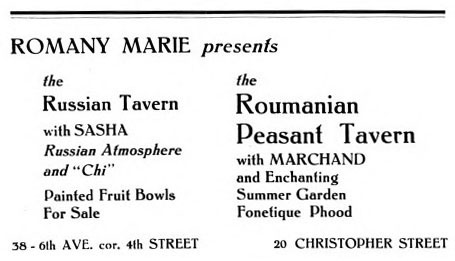
Marie Marchand, whose business name was Romany Marie, was taken aback in the 1950s when a Greenwich Village restaurateur declined to host a dinner for Marie’s artist friends on the grounds they would occupy the tables too long. In a 1960 interview recorded in Romany Marie, Queen of Greenwich Village by Robert Schulman, Marie reflected, “It was a little shock to me. Poor dear, she felt she had to have turnover, she was in the restaurant business, not in the venture of maintaining a center for lingering tempo.”

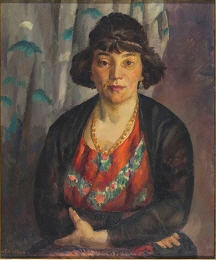
For someone such as Marie who had herself been in the restaurant business for over 30 years, this would seem to be an odd reaction. But hers were odd restaurants – she preferred to call them centers – where patrons were encouraged to linger. If they lacked money for a meal, and they fit her criteria as creative spirits, she let them eat for free. Luckily, she had a brother who helped her out financially because hers was not a lucrative business. On the other hand, she encouraged and helped sustain dozens of artists and creators such as Buckminster Fuller, Burl Ives, Stuart Davis, Edna St. Vincent Millay, and John Sloan (one of the many artists who painted her portrait – pictured above).

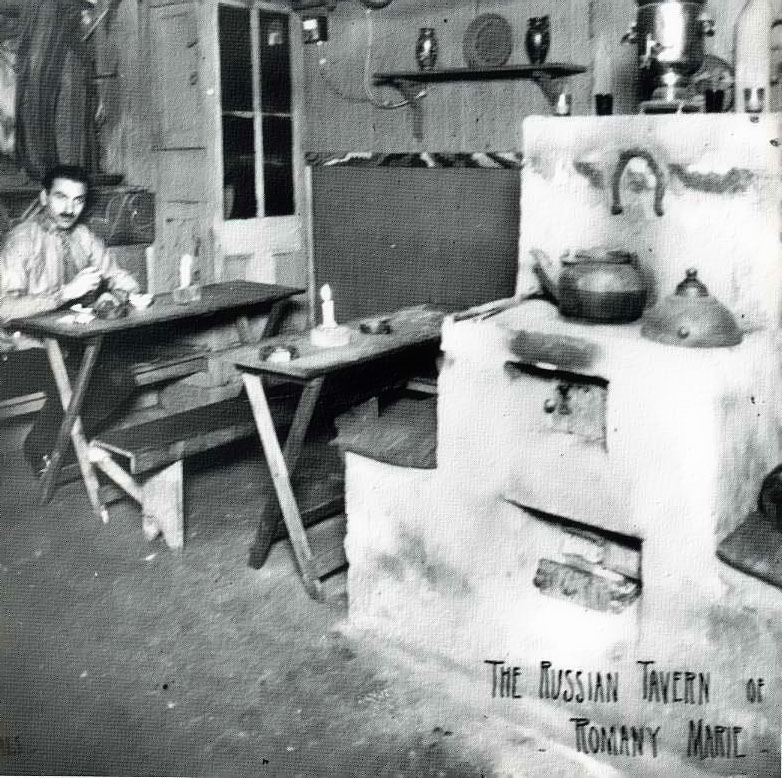
Marie, who as a teenager came to the US from Romania in 1901, said she patterned her taverns (so-called though she served no alcoholic drinks) after the inn her mother ran for gypsies in the old country. To honor her mother, Marie dressed as a gypsy and usually decorated in rococo style with peasant scarves, batiks, pottery, and her patrons’ paintings. Several of the 11 locations she occupied over the years featured fireplaces, which to the horror of health inspectors she used for broiling steaks.

After working initially in the garment industry Marie brought her mother and sisters to New York. The family lived on the lower East Side near the Ferrer School which offered workers free adult education. She became involved with the school where she met artists and thinkers who later became her patrons and, sometimes, volunteer waiters. In 1914 she opened her first place in the Village’s Sheridan Square. Amenities were sorely lacking, with both stairway and toilet facilities located outdoors. For years she had no electricity, candles furnishing the only lighting.

AtmosphereRomanyMarieSummer1921In 1915 she moved to 20 Christopher Street and it was at this location, the one she occupied the longest, that her name became well known. Another location of renown was 15 Minetta Street, with an interior designed by Buckminster Fuller in the late 1920s. In the 1960 interview Marie quoted Fuller as saying, “I’m going to fix up this place in a Dymaxion way.” He outfitted the restaurant with canvas sling chairs, “aeroplane tables,” and aluminum cone lights. Instead of the darkness her patrons were accustomed to, Fuller lit the place up by painting the walls silver. Sculptor Isamu Noguchi assisted (“Bucky got me to help him with painting the place up solar.”). Everyone disliked the brightness, the tables wobbled when food was placed on them, and the chairs collapsed when sat on. The experiment failed but Marie promised Fuller one free meal a day for the rest of his life, a benefit that carried him through the Depression.

In addition to Romanian dishes such as meat pies and cabbage rolls, Marie specialized in strong coffee which she advertised as Café Noir à la Turque. Her signature dish was ciorbă, a soup of vegetables, meatballs, eggs, lemon juice, and sour cream. Marie’s husband Arnold, a difficult man who was known to deliberately break dishes and otherwise sabotage her efforts, rendered this dish on his phonetic menu as “Tchorbah, peasant soop.” A menu by him also listed “Boylt Beeph wit been’s & hors radish,” and “Lone Guy Land Greens.”

Marie continued in the restaurant business until 1946 when she retired to care for Arnold. Each time Marie moved her restaurant she announced it with a sign which said “The caravan has moved.” Its last move was to 49 Grove Street.

© Jan Whitaker, 2010

2 Comments

Filed under Offbeat places, proprietors & careers, women

Anatomy of a restaurateur: Mary Alletta Crump

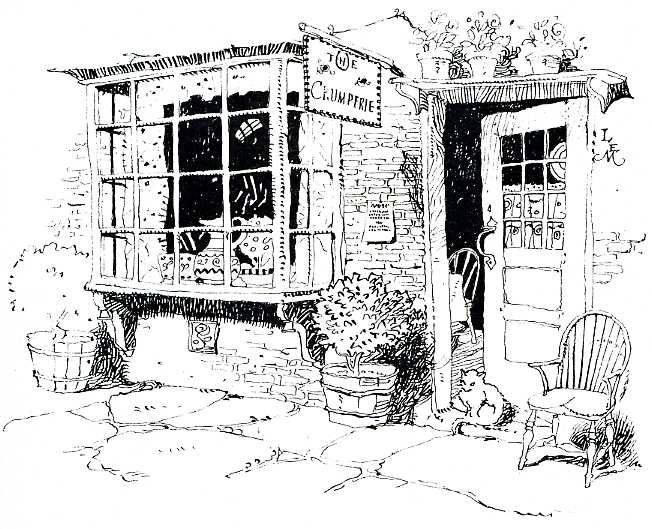
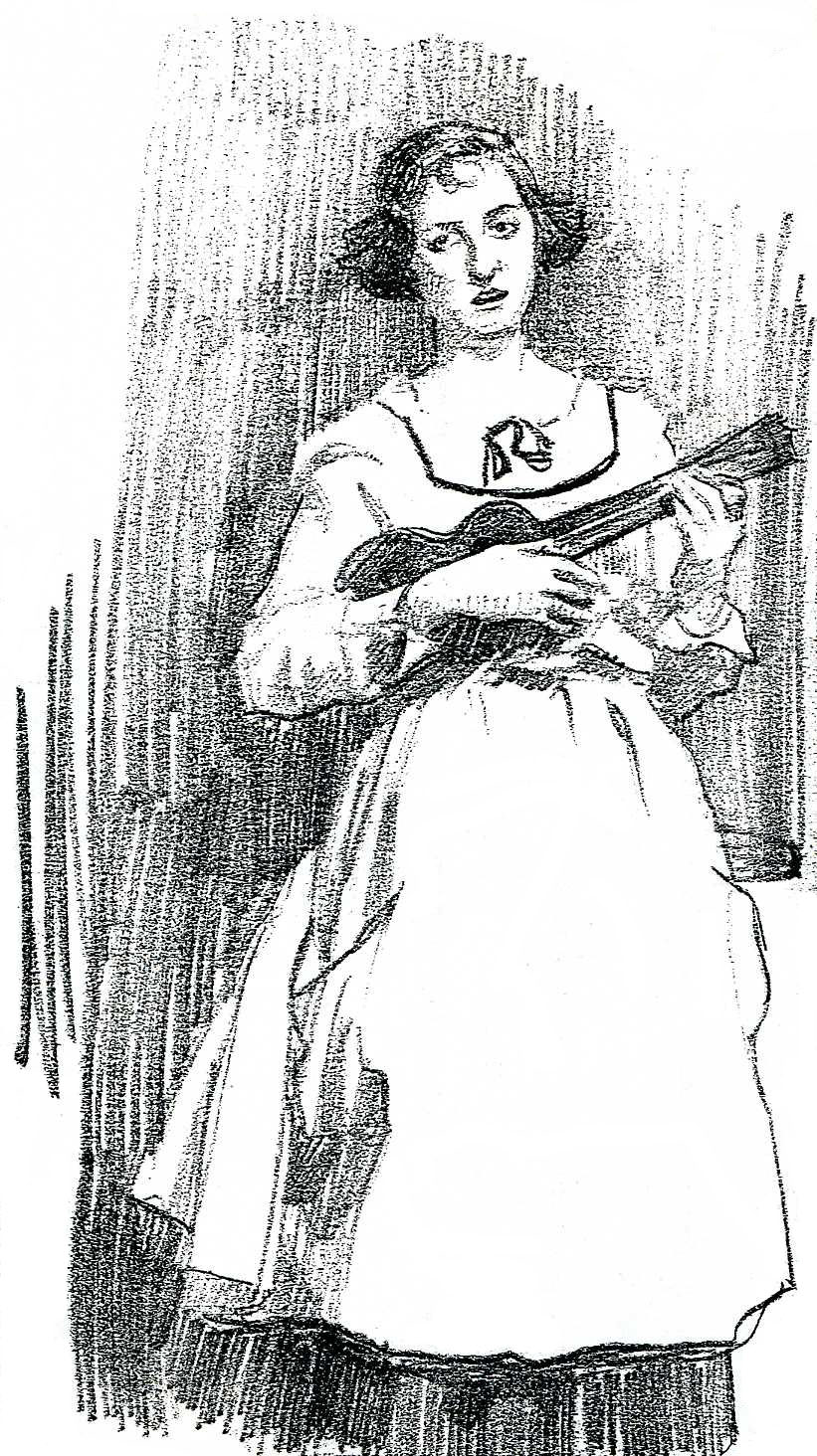
Because she ran a tea room, Mary Alletta “Crumpey” Crump (pictured, age 31) actually would not have called herself a restaurateur. She made a distinction between a tea room and a restaurant: the former served light food, mainly lunch and afternoon tea, while a restaurant served heavy food and was open for dinner. Not so The Crumperie. It served sandwiches, salads, soup, and desserts only. At 6 P.M. she and her partner, her mother “Bee,” shut down for the day. (M. Alletta, as she signed herself, advised prospective tea room operators in 1922 that “a mother or older person is a great asset to a young girl who is contemplating the opening of a tea room.”)

The two opened their first Greenwich Village Crumperie in 1917 (pictured), taking over the spot formerly occupied by photographer Jessie Tarbox Beals’ tea room and art gallery. Sharing the other half of the building at 6½ Sheridan Square with The Crumperie was a gift shop known as The Treasure Chest. By the time Crumpey’s mother passed away in 1926, The Crumperie had occupied five locations in the Village, first moving to Sheridan & Grove, then to the basement of 55 Christopher Street, then to 229 West 4th Street, and finally to 104 Washington Street. She would make one more — unsuccessful — attempt at running a Crumperie after her mother’s death, teaming up with Marie Saint Gaudens (niece of sculptor Augustus Saint Gaudens), at 13 West 51st Street in 1927. After this she abandoned the tea room business.

She and her mother opened the first Crumperie on a shoe string, spending only $100 for the first month’s rent plus all the furnishings and equipment. Start simple, that was their motto. Crumpey decorated with odds and ends: tables and chairs she painted herself, illustrations from magazines, a discarded old settle, family quilts, and table runners made from dime store toweling. Her mother did the cooking, specializing in crumpets of course, but also offering pea soup, “crumpled” eggs, and peanut butter sandwiches. Beverages included tea, coffee, and chocolate — nothing alcoholic!

The various Greenwich Village Crumperies were gathering places for New York City artists, musicians, literary figures, and actors with the Providence Players. The tea rooms were frequented by singer Enrico Caruso, artist Tony Sarg, and writers Theodore Dreiser, Eugene O’Neill, Sinclair Lewis, and Edna St. Vincent Millay. Writer and editor Christopher Morley steered his “Three Hours for Lunch” club to the Crumperie, though how they could have stretched out a meal there for that long I don’t know.

During and after her years in the food business, M. Alletta volunteered for war work, entertaining the troops in England with her ukulele playing during WWI (she also sang spirituals and folk songs in the tea room). After 1927 she apparently had a variety of jobs. She had studied at Smith College and trained to become a nurse before opening The Crumperie and may have returned to teaching or nursing. She taught a tea room management class in Brooklyn and worked for a time at the Grenfell Mission in Labrador. In 1958 she made five appearances on the TV quiz show “The $64,000 Question,” winning $16,000 which she used to fund a European trip.

© Jan Whitaker, 2010

7 Comments

Filed under Offbeat places, proprietors & careers, tea shops, women

Men only

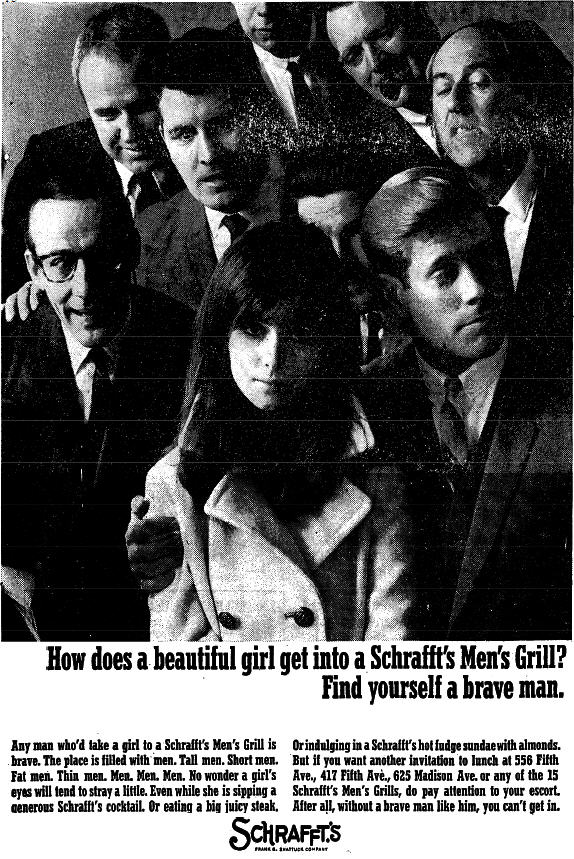
Men’s grills were often located in hotels or were set off as special preserves in venues heavily trafficked by women such as tea rooms and department stores. Schrafft’s, Stouffer’s, Mary Elizabeth’s, Marshall Field’s all featured men’s grills. Designed to resemble clubs, they were decorated in Elizabethan or Dutch style with dark wood paneling and sturdy tables and chairs, in stark contrast to the pastel garden look of women’s tea rooms. Women secretly referred to men’s grills as “tea rooms for men.”

There were plenty of grill-type restaurants in the 19th century – when they needed no gender preface because everyone knew they were men’s haunts. But in the 20th, with more women out and about and entering restaurants willy nilly, the words “men’s grill” were used deliberately lest a misguided female might wander in. Policies varied. In some men’s grills absolutely no women were allowed while in others men could bring women guests (see 1966 Schrafft’s ad). But women “alone” were not admitted. Not until the 1970s, that is.

In May 1970 a prominent NYC editor, a woman, walked into Schrafft’s on the corner of 47th Street and Third Avenue with another woman. They noticed that at the back of the restaurant there was a section that looked especially attractive, with more space between tables, tablecloths, and carpeting that cushioned noise. The hostess told them it was the men’s grill and they were not permitted to eat there. They left. The editor sent a letter to Schrafft’s saying that although she was no “stirred-up advocate of Women’s Lib,” she was offended by the restaurant’s policy which, she asserted, was illegal. She received a reply from a Schrafft’s VP who said that the restaurant no longer had a policy of reserving some areas for men. The hostess’s reaction, he said, was due to a breakdown of communication.

Stuffy as they may have been there was much to envy about men’s grills. As a Chicago woman remarked, they had “fast service, good food, and cheaper prices than a comparable restaurant.” She and a woman friend crashed the men’s grill at the Carson, Pirie, Scott department store in Chicago, noting that a male patron there asked the hostess, “Why don’t you throw them out?” They enjoyed their lunch even though their waitress said, “Don’t you know men come here to get away from you?”

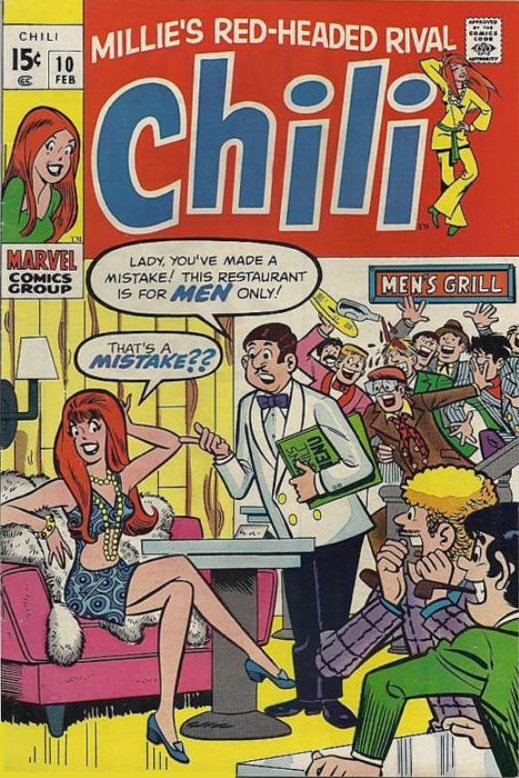
The 1964 Civil Rights Law did not mention gender as a basis for discrimination in public accommodations, but after its passage some cities and states enacted laws that forbade it in restaurants and bars. Chicago passed legislation in 1969. McSorley’s ale house in Greenwich Village, with a 116-year tradition of serving men exclusively, gave way in 1970 after the NY city council passed a bill. Even in states without this legislation changing social mores soon brought about new policies. Men’s grills disappeared, to the consternation of some men who, like the lone dissenter on NY’s city council, lamented, “In this troubled world there has to be an oasis in the desert for men.” However, judging from a 1970 comic book, many men disagreed.

© Jan Whitaker, 2010

13 Comments

Filed under women

In the kitchen with Mme Early: black women in restaurants

It’s so hard to find anything about the history of Afro-American women in restaurants that I decided to go ahead with a sketchy story rather than none at all. As far as the “historical record” goes, you’d be tempted to think that they had no place in restaurants. That’s certainly false, but they were frequently out of sight. The notice placed by John Kirk in a New York City paper sums up black women’s primary role in public eating places: as cooks and kitchen helpers. Kirk advertised in 1781, “Wanted to hire an active Negro Wench, used to a kitchen, with a good character.”

In his 1899 classic The Philadelphia Negro, W. E. B. Du Bois praised black men for their prominent place in the city’s catering business, writing of “self-reliant, original business men, who amassed fortunes for themselves and won general respect for their people.” He mentioned no women, yet there is reason to think that black women not only did much of the cooking in both black and white restaurants but ran many of the eating places in black communities too. They rarely made fortunes but surely must have commanded respect.

Although black women are nearly invisible in 19th-century documents, we see glimpses of them near its end. Several women ran Denver restaurants in the 1880s and 1890s, including Miss Jane Outland in the 1880s and at least six others in the 1890s, including Tennessee-born Callie Fugett who kept a restaurant on Market Street. In Washington D.C. in the late 1890s a former slave known as Madame Early provided chicken dinners in a cabin called the Café Du Chat Noir. I wonder if she was Haitian.

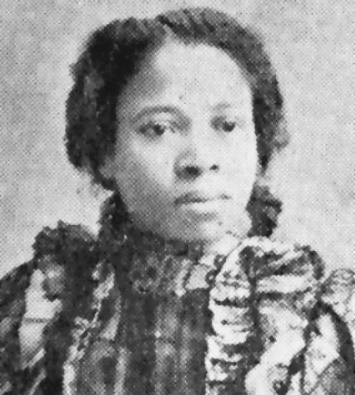
The first meeting of Booker T. Washington’s National Negro Business League in 1901 reported that women ran restaurants in Denver as well as Jacksonville and Tampa FL, including two in Tampa that were “among the best in the city.” A few years later, according to a directory of Afro-American businesses in Memphis, about half of the restaurants listed were run by women. Miss Lucy Hughes (pictured) ran the Climax Café and Ice Cream Parlor on N. Main where she sold “hot and cold lunches at all hours,” while residing with her mother, son, brother, and one male lodger who worked as a kitchen helper.

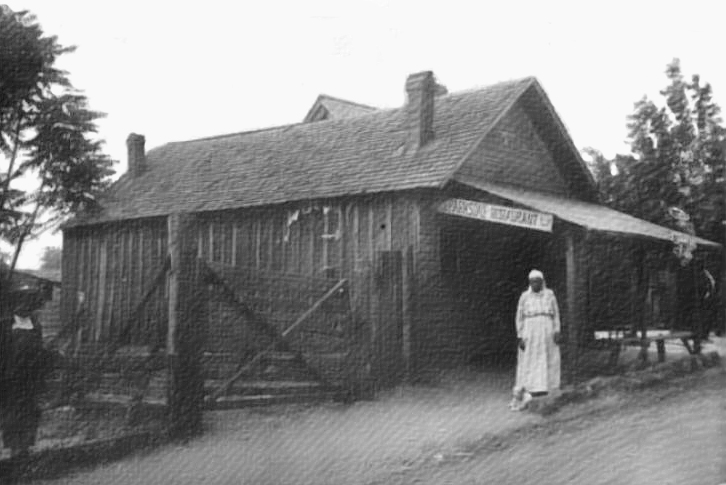
Overall, black women had even fewer employment opportunities than black men. The Department of Interior reported that in 1910 almost half of the 2 million employed black women were farm laborers. Private laundresses came next in the list, followed by cooks in private homes, hotels, and other settings. Only 2,734 women ran restaurants, probably humble eateries such as the one pictured here, one of four run by black business women in Gainesville GA ca. 1913.

After World War I things began to change in big cities. Middle-class black women opened fashionable tea rooms where they provided dainty lunches and hosted afternoon card parties. Chicago’s 1923 blue book of Afro-American society lists a number of these, such as Mrs. E. H. Hord’s Delmonico Tea Room on Prairie Avenue. In Pittsburgh, Mrs. A. E. Bush, a former pharmacy manager and wife of a prominent life insurance executive, opened the Melrose Tea Room which she decorated in old rose and blue. I have found no record of how black tea room operators dressed their black servers but I strenuously doubt they put them in mammy costumes as did so many white restaurateurs of the 20th century.

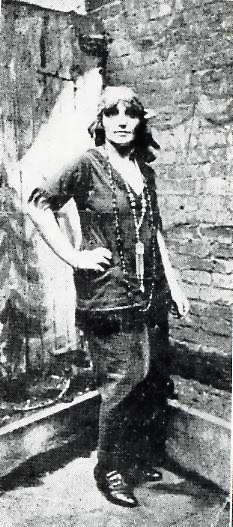
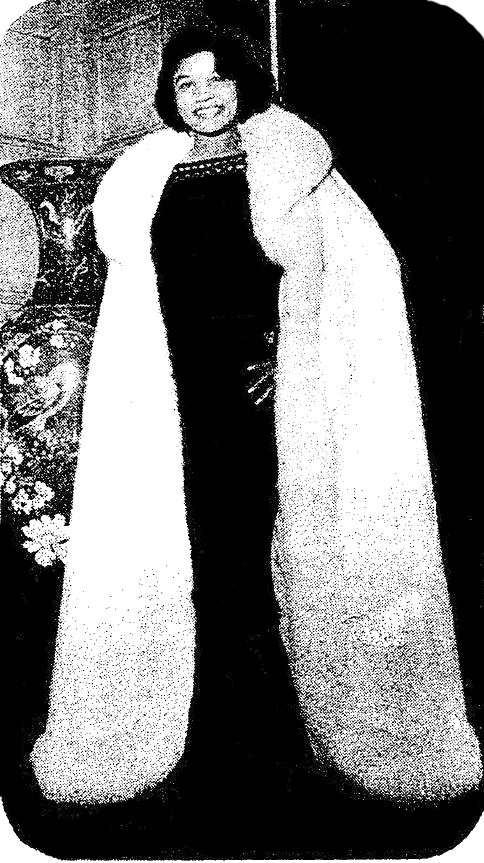
After the 1960s some black women who ran or cooked in restaurants acquired celebrity status. After her divorce, Helen Maybell opened the Soul Queen Café on Chicago’s near south side. In the 1970s the statuesque Helen (pictured), who was active in the NAACP and loved elegant gowns and furs, opened a second restaurant in which she hosted fashion shows. Leah Chase (who co-owned and cooked at Dooky Chase’s in New Orleans) and Edna Lewis (who promoted Southern cooking, authored cookbooks, and cooked for Café Nicholson in Manhattan, Gage & Tollner in Brooklyn, and others) became venerated figures in their lifetimes.

© Jan Whitaker, 2010

6 Comments

Filed under proprietors & careers, women

Famous in its day: The Maramor

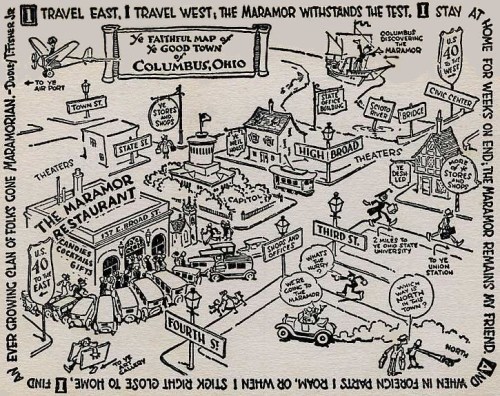
maramormaprevImagine a restaurant management style diametrically opposed to Gordon Ramsay’s (as he takes command in nightmarish kitchens on TV), and you might well be picturing how Mary Love ran her restaurant, The Maramor in Columbus, Ohio.
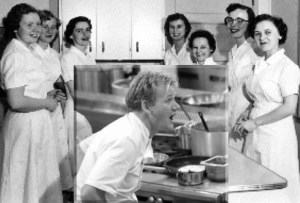
Mary was a home economist who had previously managed the tea room at the F & R Lazarus department store in Columbus. Single, 29 years old, and a lodger in a family’s home, she opened a small place at 112 E. Broad in 1920. Not much later she married Malcolm McGuckin and for a few years they lived in California where he ran a Wills Sainte Claire auto dealership. When the car plant shut down in 1927 the McGuckins moved back to Columbus to run the restaurant, now at 137 E. Broad.

Malcolm was president of the company which also included a candy shop, while Mary, mother of four by 1928, managed the restaurant. She believed in supervising employees in a non-conflictual way. Sociologist William Foote Whyte presented her method of conducting staff meetings in a 1946 article. Mary’s style of management, which Whyte characterized as the “open-minded exploratory approach,” stressed listening, participation, and sensitivity to others’ feelings. “Make sure there is no personal embarrassment to any individual,” she insisted. Also, “Guide the meeting so that an … overemotional person does not take the reins.” (Gordon?)

homeecon-ramsay2-copyIn 1941 Mary described to a home economics conference how she ran her kitchen. She avoided frying and stressed the nutritional properties of food, preparing fresh vegetables to retain flavor and vitamins. Each day her planning department presented the production manager with the day’s menus, while a weighing and measuring specialist prepared trays with complete ingredients for every dish. The trays were given to the cooks, along with detailed instructions for cooking. “This,” Mary said, “helps them to keep their poise and self-respect through the working day, and a cook with poise and self-respect has a better chance of turning out a good product.” (Gordon?)
Thanks to testimonials from theatrical personalities appearing in plays in town, such as Helen Hayes and Alfred Lunt and Lynn Fontanne, the restaurant earned a national reputation. Lunt and Fontanne, who ate there often, were so pleased with the restaurant’s “Lamb Luntanne” that they declared in the guest book that The Maramor was “the best restaurant in America.” Hayes, a queen in “Victoria Regina,” praised the Maramor’s vichyssoise, calling it “A soup to a queen’s taste.”

Gertrude Stein and Alice B. Toklas may have eaten at The Maramor during their 1934 visit to Columbus. It seems likely that Alice was referring to it when she wrote: “In Columbus, Ohio, there was a small restaurant that served meals that would have been my pride if they had come to our table from our kitchen. The cooks were women and the owner was a woman and it was managed by women. The cooking was beyond compare, neither fluffy nor emasculated, as women’s cooking can be [Oh Alice!], but succulent and savoury.”

Duncan Hines named The Maramor one of his favorite eating places in an early 1947 interview, singling out its incomparable stewed chicken: “The chicken is so delicate in flavor, tender, the dumplings light as thistledown, cooked in the rich, creamy gravy.” In 1945 the McGuckins had sold the restaurant to Maurice Sher and moved to California, so it’s not clear exactly whose stewed chicken Hines meant. In 1948 the restaurant was listed in Gourmet’s Guide to Good Eating. The Shers operated the restaurant until 1969. Next it had a short run as a music venue, the Maramor Club. The building was razed in 1972.

© Jan Whitaker, 2009

42 Comments

Filed under proprietors & careers, tea shops, women