Category Archives: restaurant customs

Little things: butter pats

butterpat921

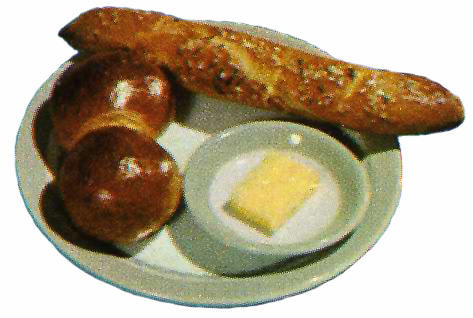
There are many ways to handle butter service in restaurants. Toast may be buttered in the kitchen, doing away with the establishment’s need to decide among curls, balls, rosettes, wrapped servings, pats or, whipped butter put in tiny ramekins. Alternatively, olive oil may take the place of butter on the table.

butterpat923Over the decades butter has given restaurant managers plenty of headaches, whether due to its cost, its scarcity, and/or complaints from patrons that they didn’t get enough. Not to mention that it melts when it gets warm and turns hard when it’s cold.

What form butter usually took when diners received it in the 19th century is not clear, maybe in lumps, possibly piled in a communal bowl on each table, a habit that customers would reject in the 20th century.

Bread and butter was viewed as a necessary complement to a meal in the early 1800s, and it often served as an entire meal for those with little to spend. Some restaurants charged separately for bread and butter, while in others it came along with a regular meat or fish order. A good restaurant or tavern might have fresh butter, but others did not. Even if they struck it rich, the early California gold diggers had to wait for Eastern butter to travel around Cape Horn before it reached San Francisco in poor shape. But soon California had dairies that supplied fresh butter, as an 1856 advertisement boasted, “From this date we shall use none other than California Butter, fresh from the best Petaluma Ranches, daily.”

Melting butter became a problem in the summer. The sickening description of “butter the consistency of salad-oil, dotted with struggling flies” can only inspire pity for summertime patrons of Chicago restaurants in the 1880s. To prevent melting, restaurants often placed butter pats upon chipped ice, making it a bit difficult for patrons to butter their bread, but still clearly preferable to the alternative.

butterpat1915HotelMonthlyAlbertPickButter making was rapidly becoming industrialized in the late 19th century, at which time inventors began working on butter cutters that would produce neatly cut chips for use in restaurants and hotel dining rooms. Although many eating places bought butter pre-cut into pats and stamped with their logo by a large dairy, others used mechanical cutters that permitted them to buy butter in bulk and cut it themselves, “untouched by human hands.” All-new-improved models came on the market in the early 20th century, such as the American Butter Dispenser that held 9 pounds capable of being turned into “clean, firm, equal” butter pats in only 2½ minutes. Another feature was that the machine could produce from 28 to 54 pats per pound, permitting a restaurant to economize on butter as needed.

butterpat926

The size of butter pats varied with national conditions and other pressures. During World War I the Food Administration advised serving no more than ½ oz. per person (actually a generous serving). After the war the dairy lobby in Minnesota tried and failed to push through legislation that would have boosted the standard restaurant serving to 2 oz. Butter pats grew slim once again due to shortages during World War II, and some restaurants began charging extra for butter as its cost rose. Customers complained bitterly.

Perhaps the most curious complaint about butter was that of a patron at a Denny’s restaurant in the 1970s. When served toast with a cold, right-from-the-refrigerator butter pat on top – rather than melted butter as advertised on the menu — Malcolm Douglas Stroud deducted 25 cents from his check. A Denny’s employee made a citizen’s arrest; Stroud countered with a suit for malicious prosecution and was awarded $10,600 in damages by an Oregon court.

© Jan Whitaker, 2015

5 Comments

Filed under food, restaurant customs

Reservations

reservationsJPGtablejpgRestaurant reservations are mainly a 20th century innovation, and yet for the best of customers tables have always been available, no reservations required. A visitor to a Chicago hotel noted in 1888 that a nearby table had chairs tipped, a sign that it was reserved. A number of business men led by packing house magnate Philip Armour walked in and sat down. “Waiters scurried to serve them, and in a twinkling they were attacking their thick steaks as if the meal were a business problem to be solved immediately,” the onlooker recorded in her diary.

It was a common practice to save tables for prominent business men who gathered at the same table daily. In cities with numbers of German-American settlers, such as St. Louis and Washington D.C., the table was known as a Stammtisch and the diners as Stammgäste. At a restaurant in St. Louis conducted by Detlof von der Lippe, tables in alcoves were reserved for different professions. An inset in the 1906 postcard below shows an alcove named The Grind Stone. In the background is The Roost, reserved for tailors, while lumber men sat in The Hoo-Hoo. Which profession met in The Grind Stone is anyone’s guess.

reservationsLippe's

As late as 1957, Harvey’s and the Occidental restaurants in D.C. kept tables for regular groups, as did others in that city. A table at La Salle Du Bois was reserved on Saturdays for businessman Milton S. Kronheim and his “Saturday 12″ composed of Congressmen, civic leaders, and judges. Richard Nixon, then VP, reserved a table there during the week for cabinet members and White House staff.

Of course luxury restaurants such as the Colony automatically reserved tables for wealthy and celebrity regulars too. For them, as for business groups, the rule was that if the party did not arrive within 15 to 30 minutes of their usual schedule, the table would be given to someone else.

reservationsJPG1913Greensboro

If saving tables for the toffs is a longstanding practice, so is resentment by the public when told no tables are available even as they gaze upon a dining room with empty tables. The problem intensified as taking reservations became more common in the early 20th century with the spread of telephones in restaurants. [1913 advertisement]

reservationsJPGNewYorker1940Reserved tables have often implied to people without them that they were being snubbed and regarded as inferior. And in the case of Afro-Americans this was literally the case. No matter how well dressed, how well mannered, how able to pay, they were likely to be told no tables were available.

Although many Northern states had enacted civil rights laws in the 1880s when the South was instituting segregationist Jim Crow laws, they were rarely enforced. However, an 1889 case in Michigan stands out because of the appeals court judge’s decision for the plaintiff who had been told he could be seated only at a table in the back reserved for Black patrons at a restaurant in Detroit. Usually things did not work out so well. In the 1920s a Chicago restaurant discontinued taking reservations by telephone after they discovered that a women’s club who had booked tables for 40 was Black. Even the federal Civil Rights Law of 1964 failed to eliminate discrimination. Activist Dick Gregory and others were turned away at an empty restaurant in Tuscaloosa AL in 1965 when the hostess showed them a reservations list with 1,000 names on it.

Whose interests do reservations  primarily serve – the restaurant’s or the guest’s? This is a tricky question, but on balance I’d say restaurants are providing a service that is mostly in the guest’s interests. Although it benefits restaurants to have an idea of how many are coming to dinner, in terms of staffing and provisioning, there are also drawbacks. A popular restaurant may actually lose money by taking reservations because tables are not constantly producing revenue throughout a busy mealtime. With reservations, tables are bound to sit empty between guests. What’s worse, a percentage of reservations will not show up nor call to cancel, despite a restaurant’s telephoned confirmation or penalty charges.

reservationsJPGrestaurantpagersThe no-show problem developed into a major headache for restaurants in the 1980s. Restaurants that normally got a lot of tourists and sporting event fans suffered the most, and some reported they went into the red on nights when up to 30% of reserved tables went unfilled. It comes as no surprise, therefore, that so many popular dinner-house restaurant chains take no reservations on busy nights. As long as there are plenty of guests willing to wait up to an hour and a half, the decision is 100% rational. Most of these restaurants – such as the Cheesecake Factory – hand out pagers that permit people to stroll around or go shopping until they are buzzed, a system that came into use in the late 1980s.

For those of us who prefer to go to restaurants that still take reservations comes the dawning realization that we are very likely paying a premium for the privilege. And soon we might be paying for the reservation itself, according to a recent story in the Atlantic.

© Jan Whitaker, 2015

1 Comment

Filed under restaurant customs

Shared meals

comebacks1874AlaskaStPhil

There is a lot of interest now in menus designed for sharing. Groups of friends order a variety of dishes of intriguing appetizers, passing them around so that everyone gets a helping.

Sharing restaurant food has a long history, not all of it so appetizing.

In the 1890s stories appeared in the U.S. press about market stalls in France that sold food left over from the tables of restaurants and hotels. The buyers were those of scant means who needed a cheap meal. What the stories left out was that the custom was not unknown in this country. How common it was is hard to say, but an account in 1874 described an eating place in Philadelphia that sold table scraps from hotels to the city’s poor. [illustration above]

There are two kinds of leftovers in public eating places: prepared food that has not been served and food that has been served to patrons and returned on their plates to the kitchen. The latter is known as comebacks. To what degree food removed from plates was served again to other patrons or added to kitchen stews, hashes, and soups in the 19th century is unknown, but it began to receive attention from health departments in the early 20th century.

Americans became conscious of public health issues in 1906 with revelations about the meat packing industry in books such as Upton Sinclair’s The Jungle. One result of the uproar was that cities and towns that had not already done so expanded the duties of their health departments to include restaurant inspections.

In Los Angeles, inspectors in 1907 discovered that chicken, steak, or chop bones with meat still adhering to them were often added to kettles for stock, soups, or gravies. Somewhat surprisingly, this practice was not likely to happen at the cheapest restaurants. Those selling meals at rock-bottom prices (10 cents) claimed they rarely had any food scraps returned to their kitchens. In a 1908 exposé in a D.C. newspaper, a waiter “told all.” Among his advice to lunch room patrons was to order dry toast with butter rather than buttered toast because in the latter case it was likely to be comeback butter wiped off a plate by the cook’s dirty finger.

comebackshashAlso ranking high on the public’s list of restaurant mystery dishes was hash. Middle-class women, who were particularly distrustful of restaurants’ cleanliness, would only eat it in their own homes or in a genteel, woman-run tea room. Patrons often told the proprietor of a home-style tea room in Bangor ME, “I’m not afraid to eat hash here.”

comebacksADV1908EvanstonAt least one restaurant, the Pure Food Café in Evanston IL, was so concerned about public perception that it adopted the unfortunate slogan, “We Use No Comebacks.” Perhaps its patrons, mainly students at Northwestern University, needed this reassurance.

Another illicit use of food returned on patrons’ plates was for staff meals. Minnesota’s state hotel inspector declared he would put a stop to it. “We are going to stop the practice of making restaurant and hotel employes eat the ‘comebacks’ that the guests have already dallied with,” he pledged in 1917.

The re-use of comebacks was not a popular topic for public discussion so it’s impossible to gauge how often it occurred or to what degree the practice was halted by inspections. But the problem either persisted or recurred during the Depression, as evidenced by an article in a 1932 issue of the trade journal Restaurant Management.

© Jan Whitaker, 2015

4 Comments

Filed under restaurant customs, sanitation

Why the parsley garnish?

parsleyNchicken

Nothing decorated more restaurant plates in the 20th century than parsley, most of it by all accounts uneaten.

Why use so much of what nobody wanted? The best answer I can come up with is that parsley sprigs were there to fill empty spaces on the plate and to add color to dull looking food.

Parsley was not the only garnish around, but it has probably been the most heavily used over time. It has shared the role of plate greenery with lettuce, especially after WWII when lettuce become readily available, and to a lesser extent with watercress.

Parsley has long been a favorite in butcher shops where it is tucked around steaks and roasts. As early as 1886 restaurants were advised to emulate butchers and decorate food in their show windows with “a big, red porterhouse steak, with an edge of snow-white fat, laid in the center of a wreath of green parsley.” By the early 20th century, almost the entire U.S. parsley crop, more than half of which was grown in Louisiana and New York, went to restaurants and butchers. By 1915 parsley sprigs were a ubiquitous restaurant garnish that many regarded as a nuisance. Diners sometimes suspected that the parsley on their plate had been recycled from a previous customer.

While European chefs use garnishes as edible complements to the main dish, Americans have focused primarily on their visual properties.

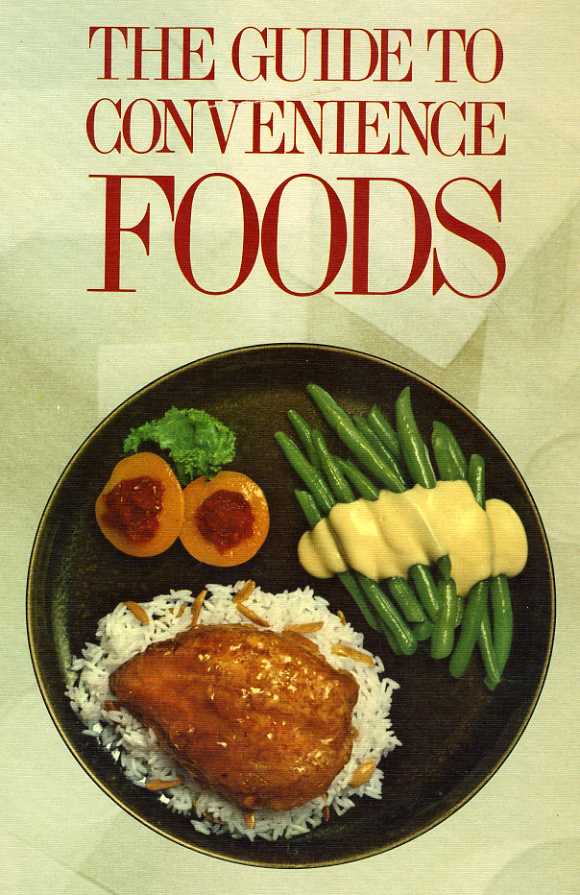
parsleyGuidetoConvenienceFoodscvrAround 1970 when convenience foods invaded restaurant kitchens, garnishes took on heightened significance in jazzing up lackluster, monochromatic frozen entrees. In the words of Convenience and Fast Food Handbook (1973),“The emergence of pre-prepared frozen entrees on a broad scale has revived the importance of garnishing and in addition, has led to innovative methods of food handling, preparation and plating. If an organization is to achieve sustained success in this field, emphasis must be placed on garnishing and plating. These are the two essentials that provide the customer with excitement and satisfaction.” [partial book cover shown above, 1969]

Excitement?

parsleyNOThe head of the Southern California Restaurant Association admitted in 1978 that he hated to see all the food used as garnishes go to waste in his restaurant, including “tons” of lettuce. But this was necessary for merchandising, he said: “We have to make food attractive. It’s part of the cost of putting an item on the table.” It was – and is – probably true that an ungarnished plate such as shown here looked unattractive to most Americans.

parsleyNfiletmignon

So many garnishes decorated food in American restaurants in the 1970s that food maestro James Beard got very grumpy about it, calling it stupid and gauche. He could allow watercress with lamb chops or raw onion rings on a salad, but put a strawberry in the center of his grapefruit half and he was outraged. Next to orange slices and twists, his most detested “tricky” garnishes were tomato roses and flowers. Funny that he didn’t mention radish roses such as the one shown above.

© Jan Whitaker, 2008, revised 2015

17 Comments

Filed under food, restaurant customs

Blue plate specials

blueplateDuring the 1920s and 1930s the blue plate lunch and dinner thrived. The first blue plate special reference I have found is in 1915. A railway running between Bradenton FL and Washington D.C., the Seaboard Air Line Railway, announced that year that they would begin offering a daily special of either meat or fish served on one plate with two vegetables.

The simplicity of the meal, with fewer food items on fewer pieces of china, turned out to be  highly congruent with suggested government cutbacks that arrived with World War I urging restaurants to conserve on all aspects of their operations.

After the war the blue plate special continued to be popular because it was a workable compromise between the needs of a fast-paced urban society and the legions of consumers accustomed to eating a meat-and-potatoes “dinner” at noon. Though resembling a home-style dinner, the blue plate meal was lighter and faster to serve up than its predecessors. Consisting of less food, it required less time for digestion and kept office workers from getting that “siesta” feeling in the afternoon.

blueplatespecialSpfld1930

Its billing as “home cooking” communicated that it was not ethnic cuisine as were meals in table d’hote restaurants run by immigrant Americans. Beef and gravy, pork chops, ham, mashed or fried potatoes, carrots, and green beans were typical on blue plates. [June 1, 1930, special at the Merry Eating Luncheonette, Springfield MA]

In previous eras a “regular dinner” or table d’hote restaurant meal would have arrived parceled out on many plates, saucers, and side dishes. Cutting down both on china and dishwashing as well as server time, the blue plate dinner or lunch was usually offered as an economy meal typically costing about 35 to 50 cents, a moderate price in the post-WWI inflationary economy. Blue plate specials were attractive to restaurants because they permitted them to make use of a good buy or get rid of food stocks on the verge of going bad. The tradeoff was that often the diner had little choice regarding the meal’s composition.

blueplatespecialBoston1940Since the meals’ components were cooked prior to lunch and dinner rushes and kept warm on steam tables, they could be served quickly, saving time for patrons and increasing turnover for the establishment. Of course steam tables took their toll. That one-plate specials were not always the finest is suggested by a 1930 guidebook which commends The Alps restaurant in NYC by noting that their blue plate dinners “are more than mere collections of edibles, served en masse.”

One-plate meals continued into the 1940s and after WWII  but the term “blue plate” was beginning to sound old-fashioned and was used mainly in smaller towns. Stodgy one-plate meals became material for humorists. In 1952 columnist Hal Boyle lampooned the blue plate luncheon “engulfed in gravy,” characterizing it as an “all-America culinary nightmare.” “I take it to the hotel I am staying at and use it instead of soap for a shower,” he wrote. “I rub it on my head as a shampoo.”

© Jan Whitaker, 2008, revised 2015

7 Comments

Filed under restaurant customs

Image gallery: business cards

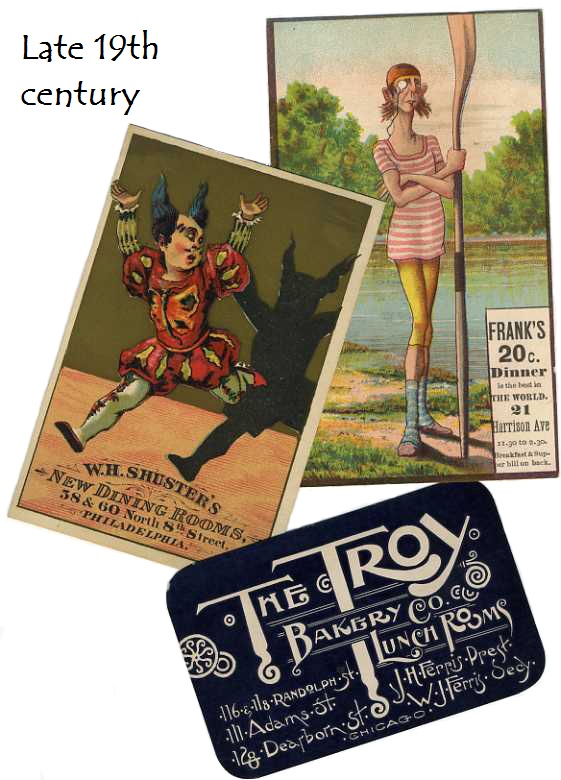
businesscardRestaurants began using business cards back as far as the 1840s, but most of the early ones in the antiques and collectibles market date from the 1870s and 1880s. Although they are referred to as Victorian trade cards that people saved in scrapbooks, they are essentially business cards that give the restaurant’s name and address, sometimes with a short menu on the back side. I present here some of my favorites, from the late nineteenth century up to today. [above, a ca. 1950s die-cut card] These are some good ones “we think” (see Tom’s Drive-In below).

businesscards870

businesscard2The Senate Cafe, ca. 1915, was almost certainly a drinking spot first and foremost but the dour Mr. Smith probably provided the boys with light refreshments too.  — From around the same time or a little later, Boldt’s, Seattle. The “Cosy Boxes” were for baked goods to take home.

businesscards875

businesscards871

 businesscards869

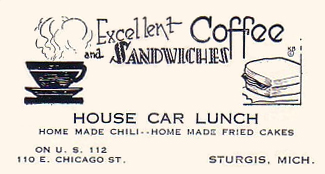
BusinessCardNEWHouseCarLunch

businesscards872

BusinessCardTom'sDrive-in

Below: cards I’ve picked up in recent years. Clockwise from top left: Northampton MA; Webster Groves MO; City Cafe, Rochester MN; Girl & the Goat, Chicago [turned on end to fit]; Greenfield MA; NYC.

businesscards874© Jan Whitaker, 2015
2 Comments

Filed under restaurant customs

Restaurant row

restaurantrow864

Search for the words “restaurant row” in old newspapers before WWII and you will become convinced that a restaurant was a prime spot to be stabbed or clobbered by flying crockery. Not as dangerous as a barroom, but close.

The other meaning and pronunciation refer not to a fight but to a happier state of affairs, namely a street lined with restaurants that has become a popular destination for diners.

restaurantrowChicago1909

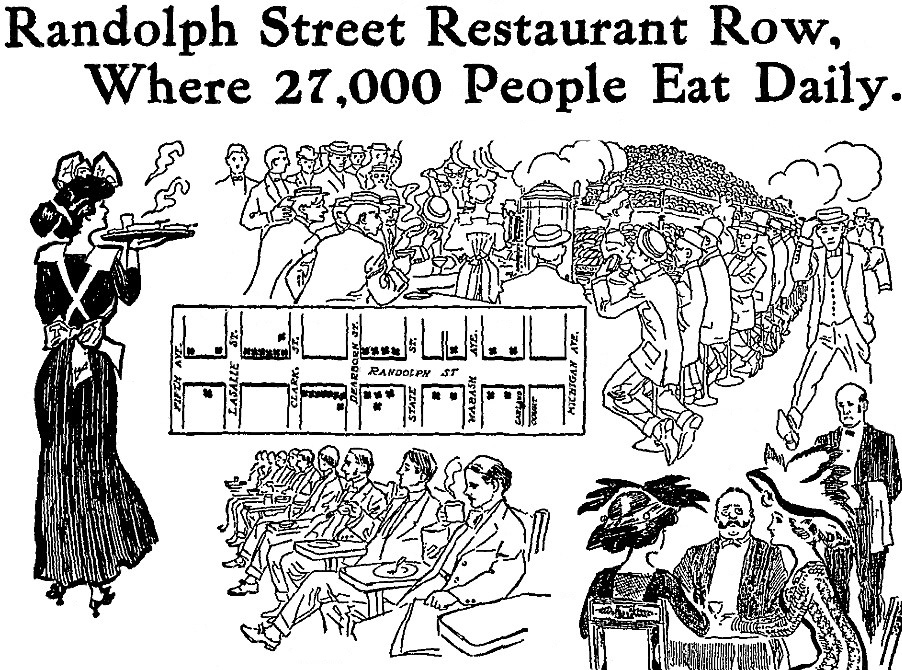
The earliest use of the term I’ve found is a 1909 reference to Chicago’s Randolph Street where 39 busy restaurants lined up on a six-block stretch [illustrated]. A bit later Chicago’s Wabash Ave. was known as cafeteria row, reportedly aggregating the largest number of self-service restaurants in the world, while Clark Street with all its lunch rooms was nicknamed “toothpick row.”

The reason restaurants group together is not hard to see. As was true for downtown department stores that occupied several corners of a single intersection, groups of the same kind of businesses attracted flocks of customers who knew they were likely to find something they wanted. In the early 20th century, when chain restaurants were becoming common, lesser known restaurants were eager to locate near the winners to catch their overflow.

It’s also a marketing ploy. City officials may declare a street Restaurant Row to help boost the local economy, as NYC mayor John Lindsay did in the depressed 1970s with West 46th Street between 8th and 9th.  Actually New York had — and has — many restaurant rows, as is true of other large cities. Perhaps NYC’s first was Park Row in lower Manhattan where hungry politicians and newspaper workers crowded into Dolan’s, home of “beef an’” [corned beef and beans], which anchored the street’s concentration of lunch rooms.

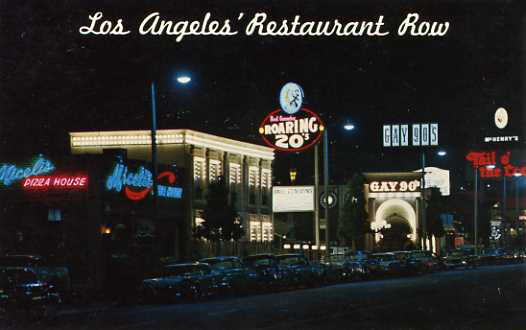
RestaurantrowRichlor'sLos Angeles’ restaurant row on La Cienega Boulevard [illustrated at top] probably achieved more celebrity than did those of any other cities. Coming into prominence with the end of Prohibition in the 1930s it presented a mix of swanky restaurants and nightclubs alight with neon signs. In 1947 the row, centered at Wilshire and La Cienega, was enough of an attraction to inspire Southwest Airlines to offer a weekend jaunt built around it. One of the earliest restaurants in the row, Lawry’s The Prime Rib, established in 1938, continues today. Its owners also operated other La Cienega hotspots, Richlor’s [illustrated] and Steer’s.

Although the 1960s and 1970s were decades of decline on Los Angeles’ restaurant row, it made a comeback in the 1980s and continues to attract visitors today.

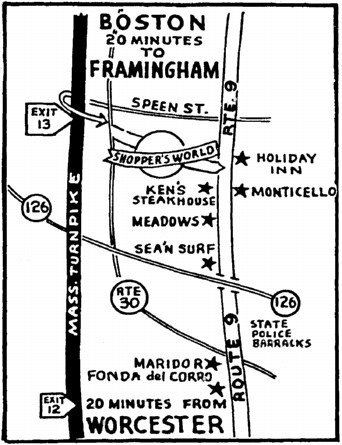
restaurantrowFramingham1965It didn’t take long for other cities, even small towns and suburbs, to realize that promoting a restaurant row was a way to bring people to town with money to spend. Restaurant rows with as few as four or five eating places began to advertise their attractions. [Route 9, Framingham MA illustrated]

With the spread of fast food eateries in the 1960s, people began to refer to fast-food rows where pizza, fried chicken, and burger emporiums clustered together. Competing chains kept a close eye on where McDonald’s opened, figuring the fast-food leader had chosen well after conducting extensive research on demographics and traffic patterns.

© Jan Whitaker, 2015

5 Comments

Filed under restaurant customs

Park and eat

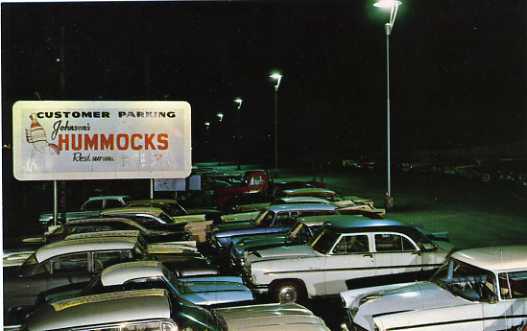
parkingJohnson'sHummocksProvidence

People who travel to restaurants by private transportation other than their feet have often had a little problem. They must do something with their horse, carriage, or car. As basic as this situation is, it has bedeviled eating places through the ages.

Into the mid-19th century, eating places which were also overnight accommodations were legally required to take care of their patrons’ means of transport, i.e., horses. In Haverhill MA, innholders, taverners, and common victualers had to follow rules that included hanging a sign, accepting all travelers, and providing feed for horses.

As urban downtowns grew after the Civil War, fed by trolleys powered by horses, steam, and electricity, restaurants developed independently of hotels and boarding houses with no need of facilities for horses. It must have been a relief, especially as land values rose.

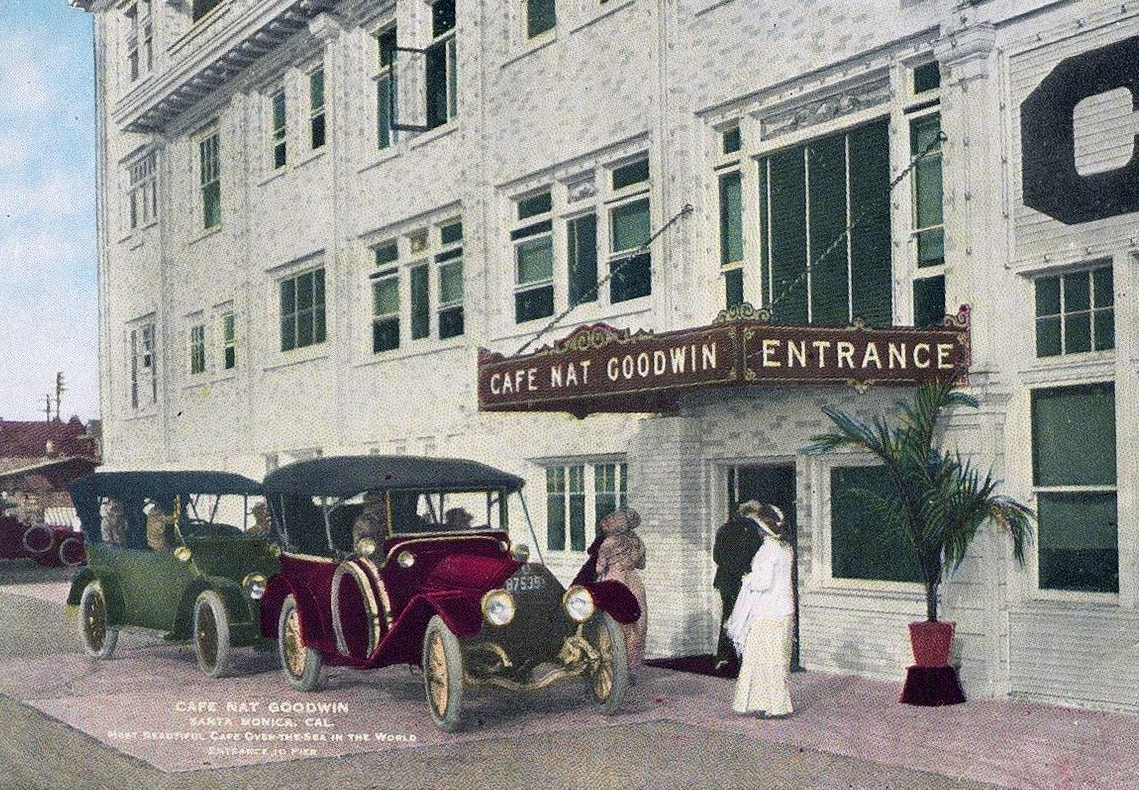
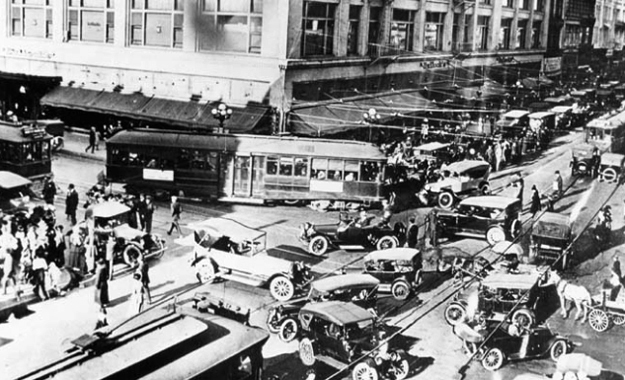
parkingNatGoodwinAt first the arrival of cars in the early 20th century might have seemed like a blessing, delivering patrons directly to the front doors of restaurants. But it soon turned into a curse as unprepared cities became gridlocked with traffic that included a mix of autos, streetcars on tracks, and horse-drawn wagons. Denver, for instance, scrambled to solve downtown congestion after the number of cars on its streets doubled from 1912 to 1915.

parkinggridlockLAmid1920s

A common solution — ordinances that prohibited curb parking on busy streets — caused restaurant owners to rise up in protest. Kansas City restaurateurs objected to a ban on parking before 6:30 p.m., saying it would harm their early dinner business. In Portland OR and Omaha NE restaurant owners complained they would lose their breakfast trade if morning parking was severely curtailed as proposed in those cities. The owner of an Omaha chain pointed out that downtown restaurants paid high rents and would desert the city center for less expensive areas if strict parking bans were enacted. Meanwhile, restaurants lucky enough to have parking lots advertised the fact loud and clear.

parkingFlumeTeaHouseNH1933

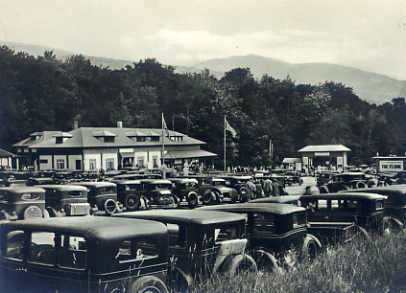
Restaurants and tea rooms (such as The Flume teahouse, shown here) in outlying areas with plenty of space for parking thrived. Warren’s Dining Car, located outside Worcester MA near the White City amusement park, advertised in 1927 that it had parking for 500 cars.

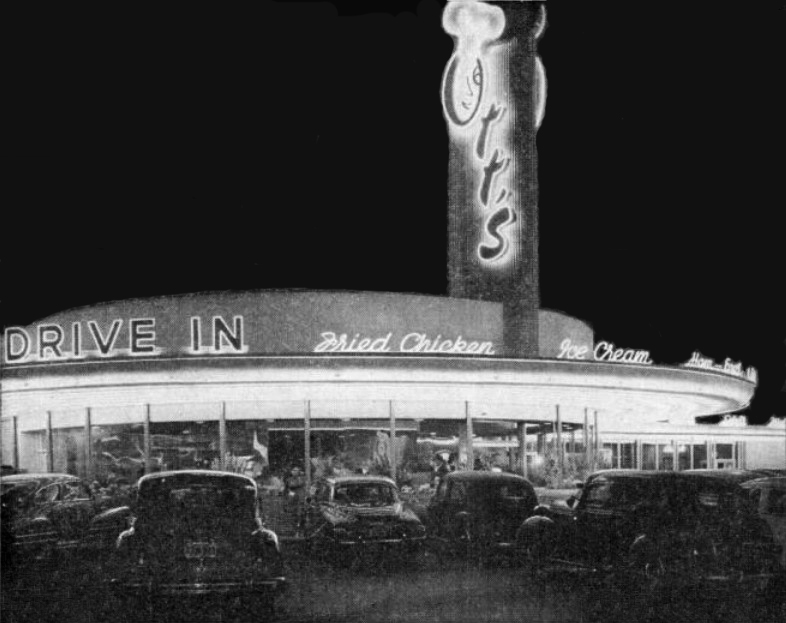
parkingOtt'sWith all the problems of downtown, it wasn’t long before restaurants began making good on their threats to relocate farther out, often in newer shopping areas on wider streets near residential areas. Anticipating the fast food chains of the 1960s, drive-ins chose to build on spacious lots surrounded by parking space. When Neff’s Drive-In opened in Corpus Christi TX in 1940 it boasted hickory-smoked barbecue served by “15 Beautiful Girls” on a full acre of parking space. Ott’s Drive-In in San Francisco employed four traffic police to direct parking in its 250-car lot.
But it took a high volume of business to warrant such a large parking lot. The director of a restaurant design firm in Los Angeles observed in 1961 how difficult it was to find an affordable parcel of land big enough to accommodate a restaurant and parking for customers. Economically it was unfeasible for any place not open 24 hours, he said.

With 60 million cars on American roads in 1955, valet parking – which originated in venues with distant parking lots such as racetracks and sports stadiums – became common in urban restaurants with an affluent clientele who might otherwise avoid downtown. It brought its own set of problems, though, such as complaints about police taking payoffs in return for allowing attendants to park cars illegally.

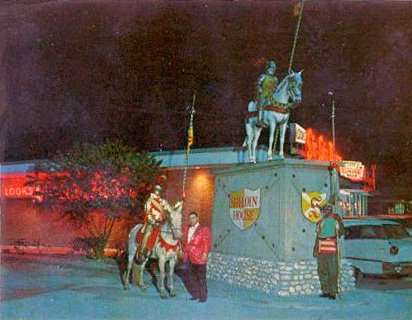
parkingthemeknightsir-loinHouseHoustonOne creative solution to the problem of a distant parking lot was demonstrated by the Sir-Loin House, a popular Houston TX steakhouse. Adopting a medieval knighthood theme, parking lot attendants dressed as Robin Hoods and guests were escorted to the restaurant by a knight on a white horse.

Although there are numerous parking garages in most urban areas today, parking still remains an issue for many restaurants and their patrons. The situation has almost certainly assisted the growth of fast food establishments with rapid turnover as well as the rise of premier restaurants in suburbs.

© Jan Whitaker, 2014

Leave a comment

Filed under restaurant customs

Truth in Menu

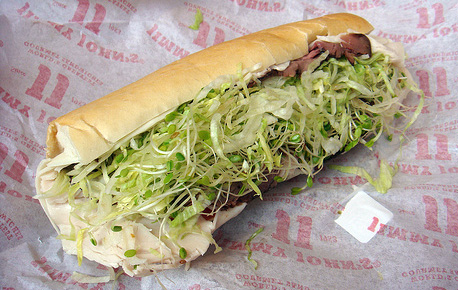
Truthsproutsjimmyjohn'sphoto

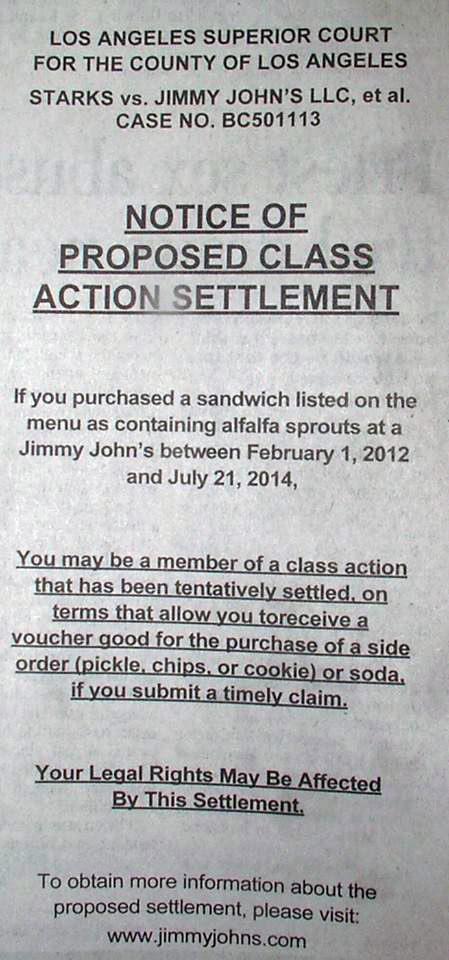
Last week my brother found the following curious notice in his local newspaper offering aggrieved consumers a free pickle, cookie, or soda (valued at $1.40). The offer was the result of the settlement of a class action lawsuit by a woman who failed to get sprouts on her sandwich as a Jimmy John’s menu had promised.

truthinMenu

I could not help but appreciate that the claimant was a resident of California, the state that originated Truth in Menu laws (aka Truth in Dining) that demand under penalty of fines that restaurants provide exactly what is stated on their menus.

Menu advertising is covered under a variety of consumer protection laws but many people have felt that restaurants’ misrepresentations deserved more focused attention. Ralph Nader, from a restaurant family himself, may have been the first to call for a Truth in Menu law, in 1972. The first attempt to enact such a law, in the form of a city ordinance, came in San Francisco in 1974 under the sponsorship of then-president of the Board of Supervisors, Diane Feinstein (US Senator, D-CA).

The impetus behind the San Francisco ordinance was to stop restaurants from serving convenience entrees that had been prepared elsewhere, frozen, and reheated in the restaurant, yet were not identified as such and leaving diners to believe they originated in the restaurants’ kitchens. Also at issue were the restaurants at Fisherman’s Wharf that purported to serve locally caught fish yet were known to substitute frozen fish shipped in from other states. Restaurant owners such as Tom DiMaggio, brother of baseball’s Joe DiMaggio and owner of DiMaggio’s Restaurant, argued that they had to fall back on frozen fish at times when fresh caught local fish was not available. DiMaggio admitted to serving frozen prawns from Louisiana. Proponents of the Truth in Menu law, however, claimed that some of the Wharf’s restaurants regularly served nothing but frozen fish.

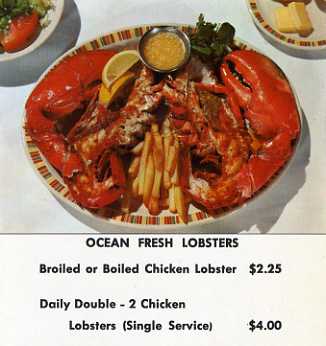
truthlobstersSan Francisco’s Board of Supervisors chose not to pass the ordinance, but Los Angeles took up the cause and became, probably, the leading enforcer of menu honesty. Other states and localities also adopted such laws but their enforcement has tended to be weak. The 1970s was the high point for restaurant inspections and TiM enforcement. Fines were issued for margarine referred to as butter, Maine lobster not from Maine, real maple syrup that wasn’t, frozen entrees touted as home-made, 8 oz prime steaks that weighed less and were lower grade, chicken and veal dishes made of turkey or pork, and fish that wasn’t what its name implied. As “home-made” became “home-baked,” restaurants learned to play it safe with their claims, as the postcard image above shows. Menu printers did a brisk business.

The use of frozen entrees eventually became an accepted practice in many restaurants as consumers happily accepted dishes prepared in a factory and microwaved in the restaurant’s kitchen. Restaurants are not required to acknowledge that they serve frozen entrees (as the Feinstein ordinance would have required), and many customers would not be horrified if this was revealed, feeling that as long as it tastes good and costs less than food made on-site from scratch, that’s fine with them.

Where do things stand today? Restaurant chains are the most likely targets for lawsuits and have been diligent in avoiding false claims. Elite restaurateurs wither at the very notion that they could use convenience foods or mislabel anything. Yet misrepresentations certainly occur, sometimes even among the staunchest supporters of truthfulness.

There’s the meat glue scandal in which chunks of beef were glued and pressed into shape as filet mignon.

But, if there is a single type of food most likely to be misrepresented on menus it is fish. Not too long ago I ordered grouper in Florida at three different restaurants. Each time it was quite different, indicating that at least twice I was served something else. As recent investigations show, fish misidentification is rampant among restaurants, suppliers, and retailers, always involving the substitution of a less expensive fish for a more expensive one.

© Jan Whitaker, 2014

9 Comments

Filed under restaurant customs

See it, want it: window food displays

windowDisplayofmeat

To the degree that restaurants are about theater, food is one of the starring players. Putting it on stage has long been considered a way to sell it.

There are many opportunities to display food, one of them being the simple delivery of an attractive plate to a neighboring table. But there are also buffets, cafeteria shelves, dessert carts, flaming swords, etc., all of which have been featured or will appear as posts on this blog.

There are also several ways to attract potential customers passing along the street. One of the oldest, popular in the 19th century, was to string up game near the front door. Today that would probably be guaranteed to drive people away, but men of the 19th century responded positively. The Shakspeare Saloon in 1847 New York lured judges, lawyers, merchants, and men about town by displaying “a splendid buck, a couple of bear hams, haunches of mutton, . . . fatted capons as large as turkeys, . . . glittering fish and sirloin steaks marbled with fat.”

windowdisplayThe Shakspeare was below street level as were many eateries of the early 19th century. But as more eating places moved above ground, fitted out with windows that grew ever larger as the century proceeded, new display possibilities arose. In 1868 French rotisserie restaurants in San Francisco decorated their windows with marbled beef, vegetables, and live frogs in glass globes, displays that might have resembled the one portrayed in the 1880s trade card shown here. In it a woman gazes at fruit, as was appropriate for her gender. An article advised that women’s restaurants tempted the fair sex by fruit and delicate pastries, while “Meats are never shown, and the suggestion of anything so gross is studiously avoided. This is left to the restaurants patronized by men, who are supposed to find a stronger appeal in more solid and healthier food.”

And so meat and fish were especially popular to put on display. Up until the mid-20th century they might still have been on ice but increasingly they were displayed in refrigerated cases. Ice and refrigeration showed respect for the food, balancing two of restaurants’ prime virtues: a sense of extravagant plenty, communicated by large amounts of fine food, and a sense of order, demonstrated by methods that insured freshness.

Some restaurants placed in their windows food that had been frozen inside a large block of ice. Imagine two shad, each with a lemon in its mouth, that appeared to be swimming toward the bottom of the block, forming a V, with a red lobster between them. Or the 20-pound pig encased in ice by “gourmet artist” and restaurateur George Pundt that made such a hit with people passing the Parlor Restaurant in Columbia, South Carolina, in 1897.

windowfoodfakeonionringsAlong with meat, anything that was overlarge or brightly colored might appear in a window. Big yellow squash, pumpkins, melons, decorated cakes. Chicago’s Toffenetti’s piled up its much ballyhooed Idaho potatoes in the 1940s.

Despite the spectacular effects that could be attained with displays, there were also risks involved. As early as 1886 an article noted that “really first-class restaurants” did not engage in window displays. The pots of baked beans found in New York’s Bowery restaurants were proof, as was the “tired display of sliced tomatoes” placed in the smeared window of an eatery whose location was home to one failed business after another. In the 1920s a Niagara Falls cafeteria owner observed that he avoided putting food in windows because picky patrons felt that “sooner or later, they, as patrons of the restaurant, will have to eat that ‘window’ food” and so they tended to shun restaurants with food displays.

windowfoodfakesoupIt’s hard to pinpoint when window food displays began to wane. A Seattle newspaper columnist declared in 1965 that the city’s old-time Olympia Café was the last to feature refrigerated steaks in its windows. I can’t recall seeing real food in restaurant windows for the past several decades. Today food shown in restaurant windows is likely to be artificial. Japan, perhaps the biggest user of window food displays, specializes in making the most realistic and highest quality items. They don’t make me hungry, yet the collector in me wants to acquire the fake food for my collection.
© Jan Whitaker, 2014

4 Comments

Filed under food, restaurant customs