Category Archives: proprietors & careers

The ups and downs of Frank Flower

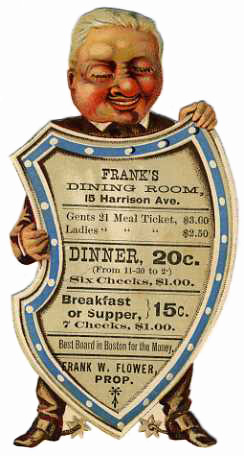
frank's15HarrisonEveryone knows that being a restaurant proprietor is chancy. This is amply illustrated in the life of Frank Flower, born in England in 1854, and working as a Boston waiter in 1878. He staked his career as a restaurateur on Harrison Avenue in Boston where he ran a restaurant from about 1880 to 1895, moving twice.

The reason for his failure in 1895 is unknown, but it may have had something to do with shifts in the neighborhood beginning just as he opened at 13-15 Harrison in 1880. That was the year that the first property lease was made to a Chinese person in Boston, on Oxford Place, very near to Frank’s restaurant. Frank had catered to patrons whose tastes ran to fish balls and baked beans. But, little by little by the 1890s Harrison would become a business street in Boston’s Chinatown. Boston’s first Chinese restaurant would open at 36½ Harrison in 1890.

In 1882 Frank advertised that he sold a week’s worth of meal tickets to men ($3) and women ($2.50). He also had rooms for rent, both “box rooms” and “side rooms.” I remember some years ago when I read about single working people who rented small kitchenless rooms in Boston’s South End in the 19th and early 20th centuries. While visiting a friend’s apartment in that area one day, I suddenly realized that her cramped and oddly-shaped three-room apartment was in fact made up of one box room and two side rooms.
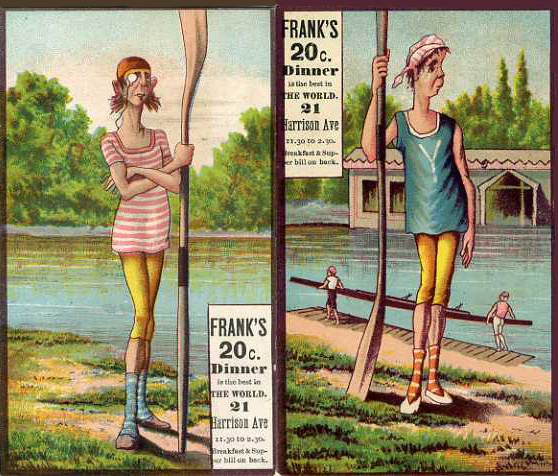
frank's21Harrison770By 1884 Frank was doing well enough to buy a nearly new 11-room Queen Anne house in Dorchester. He moved his restaurant to 19-21 Harrison about then. That location soon became problematical when the block was sold off to a developer who planned to raze the buildings and construct a large office building.

That same year, 1890, Frank won the contract to feed 10,000 Civil War veterans coming to Boston for a week-long reunion. In other words, he would need to furnish about 210,000 meals in the space of a week, rather than his usual not-too-shabby 10,500.

Though he claimed he nearly went crazy making all the arrangements, Frank felt confident he could handle the job by feeding 2,000 diners in five shifts for each meal. He contracted with a local baker for bread and the all-important baked beans; bought 3,000 new plates; had all the meat delivered to his door in a refrigerated car by Armour Co. of Chicago; bought four immense boilers that would steam 2,400 eggs at a time; hired 100 waiters; found a professional coffee maker who would turn 9,000 pounds of beans into endless streams of hot coffee; and paid 35 scullions to clean up. When the encampment was over the G.A.R. executive committee commended him on how well he had fed the multitude.
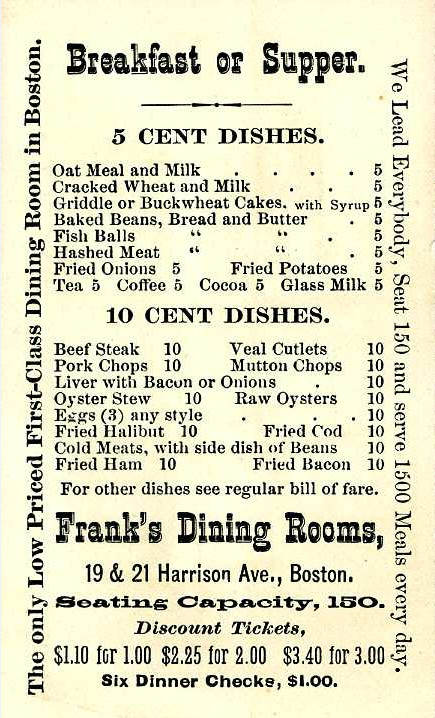
Frank'stradecardmenuEvidently the veterans were pleased with what they were served. Nonetheless, Frank’s menu, repeated each day, gives a fair idea of why Boston restaurants of that time were not known for their fine cuisine.
Breakfast: cold meats, baked beans and brown bread, boiled eggs
Dinner: cold meats, baked beans and brown bread, boiled potatoes
Supper: cold meats and doughnuts

Frank’s Dining Room moved to 79 Harrison in the early 1890s, just about the same time that his original location became a Chinese store. But soon he hit the wall, declaring in 1894 that he was unable to pay his bills. His Dorchester mansion went back on the auction block.

Following his fall, he continued in the restaurant business as manager of Munro’s restaurant on Eliot Street. Always fond of boastful advertising, the irrepressible Frank took out newspaper ads claiming “1000 boarders needed” and “dinner, 20c, the finest on earth.”

In the decades after Frank left Harrison Avenue, Chinese restaurants such as the Chinese Royal and The Red Dragon took over several of his locations.

© Jan Whitaker, 2014

Leave a comment

Filed under proprietors & careers

Famous in its day: Tip Top Inn

tiptopinnColonialRm

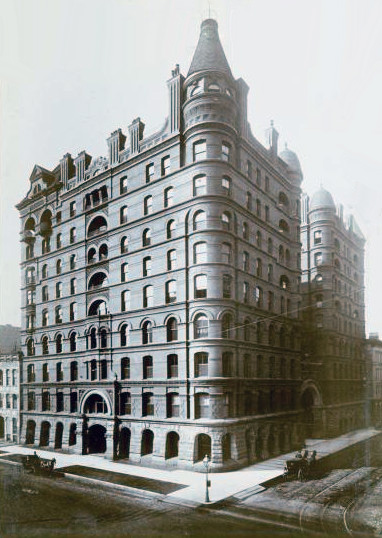
As the massively solid Pullman Building was under construction on Michigan Avenue in Chicago in 1884, a young Adolph Hieronymus was traveling to Chicago from his native Germany. Within a few years he would run a restaurant of renown on the building’s top floor.

tiptopinnpullmanbldgThe building was to be the new headquarters of the Pullman Palace Car Company which manufactured sleeping and dining cars used by major railways. When the imposing building was completed, the company occupied two and a half of its nine floors while the rest of the space was rented for offices and what were known then as “bachelor apartments,” probably lacking anything but the most rudimentary cooking facilities.

For the first few years the Pullman company ran its own restaurant, The Albion, on the 9th floor. It was considered advanced at the time to locate restaurants on top floors so that cooking odors would not drift throughout the building. In addition, diners at The Albion, and later the Tip Top Inn, had excellent views of Lake Michigan.

tiptopinnFrenchRoomDuring the Columbian Exhibition in 1893 Adolph Hieronymus left his job as chef at the Palmer House and took over the Pullman building restaurant, renaming it the Tip Top Inn. Under his management, it became one of Chicago’s best restaurants, hosting society figures and professional organizations. Until the Pullman company expanded its offices onto all eight floors below the restaurant, men living in the 75 or so apartments on the upper floors were also steady customers of the Inn, often having meals sent down to them.

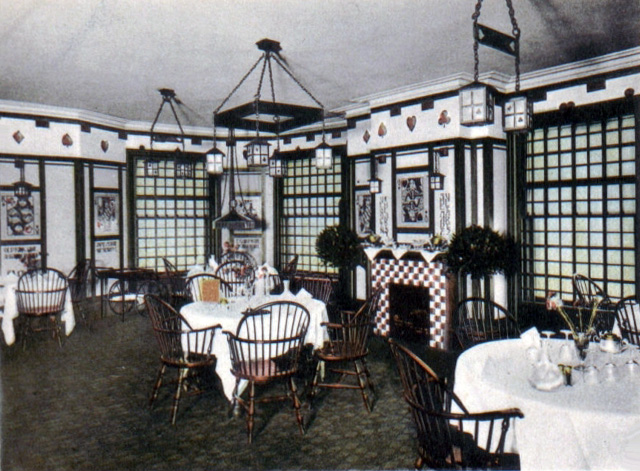
The space occupied by the Tip Top Inn was divided into a bewildering number of rooms, at least five and maybe more. Each had its own decorating scheme. Over the years – but surely not simultaneously — there were the Colonial Room [pictured at top ca. 1906], the Nursery, the Whist Room [pictured below], the Charles Dickens Corner, the Flemish Room, the French Room [pictured above], the Italian Room, the Garden Room, and the Grill Room. The Whist Room was decorated with enlarged playing cards and lanterns with spades, hearts, diamonds, and clubs. The lantern and suits also decorated the Inn’s china and menus.

tiptopInnmenu1920The outlawing of alcoholic beverages proved challenging to the Tip Top Inn, as it did to other leading Chicago restaurants of the pre-Prohibition era such as Rector’s, the Edelweiss, and the Hofbrau, all of which would go under before the ban on selling alcohol ended. Perhaps to attract new customers, Hieronymus created an associated restaurant on the 9th floor called The Black Cat Inn, with somewhat lower prices than the Tip Top Inn and a menu featuring prix fixe meals.

tiptopinnWhistRoom

The Black Cat was unusual at the time for having a staff of Black waitresses – who served in restaurants far less often than Black men. The Tip Top Inn, just like the Albion and the Pullman dining cars, had always been staffed with Black waiters, some of whom worked there for decades. It was said that anyone who worked at the Tip Top could find employment in any restaurant across the country. “Black Bolshevik” Harry Haywood wrote in his autobiography that he quickly worked his way up from Tip Top Inn busboy to waiter and then landed jobs on the ultra-modern Twentieth-Century Limited train and with Chicago’s Sherman Hotel and Palmer House.

By 1931 when the Tip Top Inn restaurant closed, it was regarded as an old-fashioned holdover from a previous era. Its extensive menu of specialties such as Stuffed Whitefish with Crabmeat and Suzettes Tip Top, some of the more than 100 dishes created by Hieronymus, was no longer in vogue. Aside from Prohibition, Hieronymus attributed the restaurant’s demise to the death of gourmet dining. Hieronymus died in1932 but he and his restaurant were remembered by Chicagoans for decades. The Pullman Building was demolished in 1956.

© Jan Whitaker, 2014
10 Comments

Filed under proprietors & careers, restaurant decor

Find of the day: J.B.G.’s French restaurant

FrenchtabledhoteJBG740

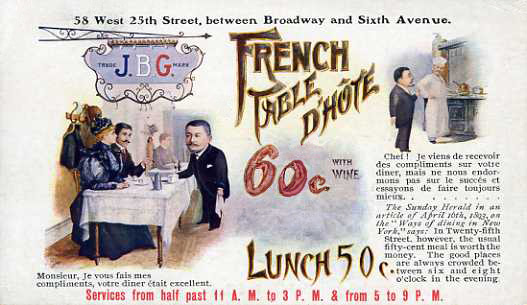
Last weekend I went to an antique paper show sponsored by the Ephemera Society of America where there were books and every sort of printed thing — maps, advertising cards, tickets, menus, postcards, posters, broadsides — for sale. I ended up buying only seven items, but one of them (shown above) was a gem.

I knew as soon as I spotted it that it was a relic of New York City’s old French quarter in which many restaurants flourished in the 19th century. The card probably dates from the latter years of the quarter, about 1904.

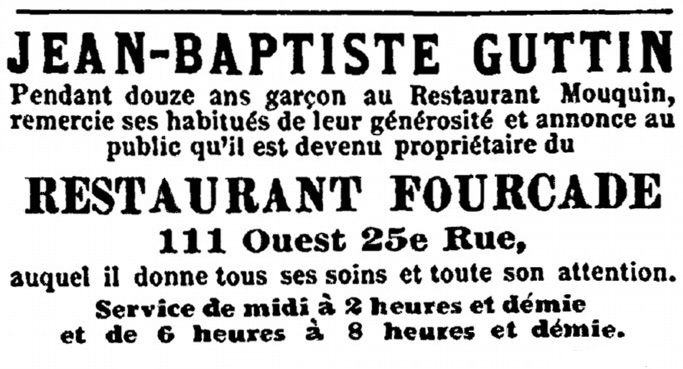
J.B.G.’s was operated by Jean Baptiste Guttin, who immigrated to the United States in 1872 and became a citizen in 1892. For many years he worked as a waiter at wine merchant Henri Mouquin’s well-known restaurant on Fulton Street. Then, in 1890, he took over a restaurant formerly run by A. Fourcade on West 25th street. Within a few years he changed the name to J.B.G. and moved down the street a bit.

frenchtabledhoteguttinMay1890Beginning in the 1890s the area from West 23rd to West 28th streets near Sixth avenue was the heart of the French quarter, which was said to be as much or more of a tight-knit community than the Chinese. It had earlier been situated farther downtown, south of Washington Square. By 1895 West 25th was the new restaurant row for French New Yorkers. The restaurants were also patronized by others who lived in the area, as well as adventurous “Bohemian” diners who came to soak up the atmosphere. Of course they also liked getting a six-course meal with red wine and coffee for 50 or 60 cents.

Described in the 1903 guide book Where and How to Dine in New York as “very French,” J.B.G.’s was a truly old-fashioned table d’hôte in that customers had no choice in dishes and didn’t know what they would be eating until it was set down before them.

Jean Baptiste Guttin was successful in the restaurant business. When he died in 1914 he left the then-considerable sum of $4,000 to NYC’s French Hospital as a way of thanking the late chocolate-maker and restaurateur Henry Maillard for advancing him a loan of the same amount “in a moment of difficulty.”

© Jan Whitaker, 2014

13 Comments

Filed under proprietors & careers

Interview: who’s cooking?

whoscookingRecently I interviewed someone who had cooked in a 24-hour restaurant located on the outskirts of a small Midwestern town in 1970.

He worked there one summer. He was the sole night shift kitchen staff from 10 pm to 6 am. Previous experience? One week as cook at a children’s summer camp the previous year.

He was 16 years old.

Although he gave it little thought at the time, he now suspects the restaurant was designed, owned, and operated by the food processing company that supplied the food, the menus, the “recipes” – in short, everything. Follow-up research revealed that the company supplied 1,500 restaurants, schools, and institutions in four states.

DIchickenThe building was new and blandly modern. It was surrounded by a parking lot. Through a big plate glass front window was a view of an interior with booths, formica-topped tables and chairs, and a counter with stools. The decor, as he remembers it, contained multi-colored hanging lights, fake stone, and grill work in a coordinated style he calls “corporate.” About 60 people could be seated. At night, except right after the bars closed on weekends, there were rarely more than a dozen patrons at any one time.

Most of the night customers were working men, traveling salesmen, work crews, people passing through town. It wasn’t much of a local hangout, unlike the bowling alley restaurant at the other end of town. It served no alcohol.

Was there a chef at this restaurant? Answer: prolonged laughter. The manager had preprinted forms on which he checked off what supplies were needed.

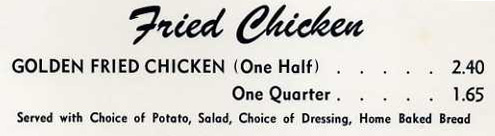
DIshrimpA popular order, particularly with the barflies, was steak and eggs ($2.50 with toast and coffee). Eggs were one of the few items of fresh food in the kitchen other than lettuce and tomatoes. “Everything was frozen so once you knew how to deep fry it or put it in the Lytton [microwave] oven, you were set,” he said. This included pies (“Served Hot from Our Electronic Ovens”), Cordon Bleu, Breaded Pork Tenderloin, Golden Fried Chicken, and Fillet of Perch. Potato Salad came in a tub, Soup of the Day in giant cans. Hard boiled egg came in a long tube so that every slice was the same. Home Baked Bread? Well, I think you know.

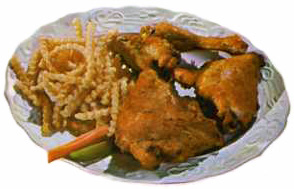
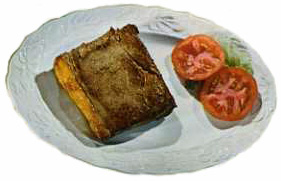
DILogoThe food  images shown in this post are stickers applied to the restaurant’s menu before the entire thing was plasticized. I take them to be generic, as I do the meaningless logo from the menu’s cover which looks like it was intended for a “steak & ale” eatery.

With some orders he got to do what he considered “actual cooking”: “Liver and onions. You have to make the bacon and onions – that was actual cooking. Denver omelet, that was actual cooking.” He enjoyed making sandwiches at the deli counter. One of his personal favorites was the Denver Sandwich — chopped ham, pickle, and scrambled egg made in a patty and served on toasted bread. He also enjoyed cottage cheese and pineapple.

DIsteakDiners rarely sent food back to the kitchen. “It’s amazing how many different kinds of food that a 16-year old could cook and not ruin anything. I was feeding a lot of people with a lot of liability and it didn’t go wrong,” he said. The manager criticized him for one thing only: giving customers too many french fries. Limit them to a handful, insisted the manager. So he garnished the plates with parsley and “Never got in trouble for using too much parsley.”

DIFriedChicken

Despite all, he had surprising praise for his old workplace, saying, “I was impressed with the efficiency of the kitchen. It was easy to work in. I liked that there was a ready supply of clean linens.” He added, “There were not many dining establishments. Before Applebee’s this filled a niche. It was more ambitious food than people had access to before.”

Did he ever return there as a customer? “No,” he said, “I had no warm fuzzy feeling for the place.”

© Jan Whitaker, 2014

7 Comments

Filed under food, proprietors & careers

Back to nature: The Eutropheon

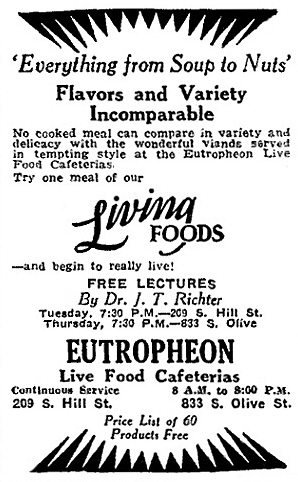
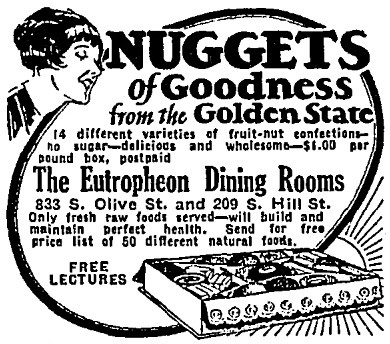
rawfoodeutrophean1928Last week’s post on a recipe from The Aware Inn, an early natural food restaurant in Los Angeles, took me back to founder Jim Baker and his adventures with the Nature Boys. I learned that some of the members of this group, who lived in the woods, dressed like Tarzan, and ate natural foods, worked at a Los Angeles raw food restaurant called The Eutropheon.

Just by its name, readers might suspect it was more about spreading the gospel of raw food diets than an ordinary money-making commercial eating place. They would be right.

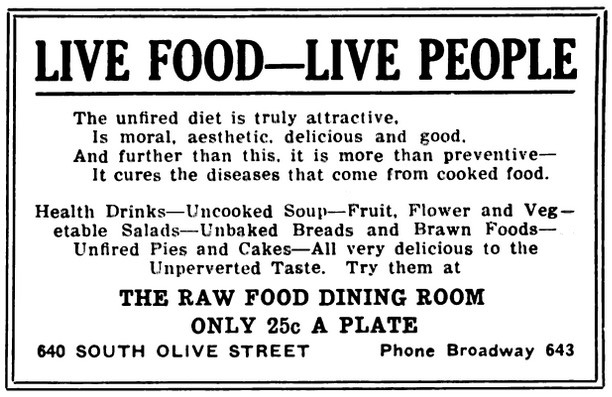
rawfoodTheNewJusticeJune11919A raw food restaurant, not yet named The Eutropheon, but very likely run by Eutropheon founders Vera and John Richter, was established in Los Angeles in 1919. It was evidently affiliated with, or at least sympathetic to, The New Justice, a short-lived publication dedicated to defending the Russian revolution [the 1919 advertisement here appeared in the magazine]. A story in the Los Angeles Times reported that the restaurant played Hawaiian music on a phonograph, distributed a leaflet called “The Truth About Russia,” and displayed a copy of the Soviet constitution along with a portrait of American socialist leader Eugene Debs. Its menu included uncooked soup, fruit and flower salads, and unbaked breads and pies.

In 1920 the Raw Food Dining Room had a new Los Angeles address, 326 W 2nd. In 1922, there was a Raw Food Dining Room, now called The Eutropheon, in Long Beach CA, as well as in Los Angeles at 927½ W 6th. How many of these were open at the same time is uncertain. There was also a Vegetarian Cafeteria on Figueroa serving “A complete line of Cooked and Raw Foods,” but this must have been run by someone other than the Richters since they were never known to serve cooked food. A Eutropheon cropped up in San Francisco in 1926, at 574 California Street. In 1928 the Richters had two Eutropheons in Los Angeles, one at 209 S. Hill and the other at 833 S. Olive.

There appear to have been very few raw food advocates in the United States, and almost no restaurants (until relatively recently), making the Richters pioneers. There were, however, some raw food enthusiasts in the US prior to The Eutropheon. Plans were laid by the Chicago Raw Food Society to open a raw food restaurant there around 1900 or 1901, but it’s unclear if it ever materialized. In 1907 a group in New York City held a raw food banquet at a hotel there. There was also a group in Cincinnati in the early 1920s.

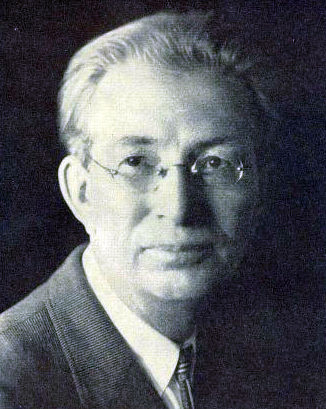
rawfoodJohntrichterJohn T. Richter, as he was known in Los Angeles, had come to the city around 1918 or 1919, opened a raw food restaurant, and began lecturing on the benefits of that diet and other aspects of natural living. When and how he met his wife Vera is unknown as is anything about her background, but she seems to be a key figure in the raw food movement in Los Angeles. Judging from her 1925 cookbook Mrs. Richter’s Cook-less Book, she may have developed many of the recipes for soups, salads, grain and nut dishes, and desserts that were served in The Eutropheon.

RawFoodVeraRichterBefore coming to California, Richter was known as Theophilus J. F. Richter. At least 20 years older than Vera, he was born of German immigrants in Illinois in 1864, grew up in North Dakota, and earned a diploma sometime in the late 1880s or the 1890s in “Swedish movement cure” in Chicago, probably from the Folke-Kjellberg Institute. He married a woman named Violet in Chicago in 1891 and they had three children. After living in Fargo for several years, the family moved to Minneapolis and Theophilus obtained a degree as a naturopathic physician. Evidently he adopted a raw food diet around 1911 after taking classes with Chicago doctor George Drews. He still gave his address as Minneapolis as late as 1917.

The Richters received quite a bit of publicity for their restaurant from Los Angeles naturopath and gymnasium owner Phillip Lovell. Lovell also had a radio show and wrote the “Care of the Body” column that appeared in the Los Angeles Times in the 1920s and 1930s espousing alternative medicine and health regimes. Declaring himself a regular patron of the Richter’s restaurants, Lovell wrote in 1928, “To my knowledge, these are the only two restaurants in the country that function without the aid of a cookstove.”

rawfoodrestaurant1926Why Lovell’s career and The Eutropheons attained success in California is an interesting question. It’s doubtful the Richters got rich but the fact that their restaurants survived for about 20 years is surprising given that raw food restaurants were found nowhere else at that time. As for Lovell, he amassed enough money to commission architect Richard Neutra to build the first steel-frame ultramodern house in the US. It was completed in 1929 and contained a full-size gymnasium. I suspect that the reason California was such fertile ground for health and fitness gurus had something to do with the large number of people, especially the elderly, who vacationed or moved there from the Midwest hoping the climate would cure their ills.

Sometime in the late 1930s it appears that the Richters turned over The Eutropheon at 833 S. Olive to Milan Geshtacoff who had once been a kitchen worker there. How long it stayed open and what the fate of the S. Hill street location was I don’t know.

© Jan Whitaker, 2014

14 Comments

Filed under alternative restaurants, food, proprietors & careers

Roast beef frenzy

neba

According to Mike Davis, creator of the NEBA chain, the arrival of fast-food roast beef sandwiches in the early 1960s was a sign of an upward-bound middle class able to afford its beef sliced rather than ground to bits. His sandwiches cost 69 cents as against the 15 or 20 cents for a chain burger.

Indeed, sliced beef was big. Despite being first into the beef sandwich market, by 1967 NEBA faced competition from Arby’s, Beef Corral, RoBee’s (soon to become Roy Rogers), Heap Big Beef (with its odd Indian theme), and others. Burger King and McDonald’s were testing roast beef in some of their units and Minnie Pearl’s was poised to add roast beef to its chicken menu.

NEBAADVDavis began his fast food career with submarine sandwiches, branching into roast beef in 1960 because it was easier to produce in quantity and not commonly found in chain restaurants. There are various ideas about where the odd name NEBA came from. Almost certainly it was not an abbreviation for “Never eat burgers again.” As strange as it sounds, it’s likely that NEBA was chosen because it was the name of a dog once owned by Davis, as he said in a 1969 interview. Another possible explanation is that it was named after the New England Beef Association. “Nicest Eating Beef Around,” sometimes used as an advertising slogan, may have been a back formation.

The first sandwich shops in the NEBA chain were in the Albany NY area, the company’s headquarters before moving to Hollywood FL. In 1965 a Mike’s Submarine and NEBA Roast Beef unit opened in Pittsfield, the first in Davis’s home state of Massachusetts. Franchised units eventually opened in Florida and southern states but the chain never made it to the West.

NebadavisphotoDavis described himself as driven to make money ever since his miserable childhood in which he earned up to $100 a week by organizing a crew of boys to deliver newspapers. Reportedly he used the money to pay rent and buy food for his brothers and sisters in an attempt to make up for parental neglect. Dropping out of school after 8th grade, he was apprehended for breaking into houses and stealing money in his teens and spent time in a reformatory. Described as “tight-lipped” and “compulsive,” he confessed he felt inhuman and never laughed.

The NEBA chain reached its peak in 1969 when there were 70 units in the U.S. Having sold the Canadian branch, Davis, 35, was said to be worth $15 or 20 million at that time. In 1970 he resigned as chairman a month before the corporation declared bankruptcy. With 400 units by then, Arby’s had become the competition-busting roast beef leader.

As late as the mid-1980s a few of the original NEBA sandwich shops, in upstate New York and Miami FL, remained in business under new owners.

I don’t know what happened to Davis after he left the company. I’d like to think he found some degree of happiness.

© Jan Whitaker, 2013

64 Comments

Filed under chain restaurants, food, proprietors & careers

Anatomy of a restaurateur: Charles Sarris

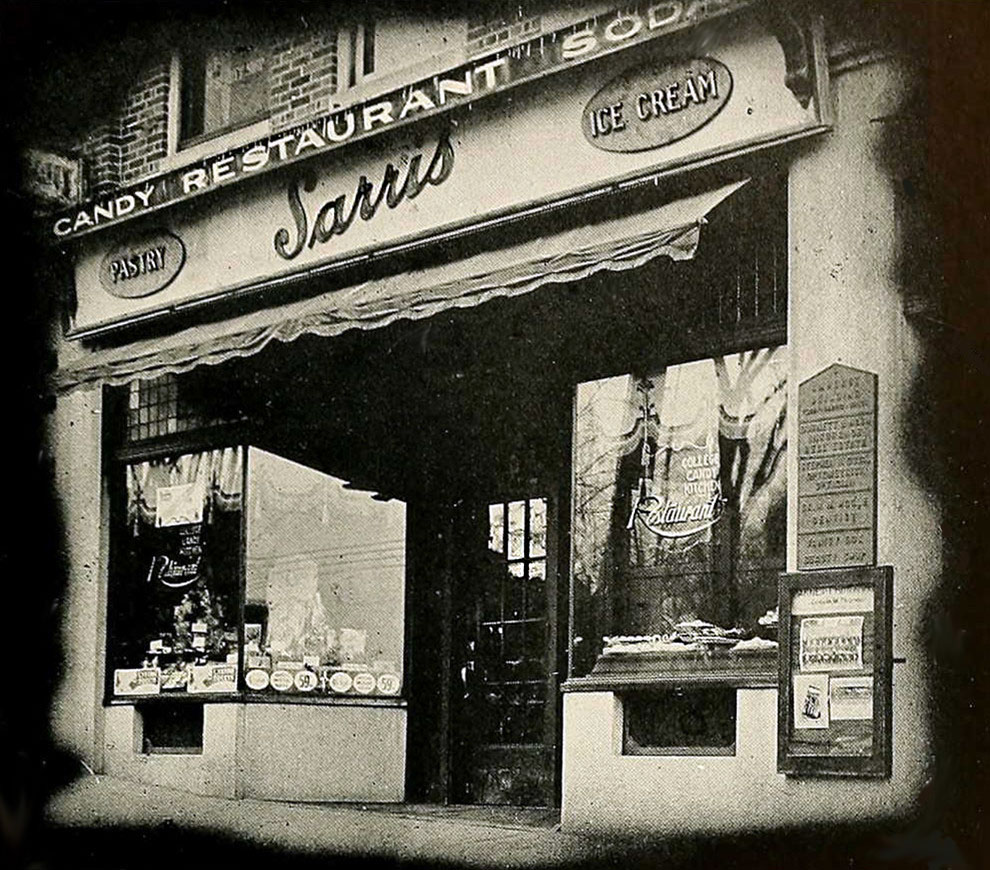
SarrisCandyKitchen1939

It is always a big deal to me when I find a restaurant proprietor’s memoir, all the more so when he or she conducted an “everyday” sort of restaurant. My Ninety-Five Year Journey, privately published by Charles N. Sarris in 1987, was a just such a wonderful, and rare, find.

The book illustrates a fairly typical restaurant career for thousands of Greek-Americans who opened restaurants in small towns which had few eating places in the early decades of the 20th century.

Charles was born in Lesbos, Greece, in 1891. At 19 he lived in dread that any moment he would be conscripted into the Turkish army and, possibly, spend the rest of his life in an occupied country. He decided to leave for the U.S. For the next six years he bounced around Connecticut and Massachusetts, working in Greek-owned confectioneries where he learned to make candy and ice cream. In 1916 he went to work in a new confectionery in Amherst MA, population 5,500. It wasn’t long before Charles and his partners, who included his brother James, took over the confectionery and expanded it into a lunchroom serving basic fare such as hamburgers and ham and eggs.

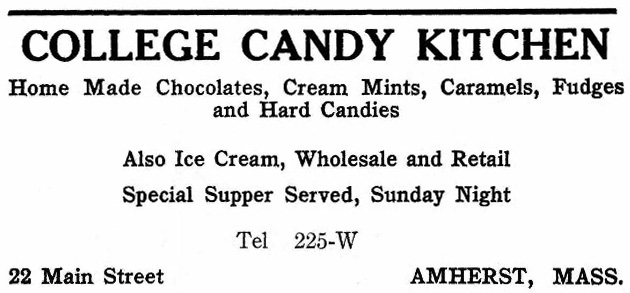
SarrisCandyKitchen1921ADVThe restaurant was named the College Candy Kitchen [1921 advertisement pictured], obviously aimed at student patrons from Amherst College and the Massachusetts Agricultural College (now the University of Massachusetts). Candy Kitchens run by Greek entrepreneurs could be found throughout the United States in the early 20th century. Coincidentally, another “College Candy Kitchen” did business in Cambridge’s Harvard Square.

One of only three Greeks in Amherst when he arrived, Charles would not feel welcome in his new home for some time. He heard racial and ethnic slurs unfamiliar to him from his previous residency in Andover MA. He observed that many townspeople valued people from France, Germany, or England more highly than those from Italy, Poland, the Middle East, or Greece.

In 1927 he and two other merchants who occupied the three-story building located on Main Street across from Amherst town hall formed Amherst Realty Co. to buy the property. Yet not until 1939, after running a thriving restaurant for 23 years, did Charles finally gain admission into one of the town’s fraternal organizations, the Rotary Club.

SarrisCandyKitchenca1927

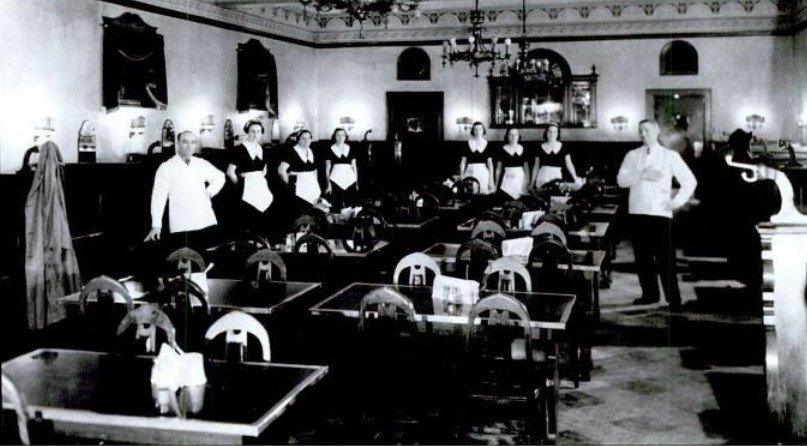
The College Candy Kitchen modernized and expanded in the 1920s [1920s Spanish-style interior shown], despite a disastrous fire in 1928 which necessitated moving to a new location for several months. Business slowed drastically but Charles and James got through the Depression ok.

Students, who made up the bulk of customers, balked when the restaurant introduced new foods such as yogurt and melons. Some greeted watermelon with the objection, “Gee, we’re not Alabama Negroes!” Charles reassured them that the menu would always include staples such as boiled dinners, baked beans, and meatloaf. For decades the restaurant continued to produce its own baked goods, ice cream, and, for holidays, candy.

Once again Charles encountered customer resistance when he hired Afro-Americans as staff or served them as patrons. “We had a lot of opposition from the students but we ignored it,” he wrote. Eventually they settled down and got used to it.

According to Charles, the restaurant closed in 1953 due to illness, parking problems, and customers’ demands for alcoholic beverages (which he did not wish to deal in). It was succeeded by the Town House Restaurant. A 1953 bankruptcy auction notice gave a fair idea of the size of the restaurant then. On the auction block were 30 leather upholstered booths, two circular booths, four showcases, a soda fountain with 12 stools, and kitchen, bakery, and ice cream equipment. I can just picture it.

© Jan Whitaker, 2013

6 Comments

Filed under lunch rooms, proprietors & careers

Behind the kitchen door

behindthekitchendoor482Although restaurant patrons often question servers about the sources of the food on the menu – whether it’s organic, local, or fresh – they rarely think about the work life of their server or other restaurant personnel. In the words of Saru Jayaraman, author of Behind the Kitchen Door, most “are totally unaware of the horribly exploitative working conditions in restaurants, which affect the quality of our food and, ultimately, our health.”

They do not know, for instance, that many restaurant workers earn less than poverty-level incomes in jobs that are ranked among the nation’s worst paying, are often cheated out of their earnings, and often feel compelled to work when sick. Or that female restaurant workers and all workers of color face discrimination pushing them into the lowest ranks of restaurant jobs where their chances of rising are often blocked.

Jayaraman, one of the founders of the Restaurant Opportunities Center (ROC) in 2002, wrote Behind the Kitchen Door to make the restaurant public as thoughtful about restaurant employees as they are about restaurant food, and to engage them in the movement to better workers’ pay and opportunities. The book intersperses facts about restaurant working conditions with moving stories of individuals.

If you read this book it’s true that you will probably not be quite as carefree about future restaurant experiences as you were before. You may become more selective about which restaurants you patronize. On the bright side, you may decide to help change things.

Consider the following, much of which is from surveys conducted by ROC:

● Restaurant workers made, on average, an annual income of $15,092 in 2009, one third of what other workers in the private sector made on average.

● The $2.13 federal minimum wage for tipped workers, originally calculated as one half the minimum wage (when it was $4.25), has not risen since 1991. (Restaurants are allowed to apply tips to workers’ hourly wages to meet the current $7.25 federal minimum wage.)

Waitstaff● The National Restaurant Association, “dominated by large multinational restaurant corporations that have a lot of money to spend on lobbyists,” such as the Darden group (Red Lobster, Olive Garden, and others) firmly opposes increases in the minimum tipped wage of $2.13.

● States can set a minimum wage for tipped workers, and seven (Alaska, California, Minnesota, Montana, Nevada, Oregon, and Washington) have the same minimum wage for tipped as for non-tipped workers. The NRA claims raising the minimum wage for tipped workers would create a hardship, yet the seven states “all have thriving restaurant industries,” according to Jayaraman. Look at the Department of Labor’s 2013 table “Minimum wages for tipped workers” to see how states compare.

● ROC surveys of more than 4,000 restaurant workers found that 90% had no paid sick days and most could not afford to take off work when sick. According to Jayaraman, the National Restaurant Association “has spent years lobbying to prevent restaurant workers from winning paid sick days. In Washington, D.C., the NRA struck a closed-door deal with the city council to exempt all tipped workers from a local paid sick-leave law.”

● In ROC’s national survey, “three-quarters of all white workers held a position in the front of a restaurant, while less than half of all African American and about one-third of all Latino workers held a front of the house position.” When African Americans and Latinos do work in the dining room they are most likely to be bussers – and to find it hard to get promoted to server with the chance to multiply their earnings times five or more.

These are but a few of the revelations in Behind the Kitchen Door. If the book has a single message about what to do, it is, “Adopt a definition of ‘sustainable food’ that includes sustainable labor practices.”

ROC puts out an annual National Diners Guide. Although it contains relatively few restaurants, it is worth looking at.

© Jan Whitaker, 2013

1 Comment

Filed under miscellaneous, proprietors & careers

Restaurant as fun house: Shambarger’s

Shambarger'sAI came across this restaurant while looking through lists of winners of Holiday Magazine awards. I was intrigued to learn that Shambarger’s, in the small town of Redkey, Indiana, was one of only five restaurants in that state to win such an award in 1972.

As I learned more about Shambarger’s I had mixed reactions: fascination at its creator’s unstoppable spirit, surprise that it had won prestigious awards, and gratitude that I had never been compelled to sit through a 5- to 6-hour dinner and vaudeville show there.

BeaconSupperClubDenverFor Shambarger’s fell into a category I call the fun house restaurant, once occupied by hotspots of enforced jollity such as Greenwich Village’s Village Grove Nut Club or the Beacon Supper Club in Denver whose owners put on funny hats to make people laugh [pictured]. La Nicoise in Washington, D.C. had waiters on roller skates.

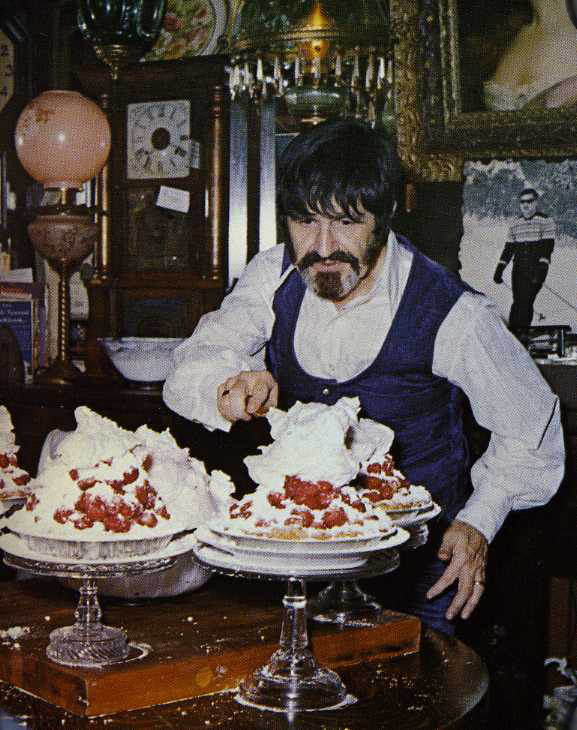
Shambarger’s, adjacent to a railroad track, resembled an abandoned building on the outside, a junk shop on the inside [see painting below by Clyde Thornburg, 1971]. Its proprietor John Shambarger “performed” most of the seven-course dinner preparation in front of 50 or so guests who made reservations many months in advance, often traveled some distance, and paid about $100 a person in today’s dollars.

Shambarger'sClydeThornburg1971Making ten or more costume changes an evening, as a pirate, Tiny Tim, a Hawaiian dancer, etc., John chopped and mixed while singing, pattering, or loudly playing records keyed to each dish. Sometimes he told jokes, kissed women diners, or screamed ‘Aaayyyyy’ in people’s ears in concert with a Spike Jones record.

And all this without cocktails! No alcoholic drinks were served, except in later years when dinner began with punch bowl of “Bloody Redkey” made of tomato juice spiked with a Budweiser six-pack. Burp.

Holiday magazine’s volunteer judges in the 1960s and 1970s had a weakness for French cuisine. Which was what Shambarger’s provided, sort of. The menu was actually as jumbled as the decor of old clocks, menus, mirrors, lamps, and a moose head wearing a hat. It always included a main dish of Imperial Prime Ribs of Beef Flambee (in rum) and a dessert of sky-high strawberry pie (see above), but the first five courses varied. In one 1968 account they included – in a sequence that is perplexing – chicken soup, fresh fruit cup, corn fritters rolled in powdered sugar, shrimp, and guacamole with John’s special dressing.

Recipes for Shambarger’s guacamole and “Antique Salad Dressing” are furnished in the Holiday Magazine Award Cookbook (1976). I like guacamole and do not think it needs a dressing, especially not one made of cottonseed oil, vinegar, chopped onions, loads of sugar, catsup, concentrated lemon juice, and apple butter.

According to newspaper accounts, Redkey’s townspeople rarely ate at Shambarger’s, but they were always intrigued by the influx of well-dressed visitors from afar. In the words of Jayne Miller, who grew up in the area and now heads up Historic Redkey, Inc. (and provided information and images for this story), the locals knew that “magic” took place inside Shambarger’s humble structure.

The restaurant had its fans and its detractors, but enough of the former to keep Shambarger’s in business under John’s management from the 1960s through the early 1980s.

© Jan Whitaker, 2013

55 Comments

Filed under Offbeat places, proprietors & careers

Celebrity restaurateurs: Pat Boone

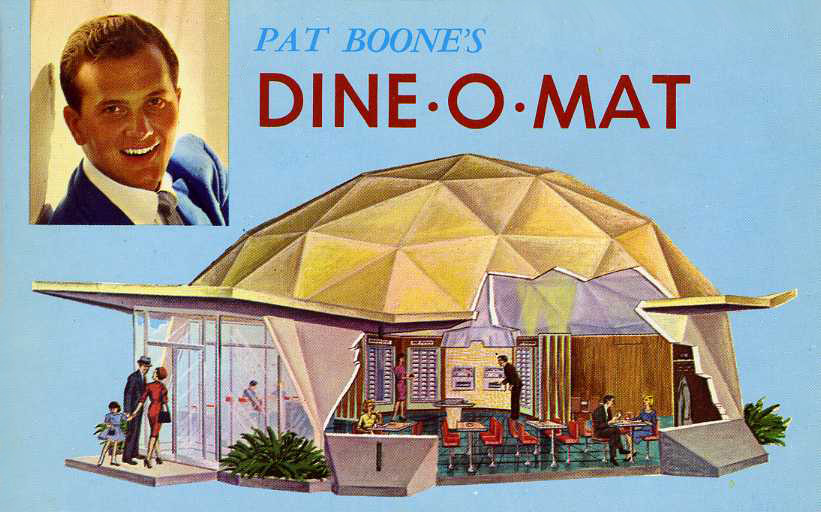
PatBooneDine-O-Mat

Few celebrities become deeply involved in the restaurants that bear their names. That was true of the singer Pat Boone, who was known to visit his namesake restaurants occasionally and to sing and sign autographs at openings. How much good his – or any celebrity’s – connection does for a restaurant is debatable. Neither Pat Boone’s success as a performer nor his pro-family, clean-cut, Christian image saved the ventures he lent his name and money to.

Pat Boone’s Dine-O-Mat appears to have barely gotten off the ground despite what publicity referred to as its “space age” design. “This . . . new type of fully automatic roadside restaurant is destined to be an important landmark on highways all over America,” boasted a 1963 advertisement aimed at investors. The initial plan was to build 100 of the restaurants by summer of 1964, but few seem to have been constructed.

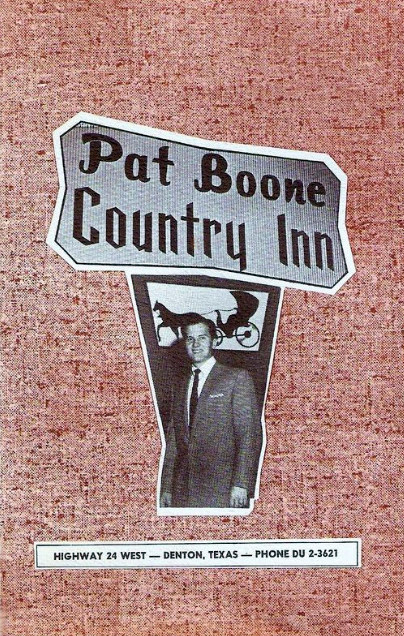
PatBooneCountryInn1959An earlier disappointing experiment in restauranting, Pat Boone’s Country Inn, in Denton TX, closed a mere four years after opening in 1958, even though Boone was connected to the town because of attending North Texas State College there.

While the Country Inn was a conventional restaurant, Dine-O-Mats were designed to be “revolutionary.” Perhaps the New Jersey entrepreneurs who cooked up the Dine-O-Mat concept were inspired by Stouffer’s 1961 foray into selling frozen food from vending machines to Ohio turnpike motorists who reheated it in microwave ovens.

Little could Pat Boone and company know when they launched Dine-O-Mats in 1962 that Stouffer’s would announce less than a year later their intention to phase out the roadside restaurants after realizing that travelers only wanted “speed and price.”

Both Stouffer’s highway restaurants and Dine-O-Mats might be called automats. But unlike Horn & Hardart automats, coins put in a slot did not call forth ready-to-eat selections. Dine-O-Mats had only one employee on the premises, an attendant whose job was to keep the machines loaded with frozen food. Rather comically, the postcard above shows customers (and Pat) dressed in their Sunday best, yet they are “dining” in a dismal geodesic-domed hut surrounded by vending machines and two microwaves sunk into an imitation hearth.

Similar to Stouffer’s restaurants, Dine-O-Mats were to be located near “motels, service stations, shopping centers, bowling alleys, country clubs, amusement parks, factories, air and bus terminals and along major highways,” according to a 1962 prospectus. How many were ever built, other than the prototype on Route 46 in Little Ferry NJ, is unclear. There may have been a few additional ones in New Jersey and Georgia.

Since kitchenless Dine-O-Mats relied on cooked food supplied by an offsite commissary, the scheme made sense only if deliveries could reach multiple outlets easily. In 1964 construction was to begin on a unit in Augusta, Georgia, but the project was delayed because of company “reorganization.” It was to be part of a group of Dine-O-Mats in Albany, Macon, and Savannah, but whether any of the Georgia restaurants opened I cannot determine.

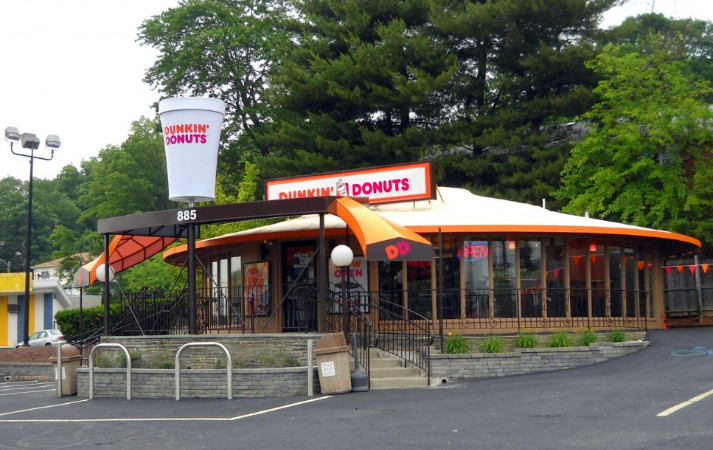
PatBooneDunkinDonutsNPlainfieldNJIn 1965, when the Augusta construction was slated to begin, a newspaper report announced, “The Pat Boone Restaurant Corp. has revised all plans and has just now completed reorganization with new, modernized plans for its restaurants.” Though it’s hard to imagine what could be more modern than “space age,” it’s possible the geodesic dome had been scrapped and that the North Plainfield NJ Dunkin Donuts pictured here was once a Dine-O-Mat as some people believe.

The company’s confusing advertisements for prospective investors required differing minimum investment amounts ranging from $2,500 to $10,000 for a “limited (inactive) partnership” in April of 1963, to $15,000 to become an “area controller” in October, then asking $10,000 for an “investment opportunity” in March of 1965. Did anyone ever get the 10% to 13% returns that were estimated?

© Jan Whitaker, 2013

15 Comments

Filed under chain restaurants, proprietors & careers, roadside restaurants, technology