Category Archives: patrons

Restaurant-ing in Metropolis

Metropolis544

In the depths of the Depression, in 1934, Harper & Bros. published a book of 304 photographs called Metropolis. Most of the photos were by Edward M. Weyer, Jr., an anthropologist who wanted to show how people in greater NYC lived. Captions were supplied by the popular writer Frederick Lewis Allen.

In a 2010 NY Times story the book was described as a “romantic masterpiece of street photography” composed of “moody black-and-white coverage of day-to-day life in New York in the ’30s. Beggars, snow-shoveling squads, schooner crews, railroad commuters, subway crowds, tenement life, tugboats, a sidewalk craps game. . .”

I find it particularly interesting that a major focus of the book was to contrast how different social classes lived, illustrated in part by where they ate lunch.

The central narrative follows employees of a company headed by a Mr. Roberts. He lives in a house on a 4-acre plot in Connecticut, commutes to New York, and employs a house maid whose duties include fixing his wife’s lunch each day. On the day he is being profiled Mr. Roberts eats a $1.00 table d’hôte lunch at his club (equal to $17 today). So frugal, Mr. R.

Metropolis540

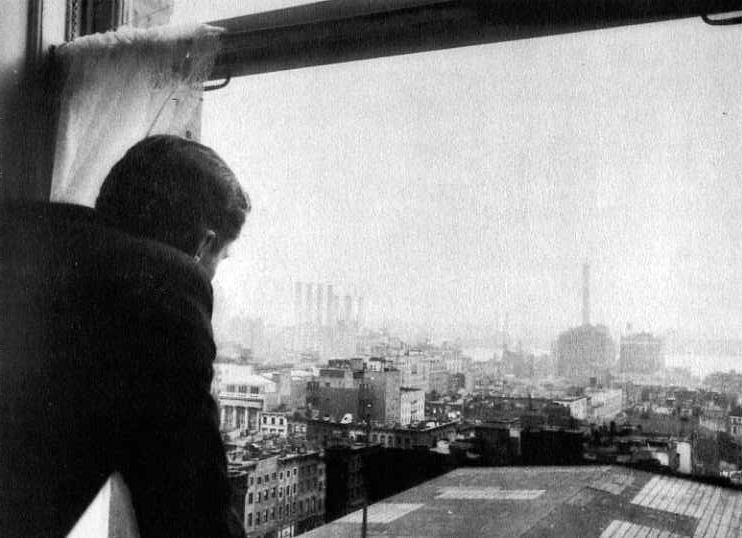
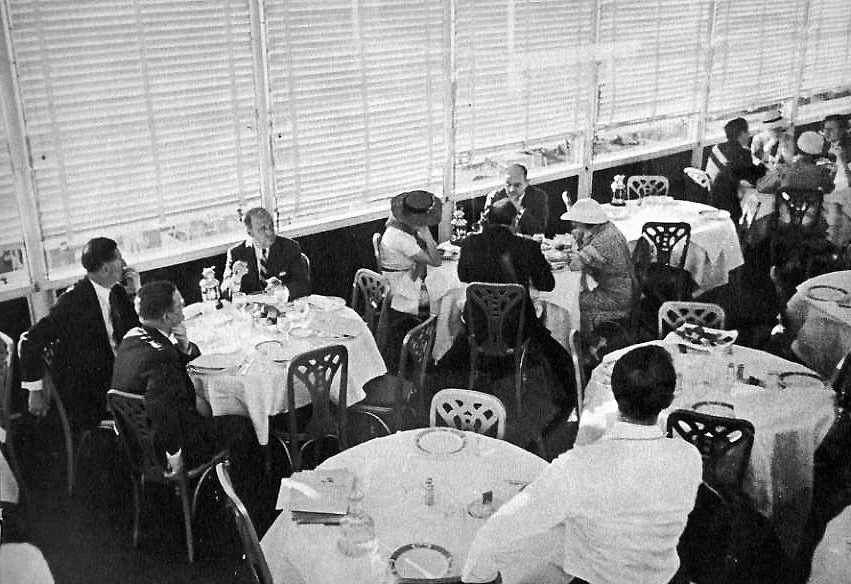
Mr. Roberts is visited by a Mr. Smith from out of town (shown above looking out hotel window). Mr. Smith “stands for all those who come to the city from a distance,” whether Los Angeles, Boston, or elsewhere. He is “reasonably well off.” Mr. Smith eats a $1.25 table d’hôte lunch – er, luncheon — in a dining room on a hotel roof (pictured). Prices are high there, making his meal a relative bargain. Had he wanted to splurge he could have ordered a Cocktail (.40), Lobster Thermidor ($1.25), and Cucumber Salad (.45) – total $2.10. I would guess that many visitors to New York tend to spend more on restaurants than natives.

Metropolis539

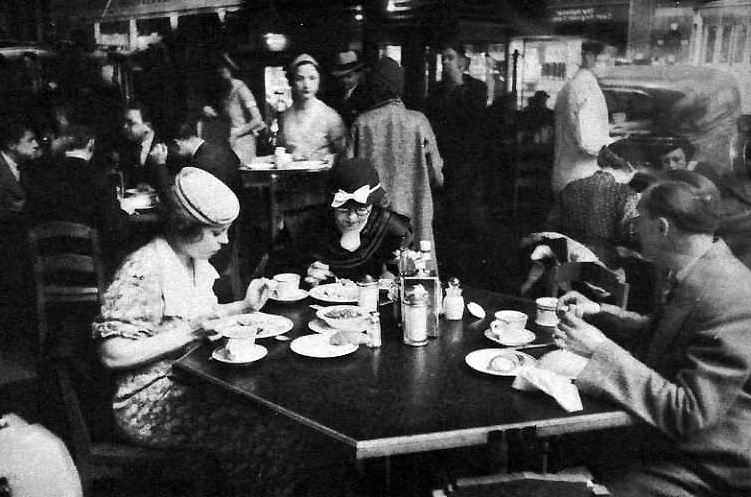
Mr. Roberts’ secretary, Miss Jordan, lives with her mother and brother in an apartment just off Riverside Drive. With a combined family income of less than $4,000 the three can barely afford their $125/month rent. She goes to lunch at a café (pictured) and orders To-Day’s Luncheon Special which consists of Tomato Juice, Corned Beef Hash with Poached Egg, Ice Cream, and Coffee, all for 40 cents. Frankly, I don’t see how she can afford to do this every day.

Metropolis538

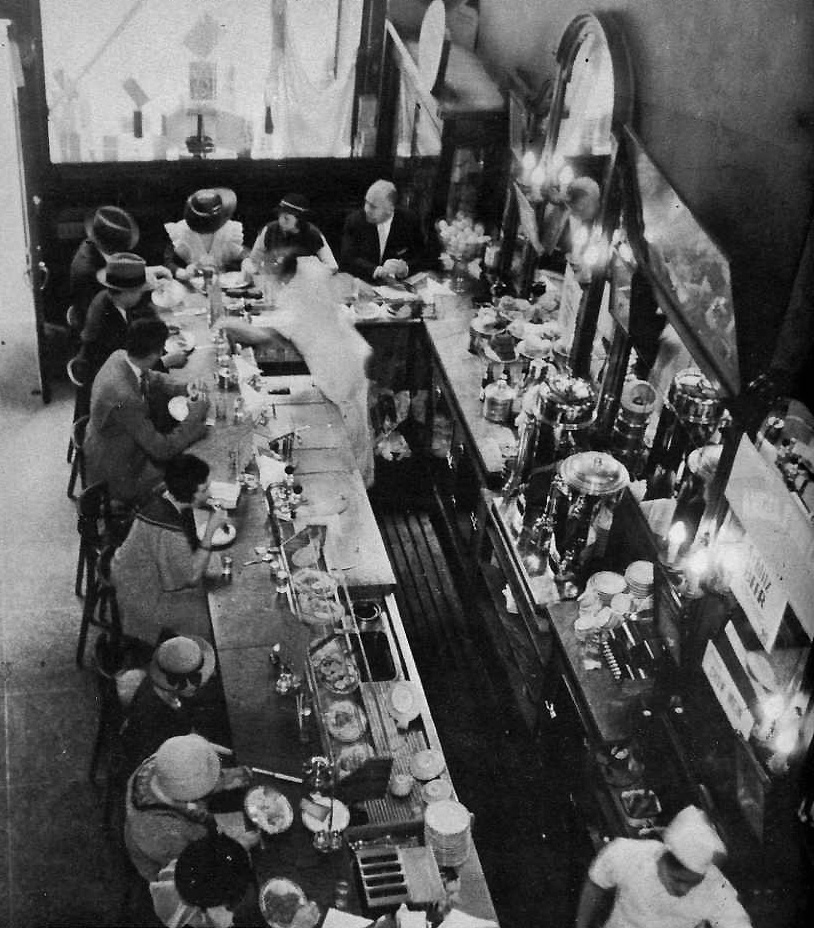
Miss O’Hara and Miss Kalisch transcribe dictation from other executives in the firm and each makes about $22.50 a week. Miss Kalisch lives in Astoria, Queens, and is married. Evidently she is pretending to be single in order to hold her job (her name is really Mrs. Rosenbloom). Miss O’Hara lives with her father in a somewhat decrepit apartment costing almost half her wages. Her father has been out of work for three years. The two women eat lunch at a drugstore counter (pictured) where they order Ham on Rye Sandwiches, Chocolate Cake, and Coffee (.30). I fear Miss O’Hara is living beyond her means if she does this often.

Miss Heilman, a young clerk, makes about $16.50 a week and is subject to occasional layoffs. She lives with her brother, his wife, and their two children in a 3-room apartment in Hoboken NJ, for which they pay $15/month. Like the other “girls” at the bottom of the totem pole she brings a sandwich and eats it in the office.

Metropolis542

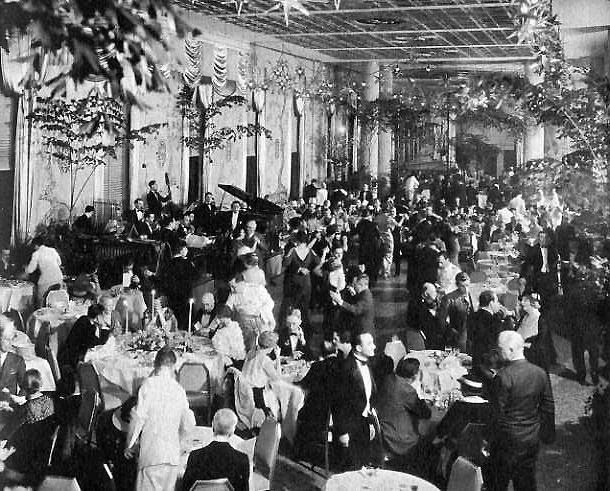
Mr. Smith, being on his own, must go out for dinner. Once again he chooses a hotel roof garden (pictured), where about half the guests are also out-of-towners. With a live orchestra and dancing, it is undoubtedly expensive. I’m guessing he went for the Cocktail and Lobster Thermidor this time.

© Jan Whitaker, 2013

8 Comments

Filed under patrons

Taste of a decade: 1970s restaurants

1979restaurantIn the 1970s the restaurant industry and the custom of eating in restaurants grew rapidly. The decade was the gateway to the present in many ways. Despite economic woes (recession and inflation), the energy crisis, urban decline, crime, and escalating restaurant prices, restaurant-going continued to rise.

The president of the National Restaurant Association proclaimed “Dining out is a significant part of the lifestyle of this great country,” noting in 1976 that one out of three meals was being consumed outside the home.

Restaurant patronage was encouraged by all kinds of things, including relaxed liquor laws in formerly dry states and counties, which brought more restaurants into the suburbs, the spread of credit cards, more working wives and mothers, youth culture, and a me-generation quest for diversion.

New York exemplified the problems faced by restaurants in troubled inner cities. Fear of crime kept people from going out to dinner. Restaurants closed, few new ones opened, and cash-strapped survivors began to trade vouchers for heavily discounted meals for advertising. But as New York struggled, California experienced a culinary renaissance as did other parts of the country. Still, much of the U.S. wanted only steak and potatoes, and hamburger was the most often ordered menu item nationwide.

A number of restaurant formats and concepts faced senescence, but new ones came on the scene at a rapid pace. Going, going, or gone were automats, coffee shops, continental cuisine, diners, drive-ins, formal dining, Jewish dairy restaurants, and Polynesian restaurants, not to mention the rule of elite French cuisine.

Fast-food chains continued to grow, with the number of companies increasing by about two-thirds. Growth was especially strong in the Midwest which was targeted as a region susceptible to their appeal. Toledo was bestowed with Hardee’s, Perkins Pancakes, a Mexican chain, and, in 1972, the arrival of two Bob Evans eateries. Another Ohio city, Columbus, was christened a test market for new fast-fooderies while Junction City KS, bordering Fort Riley, looked like a franchiser’s fast food heaven. By contrast, greater Boston had only one Burger King and one McDonald’s in 1970.

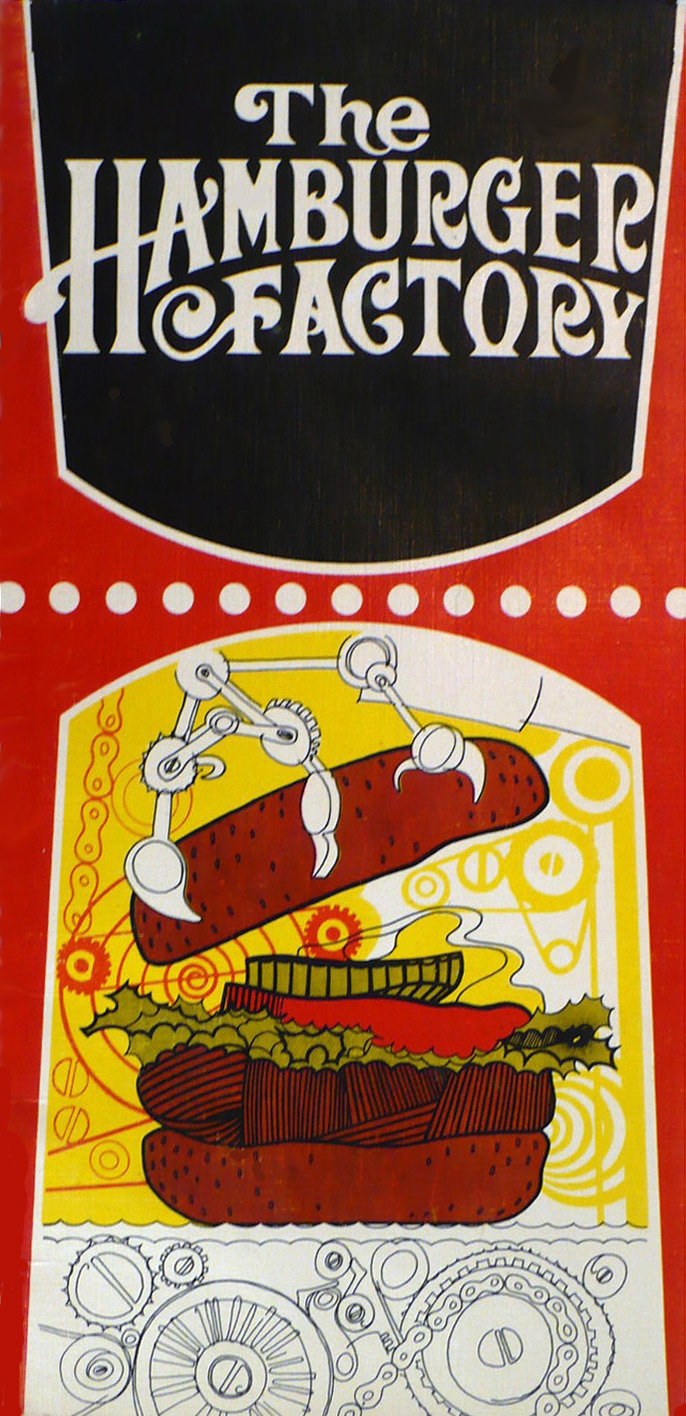
HamburgerFactoryAlong with the chains and a shortage of (cheap) kitchen help, came an upsurge in restaurants’ use of convenience foods and microwaves. In response, municipalities across the country enacted ordinances to protect consumers against false claims on menus, many of them centering on misuse of the words “fresh” and “home-made.”

Yet as the country was swamped with fast food, it experienced the flowering of restaurants specializing in ethnic, artisanal, and natural foods. Hippie and feminist restaurants stressed honest, peasant-style meals. Burgeoning interest in nutrition made salad bars popular. Bean sprouts, zucchini, and more fish showed up on menus. Diners learned that Chinese food was not limited to Cantonese, but might also be Mandarin, Szechuan, or Hunan. Once languishing behind luxurious decor, impeccable service, and famous patrons, food took center stage in deluxe restaurants as they purged Beef Wellington from their repertoire and took up the call for culinary creativity and authenticity.

Though not unknown in earlier decades, the restaurant-as-entertainment-venue came into full flourish with the proliferation of theme restaurants with unbearably cute names such as Orville Bean’s Flying Machine & Fixit Shop. To supplement a shrinking supply of old stained glass windows, telephone booths, and barber chairs, restaurant fixture companies began to manufacture reproduction antiques.

However crazy and mixed up the foodscape, America had become the land of restaurants for every taste and pocketbook.

Highlights
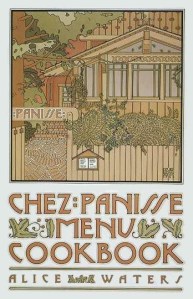
ChezPanissecookbook1971 – In Berkeley CA Alice Waters and friends found Chez Panisse, marking the movement of college and graduate students into the restaurant field, a career choice which is beginning to have cachet.

1972 – NYC’s Le Pavillon, considered the finest French restaurant in the U.S., closes. In Kansas City MO the first Houlihan’s Old Place, adorned with nostalgia-inducing decorative touches, opens, as does Mollie Katzen’s natural-food Moosewood Restaurant in Ithaca NY.

1972 –Dry since 1855, Evanston IL, home of the Women’s Christian Temperance Union, grants liquor licenses to two hotels and six restaurants. Their business doubles in a few months.

1973 – Los Angeles County becomes the first jurisdiction in the country to enact a “truth in menu” ordinance. During the pilot program, the scenic Sea Lion Restaurant in Malibu is caught selling the same fish under five different names with five different prices.

1974 – A Chicago food writer throws cold water on arguments about which restaurant has the best lasagne, asserting that the debaters “might have found that same lasagne in restaurants all over the country” courtesy of Invisible Chef, Armour, or Campbell’s.

1974 – Restaurateur Vincent Sardi spearheads a campaign to get New Yorkers to eat out, claiming that the city’s major restaurants have lost up to 20% of their business in the past two years, thus precipitating the closure of 20 leading restaurants.

1976 – The CEO of restaurant supplier Rykoff says whereas his company once supplied whole tomatoes it now provides diced tomatoes “because the operator just can’t afford to pay someone to cut them up.”

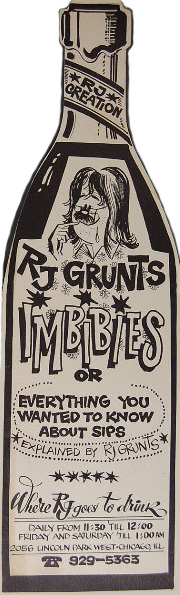
RjGrunts1970s1976 – Richard Melman’s Chicago restaurant company, Lettuce Entertain You Enterprises, operator of RJ Grunts, Great Gritzbe’s Flying Food Show, and Jonathan Livingston Seafood, opens Lawrence of Oregano and prepares to take over the flamboyant Pump Room.

1977 –Industry journal Restaurant Business publishes survey results showing that, on average, husband & wife pairs eat out twice a month, spend $14.75 plus tip, prefer casual restaurants, and tend to order before-dinner cocktails and dishes they don’t get at home. Measured by sales, Lincoln NE is one of the country’s leading cities for eating out.

1977 – Once characterized by blandness, San Diego now has restaurants specializing in cuisines from around the globe, an improvement one observer attributes in part to the new aerospace industry there.

1978 – A reviewer in Columbia MO complains, “A brick floor and pillars, old photos, Tiffany lamps, stained-glass windows and trim on the tops of the booths as well as revolving single-bladed, old-fashioned fans [is] a familiar type of decoration these days and I’m getting a little weary of the sameness of so many restaurants.”

1979 – As the year ends restaurant reviewer Phyllis Richman observes that more people are eating out than ever before, transforming once-lackluster Washington D.C. into “what is known as a Restaurant Town.”

Read about other decades: 1800 to 1810; 1810 to 1820; 1820 to 1830; 1860 to 1870; 1890 to 1900; 1900 to 1910; 1920 to 1930; 1930 to 1940; 1940 to 1950; 1950 to 1960; 1960 to 1970; 1980 to 1990

© Jan Whitaker, 2013
29 Comments

Filed under alternative restaurants, chain restaurants, food, patrons

Picky eaters: Helen and Warren

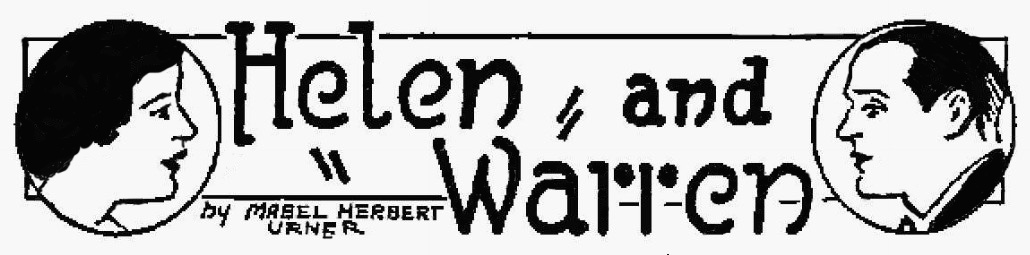
helenwarren1928

Helen and Warren liked eating in restaurants in the early 20th century when it was a rare experience for most Americans. They kept up with the trends and they tried restaurants of every format. They were affluent New Yorkers, somewhat jaded and always seeking the new thing.

Helen wanted to avoid expense and ostentation but was uncomfortable in offbeat places. Warren was cynical and alternately a cheapskate or big-spender. Both were distrustful. They feared they’d be taken advantage of, and sometimes were.

In the 1920s Helen and Warren were the best known couple in the U.S.A.

But they were fictional. They were the creation of Mabel Herbert Urner who wrote a column about the pair for over thirty years, from 1910 until the early 1940s.  The column was widely syndicated in newspapers from Boston to Los Angeles as well as in Canada and England. Though fiction, the column presents a fascinating subjective view of dining out, particularly in the 1910s and 1920s.

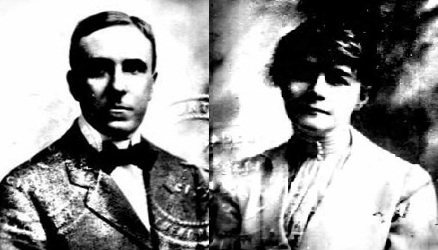
HelenandWarrenLathropandMabelHelen’s and Warren’s experiences likely had some resemblance to Mabel’s own life, particularly when the couple visited restaurants in Paris, London, and other European capitals. After marrying rare book dealer and collector Lathrop Colgate Harper in 1912, Mabel traveled with him around the world. In New York they lived in an apartment at 1 Lexington Avenue across from Gramercy Park from which they surely forayed into restaurants regularly.

Did Mabel and Lathrop, like her famous pair, have a preference for out-of-the-way restaurants such as the French and Italian tables d’hôtes in NYC? One starlit summer night in 1913 Helen dragged Warren to a backyard café run by three sisters. Helen exclaimed “Why, it’s a bit of Paris!” when she stepped into the garden. They were surrounded by writers, artists, and illustrators, including a “queerly dressed” literary woman. (Mabel’s inside joke?) Warren, a successful businessman, scoffed at the artists but even he had to admit afterward, “That [was] the best dinner in New York for the money.” They paid 65 cents each for soup, beef tongue with piquant sauce, squab, and salad, finished with fresh pears, Camembert, and coffee – wine included. The café was clearly modeled on that run by the Petitpas sisters on W. 29th in conjunction with a boarding house where artist John Butler Yeats lived. A dinner with Yeats and friends about this time was memorialized in a painting by John Sloan.

pepperpot

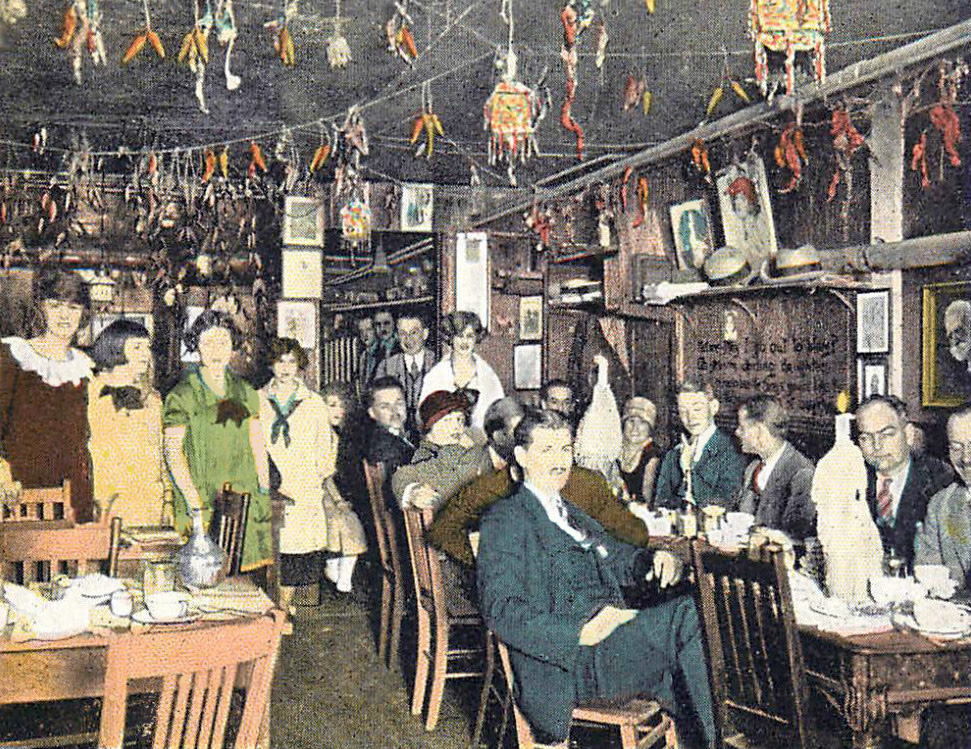
The Petitpas dinner was one of the couple’s few positive experiences. As much as Helen was drawn to offbeat restaurants, she was often squeamish about unsanitary conditions. She refused to eat ground meat. Usually she wiped her silverware with her napkin. She had problems in a Chinese restaurant, an Italian place, an “anarchist restaurant,” probably Maria’s, as well as at the Pink Parrot in Greenwich Village (probably the Pepper Pot, shown here). When she pushed away her plate there, Warren reprimanded her, saying, “You’re a bum bohemian.”

Helen and Warren visited cafeterias, tea rooms, pre-war cabarets, hotel dining rooms, roadhouses, and shoreline resorts in the NYC metro area. Helen was often embarrassed by Warren’s behavior when he showed off or spent too much money. They bickered. He declared a tea room she liked “a sucker joint.” She was critical of the decor and pomp of expensive restaurants, but her attempts to put a brake on Warren’s spending often backfired.

In 1913 they went to a restaurant in the throes of a waiters’ strike. Somewhat surprisingly, considering the bourgeois lifestyles of both Mabel and Helen, the story presents a case for the strikers. Helen questions their server about the goals of the strike, and he says, “They want decent food, m’am; clean food and a clean place to eat it. They want to be treated like men – not dogs! And they want a living wage.” Warren asks about tips and the waiter replies, “Why does he have to depend on tips thrown at him?”

In many ways Helen’s and Warren’s restaurant adventures and complaints seem relevant today. Has it happened to you that a server tries to remove your meal in progress? Have you been charged extra for bread? Welcome to the 1910s.

© Jan Whitaker, 2013

10 Comments

Filed under miscellaneous, patrons

The fifteen minutes of Rabelais

Watch me wipe that smile off his face.

Watch me wipe that smile off his face.

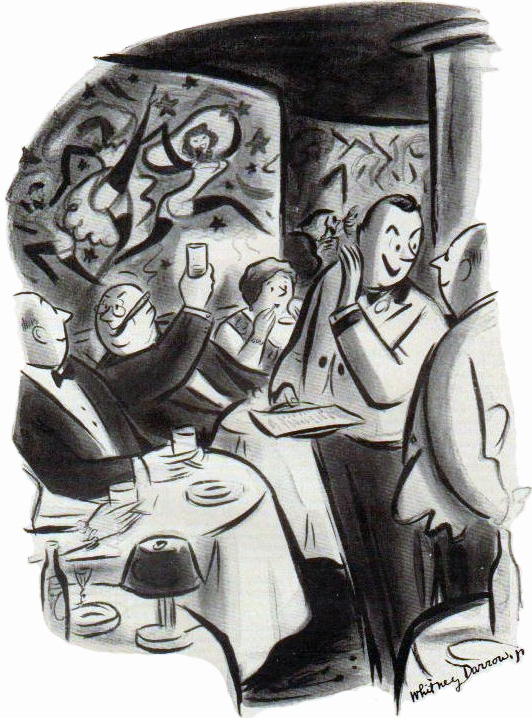
François Rabelais was a French writer, an eccentric, and a joker who lived centuries ago. Based on a prank he pulled to get out of paying a dinner bill, the phrase “quarter hour of Rabelais” has come down through history to refer to the unhappy time when diners are confronted with the bill for their restaurant meal.

Personally, I am someone who always has a rough estimate of what I’ll have to pay at the end, so I am scarcely in the same boat as Rabelais. All the more so because I definitely would not go into a restaurant (in his case, an inn) and order a meal knowing I had no money.

But, it is a well known fact that some people order freely – and drink freely – to the point that they have no idea what their total bill will come to. And, in the olden days, there was no written menu so it wasn’t always clear what everything cost.

According to lore, Rabelais was penniless yet ate and drank as though there would be no reckoning. When the bill came, he held up a flask and announced he planned to poison the king with its contents. He was arrested and carried off to the palace. The king took the whole incident as a big joke. An unlikely story if I ever heard one.

Nevertheless the phrase survived and is, or was, well known in France as a moment of letdown when you realize you’ve got to pay the bill. Maybe in modern times credit cards have distanced us from that feeling. Or, is it simply that not that many people sit around restaurant tables drinking all night anymore?

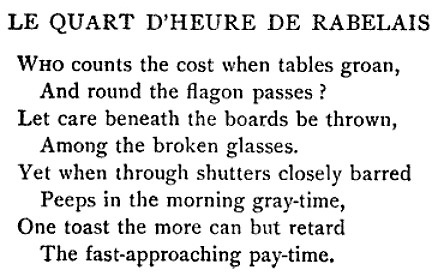
Obviously misery about paying the bill is worsened if the diner is short of money. Or if his or her companions have departed without leaving enough money for their shares – something that can still be counted on to happen from time to time. Perhaps that is a modern example of the “quart d’heure de Rabelais” as it was memorialized in the following bad poetry from 1887.

LeQuartd'heureGeorgeR.Sims1887

The question of who pays is an associated issue. Though it isn’t well known, the law considers everyone at the table responsible for the check. If there are four and three leave, and all the orders are on one check, the last person remaining must pay the total bill.

© Jan Whitaker, 2013

1 Comment

Filed under miscellaneous, patrons

Mob restaurants

mobstersGalante&CoppolakilledGangster stories run like a red thread through the 20th-century history of American restaurants, from the speakeasies of the 1920s, to the shakedowns and union infiltration of the 1930s, the rackets of the 1940s and 1950s, and the later years of money laundering and loudly proclaimed legitimate business.

But what seems to interest Americans the most are restaurants mobsters are alleged to patronize, and all the more so if there has been a legendary shootout there.

As portrayed in the film Dinner Rush, even rumors that a restaurant is a gangland favorite can boost its popularity immensely. The film was made by Bob Giraldi who’s been inside the restaurant business.

mobsterscolosimo'sOn July 28 a series called Inside the American Mob will begin on the National Geographic channel. My friend and neighbor John Marks, supervising producer, inspired this post when he mentioned the popularity of restaurants where mobsters have been gunned down.

Violence is abundant in restaurant history. Two of the worst mass murders in the United States took place in restaurants, the killing of 23 people at Luby’s Cafeteria in Killeen TX in 1991 and 21 at a McDonald’s in San Ysidro CA in 1984. Those tragic events did not bring about an influx of patrons wanting to soak up evil ambiance. Quite the contrary. Luby’s remodeled and reopened but never regained the business it once had, closing the Killeen site for good in 2000. McDonald’s razed the blighted unit in San Ysidro, rebuilding nearby.

MobsterVillaVeniceGlenviewIL1932

On the other hand, when gangsters are shooting victims people are unmoved, evidently figuring they got what was coming to them. The absence of bullet holes and bloodstains disappoints.

Restaurants that are linked to mobsters, such as NYC’s Sparks Steak House, where Paul Castellano was killed as he stepped out of his car, do not always appreciate being included in guide books such as A Goodfellas Guide to New York just because a mobster sometimes ate there. I can’t blame them. Who would want tourists dressed in shorts and tee shirts turning up at your high priced restaurant? The mob is not what it used to be. Yet I have to wonder, is there an American restaurant that can be absolutely certain it has never hosted mobsters?

I’ll also point out that not all mob-connected restaurants are or have been Italian. Also, probably every ethnic group has had its own version of the Mafia at some point.

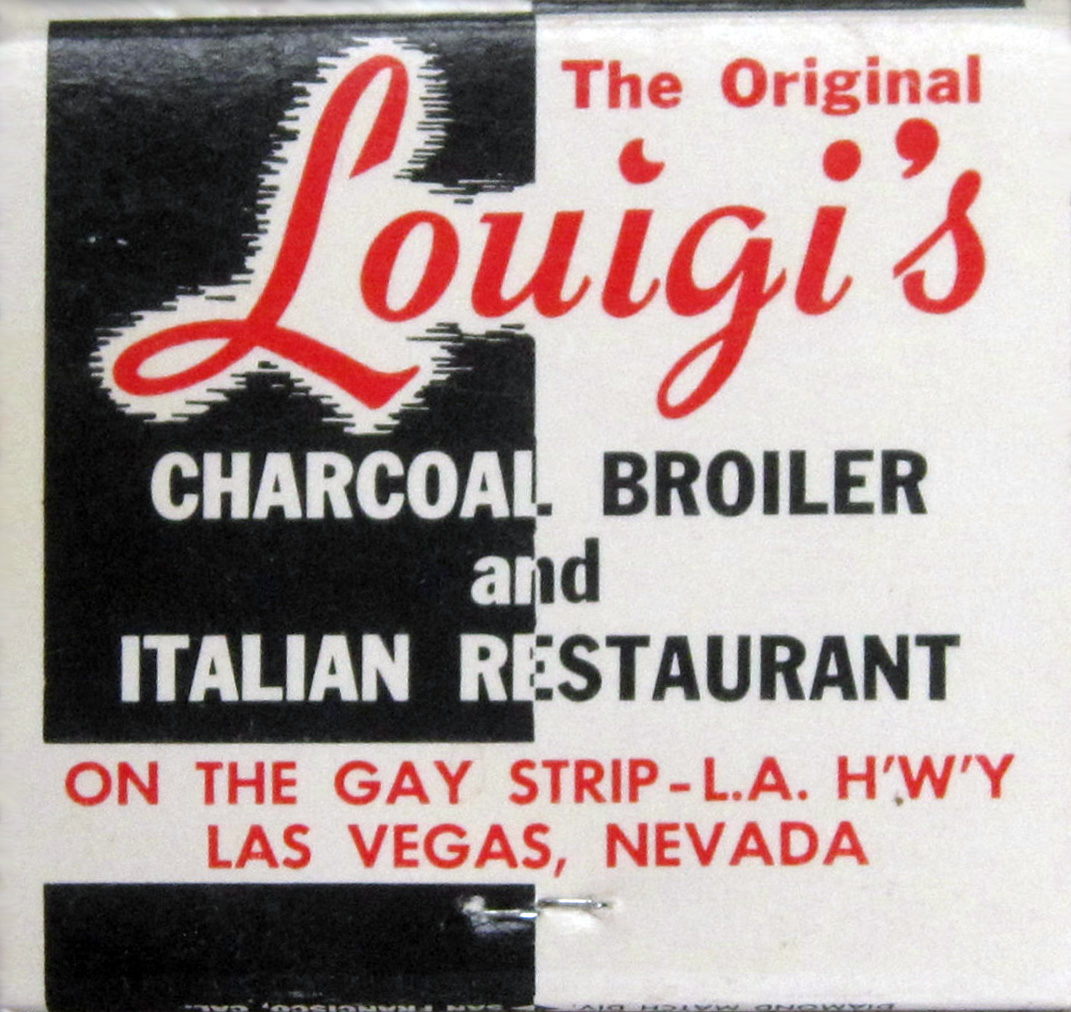
MobstersCaponeTorioheadquartersCiceroca1939Most major cities in the U.S. have had restaurants that served as gangster hangouts. [pictured: the Cicero IL headquarters of Al Capone, ca. 1939] Chicago’s Colosimo’s was already in the books by 1930, ten years after its owner “Big Jim” Colosimo became one of the first victims of a gangland shooting in a restaurant. As late as 1958 when a new owner of the property announced he would raze the building, the site was overrun with an estimated 1,000 souvenir hunters. In the 1920s and 1930s even “nice” St. Paul MN could boast of four or five nightclub eateries with underworld associations, according to the authors of Minnesota Eats Out. Other mob-connected eating places illustrated in this post are Louigi’s in Las Vegas and Villa Venice outside Wheeling IL.

MobstersLouigi'sNew York City and environs takes the prize for gangland restaurants, among which are restaurants where mobsters, their henchmen, and associates have met a messy end. Few still exist or remain in their original locations. To name some, both present and past: Nuova Villa Tammaro, Coney Island (Giuseppe “Joe the Boss” Masseria,1931); Palace Chop House, Newark (Dutch Schultz, 1935); Umberto’s Clam House, Little Italy (Joey Gallo, 1972); Joe & Mary, Brooklyn (pictured at top, Carmine Galante, 1979); Broadway Pub, Manhattan; La Stella, Queens; King Wah, Chinatown; Villa Capri, Long Island; Sparks, Manhattan (Paul Castellano, 1985); Bravo Sergio, Manhattan (Irwin Schiff, 1987).

© Jan Whitaker, 2013

10 Comments

Filed under patrons

Women’s restaurants

feministBreadandRosesBarbaraFried1976

Not all restaurants have been purely, or even mainly, commercial ventures. This was particularly true of women’s suffrage eating places and those of the 1970s feminist movement.

Although the women’s restaurants of these two periods were quite different in some ways, they shared a dedication to furthering women’s causes and giving women spaces of their own in which to eat meals, hold meetings, and in the 1970s, to enjoy music and poetry by women.

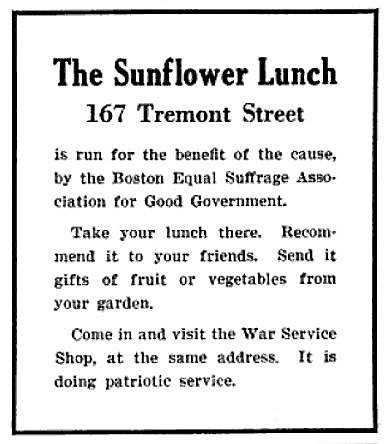
SuffrageLunchBoston1918In the 1910s most major U.S. cities had at least one suffrage restaurant, tea room, or lunch room sponsored by an organization such as the National American Woman Suffrage Association (NAWSA).

As was true of later feminist restaurants, those of the suffrage era tended to be small and undercapitalized. An exception was the suffrage restaurant financed by the wealthy socialite Alva Belmont in NYC. In terms of patronage, it was almost certainly the most successful women’s restaurant of either era. It reportedly served 900 meals per day from a low-priced menu on which most items were 5 or 10 cents and consisted of soup, fish cakes, baked beans, and home-made pie.

Suffrage restaurants admitted men and welcomed the opportunity to ply them with leaflets and home-made soups, salads, and fritters that would incline them to support the cause. An aged Philadelphia activist recalled in 1988, “I worked at a suffrage tea room. We lured men in, for a good, cheap business lunch. Then you could hand them literature and talk.” In the NYC restaurant operated by NAWSA in 1911, it was impossible to ignore the suffrage issue since every dish, glass, and napkin bore script saying Votes for Women.

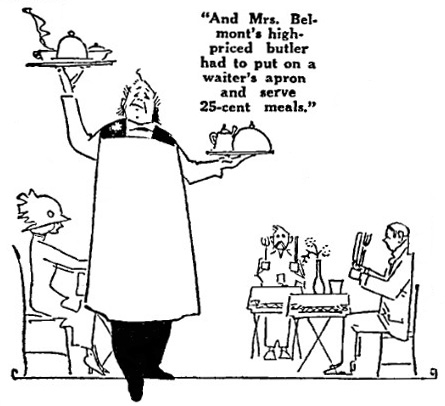
suffrageRestaurant1912Though dedicated to women’s causes, women’s restaurants were not free of conflict. Many suffragists objected to how Alva Belmont ruled with an iron fist, brusquely ordering servers around until they walked out on strike, followed by the dishwashers. Belmont was ridiculed when she brought in her butler and footman to fill the gap. Her footman quit too. Some feminist restaurants experienced discord over cooperative management and, especially, whether or not to serve men.

The first feminist restaurant, NYC’s Mother Courage, was founded in April of 1972. (Its co-founder Dolores Alexander discussed it in 2004-2005 interviews.) Others established in the 1970s included Susan B. Restaurant, Chicago; Bread & Roses, Cambridge MA; The Brick Hut, Berkeley CA; Los Angeles Women’s Saloon and Parlor, Hollywood CA; and Bloodroot, Bridgeport CT). Undoubtedly there were more, especially in college towns like Eugene OR and Iowa City IA. In the 1980s a number of women’s coffeehouses appeared, but they were performance spaces more than eating places.

FeministBloodroot1981

As part of the counterculture, 1970s feminist restaurants typically aimed at a broad set of goals. Women’s equal position in society was paramount but it was embedded in a project of establishing a more peaceful and egalitarian world. Feminist restaurants rotated jobs and paid everyone the same wages. They raised capital by small donations from friends. Staffs were entirely female and women also did most of the renovating. Their decor was spare, with exposed brick walls, mismatched furniture, and chalkboard menus. They served simple peasant-style food, usually prepared from scratch. Some served wine and beer. More often than not menus were vegetarian, or at least beef-less. The L. A. Women’s Saloon and Parlor supported farm workers and would not serve grapes or lettuce. The Brick Hut boycotted Florida orange juice during the anti-gay campaign of spokesperson Anita Bryant. The Women’s Saloon avoided diet plates and sodas, deeming them insulting to large-sized women.

Many proponents of feminist restaurants felt that women were often treated poorly in restaurants, many of which regarded men as their prime customers. Feminist restaurants made a point of  presenting women dining with men with the check and wine to sample. But for many women patrons, perhaps especially lesbians, the enjoyment of a non-hostile space was more significant.

At some point each feminist restaurant confronted the touchy question of whether they would serve men. Considerable acrimony erupted around this question at the Susan B. Restaurant in Chicago and Bread & Roses in Cambridge, resulting in the former restaurant’s closure after only a few months. At Bread & Roses a co-founder exercised non-consensus managerial power and fired a server who made men and some heterosexual women feel unwelcome, setting off rounds of group meetings. The restaurant, opened in 1974, was put up for sale and in 1978 became the short-lived “women only” Amaranth restaurant and performance space.

Today Bloodroot may be the sole survivor of the feminist restaurant era.

© Jan Whitaker, 2013

8 Comments

Filed under alternative restaurants, patrons, women

Dressing for dinner

FarmersinCafe

In the vast majority of eating places customers never had to be told to “come as you are.” That’s how they were going to come – or else they weren’t coming at all. Farmers wearing overalls were likely to show up in small town cafes, while white collar workers in shirtsleeves grabbed seats in city lunchrooms.

Nevertheless, there was a segment of society that “dressed” for dinner. People of high society were accustomed to donning formal wear for dinner parties given in private homes. Then, as New York society began to expand beyond “the 400″ in the late 1890s, growing ranks of wealthy newcomers adopted formal dress for dinners in hotel dining rooms and swanky restaurants.

Rector's1913Geo.HectorInc

In the late 1890s men began to wear tuxedos for such outings. Women wore long gowns, cut lower than their daytime dresses. [Rector’s, 1913, illustrated] But the era of luxury dressiness was brief. After WWI, with prohibition forcing the closure of many fine restaurants and “lobster palaces,” more informal clothing became acceptable in most restaurants. What was known as afternoon wear – coats and neckties for men and daytime dresses and hats for women – became the new standard. But even that dress standard tended to erode.

It isn’t as easy to enforce a dress code as it might seem. As long as a restaurant isn’t using a dress code as a foil for illegal discrimination, it can set the dress bar as high as it wants. But will customers constantly challenge it? Even worse, will they shun the restaurant entirely?

Rejection of the Café de l’Opera’s formal wear requirement was cited as one reason for its sudden demise in NYC in 1910. And the 1930s Depression encouraged a lower standard. After World War II some predicted a return to elegance, but that proved shaky. Many well-established fine restaurants struggled with turtleneck-wearing male guests in the 1960s and 1970s. At New York’s “21″ the maitre d’ developed a practice of requiring necktie-less men to put on a hideously garish tie that he provided. This had the effect of either making them (a) leave, or (b) feel so embarrassed they never dared come without a tie again. Other places relented and admitted guests in “dressy casual” wear.

Pittari's1963NewOrleansA new restaurant wishing to enter the esoteric fine dining ranks, underwritten by a dining room of well-dressed guests,  has to ask itself if it can pull it off. If it does not draw the “top-drawer” clientele it aims for it may find its dress code impossible to enforce. For instance, resorting to posting a “Dress Code for Ladies” notice near the front door, as a San Diego reviewer said of a restaurant there in 1981, is “simply tacky.” It is scarcely better than a sign reading “No shirt, no shoes, no service.”

Likewise, a restaurant may portray itself as elegant, on a postcard, publicity photo, or website, but rarely will the actual guests look quite so sophisticated as those pictured. And, needless to say, fancy dress does not in itself project elegance.

SultansTableRestDunesHotel

Today there is a small top tier of restaurants whose guests would not dare to wear shorts, t-shirts, baseball caps, or overlarge rubber-soled shoes. But, most restaurants are far more informal. Overall, “come as you are” – a phrase first used by churches — has remained in effect.

The phrase itself attained widespread use by restaurants in the 1960s when it appeared in advertisements for suburban establishments wishing to attract families. A new segment of chain restaurants came into being, a few notches less casual than fast food establishments, but entirely non-intimidating in their standardized cuisine, friendly service, and “fun” decor. Philip Langdon, in his book Orange Roofs and Golden Arches, sees the “chain dinnerhouses” as coming from the West (where restaurant dress rules were always more relaxed). Examples included Victoria Station, originating in San Francisco, and Steak & Ale, from Dallas.

At the present moment, at least, it is difficult to imagine a return to turn-of-the-century formality. I’d guess that even the 1% don’t like to dress up.

© Jan Whitaker, 2013

10 Comments

Filed under patrons, restaurant customs

Postscript: beefsteak dinners

healysphotoThis year marks the 100th anniversary of the Armory Show, an art exhibit that introduced Americans to modern art, most notably to Marcel Duchamp’s Nude Descending a Staircase [No. 1]. Last week I received a copy of the Smithsonian’s Archives of American Art Journal which commemorates the show. To my surprise, the journal contains an article (Meat and Beer, by Darcy Tell) about a beefsteak dinner given by the artists who organized the Armory Show in gratitude to the press whose extensive coverage helped make the show a popular success.

The Armory Show was largely organized by American artists Walt Kuhn, Arthur Davies, and Walter Pach. (Kuhn’s and Pach’s papers are preserved in the Archives of American Art, Smithsonian Institution.)

In an earlier post I wrote about beefsteak dens, dungeons, and caves where men put on butchers’ aprons and threw aside the trappings of civilization. Sitting uncomfortably on boxes in dingy cellars, they drank beer and ate steaks without silverware or napkins.

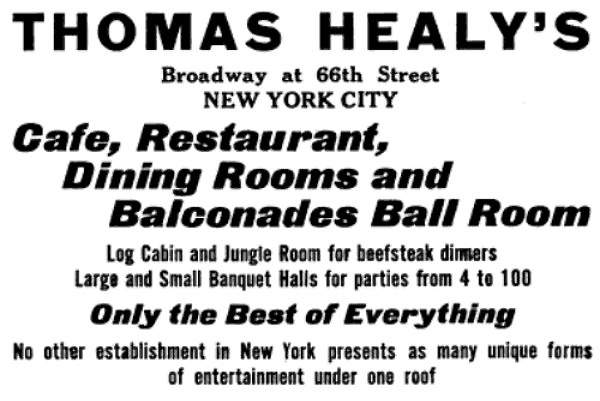
BeefsteakHealy'sADV1916The 1913 Armory Show dinner was held at Healy’s restaurant, on 66th Street in NYC, a popular place for these feasts. It had three rooms dedicated to them: the Dungeon, the Jungle Room, and the Log Cabin Room. The artists and their “friends and enemies from the press,” as they were designated on the menu, gathered in the Log Cabin Room, probably the most civilized space of the three, furnished with long tables and chairs and complete with tablecloths and napkins. While the guests ate, someone read aloud humorous, insiderish (fake) telegrams, even one purporting to be from Gertrude Stein [see link below].

I have to admit I was a tiny bit disappointed to learn that such a (presumably) sophisticated group of men as was represented at this dinner would choose to attend a beefsteak at Healy’s. By 1913, if not long before, beefsteaks were recognized as evenings of orthodox jollity for business men and conventioneers. Yet, the Association of American Painters and Sculptors paid out $234 [at least $5,500 today] for a dinner much like that enjoyed by the Paper Box Makers Association and the League of Associated Hat Men.

And, just like the hat men and box makers, they took away a regulation group photo to show for it.

© Jan Whitaker, 2013

5 Comments

Filed under atmosphere, patrons

Three hours for lunch

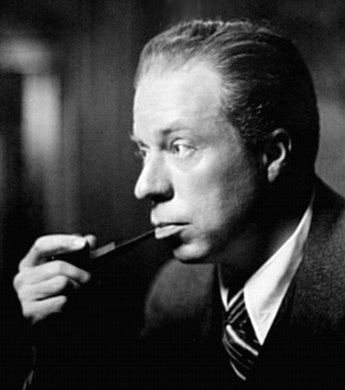
ChristopherMorley1930For every devoted restaurant-goer who likes to keep up with the latest restaurant trend there are probably two others who would prefer an eating place from the past. Despite my fascination with the history of restaurants, it might surprise some readers to learn that as a diner I am not attracted to historic restaurants; I study the past but eat in the present. Journalist and author Christopher Morley, however, might have been the patron saint of those who would gladly flip back the calendar when dining out.

Through the 1920s he gathered together friends who loved to explore the corners, alleys, and waterfronts of Manhattan and environs, especially Hoboken which he christened the “seacoast of Bohemia.” Their whimsical jaunts centered on a leisurely lunch.

The group, whose personnel was always changing, was made up of men who had enough time to join Morley’s Three Hours for Lunch Club. He initiated it in 1920 when he began writing a column for The New York Evening Post called “The Bowling Green” that chronicled his explorations of New York and the escapades of the club. Later the column appeared in the Saturday Review of Literature.

The club was less about food than about male camaraderie, conversation, and humorous one-upmanship. In earlier times, before Prohibition, it might have been a drinking club. The loss of masculine drinking culture and the alleged feminization of restaurants underwrote a lament for a present era supposedly ruined by women lunching on sandwiches and soft drinks at soda fountains. By contrast, Morley & Co. searched out old-fashioned taverns and chop houses.

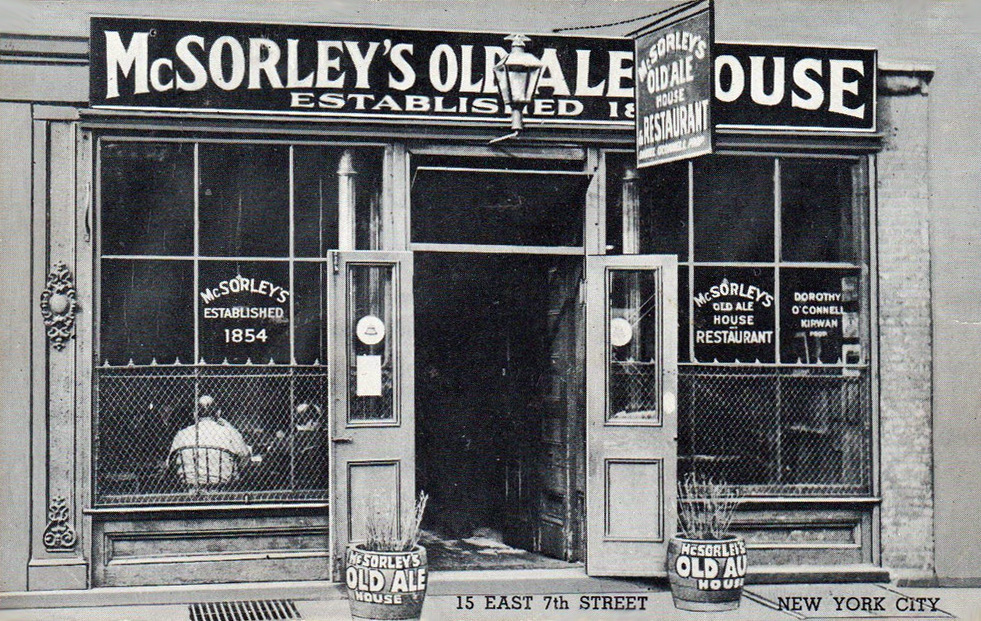
mcSorley'sHe wrote in a tribute to McSorley’s Ale House (which did not admit women until 1970), “Atrocious cleanliness and glitter and raw naked marble make the soda fountain a disheartening place to the average male. He likes a dark, low-ceilinged, and not too obtrusively sanitary place to take his ease. At McSorley’s is everything that the innocent fugitive from the world requires.”

Without his male buddies, Morley might have been limited to the company of his wife Helen, whom he called Titania in his columns. Although the pair enjoyed frequent Saturday lunches in the basement of Moretti’s table d’hôte on East 14th Street, he complained publicly, “Anyplace that I think is peculiarly amusing, or quaint, or picturesque, Titania thinks is unhealthy. Sometimes I can see it coming. We are on our way to Mulberry Bend, or the Bowery, or Farrish’s Chop House. I see her brow begin to pucker . . .”

The club, which included Don Marquis, sea captain/writer David William Bone, Sinclair Lewis, and other editors and writers, flourished about the same time as the Round Table whose literary stars met at the Algonquin Hotel. For a time before he founded his own club Morley was part of a group of Vanity Fair writers who congregated at the Café Noir, but he felt edged out because he lacked the Vanity Fair style. “Even Thackeray would have been grayballed,” he wrote later.

YeOldeChopHouse423

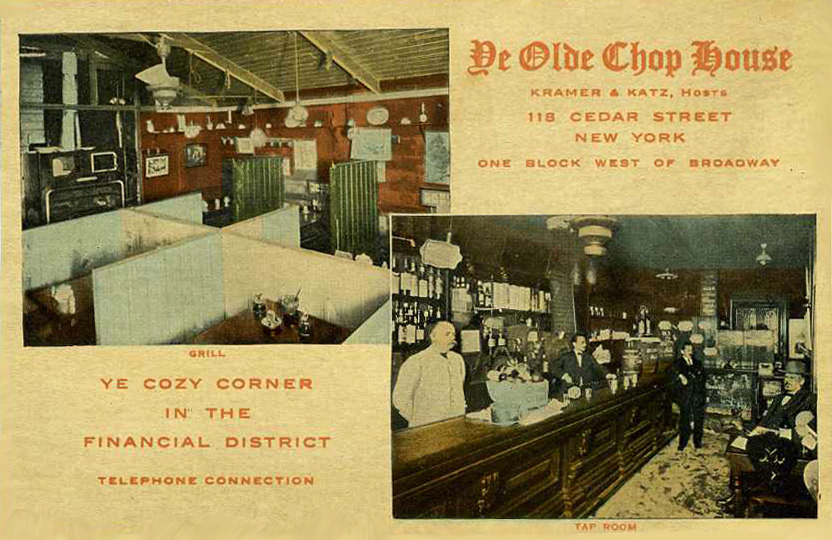
A favorite THFL place in lower Manhattan was Ye Olde Chop House on Cedar Street (pictured pre-Prohibition with sawdust floors beloved by CM) where the club named a waitress “the Venus of Mealo.” The cuisine of chop houses, as might be expected, featured grilled meat and homey dishes such as pickled beets, corned beef hash, tapioca pudding, and rhubarb pie. Far from seeking adventure in the culinary department, Morley once ordered swordfish steak, but declared it “too reptilian.”

Other than the musty hangouts of lower Manhattan, Hoboken’s Hofbrau, Meyer’s Restaurant, and the American Hotel were popular with the club. In 1929 Morley and others bought a bankrupt ironworks on River Street in Hoboken to become club headquarters. But it seems the club was waning around this time and it’s not clear how long that experiment continued. Three-Hours-for-Lunch was succeeded by another club, the Baker Street Irregulars, which Morley – a Sherlock Holmes fan –  formed at Prohibition’s end.

© Jan Whitaker, 2013

2 Comments

Filed under patrons

Light-fingered diners

1920sPilferingIf the number of newspaper stories is a reliable index to a trend, then a fad for stealing small items from restaurant tables began in the 1890s. Its continuing incidence is perhaps one reason why table appointments gradually became far less elegant and costly.

A flurry of stories appeared in the late 19th and early 20th centuries about affluent society people who “collected” cordial glasses, demitasse cups, salt cellars, silver spoons, oyster forks, and nut picks as “souvenirs” of first-class hotel dining rooms and restaurants. Anything small that bore an insignia from an elite establishment sent out an irresistible message: “Take me home with you.” Or, as a NYC restaurant owner would confirm decades later, “Put a spoon on a table with a fancy crest on it and kiss it goodbye.” 1906pilfering

The “thieves” – a term pointedly avoided by all – were usually identified as young women from the best families, though men were also known to freely pocket alluring items. It was especially attractive to pick things up while traveling. Women would display their booty in cabinets with little ribbons and tags that gave the date and occasion that each bibelot commemorated.

How cute! A little less cute, though, were college student pranks following athletic competitions. A gang of Amherst College students met with suspension after they raided three railroad restaurants on the return train trip from a Dartmouth football game in 1893. During their “wilding” episode they descended en masse on three successive Vermont depot restaurants, making off with everything they could grab from sandwiches and ginger ale to dishes and spoons to remind them later of their escapades.

Typically souvenir hunters were portrayed as feeling not the least bit guilty about their some-would-say-larcenous activities. “I must steal one of those lovely things,” said a woman at a fashionable restaurant. Her friends merely laughed. Another received encouragement from her luncheon companions when she declared she wanted to snag a silver match case for her husband. “So she tucked it in her muff and went out with the glee of a smuggler,” the story relayed.

Often these activities brought forth a degree of censure among reporters and readers. Was it not true, for instance, that these same people would probably condemn a poor man for stealing food? Was it really a victimless crime? Didn’t waiters have their small wages docked for missing silver? orsini'sDish

The moral code, such as it was, decreed that stealing from need was a crime, but stealing something you didn’t need or could easily afford to pay for was not a crime. Plus, as much as restaurateurs hated it, who wanted to accuse wealthy guests of stealing? Prosecution, or even confrontation, was rare though sometimes additional charges – curiously hard to read – were levied on a check. Over time menu prices crept up to cover shrinkage, tableware became ordinary, and pepper mills grew monstrous.

We’d probably hear more on this subject, particularly on the diverse range of things taken from restaurants, but restaurant managers prefer to keep silent. As one confessed in 1976, “We don’t like to talk about this sort of thing. It only gives the public more ideas.”

© Jan Whitaker, 2013

7 Comments

Filed under patrons, restaurant customs