Category Archives: patrons

All you can eat

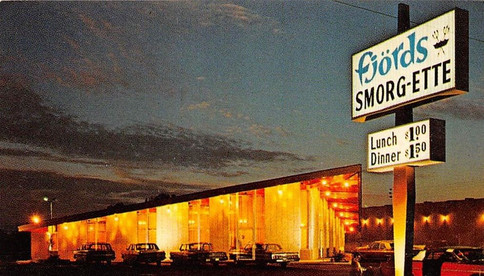
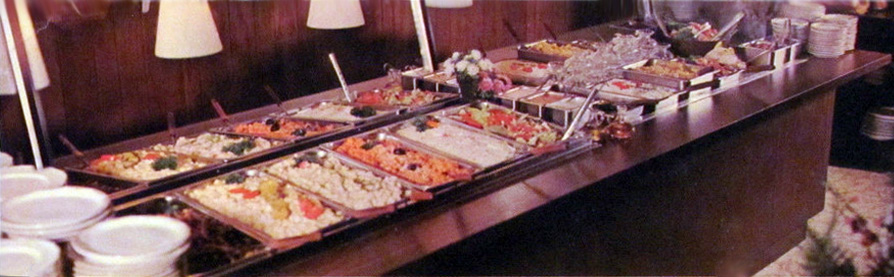
allyoucaneatFjordsSmorg-Ette

Except for the patrons of rarefied restaurants for whom exquisitely hand-crafted miniature food represents the triumph of artistic appreciation over animal hunger, most people like food in quantity. Even if they do not eat a great deal, they like the idea that they could if they wanted to.

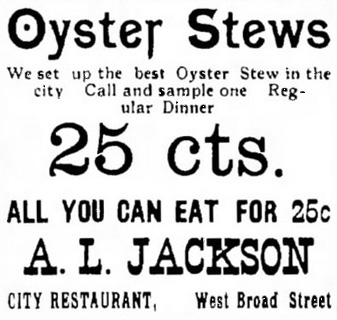
allyoucaneatJPG1896ElyriaOHRestaurants advertising free seconds — or thirds — can be found in the 19th century, one example being the City Restaurant in Elyria OH in 1896 [shown here]. But it wasn’t until the Depression of the 1930s that the all-you-can-eat idea became a newsworthy phenomenon. In response to declining business, restaurants such as Childs in the East and Boos Brothers in the West took advantage of falling food prices by offering patrons as much of whatever they wanted for a set price of 50 or 60 cents.

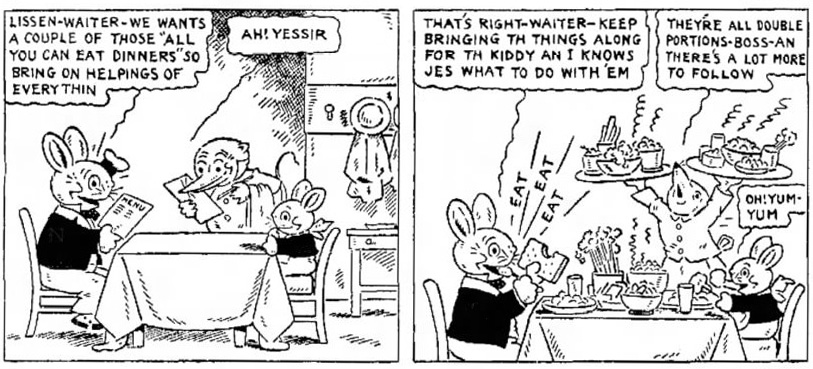
In this Depression experiment restaurant proprietors learned something important about how people react when offered unlimited food. A few people went crazy, stuffing down as much as they could [below: Peter Rabbit cartoon by Harrison Cady, 1933], but most didn’t eat more than they normally would. If they overindulged in anything, it was desserts.

allyoucaneatJPG1933PeterRabbitHarrisonCady

All-you-can-eat as an adaptation to challenging economic conditions did not altogether disappear with the end of the Depression. Many restaurants found that having one night a week when they offered a special deal on a particular food, especially fried chicken or fish, could fill the house on a perpetually slow weeknight or help to build business generally.

Smorgasbords based on Swedish hors d’oeuvres tables also grew popular in the 1930s. At Childs and other Depression all-you-can-eat restaurants patrons relied on a server to bring their order, but smorgasbords introduced a novel approach: patrons helped themselves to relishes and appetizers from an attractively laid out table, and were then served with their main course as in a traditional restaurant.

allyoucaneatJPGKewanee95cents

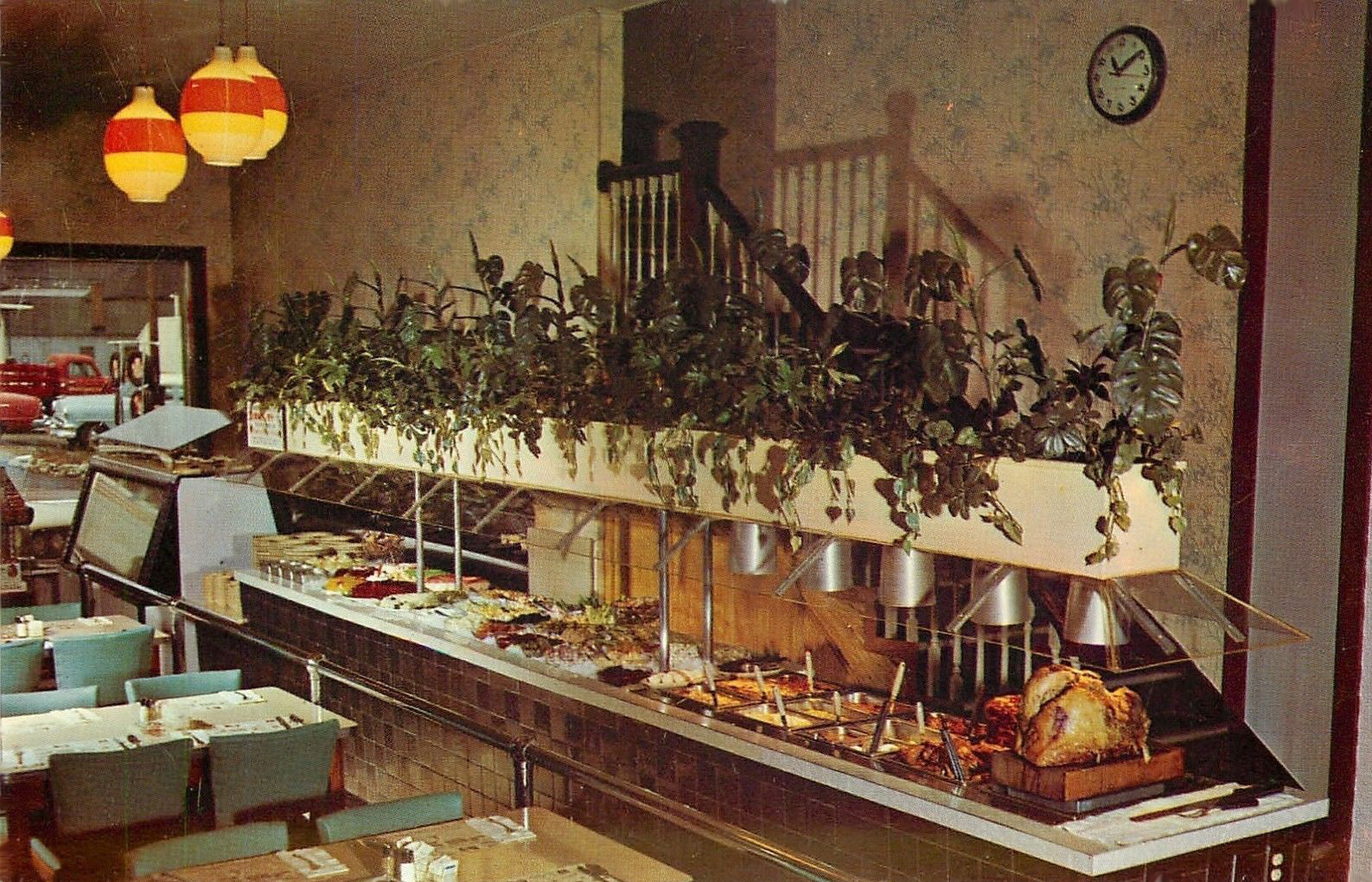
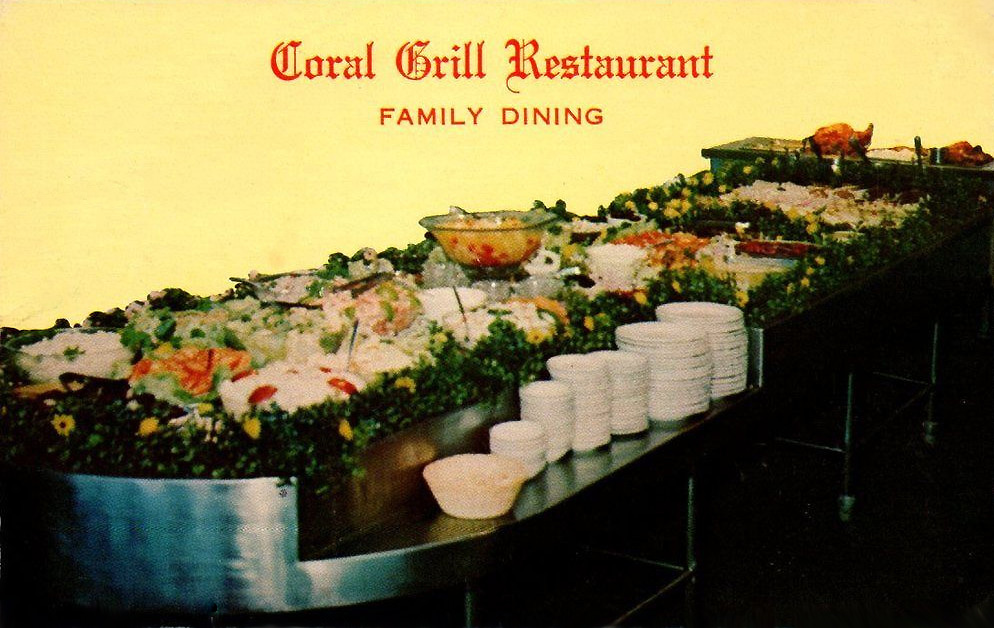
The smorgasbord idea, it turned out, was a step on the way to the all-you-can-eat buffet. In the 1950s and 1960s chains developed whose entire business plans were based on bargain-priced buffets abounding with macaroni and cheese, chow mein, fried chicken wings, and “sparkling salads,” i.e. jello. Chains divested smorgasbords of their ethnic overtones even as some continued to call themselves by that name. In California, the word “smorgy” emerged (variations included smorga, smorgee, & smorg-ette). Rather than using round smorgasbord serving tables with food presented in decorative bowls and platters, high-volume chains tended toward cafeteria-type service with stainless steel pans.

allyoucaneatEric'sSwedishSmorgasbordGlendoraCA

California smorgys displayed seeming cultural diversity, with Ramona’s Smorgy, Mario’s Smorgy, and Gong Lee’s Smorgy. I’m still trying to grasp the concept behind Johnny Hom’s Chuck Wagon/Hofbrau/Smorgy in Stockton CA, the town that may have merited the title of smorgy capital of the U.S.A.

Along with the Swedish smorgasbord tradition, the spread of buffets and smorgys nationwide may have been aided by the $1.50 midnight spreads in Las Vegas casinos, which in the 1950s gave all-you-can-eat a popular culture imprimatur.

Opinion has been divided as to whether all-you-can-eat (or the more genteel “all-you-care-to-eat”) restaurants tended to serve cheap and inferior food. Many restaurants stressed that they baked daily, made their own sauces, or used fresh vegetables. “At Perry Boys’ Smorgy Restaurant, an inexpensive price doesn’t mean a cheap product,” according to an advertisement listing brand name foods in use. Yet, a 1968 restaurant trade journal seemed to suggest otherwise judging from its advice that “attractive buffet fare based on low-cost foods is essential.” For Quick Chicken Tetrazzini, it recommended mixing pre-cooked diced chicken with condensed mushroom soup and serving it over noodles.

As popular as all-you-can-eat restaurants were in the 1960s and 1970s, they suffered in the public relations department. They often undermined their own mini-industry with insults slung at each other. Is it helpful while touting your own restaurant to remind the public that “the words ‘all you can eat’ often mean quantity at the expense of quality”? And what does it say about the many restaurants advertising fried perch specials when a competitor says of its fish: “This is NOT frozen perch”?

AllyoucaneatJPGPhoenix&MesaPaulPerry'sSmorgee

Likewise some operators took an unfortunate “the customer is not always right” stance by posting signs that warned patrons to take no more than they could eat [see above: “Take all you want. Eat all you take.”]. This was directed at those, admittedly a small minority (but still!), who came equipped with plastic-lined handbags or special pouches in their coats in which to stow food to carry away. Meanwhile, other proprietors denounced these warning signs as an insult to guests.

Customers with huge appetites were another species of problem that most all-you-can-eat restaurants tried to be philosophical about, figuring above-average consumption would be balanced by the light eaters. Proprietors told themselves that the man who downed 90 steamed clams, or the one who swallowed 40 pieces of fried chicken, would provide free advertising when he boasted at work how much he ate. Families were prized customers, construction gangs less so. And they dreaded school football teams. Some restaurants located near the University of Michigan in Ann Arbor found it necessary to put restrictions on salad bars.

allyoucaneatFL

Let’s face it, since the fall of Rome, gorging has been seen as unattractive. Restaurant owners and employees sometimes expressed disgust at customer behavior such as grabbing food off trays as staff tried to replenish buffets. “It’s disgusting,” said the proprietor of a Dallas all-you-can-eat steak restaurant, adding, “Some of them just ought to be led off to a big, old hog trough.” Another manager admitted that workers called customers “animals” in private. “You lose your appetite working in a place like this,” said one.

As a reporter wrote of Las Vegas buffets in 1983, “If I ever see another metal pan of mashed potatoes awash in melted margarine, another sea of macaroni salad, another ‘medley’ of canned corn, carrots and peas . . .” Stop right there!

© Jan Whitaker, 2016

20 Comments

Filed under chain restaurants, family restaurants, food, patrons, popular restaurants, restaurant etiquette

Taste of a decade: 1880s restaurants

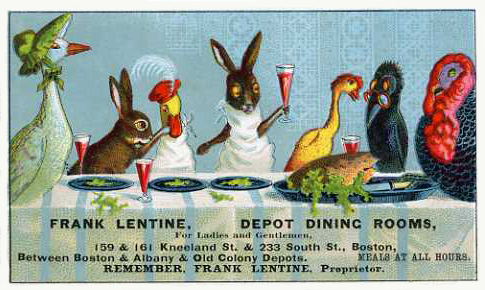
1880sFrankLentine

In the 1880s a wider range of foods became available to people living in cities, allowing restaurant menus to became more varied. Cold storage warehouses and refrigerated rail cars brought cheaper Chicago beef and out-of-season produce. Mechanically frozen ice, free from the impurities of lake ice, became available. Cheese and butter, once made on farms, now came from factories. Fresh fruits and vegetables remained luxuries for most people, however, and meat and potatoes dominated menus.

Larger, better capitalized restaurants installed electric plants that provided brighter lighting and badly needed ventilation systems.

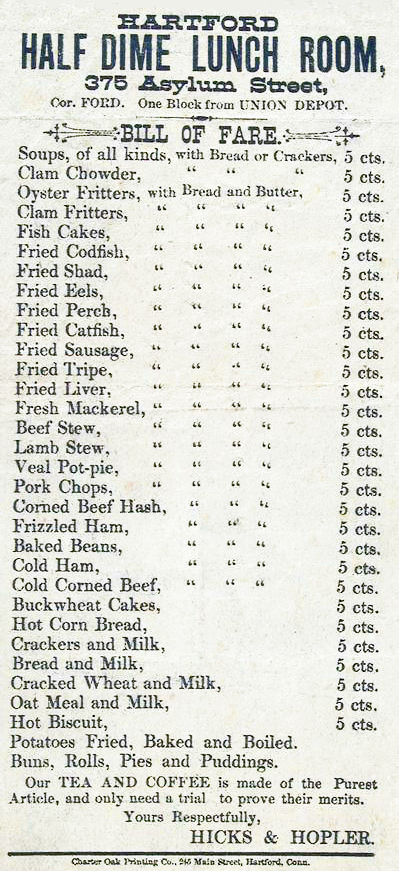
1882HartfordHalfDimeLunchThe public demanded, and began to get, lower restaurant prices, quicker service, and more flexible meal times. The dining public expanded. Boarding houses that furnished meals as part of the rent were replaced by kitchenless rooming houses whose residents went to restaurants for dinner. More hotels switched to the European plan, freeing guests to eat wherever they chose rather than pay an inclusive charge for room and meals. New types of ready-to-eat food purveyors came on the scene, such as all-night lunch wagons and dairy cafes that specialized in simple, inexpensive meals such as baked beans and cereal with milk.

New ethnic groups arrived on American shores, among them Eastern European Jews and Southern Italians. Many settled in the East but others spread to cities throughout the westward-growing nation. They brought with them new cuisines, tempting the more adventurous eaters among the settled population.

Temperance coffee houses and soda fountains continued to thrive, particularly in Boston where authorities were always looking for ways to curb drinking.

As the rise of department stores and downtown retail shops brought women into city centers, restaurants catering specifically to them appeared on the scene.

But not everyone was welcome at restaurant tables, or in the society at large. Southern states made segregation the law, keeping Black Americans out of white-owned restaurants. Racially motivated legislation cut off Chinese immigration to the U.S. and encouraged hostility toward Chinese already in the country, mostly in the West, motivating many to move eastward and  introduce curious diners to new foods.

Highlights

1883Macy'sNY1880 On the second floor of its newly expanded NYC department store, Macy’s restaurant for shoppers seats 200. [pictured] – In the silver-mining town of Virginia City NV, restaurants serve food from all over the world, including “fruits from every country and clime.”

1881 In December, Edmund Hill, proprietor of Hill’s confectionery restaurant in Trenton NJ totals up the proceeds of what he calls a “very satisfactory” year in which the business took in $18,146, netting him the handsome sum of $677.33 in wages and profit.

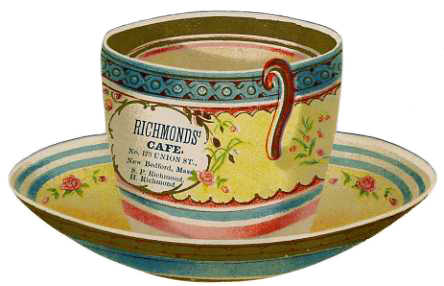
1880sRichmondCafe1882 Richmond’s Café in New Bedford MA informs customers that “The Café will be in charge of a lady . . . who will bestow especial pains upon lady patrons, taking charge of whatever parcels may be left in her care while the owners are out shopping.” – In Boston Charles Eaton and a partner open a temperance soda fountain and lunch room called Thompson’s Spa which goes on to become a local institution.

1883 One year after passage of the Chinese Exclusion Act, the Rockaway Oyster and Chop House in Fresno CA advertises to prospective customers that it has “all white help.” Everyone, of course, understands that white means “not Asian.”

1889Chicago1885 In Boston and other large cities customers flood into cheap restaurants near railroad depots and wharves for 10-cent noon meals. Menus are chalked up on boards and customers eat rapidly without removing coats or hats.

1886 It is considered newsworthy when a federal judge orders a restaurant in Little Rock AR to serve a Black juror along with his fellow white jurors. A report notes that it was “the first time a negro enjoyed his repast at the leading hotel in the state and among white people.”

1887 After gathering menus from 40 prominent hotels from all over the country, a collector determines that salmon is the fish most often listed, and that it is found on menus across the United States, including Knoxville TN, Detroit MI, Milwaukee WI, Salt Lake City UT, and Cheyenne WY.

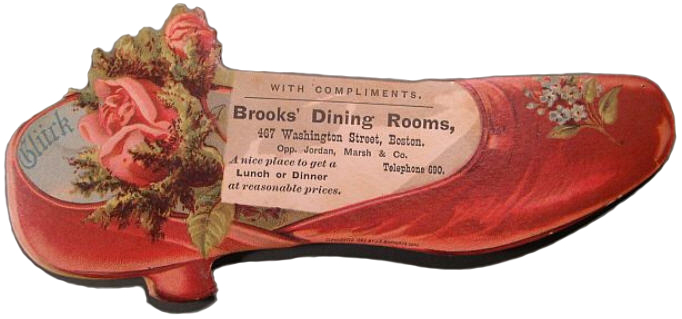
1883brooksdiningroom1888 At Chicago’s New York Kitchen, where a nickel buys Ham and Beans Boston Style or “One-third of a Pie, any kind,” the dining room is lighted by a Mather Incandescent Electric System and cooled by a steam-powered exhaust fan. — In Boston Brooks’ Dining Rooms is equipped with a telephone.

© Jan Whitaker, 2016

12 Comments

Filed under lunch rooms, patrons, racism, technology, women

Between courses: masticating with Horace

fletcherismlargeteethCaption

Having made a lot of money in the importing business early in life, Horace P. Fletcher [1849-1919] retired and became a popular health guru known as the “Great Masticator.” He let people know how they could eat less and reduce their food budget, have better digestion, and get more enjoyment out of eating. His ideas attracted quite a bit of attention in the early 20th century.

Not that everyone agreed that chewing food to pulp – at least 30 chews according to the scientific system of Fletcherism — was how they wanted to experience the joys of degustation. Nor would everyone want to witness someone Fletcherizing.

Take oysters. Who would want to go to a restaurant with someone who chewed oysters until all that remained was pulp? And then see him remove the residue from his mouth saying, “The juice is all out of this. The stomach does not need it.” This uncomfortable moment might well take place in an elegant dining room such as at New York’s Waldorf Astoria.

fletcherismhoraceDairy lunch rooms — with their simple a la carte menus of cereals, milk, potatoes, and other starches – were his favorite places to eat. But, he often stayed at deluxe hotels and ate in their dining rooms. Throwing aside their sumptuous menus, he had no qualms at all about ordering highly irregular – not to mention cheap — meals, often omitting meat or anything resembling a main dish.

In 1904, in a hotel dining room, he ordered hash brown potatoes, which he ate with a spoon, and half a French roll. He used the other half for dessert, after pouring over it a mixture of cream and sugar he whipped together. His waiters undoubtedly got small tips but at least he gave them something to talk about for months afterward.

A lunch room repast might be something such as a leaf of lettuce with only oil for dressing, two pancakes, and a cup of custard. He drank coffee slowly, taking a sip and holding it in his mouth for 30 seconds.

In 1912 he ate nothing but potatoes for 58 days. Testing by scientists showed that his strength and endurance did not suffer as a result of his diet.

Despite his extremism – and his fondness for potatoes and candy – his stress on eating less meat, eating more slowly, and not swallowing barely chewed food may have served  his followers well. He was a hero to many people, particularly dentists who were overjoyed with his appreciation of teeth.

© Jan Whitaker, 2016

4 Comments

Filed under patrons, restaurant etiquette

Dining alone

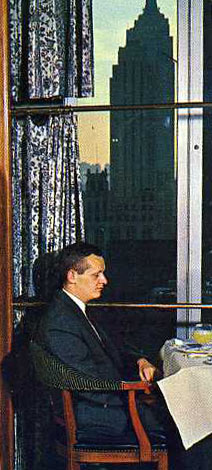
loneDinerWithViewRecently the online reservations service OpenTable.com announced that their reservations for solo diners had gone up 62% over the past two years. Just how meaningful this increase was is hard to judge from so little information, but the press release conjectured that “the stigma surrounding dining solo may be starting to lift and . . . consumers are eager to savor unique culinary experiences alone.”

I can’t say with certainty that no one ever felt the stigma of eating alone in the 19th century but I believe that certain patrons were eager to savor any and all culinary experiences alone.

Why? In the early 19th century communal dining was the norm and there was little sense of privacy in public halls and dining rooms. An Englishman wrote in 1843 of his visit to America where he often felt he was “a fraction . . . of a huge masticating monster” as he dined “with people to whom he is bound by no tie but that of temporary necessity, and with whom, except the immediate impulse of brutal appetite, he has probably nothing in common.” An escape from the crowd was desirable to those who could afford to pay the price for a private dining room.

Stigma came later. It was the development of the luxury restaurant after the Civil War that created problems for the solo diner. Now there were no communal tables. Every table was private and the assumption was that no one dined alone. Portions were meant for two, so patrons made sure to arrive with a dinner companion. An article in the New York Sun in 1890 reported that this practice was so well known that “if a man comes in alone the waiters at once conclude that he is a countryman or unused to restaurant life, and treat him accordingly.”

By contrast it was true then and has been since that in casual and self-service eateries where meals are quick and unceremonious – such as lunchcounters, diners, and fast food outlets –  patrons typically eat alone entirely free of stigma or self-consciousness.

lonedineremptylunchroom

The history of dining alone has been a different story for women than for men, both in the 19th century and through most of the 20th. Until 1910 or so, the meaning of a phrase such as the following 1894 New York Herald headline “Lone Women Not Wanted [in First Class Restaurants]” is ambiguous. Usually what was meant by a “lone woman” was a woman unaccompanied by a man. Thus “lone women” could apply to a woman totally alone or several women together. None would be admitted to a fine restaurant.

Men often felt lonely eating by themselves in a restaurant, or that they were being treated as second class customers, but they were not turned away under suspicion of being prostitutes. The idea that a lone woman entering a restaurant might be in the sex trade was the reason given for barring her from first-class restaurants in the evening. Generally in the early 20th century fine restaurants and hotels in NYC reversed their policy, stating they would serve any lone woman they judged to be a “lady.” Yet, even as late as the 1960s, some restaurants would not seat a solitary woman at the bar for fear she was soliciting.

Even as it became more common and acceptable for women to dine alone, they continued to feel unwelcome even into the 1970s. In that decade, when more women had careers in which they traveled for business, they began to protest publicly about the difficulties they had in restaurants. Like men, they complained that they were given poor service, often ignored, or seated by the restrooms.

lonediner1962There are pragmatic reasons why restaurants have been less than thrilled about single diners. They occupy tables that could accommodate more guests, thus ordering less food and usually fewer drinks and producing lower tips. And lone diners have been painted as social rejects. Ann Landers wrote in 1962 that men eating alone had character flaws. It has even been suggested that solitary diners depress other diners. According to a 1976 columnist, a lone woman in particular “suggests disappointment, a failed rendezvous, an empty heart; she subtly alters the ambience of the restaurant like the scent of old pressed roses.”

Little wonder that a survey in 1979 reported that most women found gynecological exams more pleasant than eating alone in a restaurant.

lonedinerbirdcagewestchester1950Just as there have always been some people who prefer eating alone, there have always been some restaurants that advertise special attention paid to lone diners. Lord & Taylor’s Birdcage in Westchester NY provided tables for one [pictured, 1950]. In the 1980s many restaurants stepped up their efforts. Even though 1980 Gallup survey interviews showed that 71% of men and 66% of women said they would rather not be seated at a table with other diners, a number of restaurants in the 1980s created communal tables. As far as I know it did not become a big trend. On the other hand, dining clubs such as “Fine Diners over 40″ in NYC may prove more appealing.

© Jan Whitaker, 2015

23 Comments

Filed under patrons

Heroism at lunch

greensbororecordfeb21960

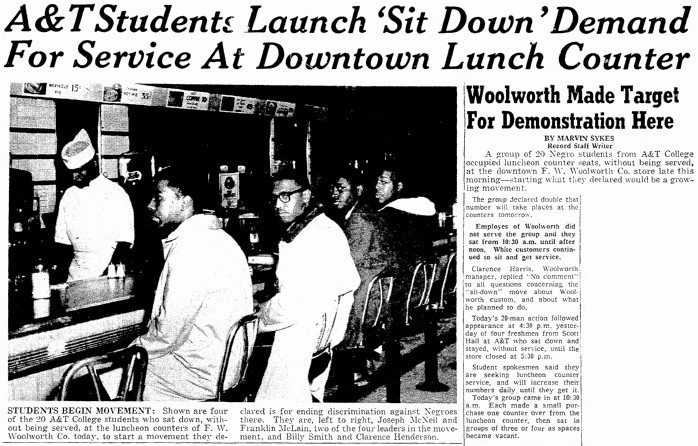
Actually there was no lunch. But there was plenty of heroism when four college students sat at a Greensboro NC lunch counter in February 1960.

The students were told to go to the segregated snack bar in the back of the Woolworth 5 & 10 cent store, but they refused. And although the Woolworth staff would not serve them, the students also refused to leave until closing time and pledged to come back every day until they won the right to eat there.

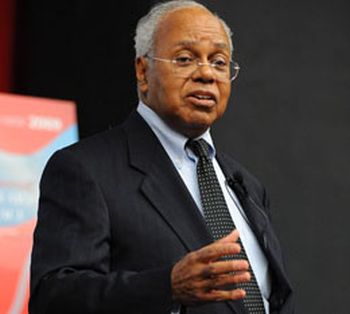
greensborojosephmcneilIt was an honor to hear one of the organizers of the protest a few days ago at the 9th Annual Northeast Regional Fair Housing and Civil Rights conference in Springfield MA. Joseph McNeil told a room of 500 attendees how much had hung in the balance for him at the time. A first-year student at the North Carolina Agricultural and Technical State University, he feared that he could end up in jail and disastrously interrupt his college career. (Fortunately, his fears were not realized and he went on to graduate and eventually to become a major general in the U.S. Air Force.)

In the Q & A after his talk, a woman in the audience asked what his mother had thought about his decision to hold a sit-in at the lunch counter. He said she had been uneasy about it but had to agree that it was the right thing to do based on the values she and his father had taught him.

The Greensboro protest grew as students from area schools joined with the initial four, then more student protests erupted at Woolworth stores around the South. In July 1960 Woolworth reversed its policy which had been to let local managers decide whether or not to serve Black customers based on local customs.

McNeil described how the sit-down protests served as “a down payment on our manhood and womanhood” for him and his fellow students, both men and women. The action, he said, was driven by their belief in the “dignity of men” and “the moral order of the universe.”

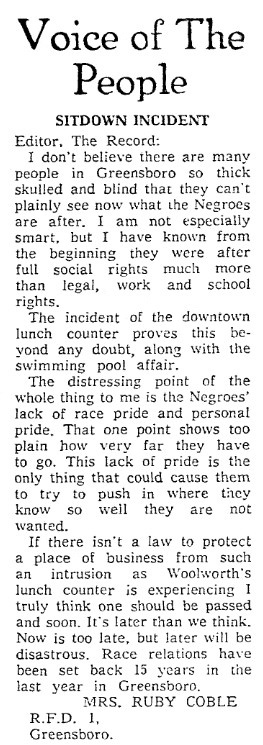
How odd it is to read the following letter to the editor of the Greensboro Record published a few days after the 1960 sit-in began. Writer Ruby Coble’s reference to the protestors’ “lack of race pride and personal pride” is totally baffling today. However it represents a long-held idea of the majority of white Americans in the 19th and much of the 20th centuries, that restaurants should only serve well-mannered people and that any Black people who demanded service in a white restaurant were clearly not well-mannered because they were barging in where they were not wanted.

greensboroRecordFeb51960

Coble was right about one thing though. It was indeed much later than she thought.

McNeil received repeated standing ovations from conference goers last week. Everyone laughed when he said that he had always wanted to order coffee and apple pie at a Woolworth lunch counter but when he did, “The apple pie wasn’t very good.”

© Jan Whitaker, 2015

4 Comments

Filed under patrons, racism

Eating Chinese

lynn1937KingJoy

While paging through a 1922 Massachusetts business directory I was struck at first by how many Chinese restaurants there were in various towns. But when I went back to the directory to take a closer look I realized there weren’t really so many except, perhaps, in manufacturing towns such as Fall River and Lowell.

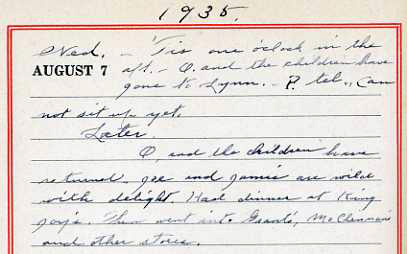
I wondered who patronized Chinese restaurants in Massachusetts in the early 20th century – and then I remembered recently buying a diary that mentioned a place called King Joy.

After I managed to identify the family whose doings were chronicled in the diary (not easy!), I discovered a surprising and intriguing little story.

The diary, mostly written in 1935, was about three generations of a family living on the North Shore of Massachusetts. It was kept by the grandmother of the family who I will call Gertrude, age 76. Her husband Arthur was a retired dentist a few years older. They headed a socially prominent family with two homes, one in the affluent community of Hamilton and the other in the nearby resort town of Nahant.

Living with Arthur and Gertrude were their daughter Opal, age 49, and her son Jamie, age 5. Opal’s brother Perry, a 40-year old engineer, and his wife Ellen, also lived in Hamilton.

hotelvendomeThe overwhelming focus of the diary is the health of family members, who seem to be under the weather for much of 1935. There are large stretches of blank pages where nothing is recorded, but restaurants are mentioned six times, all but one of them Chinese. The exception was the time that Gertrude, Opal, and Jamie went to Boston and stayed overnight in the Hotel Vendome, a Back Bay hotel for the gentry that dated to 1871. While grandmother and grandson retired early, Opal had a late-night supper in the hotel’s Nippon Room. Gertrude, a woman of few words who loved to abbreviate, hints in the diary that the purpose of the trip was for Jamie to visit his estranged father.

WsEatChinese

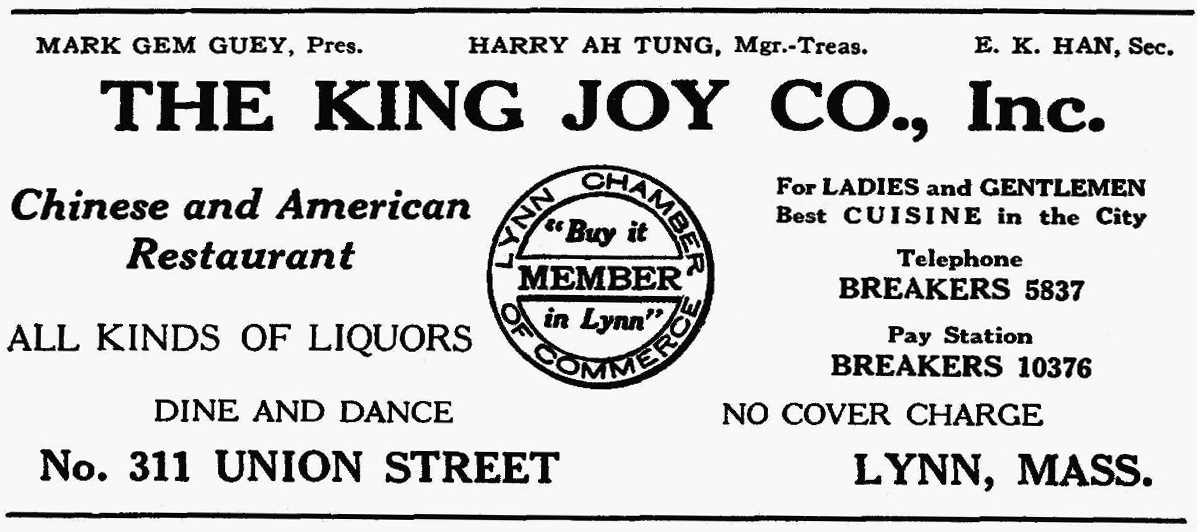
Twice that year Gertrude records that someone, usually Opal and Jamie, went to King Joy in nearby Lynn MA. Another time Opal went to Lynn to bring back chow mein for her father, Arthur, who had fallen down the stairs at home. Once the family went to the Far East Restaurant in Lynn and once they went to the Canton Restaurant in Worcester, riding in Perry’s car.

OWP1904Opal’s liking for what must have been a fairly exotic cuisine to a Massachusetts native in the 1930s might be explained by her world travel as a young woman. In 1904, at age 19 [pictured], she was adopted by a wealthy retired Boston lawyer with real estate holdings. Divorced and thirty years her senior, he was a renowned animal rights advocate, free thinker, and globe-trotter. (Amazingly enough, Opal’s parents reportedly approved of the arrangement.) Shortly after the adoption, Opal and her new father set off for a visit to the World’s Fair in St. Louis followed by a trip to Brazil and winter in Egypt. It was the first of many trips she would take with him.

Opal married around 1921, at age 36, giving birth to Jamie nine years later. Her adopted father gave her his house in the Boston area as a wedding present and some time later moved to Los Angeles.

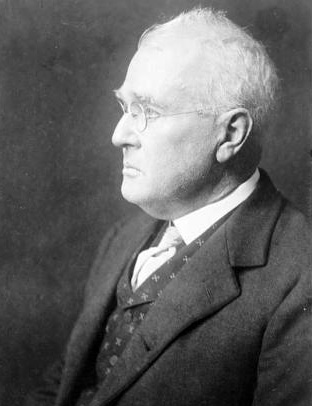
PGP1934By the time Opal’s paternalistic benefactor died in 1934 at age 77 [pictured], he had crossed the Atlantic 145 times, visited Russia 16 times, Egypt 13 times, and the Arctic 13 times. In his will he left all his money to animal protection and free-thinking societies and just $1 to Opal. She contested the will, probably without success.

© Jan Whitaker, 2014

3 Comments

Filed under patrons

Habenstein of Hartford

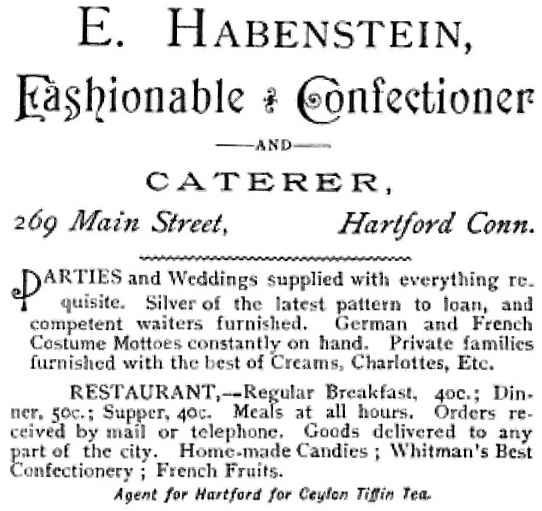
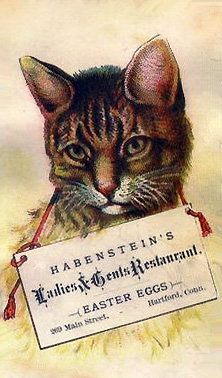
habrenstein's1880stradecardsIn the late 19th century having your party catered by Edward Habenstein was proof that you had arrived socially. The newspapers of Hartford CT and Springfield MA were filled with descriptions of lavish social events that carried the phrase “catered by Habenstein of Hartford.” That said it all.

Edward Habenstein was born in Saxony, Germany, around 1844 and came to the US with his parents when he was young. They settled in Utica NY where, at age 15, he joined a catering business. When he was 18 he went to New York City, moving to Hartford in 1865 and starting his business in 1868.

habenstein's1891Wesleyanpub

Although his was a retail confectionery and bakery selling its own products as well as Whitman’s candies, French candied fruits, and holiday favors, Edward and his wife Adelia specialized in weddings and large affairs given in private homes. By 1880 they also ran a restaurant but, judging from advertisements, catering remained a prominent part of their business. In Massachusetts the company was known simply as “Habenstein, the Connecticut caterer” while in Connecticut newspapers it claimed the title “The State Caterer” as reflected in an 1890 advertisement consisting solely of that line and a Main Street address in Hartford.

habenstein'sEasterEggsIn addition to providing edible refreshments and dinners, Habenstein supplied receptions and parties with “silver of the latest pattern,” decorated French china, awnings, camp chairs, cloth to cover valuable carpets, orchestras, and “first-class” cooks and waiters.

In June of 1886, a Springfield MA alderman opened his house to the city’s elites who danced, spilled out into an enclosed piazza, and enjoyed Habenstein’s refreshments “of all conceivable forms and kinds.” In summer 1895 an even splashier affair was hosted by the Skinner family who owned one of the nation’s largest silk mills in Holyoke MA. Youngest daughter Katherine entertained about 300 guests at a lawn party at their palatial home “Wistariahurst,” whose grounds were lit with clusters of Chinese paper lanterns hung from trees. The younger set danced for hours outdoors on a specially constructed platform illuminated by arc lights while Habenstein served “lunch” in the mansion’s dining room.

habenstein'sdinner

Students at Wesleyan College in Middletown CT also enjoyed Habenstein’s hospitality. In June 1890 the all-male sophomore class boarded a boat on the Connecticut River to travel to the Hartford restaurant. The boat got hung up on a sandbar and, despite its departure at 11 P.M., did not arrive until 2 A.M. Edward was a bit cross, according to an illustrated account in a student magazine, but served the Class of 1892 a delicious “midnight” supper nonetheless. I’m struck how unlike the menu is compared to what 19-year-old students might order today. They might agree with Milton’s epigram but would they quote it atop their menu?

MENU.
“What hath night to do with sleep.
Welcome joy and feast, midnight
Shout and revelry.” – Milton’s Comus.

Little Neck Clams,
Olives               Celery           Radishes
Vermicelli Soup
Salmon, with wine sauce
Currant Jelly
Brown Mashed Potatoes                           Broiled Chicken on Toast
Saratoga Potatoes                  French Peas
Roman Punch
Lobster de Newburg               Chicken Salad
Fruit                         Assorted Cakes
Ice Cream                  Neapolitan Ice
Coffee
Cigars        Cigarettes

Over its more than 50 years in business in Hartford and up and down the Connecticut River valley, Habenstein’s moved about half a dozen times. In 1902, when it was at 805 Main Street, it advertised that it was the best restaurant in Connecticut. Edward died around 1920. Adelia carried on the business for a short time.

© Jan Whitaker, 2014

10 Comments

Filed under confectionery restaurants, patrons

Don’t play with the candles

nightingalepartialfrontmenu

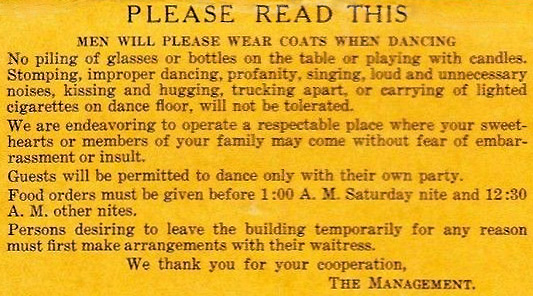
It’s not often that you run across a menu that tells patrons how to behave, right on the front. It seems to project the message Welcome! . . . or maybe not.

In case you were wondering what “trucking apart” means, I think it refers to flirting with someone other than who you came with.

nightingaleMenufrontdrawingThe menu, which probably dates from the 1950s, is entertaining inside too: Pop Corn as an appetizer, Toast (under Specials, .20), Pickled Egg Salad with Crackers (.50), and Blackberry Wine from Ohio (.30 per glass).

The Nightingale’s finest and most elaborate offering is clearly its Chicken Dinner ($1.25). The potatoes, tomatoes, and biscuits get glowing modifiers while the chicken has none.

Tomato Soup or Tomato Cocktail
French Fried, Golden Brown Potatoes
Sliced Field Ripe Tomatoes
Peas or Beans
Piping Hot Biscuits
Coffee or Tea
Ice Cream

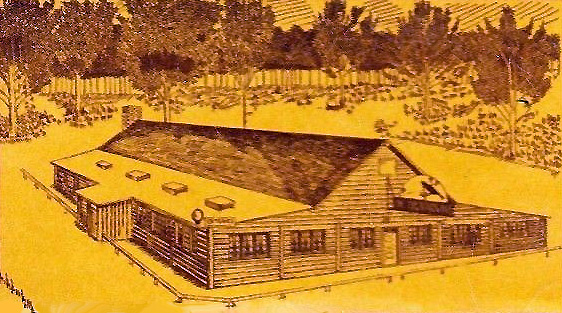
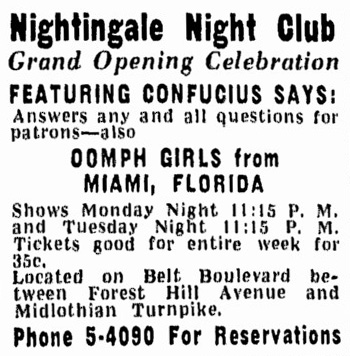
nightingaleclubMarch251940In 1940 Luther L. Dixon, an enterprising factory worker at American Tobacco Co. who made money in real estate, opened a restaurant/club called the Nightingale on the outskirts of Richmond, Virginia. He had left the business by the mid 1950s, so the owner of the Nightingale with the menu advice, located south of Alexandria, may have been someone else.

© Jan Whitaker, 2014

12 Comments

Filed under night clubs, patrons, roadside restaurants

Girls’ night out

GirlsNightOut

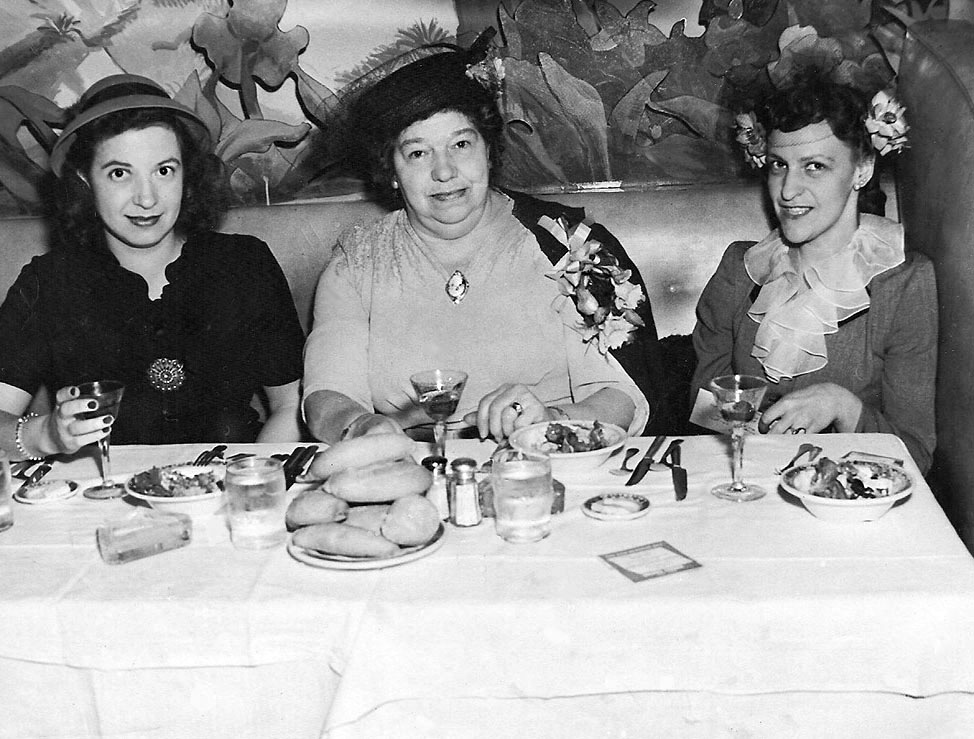
This is one of my favorite photographs, the kind I tend to hoard until the perfect moment. I put it in the same league with the wonderfully evocative photograph in That night at Maxim’s. It seems just right for the first post of a new year.

Once again, I invite readers to imagine what is going on. I know little other than that they are in a restaurant in New York City. Because they are seated  at a banquette, and because the photo was almost certainly taken by a professional photographer, I would guess it is a nightclub restaurant, or certainly a special occasion type of place. Judging from their outfits and the style of the mural behind them, I think it is the late 1940s or early 1950s.

I love how directly they look at the photographer and how contented they are. I think the woman in the middle is the mother of the woman on the left. Perhaps it is her birthday. Could the other be a cousin? She seems to have been interrupted just as she is about to present what looks like a check to the older woman.

They are drinking manhattans or martinis, not paying too much attention to their salads, and totally ignoring the mound of dinner rolls piled so unceremoniously on a too-small plate. The awkward way the rolls are served and the ordinary serviceable restaurant ware (water tumblers, dishes, and salt and pepper shakers) makes me think it is not an elite restaurant. Still, love those butter pats on the tiny plates!

The only objects in the photograph that I cannot identify are two small squares of paper on the table, one in the foreground right and the other just beyond the salad of the woman on the right. Forms to fill out for the photographer?

Thoughts?

© Jan Whitaker, 2014

10 Comments

Filed under patrons