A frequent restaurant patron who knows a lot of fascinating things about the history of American restaurants based on years of research, and who is also interested in how people relate to food, what it means to them, and how they form memories about meals in the past.
I started my blog in 2008 (!) and by now have a huge number of posts. The early ones are just as good as the new ones, so look around.
Today is launch day for Kibbitz & Nosh: When We All Met at Dubrow’s Cafeteria, a book of black and white photography by Marcia Halperin. In the 1970s she began dropping by Dubrow’s on King’s Highway in Brooklyn and in Manhattan’s garment district. The cafeterias from what may seem like a long-gone past were as unpretentious as their customers.
The images she captured are reminiscent of street photography at its best, showing aspects of everyday life in the city. The book also includes essays by playwright Donald Margulies and Deborah Dash Moore, historian of Jewish-American life, including Jewish New York: The Remarkable Story of a City and a People (2017).
There is an interview podcast with Halperin by Street Photography Magazine, and a selection of her photographs from the book can be viewed at the Edward Hopper House Museum in Nyack, NY, until June 25.
Kibbitz & Nosh is available from independent booksellers, Amazon, and Barnes & Noble, as well as its publisher, Cornell University Press.
Before non-stop coast-to-coast air travel became common, actors and performers relied on the railroad to cover long distances. Usually this involved changing trains in Chicago. Arriving there, weary celebrities were more than happy to be scooped up and whooshed off for lunch or dinner at the Pump Room.
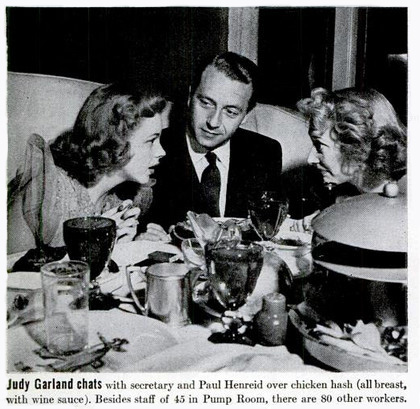
Top celebrities were escorted to Booth One, a cushy white leather nest where their job was to field calls from gossip columnists and smile as the flashbulbs went off. Their lunch may have been on the house, but they earned it. [It’s likely Judy Garland is talking with a columnist in the above Life magazine photo, 1943] Of course both the stars and the restaurant got publicity out of the deal.
The Pump Room stood out as a notable publicity mill in part because it was in the middle of the country. On the coasts there were plenty of such venues – the Stork Club and El Morocco in New York, and Chasen’s and Romanoff’s in Los Angeles to name but a few.
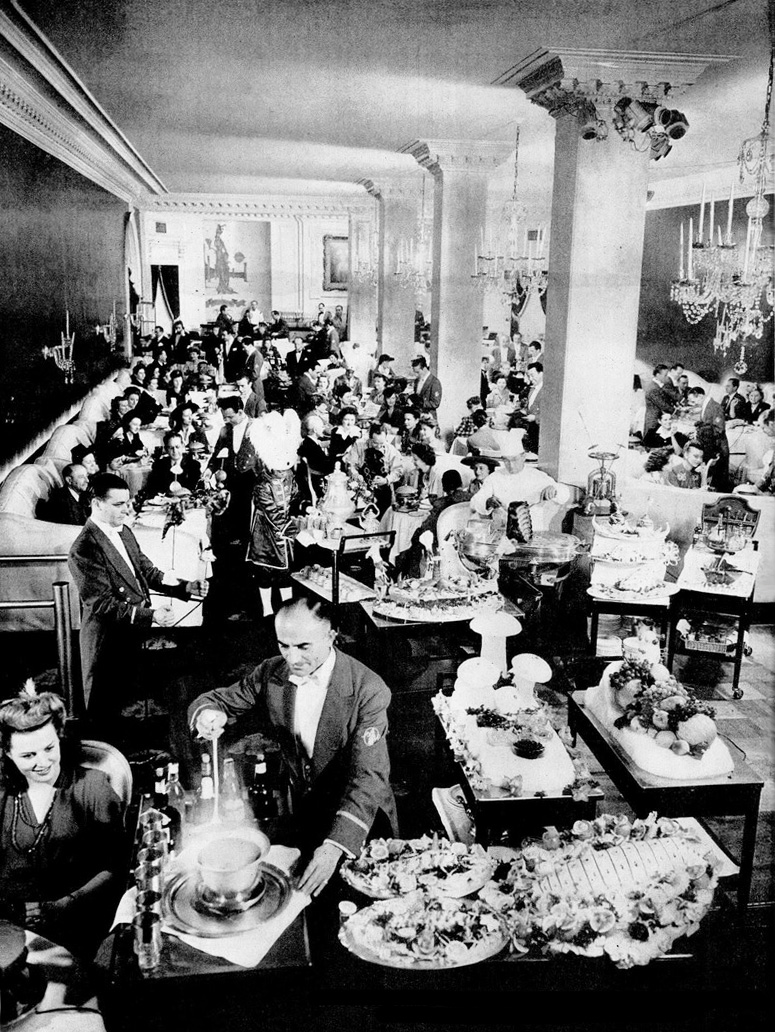
But the Pump Room had a vibe all its own. [Life magazine photo showing a very crowded room, 1943]
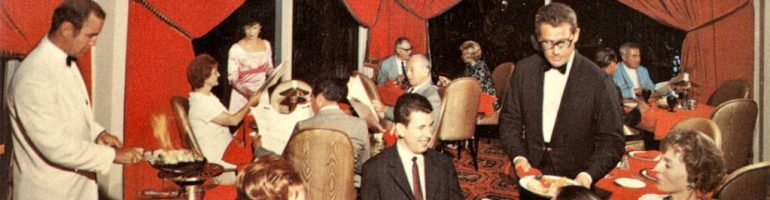
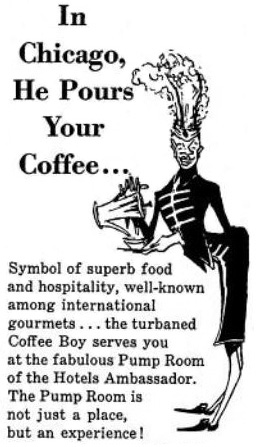
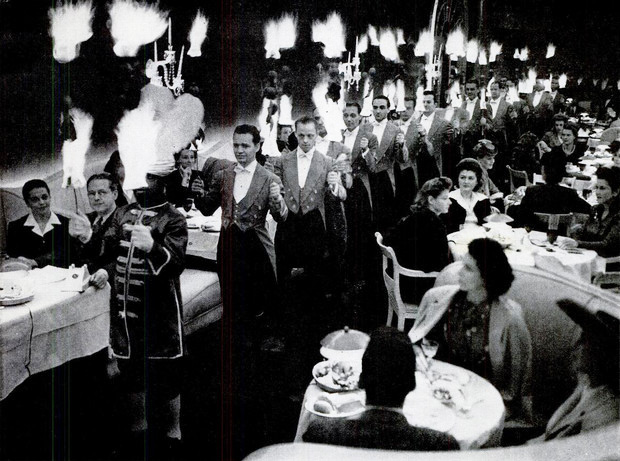
In addition to being swanky — with dark blue walls, white leather upholstery and crystal chandeliers — and well connected to the gossip pipeline, the Pump Room drew attention for its culinary burlesque shows featuring costumed staff, flames, and choreography. Waiters – all white men – wore scarlet jackets and black satin knee pants, while the “coffee boys” – all young black men – wore emerald green or white uniforms with giant ostrich plumes seeming to spring from their foreheads. [see grotesque caricature shown below, 1957] There were also “curry boys” dressed in gold. Food was served from wagons except for that skewered on flaming swords.
The coffee servers took it upon themselves to compete in the art of coffee pouring. Competition involved seeing how far they could hold the pot and still manage to pour the coffee neatly into the cups. Management did not approve and stopped the contest, but not before the winner set a record of 5 feet. He said customers asked him to do it. Not unbelievable since it was, after all, in keeping with the spirit of the place. According to one observer, customers watching servers with flaming swords make their entrance secretly hoped “the adroit waiter will slip and ignite one of the highly combustible hats being worn this season.” This never happened.
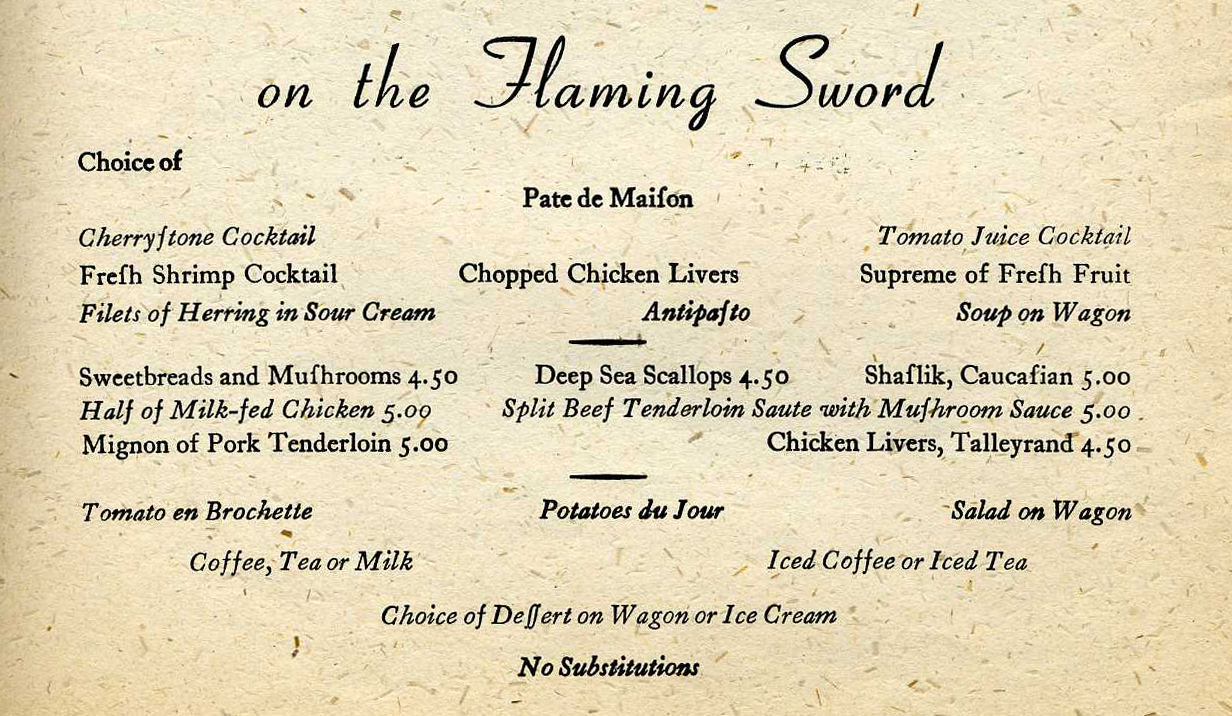
In 1943, Life magazine visited the Pump Room, photographing a number of spectacular scenes, some of which were undoubtedly contrived for the sake of the story. The crowning photo was certainly that of the procession of waiters holding flaming swords. A flaming-sword dinner cost $3.50 at the time of the story, going up to $4.50 or $5.00 by 1949 according to the menu shown below.
The Pump Room emblemized the sardonic humor of its creator, Ernie Byfield, who also owned its home, the Ambassador East Hotel. Its 1938 creation may have been a desperation attempt to survive during the Depression, but Byfield had long been in the habit of befriending show business stars back when he headed the Sherman Hotel. In the Sherman’s night clubby College Inn, he had entertained actors, musicians, and others on “theatrical nights.” Through the years Byfield made friends with an extensive roster of Hollywood stars that included James Cagney, Bette Davis, and William Powell in the 1930s and Douglas Fairbanks, Mary Pickford and a long list of others in earlier times.
Ernie Byfield’s death in 1950 seemed to mark the beginning of a long decline. The Ambassador East and the two other hotels Byfield owned changed hands repeatedly while the Pump Room sagged. A few months after Byfield died, columnist Lucius Beebe noted in a Holiday magazine story that Ernie had always said, “I don’t want grim gourmets around my place. I want laughing eaters.” Beebe’s story made it clear that the Pump Room was meant to be amusing, even moderately ridiculous. Without its creator at the helm, it became difficult to set the tone while maintaining quality.
In 1962 a reviewer for the Michelin Guide visited the Pump Room and, according to a devastating Life magazine account, had a miserable dinner described as deviled turkey breast accompanied by “canned peas and what looked exactly like potato chips.” Equally horrid, Life reported, was the incompetent waiter who recommended a red wine that “not only foamed but tasted as though it were composed of a second-grade detergent.” Learning of the story, an Ambassador Hotel executive dug through that day’s food checks and found, according to a rapidly produced account in a Chicago newspaper, that the reviewer and his Life magazine companion (the story’s author) had each consumed a cocktail and then shared two bottles of wine. He also insisted that the turkey steak on the menu was never served with anything but grilled sweet potatoes and wild rice.
But the damage was done and the restaurant’s reputation continued to crumble. Not much after the Michelin bomb dropped, Irv “Kup” Kupcinet, its number one gossip columnist, who had created a version of the Pump Room in his own dining room, admitted that it wasn’t what it used to be. Cross-country airplane flights were becoming commonplace, eliminating Chicago stopovers and reducing the flow of celebrities into town. Even though the room was remodeled in the mid-sixties by new managers, it was unable to recapture the past glory.
Although loyal Chicagoans continued to support it, the Pump Room closed in 1976, after some years of low ratings and, it was said, grease-spotted menus and chipped glassware. Everything was auctioned, included Booth One. Then came a new owner, Rich Melman, of the Lettuce Entertain You restaurant group which included Jonathan Livingston Seafood, Lawrence of Oregano, and others. He remodeled it in glamorous fashion and ran it for 22 years. After that it had various owners, including Melman once more who ran it as Booth One.
After reading several stories about AI-generated writing today, I decided to add this note to my page titled “My Project.”
My blog is written entirely by a human, me, and is meant for human readers, you. AI bots are not welcome. It is based on books and articles written by humans. I do not merely try to report facts accurately. I also evaluate and interpret facts, opinions, errors, lies, motives, and all the other messy aspects involved in human communication. Plus, being human, I have my own point of view shaped by my experiences, my values, and my blindspots. Welcome, humans!
Not only have American’s favorite desserts changed over the course of history, but so has the meaning of the word dessert as used on menus.
In a series of articles in 1879, Lorenzo Delmonico explained the meaning of courses as presented in a proper French dinner. For a start, he explained, “when people believe that each dish served separately is a course in itself they have got the whole matter dreadfully mixed up.” There were only three courses, he stated. The first two comprised the “whole dinner” and the third, he wrote, “contains only the dessert.” Just how many dishes were presented in each course was entirely up to the host.
Sounds simple, but here’s where it gets confusing: the second course is accompanied by “Entremets” that are “the smaller dishes of the second course, including such puddings and pastries as may be served . . .” The third course – Dessert — comes last and “consists of ices, fruits, nuts, coffee, etc.” Today, we would consider the Entremets as Dessert.
Under Charles Ranhofer, Delmonico’s chef for most of the years from 1862 to 1896, Sweet Entremets continued to be presented with the Roast course, followed by Desserts as laid out by Lorenzo. At Delmonico’s Beaver Street location in 1899, for instance, an a la carte menu listed Entremets consisting of such things as Charlotte Russe, Peach Pie, and puddings, while Desserts included the subheadings Fancy Creams, Creams, Water Ices, Sorbets, Fresh Fruit, and Cheese.
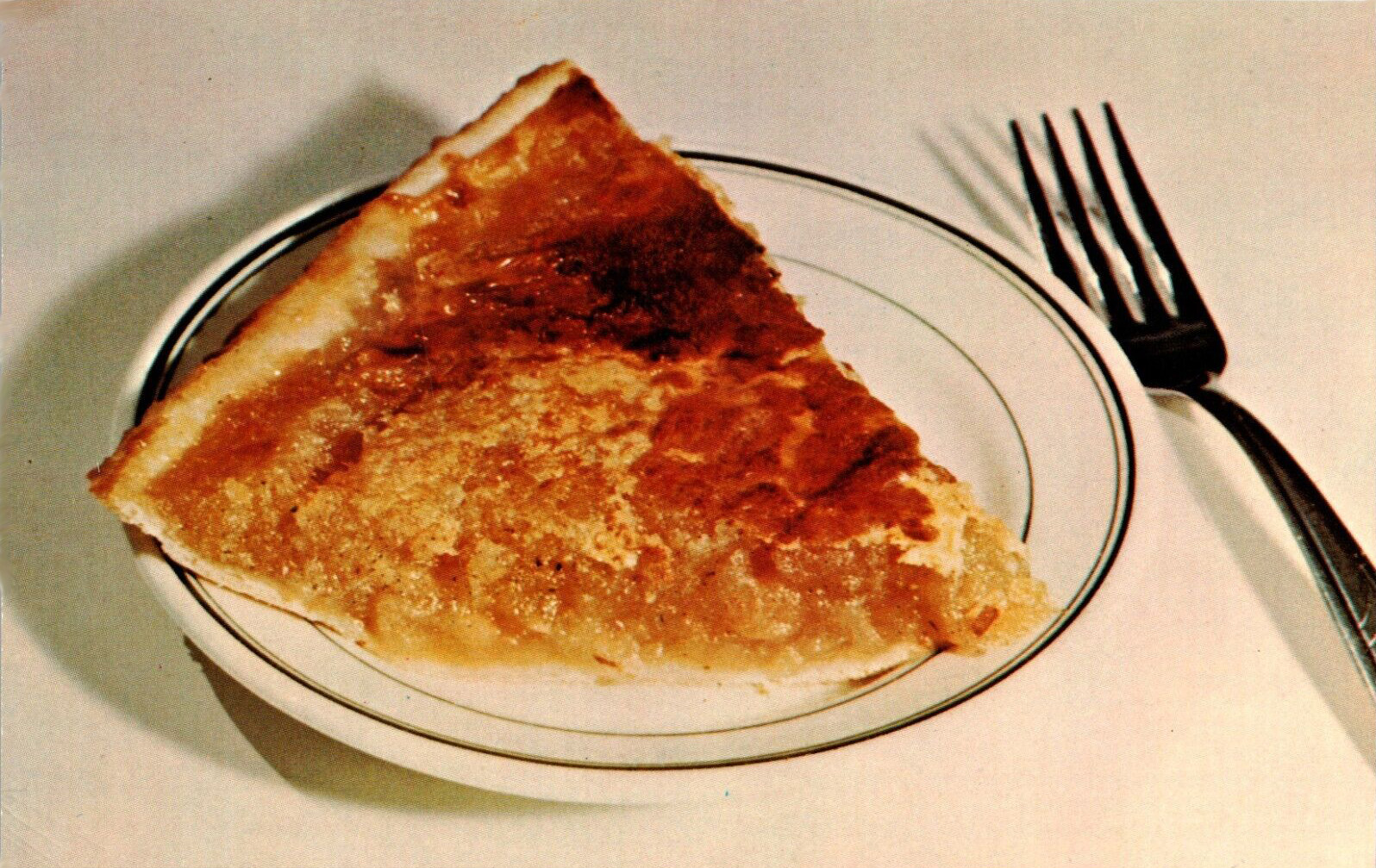
Not surprisingly, cheap eating places had completely done away with courses decades earlier. For instance, at Milliken’s Beefsteak & Coffee Room in New York in 1849, there were only two categories: Dinner (i.e., meat) and Dessert. Dessert consisted of a choice of one custard and seven pies — Cocoa Nut, Plum, Mince, Peach, Apple, Indian, and Rice.
But even in far-off San Francisco end-of-meal choices reflected something like a formal menu, but with a different organization. In 1887, the ever-busy Royal Dining Saloon presented five categories of sweets in this order: Fruit, Puddings, Pies, Cakes – and then Desserts! Desserts included Peaches and Cream, Cranberry Sauce, Apple Sauce, New Comb Honey, Hot Mince Pie, various stewed and baked fruits, and Ice Cream. So, Mince Pie was a Dessert but other Pies were not?
Across the land there were other logic-defying variations. But probably no one really cared about logic. They saw what they wanted, ordered it, and that was that.
Overall, it would be cheap eateries such as Milliken’s that prefigured a 20th-century in which all the end-of-meal categories would be boiled down into one: Desserts. Not only that – the offerings in that category at popular eateries, as at Milliken’s, would remain primarily Pie and Pudding for decades.
But it seems that women preferred cake. As more unescorted women patronized restaurants in the 20th century, and tea rooms catering especially to them opened, this difference in their dessert preferences made itself known. Tea rooms began to specialize in cakes, selling them whole to take away as well as portioned for meals. For example, a pop-up Suffrage kitchen opened in Chicago’s Loop in 1914 offered a 35-cent lunch of salad, sandwich, and beverage, plus a dessert of cake and ice cream for an extra 15 cents. A notice read, “if the luncheon is served to men pie a la mode.”
Of course tea rooms did serve pie, and other desserts too, but it is striking that many lunchroom menus did not include cake. Perhaps for the average eating place layer cake was too difficult to frost, slice, or keep moist when portioned in advance. My sense is that it was also considered a more refined dessert suited to female tastes, whereas pie was an older, heartier, basic food.
Tea room proprietors were well aware of women’s attraction to cake. As Fanny Evans of Mary Elizabeth’s in New York said in 1923, her tea room knew how to cater to American women’s love of unusual salads, creamed chicken, croquettes, and “delicious home-made cakes.” In 1933 the proprietor of the Ipswich Tea House in Massachusetts, a graduate of Miss [Fannie] Farmer’s School of Cooking, prepared special menus titled “A Meal for Men” and “A Ladies Luncheon.” The men’s meal ended with Ice Cream Pie and the women’s finished with Meringue Cake.
In the Depression Americans turned to desserts to cheer themselves up. According to a 1932 NYT story “the American’s Real Desire Is More Dessert,” driven by a wish for glamor, romance, and “the desire for escape from the standardization of the machine age.” Plus desserts yielded high profits. Schrafft’s was way ahead of the game. As early as 1929, the 181 Broadway location in New York offered 34 different desserts!
After WWII, returning soldiers as well as civilians were hungrier than ever for desserts. A 1946 manual advised restaurateurs that a winning menu formula was to have as many desserts as entrees, 7 to 9, but no more than 4 green vegetables.
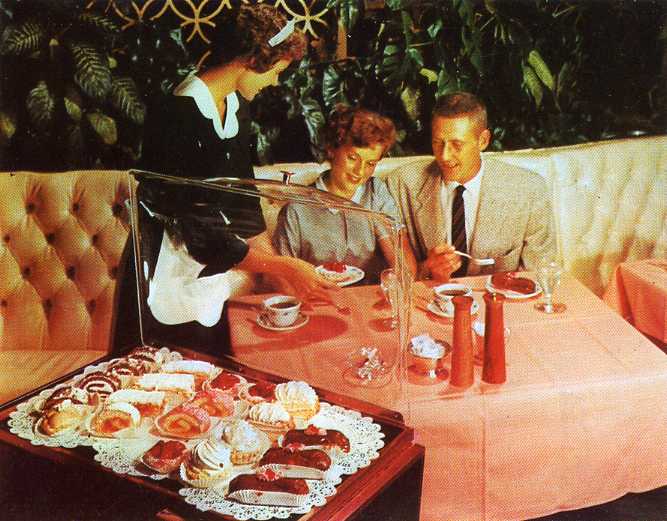
In the average eating places, apple pie was crowned the favorite American dessert until the 1970s, while layer cakes tended to vanish from the restaurant scene. But pie would not do for luxury diners. As demonstrated on a 1951 menu from Ciro’s in Hollywood, expensive restaurants gravitated to less common, fancier desserts such as Parfaits, Crepes Suzettes, and Baked Alaska. Dessert trays and carts bearing French pastries also came into use, while a flaming dessert was always a possibility worth considering.
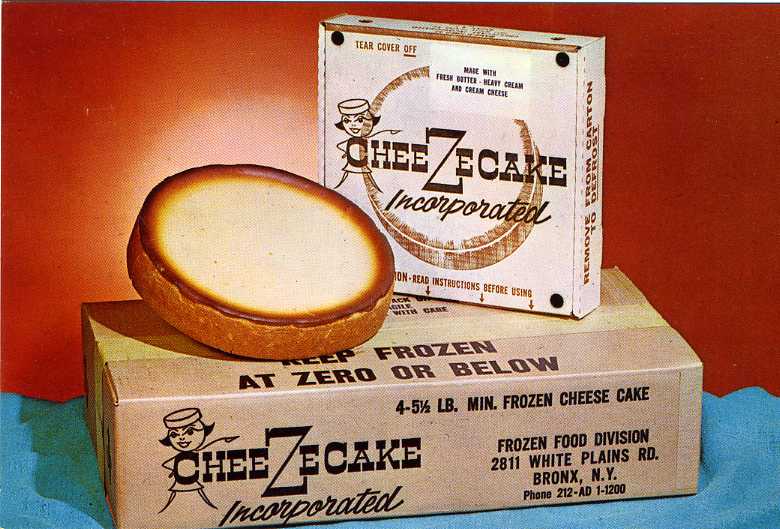
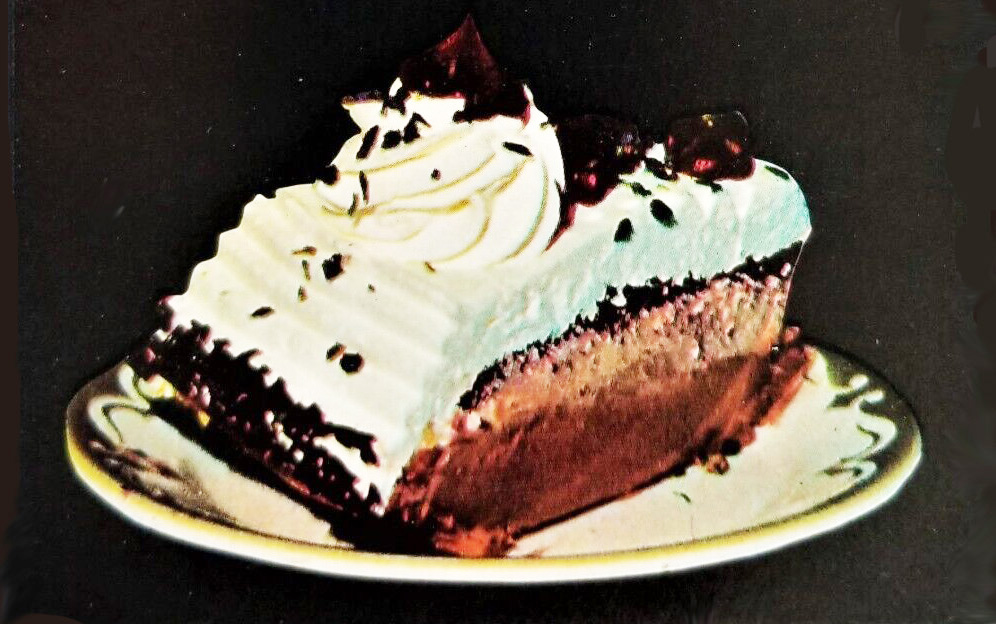
In 1996 a National Restaurant Association survey of restaurants found that the most popular desserts were cheesecake and pie. That is, cheesecake of the sort most commonly served today, made with cream cheese rather than cottage cheese. The latter was a very old sweet dish dating back to the early 1800s or earlier. Unlike some other factory-made desserts, cheesecake has the advantage of being regarded as genuine even when it comes frozen in a box. I am somewhat skeptical about this survey, though. How could it be possible that chocolate desserts weren’t mentioned when they had been advancing rapidly in popularity since the 1970s?
I’ve collected numerous provocative comments about restaurants over time. Most of the following samples are excerpts from diaries, others from newspaper interviews. I selected them mostly because they were informative about restaurant conditions and practices at various times in the past, as well as patrons’ experiences.
There are some recurring themes. A number of the comments reveal women’s opinions of restaurants and their roles in them. Others show how unfavorably foreign travelers tended to view American eating places during the 19th century. Several comments reveal the high prices and deteriorated conditions that prevailed in the South during the Civil War.
1825, a Boston portrait engraver: “In the evening, at 8 P.M. we called on Mr. Allston at Rouillard’s Restorator. Found him at dinner; we sent up our letters . . . ; after waiting a few minutes Mr. Allston entered the parlour, and received us very cordially. He took us up to his dining room (quite private) and invited us to partake of his wine and cigars.”
1850, daughter of James Fenimore Cooper, in Cooperstown: “Then, again, there are seven taverns in our village, four of them on quite a large scale. As for the eating-houses – independently of the taverns – their number is quite humiliating; it looks as though we must needs be a very gormandizing people: there are some dozen of them – Lunches, Recesses, Restaurants, etc., or whatever else they may be called . . .”
1861, a Confederate clerk, in Richmond VA: “Mr. Tyler then invited me to join him at breakfast at a neighboring restaurant, where we had each a loaf of bread, a cup of coffee with milk (but brown sugar), and three eggs. The bill was sixteen dollars!”
1861, an Irishman visiting Montgomery AL: “Then, as to food – nothing could be had in the hotel – but one of the waiters led us to a restaurant, where we selected from a choice bill of fare, which contained, I think, as many odd dishes as ever I saw, some unknown fishes, oyster-plants, ‘possums, racoons, frogs, and other delicacies, and, eschewing toads and the like, really made a good meal off dirty plates on a vile table-cloth . . .”
1861, and then the Irishman visited Washington: “I dined at a restaurant kept by one Boulanger, a Frenchman, who utilised the swarms of flies infesting his premises by combining masses of them with his soup and made dishes.” [To be fair, Joseph Boulanger was in ill health and had been trying to sell his restaurant for a while when the visitor from Ireland came along.]
1864, a visitor to New Orleans: “Charges for living were most exorbitant; a simple breakfast at a restaurant, one dollar; a frugal dinner, two dollars; two small slices of dry toast, fifteen cents; the same for a cup of tea or coffee; ten cents for ice and butter; sixty cents for one small mutton chop. The simplest fare cost six dollars a day.”
1883, a touring Englishman in San Francisco: “After dressing, we all went to the ‘Poodle Dog’ restaurant to dinner. Here my sister Sarah behaved in an extraordinary way, affecting a morality which appeared to me immoral, and questioning the propriety of dining at this place.”
1893, a woman attending the Chicago World’s Fair: “Then we went to Rector’s Marine Restaurant [shown here], and on its breezy gallery had the swellest sort of little dinner. (The first glimpse of the menu made me faint. All the salads were .60 & .75, the fish all .60 & .75, relishes .25 & .30, vegetables .30 & .40, ice cream .25 . . .)”
1921, a European woman visiting New York: “We ordered some steak for our dinner, and when the waiter brought enough for a school treat I exclaimed, and he said, ‘In Broadway they serve the dishes — here we serve the food!’ They did indeed; even sharing it with a starving cat I couldn’t get through with it. The restaurant was rather a good one and very clean. I reproached Kenneth for not having taken me somewhere with more local color. I hate being treated as a Bourgeoise.”
1951, a male peace activist traveling across the country: “Another group, two whites and a Negro, stopped for coffee at a lunch counter in Maryland. The counter woman brought two porcelain cups and one paper cup. When the white man gave the paper container to the white woman and not to the Negro, the counterwoman said, ‘We’re not allowed to serve colored, it’s against the law.’. . . On the wall, all red-white-and-blue, was a poster which read, ‘If you don’t like this country, there are boats leaving for Russia every hour.’”
1970, a New York book editor: “First we went to Chez Vito and all I had was spaghetti and wine and iced tea. And the check was $6. My God.”
1973, a group vice-president of Howard Johnson’s: “I think anybody who’s not using convenience foods is out of it. And some of the prepared food around today is top quality. You’d never know the difference. We’re going to open a restaurant a week this year, and where could we get cooks and chefs for this kind of expansion? Even if we could get them we couldn’t train them fast enough.”
1989, a woman chef trained at the Culinary Institute of America: “Interviewers tell me, ‘You don’t look like a chef. You look like a hostess. How can people work around you? Or they ask, ‘Do you mind getting dirty?’”
Later this month, beginning on April 26 and through July 29, the Grolier Club in New York will host an exhibition of menus from the collection of Henry Voigt entitled A Century of Dining Out: The American Story in Menus, 1841-1941. Admission is free, and there is a 124-page illustrated catalog for $35. [above: back of catalog]
Henry Voigt is also the author of a well-researched blog entitled The American Menu in which he provides background for the banquets, dinners, hotels, and restaurants associated with a variety of menus from his collection.
Selections from his collection to be exhibited at the Grolier Club include rare menus from the 19th century, such as one from Parker’s Restorant in Boston dated June 29, 1842. In the catalog Henry notes that Harvey Parker’s restaurant occupied a basement, and preceded the opening of his better-known Parker House in 1855. Most of the main dishes offered that day in June, such as Chicken with Oyster Sauce, cost 37½ cents. Half of the Restorant’s Bill of Fare is devoted to a wide range of wines, with Congress Water for the probably rare non-drinkers.
The majority of the menus to be shown are from the 19th century and cover a range of types of eating places and occasions. As is the case of menus for banquets held in honor of distinguished guests, many are from hotels which, after all, generally provided the finest facilities throughout the early period. But visitors will also appreciate seeing Bills of Fare from less grand “Eating Houses,” such as that operated in New York by Sandy Welsh.
Also of particular interest to me are two early 1860s menus from Taylor’s Saloon in New York, a place frequented by women patrons where it was fashionable to see and be seen. It was grand-iose in its decor and pretensions. In the catalog Henry quotes an 1859 travel book which describes its marble tile floor, ornamental bronze ceilings, profuse gilding, giant mirrors, and richly upholstered seating. Not surprisingly it was sometimes ridiculed, notably by the witty culture-critic who wrote under the pen-name Fanny Fern.
It’s hard to stop listing all the gems in the exhibit, but in the 20th century there are specimens from a quick lunch, a vegetarian restaurant, Delmonico’s in its fading years, Bernarr Macfadden’s One-Cent Restaurant of the Depression, and Smalls’ Paradise Cabaret in Harlem. These are only a small sampling.
Ask someone to name a designer of menu covers and it’s likely you will get a blank look. Although many stylish and eye-catching menus have been produced over time, their designers and illustrators mostly worked in anonymity.
In the early 20th century many of the menu cover artists were probably women. In 1900 the Kalo Shop in Chicago, for instance, employed six women graduates of the Art Institute who were trained in the esthetics of the arts-and-crafts movement. They created menu and magazine covers and other items. It’s likely that most of their menu work was for private banquets, while their biggest clients would have been steamships and railroads.
Individually produced menus such those from the Kalo Shop were rapidly being made obsolete by chromo-lithographers who could achieve quality effects at a lower cost. Unsurprisingly, the next chapter of menu production was taken over by printing companies with designers on their staffs. Some of the printing companies, such as Denver’s Standard Menu Co., were specialists in menu production as early as 1920. Like the women artists of earlier times, the names of designers in printers’ art departments are unknown. In more recent years, menu covers for well-capitalized restaurants have been designed by independent design firms. They created striking logos to be used on signs and menus and in advertising, giving individual restaurants and chains a thoroughly integrated visual signature.
In his book on menu design, “May I take Your Order?,” Jim Heimann says that well known illustrators such as Maxfield Parrish and Norman Rockwell rarely, or never, designed menus or created art specifically for menu covers. That is mostly true, with a few exceptions, such as Al Hirschfeld, who contributed caricatures to New York’s Stage Deli menu and Charles Bragg, who painted a crowd of Hollywood celebrities for Chasen’s in Los Angeles [shown at top].
Chicago’s Blackhawk Restaurant used 8 drawings by Ludwig Bemelmans in the 1960s. They were not originally created for the restaurant, though owner Don Roth bought the originals, obtained Bemelmans’ permission to use them on menus, and gave them to customers as souvenirs.
Here are a few menus with designs that I particularly like.
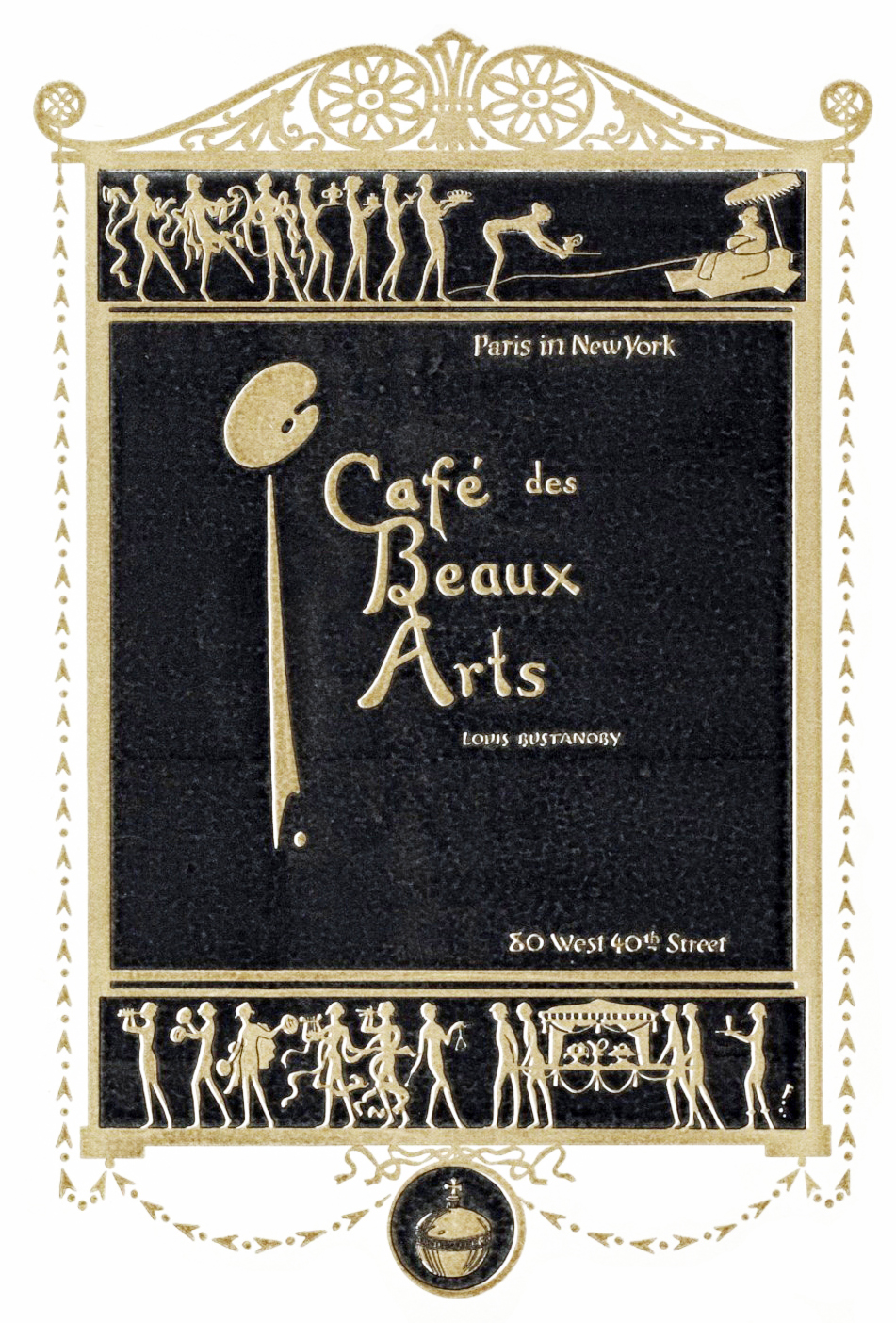
Café des Beaux Arts, New York City, ca. 1910 A fashionable café of the early 20th century created by brothers Louis Andre and Jacques Bustanoby. Said to be a hangout of the artistic crowd, on Sunday nights it was so crowded no one could enter. Unlike other so-called “lobster palaces,” it reputedly served good food. It closed in 1920, a victim of Prohibition.
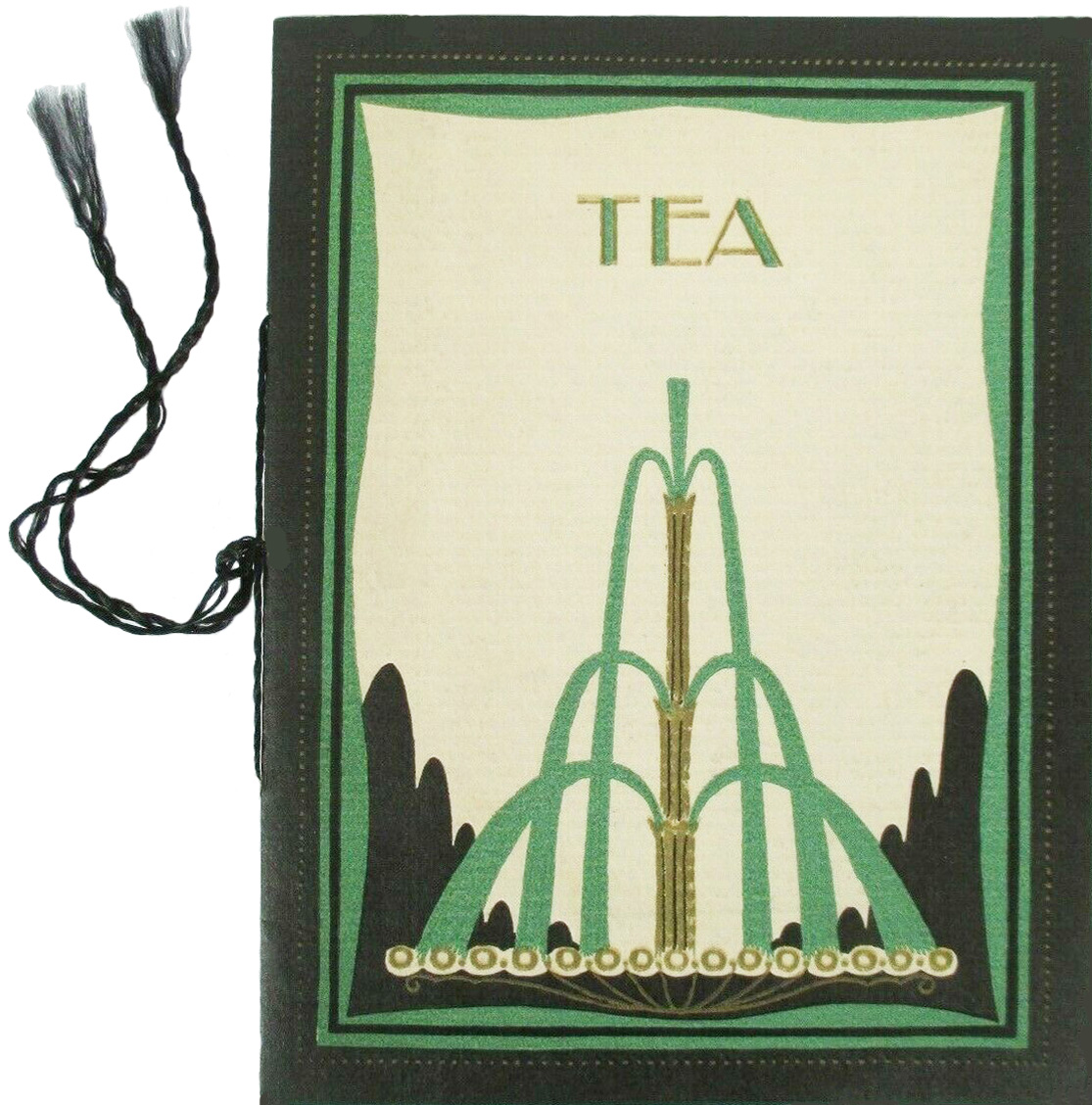
Carson Pirie Scott Tea Room, Chicago, early 20th century In 1904 the old dry goods store named Carson Pirie Scott bought a building on Chicago’s State Street built by famed architect Louis Sullivan. The 8th-floor tea room soon became a city-wide attraction. This menu of uncertain date has the subdued but assured look of a pedigreed eating place meant to appeal to “ladies” who seek to be correct as well as stylish.
Café Society, New York City, 1938, 1940 In this case a known artist, Anton Refregier, not only contributed his artwork but did so in a full cover design when Barney Josephson, owner of New York’s Café Society music club restaurants, hired him to create menu covers for his two locations, first downtown at Sheridan Square in 1938, and then uptown at East 58th street in 1940. [Both covers are probably on beige-ish, not white, paper]
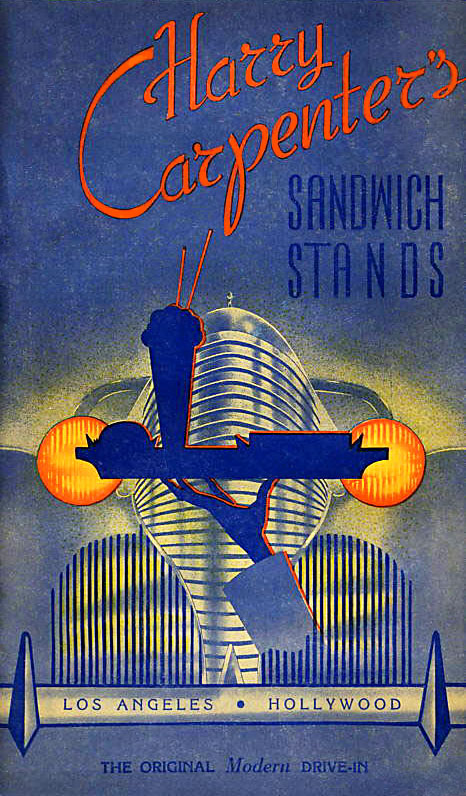
Harry Carpenter’s drive-in, Los Angeles, early 1940s Harry Carpenter opened his first drive-in, an octagonal building, on the corner of Wilshire Blvd. and Western Ave. It was so popular he soon opened two more. In addition to hamburgers and hot dogs, Carpenter’s served corned beef on rye and chicken a la king on toast. This menu, though somehow foreboding, is dramatic.
The Hungry I, San Francisco, ca. 1955 The Hungry I, a comedy and music club, was founded around 1950, then sold and relocated to 599 Jackson street in 1954 where this menu was in use. Among those appearing there were Mort Sahl and The Kingston Trio. This menu offers entrees such as steak, lamb chops, chicken, and shish kabob. In ways that are hard to pinpoint, the cover design captures the spirit of the 1950s beatnik counterculture.
Huddle Restaurants, Southern California, 1956 The Huddle’s menu borrows the lettering of the chain’s exterior signage as well as the style of its architecture by Louis Armét and Eldon Davis. Probably their firm also handled the design of this menu, either in-house or by commission. Not all the restaurants in the chain featured futuristic “googie” design, but you can view images of many of those that did.
According to Heimann, the golden age of menu cover design in America ran from the 1920s through the 1950s. The 1960s in his judgement was mostly “a monotonous era” for menu design. Sadly, to me, in recent years printed menus with covers have almost completely vanished, along with postcards, matchbooks, and business cards. Digital photographs, if preserved, may become the sole visual record of most restaurants.
Note: Fans of menu cover art would enjoy Menu Design in America (2011) and May I Take Your Order (1998). Reproductions of menus suitable for framing are available from Cool Culinaria, which also provides links to samples from the collections of Lou Greenstein, Henry Voigt, and the Culinary Institute of America. Also, beginning April 25, over 200 menus from the 19th and 20th centuries selected from Henry Voigt’s collection will be on display at New York’s Grolier Club. More about that later.
Opening an eating place or a tavern was popular with immigrants – especially the Irish — for much of the later 19th century and into the 20th. They served as waiters, waitresses, kitchen workers, and proprietors.
And before World War II, when it was easy and inexpensive to open an eating and drinking place, they started many a restaurant, becoming the leading nationality in the business according to restaurant insider J. O. Dahl. Although he had no established figures to go by, judging from “numerous interviews and personal observation over a period of twenty-five years,” he estimated in his 1935 National Handbook of Restaurant Data that the Irish made up 18% of restaurant keepers.
The restaurants run by Irish immigrants were not usually identified as Irish, nor were they particularly appealing. Many fell into the category of “hash house,” generally viewed as the lowliest sort of eating place. Neither hash house proprietors nor those who ran finer spots made any mention of being from Ireland.
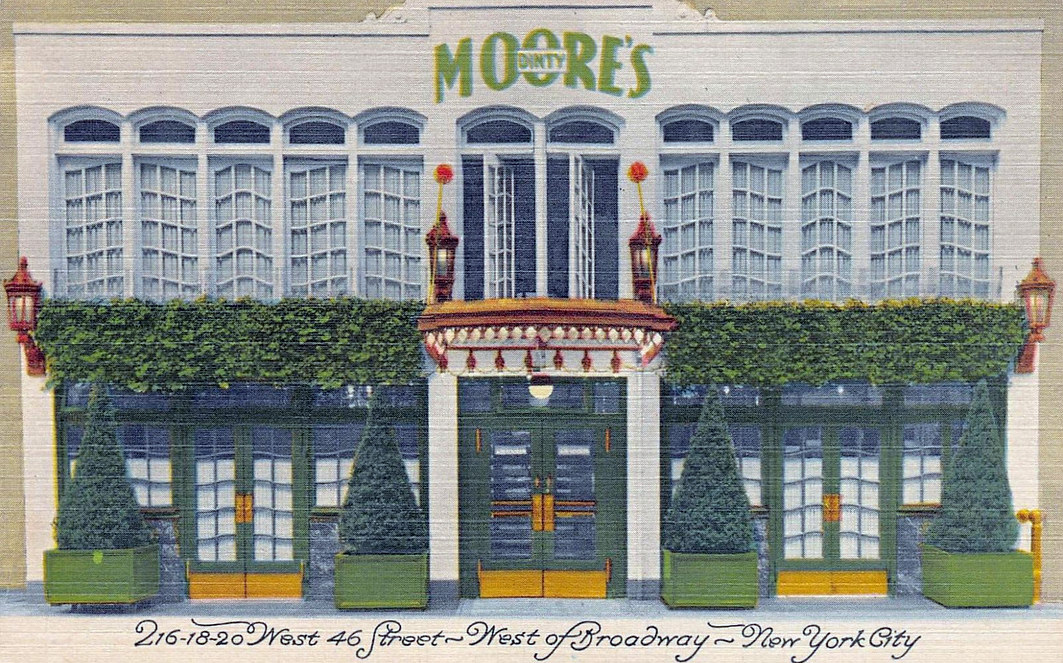
There were also numerous restaurants in New York City in the late 19th and early 20th centuries, run by well-known men of Irish birth, that were bigger and more prosperous. Typically they were oyster or chop houses that drew tourists and theater-goers. Among them was the prominent Shanley’s, established by Shanley brothers in the 1890s, and Dinty Moore’s, begun by James Moore whose name and fame were due to a comic strip. [above: Life with Father, 1923, by Jim McManus] Like many of the others, Shanley’s was put out of business by Prohibition, while Dinty Moore’s survived despite being “busted” time and time again.
In 1887 a journalist noted that “there is not an Irish restaurant in all these blessed United States.” He was wrong, but could his error have been due to the reticence of Irish businesses outside of New York’s entertainment districts regarding their heritage? He called on someone to explain why this was, “for of course it is significant of something.” Many immigrants sought to shed their difficult pasts and become “American,” but it’s hard not to wonder if the absence of overt ethnic identification also had something to do with the nativist “Know Nothing” movement of the 1850s that was based on fear that Catholic priests conspired to undermine Protestant values.
Whatever the reason, most Irish restaurant proprietors continued to keep a low profile in the 20th century. The resurgence of the Ku Klux Klan in the 1920s, now targeting Irish and Jewish citizens as well as Black Americans, may also have been a factor. An Irish-born family that opened a tavern in Indianapolis in the 1930s called the Golden Ace Inn later revealed that they had avoided choosing a name that would reflect their ethnicity because of its unpopularity. In 1937 they had tried out the name Erin Go Bragh but changed it back after they lost customers.
Most early Irish-run eating places had very little in common with the Irish pub type of eating place that would begin to appear in the 1960s, when the term “ethnic restaurant” came into use. But even then, they were often snubbed in guide books, not out of prejudice against the Irish so much as dislike of their cuisine. The Underground Gourmet series, for instance, did not recommend or “discover” Irish eateries or cuisine. Rather, the books’ alphabetical indexes typically jumped from Indian to Jewish. The author of New Orleans’ Underground Gourmet, Richard Collin, said in a no-star review of Molly’s Irish Pub that “Irish food at its best has a somewhat limited appeal.” As late as 1990 a columnist in Columbus OH included in his St. Patrick’s day restaurant survey several jokes about how bad Irish food was, adding that restaurant reviewers and food editors shared the opinion among themselves that there was no such thing as a good Irish restaurant.
Corned beef and cabbage? That was a dish that appeared on a variety of 19th-century menus before it was widely defined as Irish. For one thing, corned beef, or any meat that was preserved in barrels with salt, had been available throughout the 19th century (and earlier), and was not identified with any particular nationality. [above advertisement from 1788] And in 1850 McKenzie’s Exchange in New Orleans offered corned beef and cabbage, right along with curried frog and barbecued gopher. Hudson’s department store in Detroit put corned beef and cabbage on an 1896 summer menu. [see below]
Even the Irish did not universally love corned beef and cabbage. Many Irish women worked as domestic servants and one of them reported in 1902 that servants got better food if they worked for millionaires with few rather than many servants. In those cases, she said, you ate the same food the rich did, such as chicken, rib roasts, strawberries, and ice cream. But in households with a large number of servants you would be eating inferior dishes such as corned beef and cabbage.
Yet corned beef and cabbage grew in popularity in the later 20th century, at least for one day out of the year, and became strongly identified as Irish. But the real winner in Irish restaurants, or what might in many cases be called Irish-themed restaurants, was the pub concept that gave restaurants the ability to stay open later with drinks and light fare, generate male appeal, and build upon the popularity of “good cheer” that had come to be associated with Irishness. Some featured Irish folk singing [above advertisement, Charleston SC, 1986], while the Irishness of others rested entirely on decor and market-tested names.
Although corned beef and cabbage remained on the menu of Irish restaurants – especially on St. Patrick’s day — fare tended toward hamburgers and steak. In more recent years, reflecting changes in Irish restaurants and new approaches to traditional fare, some restaurants have emerged in the U.S. that explore what is considered authentic Irish cuisine. An Irish cuisine ambassador noted in 1998 that, “Chefs coming from Ireland to the United States are melding the finest provisions into such nouveau recipes as Irish smoked salmon salad with citrus dressing, Gaelic potatoes, and Irish oatmeal apple crumble with Irish whiskey cream.”
Americans have not been big wine drinkers historically, so sommeliers (aka wine stewards) have not been commonplace. There were French sommeliers in New York in the 1870s and later, but it’s likely they were wine merchants and specialists in maintaining wine cellars rather than part of restaurant staffs.
Nevertheless the fine restaurants of the 19th century, such as Delmonico’s and some hotels, made a point to offer wine and almost certainly had someone on their staff capable of ordering, storing, and recommending wines to diners.
But, however many or few wine experts worked in American restaurants, they were put out of business by the advance of Prohibition. Their numbers gradually grew after Prohibition ended in December, 1933. By that time the restaurant industry was hanging by a thread and eager to get back into profitable business with the sale of wine and spirituous liquors.
Articles from the 1930s reveal just how unfamiliar the American dining public was with wine. A columnist mentioned that the Fred Harvey company was busily creating a wine list for its deluxe restaurant in Chicago’s Straus building in the months leading up to Repeal. The story ran through a few basic pairing suggestions such as whites with fish and reds with beef, adding, “One never drinks beer at a swank dinner.”
Restaurants that planned to serve wine, such as Karl Eitel’s in Chicago, were furiously stocking their cellars then. Two days after Repeal, Eitel’s waiters scrambled to catch up with customers who ordered wines that were out of stock. They were instructed to offer orange juice as a substitute for the missing vermouth. Eitel himself expressed annoyance at the waiters’ lack of knowledge about how to chill wine properly (ice has to melt a little before it will cool a bottle).
At Repeal, French wine shippers had hopes that the U.S. would expand their market, but according to one insider, the ambassadors they sent to this country came back full of pessimism, convinced that Americans much preferred liquor and soft drinks.
The relatively few restaurants wanting sommeliers usually had to hire Europeans, as they were the ones with the finest training, or any training at all. The Vendome in Los Angeles, for instance, brought a sommelier from Monte Carlo’s Hotel de Paris in 1934. But even a couple of years later there were said to be fewer than a dozen professional sommeliers in this country.
And it was already evident that the popular attitude toward them was less than worshipful. For a start the word sommelier was a barrier which, in the words of one wit, “can’t be correctly pronounced unless you’re either drunk or French.” [See Word of the Day cartoon below for a guide] And the chain worn around the neck suspending an oversize key and tasting cup was often ridiculed – except as jewelry for women, who were said to make off with them. Their attractiveness inspired the jewelry maker Monet to produce a simplified sommelier-style necklace and matching bracelet in the 1930s, which remained popular into the 1950s.
The happy sommelier in this country was one who managed to get a dedicated tip from guests who truly appreciated his (rarely her) recommendations. Few newspaper columnists showed respect for them, excepting O. O. McIntosh. In 1938 he explained that he loved the rituals associated with the sommelier’s work, such as twirling bottles in an ice bucket, displaying labels, wrapping bottles with napkins, and extracting and sniffing corks. He declared it “a magnificent ritual and one the gallop of American life should not trample.”
It was more typical for commentators to make fun of it all. One made suggestions on how to respond to a sommelier’s proud display of a bottle: “. . . it is good to respond by fitting a monocle to the eye, studying the label and issuing appropriate clucks and ‘hmmms.’ This has become an obligatory art form in certain restaurants . . .”
The sommelier’s primary role in the view of the restaurant industry was to get people to buy wine by the bottle. Behind the scenes, in industry journals and books, the depiction of wine sales could be crudely oriented toward profits, with the sommelier’s skill directed toward an estimation of the diner’s insecurity or wish to celebrate. A 1968 book on wine merchandising in restaurants saw a skilled sommelier as “merchandising in motion” and useful for “giv[ing] class to your restaurant.” And a trade magazine article on how to merchandise wine in restaurants carried the tagline, “A Meal Without Wine is a Meal With Less Profit.” As was demonstrated by comparing two checks (shown above), wine drinkers were said to be fond of pre-dinner cocktails also.
One of the strongest motives for restaurant guests to value advice about wine was, and undoubtedly still is, not to look foolish in the eyes of others. A Napa Valley winery owner reported that an experimental wine tasting he held for his Harvard Business School classmates in the 1960s revealed that “They weren’t particularly interested in learning anything about wine, except for how to order it without being embarrassed.”
In 1940s NYC, sommeliers were still rare and could mostly be found at luxury restaurants such as Jack & Charlie’s 21 Club, The Colony, Chambord, Pierre’s, and El Morocco.
Their numbers likely increased in the 1950s, but were there really any golden years for sommeliers? Not if you asked NYT food critic Craig Claiborne. He declared in 1961 that sommeliers had lost their status, and were no longer involved in buying wine and supervising restaurant wine cellars. “The number of old school sommeliers in New York can be counted on the fingers of one hand,” he declared.
Some sommeliers, perhaps in reaction to ridicule, tried to avoid being showy. The French sommelier at Maxim’s in Paris (in Chicago), despite the honors he had won, stayed in the background and rejected wearing the long chain with a key because he found the custom pretentious. Judging from her 1972 advertisement, Georgette of Baton Rouge LA also departed from the traditional sommelier costume.
In the 1970s waitstaff captains at New York’s Four Seasons took over the role of sommelier. They were trained by one of the restaurant’s knowledgeable owners and given wine at their meals so they would be familiar with it. This would have satisfied critics who complained that many sommeliers had never tasted the wines they recommended.
Today, Las Vegas may have the most sommeliers in this country, however I’d guess that most restaurants elsewhere have done away with the costuming and ritual, relying instead on trained servers to make wine recommendations.
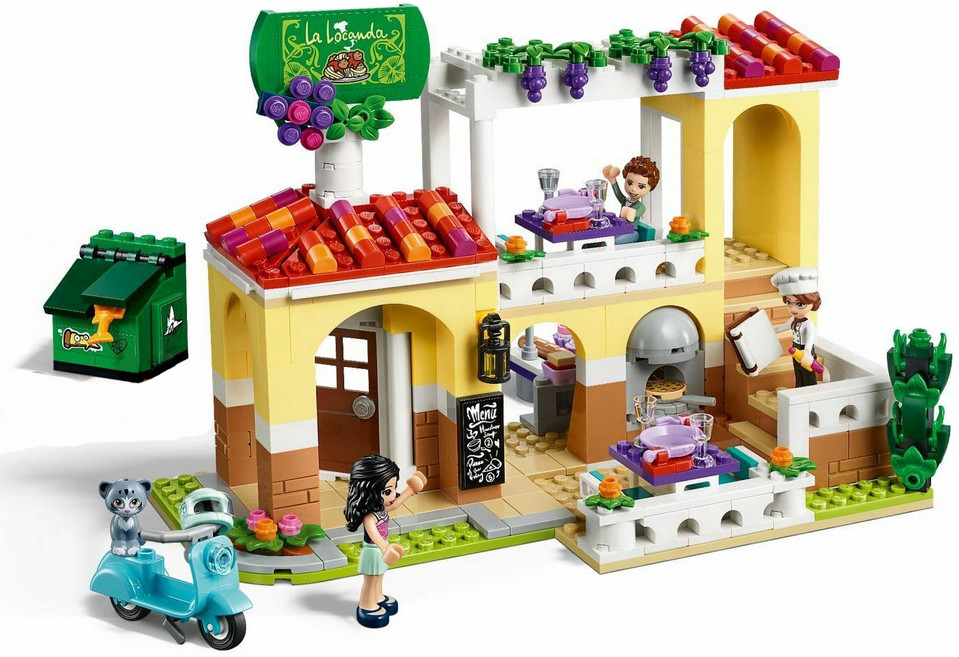
Running a restaurant is messy. Dealing with garbage, trash, grease, unsold food, and food left on patrons’ plates is unpleasant, expensive, and depressing. [above: toy dumpster]
This topic has been haunting me ever since I read the following sentence in an 1877 newspaper: “The harbor of New-York is made unhealthy by the decaying food of hotels.”
That was still the era of American-plan hotels where meals were included with lodging. It cost nothing extra if a hotel guest ordered everything available, saying, “Bring me some oysters on the half-shell, green turtle soup, some clam chowder, some halibut steak, green goose and apple sauce, lambs’ fries, sweet potatoes, egg-plant, succotash, stewed tomatoes, Roquefort cheese, lemon pudding, cranberry pie, cakes, watermelon, and French bread.” Most of the dishes ended up sampled but otherwise uneaten and were thrown out. European visitors were invariably horrified.
The notable exception to the American waste of food was the Chinese cook, commonly found in restaurant kitchens throughout the West in the 19th century. He was hailed for being “the most economical buyer imaginable,” one who “uses up what he has and wastes almost nothing.” When he was in the kitchen, little garbage resulted.
But there was not always a clear definition of garbage, revealing another, less savory way of reducing its output. Some lowly restaurants, even as late as the 1930s, considered food left on patrons’ plates perfectly okay to serve to guests once again, though possibly in a different format such as soup or hash. This practice led discriminating guests to avoid ordering hash unless it was on the menu of a first-class, shiny modern restaurant.
Over time, it became a violation of sanitary codes to serve anything left anywhere on a guest’s table, which would include untouched baskets of bread. And, increasingly, the practice of feeding kitchen scraps and plate scrapings to pigs or – in the case of unordered entrees – donating them to churches and centers providing charity meals, was ruled out.
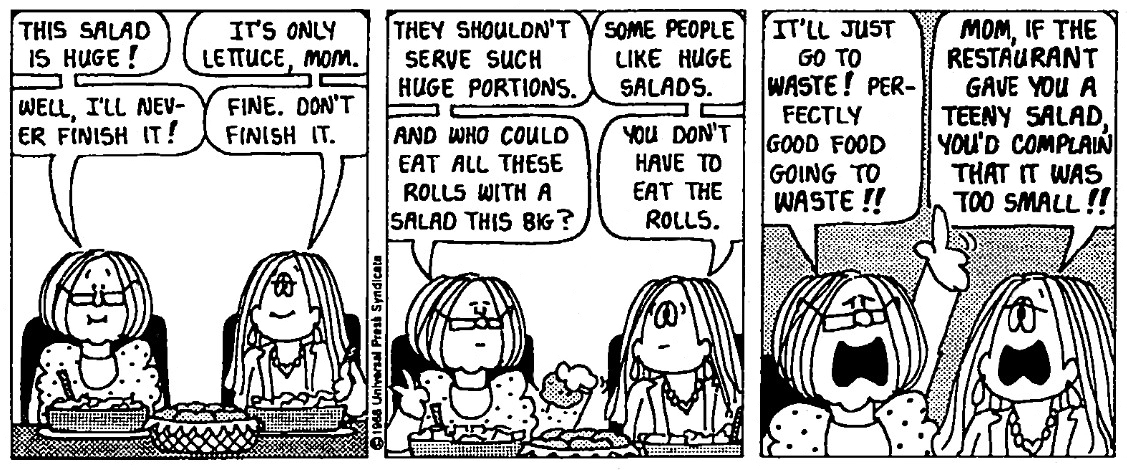
The prevention of edible food waste in restaurants has become a goal at various times in past history. Both of the 20th-century’s world wars, when food and restaurant prices rose, brought attention to food waste in homes and eating places. Another decade of concern was the 1970s when rapid inflation caused consumer prices to soar at the same time Americans became aware of the problem of hunger here and around the world. [above: Cathy comic strip]
Most of the time, though, everything went into trash cans, or dumpsters. They arrived on the scene thanks to the Dempster brothers who developed their Dempster Dumpster in the 1930s. But note the fish hanging out of the toy dumpster shown above. That would cause problems for a restaurant manager who would be certain to get complaints from neighbors about the stench if the lid wasn’t kept firmly closed. In 1968 a Chicago neighbor of Chances R begged a newspaper’s help column to “use your magic wand” to deal with the eatery’s “fetid” smelling garbage cans that were “overflowing and left uncovered.”
Another problem restaurants – and municipalities — had to deal with was kitchen grease building up and clogging drain pipes. As early as 1883, some cities took action to keep grease out of city systems. That year St. Paul MN adopted a requirement that a grease trap “be constructed under the sink of every hotel, eating house, restaurant or other public cooking establishment.”
Traps are designed to separate water from a sink from the grease floating in it, permitting the grease to build up into a semi-solid block that can be removed periodically by a service that disposes of it. Disposal, though, could be a thorny problem of its own at times as town dumps closed down. Also, fly-by-night collectors sometimes deposited grease along roadsides.
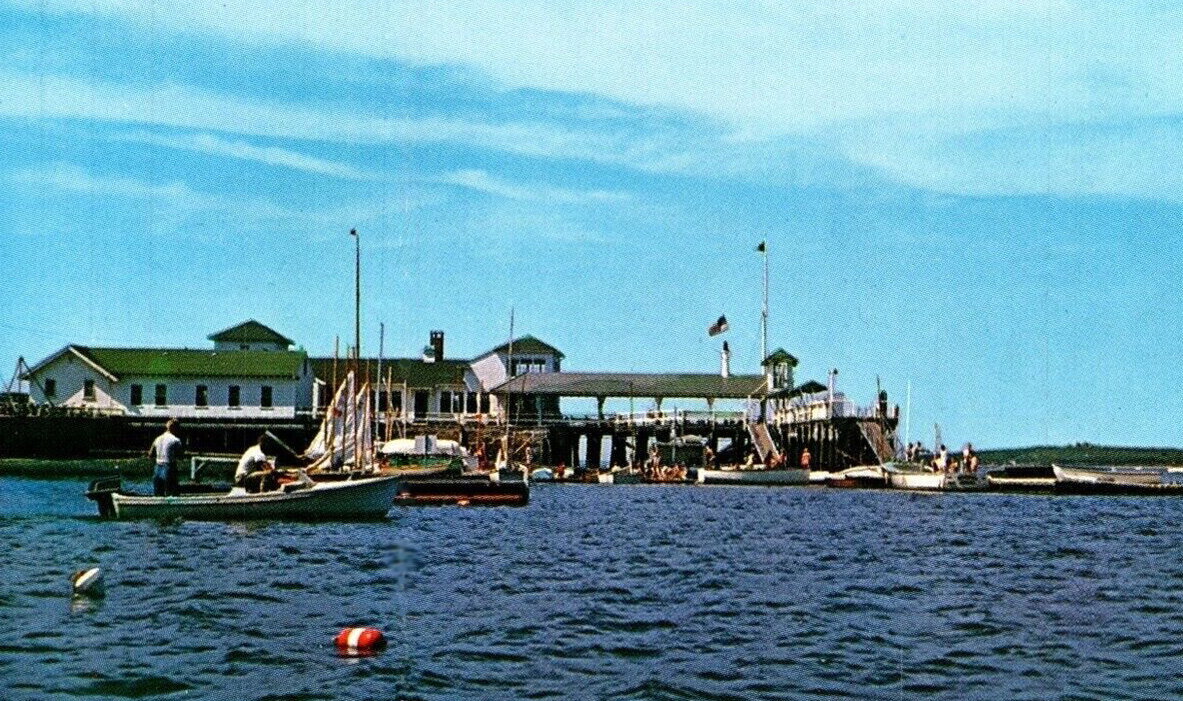
Eventually, slowly, other states, cities, and towns enacted grease trap ordinances similar to St. Paul’s. And yet trapless restaurants continued to exist. It was only in the 1980s, after years of official pressure, that half a dozen restaurants in Hingham MA installed grease traps. The harbor was too handy! About that same time restaurant grease threatened operation of the sewage treatment plant in Fort Myers FL. [restaurant at the Hingham Yacht Club shown above]
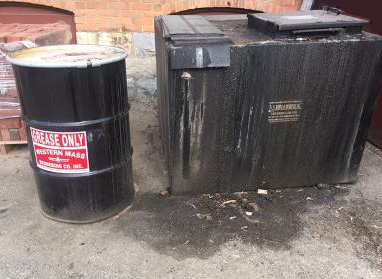
Fortunately, getting rid of cooking oil turned out to be easier since the contents of an outdoor rendering can may be recycled and used for fuel. [above: grease and oil containers]
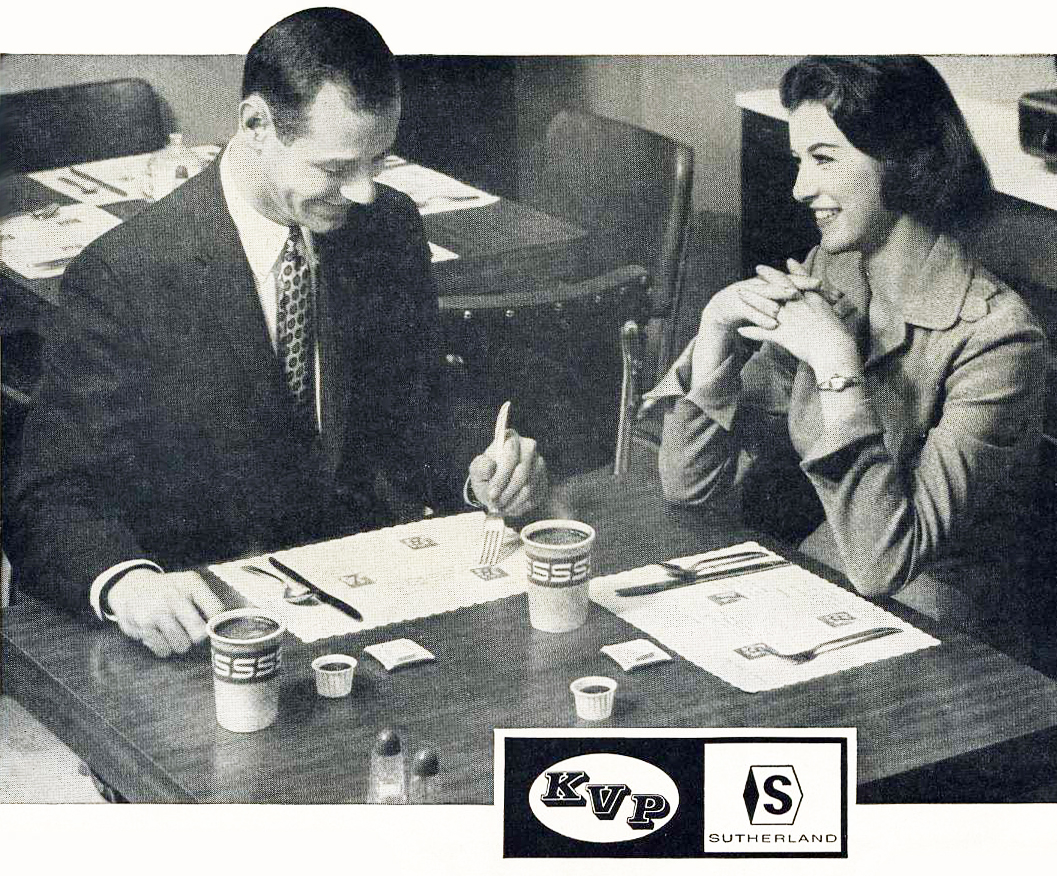
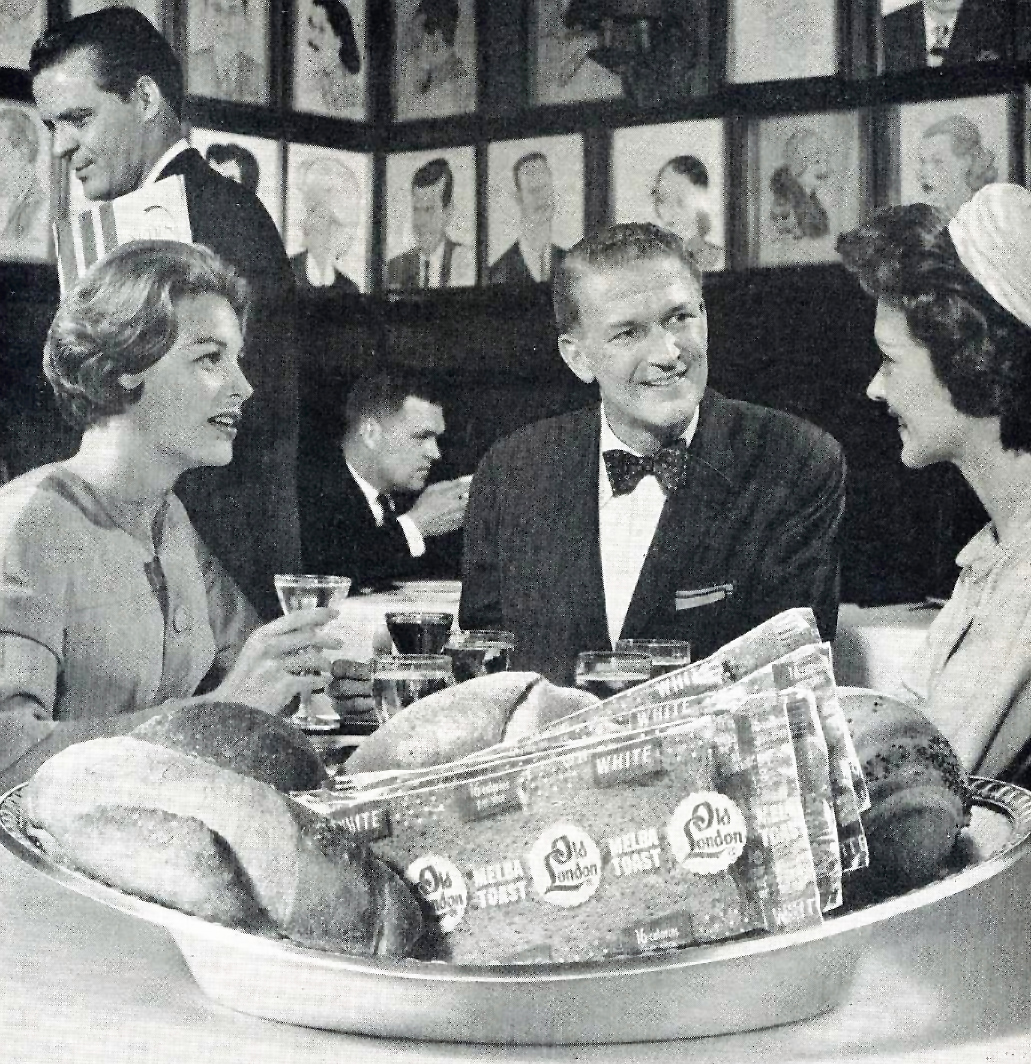
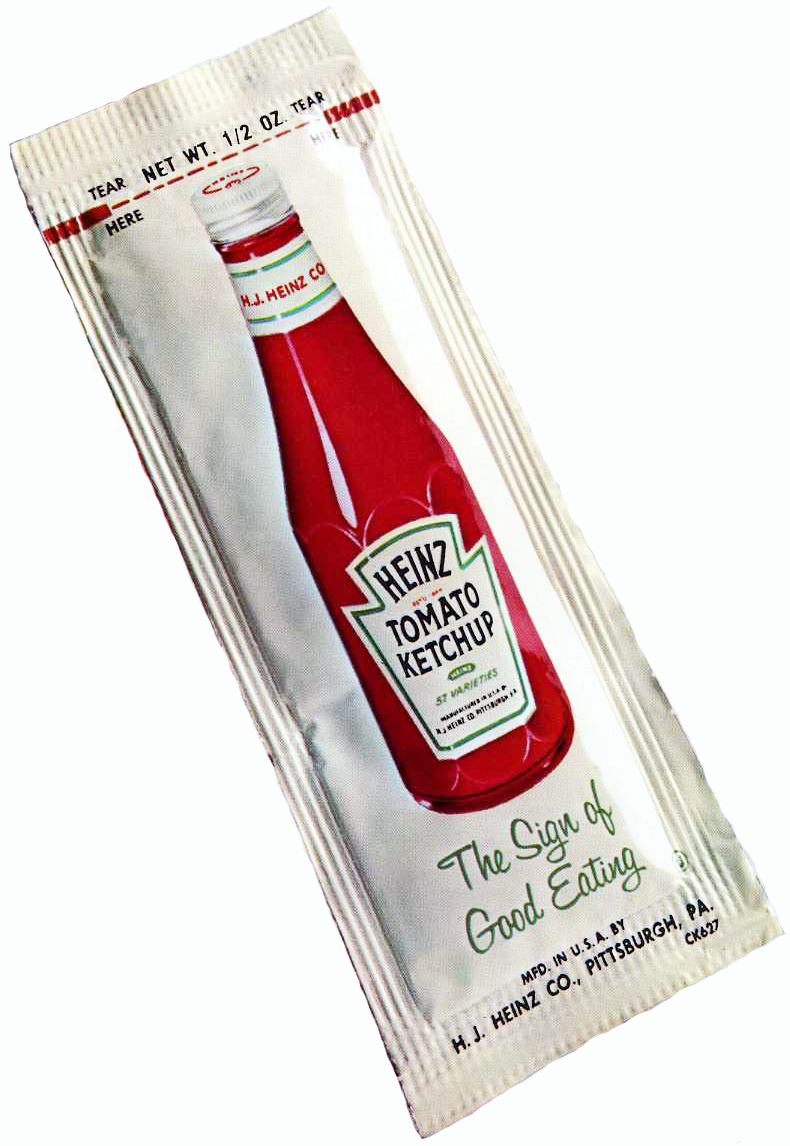
In the 1960s throwaway paper bags, napkins, cups, and straws, as well as plastic lids and small servings of sugar and condiments proliferated, especially with the spread of fast food outlets that eliminated dish washing and laundry. Even table-service restaurants got into the act with custom printed placemats and individual packets of crackers and breadsticks. [below, Sardi’s, NYC, 1962]
Litter at drive-in restaurants was a chronic problem that led neighbors to complain. Towns drafted ordinances to control the problem, such as one in Michigan in 1965 that targeted “paper cups, straws, napkins, garbage, beverages and all other waste matter intended for disposal which, if not placed in a proper receptacle, tends to create a nuisance by rendering property unclean, unsafe and unsightly.”
Although single-serve packages caused waste, they were advertised as a solution to waste in that they prevented restaurants from having to throw out leftover or mishandled condiments, crackers, etc. That was also a frequent claim made by companies that produced frozen entrees for restaurants that would not be taken out of the freezer until ordered by a patron, preventing the restaurant from preparing food that no one wanted.
What is fascinating is industry’s response to restaurants’ problems with waste, smells, and general ickiness. There was no end of advertisements in trade magazines promising to do away with all the problems. One that made me laugh with its slogan “Smash Your Trash” was the Can-O-Rid Can and Bottle Crusher that reduced trash volume and hauling charges by crushing jugs and bottles “to bits.”
The Stomach, a 1970s counterculture vegetarian restaurant in Portland OR, found a different kind of solution to handling garbage. They composted it and suggested customers who were organic gardeners should feel free to “raid the restaurant’s garbage pail.” In 1973 a grease hauling company in Houston adopted the slogan “Recycling for a Better Tomorrow for the Benefit of Mankind”.
Alas, today restaurants still struggle with waste, trash, grease, and garbage.
It's great to hear from readers and I take time to answer queries. I can't always find what you are looking for, but I do appreciate getting thank yous no matter what the outcome.
So, e-mail me!


















 It's great to hear from readers and I take time to answer queries. I can't always find what you are looking for, but I do appreciate getting thank yous no matter what the outcome.
 Restaurant-ing through history