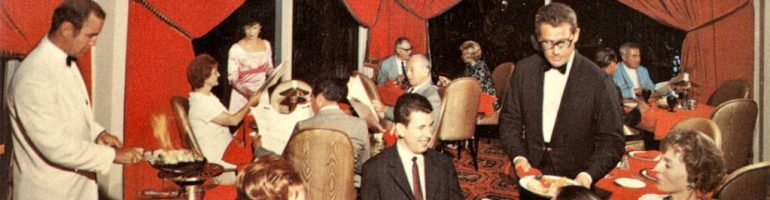
 Historically, few tea rooms have enjoyed financial success. So, while “empire” may be a bit grandiose, it’s hard not be impressed by the tea rooms enterprise Ida Frese and her cousin, Ada Mae Luckey, built in New York City in the early 20th century. Ida and Ada, both from a small town near Toledo OH, struck it rich by winning the patronage of wealthy society women. Over time they owned six eating places: the Colonia Tea Room (their first), the 5th Avenue Tea Room, the Garden Tea Room in the O’Neill-Adams dry goods store, the Woman’s Lunch Club, and two Vanity Fair Tea Rooms.
How they did it is a mystery not fully explained by the reputed deliciousness of their waffles nor the coziness of the Vanity Fair’s fireplace. I have not been able to find anything about their backgrounds that explains what prepared them for business success. Although contemporary publications cited them as the founders of one of NYC’s first tea rooms, it’s not clear exactly when they got their start. In 1900 Ida, 28 years old, was still living with her family in Ohio, however only ten years later she and Ada were well established in New York, running at least four tea rooms.
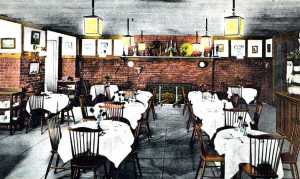 Clearly they valued a good location. The Vanity Fair at 4 West Fortieth Street began in 1911, bearing a notice on its postcard (pictured) that it was across the street from the “new” public library which also opened in 1911. The tea room’s upstairs ballroom was the site of many a party, such as a Shrove Tuesday celebration in February 1914 attended by 150 masked guests.
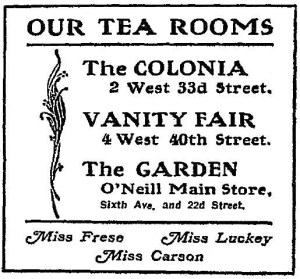 Adding to their financial success were several real estate coups. In 1914 Ida somehow obtained a lease on a coveted Fifth Avenue property. Her feat astonished everyone who followed real estate deals since the owner, a granddaughter of William H. Vanderbilt, had turned down repeated offers from would-be lessees and buyers. The house at #379 was one of the last residences on Fifth Avenue between 34th and 42nd streets which had not been turned into a store or office building. Ida and Ada moved the Colonia, previously on 33rd Street, to this address and rented the remaining space to retail businesses, dubbing the structure the “Women’s Commercial Building.”
In 1920 they constructed a building at 3 East 38th Street, planning to relocate the Vanity Fair Tea Room because they feared – incorrectly as it turned out – that they would lose the lease for the old Vanity Fair on West 40th. Just four years later Ida took an 84-year lease on the five-story office building at the southeast corner of Madison Avenue and 33rd Street. Eventually she bought this, as well as the Fifth Avenue property which was at some point replaced by a 6-story building. By 1926, in addition to the three pieces of Manhattan real estate, Ida and Ada had also acquired a farm in Connecticut where they grew vegetables and flowers for the tea rooms.
I don’t know the eventual fate of the tea rooms, but Ida and Ada, both in their late 80s, died in Los Angeles in 1959.
© Jan Whitaker, 2009
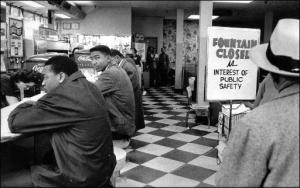 was ignored completely. Or was asked to leave. Or no one took his order. Or was offered a seat in the kitchen. Or his food never arrived. Or it had been adulterated. Or his check was tripled.
 1964 The Emporia Diner in Virginia admits to having two menus (and that the higher priced one is used “at any time it is felt that business may be adversely affected”) after a black Baltimore woman brings suit saying her family was charged more than three times what whites paid for the same meal.
 The name has cast a spell over Americans since the 1890s and bits of its odd history have played out in the U.S. The fortunes of the “world’s most famous restaurant” have risen and fallen. It has won high ratings and lost them. It has been the subject and site of operettas, songs, and movies. It has been declared a French national treasure and an altar to haute cuisine, but also a fraud and a tourist trap. Maxim’s name has appeared on perfumes, airplane meals, and franchised outlets, yet even today it resonates.
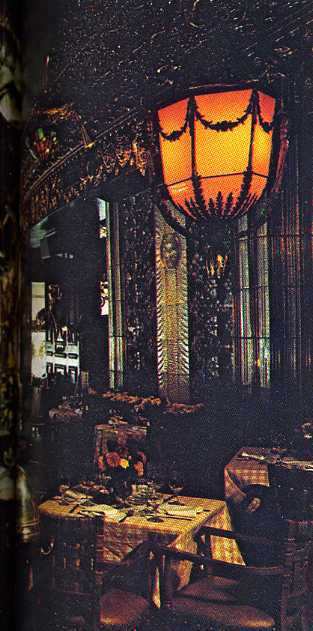
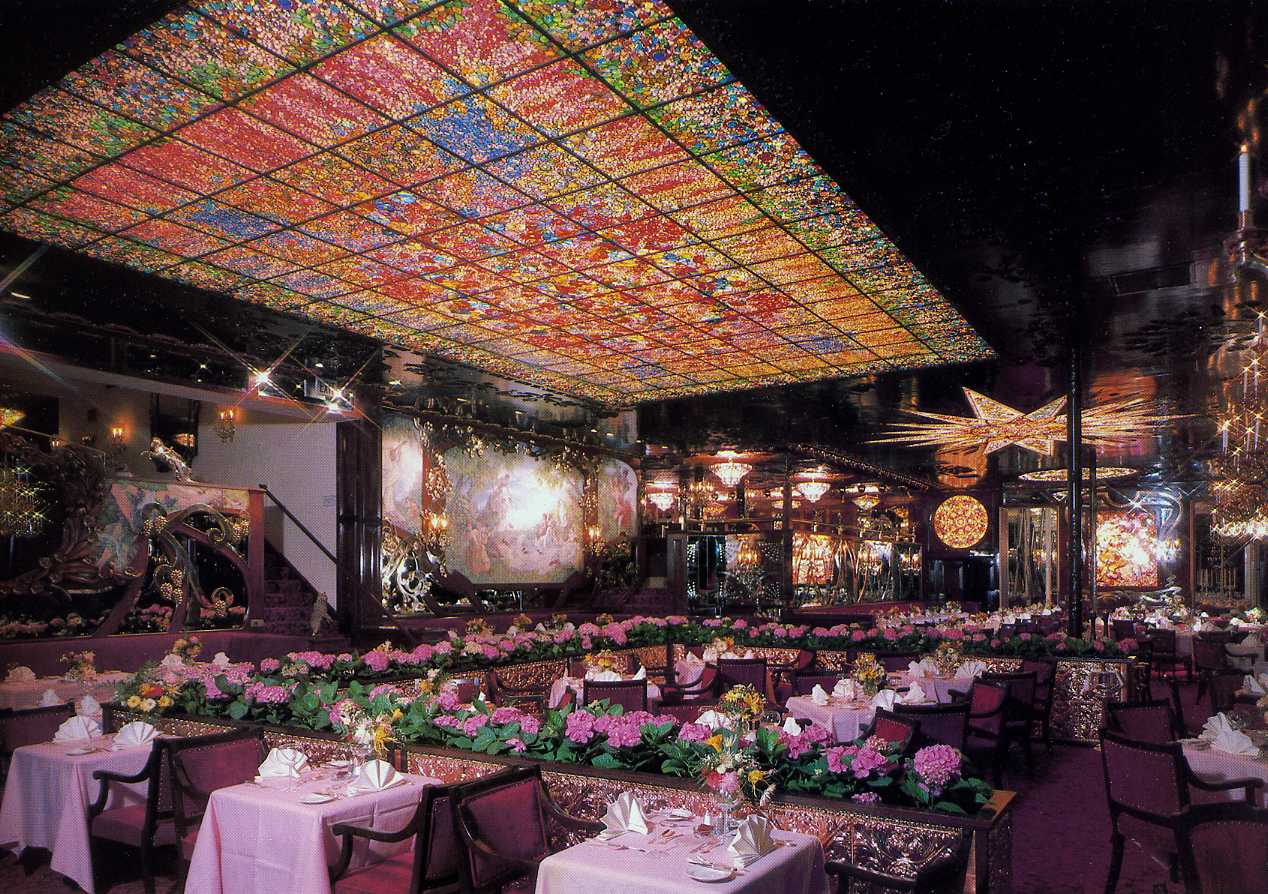
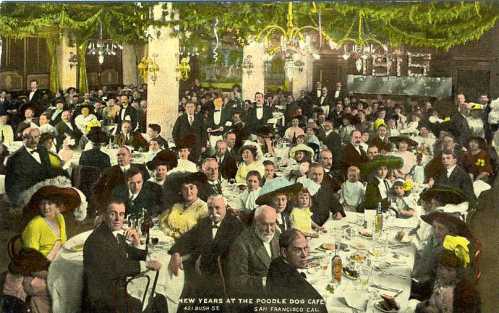
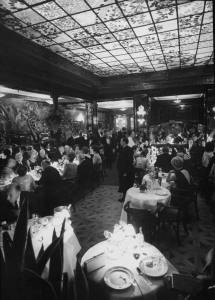 According to most accounts a waiter named Maxime Gaillard began Maxim’s in 1893. Yet another report calls him maitre d’hôtel Signor Maximo, while another stakes a claim for Georges Everard as founder in 1890. Everyone seems to agree, though, that the early Maxim’s was a late-night glamour magnet for American and English visitors to Paris, liberally supplied with friendly prostitutes. In 1899 it acquired a flamboyant Art Nouveau interior with enough murals, curves, and mirrors for a loopy carnival ride. Its prices were high, which may explain why many turn-of-the-century patrons, though dressed in silks and tuxedos, preferred to watch the action while munching pommes frites, an early specialty of the house.
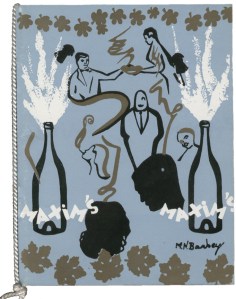 Detractors, such as H. L. Mencken, charged that Maxim’s “gypsy” orchestra was composed of Germans and that the toy balloons floating around were from “the Elite Novelty Co. of Jersey City, U.S.A.” In “Paris à la Carte” (1911), Julian Street, an authority on French food and wines, asserted “I abominate it,” and denounced it as “a brazen fake, over-advertised, ogling, odoriferous; a nightmare of smoke, champagne, and banality.” Debauched merrymakers aside, these were the golden years, before World War I, the era of wine, women, and song on which the Maxim’s legend would be built.
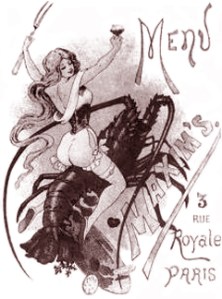 By 1953 the restaurant had earned 3 stars in the Michelin Guide and was starting on a new course. It had developed a frozen food division which supplied airplane meals and was poised to sell frozen sauces and entrées in select American stores. In another twist, Maxim’s authorized a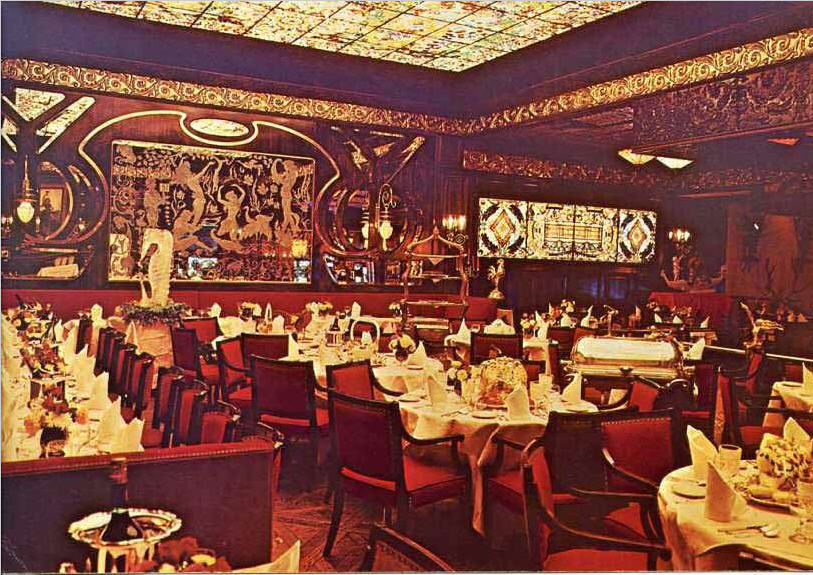

 No matter whether you prefer Roast Goose, Chicken Tiki Masala, or Chinese, don’t forget to visit your favorite restaurants over the holidays. I’ll be back in a couple of weeks. Upcoming posts in the works include James Beard (launching a “good eaters” theme), the 19th-century Downing family of black restaurateurs, the spectacular Maxwell’s Plum, famous restaurants in Paris, World’s Fair cafés and restaurants, linen supply and “the mob,” early cafeterias, and more “tastes of the decades.”
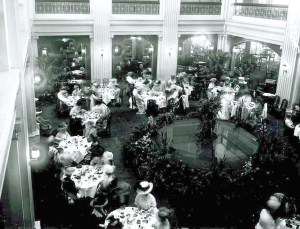 In 1890 Harry Gordon Selfridge, manager of Field’s in Chicago, took the then-unusual step of persuading a middle-class woman to help with a new project at the store. Her name was Sarah Haring (pictured) and she was the wife of a businessman and a mother. In the parlance of the day, she was needed to recruit “gentlewomen” (= middle-class WASPs) who had “experienced reverses” (= were unexpectedly poor), and knew how to cook “dainty dishes” (= middle-class food) which they were willing to prepare and deliver to the store each day.
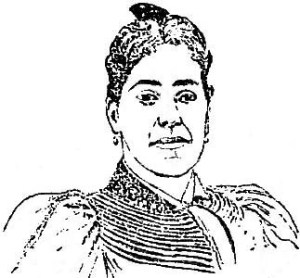 And so — despite Marshall Field’s personal dislike of restaurants in dry goods stores — the Selfridge-Haring-gentlewomen team created the first tea room at Marshall Field’s. It began with a limited menu, 15 tables, and 8 waitresses. Sarah Haring’s recruits acquitted themselves well. One, Harriet Tilden Brainard, who initially supplied gingerbread, would go on to build a successful catering business, The Home Delicacies Association. Undoubtedly it was Harriet who introduced one of the tea room’s most popular dishes, Cleveland Creamed Chicken. Meanwhile, Sarah would continue as manager of the store’s tea rooms until 1910, when she opened a restaurant of her own, patenting a restaurant dishwasher in her spare time.
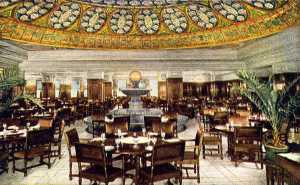 A graduate of Chicago’s School of Domestic Arts and Sciences named Beatrice Hudson opened the all-male sanctum Men’s Grill (pictured) about 1914 and was responsible for developing a famed corned beef hash which stayed on the menu for 50+ years. Later she would own several restaurants in Los Angeles, coming out of retirement at age 76 to manage the Hollywood Brown Derby and again in her 80s to run The Old World Restaurant in Westwood.
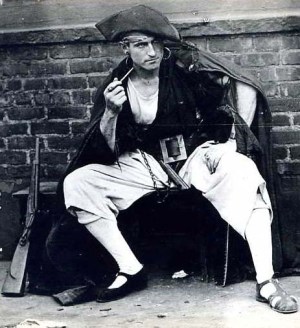 Don Dickerman was obsessed with pirates. He took every opportunity to portray himself as one, beginning with a high school pirate band. As an art student in the teens he dressed in pirate garb for Greenwich Village costume balls. Throughout his life he collected antique pirate maps, cutlasses, blunderbuses, and cannon. His Greenwich Village nightclub restaurant, The Pirates’ Den, where colorfully outfitted servers staged mock battles for guests, became nationally known and made him a minor celebrity.
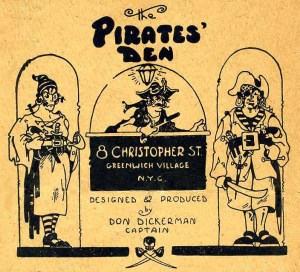 Over time he ran five clubs and restaurants in New York City. After failing to make a living as a toy designer and children’s book illustrator, he opened a tea room in the Village primarily as a place to display his hand-painted toys. It became popular, expanded, and around 1917 he transformed it into a make-believe pirates’ lair where guests entered through a dark, moldy basement. Its fame began to grow, particularly after 1921 when Douglas Fairbanks recreated its atmospheric interior for his movie The Nut. He also ran the Blue Horse (pictured), the Heigh-Ho (where Rudy Vallee got his start), Daffydill (financed by Vallee), and the County Fair.
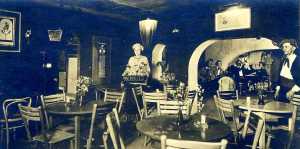 On a Blue Horse menu of the 1920s Don’s mother is listed as manager. Among the dishes featured at this jazz club restaurant were Golden Buck, Chicken a la King, Tomato Wiggle, and Tomato Caprice. Drinks (non-alcoholic) included Pink Goat’s Delight and Blue Horse’s Neck. Ice cream specials also bore whimsical names such as Green Goose Island and Mr. Bogg’s Castle. At The Pirates’ Den a beefsteak dinner cost a hefty $1.25. Also on the menu were chicken salad, sandwiches, hot dogs, and an ice cream concoction called Bozo’s Delight. A critic in 1921 concluded that, based on the sky-high menu tariffs and the “punk food,” customers there really were at the mercy of genuine pirates.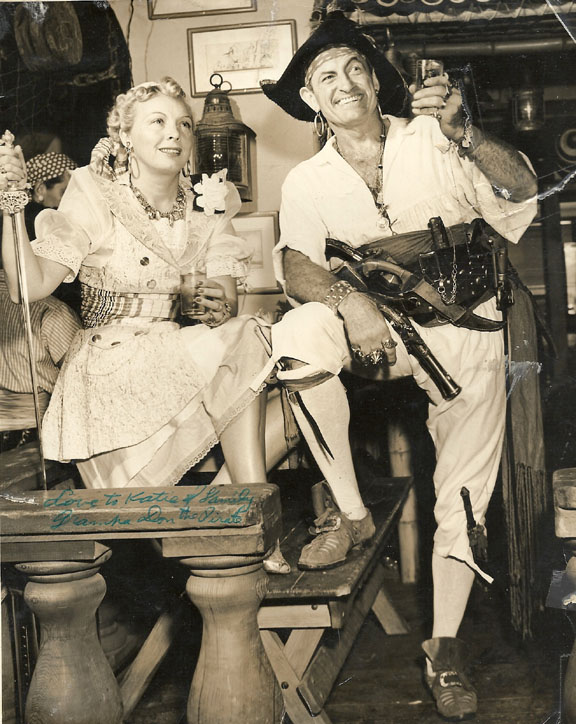
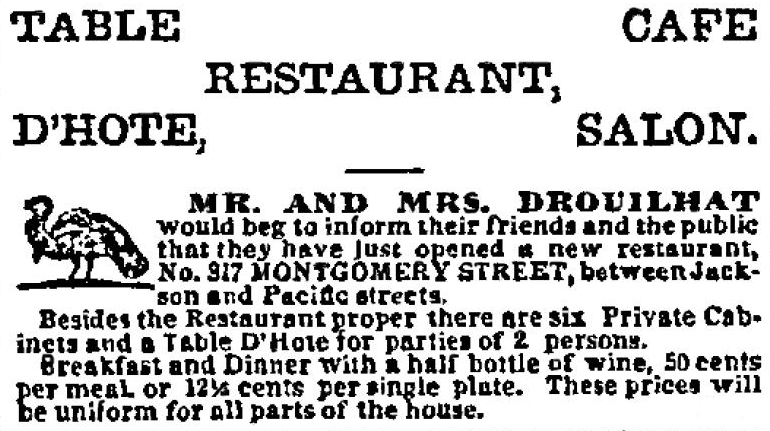
 Half the population of the largest cities is foreign born. San Francisco continues to attract adventurers and French chefs. The Civil War brings wealth to Northern industrialists and speculators, encouraging high living. With German immigration going strong, beer gains in popularity as do “free” lunches. Saloons prosper and the anti-alcohol movement loses ground as the states where liquor is prohibited shrink from thirteen to six, then to one. Cities grow as young single men pour into urban areas. Restaurants spring up to feed them and cheap lunch rooms proliferate, offsetting the high prices prevalent during and after the war. By the end of the decade, one estimate puts the number of eating places in NYC at an astonishing 5,000 or 6,000.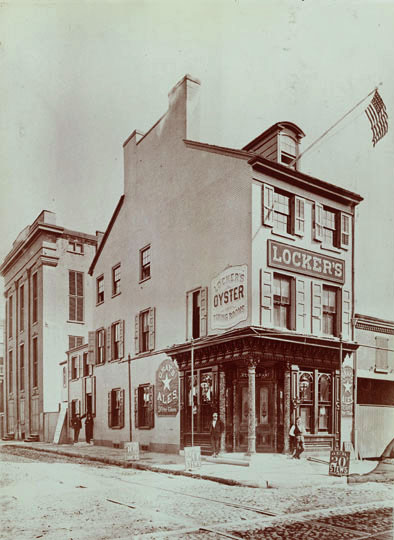
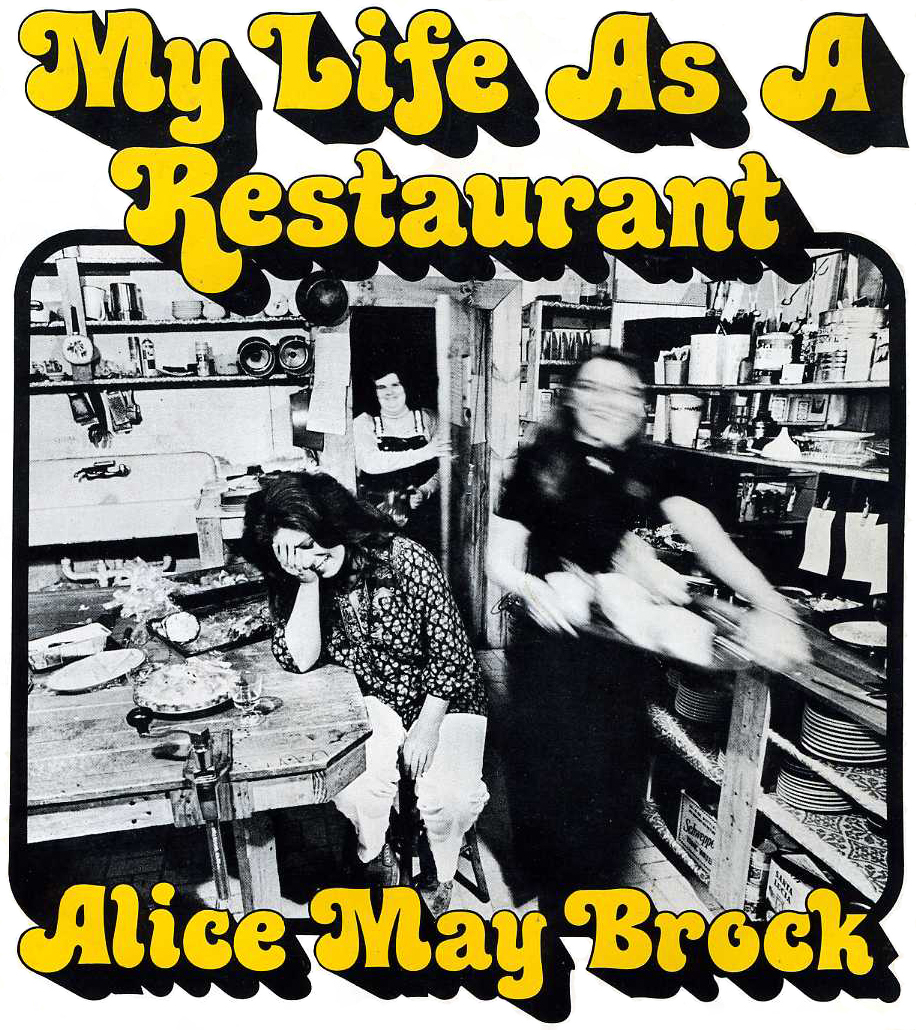

 In interviews and in her two books Alice espoused the value of fresh ingredients, garlic, meals with friends, and an experimental approach to cooking. Her words convey a free-wheeling, irreverent outlook. Some examples: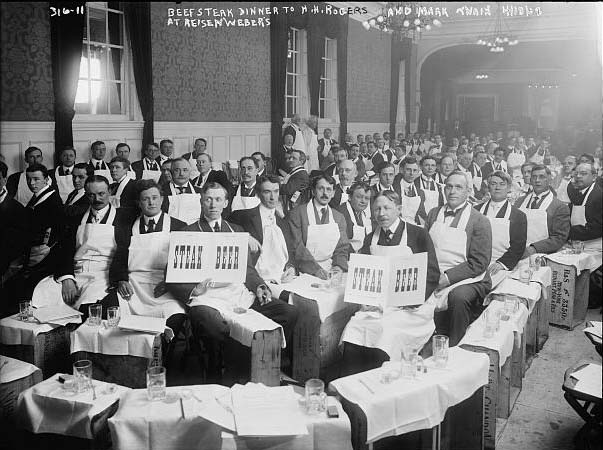


 It's great to hear from readers and I take time to answer queries. I can't always find what you are looking for, but I do appreciate getting thank yous no matter what the outcome.
 Restaurant-ing through history