Category Archives: restaurant names

More about odd restaurant names

When I started looking up strange business names for restaurants I was thinking this was something in the past. I was so-o-o-o wrong. It’s impossible to say how many there are – or how many there have ever been, but now I’m convinced that they are as popular as ever, probably even more so than in the past. [Denver Post comic strip, 1997]

This was strongly confirmed when I discovered a current online ad for a business that is dedicated to helping people find the right name for their new restaurants. It lists over a hundred novelty restaurant names that were operating at the time the site was created. Some are clever, some are ultra-corny, and some are borderline objectionable. I don’t think any of them would draw me in because of their names alone.

In the past – probably beginning in the 1950s, odd restaurant names were still unusual enough that newspaper columnists would write about them. It was considered newsworthy or at least unusual enough to attract readers. That focus would tend to be ridiculous today because it’s no longer much of a novelty to have a strange or comical name.

Also, it now seems quaint that in 1957 a columnist for a paper in Washington thought that the restaurants opening in a Sheraton Hotel were “unusual.” They were Café Careme, Ye Olde Cheshire Cheese, and Indian Queen Tavern. Today they don’t seem unusual at all.

As I look over my notes and an earlier post on restaurant names, I realize the attraction to whimsical names began in the early 20th century, with tea rooms prominent among them. Aside from them, most of the restaurants that adopted funny names were casual eateries, not formal or expensive restaurants. That is probably the case today too. [Above: 1921 advertisement from a Norfolk VA newspaper]

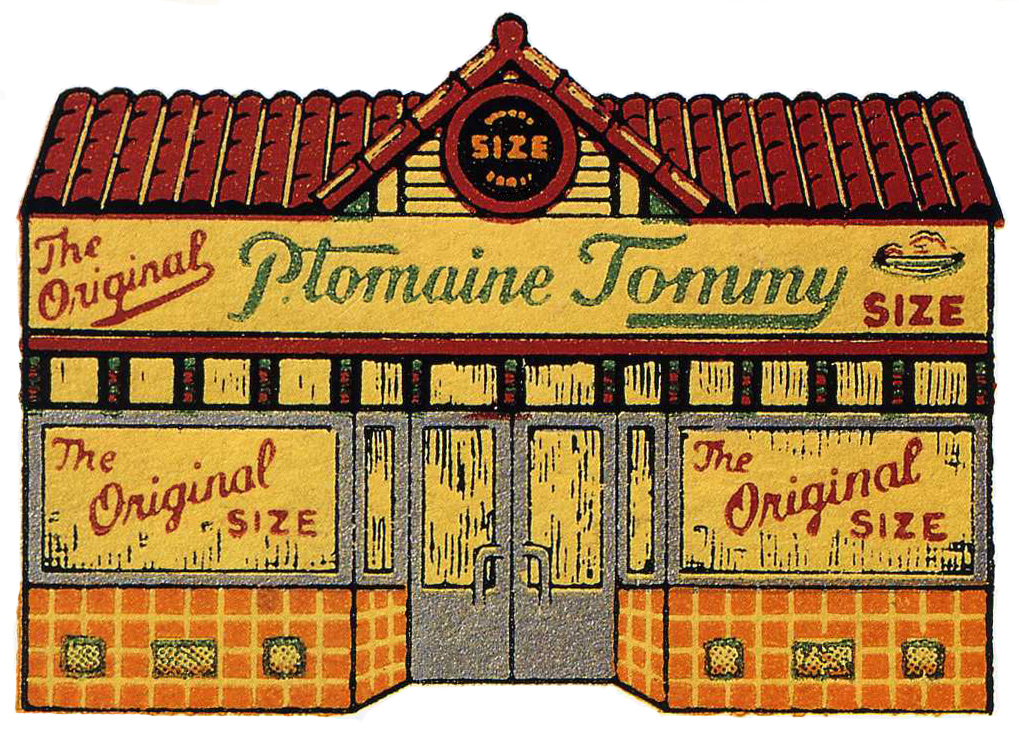
Places that made fun of themselves could have a strong attraction, with Ptomaine Tommy’s, dating back to 1913, being a prime example.

In one notable case, an odd name caused problems for its owner. A restaurant in Detroit was losing customers in 1970 because it was named Mercury Fish and Chips. Trouble was that this was the time when mercury was being discovered in fish in Lake Erie and other lakes. She was losing about a fifth of her business because of this. The name was not even meant to be cute but had a name that mainly indicated it was a fish restaurant. She had kept Mercury in the name because that was the name of the very popular restaurant that preceded hers and she thought it would be a draw.

In another case, the strange restaurant name Le Garbage, as well as its location 200 feet from a sanitary landfill in Pennsylvania would have seemed to be a guarantee of failure. But it was a very popular truck stop with its customers, trash haulers. They found it all funny, including the joking observation about food being brought in fresh daily.

A popular trick name for a restaurant is The Bank, which allows related naming for everything on the menu from main dishes such as Money Bags and The Stick Up, and side dishes under the heading Loose Change, as in a 1970s menu of an Indiana restaurant.

It’s almost needless to say that odd, funny, or even puzzling restaurant names are meant to draw attention, stand out in the crowd, and perhaps lure curious customers. With the increase of restaurants over time, it may seem more necessary than ever to have a name that is comically appealing. But, how well does this actually work? Hard to say.

Clearly there are some who enjoy them while others are going to avoid them, reasoning that the emphasis is on cutesiness rather than cuisine.

© Jan Whitaker, 2025
5 Comments

Filed under restaurant advertising, restaurant names

Spectacular failures: Laugh-In

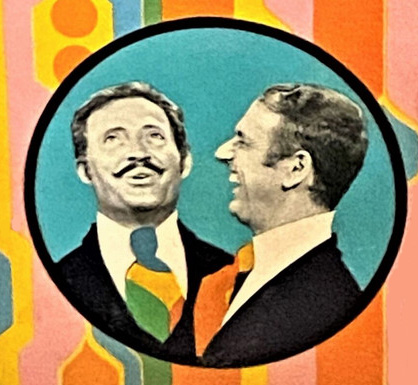
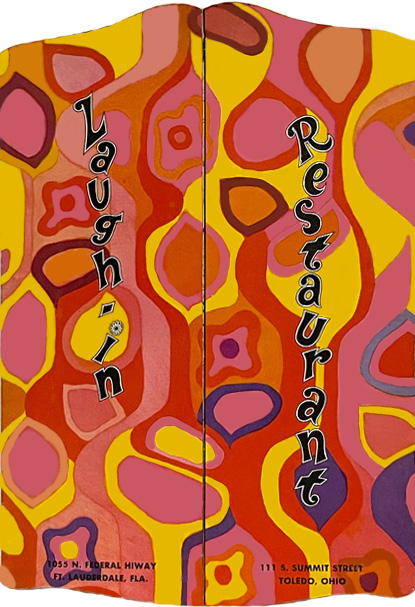
The restaurants called “Laugh-In,” based on the hit Dan Rowan and Dick Martin TV show, formed a teensy blip in an enterprise that culminated with big-time gambling casinos. [1969 menu cover]

Perhaps because the TV show was such an instant hit, it inspired the idea that the same enthusiasm would transfer over to the restaurant. It didn’t.

The chain was created in 1969, under the Lum’s restaurants umbrella, by brothers Clifford and Stuart Perlman who had built the successful Lum’s chain from a small Florida hot dog stand thirteen years earlier. The brothers adopted the Laugh-In concept and franchise system not long after they had begun another chain called Abners Beef House in 1968.

At that time the parent company, Lum’s Inc., had 300 locations. The brothers decided to list it on the New York Stock Exchange. In addition to the three restaurant chains, they also owned a chain of Army-Navy stores, meat packing plants, honeymoon resorts in the Poconos, and a large country club in Miami, the city where the corporation was located.

Selling stock in Lum’s, Inc. was a way to amass money to fulfill the brothers’ ambition of buying Caesar’s Palace, the Las Vegas hotel and casino that had opened in 1966.

When they created Laugh-In, financial analysts warned investors that counting on the continuing popularity of a TV show was risky. What if it went off the air? Perhaps that did worry buyers. Forty franchises were expected to be sold in 1969, but the actual total for that year was probably lower and the overall total number of units ever opened is unknown. [above left, Rowan, right, Martin]

Laugh-In relied heavily on the goofiness of its namesake TV show for the design of its units, fronting its flat-roofed concrete-block-style buildings with wild patterns and colors. Table tops were manufactured with imitation graffiti reflecting phrases from the show. [Below, table-top graffiti as shown on the back of menu above]

Everything was meant to appeal to youthful customers. According to an early advertisement for franchisees, Laugh-In was “a fun restaurant, designed for today’s vast young-minded, leisure-rich market.”

Additionally it advertised that it used a “proven food format” as employed by Lum’s. Lum’s had a signature dish, hot dogs cooked in beer, and it also sold beer. Laugh-In did not. But judging from their menus, neither Abners nor Laugh-In offered anything special in the way of food. Despite the “funny” names, Laugh-In selections were the same as those found in many other casual restaurants. Then there’s the fundamental question of whether customers choose what to order according to how funny the name is.

Judging from a 1969 advertisement for Abner’s franchisees, the Lum’s corporation was not especially good at presenting desirable-sounding food. The ad exclaimed over its menu’s “hunks of steak in a long fun bun” and “good things to drink, too, a malt, milk, a soda, coffee and tea.” As for Laugh-In, despite the funny names (Bippy Burgers, Fickle Fingers, Here Comes The Judge), its menu boiled down to the usual assortment of sandwiches, deep fried fish, onion rings, and a few oddities such as “tomato and egg slices” and “cheese on a bed of lettuce.”

The first Laugh-In restaurant opened in Hollywood FL in December, 1969. A few months later 25 more franchises were said to have been sold around the country. But #1 did not do at all well. It closed just short of a year later, replaced with an “Adult Art Theatre.” [above, partial advertisement for the grand opening]

Overall, the brothers fared better with another big venture, Caesar’s Palace, acquired a couple of months before the first Laugh-In opened. Caesar’s Palace had a rough time at the beginning of their ownership, and the stock of Lum’s, Inc., its corporate owner, fell sharply. The brothers raised $4 million by selling off most of their restaurants, including Laugh-Ins, in 1971. But they ran into trouble attempting to open another casino in Atlantic City. New Jersey’s Casino Control Commission insisted that because the Perlmans had had financial dealings with reputed organized crime figures, they had to resign if a permanent permit was to be issued. Stockholders voted to buy them out, paying almost $100 million for their stock.

A few Laugh-In restaurants probably continued on for a while, though it had to be a blow when the show went off the air in 1973. The longest survivor may have been Jeff’s Laugh-In in Chicago, lasting until 1988.

© Jan Whitaker, 2023

7 Comments

Filed under chain restaurants, food, menus, odd buildings, restaurant names, theme restaurants

Restaurant names

In 19th-century America most eating places were named for their owners. But in the 20th century, despite the continuing prevalence of proper names, more creative names began to appear. For instance, a 1912 directory of Black-owned restaurants in Chicago included the Crazy Corner Café and the Wa-Wa.

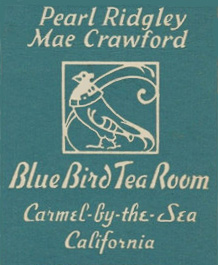
Greenwich Village of the 1920s pushed the vogue further. Columnist O. O. McIntyre was one who sneered at names of eating places there such as the Purple Pup, the Mauve Moon, and the Cerise Cat. In fact, they heralded a trend soon popping up everywhere, especially in casual eateries and tea rooms. Names linked to colors, birds, and animals proved especially popular with tea room proprietors.

Newspaper columnists were alert to new and strange restaurant names. In 1927 a Seattle writer noted, “The bluebird and the red robin both sing the song of food. Being an especially noble bird the eagle soars over four hamburger houses, and thus is more active than any other animal as far as eat signs are concerned.”

Other eateries went further, with names that were attention-getting but far from charming such as the O-U-Pig Stand in Knoxville TN or Ptomaine Tommy’s in Los Angeles.

Busy Bees were found in almost every city, but they didn’t seem to head into the countryside much.

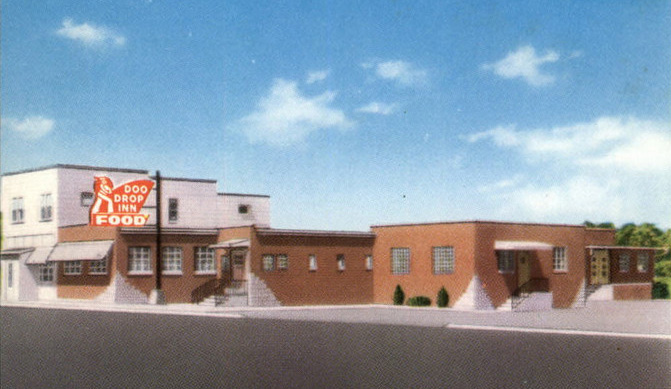
Restaurant names grabbed the attention of visitors from England. In 1929 the husband and wife authors of On Wandering Wheels noted inns and tea rooms in Connecticut with names such as Steppe Inn, Kumrite Inn, Wontcha Drive Inn and others they dubbed collectively “Ye Old Roade House.” A few years later another English vacationer marveled over a long list of “strange names” he compiled including Do Drop Inn, Dew Drop Inn, and Due Drop Inn. [Doo Drop Inn, Muskegon MI]

Why the rise of fanciful — and often hopelessly corny — names? I suspect it was competition that drove small businesses to attempt to stand out from the crowd. But it’s also probable that some proprietors who came from foreign lands were quite eager to hide their surnames during the anti-immigrant 1920s.

If anything, the Depression of the 1930s stimulated the use of creative names, as a glance at city directories reveals. Columbus OH had a Zulu Hut and a Pig Stile. Buffalo patrons could choose Da Nite Diner or Just-A-Mere Grille or one of seven “new” places, whether New Buffalo Lunch, New Chicago Lunch, New Genesee Restaurant, New Haven Lunch, New Main Lunch, New Popular Lunch, or New Texas Lunch. Exactly what about them was new is lost in time.

Even the trade magazine The American Restaurant got into the habit of collecting strange names in 1947, calling attention to lists that included Grabateria, Dizzy Whiz, and Blu Baboon. The columns also added to the growing list of names using the word “inn” with Weasku Inn, Hello Inn, Venture Inn, Brother-in-Law Inn, and Welcome Inn.

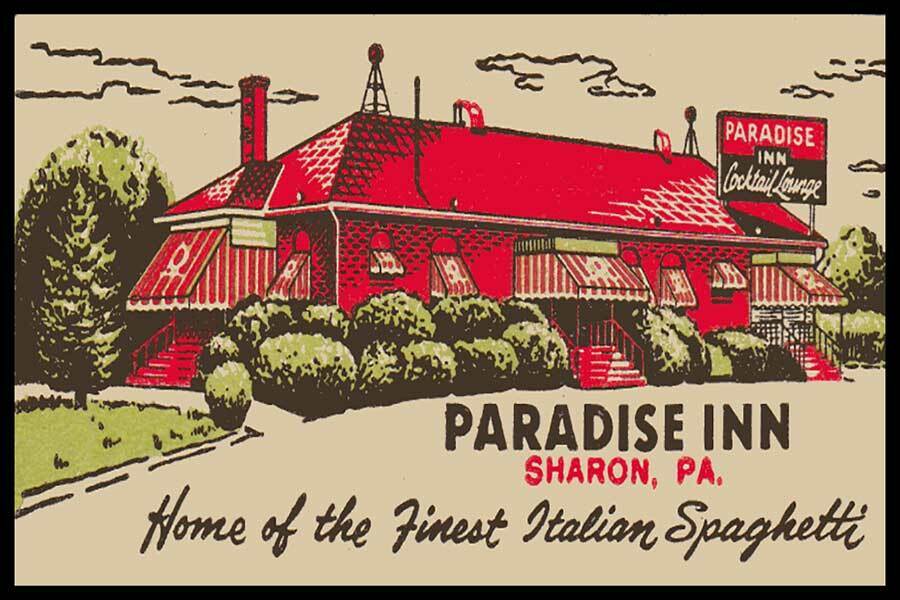
Continuing the once-irresistible urge to combine punning names with “inn,” here are others I’ve found, dating from the teens through the 40s: Always Inn, Bungle Inn, Chick Inn, Duck Inn, Du-Kum-Inn, Fiddle Inn, Fly Inn, Jitterbug Inn, Kum Inn, Pour Inn, Ramble Inn, Stumble Inn, Tip Toe Inn, Toddle Inn, and Tumble Inn.

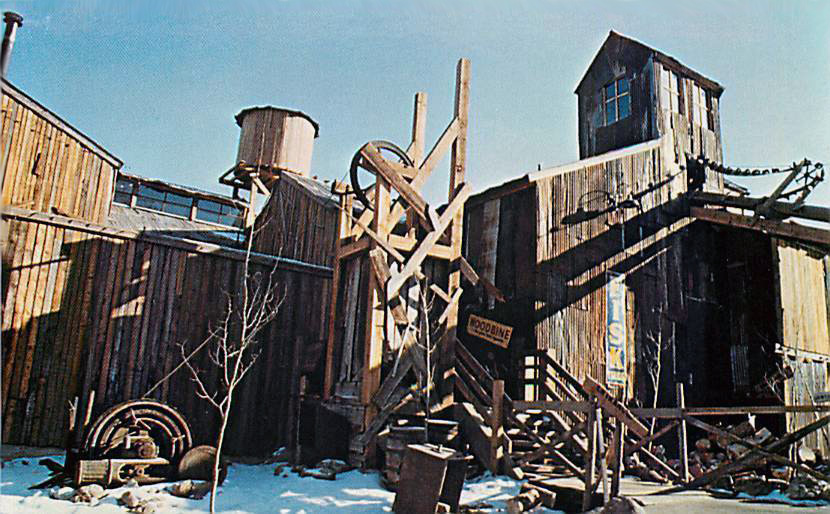
Perhaps the long-lasting attraction to bizarre names actually peaked in the 1970s when restaurant groups spread themed chains across the country, often with names I would nominate for the most absurd of all, exemplified by Baby Doe’s Matchless Mine [Denver location pictured].

By now we’ve grown accustomed to many names that once drew attention, but have become ordinary. It’s unlikely that anyone still thinks of Drive Inn, now usually without the second “n,” as an originally punning name. Maid Rite and White Castle seem unremarkable as does Applebee’s, especially since deleting the initials T. J. which, thankfully, had fallen out of fashion.

© Jan Whitaker, 2023

6 Comments

Filed under restaurant names, roadside restaurants, tea shops, theme restaurants

The Mister chains

Sometimes I feel the need to focus on ridiculousness in restaurants, maybe because I run across so many instances of it when I’m meandering through old sources. Lately I’ve been exploring franchising and have encountered numerous silly concepts expressed in the names of chains. Many businesses across the country adopted “Mister” or “Mr.” as part of their names, and this seems to have been particularly true of restaurant chains. [For now, I’m calling all of them Mister.]

There are also scores of restaurants with names such as Mister Mike’s or Mister T’s, but those are usually not part of franchise chains and the letter or nickname refers to an actual person, usually the owner, who may be known by that name in real life. I’m not including those here.

I’m more interested in the Misters that are not named for actual humans. At least I’m hoping that there is no real-life Mister Beef, Bun, Burger, Chicken, Drumstick, Fifteen, Hambone, Hamwich, Hofbrau, Pancake, Quick, Sandwich, Sirloin, Softee, Steak, Swiss, or Taco.

There were also Sir chains, such as Sir Beef, plus Kings and Senors. Were they in their own way an expression of multiculturalism? Being “continental,” Sir Beef was classier than most of the Misters.

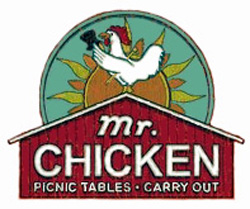
For quite a while I believed there could be no Mister Chicken. That seemed obvious to me – who wants to be called a chicken? But then it occurred to me that I should do a little more research. I was proven wrong. Maybe I shouldn’t be surprised. Surrounding the logo shown here were the words: Home of America’s Best Barbecue Chicken Since 1966!” Although there were restaurants by the same name in Rockford IL and Atlanta GA, I don’t know if they were related.

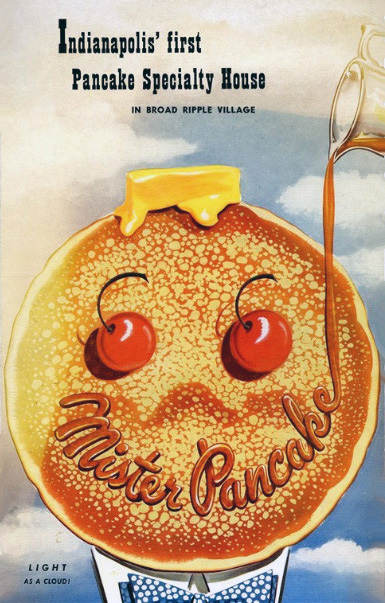
I find Mister Pancake’s face somehow threatening, but never mind that – he was a hit in his hometown of Indianapolis. He came into the world there in 1959, but I don’t know if he appeared anywhere else.

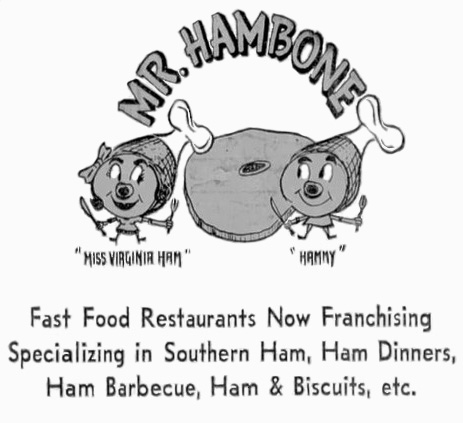
I especially like the logos that attempt to humanize food, particularly unlikely items such as hambones. Sadly for him and his girlfriend, Mister Hambone International – aka Hammy — really didn’t catch on. Starting out in Virginia in 1969, he opened at least one place in North Carolina, but nothing, I think, internationally.

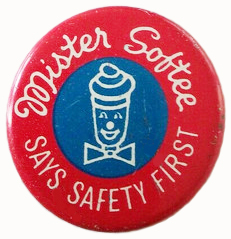
Mister Softee with his natty bow tie, born in New Jersey, was mainly peddled out of ice cream trucks, but there were also restaurants of the same name that served hamburgers, steaks, hot dogs, fish, etc., along with the creamy guy. In 1967 a mobile franchise cost $2,500 while a restaurant was ten times that, which may account for why there were then 1,600 trucks — even as far off as the French West Indies — but only 5 restaurants. Overall, Mister Softee, like Mister Steak, had a more successful life than most of the Misters.

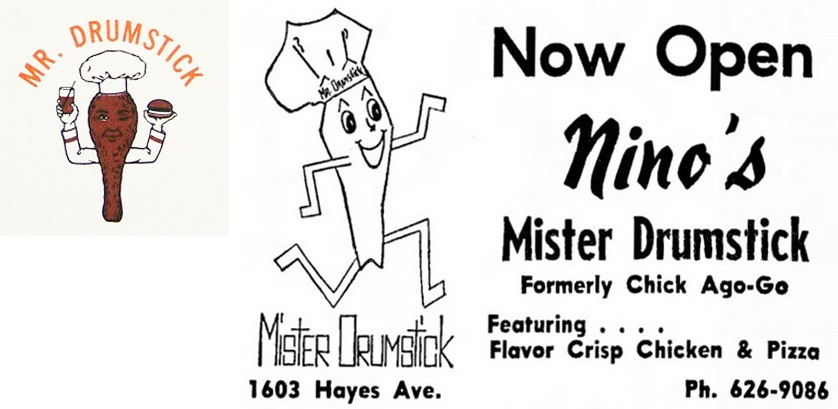
Mister Drumstick, born in Atlanta, offered the World’s Best Fried Chicken. I can’t help but wonder why he is holding a hamburger rather than a chicken leg. Maybe it was because his franchise was sold in connection with Mister Sirloin, a roast beefery, as well as Mister Hamwich, a ham sandwich purveyor. So far I’ve found four Mister Drumsticks in Atlanta and a few in Illinois, Ohio, and Missouri. Nino’s Mister Drumstick in Sandusky OH looks more athletic than Atlanta’s, but of course he has the advantage of legs. Was he a go-go dancer in an earlier phase of his career?

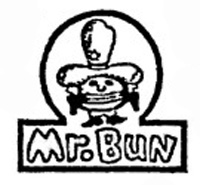
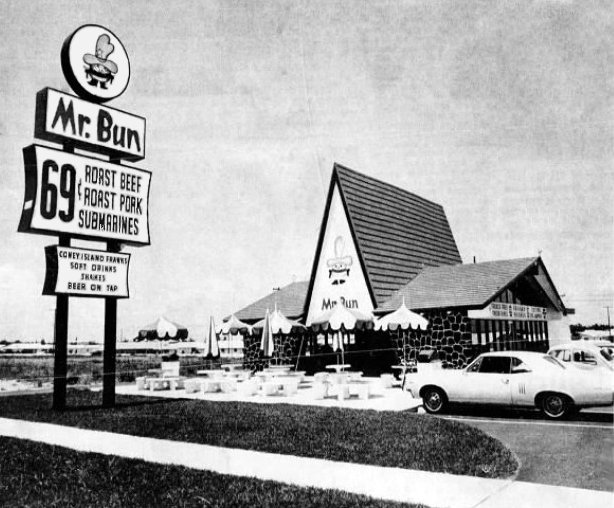
I like the Drumsticks, but my favorites are Mister Bun and Mister Sandwich (of New York City!). They are so versatile. They can handle anything that goes between two slices of bread. I don’t know what Mister Sandwich looked like but Mister Bun was a strange one, with his extremely short legs, his six-guns, and his 10-gallon hat. I can’t really figure him out. Is he trying to compensate for being nothing but bread?

The three Florida creators of Mister Bun had high hopes in 1968 when they opened their first location in Palm Beach, with plans to add more outlets in Florida as well as a number of other states where investors were interested. They advertised for franchisees by telling them that Mister Bun featured “the eight most popular food items in this nation.” It was true that Mister Bun could hold almost anything, so they settled on roast beef, cold cuts, roast pork, frankfurters and fish, accompanied by french fries and onion rings, and washed down with a range of beverages, including beer. Alas, Mister Bun had a rather unhappy life, experiencing little growth, abandonment by his primary creator, and time in court.

Females seemed to stay out of the game, so there are no Mrs. Buns, Mrs. Beefs, Mrs. Tacos . . . or Miss Steaks. Maybe theirs was the wiser course.

© Jan Whitaker, 2022

14 Comments

Filed under chain restaurants, food, restaurant fads, restaurant names, signs

“Biblical” restaurants

This week an unknown person found my blog by searching for “restaurants in the bible.” I found this humorous because, needless to say, I am 99.99999% certain there are no restaurants mentioned in the bible.

I wondered why a search engine would have directed this person to my site. Could it be because of a post I published in 2017 called Christian restaurant-ing?

Since I found it funny, I went to Facebook and posted a note about the search term.

Next thing I knew, my clever friends had started inventing imaginative names for biblical restaurants. Here they are in alphabetical order:

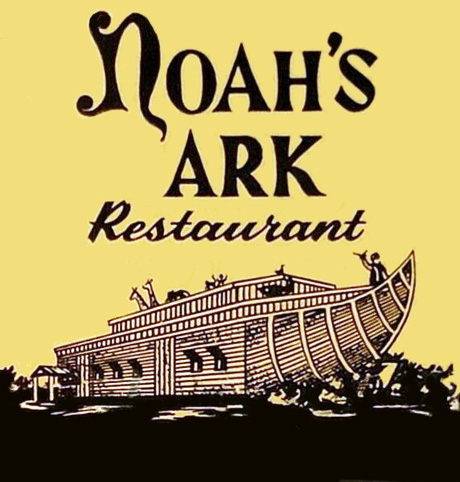
The Ark

Calvary (not very popular, limited cuisine)

The Last Supper Bar & Grille

The Last Supper Club

Loaves and Fishes

Manna Nirvana

Mary and Martha’s Place

Not Just Another Room at the Inn

Olive Garden

Olive Garden of Eden

Olives of Gethsemane

The Stable, a Family Restaurant

Suspicious Fish

3 Wise Guys Pizzeria

12 Hungry Men

Water & Wine

Do you have any ideas for names?

© Jan Whitaker, 2021

11 Comments

Filed under restaurant names