Category Archives: miscellaneous

Busy bees

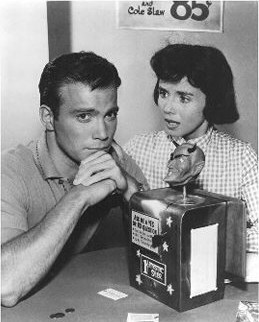
A 1960 episode of The Twilight Zone, “The Nick of Time,” was set in a restaurant outfitted with a devilish fortune-telling device. The restaurant, supposedly in Ohio, was ordinary and undistinguished, with booths and laminated table tops.

The story’s writer chose a common name for it, one found in practically every city and small town across the entire United States: the Busy Bee.

I “collect” this name. To me it resonates with the typical 20th-century eating place. Judging from advertisements for eateries called The Busy Bee, they staked their reputations on being clean, economical, briskly efficient, and friendly.

I also find the name interesting because it is entirely divorced from place, proprietor’s ethnicity, and type of cuisine. Yet I’ve found that many restaurants of this name had proprietors who were of Polish, Italian, or Greek ethnic origins.

In the 19th century it was typical for restaurants to go by their proprietor’s surname. Over the 20th century, by contrast, many restaurants adopted “made up” names that were intended to suggest something positive, appealing, or at least memorable. I suspect that one of the factors propelling this change was the chance to background the ethnicity of the proprietor, particularly around World War I when much of the country became intolerant of those not native born. Busy Bee became one of the most common names around.
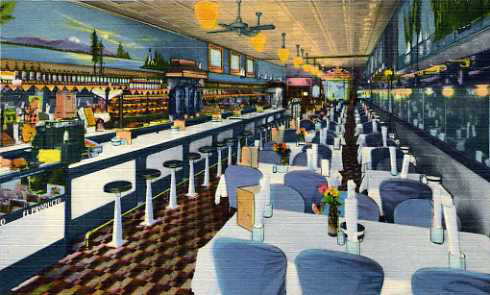
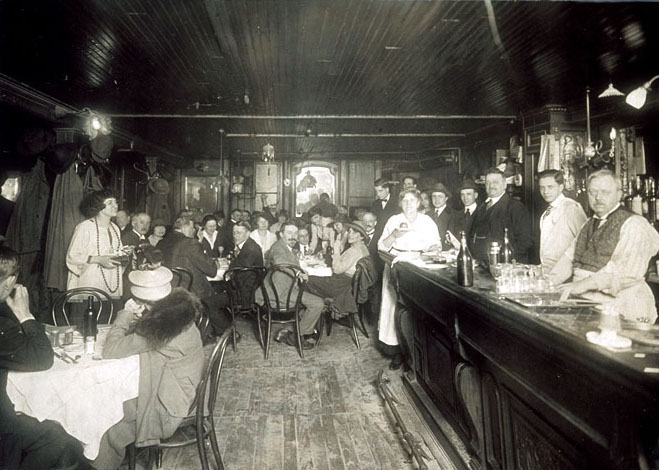
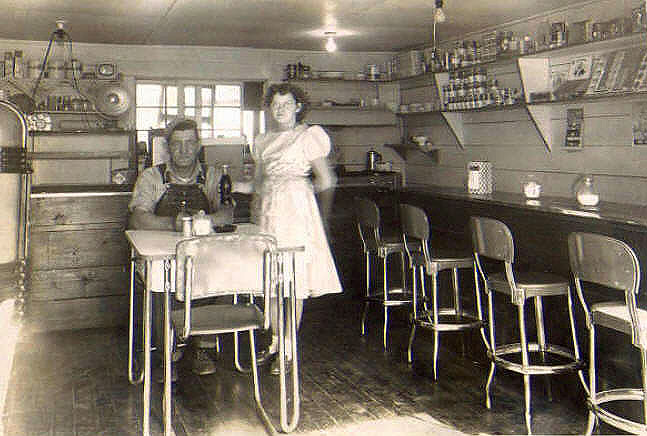
Also, restaurants owned by Greek-Americans, of which there were very many, were often run by multiple partners. It would be somewhat unwieldy if, for instance, the proprietors of the Busy Bee in Monessen PA in 1915 had decided to call their restaurant Chrysopoulos, Boulageris, Paradise, & Lycourinos. They might have taken the liberty of dubbing their establishment Four Brothers from Mykonos but they chose Busy Bee instead. [pictured: Busy Bee in Winchester VA — its proprietor, James Pappas, was born in Greece ca. 1889]

I have yet to find a Chinese restaurant called the Busy Bee but I’ll keep looking – I know there had to be a few.

Among many locations, I’ve found Busy Bees in Mobile AL as early as 1898, in Bisbee AZ in 1915, and in New York City’s Bowery, for decades presided over by Max Garfunkel. It was at Max’s Busy Bee, in 1917, that alumni of the Short Story Correspondence Schools of North America convened to greet the author of “Ten Thousand Snappy Synonyms for ‘Said He.’” Many Busy Bees became headquarters for meetings of business, civic, and social clubs.

Busy Bees were not known for any particular culinary specialties, offering instead home cooking favorites plus the inevitable chili and other Americanized foreign dishes such as spaghetti and chop suey. The four popular Busy Bees in Columbus OH, nonetheless, had an attractive array of warm weather choices on their June 29, 1909, menu which included Spring Vegetable Salad (10 cents), as well as Blackberries or Sliced Peaches in Cream (10 cents) and Fresh Peach Ice Cream (15 cents).

The Busy Bee name lives on even today, though perhaps less robustly. I was surprised there was not a single Busy Bee mentioned in Joanne Raetz Stuttgen’s books on contemporary “down home” cafes in Wisconsin and Indiana.

Is there a common restaurant name all around us today that will come to characterize the 21st century?

© Jan Whitaker, 2012
26 Comments

Filed under lunch rooms, miscellaneous

Bumbling through the cafeteria line

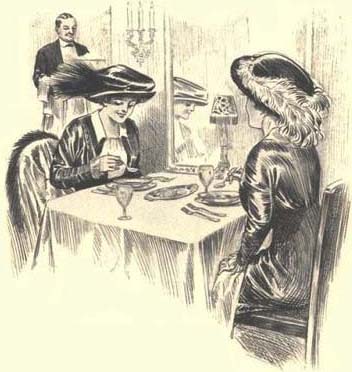
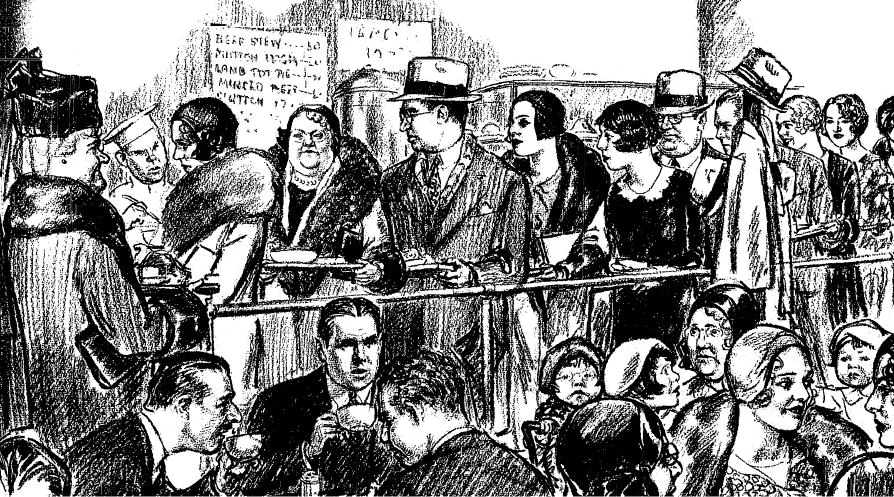
In 1931 the American humor magazine Life (not to be confused with the later photojournalism magazine of the same name) published “The Cafeteria,” an essay that described an inexperienced patron’s befuddlement in composing a meal item by item while being propelled forward by an ever-moving line. (The illustration by W. E. Hill is also from 1931.)

The essay, from which I have selected sentences to shape into a “poem” similar to Charles Green Shaw’s The Bohemian Dinner, was written by John C. Emery. It’s likely that at the time he wrote about his cafeteria experience he was a 27-year old editor with Railway Age, a trade journal located in Chicago. Chicago, it happens, was a city with plenty of cafeterias. In its early stages cafeterias were identified with women while men were notoriously resistant to them.

Turns out Mr. Emery had an interesting biography. As a naval commander during World War II, he was in charge of expediting air cargo. Following the war he founded Emery Air Freight, which began as a freight forwarder that leased space on existing airlines and grew into a major corporation. Alas, I know nothing about his further adventures in eating out, but I doubt he continued to go to cafeterias.

The Cafeteria
The trays.
The cutlery.
The selection of a knife, a fork and two spoons.
The selection of two pieces of bread and a roll.
The after-thought selection of another roll.
The sudden realization that you have a lot of bread.
The hesitancy to put any of it back, under the eagle eye of a waitress.
The great variety of salads.
The quick selection of one kind.
The immediate regret that you did not take another kind instead.
The inclination to make a change.
The nudge of a tray in the hands of a woman in line behind you.
The decision to move along.
The bowl of soup.
The meat order.
The potatoes.
The string beans.
The beets.
The realization that your tray is getting pretty full …
The decision to forego dessert.
The tempting pies.
The urgent desire for a piece of pie.
The selection of a piece of pie.
The difficulty of finding space for it on your tray.
The check, amounting to $1.32.*
The vast surprise.
The realization for the first time that you have enough food for about three hungry men.
The search for a table.
The unloading of your tray.
The vast array of dishes.
The growing conviction that other patrons are laughing at you.
The discovery that you forgot to take a napkin.
The consumption of every bit of food before you.
The gorged feeling.
The sluggish return to the office.
The surreptitious nap.

© Jan Whitaker, 2012
* Equal to about $18.90 in 2010 dollars, probably about double what he usually paid for lunch.

3 Comments

Filed under cafeterias, miscellaneous

The artist dines out

Before World War I artists in NYC were attracted to cheap, unpretentious little ethnic restaurants in the basements of brownstones that dotted unfashionable side streets. Called table d’hôtes, they harked back to the early days of European restaurants when paying guests sat down with the host family at their dining table. With the meal, which typically consisted of spaghetti, salad, and a small portion of meat or fish, came a complimentary carafe of red wine, not always of the best vintage.

Evidently when Charles Green Shaw, the author of the haiku-like poem below, attended such a dinner in Greenwich Village he wasn’t exactly swept off his feet. Rather he displays a comical tongue-in-cheek attitude about the experience. I would guess he wrote the poem about 1915.

Shaw [1892-1974] was an abstract modern artist whose work is in the collections of major museums such as MOMA and the Art Institute of Chicago. He also was a children’s book illustrator, a poet, and an author of essays and novels. He collected theatrical ephemera and was an authority on Lewis Carroll. His papers, which include some of his drawings, are held in the Archives of American Art, Smithsonian Institution.

The Bohemian Dinner

The ride downtown.
The Washington Square district.
The “bohemian” restaurant.
The descending steps.
The narrow hall-way.
The semi darkness.
The checking the hat.
The head waiter.
The effusive greeting.
The corner table.
The candle light.
The brick walls.
The “artistic atmosphere”.
The man who plays the piano.
The wailing sounds.
The boy fiddler.
The doleful discords.
The other diners.
The curious types.
The long hair.
The low collar.
The flowing tie.
The loose clothes.
The appearance of food.
The groan.
The messy waiter.
The thumb in the soup.
The grated cheese.
The twisted bread.
The veal paté.
The minced macaroni.
The cayenne pepper.
The coughing fit.
The chemical wine.
The garlic salad.
The rum omlette.
The black coffee.
The bénédictine.
The Russian cigarette.
The “boatman’s song”.
The mock applause.
The “temper[a]mental” selection.”
The drowsy feeling.
The snooze.
The sudden awakening.
The appearance of the check.
The dropped jaw.
The emptied pockets.
The last penny.
The bolt for the door.
The hat.
The street.
The lack of car fare.
The long walk up town.
The limping home.
The Bed.

5 Comments

Filed under miscellaneous

What’s in a name? Restaurants of 1936

To get a feel for restaurants in 1936, when drinking had recently been legalized and the Depression had eased up somewhat, I surveyed restaurants and lunch rooms entries in city directories for that year. I chose 25 cities that were among the US’s 100 largest according to the nearest census, 1940. The biggest city represented in the sample was Detroit (1,623,452) and the smallest was Shreveport LA (98,167).

I quickly discovered that people ate out frequently that year. Of the 25 cities, there were 7 that had a ratio of restaurants to population comparable to NYC today. I doubt that many readers can guess what they were. [See answer below.]

The ratio of restaurants to population is a rough guide to how often people eat out that is commonly used. But, judging from the names of eating place types – the Luncheonettes, Dinettes, Grillettes, Kitchenettes, Cabins, Cottages, Huts, Nooks, Stands, Shacks, and Shanties — it would seem that many of the eating places in 1936 were small, so there may have been less restaurant going than in NYC today. On the other hand many of the restaurant goers in NYC are not inhabitants, a situation that probably did not apply much to the cities in my survey.

The ethnicity of proprietors in each city is hard to compare. In some city directories restaurant and lunch room listings are almost entirely proper names while in others they are mostly business names. Nevertheless there are many ethnicities represented, including German, Greek, Armenian, Polish, Irish, Slavic, and Italian. Every city, except Scranton PA and Flint MI, has at least one or more Chinese restaurants. Long Beach CA has 9 Japanese names listed, and in San Antonio TX about 13% of the names are Mexican. Only 6 cities have the word Kosher in restaurant names, though of course that doesn’t necessarily mean there weren’t other kosher restaurants not so designated (obviously there are risks of reading too much into names).

Three cities, Shreveport LA, Charlotte NC, and Jacksonville FL, designate in proper Jim Crow fashion which restaurants are “colored.” After all, if everyone must stay in their place, they need to know where it is. One quarter of Jacksonville’s eating places are by and for African-Americans, including the Pink Tea Room.

Restaurant types suggest not only smallness, but a degree of humbleness, as the types above indicate. Overall the word Restaurant is used far less often than is Café. Other dominant types are Shops (Coffee [Oklahoma City pictured above], Food, Sandwich, Snack, Soda, Tea, and Waffle) and  Lunches. Diners are found infrequently, with Newark the biggest exception, having 20 diners and 20 lunch wagons. Drive-ins are mostly in Salt Lake City and Houston.

Every city seems to have places offering hamburgers, chili, spaghetti, barbecue, and waffles, but not once did I find the words pizza or pizzeria. Cheerful and corny names abound. Busy Bees are common but so are Cozy Corners and Friendly Lunches. Every imaginable play on Inn can be found, such as Buzz, Dew Drop, Drag-on, Just Ramble, Step, Squeeze, and Swim. Popular culture and current events are conveyed by the Movieland Luncheonette, the Screenland Café, the Shirley Temple Sandwich Shop, and New Deal and Square Deal Lunches. The need to economize and forge ties as workers is evident in St. Paul’s Co-Operative Café, Newark’s Labor Lyceum Restaurant, Omaha’s Farmers Union Café and Tavern, and in Detroit’s Workingmen’s Co-operative Restaurant, International Co-Operative Restaurant, New System Profit Sharing Cafeteria, and People’s Profit Sharing Cafeteria.

There is considerable evidence of both regional and national chains. White Castle System Inc. is by far the most common, but there are numerous other “White Systems” such as White Tower [Scranton pictured above], White Hut, and White Spot. There are also Dixie Sandwich Systems [St. Louis pictured], Pig Stands, Toddle Houses, units of Childs, John R. Thompson, and the Waldorf System, as well as many other forerunners of today’s fast food chains.

Finally, a few of my favorite names of 1936: Omaha’s Boo Koo Café, Kansas City’s Yours & Mine Café, San Antonio’s Wampus Cat Café, Columbus’s Krome Dome System, Oklahoma’s Joy-Boy Café, Louisville’s Hy Skool Tavern, and Houston’s Robert’s Eatorium.

I am forced to conclude it was not a good year for upscale dining.

© Jan Whitaker, 2012

———–
Note: The cities with a ratio of about 1 restaurant for every 350 people were: Cincinnati OH, Kansas City MO, Houston TX, Columbus OH, San Antonio TX, Oklahoma City OK, and Long Beach CA. The complete list of cities in the sample were, in descending population size: Detroit, St. Louis, Cincinnati, Newark, Kansas City, Houston, Louisville, Columbus, St. Paul, San Antonio, Omaha, Oklahoma City, Jacksonville, Grand Rapids, Long Beach, Des Moines, Flint, Salt Lake City, Yonkers, Scranton, Fort Wayne, Erie, Tacoma, Charlotte, and Shreveport.

7 Comments

Filed under miscellaneous

Dainty Dining, the book

From my vantage point I can tell you that at any time of day or night hundreds of thousands of souls are searching for recipes from their favorite restaurants of old. Perhaps they are hoping to relive their pasts or to recall happy moments spent with departed loved ones. Or maybe they simply remember THAT Steak Diane or Chicken Salad as being the most delicious they ever tasted. And who can say it wasn’t?

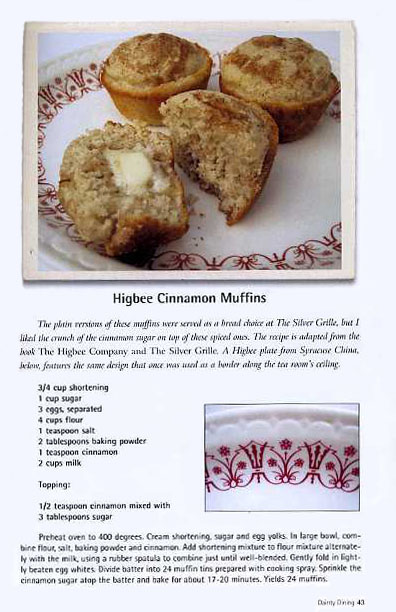
Among the searchers, the most dedicated may well be those pining for dishes from long-gone department stores. For them, I have a fix, a new book by Angela Webster McRae called Dainty Dining: Vintage Recipes, Memories and Memorabilia from America’s Department Store Tea Rooms. In it are recipes, tested personally by Angela, from 20 of the country’s historic department stores, all gone except for two, Macy’s and Younkers (although the Des Moines flagship closed in 2005). Among others, readers will find favorites such as Cream of Cauliflower and Cheese Soup from Lazarus (Columbus OH), “Mr. Bingles” desserts from Maison Blanche (New Orleans), Mrs. Herring’s Chicken Pot Pie from Marshall Field in Chicago, and Rich’s Magnolia Room Frozen Fruit Salad (Atlanta).

In addition to providing brief histories and vintage images of each department store, Angela has photographed her culinary productions quite attractively.  Dainty Dining is not yet available on Amazon but it can be purchased from Scott’s Bookstore in Newnan, Georgia (770-253-2960) or via Angela’s blog Tea with Friends.

5 Comments

Filed under miscellaneous, tea shops

2011 year-end report

This has been a good year for my blog. My daily hits were up, as were the numbers of comments and subscribers. I heard from a few reporters and researchers plus had interesting correspondence with several dozen readers. Via my blog quite a few descendants of restaurateurs found long-lost relatives, sometimes continents apart. When I started writing the blog in July 2008, it did not occur to me that writing about restaurant history would create a platform for people seeking information about their families, much less that this would be a way for them to contact each other. I love it.

When I learned from a subscriber that an advertisement for how to get rid of belly fat was attached to the post he received automatically via email I decided instantly that I was willing to pay a fee to WordPress for the privilege of having NO ADVERTISEMENTS on my site. Think of me like public TV, penniless but proud (I won’t be fundraising).

All 185 of my posts were viewed this year, although some received scant attention – at the very bottom of the heap was ham sandwiches with a mere two. My “home” page, which contains the most recent six posts at any given time, had 24,262 hits. WordPress statistics do not enable me to say how many individual persons that represents nor how long they stayed on my site. Note that the figures given here contain a certain percentage of misguided viewers on the one hand, but on the other hand, happily, do not include views by subscribers.

The top posts continued to be the Tastes of the Decades, with the 1920s out front for reasons I still haven’t grasped. Could it be that droves of school children are studying the 1920s? The 1920s got 4,621 hits this year, followed by the 1960s, 1950s, 1930s, and 1940s. Alas, the nineteenth century continues to be a hard sell.

Posts on individual restaurants that garnered the most attention were, in descending order: Detroit’s London Chop House, New York’s Maxwell’s Plum, the Chicago-based John R. Thompson chain, the New York-based Schrafft’s, and Miami’s Wolfie’s. Judging from the number of hits, 2,238, I give the Chop House the award for the historic restaurant with the most loyal former patrons. The high level of interest in it inspired me to buy this photo of the Chop House’s well-dressed proprietor, Lester Gruber, taken in February 1974 shortly after he learned his restaurant had won its fourth Holiday Magazine Dining Distinction Award.

As for posts on more general, cross-decades subjects, number one focused on bloomers as waitress costumes, followed by “Birth of the theme restaurant” in which I discover the source in 19th-century Paris cabarets. I am pleased that interest in Afro-Americans and restaurants remains strong, with a goodly number of hits being registered on the topics of discrimination, fighting for rights, the role of black women, and Afro-American tea rooms.

Shortly after I began the blog a friend asked if I was afraid I’d run out of topics. I am happy to report that my to-do list remains as long as ever. I think of new topics every day. My desk is a flurry of notes that say things such as Coca-Cola, mob restaurants, interior designers, and Repeal.

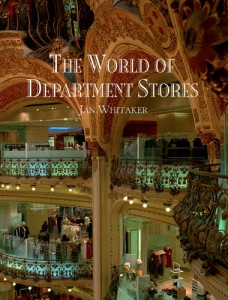
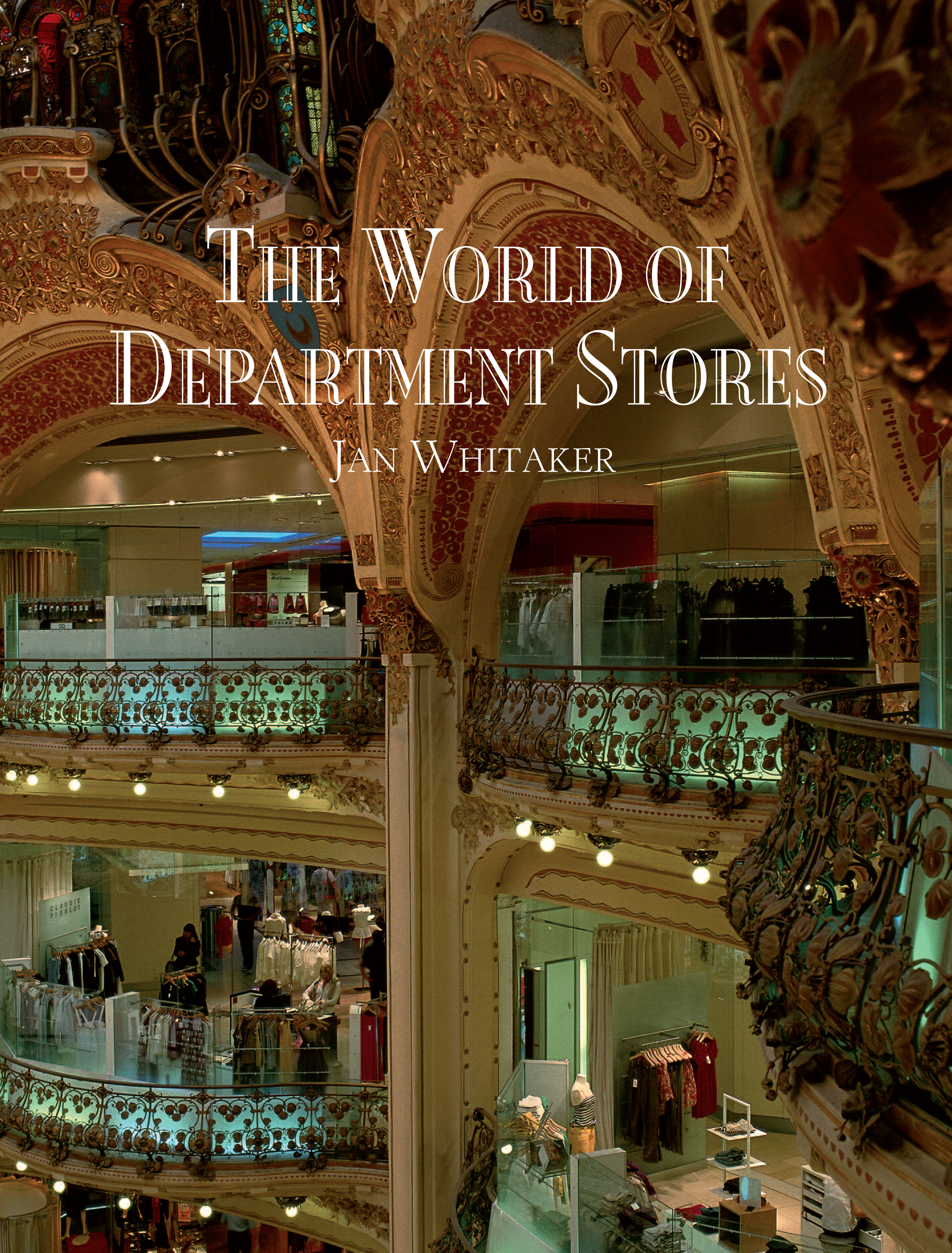
Another year has passed and I am still ambivalent about doing a book, mainly because I’m plagued by two highly related questions: 1) whether I could get a contract with a good publisher,  and 2) how well it would sell. Meanwhile I have published a second, extravagantly illustrated book on department stores, The World of Department Stores. It does have some restaurants in it.

Best wishes to all for 2012!

14 Comments

Filed under miscellaneous

Taste of a decade: 1910s restaurants

Like the decade following World War I, this was an eventful period in the development of the restaurant. Social and economic changes favored the growth of eating out. Even before the U.S. entered the war in April of 1917 restaurant patronage was on the rise and by the following year the Food Administration, under the direction of future president Herbert Hoover, estimated that more food was consumed in restaurants than in homes.

It was a schizophrenic decade. It opened with an accent on the high life but ended in austerity mode. Luxurious cabarets and “lobster palaces” of the early decade would sink into oblivion near its close. But at the same time urbanized speed-up and intense modern work regimes inclined people to seek more outlets for pleasure. Increasing numbers of single male and female white-collar workers in cities abandoned the old home-based courtship tradition; the new custom of middle-class dating brought a search for entertainment and swelled restaurant going. With better public transportation and the feminization of downtowns, more and more women patronized tea rooms and restaurants in and around department stores.

Due to growing sentiment against drinking, the saloon free lunch was on the skids by mid-decade. State-wide prohibition spread and the majority of the nation’s population soon lived in areas where the sale of alcohol was illegal. Saloon keepers remaining in the larger cities saw that their days were numbered and began to take out restaurant licenses. Authorities suspected that many of the restaurants did not actually serve meals but just wanted to evade laws which forced saloons to close on Sundays. Nevertheless, the trend would increasingly become genuine and bars would be turned into lunch counters and soda fountains.

In a tight labor market accompanied by Food Administration conservation measures that discouraged frills, most of the new restaurants were lunch rooms of the self-service type. In them customers avoided tipping and enjoyed lower prices for simple ready-to-eat meals.

American involvement in the war encouraged anti-ethnic sentiment, particularly toward Germans. Many restaurants took steps to appear more American, such as changing their names. Patrons expressed a wish to see menus with no French or other foreign terms. With the sudden end to European immigration, culinary labor unions took the opportunity to strike for shorter hours and higher wages. Frequently restaurant owners responded by replacing striking male waiters with women, who were believed to be more docile.

Highlights

1910 Measured as a ratio of restaurant keepers to total population, the nation’s top five restaurant cities are: 1) Seattle (1:434); 2) San Francisco (1:449); 3) Los Angeles (1:560); 4) Kansas City (1:580); and Manhattan (1:583)*. Los Angeles claims the reason for so many restaurants is its wealth of tourists and single men.

1911 Until legal counsel advises this would be a discriminatory misuse of police powers, the Massachusetts Legislature bandies about the notion of making it illegal for women under 21 to enter Chinese restaurants.

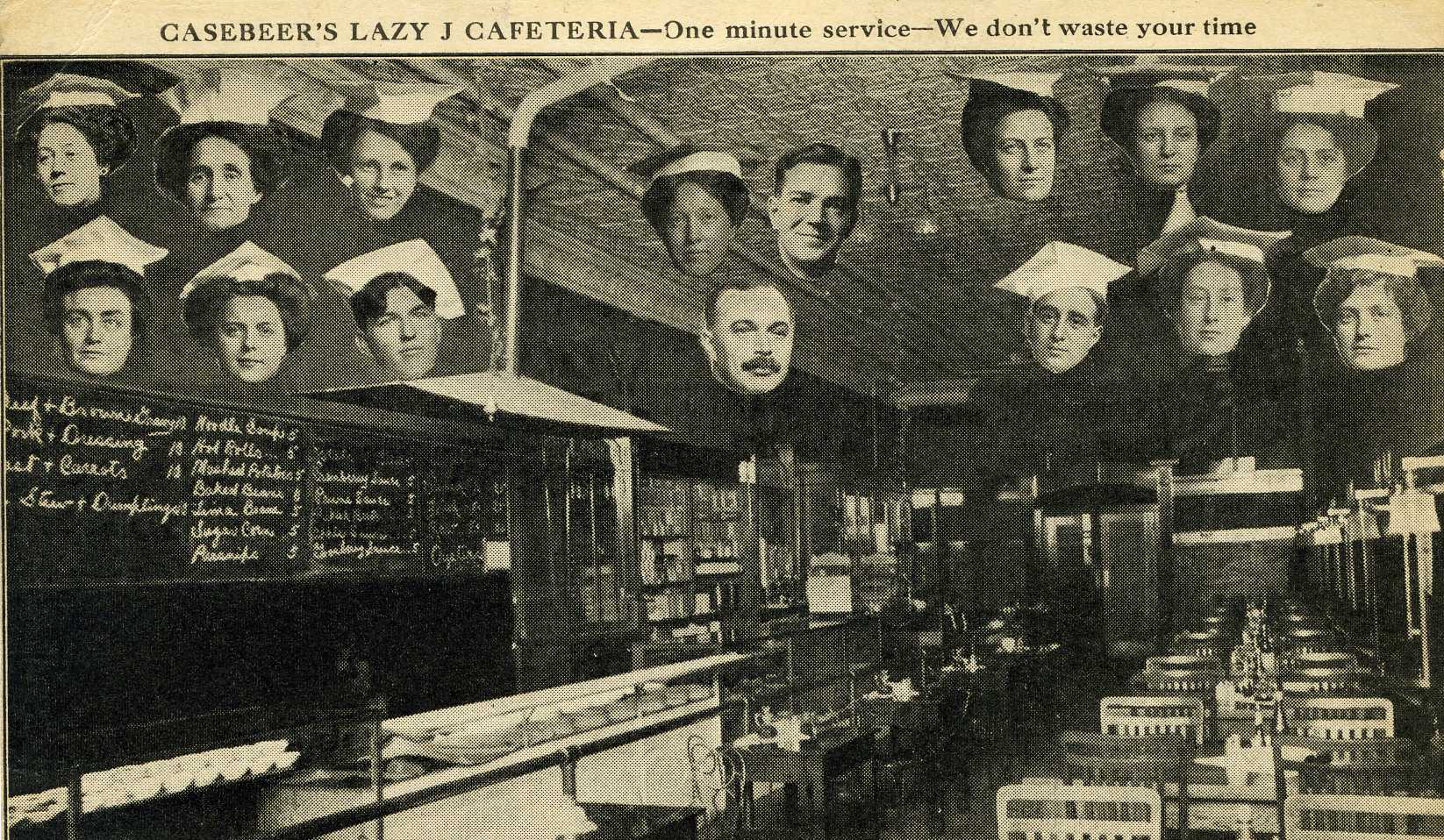
1912 New York City’s first Horn & Hardart Automat opens. – Speedy service is prized even at Casebeer’s Lazy J Cafeteria in Waterloo, Iowa, where the slogan is “One minute service – We don’t waste your time.”

1913 The diary of an executive secretary in NYC shows her eating in restaurants over 100 times during the year, including her first-ever restaurant breakfast. Among her favorites are Childs, Schrafft’s, The Goody Shop, and The Vanity Fair and The Rip Van Winkle tea rooms.

1913 NYC’s cabarets and “lobster palaces” such as Murray’s, Martin’s, and Shanley’s, formerly open all night, take a hit as the mayor orders 1:00 a.m. closings.

1914 Despite earning only $5.85 a week, a woman working in an Ohio playing card factory spends 30% of her food budget on restaurant meals, most costing 25 cents.

1915 An exact replica of a white-tiled Childs lunchroom is featured in a scene of a Broadway play directed by David Belasco.

1916 On one short block near Boston’s Newspaper Row, twelve restaurants serve 40,000 meals daily. – In the novel The Thirteenth Commandment a young couple gets engaged after a “a typical New York courtship [in which] they visited restaurants of all degrees.”

1917 Although the managers of Chicago’s Bismarck Hotel station an American flag at the entrance to the dining room (the Berlin Room), it is damaged by dynamite just a few months after the U.S. enters war with Germany. — The Kaiserhof Cafe in NYC changes its name to Cafe New York.

1918 Restaurants place glass on tabletops to save linens and laundry for the duration of the war. They remove sugar bowls, take cheese dishes such as Welsh rarebit off their menus, and feature more hors d’oeuvres, fresh vegetables, salads, fruits, seafoods, and organ meats.

1919 In response to labor agitation, restaurant men organize and hold the first National Restaurant Association convention in Kansas City MO. – Louis Sherry announces he will close his deluxe Fifth Avenue restaurant due to hardships imposed by Prohibition and “Bolsheviki waiters.”

* By comparison a recent NYT story reported that the U.S. city with the highest number of restaurants per capita is San Francisco, where the ratio is 1:227. NYC is 1:347.

© Jan Whitaker, 2011

Read about other decades: 1800 to 1810; 1810 to 1820; 1850 to 1860; 1860 to 1870; 1870 to 1880; 1890 to 1900; 1900 to 1910; 1920 to 1930; 1930 to 1940; 1940 to 1950; 1950 to 1960; 1960 to 1970

4 Comments

Filed under miscellaneous

Making a restaurant exciting, on the cheap

This post was inspired by an Eater.com story called Ten Ways to Make Your NYC Restaurant Less Boring. I decided to match their suggestions with examples from the past. I am presuming that author Greg Morabito had tongue in cheek when he thought up his ten tips, so I am doing the same. My suggestions have been tailored for present economic conditions.

10. Hire a Forager – This is a great idea and bound to add interest. But go beyond greens. In 1884 an enterprising Chicago restaurant forager stalked snow birds (juncos) along the city’s cable car lines. Delicious on toast. Look around. Think pigeons!

9. Serve Whole Animals – Yes, and display them prominently. Dead animals – whole bears and bison — strung up around the entrance, and raw meat generally, have always been irresistible to restaurant goers. Live animals too. Keep in mind the 1941 restaurateur who took delivery of a giant sea turtle and stored in it the restaurant window for several days before putting it on the menu. Another idea: on those really hot days set up a few premier tables in the meat locker.

8. Hire a Chef from Portland – Or, whatever place is trendy at the moment. So happens in 1922 the management of the Mandarin Inn in the college town of Champaign, Illinois, went all the way to California to import a chef who could “give the students the best possible in Chinese dishes.” And, by the way, they don’t have to be from Portland literally. Many of the French chefs of the 19th century were from Germany and China.

7. Don’t Play the Same Music Everyone Else Plays – A children’s choir would be notable and might draw in parents and grandparents. As another entertainment idea, don’t rule out fortune-tellers. They are always a hit during economic downturns and will work for tips.

6. Give Your Guests Garlic Bread Instead of Regular Bread – Ok, but don’t overdo it. Just keep in mind some people are leery of garlic – and strange music, which they tend to associate, if Irvin S. Cobb is still to be believed. He ate in restaurants often, all the while longing for corn bread. He complained in 1913, “I have been howled at by a troupe of Sicilian brigands armed with their national weapons – the garlic and the guitar. I have been tortured by mechanical pianos and automatic melodeons.”

5. Start a Chef’s Counter – Make cooking your floor show. Consider hiring a man in a tuxedo to mix salads under a spotlight. Flames and knives are popular. I think public butchering is going too far but don’t be afraid to bring some of the behind-the-scenes jobs out front, such as dishwashing. This hasn’t ever been done that I know of.

4. Invest in a Serious Mixology Program – A good bartender can come high, so don’t underestimate the appeal of great cocktail names, especially during election season. Try updating some used at Brigham’s Oyster House and Restaurant in Boston in the 1830s, 1840s, and 1850s, such as Fiscal Agent, I.O.U., and those that commemorated politicians and political events, like Free Soiler, Clay Smash, and Webster Eye-Opener. Mr. Brigham retired very, very rich.

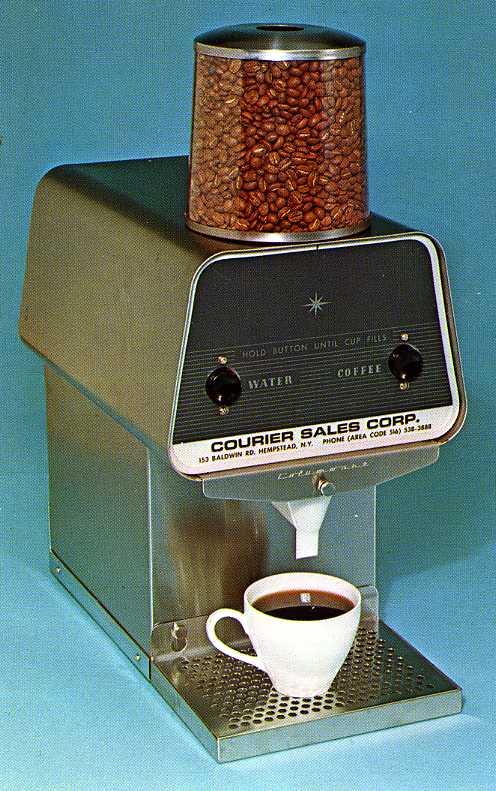
3. Invest in a Serious Coffee Program – I like the idea of a coffee sommelier, and you can definitely charge more for your coffee drinks this way. If you’re going to do this you absolutely must not use instant coffee. Ever. Not even if you have one of those instant coffee machines with the beans showing on top.

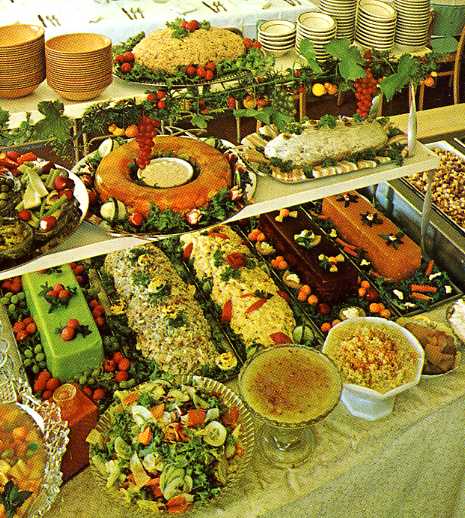
2. Serve More Vegetables – Given the high price of farmers’ markets, it makes sense in these tough times to look for ways to reduce costs. The advice given in the June 1968 edition of Cooking for Profit still makes sense. No one can tell you’re using canned vegetables if you encase them in gelatin. And please, describe your creation as “en gelée.”

1. Offer a Great Deal Every Night of the Week – A few deals used in previous downturns that are ripe for recycling: offer free second helpings, especially of gelatin; no charge for (gelatin) desserts; sell meal tickets to frequent diners; decorate with antiques – that are for sale; hold poker tournaments during the afternoon cocktail hour; invite celebrities to eat for free if they agree to wear their best clothes.

© Jan Whitaker, 2011

5 Comments

Filed under miscellaneous

Common victualing

When I started my blog I impulsively chose “victualling” [vit’ling] as my URL. In Massachusetts, restaurants still need to get a “common victualers” license when they open and I’ve often marveled at the survival of such a quaint term. If I hadn’t been in such a hurry when I set up my blog I would have thought to choose common victualer, with a single L, as my URL.

The term dates far back into English history. In 1714 there were four common victualers in Boston, one of whom was a woman. Victualers were distinguished from innholders in that they didn’t necessarily offer overnight accommodations for humans and animals, just meals and, of course equally important, drink. They also provisioned ships with long-lasting cooked food such as potted meats. Their places of business were invariably called either victualing houses or cellars, and they were cheaper and more basic than taverns, coffee houses, or restorators, all of which they outnumbered. In 1810 Boston had over 50 victualers but only seven taverns and coffee houses, and one restorator.

Over time I’ve realized what a perfect term common victualing is for my approach to the history of American restaurants. Here’s how.

1) I consider alcoholic beverages a critical factor in restaurant history. This country has long had deep divisions over the way alcohol should be consumed and by whom. It has even battled over whether Americans should drink at all and these battles have profoundly shaped our restaurants. One of the most notable differences between eating places in the 19th and 20th centuries is how many in the latter century – and now — serve neither fermented nor distilled alcoholic beverages.

2) I am more interested in the commonplace eatery than in rarified fine dining. I’m not inordinately fascinated with the most elite restaurants and when I do look at them I don’t treat them with special reverence. I take the position that common restaurants have been more important in the course of history.

3) The most important kind of food to victualers was meat and the early victualers were probably butchers with stands in public markets where they cooked meat on the spot for their customers. I always try to get to the “meat” of the story, even when my subject seems trivial – but I also appreciate how critical animal protein, including fish and fowl, has always been to American restaurant-goers.

4) Because they were cheap, sold liquor, and hosted market vendors and sailors, upright citizens held victualing establishments in low esteem. As a focus of moralistic outrage, they are of special interest because when I’m lucky enough to find a tirade against them it reveals something about the values of the time. The same can be said of how fast food chains catalyze criticism today.

The term victualing house pretty much fell out of use by about 1840 when it was replaced by the synonymous “eating house.”

© Jan Whitaker, 2011

2 Comments

Filed under lunch rooms, miscellaneous

Taste of a decade: 1850s restaurants

The population was moving west, with about a third living beyond the Appalachians. California had just been admitted as a state. Cities were growing. NYC was the largest, at over half a million, yet it was the only one of the nation’s eight biggest cities with more than 100,000 inhabitants. Slavery continued in the South and threatened to move West.

The smallest of the “big” cities, San Francisco, with a metropolitan area of about 35,000 in 1850, was the decade’s headline grabber. With so many living in tents and hovels, nearly everyone there ate in restaurants most of the time. Cooks came from every part of the world, as did the cuisine.

Boston, third largest with fewer than 137,000 residents, reported that among properties supplied with water there were 65 hotels, 57 saloons, 56 restaurants, 13 oyster shops, and 12 eating houses, along with 9 distilleries and 8 breweries. Beer was, in fact, beginning to supplant hard liquor as the national alcoholic beverage. Some parts of the country were overtaken by temperance sentiment and a few temperance restaurants were initiated.

The old Yankee/English term “eating house” was giving way to the more elegant French term “restaurant.” Because of so many single males in cities, many restaurants were run in conjunction with barber shops, pool halls, and bowling lanes. Those places that accommodated women usually set apart a separate room for them.

American restaurant cuisine was becoming more diverse, yet oysters reigned supreme as everybody’s favorite appetizer, late night snack, and fast food. They were ordered by simply saying, “Give me six.”

Highlights

1850 Residents of San Francisco are delighted when the refined Excelsior opens. Its white tablecloths, someone writes, give the new restaurant “quite a human appearance.” It is outfitted with gold spoons and some of its vegetables come all the way from the Sandwich Islands. – The city also has the first three Chinese restaurants in the U.S., serving “chow-chow and curry dishes” along with more conventional “English” choices.

1851 In Louisville KY, Walker’s City Exchange celebrates the opening of its new five-story restaurant building, fitted out with marble drinking saloon, dining rooms, an oyster stand, and private dining apartments. On the upper floors are tenpins alleys, billiards rooms, and staff dormitories.

1852 Newly arrived in Boston for his U.S. tour, English novelist William Thackeray is treated to a plate of gigantic oysters at Ferdinando Gori’s restaurant in the Tremont House. After downing one, he cast a “comic look of despair” at the other five, admitting he felt as if he had “swallowed a little baby.”

1852 Broadway, the grand avenue of NYC, is home to elaborate Paris-style cafés, including the popular gilt and mirrored ladies’ resort called Taylor’s and several others with names borrowed directly from France such as Tortoni and Rocher de Cancale.

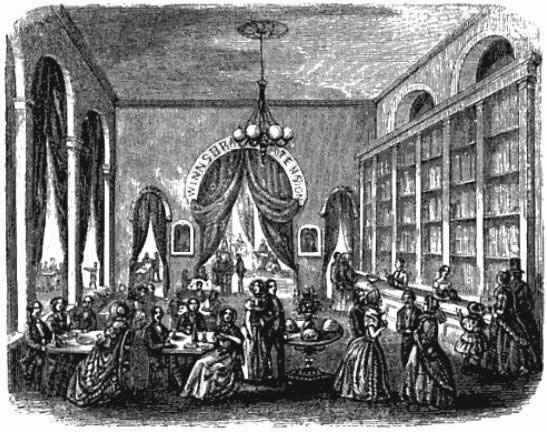
1853 In Philadelphia someone has fitted up a handsome row house with a café and restaurant called Parkinson’s. It has a ladies’ saloon “sumptuously furnished in velvets and frescoes,” a garden, and a confectionery shop. – In San Francisco, M. L. Winn operates a fashionable alcohol-free ladies’ Refreshment Saloon at the corner of Washington & Montgomery (pictured) designed to “sail through the Gulf of Dissipation, Misery and Death.”

1854 Six years after the Declaration of the Rights of Woman at Seneca Falls NY, women’s rights supporter Stephen Pearl Andrews argues for abolishing home kitchens, writing “the large and elegant eating saloon, with cleanliness, order, artistic skill, and abundance, in the preparation of food, is a cheaper arrangement than the meager and ill-conditioned private table.”

1855 George T. Downing, a black caterer from New York, opens the Sea Girt House in Newport RI where he presents an ice cream saloon, private dining rooms, and, behind a lace curtain, a ladies’ café. Specialties prepared by his French and English assistants include New York oysters, confectionery, and cakes.

1856 Baltimore issues 177 licenses to eating places. Since the number of eating places not serving liquor would be minuscule, this is undoubtedly close to the total number of restaurants.

1858 At the Empire State Dining Saloon in San Francisco, a wide choice of baked goods, regionally and nationally, is available with the diner’s California Bacon and Eggs such as Mississippi Hot Corn Bread, Hot English Muffins, Hot American Waffles, Hot Hungarian Rolls, Boston Cream Toast, German Bread, and New York Batter Cakes.

1859 Only a few years old, a café owned by Charles Pfaff is discovered by a loose band of artists and writers which includes Walt Whitman who make it their club. They eat German pancakes and drink Pfaff’s beer from the barrels which line the walls. The word Bohemian has not made it into the dictionaries yet but when it does it will be applied to them.

© Jan Whitaker, 2011

Read about other decades: 1800 to 1810; 1810 to 1820; 1820 to 1830; 1860 to 1870; 1870 to 1880; 1890 to 1900; 1900 to 1910; 1920 to 1930; 1930 to 1940; 1940 to 1950; 1950 to 1960; 1960 to 1970; 1970 to 1980

5 Comments

Filed under miscellaneous