Category Archives: cafeterias

The Boos brothers of cafeterialand

It was an orphaned family that had gone through some difficult times that developed one of the early, very successful chains of cafeterias in California.

The chain of Boos Brothers cafeterias was one of the first in Los Angeles, contributing to the flood of cafeterias that soon appeared in that city and elsewhere in Southern California. Californians to the north ridiculed the trend, referring to Los Angeles and southern California as the “State of Cafeteria.” It’s true, of course, that cafeterias have never been seen as fashionable and sophisticated.

The Boos [probably pronounced Boes] family story reads like a fictional tale. The Moscow, Ohio, family of nine children were orphaned when both parents died in the late 1880s, followed by the eldest son’s demise two years later. That left Horace, about 19, as caretaker of his three brothers and four sisters. In his will, their father had expressed a wish that they all stay together, live in the family home, and be self supporting. They followed his wishes except for staying in their small hometown. At some point Horace moved the family to Cincinnati where he got a job as a typesetter for the Cincinnati Enquirer. He and his brothers, and at least one sister, also operated a grocery story, then a hotel and restaurant in Cincinnati.

Before the brothers, and some of the sisters, moved to California in 1906 they had also lived briefly in Rochester, New York City, and St. Louis, operating restaurants in all of them, including a lunchroom at the 1904 St. Louis World’s Fair.

Once in California they acquired a ranch in San Gabriel, offering eggs for sale in a 1906 advertisement. By August of that year they had opened their first cafeteria in Los Angeles. They also continued to operate the ranch, supplying their restaurants with eggs into the 1920s.

By 1909 they had expanded to three cafeterias. Judging from postcards like the one here, the early cafeterias may have been exceptionally sanitary and well outfitted but had a somewhat functional appearance. Gradually their cafeterias became more decorative, particularly when they moved into buildings they had built.

In 1922 they opened a newly built cafeteria at 618 S. Olive decorated in what they described as Spanish and Moorish style. An advertisement celebrated its interior: “Accentuating the impressive spaciousness of the place, are three arched windows of great height in the north wall. In corresponding positions in the south wall, equivalent in number and size, are mural paintings of exquisite technique, depicting with historical exactness, Cortez before Montezuma.”

The newest, and last, cafeteria, built at 530 S. Hill in 1926 — a location previously occupied by a failed B&M Cafeteria — was custom-built and featured the largest orchestra, one of 9 pieces. It also was fitted with rest rooms filled with upholstered arm chairs and settees. A row of water fountains referred to as a “Persian fountain” was backed by a large and impressive scene painted on tiles [shown here].

In 1927 the cafeteria company celebrated its 20th anniversary, publishing a booklet called “Glancing Back Along the Cafeteria Trail.” At that point the business operated six cafeterias in Los Angeles and one on the island of Catalina opened in 1918.

The booklet celebrated their success and gave some idea of what it took, such as purchasing 870,000 pounds of beef per year and 40,800 chickens. An estimate of how many acres it would take to grow the fruits and vegetables used by the chain came to 20,000. The Boos used only fresh vegetables, nothing canned. All but one of their locations had live orchestral music.

Surprisingly, the year after the celebratory booklet was published, the brothers sold the chain to the Childs corporation, including all six cafeterias in Los Angeles and the one on Catalina Island. At that point the six L.A. cafeterias were reputedly serving 10M meals a year. The sale to Childs, which kept the Boos name, was said to net $8M for the three remaining brothers. Horace Boos had died the previous year and it’s possible that might have motivated the sale.

In the Depression, Childs sold their Boos holdings, two going to Clifford Clinton of Clifton’s Cafeterias fame, and two returning to the Boos brothers, according to some accounts. Other reports, confusingly, had the brothers buying back all the cafeterias. Whichever was the case, the only one that seemed to reopen under the control of the Boos brothers was the cafeteria at 530 S. Hill. During the Depression it met the needs of people with little money, offering low-priced dishes such as soup and spaghetti for 8 cents and most vegetables for 7 cents.

The S. Hill Boos Brothers cafeteria was still in business as late as 1955, advertising in the Los Angeles Times as “The Original.” But at some point it acquired a new owner doing business as Green’s Cafeteria. In 1960 Green’s was out of business and the equipment was auctioned.

© Jan Whitaker, 2024

12 Comments

Filed under cafeterias, popular restaurants, proprietors & careers

Anatomy of a restaurateur: Clifford Clinton

Rarely is the word fantastical used to modify the word cafeteria. Nor are restaurant proprietors usually thought of as powerful vice crusaders. [cover, 1940s booklet; below Pacific Seas]

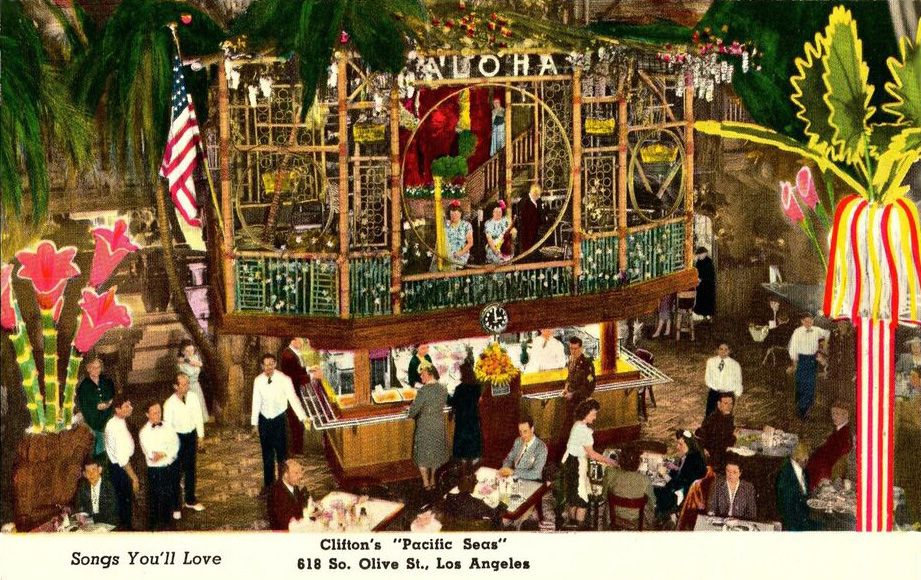
A major exception of the latter was Clifford Clinton, creator of two of Los Angeles’ most memorable cafeterias. Both Clifton’s Pacific Seas and Clifton’s Brookdale were indeed fantastical, exotic, and composed of an odd blend of entertainment and salvation. In appearance they anticipated elements of Disneyland as well as Polynesian restaurant decor.

One of their strangest aspects was that they represented Clinton’s missionary work. After a few years of operating his father’s Puritan restaurant chain in San Francisco – previously owned by moralist Alfred W. Dennett — he came to Los Angeles in 1931 and re-opened a former Boos Brothers cafeteria at 618 S. Olive.

By the following year he was running that “Clifton’s” cafeteria plus another one on W. Third, one on Hollywood Blvd, a hotel probably housing his employees, “A miniature Cafeteria of the Tropics” in Whittier, and a “Penny Caveteria” in a basement on S. Hill street that offered dishes for 1 cent each.

In October 1932, perhaps the worst year of the Depression, a newspaper featured a smiling woman in the Caveteria with her 5¢ meal of soup, veal loaf, macaroni, sliced tomatoes, and buttered bread. According to another story, she was but one of an average of 4,500 customers fed each day (except Sundays, when all Clifton’s closed). Lines typically stretched down the street. For Christmas that year 7,000 guests enjoyed a Christmas turkey dinner priced at 1¢.

In 1939 Clinton remodeled the redwood-forest-themed Clifton’s Brookdale that had opened in 1935 as well as the original place on S. Olive, Clifton’s Pacific Seas, with a dazzling Polynesian look, neon palm trees, and many, many waterfalls. [Brookdale interior shown above; below more waterfalls, Pacific Seas exterior]

Along with meals, the restaurants acted as social centers and spiritual retreats for the thousands of uprooted mid-westerners who had relocated to Los Angeles. And they served as a kind of political base for Clinton’s reform campaigns. His cafeterias and his political activities were entirely consistent with the tenor of Los Angeles culture of the time. As George Creel summarized it in a 1939 Colliers article, the city throbbed with “two thousand religious cults . . ., each claiming daily and direct communication with Jehovah, and an equal number of social, economic and political movements: Epic, Social Credit, Utopia, the Townsend Plan and Thirty Dollars Every Thursday, etc., all guaranteed to promote the immediate salvation of mankind.”

Religiosity permeated the Clifton’s Cafeterias, as it had Dennett’s and would in a number of restaurants later in the century. If guests left the main dining room of Pacific Seas and entered the basement they would find a life-sized figure of Jesus praying in The Garden of Meditation [shown above]. Brookdale featured a Little Chapel set amidst the redwoods.

During World War II, Pacific Seas diners could also post their “feelings and wants” on a bulletin board or consult with a “Mrs. Von” in her bamboo hut for advice on personal problems.

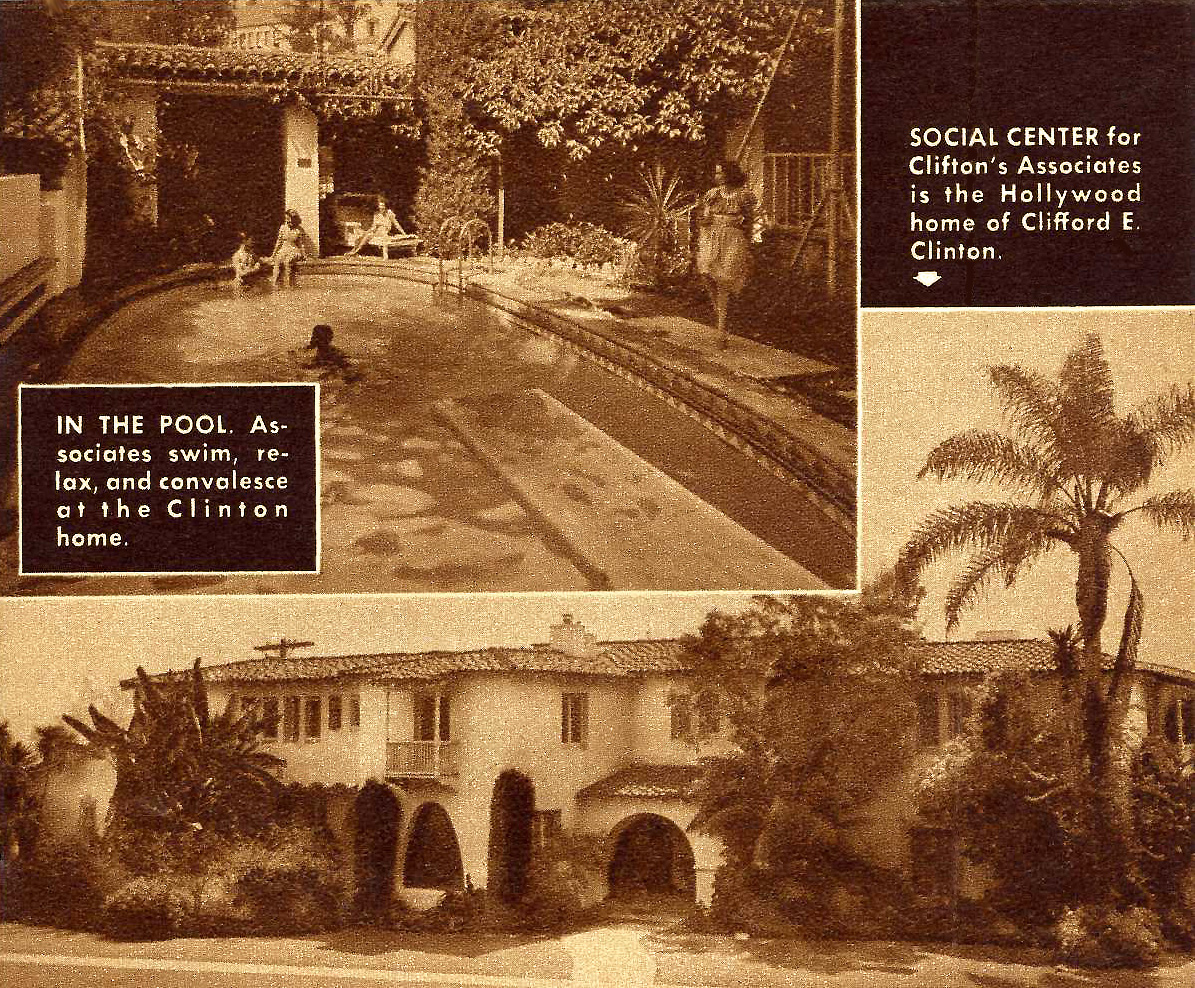
Clifford Clinton’s mission to offer affordable meals continued throughout his career. The policy was that no one would be turned away because of a lack of funds. Although the practice undoubtedly ate into revenue, and was probably taken advantage of by some, Clinton managed to amass enough profits to live in a sprawling mansion on Los Feliz Blvd. and Western Ave in which he hosted convalescing employees [shown above]. (The house sold last year for close to $5M.)

Clifford Clinton was as colorful as his restaurants, despite his appearance as a conventional religious and civic-minded family man. He had spent much of his childhood in China with his missionary parents, an experience that he said made him ultra-sensitive to human hunger. That is unusual but it was just a prelude to his role as one of Los Angeles’ prominent crusaders of the 1930s dedicated to cleaning up the city’s vice and political corruption.

He succeeded in getting Mayor Frank Shaw recalled and replaced by the candidate of his choice, who he promoted on his radio show. In addition, the city’s police chief was indicted and found guilty of plotting the car bombing that severely injured the private detective working for Clinton’s lawyer.

Clinton’s success as a crusader has been partly attributed to his alliances. He worked with Protestant ministers under the banner of an organization he created known as C.I.V.I.C (Citizens’ Independent Vice Investigating Committee). And he also allied with the Communist Party during its popular front phase. As a result of these efforts, gambling, prostitution — and the city’s anti-Communist Red Squad — were eliminated, or at least removed from sight.

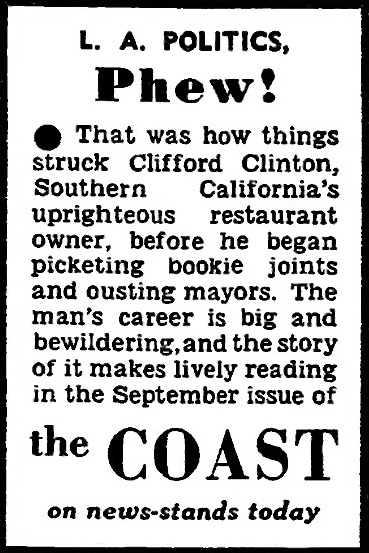
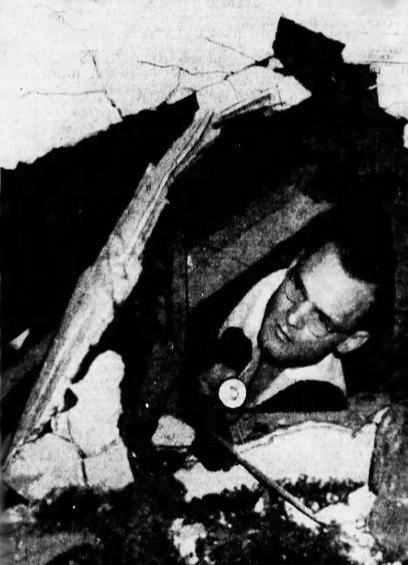
Through these years Clinton experienced endless phone threats, a bombing at his home, false reports of food poisoning at his restaurants, and an endless array of dirty tricks such as an invasion of one of his public forums by 300 hungry people who had been given tickets for a (non-existent) free meal of chicken and beer. [above: 1939 advertisement for magazine article; below: Clinton examines bomb damage]

Having turned the cafeterias over to his children in 1946, Clinton and his business partner, Ransom Callicott, focused on world hunger. They found a scientist who developed what would be known as Meals for Millions, a soy-based one-dish meal that could be prepared as soup or, with a little flour or corn meal added, bread.

Clinton died in 1969 but his restaurants, including a number of conventional ones in shopping centers, endured well into the 2000s.

© Jan Whitaker, 2024
11 Comments

Filed under cafeterias, Offbeat places, popular restaurants, proprietors & careers, restaurant decor, restaurants, theme restaurants

Kibbitz & Nosh, the book

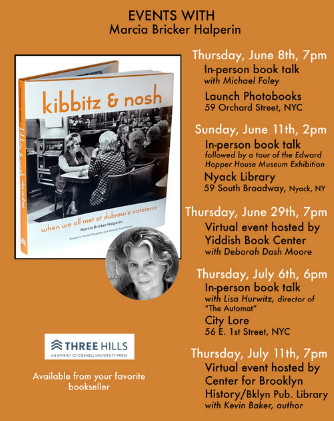
Today is launch day for Kibbitz & Nosh: When We All Met at Dubrow’s Cafeteria, a book of black and white photography by Marcia Halperin. In the 1970s she began dropping by Dubrow’s on King’s Highway in Brooklyn and in Manhattan’s garment district. The cafeterias from what may seem like a long-gone past were as unpretentious as their customers.

The images she captured are reminiscent of street photography at its best, showing aspects of everyday life in the city. The book also includes essays by playwright Donald Margulies and Deborah Dash Moore, historian of Jewish-American life, including Jewish New York: The Remarkable Story of a City and a People (2017).

There is an interview podcast with Halperin by Street Photography Magazine, and a selection of her photographs from the book can be viewed at the Edward Hopper House Museum in Nyack, NY, until June 25.

Kibbitz & Nosh is available from independent booksellers, Amazon, and Barnes & Noble, as well as its publisher, Cornell University Press.

UPDATE of coming events

Signup for June 8 at Launch Photobooks – In Person

Signup for June 11 at Nyack Library — In Person

Sign up for June 29 at Yiddish Book Center – Virtual

4 Comments

Filed under cafeterias, patrons, popular restaurants

Restaurant as community center

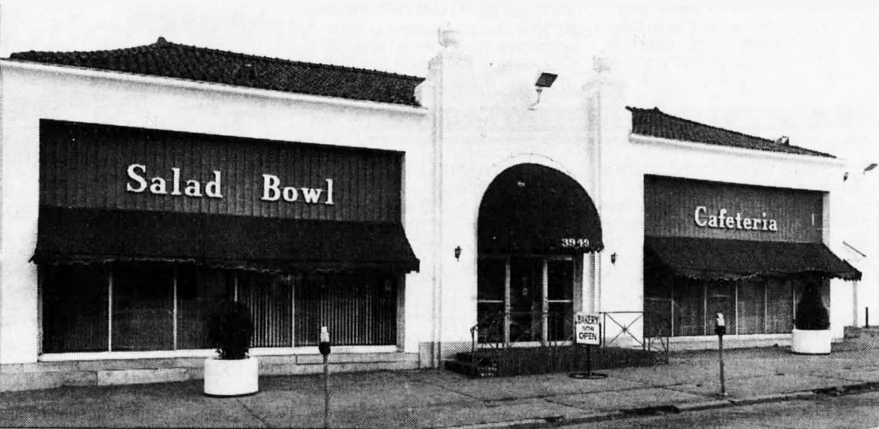
The first Salad Bowl restaurant, at 4100 Lindell in St. Louis, was established in 1948 by two former employees of Miss Hulling’s Cafeteria downtown. The husband and wife owners were mainly concerned with making a living for their family and had little idea that, like Miss Hulling’s, their venture was destined to become a celebrated local institution and landmark. [above: final and primary location, 1989]

The Salad Bowl’s founders were Elmer and Anna Sewing, whose three sons would one day take over the cafeteria, having gained plenty of hands-on experience working there in their younger years. At its final location at 3949 Lindell Blvd. the sons, David and his twin brothers Norman and Norbert, took full charge after their father’s death in 1976. Knowing they had to expand the business, they encouraged greater use of the banquet rooms. To draw customers during the day the sons made the rooms available for free to clubs and organizations for meetings and talks if their members and attendees went through the cafeteria line. [Norbert and Norman Sewing at the bakery counter, 1989]

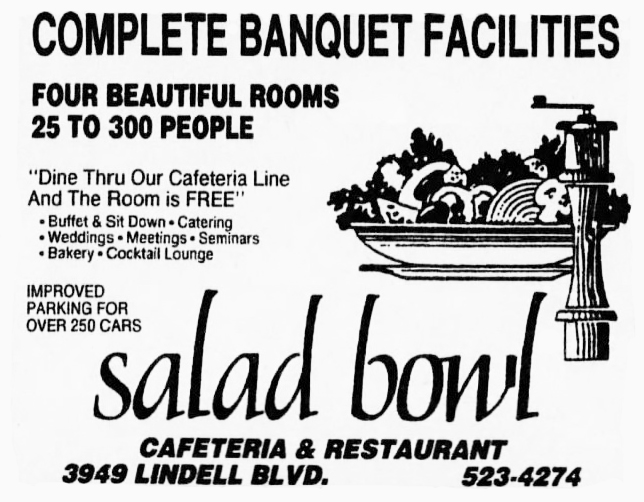
The cafeteria was located about halfway between two universities, making it possible for the cafeteria’s banquet rooms to become popular sites for talks and lecture series by professors. The Salad Bowl had the unique distinction of being the only eating place that I know of that advertised “seminars” among its attractions. [1988 advertisement] A few of the topics covered over time were homelessness, children’s mental health, the working poor, the global economy, and the Jewish sanctuary movement.

News conferences took place regularly at the Salad Bowl. In 1986 a speaker from Ralph Nader’s Public Citizen group discussed the rapidly rising rates of liability insurance, blaming it on greed in the insurance industry. The event was sponsored by the Missouri Public Interest Research Group and the Missouri Citizen-Labor Coalition.

Although, like many restaurant owners, Elmer Sewing had turned away Black diners at a time when he judged that white customers would not accept them, he often said that he was opposed to segregation. According to his grandson Stephen, who privately published a memoir-style history of the Salad Bowl* after its closure in December of 2005 [title page above], his grandfather was personally opposed to segregated eating facilities. He was said to be eager to welcome Black customers once the Civil Rights Act had passed, making it illegal to refuse service to patrons based on race. Stephen wrote that the cafeteria was one of the first in St. Louis to integrate.

Black organizations, clubs, and events by Black activists were included in the Salad Bowl mix, as were prayer breakfasts in honor of Martin Luther King. Another example was a news conference held by well known activist Ivory Perry who denounced President Ronald Reagan’s introduction of housing vouchers in 1982, calling it a step in federal abandonment of public housing and urging people to join a protest rally in Washington. A St. Louis section of the National Council of Negro Women held its 5th annual awards dinner there in 1986.

Both Black and white politicians gave talks at the cafeteria, and Jessie Jackson visited there. According to Stephen Sewing’s book, “Every state senator, state representative and governor has known the Salad Bowl because of all the political parties, press conferences, meetings and rallies held at the Salad Bowl over the years.” Organizations holding regular meetings included the Book Lovers Club, the League of Women Voters, the Press Club, Retail Druggists, Weight Watchers, the Worker’s Rights Board, the Women’s Coalition for the Democratic Party, and locals of the St. Louis Teachers Union and the Service Employees Union.

Scrolling through the notices of talks and public events held at the cafeteria made me realize how impossible it is to give more than a partial idea of how many and varied they were.

In the 1990s the cafeteria was also used as a site for flu shots, blood pressure tests, and school children’s immunizations.

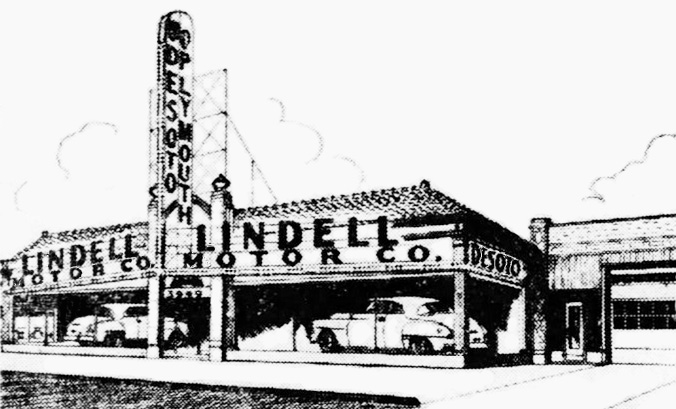
The Salad Bowl menu focused on standard cafeteria comfort food such as Kidney Bean Salad, Whiting, Beef Brisket, Banana Cream Pie, and the St. Louis specialties, German Potato Salad and Toasted Ravioli. Customers could also stop at the bakery counter to buy baked goods to take home. A tavern room called Bits and Saddles operated for ten years as part of the complex and there was an underground parking garage, a remnant of the car dealership that had occupied the site before the Salad Bowl took it over. [shown below, 1952]

The restaurant also served as a special gathering spot for the extended Sewing family who used banquet rooms for their own wedding dinners and receptions as well as major holiday feasts. With the three fathers working long days, sometimes six days a week, often the only way to see them was for their families to come to dinner at the cafeteria. Their wives and children also put in time as spare hands for serving banquets, helping with bookkeeping, and other chores.

Now, when restaurants tend to be ranked and rated mainly for the quality and novelty of their cuisine and interior appointments, I find it refreshing to review a restaurant from the past that was so deeply a part of city life, and valued for that by thousands of St. Louisans.

© Jan Whitaker, 2022

  • Two copies of the 90-page booklet are available at the main St. Louis Public Library.

4 Comments

Filed under alternative restaurants, cafeterias, popular restaurants, proprietors & careers

Women’s lunch clubs

Lunch clubs for working women appeared in American cities in the 1890s and early 20th century. In a fairly short time they stimulated the development of commercial cafeterias, as well as employee cafeterias in large companies.

Chicago was regarded as a prime incubator of the lunch club idea. In 1891 a group of alumnae of the prestigious Ogontz finishing school near Philadelphia opened a space for women workers on an upper floor of Chicago’s Pontiac Building. At the start the club charged 10 cents a year for membership, and sold sandwiches for 4 cents and milk, tea, or coffee for 2 cents each.

By the end of the nineteenth century, women’s lunch clubs could be found in other major cities, including New York, Philadelphia, Boston, Cleveland, and San Francisco, but not in the South. Some, such as three in NYC, were affiliated with churches. In Indianapolis, temperance supporters – members of the W.C.T.U. — ran a lunch club.

The lunch clubs were meant to provide not only inexpensive noontime meals for working women, but also to give them a place to enjoy a little leisure in “rest rooms” supplied with sofas, rocking chairs and desks, as well as libraries and other amenities. Some offered evening lecture series.

The clubs came at a time when the number of office workers in cities was on the increase. The clubs mainly catered to “business women,” which then meant young white-collar workers in offices and department stores. Although women factory workers had a greater need for restful and inexpensive lunches than did office workers, their shorter lunch breaks and lower pay made it difficult to accommodate them.

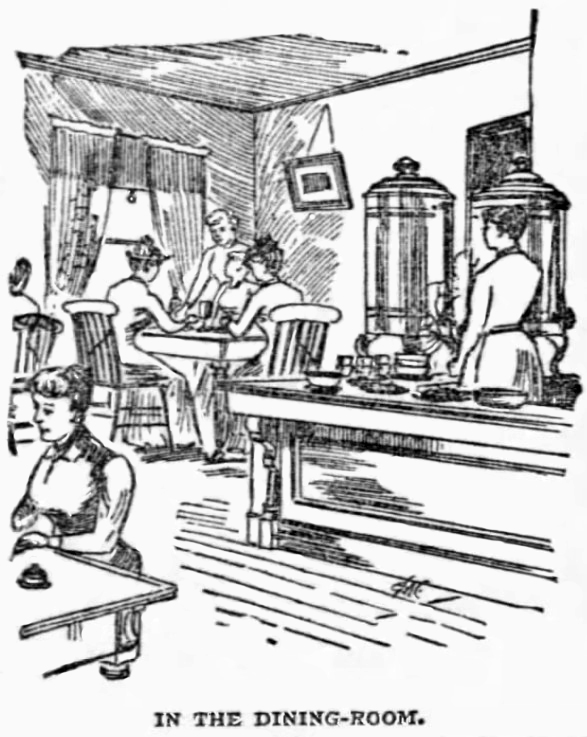
The earliest lunch clubs were launched by elite women as philanthropic projects to assist workers with affordable lunches, give them a place to hang out at noon, and to uplift them culturally. The food was not cooked on site, but supplied by other kitchens, such as that at Jane Addams’ Hull House in Chicago. To avoid the cost of hiring servers, food was set out on counters and diners selected what they wanted, a novel arrangement in the 1890s. [Above: Chicago’s Ursula lunch club, 1891] Prices were meant to cover costs but not to make a profit.

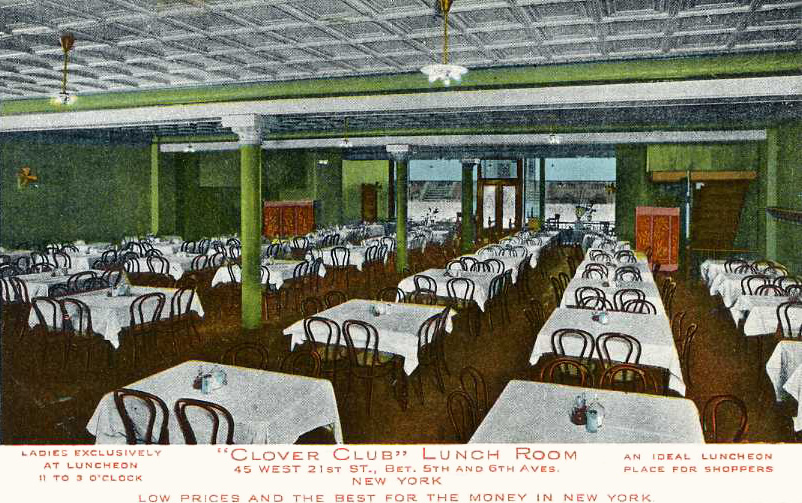
Lunch clubs had to tread a fine line in terms of how philanthropic backers related to the working women. At least one of the philanthropic lunch clubs made its lunchers feel pitied and failed to attract enough women. Those who had stuck with it then took it over as their own co-operative enterprise. Some other lunch clubs were begun as co-operatives. [Above: postcard of a commercial lunch club that admitted men]

A humorous turn-of-the-century story characterized the uneasy feeling of some working women toward philanthropy. In it, a wealthy man approaches a young sales clerk in a department store to say that he is thinking of starting a Noon-Day Rest Club, “where you and the others may come and drink Tea and listen to me read Advice to the Young.” She replies, “That would be lonely Billiards, wouldn’t it? We don’t want to be rounded up and sozzled over. Not on your Leaflards. The Poor Working Girl draws a line on having a kind-hearted Gentleman pull the Weeps on her. I think I can struggle along without having you come around to hold my Hand.”

Despite this obstacle, lunch clubs proliferated. The Klio Club’s Noon-Day Rest expanded its menu, adding dishes such as soup, baked beans, and salmon salad. In 1899 a sample menu in one of Chicago’s six lunch clubs might have looked like this:
Two slices of bread or two rolls, with butter 5c
With jam or cold meat 6c
Extra butter 1c
Tomato soup, beef hash, Spanish stew 5c
Potato salad, sliced tomatoes, cucumbers, cottage cheese 5c
Tea or coffee, with cream 5c
With milk 3c
Iced tea, buttermilk 3c
Raspberry ice, lemon ice 5c
Vanilla ice cream, tutti-frutti ice cream 5c

The success of serve-yourself lunch clubs spurred the development of commercial cafeterias. Over time it became harder for lunch clubs to attract large numbers of women patrons. Some began to accept men who, after all, tended to spend more for lunch. For-profit help-yourself businesses proliferated. In one case, a dispute at Klio’s Noon-Day Rest led its caterer, Kate Knox, to leave and start her own self-service lunch club business. [Mrs. Knox’s lunch club pictured above] Another enterprising woman, Mary Dutton, operated four cafeterias by 1915 after beginning with a single lunch club.

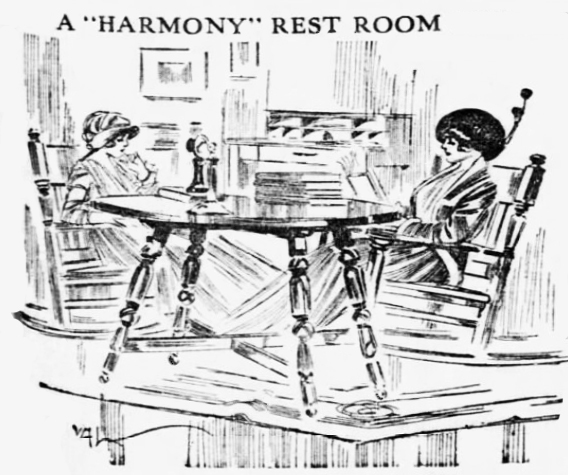
But the lunch clubs made an impact, for a time at least. Boston’s original noon-day lunch club closed because it felt it had elevated the standards of common restaurants. And businesses borrowed ideas from the lunch clubs. For example, The Harmony Cafeteria in Chicago, a commercial business, advertised in 1913 that it featured a basement rest area, with a drawing showing two women in rocking chairs reading books.

© Jan Whitaker, 2022

6 Comments

Filed under cafeterias, food, Offbeat places, patrons, restaurant prices, women

Speed eating

Since the early 19th century, observers have commented on how fast Americans eat. Visitors from other countries were especially apt to notice the speed with which people, particularly men, gulped down their food and hurried away from the table as quickly as possible.

In the 1843 book Men and Manners in America, the author observed that “all was hurry, bustle, clamor, and voracity, and the business of repletion went forward with a rapidity altogether unexampled.” He described how at breakfast he had barely arrived at the communal table as others were rushing off, leaving behind a terrific mess of chicken bones, an upset mustard pot, and a tablecloth with egg, coffee, and gravy stains. Dinner was no better: “the same scene of gulping and swallowing, as if for a wager.” Many of his fellow diners left the dining room before the second course and few waited for dessert.

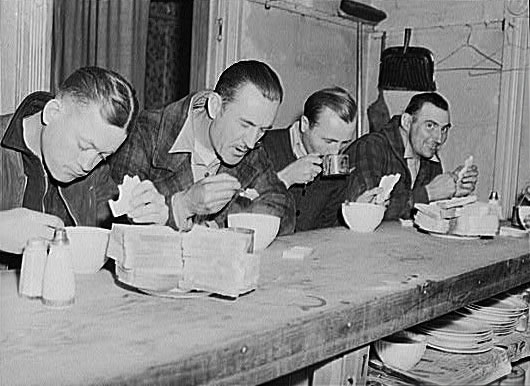
His observations were ratified by many others, continuing throughout the 19th century and into the 20th. New York’s inexpensive “slam-bang” places with counters were especially noted for their customers’ speed of eating. Viewed from the back, wrote an essayist in 1865, a row of 30 men with heads bent down and elbows moving rapidly looked as though they were weaving or fiddling. They finished in about 8 minutes.

A Scribner’s story in 1874 described the typical American restaurant as a place where men “do not eat – they feed,” without even removing their hats. It reported that the average mid-day “dinner” time lasted 6 minutes and 45 seconds. At New York’s Astor House of the 1880s – scarcely a low-class eatery – many of the male customers ate standing up at a counter, a practice that was by no means rare. A visiting French economist attributed the popularity of 5-minute counter lunches in saloons to the wish not to interfere with business — a convenience “that does not cut the day in two.” Or, as another writer put it in 1895, “The ammunition is put in, with a wad of dessert on top, and in ten minutes the man who is going to be a millionaire in less than ten years is back at his desk, loaded and pointed at his work . . .”

By the late 1890s, women had also become speed eaters, “stopping in restaurants when shopping and being in such a hurry that they don’t care what they eat and do not even remove hats and coats.” The so-called “new woman” was ready to sit at lunch counters “like a man and eat her pie and drink her coffee in a hurly-burly.”

The late 19th century also witnessed the development and spread of new restaurant types organized around speed – the cafeteria, the automatic restaurant, and the quick lunch, all of which were based on the abolition of table service. They also did away with the much-hated custom of tipping that was widely viewed as a foreign importation from old and dying Europe.

Through the 20th century speediness was made into a science, increasingly applying not only to how fast customers ate, but how quickly food could be prepared, how quickly customers could be presented with food, and how they could be induced to leave as soon as possible. The hot noontime “dinner” gave way to the sandwich lunch. The number of menu choices was reduced. Chains developed that produced food in central commissaries, doing away with the need for full-scale restaurant kitchens. Cafeterias discovered they could speed up the serving line by wrapping silverware in a napkin. Uncomfortable seating could be designed to stop patrons from lingering.

After the second World War, in which the military had developed rapid methods of feeding troops, speed-up technology advanced in restaurants. A California drive-in had machines that could mold 800 hamburger patties per hour and slice 1,000 buns in the same time. In 1956 an automatic broiler was advertised to drive-ins that broiled approximately 300 burgers an hour. The franchise system began to spread quickly to drive-in eateries across the country, but now without curb service because it was much too slow even if carhops wore roller skates. Even table-service restaurants, catering to the relatively leisurely dinner crowd which was on the increase in the 1960s, improved their speed with frozen foods, boiling bags, and microwave ovens.

By 1965, more than 70% of the more than 378,000 commercial eating places in this country were quick-service restaurants, according to a marketing research study.

No one comments about Americans eating fast anymore. It has become normal.

© Jan Whitaker, 2021

6 Comments

Filed under cafeterias, chain restaurants, patrons

Lunching in a laboratory


Bertha Stevenson was born at a time when a woman’s interest in chemistry, or any scientific field, could only be channeled into the limited confines of women’s realm. That was the same era in which Ellen Richards, the first woman admitted to MIT, became “the mother of home economics.”

Even though Stevenson was younger than Richards, she ended up directing her postgraduate study of chemistry to bread making. On the bright side, she was quite successful, not only at marketing bread but also in creating a string of high-quality lunch rooms with prices low enough that young working women could afford them.

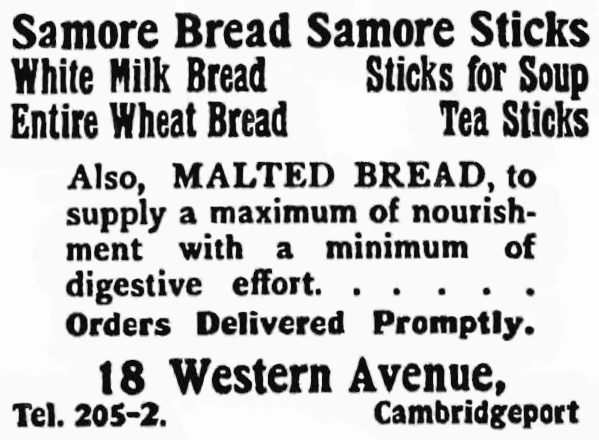
She began making bread in Cambridge MA around 1902. Her shop was quite fashionable in a refined way. According to one description, “The furniture is of the hand made order, simple in line, artistic in design. A few big copper vessels, gleaming red, a few palms, a rug or two, good, but not extravagant, a Ruskin portrait in a black oak frame, one or two Millet pictures, numerous quotations from Ruskin, Tolstoy, Morris.” About a year later, stories appeared in newspapers around the country describing her Samore Bread Laboratory, and congratulating her and her female associates for finally showing the world that college-educated women were good for something after all.

The following year they moved the bakery to Boston. A lunch room was opened with it, sponsored by the Women’s Educational and Industrial Union (WEIU), a non-profit organization in Boston founded in 1877 to advance the well-being of women.

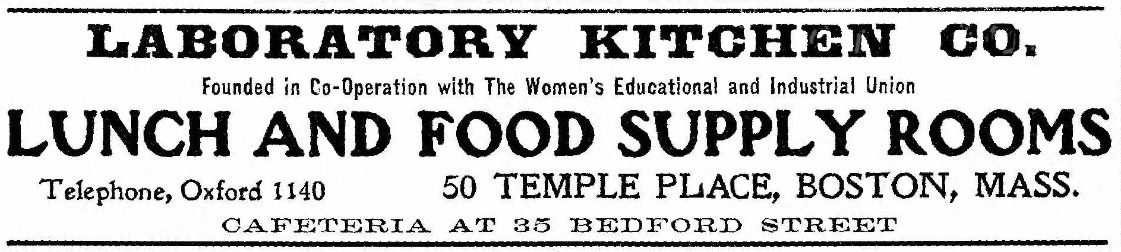
The lunch room, known as the Laboratory Kitchen, was on Temple Place in Boston’s shopping district where it could serve women workers and shoppers. It carried over the Arts & Crafts style of the former Cambridge bakery, with muted greens and browns and touches of copper and brass. Servers dressed in Puritan costumes with white caps and kerchiefs. In addition to producing bread and inexpensive lunches, the plan was to set up a hot dinner delivery service that would free homemakers from kitchen drudgery.

Problems cropped up almost immediately. The Laboratory Kitchen was located on the 2nd and 3rd floors of an elevator building. Unfortunately the elevator often was out of service. Next, another restaurant physically resembling the Laboratory Kitchen opened on the ground floor, causing many lunchers to patronize it thinking they were in the Laboratory Kitchen. Meal delivery turned out to be much more difficult than expected and the delivery zone had to be cut back. As far as I could determine the delivery project was abandoned after the three-year WEIU contract expired.

But the lunchrooms proved to be successful. When Temple Place started up, a second Laboratory Kitchen, not under WEIU sponsorship, was opened on Bedford St. It was operated as a cafeteria, a type of eating place popular in Chicago but then unknown to Bostonians. Ellen Richards and a group of Boston’s progressive women pioneers attended an opening luncheon there where they learned how to handle a cafeteria tray.

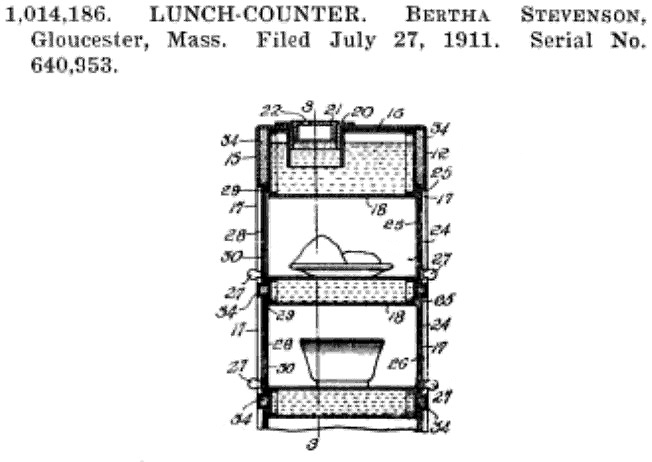
Subsequent lunchrooms of the chain – of which there were eventually five or six — were all based on self service or counter service and were less expensive than the full-service Temple Place location. Stevenson used technological advances to cut costs and speed service. At one address outfitted with a lunch counter [location shown above on Bedford St., viewed from Kingston St.], guests ordered by number. Waitresses then relayed the number to kitchen workers on the floor below by punching the number in a machine and the order was sent up via a dumbwaiter under the counter. At another of the lunch rooms, she employed a simplified “Automat”-style set of heated or cooled boxes that she patented. Workers filled them from the back while patrons lifted a glass window in front and removed what they wanted. [see patent illustration]

I stumbled across a story of someone who was a regular at one of the Laboratory Kitchens in the early days. She began working at the Filene’s department store at age 15, getting $4 a week, which barely allowed her to pay for a ride on the “T” and a 15-cent lunch at the Laboratory Kitchen. Eventually she became a department store buyer and a women’s rights activist.

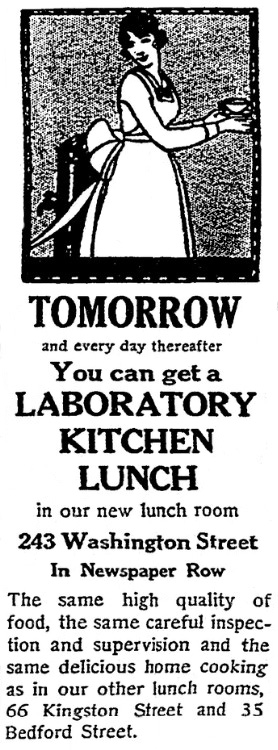
As popular as the lunch rooms were with women, they also attracted men, particularly after one opened in 1919 on Washington Street in the stretch then known as Newspaper Row.

The dishes served at Laboratory Kitchens, such as vegetable plates, chowders, and beefsteak pies, were not fancy. Bertha Stevenson was dedicated to providing lunches that were hot, healthful, and hygienically prepared. In one of the articles she wrote for Good Housekeeping magazine she chided young office workers who ate sweets for lunch, asking, “How can a girl who feeds herself on cream puffs be anything but mercurial?”

She retired in the 1940s but the last Laboratory Kitchen, on Lincoln St., survived until the late 1960s, still advertising its “real lunch without frills.”

© Jan Whitaker, 2020

6 Comments

Filed under alternative restaurants, cafeterias, lunch rooms, proprietors & careers, women

Dining on a dime

To celebrate my blog’s 10th anniversary, I’m looking at what a dime would buy in American restaurants of the 19th and 20th centuries.

It’s not too surprising that a meal could be bought for a dime through much of the 19th century. BUT, does that mean that a restaurant meal was much cheaper then than today?

Not necessarily. For example, compare the situation of unskilled laborers in 1869 and now.

In New York City in 1869, when the average hourly wage for an unskilled laborer was about 15 cents, a meal of meat or fish with two slices of bread and a potato could be had for 10 cents. Adding pie, the bill came to 15 cents. A laborer had to work one hour to pay for this meal. And, any restaurant with prices this low – most were more expensive – was almost certainly dirty and smelly.

Today, by contrast, the U.S. Bureau of Labor Statistics reports that $16.60 is the median hourly wage for an unskilled construction worker, meaning half of workers surveyed make less than that and half make more. Using this as a typical wage, we also have to consider that various taxes are taken out resulting in a smaller net amount, something that was not the case in1869. Subtracting $5.00 gives a net wage of $11.60. At McDonald’s a regular hamburger costs .95, but let’s make it a double for $1.89; small fries are $2.09, and an apple pie is $1.14. The total comes to $5.12. So a laborer has to work less than one-half hour to pay for what is probably a more substantial meal than in 1869. And – this is not intended as an advertisement for McDonald’s — the restaurant is undoubtedly cleaner.

Before Prohibition cheap restaurants had a hard time competing with saloons’ free lunches in many parts of the country. According to research on urban working-class saloons (Jon M. Kingsdale, American Quarterly, October 1973), along a 4-mile section of a major street in Chicago in the 1890s there were 115 saloons with free lunches, but only five 10-cent restaurants and twenty five charging 20 to 35 cents. Brewers bought food cheaply in large quantities and furnished it to saloons at cost.

Not surprisingly, it became harder to find 10-cent meals, or even single dishes, in 20th-century restaurants. And, of course, even in the Depression people who had jobs made more per hour than they did in the 19th century, making a 10-cent sandwich, for example, a better deal.

But in the 1970s it was basically impossible to find anything on a menu for ten cents. (But, keeping in mind the McDonald’s example above, it was possible to find something in a restaurant that cost no more than one hour’s wages.)

Here are some samples of what you could get for a dime in American eating places over the years:

1854 A New York City temperance restaurant tried to lure patrons away from strong drink with plates of meat for 10 cents, as well as tea, coffee, and cocoa for 3 cents a cup. Since a typical laborer’s wage was even lower then than in 1869, this was a bargain only in the sense that prices were higher in most other restaurants.

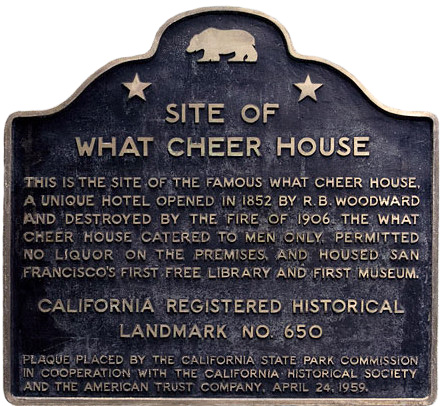
1869 In contrast to New York City, a workman could do pretty well in San Francisco, according to one newspaper account that asked, “Where else in the world can a man sit down to green-turtle steak, bread and butter, celery, sauces, etc., . . . with but ten cents in his pocket? A very popular cheap eatery was in the What Cheer House which served over 1,000 patrons a day in dining rooms crowded with people waiting to grab a vacated seat. On average, workers in California made 60% more than New Yorkers, about $2.00 a day.

1884 At the Novelty Lunch Room in Grand Rapids MI a hungry worker could get Hot Griddle Cakes and Maple Syrup or Pork and Beans for 10 cents. A nickel more bought pie or cake. Michigan’s median daily wage for a laborer was then $1.42.

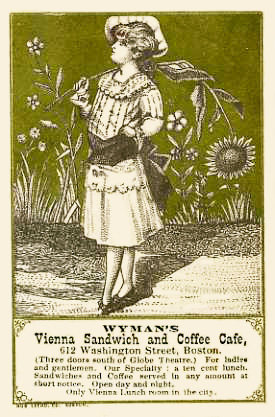
1889 Boston was said to be the home of sandwiches of all kinds, with Wyman’s taking credit as originator of the Fried Egg Sandwich. As noted on this trade card from the 1880s, Wyman’s specialty was a ten-cent lunch. At this time Massachusetts’ median daily wage for a laborer was only $1.22, about 12 cents an hour.

1895 Eating places known as “Beefsteak Johns” in NY sold single dishes such as roast beef and potato for 10 cents, while a regular dinner costing 20 cents had meat and potato plus soup, tea or coffee, and pie or pudding. But a few years later a letter to the editor of the Daily People signed “Hamburger Steak” charged Beefsteak Johns with paying low wages and serving bad food. It ended with “Forward! To the days of the Socialist Republic when the food of the workers will not be adulterated by the little business man in the restaurant line.”

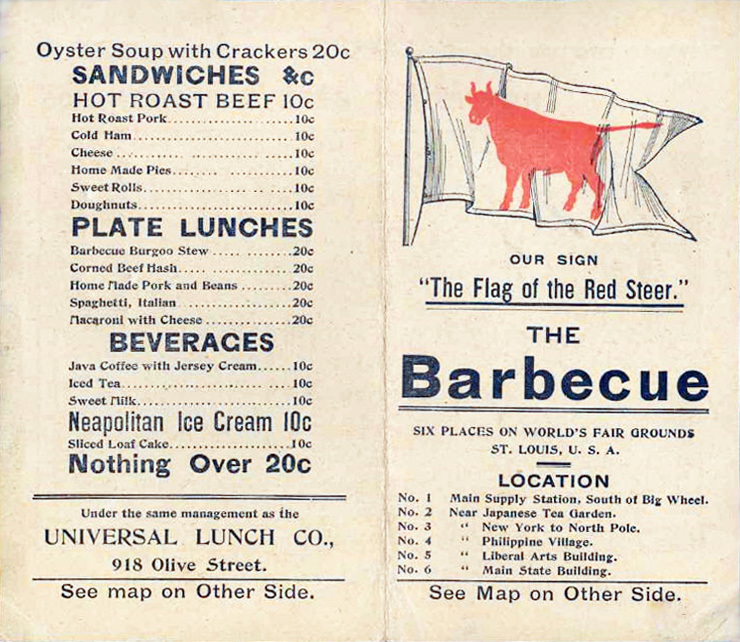
1904 Fairgoers generally expected high prices for food at world’s fairs, but at the St. Louis World’s Fair the Universal Lunch Co. ran barbecue stands selling hot beef sandwiches for ten cents.

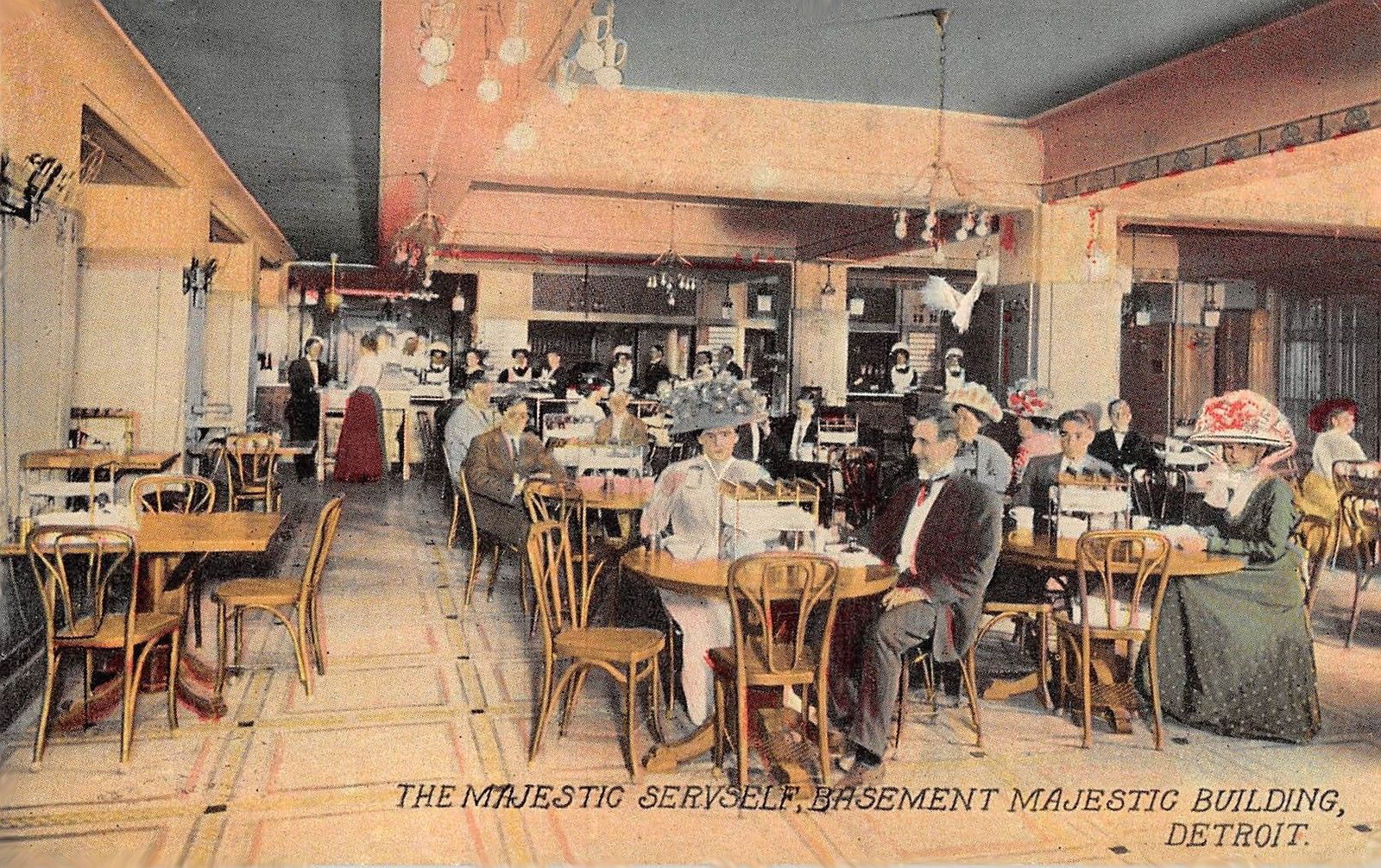
1910 Prices were lower in self-service eating places such as the newly opened Servself Lunch in Detroit’s Majestic Building which billed itself as the finest quick lunch in America. Most items, including soup, corned beef hash, pork and beans, macaroni and cheese, chicken pie, boiled eggs, sandwiches, corn flakes, baked apples, griddle cakes, and pastry, cost a dime each.

1922 Cooper’s Cafeteria in the college town of Champaign IL offered weekend specials such as Veal Loaf with Tomato Sauce or Creamed Chicken on Toast for 10 cents, while most side dishes and desserts cost 5 cents.

1928 and 1929 At Macy’s Department Store in New York, where it was “Smart to Be Thrifty,” the store shaved a penny off items that would have been 10 cents in most restaurants, such as Vegetable Soup, almost all pies and cakes, and a variety of beverages including Coca-Cola and Orange or Raspberry Phosphate. Each cost 9 cents. But a 1929 menu from Schrafft’s at 181 Broadway in New York listed absolutely nothing for 10 cents. The average hourly wage for manufacturing workers before taxes was about 56 cents in both years.

1932 The White Castle chain adopted a promotion to attract women customers (who generally avoided the restaurants). They were mailed coupons by a hostess named “Julia Joyce” that offered five small hamburgers to carry out for only a dime. The economy was depressed and the average hourly pre-tax wage for factory workers had dropped to 47 cents.

1941 With the U.S. supplying food to Great Britain for the war effort, the cost of food went up. Restaurants responded by raising prices. In Springfield IL a Wimpy’s hamburger stand increased the price of its 10-cent burgers to 12 cents.

1950 In New York City the Automat raised the price of coffee from 5 to 10 cents. At the Children’s Milk Bar in the Lord & Taylor department store, children could snack on milk and crackers for 10 cents.

1951 In Beaumont TX the Pig Stand was selling hamburgers that cost 10 cents before WWII for 25 cents. The average hourly pre-tax wage for manufacturing workers was $1.59.

1962 Even at inexpensive restaurants and drive-ins, beverages such as coffee or a small soda were usually the only items priced at 10 cents.

1965 A Burger Chef in Baton Rouge LA celebrated its 6th anniversary with 10-cent hamburgers. Ordinarily they cost 15 cents.

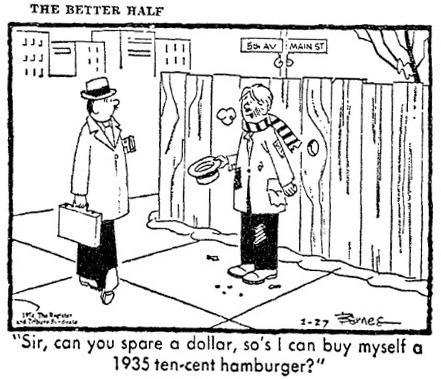
1974 See cartoon.

8 Comments

Filed under cafeterias, chain restaurants, department stores, food, lunch rooms

Taste of a decade: 1980s restaurants

1980srestaurantsfourseasonshotellosangelesDespite an off-and-on economy, the 1980s was a decade in which Americans ate out more often than ever before. Gone were the days when people indulged in a nice restaurant dinner only when traveling or celebrating a birthday or anniversary. Now no reason was needed at all. Restaurants were for convenience, but also for entertainment, pleasure, new experiences, and sometimes only incidentally for nourishment.

A food elite emerged, composed of frequent restaurant-goers with insatiable hunger for new cuisines and unfamiliar foods. Paralleling the growth of the food elite were chefs who became famous as they gave interviews, dashed off cookbooks, and demonstrated cooking techniques on the dais and the small screen. “Food is now the stuff of status,” said wine and restaurant critic Robert Finigan in 1983, comparing the public’s adoration of chefs to their awe of fine artists.

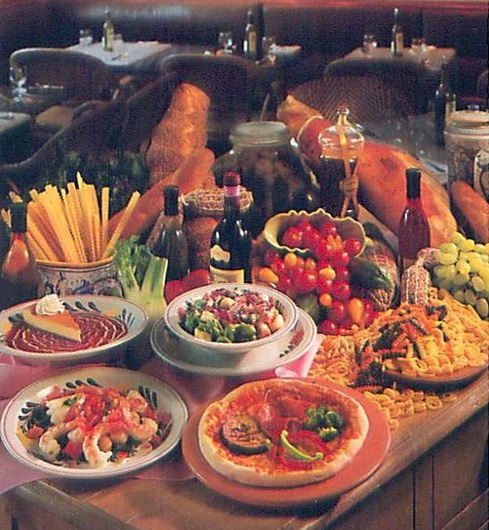
1980srestaurantfoodA growing interest in healthier diets influenced restaurant menus, which began to feature less red meat and more pasta, fish, and chicken dishes. Concern with smoking and drunk driving brought changes too, as restaurants set aside non-smoking sections and saw their liability insurance premiums rise even as drink orders declined.

The food fashion cycle quickened as diners discovered a taste for arugula, radicchio, goat cheese, sun-dried tomatoes, sushi, crab cakes, Pad Thai, mesquite grilling, and fresh ingredients. Meanwhile old favorites such as steak and baked potato, tossed salad, and cheesecake seemed dull.

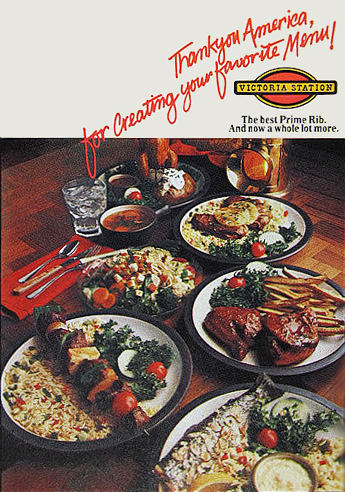
1980svictoriastn1981morechoiceterryakichickensalmonstuffedchickThough shunned by the food elite, corporate chain restaurants continued to grow and thrive. By the middle of the decade 540 chains managed 60,000 fast-food restaurants, employing over half of the nation’s restaurant workforce. Restaurant groups proliferated, ranging from those that owned a dozen or fewer restaurants in one city to groups controlling hundreds of franchises throughout a region. Independent restaurateurs, too, found it increasingly attractive to operate more than one restaurant.

Traditional eating places, from the humblest to the grandest, suffered from intense competition. Losers included coffee shops, Cantonese Chinese and red-checkered Italian restaurants, and even sanctums of haute French cuisine.

Black men, who formed the basic waiter corps of the 19th century, largely disappeared from restaurant dining rooms and kitchens, replaced by immigrants, white college students, and white women. A 1981 study conducted in NYC found that Black workers rejected the low pay and poor conditions typically found in restaurant kitchens, preferring to take better jobs in industry if they could. Racial discrimination also kept them from waiting jobs in some instances and the limited number of Black-owned restaurants prevented widespread training in kitchen skills and entrepreneurship.

Though conditions were improving, women also faced continuing discrimination in restaurant work. Many luxury restaurants rejected them as waitstaff in the belief that patrons attributed higher status to male servers. Other objections were their alleged “boyfriend problems” and lack of “tableside” skills such as meat carving and salad making. An article in the trade journal Restaurant Hospitality noted that while more women had become bartenders, chefs, and managers by end of the decade, “For women, the American foodservice industry is still rife with barriers.” In the kitchen, women tended to be confined to pastry and pantry. Some women chefs said the solution was to open their own restaurants even though they might have to take on a male partner to get financing.

Highlights

1981 Social indicators – small families, working women, projected long-term increases in real income and leisure, and more single-person households — promise growth in restaurant going according to a Bank of America Small Business report.

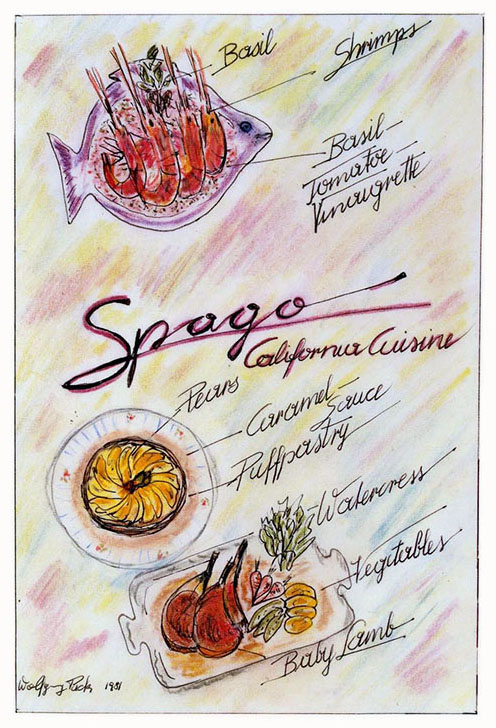
1980srestaurantsspagomenu19811982 Having introduced nouvelle cuisine at Ma Maison in Los Angeles, Chef Wolfgang Puck presents “California cuisine” to patrons of his new chic-casual Sunset Strip restaurant, Spago. Pizza with Duck Sausage wins quick stardom.

1983 The Food Marketing Institute reports that 2/3 of all fish consumed in the U.S. is eaten in restaurants. In Seattle, Colonial-themed 1980srestaurantsmadanthonysMad Anthony’s executes a style and cuisine turnabout, replacing a beefy Steak & Kidney Pye-style menu with seafood. Onto the auction block go pewter plates, crocks, jugs, and replica muskets, along with a Nacho Cheese Dispenser.

1984 With the opening of Spiaggia in Chicago, Chicagoans learn that Italian doesn’t inevitably mean spaghetti and candles in Chianti bottles, as they sample pumpkin-stuffed pasta and goose carpaccio with shaved white truffles. With dinner for two easily totaling $100 [about $228 now], they learn it often means higher prices too.

1985 Even as restaurant patrons in much of the country search out new restaurants and cuisines, Southerners remain loyal to cafeterias, with five major chains operating from 84 to 149 units each. In Milwaukee, taverns continue to do brisk business serving deep fried fish on Friday nights.

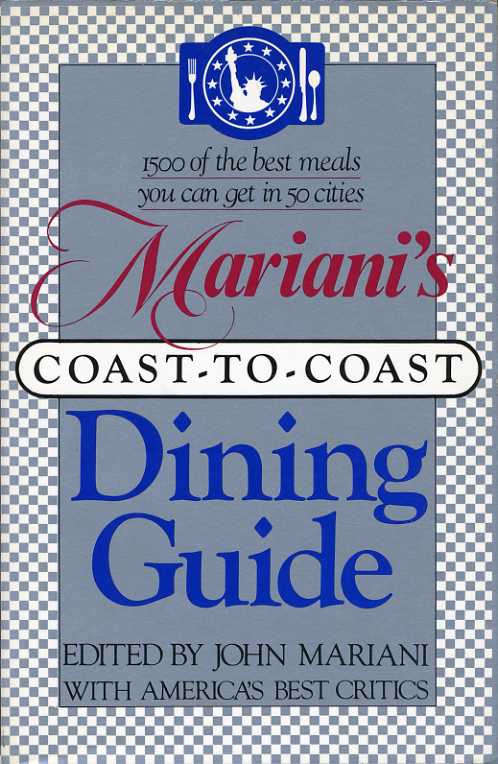
1980srestaurantsmariani1986 Most restaurant reviewers contributing to John Mariani’s Coast-to-Coast Dining Guide report that their towns have better restaurants and a wider selection of ethnic cuisines than ten years earlier. A number of cities lag behind, though, including Minneapolis and Chicago where many cling to meat and potatoes, and Columbus OH which has the dubious distinction of serving as a test market for fast food chains.

1987 With new laws holding restaurants responsible for customers who cause drunk driving injuries, rising numbers of liability lawsuits against restaurants, and ballooning insurance premiums, American Express promises protection to restaurants that accept its charge card.

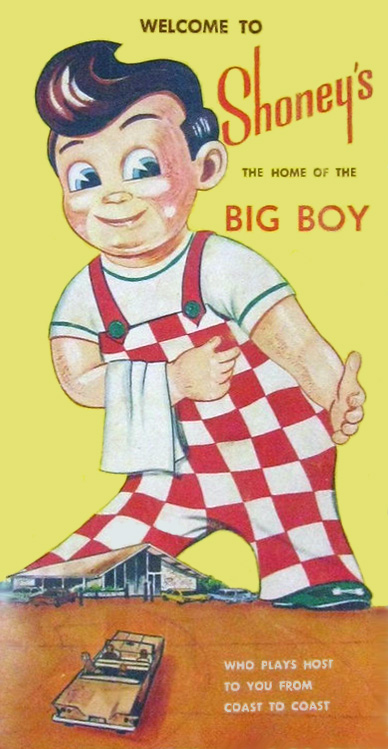
1980sshoneysmenucover1989 The “largest ever” bias lawsuit involving a restaurant chain is filed against the 1,500-unit Shoney’s and its head Ray Danner. The suit by the NAACP’s Legal Defense and Educational Fund charges that Shoney’s sets limits on how many Black workers can be hired in each outlet, keeps them in jobs out of public view, and punishes white supervisors who refuse to go along with the program.

© Jan Whitaker, 2017

12 Comments

Filed under cafeterias, chain restaurants, elite restaurants, ethnic restaurants, food, menus, patrons, racism, women

Famous in its day: Richards Treat Cafeteria

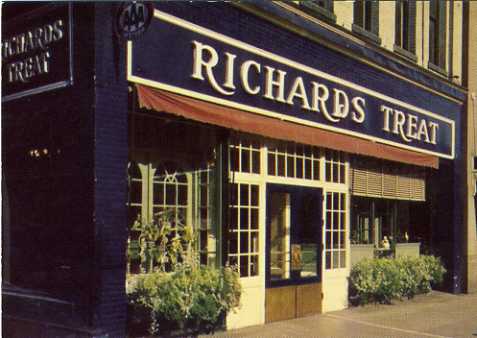
With its ham loaf and chicken pot pie, the Richards Treat Cafeteria on South Sixth Street in downtown Minneapolis was akin to other cafeterias and restaurants run by women, such as The Maramor in Columbus, Miss Hulling’s in St. Louis, and the Anna-Maude in Oklahoma City. Like its sisters, the Richards Treat was not known for culinary innovation but for preparing home-like dishes from scratch using fresh ingredients cooked in small batches.

The Richards Treat was opened in 1924 by two home economics professors at the University of Minnesota, Lenore Richards and Nola Treat, who ran the successful enterprise until 1957. The two met in 1915 when they both taught at Kansas State Agricultural College in Manhattan KS. They became close and decided to arrange their lives so they could work and live together from then on. “I am not and never have been married,” each wrote in 1923 when applying for passports prior to a European tour.
Nola Treat [pictured, 1923] had some experience in running cafeterias before 1924. She had set up a high school cafeteria in Decatur IL in 1911 when many schools provided no meal service. Following that she inaugurated student cafeterias and institutional management programs at several Midwestern state colleges and universities. Apparently she was well aware that many people disliked cafeterias, publishing an article titled “Why Cafeterias Fail” just months before opening her own. In it she said that it was unusual to find the sort of cafeteria which was “so attractive in appearance, and which serves such good food, that the most fastidious people will go to it.”

Perhaps that was why Richards and Treat always paid such close attention to their restaurant’s decor, which had little in common with the typical cafeteria’s institutional appearance. Theirs more nearly resembled a tea room with its antique cupboard of curly maple, pewter objects from the couple’s collection, and other decorative pieces brought back from their travels. Each table in the main dining room, including the one where they ate their own dinner nightly, held glowing candles in candlestick holders or candelabra.

In their cafeteria they attempted to provide a home substitute for patrons who might be unable to get home for meals or who lived in efficiency apartments. “The atmosphere of the dining room – its quiet, order, cleanliness – contribute to a feeling of well-being and satisfaction in the food,” observed Lenore [pictured, 1923] in a 1941 address to the Home Economics Association.

Their menus featured American cooking as understood by the middle-class American-born mainstream in the mid-20th century. An April 1933 menu offered a special 50-cent dinner of Veal Loaf with Mushroom Sauce, Buttered New Asparagus and Carrots, and desserts such as Fresh Strawberry Shortcake or Devils Food Cake, accompanied by Coffee, Milk, or Buttermilk.

For 15 or more years the cafeteria supplied cakes for dining cars of the Great Northern Railroad. When they learned, quite by accident, that the cakes’ top layers had a habit of sliding off when trains went over mountains en route to Seattle, they substituted sheet cakes. Cakes, cookies, bread, and house-made candy were popular sellers at the cafeteria’s bake counter where, in the 1940s, they also sold Laguna Pottery from California.

The cafeteria became a place where lawyers, judges, professional men and women, and newspaper reporters gathered, leading restaurant guidebook publisher Duncan Hines to characterize it as “Educated Food for Educated People.” The slogan was adopted by the Richards Treat.

They expanded several times, seating 300 by 1944, and winning loyal patrons despite stiff competition from other cafeterias such as The Forum and Miller’s Cafeteria. They also ran a coffee shop in the Northwestern Bank Building. Throughout their career they received many accolades, served on the editorial board of Restaurant Management magazine, and held top positions in the National Restaurant Association. Their book Quantity Cooking, published in 1922, with three subsequent editions, became a basic text used by the US military in World War II and restaurants throughout the country into at least the 1970s.

© Jan Whitaker, 2012

3 Comments

Filed under cafeterias, proprietors & careers, restaurants, women