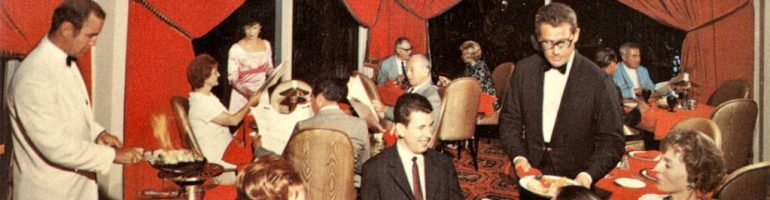

 Last year, thanks to a travel screw-up, we found ourselves eating Christmas dinner at a San Francisco hotel. It was new and chic, with a highly rated chef, so we could have fared much worse … and yet we were dissatisfied. There was something pompous about how dramatically the waiters poured soup from pitchers into bowls which had been daubed artistically with creme fraiche. Not to mention all the other absurd ceremony that surrounded the meal yet failed to prevent orders from being mixed up and food from arriving burnt or cold.
Anyway, this got me wondering about eating Christmas dinner in hotels roughly100 years ago, around the turn of the last century when lengthy formal dinners were still in vogue. Even though hotels were the best places other than home to have a holiday dinner then, I’m not sure we would have liked that experience any better.
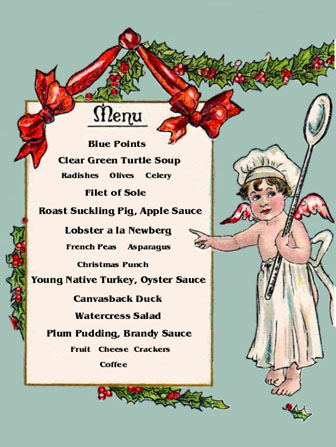 For one thing, who could eat all the food hotels piled on? The menu shown here represents my distillation of the most typical dishes from about 20 Christmas dinner menus of American hotels from 1898 to 1906. I’ve selected only one dish for each course, whereas the actual menus often had three or more and diners could choose as many as they wanted! Though the number and sequence of the courses varied somewhat from hotel to hotel, the most common arrangement was as shown here. The meal began with Oysters (a course all their own in the U.S.), then Soups, Relishes, Fish, Relevé (featuring a roast despite a later Roasts course – I don’t get it), Entrées, Vegetables, Roasts, Game, Salads, Desserts (which could be subdivided, with hot desserts coming first, under Entremets), Cheese, and ending with Coffee. Strictly speaking the Relishes, Vegetables, and Salads are not separate courses as they would be served with other dishes. So I believe the sample shown here would be an 8-course dinner. Each course would have been accompanied with wine and brandy may have been served with the coffee.
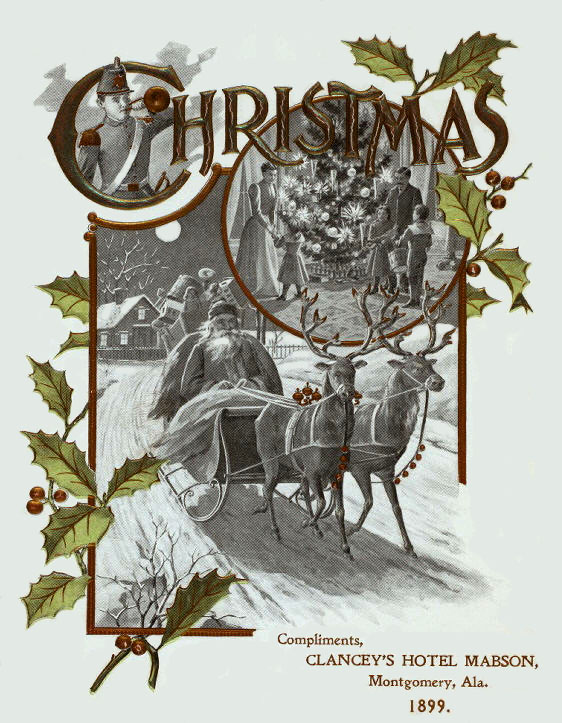 There were some interesting regional dishes on the menus I looked at. The Hotel Metropole in Fargo ND offered Saddle of Antelope; the New Century Hotel in Union SC had Pompano and Carolina Quail; while the Tulane Hotel in Nashville had Stuffed Mangoes*, Fried Hominy, and Dew Drop Corn. The Hollenbeck Hotel in Los Angeles mentioned that its Turkey was “Pomona Farm Fed” and featured a salad of Monk’s Beard greens. Two hotels, in Alabama and Michigan, presented Suckling Pig that had been barbecued. Without doubt the most unusual menu was that of Jack H. Clancey’s Hotel Mabson, primarily accommodating traveling salesmen in Montgomery, Alabama. In addition to Pompano and Barbecued Suckling Pig, its Christmas menu – the only one entirely devoid of French – introduced dishes seen nowhere else such as Stuffed Tomatoes, Scrambled Calf’s Brains, and Grandma’s Fruit Cake.
Whatever kind of dinner you eat on Christmas Day, enjoy it!
* Thanks to food historian Gary Allen for decoding stuffed mangoes as stuffed bell peppers.
© Jan Whitaker, 2009


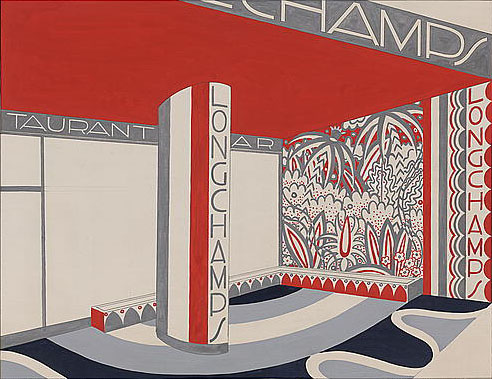

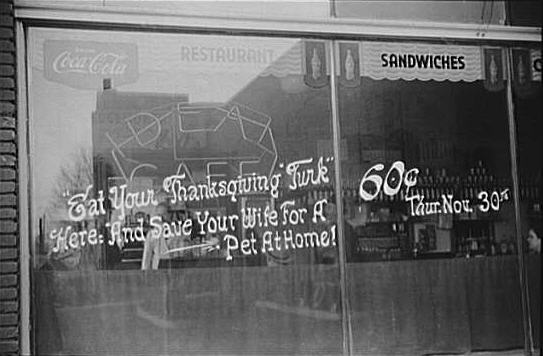

 All things considered, the best restaurants that this country has produced probably have been unpretentious, inexpensive, high-volume eateries located close to sources of fresh food. In 19th-century New York City’s Smith & McNell’s, across from the booming Washington Market, was a leading example of the type. Its patronage came largely from dealers, farmers, and customers who worked and shopped at the market. Around 1891 the restaurant reportedly provided more meals than any eating place in the city, as many as 10,000 a day.
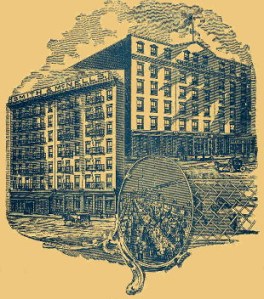 There are many discrepancies in accounts of this restaurant’s history but it seems most likely it was established in the late 1840s by Thomas R. McNell and Henry Smith. McNell was an Irish immigrant, born sometime between 1825 and 1830. According to one account he and Smith had been night watchmen before taking over the coffee house run by Frederick Way on Washington Street near the market. Both McNell and Smith became wealthy and McNell acquired a lordly estate in Alpine, New Jersey, as well as a California ranch. He continued working in the business until a ripe old age and died in 1917 a few years after the restaurant (and associated hotel) closed.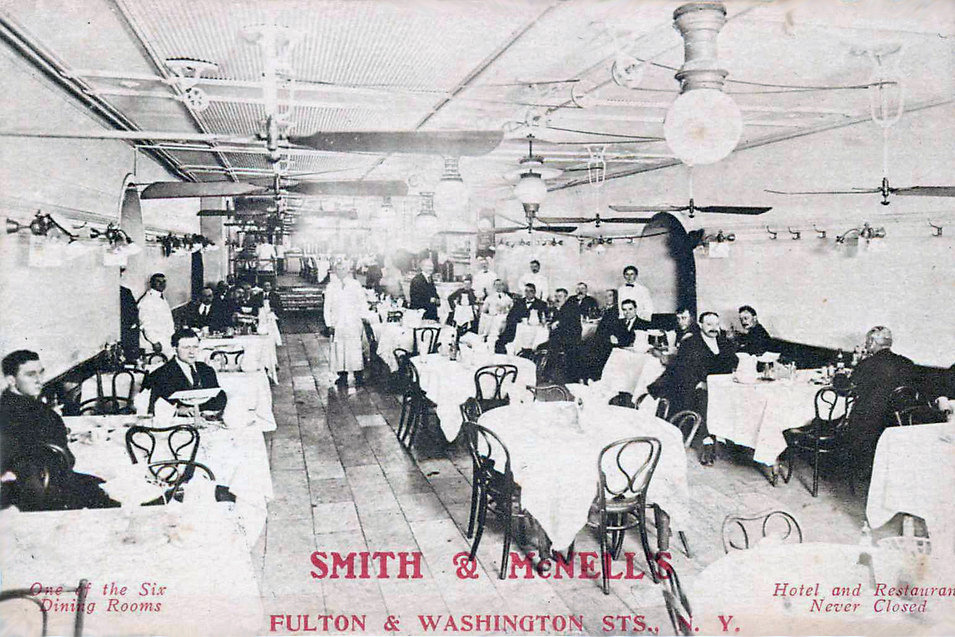

 According to accounts, “D. L.” wrote his own colorful advertising copy, such as, “These hams are cut from healthy young hogs grown in the sunshine on beautifully rolling Wisconsin farms where corn, barley, milk and acorns are unstintingly fed to them, producing that silken meat so rich in wonderful flavor.” Equally over the top was his copy for Idaho baked potatoes, with references to a “bulging beauty, grown in the ashes of extinct volcanoes, scrubbed and washed, then baked in a whirlwind of tempestuous fire until the shell crackles with brittleness…” Customers who had not previously eaten baked potatoes soon learned to ask for “an Idaho.” Another heavily promoted dish, “Old Fashioned Louisiana Strawberry Shortcake,” was “topped with pure, velvety whipped cream like puffs of snow.”
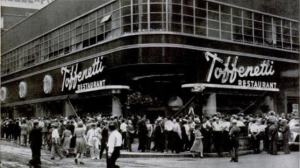 Another factor in his success was winning catering contracts at two world’s fairs, Chicago in 1933 and New York in 1939-40. Following the NY fair he outbid Louis B. Mayer for an immensely valuable piece of Times Square real estate on the corner of 43rd and Broadway. He hired Skidmore, Owings & Merrill to design a two-story, glass-fronted moderne building (pictured), outfitted with an escalator and a show-off gleaming stainless steel kitchen. The restaurant served 8,500 meals on opening day.
 I always find it difficult to judge menus from the 19th century because our eating habits, food preferences, and food resources have changed considerably since then. It is difficult to decide whether any given menu is fine, average, or poor. The following menu was designed by a hotel steward (stewards were in charge of expenses) for a banquet in 1893. Almost certainly wines would have been served with the seven courses (which are Soup, Fish, Roast, Punch, Entree, Dessert, and Coffee).
 It seems as though almost all of history’s food forces have cooperated to give cheese top billing in restaurant meals today. Only one cheesy custom failed to catch on, that of finishing a meal with cheese and fruit as was done in small French and Italian restaurants in the later 19th century. Craig Claiborne argued in 1965 that even the best New York restaurants didn’t know how to handle the cheese course. They had poor selections which tended to be old, overripe, or served too cold. One restaurant admitted their chef was in the habit of popping cheese straight from the fridge into the oven to soften it. Restaurateurs that Claiborne interviewed insisted that Americans didn’t like cheese after a meal. I’d agree that most prefer their after-dinner cheese in the form of cheesecake.
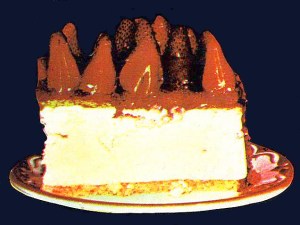 Cheese has been a staple food in American eating places probably since the first tavern opened. Regular meals were served only at stated hours but hungry customers could get cheese and crackers at the bar whatever the hour. For “Gentlemen en’passant,” the Union Coffee House in Boston promised in 1785 that it could always furnish the basics of life: oysters, English cheese, and London Porter. Across the river in Cambridge, the renowned
 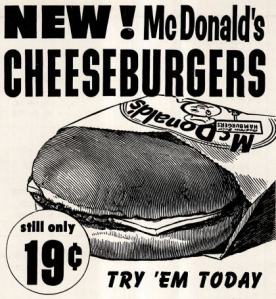 Cheeseburgers were a product of the fast food industry of the 1920s, claimed as inventions by both the Rite Spot of Southern California and the Little Tavern of Louisville. Strange there aren’t thousands of other contenders because what was there to invent, really? Cheeseburgers were strongly associated with Southern California before WWII — Bob’s Big Boy of LA introduced cheeseburgers in 1937. Another step forward came in the 1930s when a bill was introduced in the Wisconsin legislature requiring restaurants and cafes to serve 2/3 oz. of Wisconsin cheese with every meal costing 25 cents or more. In the same decade Kraft Cheese was among major food producers providing restaurants with standardized recipe cards.
 It was after WWII that cheese spread its melted gooeyness everywhere — on
 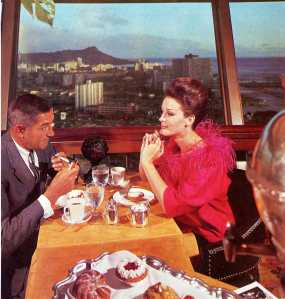 They are so clever and, yes, so corny in a circus-y way that revolving restaurants seem like they must be a product of American ingenuity – but they aren’t. The restaurant in Seattle’s 1962 World’s Fair Space Needle was not the first. Nor was it the second, third, or fourth. According to Chad Randl in A History of Buildings that Rotate, Swivel, and Pivot, the first revolving tower with a restaurant opened in 1959 in Dortmund, Germany. Sometime in 1961 came spinning restaurants in Frankfurt, Cairo, and Honolulu (pictured), in about that order.
 The revolving building itself actually came earlier and was rather simple technologically. In 1898 a leading attraction in Yarmouth, a seaside resort in England, was a rotating observation tower on the beach. Decades later designer Norman Bel Geddes proposed a restaurant set atop a rotating column for the Chicago World’s Fair of 1933 (pictured). Unlike his, though, the design used by most restaurants features an interior ring containing the restaurant’s kitchen that does not rotate.
 Despite being fairly easy to engineer and not really all that new, in the 1960s revolving buildings became symbols of progress. Often set atop communications towers, they were intended to help defray costs of tower construction and operation. Today, whether in towers or on hotel roofs (where they look like flying saucers that have landed), they continue to represent modernity in developing countries around the world. While North America has largely stopped building them or has shut down forever their little 1-HP motors, still they spin on in Kuala Lumpur, P’yongyang, and countless other places.
 For diners gazing from on high – whether upon the Pyramids, distant mountains, or, more often, streets clogged with traffic – revolving restaurants are pleasant. Who doesn’t enjoy the feeling of god-like detachment while sipping a martini and surveying a cityscape? Yet, on the whole revolving restaurants are geared more to “peak” dining occasions than to the consumption of haute cuisine. Their forgettable yet expensive food has tended not to win them steady local trade. Plus, tackiness such as found in Florida hotels with Polynesian restaurants twirling in the sky, or “Certificates of Orbit” such as once were given out at Butlin’s Revolving Restaurant in London’s post office tower (detail pictured), have branded them cheesy tourist traps in many people’s minds.
 What could be more starkly different from the somber coffee shops of today with their earnest and wired denizens than the beatnik coffeehouses of the 1950s? Could Starbucks be anything but square to the beat generation?
 Although the word beatnik came into usage around 1958 (inspired partly by Sputnik), the phenomenon of dropping out of the “rat race” to lead an existentialist, non-consumerist life was part of the aftermath of World War II akin to the “Lost Generation” after World War I. The first coffeehouses sprang up in Greenwich Village in the late 1940s, but the beats weren’t averse to hanging out in cafeterias either — their “Paris sidewalk restaurant thing of the time.” When coffeehouses began levying cover charges for performances, beatniks tended to drop out of them too.
 The heyday of the coffeehouse was the late 1950s into the early 1960s. Few did much cooking so they weren’t restaurants in the true sense, but many of them offered light food such as salami sandwiches (on exotic Italian bread) and cheesecake, along with “Espresso Romano,” the most expensive coffee ever seen in the U.S. up til then. Of course the charge for coffee was more a rent payment than anything else since patrons sat around for hours while consuming very little. Other then-unfamiliar food offerings included cannolis at La Gabbia (The Birdcage) in Queens, Swiss cuisine at Alberto’s in Westwood CA, Irish stew at Coffee ’n’ Confusion in D.C., les fromages at Café Oblique in Chicago, “Suffering Bastard Sundaes” at The Bizarre in Greenwich Village, and snacks such as chocolate-covered ants and caterpillars at the Green Spider in Denver.

 It's great to hear from readers and I take time to answer queries. I can't always find what you are looking for, but I do appreciate getting thank yous no matter what the outcome.
 Restaurant-ing through history