Tag Archives: 1960s

Dining by gaslight

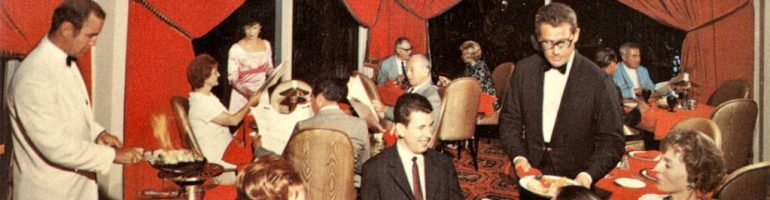
GSThreeFountainsINTThough it seems fairly obvious when you think about it, the development of entertainment districts post-WWII encouraged the growth of restaurant-ing in many cities across the U.S. On the minus side, the fate of such restaurants was highly dependent upon the fate of the districts.

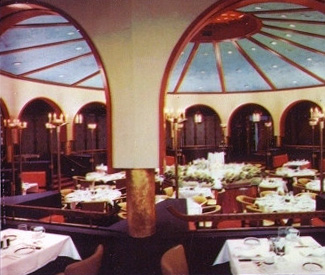
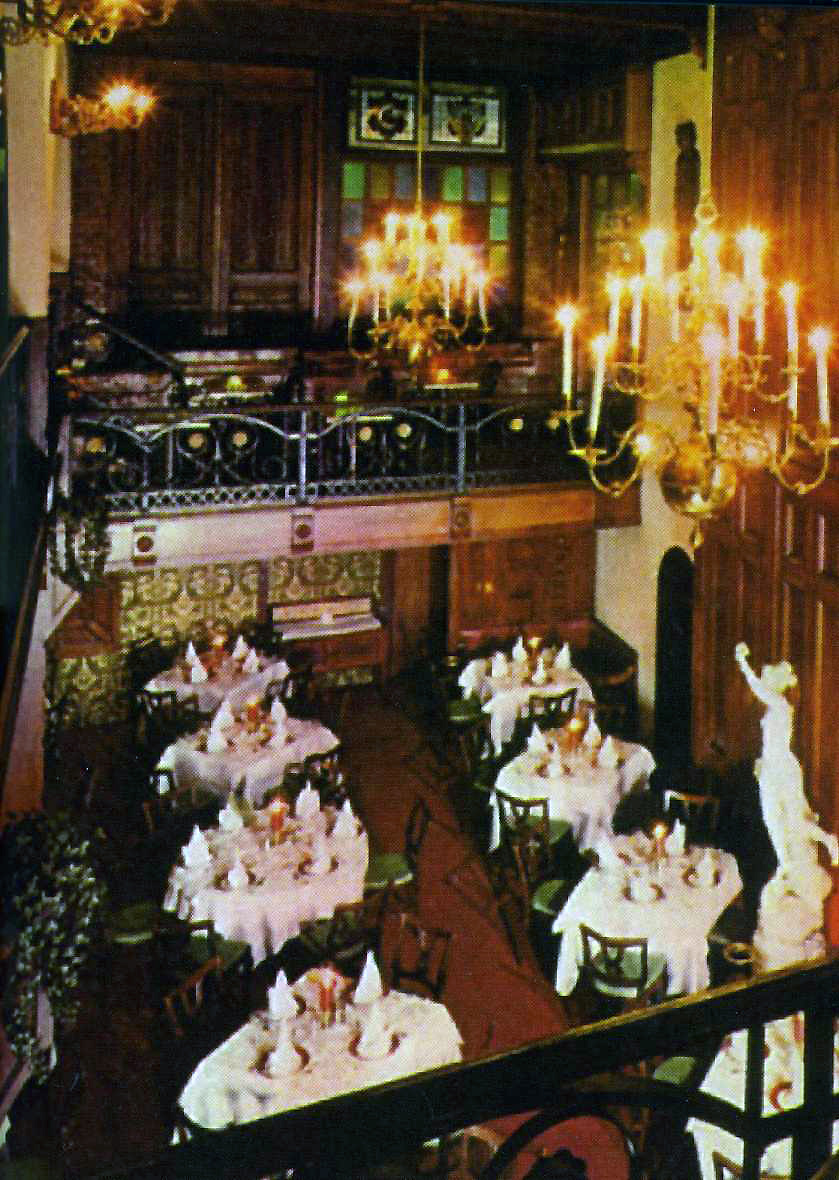
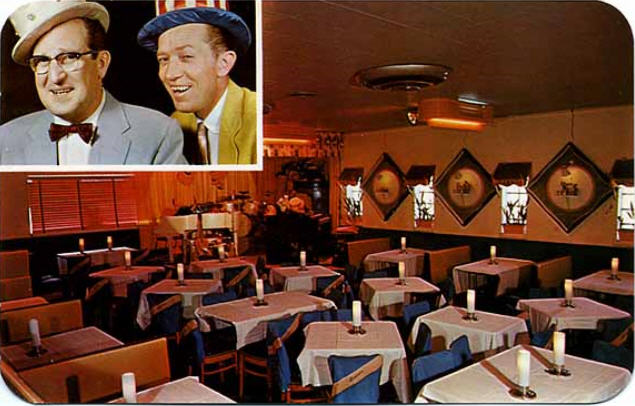
The Three Fountains [pictured] was the star restaurant in the entertainment district of St. Louis which began in the late 1950s and was officially named Gaslight Square in 1961. The one-and-one-half block area attracted affluent suburban St. Louisans and the city’s many conventioneers with restaurants, live theater, and clubs that featured national acts such as the Smothers Brothers, Joni Mitchell, Lenny Bruce, and Miles Davis.

Developing out of a racially borderline, transitional neighborhood populated with apartments, music schools, and antiques stores, its pioneering establishments included the Crystal Palace theater, the Gaslight Bar, Smokey Joe’s Tavern, the Laughing Buddha coffeehouse, and the Dark Side jazz club.
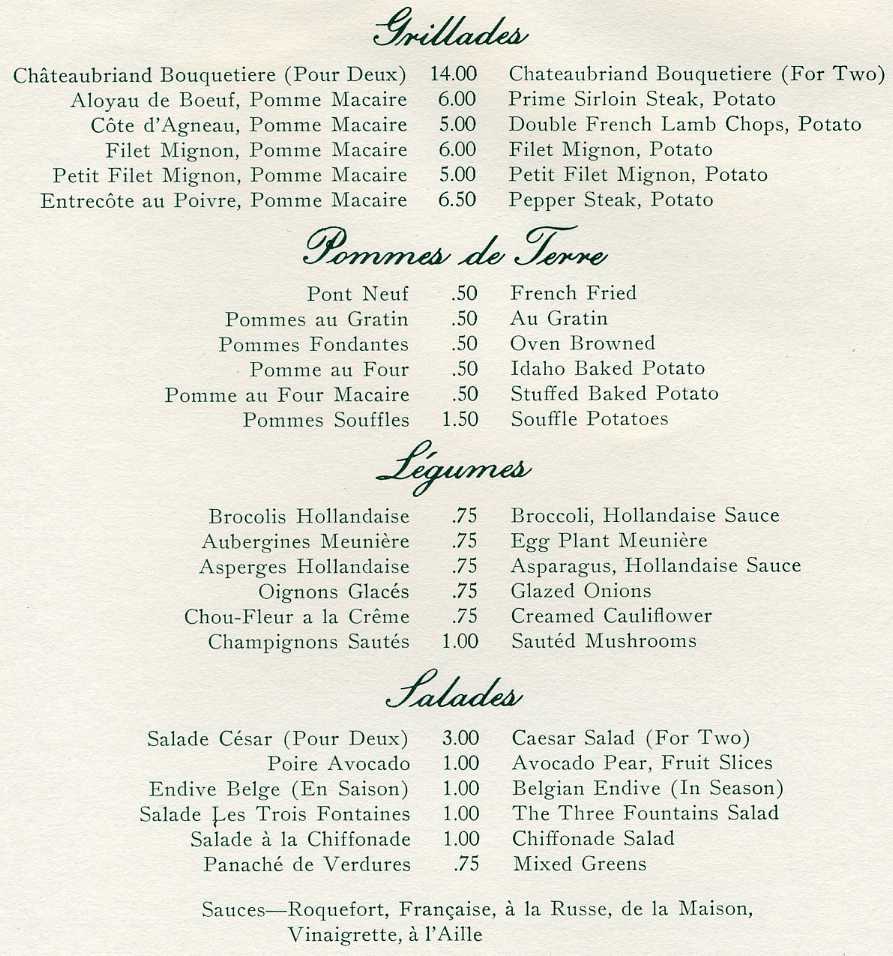
GSThreeFtnmenuThe Three Fountains exuded luxury with a multi-level interior lavishly decorated with  antique fixtures complemented by an oversize menu filled with expensive dishes (the $6.50 pepper steak would cost about $46 today). Its decor, like most of the restaurants and clubs in Gaslight, consisted of an extravagant, crazy melange of salvaged windows, doors, railings, paneling, statues, fountains, and light fixtures from structures mowed down by a city obsessed with urban renewal.

gsMillCreekValleySlum clearance in an area known as Mill Creek Valley brought its bounty. There the destruction of residences formerly housing 20,000 people (95% of them Afro-Americans) freed up tons of antique woodwork and hardware for decorators with a taste for Victorian. The transfer of objects from Mill Creek to the nightclubs and restaurants in Gaslight Square can also be seen as an illustration of a troubled relationship with the city’s black population who lived close by, worked in Gaslight’s restaurants, and performed in its clubs, yet whose patronage was not welcome.

According to Jorge Martinez, owner of a couple of jazz clubs, the block’s business association ruled against his proposal for a dance hall out of fear it would attract Afro-Americans. Terry Kennedy, an Afro-American who grew up in the neighborhood adjacent to the area and became a city alderman in 1989, observed that if you were black “you better not be there too long, or the police would run you off.” (Interviews with Kennedy, Martinez, and others are found in the book Gaslight Square, an Oral History, by Thomas Crone.)

Yet, Gaslight Square offered opportunity to a few Afro-Americans. Sandra J. Parks occupied a rare position in America, that of black female chef. She cooked in several of the area’s better restaurants, including Kotobuki and Port St. Louis and managed Two Cents Plain before moving to Chicago for a career in catering.

Compared to the city as a whole, Gaslight Square was a somewhat integrated area. Nonetheless racial tension would become a major factor in its downfall, most evident in white patrons’ grossly exaggerated fear of black-on-white crime.

From the area’s beginnings as an entertainment zone to its serious decline by 1968, at least 20 restaurants, dozens of nightclubs, and numerous coffeehouses and theaters were in business there [see map]. After-hour parties took place above street level, in apartment buildings and flats.

GScolorpostcard2centsannadels

There were steakhouses (Magnolia House, Marty’s, Jacks or Better, Mr. D’s), two Mexican restaurants (Tortilla Flat and a branch of Chicago’s La Margarita), a Polynesian restaurant (The Islander), a Japanese restaurant where servers dressed as geishas (Kotobuki), a fish restaurant where servers dressed as sailors (Port St. Louis), a Greek restaurant (Smokey Joe’s Grecian Tavern), a deli (Two Cents Plain), an Italian eatery (Bella Rosa), a tavern (O’Connell’s Pub), and several places whose cuisine I could not determine (Red Carpet, The Georgian, Carriage House, Die Lorelei, Left Bank).

Many of the restaurants were in converted town houses. Whenever possible they had patio dining in front, and most featured entertainment such as cabaret, folk music, or Dixieland, ragtime, or cool jazz.
GSLaughingBuhdaSTL60sThe more expensive restaurants were first to suffer from the area’s decline as well-dressed, well-heeled customers stopped coming. Conventioneers were warned off, in many cases, by cabdrivers who refused to drive there. Clubs with go-go dancers in the windows displaced coffeehouses with folksinging and poetry as a younger, more casually dressed crowd took over.

Although Gaslight Square was in ways a model for Chicago’s Old Town and Omaha’s Old Market, many businesses began closing or moving away by the mid 1960s. Port St. Louis and Two Cents Plain moved to more promising locations. In 1965 Craig Claiborne gave the Three Fountains a short – and horrid — review (“It is said to be the only French restaurant in the city and, if this is true, it is unfortunate.”) A few years later a number of gaslights were extinguished for nonpayment of gas bills. By 1972 when O’Connell’s moved to South Kingshighway, the area was largely in ruins.

Aside from a memorial constructed out of the pillars that once stood outside Smokey Joe’s, not a trace of Gaslight Square remains standing today.

© Jan Whitaker, 2013

9 Comments

Filed under atmosphere, Offbeat places

Restaurant history day

KittyFoyleLifeMagazine1940Yesterday I was fully immersed in restaurant history. Starting off the day I had an e-mail exchange with a local 1970s activist about a feminist restaurant that once operated in Northampton MA. Next I had an interesting phone call from a researcher in Minneapolis who has unearthed the early 20th-century history of Greek immigrant restaurant and confectionery proprietors in Sioux Falls, South Dakota. Then, while surfing a Facebook page about my former hometown of Webster Groves, Missouri, I discovered a discussion about a long gone restaurant there that refused to serve Afro-Americans.

manhattanX3The name of the restaurant was the Toll House. I never went inside but as a child I formed the impression that it was a place where old-line Webster Grovesians went to eat club sandwiches and fruit cocktail appetizers on the nights their maids were off. Since Webster Groves was a dry town then, it was a restaurant that my parents would never have chosen – no Manhattans!

TollHouseWebsterGrovesAn undated menu reveals that the Toll House had some surprisingly (to me) upscale dishes considering its rather drab appearance and its location in a dry, Waspy suburb of St. Louis – Oysters Rockefeller (.75), Pompano (.85), Lobster (1.25), Chateaubriand (1.35), and Baked Alaska (.40).

The Toll House was the site of pickets and sit-ins against racial discrimination in 1961 and 1962. Sadly, the city of Webster Groves seemed all too ready to arrest protestors. Just how many protests took place there is unclear, but I have found evidence of at least four. In the summer of 1961, two women picketers were arrested outside the restaurant after the proprietor Myrtle Eales, who ran the restaurant with her husband Forrest, claimed they had pushed her in a scuffle. In January of 1962 thirteen black and white members of the Congress of Racial Equality (CORE) were arrested for trespassing after they occupied the restaurant for four hours without being served. Although it was a cold winter day, the owners turned the heat off and the air conditioning on in an attempt to get them to leave. That same month a group of four protestors were locked in the restaurant’s vestibule for two hours. Then in April of 1962 three white protestors, all airmen from an Illinois military base, were arrested by Webster Groves police on suspicion of being AWOL (they weren’t).

The embattled restaurant did not survive the protests. I believe it closed in 1962.

Strangely enough, the otherwise obscure Toll House had made the national news earlier when it was featured in a 1944 Life magazine article about (white) teen-age social life. At that time it was a lunch counter popular with teens for hanging out. According to a letter sent to Life after the article appeared, whoever owned the restaurant then wanted young patrons to keep out. In a large advertisement in a local newspaper the management informed parents that their unruly children were bending silverware, breaking glasses, setting napkins on fire, carving up tabletops, and destroying stools.

In 1966 the CBS documentary “Sixteen in Webster Groves” appeared, portraying the suburb’s teenagers as spoiled, conformist, and more concerned about having a nice house with gleaming silverware than with the Vietnam war or civil rights. Residents were unhappy with what they felt was a false portrayal but, I wonder, was it completely off base?

© Jan Whitaker, 2013

4 Comments

Filed under racism

Charge it!

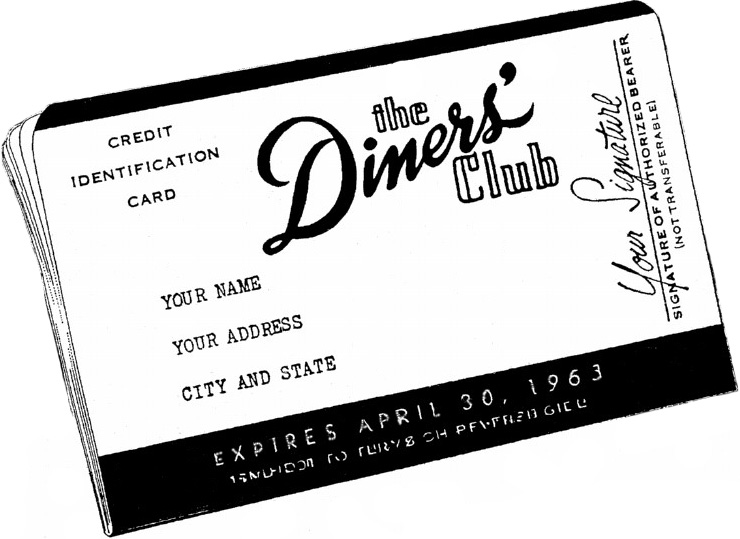
DinersClubcard1955The advent of travel and entertainment (T&E) credit cards in the 1950s was instrumental in sparking a renaissance in luxury restaurants that hadn’t been seen since pre-Prohibition days.

Nowhere was the effect felt more strongly than in NYC, birthplace of the Diners’ Club.

On February 8, 1950, Frank McNamara paid for his lunch at a steak house called Major’s Cabin Grill in NYC with a Diners’ Club card numbered 1,000 (i.e., #1). With his little paper card he made the very first charge on a nationwide credit card.

DinersClub1956ADV

The timing of the Diners’ Club launch was perfect. During World War II expense accounts had proliferated as a way companies could use income for entertaining clients rather than hand it to the government as a tax on “excess” profits (profits greater than those before the war). Now, in 1950, the excess profits tax lifted at the end of WWII was only a few months away from reinstatement for the Korean War.

The growth of T&E credit cards went hand in hand with the growth of expense accounts. As one publication put it, credit cards were spinoffs of expense accounts. And, each time the IRS tightened up its requirements for itemizing deductions, more credit card applications came in.

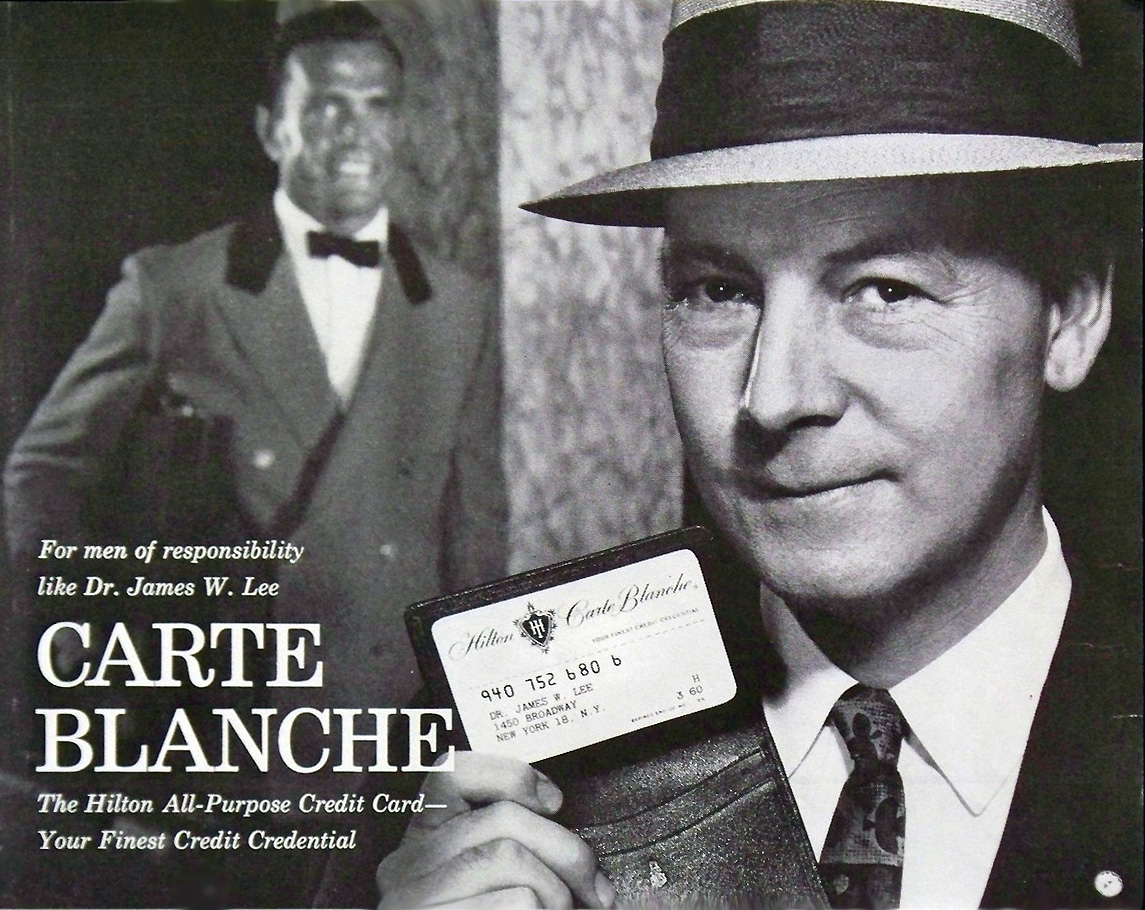
Carteblanche1959Unlike the nationwide bank cards that would eventually swamp T&E cards, the latter required high financial standing, an annual membership fee, and full payment of balances within 30 days. Having one of these cards brought cachet.

Following quickly on the heels of the Diners’ Club launch came many others: Dine ’n Sign, National Credit Card, Your Host, Inc, Duncan Hines’ Signet Club, the American Hotel Association’s Universal Travelcard, Hilton’s Carte Blanche, the Esquire Club, and the Gourmet Guest Club (the last two linked to Esquire and Gourmet magazines). A smaller Diners’ Club continues today, but the only other survivor is American Express, which inaugurated its credit card in 1958, then quickly rose to the top of the T&E field.

Traveling salesmen and men (rarely women) in industries such as public relations, advertising, publishing, manufacturing, and wholesaling were fans of the convenience of charging business meals. And, of course, in the early days of T&E club cards it was a status factor to simply dash off a signature on a slip, particularly if the lunch took place in a top restaurant.

Bizlunch

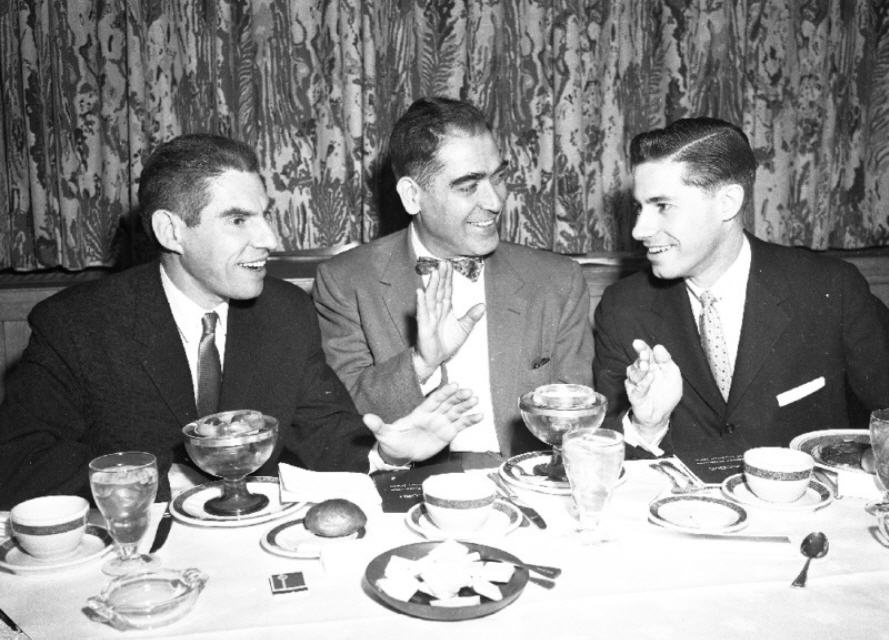
Expense accounts and credit cards were a boon to restaurants. There were estimates that in the mid-1950s 50% to 80% of meals in high-priced restaurants were “on the company.” Vincent Sardi admitted that a big chunk of his NYC business was made up of men on expense accounts. Peter Canlis, of Seattle’s first-class Canlis Restaurant, said in 1953 that he decided to establish a restaurant there because “a lot of good expense account money wasn’t being spent because there was no place fancy enough to gobble it up – and I was happy to fill the gap.”

But not all restaurateurs were enamored of the cards at first. For one thing, Diners’ charged a 7% fee on transactions. Restaurant owners felt that they spent too long waiting for their payments and that they had to raise prices to make up for the fees, thus punishing cash customers. Some restaurants refused Diners’ Club cards or added surcharges for meals paid with them. The Diners’ Club lowered its transaction fees in 1966.

By 1965 the three biggest T&E cards, Diners’ Club, American Express, and Carte Blanche claimed a total of about 3.15M cardholders, a small fraction of the number of cards starting to be doled out then, often unsolicited, by nationwide bankcards.

© Jan Whitaker, 2013

5 Comments

Filed under restaurant customs

Ohio + Tahiti = Kahiki

kahikiExterior

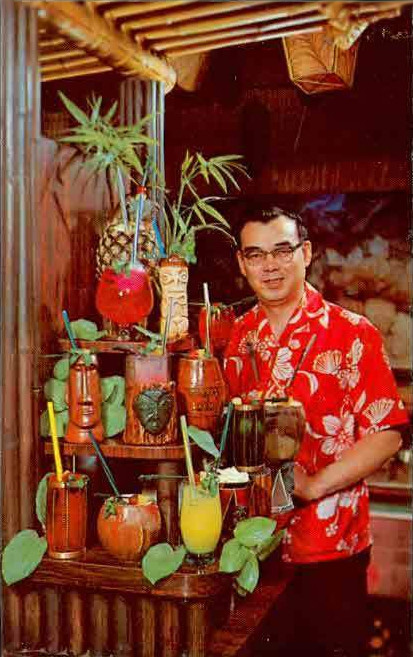
In the heyday of Polynesian restaurants, the 1960s and 1970s, the business attracted operators because of high profits in rum drinks. Their marketing relied on bar decoration, bartender apparel, drink names, elaborate serving vessels, and imaginative presentation.

The same was true for “Polynesian cuisine.” There could be no such thing as a Polynesian restaurant without fabulously kitschy decor.

Whatever Polynesian cuisine was, it certainly wasn’t what real Polynesians ate past or present. The Kahiki’s reference point was Tahiti. So, what were Tahitians eating in 1961 when the Kahiki opened? According to a geographer, the traditional Tahitian diet consisted of baked fish, breadfruit, and taro, but natives then preferred French baguettes with Australian butter, rice from Madagascar, canned beef from New Zealand, and Canadian canned salmon, all “washed down with generous drinks of Algerian red wine.”

KahikiDrinksIt’s doubtful that Tahitians ate much in the way of Oriental Beef or Tahitian Flambee (flaming ice cream with rum). Not to mention Tossed Green Salads, Eggs Benedict, or Reuben Sandwiches.

But people didn’t go to the Kahiki mainly for its food. As an unenthusiastic reviewer wrote in 1975, “If decor is your reason for dining out, the Kahiki in Columbus is the place for you.”

Its drinks, on the other hand, were hard to resist. With three bars on the ground floor alone, the Kahiki’s menu at one point illustrated drinks served in 30 different glasses, goblets, and ceramic cups and bowls. The most expensive was the Mystery Drink served with four straws. Its presentation involved a scantily dressed server, a gong, a lei, and a kiss. There were also Smoking Eruptions, with fumes emanating from chunks of dry ice, as well as Pago Passages, Malayan Mists, Tonga Tales, and Native Nectars.

kahikiserverBeyond rum, customers were dazzled by the restaurant’s architecture, decor, and theatricality (e.g., periodic thunder and lightning). In the restaurant’s last decades its fans celebrated it as a temple of kitsch but, surprisingly, in earlier years it was often regarded as authentic.

The building reportedly cost $1 million to build in 1960 and, with 560 seats, was the largest Polynesian restaurant in the U.S. In a flat landscape peppered with indifferent utilitarian structures, it was a startling sight that promised relief from drab ordinariness. Stepping beyond the up-swooping 50-foot facade the visitor entered a darkened Tahitian village with tall palm trees, waterfalls, thatched huts, idols, and a wild profusion of South Seas-style artifacts.

The Kahiki’s decorator, artist and engineer Coburn Morgan, was a prominent Ohio restaurant designer whose career may have been launched by his work on the Kahiki. The flamboyant design of the Kahiki was undoubtedly due to him.

In 1960, when he drew the sketch shown above, Morgan was head of the design division of the Tectum Corporation which furnished many of the composite building materials used in the construction of the Kahiki, including pressed wood for roof supports as well as for soundproofing and decorative wall panels. It may also have been used for flooring and for the stylized fish arrayed along the roof’s crest.

kahikiTangierCMorganFollowing completion of the Kahiki, Morgan designed the Aztec-themed Thunderbird Restaurant (Lima), a red-fronted prototype for the Bob Evans chain (Chillicothe), McGarvey’s Nautical Restaurant (Vermillion), the Wine Cellar (Columbus), Jack Bowman’s Steak House (Columbus), the Brown Derby (Columbus), the 18th-century-themed Old Market House Inn (Zanesville), the Tangier Restaurant (Akron — pictured), Mawby’s (Cleveland), and the “Western Victorian-style” Judd’s (Cleveland).

For theme-restaurant inspiration, Morgan traveled to the American West for the Bob Evans chain and to Lebanon for the Tangier, which was modeled on the summer palace of the head of state. The Wine Cellar, owned by Kahiki creators Bill Sapp and Lee (Leland) Henry, had a Shakespeare theme. When it failed in 1991 “16 tall carved knight’s chairs” and a “grand piano bar with winged dragon” were among the furnishings auctioned.

During its more than 50-year run the Kahiki, which was also a nightclub and banquet center, entertained hundreds of thousands of individuals and groups such as Jaycee-ettes, senior citizens, anniversary and wedding parties, and so on. Despite its listing on the National Register of Historic Places and the efforts of local preservationists who felt the Kahiki was an important part of Columbus’ cultural identity, it was demolished in 2000.

© Jan Whitaker, 2013

Leave a comment

Filed under Polynesian restaurants, popular restaurants

Find of the day: the Redwood Room

RedwoodRoom

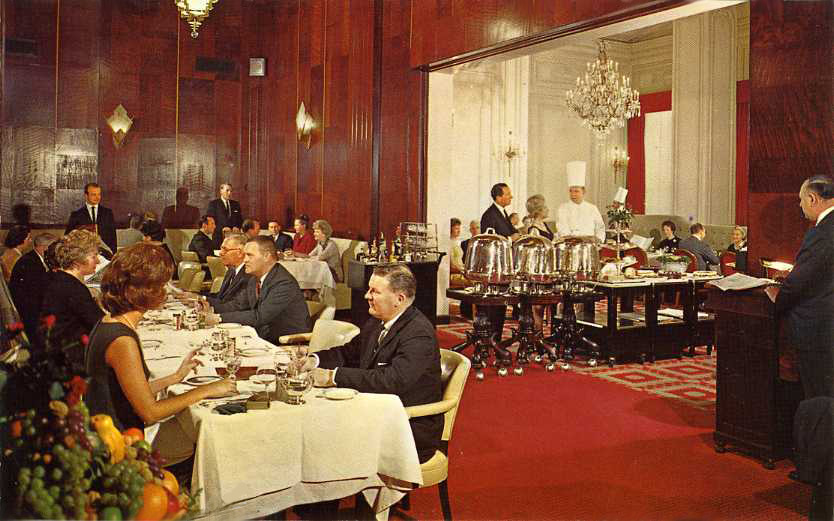
Sometimes after a day of largely fruitless hunting in the antiques marketplace – such as a recent trip to the Brimfield flea market – it takes a while to realize I’ve acquired a gem. In this case it is the above postcard of the Redwood Room in San Francisco’s Clift Hotel, ca. 1965.

I bought it because it has features that I like: diners, a chef, paneling, and red carpeting. From looking at thousands of images I’ve learned that the last two signify Beef, Money, and Masculinity. But it wasn’t until I read the back of the card that I realized it was a “find.”

On the back is the printed message: “The Redwood Room is unexcelled for fine dining. With its huge panels of 2000-year-old Redwood and the spacious bar, it conveys a feeling of masculinity that has for years appealed to leading San Francisco executives and their wives.”

Little did the people on the postcard know, but “barbarians” were about to descend on the Redwood Room.

The hotel opened around 1916 and the Redwood Room and the French Room (shown through the doorway) were created during the 1930s. Both served the same food, but the hyper-manly Redwood Room was also outfitted with a long redwood bar not shown on the card.

Craig Claiborne visited the Clift in 1964, and declared it was one of the few U.S. hotels that still maintained a kitchen of “relative eminence.” Its decor, he said, was of “undeniable elegance” and its tuxedoed waiters exhibited “politesse.” The menu specialty, as might be expected from a restaurant that borrowed dinner carts from London’s Simpson’s, was “absolute first rank” roast beef accompanied by Yorkshire pudding ($4.50).

The postcard photograph was taken when the hotel was at its peak, prior to a slump in the early 1970s brought on by a poor economy aggravated by a policy of turning away guests who violated the hotel’s conservative dress and hairstyle code. When Burt Lancaster and his longhaired son were refused admittance to the Redwood Room in 1971, the item made newspapers across the nation.

The Clift’s president, Robert Stewart Odell, created the dress code. When the musical “Hair” opened at the nearby Geary Theatre in 1968, “They came in from the theater, barefoot and bareback. For a time . . . the Redwood Room entrance was the scene of an almost daily confrontation between longhairs and the maitre d’hotel,” said a manager. The hotel posted signs and ran advertisements that advised: “The Clift Hotel caters to a conservative, well-groomed clientele. Registration, dining room and bar service is refused to anyone in extreme or abnormal dress and to men with unconventional hair styling.”

In response to the hotel’s conservatism, San Francisco Chronicle columnist Herb Caen ridiculed it relentlessly, claiming it maintained “standards set in the Coolidge era as opposed to the Cool era.”

After Odell’s death in 1973, the hotel’s new president (whose hair was longish) welcomed well-dressed stockbrokers, lawyers, and businessmen with hair descending below their collar tops, along with women in pantsuits.

In 1976 the Clift was renamed the Four Seasons-Clift after its acquisition by Toronto’s Four Seasons Hotels, Ltd. After almost two years of remodeling and restoration, the Redwood Room became a bar only rather than a bar and restaurant. Yet it was little changed as that would have brought howls of protest from San Franciscans. A 2001 re-do brought the by-then-shabby Redwood Room bar back into fashionability.

© Jan Whitaker, 2013
1 Comment

Filed under elite restaurants, restaurant decor

“Distinguished dining” awards

HolidayAward470After World War II American consumers were filled with pent-up demand accrued over years of rationing and deprivation. They wanted to sample the joys of the good life, which included American and world travel, even if only in their imaginations. A sophisticated magazine – Holiday — was created to cater to their aspirations.

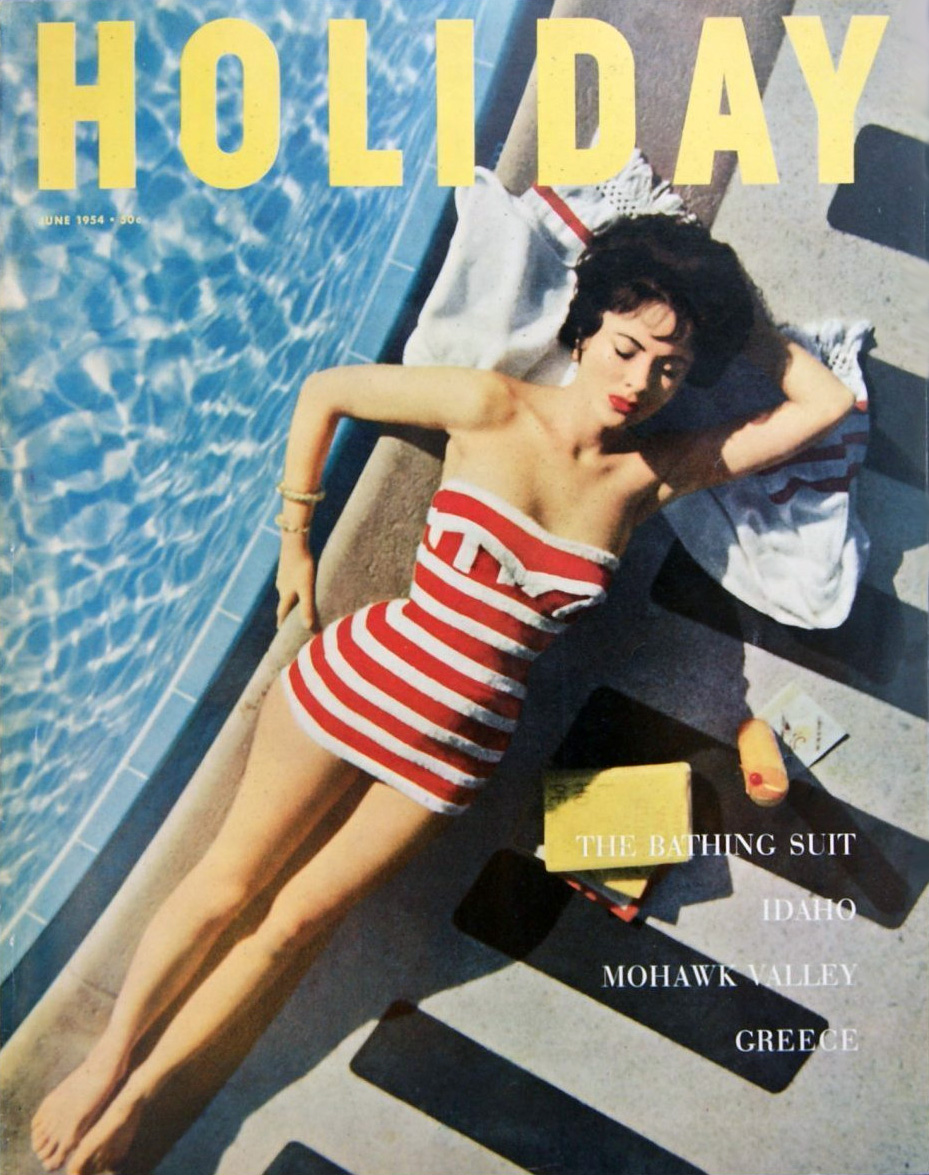
HolidayMag1954Holiday’s first issue came out in March 1946. A couple of months later Madison Avenue advertising man Ted Patrick took over as editor. A gourmet and bon vivant, Patrick gravitated toward fine restaurants. In 1952 the magazine began presenting awards to American restaurants that achieved dining distinction, recognizing 49 the first year. Among the winners were Bart’s (Portland OR), Commander’s Palace (New Orleans), Karl Ratzsch’s (Milwaukee), and Win Schuler’s (Marshall MI).

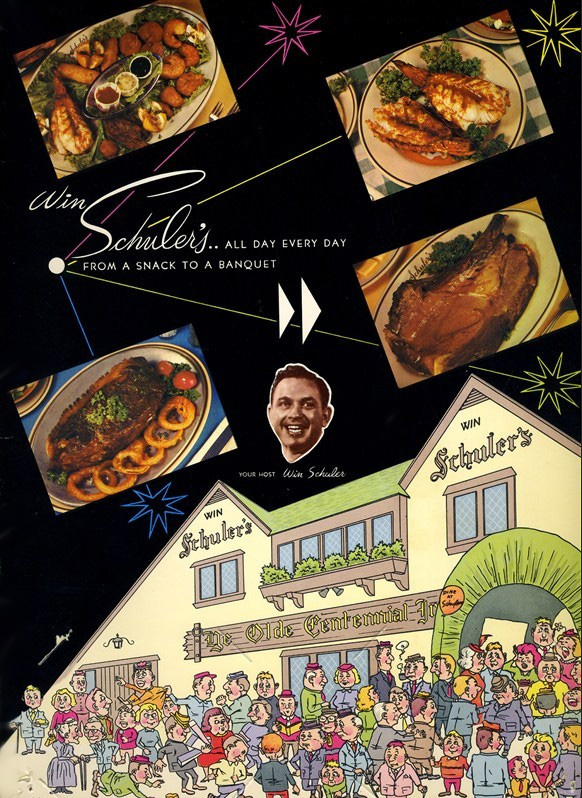
Winners tended to remain on the list, though it was not guaranteed. Win Schuler’s (still in business today) featured steaks, prime rib, and pork chops, and hosted 1,200 patrons a day at its Marshall location [menu below]. In 1971 it won its 20th Holiday award, no doubt not its last.

Even if, as Harvey Levenstein writes in Paradox of Plenty, Holiday stuck to “safe, sound, and usually American” choices where “the steak, lobster, and roast beef syndrome . . . reigned supreme,” its recommendations carried weight and raised the seriousness with which many American diners and restaurateurs regarded restaurants.

HolidayWinSchuler'sMenuTo win, a restaurant’s offerings were supposed to compare to French cuisine. It’s hard to see how a steak-and-baked-potato place could do that, but plenty such restaurants won awards. On the other hand, many of the winners were French inflected, particularly in NYC. A quick scan of restaurants included in the 1976 Holiday Magazine Award Cookbook shows that nearly 25% had French names and many more specialized in French dishes.

What some thought was a bias for restaurants in NYC and, to a lesser degree, NY state prevailed until 1968 when California restaurants won as many awards as New York (even though the number of winners in San Francisco still lagged behind NYC, 17 to 25).

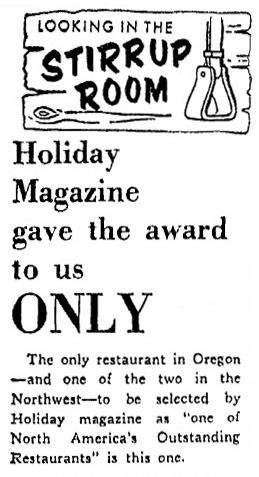
HolidayAug1953The overall volume of winners grew over the years, reaching over 200 by the mid-1970s. The numbers reflected the growth in dining out – and maybe the tendency of award programs to expand. In the beginning whole swaths of the country had nary a winner. Winners would boast that they were “the only” restaurant – for example, in Wisconsin, in the South outside of Florida, among Midwestern states, etc. But over time winners could be found in all parts of the country, requiring some adjustment in the meaning of distinction. Statements appeared saying that awards were not given solely to elegant places. As Patrick’s successor Silas Spitzer said, “Elegance has a certain value in making our judgment of restaurants – but it’s not essential.”

I suspect that the significance of the awards was greatest during Patrick’s editorship, which ended with his death in 1964. The magazine fell on hard times in the 1970s and was sold in 1977. Even earlier the awards were losing clout. Among those in the 1976 cookbook were several that had come under harsh criticism. Many specialized in “continental” cuisine which had lost its glamour by this time, or were considered uninspired. In 1974 John Hess wrote that The Bakery in Chicago and Ernie’s in San Francisco were “disappointing.” NYT critic John Canaday declared in 1975 that Le Manoir was the French restaurant where he had the worst meal in the past 20 months, Le Cirque the “worst restaurant in proportion to its popularity,” and the “21″ Club “least worth the trouble.”

The awards, called Travel-Holiday awards after Holiday’s 1977 merger with Travel, continued until 1989.

© Jan Whitaker, 2013
9 Comments

Filed under guides & reviews

Restaurant as fun house: Shambarger’s

Shambarger'sAI came across this restaurant while looking through lists of winners of Holiday Magazine awards. I was intrigued to learn that Shambarger’s, in the small town of Redkey, Indiana, was one of only five restaurants in that state to win such an award in 1972.

As I learned more about Shambarger’s I had mixed reactions: fascination at its creator’s unstoppable spirit, surprise that it had won prestigious awards, and gratitude that I had never been compelled to sit through a 5- to 6-hour dinner and vaudeville show there.

BeaconSupperClubDenverFor Shambarger’s fell into a category I call the fun house restaurant, once occupied by hotspots of enforced jollity such as Greenwich Village’s Village Grove Nut Club or the Beacon Supper Club in Denver whose owners put on funny hats to make people laugh [pictured]. La Nicoise in Washington, D.C. had waiters on roller skates.

Shambarger’s, adjacent to a railroad track, resembled an abandoned building on the outside, a junk shop on the inside [see painting below by Clyde Thornburg, 1971]. Its proprietor John Shambarger “performed” most of the seven-course dinner preparation in front of 50 or so guests who made reservations many months in advance, often traveled some distance, and paid about $100 a person in today’s dollars.

Shambarger'sClydeThornburg1971Making ten or more costume changes an evening, as a pirate, Tiny Tim, a Hawaiian dancer, etc., John chopped and mixed while singing, pattering, or loudly playing records keyed to each dish. Sometimes he told jokes, kissed women diners, or screamed ‘Aaayyyyy’ in people’s ears in concert with a Spike Jones record.

And all this without cocktails! No alcoholic drinks were served, except in later years when dinner began with punch bowl of “Bloody Redkey” made of tomato juice spiked with a Budweiser six-pack. Burp.

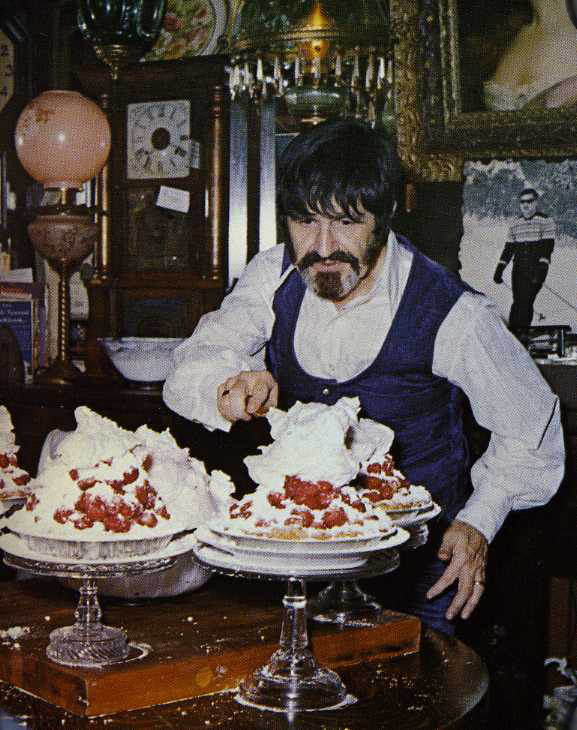
Holiday magazine’s volunteer judges in the 1960s and 1970s had a weakness for French cuisine. Which was what Shambarger’s provided, sort of. The menu was actually as jumbled as the decor of old clocks, menus, mirrors, lamps, and a moose head wearing a hat. It always included a main dish of Imperial Prime Ribs of Beef Flambee (in rum) and a dessert of sky-high strawberry pie (see above), but the first five courses varied. In one 1968 account they included – in a sequence that is perplexing – chicken soup, fresh fruit cup, corn fritters rolled in powdered sugar, shrimp, and guacamole with John’s special dressing.

Recipes for Shambarger’s guacamole and “Antique Salad Dressing” are furnished in the Holiday Magazine Award Cookbook (1976). I like guacamole and do not think it needs a dressing, especially not one made of cottonseed oil, vinegar, chopped onions, loads of sugar, catsup, concentrated lemon juice, and apple butter.

According to newspaper accounts, Redkey’s townspeople rarely ate at Shambarger’s, but they were always intrigued by the influx of well-dressed visitors from afar. In the words of Jayne Miller, who grew up in the area and now heads up Historic Redkey, Inc. (and provided information and images for this story), the locals knew that “magic” took place inside Shambarger’s humble structure.

The restaurant had its fans and its detractors, but enough of the former to keep Shambarger’s in business under John’s management from the 1960s through the early 1980s.

© Jan Whitaker, 2013

55 Comments

Filed under Offbeat places, proprietors & careers

Celebrity restaurateurs: Pat Boone

PatBooneDine-O-Mat

Few celebrities become deeply involved in the restaurants that bear their names. That was true of the singer Pat Boone, who was known to visit his namesake restaurants occasionally and to sing and sign autographs at openings. How much good his – or any celebrity’s – connection does for a restaurant is debatable. Neither Pat Boone’s success as a performer nor his pro-family, clean-cut, Christian image saved the ventures he lent his name and money to.

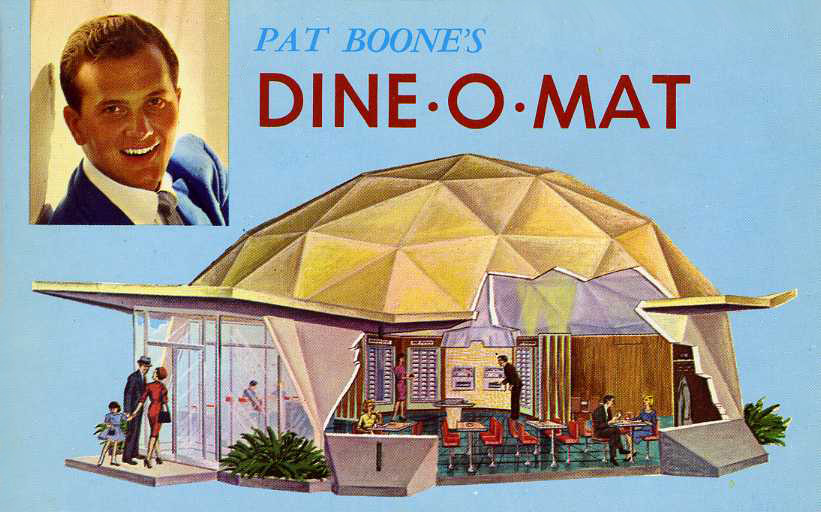
Pat Boone’s Dine-O-Mat appears to have barely gotten off the ground despite what publicity referred to as its “space age” design. “This . . . new type of fully automatic roadside restaurant is destined to be an important landmark on highways all over America,” boasted a 1963 advertisement aimed at investors. The initial plan was to build 100 of the restaurants by summer of 1964, but few seem to have been constructed.

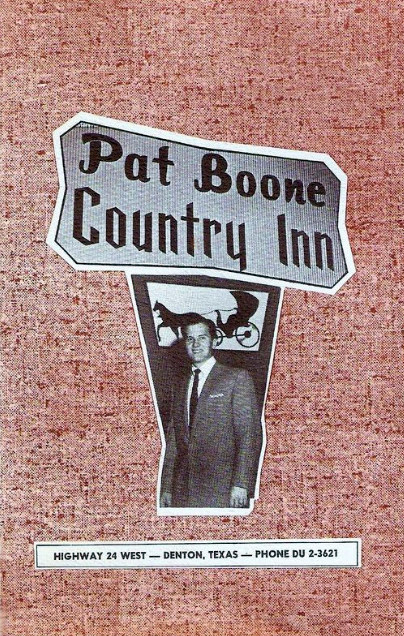
PatBooneCountryInn1959An earlier disappointing experiment in restauranting, Pat Boone’s Country Inn, in Denton TX, closed a mere four years after opening in 1958, even though Boone was connected to the town because of attending North Texas State College there.

While the Country Inn was a conventional restaurant, Dine-O-Mats were designed to be “revolutionary.” Perhaps the New Jersey entrepreneurs who cooked up the Dine-O-Mat concept were inspired by Stouffer’s 1961 foray into selling frozen food from vending machines to Ohio turnpike motorists who reheated it in microwave ovens.

Little could Pat Boone and company know when they launched Dine-O-Mats in 1962 that Stouffer’s would announce less than a year later their intention to phase out the roadside restaurants after realizing that travelers only wanted “speed and price.”

Both Stouffer’s highway restaurants and Dine-O-Mats might be called automats. But unlike Horn & Hardart automats, coins put in a slot did not call forth ready-to-eat selections. Dine-O-Mats had only one employee on the premises, an attendant whose job was to keep the machines loaded with frozen food. Rather comically, the postcard above shows customers (and Pat) dressed in their Sunday best, yet they are “dining” in a dismal geodesic-domed hut surrounded by vending machines and two microwaves sunk into an imitation hearth.

Similar to Stouffer’s restaurants, Dine-O-Mats were to be located near “motels, service stations, shopping centers, bowling alleys, country clubs, amusement parks, factories, air and bus terminals and along major highways,” according to a 1962 prospectus. How many were ever built, other than the prototype on Route 46 in Little Ferry NJ, is unclear. There may have been a few additional ones in New Jersey and Georgia.

Since kitchenless Dine-O-Mats relied on cooked food supplied by an offsite commissary, the scheme made sense only if deliveries could reach multiple outlets easily. In 1964 construction was to begin on a unit in Augusta, Georgia, but the project was delayed because of company “reorganization.” It was to be part of a group of Dine-O-Mats in Albany, Macon, and Savannah, but whether any of the Georgia restaurants opened I cannot determine.

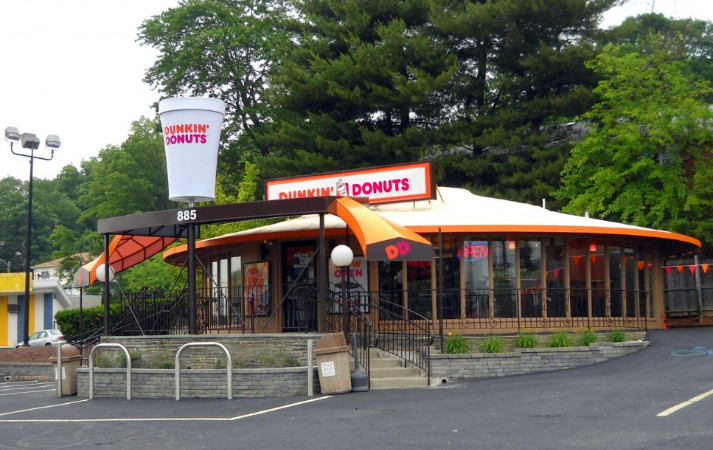
PatBooneDunkinDonutsNPlainfieldNJIn 1965, when the Augusta construction was slated to begin, a newspaper report announced, “The Pat Boone Restaurant Corp. has revised all plans and has just now completed reorganization with new, modernized plans for its restaurants.” Though it’s hard to imagine what could be more modern than “space age,” it’s possible the geodesic dome had been scrapped and that the North Plainfield NJ Dunkin Donuts pictured here was once a Dine-O-Mat as some people believe.

The company’s confusing advertisements for prospective investors required differing minimum investment amounts ranging from $2,500 to $10,000 for a “limited (inactive) partnership” in April of 1963, to $15,000 to become an “area controller” in October, then asking $10,000 for an “investment opportunity” in March of 1965. Did anyone ever get the 10% to 13% returns that were estimated?

© Jan Whitaker, 2013
15 Comments

Filed under chain restaurants, proprietors & careers, roadside restaurants, technology

“Adult” restaurants

Anyone who knows American culture realizes immediately that the term “adult restaurant” would not even remotely imply an eating place that caters to mature or developed culinary tastes. Instead it would mean one deemed inappropriate for children because of some kind of sexually tinged goings on.

Historically the attractions in adult restaurants have not been what’s on the plate but are part of the female servers’ anatomy.

An unfamiliar restaurant concept to me is the “adult fast food restaurant.” This is how a Florida drive-in owner referred to his business in 1976. It didn’t serve adult fast food – what would that be? Crêpes? It served hot dogs, hamburgers, beer, and, oddly, wine. The manager called it “our answer to MacDonald’s,” reflecting the fierce competition drive-ins faced from big chains in the 1970s.

The “adult” aspect: servers at the “Jugs ‘n’ Suds” drive-in were costumed only in hot pants and tassles.

However, Jugs ‘n’ Suds waitresses got very little chance to “wear” their intended costume. The drive-in met with vehement disapproval from citizens and officials of New Port Richey who insisted that the waitresses cover up. One of the restaurant’s promoters admitted that business fell off once apron-like halter tops were adopted, saying “People aren’t as interested in seeing a topless waitress with fringe on.” [pictured] In very short order the drive-in closed. A second one – without carhops — then opened in an old A&W. I don’t think it lasted long. A fantasized  nationwide chain never materialized.

Jugs ‘n’ Suds was unusual in that it was a drive-in. Most topless restaurants have been positioned at the “nightclub” end of the restaurant spectrum. Typically they’ve been dark, bar-like spaces where business men congregate at noon and after work.

California was the birthplace of the topless restaurant with the pioneers opening in 1965 not long after the creation of Rudi Gernrich’s topless bathing suit. Many offered a business man’s lunch special accompanied by models strolling from table to table. In California, at Long Beach’s Kozy Kitten, kittens ambled while patrons downed 98c luncheons of Turkey, Ham, or Beef served with Potato Salad and Beans. (I didn’t say topless restaurants were glamorous.)

The topless restaurant fad, which combined gawking, drinking, AND eating, died out, but using women’s anatomy to attract restaurant patrons did not. Maybe it’s eternal. Even as the last Playboy bunny club closed in the 1988, a new crop of “breastaurants” (as they are mockingly known by critics) appeared, most of them flaunting scantily dressed servers. Following the success of Hooters, a slew of knock-offs opened in Florida, among them the so preciously named Melons, Knockers, and Mugs & Jugs.

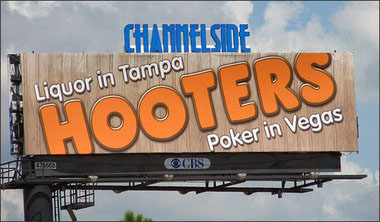
Controversy is also eternal. Hooters’ aggressively suggestive advertising campaign has offended many and the chain was forced to remove billboards that hinted servers were prostitutes, an idea that, depressingly, has plagued female servers since the 19th century.

Legal challenges to topless restaurants and breastaurants have mostly not held up. But communities protest them anyway, occasionally successfully. Recently the Quincy MA Licensing Board denied permission to a unit of the Tilted Kilt chain because it was too close to a church that objected.

© Jan Whitaker, 2012

7 Comments

Filed under drive-ins, food, women

“Hot Cha” and the Kapok Tree

What kind of career might the son of a junk dealer father and a mother who owned a restaurant end up with?

If he was Richard Baumgardner he would run restaurants raucously decorated with gilded and spray-painted objets d’art — wonderfully kitschy palatial junque bought by the ton in Europe (70 tons of statues in 1966). When his warehouse ran low on statues and urns, he would make plastic replicas with rubber molds.

His customers would find it all enchantingly “different.”

But first, he’d take a detour into the entertainment world as a jazz-era musician and bandleader known as Dick “Hot Cha” Gardner. As an introduction to his restaurant career in 1936, Dick inaugurated the Hot Cha Supper Club in conjunction with his mother Grace’s tea room, the Peter Pan Inn in rural Urbana MD. After she died in the 1940s, Dick took over the Peter Pan and transformed it into a let’s-drive-to-the-country mega-attraction for Washington DC families. In 1958, retired from bandleading, Dick opened his first Kapok Tree Inn in Clearwater FL, on the site of a tree planted in the 1880s.

It’s hard to know how to classify his restaurants. They fall into two of my classifications: 1) the high-volume restaurant, and 2) the curiosity-shop restaurant filled with quaint stuff.

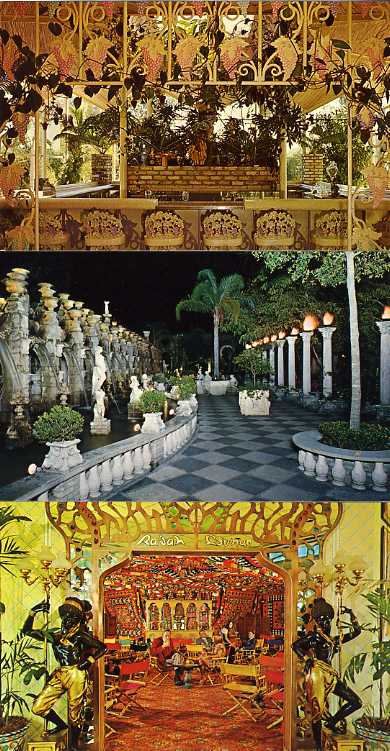
The decor at the Clearwater Kapok Tree was a mix of light fixtures from Paris, chandeliers gathered from the DC Italian Embassy and old theaters in Baltimore and New York City, paneling from a De Medici compound replicated in plastic, and on and on.

Yet for all their madcap faux elegance, Dick’s restaurants followed a rigid formula designed for maximizing profits and minimizing costs. Magically, it worked. Despite ticket windows where customers were required to prepay their dinner tab, a teen-age staff, long waits for tables (in the bar), sticky sweet rum drinks, and limited menus with pedestrian cuisine, customers absolutely adored these zany buses-welcome eateries.

For years diners had just four dinner choices: fried chicken, ham, deep fried shrimp, and steak. When customers sat down at their tables, servers collected their receipts, knowing immediately by the prices what they had ordered. A complete meal included a typical 1950s melange of appetizers which never varied year in and year out, whether in Maryland or Florida — cottage cheese, (sweet) pickled vegetables, muffins, and apple butter. Sides were roast potatoes, peas in mushroom sauce, beets, and hush puppies. Ice cream for dessert and seconds on everything but the entrees. Boxes were provided for leftovers and the complimentary tall cocktail glasses. Few left empty-handed.

The Kapok Tree Inns prospered with the Pinellas County boom of the early 1970s. By 1978, two years after Dick died, there were three Kapok Tree Inns, in Clearwater, Madeira Beach, and Daytona Beach. The first remained the largest, seating at least 1,700. On really busy days upwards of 5,000 meals were served there.

Controlling interest in the Kapok Tree corporation, which also included the Peter Pan Inn and a couple of Baumgardner’s Restaurants in Florida, passed to Dick’s widow, a former waitress at the original Clearwater restaurant, who had largely been running the operation since he had a stroke in 1970. A year after his death, she told a reporter that hers was the most profitable publicly-held restaurant chain in the nation. The Daytona Beach Kapok Tree closed  in 1981, and the Clearwater restaurant closed ten years later.

I wonder what happened to all the wacky furnishings?

© Jan Whitaker, 2011

23 Comments

Filed under popular restaurants, restaurant decor