Tag Archives: 1920s

Anatomy of a restaurateur: Charles Sarris

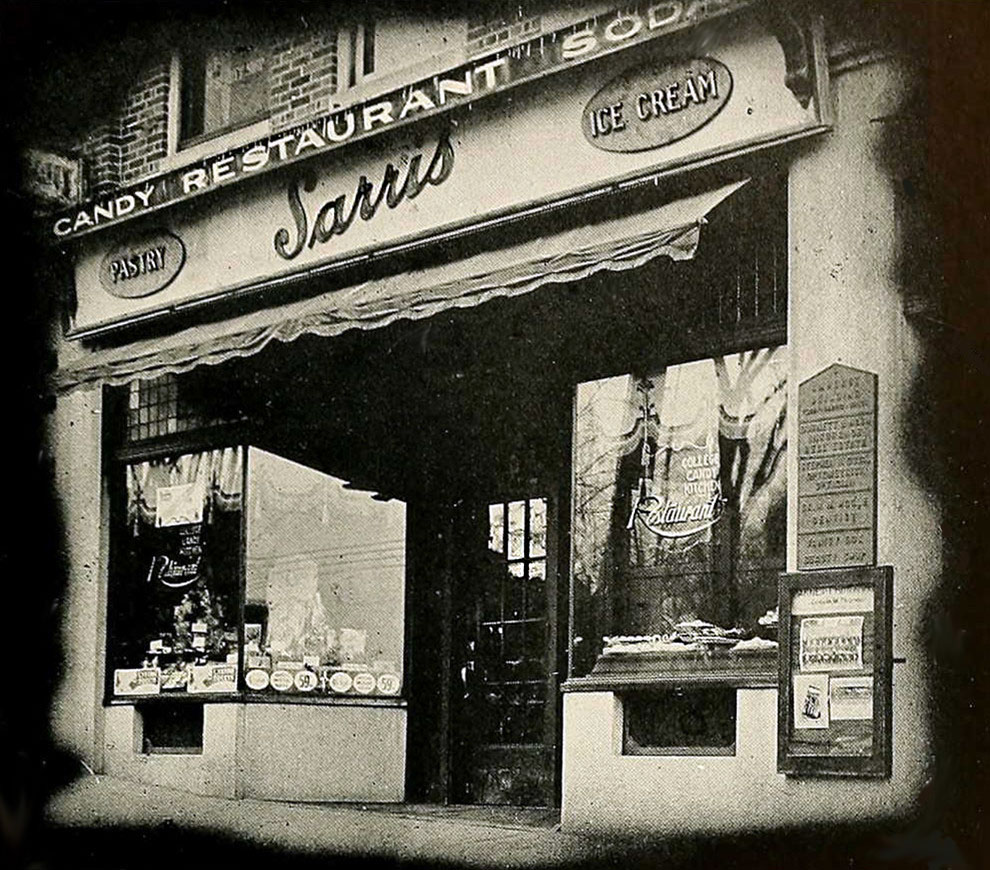
SarrisCandyKitchen1939

It is always a big deal to me when I find a restaurant proprietor’s memoir, all the more so when he or she conducted an “everyday” sort of restaurant. My Ninety-Five Year Journey, privately published by Charles N. Sarris in 1987, was a just such a wonderful, and rare, find.

The book illustrates a fairly typical restaurant career for thousands of Greek-Americans who opened restaurants in small towns which had few eating places in the early decades of the 20th century.

Charles was born in Lesbos, Greece, in 1891. At 19 he lived in dread that any moment he would be conscripted into the Turkish army and, possibly, spend the rest of his life in an occupied country. He decided to leave for the U.S. For the next six years he bounced around Connecticut and Massachusetts, working in Greek-owned confectioneries where he learned to make candy and ice cream. In 1916 he went to work in a new confectionery in Amherst MA, population 5,500. It wasn’t long before Charles and his partners, who included his brother James, took over the confectionery and expanded it into a lunchroom serving basic fare such as hamburgers and ham and eggs.

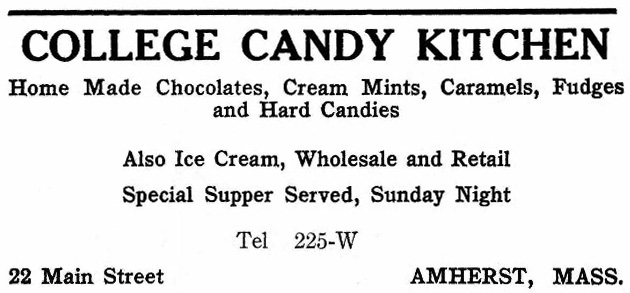
SarrisCandyKitchen1921ADVThe restaurant was named the College Candy Kitchen [1921 advertisement pictured], obviously aimed at student patrons from Amherst College and the Massachusetts Agricultural College (now the University of Massachusetts). Candy Kitchens run by Greek entrepreneurs could be found throughout the United States in the early 20th century. Coincidentally, another “College Candy Kitchen” did business in Cambridge’s Harvard Square.

One of only three Greeks in Amherst when he arrived, Charles would not feel welcome in his new home for some time. He heard racial and ethnic slurs unfamiliar to him from his previous residency in Andover MA. He observed that many townspeople valued people from France, Germany, or England more highly than those from Italy, Poland, the Middle East, or Greece.

In 1927 he and two other merchants who occupied the three-story building located on Main Street across from Amherst town hall formed Amherst Realty Co. to buy the property. Yet not until 1939, after running a thriving restaurant for 23 years, did Charles finally gain admission into one of the town’s fraternal organizations, the Rotary Club.

SarrisCandyKitchenca1927

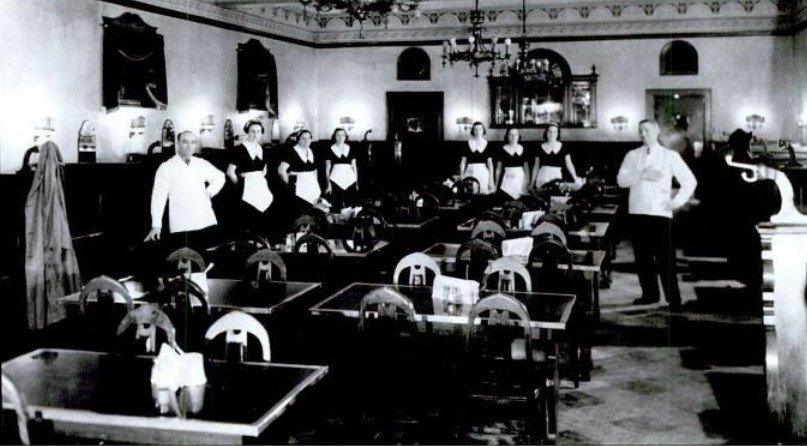
The College Candy Kitchen modernized and expanded in the 1920s [1920s Spanish-style interior shown], despite a disastrous fire in 1928 which necessitated moving to a new location for several months. Business slowed drastically but Charles and James got through the Depression ok.

Students, who made up the bulk of customers, balked when the restaurant introduced new foods such as yogurt and melons. Some greeted watermelon with the objection, “Gee, we’re not Alabama Negroes!” Charles reassured them that the menu would always include staples such as boiled dinners, baked beans, and meatloaf. For decades the restaurant continued to produce its own baked goods, ice cream, and, for holidays, candy.

Once again Charles encountered customer resistance when he hired Afro-Americans as staff or served them as patrons. “We had a lot of opposition from the students but we ignored it,” he wrote. Eventually they settled down and got used to it.

According to Charles, the restaurant closed in 1953 due to illness, parking problems, and customers’ demands for alcoholic beverages (which he did not wish to deal in). It was succeeded by the Town House Restaurant. A 1953 bankruptcy auction notice gave a fair idea of the size of the restaurant then. On the auction block were 30 leather upholstered booths, two circular booths, four showcases, a soda fountain with 12 stools, and kitchen, bakery, and ice cream equipment. I can just picture it.

© Jan Whitaker, 2013
6 Comments

Filed under lunch rooms, proprietors & careers

Dining on the border: Tijuana

TijuanaGardenCafe1922Borderlands are fascinating social and cultural mixing bowls. Their restaurants exemplify how variable these places can be. Lacking tradition as well as a local clientele and culture, there is little shaping them other than market forces. In Tijuana prominent historical factors shaping the market were drinkers’ desire for alcohol and restaurant owners’ need to recoup lost business.

The history of restaurants and cafes in Tijuana is marked by all the instability and calamity that the restaurant business is known for – and then some! Partnerships shifted, scandals erupted, and fires swept through the main street, Avenida Revolucion.

When Prohibition became the law in the United States, a number of San Diego restaurant, café, and bar owners – Italians, Jews, Slavs, and others — set up shop a stone’s throw away, in Tijuana, then a village of little more than 1,000 people. American visitors who began to head there did not go to soak up Mexican culture, but to escape restraints [see 1922 advertisement above]. Tourist eating places, all furnishing drinks and often entertainment, had names like Johnny’s Place, Aloha [American teens in Aloha Cafe, 1940s, below] , and Alhambra. Few were run by Mexicans and Mexican food ranked low on the culinary scale.

From the point of view of San Diego’s anti-alcohol, cafeteria-loving reformers, the drinking, gambling, and prostitution that went on in Tijuana made it a hell hole. Tijuana’s reputation, of course, did not stop everyone from going there, even many respectable, well-off San Diegans and Los Angelenos, as well as civic organizations. Determined to limit vice, prohibitionists waged vigorous battle to restrict passage by shortening border crossing hours, finally succeeding in closing the border from 6 pm to 6 am in 1926.

TijuanaAlohaCafeca1949

Despite the curfew, San Diego’s hotel and restaurant industries protested in 1931 that the 6 pm closing “ha[d] not prevented one single person from going to Tijuana,” and had actually reduced their business by 25%. They alleged that visitors went for the whole day or stayed overnight, enabling them to engage in more drinking, gambling, or whatever than previously. Tijuana flourished, opening more cafes, clubs, and hotels.

The better restaurants specialized in “international cuisine” which consisted mainly of steaks and seafood along with Italian, French, German, and Mexican dishes. In this category were restaurants variously operated by Alex and Caesar Cardini of salad fame. Julia Child wrote in her 1975 book From Julia Child’s Kitchen that she remembered going to Caesar’s for lunch in 1925 or 1926 with her parents. They had heard of his special salad and were eager to taste it. “Caesar himself rolled the big cart up to the table, [and] tossed the romaine in a great wooden bowl,” she wrote.

The border curfew was relaxed in1932 and lifted entirely in 1933. But if that had an adverse impact on Tijuana tourist trade, it was nothing compared to the blows delivered by the repeal of U.S. Prohibition in 1933 and a Mexican gambling ban in 1935. Tijuana bartenders correctly predicted few bars and cafes would survive. Sure enough, proprietors headed back to the U.S. Caesar Cardini opened a place in San Diego in 1936.

TijuanaGermanrestaurant

The tourist economy waxed and waned thereafter, thanks to such things as the 18-year-old drinking age, the availability of marihuana, and incidents of violence. Mexican cuisine became more popular in Tijuana’s tourist district in the latter 20th century. Richard Nixon, then Vice President of the United States, ordered Mexican dishes and German beer in an informal visit to the Old Heidelberg there in 1960.

Today Tijuana is a large global city, yet Americans tend to stick to the main tourist avenue as of old. There is a diversity of restaurants, many with Hispanic names and owners. Caesar’s has continued, off and on, since the Cardinis departed. Yet, as much as I’d like to believe a recent comment about it on TripAdvisor.com (“nice place to feel the real culture and history of Tijuana”), I have to ask, “Real culture? Real history? What?”

© Jan Whitaker, 2013

2 Comments

Filed under miscellaneous, night clubs

Three hours for lunch

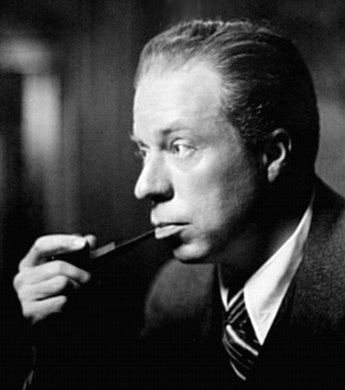
ChristopherMorley1930For every devoted restaurant-goer who likes to keep up with the latest restaurant trend there are probably two others who would prefer an eating place from the past. Despite my fascination with the history of restaurants, it might surprise some readers to learn that as a diner I am not attracted to historic restaurants; I study the past but eat in the present. Journalist and author Christopher Morley, however, might have been the patron saint of those who would gladly flip back the calendar when dining out.

Through the 1920s he gathered together friends who loved to explore the corners, alleys, and waterfronts of Manhattan and environs, especially Hoboken which he christened the “seacoast of Bohemia.” Their whimsical jaunts centered on a leisurely lunch.

The group, whose personnel was always changing, was made up of men who had enough time to join Morley’s Three Hours for Lunch Club. He initiated it in 1920 when he began writing a column for The New York Evening Post called “The Bowling Green” that chronicled his explorations of New York and the escapades of the club. Later the column appeared in the Saturday Review of Literature.

The club was less about food than about male camaraderie, conversation, and humorous one-upmanship. In earlier times, before Prohibition, it might have been a drinking club. The loss of masculine drinking culture and the alleged feminization of restaurants underwrote a lament for a present era supposedly ruined by women lunching on sandwiches and soft drinks at soda fountains. By contrast, Morley & Co. searched out old-fashioned taverns and chop houses.

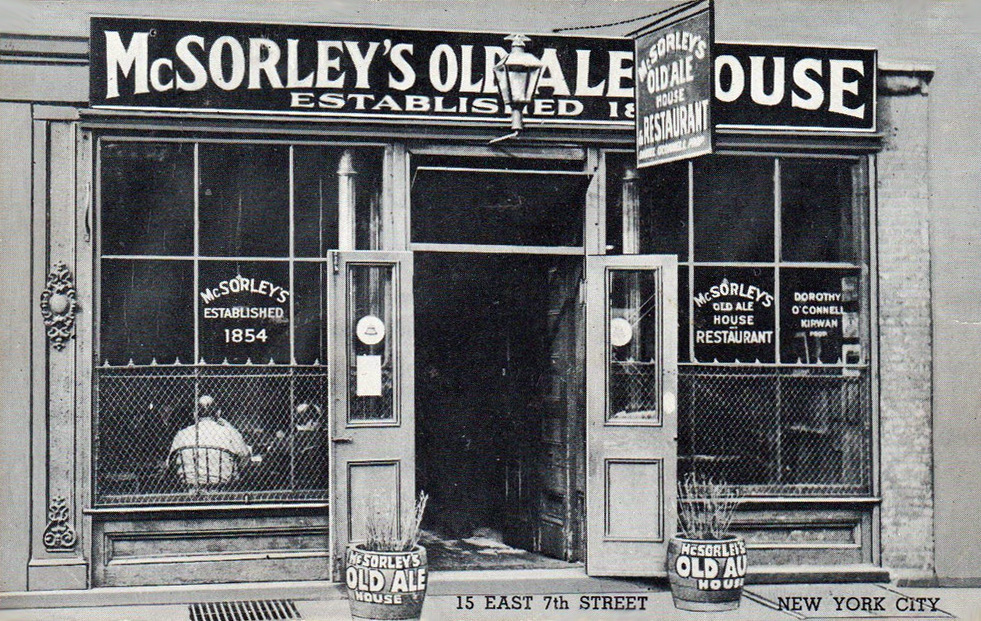
mcSorley'sHe wrote in a tribute to McSorley’s Ale House (which did not admit women until 1970), “Atrocious cleanliness and glitter and raw naked marble make the soda fountain a disheartening place to the average male. He likes a dark, low-ceilinged, and not too obtrusively sanitary place to take his ease. At McSorley’s is everything that the innocent fugitive from the world requires.”

Without his male buddies, Morley might have been limited to the company of his wife Helen, whom he called Titania in his columns. Although the pair enjoyed frequent Saturday lunches in the basement of Moretti’s table d’hôte on East 14th Street, he complained publicly, “Anyplace that I think is peculiarly amusing, or quaint, or picturesque, Titania thinks is unhealthy. Sometimes I can see it coming. We are on our way to Mulberry Bend, or the Bowery, or Farrish’s Chop House. I see her brow begin to pucker . . .”

The club, which included Don Marquis, sea captain/writer David William Bone, Sinclair Lewis, and other editors and writers, flourished about the same time as the Round Table whose literary stars met at the Algonquin Hotel. For a time before he founded his own club Morley was part of a group of Vanity Fair writers who congregated at the Café Noir, but he felt edged out because he lacked the Vanity Fair style. “Even Thackeray would have been grayballed,” he wrote later.

YeOldeChopHouse423

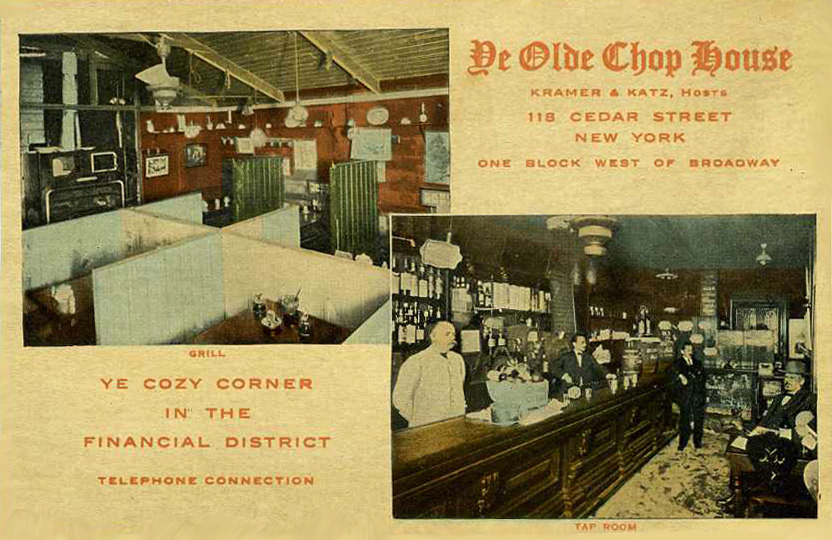
A favorite THFL place in lower Manhattan was Ye Olde Chop House on Cedar Street (pictured pre-Prohibition with sawdust floors beloved by CM) where the club named a waitress “the Venus of Mealo.” The cuisine of chop houses, as might be expected, featured grilled meat and homey dishes such as pickled beets, corned beef hash, tapioca pudding, and rhubarb pie. Far from seeking adventure in the culinary department, Morley once ordered swordfish steak, but declared it “too reptilian.”

Other than the musty hangouts of lower Manhattan, Hoboken’s Hofbrau, Meyer’s Restaurant, and the American Hotel were popular with the club. In 1929 Morley and others bought a bankrupt ironworks on River Street in Hoboken to become club headquarters. But it seems the club was waning around this time and it’s not clear how long that experiment continued. Three-Hours-for-Lunch was succeeded by another club, the Baker Street Irregulars, which Morley – a Sherlock Holmes fan –  formed at Prohibition’s end.

© Jan Whitaker, 2013
2 Comments

Filed under patrons

Celebrity restaurants: Evelyn Nesbit’s tea room

Hundreds, maybe thousands, of celebrities have gone into the restaurant business when their careers waned. Their level of direct involvement may be high or low but all these ventures bank on the idea that a famous name will attract customers.

When Evelyn Nesbit opened her NYC tea room in May of 1921 she made sure that her name was prominently displayed. Located on West 52nd street just off Broadway, the sign saying “Evelyn Nesbit’s Specialty Shop” was visible from the theater district’s Great White Way.

She was then in her mid-30s, years away from her peak as a teenage artist’s model [above, age 16], “Gibson Girl,” Floradora showgirl, and millionaire’s wife. Her fame derived not only from her former good looks – from the years her image was displayed everywhere – but also from her involvement in a romantic triangle with prominent architect Stanford White and her insanely jealous husband Harry Thaw. After Thaw shot and killed White in 1906, she became notorious as a witness during the sensational “trial of the century.”

By 1921 she had divorced Thaw, had a son, returned sporadically to the stage, taken up sculpture, published a memoir, and married a second husband from whom she was estranged. Characteristically, she was in debt, owing the equivalent of a year’s income to a dress shop.

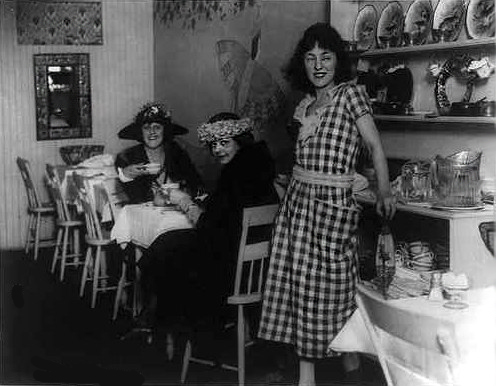
Her tea room enjoyed such a short, unsuccessful run that it is hard to learn much about it. Presumably she raised funds from friends to furnish it and pay the $300 monthly rent. She lived in two rooms upstairs. One account described the 100-seat tea room as “super-beautiful” and furnished with rich carpets, Oriental tapestries, and exotic plants, a description at odds with the homey scene in a 1922 photograph shown here.

In several interviews Evelyn made what sound like preposterous claims that she served food available nowhere else. “I am revolutionizing the restaurant business in New York,” she boasted. Her specialties included deep dish apple pie and ice cream which she said she made herself. “I amazed the chef, let me tell you, with what I know about cooking,” she said.

I found it surprising that she claimed to be a good cook; however I did discover that when she left the US for Paris in 1910, surely pregnant with her son, she told friends that she planned to rent a modest apartment on the outskirts of Paris, study sculpture, and do her own cooking.  Although she evidently hired someone else to cook for the tea room she said she furnished the recipes and did all the buying.

Things went wrong fast. During the first six months she (barely) survived three robberies, one kidnap attempt, one suicide attempt, and eviction for nonpayment of rent. On a second try in January of 1922 she was successfully evicted, after which she returned to cabaret dancing. In 1926, while performing at Chicago’s Moulin Rouge, she tried to kill herself again by swallowing Lysol. Her troubled brother took his own life two years later.

But Evelyn achieved happiness in later life and lived on to age 81. She moved to Southern California near her three grandchildren and their father, a pilot for Douglas Aircraft. She returned to her lifelong interest in art, teaching sculpture and ceramics at a community center. Easing her constant need for money, she received a $10,000 bequest when Thaw died in 1947 and was paid more than $50,000 for use of her life story in the 1955 movie “The Girl in the Red Velvet Swing.”

After many years away, she visited New York in 1955, reflecting on the great meals she had eaten during her heyday. Passing the former location of Sherry’s, she recalled “the wonderful terrapin they served.” She expressed surprise that she had managed to stay slim in her youth. “I ate so much in the old days I still wonder why I didn’t get fat,” she said referring to another performer’s, Lillian Russell’s, “upholstered” appearance. Heading off to a restaurant dinner, the ever-unsentimental Evelyn confessed, “You know what I really want to see most in New York? A nice big broiled Maine lobster.”

© Jan Whitaker, 2012

10 Comments

Filed under proprietors & careers, tea shops, women

Reuben’s: celebrities and sandwiches

Once upon a time there was a famous NYC restaurant called Reuben’s. Today there is a famous grilled sandwich of corned beef, Swiss cheese, sauerkraut, and Russian dressing on pumpernickel called a Reuben. Wouldn’t it make a nice story if the sandwich came from the restaurant?

The connection has been well researched yet it remains unresolved. For anyone who wants to examine the matter in detail, I recommend Jim Rader’s excellent account. He has the last word, inasmuch as there is one.

Two important points. 1) No one has come up with an early menu from Reuben’s that lists the Reuben sandwich as it is known today. It does appear under the name “Reuben’s Pioneer” on a 1971 menu but by then the sandwich could be found everywhere. 2) Despite being a publicity hound – and despite an Omaha woman winning a national contest for creating the sandwich in 1959 — founder Arnold Reuben never laid claim to it as his restaurant’s creation.

What is certain is that the fame of Reuben’s restaurant and delicatessen was built upon sandwiches — and the celebrity patrons who ate them.

I have seen a menu from Reuben’s said to be from 1922. Under the top heading “Reuben’s Famous Sandwiches” are listed 42 sandwiches. Nine are named after celebrities of stage and screen of that time. What is striking about the named sandwiches is that they cost more than the others. At the low end are ordinary sandwiches priced at 35 cents such as Salami, Corned Beef, and Liver Wurst. The special celebrity sandwiches range from 75 cents to a dollar, amounts that would then buy a whole dinner in many restaurants. The specially named sandwiches probably had more ingredients and may have been larger, but the aura of celebrity around them must have added a few cents too.

Naming sandwiches for celebrities was a publicity gimmick probably thought up by a press agent. The columnist Westbook Pegler claimed that Reuben’s initially acquired fame because of publicity generated by the audacious Harry Reichenbach who encouraged Arnold to sue a well-known New Yorker over the price of a ham in 1920. Thereafter, like Lindy’s and the Stork Club, Reuben’s was constantly in the nationally syndicated gossip columns of the 1920s, 30s, and 40s.

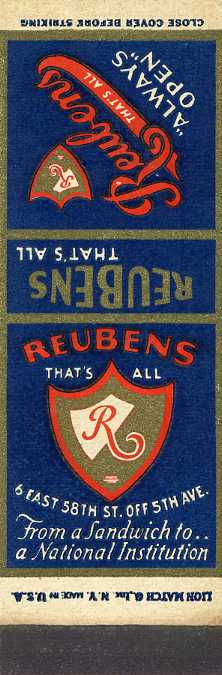
Arnold Reuben was a German Jew who, with his family, immigrated to the US as a young child around 1886. He helped out by peddling produce, then worked at a delicatessen. In 1908 he opened his own deli, which he later referred to as a “shtoonky little store.” By the end of the teens, he was thriving; he had incorporated his Pure Food Shop at 2102 Broadway and opened an eating place at 622 Madison Avenue which was popular with Broadway performers and stars from Hollywood. (Transitions from food store to restaurant are not uncommon and, as was also the case with Texas butcher shops-to-barbecues, often begins with sandwiches.) In 1928 he had a third restaurant in Philadelphia and was said to be “enormously rich.” Adopting the slogan “From a Sandwich to a National Institution,” he often told a story about the first celebrity sandwich he created – ham, cheese, turkey, cole slaw, and dressing — for a struggling young actress.

He experienced some financial difficulties in 1933 and filed for bankruptcy but only two years later was back on course with a bigger and better restaurant [pictured] to replace the one on Madison Avenue. Of critical importance to his comeback was the end of Prohibition. His opening announcement in the New York Times attested to this with a prominent display of the names of Reuben’s “friends,” seven liquor manufacturers and distributors.

In 1946 he opened a restaurant on West 57th near Carnegie Hall, with a front nearly identical to East 58th Street. Like his others it was open 24 hours. No doubt it, too, had a doorman who greeted patrons with the bywords “Reuben’s, that’s all.” Larger than the East 58th place, it was billed “A City in Itself,” and contained shops for delicatessen, flowers, chocolates, cigars, and theater tickets, as well as a perfume bar and a barber shop. Despite all, it silently disappeared a couple years later.

Arnold retired to Florida in the mid-1960s and sold the business, which he had turned over to his son to manage years earlier. Reuben’s in NYC continued under new ownership at various locations until 2001. A Reuben’s was also opened in Miami in the 1940s but I have not been able to determine its subsequent fate.

© Jan Whitaker, 2012

4 Comments

Filed under food, popular restaurants, proprietors & careers

Anatomy of a restaurateur: Chin Foin

In the early 20th century Chin Foin was considered Chicago’s foremost Chinese restaurateur, being affiliated with four of the city’s leading Chinese restaurants: the King Yen [above] and King Joy restaurants and the Mandarin Inn and New Mandarin Inn. His exact degree of ownership and management of the four over time is difficult to determine but it’s clear that his participation was significant. He also ran an import business in Chicago called Wing Chong Hai & Co.

His first restaurant King Yen Lo began inauspiciously in 1902 upstairs from a saloon, the notorious establishment of alderman Michael “Hinky Dink” Kenna on the corner of Clark and Van Buren. Operating above or behind a saloon was not uncommon for Chinese restaurants and may reflect difficulties the Chinese encountered in renting property. Additionally, having a restaurant nearby or physically connected may have served the interests of saloon keepers who wanted to evade early closing laws by funneling drinks through an eating place.

Whatever the case, the King Yen restaurant was better than it had to be. Like the other restaurants Chin Foin would run, it appealed to the non-Chinese after-theater crowd and featured orchestral music and steaks and chops alongside chop suey and “Mandarin” dishes. The kitchen was open for inspection and a special section was reserved for women unaccompanied by men, important since women shoppers were known to be fond of Chinese food. It’s not clear how long he was actively involved with King Yen but he was still an owner in 1907 when a Chinese envoy attended a formal dinner held there for the christening of Chin Foin’s infant son Theodore.

The King Joy restaurant on W. Randolph [pictured, ca. 1910] was a much bigger venture. It was a component of an international Chinese organization meant to raise funds for political and economic modernization in China. Investors included Chinese living in China and America as well as non-Chinese Chicagoans who supplied $125,000 [more than $3M today] to build the thoroughly modern restaurant. It opened in December of 1906 with Chin Foin as manager.

The investors in China must have heard that running restaurants in America was very profitable because little more than a year after the restaurant’s opening they began to complain about not receiving any dividends. I don’t know how all that was sorted out but clearly Chin Foin’s personal wealth was growing, enabling his family to move to a posh neighborhood in 1912. The newspaper reported he was a wealthy Yale graduate, which brought a grudging acceptance from a non-Chinese woman who said she could hardly object to a Chinese neighbor since, she observed, “We have Negroes out here now, and a few Goths and Visigoths.”

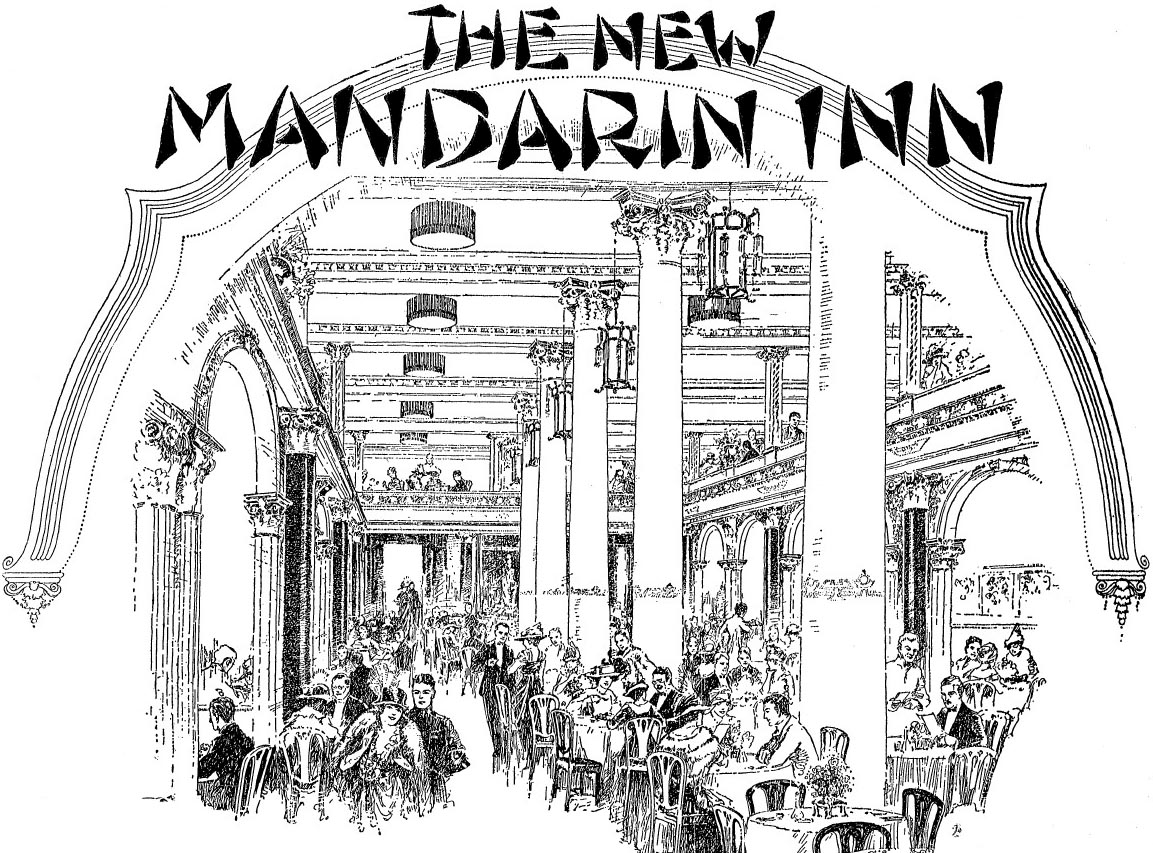
The very Americanized Chin Foin had ambitions of running a type of restaurant that was scarcely Chinese at all. After opening the Mandarin Inn in 1911 and the New Mandarin Inn in 1919 [pictured], both on South Wabash, he announced he had taken a 25-year lease on a Wilson Avenue property formerly occupied by a car dealer. To be called the Mandarin Gardens, the restaurant was supposed to open in 1921 but never did as far as I can tell. Reflecting on the upward arc of his restaurant career, he said in 1920, “Now we’ve cut out the far east features and operate a strictly American restaurant, and that’s what the Mandarin Gardens will be.”

The New Mandarin Inn had also shed some of its Chinese-ness. Since its opening in 1911 it had broken with Chinese restaurant tradition by using linens on the tables and serving European wines. Although it served Chinese dishes, it also offered Sunday chicken dinners and, in 1921, served a high-priced Easter dinner with choices such as Blue Points on the Half Shell, New Orleans Gumbo, Lamb with Mint Jelly, Whipped Potatoes, and Strawberry Shortcake.

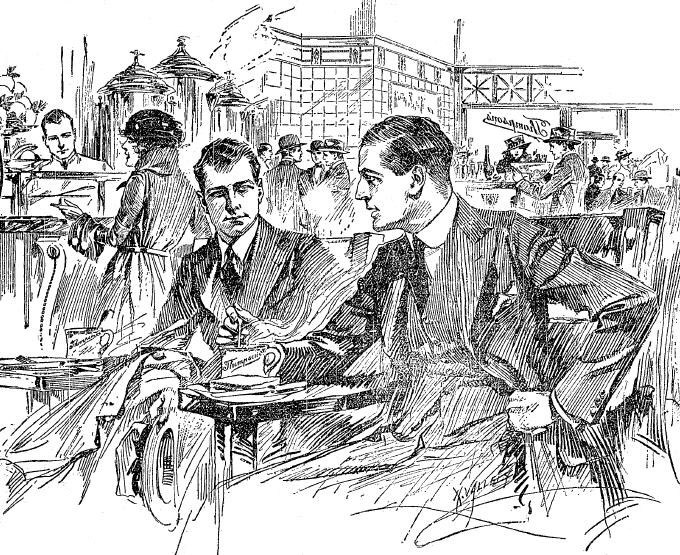
Sadly, Chin Foin’s plans were abruptly terminated in 1924 when he stepped into an empty elevator shaft at the New Mandarin Inn. The subsequent owner of that restaurant, Don Joy, added “Chinese” features such as dragons on the front and a simulated temple roof. Don Joy’s Mandarin Inn closed in 1928, later to become a nightclub (Club Royale) and, eventually in 1959, Jimmy Wong’s Cantonese restaurant. The building occupied by King Yen was razed in the teens for a new location of the John R. Thompson’s lunchroom chain, while King Joy became the Rialto Gardens (Chinese), and then one of Dario Toffenetti’s cafeterias.

© Jan Whitaker, 2011

12 Comments

Filed under proprietors & careers

Theme restaurants: Russian!

Restaurants and coffee houses run by Russian immigrants appeared in the late 19th century. Their proprietors were Jews living on NYC’s lower East Side as well as others in California and Chicago who were pro-revolution enemies of the Czar. But not until after World War I (and the Russian Revolution), when a very different wave of anti-revolution, pro-Czar Russian immigrants arrived, did explicitly and self-consciously Russian-themed restaurants come into being. They flourished in the 1920s and 1930s.

For many readers New York’s Russian Tea Room will immediately spring to mind. It was established on West 57th Street in 1927 by Jakob Zysman, a Polish immigrant who operated a chocolate factory at the little tea room where ballerinas hung out. The business soon moved across the street where it changed hands and was expanded into a full-fledged restaurant. Over its long history it had many owners, notably including Faith Stewart-Gordon who ran it from 1967 until the end of 1995. After extensive renovations by restaurant impresario Warner LeRoy, it reopened in the fall of 1999. LeRoy died in 2001 and the RTR closed the following year.

But it should be noted that, unlike other Russian restaurants of the interwar period, the RTR was not started by a White Russian nor did it have a specifically Russian emigré clientele for most of its tenure. Reportedly, at one point the Russians who haunted the barroom were discouraged from patronizing the place because of their propensity to linger while they eulogized the olden days. The RTR was mainly famous as a flamboyant celebrity restaurant.

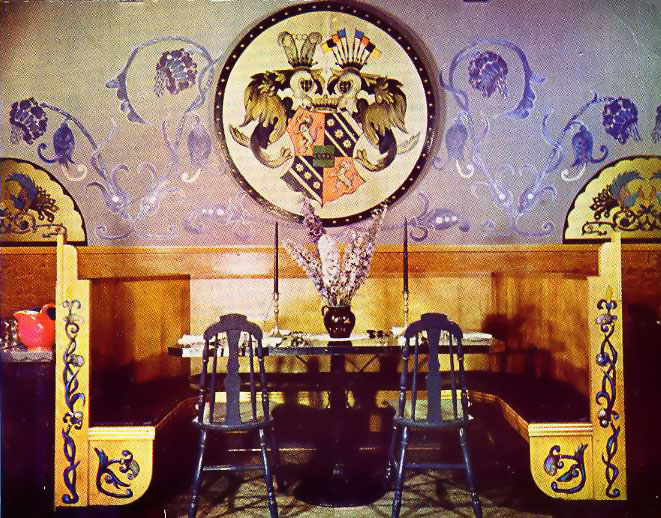
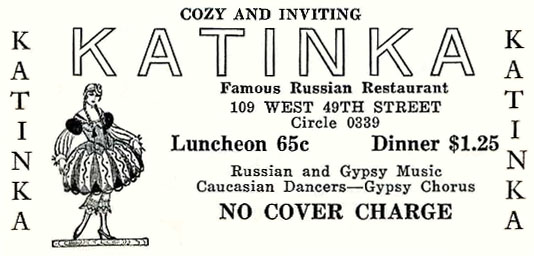
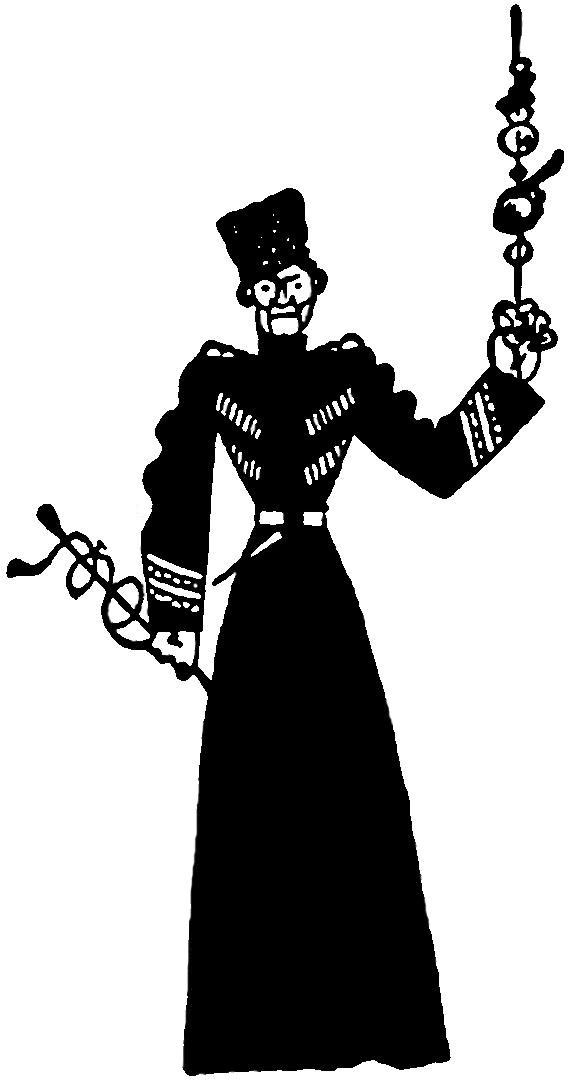
In the 1920s NYC gained a population of White Russians numbering about 6,000, most of them well-educated former members of the intelligentsia or the Imperial Russian Army. Numerous Russian eating places soon cropped up, with names such as The Russian Inn, The Eagle (E 57th), Katinka (W 49th), The Russian Swan, Kavkaz (Bdwy & 53rd), Casino Russe (W 56th), The Russian Sadko (W 57th), The Maisonette Russe (W 52nd), and The Russian Bear (W 57th). On the lower East Side were The Russian Kretchma and the (original) Russian Bear. Striking modernistic wall murals by emigré artists such as Boris Artzybashev, balalaika music, and entertainment by Cossack performers often contributed to the atmosphere of these eating places. As far as I can tell they served both as gathering spots for Russians and as tourist attractions.

Los Angeles also had a White Russian settlement of up to 2,000, with an Orthodox church, art shops, tea rooms, and restaurants. Lured by Hollywood, some Russians from this period acted as extras in movies and a few became studio consultants with expertise on the former glories of the fallen Russian aristocracy. When Theodore Lodijensky, proprietor of NYC’s Russian Eagle, moved westward he consulted on Sternberg’s “Last Command” (1928) — and he opened a West Coast version of The Eagle.

When the RTR began there were also other Russian tea rooms in NYC and around the US, some going by that exact name, some with names such as The Samovar. An importer of artistic wares named Polakoff, a Czarist who used a royal crest in his advertising, ran a Russian Tea Room filled with Russian arts and crafts on Chicago’s South Michigan Blvd. A specialty there was the Petrograd Supreme, a tall sandwich which the eater approached from the appetizer layer on top, working down to the dessert layer at bottom. In the 1930s Valentina Alekseevna Vernon ran a Russian Tea Room in San Francisco. A woman of strong opinions, she found Americans as resistant to some Russian dishes as she was to theirs.“I wouldn’t touch either an ice cream soda or a fruit salad,” she proudly proclaimed. Also in San Francisco was the Moscow Café which opened in 1932 and featured flaming Beef Stroganoff and Cossacks balancing flaming swords. A few Russian restaurants could also be found in Philadelphia, Boston, New Haven CT, and Miami in the 1930s.

The dishes introduced by White Russian restaurants included not only Beef Stroganoff, but also Blini with Caviar and Nesselrode Pudding. Although their menus might list Borscht, Darra Goldstein points out in The Oxford Companion to American Food and Drink that this humble Ukrainian beet soup was brought by Russian Jews who had immigrated earlier.

© Jan Whitaker, 2011

4 Comments

Filed under proprietors & careers, theme restaurants

Early chains: John R. Thompson

Although it is largely forgotten today, the Chicago-based John R. Thompson company was one of the largest “one arm” lunchroom chains of the early 20th century. We so strongly associate fast food chains with hamburgers that it may be surprising to learn that Thompson’s popular sandwiches included Cervelat, smoked boiled tongue, cold boiled ham, hot frankfurter, cold corned beef, cold salmon, and Herkimer County cheese, served on “Milwaukee Rye Bread” baked by the chain’s bakery. Thompson was proud that his meals were suited for sedentary office workers of the 1900s and 1910s. A 1911 advertisement claimed that lunch at Thompson’s “won’t leave you logy and lazy and dull this afternoon.”

Thompson, an Illinois farm boy, ran a rural general store as his first business. He sold it in 1891, moved to Chicago, and opened a restaurant on State Street. He proved to be a modernizer in the restaurant business as well as in politics.

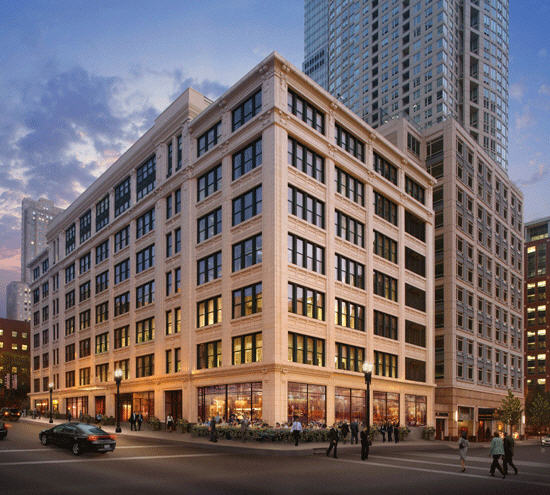
He operated his restaurants on a “scientific” basis, stressing cleanliness, nutrition, and quality while keeping prices low. In 1912 he moved the chain’s commissary into a premier new building on North Clark Street (pictured, today). Thompson’s, then with 68 self-service lunchrooms plus a chain of grocery stores, became a public corporation in 1914, after which it expanded outside Chicago and into Canada. By 1921 there were 109 restaurants, 49 of which were in Chicago and 11 in New York (with a commissary in NYC). By the mid-1920s Thompson’s, Childs, and Waldorf Lunch were the big three U.S. chains, small by comparison to McDonald’s but significant nevertheless.

In politics Thompson served as a Republican committeeman and managed the campaign of a “good government” gubernatorial candidate in 1904. A few years later he failed in his own bid to run for mayor, promising he would bring efficiency to government while improving schools and roads. In the 1920s he financed a personal crusade against handguns.

Despite John R. Thompson’s progressive politics, his business would go down in history as one that refused to serve Afro-Americans. Or, as civil rights leader Marvin Caplan put it in 1985, “If the chain is remembered today, it is not for its food, but for its refusal to serve it.” J. R. died in 1927. Where he stood on the question of public accommodations is unclear but the chain faced numerous lawsuits by blacks in the 1930s. However the best known case occurred in 1950 when a group of integrationists led by Mary Church Terrell was refused service in a Washington D.C. Thompson’s. The group was looking for a case that would test the validity of the district’s 19th-century public accommodations laws. After three years in the courts the Thompson case (for which the Washington Restaurant Association raised defense funds) made its way to the Supreme Court which affirmed the so-called “lost” anti-discrimination laws of 1872 and 1873 as valid.

Over the years the Thompson chain absorbed others, including Henrici’s and Raklios. At some point, possibly in the 1950s, the original Thompson’s concept was dropped. By 1956 Thompson’s operated Holloway House and Ontra cafeterias. In 1971, as Green Giant prepared to buy Thompson’s, it had about 100 restaurants, including Red Balloon family restaurants, Henrici’s restaurants, and Little Red Hen Chicken outlets.

© Jan Whitaker, 2010

131 Comments

Filed under chain restaurants, lunch rooms, proprietors & careers

Anatomy of a restaurateur: Mary Alletta Crump

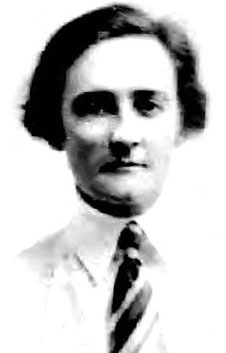
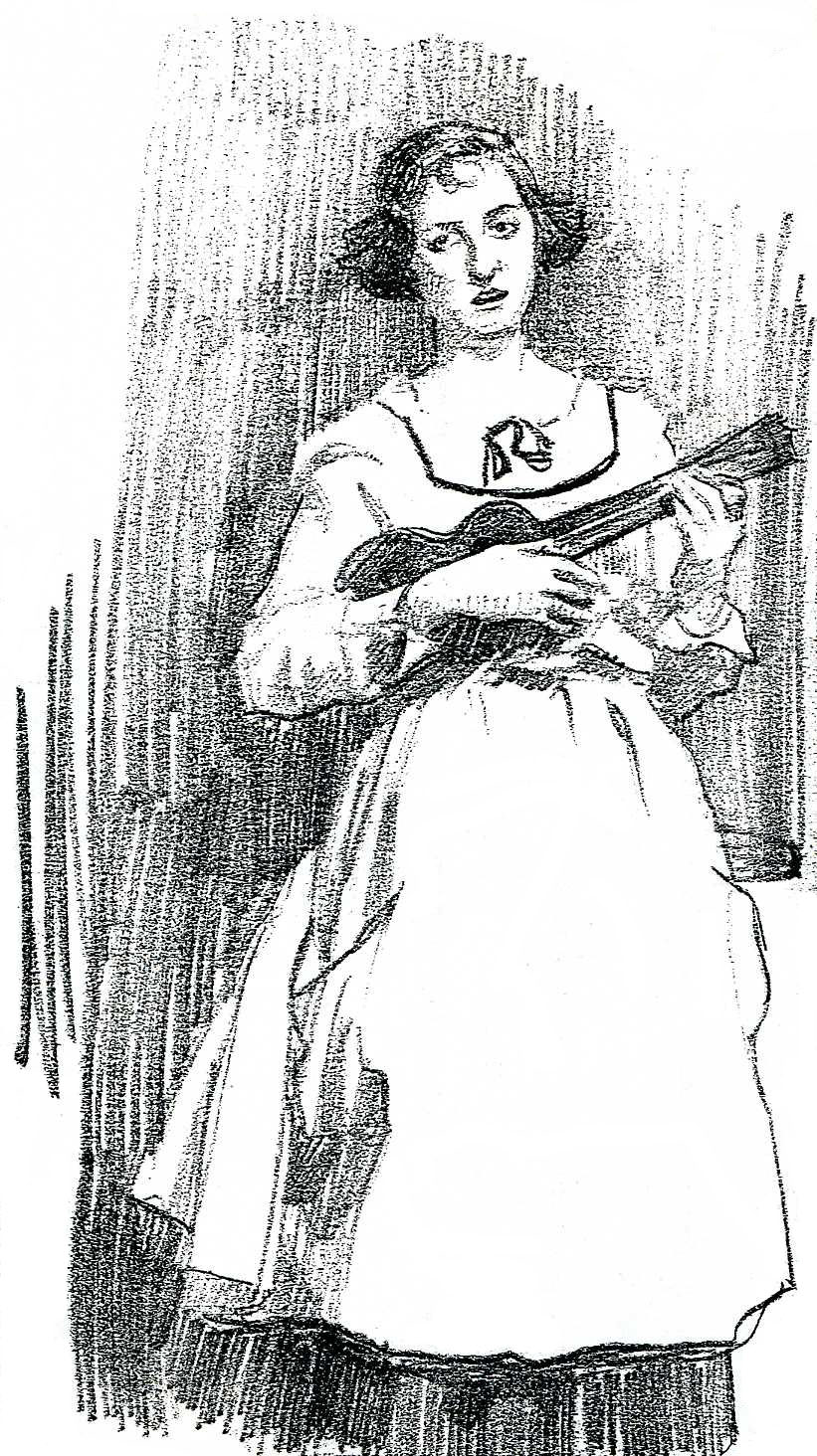
Because she ran a tea room, Mary Alletta “Crumpey” Crump (pictured, age 31) actually would not have called herself a restaurateur. She made a distinction between a tea room and a restaurant: the former served light food, mainly lunch and afternoon tea, while a restaurant served heavy food and was open for dinner. Not so The Crumperie. It served sandwiches, salads, soup, and desserts only. At 6 P.M. she and her partner, her mother “Bee,” shut down for the day. (M. Alletta, as she signed herself, advised prospective tea room operators in 1922 that “a mother or older person is a great asset to a young girl who is contemplating the opening of a tea room.”)

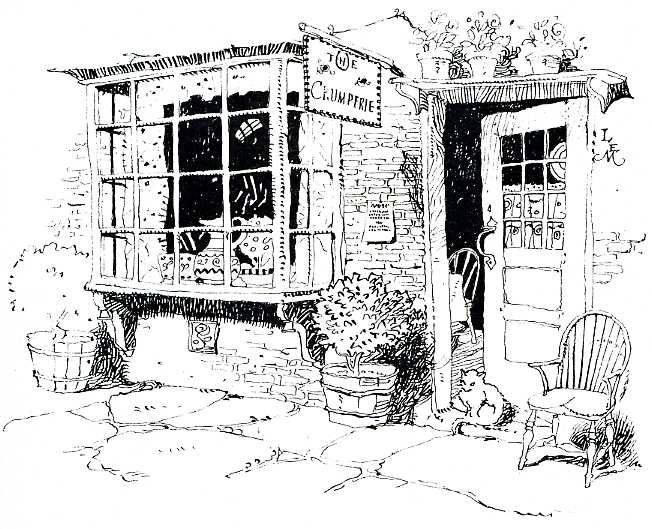
The two opened their first Greenwich Village Crumperie in 1917 (pictured), taking over the spot formerly occupied by photographer Jessie Tarbox Beals’ tea room and art gallery. Sharing the other half of the building at 6½ Sheridan Square with The Crumperie was a gift shop known as The Treasure Chest. By the time Crumpey’s mother passed away in 1926, The Crumperie had occupied five locations in the Village, first moving to Sheridan & Grove, then to the basement of 55 Christopher Street, then to 229 West 4th Street, and finally to 104 Washington Street. She would make one more — unsuccessful — attempt at running a Crumperie after her mother’s death, teaming up with Marie Saint Gaudens (niece of sculptor Augustus Saint Gaudens), at 13 West 51st Street in 1927. After this she abandoned the tea room business.

She and her mother opened the first Crumperie on a shoe string, spending only $100 for the first month’s rent plus all the furnishings and equipment. Start simple, that was their motto. Crumpey decorated with odds and ends: tables and chairs she painted herself, illustrations from magazines, a discarded old settle, family quilts, and table runners made from dime store toweling. Her mother did the cooking, specializing in crumpets of course, but also offering pea soup, “crumpled” eggs, and peanut butter sandwiches. Beverages included tea, coffee, and chocolate — nothing alcoholic!

The various Greenwich Village Crumperies were gathering places for New York City artists, musicians, literary figures, and actors with the Providence Players. The tea rooms were frequented by singer Enrico Caruso, artist Tony Sarg, and writers Theodore Dreiser, Eugene O’Neill, Sinclair Lewis, and Edna St. Vincent Millay. Writer and editor Christopher Morley steered his “Three Hours for Lunch” club to the Crumperie, though how they could have stretched out a meal there for that long I don’t know.

During and after her years in the food business, M. Alletta volunteered for war work, entertaining the troops in England with her ukulele playing during WWI (she also sang spirituals and folk songs in the tea room). After 1927 she apparently had a variety of jobs. She had studied at Smith College and trained to become a nurse before opening The Crumperie and may have returned to teaching or nursing. She taught a tea room management class in Brooklyn and worked for a time at the Grenfell Mission in Labrador. In 1958 she made five appearances on the TV quiz show “The $64,000 Question,” winning $16,000 which she used to fund a European trip.

© Jan Whitaker, 2010

7 Comments

Filed under Offbeat places, proprietors & careers, tea shops, women

Between courses: dining with reds

In July of 1928 the Communist Party in the United States opened a public cafeteria on the ground floor of their headquarters in New York City, home also to The Daily Worker. The headquarters, known as the Workers’ Centre, was at 26-28 Union Square East and also contained a cooperative barber shop in which the barbers did not accept tips.

The restaurant was called Proletcos Cooperative Cafeteria. Proletcos was said to be a name created by a garment worker who combined the first two syllables of PROLETarian with the CO of cooperative, then added an S.

It’s not surprising that Communists would select a cafeteria as their preferred format for a restaurant. There is something socialistic about cafeterias, with their self-service and no-tipping customs. They were widely adopted in industrial plants and among working women’s organizations of the 1890s. Two home economists created a chain of cooperative cafeterias in NYC in 1920, called Our Cooperative Cafeterias, which dispersed an annual rebate to customers who were members. Evidently it was unrelated to the Communists’ project. Proletcos, whose prices were about average for a cafeteria, gave a 10% discount to its 600 shareholders. Its workers were guaranteed an 8-hour day and good working conditions.

Proletcos was enlarged in November of 1928 and was able to serve nearly 6,000 meals a day. Artist Hugo Gellert, a lifelong Marxist and co-founder of The New Masses magazine, created a mural for the expanded and refurbished restaurant in which sturdy workers and Communist heros such as Sacco and Vanzetti, John Reed, and Vladimir Lenin, all 10 feet tall, loomed over the dining room (pictured). According to a story in the New Yorker, the cafeteria was quite up to date, with tile floors, brass railings, and modern light fixtures.

The cafeteria had a short life lasting only a couple of years in which it served workers, many of them from the garment district, along with students who liked to hang out, drink coffee, and discuss the issues of the times. It evidently came to an end in 1930 when the CP moved its headquarters from Union Square to East 13th Street.

© Jan Whitaker, 2010

7 Comments

Filed under cafeterias, Offbeat places