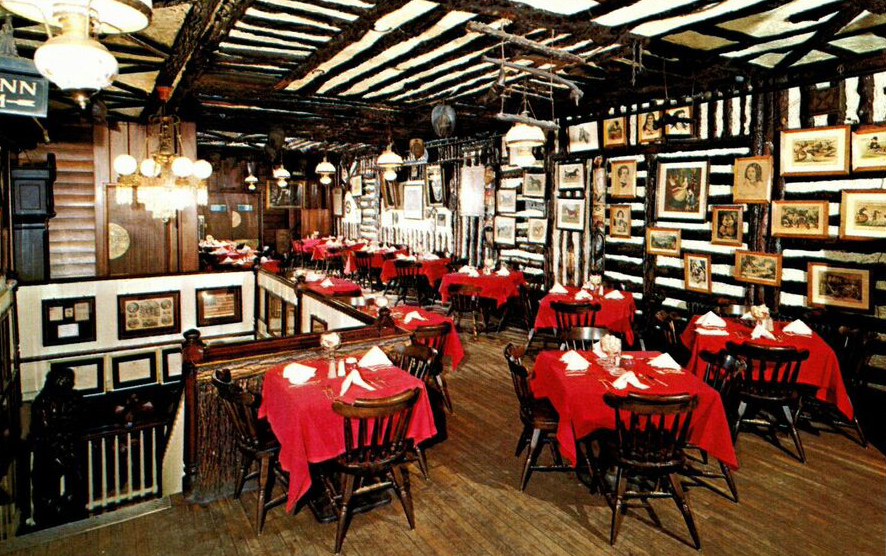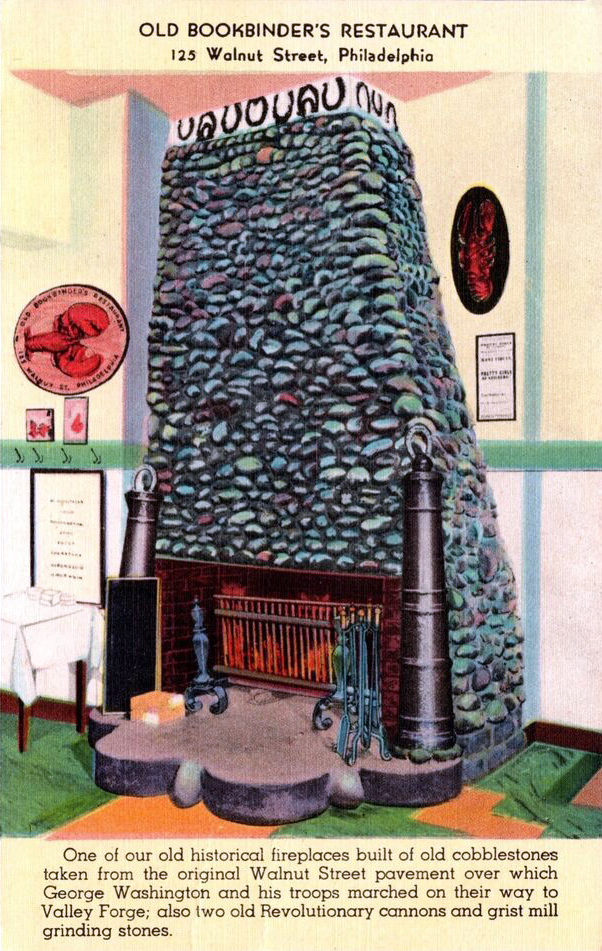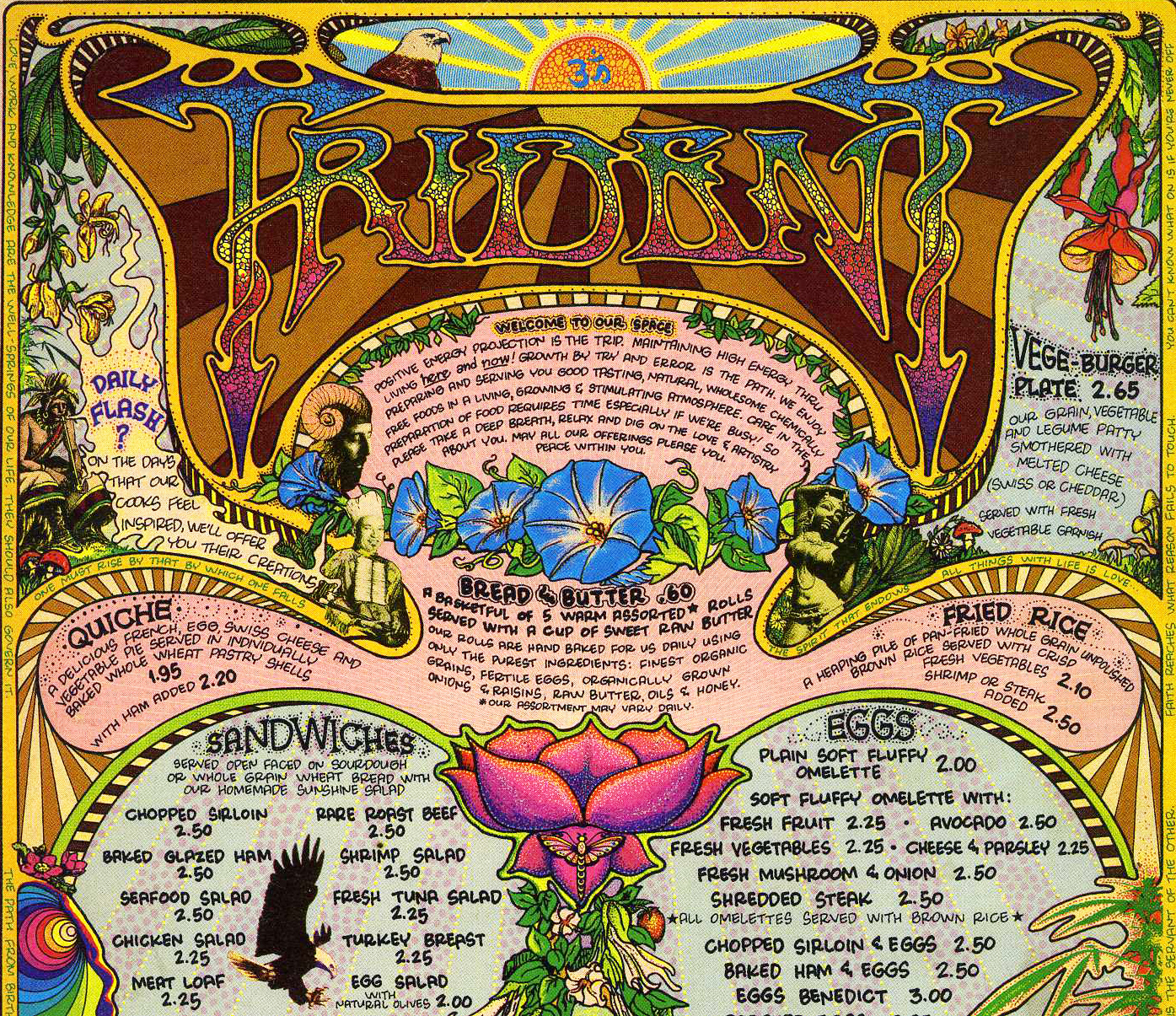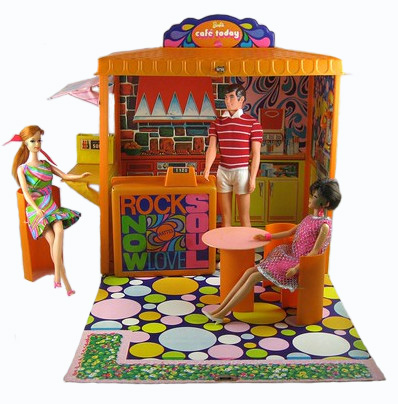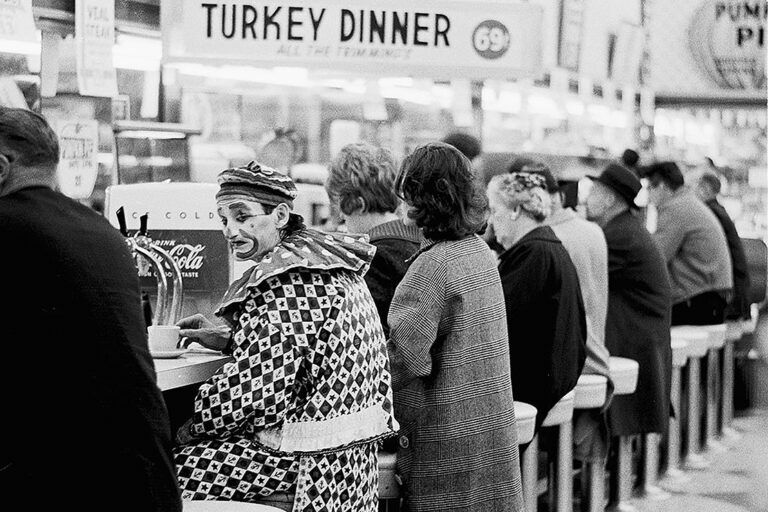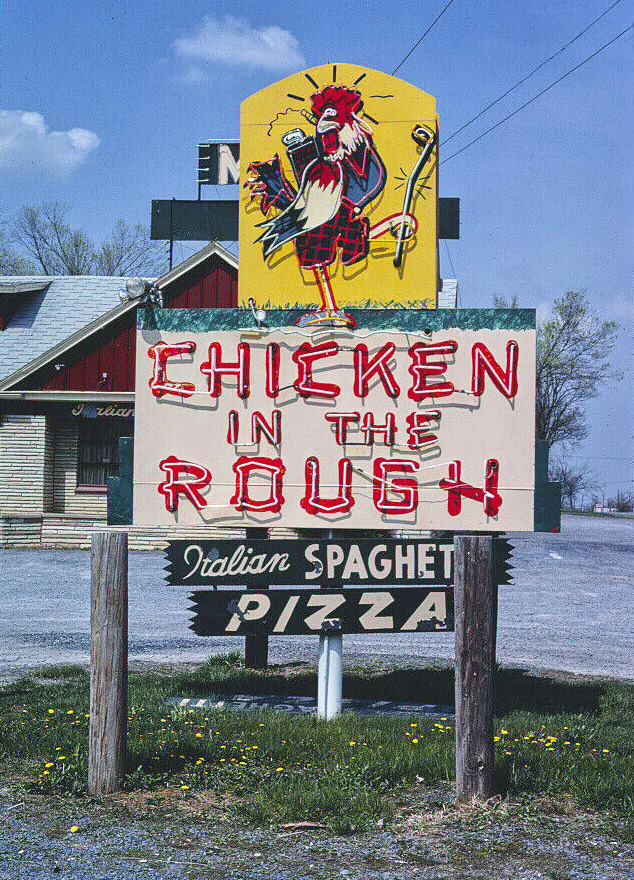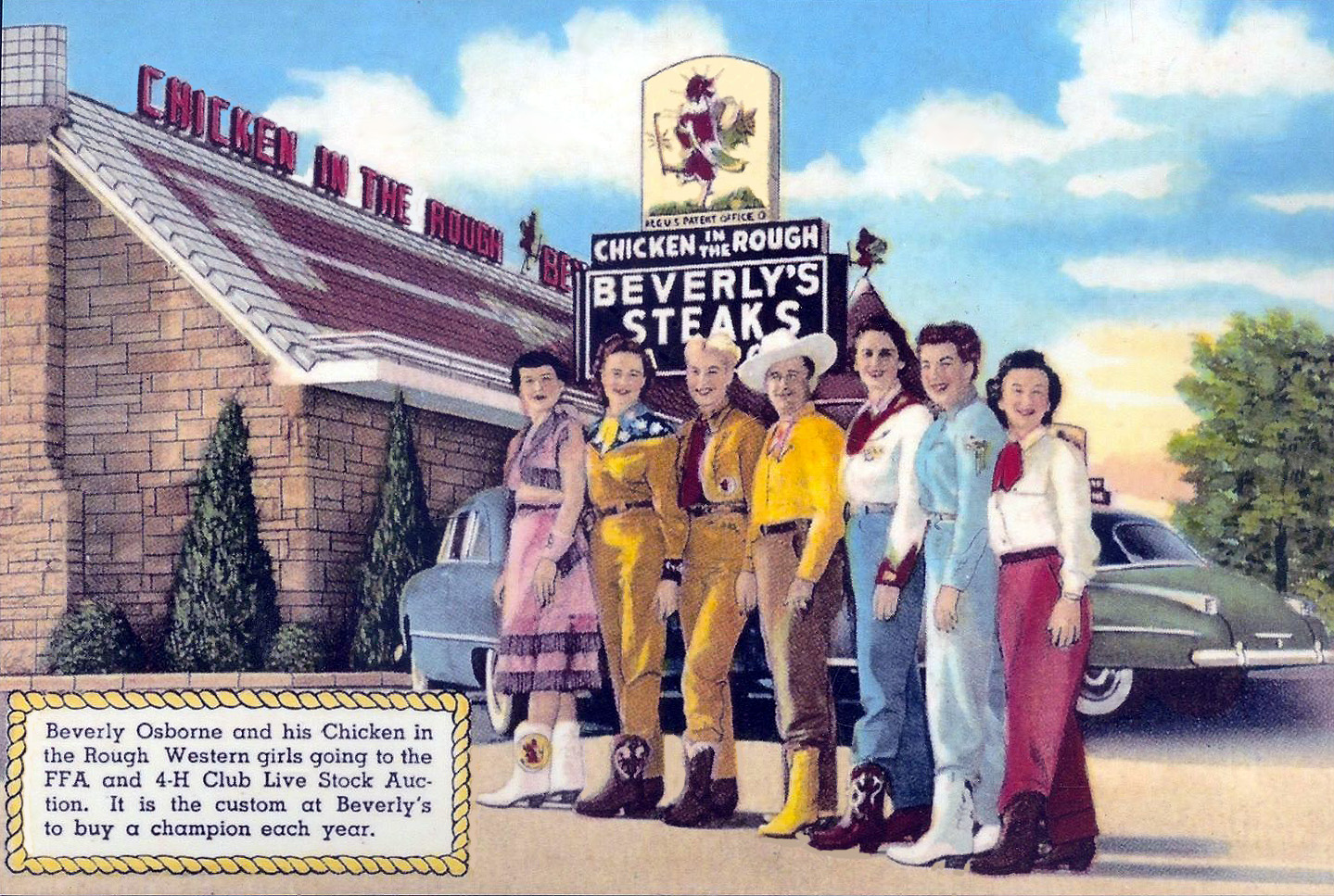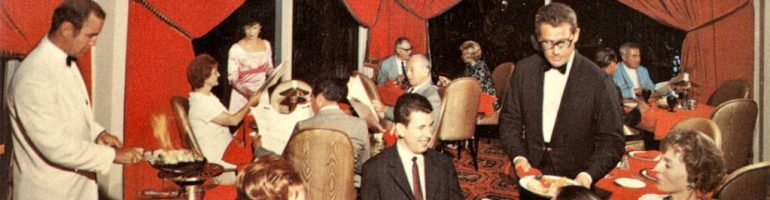
Image gallery: Redness!

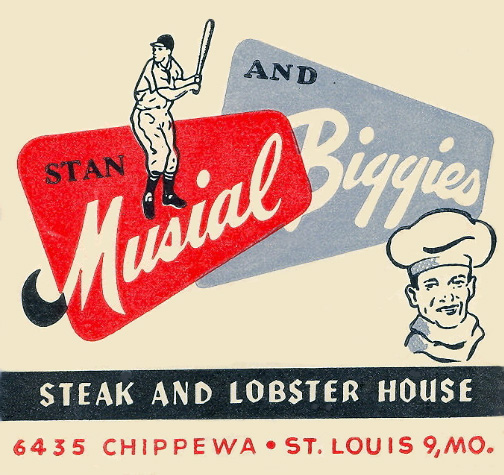
The author of the book A Perfect Red identifies it as “the color of desire” and “the color of blood and fire.” She also notes that the color has often been associated with masculinity because it signifies power, prestige, and “heat and vitality.”

So it makes perfect sense that at one time it was popular as steak house decor. [above, Presto, Chicago, ca. 1970]

But it took a while to catch on. In the early 20th century the color red was strongly rejected by many Americans as inappropriate for clothing. Those who dared to wear red – or other strong, bright colors – were seen as low class and with questionable morals. The judgment was particularly harsh if the wearer was Black or an immigrant.

The use of red in home decor was also severely criticized. An elite Chicago woman’s club firmly rejected a trend toward Oriental-styled dens with red walls, piled-up cushions, and low lighting. One of the club’s members noted in 1903 that during a visit to a house with so-called “cozy corners” full of soft pillows she began to doubt that “the mistress of that home was a moral woman.”

Needless to say, though early women’s tea rooms sometimes adopted playful decorating themes, red was decidedly not a popular color scheme in them.

Despite its association with immorality (or maybe because of it?) red made a strong showing after World War II, especially in the mid-1950s through the early 1970s. It was often used in restaurant decor, especially for places that appealed primarily to men.

Red tended to be employed lavishly. It was variously used for carpets, painted wall and ceiling surfaces, columns, wallpaper, light fixtures, draperies, tablecloths and napkins, glassware, menus, upholstery for chairs and banquettes, and waiters’ uniforms. [above: That Steak Place, VA]

Sometimes an old-time theme was adopted, usually signaled by red-flocked wallpaper meant to conjure a bygone time of jollity that might suggest anything from the “gay ‘90s” to the “roaring ‘20s” to a brothel.

A 1955 book of decorating advice suggested that, in contrast to cool colors and bright lights, restaurants with warm colors and dim lights suggested luxury. The latter decor encouraged patrons to relax and was believed “to increase the size of his check.” Likewise, a bar decorated in red might encourage drink orders.

Of course red is more than warm, it’s hot! It can be difficult to imagine relaxing in some of the eating places that enveloped diners in redness. Such as, in particular, NYC’s Cattle Baron [shown above], which opened in 1967 in the Hotel Edison. If the red decor weren’t appealing enough, the restaurant’s owner seemed willing to revive an association with questionable respectability when he ran an advertisement picturing a nude female model marked with black lines indicating cuts of meat.

Whatever poshness and sense of luxury a red interior suggested, it began to wear off in the 1960s, and even more in the 1970s. In 1961, when a version of the NYC club known as Danny Segal’s Living Room opened in Chicago, a reviewer criticized the “engine red decor” with red light bulbs as “excessive” and amounting to “a satire on night club decor.” Also in the 1960s, an Oregon restaurant reviewer sneered at “that ubiquitous black and red decor which has almost become a stereotype of the snobbier bistros.”

Restaurants began ditching their red decor in the 1970s. The Colony Square Hotel in Atlanta installed a new restaurant called Trellises, causing a reviewer to applaud the disappearance of the “steakhouse/bordello gold and red decor.” The western Straw Hat Pizza chain decided in 1975 that Gay 90-style restaurants with red-flocked wallpaper were out of fashion. The Homestead in Greenwich CT hired NYC designers to come in and rip out their red carpets and red-flocked wallpaper for a country look with hanging plants, wood floors, and brick walls. [above, Harry’s Plaza Cafe, Santa Barbara]

Of course, the U.S. is a big country, full of diverse tastes and fashions, so it’s not a big surprise that there were (and are) some restaurants that kept their red decor.

© Jan Whitaker, 2023

9 Comments

Filed under atmosphere, decor, restaurant decor, restaurant fads

Status in a restaurant kitchen

The status hierarchy in a restaurant kitchen depends on a variety of factors. Skill is clearly one of them, but, historically — if not currently — there have been others, some of them surprising.

In 1944 and 1945 sociologist William Foote Whyte spent time observing kitchens in a number of Chicago restaurants. To one of them he gave the fictional name “The Mammoth” because of the size of its kitchen which employed 45 persons excluding dishwashers.
Whyte noted in his book Human Relations in the Restaurant Industry that by that time in this country, the French chef had lost influence and “this system has steadily degenerated,” eliminating some of the hallmarks of status.

But there were still distinctions of rank, fainter and sometimes subtle yet real.

In step with that time, gender was still a major factor contributing to status. It was linked to skill and experience as well as the difficulty of tasks. It was also reflected in the use of knives and heat, and the sorts of food handled. Although because it was wartime, more women were assuming these positions, at The Mammoth it was men who did the cooking, and men who both portioned and cooked red meat.

Women handled the lower-status food: chicken, fish, and vegetables. The Mammoth’s food suppliers at that time had not yet taken over much of the food preparation as they have in more recent decades, leaving many tedious tasks to the staff that sliced, chopped, and otherwise prepared fresh food for the cooks and sandwich makers.

Among vegetables, he explained, decorative items such as parsley, chives, and celery ranked highest. (Their elevated status reverberates today in the many photographs of elite chefs bending almost double as they carefully tweeze small decorative touches into place.)

One notch down came green beans, followed by spinach and carrots. Undoubtedly the status of these vegetables derived in part from their popularity with customers. But also, he explained, on the women workers’ opinion of them, based on “lack of odor, crispness, and cleanness of handling.”

Lowest in status were potatoes, then at the bottom onions. Whyte states that the “low standing of potato peeling is too well-known to require comment.” I’m not quite sure what it derived from, although it is well known that military recruits strongly disliked kitchen duties that involved peeling potatoes.

Seven women handled cooked chicken. Those who sliced the chicken were at the head of the line. Slicing white meat was higher in status than dark meat. Next came two women who portioned and wrapped slices for sandwiches. On the bottom rung were three women who picked the remaining meat off carcases, with the one who picked white meat ranking higher. The worst job, that of the seventh woman in line, was picking bits from chicken neckbones. When the worker assigned to that task complained about always getting the necks, she was assigned to another job.

Deep disdain for the chicken picking job was highlighted in the response of one of the workers on the line whose job was wrapping slices. She commented to Whyte that it was tedious. When he asked her if she would prefer picking, she frowned and said emphatically, “Oh, no, I wouldn’t want to do that.”

The woman who handled the fish station, “Gertrude,” was highly regarded by management but not by employees because they held a low opinion of fish, considering it smelly. According to Whyte, this put her station “at the bottom of the status hierarchy,” even though with the wartime meat shortage, fish was assuming a much more important role in restaurants. He attributed the workers’ attitude to ignorance, particularly because The Mammoth had a high standard regarding fish and bought only the freshest. Gertrude strongly disliked being referred to as “the fish lady,” and asked that in the book Whyte refer to her station the “sea-food station.”

© Jan Whitaker, 2023

2 Comments

Filed under food, women

Dining with the garment trade

At a recent used book sale I picked up a copy of a small book of humor published in 1919 called “We Need the Business” by Joseph Austrian. I was charmed by the illustrations by Stuart Hay, several of which related to the food habits of the men in the garment trade as portrayed in the book.

The book is a series of letters written by Philip Citron, owner of a company in New York City called Citron, Gumbiner & Co. that, made women’s waists (as blouses were known then). Austrian had long worked in the clothing trade, suspenders being his specialty.

In his letters to his partner and salesmen in the field, Philip Citron mostly complains about competitors who are stealing their business. He gives the impression that most contracts the salesmen get are later cancelled when buyers find a cheaper deal elsewhere. At the same time, he is unhappy that his salesmen don’t get higher prices on the sales they make!

In the illustration shown at the top, Moe Gabriel, an eager salesman from a competing manufacturer, is successfully selling a bill of goods to Ike Weinberg that will result in a cancelled contract for Citron & Gumbiner. Ike actually seems far more interested in his lunch than in getting a cheap deal.

One of Citron’s salesmen is his son Abe. Philip sends him a birthday letter in which he congratulates his son on wise conduct with “the ladies.” Mingling with them, he writes, is fine if they are the “right kind of nice ladies.” The illustration suggests that Abe has other ideas. Later the reader finds out that Abe is also keeping late hours with the company’s secretary under the guise of working. Philip has no idea of what is going on.

In another letter Philip describes a trip he and his wife took to Atlantic City. He suffers from digestive problems and the little vacation is meant to get him to relax. They go to a restaurant popular with the garment trade that he refers to as the “Flyswatte” where the cooking was “high grade.” His wife asks the chef for the recipe for “a new style of cold fish” that he enjoyed there. Later, when they get back home, she prepares the dish. It makes him ill.

Philip goes to Boston to meet with a buyer from Holyoke MA named Cyprian Stoneman, from Neill, Pray & Co. He describes Stoneman [shown above] looking more like “the designer of a book like ‘The Antique Furniture of New England’” who eats pie for breakfast than an “up-to-date model shirt waist buyer.” But he is determined to find a customer in Holyoke so he settles on Stoneman, meeting him for lunch at the Café Georgette which is popular with garment salesmen and buyers – and where portions are big. Stoneman is so thin that Philip can’t imagine “where he stored all the linzen [lentil] soup, brust deckel [fatty brisket], kohlrabi, deep dish blackberry pie a la mode, watermelon and ice tea he put away.” He proves to be “one of those lemon buyers de luxe,” buying very little and wanting numerous alterations.

Citron, Gumbiner & Co. designer, Miss Kopyem, goes to Haines Falls in the Catskills on vacation, where she finds “the streets and porches . . . full of operators, contractors and salesmen of the ready-to-wear trade.” She does not enjoy the crowds and noise. Philip likens the scene there to “Fifth Avenue at lunch time” where, in fact, he is part of the crowds. He is shown bottom right in the drawing above.

At his partner’s recommendation Philip opens a lunch room for employees and adds a suggestion box. He removes it after it instantly becomes stuffed with 25 letters asking for additional benefits such as massages, a barber shop, soda fountain, and movies. Employees also want American chop suey, Gorgonzola cheese, marinierte herring [herring in cream sauce], strudel, gefülte fish, caviar sandwiches, welsh rarebit, and chicken a la King.

In the book’s final letter to his partner Sol, Philip reveals that the company has had its best year ever and “will show a clean net profit of about $52,000.” His stomach, he writes, “feels fine to-day.”

© Jan Whitaker, 2023

11 Comments

Filed under food, lunch rooms, patrons

Restaurant brawls

All the discussion about guns in public places these days has me thinking about restaurant security, a subject that, as a patron, I never actually consider. Specifically, I began to wonder for the first time whether ordinary eating places all the way up to elite restaurants have armed employees or a gun stashed away somewhere. Or, might patrons be armed? [shown above is a 1946 Jiggs comic strip scene]

Given that the answer has been “yes” back into the 19th century, and that more Americans are armed now, it’s likely to still be true.

But a more common type of violent incident that occurs in restaurants is a brawl which, thankfully, hasn’t usually involved guns.

Of course restaurants have always had a certain number of problem patrons to deal with. According to one 19th-century account, even Delmonico’s had a man employed to handle difficult guests, such as those who arrived inebriated. He headed off trouble by not admitting them or by whispering a “word of advice” to patrons who drank too much while in the restaurant. Mainly, he said, his job was to recognize by sight the city’s “bunko steerers and confidence men”: “I just meet them at the door and tell them it won’t do, and they know it won’t, so they go away quietly. There is no bouncing or knocking out required.”

His genteel method was similar in tone to that of “The Foreigner’s Club” of Sorrento, Italy, where this card was used.

Alas, such methods were only available in certain restaurants. At others, there were no door keepers, subtle ushers, or “convertible waiter bouncers.” It seemed from time to time that nothing could stop patrons from fighting other patrons or a server or even instigating a mass brawl.

I started thinking about restaurant brawls when I read a story in this year’s January 29 issue of the NYTimes Magazine. It described the scene of a Waffle House in Texas where a melee erupted and was captured on video. It involved patrons standing on the counter, throwing dishes and chairs, and attacking workers who fought back in like manner. Other popular videos show similar scenes in Popeyes and sub shops.

The author, Niela Orr, expressed a degree of longing for the days of Edward Hopper’s famous 1942 painting Nighthawks, where patrons sit glumly in isolation from other sad sacks at the counter. Like the Waffle House patrons, they are alienated but unlike them they aren’t throwing crockery.

They could have been though. Restaurant customers were documented hurling dishes as early as the 1860s.

In 1920 movie patrons laughed at the subject of riots in restaurants.

Restaurant brawls are diverse. Undoubtedly many of the sites where they occurred were lowly eateries but others were mainstream chains, such as the International House of Pancakes, Child’s, and White Castle. And Googie’s – where comedian Lenny Bruce went through a plate glass window. [1957 photo]

Not even Grandma’s Family Restaurant and Pancake House in Rockford IL was safe from disruption. In a 1992 melee there, an estimated 30 patrons “went wild,” breaking out four plate glass windows, jumping over booths, and throwing whatever they could get their hands on.

Incidents sometimes involved brawlers you might not expect, such as students at elite colleges (Harvard vs. Dartmouth in one case), or men in tuxedos upset that a server refused to give them more sugar during WWII rationing. Generally participants have tended to be young, white, male, and intoxicated.

Few incidents could outdo the brawl in New York City’s Bryant Park Grill said to be a repeat of a similar event in DC three years earlier. To quote a 1998 story in the Jersey (City) Journal, 40 of NYC’s firemen celebrating Medal Day in their finest uniforms “annoyed patrons, exposed themselves, urinated in public and invaded a women’s restroom.” They also threw a policeman over a row of planters when he tried to break them up. And, as so often happens, no one was arrested.

Personally, I will try to push all this to the back of my mind when I’m visiting restaurants.

© Jan Whitaker, 2023

12 Comments

Filed under patrons, popular restaurants, restaurant issues

On the town with O. O. McIntyre

When he died in 1938 Oscar Odd McIntyre – also known as Double O McIntyre or simply Odd – was the country’s highest paid, most widely read columnist. Not only did he make New York City, particularly Broadway, familiar to newspaper readers across America, but he also informed them of the attractions of the city’s restaurants.

Considering that his success brought him a princely income, a Park Avenue address, a custom wardrobe by Lanvin, trips to Paris, and a chauffeured Rolls Royce, his writing conveyed a humble perspective. It left the impression that he was a regular small-town guy and that life in New York, when deconstructed, was less glamorous than it might seem at first, yet still captivating.

From the start of his newspaper career in Ohio he aimed at New York. As he put it, “When I was ‘the’ reporter on the daily in a small Ohio town reporting how John Hawkins spent the day in town and how Mrs. John Spivens Tuesdayed in Addison I was always dumb with admiration when I came across a guest at the Park Central Hotel who had the magic letters ‘N. Y.’ after his name.” In 1912 he landed a job as associate editor of a magazine in New York and made his big move.

His column’s target readers were, in fact, John Hawkins and Mrs. Spivens, and he relied heavily on Ohio newspapers to buy his early columns. He assumed that, like him, readers would proclaim “This is the life!” after a visit to a café in New York such as Bustanoby’s Beaux Arts. And that, like him, they would have a fascination as well with the other side of town, exemplified by the liveliness of Hester Street and the grittiness of the Bowery. He presented the city’s dark side in scenes such as one where he witnessed a patron at a nearby table in a “semi-respectable” restaurant inject morphine into his arm and then calmly resume reading his newspaper.

He revealed in a number of stories he wrote for various publications that he had a breakdown shortly after coming to New York to work for a magazine that failed three months later. He couldn’t find another job, and spent a year without leaving his sick room. He also suffered from hypochondria, claustrophobia, and agoraphobia, and depended upon his wife Maybelle to handle the business end of his writing. After seven years in which he self-syndicated, she took over and successfully negotiated a contract with a major syndicator for twice what he had been getting.

His columns were built on the notion that he spent time strolling the sidewalks of New York, but some critics suggested he actually viewed the sidewalks from the back of his limo. Another version claimed he was a recluse who rarely left his apartment and who wrote columns from memory. I’ve begun to wonder if it was Maybelle who rambled the city collecting material for him.

Whatever was the case, he entranced the nation with his observations. When they visited New York for the first time, even readers from small towns might feel they already knew the city because of what he wrote. The columnist who succeeded him recalled that when his outlander cousin came to NY, he said that because of O. O.’s columns he would need no guidance. He declared: “I’m starting at the Battery tomorrow morning, and I’ll have grilled pigs’ feet and German beer at Lüchow’s [shown above]. I’ll just glance in at Fraunces’ Tavern, but I might take a snack at the Brevoort or the Lafayette, and maybe get up to Louis & Armand’s in time for chicken Tetrazzini or a steak at Sardi’s.”

In his columns O. O. not only painted fascinating scenes of fine living in New York, but also popped bubbles about its glamor. In a similar vein he reminisced about the simple life in his old home in Gallipolis OH, but never returned there even for a short visit. He presented charming portraits of Greenwich Village, but also produced a column about its fake Bohemians and artistic pretenders. He acknowledged that there were some genuine artists living there too, adding, “they are not on display nightly in the Purple Pup, Mauve Moon and Cerise Cat restaurants.” [He did not include the Pepper Pot, shown above, but might have.]

He was also critical of New York night clubs, which he called sucker joints, as well as places with trick names such as the ones he ran into on a Los Angeles visit – the Fly Inn, Monkey Den, Hamtree, Mammy’s Shack, Quick and Dirty, and Hamburger Hank’s.

Although he frequented New York’s top restaurants, he was no gourmet. He wanted to consume the high life, but it seems mainly for its aura of princeliness rather than its culinary excellence. Although the McIntyres had a French cook, his favorite meal was said to be steak, potatoes, and chocolate cake.

His personal food preferences didn’t keep him from feeling qualified to identify the world’s best restaurants. In 1931 he named six, with The Colony at the top, then New York’s Ritz-Carlton Hotel (where he and Maybelle lived for 13 years), three in Paris: the Ritz, Foyot’s, and the Tour d’Argent, and Horcher’s in Berlin.”

He hailed New York as “the Epicurean center of America,” but he believed it was non-New Yorkers who kept the elite restaurants in business, while the typical New Yorker followed “the eat-and-run plan of gastronomics.” So, for out-of-town visitors, he recommended the following dishes, claiming few New Yorkers even knew of them. They included caviar on a “pancake” at the Colony; noisette of venison, Grand Veneur at the Crillon; French pastry at Voisin’s; and for those preferring an unpretentious meal, doughnuts and malted milk at Liggett’s and hamburgers with chopped onions at the Owl lunch in Herald Square.

© Jan Whitaker, 2023

14 Comments

Filed under elite restaurants, food, patrons

Caves, caverns, and grottos

I would have said that restaurants made to resemble caves represented a proprietor’s desperate attempt to rescue a windowless, underground space. Except . . . many restaurants of the early 20th century, when these sorts of restaurants became popular, had few or no windows yet they were not rigged up to resemble caves.

But it seems that the American public was discovering a fascination with caves and cave men in the early decades of the 20th century. In 1915 the Peter Pan, in the college town of Eugene OR, did seem to appeal to wannabe cave men, and possibly cave women too.

Perhaps the cave restaurants were spiritually related to beefsteak dungeons of a similar era where men sat on crates and ate steaks with their claws, er, hands.

I suspect another reason that cave-themed restaurants and clubs appeared in the teens was as a way to attract patrons during a time when drinking was becoming less popular. Prohibition of alcohol was not yet national law but many localities had banned it.

Or, if I wanted to get psychoanalytical about it, I might think that locating these night-clubby spots underground revealed a degree of shame in a culture once ruled by Puritanism.

Close to the turn of the century two hotels already had cave-like grottos built underground. In 1900 architect W. E. Loyer of Philadelphia designed a grotto for the Hotel Rudolph in Atlantic City. Five years later his grotto for a Boston hotel, the Revere House, opened. Like the Rudolph, it featured an all-women orchestra. According to Revere House advertising, light bulbs in the grotto sparkled “like jewels in an Aladin [sic] cave” where dining was “both weird and entrancing.” Even in August, cool breezes were said to “sweep across the room” where its “jagged sides” resembled “what might be found in some large underground cavern.”

Other hotels with caves and grottos for dining and entertainment in the teens and 1920s included the Ambassador in Atlantic City with its underground Neptune and Dolphin Grills, the latter filled with marble, cut glass, sea-green furniture, fish nets, life belts, shells, and more.

The Grunewald in New Orleans [shown here], the Mt. Washington Hotel in Bretton Woods NH, and the Redwoods Hotel in Grants Pass OR carried on the cave tradition.

New York City was a little short on cave/grotto restaurants but it did at least have one. According to The Grotto’s advertising it was a “romantic cave.”

Of course there were also eating stations in genuine caves designated as National Parks. I am hesitant to refer to some of their facilities as restaurants – particularly that of Carlsbad Caverns with its accommodations for 1,000 lunchers at a time, pictured here ca. 1962.

The whole idea of a cave-themed restaurant seems strange enough to me that I might have imagined they went out of fashion long ago. But of course they did not, and undoubtedly can be found today. In 1928 columnist O. O. McIntyre declared that Los Angeles was the foremost city for “stunt cafes and trick eating places . . . built in every fantastical and baroque shape imaginable.” However, since then cave-like eateries, though always sparse, showed up in a variety of cities and towns.

In the early 1930s, for instance, Binghamton NY had a restaurant called The Barn, which encompassed a Shell Room and a Chinese Grotto. The Grotto, whose special effects were the creation of its originator, David Stewart, offered the only Chinese food in Binghamton — accompanied by organ playing. I was surprised to discover that the restaurant’s cooking was applauded by a number of 1940s guidebooks.

The 1960s and 1970s saw restaurants such as The Cave in Cleveland which declared itself “a cave to end all caves.” An article revealed that its conversion from a pool hall involved the application of 16 tons of gray plaster accompanied by a poured Polyrock floor speckled with gold. The total effect, said the account, was “somewhat eerie and fascinating.”

In Fort Lauderdale FL, The Caves restaurant was designed to encourage diners to “journey to prehistoric days via the stone-age decor and hearty feasting.” But, they were assured, they would be made comfortable with “luxurious pillows” and “soft lighting,” two things seriously lacking in nature’s version.

© Jan Whitaker, 2023

7 Comments

Filed under alternative restaurants, atmosphere, decor, Offbeat places, theme restaurants

Image gallery: restaurant matchcovers

Colorful matchbooks advertising restaurants became popular in the 1930s and remained commonplace into the 1950s. Every time customers lit a match they were reminded of the restaurant. As a catalog of the Match Corporation of America put it in referring to matchbooks with 20 matches: “20 Lights, 20 Reader-exposures . . . twice that if inside printing is used.”

Usually matchcover collectors remove matches from their covers, but the exceptions are the feature matchbooks. In that case, the printed matches are as much of an attraction as the covers, as the above examples show.

Many feature matchbooks were a product of the Lion Match Co. in Philadelphia. The company also made contour matchcovers which incorporate die cuts as shown here.

This batch shows the simple type of matchcover. The two taller ones are salesman’s samples — which are considered worthless by serious collectors. However, I value them just as highly as others because I am primarily interested in graphics.

These full-length matchcovers were perfect for horizontal restaurants, particularly for diners and Western roadside places.

Stock matchcovers such as these would have cost restaurant proprietors less since they involved no original artwork on the part of the manufacturer. It’s likely that they were used mainly by cafes and basic eateries. Though I know nothing about The Patio in St. Louis, I somehow doubt that waiters there wore tuxedos.

While I was investigating the subject of restaurant matches, I happened upon an amusing incident involving a restaurant’s matchcover design and the Secret Service. In 1977, shortly after the opening of George’s-on-Washington, a Houston TX barbecue place, the Secret Service showed up and confiscated 15,000 matchbooks bearing an image similar to that on the $1 bill. The grounds were that they violated federal counterfeiting laws. However when the owners challenged the seizure in court a U.S. District Judge ruled that the logo did not violate federal law and ordered the matches returned.

In the 1980s numerous American match-producers, which had been doing less and less business with restaurants and in general, failed. One exception was Universal Match that did a big business with Las Vegas hotels and eating places.

Although some restaurants use matchbooks today, designs are usually simple and (sigh) tasteful. Michael Greer, a home decorator who published a 1962 book called Inside Design, would be relieved. He was very particular about small items around the house such as a pink toothbrush in a fancy gold bathroom or an “antagonistically colored soap.” And he laid down the following rule regarding matchbooks: “Restaurant matchbooks are name droppy to leave around if the restaurant is elegant or in another country, demeaning if it is not.” For your own good, do be careful!

If you are interested in viewing more restaurant matchcovers, you might find this site’s 11,278 examples entertaining.

© Jan Whitaker, 2023

5 Comments

Filed under restaurant advertising

Kibbitz & Nosh, the book

Today is launch day for Kibbitz & Nosh: When We All Met at Dubrow’s Cafeteria, a book of black and white photography by Marcia Halperin. In the 1970s she began dropping by Dubrow’s on King’s Highway in Brooklyn and in Manhattan’s garment district. The cafeterias from what may seem like a long-gone past were as unpretentious as their customers.

The images she captured are reminiscent of street photography at its best, showing aspects of everyday life in the city. The book also includes essays by playwright Donald Margulies and Deborah Dash Moore, historian of Jewish-American life, including Jewish New York: The Remarkable Story of a City and a People (2017).

There is an interview podcast with Halperin by Street Photography Magazine, and a selection of her photographs from the book can be viewed at the Edward Hopper House Museum in Nyack, NY, until June 25.

Kibbitz & Nosh is available from independent booksellers, Amazon, and Barnes & Noble, as well as its publisher, Cornell University Press.

UPDATE of coming events

Signup for June 8 at Launch Photobooks – In Person

Signup for June 11 at Nyack Library — In Person

Sign up for June 29 at Yiddish Book Center – Virtual

4 Comments

Filed under cafeterias, patrons, popular restaurants

Glamming in Booth One

Before non-stop coast-to-coast air travel became common, actors and performers relied on the railroad to cover long distances. Usually this involved changing trains in Chicago. Arriving there, weary celebrities were more than happy to be scooped up and whooshed off for lunch or dinner at the Pump Room.

Top celebrities were escorted to Booth One, a cushy white leather nest where their job was to field calls from gossip columnists and smile as the flashbulbs went off. Their lunch may have been on the house, but they earned it. [It’s likely Judy Garland is talking with a columnist in the above Life magazine photo, 1943] Of course both the stars and the restaurant got publicity out of the deal.

The Pump Room stood out as a notable publicity mill in part because it was in the middle of the country. On the coasts there were plenty of such venues – the Stork Club and El Morocco in New York, and Chasen’s and Romanoff’s in Los Angeles to name but a few.

But the Pump Room had a vibe all its own. [Life magazine photo showing a very crowded room, 1943]

In addition to being swanky — with dark blue walls, white leather upholstery and crystal chandeliers — and well connected to the gossip pipeline, the Pump Room drew attention for its culinary burlesque shows featuring costumed staff, flames, and choreography. Waiters – all white men – wore scarlet jackets and black satin knee pants, while the “coffee boys” – all young black men – wore emerald green or white uniforms with giant ostrich plumes seeming to spring from their foreheads. [see grotesque caricature shown below, 1957] There were also “curry boys” dressed in gold. Food was served from wagons except for that skewered on flaming swords.

The coffee servers took it upon themselves to compete in the art of coffee pouring. Competition involved seeing how far they could hold the pot and still manage to pour the coffee neatly into the cups. Management did not approve and stopped the contest, but not before the winner set a record of 5 feet. He said customers asked him to do it. Not unbelievable since it was, after all, in keeping with the spirit of the place. According to one observer, customers watching servers with flaming swords make their entrance secretly hoped “the adroit waiter will slip and ignite one of the highly combustible hats being worn this season.” This never happened.

In 1943, Life magazine visited the Pump Room, photographing a number of spectacular scenes, some of which were undoubtedly contrived for the sake of the story. The crowning photo was certainly that of the procession of waiters holding flaming swords. A flaming-sword dinner cost $3.50 at the time of the story, going up to $4.50 or $5.00 by 1949 according to the menu shown below.

The Pump Room emblemized the sardonic humor of its creator, Ernie Byfield, who also owned its home, the Ambassador East Hotel. Its 1938 creation may have been a desperation attempt to survive during the Depression, but Byfield had long been in the habit of befriending show business stars back when he headed the Sherman Hotel. In the Sherman’s night clubby College Inn, he had entertained actors, musicians, and others on “theatrical nights.” Through the years Byfield made friends with an extensive roster of Hollywood stars that included James Cagney, Bette Davis, and William Powell in the 1930s and Douglas Fairbanks, Mary Pickford and a long list of others in earlier times.

Ernie Byfield’s death in 1950 seemed to mark the beginning of a long decline. The Ambassador East and the two other hotels Byfield owned changed hands repeatedly while the Pump Room sagged. A few months after Byfield died, columnist Lucius Beebe noted in a Holiday magazine story that Ernie had always said, “I don’t want grim gourmets around my place. I want laughing eaters.” Beebe’s story made it clear that the Pump Room was meant to be amusing, even moderately ridiculous. Without its creator at the helm, it became difficult to set the tone while maintaining quality.

In 1962 a reviewer for the Michelin Guide visited the Pump Room and, according to a devastating Life magazine account, had a miserable dinner described as deviled turkey breast accompanied by “canned peas and what looked exactly like potato chips.” Equally horrid, Life reported, was the incompetent waiter who recommended a red wine that “not only foamed but tasted as though it were composed of a second-grade detergent.” Learning of the story, an Ambassador Hotel executive dug through that day’s food checks and found, according to a rapidly produced account in a Chicago newspaper, that the reviewer and his Life magazine companion (the story’s author) had each consumed a cocktail and then shared two bottles of wine. He also insisted that the turkey steak on the menu was never served with anything but grilled sweet potatoes and wild rice.

But the damage was done and the restaurant’s reputation continued to crumble. Not much after the Michelin bomb dropped, Irv “Kup” Kupcinet, its number one gossip columnist, who had created a version of the Pump Room in his own dining room, admitted that it wasn’t what it used to be. Cross-country airplane flights were becoming commonplace, eliminating Chicago stopovers and reducing the flow of celebrities into town. Even though the room was remodeled in the mid-sixties by new managers, it was unable to recapture the past glory.

Although loyal Chicagoans continued to support it, the Pump Room closed in 1976, after some years of low ratings and, it was said, grease-spotted menus and chipped glassware. Everything was auctioned, included Booth One. Then came a new owner, Rich Melman, of the Lettuce Entertain You restaurant group which included Jonathan Livingston Seafood, Lawrence of Oregano, and others. He remodeled it in glamorous fashion and ran it for 22 years. After that it had various owners, including Melman once more who ran it as Booth One.

© Jan Whitaker, 2023

3 Comments

Filed under atmosphere, decor, elite restaurants, Offbeat places, uniforms & costumes, waiters/waitresses/servers

A note

After reading several stories about AI-generated writing today, I decided to add this note to my page titled “My Project.”

My blog is written entirely by a human, me, and is meant for human readers, you. AI bots are not welcome. It is based on books and articles written by humans. I do not merely try to report facts accurately. I also evaluate and interpret facts, opinions, errors, lies, motives, and all the other messy aspects involved in human communication. Plus, being human, I have my own point of view shaped by my experiences, my values, and my blindspots. Welcome, humans!

[painting by Juan Gris, 1917]

14 Comments

Filed under Uncategorized