Christmas, like Thanksgiving, is hard to write about on a blog about restaurants. I’ve tried my best to imagine topics over the years. This is the year to take a break and recycle them! The oldest one goes back to 2009, but it’s as good as ever. [above: the Log Cabin, Holyoke MA, as it once was]
Christmas Feasting Saddle of antelope for Christmas? Not for me. Couldn’t Santa use antelope to pull his sleigh in a pinch?
Christmas dinner in a restaurant again? A person could do a lot worse than having dinner at Conway’s Bon Ton in 1891. Only 25 cents, with 6 roasts and deserts galore.
Holiday banquets for the newsies The newsboys had a hard life and this was the one day of the year they could celebrate – and get enough to eat!
Christmas dinner in the desert Who would choose to celebrate Christmas at a restaurant in the desert called the Christmas Tree Inn? Actually, I don’t know the answer to that.
Chinese for Christmas Chinese restaurant owners in New York City were eager to please their Jewish customers, so much so that at least one was kosher as early as 1907.
Dinner in Miami Were there more restaurants serving Christmas dinner in Miami than in most cities? Maybe so.
I am wishing for happy holidays for all of my wonderful readers!
Despite the documentary absence of postcards, I’ve discovered that there were others — after a lot of searching. And I’m glad, because in nostalgic American culture, drive-ins are seen as deeply and exclusively white.
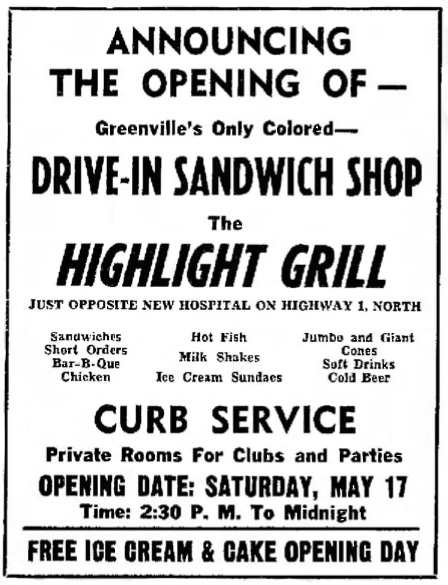
Most I’ve located got their start in the 1940s and 1950s, the same years that white-owned drive-ins made their first appearance many places, particularly warmer climates. More people in those years, especially after WWII, had cars and a little extra money to spend. [Highlight Grill, Greenville MS, 1952]
The earliest reference I’ve found was to The Drag, on Lyons Avenue in Houston. In an advertisement for its sale in 1941 it was described as a “famous colored drive-in.”
Black drive-ins were most likely to be found in Southern cities before the Civil Rights Act of 1964 made Jim Crow segregation illegal and all public restaurants had to serve everyone regardless of race. Although they could be found in Northern cities, it seems they were more likely to be in good-sized Southern cities such as Chattanooga, Memphis, and Nashville TN, Louisville KY, Little Rock AK, and Birmingham and Tuscaloosa AL.
Altogether I’ve run across 54 Black-owned drive-ins in this country, which is not many but surely an undercount. I have not found any in the Northeast. Nor in the land of drive-ins, Southern California, where they dated back to the 1930s. No doubt there were some, but probably fewer than elsewhere.
It was mainly in the 1960s that they began to show up in the yearly Green Books that advised Black travelers on places to stay, eat, fill up with gas, etc., in unwelcoming parts of the U.S. – i.e., most of it. (I cannot be 100% certain that every drive-in listed in the Green Books had a Black owner since sometimes white-owned restaurants that welcomed Black customers were also listed.) [Shown here, a Green Book advertisement from the 1961 edition.]
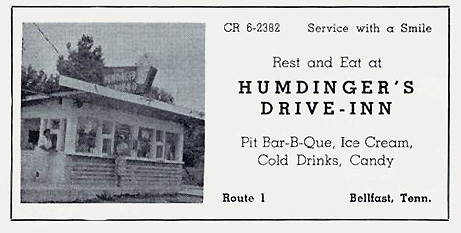
Many, maybe most, of the drive-ins served barbeque. For example, Nichol’s Drive-In in East St. Louis IL specialized in hickory-smoked Beef Ribs, Snoots, Pork and Chicken. It mentioned Soft Drinks, but a number of Black drive-ins served beer. Selling beer to underage customers seemed to get some of them into trouble.
I noticed that when a new Black-owned drive-in opened, it was usually greeted with enthusiasm in Black newspapers. White newspapers, on the other hand, often only reported on them in association with disorderly incidents and legal violations.
When a Black-owned drive-in was proposed for a location near a white residential area, it was unlikely the plan would be approved. (The same held true for Black-owned drive-in movie theaters.) In 1951 a Black man seeking official approval to build a drive-in restaurant in Memphis faced a hostile lawyer representing whites who opposed it. The opposition’s lawyer referred to the drive-in as a “Negro night club,” and when the applicant’s lawyer objected, maintained that a drive-in was “the same thing.”
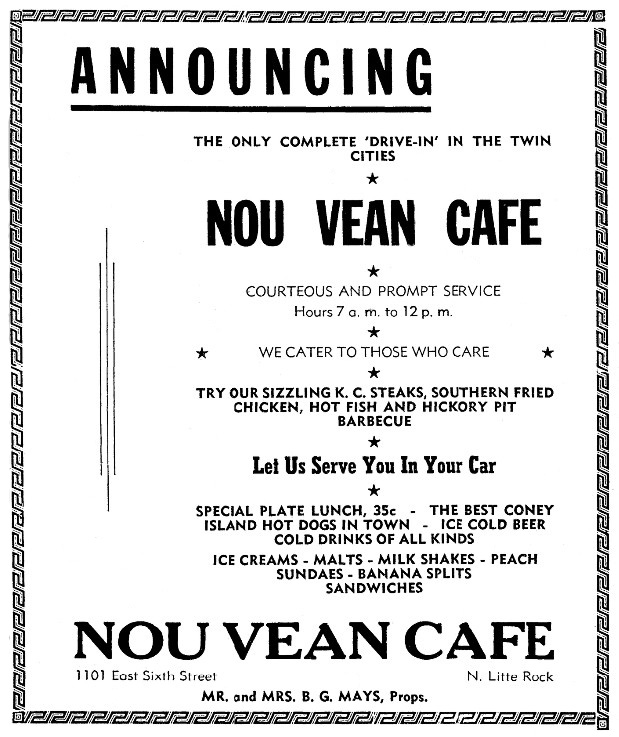
The drive-ins that seemed to fare the best were those owned and run by prominent figures in Black communities. In the 1940s Little Rock’s Nou Vean Drive In was owned by Barnett G. Mays, a realtor, developer, and liquor store owner. He encountered numerous roadblocks throughout his business career, but seemed to press onward despite them. In Milwaukee a drive-in called Robbys appeared to have a promising future when it opened in the late 1960s. It was named after the son of owner J. C. Thomas, a community leader who was also a realtor, operated two billiard parlors named Ebony Cue, and published a newspaper called Soul City Times. [Above: Nou Vean, 1945; Below, Robbys 1969]
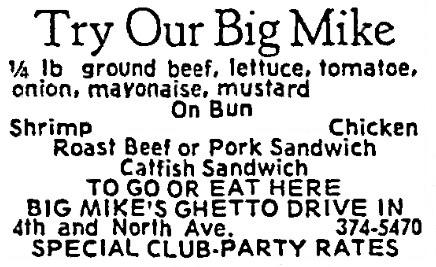
However, drive-ins generally – both Black and white – met major competition in the late 1960s when fast-food chain restaurants spread across the country. In Milwaukee Robby’s as well as Big Mike’s Ghetto Drive-In faced off with national chains and lost.
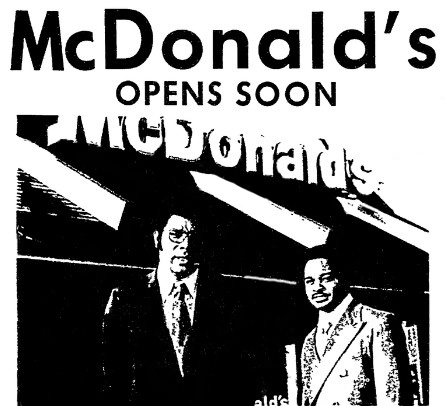
Big Mike’s owner Mike Watley, a social activist and close associate of comedian Dick Gregory, explained that he could not compete with a national corporation. With lower sales volume, he paid higher prices for food, a situation intensified by being given less financial support. His meat supplier, he said, capped his credit at $100, while white customers could run up their bill to three or four thousand. Although Watley blamed his failure on competition from a “white-owned corporation,” the nearby McDonald’s franchise was owned by two Black men, one of them Wayne Embry, a former player with the Milwaukee Bucks. Their McDonald’s venture was quite successful. [Above: Big Mike’s, Milwaukee, 1969; Below: Wayne Embry, left, and his partner, 1971]
Independent Black-owned drive-ins have not totally disappeared, however. In Longview TX White’s Drive-In, established in 1952 in conjunction with the White’s motel, has recently been re-opened by younger members of the family.
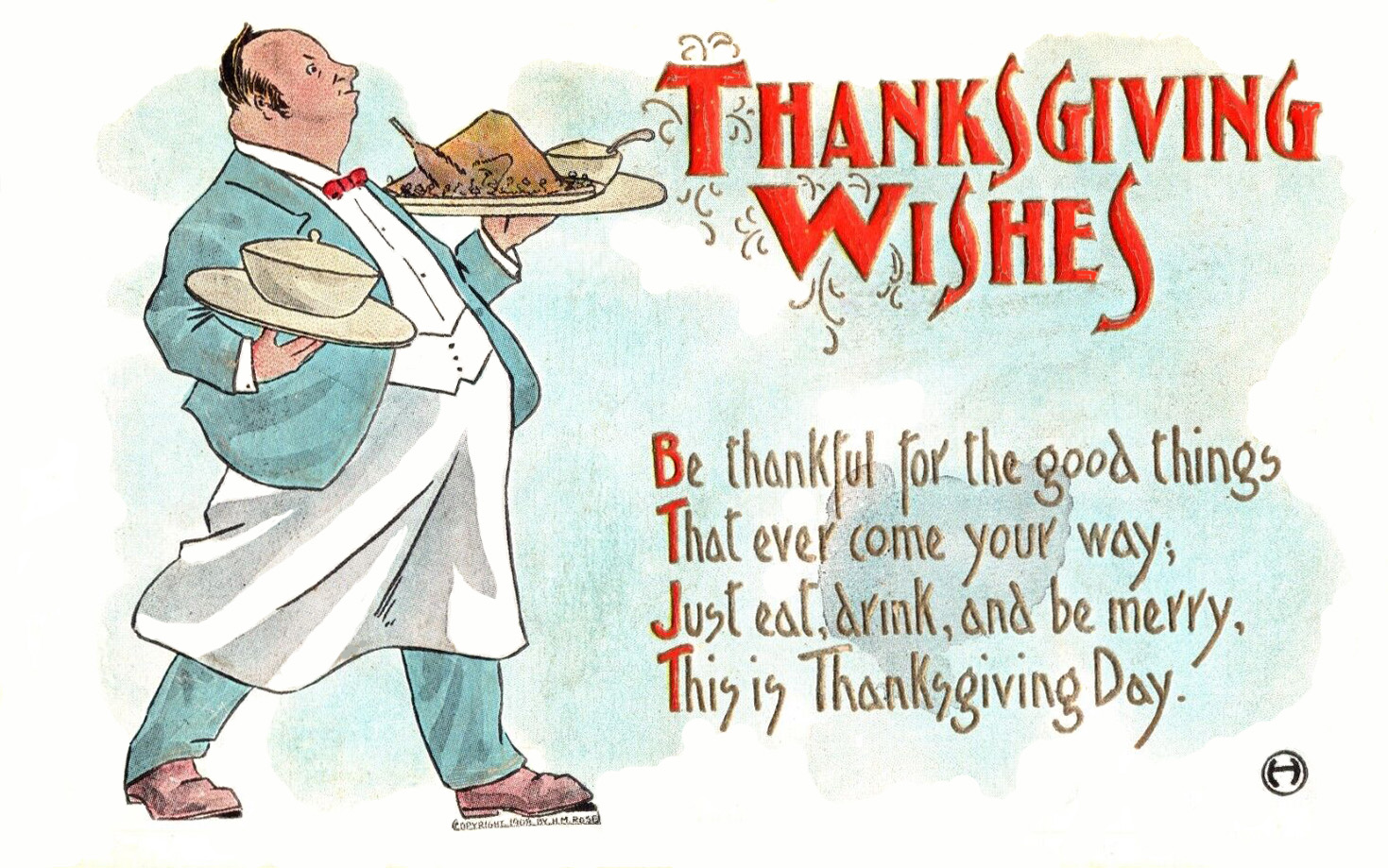
These are older posts, but still as good as ever! I mean, how much can you write about Thanksgiving and restaurants – or about turkey? Well I managed to turn out seven that are decent enough for a rerun. Here they are, in chronological order. [Victorian trade card, 1878]
Restaurant-ing on Thanksgiving Is eating Thanksgiving dinner in a restaurant a “rather melancholic thing”? Does the menu tend toward “baby food”?
A Thanksgiving Toast Why we should toast workers in Chinese restaurants on Thanksgiving day.
Thanksgiving quiz I present you with four dummied up, but real, menus listing complete dinners that were presented at a Kalamazoo café in 1921 and you figure out which was the most expensive. The answer is given in the comments.
Cooking up Thanksgiving Beginning as a Yankee holiday and retaining that association for decades, the holiday spread slowly. The story on restaurants is simply that it wasn’t at all common for restaurants to recognize the holiday in the 19th century and well into the 20th. It also took a while before all Americans, particularly immigrants, decided the day was meaningful for them.
Turkey on the menu This one is focused less on the holiday and more on the leading dish. How has turkey fared in restaurants generally? Did luxury restaurants include it on their menus?
Turkey burgers Another one focused on the bird and the restaurant industry’s attempts to get customers to accept it. Lo, the turkey burger!
Thanksgiving dinner at a hotel Wealthy members of the Sons of New England showed a preference for goose and plenty of alcoholic beverages at a hotel dinner on Thanksgiving in 1817. Another group of men from Massachusetts, celebrating in 1843, enjoyed a side of baked beans, finishing with a bowl of molasses that made the rounds so they could all get a lick.
Frequently when I write about the demise of a restaurant chain I can almost be certain to hear from at least one person who lets me know there is a survivor of that long-gone chain.
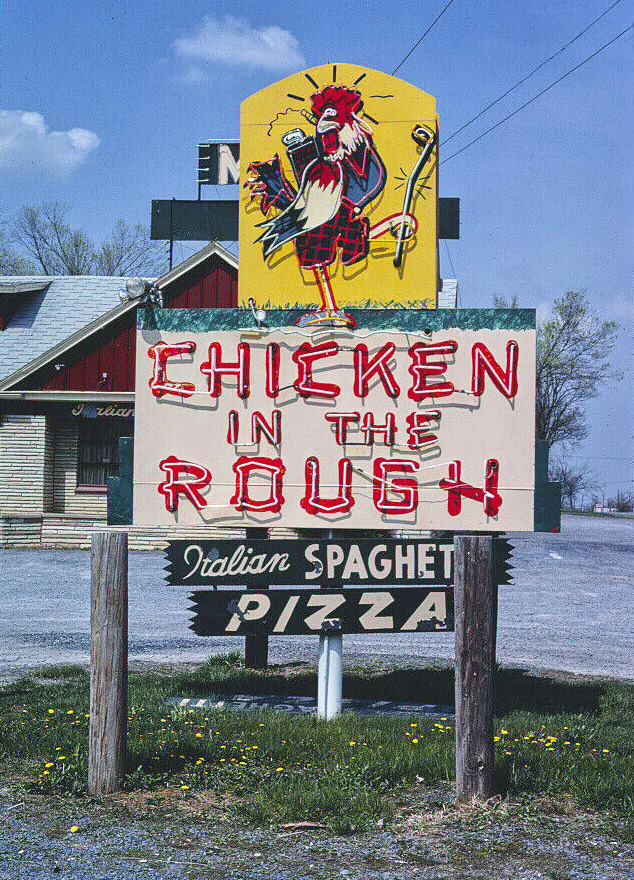
And, yes, that is also true of Chicken in the Rough, a franchised process for preparing fried chicken. As recently as now, Palms Krystal Bar & Restaurant in Port Huron MI offers “The World’s Most Famous Chicken Dish,” as it has for decades. In 2000 a Palms order consisted of an unjointed half fried chicken, with shoestring potatoes, hot bun, and jug of honey. Two orders cost $9.99 and they even threw in free coleslaw. In the 1930s an order usually was priced at 50 cents. [above, 1940s menu from an Arkansas restaurant]
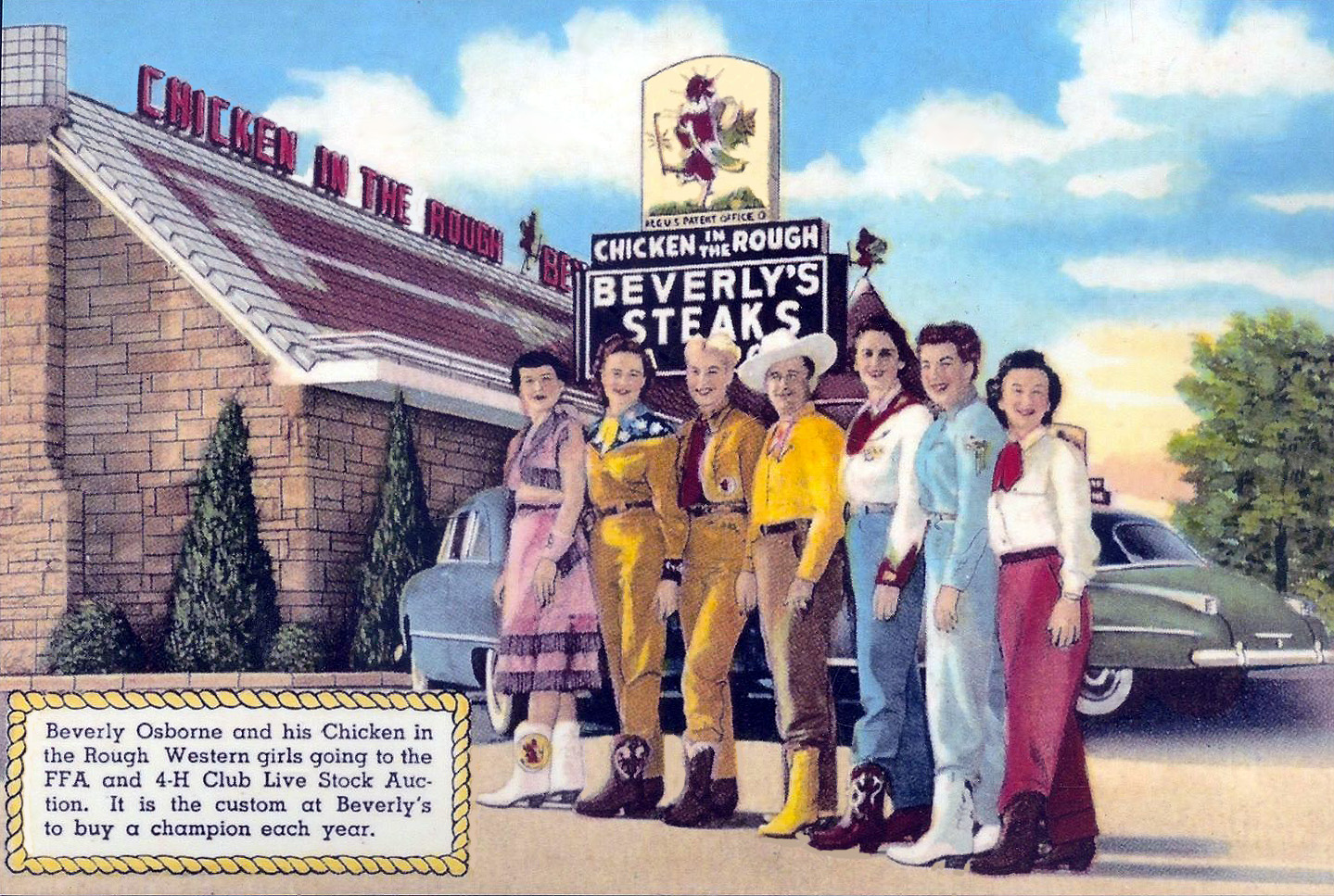
The developers of the Chicken in the Rough formula were a husband and wife team, Beverly and Ruby Osborne. They ran roughly nine cafes and waffle shops in Oklahoma City and even the 1930s Depression could not halt their enterprising spirit. [above: Beverly Osborne pictured in yellow boots]
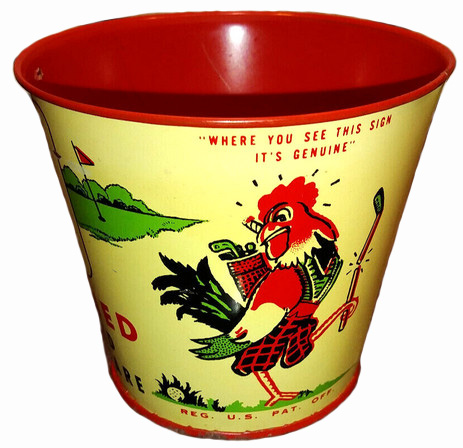
Their operations employed the magic word in modern management of that time – “system” – to streamline their operations and reduce costs. In 1936 they opened a drive-in in Oklahoma City which introduced customers to their method of preparing chicken. They soon began franchising the process and the trademark. In 1942, they patented their imprinted dishware and glasses, and the image of a chicken with a broken golf club, all of which had been in use for several years.
“In the Rough” was a perplexing phrase that often needed an explanation. It meant no silverware was provided despite the half chicken being unjointed. Evidently customers proved willing to adapt to “roughness,” although I’ve run across some evidence that over time some franchisees served the chicken in pieces. Another alternative was to serve the meal with a small metal pail filled with water for cleaning hands.
When the Osbornes opened the Ranch Room at their Oklahoma City drive-in in 1937 a large advertisement appeared in The Daily Oklahoman. Just in case anyone reading it didn’t realize the name Chicken in the Rough had been copyrighted, they were informed of this six times in the text: Yes Sir, “Chicken in the Rough.” (Copyrighted) – In one year we are known from coast to coast for “Chicken in the Rough.” (Copyrighted) – Served without silverware. In one year we have sold over 50,000 chickens or 100,000 orders of “Chicken in the Rough.” (Copyrighted) – We are now able to offer for sale franchises on “Chicken in the Rough.” (Copyrighted) . . . We took the town by storm – “Chicken in the Rough.” (Copyrighted) 50c. [Above: Madison WI franchisee]
The Osbornes were very particular about the meal’s composition, preparation, and presentation. Franchisees were required to use a freshly killed chicken, weighing 2 pounds and graded A, meaning it had been raised in an incubator and had sustained no injuries. No batter could be added to falsely make it look bigger and it had to be cooked in vegetable oil that had not been used for any other purpose. Inspectors came by regularly to make sure franchisees were following the rules.
World champion runner Jesse Owens, winner of four gold medals in the 1936 Olympics, was slated to open a restaurant featuring Chicken in the Rough in Chicago in 1953, for which he planned to use delivery wagons decorated with large images of himself racing. I could not determine the fate of that plan, but I don’t think it ever materialized.
The Osbornes sold the rights to their franchised process in 1969 and ten years later ownership changed hands once again. At the time of the first sale of the business there were only 68 franchises in 20 states left, compared to possibly 379 in 38 states at the peak, which I am guessing was in the late 1940s. Judging from a 1946 postcard that claimed to list all the U.S. restaurants with franchises then, most of the populous states without franchisees were in the Northeast. By contrast, Michigan had the most, followed by Indiana and California.
Unlike that of Harlan Sanders, who also began by selling a chicken recipe across the U.S. some years after the Osbornes, their venture remained a franchised cooking process and did not develop into a chain of restaurants.
The decade began in an economic slump, putting a damper on the expensive dining trends of the 1980s. Informal dining venues met the situation by crafting new “casual cuisine” menus featuring less expensive, quickly prepared pasta dishes and grilled meat, all tailored for the Baby Boomers who formed the prime market for dining out.
Although surveys showed that Americans want healthful food choices in restaurants, beef remained extremely popular, and sales at casual steakhouses rose.
In the early 1990s restaurant chain operations emphasized efficiency and speed with microwave ovens, automatic dishwashers, and computerized systems that integrated taking orders with food preparation, as well as managing accounts and inventory. Coordination of operations enabled customers at drive-up windows to order, pay, and pick up their food rapidly.
Unable to compete with fast-food chains’ quick service and low prices, old-style casual eateries such as Horn & Hardart automats, Woolworth lunch counters, and cafeterias were disappearing. New York’s last remaining Automat, at E. 42nd St. and Third Ave., closed in 1991.
As the economy improved it became clear that luxury restaurants hadn’t vanished. The December 1990 announcement that the James Beard Foundation was forming an awards program was a sign that top chefs were not to be forgotten. Yet, despite the boost to fine dining given by the awards, fine-dining establishments continued to struggle.
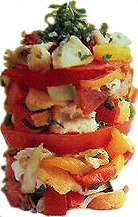
New, artsy trends in plating meals emerged, among them the brief but dramatic art of stacking food into towers that wowed the eye but proved difficult to eat gracefully.
Even as elite food fads came and went, one trend appeared unstoppable: the gathering up of thousands of chain restaurants by regional owners and giant food corporations. While the media focused on top chefs and their novel dishes created in landmark restaurants, huge corporations such as Tricon Global grew even larger with many venturing into worldwide operations.
Mexican immigration doubled, reaching a new high of 8.8 million by the end of the decade and furnishing a large number of restaurant kitchen workers. Small Mexican restaurants opened to supply traditional food to the new immigrants, but by 1999 Taco Bell’s 7,000 U.S. outlets had captured 90% of the thoroughly Americanized Mexican restaurant market, serving 55M customers a week, with sales of $5.1 billion annually.
Black restaurant workers and customers had their day in court in 1993 with successful discrimination suits against Shoney’s and Denny’s. Shoney’s was found liable of charges it had set a limit to the number of Black workers it would hire in some of its restaurants, as well as hiring all-Black staffs in Black communities and all-white staffs elsewhere. Denny’s faced multiple law suits.
Highlights
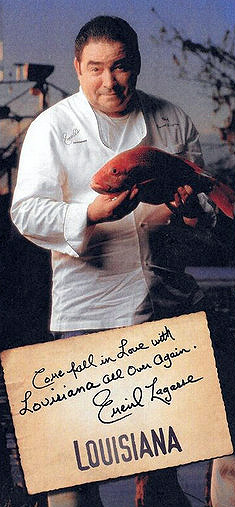
1991 Six men and one woman are the first regional chefs to be honored by the newly formed James Beard Awards: Jasper White (Boston), Jean-Louis Palladin (D.C.), Emeril Lagasse (New Orleans), Rick Bayless (Chicago), Stephan Pyles (Dallas), Joachim Splichal (Los Angeles), and Caprial Pence (Seattle).
1992 A U.S. Department of Labor report on technology announces that due to increases in productivity, chain-owned restaurants “for the first time . . . exceeded the number of independently owned restaurants.”
1993 Shoney’s, at the time the third-largest chain, is fined an unprecedented $105M for racial discrimination in hiring, while Denny’s pays $54M for refusing service to Black customers, insulting them, and overcharging them.
1993 The new Food Network spotlights restaurant chefs and methods of preparation. Viewers become interested in new restaurant dishes, while rising use of garlic at home is attributed to viewers watching Emeril. Despite the interest in inventive cuisine, 1991 James Beard winner Stephan Pyles feels forced to close his Routh Street Café in Dallas.
1994 Sensing that Black patrons may have been offended by revelations regarding Denny’s discriminatory behavior, the corporate owner hires a Black Chicago advertising firm to create an image of the restaurants’ friendliness to Black customers and workers.
1995 Stacked food – aka vertical or tall food – is reportedly now passé in New York’s trendy restaurants, replaced by layering food on the plate. However, a short time later vertical food is said to be “sweeping the country.”
1996 Taco Bell is the country’s leading Mexican restaurant, with 6,867 stores.
1997 PepsiCo.’s spinoff Tricon Global, based in Louisville KY, racks up more than $7 billion in sales with its major chains Pizza Hut, Taco Bell, and KFC.
1998 In a survey, Applebee’s and Cracker Barrel tie for 8th place as family favorites among the country’s 30 largest chain restaurants.
1999 The U.S. Department of Commerce declares this “The Year of the Restaurant” and the Beard award for Outstanding Restaurant goes to NYC’s Four Seasons.
Celebrities – and their names and faces – have had multiple connections with restaurants, generally adding to the glamour or appeal of the restaurants involved. One of the most obvious and probably the oldest attraction is the chance that customers will spot celebrities in a restaurant.
Restaurateurs and silver screen celebrities capitalized on that attraction in the 1930s and 1940s by encouraging gossip columns to publish sightings of dining celebrities. Despite their lack of real significance or accomplishments, the Duke and Duchess of Windsor were one of the celebrity couples most often attracting columnists’ attention in restaurants.
About the same time, there were also eating places, especially delicatessens, that named sandwiches for stars of stage and screen. Reuben’s was the best known, but in 1931 there was also Dave’s Blue Room, another NYC deli. As late as 1960 a Hollywood deli menu was full of humorous names such as Lox Hudson, Lucille Matzo Ball, and Judy Garlic.
Other eating places such as The Brown Derby and Sardi’s displayed portraits of celebrities who were past or present patrons of that restaurant.
But the BIG bump in celebrity links to restaurants came in the late 1960s and 1970s with the franchising boom. Many restaurant chain franchisers believed that by linking a chain to the name of a well-known athlete, singer, or actor, they would sell more fried chicken or hamburgers. Usually the celebrity was paid a fee and possibly a percentage of profits for their participation, which could involve taking the role of chairman of the board or as little as lending their name or likeness or making an occasional appearance at openings.
Much of the time the deal turned into a losing proposition for those celebrities who put their own money into the venture, as well as for stock market investors and franchisees. Joe Namath dismayed investors when he announced in 1969 that he was retiring from football to become chairman of Broadway Joe’s. The following year he pulled out when the chain’s stock plummeted downward. Within two years of becoming chairman of the soon-defunct Mickey Mantle’s Country Cookin’, the former New York Yankee resigned.
Some other sports figures who lent their names to restaurants included Dizzy Dean, Rocky Graziano, Fran Tarkenton, and Brady Keys.
Among Black celebrities failure took on a sadder note, given that some of them had hoped to bring business opportunities to Black communities. Other Black entertainers with restaurant connections were Fats Domino, Mahalia Jackson, and Sammy Davis, Jr. Black athletes included Jackie Robinson, Muhammad Ali, and Brady Keys, who created and headed All-Pro Chicken. In 1969 he had 10 outlets in San Diego, where he began the chain, as well as in Pittsburgh, Rochester, and New York City. Like Muhammad Ali, Keys hoped to spur Black business, and enjoyed much better luck than Ali, who lost a lot of money fast with his short-lived Champburger chain.
Among singers and musicians who joined restaurant ventures in the 1960s and 1970s were Trini Lopez, Tony Bennett, Julius LaRosa, Eddie Arnold, Tennessee Ernie Ford, Hank Williams, Pat Boone, and Al Hirt. Most of them took a bruising. Some other entertainers were Minnie Pearl, Dean Martin & Jerry Lewis, Jackie Gleason, Arthur Treacher, Johnny Carson, and Rodney Dangerfield. [Tony Bennett display above]
Observers were quick to point out that the celebrities who did well with a restaurant or chain were those whose places had good food and management. Of themselves, celebrity connections counted for little or nothing. A frequently cited example of a success story was the Gino’s Pizza chain [not to be confused with Papa Gino’s]. Its good fortune was attributed to food quality and good management, rather than a name. In fact, most customers had no idea that Gino was Gino Marchetti, formerly of the Baltimore Colts.
But while a celebrity name could not guarantee restaurant success, it could be helpful. As Steve Chrisman, manager of two Sam’s Cafes in NYC (the name was the nickname of his wife Mariel Hemingway), would observe in the 1980s, “You need to get customers in to become visible. Mariel’s notoriety was important.”
The new wave of celebrity involvement in restaurants came in the late 1980s when it became popular to invest in restaurants, particularly for film stars. The restaurants were nearly all located either in NYC or the Los Angeles area. Involvement was largely financial and rarely meant day-to-day management. In some cases stars grouped together as was true of Malibu Adobe that came into being in 1987 through a venture by Dustin Hoffman, Tony Danza, Bob Newhart, Stacy Keach, Alan Ladd Jr., and Randy Quaid, with Ali McGraw [shown above] in the role of decorator.
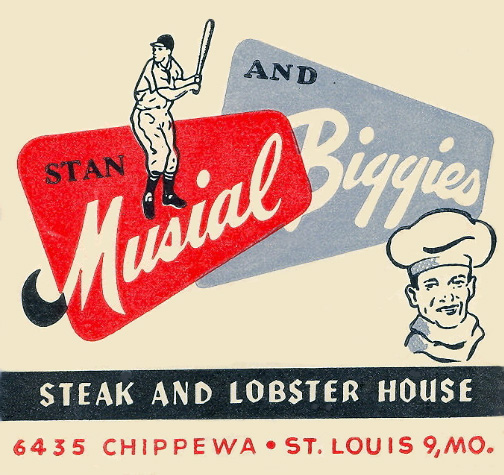
The 1980s wave was not about franchised chains, but mostly single restaurants. And that probably tended to give them a somewhat higher survival rate – as it had earlier for Joe DiMaggio, Joe Lewis [above, ca. 1940], Jack Dempsey [shown at top], and Stan Musial. Some of the new restaurants bore celebrity names, for example Charo’s Cantina, Tommy Lasorda’s Ribs and Pasta, and Bono, owned by Sonny Bono. Most did not, e.g., Dolly Parton’s Dockside Plantation, Tom Selleck’s Black Orchid, Clint Eastwood’s Hog’s Breath Inn, or Midwestern exception Oprah Winfrey’s The Eccentric. But their connections were widely known by patrons and they could sometimes be spotted dining in “their” restaurant.
The next wave of celebrity restaurants would feature famed chefs. But that’s another chapter in restaurant history.
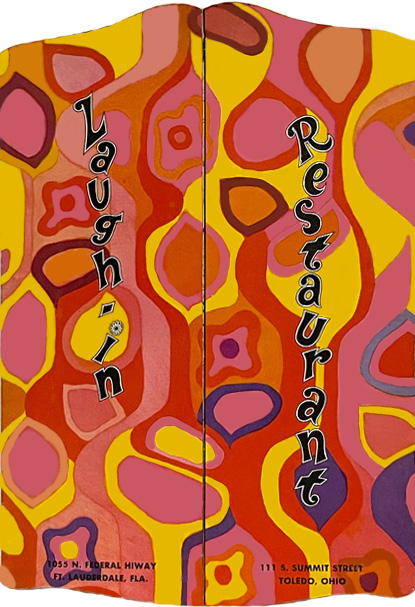
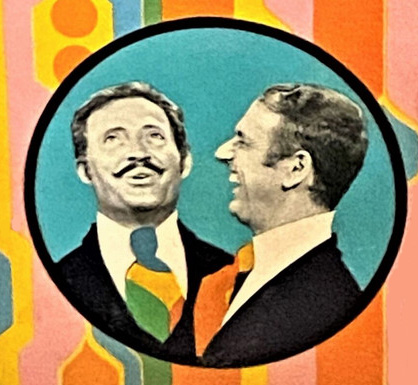
The restaurants called “Laugh-In,” based on the hit Dan Rowan and Dick Martin TV show, formed a teensy blip in an enterprise that culminated with big-time gambling casinos. [1969 menu cover]
Perhaps because the TV show was such an instant hit, it inspired the idea that the same enthusiasm would transfer over to the restaurant. It didn’t.
The chain was created in 1969, under the Lum’s restaurants umbrella, by brothers Clifford and Stuart Perlman who had built the successful Lum’s chain from a small Florida hot dog stand thirteen years earlier. The brothers adopted the Laugh-In concept and franchise system not long after they had begun another chain called Abners Beef House in 1968.
At that time the parent company, Lum’s Inc., had 300 locations. The brothers decided to list it on the New York Stock Exchange. In addition to the three restaurant chains, they also owned a chain of Army-Navy stores, meat packing plants, honeymoon resorts in the Poconos, and a large country club in Miami, the city where the corporation was located.
Selling stock in Lum’s, Inc. was a way to amass money to fulfill the brothers’ ambition of buying Caesar’s Palace, the Las Vegas hotel and casino that had opened in 1966.
When they created Laugh-In, financial analysts warned investors that counting on the continuing popularity of a TV show was risky. What if it went off the air? Perhaps that did worry buyers. Forty franchises were expected to be sold in 1969, but the actual total for that year was probably lower and the overall total number of units ever opened is unknown. [above left, Rowan, right, Martin]
Laugh-In relied heavily on the goofiness of its namesake TV show for the design of its units, fronting its flat-roofed concrete-block-style buildings with wild patterns and colors. Table tops were manufactured with imitation graffiti reflecting phrases from the show. [Below, table-top graffiti as shown on the back of menu above]
Everything was meant to appeal to youthful customers. According to an early advertisement for franchisees, Laugh-In was “a fun restaurant, designed for today’s vast young-minded, leisure-rich market.”
Additionally it advertised that it used a “proven food format” as employed by Lum’s. Lum’s had a signature dish, hot dogs cooked in beer, and it also sold beer. Laugh-In did not. But judging from their menus, neither Abners nor Laugh-In offered anything special in the way of food. Despite the “funny” names, Laugh-In selections were the same as those found in many other casual restaurants. Then there’s the fundamental question of whether customers choose what to order according to how funny the name is.
Judging from a 1969 advertisement for Abner’s franchisees, the Lum’s corporation was not especially good at presenting desirable-sounding food. The ad exclaimed over its menu’s “hunks of steak in a long fun bun” and “good things to drink, too, a malt, milk, a soda, coffee and tea.” As for Laugh-In, despite the funny names (Bippy Burgers, Fickle Fingers, Here Comes The Judge), its menu boiled down to the usual assortment of sandwiches, deep fried fish, onion rings, and a few oddities such as “tomato and egg slices” and “cheese on a bed of lettuce.”
The first Laugh-In restaurant opened in Hollywood FL in December, 1969. A few months later 25 more franchises were said to have been sold around the country. But #1 did not do at all well. It closed just short of a year later, replaced with an “Adult Art Theatre.” [above, partial advertisement for the grand opening]
Overall, the brothers fared better with another big venture, Caesar’s Palace, acquired a couple of months before the first Laugh-In opened. Caesar’s Palace had a rough time at the beginning of their ownership, and the stock of Lum’s, Inc., its corporate owner, fell sharply. The brothers raised $4 million by selling off most of their restaurants, including Laugh-Ins, in 1971. But they ran into trouble attempting to open another casino in Atlantic City. New Jersey’s Casino Control Commission insisted that because the Perlmans had had financial dealings with reputed organized crime figures, they had to resign if a permanent permit was to be issued. Stockholders voted to buy them out, paying almost $100 million for their stock.
A few Laugh-In restaurants probably continued on for a while, though it had to be a blow when the show went off the air in 1973. The longest survivor may have been Jeff’s Laugh-In in Chicago, lasting until 1988.
In 19th-century America most eating places were named for their owners. But in the 20th century, despite the continuing prevalence of proper names, more creative names began to appear. For instance, a 1912 directory of Black-owned restaurants in Chicago included the Crazy Corner Café and the Wa-Wa.
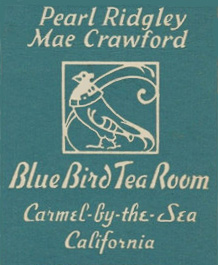
Greenwich Village of the 1920s pushed the vogue further. Columnist O. O. McIntyre was one who sneered at names of eating places there such as the Purple Pup, the Mauve Moon, and the Cerise Cat. In fact, they heralded a trend soon popping up everywhere, especially in casual eateries and tea rooms. Names linked to colors, birds, and animals proved especially popular with tea room proprietors.
Newspaper columnists were alert to new and strange restaurant names. In 1927 a Seattle writer noted, “The bluebird and the red robin both sing the song of food. Being an especially noble bird the eagle soars over four hamburger houses, and thus is more active than any other animal as far as eat signs are concerned.”
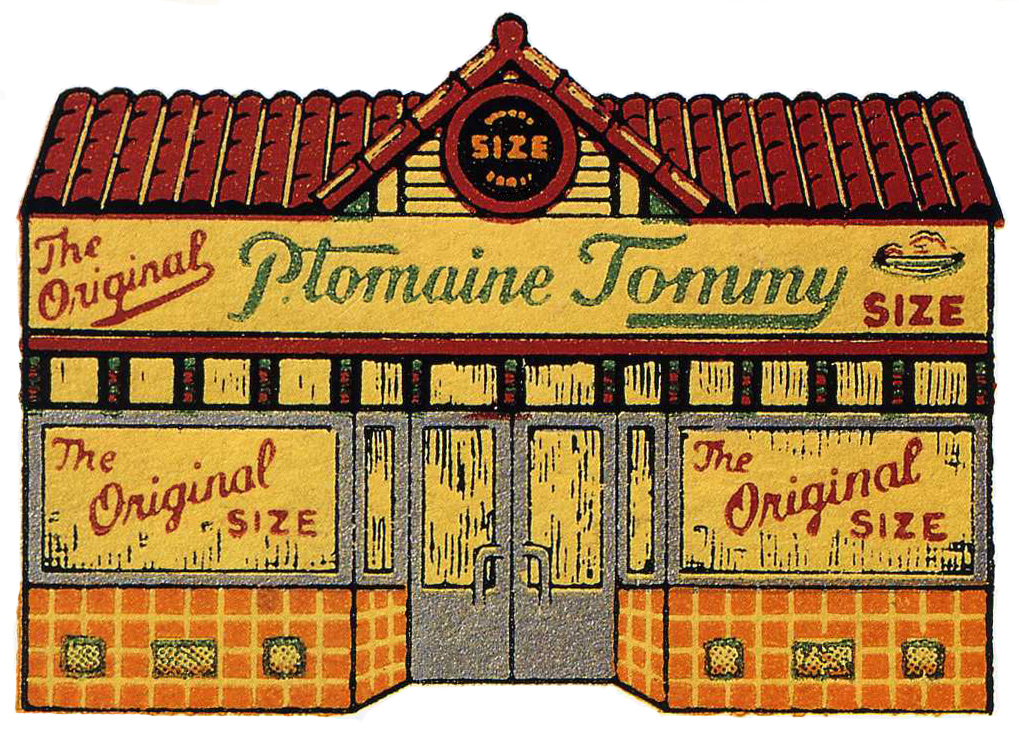
Other eateries went further, with names that were attention-getting but far from charming such as the O-U-Pig Stand in Knoxville TN or Ptomaine Tommy’s in Los Angeles.
Busy Bees were found in almost every city, but they didn’t seem to head into the countryside much.
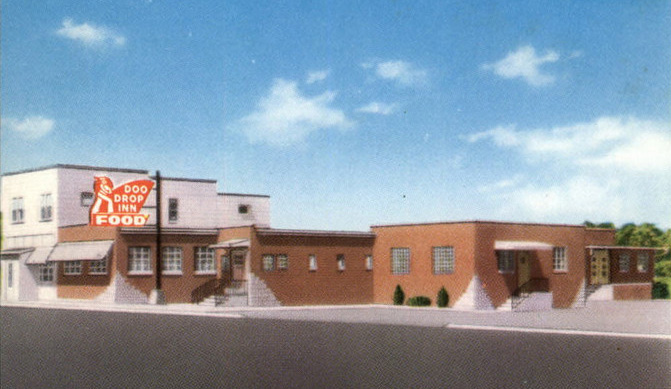
Restaurant names grabbed the attention of visitors from England. In 1929 the husband and wife authors of On Wandering Wheels noted inns and tea rooms in Connecticut with names such as Steppe Inn, Kumrite Inn, Wontcha Drive Inn and others they dubbed collectively “Ye Old Roade House.” A few years later another English vacationer marveled over a long list of “strange names” he compiled including Do Drop Inn, Dew Drop Inn, and Due Drop Inn. [Doo Drop Inn, Muskegon MI]
Why the rise of fanciful — and often hopelessly corny — names? I suspect it was competition that drove small businesses to attempt to stand out from the crowd. But it’s also probable that some proprietors who came from foreign lands were quite eager to hide their surnames during the anti-immigrant 1920s.
If anything, the Depression of the 1930s stimulated the use of creative names, as a glance at city directories reveals. Columbus OH had a Zulu Hut and a Pig Stile. Buffalo patrons could choose Da Nite Diner or Just-A-Mere Grille or one of seven “new” places, whether New Buffalo Lunch, New Chicago Lunch, New Genesee Restaurant, New Haven Lunch, New Main Lunch, New Popular Lunch, or New Texas Lunch. Exactly what about them was new is lost in time.
Even the trade magazine The American Restaurant got into the habit of collecting strange names in 1947, calling attention to lists that included Grabateria, Dizzy Whiz, and Blu Baboon. The columns also added to the growing list of names using the word “inn” with Weasku Inn, Hello Inn, Venture Inn, Brother-in-Law Inn, and Welcome Inn.
Continuing the once-irresistible urge to combine punning names with “inn,” here are others I’ve found, dating from the teens through the 40s: Always Inn, Bungle Inn, Chick Inn, Duck Inn, Du-Kum-Inn, Fiddle Inn, Fly Inn, Jitterbug Inn, Kum Inn, Pour Inn, Ramble Inn, Stumble Inn, Tip Toe Inn, Toddle Inn, and Tumble Inn.
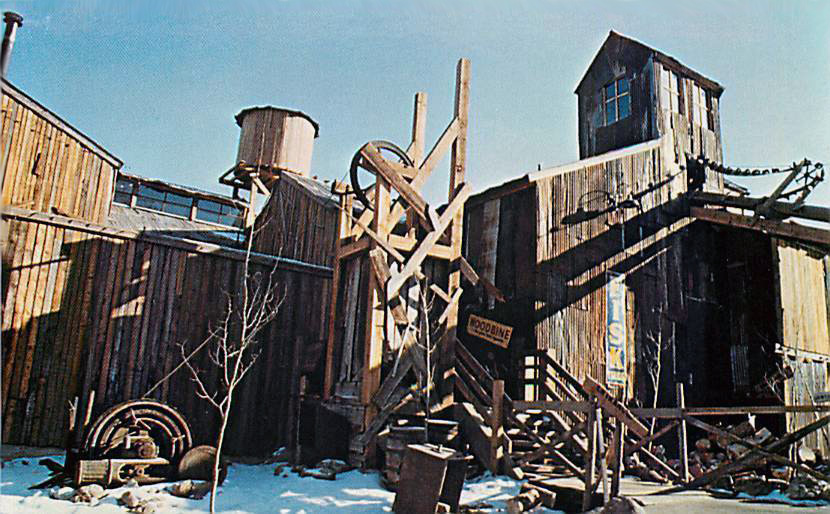
Perhaps the long-lasting attraction to bizarre names actually peaked in the 1970s when restaurant groups spread themed chains across the country, often with names I would nominate for the most absurd of all, exemplified by Baby Doe’s Matchless Mine [Denver location pictured].
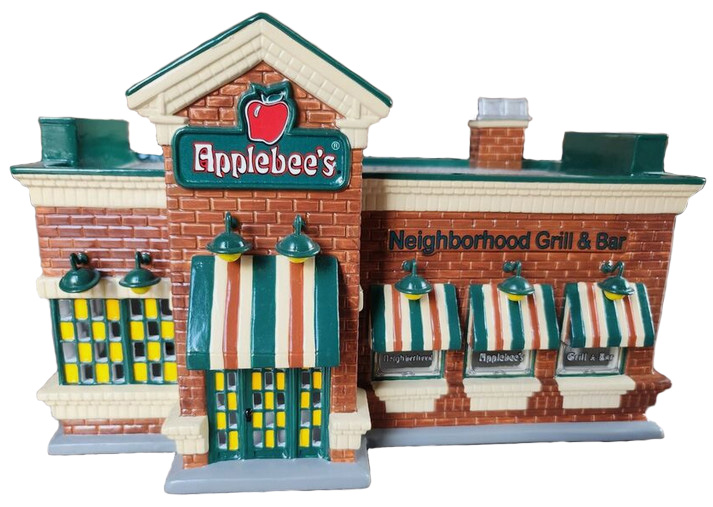
By now we’ve grown accustomed to many names that once drew attention, but have become ordinary. It’s unlikely that anyone still thinks of Drive Inn, now usually without the second “n,” as an originally punning name. Maid Rite and White Castle seem unremarkable as does Applebee’s, especially since deleting the initials T. J. which, thankfully, had fallen out of fashion.
The author of the book A Perfect Red identifies it as “the color of desire” and “the color of blood and fire.” She also notes that the color has often been associated with masculinity because it signifies power, prestige, and “heat and vitality.”
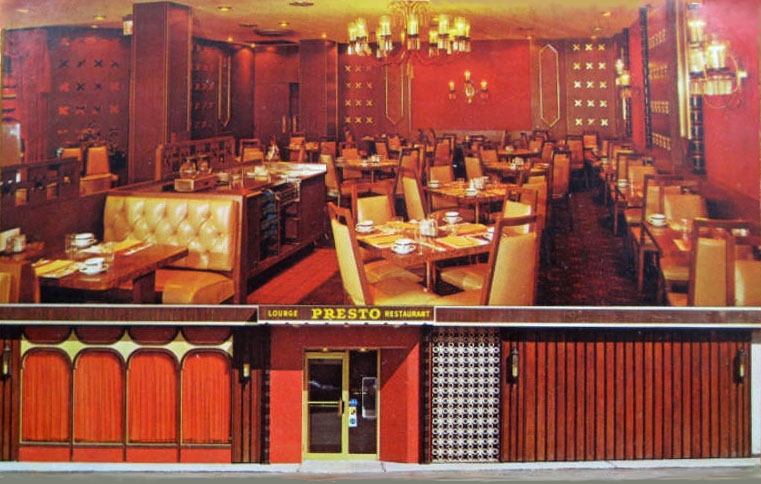
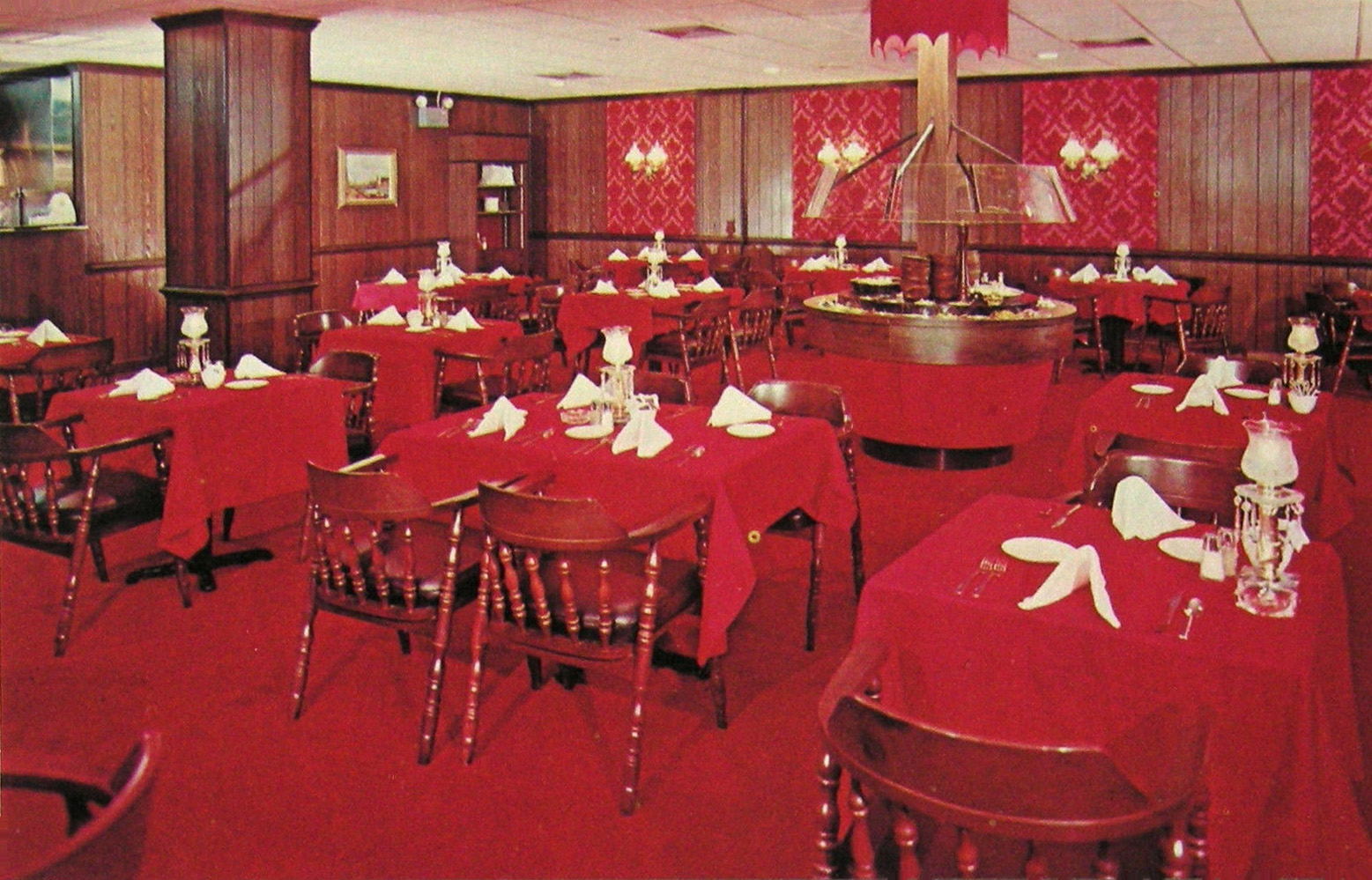
So it makes perfect sense that at one time it was popular as steak house decor. [above, Presto, Chicago, ca. 1970]
But it took a while to catch on. In the early 20th century the color red was strongly rejected by many Americans as inappropriate for clothing. Those who dared to wear red – or other strong, bright colors – were seen as low class and with questionable morals. The judgment was particularly harsh if the wearer was Black or an immigrant.
The use of red in home decor was also severely criticized. An elite Chicago woman’s club firmly rejected a trend toward Oriental-styled dens with red walls, piled-up cushions, and low lighting. One of the club’s members noted in 1903 that during a visit to a house with so-called “cozy corners” full of soft pillows she began to doubt that “the mistress of that home was a moral woman.”
Needless to say, though early women’s tea rooms sometimes adopted playful decorating themes, red was decidedly not a popular color scheme in them.
Despite its association with immorality (or maybe because of it?) red made a strong showing after World War II, especially in the mid-1950s through the early 1970s. It was often used in restaurant decor, especially for places that appealed primarily to men.
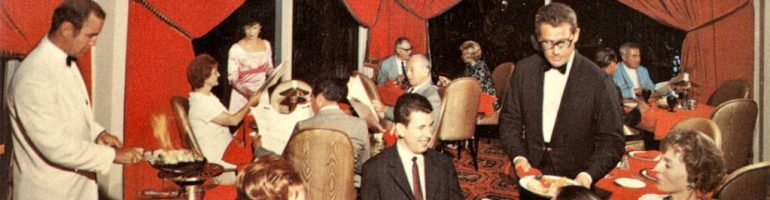
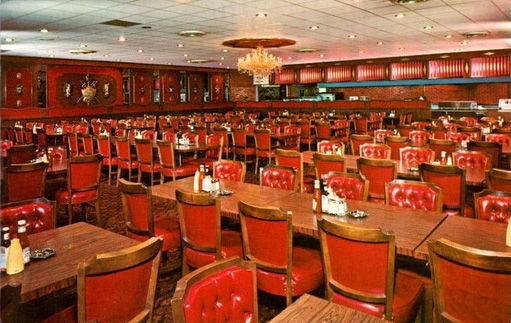
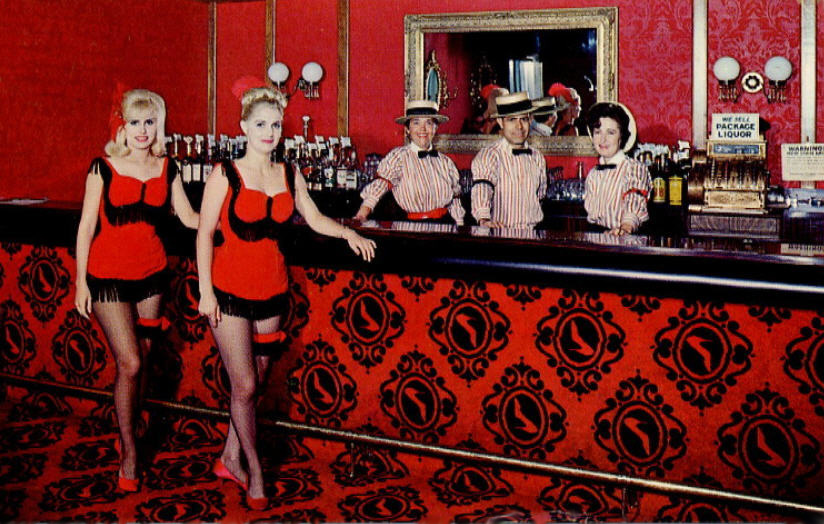
Red tended to be employed lavishly. It was variously used for carpets, painted wall and ceiling surfaces, columns, wallpaper, light fixtures, draperies, tablecloths and napkins, glassware, menus, upholstery for chairs and banquettes, and waiters’ uniforms. [above: That Steak Place, VA]
Sometimes an old-time theme was adopted, usually signaled by red-flocked wallpaper meant to conjure a bygone time of jollity that might suggest anything from the “gay ‘90s” to the “roaring ‘20s” to a brothel.
A 1955 book of decorating advice suggested that, in contrast to cool colors and bright lights, restaurants with warm colors and dim lights suggested luxury. The latter decor encouraged patrons to relax and was believed “to increase the size of his check.” Likewise, a bar decorated in red might encourage drink orders.
Of course red is more than warm, it’s hot! It can be difficult to imagine relaxing in some of the eating places that enveloped diners in redness. Such as, in particular, NYC’s Cattle Baron [shown above], which opened in 1967 in the Hotel Edison. If the red decor weren’t appealing enough, the restaurant’s owner seemed willing to revive an association with questionable respectability when he ran an advertisement picturing a nude female model marked with black lines indicating cuts of meat.
Whatever poshness and sense of luxury a red interior suggested, it began to wear off in the 1960s, and even more in the 1970s. In 1961, when a version of the NYC club known as Danny Segal’s Living Room opened in Chicago, a reviewer criticized the “engine red decor” with red light bulbs as “excessive” and amounting to “a satire on night club decor.” Also in the 1960s, an Oregon restaurant reviewer sneered at “that ubiquitous black and red decor which has almost become a stereotype of the snobbier bistros.”
Restaurants began ditching their red decor in the 1970s. The Colony Square Hotel in Atlanta installed a new restaurant called Trellises, causing a reviewer to applaud the disappearance of the “steakhouse/bordello gold and red decor.” The western Straw Hat Pizza chain decided in 1975 that Gay 90-style restaurants with red-flocked wallpaper were out of fashion. The Homestead in Greenwich CT hired NYC designers to come in and rip out their red carpets and red-flocked wallpaper for a country look with hanging plants, wood floors, and brick walls. [above, Harry’s Plaza Cafe, Santa Barbara]
Of course, the U.S. is a big country, full of diverse tastes and fashions, so it’s not a big surprise that there were (and are) some restaurants that kept their red decor.
The status hierarchy in a restaurant kitchen depends on a variety of factors. Skill is clearly one of them, but, historically — if not currently — there have been others, some of them surprising.
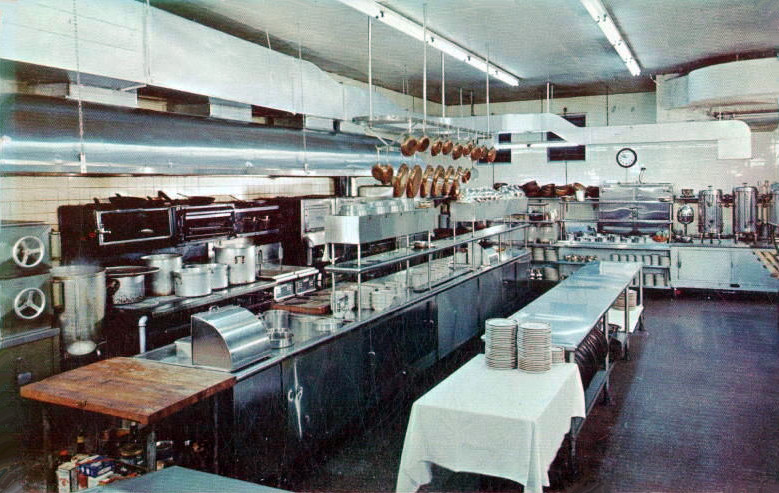
In 1944 and 1945 sociologist William Foote Whyte spent time observing kitchens in a number of Chicago restaurants. To one of them he gave the fictional name “The Mammoth” because of the size of its kitchen which employed 45 persons excluding dishwashers.
Whyte noted in his book Human Relations in the Restaurant Industry that by that time in this country, the French chef had lost influence and “this system has steadily degenerated,” eliminating some of the hallmarks of status.
But there were still distinctions of rank, fainter and sometimes subtle yet real.
In step with that time, gender was still a major factor contributing to status. It was linked to skill and experience as well as the difficulty of tasks. It was also reflected in the use of knives and heat, and the sorts of food handled. Although because it was wartime, more women were assuming these positions, at The Mammoth it was men who did the cooking, and men who both portioned and cooked red meat.
Women handled the lower-status food: chicken, fish, and vegetables. The Mammoth’s food suppliers at that time had not yet taken over much of the food preparation as they have in more recent decades, leaving many tedious tasks to the staff that sliced, chopped, and otherwise prepared fresh food for the cooks and sandwich makers.
Among vegetables, he explained, decorative items such as parsley, chives, and celery ranked highest. (Their elevated status reverberates today in the many photographs of elite chefs bending almost double as they carefully tweeze small decorative touches into place.)
One notch down came green beans, followed by spinach and carrots. Undoubtedly the status of these vegetables derived in part from their popularity with customers. But also, he explained, on the women workers’ opinion of them, based on “lack of odor, crispness, and cleanness of handling.”
Lowest in status were potatoes, then at the bottom onions. Whyte states that the “low standing of potato peeling is too well-known to require comment.” I’m not quite sure what it derived from, although it is well known that military recruits strongly disliked kitchen duties that involved peeling potatoes.
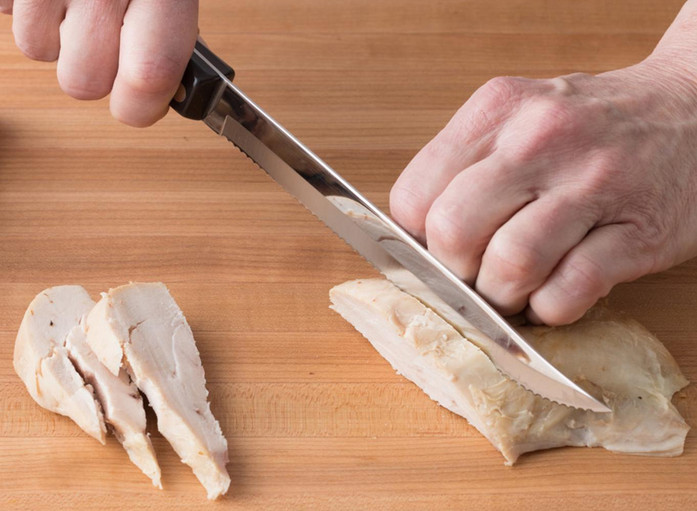
Seven women handled cooked chicken. Those who sliced the chicken were at the head of the line. Slicing white meat was higher in status than dark meat. Next came two women who portioned and wrapped slices for sandwiches. On the bottom rung were three women who picked the remaining meat off carcases, with the one who picked white meat ranking higher. The worst job, that of the seventh woman in line, was picking bits from chicken neckbones. When the worker assigned to that task complained about always getting the necks, she was assigned to another job.
Deep disdain for the chicken picking job was highlighted in the response of one of the workers on the line whose job was wrapping slices. She commented to Whyte that it was tedious. When he asked her if she would prefer picking, she frowned and said emphatically, “Oh, no, I wouldn’t want to do that.”
The woman who handled the fish station, “Gertrude,” was highly regarded by management but not by employees because they held a low opinion of fish, considering it smelly. According to Whyte, this put her station “at the bottom of the status hierarchy,” even though with the wartime meat shortage, fish was assuming a much more important role in restaurants. He attributed the workers’ attitude to ignorance, particularly because The Mammoth had a high standard regarding fish and bought only the freshest. Gertrude strongly disliked being referred to as “the fish lady,” and asked that in the book Whyte refer to her station the “sea-food station.”
It's great to hear from readers and I take time to answer queries. I can't always find what you are looking for, but I do appreciate getting thank yous no matter what the outcome.
So, e-mail me!

























 It's great to hear from readers and I take time to answer queries. I can't always find what you are looking for, but I do appreciate getting thank yous no matter what the outcome.
 Restaurant-ing through history