Category Archives: racism

Famous in its day, now infamous: Coon Chicken Inn

coonchickeninnpc3

The long-gone Coon Chicken Inn restaurant chain claimed in its advertising that it was “nationally famous.” I believe that was a bit of an exaggeration – then – but it might be true now. Its present-day fame, more accurately its notoriety, is based on its objectionable name and use of a grotesque racist image on buildings, delivery trucks, china, glassware, and printed advertising pieces.

To whatever degree it was nationally famous it can only have been for its racist depictions. Certainly it could not have achieved fame for its food. The menu of the Coon Chicken Inn reveals selections only a few degrees more ambitious than the drive-ins of the 1930s. Other than chicken dinners, the menu included chili, burgers, and ice cream desserts.

coonchickeninnphoto1947

Nonetheless, in its time it was a popular chain of four roadhouse restaurants with one each in Salt Lake City (est. 1925), Seattle WA (est. 1929), Portland OR (est. 1930), and Spokane WA. According to one account there were also Coon Chicken Inns in Denver, Los Angeles, and San Francisco but I’ve been unable to find any trace of them.

In 1930 Seattle’s NAACP protested against the restaurant’s racist imagery. Under threat of prosecution the chain’s owners, Maxon Lester Graham and Adelaide Graham, repainted the grotesque black faces on their restaurants’ entryways blue. They also obliterated the words “Coon Chicken Inn” painted on the figures’ teeth.

coonchickeninnSLCDec291926Having avoided prosecution they changed nothing else, keeping the chain’s name and logo, all of which seemed not to bother the restaurants’ white patrons at all. I would guess most people gave little thought to the large grinning heads, having already accepted the caricatures as merely another instance of the widespread “comical” portrayal of black Americans. They probably also saw them as just another example of an eye-catching building feature employed by roadside restaurants to attract motorists’ attention. Few white people perceived the restaurants as racist.

The Coon Chicken Inns regularly hosted meetings of clubs, civic organizations, and sororities ranging from a Democratic Club to the Junior Hadassah. They were the sites of wedding, anniversary, and birthday parties. In 1942 they were listed in Best Places to Eat, a nationwide guidebook published by the Illinois Auto Club. I can’t help but think that the restaurant in Portland was a peculiarly appropriate location for an Eastern Star group that chose it for their “Poor Taste” party in 1937.

mammy'scupboardLike the word “mammy” and its stereotyped image, “coon chicken” was supposed to communicate that the restaurant specialized in Southern cuisine, in this case fried chicken. Mammy names and images were widely used by restaurants in the early and middle 20th century. The crudely constructed Mammy’s Cupboard in Natchez MS was another example of roadside “building as sign.” There was a Mammy’s Shanty in Atlanta, Mammy’s Cafeterias in San Antonio TX, and others in the South. Nor was the East without its Mammys: in Atlantic City was Mammy’s Donut Waffle Shop while Brooklyn had Mammy’s Pantry.

Several good articles have been published analyzing the Coon Chicken Inn’s everyday racism and the white public’s blithe tolerance of it. I recommend Catherine Roth’s essay for the Seattle Civil Rights & Labor History Project. Because of the volume and quality of what’s been written I hesitated at first to publish this post. I also hate the thought of increasing the desirability of Coon Chicken Inn advertising artifacts. Although there are good reasons to preserve historic racist ephemera, the extreme popularity of these images is disturbing. So great is the demand for them that the marketplace is flooded with fakes, including newly dreamed-up objects that were never used by the chain. Black faces have made a comeback along with “Coon Chicken Inn” on the teeth.

The Portland and Seattle branches of the Coon Chicken Inn closed in 1949 but the Salt Lake City unit remained in business until 1957.

© Jan Whitaker, 2014

11 Comments

Filed under racism, roadside restaurants

Toddle House

toddlehouseca1940

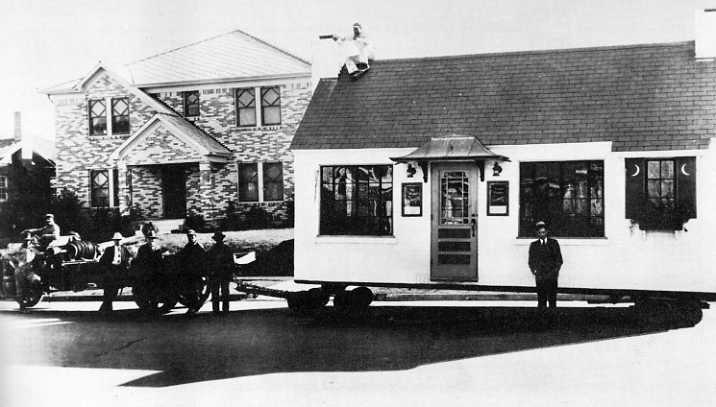
The Toddle House chain occupied “cozy cottage” style buildings that were quite popular as restaurants, gas stations, and cabin camps in the Depression. On the outside Toddle Houses projected an exaggerated Colonial doll-house version of domesticity, with two oversized chimneys and a primly manicured lawn.

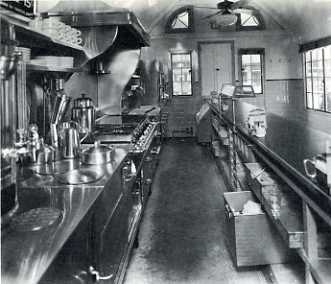
toddlehouseinteriorca1939Inside, though, a very functional, almost clinical interior greeted customers: A back wall of stainless steel kitchen equipment, a counter with a dozen comfortless, backless stools (“in and out in 12 minutes”), bare windows, bathroom-tile wainscoting, and NO fireplaces. Open 24 hours, their menus were limited and featured hamburgers and breakfast at all hours.

ToddleHouseStedmanpatentAdding another touch of no-nonsense modernity was the “cashier machine” invented by founder and co-owner J. C. Stedman. Designed to keep the countermen (later women) from handling money, a mechanical box near the door received meal checks and payments in coins. After a counterman observed, via a mirror inside the box, that the customer had deposited the correct amount, he lifted a treadle behind the counter and the money and checks fell through trap doors into locked bins below (nos. 14 and 15 in the patent diagram).

As awkward as the contraption was – not giving change, easily circumvented by cheating employees, etc. – it remained in use at least until the 1940s and customers liked it. In Evanston IL customers felt let down, their trustworthiness in doubt, when the cashier machine was replaced by a standard cash register in 1945. Today, the old drop box system — in my view mistakenly considered an honor system — has become an object of nostalgia.

toddlehouseca.1953

The first Toddle Houses were opened in Southern states, principally Texas and Tennessee, in the 1930s. The chain never made it farther west than Omaha. In 1945 the company expanded northward with the acquisition of 46 Hull-Dobbs Houses, which resembled Toddle Houses to a remarkable degree. Toddle Houses built later were larger and of a style referred to as “New South” shown here that was plainer and even more symmetrical. Some had dining rooms and the front entrances with copper-clad canopies were enclosed by glass vestibules.

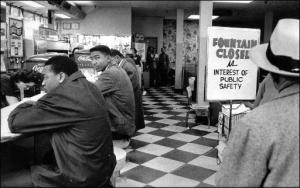
In 1946 Toddle Houses created Harlem House, for Black customers who were not otherwise welcome. Eventually there were 12 such units in Memphis, the company’s headquarters. An Atlanta Toddle House was the site of a prominent civil rights sit-in demonstration in December of 1963, in which demonstrators including comedian Dick Gregory were taken to jail.

toddlehouse1938Memphis

The original 24 × 12-ft Toddle Houses were prefabricated and shipped to their sites on flatbed trucks. It has been reported that their exteriors were of porcelain-coated steel for portability. Since this material is inappropriate for Colonial architecture and they do not appear to be shiny in pictures, I find the description given in Philip Langdon’s Orange Roofs and Golden Arches more convincing. He says that some Toddle Houses were “veneered with a cement coating scored to resemble brick.” Others were built of brick on site. Langdon also observes that because early Toddle Houses could be transported so easily, the possibility of moving them presented advantages when negotiating land leases. I discovered a number of them that were in fact moved.

In 1962 the Toddle House company was bought by Dobbs House which turned most of them into Steak N Egg Kitchens. In the 1980s, after another company, Carsons, bought out Dobbs, an attempt was made to revive the Toddle Houses, which by 1984 had dwindled to 11 units. Carsons built at least 45 new Toddle House units.

Though Toddle Houses no longer exist, many of the buildings continue as eating places or have been adapted for other uses, as shown in a blogpost by Dinerhunter.

© Jan Whitaker, 2014
103 Comments

Filed under chain restaurants, racism, technology

Name trouble: Sambo’s

SambosGoletaCA

You might imagine that chain restaurants would spend vast amounts of time and money researching potential names in order to pick one that would convey exactly the desired associations and nuances. Certainly one that would not insult a portion of its intended customers.

I’m sure most do. Sambo’s was not among them.

Wouldn’t the founders of Sambo’s, in the late 1950s, dimly perceive that the name Sambo was not beloved by everyone, especially African-Americans?

Why would they decorate with images from the book “Little Black Sambo,” the American editions of which were filled with racist caricatures?

sambocollage

Evidently they had no idea that Sambo had been – and still was – a derogatory word for black males for over 100 years; that the name and ridiculous images of Sambo were used on many consumer products in the early 20th century; and that after WWII school libraries had complied with requests by African-Americans to remove the book from shelves.

Even if they didn’t know any of this, when protests erupted they might have realized they had made a terrible mistake. Regardless of whether “Sam-bo” originated from the first name of one of them combined with the nickname of the other.

Nope, nope, nope, and double nope.

Instead the founders, their successor, and the corporation that finally took over the chain all insisted right up to the bitter end that no harm was intended or implied. Even as they renamed some units in the East where there had been boycotts, the company insisted the change was purely in order to market their new menus.

sambo's216CabrilloHwy1960The first Sambo’s was opened in Santa Barbara in 1957. [pictured] By 1977, when the son of one of the founders was heading the company, the chain was the country’s largest full-service restaurant chain, with 1,117 units.

But trouble was looming. Protests during the West Coast chain’s expansion into the Northeast had already resulted in renaming units in the Albany NY area “Jolly Tiger.” Eventually there were 13 Jolly Tigers in various towns. Protest would spread to Reston VA, New York, and New England including at least 9 towns in Massachusetts. In 1981 the Rhode Island Commission on Human Rights ordered the company to change its name in that state because indirectly the name violated the 1964 Civil Rights Act by denying public accommodations to black persons.

SambosNoPlaceLikeSam'sLogo1981The company responded that it would rename 18 of its Northeastern units “No Place Like Sam’s”; in fact according to an advertisement a few months later they actually renamed 41 units.

Soon thereafter the company began to collapse. In November 1981 it filed for Chapter 11 bankruptcy protection, closing more than a third of its units. In Leominster and Stoughton MA, early morning customers had to pick up and get out immediately so the restaurants could be padlocked.

In 1982 all, or most, remaining Sambo’s were renamed Seasons. By 1984 most of the Seasons restaurants had been sold to Godfather’s Pizza and other buyers.

The successive name switches undoubtedly hurt business, but a more serious problem was that Sambo’s, like other chains using a coffee shop format with table service and extensive menus, had been steadily losing out to fast food chains. Unsurprisingly, it did not survive.

© Jan Whitaker, 2013

67 Comments

Filed under chain restaurants, racism

Restaurant history day

KittyFoyleLifeMagazine1940Yesterday I was fully immersed in restaurant history. Starting off the day I had an e-mail exchange with a local 1970s activist about a feminist restaurant that once operated in Northampton MA. Next I had an interesting phone call from a researcher in Minneapolis who has unearthed the early 20th-century history of Greek immigrant restaurant and confectionery proprietors in Sioux Falls, South Dakota. Then, while surfing a Facebook page about my former hometown of Webster Groves, Missouri, I discovered a discussion about a long gone restaurant there that refused to serve Afro-Americans.

manhattanX3The name of the restaurant was the Toll House. I never went inside but as a child I formed the impression that it was a place where old-line Webster Grovesians went to eat club sandwiches and fruit cocktail appetizers on the nights their maids were off. Since Webster Groves was a dry town then, it was a restaurant that my parents would never have chosen – no Manhattans!

TollHouseWebsterGrovesAn undated menu reveals that the Toll House had some surprisingly (to me) upscale dishes considering its rather drab appearance and its location in a dry, Waspy suburb of St. Louis – Oysters Rockefeller (.75), Pompano (.85), Lobster (1.25), Chateaubriand (1.35), and Baked Alaska (.40).

The Toll House was the site of pickets and sit-ins against racial discrimination in 1961 and 1962. Sadly, the city of Webster Groves seemed all too ready to arrest protestors. Just how many protests took place there is unclear, but I have found evidence of at least four. In the summer of 1961, two women picketers were arrested outside the restaurant after the proprietor Myrtle Eales, who ran the restaurant with her husband Forrest, claimed they had pushed her in a scuffle. In January of 1962 thirteen black and white members of the Congress of Racial Equality (CORE) were arrested for trespassing after they occupied the restaurant for four hours without being served. Although it was a cold winter day, the owners turned the heat off and the air conditioning on in an attempt to get them to leave. That same month a group of four protestors were locked in the restaurant’s vestibule for two hours. Then in April of 1962 three white protestors, all airmen from an Illinois military base, were arrested by Webster Groves police on suspicion of being AWOL (they weren’t).

The embattled restaurant did not survive the protests. I believe it closed in 1962.

Strangely enough, the otherwise obscure Toll House had made the national news earlier when it was featured in a 1944 Life magazine article about (white) teen-age social life. At that time it was a lunch counter popular with teens for hanging out. According to a letter sent to Life after the article appeared, whoever owned the restaurant then wanted young patrons to keep out. In a large advertisement in a local newspaper the management informed parents that their unruly children were bending silverware, breaking glasses, setting napkins on fire, carving up tabletops, and destroying stools.

In 1966 the CBS documentary “Sixteen in Webster Groves” appeared, portraying the suburb’s teenagers as spoiled, conformist, and more concerned about having a nice house with gleaming silverware than with the Vietnam war or civil rights. Residents were unhappy with what they felt was a false portrayal but, I wonder, was it completely off base?

© Jan Whitaker, 2013

4 Comments

Filed under racism

Service with a smile . . . somehow

Recently I read a NYT story about a new documentary film “Booker’s Place,” about a Mississippi waiter named Booker Wright. While working at Lusco’s, then operating as a de facto all-white restaurant in Greenwood, Wright appeared in a 1966 documentary called “Mississippi: A Self Portrait” in which people were interviewed about the  status of race relations at that time.

In the 1966 film Booker Wright gave viewers a glimpse of the indignities he experienced serving Lusco’s patrons who sometimes demeaned him or left him no tips. Following the airing of the show on television he lost his job at the restaurant where he had worked since he was a teenager. Patrons no longer wanted him to wait on them – he had broken the bubble by revealing his misery in playing the role of a happy-go-lucky black waiter.

No doubt he realized beforehand that his interview would put an end to the charade. After leaving Lusco’s he operated a restaurant of his own called Booker’s Place at which both whites and blacks were welcome.

As I read about the new documentary I immediately thought of a book called The American Colored Waiter, published initially in 1903 and revised several times. It is a manual written by John B. Goins, an African-American waiter in Chicago. Along with instructions on how to set tables properly, carve meat, and even restore rancid salad oil, Goins dispensed some poignant advice on how to “take it.”

No doubt all servers can relate to his words, but I believe they had special meaning to African-Americans, who were being eased out of the profession in Northern cities at that time.

With the eighteen years’ experience I have had I have found, from the beginning until this present time, that I have been getting the worst of it at all times …; and, my dear sir, if you expect to climb the ladder of success, expect always to get the worst of it while you are a waiter …

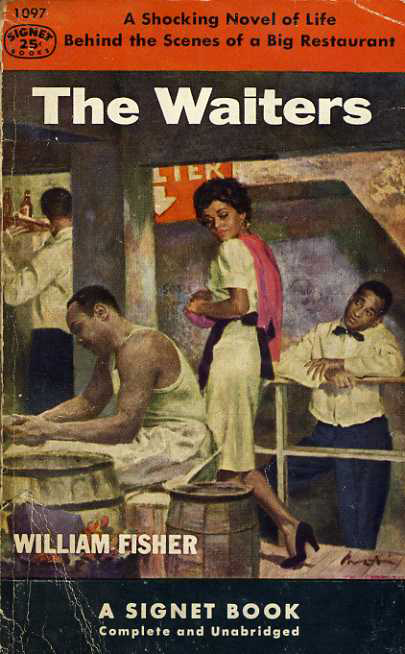
I also recalled a scene in the 1953 novel by William Fisher called The Waiters in which the book’s main character Asher Brown, a waiter at “the Fishbowl” on the seashore near Manhattan. Brown serves a party of inebriated white people and has the following exchange with one of them:

“Bring us some lobsters,” the man snapped.
“How’d you like them, sir?” Asher ventured timidly.
“Fat and ___” The man flashed a broad grin at his companions who scowled at Asher. “Listen, boy! Are you on the ball or not?”
Asher tried again. “Would you like them boiled or broiled, sir?”
“Bring us four large broiled lobsters,” the man commanded, in a morose growl. “And bring us some bread an’ butter right away, some of them biscuits.”
Asher had moved only a few feet away from the table, preparing to go to the kitchen, when the man called him back. “Hey, George,” he said importantly. Asher turned to face him with a tight-lipped expression. George, he repeated to himself. He oughta drop dead right here.

To read more about the making of “Booker’s Place: A Mississippi Story” see the blog written by his granddaughter Yvette Johnson.

© Jan Whitaker, 2012

3 Comments

Filed under miscellaneous, proprietors & careers, racism

African-American tea rooms

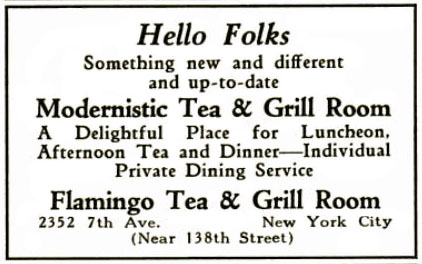
When I wrote my book about the history of tea rooms, Tea at the Blue Lantern Inn, I knew very little about tea rooms run by and for African-Americans. There were few historical sources available on the internet then and even a research trip to Chicago turned up nothing. Since then I’ve discovered that there were many of these tea rooms and that they shared numerous characteristics with tea rooms run by and for whites, yet were also different in significant ways.

It’s easy to see why black women, and men, wanted to create their own tea rooms. For one thing, even in states where Jim Crow policies were not enacted into law it was common for white-run tea rooms and restaurants to engage in racial discrimination. Secondly, starting a business represented the fulfillment of the idea of self-help for blacks as advanced by leaders. Perhaps that was what inspired Mittie Burgess, a Georgia-born caterer in her late 30s, to name her newly opened 1916 place in Lexington KY the Booker T. Washington Tea Room. Although Mittie’s tea room was in the South, quite a few of the proprietors I’ve been able to trace were part of the 20th-century’s Great Migration of Southern blacks to Northern cities.

Like white tea room proprietors, blacks who took up this business tended overall to be of higher social status than the average restaurant owner, white or black. Proprietors I’ve come across included a woman who was a former pharmacist and a man who had been a college professor. Some of the more elite women who operated tea rooms were married to life insurance executives, ministers, doctors, and successful business men. Others were wives of porters, cabbies, and chauffeurs but still seemed to have achieved standing in their communities.

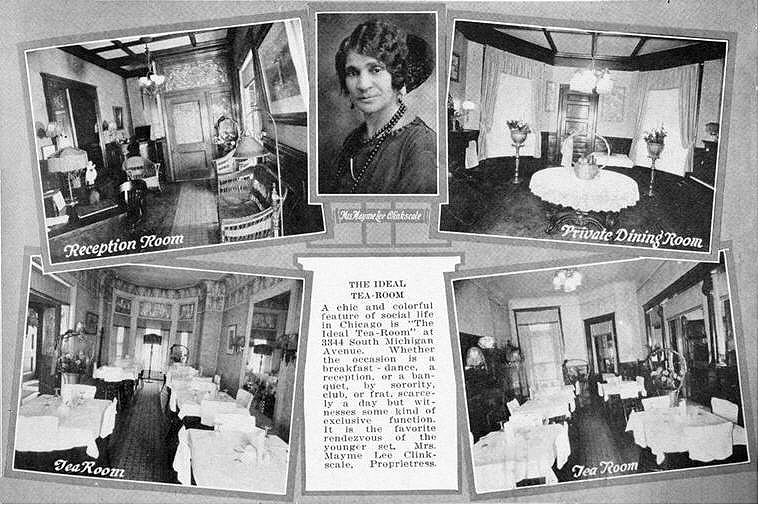
The advertisement for the 1922 opening of Mayme Clinkscale’s Ideal Tea Room [shown above] in Chicago said it was designed for club, society, and lodge banquets, and furnished with “the latest and best in silverware, linen, and glassware.”

A number of tea rooms were clearly meant for the black upper crust. Common phrases in advertisements and news stories include “exclusive,” “the elite of the city are found [here],” or “where the wealthier class of colored people dine.” Mentions of table appointments and decor often include silver bud vases, exotic themes, and carefully coordinated color schemes. Menus offered fried chicken and corn sticks as well as steaks and salads, but were less likely to list rural Southern favorites such as pigs’ feet or greens.

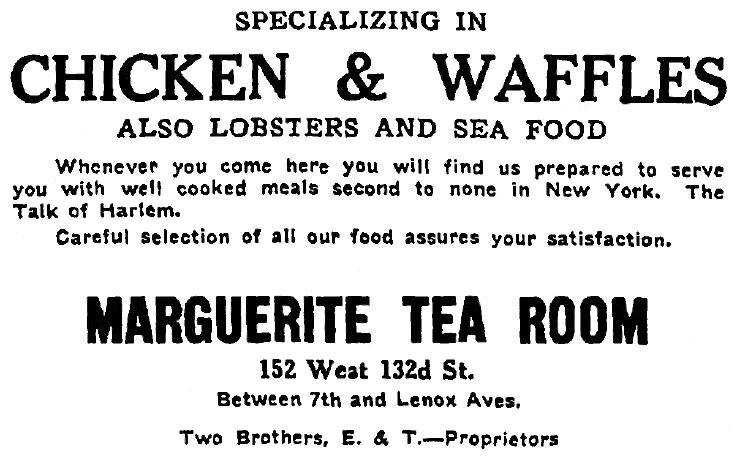
Tea rooms in African-American communities in the teens, 20s, and 30s, frequently hosted important social events. Community leaders hailed them as badly needed establishments. Groups such as the NAACP Women’s Auxiliary, black sports writers, and the Negro Business League held luncheons and dinners at tea rooms. Red Caps from Grand Central and Penn Station hosted their peers at the Gilt Edge Tea Room during a national convention in NYC. Newspaper people from the black newspaper The Amsterdam News celebrated a colleague’s college graduation at Harlem’s Jack and Jill Tea Room in 1928. They certainly received a warmer welcome than had Charlotte Bass, black publisher of the California Eagle, when she and several of her guests were refused service at the white-run Old Adobe in Ventura CA.

Since they were small and did not make money from alcoholic beverages (not legally anyway, during Prohibition) all tea rooms were hard to operate profitably. Yet I sense that owners of Afro-American tea rooms had to work even harder than whites to succeed. They seem to have been open much longer hours, covering meals that ran from breakfast until late into the night. They were also more likely than white tea rooms to offer entertainment such as music and dancing. Many took in table boarders, regular patrons who contracted to eat their meals there for a week or month at a time.

© Jan Whitaker, 2011

55 Comments

Filed under proprietors & careers, racism, tea shops

L’addition: on discrimination

Perhaps as his defenders claim Kentucky’s senatorial candidate Rand Paul is not a racist, but … Even though he says he would have voted for it, it seems unlikely he would enforce the 1964 Civil Rights Act with any vigor. He believes that it should not apply to businesses such as luncheonettes. On the Rachel Maddow show, despite his slippery answers to her queries on this subject, he did reply “Yes” to Maddow’s question of whether a private business should have the right to refuse to serve black people. He seemed to be saying that restaurants that are privately owned (i.e., almost all of them) are not public accommodations. He believes that it is preferable that racist restaurant owners be sanctioned by consumers who would refuse to patronize them rather than by the state. Oh sure. Rather than see them all go out of business it’s more likely we’d soon be back to the days when Afro-Americans needed a guide to know where they could go for a meal without facing rejection and humiliation.

Paul’s position is somewhat reminiscent of Lester Maddox, who operated the Pickrick restaurant in Atlanta for 20 years and was dedicated to a policy of racial discrimination. After the passage of the Civil Rights Act, but before he surrendered the restaurant to his employees after being sanctioned by the court for non-compliance, he created a “shrine” in the corner of the restaurant, “in memory of free enterprise.”

8 Comments

Filed under racism

Righting civil wrongs in restaurants

This year marks the 50th anniversary of the Woolworth’s lunch counter sit-ins in Greensboro NC (pictured) which set off a wave of similar protests across the South and turned the tide against segregated eating facilities. But these were far from the first such actions. Integration of American eating places came about from a patchwork of regulations that sometimes successfully impeded discrimination and by the courageous actions of individuals and groups, black and white, who negotiated with, sued, picketed, and physically occupied restaurants beginning in the 1870s.

The Civil Rights Act of 1964, which offered the strongest protection against discrimination in restaurants up to then, was neither sudden nor was it evidence of the steady march of progress. A federal Civil Rights Act of 1875 was repealed by the Supreme Court just eight years later, after which Southern states enacted separate accommodations laws (Jim Crow), while other states passed or amended civil rights acts.

Few state civil rights laws covered eating facilities, the most controversial area of public accommodations. White public opinion was strongly against blacks and whites eating together in restaurants. Segregationist sentiment grew stronger around the turn of the last century and again in the World War I period when many black Americans migrated North for jobs. Blacks lodged relatively few protests because the odds of winning in court were poor. Also, anyone brave enough to challenge discrimination needed enough social stature to refute the accusation of simply being a low-class ruffian. By the “Catch-22″ logic that long prevailed, any black person who went into a white-only restaurant was considered of poor character since proper black people knew better than to go where they were not wanted.

The following are examples of challenges against racism in restaurants that nevertheless occurred in the 20th century before passage of the Civil Rights Act of 1964.

1926 Organized by a cook, the black staff of an Alice Foote MacDougall tea room in NYC unites behind a black waitress discharged for serving a black customer. They all walk out, forcing MacDougall to change her policy.

1929 The president of the United Colored Socialist party is accosted by a waitress as he and a black associate enter the Mills Restaurant in Cleveland. Restricted to a table on the mezzanine, they are treated hatefully and a hefty service charge is added to their bill. They win in court after refusing to give up despite six postponements.

1935 Black activists test a new PA civil rights law in Philadelphia, leading to the arrest of four employees at Horn & Hardart’s Automat who seat five white parties while two black people stand by and wait for an hour. At Stouffer’s three black patrons receive their meals smothered in salt. The manager asserts that all Stouffer’s meals are “highly seasoned.”

1936 After two black New Yorkers are refused service at a restaurant in Bel Air MD, 17 bus loads of fellow (but white) WPA workers en route to a Washington conference protest. The demonstration is peaceful yet 40 state police armed with machine guns and tear gas arrive and arrest the two blacks.

1943 Howard University students sit-in at a “white trade only” eatery in DC, a city in which few restaurants are open to people of color including the cafeteria in the Department of Justice.

1943 The newly formed Congress of Racial Equality (CORE) initiates a sit-in at the Jack Spratt café in Chicago where one of CORE’s founders, executive director James Farmer (pictured in 1965), had been treated rudely the previous year.

1946 The United Packinghouse Workers union (CIO) files charges against Hackney’s Seafood restaurant in Atlantic City on behalf of two black delegates refused admittance and files false-arrest charges against the police department which arrested protesting union picketers.

1947 After 11 bias suits against Bullock’s department store in Los Angeles fail to alter the store’s discrimination policy, CORE initiates sit-ins in the store’s tea room. Several white bystanders join the protest by informing waitresses they will wait to be served after the black patrons.

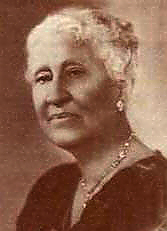
1951 Long-time civil rights activist Mary Church Terrell (pictured), in her late 80s and using a cane, joins picketers in front of Washington DC’s Hecht’s department store, which does not permit its many black customers to use its cafeteria. The store changes its policy in 1952.

1958 Dime store lunch counters are integrated in Louisville KY after unpublicized sit-ins, but other restaurants continue to refuse to serve blacks.

1960 Martin Luther King is among the 51 protesters arrested at the famed Magnolia Room at Rich’s Department store in Atlanta. A few months later the store changes its policy.

1964 As passage of the bill nears in the House, Ku Klux Klan members sit-in at a Krystal Hamburger stand in Atlanta to prevent SNCC (Student Nonviolent Coordinating Committee) members from occupying it.

Read more about discrimination in American restaurants.

© Jan Whitaker, 2010

1 Comment

Filed under racism

Anatomy of a restaurant family: the Downings

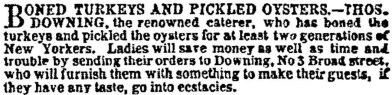
bonedturkies18561The Downing family of caterers and restaurateurs, Thomas and his sons George T. and Peter W., were activists in the causes of the abolition of slavery, black suffrage, and black education. They assisted Afro-Americans fleeing slavery before Emancipation as well as those escaping terrorism in the South in the post-Civil War period. Like many free blacks living in cities, they took up the catering trade. Similar to undertaking and barbering, catering was a personal service occupation which offered a degree of opportunity for enterprising people of color.
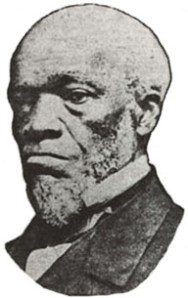
thomasdowning2Thomas Downing (pictured), the son of freed slaves from Virginia, specialized in oysters. He opened an oyster cellar on Broad Street in New York City in the 1820s, gradually expanding it and earning a fine reputation. Often oyster cellars were “dives” but his was considered first class. He won awards for his pickled oysters which, along with his boned and jellied turkeys, were especially popular at Christmas (see 1856 ad). Over time he owned the Broad Street place and at least one other in NYC and, according to a Rhode Island directory, another in Providence. However, the press seemed always to confuse the various Downings, so it’s possible the latter was under the direction of a son.
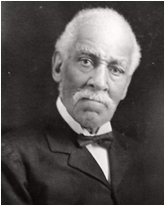
Because of the fame of Thomas’s oysters, his wealth (when he died in 1866, his estate was believed to be worth $100,000 – over $1,670,000 today), and his efforts to end slavery, Thomas was regarded as a patriarch of NYC’s black community. When he was ordered off a trolley car in 1855 because of his race, people in the street recognized him and pushed the stopped car forward until the conductor permitted him to continue his ride.

georgetdowningThomas’s place on Broad was patronized by men in political and financial circles and he was rumored to have influential connections. Both his sons, George and Peter, had enough pull to win concessions for restaurants in government buildings. Peter ran an eating place in the Customs House in NYC, while George, a friend of MA Senator Charles Sumner, managed one in the House of Representatives in Washington, D.C. George (pictured) was also well known as the proprietor of a resort hotel, the Sea Girt House, in Newport, Rhode Island.
Thomas saw to it that his children were well educated. But neither this nor their accomplishments saved them from racial abuse. George was an eloquent writer who often confronted racism in his writings. When he lost his concession in the House restaurant in 1869 he wrote a letter to a newspaper asserting that he had been rejected because he defied the rule against serving black customers in the same dining room with whites. Nor did the family’s achievements prevent Peter’s son, Henry F. Downing, a newspaper editor, playwright, and former consul to Loanda, from being refused service in a New York restaurant in 1895.

© Jan Whitaker, 2009

8 Comments

Filed under proprietors & careers, racism

A black man walked into a restaurant and …

lunchcounterprotest was ignored completely. Or  was asked to leave. Or no one took his order. Or was offered a seat in the kitchen. Or his food never arrived. Or it had been adulterated. Or his check was tripled.

Today in his inaugural address, President Barack Obama suggested his father might not have been served in a Washington restaurant 60 years ago. Beginning in 1949, here are examples of what happened to many dark skinned men and women who put hospitality to the test in various parts of the country.

1949 A citizens’ civil rights group in Washington D.C. visits 99 restaurants in the district and finds that 63 will not serve black customers. Upon subsequent visits, 8 establishments which had previously refused service reverse their policy, however 28 which had accepted black guests on the first visit also reverse theirs.

1949 After being snowbound on a train and then traveling for hours by bus to Spokane to keep a concert engagement, black pianist Hazel Scott, wife of congressman Adam Clayton Powell Jr., stops in Pasco WA and is refused service in a restaurant.

1955 India’s ambassador to the U.S. is asked to leave the public dining area of the Horizon House restaurant in Houston’s airport. He and his party are served in a private room. Texas laws forbade serving blacks and whites in the same room, however the airport was under Federal jurisdiction and not allowed to discriminate.

1956 A white county health director is fired by county commissioners for having lunch with a black nurse in a restaurant in Madison, Florida. The two women met to discuss a class for midwives.

1959 A Nigerian labor official on a U.S. tour with other international labor leaders is allowed to pass through the line at the Forum Cafeteria in downtown Kansas City, but later, after hearing complaints from white patrons, the cafeteria manager orders him never to return.

1960 Members of the National Council of Jewish Women visit 200 Tucson restaurants urging them to end racial discrimination. Seventy restaurants flatly refuse to comply.

1961 Numbers of diplomats from newly independent African nations are refused service in restaurants on Route 40 in Maryland, including the Ambassador to Chad who is on his way to the White House to present his papers to President Kennedy. The State Department takes action to protect the diplomats from discrimination while leaving black American citizens to fend for themselves. To expose the double standard, three reporters from a black Baltimore newspaper dress in African robes and are well received in Maryland restaurants notorious for their racist policies.

1962 Conductor and composer Leonard Bernstein walks out of Miller Brothers restaurant in Baltimore after he is told that a recently hired NY Philharmonic violinist in his party, who is black, cannot be served.

1964 Following passage of the Civil Rights Act, Lester Maddox closes his Pickrick restaurant in Atlanta rather than serve blacks. He claims that communists are behind FBI enforcement of civil rights laws.

emporiadiner2501964 The Emporia Diner in Virginia admits to having two menus (and that the higher priced one is used “at any time it is felt that business may be adversely affected”) after a black Baltimore woman brings suit saying her family was charged more than three times what whites paid for the same meal.
1965 Comedian Dick Gregory and a group of blacks testing accommodation at local restaurants are turned away by a steakhouse in Tuscaloosa AL after the owner shows them a list of about 1,000 names of people allegedly holding reservations.

1970 According to a complaint brought by the U.S. Attorney General’s office, Ayers Log Cabin Pit Cooked Bar-B-Que, a restaurant near Washington, North Carolina, displays a sign indicating that any money spent there by black patrons will be donated to the Ku Klux Klan.

1993 Although racial discrimination in restaurants diminishes in the 1970s and 1980s, a slew of complaints against the Denny’s chain demonstrates that problems persist. In May six black Secret Service agents file a federal suit charging that their table was not served breakfast in a Denny’s in Annapolis MD while all 15 white agents received their meals.

Read about how both black and white Americans fought discrimination in restaurants.

© Jan Whitaker, 2009

5 Comments

Filed under racism