Category Archives: proprietors & careers

Anatomy of a restaurateur: Romany Marie

Marie Marchand, whose business name was Romany Marie, was taken aback in the 1950s when a Greenwich Village restaurateur declined to host a dinner for Marie’s artist friends on the grounds they would occupy the tables too long. In a 1960 interview recorded in Romany Marie, Queen of Greenwich Village by Robert Schulman, Marie reflected, “It was a little shock to me. Poor dear, she felt she had to have turnover, she was in the restaurant business, not in the venture of maintaining a center for lingering tempo.”

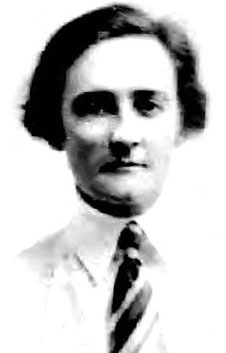
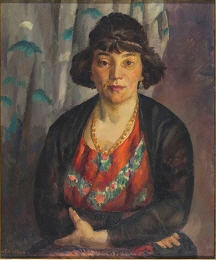
For someone such as Marie who had herself been in the restaurant business for over 30 years, this would seem to be an odd reaction. But hers were odd restaurants – she preferred to call them centers – where patrons were encouraged to linger. If they lacked money for a meal, and they fit her criteria as creative spirits, she let them eat for free. Luckily, she had a brother who helped her out financially because hers was not a lucrative business. On the other hand, she encouraged and helped sustain dozens of artists and creators such as Buckminster Fuller, Burl Ives, Stuart Davis, Edna St. Vincent Millay, and John Sloan (one of the many artists who painted her portrait – pictured above).
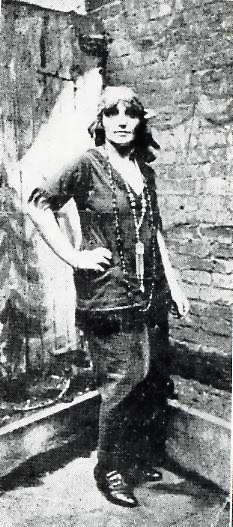
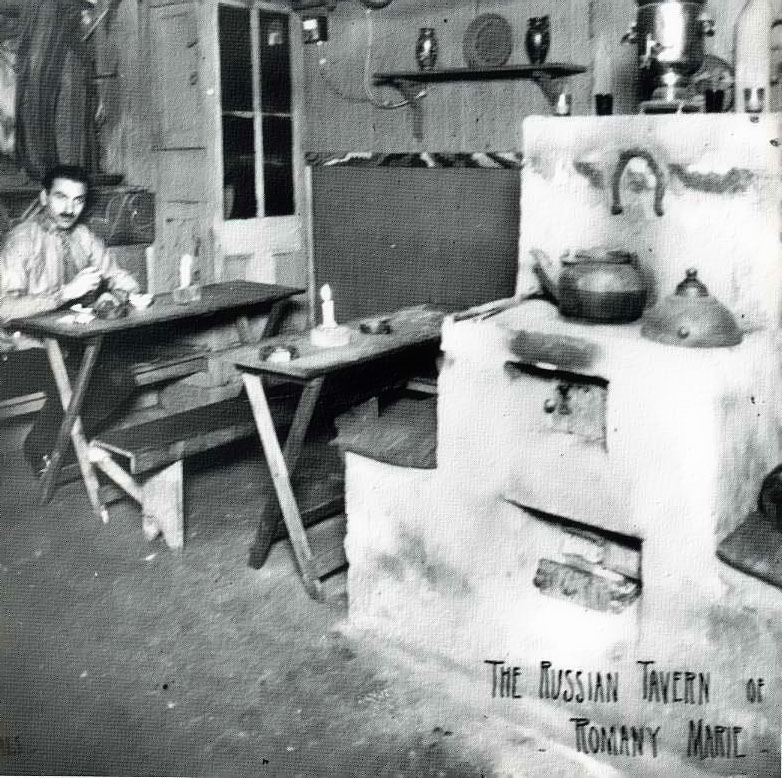
Marie, who as a teenager came to the US from Romania in 1901, said she patterned her taverns (so-called though she served no alcoholic drinks) after the inn her mother ran for gypsies in the old country. To honor her mother, Marie dressed as a gypsy and usually decorated in rococo style with peasant scarves, batiks, pottery, and her patrons’ paintings. Several of the 11 locations she occupied over the years featured fireplaces, which to the horror of health inspectors she used for broiling steaks.

After working initially in the garment industry Marie brought her mother and sisters to New York. The family lived on the lower East Side near the Ferrer School which offered workers free adult education. She became involved with the school where she met artists and thinkers who later became her patrons and, sometimes, volunteer waiters. In 1914 she opened her first place in the Village’s Sheridan Square. Amenities were sorely lacking, with both stairway and toilet facilities located outdoors. For years she had no electricity, candles furnishing the only lighting.
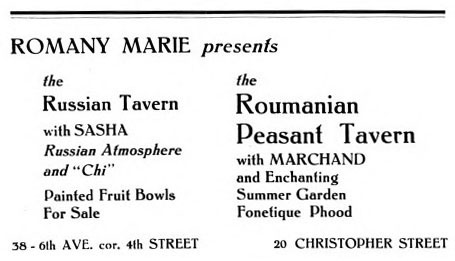
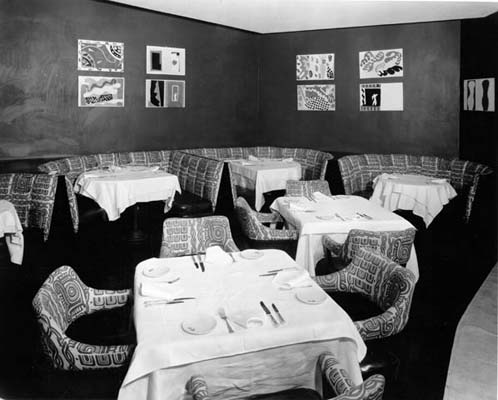
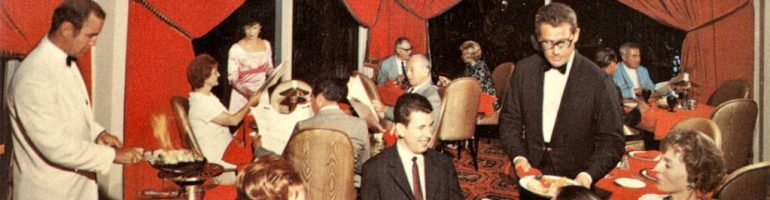
AtmosphereRomanyMarieSummer1921In 1915 she moved to 20 Christopher Street and it was at this location, the one she occupied the longest, that her name became well known. Another location of renown was 15 Minetta Street, with an interior designed by Buckminster Fuller in the late 1920s. In the 1960 interview Marie quoted Fuller as saying, “I’m going to fix up this place in a Dymaxion way.” He outfitted the restaurant with canvas sling chairs, “aeroplane tables,” and aluminum cone lights. Instead of the darkness her patrons were accustomed to, Fuller lit the place up by painting the walls silver. Sculptor Isamu Noguchi assisted (“Bucky got me to help him with painting the place up solar.”). Everyone disliked the brightness, the tables wobbled when food was placed on them, and the chairs collapsed when sat on. The experiment failed but Marie promised Fuller one free meal a day for the rest of his life, a benefit that carried him through the Depression.
In addition to Romanian dishes such as meat pies and cabbage rolls, Marie specialized in strong coffee which she advertised as Café Noir à la Turque. Her signature dish was ciorbă, a soup of vegetables, meatballs, eggs, lemon juice, and sour cream. Marie’s husband Arnold, a difficult man who was known to deliberately break dishes and otherwise sabotage her efforts, rendered this dish on his phonetic menu as “Tchorbah, peasant soop.” A menu by him also listed “Boylt Beeph wit been’s & hors radish,” and “Lone Guy Land Greens.”

Marie continued in the restaurant business until 1946 when she retired to care for Arnold. Each time Marie moved her restaurant she announced it with a sign which said “The caravan has moved.” Its last move was to 49 Grove Street.

© Jan Whitaker, 2010
2 Comments

Filed under Offbeat places, proprietors & careers, women

A chef’s life: Charles Ranhöfer

Or, how Americans got dishes fit to set before a king.

In the middle of the 19th century highly trained European chefs began arriving in the United States. Many were lured to California by the inflated gold mining economy while others stopped on the East coast. Charles Ranhöfer (he soon dropped the umlaut) arrived in 1856, first working for a Russian diplomat in NYC, then for a Washington DC restaurant and a private family in New Orleans. After spending some time in his home country of France in 1860, he returned to New York and in 1862 accepted a position as chef at the “uptown” Delmonico’s on Fifth Avenue near Union Square.

At this time New York City was engorged with wealth from the Civil War. The rich bought up yachts, race horses, fancy carriages, and real estate. It was the perfect time to introduce them to fancy French cuisine. Despite his young age, 26, Ranhofer had extensive experience, having begun his career as a child and running Paris restaurants and the kitchens of European royalty.

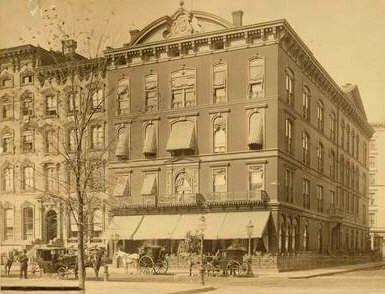
The reputation of Delmonico’s as the premier American restaurant, the one most nearly resembling the finest in London and Paris, was built largely during Ranhofer’s reign which lasted from 1862 to his death in 1899, with a brief interruption when he returned to Paris in 1876 around the time Delmonico’s moved from Union Square to Madison Square (shown).

The restaurant’s glory was founded less on regular patronage than on lavish banquets given to honor prominent men. Grand dinners of the 1860s included one given by British railway tycoon Sir Morton Peto and one for President Andrew Johnson and another for Charles Dickens. The Peto dinner, costing $30,000 in 1865 (over $400,000 now), spread Delmonico’s fame across the nation. Another celebrated dinner planned by Ranhofer featured a 30-foot pond set into the banquet table, banked with flowers to protect guests from splashing by four live swans.

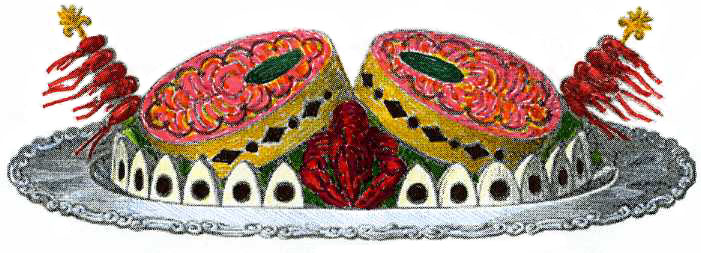
Ranhofer’s name became widely known after he published his vast cookbook, The Epicurean, in 1894, divulging how “haute” restaurant cuisine was produced. The cookbook reveals just how many props and quantities of plaster of paris and glue (jelly) are needed to turn out highly decorated French dishes. The illustration of salmon steaks from The Epicurean shown here exhibits salmon coated along the sides with butter paste onto which circles and diamonds cut from truffles have been attached. Truffles also cover the yolks in the boiled egg border. On either side of the salmon dish are decorative spears (hatelets/attelets) of prawns. Ranhofer is also known for inventing baked Alaska – in his recipe ice cream is stuffed inside a hollowed out cone-shaped cake before the meringue is added.

Although his early training was similar to other top chefs, he was atypical in holding one job for over 30 years. Perhaps his percentage share of profits explains his long tenure with Delmonico’s. His base pay was good for its time – $300 ($7,300 today) a month in 1890 – yet not the highest on record. William K. Vanderbilt’s top kitchen man reportedly earned $6,000 a year. However when his share was added, it’s likely Ranhofer’s income exceeded Vanderbilt’s chef’s as well as those of the top men at New York’s Savarin Café and Hoffman House.

© Jan Whitaker, 2010
2 Comments

Filed under proprietors & careers

Early chains: John R. Thompson

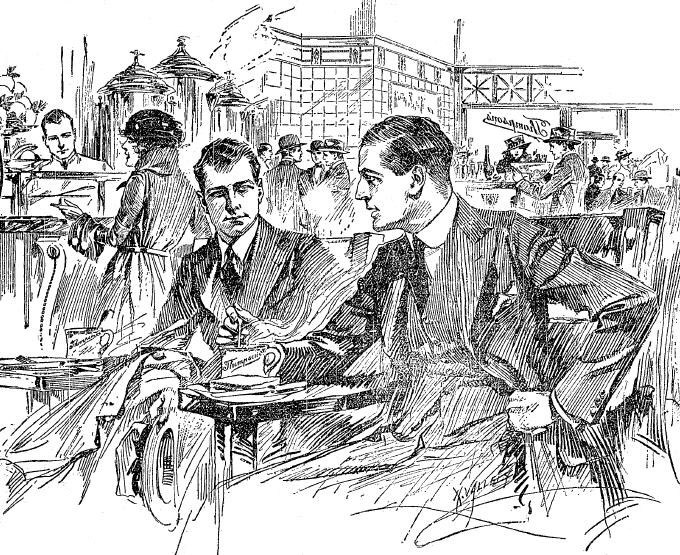
Although it is largely forgotten today, the Chicago-based John R. Thompson company was one of the largest “one arm” lunchroom chains of the early 20th century. We so strongly associate fast food chains with hamburgers that it may be surprising to learn that Thompson’s popular sandwiches included Cervelat, smoked boiled tongue, cold boiled ham, hot frankfurter, cold corned beef, cold salmon, and Herkimer County cheese, served on “Milwaukee Rye Bread” baked by the chain’s bakery. Thompson was proud that his meals were suited for sedentary office workers of the 1900s and 1910s. A 1911 advertisement claimed that lunch at Thompson’s “won’t leave you logy and lazy and dull this afternoon.”

Thompson, an Illinois farm boy, ran a rural general store as his first business. He sold it in 1891, moved to Chicago, and opened a restaurant on State Street. He proved to be a modernizer in the restaurant business as well as in politics.

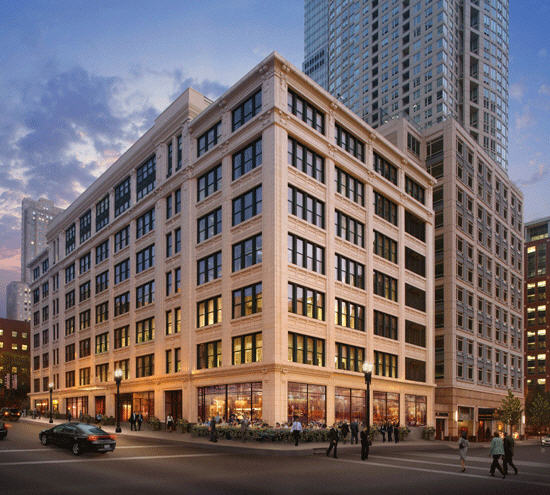
He operated his restaurants on a “scientific” basis, stressing cleanliness, nutrition, and quality while keeping prices low. In 1912 he moved the chain’s commissary into a premier new building on North Clark Street (pictured, today). Thompson’s, then with 68 self-service lunchrooms plus a chain of grocery stores, became a public corporation in 1914, after which it expanded outside Chicago and into Canada. By 1921 there were 109 restaurants, 49 of which were in Chicago and 11 in New York (with a commissary in NYC). By the mid-1920s Thompson’s, Childs, and Waldorf Lunch were the big three U.S. chains, small by comparison to McDonald’s but significant nevertheless.

In politics Thompson served as a Republican committeeman and managed the campaign of a “good government” gubernatorial candidate in 1904. A few years later he failed in his own bid to run for mayor, promising he would bring efficiency to government while improving schools and roads. In the 1920s he financed a personal crusade against handguns.

Despite John R. Thompson’s progressive politics, his business would go down in history as one that refused to serve Afro-Americans. Or, as civil rights leader Marvin Caplan put it in 1985, “If the chain is remembered today, it is not for its food, but for its refusal to serve it.” J. R. died in 1927. Where he stood on the question of public accommodations is unclear but the chain faced numerous lawsuits by blacks in the 1930s. However the best known case occurred in 1950 when a group of integrationists led by Mary Church Terrell was refused service in a Washington D.C. Thompson’s. The group was looking for a case that would test the validity of the district’s 19th-century public accommodations laws. After three years in the courts the Thompson case (for which the Washington Restaurant Association raised defense funds) made its way to the Supreme Court which affirmed the so-called “lost” anti-discrimination laws of 1872 and 1873 as valid.

Over the years the Thompson chain absorbed others, including Henrici’s and Raklios. At some point, possibly in the 1950s, the original Thompson’s concept was dropped. By 1956 Thompson’s operated Holloway House and Ontra cafeterias. In 1971, as Green Giant prepared to buy Thompson’s, it had about 100 restaurants, including Red Balloon family restaurants, Henrici’s restaurants, and Little Red Hen Chicken outlets.

© Jan Whitaker, 2010
131 Comments

Filed under chain restaurants, lunch rooms, proprietors & careers

Anatomy of a restaurateur: Mary Alletta Crump

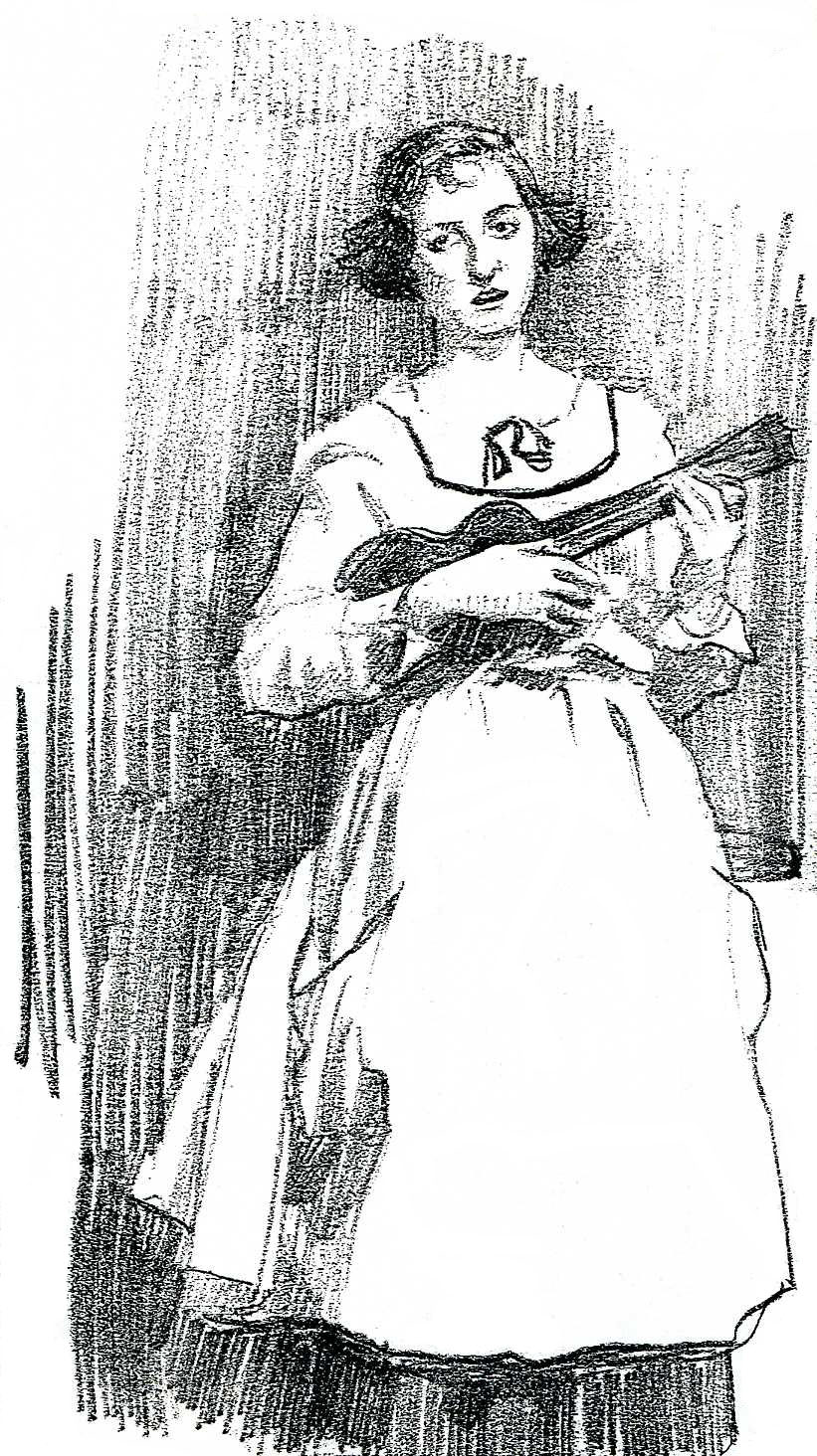
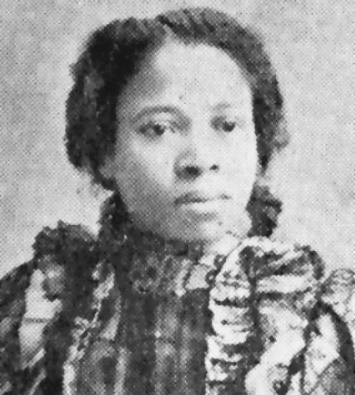
Because she ran a tea room, Mary Alletta “Crumpey” Crump (pictured, age 31) actually would not have called herself a restaurateur. She made a distinction between a tea room and a restaurant: the former served light food, mainly lunch and afternoon tea, while a restaurant served heavy food and was open for dinner. Not so The Crumperie. It served sandwiches, salads, soup, and desserts only. At 6 P.M. she and her partner, her mother “Bee,” shut down for the day. (M. Alletta, as she signed herself, advised prospective tea room operators in 1922 that “a mother or older person is a great asset to a young girl who is contemplating the opening of a tea room.”)

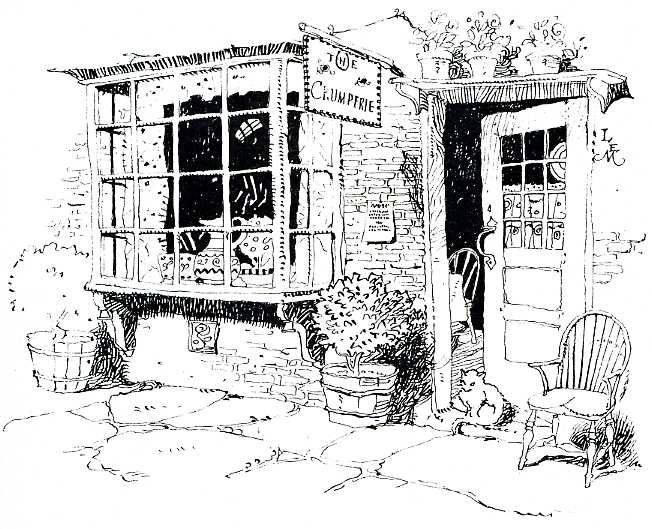
The two opened their first Greenwich Village Crumperie in 1917 (pictured), taking over the spot formerly occupied by photographer Jessie Tarbox Beals’ tea room and art gallery. Sharing the other half of the building at 6½ Sheridan Square with The Crumperie was a gift shop known as The Treasure Chest. By the time Crumpey’s mother passed away in 1926, The Crumperie had occupied five locations in the Village, first moving to Sheridan & Grove, then to the basement of 55 Christopher Street, then to 229 West 4th Street, and finally to 104 Washington Street. She would make one more — unsuccessful — attempt at running a Crumperie after her mother’s death, teaming up with Marie Saint Gaudens (niece of sculptor Augustus Saint Gaudens), at 13 West 51st Street in 1927. After this she abandoned the tea room business.

She and her mother opened the first Crumperie on a shoe string, spending only $100 for the first month’s rent plus all the furnishings and equipment. Start simple, that was their motto. Crumpey decorated with odds and ends: tables and chairs she painted herself, illustrations from magazines, a discarded old settle, family quilts, and table runners made from dime store toweling. Her mother did the cooking, specializing in crumpets of course, but also offering pea soup, “crumpled” eggs, and peanut butter sandwiches. Beverages included tea, coffee, and chocolate — nothing alcoholic!

The various Greenwich Village Crumperies were gathering places for New York City artists, musicians, literary figures, and actors with the Providence Players. The tea rooms were frequented by singer Enrico Caruso, artist Tony Sarg, and writers Theodore Dreiser, Eugene O’Neill, Sinclair Lewis, and Edna St. Vincent Millay. Writer and editor Christopher Morley steered his “Three Hours for Lunch” club to the Crumperie, though how they could have stretched out a meal there for that long I don’t know.

During and after her years in the food business, M. Alletta volunteered for war work, entertaining the troops in England with her ukulele playing during WWI (she also sang spirituals and folk songs in the tea room). After 1927 she apparently had a variety of jobs. She had studied at Smith College and trained to become a nurse before opening The Crumperie and may have returned to teaching or nursing. She taught a tea room management class in Brooklyn and worked for a time at the Grenfell Mission in Labrador. In 1958 she made five appearances on the TV quiz show “The $64,000 Question,” winning $16,000 which she used to fund a European trip.

© Jan Whitaker, 2010

7 Comments

Filed under Offbeat places, proprietors & careers, tea shops, women

Restaurant-ing with “royalty”

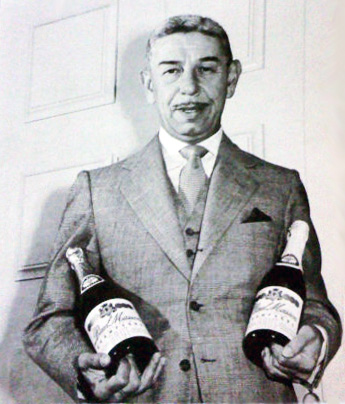
Of course he wasn’t the only “sociopath” ever to become a restaurateur, but Michael Romanoff was very likely the most flamboyant. He was clever, spoke with a British accent, and dressed impeccably. His sense of style never left him. Imprisoned in NYC’s Tombs in the 1920s, he reportedly made quite an impression by strolling in the exercise yard with a walking stick. This story could be false, though, because not only did he twist the facts perpetually but so did some of the journalists who covered his bizarre 30-year career as a con-man.

He came to the attention of the press in 1910 when he presented himself as the grandson of England’s premier Gladstone in order to obtain two cameras on credit. He was unmasked as a former juvenile delinquent named Gilbert E. Gerguson. By the early 1930s he had used at least 17 aliases, including his favorite, Prince Michael Romanoff, younger brother of the former czar of Russia, Nicholas II. Although his “real” name is widely accepted as Harry F. Gerguson, I suspect it was actually Michael Romanoff, from Brooklyn. U.S. immigration authorities, however, were convinced he had been born outside this country and deported him every chance they got, about 10 times.

Romanoff1948MenucoverHe claimed to have spent seven years of his life in jail. At times, when not sponging off rich patrons, stowing away on luxury ocean liners, or successfully passing bad checks, he was penniless and went hungry. He may have spent time in a mental hospital and attempted suicide at least once. Although he was sometimes described as a former pants presser, oil field worker, and buttonhole maker, it was not his style to hold a regular job although he once managed a farm in Virginia for over a year, possibly his longest gig.

He never apologized for his lifestyle. Quite the contrary. In 1933 he declared, “For years I have been supplying adventure, by proxy, to those who have desired it. I have given more enjoyment, I think, than I have received.” By then everyone knew he was no prince, but he defended himself by saying, “At least I have the attitude of a prince – I have lived courageously and have, I think, put up the stock of princes.” Well, the stock of princes wasn’t terribly high in the 1930s and, courageous or not, he engaged in some shady activities.

His life improved immensely when he became a frankly fake prince rather than a fraudster trying to pass for Russian royalty. And where better to be what he called a “real phony” than Hollywood? He opened a restaurant there around 1940 which quickly became one of Hollywood’s famous haunts. By then he was 47 or 50 years old, depending upon which birthdate you accept. According to various newspaper stories, the restaurant’s capital was put up by director Darryl Zanuck, writer Robert Benchley, and others. In 1951 it moved to South Rodeo Drive in Beverly Hills, and somewhat later spread into San Francisco and Palm Springs.

The Hollywood Romanoff’s was a celebrity den where Mike entertained his guests — sometimes by snubbing them. How much time he spent supervising staff or bothering himself with mundane chores such as buying provisions or going over the books is unclear, as is the quality of the cuisine. By one account it was so-so but was upgraded to “above-average” in the late 1950s. An undated menu shows numerous dishes with Stroganoff and Romanoff suffixes. He made a good income, but by December 1962 business had fallen off to such a degree that the Beverly Hills Romanoff’s closed. I have not been able to determine the fate of the other two locations.

Mike’s story was clearly movie material, yet it seems that two announced films (“Ellis Island,” “The Incredible Romanoff”) never appeared. He had small parts in numerous films, sometimes playing a butler, aristocrat, or himself as restaurateur. In 1958 Congress voted to grant him permanent resident status and he became a naturalized citizen.

© Jan Whitaker, 2010

3 Comments

Filed under proprietors & careers

In the kitchen with Mme Early: black women in restaurants

It’s so hard to find anything about the history of Afro-American women in restaurants that I decided to go ahead with a sketchy story rather than none at all. As far as the “historical record” goes, you’d be tempted to think that they had no place in restaurants. That’s certainly false, but they were frequently out of sight. The notice placed by John Kirk in a New York City paper sums up black women’s primary role in public eating places: as cooks and kitchen helpers. Kirk advertised in 1781, “Wanted to hire an active Negro Wench, used to a kitchen, with a good character.”

In his 1899 classic The Philadelphia Negro, W. E. B. Du Bois praised black men for their prominent place in the city’s catering business, writing of “self-reliant, original business men, who amassed fortunes for themselves and won general respect for their people.” He mentioned no women, yet there is reason to think that black women not only did much of the cooking in both black and white restaurants but ran many of the eating places in black communities too. They rarely made fortunes but surely must have commanded respect.

Although black women are nearly invisible in 19th-century documents, we see glimpses of them near its end. Several women ran Denver restaurants in the 1880s and 1890s, including Miss Jane Outland in the 1880s and at least six others in the 1890s, including Tennessee-born Callie Fugett who kept a restaurant on Market Street. In Washington D.C. in the late 1890s a former slave known as Madame Early provided chicken dinners in a cabin called the Café Du Chat Noir. I wonder if she was Haitian.

The first meeting of Booker T. Washington’s National Negro Business League in 1901 reported that women ran restaurants in Denver as well as Jacksonville and Tampa FL, including two in Tampa that were “among the best in the city.” A few years later, according to a directory of Afro-American businesses in Memphis, about half of the restaurants listed were run by women. Miss Lucy Hughes (pictured) ran the Climax Café and Ice Cream Parlor on N. Main where she sold “hot and cold lunches at all hours,” while residing with her mother, son, brother, and one male lodger who worked as a kitchen helper.

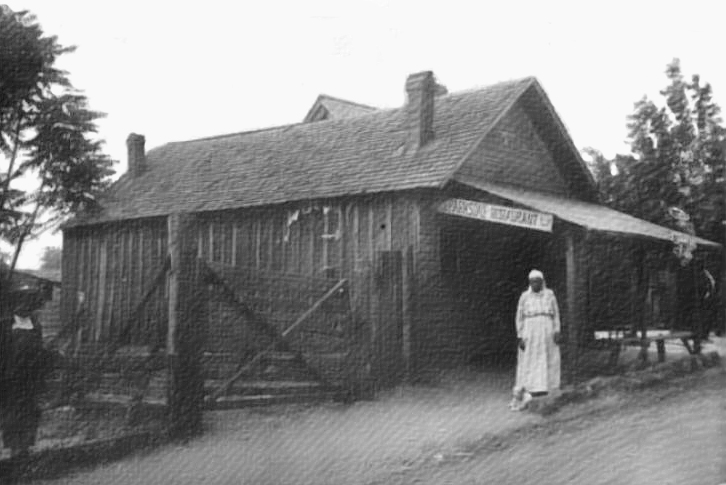
Overall, black women had even fewer employment opportunities than black men. The Department of Interior reported that in 1910 almost half of the 2 million employed black women were farm laborers. Private laundresses came next in the list, followed by cooks in private homes, hotels, and other settings. Only 2,734 women ran restaurants, probably humble eateries such as the one pictured here, one of four run by black business women in Gainesville GA ca. 1913.

After World War I things began to change in big cities. Middle-class black women opened fashionable tea rooms where they provided dainty lunches and hosted afternoon card parties. Chicago’s 1923 blue book of Afro-American society lists a number of these, such as Mrs. E. H. Hord’s Delmonico Tea Room on Prairie Avenue. In Pittsburgh, Mrs. A. E. Bush, a former pharmacy manager and wife of a prominent life insurance executive, opened the Melrose Tea Room which she decorated in old rose and blue. I have found no record of how black tea room operators dressed their black servers but I strenuously doubt they put them in mammy costumes as did so many white restaurateurs of the 20th century.

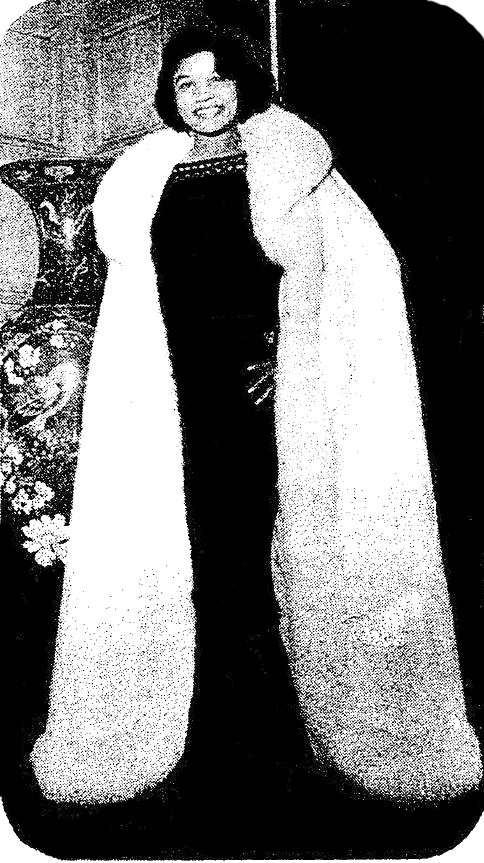
After the 1960s some black women who ran or cooked in restaurants acquired celebrity status. After her divorce, Helen Maybell opened the Soul Queen Café on Chicago’s near south side. In the 1970s the statuesque Helen (pictured), who was active in the NAACP and loved elegant gowns and furs, opened a second restaurant in which she hosted fashion shows. Leah Chase (who co-owned and cooked at Dooky Chase’s in New Orleans) and Edna Lewis (who promoted Southern cooking, authored cookbooks, and cooked for Café Nicholson in Manhattan, Gage & Tollner in Brooklyn, and others) became venerated figures in their lifetimes.

© Jan Whitaker, 2010

6 Comments

Filed under proprietors & careers, women

High-volume restaurants: Smith & McNell’s

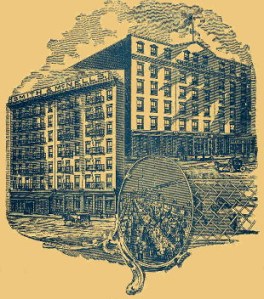
Smith&McNellsAll things considered, the best restaurants that this country has produced probably have been unpretentious, inexpensive, high-volume eateries located close to sources of fresh food. In 19th-century New York City’s Smith & McNell’s, across from the booming Washington Market, was a leading example of the type. Its patronage came largely from dealers, farmers, and customers who worked and shopped at the market. Around 1891 the restaurant reportedly provided more meals than any eating place in the city, as many as 10,000 a day.
Service was so brisk at Smith & McNell’s that its waiters and kitchen workers were held to a high standard. Successful performance there was a job recommendation said to be equal in its own way to having worked at Delmonico’s. Fred Harvey, founder of the famed Santa Fe Railroad system of eating houses, found his first job at Smith & McNell’s shortly after immigrating from England in the early 1850s.

S&MHotel1900There are many discrepancies in accounts of this restaurant’s history but it seems most likely it was established in the late 1840s by Thomas R. McNell and Henry Smith. McNell was an Irish immigrant, born sometime between 1825 and 1830. According to one account he and Smith had been night watchmen before taking over the coffee house run by Frederick Way on Washington Street near the market. Both McNell and Smith became wealthy and McNell acquired a lordly estate in Alpine, New Jersey, as well as a California ranch. He continued working in the business until a ripe old age and died in 1917 a few years after the restaurant (and associated hotel) closed.
SmithMcNell'sca1910

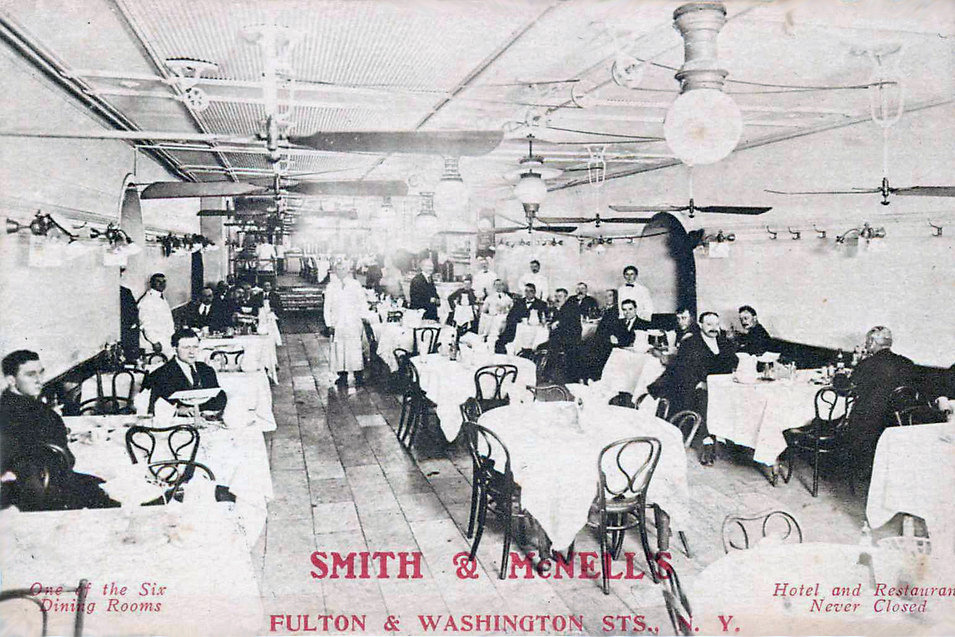
Smith and McNell’s, following the customs of the time, operated 24 hours a day and did a strictly cash business, clearing a daily profit which the partners split after paying the help. Since the market was busiest at night, that was probably the time when most of their clientele piled in for meals of oysters, steaks, eggs, and griddle cakes. Judging from a 1900 menu, prices did not go up much over the decades. A meal of beefsteak pie or baked ham with champagne sauce still cost 15 cents, while an order of mashed potatoes or a chocolate eclair cost 5 cents each. The restaurant, which seated 1,000 and took up the entire first floor of the 400-room hotel, made its own wine. A glass of Concord or Catawba wine sold for 10 cents, a quart for 30 cents.

When the property was sold in 1920 it comprised almost the entire block bounded by Washington, Greenwich, Vesey, and Fulton streets across from Washington Market. The market continued to operate until around 1960 when the site was cleared for the World Trade Center, the acreage of which also encompassed the block once occupied by Smith & McNell’s. It could be argued that some of the restaurants operated by catering maestro Joe Baum in the WTC, such as The Big Kitchen, carried on the tradition of the old marketmen’s eatery.

© Jan Whitaker, 2009

31 Comments

Filed under proprietors & careers

Anatomy of a restaurateur: Dario Toffenetti

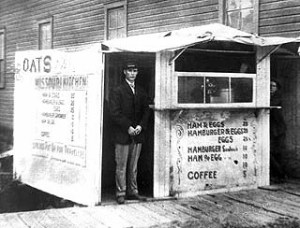
Who would predict that a boy growing up in the Austrian Tyrol in the 1890s would make his fortune by selling Idaho baked potatoes? But that’s exactly what Dario Louis Toffenetti did. Born in 1889, he came to the U.S. in 1910, allegedly after being recruited to peddle ice cream from a cart in Cincinnati. Disillusioned with that project, he soon traveled westward, selling baked potatoes at a Wisconsin mining camp, then becoming a bus boy at the dining room of Chicago’s Sherman House. In 1914 he opened his first restaurant in Chicago.

He was ambitious and would quickly develop into a canny marketer. In 1916 he enrolled in night school at Northwestern University’s School of Commerce. In 1921 he opened his second restaurant, on S. Clark. At a time when advertising, marketing, and public relations were making giant leaps forward, he was quick to implement the latest tactics. He advertised heavily and “named” the food sold in his restaurants. When he promoted ham, it was not generic ham but “Roast Sugar Cured Ham” from packer Oscar Mayer. (“It’s no wonder these Ham Sandwiches make your mouth water! Oscar Mayer’s ‘Unusually Good’ Approved Hams are used.”) By 1937 he had six restaurants in the Chicago Loop under the name Toffenetti-Triangle.

TriangleAd32According to accounts, “D. L.” wrote his own colorful advertising copy, such as, “These hams are cut from healthy young hogs grown in the sunshine on beautifully rolling Wisconsin farms where corn, barley, milk and acorns are unstintingly fed to them, producing that silken meat so rich in wonderful flavor.” Equally over the top was his copy for Idaho baked potatoes, with references to a “bulging beauty, grown in the ashes of extinct volcanoes, scrubbed and washed, then baked in a whirlwind of tempestuous fire until the shell crackles with brittleness…” Customers who had not previously eaten baked potatoes soon learned to ask for “an Idaho.” Another heavily promoted dish, “Old Fashioned Louisiana Strawberry Shortcake,” was “topped with pure, velvety whipped cream like puffs of snow.”
To build trust with an always-skeptical public, he featured himself in his ads (bald head and all), often adding his signature. In a 1930s Depression advertisement (pictured), he pledged to keep prices low without reducing quality. When Prohibition ended, he announced that he would serve beer, but not “in any fashion that might offend our most fastidious women patrons.”

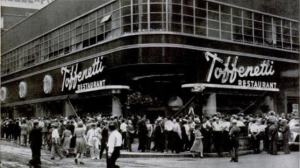
ToffenettiNYC1942Another factor in his success was winning catering contracts at two world’s fairs, Chicago in 1933 and New York in 1939-40. Following the NY fair he outbid Louis B. Mayer for an immensely valuable piece of Times Square real estate on the corner of 43rd and Broadway. He hired Skidmore, Owings & Merrill to design a two-story, glass-fronted moderne building (pictured), outfitted with an escalator and a show-off gleaming stainless steel kitchen. The restaurant served 8,500 meals on opening day.
Dario was president of the Chicago Restaurant Association for seven terms (1936-1943). After his death in 1962, the business was conducted by other Toffenetti family members until about 1980. The Times Square restaurant closed in 1968.

Unlike many other immigrant restaurant operators who were characterized (often unfairly) as running “holes in the wall,” Dario Toffenetti was celebrated by the organized restaurant industry as a model progressive restaurateur.

© Jan Whitaker, 2009

66 Comments

Filed under proprietors & careers

It’s not all glamor, is it Mr. Krinkle?

hudsonscoeurd'alene07REVThe restaurant business didn’t get much respect until it was sharply disconnected from drinking and put on a business-like footing in the Prohibition era of the 1920s. Before this there were, of course, some high-paid chefs as well as many restaurant owners who made good money but their financial success did not generally translate into social status as it often does today. On the whole anyone who had an education and options in how they earned their living stayed far away from work in restaurants.
The negative attitude toward restaurants is illustrated in a passage in the 1894 novel Dan of Millbrook by Charles Carleton Coffin. The following exchange between two old friends speaking of a former schoolmate named Caleb Krinkle is revealing of the low esteem held by the typical native-born middle class American for anyone working in a restaurant or “eating-saloon” (a common lunchroom).

Miss Wayland: By the way, how are our old friends at Millbrook – that sweet girl, Miss Fair, and Mr. Krinkle?

Her friend: Mr. Krinkle is not there; he is in this city.

Miss Wayland: In Boston?

Her friend: Yes; and rather low down in the world: he is in an eating-saloon.

Miss Wayland, looking sad: You surprise me. I thought him an estimable young man, with a bright future before him.

Her friend: There came a sudden change in his fortunes; his father was drowned … while attempting to save a little girl; all of his property was swept away, and Caleb was forced, of course, to step down from the position he had occupied. He is plodding along now in an eating-room …

Miss Wayland: Mr. Krinkle tending an eating-saloon? How strange!

Her friend: Truth is stranger than fiction, it is said.

Miss Wayland: I am really sorry for him.

© Jan Whitaker, 2009

1 Comment

Filed under miscellaneous, proprietors & careers

The checkered life of a chef

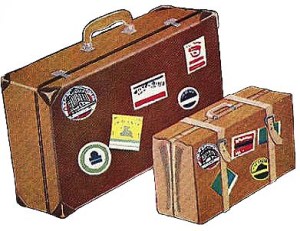
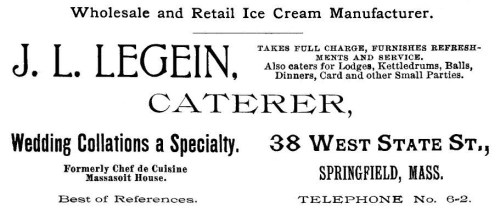
suitcases“Become a chef and see the world!” might have been the motto of many of the chefs who came to the United States from Europe in the 19th century. Take Joseph L. Legein, born in Belgium in 1852. He compressed a lot of traveling into his young working life. His biography could be used as a recipe for a colorful culinary career. Did he ever imagine he would end up as an ice cream maker in Springfield, Massachusetts?
To duplicate Joseph’s career, follow these directions carefully:

When you are 14 apprentice with the famous Paris caterers Potel & Chabot, the largest firm in Europe in the late 1860s. (They are still in business today.)

After earning a diploma two years later, secure posts at Paris restaurants such as the celebrated Café Anglais.

Then, take positions in the households of rich and powerful men such as Baron Rothschild and Louis Faidherbe, the latter a general recalled from Senegal in 1870 to battle the Prussians who are advancing on Paris.

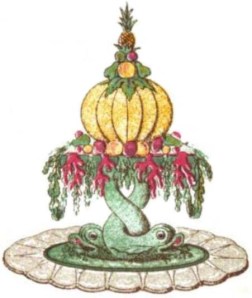
icedpuddingalavictoriaEvery chance you get, travel throughout Europe visiting international exhibitions where pièces-montées made by chefs of spun sugar, gum and almond paste are displayed. You will need to make these for centerpieces at formal dinners.
Go to Brussels and work in the Café Riche as night chef.

Next, take a position in the Hotel de Suède in Brussels and get chummy with Alexander, chef to the Belgian royal court, who gets you a gig working with him.

At 20 you are ready to take charge of a banquet staff of seven at the Hotel de la Paix in Antwerp, a highlight of which will be overseeing a 12-course dinner for 1,400 guests.

Go to London to run a kitchen in one of the Inns of Court (but do not get sick after 7 months and return to work at the Hotel de la Paix).

On the spur of the moment decide to sail for America to attend the Centennial Exposition in Philadelphia in 1876. You are about to take up residence in your 4th country and your 8th major city.

Immediately upon landing, accept a position as chef at the restaurant connected with the Globe Hotel, one of the huge hotels thrown up overnight to house Centennial visitors which will be demolished as soon as the fair ends.

After a few months, quit this job to become chef at the Palmer House in Chicago.

Leave this a couple of months later and take a job opening the new Ogden House at Council Bluffs, Iowa. (Why would you leave the Palmer House for this?)

Decide you aren’t paid enough. Go to New York and sign on at the new Windsor Hotel.

While at the Windsor accept a job as chef at the Massasoit House, the top hotel in Springfield MA. You are now 25 years old and this is your 14th or 15th job. Maybe you should stick at it for a while.

Stay at the Massasoit House until you are 34, in 1886, then open your own catering company specializing in ice cream manufacturing.

legein1892

© Jan Whitaker, 2009

6 Comments

Filed under proprietors & careers