Category Archives: patrons

On the town with O. O. McIntyre

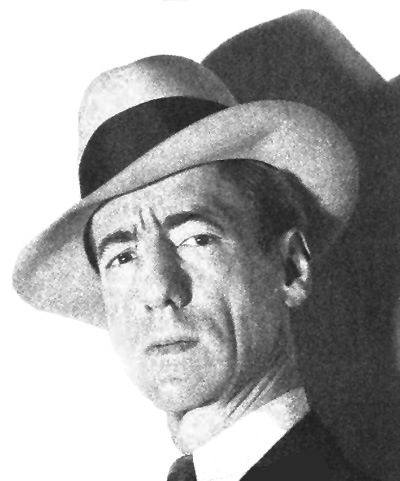
When he died in 1938 Oscar Odd McIntyre – also known as Double O McIntyre or simply Odd – was the country’s highest paid, most widely read columnist. Not only did he make New York City, particularly Broadway, familiar to newspaper readers across America, but he also informed them of the attractions of the city’s restaurants.

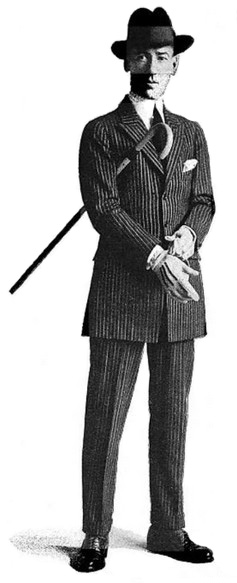
Considering that his success brought him a princely income, a Park Avenue address, a custom wardrobe by Lanvin, trips to Paris, and a chauffeured Rolls Royce, his writing conveyed a humble perspective. It left the impression that he was a regular small-town guy and that life in New York, when deconstructed, was less glamorous than it might seem at first, yet still captivating.

From the start of his newspaper career in Ohio he aimed at New York. As he put it, “When I was ‘the’ reporter on the daily in a small Ohio town reporting how John Hawkins spent the day in town and how Mrs. John Spivens Tuesdayed in Addison I was always dumb with admiration when I came across a guest at the Park Central Hotel who had the magic letters ‘N. Y.’ after his name.” In 1912 he landed a job as associate editor of a magazine in New York and made his big move.

His column’s target readers were, in fact, John Hawkins and Mrs. Spivens, and he relied heavily on Ohio newspapers to buy his early columns. He assumed that, like him, readers would proclaim “This is the life!” after a visit to a café in New York such as Bustanoby’s Beaux Arts. And that, like him, they would have a fascination as well with the other side of town, exemplified by the liveliness of Hester Street and the grittiness of the Bowery. He presented the city’s dark side in scenes such as one where he witnessed a patron at a nearby table in a “semi-respectable” restaurant inject morphine into his arm and then calmly resume reading his newspaper.

He revealed in a number of stories he wrote for various publications that he had a breakdown shortly after coming to New York to work for a magazine that failed three months later. He couldn’t find another job, and spent a year without leaving his sick room. He also suffered from hypochondria, claustrophobia, and agoraphobia, and depended upon his wife Maybelle to handle the business end of his writing. After seven years in which he self-syndicated, she took over and successfully negotiated a contract with a major syndicator for twice what he had been getting.

His columns were built on the notion that he spent time strolling the sidewalks of New York, but some critics suggested he actually viewed the sidewalks from the back of his limo. Another version claimed he was a recluse who rarely left his apartment and who wrote columns from memory. I’ve begun to wonder if it was Maybelle who rambled the city collecting material for him.

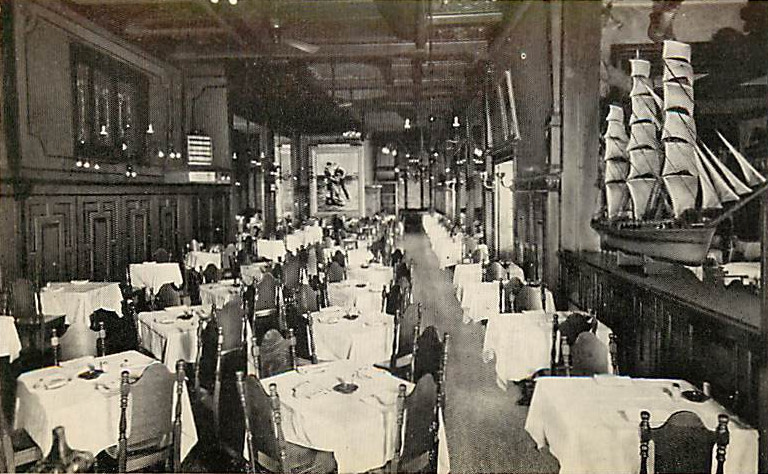
Whatever was the case, he entranced the nation with his observations. When they visited New York for the first time, even readers from small towns might feel they already knew the city because of what he wrote. The columnist who succeeded him recalled that when his outlander cousin came to NY, he said that because of O. O.’s columns he would need no guidance. He declared: “I’m starting at the Battery tomorrow morning, and I’ll have grilled pigs’ feet and German beer at Lüchow’s [shown above]. I’ll just glance in at Fraunces’ Tavern, but I might take a snack at the Brevoort or the Lafayette, and maybe get up to Louis & Armand’s in time for chicken Tetrazzini or a steak at Sardi’s.”

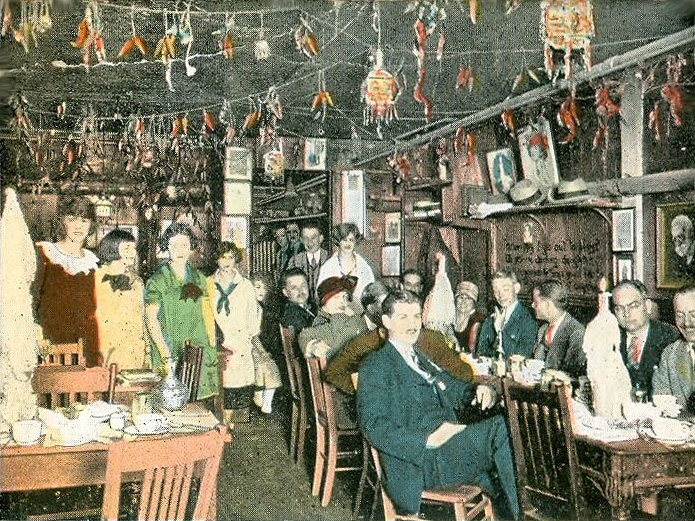
In his columns O. O. not only painted fascinating scenes of fine living in New York, but also popped bubbles about its glamor. In a similar vein he reminisced about the simple life in his old home in Gallipolis OH, but never returned there even for a short visit. He presented charming portraits of Greenwich Village, but also produced a column about its fake Bohemians and artistic pretenders. He acknowledged that there were some genuine artists living there too, adding, “they are not on display nightly in the Purple Pup, Mauve Moon and Cerise Cat restaurants.” [He did not include the Pepper Pot, shown above, but might have.]

He was also critical of New York night clubs, which he called sucker joints, as well as places with trick names such as the ones he ran into on a Los Angeles visit – the Fly Inn, Monkey Den, Hamtree, Mammy’s Shack, Quick and Dirty, and Hamburger Hank’s.

Although he frequented New York’s top restaurants, he was no gourmet. He wanted to consume the high life, but it seems mainly for its aura of princeliness rather than its culinary excellence. Although the McIntyres had a French cook, his favorite meal was said to be steak, potatoes, and chocolate cake.

His personal food preferences didn’t keep him from feeling qualified to identify the world’s best restaurants. In 1931 he named six, with The Colony at the top, then New York’s Ritz-Carlton Hotel (where he and Maybelle lived for 13 years), three in Paris: the Ritz, Foyot’s, and the Tour d’Argent, and Horcher’s in Berlin.”

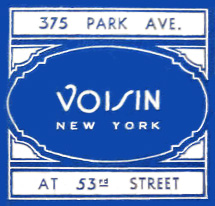
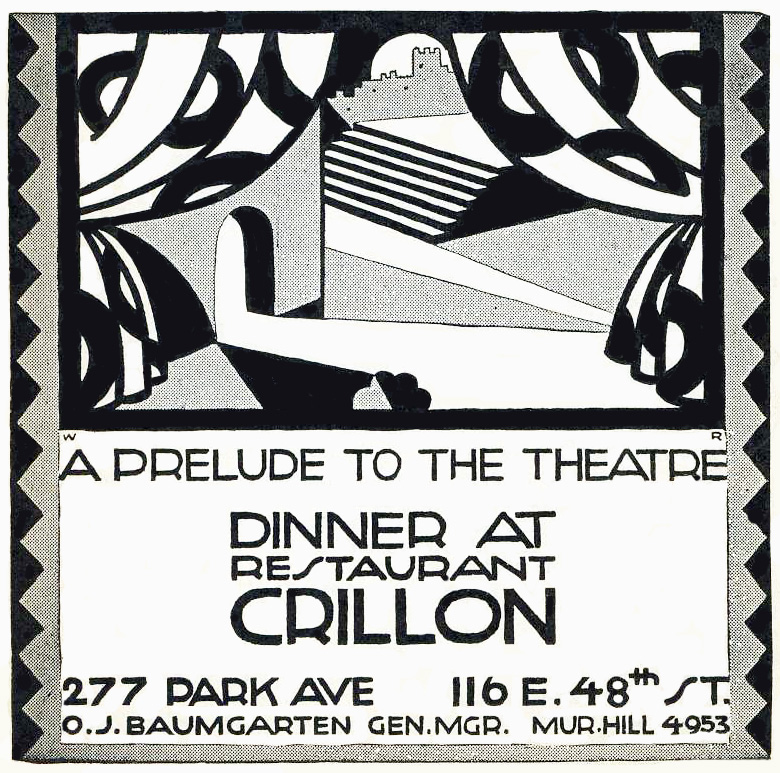
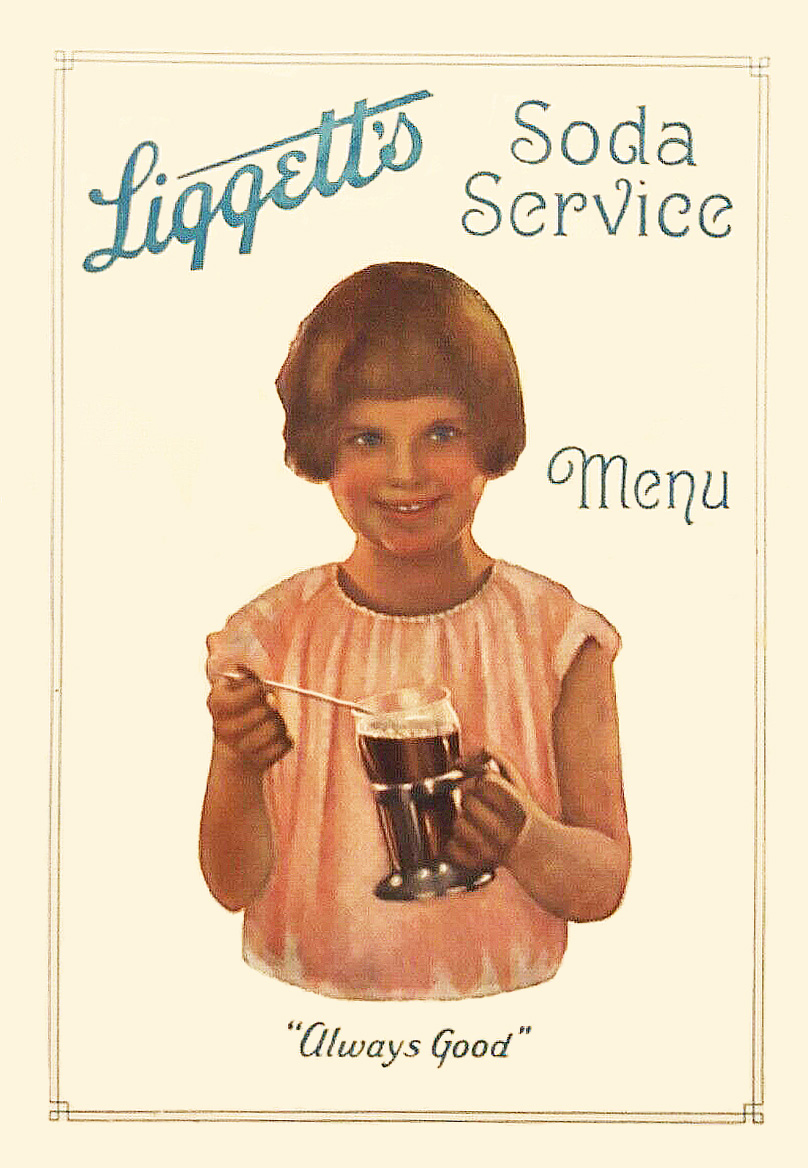
He hailed New York as “the Epicurean center of America,” but he believed it was non-New Yorkers who kept the elite restaurants in business, while the typical New Yorker followed “the eat-and-run plan of gastronomics.” So, for out-of-town visitors, he recommended the following dishes, claiming few New Yorkers even knew of them. They included caviar on a “pancake” at the Colony; noisette of venison, Grand Veneur at the Crillon; French pastry at Voisin’s; and for those preferring an unpretentious meal, doughnuts and malted milk at Liggett’s and hamburgers with chopped onions at the Owl lunch in Herald Square.

© Jan Whitaker, 2023

14 Comments

Filed under elite restaurants, food, patrons

Kibbitz & Nosh, the book

Today is launch day for Kibbitz & Nosh: When We All Met at Dubrow’s Cafeteria, a book of black and white photography by Marcia Halperin. In the 1970s she began dropping by Dubrow’s on King’s Highway in Brooklyn and in Manhattan’s garment district. The cafeterias from what may seem like a long-gone past were as unpretentious as their customers.

The images she captured are reminiscent of street photography at its best, showing aspects of everyday life in the city. The book also includes essays by playwright Donald Margulies and Deborah Dash Moore, historian of Jewish-American life, including Jewish New York: The Remarkable Story of a City and a People (2017).

There is an interview podcast with Halperin by Street Photography Magazine, and a selection of her photographs from the book can be viewed at the Edward Hopper House Museum in Nyack, NY, until June 25.

Kibbitz & Nosh is available from independent booksellers, Amazon, and Barnes & Noble, as well as its publisher, Cornell University Press.

UPDATE of coming events

Signup for June 8 at Launch Photobooks – In Person

Signup for June 11 at Nyack Library — In Person

Sign up for June 29 at Yiddish Book Center – Virtual

4 Comments

Filed under cafeterias, patrons, popular restaurants

In their own words

I’ve collected numerous provocative comments about restaurants over time. Most of the following samples are excerpts from diaries, others from newspaper interviews. I selected them mostly because they were informative about restaurant conditions and practices at various times in the past, as well as patrons’ experiences.

There are some recurring themes. A number of the comments reveal women’s opinions of restaurants and their roles in them. Others show how unfavorably foreign travelers tended to view American eating places during the 19th century. Several comments reveal the high prices and deteriorated conditions that prevailed in the South during the Civil War.

1825, a Boston portrait engraver: “In the evening, at 8 P.M. we called on Mr. Allston at Rouillard’s Restorator. Found him at dinner; we sent up our letters . . . ; after waiting a few minutes Mr. Allston entered the parlour, and received us very cordially. He took us up to his dining room (quite private) and invited us to partake of his wine and cigars.”

1850, daughter of James Fenimore Cooper, in Cooperstown: “Then, again, there are seven taverns in our village, four of them on quite a large scale. As for the eating-houses – independently of the taverns – their number is quite humiliating; it looks as though we must needs be a very gormandizing people: there are some dozen of them – Lunches, Recesses, Restaurants, etc., or whatever else they may be called . . .”

1861, a Confederate clerk, in Richmond VA: “Mr. Tyler then invited me to join him at breakfast at a neighboring restaurant, where we had each a loaf of bread, a cup of coffee with milk (but brown sugar), and three eggs. The bill was sixteen dollars!”

1861, an Irishman visiting Montgomery AL: “Then, as to food – nothing could be had in the hotel – but one of the waiters led us to a restaurant, where we selected from a choice bill of fare, which contained, I think, as many odd dishes as ever I saw, some unknown fishes, oyster-plants, ‘possums, racoons, frogs, and other delicacies, and, eschewing toads and the like, really made a good meal off dirty plates on a vile table-cloth . . .”

1861, and then the Irishman visited Washington: “I dined at a restaurant kept by one Boulanger, a Frenchman, who utilised the swarms of flies infesting his premises by combining masses of them with his soup and made dishes.” [To be fair, Joseph Boulanger was in ill health and had been trying to sell his restaurant for a while when the visitor from Ireland came along.]

1864, a visitor to New Orleans: “Charges for living were most exorbitant; a simple breakfast at a restaurant, one dollar; a frugal dinner, two dollars; two small slices of dry toast, fifteen cents; the same for a cup of tea or coffee; ten cents for ice and butter; sixty cents for one small mutton chop. The simplest fare cost six dollars a day.”

1883, a touring Englishman in San Francisco: “After dressing, we all went to the ‘Poodle Dog’ restaurant to dinner. Here my sister Sarah behaved in an extraordinary way, affecting a morality which appeared to me immoral, and questioning the propriety of dining at this place.”

1893, a woman attending the Chicago World’s Fair: “Then we went to Rector’s Marine Restaurant [shown here], and on its breezy gallery had the swellest sort of little dinner. (The first glimpse of the menu made me faint. All the salads were .60 & .75, the fish all .60 & .75, relishes .25 & .30, vegetables .30 & .40, ice cream .25 . . .)”

1921, a European woman visiting New York: “We ordered some steak for our dinner, and when the waiter brought enough for a school treat I exclaimed, and he said, ‘In Broadway they serve the dishes — here we serve the food!’ They did indeed; even sharing it with a starving cat I couldn’t get through with it. The restaurant was rather a good one and very clean. I reproached Kenneth for not having taken me somewhere with more local color. I hate being treated as a Bourgeoise.”

1951, a male peace activist traveling across the country: “Another group, two whites and a Negro, stopped for coffee at a lunch counter in Maryland. The counter woman brought two porcelain cups and one paper cup. When the white man gave the paper container to the white woman and not to the Negro, the counterwoman said, ‘We’re not allowed to serve colored, it’s against the law.’. . . On the wall, all red-white-and-blue, was a poster which read, ‘If you don’t like this country, there are boats leaving for Russia every hour.’”

1970, a New York book editor: “First we went to Chez Vito and all I had was spaghetti and wine and iced tea. And the check was $6. My God.”

1973, a group vice-president of Howard Johnson’s: “I think anybody who’s not using convenience foods is out of it. And some of the prepared food around today is top quality. You’d never know the difference. We’re going to open a restaurant a week this year, and where could we get cooks and chefs for this kind of expansion? Even if we could get them we couldn’t train them fast enough.”

1989, a woman chef trained at the Culinary Institute of America: “Interviewers tell me, ‘You don’t look like a chef. You look like a hostess. How can people work around you? Or they ask, ‘Do you mind getting dirty?’”

© Jan Whitaker, 2023

5 Comments

Filed under food, patrons, racism, restaurant prices

The smörgåsbord saga

Swedes began immigrating from rural Sweden to the United States in significant numbers in the 1870s, but it took a while before Swedish smörgåsbords were introduced to the American public. The earliest ones opened in cities in the 1910s, but even in the 1930s proprietors still found it necessary to explain the concept to Americans who were not of Swedish ancestry.

In 1912 a self-proclaimed high-class Swedish restaurant called Henry’s opened in New York City [advertisement 1918]. There had been earlier Swedish restaurants in the city but they appeared to serve workers and were unlikely to have offered smörgåsbord. In 1915 another first-class restaurant opened in New York, Scandia, headed by Gerda Simonson. It was the first known restaurant of its kind run by a woman.

It is somewhat surprising that these early examples were in New York City since both Chicago and Minneapolis had larger populations of Swedish immigrants. But it’s likely that at that time NYC restaurants were better able to attract travelers from abroad as well as Swedes living there.

Despite the presence of a Swedish restaurant with a smörgåsbord at the 1893 Columbian Exposition in Chicago, there do not seem to have been many such restaurants in Chicago until the 1920s. They were also evident in Rockford IL. As was true of tea rooms, many were run by women. The Bit of Sweden in Chicago, opened in 1925, billed itself as a tea room, but of course Prohibition was in effect, ruling out the smörgåsbord’s classic accompaniment to herring, a shot of Aquavit. The number of smörgåsbord restaurants increased during the 1930s, particularly after Prohibition ended. [pictured:Rococo House, run by the same woman who introduced Bit of Sweden]

At first it seemed that Swedish restaurants in the U.S. relied heavily on patrons of Swedish ancestry who enjoyed them on Sunday evenings. [above Rockford IL, 1928; kropkokn is a cake] Gradually they drew a non-Swedish clientele, many of whom had as much trouble with the concept of smörgåsbord as they did with its pronunciation.

At their finest, smörgåsbord restaurants achieved a high level of artistic beauty in food presentation as is evident in the above photograph of a New York restaurant in 1939.

Newspaper stories had appeared in the late 19th century explaining that Swedish steamships and hotels furnished smörgåsbord as appetizers before a meal. Patrons took a small plate with a slice of bread and then selected a few items to eat while standing, accompanied with a strong drink and beer. They might have seconds but they did not eat so much that they spoiled their appetite for a full meal which they would soon order from their table.

Non-Swedish Americans, however, tended to see the smörgåsbord as a meal in itself, piling their plates high and often returning for more. Soon restaurants adapted by pricing the smörgåsbord separately. For a higher price, patrons could precede a dinner with smörgåsbord if they chose to. In the 1930s the Bit of Sweden restaurant in Los Angeles went to some trouble to explain how it all worked, devoting a page of its menu to this, and instructing patrons that the correct pronunciation was SMIR-GOES-BOORD (rather than SMAR-GUS-BORD). The restaurant charged $1.50 for smörgåsbord with dinner, or $1.00 without, and included a warning on its instructions page that customers had better eat all they took or they would be charged extra.

Other stories also appeared in the 1930s with instructions on how to handle smörgåsbords. In 1948 well known food journalist Clementine Paddleford explained what she learned from the daughter of the manager of NY’s Three Crowns Restaurant — which made its debut at the 1939 NY World’s Fair. She was told there was a system to choosing from its famed 100 items. First, she wrote, take pickled herring and a bit of herring salad along with a boiled potato with sour cream. On the second visit, more fish – maybe shrimp, sardines, smoked salmon, and a marinated mussel. Trip three might be hot dishes, but alternatively could be cold meats, salads, and cheeses if the diner was planning a fourth trip for hot food.

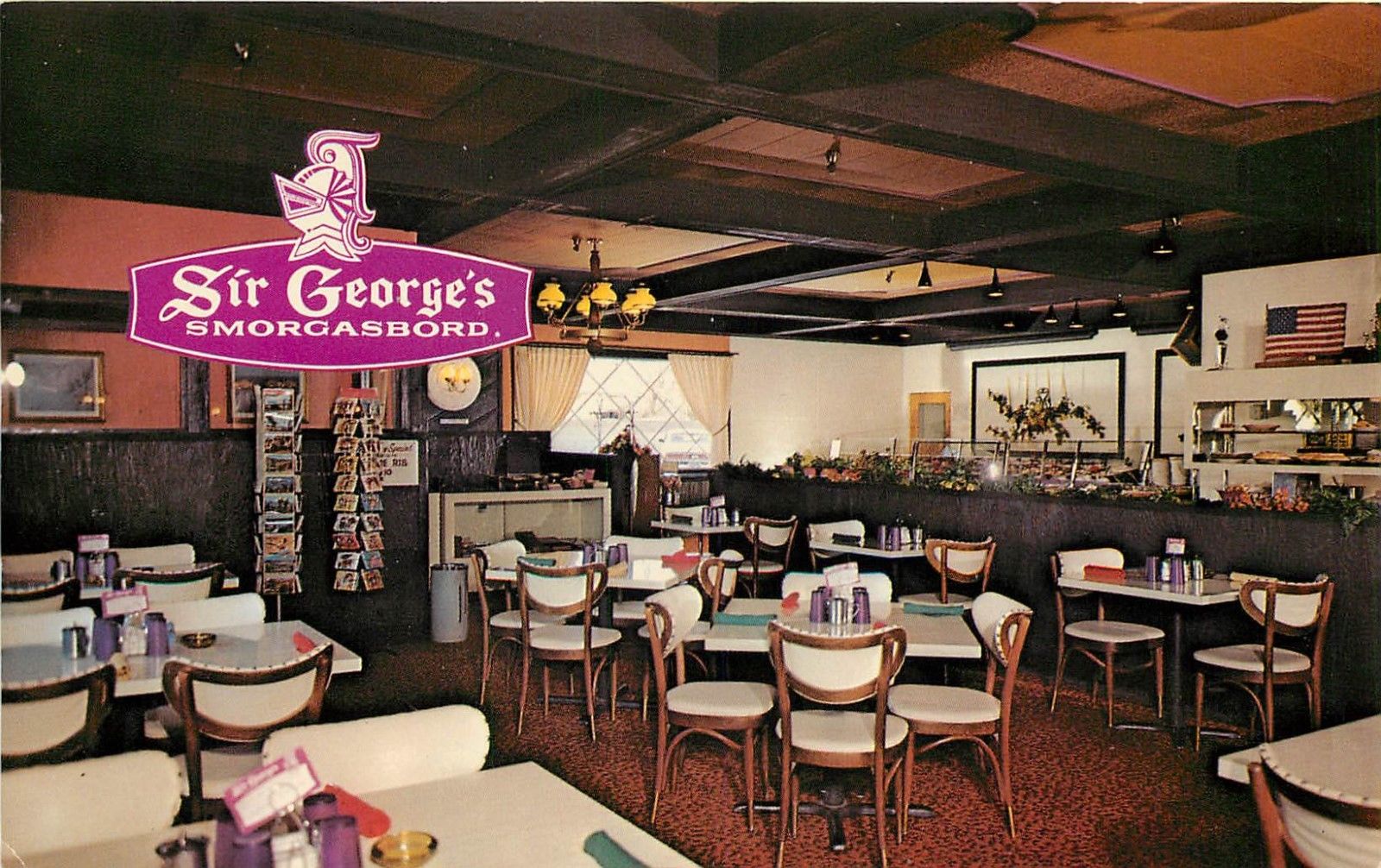
Decades later, smörgåsbord restaurants could still be found, but it seems that the idea of freely choosing food from a spread was being taken over by low-price, no-frills, all-you-can-eat buffets. Some, such as the Sir George’s chain called themselves smörgåsbords, but others named themselves “smorgies.” I doubt many, if any, were owned or operated by Swedish-Americans. [above, Sir George’s in Hemet CA]

As for authenticity, Tracy Nicole Poe explained in her 1999 dissertation that even the early examples of smörgåsbords in the U.S. represented an “invented tradition.” She wrote: “Like other elements of Swedish-American ethnicity . . . the smorgasbord’s origins are more a product of the National Romantic Ideal, and its rituals more concocted from the imagination of community leaders, than they are manifestations of rural immigrant culture. The fact is, most Scandinavian immigrants would probably never have attended an actual smörgåsbord in the classic nineteenth century European sense.”

On the other hand, I think the all-you-can-eat smörgåsbord derivative, though invented, is a genuine representation of American culture.

© Jan Whitaker, 2023

18 Comments

Filed under food, patrons, women

Meals along the way

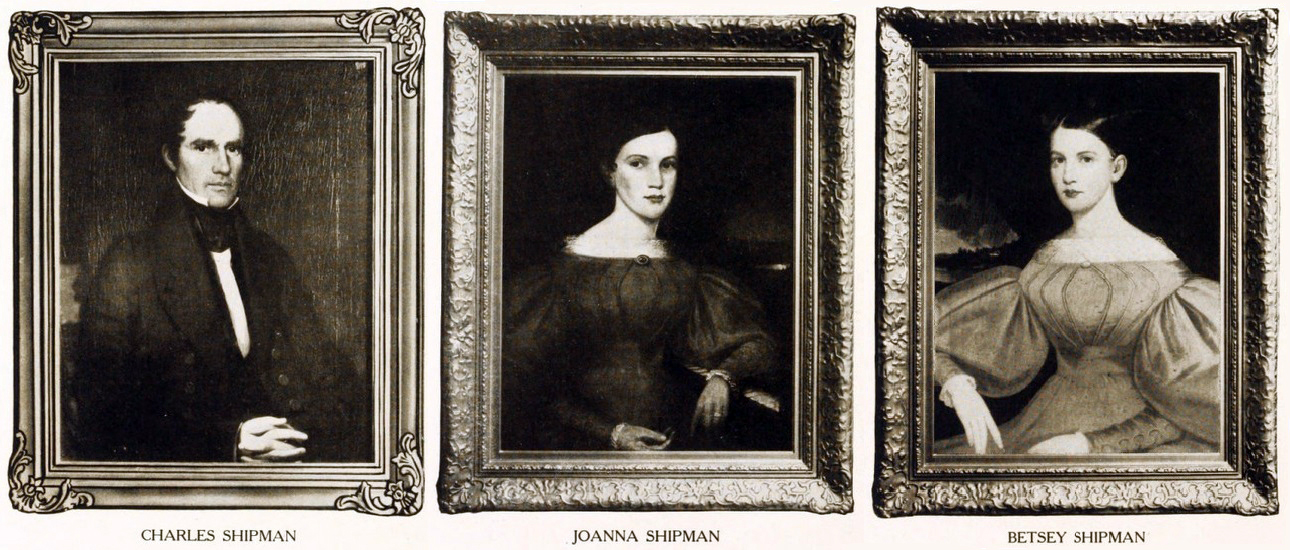
On Monday, October 6, 1834, Charles Shipman and his two teenage daughters, Joanna and Betsey, left Athens, Ohio, for Philadelphia. Charles went there twice a year to buy goods for his general store. They traveled in their two-horse carriage and would not return until November 15, by which time they had been through the mountains, traveled by steamship, visited Washington and Baltimore, and met with President Andrew Jackson.

Their usual plan was to get up early, travel for a while and then stop for breakfast and dinner at an inn or tavern. Their main meal was mid-day dinner. They ate “supper” wherever they were staying for the night. They stayed at inns, hotels, and for their longest stay, in Philadelphia, at a boarding house where their meals were supplied.

The meals in taverns and inns in small towns were surely humble. Joanna kept a record of their travels, more of a log of times and distances than a diary of subjective impressions and descriptive details. It’s disappointing that she was not inclined to record much about what they ate on their travels, but there are some interesting bits.

On their fourth day of travel they stopped in Morristown OH for breakfast at 9 a.m. Joanna writes: “Found some tomato preserves on the table, at first thought they were very good, but after tasting again concluded to the contrary.” On Joanna’s initial recommendation, Betsey ate some of the preserves but later told her sister that they made her feel sick.

That evening they arrived in Wheeling – now in West Virginia, but then Virginia – and stayed in a “very good country tavern” where Joanna reported she “Ate too much supper, and that with rainy weather and miserable roads makes me feel a little homesick.”

In the journal it becomes clear that the sisters were prone to feeling homesick and anxious – about traveling through the mountains, staying in cities, meeting people, and being on steamboats. Joanna found Smithfield VA, and then Petersburg VA where they stayed overnight, depressing: “Have had the horrors all day.” Seeing a fire from their window in Philadelphia, Joanna recorded that she and Betsey were “frightened out of our wits.”

Did anything thrill the sisters on what was probably their first trip outside Ohio? Joanna certainly shows no excitement about meeting “Old Hickory,” the President, and simply records that after shaking hands, and “looking at him as long as we cared to, we left his August presence and went into the yard.”

Joanna writes with a restrained tone, yet it’s clear she has a sense of humor. The Shipmans met with various people along the way. After one of them, a man who “ogled his eyes” when he looked at the sisters, told them he planned a future visit to Ohio, Joanna writes, “So now look sharp, Miss Betsey.”

On the way to Fredericktown MD, they stayed overnight at an inn. Joanna recorded her simple breakfast the next morning as “a piece of bread, strong [i.e, rancid] butter, peach sauce and a cup of milk.”

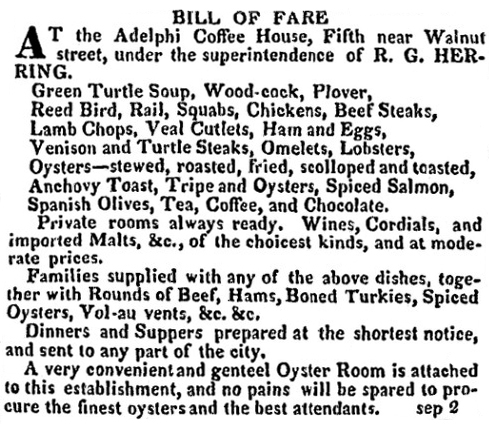
At that point they were about to reach that part of their trip that took them to larger cities. But I feel certain that they had no interest in exploring urban dining as itemized on the 1834 bill of fare of the Adelphi Coffee House in Philadelphia [shown above]. It gives a good idea of choice dishes of that time, but since the coffee house was also a drinking place it would have been forbidden territory for this family. Charles Shipman was a dedicated temperance follower who refused to handle alcohol in his store.

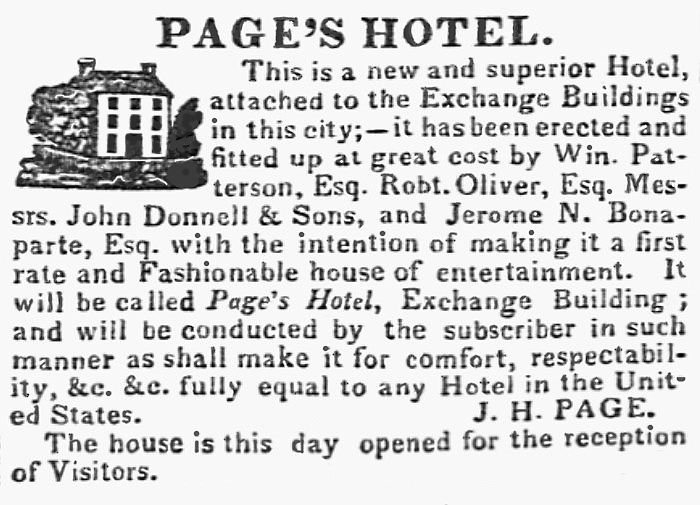
Upon reaching Baltimore the next evening, they had trouble finding a hotel that was not full, but on the third try discovered a new place called Page’s that had just opened. Joanna described it as “the most splendid house my little eyes ever beheld.” They had a private parlor and meals brought to their room. But despite these positive aspects, she wrote “It nearly frightens us out of our wits to go all through [the hotel]. Betsey says she never thought she was raised in the woods to be scared at an owl, but she has found tonight that she was.”

Their 11-day stay in Philadelphia included some strange-sounding entertainments. At the Hall of Independence they viewed dogs powering cloth making, and an automaton that wrote. The next day they went to Washington Hall where they saw speaking and dancing puppets and “the exhibition of the burning of Moscow.”

Their father offered Joanna and Betsey a trip to New York City, but they turned it down, preferring to head for home.

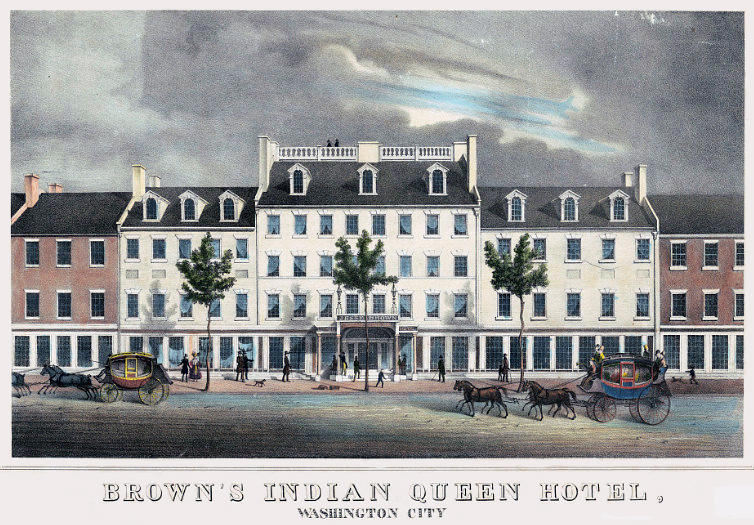
Leaving Philadelphia they returned to Washington, beginning their journey homeward. They stayed in a large hotel, Brown’s Indian Queen Inn, but did not record anything about it. Traveling through Virginia they stopped at Warm Springs, where they were weighed so they could see how much they gained at dinner. Charles (119½), Betsey (109), and Joanna, (118½) each added from 1 to 1½ pounds to their slight frames. They stayed overnight in the springs region, eating “a real country breakfast” the next morning. Then, for dinner at White Sulphur Springs, they “were treated to some fresh pork fried, some fresh beef fried, some light bread and some milk, rather tough this, as I look at it,” recorded Joanna.

Only two days from home, they stopped at Wilson’s Hotel in Charleston for dinner. She reported “the way dinner was served was a ‘touch above the vulgar.’” I would not think that was a resounding compliment.

Joanna was more than thrilled to get back home to her mother and brother.

© Jan Whitaker, 2023
17 Comments

Filed under patrons, roadside restaurants, women

Basic fare: pancakes

After a start in the 1950s, pancake houses made it big in the following decade.

Of course pancakes were not new to eating places. Far from it. They had long been a staple of short order restaurants, known variously as flapjacks, hoecakes, hot cakes, griddle cakes, flannel cakes, batter cakes, butter cakes, and just plain cakes. The mighty Childs chain had built its business by transfixing pedestrians with women flipping pancakes in its windows.

Cheap yet filling, it’s hardly surprising that pancakes grew in popularity during the 1930s Depression. The Childs Corporation reported in 1931 that pancakes with butter and syrup ranked as “the most typical American dish.” Pancakes were once again in the spotlight in the film Imitation of Life (1934) in which a white woman’s Black cook runs Aunt Delilah’s Pancake Shop which makes a hit on the Atlantic City boardwalk. The 1930s was also the decade in which The Pancake House opened in Portland OR – a restaurant which James Beard playfully nominated in the 1950s as one of the 10 best in America.

But what was new in the 1960s, with the spread of economic prosperity through (white) America, was the popularity of the “family restaurant.” Children, who had earlier been a minor element in eating out, became a new factor in restaurant success. Now included in dining plans, they often ascended to the role of lobbyist and de facto decision maker. And, while Mom might frown on high-calorie menus and Dad might wish for steak, the kids loved pancakes.

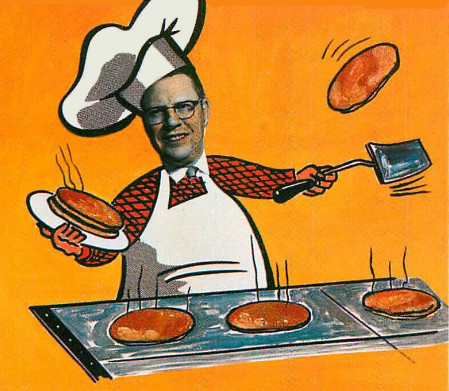
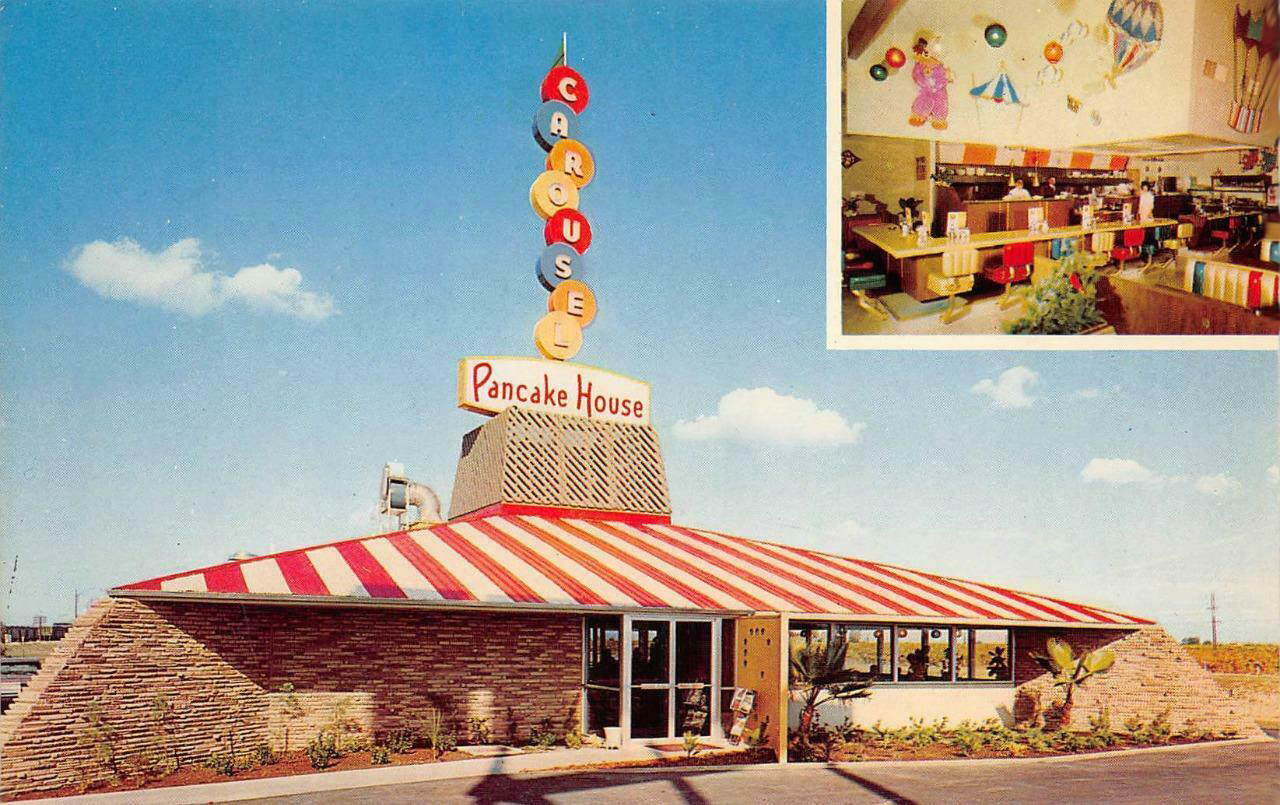
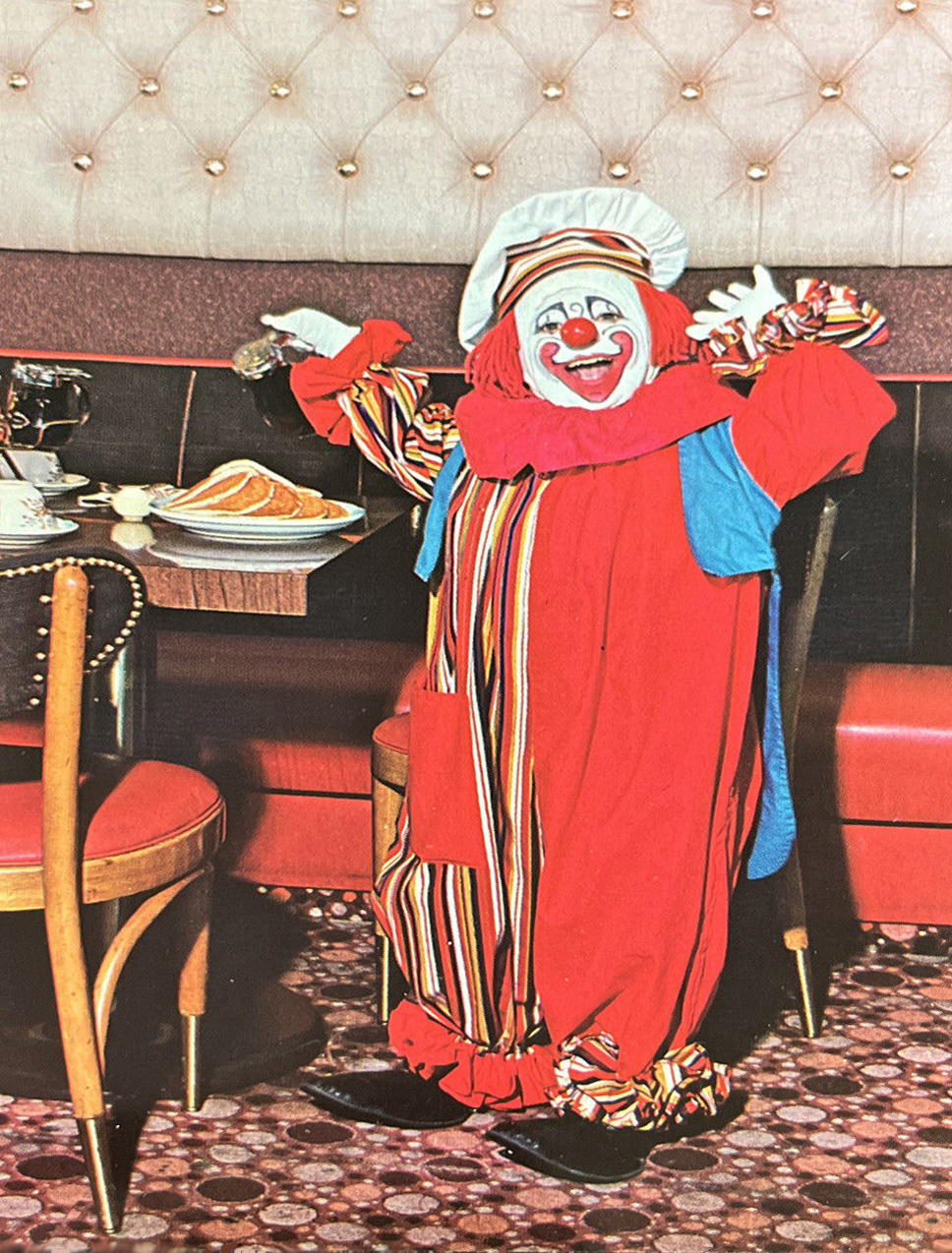
Pancake restaurants of the 1960s welcomed children with bright primary colors, cartoonish figures on menus and walls, and at least in one case with a rather alarming-looking costumed clown. If a child had not fully satisfied their sweet tooth with pancakes, they could raid the “old-time” candy barrels at Florida’s Kissin’ Cousins Pancake Inns. Meanwhile, an adjoining cocktail lounge beckoned parents with beer and bourbon.

What else was new about pancake restaurants? They were part of the advent of eating places focused on single foods, such as hamburgers or pizza. Like pizza, pancakes held special charm for restaurant owners because their ingredients were cheap and no skilled cooks were needed. Plus, they weren’t just for breakfast — customers were ready to order them all day and through the night. The trade journal American Restaurant mused in 1960, “Who ever dreamed that the lowly pancake would build a fortune . . .?”

Restaurant consultant George Wenzel asserted that pancake houses proved “that any one item, prepared with great care, and basically popular, can lead to fortunes especially if the menu price is reasonably low.” While regular service restaurants had food costs up to 48%, he figured they were only 35% in specialty restaurants such as pancake houses.

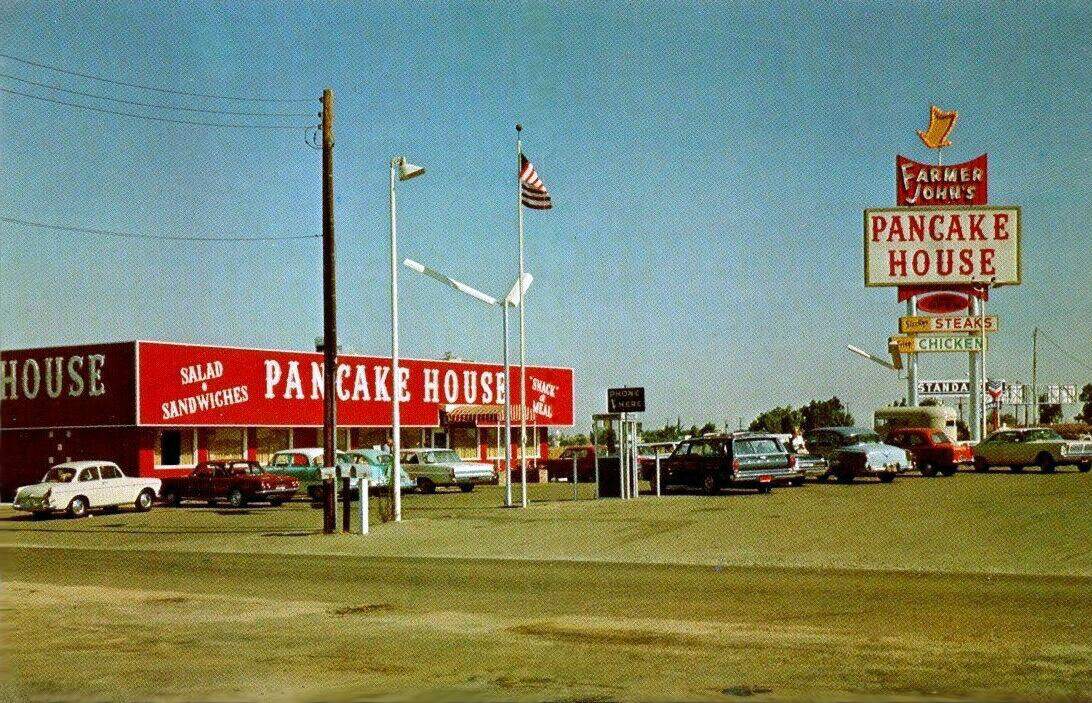
Chains built around pancakes spread rapidly. By 1961 the International House of Pancakes had opened 25 units in just three years, and was poised to expand into the Northeast. Uncle John’s Pancake Houses, begun in 1956, were doing business with 60 units in more than 20 states. Each of these chains may have been inspired by Aunt Jemima’s Pancake House that opened in Disneyland in 1955.

Despite the development of dozens and dozens of pancake varieties and their high profit margins, pancake restaurants gradually broadened their menus. The trade magazine Cooking for Profit noted in 1964 that pancake restaurants had found it necessary to put steak on the menu. The growing menus meant that the pancake restaurant boom would soon give way to a more general sort of family restaurant in the 1970s. Like pancake restaurants, full-service family restaurant chains such as Denny’s and Country Kitchen were also expanding.

Eating in restaurants continued to be popular with families in the 1970s. Reporting on a Gallup survey in 1975, Food Service Magazine observed that more working mothers, increased family income, and smaller families suggested “a more profitable family market than ever before.” The survey also found that preferences included table service restaurants that welcomed children, had moderate prices – typically $1.00 to $1.99 per person for breakfast — and a menu with a wide range of selections.

A 1978 New York Times story titled “Family Restaurant Booming” noted that dining out is extremely sensitive to economic conditions, a situation that is likely to be especially true for family dining.

So the current economy should favor patronage at IHOP, the reigning pancake kingdom.

© Jan Whitaker, 2022

4 Comments

Filed under chain restaurants, family restaurants, food, patrons, restaurant decor, roadside restaurants

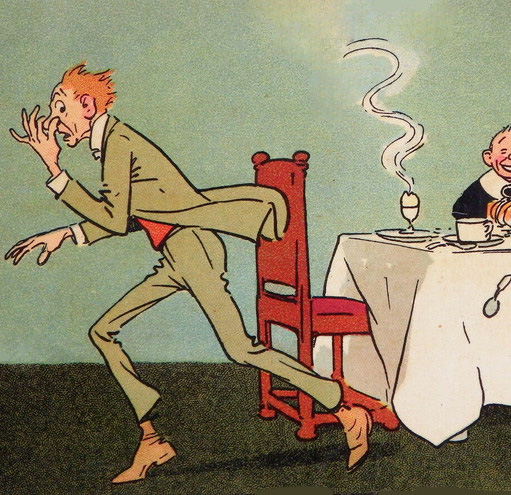
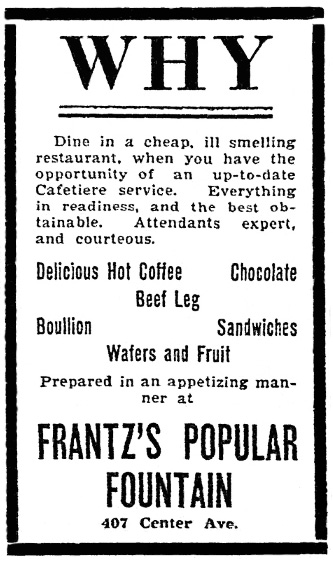
Odors and aromas

It is said that the sense of smell became less important when proto-humans began to walk upright. Yet it has played a significant role in restaurant history, for better and for worse.

While not limited to the 19th century, complaints about bad odors in eating places abounded then. In that century, unwanted smells might come from the building itself, accumulated cooking odors, or the humans in the rooms. Worst of all were the cheap eating places located in damp and windowless basements where all three perils came into play.

A self-styled researcher in 1849 cancelled a plan to visit common eating houses in New York City, writing, “We once undertook to count these establishments in the lower part of the City, but got surfeited on the smell of fried grease before we got half through the first street, and were obliged to go home in a cab.”

Even Taylor’s, Broadway’s mid-19th-century hot spot where fashionable ladies went to consume fricandeaus and meringues, failed the smell test. It had a deluxe interior with 18-ft-high ceilings, gold leaf, fountains, and mirrors, leading journalist Fannie Fern to exclaim, “What a display of gilding and girls.” And yet, upon its close in 1866, a critic put things straight, admitting “there was always the restaurant odor, the mingled essence of many past dinners, and precisely the same from month to month and year to year.”

If Taylor’s wasn’t free of bad odors, what restaurant was? Well, according to a British visitor, the answer was just about none! In 1868 the author, after visiting New York, gave 99.9% of the city’s eating places a no-star rating when it came to smelliness. “The restaurants, with the exception of Delmonico’s on Fifth Avenue, generally speaking, are dingy and warm, and have a sickly smell about them,” he wrote. Not much later the Prince of Wales traveled to the U.S. and quickly grew sick of the sight and smell of one of the country’s most beloved foods: oysters. “During his sojourn he was always endeavoring to escape from the smell of them,” according to one chronicler. Obviously, one person’s bad odor might be another’s delicious aroma.

Old-fashioned chophouses, revered as hyper-masculine shrines to meat-eating, also came in for criticism. One critic denounced New York’s Old Tom’s, a venerable dining spot, as “the humbug of the century.” He characterized its atmosphere as “fat and greasy,” adding, “You breathe it, smell it, taste it.”

On the whole, though, it was unusual for men to criticize the smell of meat cooking. It was so enticing that the owner of an 1890s NYC ballroom arranged to pipe in the kitchen’s odor of steaks being grilled at the end of the night’s entertainment, ensuring a crowd for his dining room a floor below.

The restaurant foods usually singled out as unacceptably smelly tended toward fried, greasy things, as well as garlic, onions, cabbage, and, in certain cases — when they perfumed residential neighborhoods — hamburgers and hot dogs. Los Angeles regarded tamale wagons as “odor factories” and Scarsdale fought to remove a “smelly” stand operated by Castel Hitaltakides, aka ‘Hot Dog Joe.’

But it wasn’t until after the first world war that real improvements were made with ventilation and kitchen design. Wood surfaces were replaced with harder materials such as “Monel metal,” forerunner to stainless steel. And the use of vents and exhaust systems grew commonplace except in the poorest eating places. Air conditioning in the 1930s also made a big difference. However, improvements in air quality were always in order. A 1946 customer survey revealed that restaurant patrons’ biggest complaint after noise and clatter was still bad odors. They almost certainly would have included cigars and cigarettes, which would draw even more complaints as the movement to ban smoking in restaurants grew.

What could restaurants do to control odors? There were range hoods as far back as the 1880s, though I don’t know enough about them to judge their effectiveness. Another method employed by restaurateurs who could afford it was to locate their kitchen on the top floor of a building, with the dining room a floor below so the kitchen’s greasy hot air and odors would float inoffensively skyward.

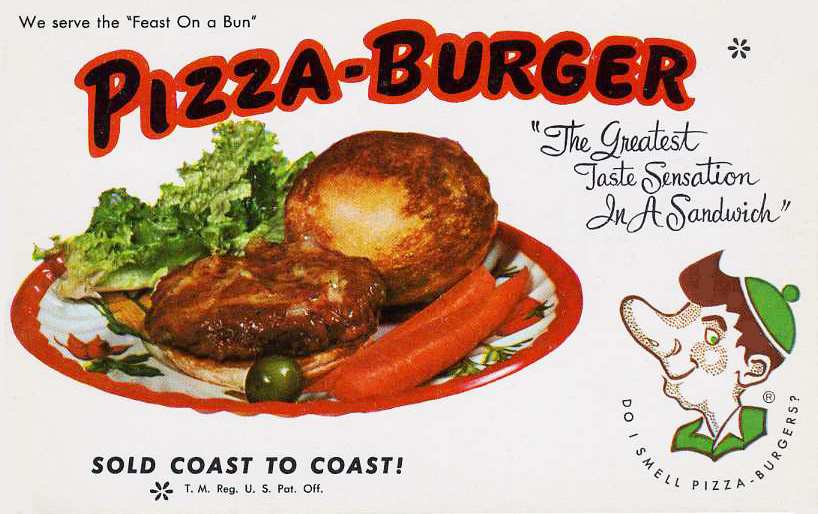
But then attitudes to food smells began to shift. An overlooked feature of the food “revolution” taking place in the late 1970s and 1980s was that cooking aromas – which, apart from beef, had rarely been regarded as a positive attraction in restaurants – became a plus, particularly when they emanated from the kitchens and platters of ethnic restaurants. Fast food smells, such as the pizza-burger’s, were also redeemed as pleasant.

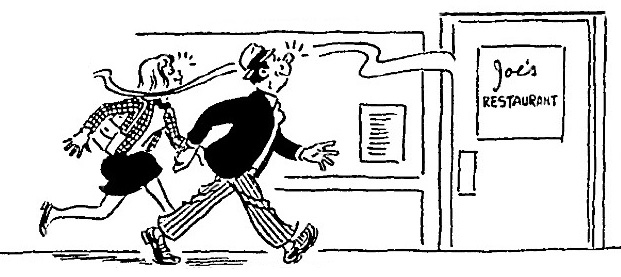
At Joe’s, yes, but not so much in luxury restaurants.

Remember that smelling was long associated with lowly creatures. And for decades the standard had been that proper middle class homes should be entirely free of cooking smells, even if this required a series of doors between kitchen and dining room as well as frequent daily airings of the kitchen. In the 1920s a genteel residential hotel in Cleveland went so far as to design suites in its new building with no kitchenettes “so that one family will not inconvenience other occupants with cooking odors.”

It seems this standard was adopted by luxury restaurants as well. I have been unable to find any reviews of elite restaurants that mentioned odors or aromas. Evidently the only time customers’ noses were allowed to come into use was in sniffing wine offered by the sommelier.

What would Julia (Child) have thought about this? In a 1972 interview, she was asked how, when traveling, she identified a good restaurant. Her answer: “If you poke your nose in, the smell will tell you something. A good restaurant smells good – of fresh food and butter and fresh olive oil.”

© Jan Whitaker, 2022

6 Comments

Filed under atmosphere, elite restaurants, food, patrons, restaurant issues

Digging for dinner

In 1919 a new term made its debut in popular culture with the enormously successful Broadway play The Gold Diggers. It wasn’t about gold miners, but about attractive “show girls” who flirted and played up to men for what they could get out of them. In it, one of the women tells her roommates “either you work the men, or the men work you.”

The play betrayed the upheaval in gender relations that had begun in the late 19th century but was deepened by World War I, continuing into the 1920s. Women had thrown off Victorian restrictions and traditional roles as they entered the job market. Men were confused, sometimes angry. The divorce rate soared.

In the 1920s the play was made into a movie and a virtual swarm of other gold-digging-themed plays and movies arrived, with titles such as Gentlemen Prefer Blondes, Broadway Daddies, The Shopworn Angel, Naughty Baby, and Hardboiled. The theme remained strong in the 1930s, when there was a run of Busby Berkeley Gold Digger films.

The gold digger problem also appeared in advice columns. Columnist Dorthea Dix went so far as to proclaim, “No other women in the world do more harm than do these demanding women.” Ordering a lavish restaurant dinner paid for by a man was a clear sign of gold digging, according to a 1920 newspaper story. Good behavior, on the other hand, would look like this: “If she orders cheaply and modestly, she is either very considerate or very wise; . . . and if she says, ‘Oh, let’s go home and broil a chop in my kitchenette!’ – she is a wonder!”

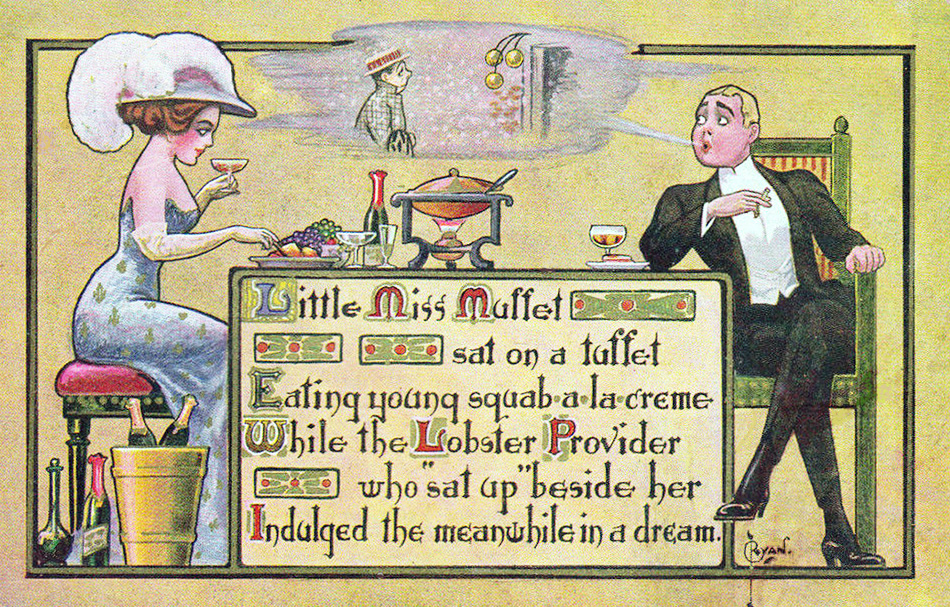
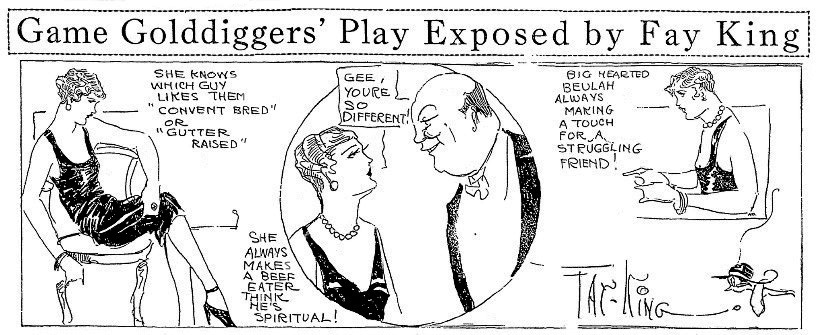
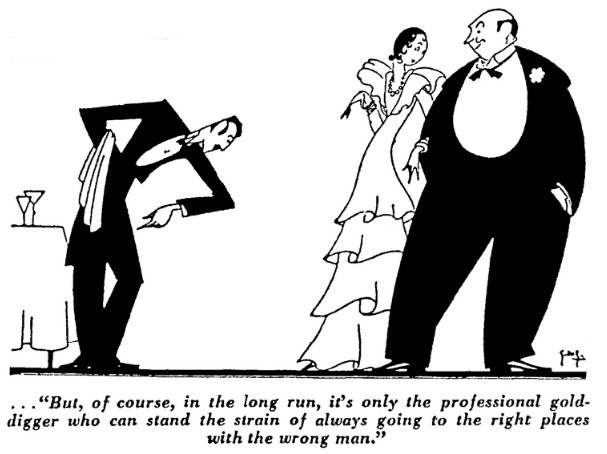
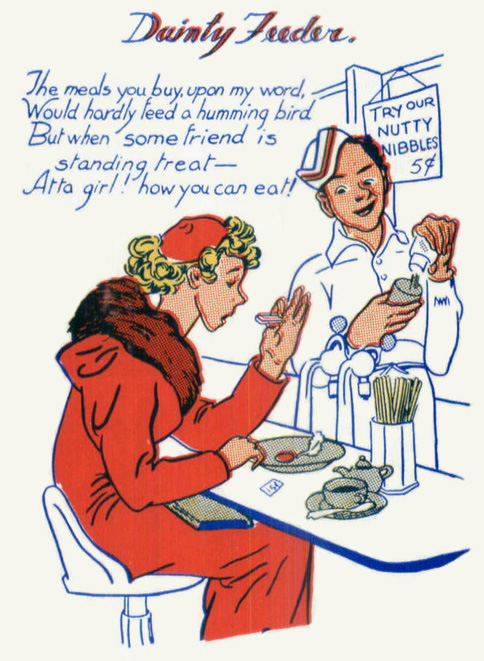
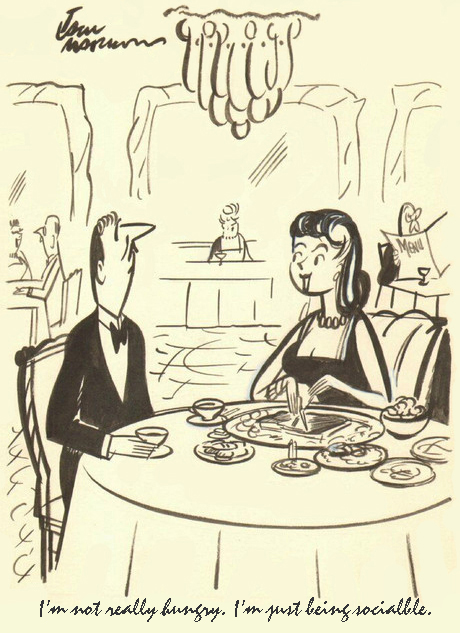
Gold diggers also appeared in cartoons and on postcards, usually shown in a restaurant, eating and drinking freely and running up the check. So they not only took advantage of men, but their other sin included eating too much, in violation of the idea that true ladies had naturally small appetites. The examples below are presented in approximate chronological order.

She puts on her gloves, showing no concern for his alarm upon seeing the check.

“Dear” meaning costly. At a time when a steak dinner including caviar, oyster cocktail, deviled crab, steak and lambchop, with something sweet and a demi-tasse would have come to $3 a person, $32.50 was a very expensive dinner.
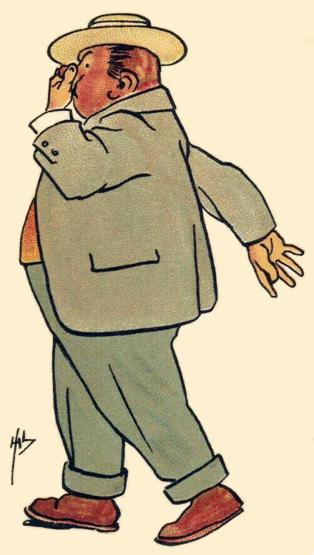
On the postcard at the top of the page, it appears that Miss Gold digger is also a heavy drinker.

This nasty little cartoon from 1927 makes her seem seriously — almost professionally — conniving.

In the 1930s Depression the male victim assumed the profile of a sugar daddy, possibly suggesting to the economically deprived masses that he deserved to be relieved of some of his money.

On the other hand, this poor guy truly looks like he’s suffering and his gold-digging girlfriend isn’t a bit sympathetic. She looks as though she rather enjoys seeing him wash dishes.

A 1940s card from a vending machine, assuming the worst about this woman, who probably made considerably less money each week than the mean-hearted server.

This one appeared in 1959, still working the tired old joke.

I’d like to think the gold digger meme had been retired, but a recent defamation lawsuit would suggest otherwise.

© Jan Whitaker, 2022

5 Comments

Filed under patrons, women

Pizza by any other name

Driving around Connecticut a while back I noticed signs with the unfamiliar terms “lapizza” and “apizza.” Occasionally since then I’ve wondered what accounted for the deviation from the commonplace word “pizza.”

Thanks to a recent round of fundraising on Connecticut Public Television, when they featured showings of Pizza, A Love Story, I found out why pizza was spelled that way. Watching the show, I heard the word apizza pronounced – repeatedly – for effect. Can you say ah-BEETS? That pronunciation is Neapolitan dialect, a simplification of la pizza. New Haven CT is hailed as today’s apizza center of the U.S. by its dedicated fans who probably would refuse to even enter a pizza chain’s parking lot.

In fact, it’s impressive that in 1978, when Pizza Hut had expanded to over 3,000 units nationwide, none was listed in New Haven’s City Directory. However, there were at least 31 pizza places in that city then, ten of them with apizza as part of their name. One of the pizza restaurants in New Haven was that of Fancesco “Frank” Pepe, initially a baker, who started making pizza in 1925. [1960s postcard shown at top of page] Today Pepe’s Pizzeria Napoletana is a small New England chain that has won many awards.

Although the word apizza came into common usage in advertisements in Connecticut newspapers in the 1930s – not just in New Haven but also Bridgeport, Meriden, and other cities – it remains in use today in many of the state’s Italian restaurants. I haven’t run across any descriptions of the Connecticut apizza of earlier days, but it’s unlikely that it was the cheese-delivery vehicle that most Americanized pizza has become. In the early 20th century Neapolitan pizza was described as a somewhat puffy, foldable crust typically topped with cooked tomatoes, grated cheese, oregano, and/or anchovies.

From the start in Connecticut and a few other parts of the Northeast, as well as California, pizza was take-out food, often bought at a bakery. But after Prohibition ended, it expanded into casual eating spots in Connecticut cities. Many of its purveyors ran taverns or other night spots, some of which featured it only on weekends. [below, Club Crystal, Bridgeport, 1940s] It was more of a snack than a meal, something to enjoy with friends. Beer was the favorite liquid accompaniment. As Meriden CT restaurant owner Vincent Verdolini put it in 1939, “beer to a lover of la pizza is like whipped cream to strawberry shortcake.”

Until the 1950s, most apizza consumers were Italian-Americans, many of them workers in Connecticut’s factories. Happily for them, pizza was inexpensive (in 1940, roughly 25¢ for small ones and 45¢ for large) and sellers delivered to workplaces. Early advertisements aimed at Italian speaking customers appeared in Italian-language newspapers such as La Sentinella in Bridgeport.

As I searched for the history of apizza in Connecticut, I happened upon another name for pizza, one that really surprised me because its meaning has shifted: pizzeria. Now a common name for a pizza parlor, at one time it was a word for pizza itself, as is evident in the advertisement for “delicious pizzeria, 25¢” at Frieda’s in Asbury Park NJ in 1936, shown above, or at the Paradise Bar and Grill on Staten Island in 1947 below.

For several decades restaurant chains have dominated the pizza market, making it all the more interesting that apizza, the word and the food, has survived.

© Jan Whitaker, 2022

7 Comments

Filed under ethnic restaurants, food, patrons

Women’s lunch clubs

Lunch clubs for working women appeared in American cities in the 1890s and early 20th century. In a fairly short time they stimulated the development of commercial cafeterias, as well as employee cafeterias in large companies.

Chicago was regarded as a prime incubator of the lunch club idea. In 1891 a group of alumnae of the prestigious Ogontz finishing school near Philadelphia opened a space for women workers on an upper floor of Chicago’s Pontiac Building. At the start the club charged 10 cents a year for membership, and sold sandwiches for 4 cents and milk, tea, or coffee for 2 cents each.

By the end of the nineteenth century, women’s lunch clubs could be found in other major cities, including New York, Philadelphia, Boston, Cleveland, and San Francisco, but not in the South. Some, such as three in NYC, were affiliated with churches. In Indianapolis, temperance supporters – members of the W.C.T.U. — ran a lunch club.

The lunch clubs were meant to provide not only inexpensive noontime meals for working women, but also to give them a place to enjoy a little leisure in “rest rooms” supplied with sofas, rocking chairs and desks, as well as libraries and other amenities. Some offered evening lecture series.

The clubs came at a time when the number of office workers in cities was on the increase. The clubs mainly catered to “business women,” which then meant young white-collar workers in offices and department stores. Although women factory workers had a greater need for restful and inexpensive lunches than did office workers, their shorter lunch breaks and lower pay made it difficult to accommodate them.

The earliest lunch clubs were launched by elite women as philanthropic projects to assist workers with affordable lunches, give them a place to hang out at noon, and to uplift them culturally. The food was not cooked on site, but supplied by other kitchens, such as that at Jane Addams’ Hull House in Chicago. To avoid the cost of hiring servers, food was set out on counters and diners selected what they wanted, a novel arrangement in the 1890s. [Above: Chicago’s Ursula lunch club, 1891] Prices were meant to cover costs but not to make a profit.

Lunch clubs had to tread a fine line in terms of how philanthropic backers related to the working women. At least one of the philanthropic lunch clubs made its lunchers feel pitied and failed to attract enough women. Those who had stuck with it then took it over as their own co-operative enterprise. Some other lunch clubs were begun as co-operatives. [Above: postcard of a commercial lunch club that admitted men]

A humorous turn-of-the-century story characterized the uneasy feeling of some working women toward philanthropy. In it, a wealthy man approaches a young sales clerk in a department store to say that he is thinking of starting a Noon-Day Rest Club, “where you and the others may come and drink Tea and listen to me read Advice to the Young.” She replies, “That would be lonely Billiards, wouldn’t it? We don’t want to be rounded up and sozzled over. Not on your Leaflards. The Poor Working Girl draws a line on having a kind-hearted Gentleman pull the Weeps on her. I think I can struggle along without having you come around to hold my Hand.”

Despite this obstacle, lunch clubs proliferated. The Klio Club’s Noon-Day Rest expanded its menu, adding dishes such as soup, baked beans, and salmon salad. In 1899 a sample menu in one of Chicago’s six lunch clubs might have looked like this:
Two slices of bread or two rolls, with butter 5c
With jam or cold meat 6c
Extra butter 1c
Tomato soup, beef hash, Spanish stew 5c
Potato salad, sliced tomatoes, cucumbers, cottage cheese 5c
Tea or coffee, with cream 5c
With milk 3c
Iced tea, buttermilk 3c
Raspberry ice, lemon ice 5c
Vanilla ice cream, tutti-frutti ice cream 5c

The success of serve-yourself lunch clubs spurred the development of commercial cafeterias. Over time it became harder for lunch clubs to attract large numbers of women patrons. Some began to accept men who, after all, tended to spend more for lunch. For-profit help-yourself businesses proliferated. In one case, a dispute at Klio’s Noon-Day Rest led its caterer, Kate Knox, to leave and start her own self-service lunch club business. [Mrs. Knox’s lunch club pictured above] Another enterprising woman, Mary Dutton, operated four cafeterias by 1915 after beginning with a single lunch club.

But the lunch clubs made an impact, for a time at least. Boston’s original noon-day lunch club closed because it felt it had elevated the standards of common restaurants. And businesses borrowed ideas from the lunch clubs. For example, The Harmony Cafeteria in Chicago, a commercial business, advertised in 1913 that it featured a basement rest area, with a drawing showing two women in rocking chairs reading books.

© Jan Whitaker, 2022

6 Comments

Filed under cafeterias, food, Offbeat places, patrons, restaurant prices, women