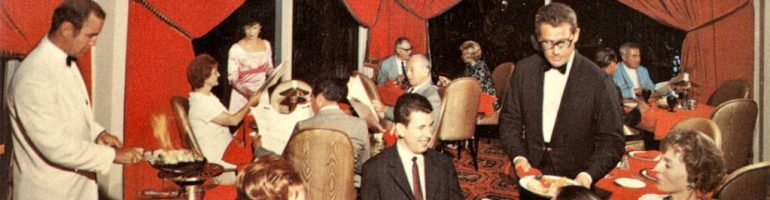
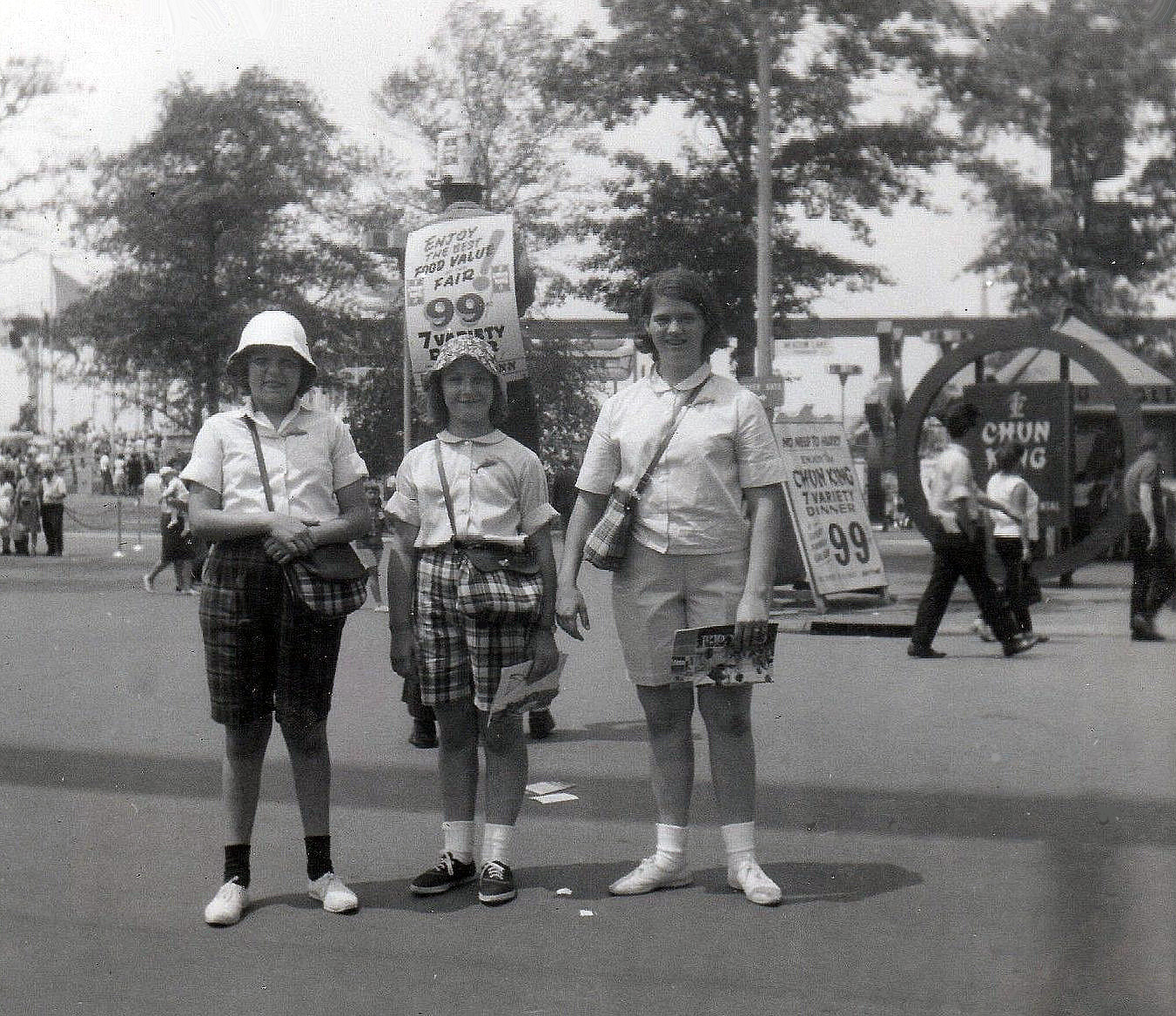
Fifty years ago the 1964-65 New York World’s Fair was underway, with thousands going through the turnstiles. Sooner or later they had to eat. Some brought a picnic but others patronized the roughly 110 restaurants in operation the first season, up to nearly 200 in 1965.
The Fair was not officially sanctioned by the Bureau of International Expositions nor supported by governments (for the most part); it was a commercial enterprise filled with corporate pavilions such as Johnson’s Wax, General Motors, and Travelers Insurance. Most of the restaurants were run by private entrepreneurs who were not necessarily from the country represented by the pavilion. Restaurant Associates, which operated Mamma Leone’s, The Four Seasons, and others in NYC, ran the restaurant in the Indonesian Pavilion and five others. New York’s Sun Luck chain ran the Cathay Chinese Restaurant in the Hong Kong Pavilion.
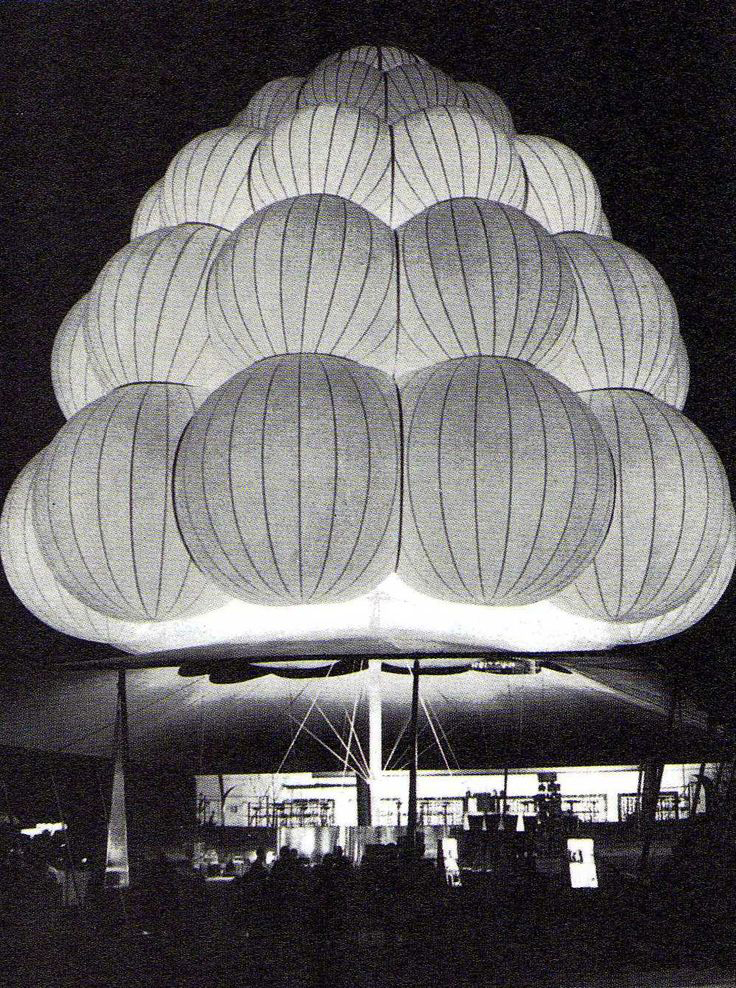 Biggest of all, the Brass Rail operated six moderate-priced restaurants, each offering a single complete meal for $3. In the International Plaza they ran both a cold Danish buffet and the Garden restaurant offering Southern fried chicken dinners. The company, a subsidiary of Interstate Vending Co. in Chicago, also had 25 freestanding snack bars with balloon-shaped roofs that looked as though they could lift off and float away.
Most of the eating places at the Fair supplied casual food and snacks, whether strawberry and whipped cream filled Bel-gem waffles (the hit of the Fair), Wienerwald hot dogs, or Chicken Delight(s). Providing plentiful fast food was based on the belief that non-New Yorker Americans would accept nothing else. Keep in mind too that it was the mid-1960s before the culinary revolution came along with its hopes of replacing industrially produced convenience food.
There was also no shortage of exotic cocktails served at tiki bars and lounges, and American and imported beers flowing in beer gardens. During groundbreaking for the Schaefer Brewing Company Center, which contained Schaefer’s Restaurant of Tomorrow and a beer garden, Fair president Robert Moses advanced a surprising perspective on the Fair’s theme, Peace through Understanding, by declaring that beer was probably “the thing that holds the world together.”
International edibles ranged from the passably authentic to the thoroughly Americanized. Yet however tame the Fair’s version of world cuisine often was, those fairgoers daring enough to go beyond burgers and dogs found a wide selection of food unknown to most Americans then. Among the many unfamiliar dishes were smoked reindeer at the Swedish Pavilion, spicy Korean spareribs, and stewed meat with peanuts and couscous at the Tree House restaurant in the African Pavilion.
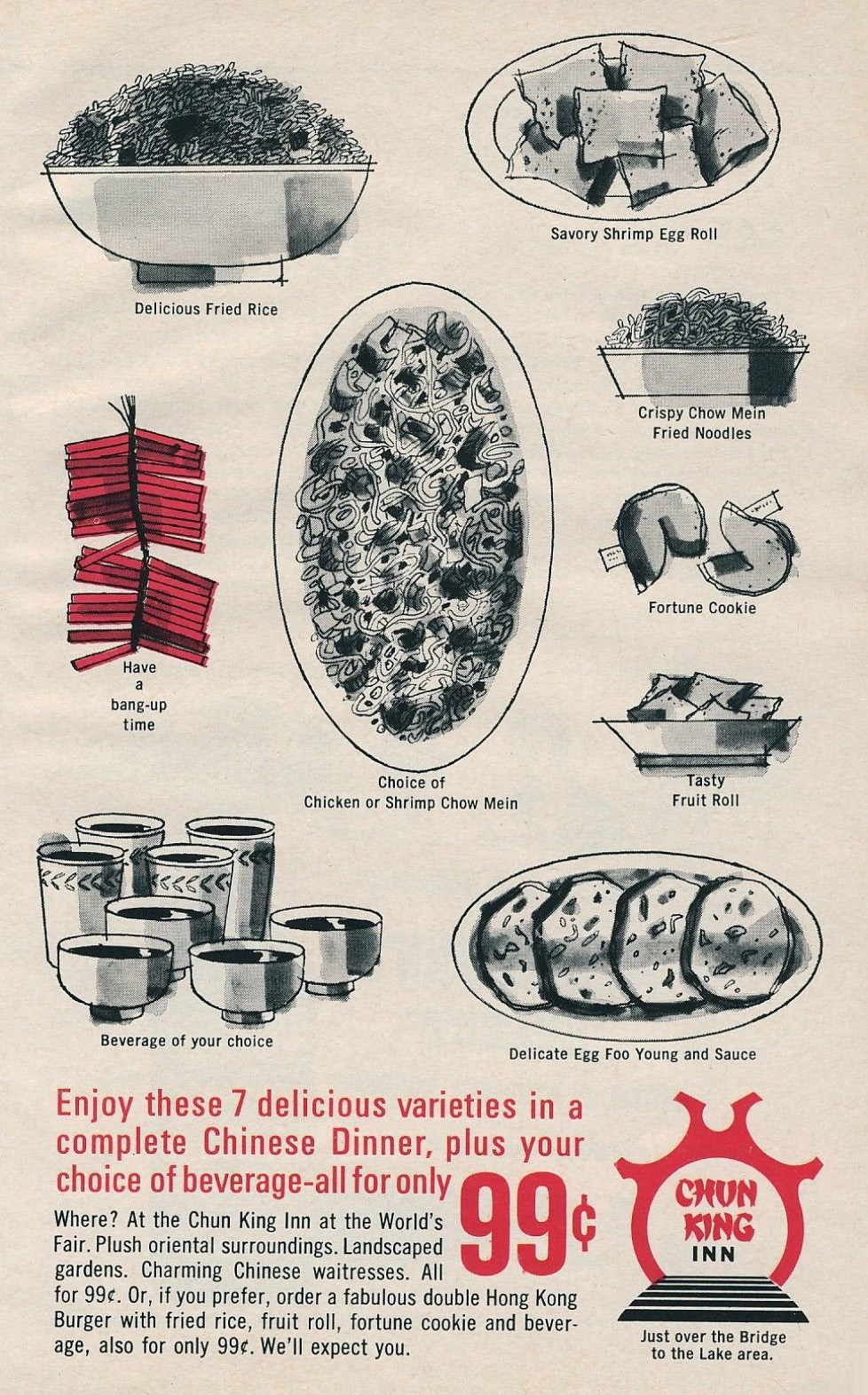 Representing American-style Chinese food was the Chun King Inn, whose mission was not so much to run a profitable restaurant as to familarize people with Chun King products sold in supermarkets. It won over the public — who often complained about high restaurant prices at the Fair — by serving full meals consisting of seven items for only 99 cents. The Inn also featured a double-patty Hong Kong Burger with cheese, lettuce, special sauce – and bean sprouts for an Asian touch. Many restaurants did poorly at the Fair, but Chun King’s president reported that the Inn served 5 million customers the first year.
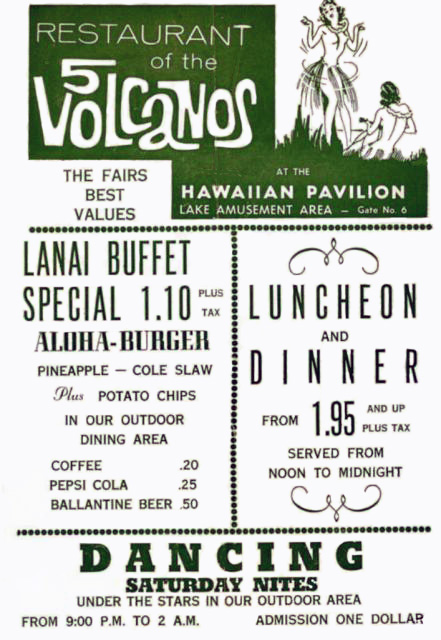
Probably the most successful restaurants were those directed by veterans of earlier Fairs, particularly Seattle’s in 1962 and New York’s in 1939. Repeaters from 1939 included the operator of the Century Grill who had run the Aviation Grill in 1939 and Schaefer Brewing Co. Seattle businessmen subleased a restaurant in the Fine Arts Pavilion named the Bargreen Buffet to Roy Peterson, proprietor of Seattle restaurants including the Norselander. Another restaurateur from Seattle, William Moultray, did so well with his Polynesian restaurant in 1964 that Fair officials asked him to set up a restaurant complex in another pavilion.
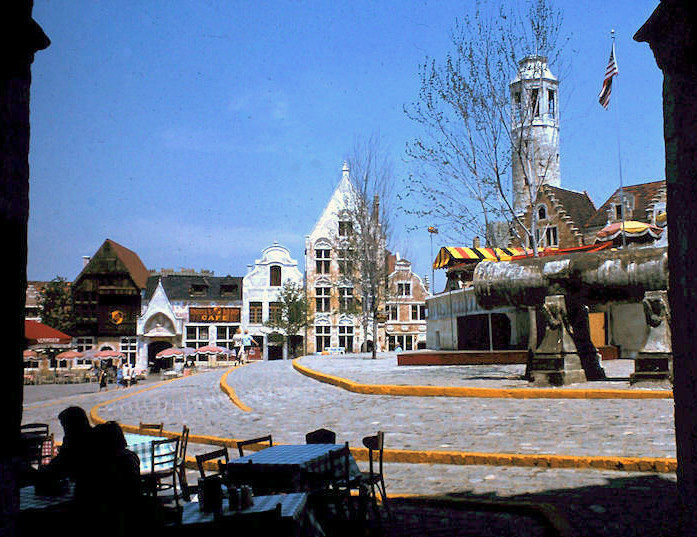
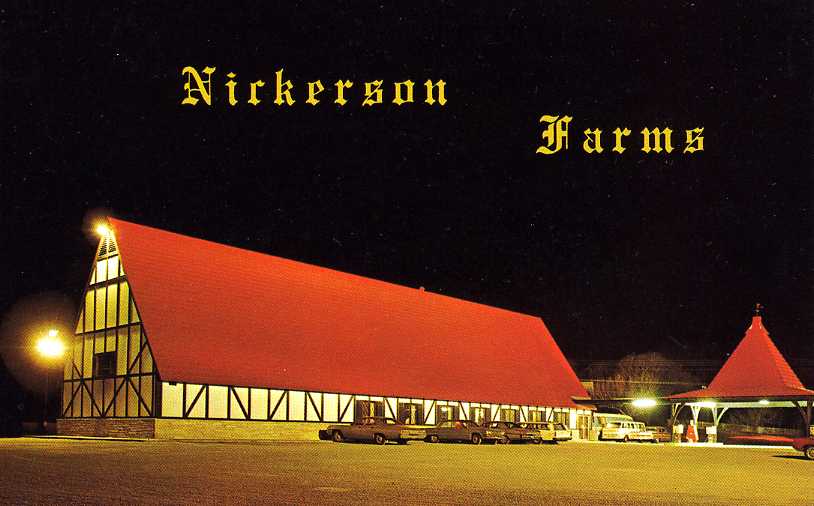
The Belgian Village [shown above in part] consisted of 100 buildings and 20 eating places, some of them outdoor cafes, but was not completed until the end of 1964. A similar village with some of the same buildings had been at Chicago’s Century of Progress Exposition in 1933.
Although critics were disappointed that there was nothing to equal Henri Soulé’s 1939 French restaurant (origin of NYC’s Le Pavillon), everyone agreed that the restaurants in the Spanish Pavilion came closest. Unlike most, it was officially supported by Spain’s government, headed at that time by dictator Francisco Franco. Two restaurants in the pavilion, the moderately priced Granada and the expensive Toledo, were under the management of Madrid’s Jockey Club which imported its chef and 40 of his assistants. So popular was the pavilion’s outdoor seafood bar, the Marisqueria, that it was enlarged in 1965. It was under the direction of Alberto Heras who opened a Spanish Pavilion restaurant on Park Avenue in NYC in 1966.
 Heras was one of several restaurateurs who tried to extend their success beyond the Fair. The Spanish Pavilion building was removed to St. Louis by then-mayor Alfonso Cervantes, where it housed three restaurants that met a rapid demise. The maestro of Wienerwald, Friedrich Jahn, extended the Europe-based chain into this country. It had grown to 880 units by the early 1980s when it failed. The Petersons of the Bargreen Buffet took over management of New York’s venerable Janssen’s restaurant. The Wisconsin Pavilion’s Tad’s Steaks, with its popular $1.19 sirloin steak dinners, became a fixture with bargain-meal hunters in NYC.
Although the Fair fell short of meeting its attendance goal of 70 million, drawing only 52 million fairgoers, it’s likely that millions of them carried away lasting food memories.
© Jan Whitaker, 2014







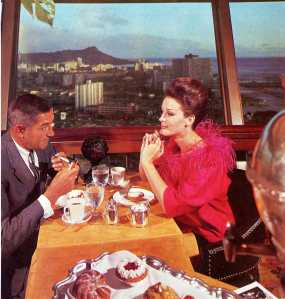 They are so clever and, yes, so corny in a circus-y way that revolving restaurants seem like they must be a product of American ingenuity – but they aren’t. The restaurant in Seattle’s 1962 World’s Fair Space Needle was not the first. Nor was it the second, third, or fourth. According to Chad Randl in A History of Buildings that Rotate, Swivel, and Pivot, the first revolving tower with a restaurant opened in 1959 in Dortmund, Germany. Sometime in 1961 came spinning restaurants in Frankfurt, Cairo, and Honolulu (pictured), in about that order.
 The revolving building itself actually came earlier and was rather simple technologically. In 1898 a leading attraction in Yarmouth, a seaside resort in England, was a rotating observation tower on the beach. Decades later designer Norman Bel Geddes proposed a restaurant set atop a rotating column for the Chicago World’s Fair of 1933 (pictured). Unlike his, though, the design used by most restaurants features an interior ring containing the restaurant’s kitchen that does not rotate.
 Despite being fairly easy to engineer and not really all that new, in the 1960s revolving buildings became symbols of progress. Often set atop communications towers, they were intended to help defray costs of tower construction and operation. Today, whether in towers or on hotel roofs (where they look like flying saucers that have landed), they continue to represent modernity in developing countries around the world. While North America has largely stopped building them or has shut down forever their little 1-HP motors, still they spin on in Kuala Lumpur, P’yongyang, and countless other places.
 For diners gazing from on high – whether upon the Pyramids, distant mountains, or, more often, streets clogged with traffic – revolving restaurants are pleasant. Who doesn’t enjoy the feeling of god-like detachment while sipping a martini and surveying a cityscape? Yet, on the whole revolving restaurants are geared more to “peak” dining occasions than to the consumption of haute cuisine. Their forgettable yet expensive food has tended not to win them steady local trade. Plus, tackiness such as found in Florida hotels with Polynesian restaurants twirling in the sky, or “Certificates of Orbit” such as once were given out at Butlin’s Revolving Restaurant in London’s post office tower (detail pictured), have branded them cheesy tourist traps in many people’s minds.
 Who was first to realize that they could cover bad plaster on their ceilings and walls with canvas and call their restaurant a covered wagon or a chuck wagon? The idea seems to have struck initially in the 1930s, at least that’s when the first Covered Wagon restaurant I’ve found dates from. It was in the Old West – no, make that Minneapolis, with a second in St. Paul. Red checkered tablecloths covered the tables and in the 195os the female waitstaff wore long calico dresses with aprons, a fact I know thanks to the well-illustrated book Minnesota Eats Out. There was also a Covered Wagon in Chicago in the 1940s, presumably under different ownership but with the same tablecloths.
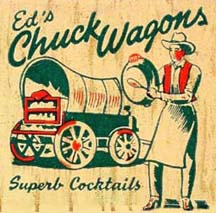 The wagon-esque theme caught on big during the 1950s, inspired partly by TV westerns and partly by the fame of Las Vegas chuck wagon buffets which provided grub for gamblers from midnight ‘til dawn. If not for Vegas envy, why else would there have been one in Miami Beach in 1955? Apparently seeing no local cuisine worth merchandising, restaurateurs there chose from a grab bag of themes such as Smorgs, Polynesian, and Ken’s Pancake Parade. (“Grandma’s Kitchen” was the town’s most venerable eating establishment at the time.)
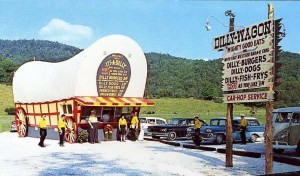 Around 1960 a Potsdam NY man got the idea of franchising
 It's great to hear from readers and I take time to answer queries. I can't always find what you are looking for, but I do appreciate getting thank yous no matter what the outcome.
 Restaurant-ing through history