Category Archives: lunch rooms

Before Horn & Hardart: European automats

Note: In preparing for an interview for a documentary on Automats I looked at new sources I wasn’t aware of when I originally wrote this post in 2010, among them a wonderful German trade publication which pictures European Automats produced by the Sielaff company of Berlin. The booklet, from the Hagley Museum and Library’s digital archives, also contains rare exterior and interior shots of NYC’s first Automat, opened in 1902 by James Harcombe. I’ve made modifications to the post and have included some new illustrations.

AutomatKarlsruhe1903

When automats opened in New York and Philadelphia in 1902 many people were convinced they were an American invention. But they were not. A reporter for the New York Tribune captured a conversation between an American businessman and a foreign guest at James Harcombe’s NYC Automat in 1903, shortly after its opening. After examining the place, the American exclaimed, “What a tribute to American inventive skill!” The man at the next table replied, speaking with an accent, “This is a German idea. There are dozens of these restaurants on the Continent and this one was moved bodily from Berlin …” As the editors of the American Architect and Building News had observed in 1892, when it came to “penny-in-the-slot” machines the U.S. was “far behind the rest of the civilized world.” Even though Americans detested tipping, admired gadgetry, and loved fast service, for some reason the US lagged in the area of automated restaurants.
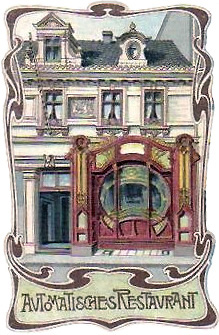
AutomatDortmund1902BSlot machines actually go back to antiquity. The first may have been a holy water dispenser in Egypt over 2,000 years ago. But it was Germany that developed the first automatic restaurant, applying electricity to the idea of self-service. Germany was also responsible for the term “automat” which in German usage applies to any type of coin-operated dispensing apparatus. The world’s first automatic refreshment dispenser appeared on the grounds of the zoo in Berlin in June of 1895 and was considered a “howling success.” On its first Sunday in operation it sold 5,400 sandwiches, 9,000 glasses of wine and cordials, and 22,000 cups of coffee. The first “automatisches restaurant,” providing hot meals as well as sandwiches and drinks was also designed by Max Sielaff of Berlin. It was presented to the public at a Berlin industrial exposition in 1896.

AutomatWurzburg

The fame of automatic restaurants spread rapidly in 1897 when one was installed and won a gold medal at the Brussels world’s fair. That same year an announcement was made that a similar restaurant would open soon in Philadelphia and in St. Louis – as far as I can determine neither of these became a reality at that time. In 1900 Paris had ‘buffets automatique’ — which resembled automats — all along the boulevards. Automats appeared in London a bit later. Around this time a visitor to St. Petersburg, Russia, found an automatic restaurant by the name of Quisisana, which evidently was the name of a Sielaff competitor in the European automatic restaurant industry. (pictured: top, Karlsruhe, 1903; middle, Dortmund, 1902; bottom, Wurzburg).

© Jan Whitaker, 2010, revised 2013
23 Comments

Filed under lunch rooms, technology

Greek-American restaurants

GreekrestaurantMarlboroMA

Ethnic restaurants are generally seen as places where people from cultures outside the U.S. provide meals similar to what they ate in their homelands. A high degree of continuity between restaurant owners, cooks, and cuisines is presumed, as in: the Chinese run Chinese restaurants in which Chinese cooks prepare Chinese dishes.

Questions are sometimes raised about whether, for example, Chinese restaurants in America have adapted to American consumer’s tastes to the point where the Chinese cuisine is not “authentic,” but few question how obviously true or historically accurate it is to assume that Chinese always cooked or served Chinese food.

History is rarely tidy. Chinese, Germans, and Italians cooked French food. Germans ran English chop houses. And people of almost all ethnicities — Irish, Italian, German, Croatian, Greek — cooked American food and owned American restaurants.

GreekPaul'sLuncheonette233Greek immigrants, in fact, have been especially inclined to run American restaurants which serve mainstream American food, with little suggestion of the Mediterranean. Typically they’ve been  the independent quick lunches, luncheonettes, coffee shops, and diners that are open long hours, serving breakfast, lunch, and dinner to working people. Many have been run under business names such as Ideal, Majestic, Elite, Cosmopolitan, Sanitary, Purity, or Candy Kitchen, rather than the proprietor’s name.

The emphasis on names suggesting quality or cleanliness is explained by the tendency of Americans in the early 20th century to brand Greek-run eateries as “greasy spoons” or “holes in the wall.” A negative attitude to Greek eating places is evident in the following piece of rhyme published in the Cleveland Plain Dealer in 1926 entitled “Where Greek Meets Greek”:

The other day I wandered in where angels fear to tread –
I mean the well known Greasy Spoon, where hungry gents are fed;
Where eats is eats and spuds is spuds, and ham is ham what am –
And the pork in the chicken salad is honest-to-goodness lamb.

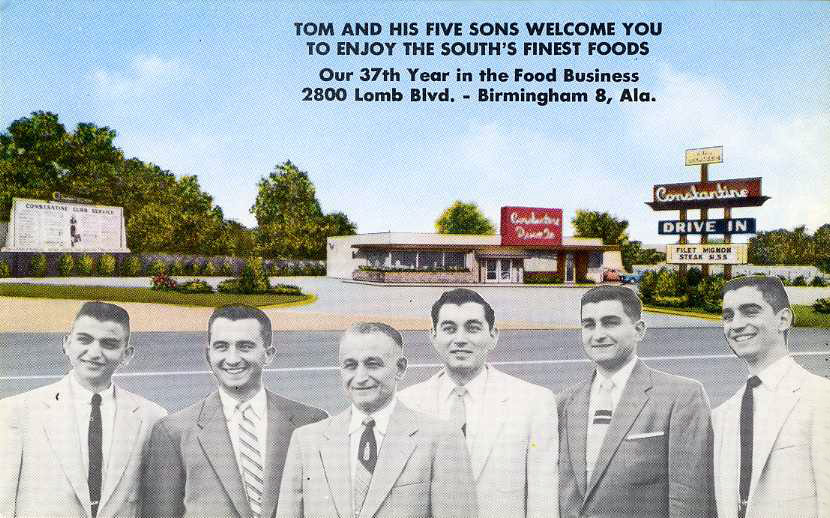
GreekConstantineDrive-In

Certainly there were substandard Greek restaurants, but I’ve found that Greek-American proprietors had a propensity to plow profits into modern equipment and fixtures whenever possible.

Greek immigrants showed strong affinity with the restaurant business since the beginning of the 20th century when they began coming to the U.S. in large numbers. The reason for this is often attributed to a lack of English skills, but the first Greek restaurants, actually coffeehouses where patrons could linger, probably had more to do with the absence of women among early Greek migrants. Coffeehouses furnished community. Although in big Eastern cities many Greek restaurants continued to focus on Greek immigrants, many enterprising Greeks took the step of expanding beyond their compatriots. Some, such as Charles Charuhas who established the Washington, D.C. Puritan Dairy Lunch in 1906, were expanding or transitioning from the confectionery and fruit business.

While heavily invested in the New England lunch room business, especially in Providence RI and Lowell MA, Greek immigrants spread to many regions of the U.S, bringing restaurants to the restaurant-starved South. It is impressive that a Raleigh-based Greek trio opened its 15th restaurant in North Carolina as early as 1909. At that time, Greeks were said to be “invading” the lunch room trade in Chicago, operating about 400 places. Because of the simplicity of American cuisine, it was said that two months spent shadowing an American cook was all it took for Greek restaurateurs to pick up the necessary skills.

GreekTorchofAcropolisDallasOther successful Greek restaurateurs of the past century included John Raklios who at one point owned a chain of a couple dozen lunch rooms in Chicago. In New York City Bernard G. Stavracos ran the first-class restaurant The Alps on West 58th, established in 1907. The Demos Cafe in Muskegon MI was one of that city’s leading establishments. In Dallas The Torch of the Acropolis (pictured) had a 36-year-long run, closing in 1984, while the College Candy Kitchen was an institution in Amherst MA.

The children of successful Greek restaurant owners often preferred professional careers, but a new wave of Greek immigrants arrived after WWII, gravitating to diners, particularly it seems, in New Jersey. In 1989 the author of the book Greek Americans wrote that according to his estimate about 20% of the members of the National Restaurant Association had Greek surnames. And, as if demonstrating a flair for adaptation, according to a 1990 study, Greek-Americans were then dominating Connecticut’s pizza business.

GreekdinerDrimonesBrosNJ

© Jan Whitaker, 2013

54 Comments

Filed under lunch rooms, proprietors & careers, sanitation

Toothpicks

Although toothpicks have many uses in the home, their career as a tool for picking teeth is mostly associated with restaurants. And, like so many aspects of restaurant history, their story says a lot about social class. The short version is that when using toothpicks was viewed as a custom of European elites it was approved in the U.S., but when American working class men adopted it, it became taboo. Today the use of toothpicks after a meal is infrequent compared to what it was roughly 100 years ago when it was at its peak.

In the Quick Lunch era of the early 20th century, toothpicks became more than a means to loosen bits of food stuck in tooth crevices. They were assertions of masculinity, essential accessories for the male lunchroom crowd. A dangling toothpick sent a macho signal as speedily as a cigarette between the lips of 1960s filmstar Jean Paul Belmondo.

In the 1890s lunchroom patrons felt entitled to toothpicks just as much as to a paper napkin and a glass of water. When a distinguished Afro-American man was told by a Kansas City restaurateur in 1890 that he would be charged an exorbitant $1 for pie and coffee, he seemed to consent but later walked out saying “Sue me for the rest” as he tossed a dime on the counter. And he grabbed a handful of toothpicks on the way, staking a claim to equality in an unmistakable fashion.

Arbiters of etiquette deplored toothpicks. Starting in the late 19th century when the picks came into fairly common use in the United States, and for the next 100 years at least, a string of advice columnists from Mrs. John Sherwood to Ann Landers railed against them. All declared using toothpicks in public vulgar and disgusting. “Dear Abby” echoed her forebears when she roundly condemned public toothpick use in 1986, calling it “crude, inconsiderate, and a show of bad manners.”

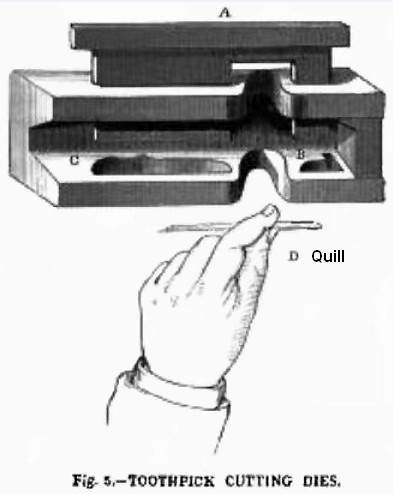
Goose quill toothpicks had been acceptable in the early republic, furnished even at such elite places as Delmonico’s. But as mass-produced wooden picks made of birch and poplar became available in the 1870s, prices fell drastically until even the cheapest eatery could afford to dispense them. Their social status plummeted.

Toothpick haters frequently pointed out that providing toothpicks in restaurants was as ridiculous as handing out toothbrushes. It’s interesting that in the early 20th century another form of tabletop hygiene, the finger bowl, was also about to go under attack. Strangely, since toothpicks and finger bowls were intended for cleanups, they were criticized as germ spreaders. Because toothpicks were provided loose in a bowl or cup, restaurant patrons often grabbed them helter skelter, fingering many they left behind. Trains eliminated them in their dining cars and Minneapolis health authorities banned open containers of toothpicks in 1917.

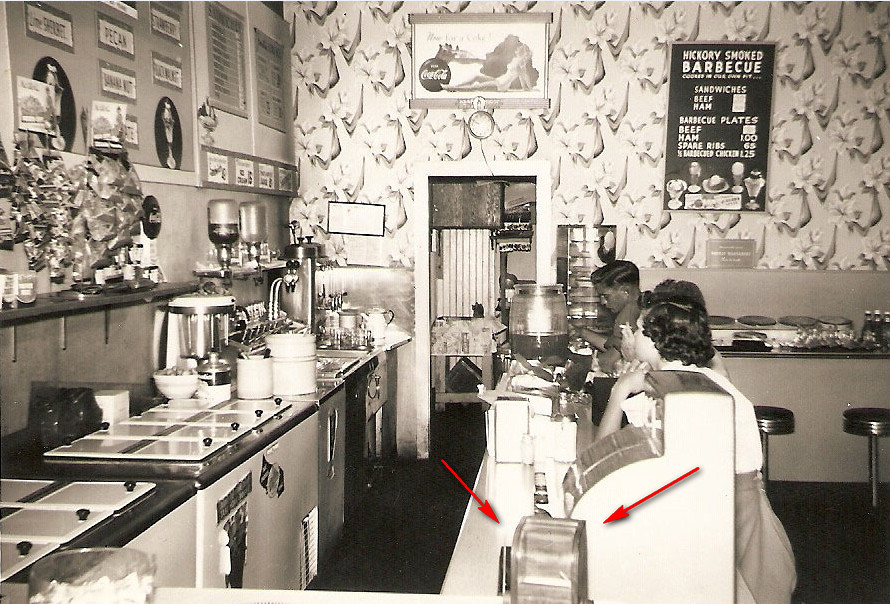
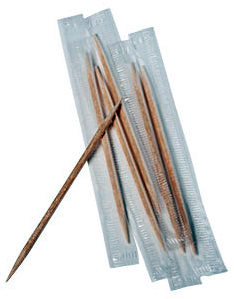
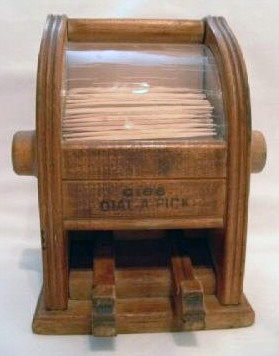
Another solution to the germy toothpick bowl and the habit of grabbing handfuls was bound to occur to America’s legion of gadget inventors. Presto! One-at-a-time toothpick dispensers. [shown here and in restaurant above, the Dial-A-Pic]

Restaurant owners would have been just as happy to see toothpicks disappear altogether. A NYC restaurant owner confessed in 1904 that he disliked the sight of men picking their teeth at his tables as much as that of others sticking knives in their mouths. But he took a pragmatic stance, admitting that “we cannot conduct examinations in table manners before we admit persons to our dining-rooms.”

Today toothpick usage is reportedly unpopular with younger diners and has been dropping off since World War II. So I was surprised to see a little cup of wrapped toothpicks in an upscale restaurant in Kansas City this weekend. Now I’ll be on the lookout everywhere I go.

© Jan Whitaker, 2012

14 Comments

Filed under lunch rooms, patrons, restaurant customs

Restaurant booth controversies

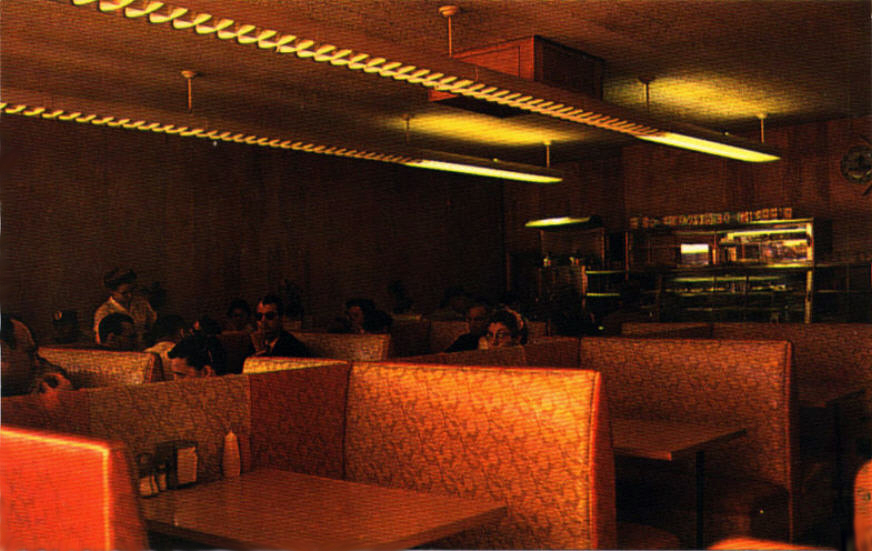
Public eating places have historically presented an array of dining arrangements, from sharing tables with strangers to occupying highly private dining rooms and many gradations in between. In fact, the development of individual tables – as opposed to sharing the host’s own dining table with his family and other customers – marks the emergence of the “restaurant” in late 18th-century France.

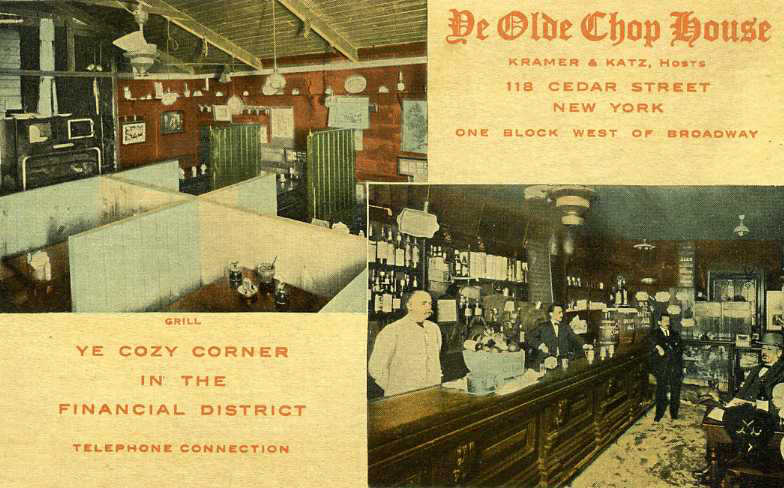
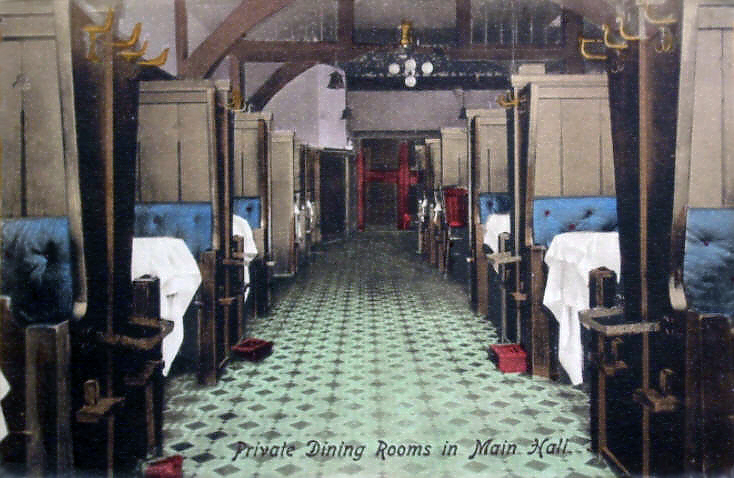
Booths are a dining option that give a measure of privacy within a public room that is often furnished with tables in the open as well. Private dining rooms were found in taverns and coffee houses of the Revolutionary era in America, but there were no booths then. There were, however, boxes. The English, who ran most early eating places in this country, were fond of creating boxes in churches and opera houses that gave their occupants some separateness from others. Boxes, as shown here in a latter-day chop house, were the forerunners of booths.

Boston’s New Porter Cellar advertised in 1796 that it had been renovated and could now accommodate customers with a “range of boxes, of convenient magnitude, into which any party may retire, and detach themselves from the company, as agreeably as in a private apartment.” Sometimes, boxes were ranged around the side of a room, allowing them to be closed off with curtains, as was true at Boston’s Exchange Coffee House in 1809 which was outfitted with “handsome boxes, each containing a mahogany table, seats, and a bell rope; each box … is faced with mahogany, and decorated with scarlet curtains, which screen visitors from observation.”

To critics the curtains went one step too far in providing privacy. What were people doing behind those curtains? Moralists wanted diners, and drinkers, to be in full view of all.

Opposition to curtained booths, booths with high backs, and tables partitioned off with high walls crystallized in the early 20th century when municipal ordinances outlawing them were drafted. In 1904 a judge struck down an ordinance in a Utah town which made it unlawful “to permit, construct or place any screen, door, blind, booth, stall, portiere, curtain or other obstruction to the public view, in any restaurant,” in part because it was aimed prejudicially at Chinese restaurant keepers. But in other cities such as Portland OR and Duluth MN ordinances took effect in the years before WWI.

Boston’s White Slave Commission, dedicated to the eradication of prostitution, recommended an ordinance for that city in 1914 which outlawed any kind of space resembling a private room or area not open to public view anywhere food or liquor was served. Exceptions were made only for spaces holding fewer than two or more than six persons. About the same time Olympia WA restricted the use of curtains in booths, declaring them “unhealthful.” Meanwhile a chief of police in Aberdeen, South Dakota, tried to persuade the city council that booths were the greatest menace to the morals of the town’s youth he knew of.

Other ordinances tried to limit the height of booths, 42 inches being the highest booth tolerable to most reformers. Sometimes restaurants were required to provide lights for each booth and make sure they were turned on when guests were seated.

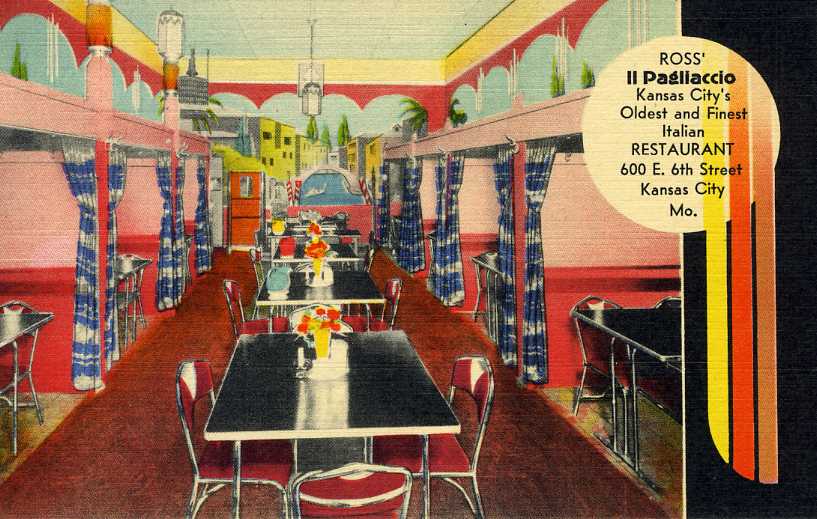
In places where no liquor was served booths seemed to win easy acceptance. Tea rooms often advertised them and New York’s Tally-Ho boasted that it had rehabilitated stalls in the “Famous Astor Stables” as dining alcoves. The whole issue of booth height seemed to die down while national prohibition was in effect, but with repeal it surfaced once again. In 1933 Lewiston, Maine, decreed (rather generously, actually) that booths could not exceed 54 inches in height.

But the truth was that many restaurant patrons preferred booths over ordinary tables and chairs and they had become so popular during the 1920s that it was impossible to turn back. Michigan had to rescind its 1934 order that booths not exceed 42 inches because restaurant owners claimed it was simply too expensive for them to cut down their existing installations.

Soon restaurants were boldly advertising that they had booths that were “cozy and intimate,” the latter a word that would have once been too daring to proclaim. By the late 1930s restaurant supply catalogs were full of modern-styled booths of chrome and colorful leatherette.

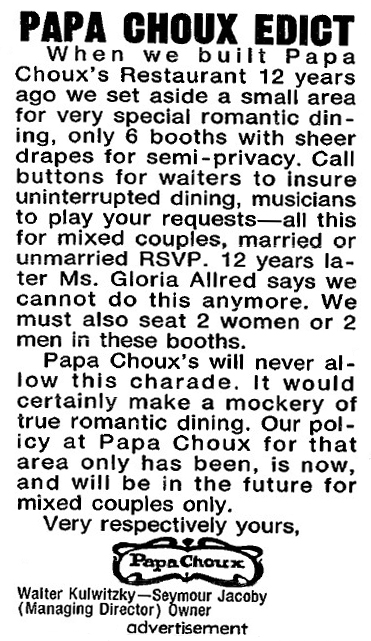
Although there was a 1950s case in which a court upheld an ordinance making booths over 42 inches illegal, the issue disappeared for the most part. But history always has a joker up its sleeve. In 1983 a lesbian couple sued the Papa Choux restaurant in Los Angeles for refusing to seat them in its special curtained booths designed for “romantic evenings.” Although the couple lost their suit initially [see below] they eventually prevailed in the California Supreme Court.

© Jan Whitaker, 2012

7 Comments

Filed under lunch rooms, restaurant customs

Busy bees

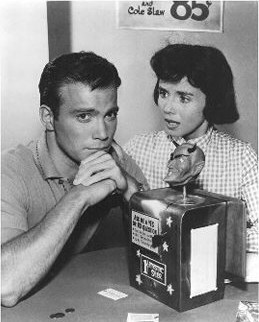
A 1960 episode of The Twilight Zone, “The Nick of Time,” was set in a restaurant outfitted with a devilish fortune-telling device. The restaurant, supposedly in Ohio, was ordinary and undistinguished, with booths and laminated table tops.

The story’s writer chose a common name for it, one found in practically every city and small town across the entire United States: the Busy Bee.

I “collect” this name. To me it resonates with the typical 20th-century eating place. Judging from advertisements for eateries called The Busy Bee, they staked their reputations on being clean, economical, briskly efficient, and friendly.

I also find the name interesting because it is entirely divorced from place, proprietor’s ethnicity, and type of cuisine. Yet I’ve found that many restaurants of this name had proprietors who were of Polish, Italian, or Greek ethnic origins.

In the 19th century it was typical for restaurants to go by their proprietor’s surname. Over the 20th century, by contrast, many restaurants adopted “made up” names that were intended to suggest something positive, appealing, or at least memorable. I suspect that one of the factors propelling this change was the chance to background the ethnicity of the proprietor, particularly around World War I when much of the country became intolerant of those not native born. Busy Bee became one of the most common names around.

Also, restaurants owned by Greek-Americans, of which there were very many, were often run by multiple partners. It would be somewhat unwieldy if, for instance, the proprietors of the Busy Bee in Monessen PA in 1915 had decided to call their restaurant Chrysopoulos, Boulageris, Paradise, & Lycourinos. They might have taken the liberty of dubbing their establishment Four Brothers from Mykonos but they chose Busy Bee instead. [pictured: Busy Bee in Winchester VA — its proprietor, James Pappas, was born in Greece ca. 1889]

I have yet to find a Chinese restaurant called the Busy Bee but I’ll keep looking – I know there had to be a few.

Among many locations, I’ve found Busy Bees in Mobile AL as early as 1898, in Bisbee AZ in 1915, and in New York City’s Bowery, for decades presided over by Max Garfunkel. It was at Max’s Busy Bee, in 1917, that alumni of the Short Story Correspondence Schools of North America convened to greet the author of “Ten Thousand Snappy Synonyms for ‘Said He.’” Many Busy Bees became headquarters for meetings of business, civic, and social clubs.

Busy Bees were not known for any particular culinary specialties, offering instead home cooking favorites plus the inevitable chili and other Americanized foreign dishes such as spaghetti and chop suey. The four popular Busy Bees in Columbus OH, nonetheless, had an attractive array of warm weather choices on their June 29, 1909, menu which included Spring Vegetable Salad (10 cents), as well as Blackberries or Sliced Peaches in Cream (10 cents) and Fresh Peach Ice Cream (15 cents).

The Busy Bee name lives on even today, though perhaps less robustly. I was surprised there was not a single Busy Bee mentioned in Joanne Raetz Stuttgen’s books on contemporary “down home” cafes in Wisconsin and Indiana.

Is there a common restaurant name all around us today that will come to characterize the 21st century?

© Jan Whitaker, 2012

26 Comments

Filed under lunch rooms, miscellaneous

Lunch and a beer

It won’t come as a surprise to learn that the free lunch wasn’t really free. As everyone knows the patron of a saloon had to buy a beer or some other sort of drink in order to partake of whatever edibles the proprietor had to offer. What might be news, though, is that it wasn’t exactly what we would call lunch nowadays. It was more of a snack eaten between meals, sometimes around noontime, sometimes not.

Although the standard free-lunch time began at 11:00 a.m. through much of the 19th century, some saloon keepers put out a spread as early as 9:00 in the morning, hours after most working people had their breakfasts. Or it might be at night – a kind of happy hour. At some saloons lunch on the house was provided every day, but at others it was more of a special occasion celebrating a grand opening, holiday, or proprietor’s birthday.

The dishes did not conform to our modern idea of a snack. In early June of 1872 the owner of a Sioux City IA saloon promised a Saturday morning spread where patrons could accompany their juleps and Roman punches with oyster soup, fish with egg sauce, deviled ham, lobster salad, pickled oysters, salmon, tongue, pickles, lettuce, and radishes – a very different kind of morning break than today’s coffee and doughnuts. Which proves that our snacks have become lighter, while lunch has gained the stature of a regular meal. It also shows that profit on the sale of whiskey and beer could be more than enough to underwrite a veritable feast.

It’s likely that the free lunch is a very old custom. Certainly there were plenty of free lunches to be had in New York City in the 1840s and 1850s. But in their advertisements saloons rarely described a spread equal to what the drinking man (respectable women did not enter saloons) could find in New Orleans, considered the country’s finest free lunch locale. In Northeastern cities often only plates of crackers and cheese made it onto the counter, possibly accompanied by a crock of soup. The New Orleans free lunch was more elaborate, with beef, mock turtle soup, “delicate slices of highly flavored buffalo tongue,” and “well dressed salads.”

The rule of thumb was that where there was intense competition, there would be high-quality saloon fare. San Francisco qualified, as did St. Louis and Chicago. Chicago’s spreads were rarely elegant, but they were hearty. Beer drinkers there favored sandwiches of dark rye bread piled with liver sausage or herrings, strong mustard, and sauerkraut.

In the 1860s, upscale saloons patronized by better-off customers started calling themselves buffets or cafés. Later some would charge a small charge for a “merchant’s lunch.” Business men liked these lunches because they were quick. The food was ready, no tipping was necessary, and little ceremony was involved. You could eat standing if it suited you, in fact there were few tables and chairs.

Feeling the loss of customers, restaurateurs repeatedly tried to abolish the free lunch habit, as did temperance advocates who wished there could be cheap but respectable restaurants that competed successfully with saloons for the workingman’s business. The average saloon normally charged only 5c for food and drink, an amount for which most restaurants could not furnish a decent meal.

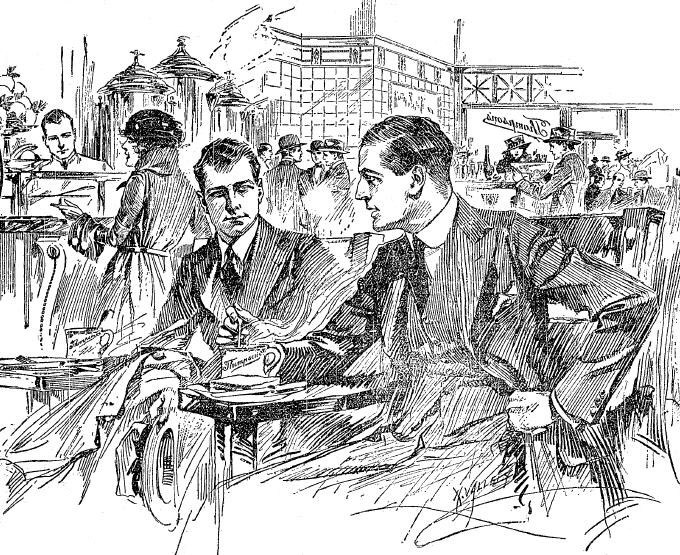
The anti-saloon movement grew stronger with the approach of World War I. Alcohol-free quick lunch chains such as Thompson’s and Child’s — the McDonald’s of their day — learned that by doing a high-volume business they could serve lunches almost as cheaply as saloons. With national prohibition in 1920 the restaurant industry, freed from saloon competition, blossomed and took its modern shape.

Reformers from the 19th century would be thrilled to learn that cheap lunches today are no longer normally washed down with a beer.

© Jan Whitaker, 2011

12 Comments

Filed under lunch rooms, restaurant customs

White restaurants

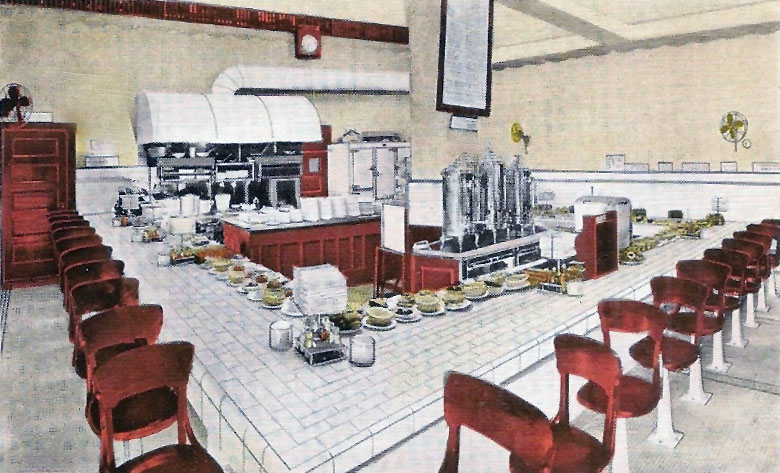
Whiteness in restaurants has had multiple dimensions. When it swept through the lunchroom industry in the early twentieth century the obvious intent was to denote cleanliness through the liberal use of marble and porcelain table tops and counters, and white tile walls and floors.

With names like White Kitchen, Sanitary Café, and Purity Cafeteria, large lunchrooms, led by the Childs’ and Thompson’s chains, advertised not only their cleanliness but their modernity and efficiency with ceramic tile, plate glass windows, and bright electric lights. They sent a message that they could not be more unlike “the old hole-in-the-wall lunch room, with its flickering lights, its smoky atmosphere, its greasy walls and sawdust carpeted floor,” according to Edison Monthly in 1911. Though the story didn’t say so, it’s likely readers would have associated the greasy old days with ethnic proprietors and the reign of the saloon-cum-eatery.

Marshall'sWhiteLunchTampa

White tile lunchrooms figured as heralds of modernity to critic Lewis Mumford. Although he found them noisy and sterile, he was impressed with their machine age provenance (“If one looks carefully at the floors, the cutlery, the tables, the chairs, and the rest of the fixtures one discovers that there is not an object in the place which is not a machine product.”). In “The Quick-Lunch Counter,” poet William Rose Benét selected them as an exemplary institution of the World War I era alongside movie theaters and skyscrapers, with the lines:
Then a sharp command.
And, starting up, I take in hand
My share of thick white china, holding
Limp bread some limper ham enfolding,
Brown doughnuts, and a liquid less so.
(They call it ‘coffee.’ Well, I guess so!)

At the same time as white tile was being installed to cover up the unsanitary wood beneath it, other kinds of whitenings were taking place in the emerging “quick lunch” marketplace. Demands by the public — made up of growing ranks of male and female white-collar office workers — for greater cleanliness brought rejection of waiters’ European-style black garb which gave way to white uniforms. Many of the wearers of white were women servers who replaced men, oftentimes black men who had long made up the bulk of America’s waiters.

And while white-tile lunchcounters were scarcely the only eating places to refuse service to black patrons, it should be noted that the chains’ progressive attitudes did not extend to equal treatment of everyone who came through their doors. In the same years that the Busy Bee outlets in Columbus OH replaced black waiters with white women the chain grudgingly seated black patrons in the rear of its shiny lunchrooms and charged them higher prices.

The frankly businesslike hustle and bustle of the white tile lunchrooms lost steam in the 1920s and came to a definite close with the Depression of the 1930s. The public had lost their distrust of restaurants and no longer demanded visible proof they were sanitary. But even more significant a reason for their decline was the wish for escape from the tedium and anxiety of everyday life. Bright colors and movie-set interiors became the new order of the day.

© Jan Whitaker, 2011

9 Comments

Filed under lunch rooms, restaurant decor

Common victualing

When I started my blog I impulsively chose “victualling” [vit’ling] as my URL. In Massachusetts, restaurants still need to get a “common victualers” license when they open and I’ve often marveled at the survival of such a quaint term. If I hadn’t been in such a hurry when I set up my blog I would have thought to choose common victualer, with a single L, as my URL.

The term dates far back into English history. In 1714 there were four common victualers in Boston, one of whom was a woman. Victualers were distinguished from innholders in that they didn’t necessarily offer overnight accommodations for humans and animals, just meals and, of course equally important, drink. They also provisioned ships with long-lasting cooked food such as potted meats. Their places of business were invariably called either victualing houses or cellars, and they were cheaper and more basic than taverns, coffee houses, or restorators, all of which they outnumbered. In 1810 Boston had over 50 victualers but only seven taverns and coffee houses, and one restorator.

Over time I’ve realized what a perfect term common victualing is for my approach to the history of American restaurants. Here’s how.

1) I consider alcoholic beverages a critical factor in restaurant history. This country has long had deep divisions over the way alcohol should be consumed and by whom. It has even battled over whether Americans should drink at all and these battles have profoundly shaped our restaurants. One of the most notable differences between eating places in the 19th and 20th centuries is how many in the latter century – and now — serve neither fermented nor distilled alcoholic beverages.

2) I am more interested in the commonplace eatery than in rarified fine dining. I’m not inordinately fascinated with the most elite restaurants and when I do look at them I don’t treat them with special reverence. I take the position that common restaurants have been more important in the course of history.

3) The most important kind of food to victualers was meat and the early victualers were probably butchers with stands in public markets where they cooked meat on the spot for their customers. I always try to get to the “meat” of the story, even when my subject seems trivial – but I also appreciate how critical animal protein, including fish and fowl, has always been to American restaurant-goers.

4) Because they were cheap, sold liquor, and hosted market vendors and sailors, upright citizens held victualing establishments in low esteem. As a focus of moralistic outrage, they are of special interest because when I’m lucky enough to find a tirade against them it reveals something about the values of the time. The same can be said of how fast food chains catalyze criticism today.

The term victualing house pretty much fell out of use by about 1840 when it was replaced by the synonymous “eating house.”

© Jan Whitaker, 2011

2 Comments

Filed under lunch rooms, miscellaneous

Early chains: John R. Thompson

Although it is largely forgotten today, the Chicago-based John R. Thompson company was one of the largest “one arm” lunchroom chains of the early 20th century. We so strongly associate fast food chains with hamburgers that it may be surprising to learn that Thompson’s popular sandwiches included Cervelat, smoked boiled tongue, cold boiled ham, hot frankfurter, cold corned beef, cold salmon, and Herkimer County cheese, served on “Milwaukee Rye Bread” baked by the chain’s bakery. Thompson was proud that his meals were suited for sedentary office workers of the 1900s and 1910s. A 1911 advertisement claimed that lunch at Thompson’s “won’t leave you logy and lazy and dull this afternoon.”

Thompson, an Illinois farm boy, ran a rural general store as his first business. He sold it in 1891, moved to Chicago, and opened a restaurant on State Street. He proved to be a modernizer in the restaurant business as well as in politics.

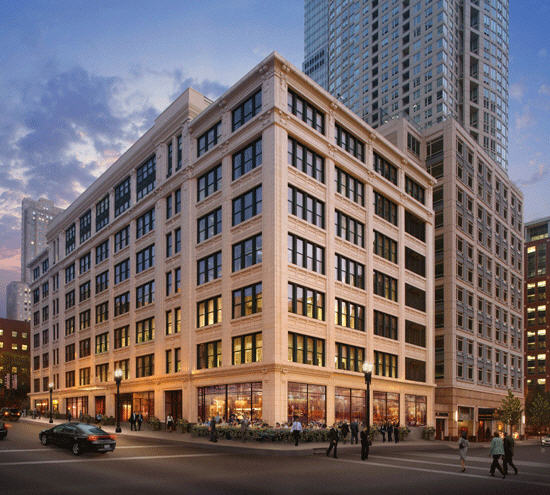
He operated his restaurants on a “scientific” basis, stressing cleanliness, nutrition, and quality while keeping prices low. In 1912 he moved the chain’s commissary into a premier new building on North Clark Street (pictured, today). Thompson’s, then with 68 self-service lunchrooms plus a chain of grocery stores, became a public corporation in 1914, after which it expanded outside Chicago and into Canada. By 1921 there were 109 restaurants, 49 of which were in Chicago and 11 in New York (with a commissary in NYC). By the mid-1920s Thompson’s, Childs, and Waldorf Lunch were the big three U.S. chains, small by comparison to McDonald’s but significant nevertheless.

In politics Thompson served as a Republican committeeman and managed the campaign of a “good government” gubernatorial candidate in 1904. A few years later he failed in his own bid to run for mayor, promising he would bring efficiency to government while improving schools and roads. In the 1920s he financed a personal crusade against handguns.

Despite John R. Thompson’s progressive politics, his business would go down in history as one that refused to serve Afro-Americans. Or, as civil rights leader Marvin Caplan put it in 1985, “If the chain is remembered today, it is not for its food, but for its refusal to serve it.” J. R. died in 1927. Where he stood on the question of public accommodations is unclear but the chain faced numerous lawsuits by blacks in the 1930s. However the best known case occurred in 1950 when a group of integrationists led by Mary Church Terrell was refused service in a Washington D.C. Thompson’s. The group was looking for a case that would test the validity of the district’s 19th-century public accommodations laws. After three years in the courts the Thompson case (for which the Washington Restaurant Association raised defense funds) made its way to the Supreme Court which affirmed the so-called “lost” anti-discrimination laws of 1872 and 1873 as valid.

Over the years the Thompson chain absorbed others, including Henrici’s and Raklios. At some point, possibly in the 1950s, the original Thompson’s concept was dropped. By 1956 Thompson’s operated Holloway House and Ontra cafeterias. In 1971, as Green Giant prepared to buy Thompson’s, it had about 100 restaurants, including Red Balloon family restaurants, Henrici’s restaurants, and Little Red Hen Chicken outlets.

© Jan Whitaker, 2010

131 Comments

Filed under chain restaurants, lunch rooms, proprietors & careers

Beans and beaneries

“Beanery” was less a name that an eating place would claim for itself than a slang term for a cheap and lowly lunch room. In these eating places baked beans was a staple dish going back at least as far as the mid-1800s. Milliken’s Beefsteak & Coffee Room in lower Manhattan offered its customers pork and beans in 1845. The price was 6 cents, the same, surprisingly, as roast beef or chicken pot pie.

Before sweet things became standard breakfast fare, baked beans were considered ideal for the morning meal. In fact the beauty of beans was that they made a square meal 24 hours a day. Like ham and eggs, they were favorites at all-night eating places. They could also be found in other nighttime establishments such as Silk & Anderson’s Saloon, Billiard and Keno Hall in Trinidad, Colorado, established in 1876, where baked beans, ham, and cole slaw made up the free “lunch” spread from 9:00 at night until 2:00 in the morning.

Baked beans could be found in restaurants all over the U.S. – Cincinnati, San Francisco, New Orleans – but it was in hard-edged Chicago, New York, and Boston where the slang term “beanery” especially captured the imagination of writers. Despite the unsentimental words of a 1908 hash house waitress, “There ain’t no romance about pork and beans or any of it. It’s all to the real life, and a punched check for a finish,” novelists of that time loved to set their tales of salty characters in big city beaneries.

Each city’s beaneries had a different character. Chicago’s South Clark Street, “toothpick row,” was full of them but beans also did duty in the city’s saloons where a 5¢ glass of beer earned a free lunch of beef and baked beans, with pickles, olives, and celery for trimmings. New York City was known for its “beef and” places, as they were called. The beef, in this case, was corned and everyone knew the missing word after beef was beans.

In Boston baked beans formed a considerable industry. Bakeries and other bean specialists ran hot ovens full of beanpots every night, turning out 32 million quarts annually which they delivered daily to restaurants and lunch counters. Baked beans often appeared on menus accompanied by brown bread, a combo known as “B. B. B. & B. B.” Even in 1921 when beans were slipping out of favor as a restaurant dish, the Childs chain found demand strong enough to keep them (and oysters) on their Boston breakfast menus.

It was said that baked beans was too frugal a dish to be popular in Los Angeles where garden produce was available year round. Yet “Ptomaine Tommy” DeForest laid claim to inventing a bean dish unique to L.A., the mysteriously named “size,” a hamburger on a bun covered with chili and diced raw onions.

By the 1960s Americans had outgrown their love of baked beans. In a restaurant trade book of 1966 they are listed as “foods to shun,” along with kidneys, chipped beef, turnips, and rutabagas.

© Jan Whitaker, 2008

4 Comments

Filed under food, lunch rooms