Category Archives: food

What was a restorator?

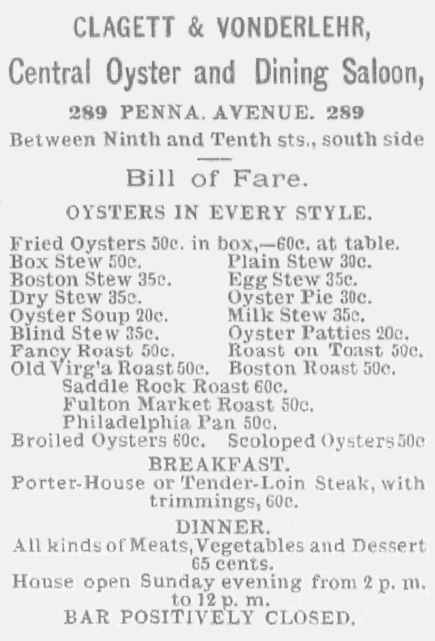
The early French restaurants in this country probably were the best places to eat in the late 18th century and early 19th. Along with gourmet food (they said), they offered to improve the health of ailing patrons. This was in keeping with restorators in France at the time. [Above: part of an 1800 advertisement for a new Portland ME restorator]

Among customs that differentiated restorators from eating places in general was their soup. As in France in the early days of the development of the restaurant, soup was an important part of the business. It was meant to restore health, leading the eating places that specialized in it to call themselves restorators.

Restorators in this country offered other dishes as well as soup, of course, but the fact that they served soup tended to set them apart from other eating places which generally did not offer it at that time. Julien, whose restorator is considered the country’s first “restaurant,” was known as the “prince of soups.” His soups included barley, turtle, and “brown soup,” which was a beef consommé. Like many restorators, he also offered alcoholic beverages including wine.

Most of their advertising does not mention cost, however one that does quotes shockingly high prices in 1797. A Philadelphia restorator named Bossee offered “Jelly Broths, and every thing that may be wished for, as well Liquors and Meats of all kinds. Exactly at Three o’clock there will be a Dinner served, at One Dollar for each person, with half a bottle of old Bourdeaux wine.”

That, and a few comments I’ve found from the days in which they flourished suggest that restorators were patronized by men who were wealthier than the average.

Of course, restorators also provided a wide range of dishes beyond soup. Pastries were specialities too. Boston’s Dorival & Deguise advertised in 1796 that they furnished “every thing that the season affords, such as Meat, Poultry, Fish, Vegetables, Fruit, etc., which will be varied with a great variety of excellent Creams, Pies, Cakes, etc. – such as never fail of pleasing the palate of Gentlemen who are in, or out of Health.” Note that American cooks of that time were not known for their skill in creating pastries.

The custom of many restorators of providing alcoholic beverages put restorators on the list of objectionable public resorts in the eyes of the anti-alcohol forces that gained strength in the 1830s. A magazine titled The Youth’s Companion published an article in 1837 that worried about how (male) youth would spend time “at the fashionable ‘Restorator,’ where the taste of its delicacies and the fumes of the wine cup and the cigar will soon obliterate the salutary impressions you may have received by reading the Youth’s Companion, or at the Sabbath School.”

It is true that the period in which restorators flourished in cities was in fact considered by historians as “probably the heaviest drinking era in the nation’s history.” [Drinking in America, Edward Lender & James Kirby Martin] But most heavy drinkers were imbibing liquor, not wine.

Nevertheless there were still places called restorators as late as the 1880 census, though maybe they were just restaurants calling themselves that, or a designation made by old-fashioned census takers. Advertisements did not mention soup or an emphasis on health beyond the 1830s.

© Jan Whitaker, 2025

3 Comments

Filed under food, proprietors & careers

Popcorn at the movies

Popcorn isn’t a meal, and a movie theater isn’t usually (with a few exceptions) a restaurant, but it’s summer and my mind is straying. I became curious about how popcorn got so popular with movie goers.

Turns out that popcorn in theaters was a topic destined to become a popular topic with journalists. Columnists were attracted to it, and newspapers often raised the question of popcorn eating in their “people on the street” surveys.

There seemed to be quite a lot of people who strongly disliked listening to popcorn crunching in theaters. And before popcorn boxes and tubs were introduced they also complained of the rattling of paper bags that popcorn was served in.

The earliest complaints I found began in the teens. But long before people began complaining about popcorn in theaters, they complained about peanuts. As early as 1865 a story titled “The Peanut Nuisance” appeared in a New Orleans paper. Of course the theater would not have been showing movies then, but the complaint foreshadows the popcorn debate. The theater goer wrote: “. . . we hold that no gentleman will eat peanuts in a theater. No man can be a gentleman who, for a little self-gratification, will annoy and disgust all those around him.”

Popcorn came to theaters in the early 20th century. Already by 1916 the Majestic theater in Monticello IN was popping and buttering corn with a newly invented “beautiful” electric Butterkist popcorn machine [shown above] that stood proudly in its lobby. The Monticello Journal remarked that the theater was now “in line with the progressive picture houses of the big cities.”

It didn’t take long for complainers all over the country to register their opinions. A letter to the editor of a newspaper in Stockton CA announced that the writer disliked the “rattlings, scrunching and smacking” so intensely that they could barely restrain themselves from “having a violent fit.” By the 1920s commentators were calling popcorn eating at the movies a “craze.” Still, negative reactions filled papers across the country for decades, finally beginning to die down in the 1960s.

Some theaters also disdained popcorn. The Loew’s theaters took the initiative in prohibiting patrons from eating popcorn in their theaters. Not only did the theaters not sell it, they asked anyone bringing it inside to check it. The name of the owner was written on the package and it was returned after the showing.

The official response to complaints about popcorn in theaters included exploring the possibility that popcorn drew rats. The Wichita KS city council, for example, asked the health department to investigate this risk in 1939. No evidence that popcorn threatened health was found.

Even without rats as an excuse, some officials took the route of outlawing popcorn in movie theaters. In the late 1940s there were attempts to pass state laws to ban popcorn in movies in Oregon and Wisconsin. They went nowhere.

Theaters insisted that they needed the revenue produced by their refreshment counters — where popcorn was the big seller. In 1946 a theater in San Diego admitted that one week their candy counter took in more money than the movie that was playing. By the early 1950s concession sales were seen as essential for economic health, all the more so as television became common. A story reported that an accountant representing theater owners told the House Ways and Means Committee in 1953 that “only popcorn and candy had kept the movies in business during the last two years.”

The popcorn wars came to an end. If some people disliked popcorn crunching they kept it to themselves.

Public attention turned to what kind of movies stimulated popcorn sales most successfully. Gangster and cowboy movies and musical comedies were said to rate highly unlike “the serious and thought-provoking types.” Elvis movies were said to sell the most popcorn in 1956 and 1957. The Exorcist was the winner in 1974 and Jaws was said to be the “popcorn picture” of all time. Some psychologists were of the opinion that the hand-to-mouth activity was soothing.

© Jan Whitaker, 2025

10 Comments

Filed under food

Catering to women’s tastes

In the 19th century and much of the early 20th restaurant owners viewed women’s tastes as quite different than men’s.

Women did not patronize restaurants to a great extent in the 19th century, but it seems when they did they preferred places that furnished ice cream, pastries, and cakes, not only for immediate consumption but also to order for the home. For instance, in 1865 in Milwaukee WI there was Thompson’s Ladies’ Restaurant, Ice Cream Parlor, and Confectionery which provided three meals a day plus Tea, along with Wedding and Party Cakes to order. [Advertisement shown below]

Such places were seemingly rare and I doubt that their customers included women of little means. In 1869, it was reported that poor working women frequented “coffee places” where they ordered simply bread or cake with coffee. But even these may have introduced the long-lasting idea that women were particularly fond of sweet foods.

I wonder if it was often the case that they made do with a simple sweet dish because that was all they could afford.

Of course, sweet dishes were not women’s only preferences if they could pay more. Oysters were also popular choices — as they were with men.

Commentary about women’s food preferences was sometimes insulting. The idea seemed to be firmly planted for decades and well into the 20th century that women were frivolous eaters while men chose real food. That would be repeated time and time again in books and newspaper stories. For instance:
1888, New York Tribune: In ladies restaurants a woman might order salad, ice cream, oyster patty, eclaire, cheese cake, “and perhaps one or two other varieties of whipped froth and baked wind.”
1894, Charles Ranhofer cookbook: “Should the menu be intended for a dinner including ladies, it must be composed of light, fancy dishes with a pretty dessert; if, on the contrary, it is intended for gentlemen alone, then it must be shorter and more substantial.”
1917, Housewives Magazine: a woman “expert” reported that men made “habitual food choices” while women “go by eye-appeal.” Typically, she explained, almost all men ate meat, while women preferred fruit salad, beans or macaroni, and cake and ice cream.

By the mid-1920s women were making up a larger proportion of restaurant goers than ever before, possibly as much as 60%. Pleasing them was becoming essential. The trade magazine Restaurant Management advised: “Many managers have not yet seen the light. If you doubt this watch the places that get the women’s trade. In the majority of cases these restaurants serve light, tasty foods in homelike surroundings and at a reasonable price “

But even as women’s patronage became important, there were still commentaries that were insulting. Eating habits were changing, possibly due in large part to Prohibition, leading the former proprietor of Keen’s Chop House in NYC to comment in 1931: “Formerly when a man took a lady to dinner he not only selected the restaurant, he took great pride in ordering a particularly choisi, well-balanced meal.” But, he said, it had become clear that now women “would rather have had the unholy hodgepodges you see them reveling in to-day.”

Even some women criticized women’s food choices. In 1937 a woman who had worked for major restaurant chains said that to succeed in the Depression tea room operators had to recognize that men wanted “real food” . . . not “Canary bird food.” [Above: Boston tea room’s “canary bird food.”]

Slowly, insults concerning women’s tastes died down, although differences in restaurant orders based on gender were still observed. In 1934 a woman tea room operator said that “The conventional woman’s taste runs to chicken patties, peas, and ice cream; men like steaks, French fried potatoes, and apple pie.”

Had differences largely disappeared by the 1950s? When I wrote an earlier post I thought that numbers of men still wanted what they regarded as he-man meals and that there were restaurants willing to cater to them.

Yes, a chef commented in 1952, there were those who still believed that men preferred “an exclusive diet of thick mutton chops, brawny steaks, large ribs of beef and mountainous apple pies” while women went for “chicken patties, asparagus points and meringue shells.” But he declared this false, saying in his experience women “want their double sirloins as big as those served to their husbands,” while the most popular choice at a NY men’s club was “creamed chicken with sherry,” despite the fact that the chicken was cut up into small chunks.

But there may still have been some resistance on the part of men about eating foods tagged as feminine. Salads are one example, a favorite with women since the 19th century, but not so much with men. That included meat and fish salads, and in more modern times, green salads. And an industry publication reported in 1960 that a large hotel lured men into ordering a sandwich by naming it “The Mountain Climber.” It was made of turkey, ham, and cheese and had been previously ordered only by women.

However, as much as the differences in the restaurant orders of men and women may have declined in the late 20th century, it seems that with a few exceptions women still haven’t achieved equal stature or full recognition as gourmets or culinary pace-setters.

I’d love to hear readers’ thoughts on this topic.

© Jan Whitaker, 2025

13 Comments

Filed under food, women

Sell by smell

Through much of U.S. restaurant history, smells were a problem. Partly this was because of a lack of ventilation that caused the build up of odors of all kinds blended together in a miasma. Then there was also the ideal of the smell-free middle-class dining room where even delicious kitchen aromas were frowned upon. All this kept numbers of people out of restaurants.

Eventually this began to change. Better ventilation was achieved and restaurants learned to use good smells to their advantage, even as a kind of advertising. Today a restaurant owner might even hire an aroma consultant so that they may begin “profiting from pungency”!

Clearly that was exactly what a small Wisconsin drive-in did when the owners developed the “pizza-burger” following the end of World War II. Of course they didn’t hire a consultant, but their new type of hamburger was deliciously smelly in a way that attracted customers.

The sandwich was launched sometime around 1951 by veterans who had returned from the war, got a VA loan and opened a small roadside stand in Muskego WI selling burgers, hot dogs, and frozen custard. Soon it became a drive-in named Big 3 from which the partners launched the pizza-burger. Served on a toasted bun, it was made of ground pork and beef, cheese, chopped onion, and pizza sauce, the latter being the special, secret ingredient.

By 1956 franchises had been sold in every state in the U.S. As with Colonel Sanders’ fried chicken and “Chicken in the Rough,” franchisees bought the right to advertise with the product’s logo – the boy with the freaky nose – and a guarantee that the company would not license competing sellers within a delineated territory. It was not long before the inventors found food producers who bought rights to sell the pizza sauce and the frozen patties, greatly simplifying production for drive-in operators. [above: 1956 advertisement, Washington PA — note “Not a Gimmick”]

Despite the licensing, however, I have no doubt that many eating places around the country that claimed to offer pizza-burgers were not authorized and used their own guesswork recipes. One that I saw incorporated black olives.

The basic sandwich was so popular with teens that a similar one was soon adopted by school cafeterias, although recipes may have varied – greatly. For example, one I found used ground bologna and beef, and substituted spaghetti sauce for the carefully spiced pizza sauce.

The Muskego drive-in, later turned into a full-scale restaurant, is gone. But as of 2004 when the founder’s son was interviewed there were still a couple of places producing pizza-burgers under franchise.

Remarkably, the pizza-burger has been memorialized with a roadside marker.

© Jan Whitaker, 2024

Leave a comment

Filed under drive-ins, food, roadside restaurants

Free birthday cake!

A trip to Maine to celebrate two birthdays (not mine) got me thinking about how restaurants observe these events with customers. [above: at Wolfie’s, Miami, 1986]

The custom of restaurants recognizing birthdays with songs, cakes, fancy drinks, free dinners, and serenades took hold in the 1960s. It’s unclear whether it had anything to do with an IRS decision ca. 1959 not to charge a cabaret tax in eating places where servers sang birthday greetings.

But there was a notable earlier cake bestower: cafeteria king Clifford Clinton of Clifton’s fame. By 1945 he claimed to have given away over 110,000 birthday cakes to patrons. Of course since his restaurant was a cafeteria, it’s likely that there were no singing waiters involved.

Apart from the IRS, another barrier to growth of the custom was the royalties levied by a copyright holder who claimed rights to the Happy Birthday song until 2015. It led many restaurants to write their own birthday songs, particularly if they were large chains that would have been most likely to be caught. Otherwise, it seems that in independent restaurants waiters and waitresses sang the familiar, homey version pretty much fearlessly.

Songs aside, the special attraction that actually brought celebrants to a restaurant for their birthday was probably the freebies. There were numbers of people who wanted a free meal, dessert, or drink but didn’t really like being in the spotlight.

Despite all the deals, generous or skimpy, some diners rejected the whole idea of a public celebration of birthdays in restaurants. In his Chicago Sun-Times column, Roger Simon advised, “Never eat in a restaurant where the waiters sing ‘Happy Birthday.’” He echoed the spirit of the author of the “Lonely Man’s Doggy Bag Diary” who wrote in the Oakland Tribune that along with lobster bibs, wooden menus, flames, mushrooms, anchovies, patés, and so much more, he disliked “waitresses singing Happy Birthday to everyone.” The T.G.I. Friday’s chain eventually dropped the custom, sensing that many customers found it embarrassing.

Of course many restaurant owners found birthday (and anniversary) celebrations attractive as a way to draw customers. But it seems that deluxe restaurants were less likely to observe this custom, possibly judging that their guests weren’t looking for reduced prices or free desserts, preferred privacy, and didn’t find the drama of singing waiters appealing.

Restaurant chains, on the other hand, tended to make a big deal of their generosity toward birthday celebrants. As the growing popularity of television kept families home and reduced restaurant visits in the 1950s and later, a restaurant management advisor suggested “. . . one possible way to help offset the decline in business might be to get more people to celebrate birthdays by going out to dinner.” Many restaurants created birthday clubs.

Often customers seeking birthday specials were required to fill out forms prior to their birthdays, and to notify the restaurant when they were planning a visit. And, quite a few restaurants required that would-be celebrants bring along their birth certificates, suggesting there were customers who lied about their birthday.

Some customers evidently had a much harder time convincing restaurants that it was really their birthday. As late as 1991, a 13-year old Black girl in Vallejo CA was refused her free birthday meal at a Denny’s restaurant even though she brought her baptismal certificate. She told a reporter that “They just said that wasn’t enough and made a big scene. I felt embarrassed. It was humiliating because other families in there were looking at us, and I guess they thought we were some kind of bad criminals.” Her case became part of a successful class action suit brought against Denny’s in California.

There were some restaurants that developed more elaborate rules concerning the precise kind of “deals” they were offering and who was eligible. The Bill Knapp’s restaurants offered free birthday cake, not just for the guest celebrating their birthday, but for the entire party. The main guest also benefited from a 1% reduction in the price of their meal for each year of age over 11. Another Michigan restaurant, Dennison’s in Farmington Hills, offered cake plus a discount on the celebrant’s meal based on the size of the party. Benihana in New Orleans served a free dinner valued at upwards of $14 to the birthday guest in the early 1980s, but only if there were four in the party.

Cake wasn’t the only kind of birthday food offering. Brennan’s in New Orleans presented French bread decorated with cherries, olives and lemon slices. The bread was not meant to be eaten, just to hold a candle. Accompanying it was a character made of fruit and vegetables, followed by an Irish coffee. Cocktails took the place of dessert in some restaurants. At the Asian restaurant Jade East in New Orleans a celebrating guest received a flaming pousse-café with layers of blue Curaçao, grenadine, and rum or gin.

I’m not expecting any free cake or singing waiters/waitresses in restaurants we’ll visit this weekend — but if I’m wrong I’ll report back.

© Jan Whitaker, 2024

9 Comments

Filed under chain restaurants, family restaurants, food, restaurant customs

Beer & barbecue at the fair

The 19th century was the century of world’s fairs, but the United States did not have a fair to call its own until 1876 when Philadelphia celebrated the 100th anniversary of U.S. independence. After Philadelphia, Chicago’s, in 1893, was the largest in this country. [above, outdoor beer garden at the Tyrolean Alps]

So . . . for St. Louis organizers of the Louisiana Purchase Exposition in 1904, when St. Louis was the fourth largest American city, second-largest Chicago figured as the one to beat. St. Louis fair organizers hoped to surpass the Chicago fair in all ways, particularly attendance.

The St. Louis fairgrounds occupied an immense 1,200 acres, double the area of Chicago’s. Not only was the area very large but so were the buildings. A hotel on the fairgrounds, the Inside Inn, had 2,357 rooms and dining rooms accommodating 2,500 at a time. The Palace of Agriculture building alone covered 23 acres. Big money too: the entire outlay for the city, U.S. government, participating nations and states, exhibitors, and concessionaires came to over $500M in today’s dollars.

Planning the fair’s restaurants, with enough variety in fare and price to please fairgoers, was a formidable task. In St. Louis, those interested in being considered included owners of existing city restaurants, experienced professionals who made a career of running restaurants at fairs, various exhibitors who wanted to include a themed restaurant as an added attraction, some state and foreign nation buildings and exhibits, and food and drink companies and promoters.

The offerings ranged from about 50 stands selling sandwiches to 75 full-scale restaurants, some of them expensive. There were also oddities such as a proposed underground eating spot in the Anthracite Mining exhibit’s coal mine with waiters dressed as miners. Or, the restaurant in Hereafter — a tour through Dante’s Inferno — where diners ate off coffins in the Café of the Dead, probably an imitation of the Café of Death in Paris’ Montmartre.

Without a doubt the most lavish, expensive, huge, and overall outstanding restaurant was the Tyrolean Alps, organized by two prominent restaurateurs, New York’s August Luchow and St. Louis’ Tony Faust, plus three other experienced St. Louis caterers, and with many backers including St. Louis brewer Adolphus Busch. Like several others it could handle an estimated 2,500 diners at a time. Despite all the banquets it catered, the famous people who dined there, its extensive menu, its general popularity, and its gross receipts of nearly $1M, like so many concessions it managed to lose money by fair’s end. It carried on for a time post-fair, into the summer of 1905.

Even before the fair ended some restaurant concessions had failed. The two owners of the Japanese restaurants [shown above], overcome with debt, filed for bankruptcy. The German Wine restaurant that charged $2 for a lunch with wine, proved to be far too expensive for fairgoers. Also, beer, not wine, was the preferred beverage at the fair, costing a nickel for a glass or a dime for a stein. Beer pavilions, such as Falstaff’s and Blatz’s, competed with the almighty Budweiser, widely available and practically the official beer of at least 17 of the restaurants.

I haven’t found reports on how well the food stands did, but I’m guessing they fared better than many of the full-scale restaurants. The Barbecue, with six stands spread around the fairgrounds, was quite popular with the crowds. A reporter from Wichita KS let her readers know that it was a good deal, not requiring much money or time in being served, whether ordering hot beef, pork, mutton or sausage sandwiches. Plus, she reported, they supplied free paper cups and spoons (!).

Another winner was the enormous Inside Inn, the only hotel on the fairgrounds and the biggest financial success of the fair. A ham sandwich was 10 cents, while a complete dinner was 75 cents, and breakfast and lunch each cost 50 cents. At fair’s end, the Inn showed a sizable profit.

There were about a half dozen women operating restaurants. Prominent among them was well-known cookbook author Sarah Tyson Rorer who had also been at the Chicago fair. She ran a large restaurant seating 1,200 prominently located in the East Pavilion building [shown above], and she taught cooking classes. Harriet McMurphy, a food reformer and domestic science lecturer from Omaha, ran an eating place designed for people with digestive difficulties. She had very definite ideas of what was best to eat, rejecting pastry as something that should not be eaten more than once a year. Instead she offered baked apples with almonds and whipped cream. A local woman, Mrs. Reid, operated a breezy tea room called The Bungalow designed for women guests.

A few of the women restaurant operators also did the catering for some of the many banquets given during the fair, possibly including wedding ceremonies held in Ferris wheel gondolas [visible above] accommodating 60 persons.

The St. Louis fair has often been criticized for its disrespectful treatment of Philippine tribal people brought there to demonstrate the U.S.’s beneficial domination of developing nations considered inferior. Evidently they adjusted to modernity very quickly, soon tiring of the rice diet they were fed at the fair and demanding an American diet such as found at the restaurants. They were granted their wish.

A lesser known scandal was how Black fairgoers were treated. In June, a group of Black visitors observed notices posted by restaurants on the Pike that read “No colored people served in this restaurant.” Then complaints were received that white servers were refusing to sell glasses of water to Black visitors, claiming that if they did they would lose their white customers. The fair organizers expressed dismay and there was discussion about hiring a Black woman who would run a stand to greet visitors of color, but that did not materialize and the number of Black visitors declined. The water issue was supposed to be “solved” with separate tanks of water and distinctively marked glasses. Unsurprisingly, the Black press denounced the fair. The Cleveland Gazette, for instance, advised “Our people had better stay away from the St. Louis World’s fair. There is much discrimination on the grounds.”

In the end, the St. Louis World’s Fair drew about 8 million fewer visitors than had Chicago’s exposition. The sideshow amusements lost so much money that the chairman of the Pike Financing Co. reported, “So universal has been the losing on the Pike that not one of the St. Louis shows will be taken to Portland,” the site of the next big fair. Despite all the losses for private investors who naively expected to make money, the fair’s Exposition Company managed to break even after paying back government loans.

© Jan Whitaker, 2024

11 Comments

Filed under food, Offbeat places, racism, women

In the kitchen at Sardi’s

To gather recipes for the Sardi’s cookbook Curtain Up at Sardi’s [1957], co-author Helen Bryson spent two and half weeks, six days each week, in Sardi’s restaurant kitchen. She asked a lot of questions about the food preparation. It was the only way to put together a cookbook, something that she said had never been done before in the restaurant’s long history that dated back to the 1920s. [The restaurant pictured above in the 1950s; below is a 1924 advertisement — “Your Restaurant” is aimed at theater people]

The recipes were intended for use by the public. Whether the restaurant’s chefs ever looked at them is another question. Of course the book’s recipes were adapted for smaller amounts than were normal for the restaurant, and they were no doubt simplified for home cooks too.

And yet the book also includes 26 sauces and dressings, some of them classic French sauces that are far from simple. “Sardi Sauce,” for instance, is made with Sherry wine, light cream, and whipped cream, but also includes Velouté Sauce and Hollandaise Sauce. Velouté Sauce is made with chicken stock and roux (chicken fat and flour). The book also includes a much simpler version, perhaps designed for the homemaker, called Emergency Velouté Sauce (butter, flour, canned broth, and bay leaf).
Later, in contrast to the intricacies of sauce making, comes an amazingly simple recipe for Spaghetti with Tomato Sauce en Chafing Dish which calls for spaghetti, boiling water, salt, tomato sauce (can be canned!) and grated Parmesan. The cook could instead choose to make the book’s Tomato Sauce, but that, by contrast, calls for 11 ingredients including a ham bone. Using that sauce the spaghetti might qualify for a chafing dish but otherwise, I think not.

Mid-century dishes at Sardi’s covered a wide range of cuisines. Italian and French were in the lead, as were favorites of indeterminate origin such as Supreme of Chicken à la Sardi ($1.50 in 1939). But the book also includes hot tamales with chili con carne and turkey chow mein, and even makes room for a few “low-calorie plates,” which were becoming popular in the 1950s.

The recipe for Supreme of Chicken à la Sardi is as follows — minus recipes for the accompanying Duchesse Potatoes and Sardi Sauce. Together, those two components add a major amount of cream to this mid-century “specialty of the house.”
1 cup Duchesse Potatoes
6 slices cooked breast of chicken, heated in sherry wine
12 stalks green-tipped asparagus, canned or cooked
1 cup Sardi Sauce
2 teaspoons grated Parmesan cheese
After being assembled on a serving dish, with the chicken resting on the asparagus, surrounded by piped potatoes and all covered with Sardi Sauce and Parmesan, the dish was to be browned lightly under the broiler.

Though Sardi’s food was considered good, the restaurant was not among those that won awards for their cuisine. It is rarely mentioned in “best food” books and articles. Rather, the restaurant’s fame derived from its role as a haven for theatrical people of every kind – actors, agents, producers, publicists, and devoted patrons of live theater. In the early days, Vincent and Eugenia Sardi won over theater people by extending credit to those down on their luck. To the wider public it was most attractive as a site for celebrity spotting and autograph collecting. The restaurant was also well known for years for its canny hat check “girl.”

In the 1963 movie Critic’s Choice Bob Hope plays a critic whose wife, played by Lucille Ball, writes a play which he will need to review. Since it isn’t very good, an honest review would threaten his marriage. [Lucille Ball does not appear in the Sardi’s scene shown above.]

Like the Brown Derby in Los Angeles and the London Chop House in Detroit, Sardi’s decorated its walls with portraits of its celebrity guests – and still does. Some of the older drawings, from the 1920s through the 1950s, have been saved and can be seen by appointment at the NY Public Library.

Until 1947, when Vincent and Eugenia (“Jenny”) Sardi retired and sold the restaurant to their son, Vincent Jr., they divided duties, with Vincent in the dining room greeting guests and Jenny looking over the kitchen and doing the buying. According to one account she was the beloved member of the couple, attracting theatrical guests to the kitchen to visit with her, while Vincent did his duty greeting guests wearing his “guest smile.” A profile in 1939 referred to him as a “chilly individual.” He did, however, give his wife credit for her role in the restaurant’s success. “She does it all,” he said in one interview. [above: the Sardi’s in 1939]

Despite some rocky years and changes in ownership, Sardi’s restaurant, still decorated with celeb faces, continues in business today on W. 44th Street.

A final note: in case anyone was wondering, Sardi’s in New York had no connection with the restaurant of the same name in Los Angeles that opened in the 1930s clearly modeled on the original – a situation that vexed the Sardis.

And thanks to the kind reader who sent me a copy of Curtain Up.

© Jan Whitaker, 2024

4 Comments

Filed under food, patrons, popular restaurants

Happy birthday to a salad?

This morning I heard a story on the radio about Caesar salad that claimed today was the salad’s 100th birthday.

I can understand that it becomes difficult to come up with holiday stories that are novel and of general interest. But I have my doubts about the accuracy of that anniversary date.

Still, I will take advantage of it to recommend a story about Caesar salad that I wrote in 2009, at a time when my blog was fairly new and had fewer readers.

Meanwhile, have a great holiday!

5 Comments

Filed under food

Finds of the day

Slim pickings for a restaurant ephemera collector at the giant Brimfield flea market recently, but at least I turned up a few finds. Among them were two small menus and a business card, all from eating places run mainly by women. The size of the two menus makes me wonder if male-owned restaurants ever employed any this tiny.

The Henniker Tea Room

The oldest of the three finds was a menu from The Henniker Tea Room in 1932. It took me a while to realize that its location “Midway between Westfield and Brocton” put it in New York state.

I discovered that it is a relic of hard times in a double sense. The front of the menu says “Tenth Season,” so it was begun in 1922. That was the year that the owner’s husband, a superintendent of schools, died of tuberculosis, which probably meant that she had to earn a living for herself and her two daughters.

The second hardship associated with this menu is that it dated from the depths of the Depression. I suspect that is the reason she stopped charging an extra 15 cents for salad with Sunday dinner specials, and reduced the price of potato salad from 30 to 25 cents.

Possibly the tea room failed in the Depression because by 1940 Frances Swain was living in a lodging house and working as a secretary for the YMCA. But her fortunes must have improved after that because in 1950, at age 66, she had become director of the YMCA and headed her own household with additional income from three roomers.

The Salmagundi

The Salmagundi was a seasonal tea room that probably opened in the late 1920s. It was located on Beacon Street in Boston, in a rooming house that the married couple who operated it lived in. I’m guessing the menu shown here is from the early 1950s, an era when tomato juice appetizers were still popular.

The word salmagundi was an old-fashioned but rather artsy word. It could apply to many kinds of mixtures, whether art, collections of short stories or poems, or a multi-ingredient salad.

The Salmagundi was a frequent meeting place for women’s clubs, bridal showers, business and professional groups, and gatherings of college alums.

Duncan Hines, in the 1946 edition of Adventures in Good Eating, declared The Salmagundi “One of the most popular places in Boston,” and praised its “unusual food combinations, delicious hot breads, and good desserts.”

A student at the Massachusetts Institute of Technology took his girlfriend to dinner there in 1950. He said it was a quiet place with three small dining rooms and a limited menu but one he approved of since it included lobster, steak, and chicken. They ordered duck and found it delicious, and liked the “fancy rolls.” But the check totaled a bit over five dollars, so he had to borrow some money from his “chick.”

Around 1960 it passed into new hands, and the owner tried to get a license to serve wines and malt beverages. I found no trace of it after 1962.

Mary Hartigan Restaurant

Although Mary Hartigan’s business card is the smallest of the day’s finds, I discovered that hers was the most successful business of the three. She established it in 1933 in what was formerly a Dutchland Farms that she had run. [above, front and back of business card]

The Dutchland Farms chain in New England, beginning as dairy stores, developed into restaurants quite similar to Howard Johnson’s shortly before the chain failed in the Depression. Some were converted to Howard Johnson’s, but Mary Hartigan, who also ran one in Harwich Port MA, decided to run her Dedham place independently under her own name.

Nevertheless Mary Hartigan’s and Howard Johnson’s shared a similar appearance as well as a similar menu. A Hartigan menu from 1952 shows that she kept the strong link to dairy products in her new restaurant, dedicating an entire page to ice cream concoctions such as sodas, sundaes, freezes, frappes, floats, and malted milk. In addition to the standard steak and chicken entrees, the menu also presented a variety of seafood, including seafood plates, baked lobster, Cape scallops, broiled swordfish, and fried clams. Tomato, grapefruit, and pineapple juice served as appetizers.

1952 was also the year that the restaurant acquired a liquor license. In 1959 the building was enlarged and remodeled. [above, business card interior]

When Mary Hartigan died suddenly in 1961 her obituary in the Boston Globe observed that the restaurant was “one of the best known in the state.” She left it to a niece who ran the business until 1970 when it was sold to a new owner who said he planned to keep the staff, some of whom had worked there for three decades.

© Jan Whitaker, 2024

6 Comments

Filed under food, menus, proprietors & careers, restaurant prices, tea shops, women

The ‘bohemian’ restaurant in fiction

There was a time when many Americans considered inexpensive French or Italian restaurants naturally bohemian – wild and crazy, not too clean, filled with oddball characters, and offering menus of unfamiliar and dubious dishes. But nonetheless fascinating. Novelists liked to use them as settings, so they turned up in fiction of the late 19th and early 20th centuries as the excerpts below illustrate.

In the final sample presented here we meet up with a restaurant keeper who wishes his place was more bohemian because that would make it a better draw.

1886 The Midge, Henry C. Bunner – To celebrate the Midge’s 16th birthday, her guardian, a doctor, takes her out to dinner at a table d’hote in New York City’s French quarter.

It was a modest feast, only a plain table-d’hôte dinner, eaten in the heart of the quarter, at a cost of half-a-dollar apiece. They had tried more elaborate dinners, at the great hotels up-town; but they preferred the simpler joys of Charlemagne’s restaurant. They both possessed that element of Bohemianism which belongs to all good fellows; the Midge was a good fellow, as well as the Doctor.

Charlemagne’s is a thing of the past; but he was a jolly king of cheap eating-house keepers while he lasted. He gave a grand and wholesome dinner for fifty cents. The first items were the pot-au-feu and bouilli. If the pot-au-feu was thin, the bouilli was so much the richer. And if the bouilli was something woodeny, why, you had had all the better pot-au-feu before it. Then came an entrée, calves’ brains, perhaps, or the like; a rôti, a vegetable or so coming with it; a good salad, chicory or lettuce or plantain, a dessert of timely fruits, a choice of excellent cheese, and a cup of honest black coffee. And with all this you got bread ad libitum and a half bottle of drinkable wine, that had never paid duty, for it came from California, though it called itself Bordeaux.

1896 Some Modern Heretics: A Novel, Cora Maynard – About two women who adventurously move to Boston to live in a flat and do their own housework. But they don’t know how to cook.

And the alternative of tramping out to restaurants at all hours was a Bohemianism which, in spite of her late advancement, she could not contemplate serenely. It appeared positively disreputable. If her father knew of the actual circumstances of her situation a prompt withdrawal of his original consent would have cut short Vida’s visit on the spot; but she left him in tranquil ignorance . . .

By seven o’clock the girls realized that it was time to have dinner, and then came Vida’s great trial. It was too late to think of cooking anything themselves, so there was nothing to do but face the restaurant.
“Isn’t it a very – a very queer thing to do?” Vida ventured feebly. She would much rather have bought some crackers and eaten them at home in their unpalatable dryness.

“Why, no. It’s a little quiet place we’re going to. I’ve often been. You know we girls don’t believe in being restricted by senseless prejudices. Good gracious, one can’t be so dreadfully hampered in these days of rationality!”

Before long Vida got used to the restaurant, and even enjoyed it when they felt too tired or too lazy to struggle with the cookbook. She enjoyed the whole queer situation and got a taste of such freedom as she had never before dreamed of.

1910 Predestined, Stephen French Whitman – Featuring Benedetto’s, a favorite with artists in New York City.

On the north side of Eighth Street, close to Washington Square, an old, white dwelling-house had been converted into an Italian restaurant, called “Benedetto’s,” where a table d’hôte dinner was served for sixty cents. Some brown-stone steps, flanked by a pair of iron lanterns, gave entrance to a narrow corridor. There, to the right, immediately appeared the dining-room, extending through the house — linoleum underfoot, hat-racks and buffets of oak aligned against the brownish walls, and, everywhere, little tables, each covered with a scanty cloth, set close together.

Felix, at the most inconspicuous table, consumed a soup redeemed from tastelessness by grated parmesan, a sliver of fish and four slices of cucumber, spaghetti, a chicken leg, two cubic inches of ice cream, a fragment of roquefort cheese, and coffee in a small, evidently indestructible cup. Then, through tobacco smoke, he watched the patrons round him, their feet twisted behind chair-legs, their elbows on the table, all arguing with gesticulations. Sometimes, there floated to him such phrases as: “bad color scheme!” “sophomoric treatment!” “miserable drawing!” “no atmosphere!” Benedetto’s was a Bohemian resort.

1912 The Soul of a Tenor, W. J. Henderson – According to a review, “The reader is taken behind the scenes at performances and rehearsals and into the dressing rooms and boudoirs of the artistes; into the café, where foreign singers congregate.”

As for those women who figure in all animated chronicles of the present kind, some of them may have had husbands, but they have tried to forget them, and usually with success. Little Italian restaurants, with hot and opaque atmospheres, are in accord with their temperaments, for their part of the opera world is hot and opaque at all seasons of the year.

It was not a pretty place, that particular Italian restaurant. All the men in it seemed to require cigarette smoke as a condiment for food, and they chewed and puffed alternately. The room was filled with a wreathing blue fog, through which strange head-dresses and still stranger gowns could be seen, for the denizens of this world always garb themselves in streamers of splendor and look not unlike perambulating lamp shades.

They were not only singers. Some were impecunious painters and some were patrons of the arts, who were wont to shout “bravo” from the highest seats in the temple. It gave them a fine satisfaction to eat within reach of real singers. And they were not all Italians, for one feast of spaghetti makes the whole world of Bohemia kin.

1914 Our Mr. Wrenn; The Romantic Adventures of a Gentle Man, Sinclair Lewis – Mr. Wrenn is a lonely lodger who timidly invites a neighbor, Theresa Zapp, to dinner at a restaurant run by Papa Gouroff. She is described as “forward” and “gold-digging.” Although she is not interested in Mr. Wrenn, she accepts his invitation, but fails to be impressed by the restaurant.

The Armenian restaurant is peculiar, for it has foreign food at low prices, and is below Thirtieth Street, yet it has not become Bohemian. Consequently it has no bad music and no crowd of persons from Missouri whose women risk salvation for an evening by smoking cigarettes. Here prosperous Oriental merchants, of mild natures and bandit faces, drink semi-liquid Turkish coffee and discuss rugs and revolutions.

In fact, the place seemed so unartificial that Theresa . . . was bored. And the menu was foreign without being Society viands. It suggested rats’ tails and birds’ nests, she was quite sure. She would gladly have experimented with pate de foie gras or alligator-pears, but what social prestige was there to be gained at the factory by remarking that she “always did like pahklava”?

Papa Gouroff was a Russian Jew who had been a police spy in Poland and a hotel proprietor in Mogador, where he called himself Turkish and married a renegade Armenian. . . . He hoped that the place would degenerate into a Bohemian restaurant where liberal clergymen would think they were slumming, and barbers would think they were entering society, so he always wore a fez and talked bad Arabic. He was local color, atmosphere, Bohemian flavor.

© Jan Whitaker, 2024

6 Comments

Filed under alternative restaurants, ethnic restaurants, food, Offbeat places, patrons