Category Archives: elite restaurants

Famous in its day: Café Johnell

John Spillson came from a restaurant family, so it’s not entirely surprising he went into the business himself, eventually establishing the Café Johnell in Fort Wayne IN in the 1960s and winning endless awards through the years. [Above: ca. 1974]

And yet his path to success was surprising. After working at his father’s restaurant in Fort Wayne, the Berghoff Grill and Gardens, until WWII, he opened his first restaurant in 1951. It was called Meal-A-Minute. I could learn nothing about it other than it went bankrupt the following year.

In 1956 he had a new restaurant, Big John’s Pizza on South Calhoun, at the same address that would one day become Café Johnell. (The nickname “Big John” stuck with him for many years, referring to his height and overall size.)

In 1960 John opened a second pizza outlet on North Clinton. Soon he began to transform the South Calhoun pizza place into an Italian coffee house called Café Johnelli. When a local columnist visited it he noted that it served a variety of coffee drinks as well as an unusual lettuce salad, and baklava for dessert. He concluded that dining at Johnelli’s was “new and different” and “a rare treat.” In 1962 the size of the coffee house doubled and a year later John dropped the I from Johnelli.

In 1963, he adopted a French identity for the restaurant. As he explained it, “I dropped the Italian food because of the Kennedys. They were serving French food in the White House and wine with dinner. I looked at all the publicity they were getting; the public wanted to do what the Kennedys were doing. . . . So I . . . .decided to go French.”

As The Holiday Magazine Award Cookbook noted in 1976, the pizza parlor was “reincarnated . . . as an elegant French restaurant and [he] ran it with such panache that kings, stars of screen and field, everyone within a 200-mile radius who wanted a truly decent meal, flocked to his Café Johnell. Today, in a city noted for auto pistons, life insurance and high school basketball, it’s Spillson’s restaurant that attracts new top executives.” [Above: advertisement from July, 1959, prior to the transformation]

Holiday Magazine awards were some of the almost uncountable number of awards showered on Johnell’s beginning in the 1960s and continuing over the years. They recognized the restaurant’s coffee, wine, and cuisine. But Johnell did not make it into Playboy’s top 25 restaurants in 1984, instead being mentioned as a “regional favorite.”

As John Spillson grew older he brought his daughter Nike into the restaurant as chef, after she was trained in France’s Cordon Bleu. He also began to groom some of his other children for positions as well. Longtime cook Elsie Grant also visited Paris, presumably under John’s sponsorship, trained at the New Haven Culinary Institute, and apprenticed at Le Mistral in New York and Maxim’s in Chicago. Her career was notable in demonstrating opportunities for professionalization rarely offered to Black women cooks in this country.

Following John’s death in 1995 his children continued to run the restaurant until it closed in January, 2001. In its last years the restaurant’s ratings declined, with many feeling the time for a restaurant of that kind had ended decades earlier. Nevertheless, the restaurant reviewer for the Journal-Gazette, who was quite critical of the restaurant’s decor in later years, praised it after it closed even though she admitted it was “a prime example of a business too long on a respirator.”

© Jan Whitaker, 2025

7 Comments

Filed under elite restaurants, proprietors & careers

Famous in its day: Fanny’s

Lately I’ve been browsing through The Ford Treasury of Favorite Recipes from Famous Eating Places published in 1950. [illustration from Ford Treasury]

Among the 245 restaurants featured in the book, one stood out. Only Fanny’s gave no recipe. Instead, the ingredients of its salad dressing were simply listed. They were oil, tarragon vinegar, chutney, brown sugar, salt & pepper, mustard, fresh tomatoes, tomato paste, orange juice, ground pecans, garlic, onions, celery, and parsley.

The reason given was that the recipe was a valuable asset for which the owner Fanny Lazzar had been offered as much as $10,000. It was a “secret” recipe which, along with the restaurant’s spaghetti sauce, was closely guarded. The trademark had been registered in 1946.

Through the years the amounts said to be offered for the recipe increased mightily. In 1958 it was up to $250,000 according to the book Who’s Who — Dining and Lodging. (Oh, and it just happened that Fanny Lazzar was on the Advisory Board of Directors of the Who’s Who Historical Society that published the book.)

Fanny Lazzar of Fanny’s Restaurant serving her customers, A. Victor Abnee Jr. and Col. Robert Heuck, October 23, 1962 in Evanston, Illinois.

The more I learned about Fanny Lazzar and her restaurant, the more I began to realize how much effort she put into promotion. She admitted that she needed to have a full house regularly since she had no bar. Evanston was a dry town until 1972, although patrons brought alcohol to Fanny’s with no fear of a police raid. [Note wine glasses on the table in the illustration]

Fanny had started the restaurant in an industrial area in Evanston, Illinois, in 1946. She was a divorced mother of two boys facing the challenge of creating an upscale restaurant in a downscale neighborhood. She approached the local newspaper, the Evanston Review, asking if she could start a weekly column. She was told that restaurateurs did not have columns, so she bought a want ad instead. Almost accidentally, that provided a tremendous boost to her business.

Her Evanston Review advertisement was sent on to The New Yorker magazine by a professor at Northwestern University. The magazine included the entire, lengthy classified ad under the heading “Anticlimax Department (Fried Chicken and Violets Division).” It began with a quotation from John Milton (“‘They eat, they drink and in communion sweet, Quaff sweet immortality and joy”) and then told a story about visiting her uncle and aunt in Italy when she was 6. She spent time lying in the grass and smelling violets. Her aunt called her in to eat, and insisted that she do so even though she said she wasn’t hungry. Her uncle intervened and said she could go back and enjoy the violets. Next her classified ad launched into promoting dinner at her restaurant, suggesting that her “fine spaghetti” with its “rich meat and all butter sauce” would restore “SOMETHING that seemed lost.” Then it gave the restaurant’s hours on Sundays and the prices per various pieces of chicken, for example one chicken leg, 75c.

Marshall Field III, grandson of the department store’s founder, saw the New Yorker’s teasing putdown (did he recognize it as such?) and decided to give the restaurant a try. After his visit he introduced wealthy friends to it, including J. L. Kraft, Oscar Mayer, Richard Sears, and the presidents of Montgomery Ward and the First National Bank of Chicago. Fanny’s was well on its way to becoming a society restaurant. Although her first year in business had ended in the red, she was beginning to build a following.

Over the 40 years she ran the restaurant, Fanny invested in many, many advertisements, as well as producing 40 years worth of weekly promotional columns in the Evanston Review and the Chicago Tribune. Her paid advertisements appeared monthly for years in the Rotarian magazine. Despite being on the so-called wrong side of the tracks, Fanny’s location was not entirely a bad one. The Rotarian’s headquarters were only six blocks from the restaurant and it was close to Northwestern University and not so far from Ravinia’s summer music festivals. [above, an enlarged view of the restaurant, possibly in the 1960s]

She endlessly boosted the restaurant, repeating over and over that it had been honored by foreign governments and the Butter Institute of America, visited by famous celebrities, and written about in more than 165 newspapers and magazines. In her first column in the Tribune in 1955, she reiterated her triumphant claims: written up in 15 national magazines in the first two years; recommended by three of Europe’s finest restaurants in her fifth year, including the Tour d’Argent in Paris; and that she personally still prepared a garlic bread so fine that nobody had ever succeeded in copying it.

It’s likely that all her patrons and many others in the Chicago area, the country, maybe even the world knew Fanny’s saga: spending the first year serving industrial workers in the neighborhood, shoveling her own coal, and sleeping fewer than four hours a night. How she spent a full year each developing her salad dressing and her spaghetti sauce. And how she hired chef Bobby Jordan to fry chicken after he told her he had been “sent by the Lord.” And how she met her second husband, Ray Lazzar, while dining at the Pump Room where he was captain of the waitstaff.

Her success enabled her to live well and to become a local philanthropist. But she seemed to reveal her continuing insecurity after a student at Northwestern University gave the restaurant a poor review in the student newspaper in 1980. He wrote that Fanny’s was “overrated,” decorated to “look like it’s a rich man’s garage sale,” and that the spaghetti sauce was “just a tinge above Ragu,” while the salad dressing tasted “just above vinegar and oil with food coloring in it.” [above: a latter day match cover]

She responded by taking out a full-page ad in the student paper in which she reiterated her success, even going so far as to list in capital letters two columns with names of “GREATS” who had patronized her restaurant. She called her critic a “gross ignoramus” and concluded the long letter saying, “your bungling efforts at reporting a WORLD FAMOUS RESTAURANT WERE NOT ONLY WITHOUT TRUTH, BUT ODIOUS AND ABSURD.”

Two years later the school’s new restaurant columnist decided to give the restaurant another test. He was in agreement with the 1980 review and complained about soggy iceberg lettuce, greasy “orange-flavored” salad dressing and chicken that wasn’t “nearly as crisp as the Colonel’s.”

It’s hard to know if the restaurant had declined or if the student critics were poor judges of quality.
Ray Lazzar died in 1984, which was surely a blow, and the restaurant closed as of the end of July in 1987 at which time Fanny was 81 years old.

© Jan Whitaker, 2025

2 Comments

Filed under elite restaurants, proprietors & careers, restaurant advertising, women

Continental cuisine comes to Orange County

In the mid 1950s Geril and Gosta Muller arrived on the west coast. They were born in Denmark and had graduated from a Hotel and Restaurant School in Copenhagen in 1943. Following that Geril had served royalty at a Royal Gun Club. [Gosta (left of then-president Nixon) and Geril, 1971, at Chez Cary]

After a few years in Reno NV, they would swiftly work their way to the top of the emerging luxury restaurant pyramid in Southern California, managing and eventually owning award-winning restaurants there.

In Reno, the brothers worked at a motel restaurant called The Bundox (meaning boondocks). After a few years Geril went on to San Francisco to work as manager of the Pink Chateau restaurant in the Continental Motel. It may be significant that the Pink Chateau featured steak cooked on a “flaming dagger,” because flaming food would be a featured attraction at their next engagement in Orange CA. There the brothers firmly established their reputations for creating and running fine restaurants. [above: River House Motel, home of The Bundox]

In 1965 the Mullers helped establish Chez Cary, named for owner Cary Sinclair. The Chez, as it became known, set a model for an exquisitely posh and precious style of “continental” restaurant-ing not found much outside San Francisco and Los Angeles at that time. Orange’s residents may have been well off but they were not used to dressing up for dinner. A suit and tie was a requirement at Chez Cary where princely male waiters threatened to outdress their wealthy customers. [1967 cartoon of Geril wearing tuxedo]

The brothers decorated the restaurant lavishly with red velvet upholstered swivel chairs, crystal chandeliers, silver candlesticks, fine china, and old world decorative objects. Geril rounded up a talented kitchen and dining room staff. And, of course, there was quite a lot of tableside theatrics, with salads tossed and dressed, sauces poured, and meats and desserts flamed.

There was a ladies’ menu – i.e., one with no prices — since madame couldn’t possibly be the one paying the bill. And there were ladies’ footstools under the tables. Why the footstools? I don’t know, but they seemed to impress reviewers.

In 1966 the restaurant reviewer from the Long Beach newspaper observed that the bill for a dinner with his wife came to $18 plus tip. But, he wrote, it was the sort of restaurant where guests were not supposed to care what the total came to. He gave it his highest rating: AAAA. While the brothers were at Chez Cary, acting as managers and maitre d’s, the restaurant won four Holiday Magazine Awards, an accomplishment generally attributed to the Mullers.

The Mullers remained at Chez Cary until 1973 when they opened their own restaurant, Ambrosia, in a Newport Beach location formerly occupied by a restaurant called Karam’s [shown above]. Their ability to win awards continued at Ambrosia [below: cartoon of Geril with a Holiday award, 1975].

Ambrosia strongly resembled Chez Cary in luxurious decor and smooth operation. According to one report the restaurant “served so many flaming dishes that at one point it had to get special permits from the town’s fire department.”

Evidently patrons found Ambrosia very comfortable. Five-hour-long meals were not unheard of. By the 1980s the typical tab for two had risen to $150. [Above, Ambrosia in Newport Beach]

But, alas, ten years after opening Ambrosia the building’s owner threatened to double the rent. The brothers hatched a plan to relocate Ambrosia to an elaborate and expensive new restaurant complex they built in Costa Mesa called Le Premier. But Ambrosia didn’t succeed in its new location, closing a mere two years after opening in 1983. Geril bitterly observed that Costa Mesa was not a good location for a first-class restaurant, saying there weren’t “enough well-traveled people in Costa Mesa” and “Anything exclusive will not work there.”

Despite declaring bankruptcy, the Mullers did not give up the struggle to revive Ambrosia. Another restaurateur had adopted the name Ambrosia and the type style the brothers had used. They sued him, hoping to get back the name. Then they bought the restaurant in Newport Beach that had taken over their former location there – 30th Street Bistro — planning to open a new Ambrosia once they won the suit. Sadly for them, they did not succeed.

© Jan Whitaker, 2024

10 Comments

Filed under decor, elite restaurants, proprietors & careers, restaurant prices

Playboy on the town, 1850s style

Quite by accident I discovered a book called Fresh Leaves from the Diary of a Broadway Dandy, a moral tract that conceals its true purpose by enticing the reader with details from the wild life of a roguish playboy in New York city. It was published in 1852. [Except for one Thompson’s advertisement, also from 1852, the images in this blog are from the book.]

The book was promoted with the headline “Rich and Racy.” Author John D. Vose, who had earlier been the editor of a humor publication called The New York Picayune, wrote a few other short “diaries,” one titled Seven Nights in Gotham, another called Yale College Scrapes, and a third, Ten Years on the Town. Alas, I could not find those.

The Diary of a Broadway Dandy describes the doings of one particular young man named Harry for whom money flows endlessly. At one point he enumerates some of the 30 bills he just received from fashionable eating and drinking spots around town, all of which amount to a considerable sum which he dismisses as insignificant.

In an average week, he and his pals spend most of their time drinking uncountable bottles of booze of every kind, destroying property by breaking furniture, mirrors, and other things, and arriving back at their abodes extremely late in a drunken state. The dandies also pursue women, but just how far that goes is not detailed.

When Harry’s parents try to get him to go straight, attend church, and get a job on Wall Street, he balks and moves into a hotel. Clearly he belongs to a set of men identified in an advertisement for Charley Abel’s place on Broadway in 1852 as “the wits, fast men, and bloods of the town.”

His favorite eating and drinking places were plentiful, and included many on Broadway, among them The Arbour, Shelley’s Restaurant and Oyster Saloon, Taylor’s, and Thompson’s. (Note that at that time “saloon” meant a large roomy space, not necessarily a barroom.)

Of course, being a member of the “bon ton,” he also patronized Delmonico’s, taking his pals there for dinner one evening. He clearly liked to play the generous host not concerned about cost, but things didn’t go just as he planned this time. The day before he had ordered a dinner costing precisely $50 (about $2,000 today). When the bill came it was only for $42 and that made him quite angry. Next, he ordered a slice of white bread. Then, to make the point that he expected his exact demands to be met, he buttered the bread, placed a $50 bill on it, and ate it all.

At other places he and his friends visited, they drank vast amounts of booze and left behind a trail of destruction. On one occasion, on which nine bottles of champagne were consumed, then some brandy to settle their stomachs, he described the following:

“By some unknown way, a large mirror got cracked; but, as the landlord was a clever man, and I didn’t want to have no fuss, it being Sunday, I at once settled the loss with seven ten dollar bills, as I was not confident whether I did throw a champagne bottle against it or not. It has rather run in my mind since, that I did, but I won’t be certain. Yes, several chairs got broken, and were minus of legs and backs, yet that was laid to unknownity.”

Other casualties of drinking bouts at various times included damage to himself such as losing the heel of his patent leather shoes, staining his white pants, breaking his gold watch chain and his watch crystal, and breaking a bottle of champagne. He dismissed them, and he didn’t sound terribly contrite about an accident that happened on a Sunday either:

“Sloped from home, and took a drive with a particular friend out to the ‘Abbey.’ Found a great number out there. Our team being very dashy, attracted attention from every quarter – especially of the ladies. We drank twice, order a waiter to brush our attire three different times – made five new acquaintances, and then returned home. On our return we run the tire off of one hind wheel, causing four spokes to fall to the ground. So much for not being at church!”

By the end of the book, after the reader has enjoyed delving into the seamy exploits of the rich, the author issues stern criticisms. He concludes that it isn’t enough for a young man in New York who wants to be seen as an elite to have “the rocks,” go to the right places, or dress fashionably. Along with the rules of being a gentleman, “He must know how to be the part of a knave, a rascal,” . . . cultivating deceit “between the two gateways of virtue and vice, by sun-light and by gas-light.” Why? Because “This is a very wicked city.”

© Jan Whitaker, 2024

1 Comment

Filed under elite restaurants, patrons

Taste of a decade: the 1990s

The decade began in an economic slump, putting a damper on the expensive dining trends of the 1980s. Informal dining venues met the situation by crafting new “casual cuisine” menus featuring less expensive, quickly prepared pasta dishes and grilled meat, all tailored for the Baby Boomers who formed the prime market for dining out.

Although surveys showed that Americans want healthful food choices in restaurants, beef remained extremely popular, and sales at casual steakhouses rose.

In the early 1990s restaurant chain operations emphasized efficiency and speed with microwave ovens, automatic dishwashers, and computerized systems that integrated taking orders with food preparation, as well as managing accounts and inventory. Coordination of operations enabled customers at drive-up windows to order, pay, and pick up their food rapidly.

Unable to compete with fast-food chains’ quick service and low prices, old-style casual eateries such as Horn & Hardart automats, Woolworth lunch counters, and cafeterias were disappearing. New York’s last remaining Automat, at E. 42nd St. and Third Ave., closed in 1991.

As the economy improved it became clear that luxury restaurants hadn’t vanished. The December 1990 announcement that the James Beard Foundation was forming an awards program was a sign that top chefs were not to be forgotten. Yet, despite the boost to fine dining given by the awards, fine-dining establishments continued to struggle.

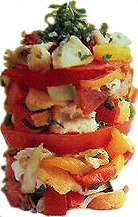
New, artsy trends in plating meals emerged, among them the brief but dramatic art of stacking food into towers that wowed the eye but proved difficult to eat gracefully.

Even as elite food fads came and went, one trend appeared unstoppable: the gathering up of thousands of chain restaurants by regional owners and giant food corporations. While the media focused on top chefs and their novel dishes created in landmark restaurants, huge corporations such as Tricon Global grew even larger with many venturing into worldwide operations.

Mexican immigration doubled, reaching a new high of 8.8 million by the end of the decade and furnishing a large number of restaurant kitchen workers. Small Mexican restaurants opened to supply traditional food to the new immigrants, but by 1999 Taco Bell’s 7,000 U.S. outlets had captured 90% of the thoroughly Americanized Mexican restaurant market, serving 55M customers a week, with sales of $5.1 billion annually.

Black restaurant workers and customers had their day in court in 1993 with successful discrimination suits against Shoney’s and Denny’s. Shoney’s was found liable of charges it had set a limit to the number of Black workers it would hire in some of its restaurants, as well as hiring all-Black staffs in Black communities and all-white staffs elsewhere. Denny’s faced multiple law suits.

Highlights

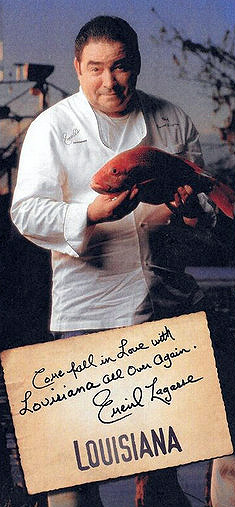
1991 Six men and one woman are the first regional chefs to be honored by the newly formed James Beard Awards: Jasper White (Boston), Jean-Louis Palladin (D.C.), Emeril Lagasse (New Orleans), Rick Bayless (Chicago), Stephan Pyles (Dallas), Joachim Splichal (Los Angeles), and Caprial Pence (Seattle).

1992 A U.S. Department of Labor report on technology announces that due to increases in productivity, chain-owned restaurants “for the first time . . . exceeded the number of independently owned restaurants.”

1993 Shoney’s, at the time the third-largest chain, is fined an unprecedented $105M for racial discrimination in hiring, while Denny’s pays $54M for refusing service to Black customers, insulting them, and overcharging them.

1993 The new Food Network spotlights restaurant chefs and methods of preparation. Viewers become interested in new restaurant dishes, while rising use of garlic at home is attributed to viewers watching Emeril. Despite the interest in inventive cuisine, 1991 James Beard winner Stephan Pyles feels forced to close his Routh Street Café in Dallas.

1994 Sensing that Black patrons may have been offended by revelations regarding Denny’s discriminatory behavior, the corporate owner hires a Black Chicago advertising firm to create an image of the restaurants’ friendliness to Black customers and workers.

1995 Stacked food – aka vertical or tall food – is reportedly now passé in New York’s trendy restaurants, replaced by layering food on the plate. However, a short time later vertical food is said to be “sweeping the country.”

1996 Taco Bell is the country’s leading Mexican restaurant, with 6,867 stores.

1997 PepsiCo.’s spinoff Tricon Global, based in Louisville KY, racks up more than $7 billion in sales with its major chains Pizza Hut, Taco Bell, and KFC.

1998 In a survey, Applebee’s and Cracker Barrel tie for 8th place as family favorites among the country’s 30 largest chain restaurants.

1999 The U.S. Department of Commerce declares this “The Year of the Restaurant” and the Beard award for Outstanding Restaurant goes to NYC’s Four Seasons.

© Jan Whitaker, 2023

10 Comments

Filed under chain restaurants, chefs, elite restaurants, family restaurants, food, popular restaurants, racism, restaurant fads, technology

On the town with O. O. McIntyre

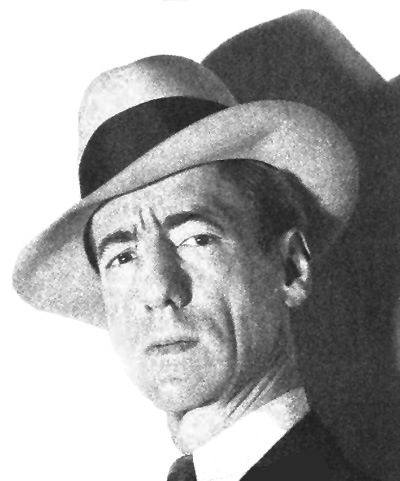
When he died in 1938 Oscar Odd McIntyre – also known as Double O McIntyre or simply Odd – was the country’s highest paid, most widely read columnist. Not only did he make New York City, particularly Broadway, familiar to newspaper readers across America, but he also informed them of the attractions of the city’s restaurants.

Considering that his success brought him a princely income, a Park Avenue address, a custom wardrobe by Lanvin, trips to Paris, and a chauffeured Rolls Royce, his writing conveyed a humble perspective. It left the impression that he was a regular small-town guy and that life in New York, when deconstructed, was less glamorous than it might seem at first, yet still captivating.

From the start of his newspaper career in Ohio he aimed at New York. As he put it, “When I was ‘the’ reporter on the daily in a small Ohio town reporting how John Hawkins spent the day in town and how Mrs. John Spivens Tuesdayed in Addison I was always dumb with admiration when I came across a guest at the Park Central Hotel who had the magic letters ‘N. Y.’ after his name.” In 1912 he landed a job as associate editor of a magazine in New York and made his big move.

His column’s target readers were, in fact, John Hawkins and Mrs. Spivens, and he relied heavily on Ohio newspapers to buy his early columns. He assumed that, like him, readers would proclaim “This is the life!” after a visit to a café in New York such as Bustanoby’s Beaux Arts. And that, like him, they would have a fascination as well with the other side of town, exemplified by the liveliness of Hester Street and the grittiness of the Bowery. He presented the city’s dark side in scenes such as one where he witnessed a patron at a nearby table in a “semi-respectable” restaurant inject morphine into his arm and then calmly resume reading his newspaper.

He revealed in a number of stories he wrote for various publications that he had a breakdown shortly after coming to New York to work for a magazine that failed three months later. He couldn’t find another job, and spent a year without leaving his sick room. He also suffered from hypochondria, claustrophobia, and agoraphobia, and depended upon his wife Maybelle to handle the business end of his writing. After seven years in which he self-syndicated, she took over and successfully negotiated a contract with a major syndicator for twice what he had been getting.

His columns were built on the notion that he spent time strolling the sidewalks of New York, but some critics suggested he actually viewed the sidewalks from the back of his limo. Another version claimed he was a recluse who rarely left his apartment and who wrote columns from memory. I’ve begun to wonder if it was Maybelle who rambled the city collecting material for him.

Whatever was the case, he entranced the nation with his observations. When they visited New York for the first time, even readers from small towns might feel they already knew the city because of what he wrote. The columnist who succeeded him recalled that when his outlander cousin came to NY, he said that because of O. O.’s columns he would need no guidance. He declared: “I’m starting at the Battery tomorrow morning, and I’ll have grilled pigs’ feet and German beer at Lüchow’s [shown above]. I’ll just glance in at Fraunces’ Tavern, but I might take a snack at the Brevoort or the Lafayette, and maybe get up to Louis & Armand’s in time for chicken Tetrazzini or a steak at Sardi’s.”

In his columns O. O. not only painted fascinating scenes of fine living in New York, but also popped bubbles about its glamor. In a similar vein he reminisced about the simple life in his old home in Gallipolis OH, but never returned there even for a short visit. He presented charming portraits of Greenwich Village, but also produced a column about its fake Bohemians and artistic pretenders. He acknowledged that there were some genuine artists living there too, adding, “they are not on display nightly in the Purple Pup, Mauve Moon and Cerise Cat restaurants.” [He did not include the Pepper Pot, shown above, but might have.]

He was also critical of New York night clubs, which he called sucker joints, as well as places with trick names such as the ones he ran into on a Los Angeles visit – the Fly Inn, Monkey Den, Hamtree, Mammy’s Shack, Quick and Dirty, and Hamburger Hank’s.

Although he frequented New York’s top restaurants, he was no gourmet. He wanted to consume the high life, but it seems mainly for its aura of princeliness rather than its culinary excellence. Although the McIntyres had a French cook, his favorite meal was said to be steak, potatoes, and chocolate cake.

His personal food preferences didn’t keep him from feeling qualified to identify the world’s best restaurants. In 1931 he named six, with The Colony at the top, then New York’s Ritz-Carlton Hotel (where he and Maybelle lived for 13 years), three in Paris: the Ritz, Foyot’s, and the Tour d’Argent, and Horcher’s in Berlin.”

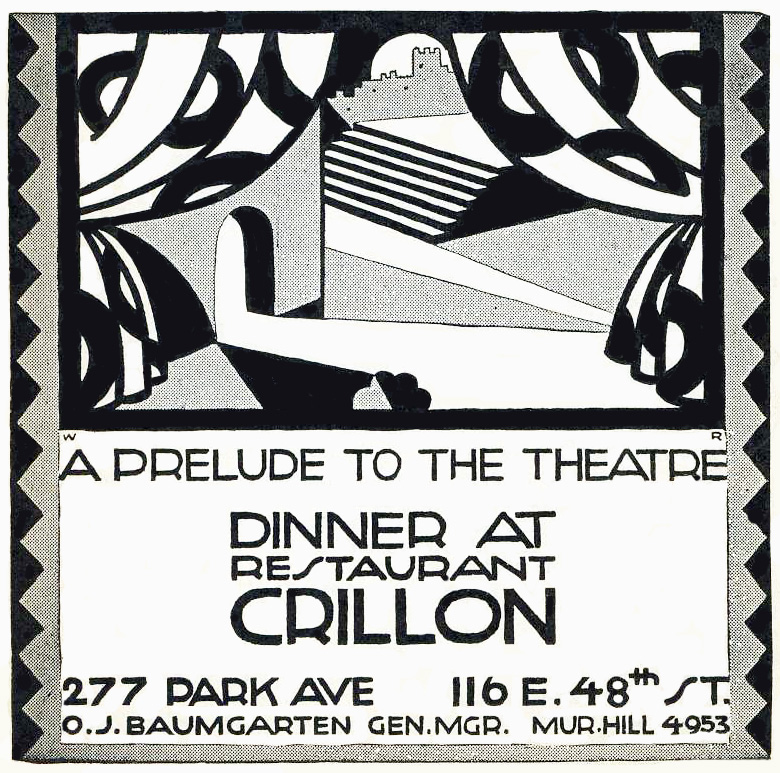
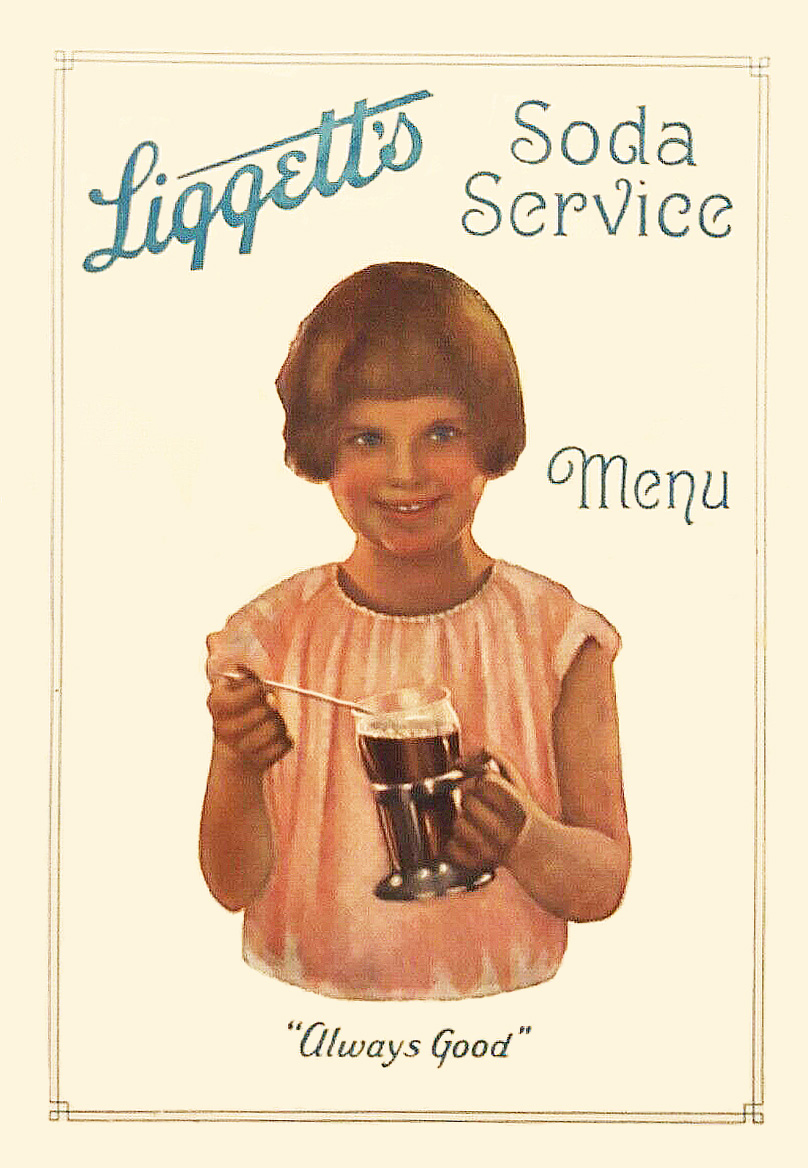
He hailed New York as “the Epicurean center of America,” but he believed it was non-New Yorkers who kept the elite restaurants in business, while the typical New Yorker followed “the eat-and-run plan of gastronomics.” So, for out-of-town visitors, he recommended the following dishes, claiming few New Yorkers even knew of them. They included caviar on a “pancake” at the Colony; noisette of venison, Grand Veneur at the Crillon; French pastry at Voisin’s; and for those preferring an unpretentious meal, doughnuts and malted milk at Liggett’s and hamburgers with chopped onions at the Owl lunch in Herald Square.

© Jan Whitaker, 2023

14 Comments

Filed under elite restaurants, food, patrons

Glamming in Booth One

Before non-stop coast-to-coast air travel became common, actors and performers relied on the railroad to cover long distances. Usually this involved changing trains in Chicago. Arriving there, weary celebrities were more than happy to be scooped up and whooshed off for lunch or dinner at the Pump Room.

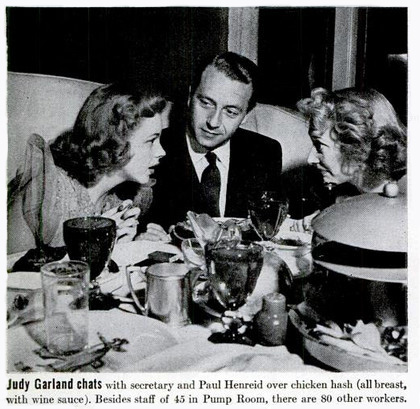
Top celebrities were escorted to Booth One, a cushy white leather nest where their job was to field calls from gossip columnists and smile as the flashbulbs went off. Their lunch may have been on the house, but they earned it. [It’s likely Judy Garland is talking with a columnist in the above Life magazine photo, 1943] Of course both the stars and the restaurant got publicity out of the deal.

The Pump Room stood out as a notable publicity mill in part because it was in the middle of the country. On the coasts there were plenty of such venues – the Stork Club and El Morocco in New York, and Chasen’s and Romanoff’s in Los Angeles to name but a few.

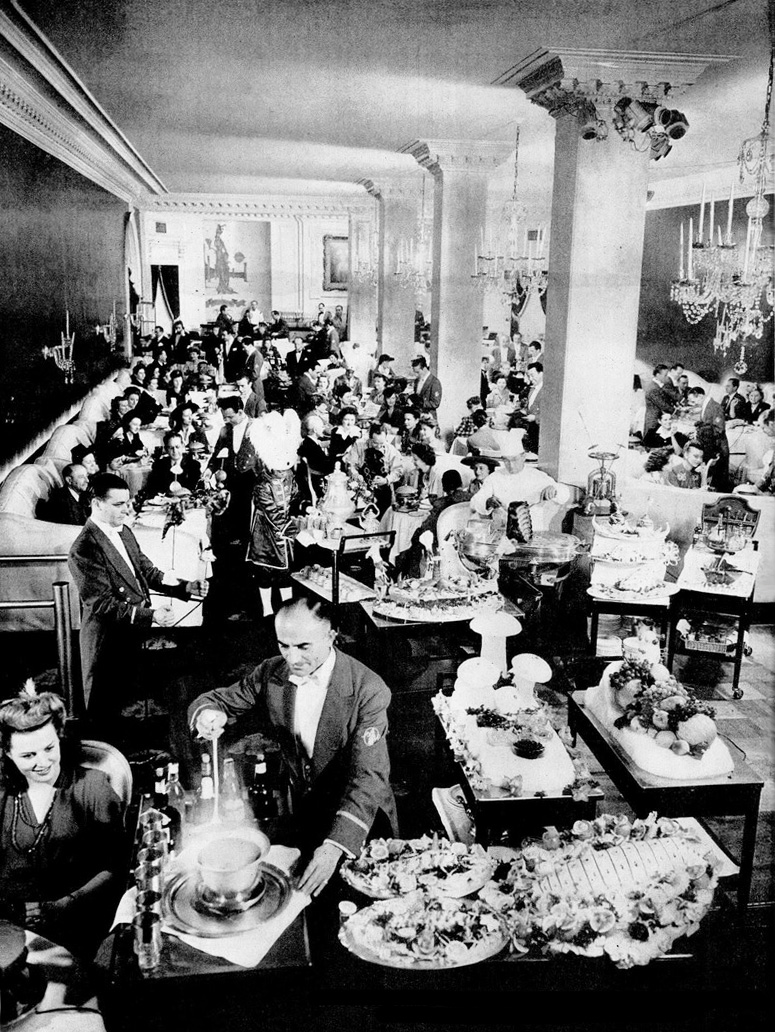
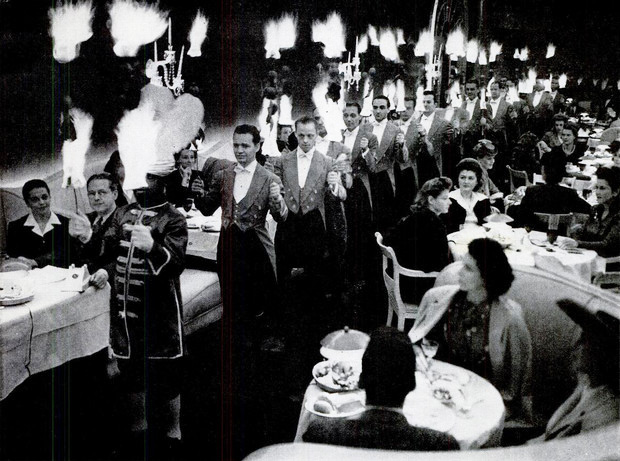
But the Pump Room had a vibe all its own. [Life magazine photo showing a very crowded room, 1943]

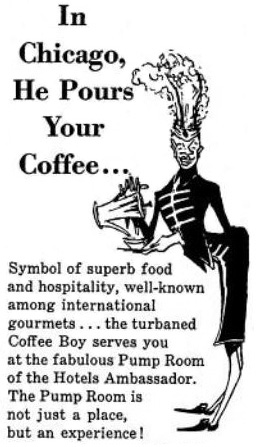
In addition to being swanky — with dark blue walls, white leather upholstery and crystal chandeliers — and well connected to the gossip pipeline, the Pump Room drew attention for its culinary burlesque shows featuring costumed staff, flames, and choreography. Waiters – all white men – wore scarlet jackets and black satin knee pants, while the “coffee boys” – all young black men – wore emerald green or white uniforms with giant ostrich plumes seeming to spring from their foreheads. [see grotesque caricature shown below, 1957] There were also “curry boys” dressed in gold. Food was served from wagons except for that skewered on flaming swords.

The coffee servers took it upon themselves to compete in the art of coffee pouring. Competition involved seeing how far they could hold the pot and still manage to pour the coffee neatly into the cups. Management did not approve and stopped the contest, but not before the winner set a record of 5 feet. He said customers asked him to do it. Not unbelievable since it was, after all, in keeping with the spirit of the place. According to one observer, customers watching servers with flaming swords make their entrance secretly hoped “the adroit waiter will slip and ignite one of the highly combustible hats being worn this season.” This never happened.

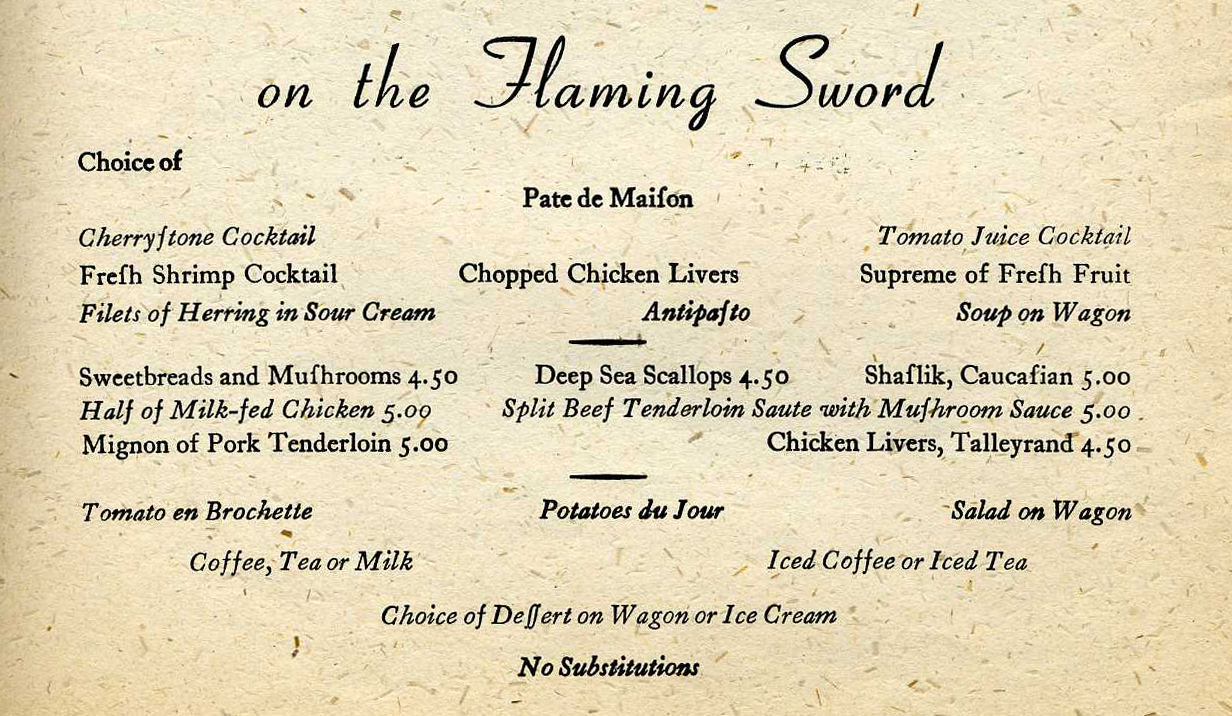
In 1943, Life magazine visited the Pump Room, photographing a number of spectacular scenes, some of which were undoubtedly contrived for the sake of the story. The crowning photo was certainly that of the procession of waiters holding flaming swords. A flaming-sword dinner cost $3.50 at the time of the story, going up to $4.50 or $5.00 by 1949 according to the menu shown below.

The Pump Room emblemized the sardonic humor of its creator, Ernie Byfield, who also owned its home, the Ambassador East Hotel. Its 1938 creation may have been a desperation attempt to survive during the Depression, but Byfield had long been in the habit of befriending show business stars back when he headed the Sherman Hotel. In the Sherman’s night clubby College Inn, he had entertained actors, musicians, and others on “theatrical nights.” Through the years Byfield made friends with an extensive roster of Hollywood stars that included James Cagney, Bette Davis, and William Powell in the 1930s and Douglas Fairbanks, Mary Pickford and a long list of others in earlier times.

Ernie Byfield’s death in 1950 seemed to mark the beginning of a long decline. The Ambassador East and the two other hotels Byfield owned changed hands repeatedly while the Pump Room sagged. A few months after Byfield died, columnist Lucius Beebe noted in a Holiday magazine story that Ernie had always said, “I don’t want grim gourmets around my place. I want laughing eaters.” Beebe’s story made it clear that the Pump Room was meant to be amusing, even moderately ridiculous. Without its creator at the helm, it became difficult to set the tone while maintaining quality.

In 1962 a reviewer for the Michelin Guide visited the Pump Room and, according to a devastating Life magazine account, had a miserable dinner described as deviled turkey breast accompanied by “canned peas and what looked exactly like potato chips.” Equally horrid, Life reported, was the incompetent waiter who recommended a red wine that “not only foamed but tasted as though it were composed of a second-grade detergent.” Learning of the story, an Ambassador Hotel executive dug through that day’s food checks and found, according to a rapidly produced account in a Chicago newspaper, that the reviewer and his Life magazine companion (the story’s author) had each consumed a cocktail and then shared two bottles of wine. He also insisted that the turkey steak on the menu was never served with anything but grilled sweet potatoes and wild rice.

But the damage was done and the restaurant’s reputation continued to crumble. Not much after the Michelin bomb dropped, Irv “Kup” Kupcinet, its number one gossip columnist, who had created a version of the Pump Room in his own dining room, admitted that it wasn’t what it used to be. Cross-country airplane flights were becoming commonplace, eliminating Chicago stopovers and reducing the flow of celebrities into town. Even though the room was remodeled in the mid-sixties by new managers, it was unable to recapture the past glory.

Although loyal Chicagoans continued to support it, the Pump Room closed in 1976, after some years of low ratings and, it was said, grease-spotted menus and chipped glassware. Everything was auctioned, included Booth One. Then came a new owner, Rich Melman, of the Lettuce Entertain You restaurant group which included Jonathan Livingston Seafood, Lawrence of Oregano, and others. He remodeled it in glamorous fashion and ran it for 22 years. After that it had various owners, including Melman once more who ran it as Booth One.

© Jan Whitaker, 2023

3 Comments

Filed under atmosphere, decor, elite restaurants, Offbeat places, uniforms & costumes, waiters/waitresses/servers

Dining . . . and wining?

Americans have not been big wine drinkers historically, so sommeliers (aka wine stewards) have not been commonplace. There were French sommeliers in New York in the 1870s and later, but it’s likely they were wine merchants and specialists in maintaining wine cellars rather than part of restaurant staffs.

Nevertheless the fine restaurants of the 19th century, such as Delmonico’s and some hotels, made a point to offer wine and almost certainly had someone on their staff capable of ordering, storing, and recommending wines to diners.

But, however many or few wine experts worked in American restaurants, they were put out of business by the advance of Prohibition. Their numbers gradually grew after Prohibition ended in December, 1933. By that time the restaurant industry was hanging by a thread and eager to get back into profitable business with the sale of wine and spirituous liquors.

Articles from the 1930s reveal just how unfamiliar the American dining public was with wine. A columnist mentioned that the Fred Harvey company was busily creating a wine list for its deluxe restaurant in Chicago’s Straus building in the months leading up to Repeal. The story ran through a few basic pairing suggestions such as whites with fish and reds with beef, adding, “One never drinks beer at a swank dinner.”

Restaurants that planned to serve wine, such as Karl Eitel’s in Chicago, were furiously stocking their cellars then. Two days after Repeal, Eitel’s waiters scrambled to catch up with customers who ordered wines that were out of stock. They were instructed to offer orange juice as a substitute for the missing vermouth. Eitel himself expressed annoyance at the waiters’ lack of knowledge about how to chill wine properly (ice has to melt a little before it will cool a bottle).

At Repeal, French wine shippers had hopes that the U.S. would expand their market, but according to one insider, the ambassadors they sent to this country came back full of pessimism, convinced that Americans much preferred liquor and soft drinks.

The relatively few restaurants wanting sommeliers usually had to hire Europeans, as they were the ones with the finest training, or any training at all. The Vendome in Los Angeles, for instance, brought a sommelier from Monte Carlo’s Hotel de Paris in 1934. But even a couple of years later there were said to be fewer than a dozen professional sommeliers in this country.

And it was already evident that the popular attitude toward them was less than worshipful. For a start the word sommelier was a barrier which, in the words of one wit, “can’t be correctly pronounced unless you’re either drunk or French.” [See Word of the Day cartoon below for a guide] And the chain worn around the neck suspending an oversize key and tasting cup was often ridiculed – except as jewelry for women, who were said to make off with them. Their attractiveness inspired the jewelry maker Monet to produce a simplified sommelier-style necklace and matching bracelet in the 1930s, which remained popular into the 1950s.

The happy sommelier in this country was one who managed to get a dedicated tip from guests who truly appreciated his (rarely her) recommendations. Few newspaper columnists showed respect for them, excepting O. O. McIntosh. In 1938 he explained that he loved the rituals associated with the sommelier’s work, such as twirling bottles in an ice bucket, displaying labels, wrapping bottles with napkins, and extracting and sniffing corks. He declared it “a magnificent ritual and one the gallop of American life should not trample.”

It was more typical for commentators to make fun of it all. One made suggestions on how to respond to a sommelier’s proud display of a bottle: “. . . it is good to respond by fitting a monocle to the eye, studying the label and issuing appropriate clucks and ‘hmmms.’ This has become an obligatory art form in certain restaurants . . .”

The sommelier’s primary role in the view of the restaurant industry was to get people to buy wine by the bottle. Behind the scenes, in industry journals and books, the depiction of wine sales could be crudely oriented toward profits, with the sommelier’s skill directed toward an estimation of the diner’s insecurity or wish to celebrate. A 1968 book on wine merchandising in restaurants saw a skilled sommelier as “merchandising in motion” and useful for “giv[ing] class to your restaurant.” And a trade magazine article on how to merchandise wine in restaurants carried the tagline, “A Meal Without Wine is a Meal With Less Profit.” As was demonstrated by comparing two checks (shown above), wine drinkers were said to be fond of pre-dinner cocktails also.

One of the strongest motives for restaurant guests to value advice about wine was, and undoubtedly still is, not to look foolish in the eyes of others. A Napa Valley winery owner reported that an experimental wine tasting he held for his Harvard Business School classmates in the 1960s revealed that “They weren’t particularly interested in learning anything about wine, except for how to order it without being embarrassed.”

In 1940s NYC, sommeliers were still rare and could mostly be found at luxury restaurants such as Jack & Charlie’s 21 Club, The Colony, Chambord, Pierre’s, and El Morocco.

Their numbers likely increased in the 1950s, but were there really any golden years for sommeliers? Not if you asked NYT food critic Craig Claiborne. He declared in 1961 that sommeliers had lost their status, and were no longer involved in buying wine and supervising restaurant wine cellars. “The number of old school sommeliers in New York can be counted on the fingers of one hand,” he declared.

Some sommeliers, perhaps in reaction to ridicule, tried to avoid being showy. The French sommelier at Maxim’s in Paris (in Chicago), despite the honors he had won, stayed in the background and rejected wearing the long chain with a key because he found the custom pretentious. Judging from her 1972 advertisement, Georgette of Baton Rouge LA also departed from the traditional sommelier costume.

In the 1970s waitstaff captains at New York’s Four Seasons took over the role of sommelier. They were trained by one of the restaurant’s knowledgeable owners and given wine at their meals so they would be familiar with it. This would have satisfied critics who complained that many sommeliers had never tasted the wines they recommended.

Today, Las Vegas may have the most sommeliers in this country, however I’d guess that most restaurants elsewhere have done away with the costuming and ritual, relying instead on trained servers to make wine recommendations.

© Jan Whitaker, 2023

8 Comments

Filed under elite restaurants, restaurant customs, restaurant fads, uniforms & costumes, waiters/waitresses/servers

Odors and aromas

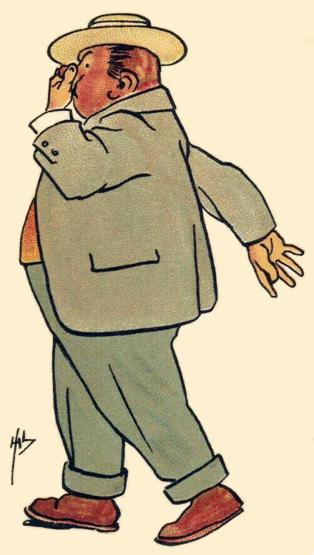
It is said that the sense of smell became less important when proto-humans began to walk upright. Yet it has played a significant role in restaurant history, for better and for worse.

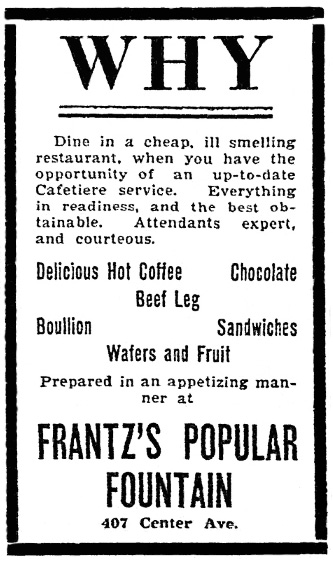
While not limited to the 19th century, complaints about bad odors in eating places abounded then. In that century, unwanted smells might come from the building itself, accumulated cooking odors, or the humans in the rooms. Worst of all were the cheap eating places located in damp and windowless basements where all three perils came into play.

A self-styled researcher in 1849 cancelled a plan to visit common eating houses in New York City, writing, “We once undertook to count these establishments in the lower part of the City, but got surfeited on the smell of fried grease before we got half through the first street, and were obliged to go home in a cab.”

Even Taylor’s, Broadway’s mid-19th-century hot spot where fashionable ladies went to consume fricandeaus and meringues, failed the smell test. It had a deluxe interior with 18-ft-high ceilings, gold leaf, fountains, and mirrors, leading journalist Fannie Fern to exclaim, “What a display of gilding and girls.” And yet, upon its close in 1866, a critic put things straight, admitting “there was always the restaurant odor, the mingled essence of many past dinners, and precisely the same from month to month and year to year.”

If Taylor’s wasn’t free of bad odors, what restaurant was? Well, according to a British visitor, the answer was just about none! In 1868 the author, after visiting New York, gave 99.9% of the city’s eating places a no-star rating when it came to smelliness. “The restaurants, with the exception of Delmonico’s on Fifth Avenue, generally speaking, are dingy and warm, and have a sickly smell about them,” he wrote. Not much later the Prince of Wales traveled to the U.S. and quickly grew sick of the sight and smell of one of the country’s most beloved foods: oysters. “During his sojourn he was always endeavoring to escape from the smell of them,” according to one chronicler. Obviously, one person’s bad odor might be another’s delicious aroma.

Old-fashioned chophouses, revered as hyper-masculine shrines to meat-eating, also came in for criticism. One critic denounced New York’s Old Tom’s, a venerable dining spot, as “the humbug of the century.” He characterized its atmosphere as “fat and greasy,” adding, “You breathe it, smell it, taste it.”

On the whole, though, it was unusual for men to criticize the smell of meat cooking. It was so enticing that the owner of an 1890s NYC ballroom arranged to pipe in the kitchen’s odor of steaks being grilled at the end of the night’s entertainment, ensuring a crowd for his dining room a floor below.

The restaurant foods usually singled out as unacceptably smelly tended toward fried, greasy things, as well as garlic, onions, cabbage, and, in certain cases — when they perfumed residential neighborhoods — hamburgers and hot dogs. Los Angeles regarded tamale wagons as “odor factories” and Scarsdale fought to remove a “smelly” stand operated by Castel Hitaltakides, aka ‘Hot Dog Joe.’

But it wasn’t until after the first world war that real improvements were made with ventilation and kitchen design. Wood surfaces were replaced with harder materials such as “Monel metal,” forerunner to stainless steel. And the use of vents and exhaust systems grew commonplace except in the poorest eating places. Air conditioning in the 1930s also made a big difference. However, improvements in air quality were always in order. A 1946 customer survey revealed that restaurant patrons’ biggest complaint after noise and clatter was still bad odors. They almost certainly would have included cigars and cigarettes, which would draw even more complaints as the movement to ban smoking in restaurants grew.

What could restaurants do to control odors? There were range hoods as far back as the 1880s, though I don’t know enough about them to judge their effectiveness. Another method employed by restaurateurs who could afford it was to locate their kitchen on the top floor of a building, with the dining room a floor below so the kitchen’s greasy hot air and odors would float inoffensively skyward.

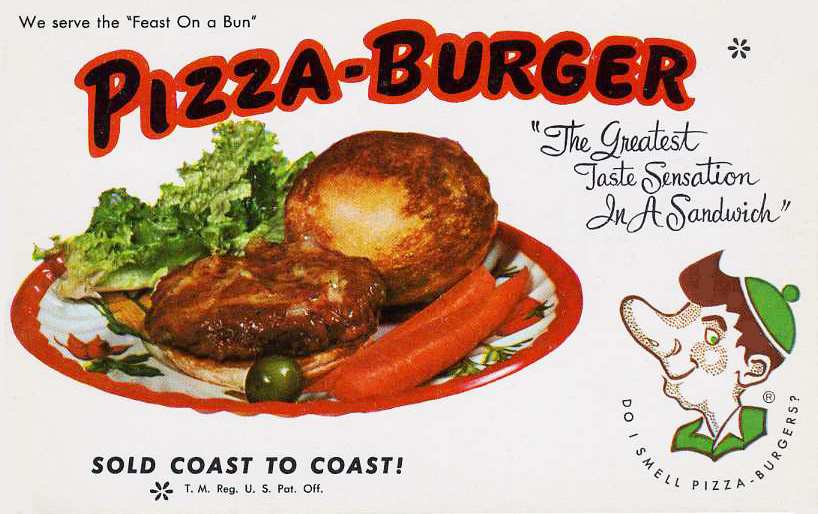
But then attitudes to food smells began to shift. An overlooked feature of the food “revolution” taking place in the late 1970s and 1980s was that cooking aromas – which, apart from beef, had rarely been regarded as a positive attraction in restaurants – became a plus, particularly when they emanated from the kitchens and platters of ethnic restaurants. Fast food smells, such as the pizza-burger’s, were also redeemed as pleasant.

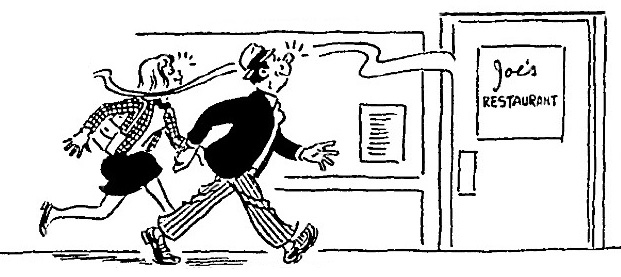
At Joe’s, yes, but not so much in luxury restaurants.

Remember that smelling was long associated with lowly creatures. And for decades the standard had been that proper middle class homes should be entirely free of cooking smells, even if this required a series of doors between kitchen and dining room as well as frequent daily airings of the kitchen. In the 1920s a genteel residential hotel in Cleveland went so far as to design suites in its new building with no kitchenettes “so that one family will not inconvenience other occupants with cooking odors.”

It seems this standard was adopted by luxury restaurants as well. I have been unable to find any reviews of elite restaurants that mentioned odors or aromas. Evidently the only time customers’ noses were allowed to come into use was in sniffing wine offered by the sommelier.

What would Julia (Child) have thought about this? In a 1972 interview, she was asked how, when traveling, she identified a good restaurant. Her answer: “If you poke your nose in, the smell will tell you something. A good restaurant smells good – of fresh food and butter and fresh olive oil.”

© Jan Whitaker, 2022

6 Comments

Filed under atmosphere, elite restaurants, food, patrons, restaurant issues

Famous in its day: Le Pavillon

Alternative headings for this post could be Former Busboy Becomes Famous Restaurateur, Best Mid-Century French Restaurant in the U.S., or The Restaurant that Set the Standard for Fine Dining.

In other words, everyone who has known or researched Le Pavillon agrees that it produced this country’s finest French cuisine for most of its 22 years under Henri Soulé. It’s also significant that throughout that time numerous employees of the restaurant left to found some of New York’s other top French restaurants.

Not that the city was devoid of fine French restaurants when Le Pavillon arrived on the scene. French restaurants were well established and plentiful, both as independents and in hotels. Among those competing for the most discriminating and well-heeled diners were Voisin, Café Chambord, and La Belle Meunière. But they were soon outdone.

Because its story has been written about so often and so well, it is challenging to approach Le Pavillon as a topic. For a thorough history that gives a good appreciation of its cuisine, I recommend Ten Restaurants That Changed America by Paul Freedman.

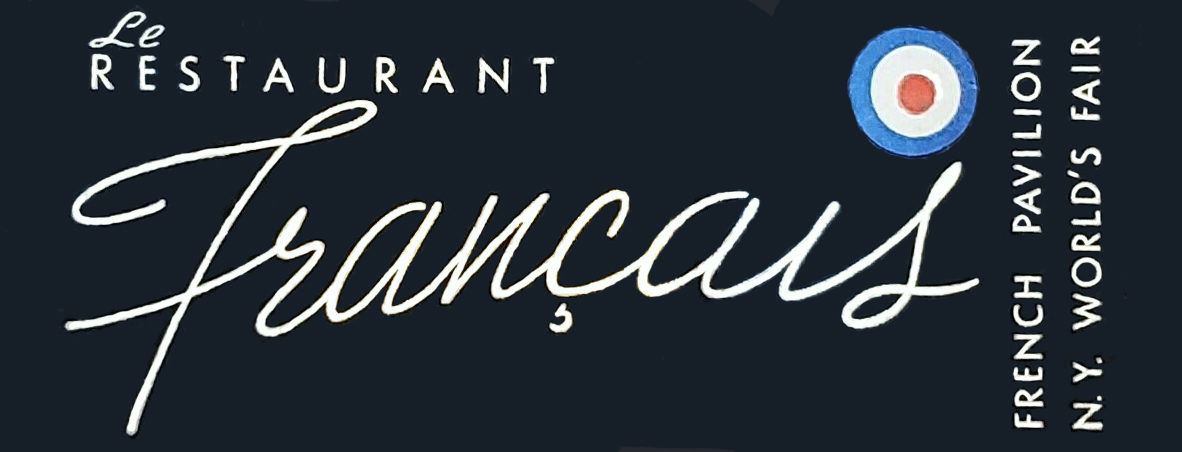
Le Pavillon opened in New York City in 1941, after a spectacular two-year run at the 1939-1940 New York World’s Fair. Located near the top of the Fair’s French Pavilion, it had a dramatic spot overlooking the Lagoon of Nations where a light and fireworks show took place each night at 9 p.m. Despite being the Fair’s most expensive eating place, it was wildly popular and booked for weeks in advance. Because the Fair was difficult to get to by car, New Yorkers had to want to go there badly enough to take public transportation. Yet many returned again and again to dine at the Restaurant Français.

The French Pavilion’s restaurant was provisioned with food and wines brought from France and was staffed by French cooks, maitre d’s, and waiters. It was backed by the French Line and a number of prominent Paris restaurants owned by the Drouant family. Jean Drouant ran the show, hiring Soulé [pictured here], a maitre d’ at one of his Paris restaurants, to manage the dining room.

During the Fair’s tenure, Germany advanced on France, occupying Paris. When the Fair ended, Soulé decided to stay in New York. It has been said that he did not want to return to France under enemy occupation, but it’s likely he was also swayed by the stunning success of the Restaurant Français.

Since many of the restaurant’s French waiters had decided to return to France, Soulé had to hire a good number of French waiters already living in New York. He would soon become known for disputes with his staff, some resulting in resignations of chefs and temporary closure of the restaurant. His authoritarian attitudes may have been shaped by his history with Drouant, who occupied a powerful position in the French restaurant industry. He was president of the Syndicate of French Restaurants as well as the General Owners Union and was not sympathetic to waiters’ rights. He had fully supported military force used to stop a 1938 workers’ strike in response to elimination of the 40-hour week in France. He was critical of French waiters working in America, describing them as “contaminated.”

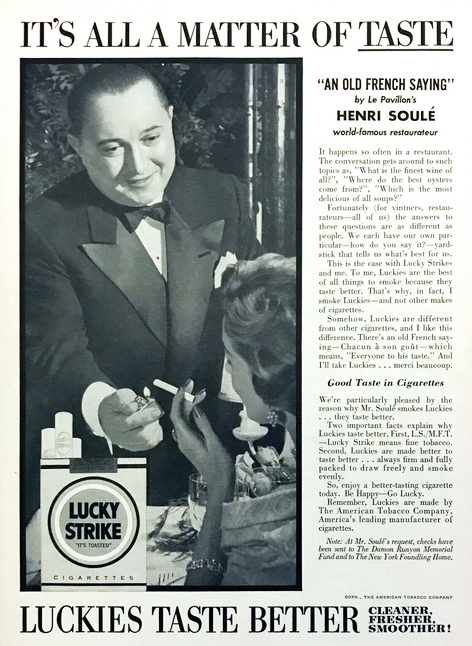
Soulé’s negative attitudes also included dislike of smoking at the table, women drinking, and the widespread American habit of eating quickly rather than slowly savoring the meal. Perhaps because of his general air of disapproval, regular patrons sought signs of his favor, which he gave sparingly. His was a notable ability to confer status on people who were as hungry for that as they were for Chateaubriand with sauce Béarnaise. One of his ways of winning the loyalty of valued patrons was to offer them special dishes not on the menu. [Note that his dislike of smoking in his restaurant did not keep him from appearing in a Luckies’ advertisement in 1954.]

In a 1962 review of a book about Le Pavillon, a clever journalist summed up how to become approved by Soulé. She wrote: “When you go to Le Pavillon you should be famous, if you can manage it, if not, you should at least be rich, elegant, chic and witty. Beautiful, if a woman, dintingué, if a man. If you can’t manage that, then maintain a balance between hauteur and quiet rapture and for heaven’s sake be careful of your manners and careless of your money.”

Yes, the restaurant was exceedingly expensive, beginning at the Fair. According to Craig Claiborne, in 1960 it was possible to spend as little as $6 there for a meal without drinks, equivalent to about $52 today. But with drinks it could cost ten times that. However, in the era of expense accounts, it was standard that a power lunch would be written off as a business expense.

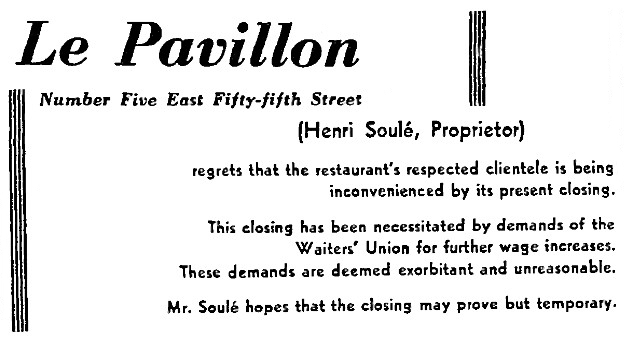
1960 was the year that a dispute between chef Pierre Franey and Soulé over working hours resulted in Franey’s resignation, followed by that of seven of the kitchen staff and leading to a temporary closure of the restaurant. It was not the first time the restaurant closed in response to a dispute. [1955 notice above]

Soulé died in 1966, at age 62. I find it interesting that he willed his watch to frequent patron and “dear friend” J. Edgar Hoover, director of the FBI, whose favorite dishes included Filet of Beef Periogourdine accompanied by a bottle of vintage Romanée Conti.

After Soulé’s death, attempts were made to keep Le Pavillon going but it closed for good in 1971.

© Jan Whitaker, 2022

6 Comments

Filed under elite restaurants, patrons, proprietors & careers, restaurant issues