Tag Archives: Sardi’s

In the kitchen at Sardi’s

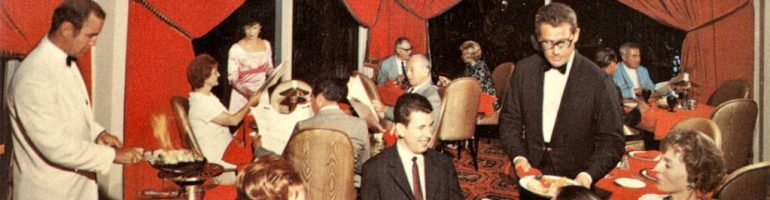
To gather recipes for the Sardi’s cookbook Curtain Up at Sardi’s [1957], co-author Helen Bryson spent two and half weeks, six days each week, in Sardi’s restaurant kitchen. She asked a lot of questions about the food preparation. It was the only way to put together a cookbook, something that she said had never been done before in the restaurant’s long history that dated back to the 1920s. [The restaurant pictured above in the 1950s; below is a 1924 advertisement — “Your Restaurant” is aimed at theater people]

The recipes were intended for use by the public. Whether the restaurant’s chefs ever looked at them is another question. Of course the book’s recipes were adapted for smaller amounts than were normal for the restaurant, and they were no doubt simplified for home cooks too.

And yet the book also includes 26 sauces and dressings, some of them classic French sauces that are far from simple. “Sardi Sauce,” for instance, is made with Sherry wine, light cream, and whipped cream, but also includes Velouté Sauce and Hollandaise Sauce. Velouté Sauce is made with chicken stock and roux (chicken fat and flour). The book also includes a much simpler version, perhaps designed for the homemaker, called Emergency Velouté Sauce (butter, flour, canned broth, and bay leaf).

Later, in contrast to the intricacies of sauce making, comes an amazingly simple recipe for Spaghetti with Tomato Sauce en Chafing Dish which calls for spaghetti, boiling water, salt, tomato sauce (can be canned!) and grated Parmesan. The cook could instead choose to make the book’s Tomato Sauce, but that, by contrast, calls for 11 ingredients including a ham bone. Using that sauce the spaghetti might qualify for a chafing dish but otherwise, I think not.

Mid-century dishes at Sardi’s covered a wide range of cuisines. Italian and French were in the lead, as were favorites of indeterminate origin such as Supreme of Chicken à la Sardi ($1.50 in 1939). But the book also includes hot tamales with chili con carne and turkey chow mein, and even makes room for a few “low-calorie plates,” which were becoming popular in the 1950s.

The recipe for Supreme of Chicken à la Sardi is as follows — minus recipes for the accompanying Duchesse Potatoes and Sardi Sauce. Together, those two components add a major amount of cream to this mid-century “specialty of the house.”
1 cup Duchesse Potatoes
6 slices cooked breast of chicken, heated in sherry wine
12 stalks green-tipped asparagus, canned or cooked
1 cup Sardi Sauce
2 teaspoons grated Parmesan cheese
After being assembled on a serving dish, with the chicken resting on the asparagus, surrounded by piped potatoes and all covered with Sardi Sauce and Parmesan, the dish was to be browned lightly under the broiler.

Though Sardi’s food was considered good, the restaurant was not among those that won awards for their cuisine. It is rarely mentioned in “best food” books and articles. Rather, the restaurant’s fame derived from its role as a haven for theatrical people of every kind – actors, agents, producers, publicists, and devoted patrons of live theater. In the early days, Vincent and Eugenia Sardi won over theater people by extending credit to those down on their luck. To the wider public it was most attractive as a site for celebrity spotting and autograph collecting. The restaurant was also well known for years for its canny hat check “girl.”

In the 1963 movie Critic’s Choice Bob Hope plays a critic whose wife, played by Lucille Ball, writes a play which he will need to review. Since it isn’t very good, an honest review would threaten his marriage. [Lucille Ball does not appear in the Sardi’s scene shown above.]

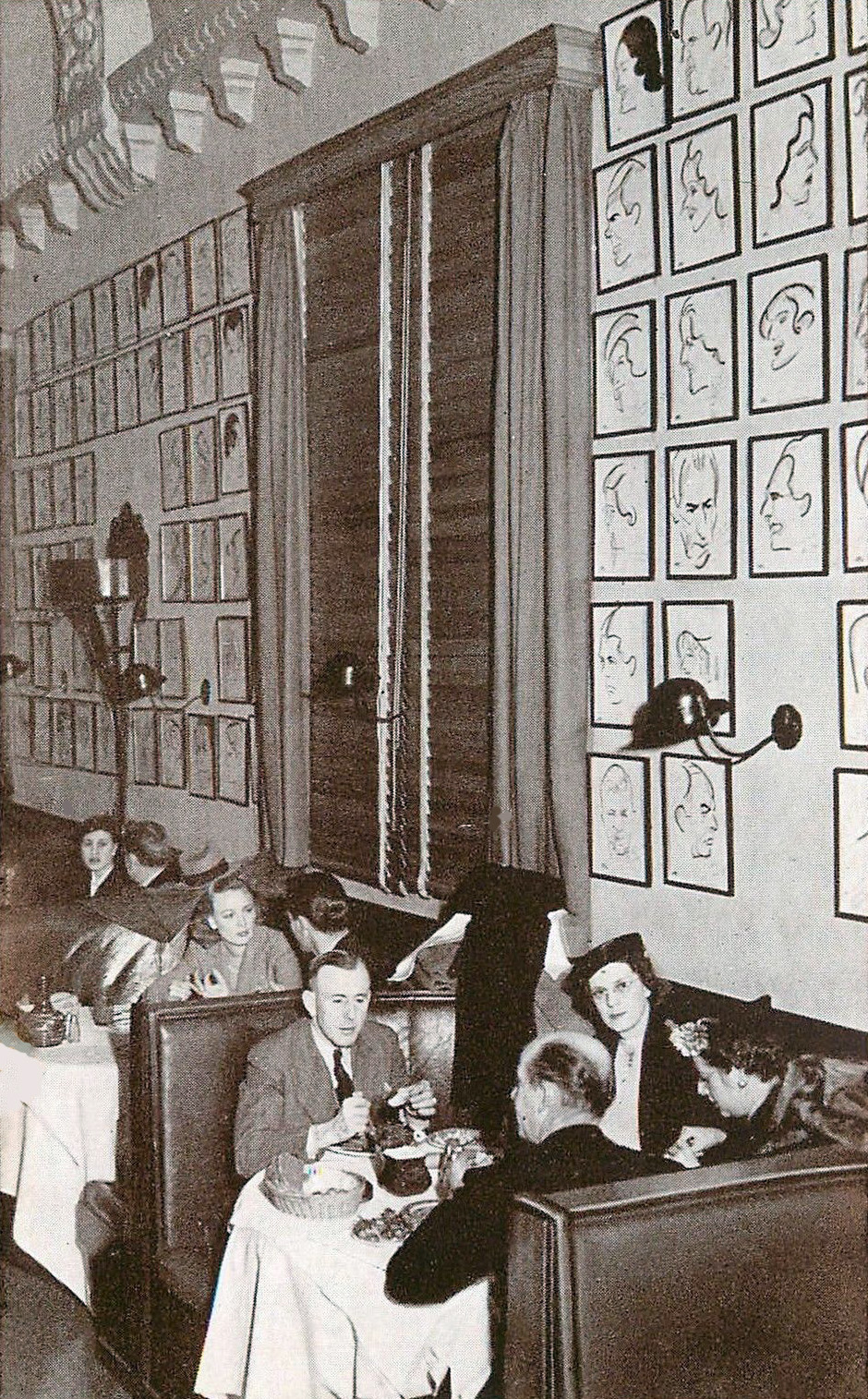
Like the Brown Derby in Los Angeles and the London Chop House in Detroit, Sardi’s decorated its walls with portraits of its celebrity guests – and still does. Some of the older drawings, from the 1920s through the 1950s, have been saved and can be seen by appointment at the NY Public Library.

Until 1947, when Vincent and Eugenia (“Jenny”) Sardi retired and sold the restaurant to their son, Vincent Jr., they divided duties, with Vincent in the dining room greeting guests and Jenny looking over the kitchen and doing the buying. According to one account she was the beloved member of the couple, attracting theatrical guests to the kitchen to visit with her, while Vincent did his duty greeting guests wearing his “guest smile.” A profile in 1939 referred to him as a “chilly individual.” He did, however, give his wife credit for her role in the restaurant’s success. “She does it all,” he said in one interview. [above: the Sardi’s in 1939]

Despite some rocky years and changes in ownership, Sardi’s restaurant, still decorated with celeb faces, continues in business today on W. 44th Street.

A final note: in case anyone was wondering, Sardi’s in New York had no connection with the restaurant of the same name in Los Angeles that opened in the 1930s clearly modeled on the original – a situation that vexed the Sardis.

And thanks to the kind reader who sent me a copy of Curtain Up.

© Jan Whitaker, 2024

4 Comments

Filed under food, patrons, popular restaurants

Check your hat

The topic of hat checking in restaurants, nightclubs, and hotels, a popular subject in early 20th-century journalism, is so full of lore that it’s hard to know what to believe. Here’s what seems to be the story as best I can determine.

Hat checking in restaurants started as an independent money-making enterprise around 1900, beginning in New York City and gradually spreading westward. Before that, men took their hats into dining rooms, placing them under their chairs. (In cheap restaurants they kept them on while eating.)

It was considered perfectly fine for women to wear their hats at the table.

But hat checking for men wasn’t really new. It was common at fancy-dress balls in the 1800s. Many regarded it as a scam. An organization or group would throw a ball in a large venue such as Madison Square Garden. Tickets were advertised at the high price of $5. However, hardly anyone bought a ticket, getting them free instead from saloon keepers. When guests arrived at the ball they were required to check their hats, for which they were charged $2, the true price of admission. Those in the know referred to these balls as “hat check affairs.”

Around 1900 restaurants began granting concessions to entrepreneurs who offered to pay them substantial sums to run a hat checking service. At first many were staffed with immigrant boys who were rudely persistent in demanding that male guests surrender their hats before entering the dining area. Gradually, the boys were replaced with attractive young women who used honey rather than vinegar to induce men to give up their hats. Upon exiting the restaurant patrons were expected to leave a tip of at least 10 cents, up to 25 cents by the 1930s.

Concession owners paid thousands of dollars a year for the privilege of running a hat check service and, often, of supplying washroom attendants as well. In nightclubs they provided women to sell cigarettes and flowers. In the early years the amounts paid for these concessions allegedly figured as important contributors to nightclub profits.

All the tips collected by hat checkers went to concession owners, while the attendants received a low hourly wage. Newspaper stories revealing this set-up were perennials from 1910 into the 1950s, suggesting that there were always plenty of people for whom it was news that hat check “girls” didn’t keep the tips.

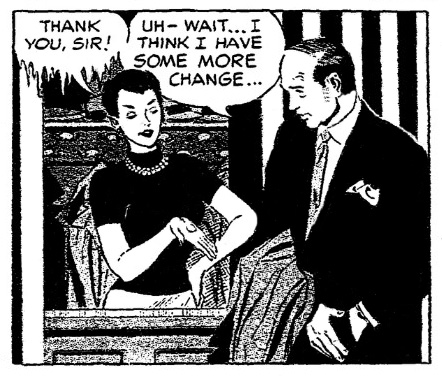
The menial job of hat checker was infused with glamour by gossip columnists and a number of Hollywood movies [top photo: Hat Check Girl, 1932]. This no doubt helped attract fresh recruits – including aspiring actresses who hoped to be “discovered” — in what was a high turnover, dead-end occupation. Want ads sought “attractive girls with pleasing personalities.” Meeting daily tip quotas through appearance and demeanor was a key to survival in what today is recognized as a “pink collar” job, i.e., one supposedly requiring no special abilities but demanding strenuous emotional labor. Acting talent came in handy. Occupants of the job became quite adept in shading the meaning of “Sir!” and “Thank you.”

Among the stresses of the job was the necessity to be gracious with patrons who flirted, pinched, left poor tips, and sometimes grew angry and slung insults. Hearing over and over how men had paid more in tips than their hats were worth became tiresome. So did laughing at jokes. Cartoonist W. E. Hill perfectly captured the facial expression of a woman preparing to respond hilariously to a bad joke.

Some hat checkers went to court to claim tips as theirs, but did they ever win? I doubt it. Many hotels and restaurants avoided the stigma associated with hat checking by running their own services while making it clear that tips were unnecessary. The Exchange Buffet chain advertised in 1914, “No hat-boy to hold you up.” Schraffts’ deposited tips in an employee sick benefit fund. Legislation was offered in some cities and states requiring that hat check stations either post a notice stating that tips went to a concession owner or turn them over to the attendants.

Overall, hat checking thrived best in big-city nightclubs visited mainly by tourists.

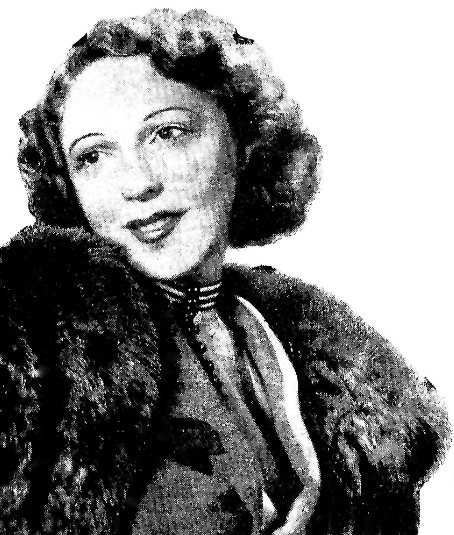
One of the rare hat checkers who beat the system was Renee Carroll, who ran her own concession at Sardi’s. The daughter of a New York City rabbi, she changed her name from Rebecca Shapiro and became part of the entertainment world, a Broadway personality known for witty quips. She appeared in movies, published a book about her experiences with celebrity customers, authored a gossip column, and backed theatrical productions.

By the mid-1920s, with many people going to restaurants and nightclubs by car, hat checking declined as hats were left in the car. By the mid-1930s fewer men wore hats, especially the young. Hat checking in restaurants can still be found but no one is forced to use it and the glamourous hat check girl is no longer a figure of popular culture.

© Jan Whitaker, 2018

9 Comments

Filed under night clubs, patrons, restaurant controversies, restaurant customs, restaurant etiquette, women

Faces on the wall

caricaturessardis

People love seeing celebrities in a restaurant. Trouble is, celebrities can’t sit around in restaurants all the time. Solution: put a photograph or a cartoon of them on the wall, suggesting that they are regulars, liable to walk in at any moment.

In the United States the custom developed first in urban theater districts, in places visited frequently by publicity-seeking performers after the show.

Sardi’s in New York City [shown above] is still famous for its walls of caricatures of stars of the moment and of the past. Sardi’s tradition began in 1927, reportedly inspired by the custom in Parisian cafes. But Vincent Sardi could have found precedents in the United States too.

An early instance was Chicago’s Chapin & Gore’s of the 1870s. Located in the vicinity of McVicker’s Theatre, it was a place where “exceedingly well dressed, fast-looking men” hung out with women suspected of questionable character (a suspicion that applied to any woman without a male escort). Not only did actors make it onto Chapin & Gore’s wall but also the city’s mayor, newspaper publishers, and leading industrialists. Another room displayed what temperance advocates described as “indecent and obscene” caricatures of European notables, which a court ordered removed in 1878.

Another 19th-century precedent, dating back to at least the early 1890s, was Otto Moser’s café in Cleveland, still in business today but not at its original location. Once within walking distance of seven theaters, its walls were lined with playbills and autographed photos of performers.

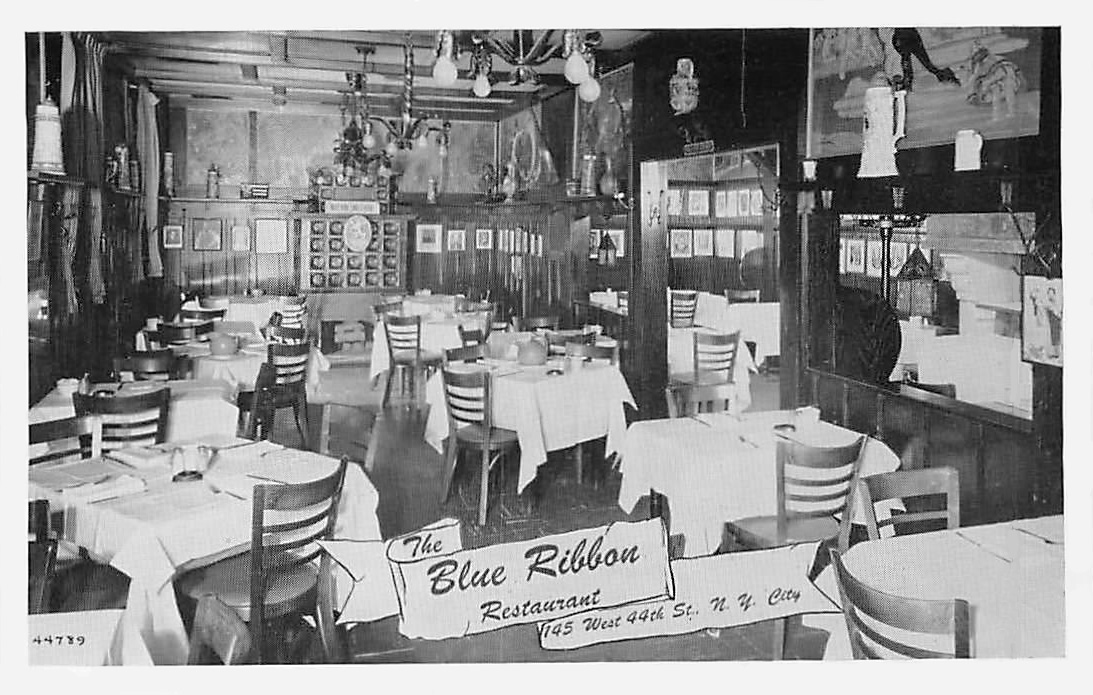
caricaturesblueribbonIn New York City, as early as 1910 Joel’s Bohemian Refreshery adorned its walls with cartoons and photographs of entertainers, some drawn by Carlo de Fornaro. The café was not only popular with Broadway performers but also with Mexican rebels and others opposed to the presidency of Porfirio Diaz, aided by de Fornaro’s pen and brush. The Blue Ribbon, opened near Times Square in 1914 and closed in 1975, was also decorated with caricatures and photographs.

caricaturesbrownderbynvineChallenging Sardi’s for nationally-known wall fame was Hollywood’s Brown Derby restaurant, which opened in 1929 and closed in 1985. Lore has it that caricatures of movie star patrons from the nearby studios began to go on the walls after a Polish artist agreed to exchange his artwork for meals. He achieved fame as “Vitch,” later mailing his sketches from London where he had a career as a pantomimist. Like Sardi’s, the Brown Derby employed many a sketch artist over the decades, however few restaurant artists stayed on the job as long as the Detroit London Chop House’s Hy Vogel [“Prince” Mike Romanoff shown below].caricaturesromanoff2

Today, a repro Brown Derby lives on, so to speak, on the grounds of Disney Studios, complete with caricatures (of course). Which reminds me of the inquiring reporter exploring a number of Dallas restaurants adorned with celebrity photos. He asked the manager of a national chain restaurant in 1982 whether it was really true that Cary Grant had eaten there, in Dallas. Not exactly, admitted the restaurant’s publicity director, but the actor had been to one of the chain’s other units. Somewhere.

It’s rather surprising that Cary Grant’s picture was even on a restaurant wall in 1982 since he made his last movie in 1966. Given that fame doesn’t last long, those who manage picture walls tend to rearrange them from time to time. What to do with outdated celebrities, stars no one has heard of? In the 1970s Sardi’s moved old-timers to “memory lane” on the second floor, while the owner of Miller’s Coffee Shop in Little Rock AR admitted at the restaurant’s closing in 1970 that a few years earlier many of its caricatures had been given away or simply papered over.

caricaturespalm4

An equally sad fate has befallen regular patrons of Palm steak houses. The tradition of drawing and painting caricatures of famous and faithful customers directly on the walls began at the original Palm on 45th street in New York City [shown above] during the Depression. Later, it continued at locations around the country, but in recent years many of the images have been destroyed due to remodeling and closures.

When you think about it, restaurants’ fortunes are as shaky as those of celebrities.

© Jan Whitaker, 2016

17 Comments

Filed under atmosphere, patrons, restaurant decor