Tag Archives: 1940s

Duncan’s beefs

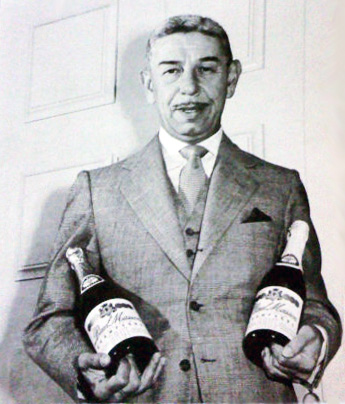
Duncan Hines celebrated simple, home-style American food. But as a printing salesman whose territory covered the entire country he ate in enough restaurants that by his 60s he had accumulated quite a few dissatisfactions with cuisine and service. “Every day on the road adds to my list of pet peeves,” he told an interviewer in 1947. In retrospect it’s clear that the decades in which he rated restaurants for the Adventures in Good Eating directories, the 1930s and 1940s, were not the country’s finest for restauranting. Some of his complaints are dated but others still ring true today.

● Chef’s specials: “Most Chef’s Specials are ground-up leftovers.”

● Chicken a la king: “I always dodge chicken a la king, if it is offered at bargain prices.”

● Cover-ups: “Foods doused with gravies or sauces.”

● Warmed-up baked potatoes.

● French fries kept warm under a heat lamp: “The grease soaks through.”

● Restaurants that steer patrons into the bar while they wait for their table.

● Being seated at a table that hasn’t been cleared of the previous patrons’ dirty dishes

● Restaurants that crowd patrons “like sardines.”

● Certain small towns: “The states between the Mississippi River and the Pacific Coast are pretty much the Gobi Desert as far as good cooking in the small towns goes.”

● “Maryland fried chicken” which is widely advertised but often turns out to be “old chickens covered with thick batter.”

● Long menus that contain nothing outstanding.

● Roadside stands: “Never eat at hot dog or hamburger stands.”

● Drug store counters: “How in God’s name can anyone who regularly eats drugstore snacks ever be expected to recognize a good meal when it’s served?

● Restaurants that ignore local specialties, such as those on the Gulf that feature chicken and steak rather than red snapper. Why no fiddleheads on menus in Maine? he asked.

Leave a comment

Filed under guides & reviews

Flaming swords

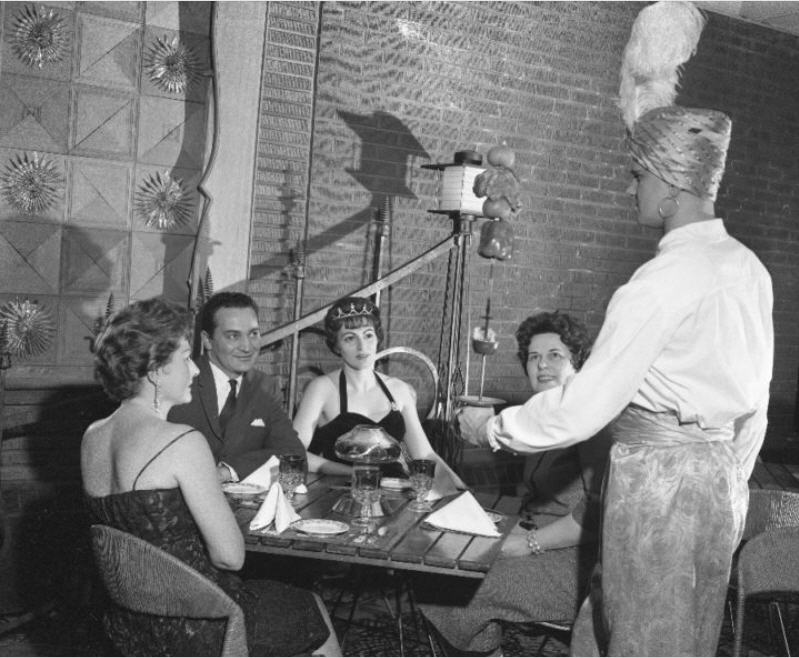
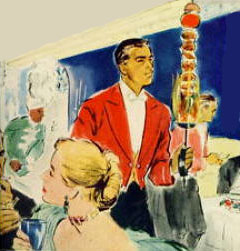
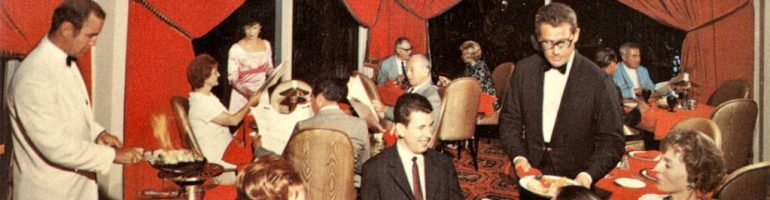
When I was researching my last post on knights-and-castles restaurant themes I discovered that this kind of theatrical decor was often complemented by flamboyant food presentation, especially the kind that mixes weaponry and meat. Specifically sticking meat on a sword, setting it aflame, and rushing it toward your guests.

If you like that and had been looking for a fun night out in the vicinity of Reno, Nevada, in 1960, you might have turned up at The Lancer, “home of the flaming sword” and Glen Relfson at the organ. The Lancer’s advertisement showed a knight charging forward on his horse with lance in hand — yet, disappointingly, the food came on an everyday sword. Why not a lance?

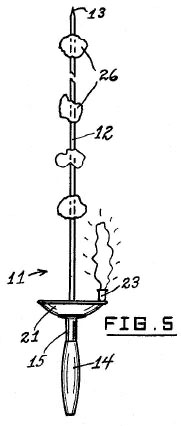
I’ve searched U.S. patents and the reason why meat was not served on a lance is because no one thought to invent a lance — or a gun, why not? — that could go on the grill loaded up with shish kebab. But they did invent several very practical-minded swords, either with detachable handles (permitting the handle to stay cool while the skewered meat cooks on the grill), or with the hand protector turned upward to catch dripping grease when the sword is held upright (pictured). As the patentees methodically argued, these features are important to restaurant managers.

Many municipalities have enacted fire regulations that do not permit restaurant employees to carry flaming objects across a room. This has cut down the number of restaurants that offer this service today as compared to the peak in the mid-20th century and through the 1970s.

It’s possible the custom began in restaurants with Russian themes. In the 1930s there was a place in San Francisco called the Moscow Café which had Cossack dancing, entertainment with flaming swords, and a specialty of flaming Beef Stroganoff. (Presumably the sour cream was added after the flames subsided.) Los Angeles’ Bublichki Russian Café also offered beef on flaming swords in the 1950s. And a patent was granted in 1965 for an item called a “shashlik sword.”

How does the flame work? I always wondered. As a patent applicant explained, “this is usually accomplished through igniting, immediately before serving, a piece of cotton which, first dipped in alcohol, is wrapped around the base of the sword near the hilt thereof.” However if you adopted another design you could have a wick holder built into the grease drip cup “so that when the skewer is carried in an upright position with cooked meats or other food articles impaled thereon, the wick, previously soaked with rum or brandy, may be ignited, providing a dramatic torch-like effect as the skewer is carried from the kitchen to the table.” Quite frankly, that would be my preferred sword because I like the way it catches grease and eliminates cotton wads thereon.

You may be thinking that only corny restaurants in mini-malls featured food on swords but you’d be wrong. For instance, the menu at NYC’s Forum of the Twelve Caesars in the early 1960s included, perhaps for lighter appetites, Wild Boar Marinated and Served on the Flaming Short Sword. And, starting in the 1940s, flaming swords were practically synonymous with the fabulously funky Pump Room in Chicago’s Ambassador East Hotel. The Pump Room’s manager Ernie Byfield laughingly referred to the action there, consisting of costumed waiters weaving through crowds of guests with “flaming gobbets of lamb,” as being “like Halloween in Hell.” I don’t believe anyone was immolated.

© Jan Whitaker, 2011

5 Comments

Filed under restaurant customs, technology

Restaurant-ing with “royalty”

Of course he wasn’t the only “sociopath” ever to become a restaurateur, but Michael Romanoff was very likely the most flamboyant. He was clever, spoke with a British accent, and dressed impeccably. His sense of style never left him. Imprisoned in NYC’s Tombs in the 1920s, he reportedly made quite an impression by strolling in the exercise yard with a walking stick. This story could be false, though, because not only did he twist the facts perpetually but so did some of the journalists who covered his bizarre 30-year career as a con-man.

He came to the attention of the press in 1910 when he presented himself as the grandson of England’s premier Gladstone in order to obtain two cameras on credit. He was unmasked as a former juvenile delinquent named Gilbert E. Gerguson. By the early 1930s he had used at least 17 aliases, including his favorite, Prince Michael Romanoff, younger brother of the former czar of Russia, Nicholas II. Although his “real” name is widely accepted as Harry F. Gerguson, I suspect it was actually Michael Romanoff, from Brooklyn. U.S. immigration authorities, however, were convinced he had been born outside this country and deported him every chance they got, about 10 times.

Romanoff1948MenucoverHe claimed to have spent seven years of his life in jail. At times, when not sponging off rich patrons, stowing away on luxury ocean liners, or successfully passing bad checks, he was penniless and went hungry. He may have spent time in a mental hospital and attempted suicide at least once. Although he was sometimes described as a former pants presser, oil field worker, and buttonhole maker, it was not his style to hold a regular job although he once managed a farm in Virginia for over a year, possibly his longest gig.

He never apologized for his lifestyle. Quite the contrary. In 1933 he declared, “For years I have been supplying adventure, by proxy, to those who have desired it. I have given more enjoyment, I think, than I have received.” By then everyone knew he was no prince, but he defended himself by saying, “At least I have the attitude of a prince – I have lived courageously and have, I think, put up the stock of princes.” Well, the stock of princes wasn’t terribly high in the 1930s and, courageous or not, he engaged in some shady activities.

His life improved immensely when he became a frankly fake prince rather than a fraudster trying to pass for Russian royalty. And where better to be what he called a “real phony” than Hollywood? He opened a restaurant there around 1940 which quickly became one of Hollywood’s famous haunts. By then he was 47 or 50 years old, depending upon which birthdate you accept. According to various newspaper stories, the restaurant’s capital was put up by director Darryl Zanuck, writer Robert Benchley, and others. In 1951 it moved to South Rodeo Drive in Beverly Hills, and somewhat later spread into San Francisco and Palm Springs.

The Hollywood Romanoff’s was a celebrity den where Mike entertained his guests — sometimes by snubbing them. How much time he spent supervising staff or bothering himself with mundane chores such as buying provisions or going over the books is unclear, as is the quality of the cuisine. By one account it was so-so but was upgraded to “above-average” in the late 1950s. An undated menu shows numerous dishes with Stroganoff and Romanoff suffixes. He made a good income, but by December 1962 business had fallen off to such a degree that the Beverly Hills Romanoff’s closed. I have not been able to determine the fate of the other two locations.

Mike’s story was clearly movie material, yet it seems that two announced films (“Ellis Island,” “The Incredible Romanoff”) never appeared. He had small parts in numerous films, sometimes playing a butler, aristocrat, or himself as restaurateur. In 1958 Congress voted to grant him permanent resident status and he became a naturalized citizen.

© Jan Whitaker, 2010

3 Comments

Filed under proprietors & careers

Righting civil wrongs in restaurants

This year marks the 50th anniversary of the Woolworth’s lunch counter sit-ins in Greensboro NC (pictured) which set off a wave of similar protests across the South and turned the tide against segregated eating facilities. But these were far from the first such actions. Integration of American eating places came about from a patchwork of regulations that sometimes successfully impeded discrimination and by the courageous actions of individuals and groups, black and white, who negotiated with, sued, picketed, and physically occupied restaurants beginning in the 1870s.

The Civil Rights Act of 1964, which offered the strongest protection against discrimination in restaurants up to then, was neither sudden nor was it evidence of the steady march of progress. A federal Civil Rights Act of 1875 was repealed by the Supreme Court just eight years later, after which Southern states enacted separate accommodations laws (Jim Crow), while other states passed or amended civil rights acts.

Few state civil rights laws covered eating facilities, the most controversial area of public accommodations. White public opinion was strongly against blacks and whites eating together in restaurants. Segregationist sentiment grew stronger around the turn of the last century and again in the World War I period when many black Americans migrated North for jobs. Blacks lodged relatively few protests because the odds of winning in court were poor. Also, anyone brave enough to challenge discrimination needed enough social stature to refute the accusation of simply being a low-class ruffian. By the “Catch-22″ logic that long prevailed, any black person who went into a white-only restaurant was considered of poor character since proper black people knew better than to go where they were not wanted.

The following are examples of challenges against racism in restaurants that nevertheless occurred in the 20th century before passage of the Civil Rights Act of 1964.

1926 Organized by a cook, the black staff of an Alice Foote MacDougall tea room in NYC unites behind a black waitress discharged for serving a black customer. They all walk out, forcing MacDougall to change her policy.

1929 The president of the United Colored Socialist party is accosted by a waitress as he and a black associate enter the Mills Restaurant in Cleveland. Restricted to a table on the mezzanine, they are treated hatefully and a hefty service charge is added to their bill. They win in court after refusing to give up despite six postponements.

1935 Black activists test a new PA civil rights law in Philadelphia, leading to the arrest of four employees at Horn & Hardart’s Automat who seat five white parties while two black people stand by and wait for an hour. At Stouffer’s three black patrons receive their meals smothered in salt. The manager asserts that all Stouffer’s meals are “highly seasoned.”

1936 After two black New Yorkers are refused service at a restaurant in Bel Air MD, 17 bus loads of fellow (but white) WPA workers en route to a Washington conference protest. The demonstration is peaceful yet 40 state police armed with machine guns and tear gas arrive and arrest the two blacks.

1943 Howard University students sit-in at a “white trade only” eatery in DC, a city in which few restaurants are open to people of color including the cafeteria in the Department of Justice.

1943 The newly formed Congress of Racial Equality (CORE) initiates a sit-in at the Jack Spratt café in Chicago where one of CORE’s founders, executive director James Farmer (pictured in 1965), had been treated rudely the previous year.

1946 The United Packinghouse Workers union (CIO) files charges against Hackney’s Seafood restaurant in Atlantic City on behalf of two black delegates refused admittance and files false-arrest charges against the police department which arrested protesting union picketers.

1947 After 11 bias suits against Bullock’s department store in Los Angeles fail to alter the store’s discrimination policy, CORE initiates sit-ins in the store’s tea room. Several white bystanders join the protest by informing waitresses they will wait to be served after the black patrons.

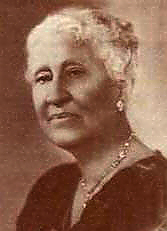
1951 Long-time civil rights activist Mary Church Terrell (pictured), in her late 80s and using a cane, joins picketers in front of Washington DC’s Hecht’s department store, which does not permit its many black customers to use its cafeteria. The store changes its policy in 1952.

1958 Dime store lunch counters are integrated in Louisville KY after unpublicized sit-ins, but other restaurants continue to refuse to serve blacks.

1960 Martin Luther King is among the 51 protesters arrested at the famed Magnolia Room at Rich’s Department store in Atlanta. A few months later the store changes its policy.

1964 As passage of the bill nears in the House, Ku Klux Klan members sit-in at a Krystal Hamburger stand in Atlanta to prevent SNCC (Student Nonviolent Coordinating Committee) members from occupying it.

Read more about discrimination in American restaurants.

© Jan Whitaker, 2010

1 Comment

Filed under racism

With haute cuisine for all: Longchamps

Staked by his brother-in-law, gambler Arnold Rothstein, Henry Lustig expanded from the wholesale produce business into restaurants in 1919. His first location, at 78th and Madison Avenue, was a property that belonged to Arnold. By 1924 he had two more restaurants, one conveniently near Saks Fifth Avenue. An advertisement informed “Madame or Mademoiselle” that at Longchamps they would find light French dishes as well as “soothing quiet, faultless service and a typically ‘Continental’ cuisine” that was above average “yet … not expensive.” While not exactly cheap, Longchamps was considered easily affordable by the middle-class.

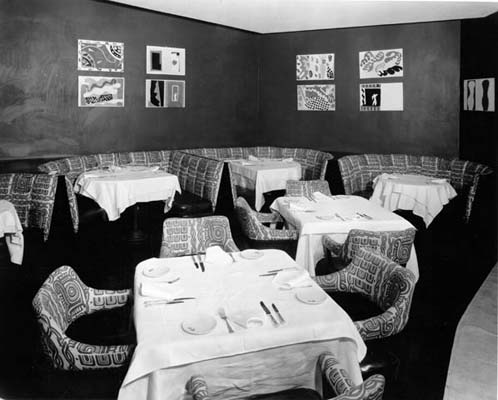
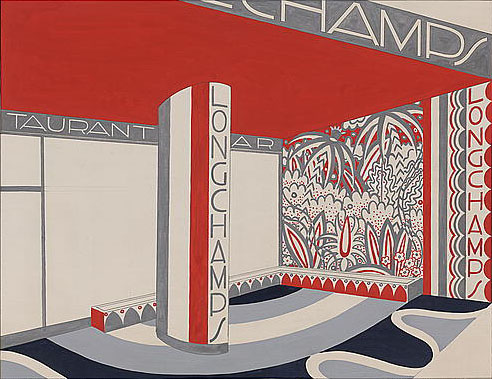
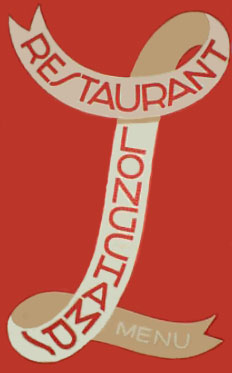
The chain continued to grow rapidly after the repeal of Prohibition when it hired top modernist decorators and architects to give it ultra-sophisticated chic. With the assistance of German-born artist and designer Winold Reiss and architects Louis Allen Abramson and Ely Jacques Kahn, New York City gained some of its most glamorous restaurant interiors of the period. Reiss showed considerable talent in disguising irregular spaces with mirrors and murals, multiple levels, dramatic lighting, and flashy staircases that lured people cheerfully downward to dine below ground (see his interior sketch and menu cover below). From 1935 to 1940 Longchamps opened seven new restaurants, including two on Broadway, one at Lexington and 42nd Street, and one in the Empire State Building.

Cocktail bars were no small part of the slick 1930s Longchamps formula. The chain’s ninth unit at Madison and 59th Street, a site vacated by Reuben’s, had a long oval bar stationed above floor level in the middle of the dining room. With 50 bartenders staffing the bar, the restaurant itself seated 950 diners. When it opened in 1935 a Longchamps advertisement immodestly called it “The Outstanding Restaurant Creation of the Century.” Architectural critic Lewis Mumford found its red, black, gold, and yellow color scheme — carried out even on chair backs and table tops — overdone, but he sensed that his was a minority opinion and he was almost certainly right. Among others, it soon became a meeting place for James Beard and his old friends from Oregon.

During the war Longchamps’ did a booming business. Lustig, it turned out, was siphoning off cash as fast as he could and keeping two sets of books, one for him and one for the IRS. Keep in mind that he owned racehorses and had named his restaurants after a famous Paris racetrack. The game was up in 1946 when he was handed a bill for delinquent taxes and fines of more than $10M and sentenced to four years in federal prison. Nine restaurants, along with a good stock of wine (the Times Square unit alone was said to have 120,000 bottles in the cellar), miscellaneous pieces of Manhattan real estate, and the chain’s bakery, catering business, ice cream plant, candy factory, and commissary, then passed into the hands of a syndicate which owned the Exchange Buffet.

In 1952 a Longchamps was opened in Washington, D.C., becoming one of the few downtown restaurants in that city that served Afro-American patrons. About this time another Longchamps opened in the Claridge apartments on Philadelphia’s Rittenhouse Square. In 1959 the chain was acquired by Jan Mitchell, owner since 1950 of the old Lüchow’s. He revealed that the chain, which consisted of twelve red and gold restaurants, a poorly trained kitchen staff, and a diminishing patronage, had been losing money for the past five years but that he could revive it as he had done with Lüchow’s. Under his ownership the New York units began offering guests the dietary concoction Metracal in their cocktail lounges, as well as free glasses of wine and corn on the cob with their meal. After a couple of years the chain was in the black.

In 1967 Mitchell sold it to the Riese brothers, who owned the Childs restaurants and, with new corporation president Larry Ellman, were in the process of buying up classic New York restaurants – Cavanagh’s in 1968, Lüchow’s in 1969, and others. In 1969 the old Longchamps were mostly turned into steakhouse theme restaurants. The restaurant at Madison and 59th, though, was renamed the Orangerie, dedicated to “hedonistic New Yorkers,” and given a “festive mood of Monte Carlo.” Its $8.75 prix fixe dinner came with free wine, “Unique La ‘Tall’ Salade,” and after-dinner coffee with Grand Marnier. In 1971 a single Longchamps operated under that name, at Third Avenue and 65th Street, but I doubt it had anything in common with the classic Longchamps of the 1930s. The holding company “Longchamps, Inc.” vanished in 1975.

© Jan Whitaker, 2009

32 Comments

Filed under chain restaurants

Taste of a decade: 1940s restaurants

DCcafeteria1943During the war (1941-1945) the creation of 17 million new jobs finally pulls the economy out of the Depression. Millions of married women enter the labor force. The demand for restaurant meals escalates, increasing from a pre-war level of 20 million meals served per day to over 60 million. The combination of increased restaurant patronage with labor shortages, government-ordered price freezes, and rationing of basic foods puts restaurants in a squeeze. With gasoline rationing, many roadside cafes and hamburger stands close.

For a time after the war, rationing continues and wholesale prices stay high but patronage falls off as women leave jobs and return to the kitchen. Trained restaurant personnel are in short supply. Restaurants take advantage of food service methods and materials developed for the armed services. The frozen food industry supplies restaurants with fish, French fries, and baked goods. Boil-in bags of pre-cooked entrees become available. Fast food assembly lines and serving techniques used by the military are transferred to commercial establishments.

Highlights

1940 Based on how many restaurant tablecloths have numbers scribbled on them, executives of the National Restaurant Association reason that mealtime deals are being made and that business is finally bouncing back from the Great Depression.

toffenetti3321941 When the restaurant in the French pavilion at the New York World’s Fair closes, its head Henri Soulé decides he will not return to a Paris occupied by Germans. He and ten waiters remain in New York and open Le Pavillon. Columnist Lucius Beebe declares its cuisine “absolutely faultless,” with prices “of positively Cartier proportions.” – Chicago cafeteria operator Dario Toffenetti, who also had a successful run at the Fair, decides to open a cafeteria in Times Square.

1942 According an official of the National Restaurant Association, nearly one tenth of the 1,183,073 employees and proprietors in the U.S. restaurant business are in California.

1943 Decreeing that patrons will not need to turn in ration coupons for restaurant meals, Washington makes a fateful decision that will fill restaurants to the bursting point. In Chicago, restaurants in the “Loop” experience nearly a 25% increase over the year before, while in New York City patronage doubles and earlier seatings must be devised.

1943 Food imports cease and Chinese restaurants cannot get bamboo shoots. They substitute snow peas, now grown in California and Florida. Because of restrictions, restaurants of all kinds leave cakes unfrosted and substitute honey and molasses for sugar. Instead of beef, lamb, and pork, vegetable plates, fish, omelets, spaghetti, and salad bowls fill menus.

1944 In Reno, Nevada, the White House offers a menu with many fish, seafood, and poultry selections, including lobster, crab legs, frog legs, oysters, fried prawns, brook trout, guinea hen, squab, pheasant, sweetbreads, turkey, duckling, and chicken a la king.
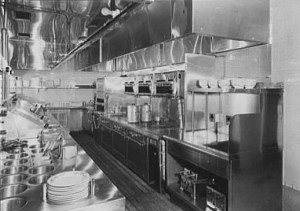
schrafftsrockefellerctr19481946 Like health departments all across the country, NYC begins a crack down on unsanitary conditions in restaurants, a problem that worsened with skeleton crews and extended mealtimes during wartime. An official says that of five inspections he witnessed only a Schrafft’s (shown here: Schrafft’s at Rockefeller Center) could be pronounced “sanitary and clean.”

1947 The Raytheon Corporation, maker of radar systems and components for the military, teams with General Electric to introduce the first microwave oven, the Radarange. Not available for home use initially, it is rented to hotels and restaurants for $5 a day.

1947 After numerous Afro-Americans are refused service in Bullocks department store tea room in Los Angeles, a group sponsored by C.O.R.E. stages a sit-in. Later a supportive white veteran publishes a letter to the editor of a paper declaring that since black soldiers regarded it as their duty to protect him from the “enemy abroad” during wartime, he now feels it is his duty “to protect them from the enemy at home.”

1948 An advice column tells girls to let their date handle all restaurant transactions, including complaints or questions about overcharges. “The girl does not intrude or ask, later, who won the argument,” advises the columnist. – In Chicago, a year-long trade school program in professional cooking enrolls veterans to help relieve the city’s acute chef shortage.
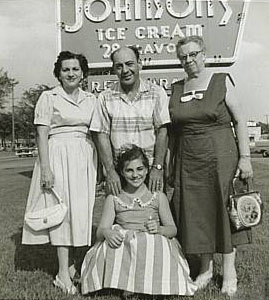
howardjohnsons1949 Howard Johnson’s, the country’s largest restaurant chain, reports a record volume of business for the year. HoJos, which has not yet spread farther west than Fort Wayne IN, plans a move into California.

Read about other decades: 1800 to 1810; 1810 to 1820; 1820 to 1830; 1860 to 1870; 1890 to 1900; 1900 to 1910; 1920 to 1930; 1930 to 1940; 1950 to 1960; 1960 to 1970; 1970 to 1980

© Jan Whitaker, 2009
27 Comments

Filed under miscellaneous