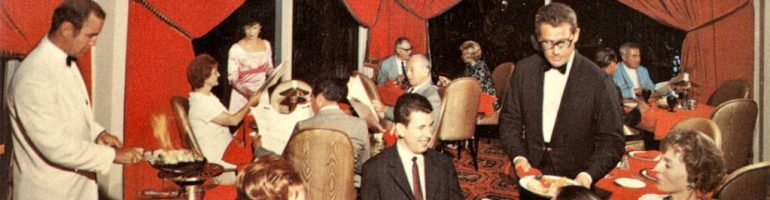
Decor: glass ceilings

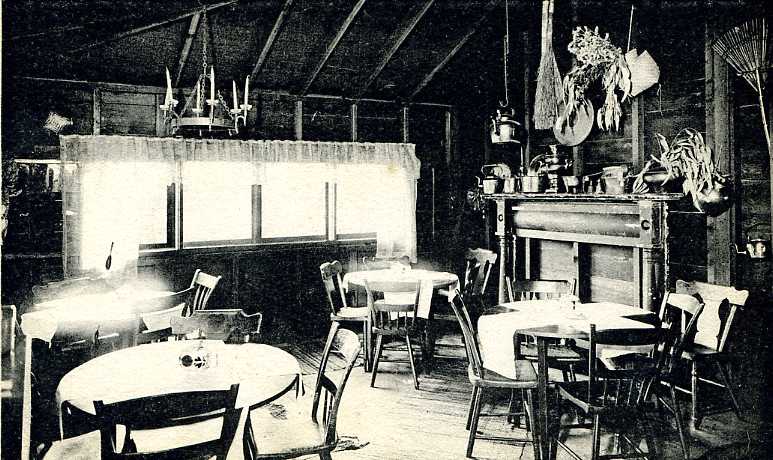
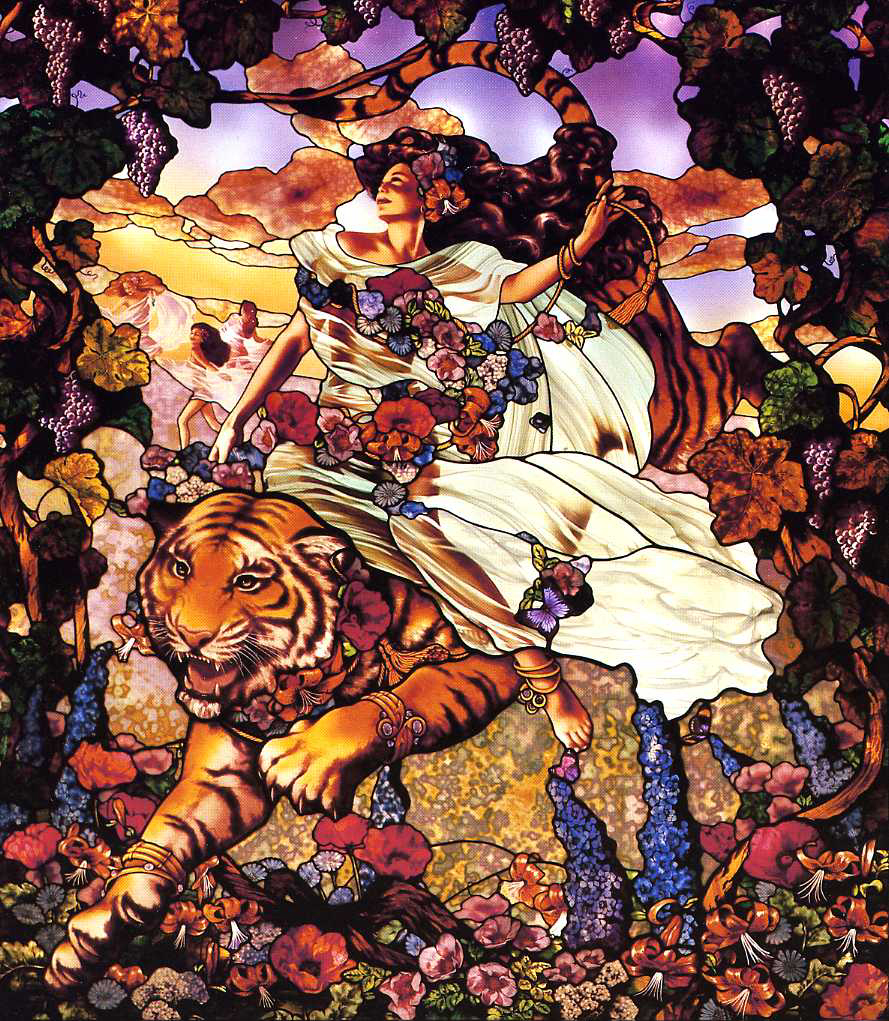
There are a couple of reasons why I’ve been thinking about glass ceilings in restaurants this week. I took a look at the total number of visits to my top posts and, apart from the various Taste of a decade posts which draw a lot of traffic, Swingin’ at Maxwell’s Plum is #1. An elaborate stained glass ceiling was one of the most striking features of Maxwell’s Plum in New York City, and also at the San Francisco Plum (pictured) which opened in 1981.

The second reason is that last Sunday I went to the antique paper show Papermania in Hartford CT and bought a 1970s-era menu from a pizza restaurant in St. Louis that I used to go to but had forgotten all about. It too had a glass ceiling though, as I recall, it was fairly plain. I won’t name the restaurant but will say that it was located in the vicinity of Washington University where I went to graduate school and there was a second place in Creve Coeur.

On one occasion I went to the city location with a group of friends and we witnessed a kind of free floor show – only it took place inside the glass ceiling. We heard the sounds first, of little claw feet scratching on glass. Then we looked up. We saw silhouettes of a legion of four-footed creatures with long tails which were furiously scrimmaging above us, as though playing a game of football. We laughed, considered leaving, but ended up staying. If the management noticed anything amiss they certainly didn’t show it. No one came over to explain away the incident (not that I know how you’d do that), no one offered us free drinks, nothing!

The menu from this restaurant which I just acquired displays on its cover a pledge of quality accompanied by the signature of the restaurant’s owner. One of the sentences jumps out at me: “More ingredients go into our pizza than the normal recipe calls for.” Yikes, say no more!

© Jan Whitaker, 2010

6 Comments

Filed under restaurant decor

Between courses: don’t sniff the food

Although most etiquette books seem to be directed at the female reader, S. A. Frost’s Laws and By-Laws of American Society published in 1869 appears to be aimed at men. Judging from the recommendations he makes below, there were some diners who sorely needed his advice if they didn’t want to be branded with “the certain mark of ill-breeding.”

In slightly abridged form, here are 10 big mistakes he identifies that you don’t want to make while at the table in a restaurant.

Don’t:

1. appear to question the quality or freshness of the viands by smelling or fastidiously tasting them.

2. [ever], even with cheese, put your knife into your mouth.

3. play with your knife and fork, fidget with your salt-cellar, balance your spoon on your tumbler, [or] make pills of your bread.

4. smack the lips when eating.

5. eat as if you had good fare for the first time in your life – that is to say, do not eat ravenously.

6. take the bones of fowl or birds up in your fingers to gnaw or suck on them.

7. wipe your finger tips, if soiled, upon your tongue or the table-cloth.

8. take a long, deep breath after you finish eating, as if the exercise had fatigued you.

9. suck your teeth, or pass your tongue round the outside of your gums.

10. illustrate your remarks by plans drawn upon the table-cloth with your nail, or butt of your knife, fork and spoon.

© Jan Whitaker, 2010

4 Comments

Filed under restaurant etiquette

In the kitchen with Mme Early: black women in restaurants

It’s so hard to find anything about the history of Afro-American women in restaurants that I decided to go ahead with a sketchy story rather than none at all. As far as the “historical record” goes, you’d be tempted to think that they had no place in restaurants. That’s certainly false, but they were frequently out of sight. The notice placed by John Kirk in a New York City paper sums up black women’s primary role in public eating places: as cooks and kitchen helpers. Kirk advertised in 1781, “Wanted to hire an active Negro Wench, used to a kitchen, with a good character.”

In his 1899 classic The Philadelphia Negro, W. E. B. Du Bois praised black men for their prominent place in the city’s catering business, writing of “self-reliant, original business men, who amassed fortunes for themselves and won general respect for their people.” He mentioned no women, yet there is reason to think that black women not only did much of the cooking in both black and white restaurants but ran many of the eating places in black communities too. They rarely made fortunes but surely must have commanded respect.

Although black women are nearly invisible in 19th-century documents, we see glimpses of them near its end. Several women ran Denver restaurants in the 1880s and 1890s, including Miss Jane Outland in the 1880s and at least six others in the 1890s, including Tennessee-born Callie Fugett who kept a restaurant on Market Street. In Washington D.C. in the late 1890s a former slave known as Madame Early provided chicken dinners in a cabin called the Café Du Chat Noir. I wonder if she was Haitian.

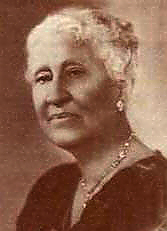
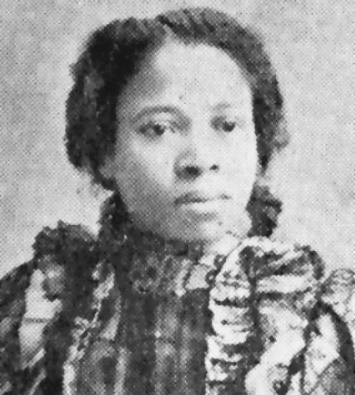
The first meeting of Booker T. Washington’s National Negro Business League in 1901 reported that women ran restaurants in Denver as well as Jacksonville and Tampa FL, including two in Tampa that were “among the best in the city.” A few years later, according to a directory of Afro-American businesses in Memphis, about half of the restaurants listed were run by women. Miss Lucy Hughes (pictured) ran the Climax Café and Ice Cream Parlor on N. Main where she sold “hot and cold lunches at all hours,” while residing with her mother, son, brother, and one male lodger who worked as a kitchen helper.

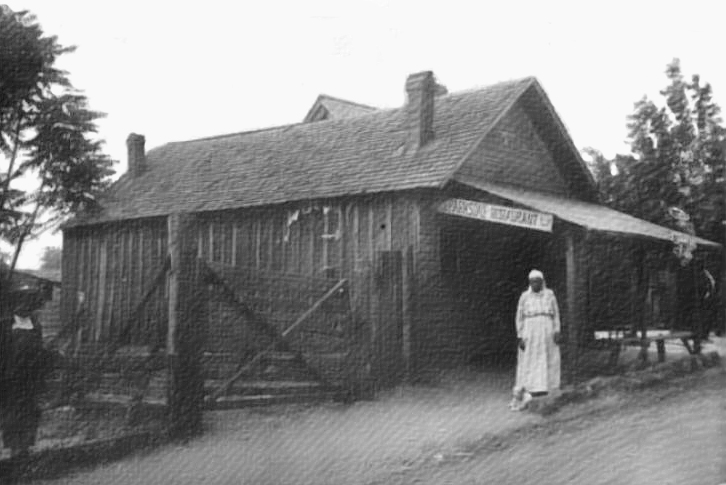
Overall, black women had even fewer employment opportunities than black men. The Department of Interior reported that in 1910 almost half of the 2 million employed black women were farm laborers. Private laundresses came next in the list, followed by cooks in private homes, hotels, and other settings. Only 2,734 women ran restaurants, probably humble eateries such as the one pictured here, one of four run by black business women in Gainesville GA ca. 1913.

After World War I things began to change in big cities. Middle-class black women opened fashionable tea rooms where they provided dainty lunches and hosted afternoon card parties. Chicago’s 1923 blue book of Afro-American society lists a number of these, such as Mrs. E. H. Hord’s Delmonico Tea Room on Prairie Avenue. In Pittsburgh, Mrs. A. E. Bush, a former pharmacy manager and wife of a prominent life insurance executive, opened the Melrose Tea Room which she decorated in old rose and blue. I have found no record of how black tea room operators dressed their black servers but I strenuously doubt they put them in mammy costumes as did so many white restaurateurs of the 20th century.

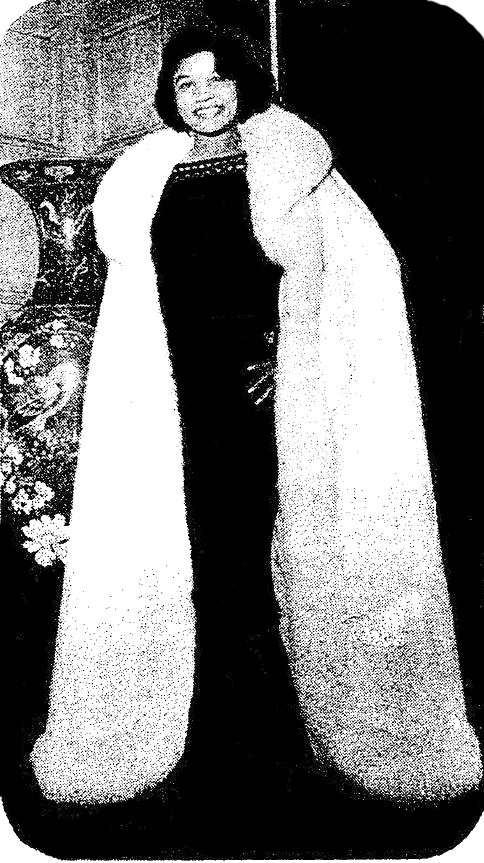
After the 1960s some black women who ran or cooked in restaurants acquired celebrity status. After her divorce, Helen Maybell opened the Soul Queen Café on Chicago’s near south side. In the 1970s the statuesque Helen (pictured), who was active in the NAACP and loved elegant gowns and furs, opened a second restaurant in which she hosted fashion shows. Leah Chase (who co-owned and cooked at Dooky Chase’s in New Orleans) and Edna Lewis (who promoted Southern cooking, authored cookbooks, and cooked for Café Nicholson in Manhattan, Gage & Tollner in Brooklyn, and others) became venerated figures in their lifetimes.

© Jan Whitaker, 2010
6 Comments

Filed under proprietors & careers, women

Burger bloat

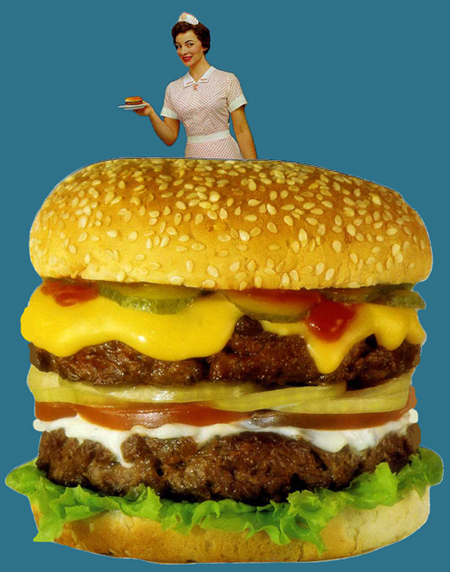
Check out the size of the White Tower hamburger as served by a “Miss Towerette” ca. 1950 and then consider how things have changed over the decades. In the 2000s  a couple of obscenely high-calorie burgers were introduced by fast food chains. Out came the Big Carl from Carl’s Jr. (920 calories) and the Monster Thickburger from Hardee’s (1,420 calories). Makes you wonder how the patrons of White Tower survived on those little morsels of yore.

The sandwiches are mentioned as two “proudly obnoxious fast food options” of the last decade. They rank #6 in Christopher Borrelli’s “10 worst dining trends of the last decade” in The Chicago Tribune.

1 Comment

Filed under guides & reviews

On the menu for 2010

I’ve been writing about the history of restaurants for about 18 months now. I thought it would get easier but instead it’s become harder. Each post takes me longer to write. Partly it’s because I keep learning more about our American restaurant past and partly it’s because I realize that readers are taking my blog seriously and I’ve got to be sure about what I say. I’m always tempted to go back and add to old posts but manage to fight off that impulse fairly well unless I learn of a blatant error.

One thing that’s been a lot of fun is hearing from people whose relatives ran or worked in some of the restaurants I’ve featured. This has been true of Toffenetti’s, the Maramor, and Don Dickerman’s Pirate’s Den.

Onward! I haven’t even come close to running out of ideas and I have an ever-growing storehouse of fabulous images. Here are some of the topics I have in mind for 2010:

• Hidden history: Afro-American women restaurant cooks and proprietors

• More tastes of a decade, beginning with 1900-1910

• Linen supply and the mob, a topic I never did get around to in 2009

• A question that intrigues me: when did chocolate desserts become big restaurant items?

• Failed fast food chains – supposedly chains offer operators a hedge against the high mortality rate of restaurants, but consider how many entire chains have vanished

• Portraits of restaurant towns, beginning with Portland OR – this is turning out to be a lot harder than I expected

• The influence of France and fantasies about Paris upon American eating places

• Confectionery-based restaurants

• Sherry’s, as a leading example of the former topic

• Sociopath turned restaurateur: Mike Romanoff

• Anatomy of a restaurateur: Colonel Harland Sanders

• Good eaters: newspaper reporters

• The role of gossip columnists in building the restaurant business

• Chinese restaurants-cum-nightclubs of the 1920s and 1930s

• Austrian-American restaurateurs, a little explored ethnic group

• Crazy restaurant equipment patents

• Speakeasies as eating places

Ooh – have I ordered too much? Is my appetite bigger than my capacity? We shall see. Best wishes to all for a delicious and satisfying new year.

8 Comments

Filed under miscellaneous

Christmas feasting

Last year, thanks to a travel screw-up, we found ourselves eating Christmas dinner at a San Francisco hotel. It was new and chic, with a highly rated chef, so we could have fared much worse … and yet we were dissatisfied. There was something pompous about how dramatically the waiters poured soup from pitchers into bowls which had been daubed artistically with creme fraiche. Not to mention all the other absurd ceremony that surrounded the meal yet failed to prevent orders from being mixed up and food from arriving burnt or cold.

Anyway, this got me wondering about eating Christmas dinner in hotels roughly100 years ago, around the turn of the last century when lengthy formal dinners were still in vogue. Even though hotels were the best places other than home to have a holiday dinner then, I’m not sure we would have liked that experience any better.

For one thing, who could eat all the food hotels piled on? The menu shown here represents my distillation of the most typical dishes from about 20 Christmas dinner menus of American hotels from 1898 to 1906. I’ve selected only one dish for each course, whereas the actual menus often had three or more and diners could choose as many as they wanted! Though the number and sequence of the courses varied somewhat from hotel to hotel, the most common arrangement was as shown here. The meal began with Oysters (a course all their own in the U.S.), then Soups, Relishes, Fish, Relevé (featuring a roast despite a later Roasts course – I don’t get it), Entrées, Vegetables, Roasts, Game, Salads, Desserts (which could be subdivided, with hot desserts coming first, under Entremets), Cheese, and ending with Coffee. Strictly speaking the Relishes, Vegetables, and Salads are not separate courses as they would be served with other dishes. So I believe the sample shown here would be an 8-course dinner. Each course would have been accompanied with wine and brandy may have been served with the coffee.

There were some interesting regional dishes on the menus I looked at. The Hotel Metropole in Fargo ND offered Saddle of Antelope; the New Century Hotel in Union SC had Pompano and Carolina Quail; while the Tulane Hotel in Nashville had Stuffed Mangoes*, Fried Hominy, and Dew Drop Corn. The Hollenbeck Hotel in Los Angeles mentioned that its Turkey was “Pomona Farm Fed” and featured a salad of Monk’s Beard greens. Two hotels, in Alabama and Michigan, presented Suckling Pig that had been barbecued. Without doubt the most unusual menu was that of Jack H. Clancey’s Hotel Mabson, primarily accommodating traveling salesmen in Montgomery, Alabama. In addition to Pompano and Barbecued Suckling Pig, its Christmas menu – the only one entirely devoid of French – introduced dishes seen nowhere else such as Stuffed Tomatoes, Scrambled Calf’s Brains, and Grandma’s Fruit Cake.

Whatever kind of dinner you eat on Christmas Day, enjoy it!

* Thanks to food historian Gary Allen for decoding stuffed mangoes as stuffed bell peppers.

© Jan Whitaker, 2009

7 Comments

Filed under food, restaurant customs

Today’s specials: books on restaurants

Appetite City

As someone who has spent years researching the history of restaurants I can give no higher praise than to say “I couldn’t have done it better myself.” That is my appraisal of William Grimes’ Appetite City: A Culinary History of New York (Farrar, Straus and Giroux/North Point Press), a book I highly recommend to anyone interested in the history of both restaurants and New York City. And, though I might have matched the book’s exhaustive research, I doubt I could have written it so engagingly. I appreciate Grimes’ level gaze and ability to sidestep the hype that has always surrounded New York restaurants, even as far back as 1825 when a journalist insisted that New York rivaled Paris with its “consummate institutions for cultivating the noble science of gastronomy.” Grimes’ response: “New York a rival of Paris? Hardly.” Though its star would rise throughout that century and the next, there were plenty of dips along the way. In the late 1960s and early 1970s the city was depressed and “cultural energy no longer radiated” from it. California restaurants became the locus of culinary innovation. Inevitably, though, many of its leading chefs migrated to New York as almost everyone who wants to make their mark does at some point.

Readers will find everything they are looking for in this book. All the leading restaurants and restaurant types are covered, in text and illustration: from Delmonico’s to the Automat, speakeasies and lobster palaces, beaneries and night clubs, oyster bars and world’s fairs eateries, from the 1820s to the present. I particularly enjoyed the book’s final chapter in which Grimes discusses his five years as a restaurant critic for The New York Times, during a “frenzied restaurant boom fed by a robust economy” (1999-2004) when “the dining scene was a complete free-for-all, as chefs dipped into Pacific Rim and Nuevo Latino with equal enthusiasm…” If I find anything missing in the book it is a characterization of New York restaurants which identifies how they have been, and are, different from those in the rest of the U.S., and the world — perhaps an impossible task, but worth a try. And something that applies to all capital/global cities that I would have liked to see would have been an attempt to separate the local dining spots (where the natives eat) from those that rely heavily on visitors to the city. But these are minor omissions in a valuable and thoroughly enjoyable book.

Republic of Barbecue

The Republic of Barbecue: Stories Beyond the Brisket (University of Texas Press) takes us far beyond New York City and its trendiness and glitz. Here we are introduced to more than one expects from a purely local tradition in cooking, eating, and restaurant-ing.

The book is by Professor Elizabeth S. D. Engelhardt of the American Studies Department at the University of Texas at Austin and 11 graduate students. With cameras and tape recorders the crew explored Central Texas eateries to create an oral history of barbecue and answer the question, “What does barbecue tell us about who we are?” Proprietors tell in 23 first-person narratives how and why they barbecue. These are supplemented by essays by the authors which explore the area’s history as well as subjects such as gender and race.

So the book sprawls, intentionally. As Engelhardt says, the idea is not to solidify Texas barbecue mythology but to find its complexities. Myth would have it that Texas barbecue is about beef and sausage; cowboys; rich and poor sitting side by side; eating off of butcher paper without utensils; slow cooking over mesquite and post oak in brick pits; no sauce; and only bread or crackers as sides. They find all of these things are real, but they also trace historical roots to Southern cotton culture rather than Western cattle culture; find decades of exclusion of blacks and Mexicans as customers; discover pork, chicken, turkey, goat, and mutton alongside beef; and find varied practices such as some barbecuers using sauce, some cooking on rotisserie pits fueled by propane instead of wood pits, and some cooking the meat for only three hours rather than twelve or more.

The book is well illustrated and, though somewhat repetitive and a bit inconclusive, filled with fascinating essays and narratives. I enjoyed reading about what to drink with barbecue – Big Red and Dr. Pepper sodas, and Shiner Bock and Lone Star beers. I appreciated Gavin Benke’s “Authenticity” which explores issues such as the restoration of butcher paper for the feel of the “real barbecue” experience, Eric Covey’s “Keep Your Eye on the Boll,” which examines barbecue in the context of a cotton-growing economy, and Remy Ramirez’s essay on her Mexican-American grandparents. The book is nicely produced and a pleasure to read and a must-have for anyone interested in barbecue or restaurant history and culture.

© Jan Whitaker, 2009

3 Comments

Filed under miscellaneous

With haute cuisine for all: Longchamps

Staked by his brother-in-law, gambler Arnold Rothstein, Henry Lustig expanded from the wholesale produce business into restaurants in 1919. His first location, at 78th and Madison Avenue, was a property that belonged to Arnold. By 1924 he had two more restaurants, one conveniently near Saks Fifth Avenue. An advertisement informed “Madame or Mademoiselle” that at Longchamps they would find light French dishes as well as “soothing quiet, faultless service and a typically ‘Continental’ cuisine” that was above average “yet … not expensive.” While not exactly cheap, Longchamps was considered easily affordable by the middle-class.

The chain continued to grow rapidly after the repeal of Prohibition when it hired top modernist decorators and architects to give it ultra-sophisticated chic. With the assistance of German-born artist and designer Winold Reiss and architects Louis Allen Abramson and Ely Jacques Kahn, New York City gained some of its most glamorous restaurant interiors of the period. Reiss showed considerable talent in disguising irregular spaces with mirrors and murals, multiple levels, dramatic lighting, and flashy staircases that lured people cheerfully downward to dine below ground (see his interior sketch and menu cover below). From 1935 to 1940 Longchamps opened seven new restaurants, including two on Broadway, one at Lexington and 42nd Street, and one in the Empire State Building.

Cocktail bars were no small part of the slick 1930s Longchamps formula. The chain’s ninth unit at Madison and 59th Street, a site vacated by Reuben’s, had a long oval bar stationed above floor level in the middle of the dining room. With 50 bartenders staffing the bar, the restaurant itself seated 950 diners. When it opened in 1935 a Longchamps advertisement immodestly called it “The Outstanding Restaurant Creation of the Century.” Architectural critic Lewis Mumford found its red, black, gold, and yellow color scheme — carried out even on chair backs and table tops — overdone, but he sensed that his was a minority opinion and he was almost certainly right. Among others, it soon became a meeting place for James Beard and his old friends from Oregon.

During the war Longchamps’ did a booming business. Lustig, it turned out, was siphoning off cash as fast as he could and keeping two sets of books, one for him and one for the IRS. Keep in mind that he owned racehorses and had named his restaurants after a famous Paris racetrack. The game was up in 1946 when he was handed a bill for delinquent taxes and fines of more than $10M and sentenced to four years in federal prison. Nine restaurants, along with a good stock of wine (the Times Square unit alone was said to have 120,000 bottles in the cellar), miscellaneous pieces of Manhattan real estate, and the chain’s bakery, catering business, ice cream plant, candy factory, and commissary, then passed into the hands of a syndicate which owned the Exchange Buffet.

In 1952 a Longchamps was opened in Washington, D.C., becoming one of the few downtown restaurants in that city that served Afro-American patrons. About this time another Longchamps opened in the Claridge apartments on Philadelphia’s Rittenhouse Square. In 1959 the chain was acquired by Jan Mitchell, owner since 1950 of the old Lüchow’s. He revealed that the chain, which consisted of twelve red and gold restaurants, a poorly trained kitchen staff, and a diminishing patronage, had been losing money for the past five years but that he could revive it as he had done with Lüchow’s. Under his ownership the New York units began offering guests the dietary concoction Metracal in their cocktail lounges, as well as free glasses of wine and corn on the cob with their meal. After a couple of years the chain was in the black.

In 1967 Mitchell sold it to the Riese brothers, who owned the Childs restaurants and, with new corporation president Larry Ellman, were in the process of buying up classic New York restaurants – Cavanagh’s in 1968, Lüchow’s in 1969, and others. In 1969 the old Longchamps were mostly turned into steakhouse theme restaurants. The restaurant at Madison and 59th, though, was renamed the Orangerie, dedicated to “hedonistic New Yorkers,” and given a “festive mood of Monte Carlo.” Its $8.75 prix fixe dinner came with free wine, “Unique La ‘Tall’ Salade,” and after-dinner coffee with Grand Marnier. In 1971 a single Longchamps operated under that name, at Third Avenue and 65th Street, but I doubt it had anything in common with the classic Longchamps of the 1930s. The holding company “Longchamps, Inc.” vanished in 1975.

© Jan Whitaker, 2009

32 Comments

Filed under chain restaurants

Restaurant-ing on Thanksgiving

As a meal Thanksgiving dinner is steeped in agrarian values and customs that do not thrive in restaurants, which are primarily urban inventions. It is also incongruous to celebrate what has become a domestic festival in a commercial setting. Neither gourmet restaurants nor fast food eateries present the homeyness considered conducive to celebrating the holiday.

Nor is restaurant cuisine quite right for Thanksgiving. Thanksgiving dinner represents the ne plus ultra of comfort food. According to consumer researchers Melanie Wallendorf and Eric Arnould (“‘We Gather Together’: Consumption Rituals of Thanksgiving Day,” Journal of Consumer Research, June 1991), the typical dishes served are like baby food in that they are “baked, boiled, and mashed” foods which are soft in texture and prepared without much seasoning. The emphasis is on the presentation and consumption of abundance, which for participants implies almost compulsory overeating. Few people are interested in culinary innovation which, for most, threatens the essentially infantile pleasures of the occasion.

Despite restaurants’ apparent inadequacy in meeting the challenge of this American national gustatory ritual, there is some evidence that Thanksgiving restaurant-going has increased over the course of the past century. The tendency, though, is to see this more as symptom than innovation. The sentiment expressed in 1892, that Thanksgiving dinner in a restaurant is a “rather melancholy thing” has not been eradicated.

One would think that the restaurants best positioned to capture the Thanksgiving trade would be those with Early American decor, or venerable restaurants that can reference tradition, such as Brooklyn’s Gage and Tollner, or those that stress home-based values, such as tea rooms. In the Los Angeles area, which seems to have had a fair amount of Thanksgiving restaurant trade in the 1920s, diners could choose from Ye Golden Lantern Tea Room or the Green Tea Pot of Pasadena, among others. Harder to understand, though, was the appeal of restaurants serving chop suey to the strains of Hawaiian music. About the same time Indianapolis was well supplied with dining out choices for the holiday, ranging from traditional Thanksgiving fare at the Friendly Inn to barbecue at Ye Log Cabin to a “Special Turkey Tostwich, 25c” at Ryker’s. The city’s Bamboo Inn offered two styles of Thanksgiving dinner, one with turkey and the usual trimmings and the other a Mandarin Dinner with Shrimp Egg Foo Young and Turkey Chop Suey.

Although the president of the Saga Corporation, a restaurant supplier, insisted in 1978 that eating out on Thanksgiving and Christmas had lost its stigma, events such as turkey dinners given by churches and soup kitchens for the poor and homeless, as well as explanations given by restaurant patrons in surveys, would indicate otherwise. They seem to suggest that dining in a restaurant on Thanksgiving is frequently a compensation for some sort of lack on the homefront rather than a positive attraction in its own right. Wallenberg and Arnould reported that only 1.8% of the people they surveyed said they would prefer to spend Thanksgiving in a restaurant than at home.

© Jan Whitaker, 2009

1 Comment

Filed under miscellaneous, restaurant customs

High-volume restaurants: Smith & McNell’s

Smith&McNellsAll things considered, the best restaurants that this country has produced probably have been unpretentious, inexpensive, high-volume eateries located close to sources of fresh food. In 19th-century New York City’s Smith & McNell’s, across from the booming Washington Market, was a leading example of the type. Its patronage came largely from dealers, farmers, and customers who worked and shopped at the market. Around 1891 the restaurant reportedly provided more meals than any eating place in the city, as many as 10,000 a day.

Service was so brisk at Smith & McNell’s that its waiters and kitchen workers were held to a high standard. Successful performance there was a job recommendation said to be equal in its own way to having worked at Delmonico’s. Fred Harvey, founder of the famed Santa Fe Railroad system of eating houses, found his first job at Smith & McNell’s shortly after immigrating from England in the early 1850s.

S&MHotel1900There are many discrepancies in accounts of this restaurant’s history but it seems most likely it was established in the late 1840s by Thomas R. McNell and Henry Smith. McNell was an Irish immigrant, born sometime between 1825 and 1830. According to one account he and Smith had been night watchmen before taking over the coffee house run by Frederick Way on Washington Street near the market. Both McNell and Smith became wealthy and McNell acquired a lordly estate in Alpine, New Jersey, as well as a California ranch. He continued working in the business until a ripe old age and died in 1917 a few years after the restaurant (and associated hotel) closed.

SmithMcNell'sca1910

Smith and McNell’s, following the customs of the time, operated 24 hours a day and did a strictly cash business, clearing a daily profit which the partners split after paying the help. Since the market was busiest at night, that was probably the time when most of their clientele piled in for meals of oysters, steaks, eggs, and griddle cakes. Judging from a 1900 menu, prices did not go up much over the decades. A meal of beefsteak pie or baked ham with champagne sauce still cost 15 cents, while an order of mashed potatoes or a chocolate eclair cost 5 cents each. The restaurant, which seated 1,000 and took up the entire first floor of the 400-room hotel, made its own wine. A glass of Concord or Catawba wine sold for 10 cents, a quart for 30 cents.

When the property was sold in 1920 it comprised almost the entire block bounded by Washington, Greenwich, Vesey, and Fulton streets across from Washington Market. The market continued to operate until around 1960 when the site was cleared for the World Trade Center, the acreage of which also encompassed the block once occupied by Smith & McNell’s. It could be argued that some of the restaurants operated by catering maestro Joe Baum in the WTC, such as The Big Kitchen, carried on the tradition of the old marketmen’s eatery.

© Jan Whitaker, 2009

31 Comments

Filed under proprietors & careers