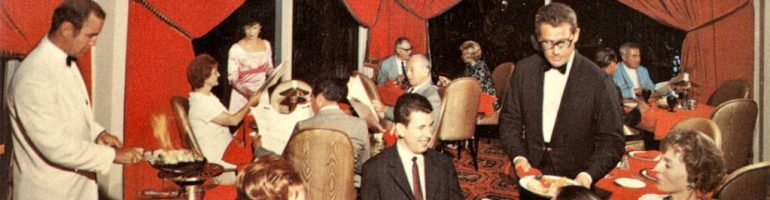
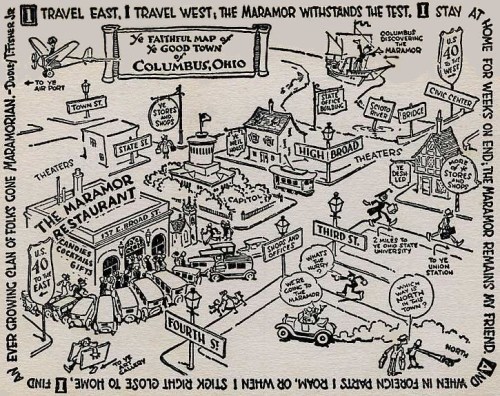
 Imagine a restaurant management style diametrically opposed to Gordon Ramsay’s (as he takes command in nightmarish kitchens on TV), and you might well be picturing how Mary Love ran her restaurant, The Maramor in Columbus, Ohio.
Mary was a home economist who had previously managed the tea room at the F & R Lazarus department store in Columbus. Single, 29 years old, and a lodger in a family’s home, she opened a small place at 112 E. Broad in 1920. Not much later she married Malcolm McGuckin and for a few years they lived in California where he ran a Wills Sainte Claire auto dealership. When the car plant shut down in 1927 the McGuckins moved back to Columbus to run the restaurant, now at 137 E. Broad.
Malcolm was president of the company which also included a candy shop, while Mary, mother of four by 1928, managed the restaurant. She believed in supervising employees in a non-conflictual way. Sociologist William Foote Whyte presented her method of conducting staff meetings in a 1946 article. Mary’s style of management, which Whyte characterized as the “open-minded exploratory approach,” stressed listening, participation, and sensitivity to others’ feelings. “Make sure there is no personal embarrassment to any individual,” she insisted. Also, “Guide the meeting so that an … overemotional person does not take the reins.” (Gordon?)
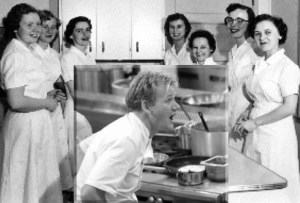 In 1941 Mary described to a home economics conference how she ran her kitchen. She avoided frying and stressed the nutritional properties of food, preparing fresh vegetables to retain flavor and vitamins. Each day her planning department presented the production manager with the day’s menus, while a weighing and measuring specialist prepared trays with complete ingredients for every dish. The trays were given to the cooks, along with detailed instructions for cooking. “This,” Mary said, “helps them to keep their poise and self-respect through the working day, and a cook with poise and self-respect has a better chance of turning out a good product.” (Gordon?)
Thanks to testimonials from theatrical personalities appearing in plays in town, such as Helen Hayes and Alfred Lunt and Lynn Fontanne, the restaurant earned a national reputation. Lunt and Fontanne, who ate there often, were so pleased with the restaurant’s “Lamb Luntanne” that they declared in the guest book that The Maramor was “the best restaurant in America.” Hayes, a queen in “Victoria Regina,” praised the Maramor’s vichyssoise, calling it “A soup to a queen’s taste.”
Gertrude Stein and Alice B. Toklas may have eaten at The Maramor during their 1934 visit to Columbus. It seems likely that Alice was referring to it when she wrote: “In Columbus, Ohio, there was a small restaurant that served meals that would have been my pride if they had come to our table from our kitchen. The cooks were women and the owner was a woman and it was managed by women. The cooking was beyond compare, neither fluffy nor emasculated, as women’s cooking can be [Oh Alice!], but succulent and savoury.”
Duncan Hines named The Maramor one of his favorite eating places in an early 1947 interview, singling out its incomparable stewed chicken: “The chicken is so delicate in flavor, tender, the dumplings light as thistledown, cooked in the rich, creamy gravy.” In 1945 the McGuckins had sold the restaurant to Maurice Sher and moved to California, so it’s not clear exactly whose stewed chicken Hines meant. In 1948 the restaurant was listed in Gourmet’s Guide to Good Eating. The Shers operated the restaurant until 1969. Next it had a short run as a music venue, the Maramor Club. The building was razed in 1972.
© Jan Whitaker, 2009
 Historically, few tea rooms have enjoyed financial success. So, while “empire” may be a bit grandiose, it’s hard not be impressed by the tea rooms enterprise Ida Frese and her cousin, Ada Mae Luckey, built in New York City in the early 20th century. Ida and Ada, both from a small town near Toledo OH, struck it rich by winning the patronage of wealthy society women. Over time they owned six eating places: the Colonia Tea Room (their first), the 5th Avenue Tea Room, the Garden Tea Room in the O’Neill-Adams dry goods store, the Woman’s Lunch Club, and two Vanity Fair Tea Rooms.
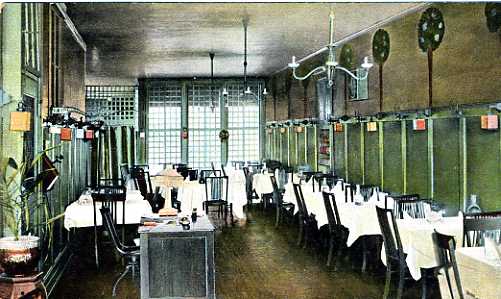
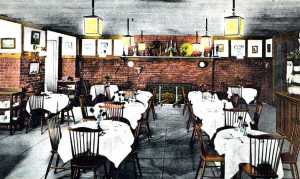 Clearly they valued a good location. The Vanity Fair at 4 West Fortieth Street began in 1911, bearing a notice on its postcard (pictured) that it was across the street from the “new” public library which also opened in 1911. The tea room’s upstairs ballroom was the site of many a party, such as a Shrove Tuesday celebration in February 1914 attended by 150 masked guests.
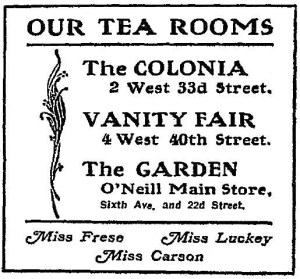 Adding to their financial success were several real estate coups. In 1914 Ida somehow obtained a lease on a coveted Fifth Avenue property. Her feat astonished everyone who followed real estate deals since the owner, a granddaughter of William H. Vanderbilt, had turned down repeated offers from would-be lessees and buyers. The house at #379 was one of the last residences on Fifth Avenue between 34th and 42nd streets which had not been turned into a store or office building. Ida and Ada moved the Colonia, previously on 33rd Street, to this address and rented the remaining space to retail businesses, dubbing the structure the “Women’s Commercial Building.”
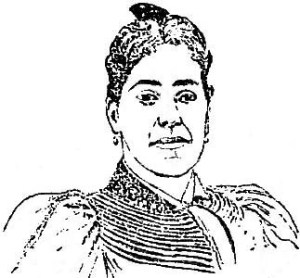
 In 1890 Harry Gordon Selfridge, manager of Field’s in Chicago, took the then-unusual step of persuading a middle-class woman to help with a new project at the store. Her name was Sarah Haring (pictured) and she was the wife of a businessman and a mother. In the parlance of the day, she was needed to recruit “gentlewomen” (= middle-class WASPs) who had “experienced reverses” (= were unexpectedly poor), and knew how to cook “dainty dishes” (= middle-class food) which they were willing to prepare and deliver to the store each day.
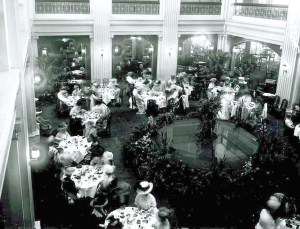
 And so — despite Marshall Field’s personal dislike of restaurants in dry goods stores — the Selfridge-Haring-gentlewomen team created the first tea room at Marshall Field’s. It began with a limited menu, 15 tables, and 8 waitresses. Sarah Haring’s recruits acquitted themselves well. One, Harriet Tilden Brainard, who initially supplied gingerbread, would go on to build a successful catering business, The Home Delicacies Association. Undoubtedly it was Harriet who introduced one of the tea room’s most popular dishes, Cleveland Creamed Chicken. Meanwhile, Sarah would continue as manager of the store’s tea rooms until 1910, when she opened a restaurant of her own, patenting a restaurant dishwasher in her spare time.
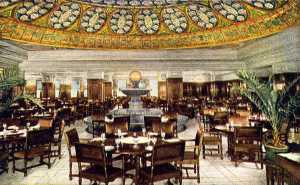 A graduate of Chicago’s School of Domestic Arts and Sciences named Beatrice Hudson opened the all-male sanctum Men’s Grill (pictured) about 1914 and was responsible for developing a famed corned beef hash which stayed on the menu for 50+ years. Later she would own several restaurants in Los Angeles, coming out of retirement at age 76 to manage the Hollywood Brown Derby and again in her 80s to run The Old World Restaurant in Westwood.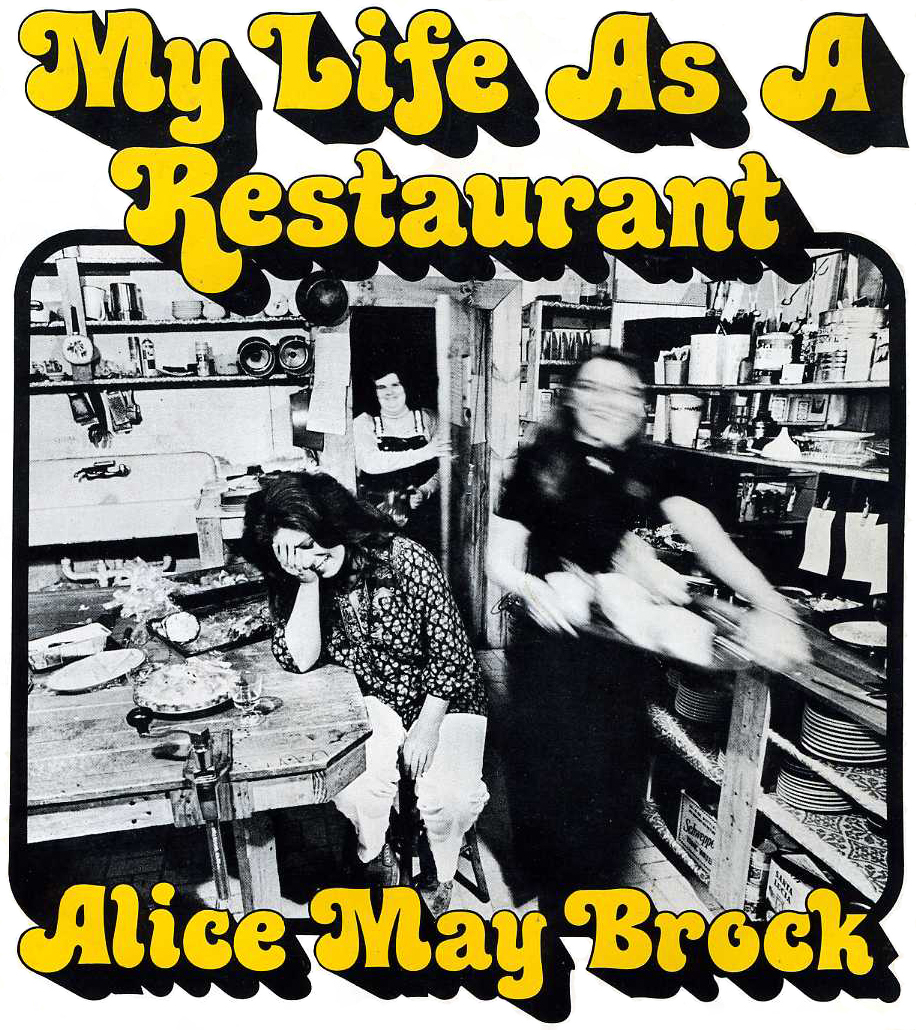

 In interviews and in her two books Alice espoused the value of fresh ingredients, garlic, meals with friends, and an experimental approach to cooking. Her words convey a free-wheeling, irreverent outlook. Some examples: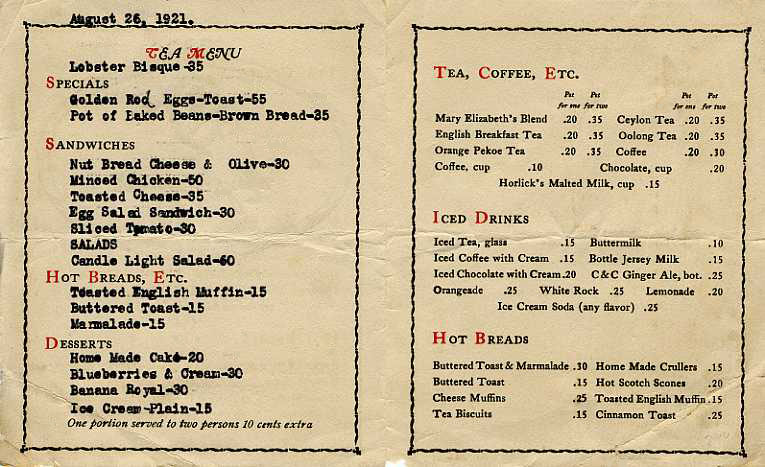



 It's great to hear from readers and I take time to answer queries. I can't always find what you are looking for, but I do appreciate getting thank yous no matter what the outcome.
 Restaurant-ing through history