Category Archives: roadside restaurants

Road trip restaurant-ing

PostluggageFor New Yorkers even today a lengthy car trip can raise concerns about letdowns at the dinner table, but all the more so in 1915.

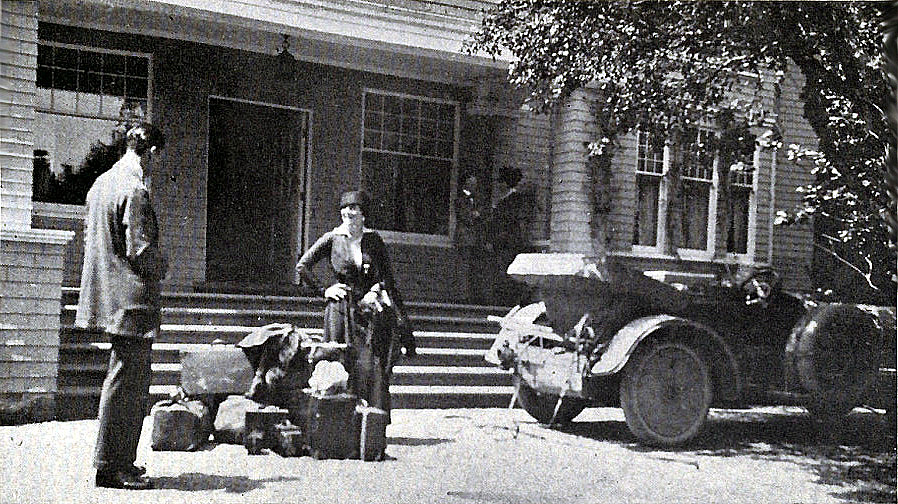
That was the year that two writers, Theodore Dreiser and Emily Post, separately set out across country [Post pictured above, about ready to embark]. Although novelist Theodore Dreiser is often credited with writing the “first road trip” book, the publication of his Hoosier Holiday in 1916 was in fact matched by Post’s By Motor to the Golden Gate that same year.

Dreiser’s trip took him back to his boyhood state of Indiana, while Post daringly continued westward to the Panama-Pacific Exposition in San Diego and San Francisco. Both were in their 40s, lived in New York, and had failed marriages behind them. Both traveled with a companion and a chauffeur, in Post’s case her son.

Each made interesting observations about places where they ate. Dreiser, on a sentimental journey into his past, tended to see most restaurants as symptomatic of the identity-less mediocrity of American culture. Post experienced the journey with a liberating sense of adventure and was less judgmental than Dreiser, but only to a point.

As much as possible the Post party stuck to respectable hotels for their meals, for which they spent a fair amount of money for that time. An appendix in Post’s book provides a rundown of expenses. The joint dinner check for all three travelers usually came to between $4 and $5 plus a 10% tip even though Post reports they were light eaters.

poststatlercleveland

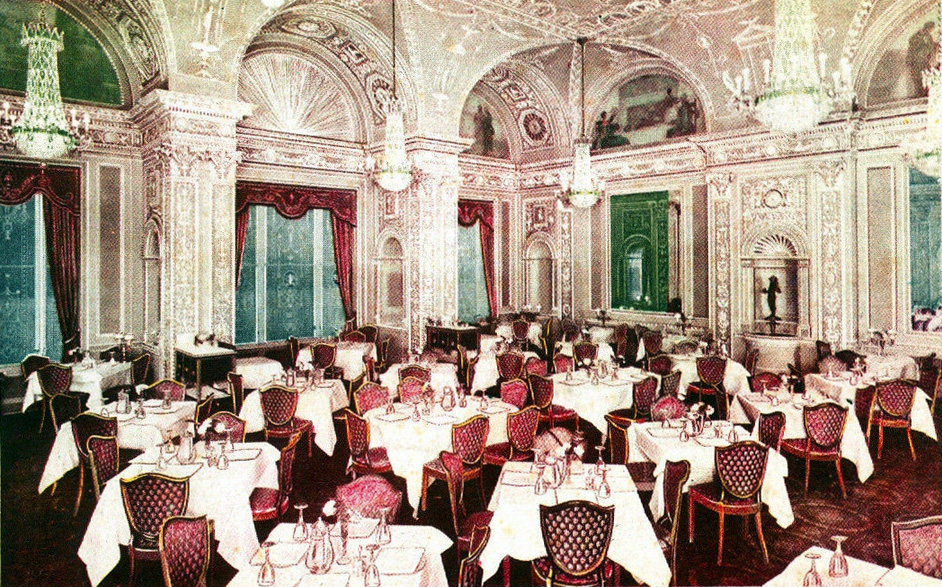
Though she encountered some very bad meals in dingy lunch rooms, including a barroom in New Mexico where no plates were provided, Post was most critical of the dining room of Chicago’s much-ballyhooed Blackstone Hotel. She compared it unfavorably to Cleveland’s Statler Hotel [pictured] where she found the food and service “extraordinary.” Dreiser saved his greatest praise for a quick lunch eatery in Princeton IN and another restaurant in Vermilion OH where he enjoyed cherry pie provided by a Japanese-born proprietor (misidentified in his book, but almost certainly named Mamoru Okagi). He aimed his criticism at more pretentious places.

It’s safe to say that Dreiser, from a much humbler background than Post, disliked the hotel dining rooms of the sort Post preferred. He ridiculed their fake European elegance which aped the “Palace of Vairsigh,” as he mockingly put it.

dreiserGrill654

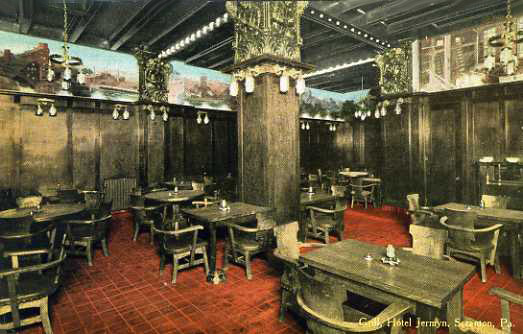
Despite, or because of, her higher social standing, Post had to juggle gender issues. She avoided hotels of the “saloon-front-and-ladies’-entrance-in-the-back variety.” Whereas Dreiser sneered at then-trendy grills and rathskellers [grill in Scranton PA pictured], Post could not even get into them. Dreiser found these types, which were so popular with men, dull and silly – “made to look exactly like a western architect’s dream of a Burgundian baronial hall”. But Post was disappointed when she was turned away from the men-only grill room of the Fontenelle Hotel in Omaha.

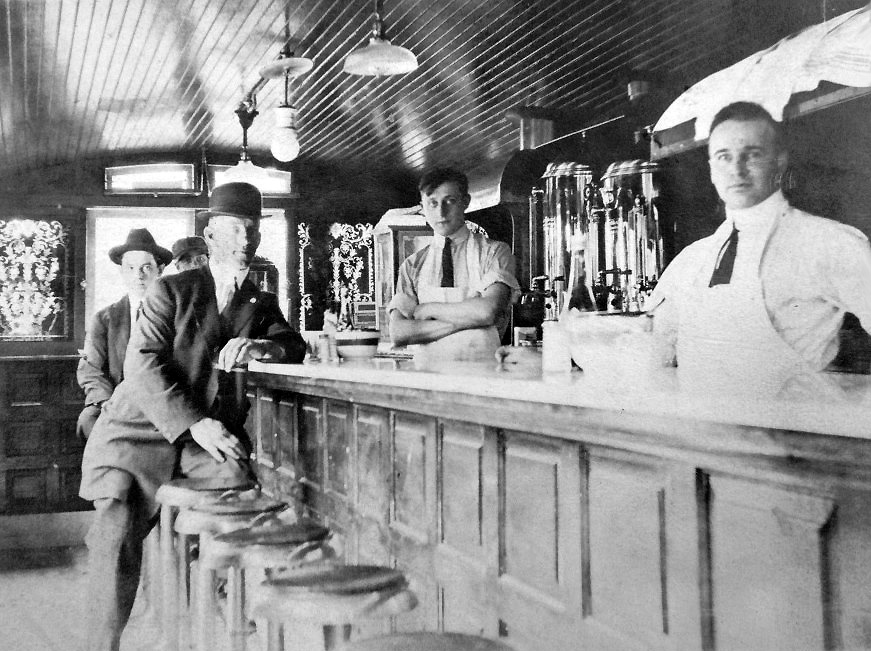
Dreiser’s discomfort was induced by stuffy dining rooms where haughty head waiters fauned over rich men — and by country lunch rooms where local “wits” hung out. The following photograph illustrates what I imagine he saw walking into some of the places he encountered on his trip.

DreiserKearnyNJ1913cafe

Both cast a cold eye on the attire of other guests in upscale dining rooms. Post shuddered at the casual, wrinkled outfits worn by the wealthy, as well as at how freely California women combined colors such as “an emerald-colored fan with a sage-green frock!” But, although Dreiser was horrified by “the upstanding middle class American with his vivid suit, yellow shoes, flaring tie and conspicuous money roll,” the socialist-leaning author nevertheless said he wanted to “compose an ode” to this sort of common man of democratic society.

Summing up her travel experiences, Post reflected, “It is your troubles on the road, your bad meals in queer places, . . . , in short, your misadventures that afterwards become your most treasured memories.” Dreiser wondered, “how long will it be before we will have just a few good [restaurants] in our cities?”

© Jan Whitaker, 2013

2 Comments

Filed under roadside restaurants, women

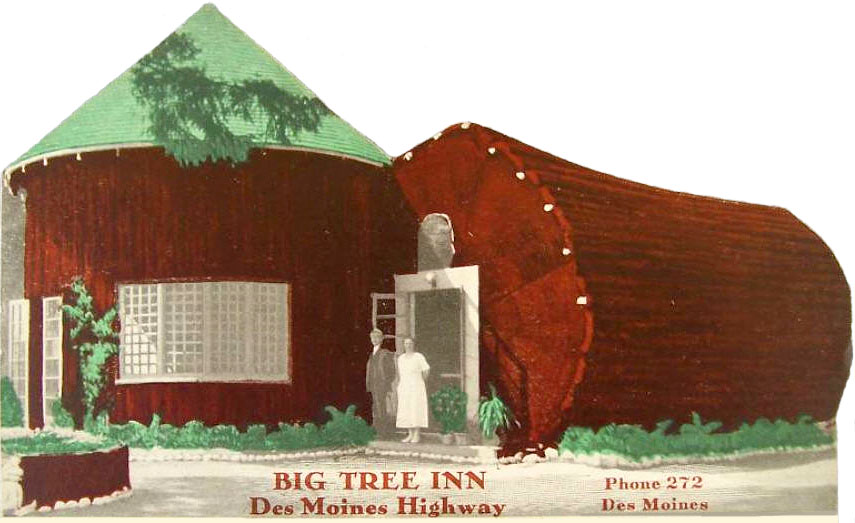
Odd restaurant buildings: Big Tree Inn

bigtreeinn

Was there ever a building or structure so strange, so awkward, so ugly that no one yearned to turn it into a restaurant?

Chicken coop, stable, giant tree stump. Why not? Especially if it was likely to catch the eye of speeding motorists and get them to stop out of sheer curiosity if nothing else.

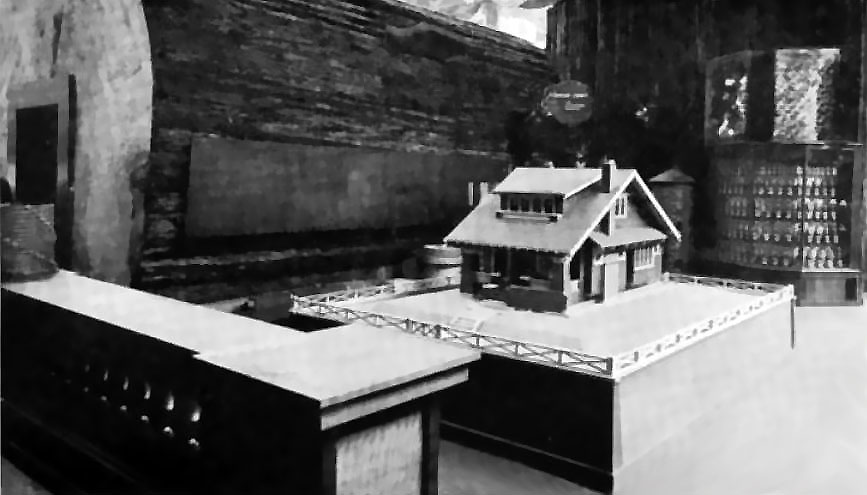
BigTreeInnHumboldtCountyexhibit1915That’s not to say that the Big Tree Inn, for instance, had nothing to recommend it but its oddness, but it certainly had plenty of that. Built from two sections of a redwood log it was designed to exhibit Humboldt County CA’s wood products at the 1915 Panama-Pacific International Exposition.

The stump house, 20 ft in diameter, plus its associated log structure, was contrived by the Rodney Burns Redwood Novelty Co. and shipped by rail in sections to San Francisco where it was reassembled.

Following the exposition, a realtor in Washington state bought the log structure, transporting it to Des Moines WA at great cost. Then he added a kitchen and dining room. The odd building quickly proved a great attraction to gawkers.

The realtor’s intentions in buying the two-part building are unclear – if he had hoped to make money from the redwood structure he was evidently disappointed. For several years the property languished among the real estate listings even though it was described as “very desirable for a chicken dinner place.”

Finally, in 1923 a couple from Seattle, middle-aged and recently married Andrew and Katherine Swanson, bought the Big Tree Inn. Andrew was a bookbinder, an occupation with no seeming suitability for operating a restaurant. Katherine, however, had worked as a cook.

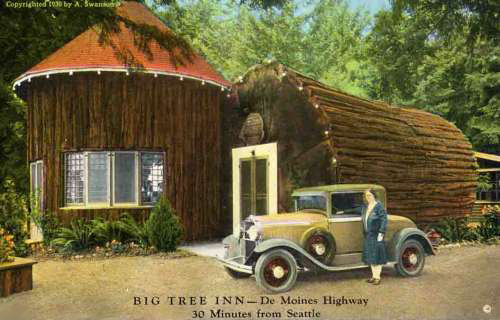
BigTreeInnca1930

The two managed to make a success of the venture, running it as a seasonal business for 20 years. A 1930 postcard shows Katherine standing in front of the Big Tree with her new Oldsmobile.

It was a popular destination for parties of city dwellers wanting chicken or steak dinners – or other dishes listed on the menu shown above such as Minced Ham and Pickle Sandwiches. In 1925 a Seattle newspaper advertised the Big Tree as “The Most Unique and Attractive Summer Resort in Washington” – On Des Moines Highway – Family Chicken Dinner, $2.00 – Special ½ Fried Chicken, on Toast, 50c. Not necessary to phone. We are always ready to serve.”

The Big Tree Inn’s location on a heavily traveled highway between Seattle and Tacoma was essential to its success, so when the highway was rerouted in 1938 the Big Tree Inn followed. The Swansons sold it in 1944. The building survived a bad fire in 1946 and was back on the market five years later, described as a “summer gold mine on main hiway” that was “ideal [for] couple management.” What happened to it after that I don’t know.

© Jan Whitaker, 2013

5 Comments

Filed under odd buildings, roadside restaurants

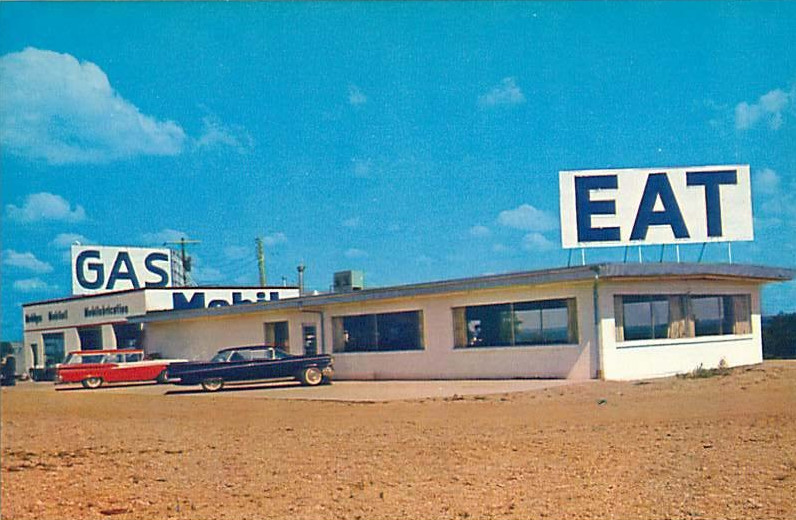
“Eat and get gas”

EatandGetGasMO

When I first encountered that jokey phrase as a child I thought it was amazingly clever and funny. So did many adults, evidently, because over the decades numbers of roadside eateries adopted it as a catchphrase. Even as late as 1976 Stuckey’s was using it on a billboard near Dallas. A roadside gas station/café outside Omaha bore the equally cornball name Tank and Tummy.

AncestryChildressTXcafe

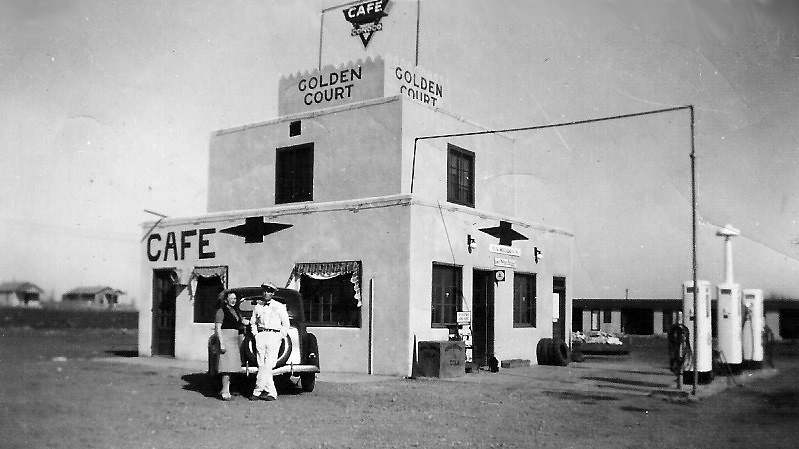
It wasn’t long after thousands of Americans acquired cars and took to the roads in the 1920s that all kinds of roadside businesses popped up to serve them. They ranged from campgrounds in farm fields to tourist homes and cabins, gas stations, tea rooms, and cafés. The Depression failed to stifle the urge to travel by car while inspiring thousands to try to make a living from passing traffic. Among the ideas included in a dispiriting little 1937 pamphlet called The Roadman’s Guide (“A Valuable Book of Money Making Formulas, Recipes, Ways, Plans and Schemes”) were carnival games, refreshment stands, and “eating joints.”

AncestryOzarkTavernWestphaliaMO

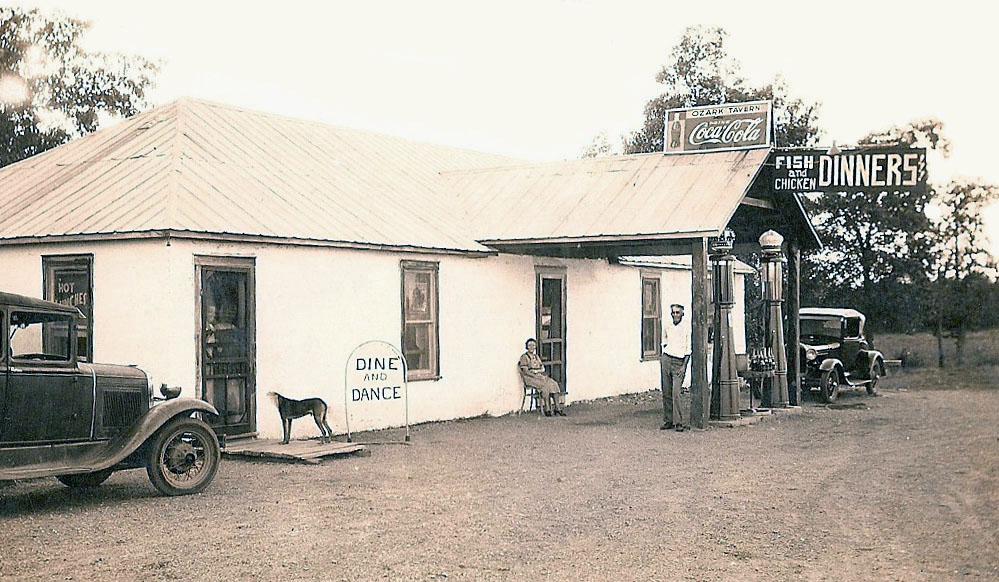
The gas station/restaurant combination was a popular one, often further combined with a gift shop or rooms for overnight guests. The logic is the same one-stop-shopping idea used by department stores: get customers to stop in for essentials and they may buy other things they didn’t even know they wanted. In Taunton MA in the 1920s, the Marvel Lunch and Filling Station not only had chicken and duck sandwiches on offer but also advertised “Stop and See the Trained Bears.”

Although it did tend to render them less refined, some tea rooms were linked to gas stations. Yet Duncan Hines’ 1937 edition of Adventures in Good Eating for the Discriminating Motorist gave a slightly grudging nod to The Old Elm Tree near Fremont OH, indicating “Just a wayside place with filling station adjacent but they serve a mighty good steak and chicken dinner, as well as all kinds of sandwiches and salads.”

Among those who tried combining gas and eating in the Depression – and succeeded – were Harlan Sanders and Gus Belt, respectively founders of Kentucky Fried Chicken and Steak ’n’ Shake.

AncestryTrouttCafeWoodlawnIL

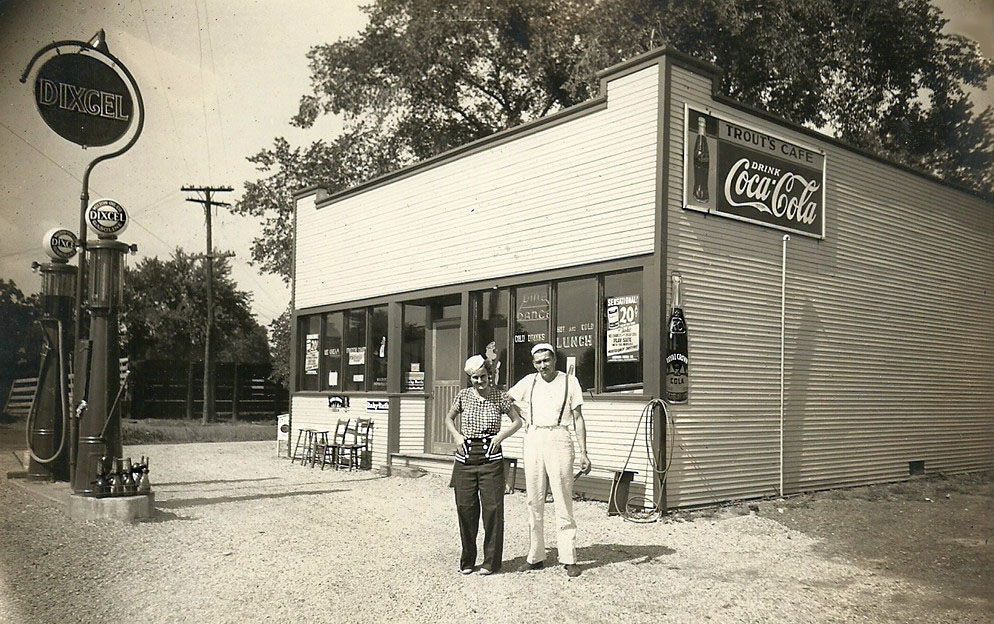
Which came first in these combined ventures — the gas station or the restaurant? I’ve decided that in most cases it was – and still is – the gas station. And that might account for why so few roadside dining spots earn a reputation for fine food. Consider chains such as Stuckey’s, Nickerson Farms, and Dutch Pantry.

With superhighway construction in the 1950s and 1960s, highway stops institutionalized paired restaurants and gas stations, though by this time they were housed in separate buildings. In 1961 the Stouffer Corporation teamed up with Standard Oil of Ohio to test automat-style restaurants. They were not a success, but generally highway self-service food courts have proved acceptable to the motoring public.

Like many of the eat-and-get-gas highway oases before them, interstate service plazas also do duty as truck stops. But that is the subject of a future post.

© Jan Whitaker, 2013

10 Comments

Filed under roadside restaurants

Celebrity restaurateurs: Pat Boone

PatBooneDine-O-Mat

Few celebrities become deeply involved in the restaurants that bear their names. That was true of the singer Pat Boone, who was known to visit his namesake restaurants occasionally and to sing and sign autographs at openings. How much good his – or any celebrity’s – connection does for a restaurant is debatable. Neither Pat Boone’s success as a performer nor his pro-family, clean-cut, Christian image saved the ventures he lent his name and money to.

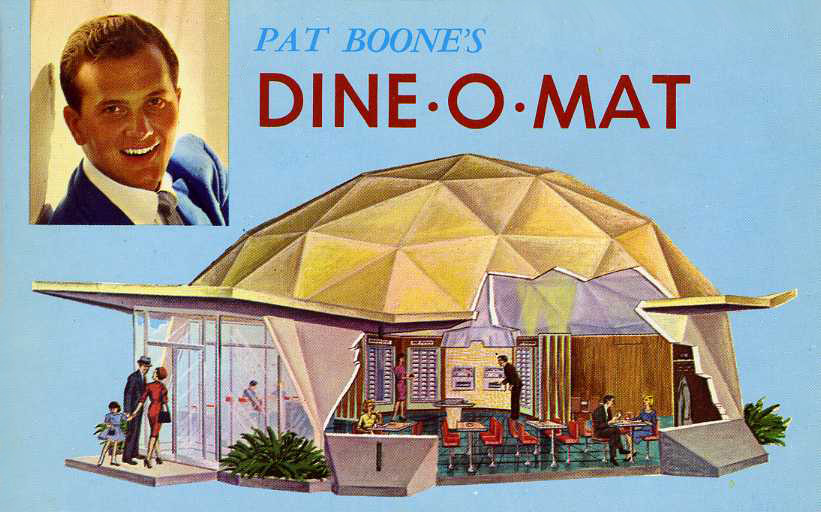
Pat Boone’s Dine-O-Mat appears to have barely gotten off the ground despite what publicity referred to as its “space age” design. “This . . . new type of fully automatic roadside restaurant is destined to be an important landmark on highways all over America,” boasted a 1963 advertisement aimed at investors. The initial plan was to build 100 of the restaurants by summer of 1964, but few seem to have been constructed.

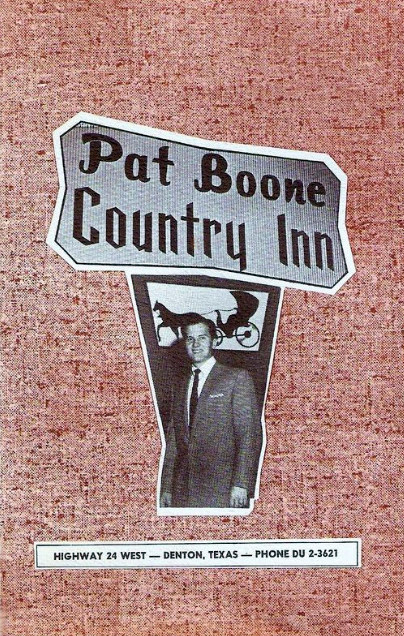
PatBooneCountryInn1959An earlier disappointing experiment in restauranting, Pat Boone’s Country Inn, in Denton TX, closed a mere four years after opening in 1958, even though Boone was connected to the town because of attending North Texas State College there.

While the Country Inn was a conventional restaurant, Dine-O-Mats were designed to be “revolutionary.” Perhaps the New Jersey entrepreneurs who cooked up the Dine-O-Mat concept were inspired by Stouffer’s 1961 foray into selling frozen food from vending machines to Ohio turnpike motorists who reheated it in microwave ovens.

Little could Pat Boone and company know when they launched Dine-O-Mats in 1962 that Stouffer’s would announce less than a year later their intention to phase out the roadside restaurants after realizing that travelers only wanted “speed and price.”

Both Stouffer’s highway restaurants and Dine-O-Mats might be called automats. But unlike Horn & Hardart automats, coins put in a slot did not call forth ready-to-eat selections. Dine-O-Mats had only one employee on the premises, an attendant whose job was to keep the machines loaded with frozen food. Rather comically, the postcard above shows customers (and Pat) dressed in their Sunday best, yet they are “dining” in a dismal geodesic-domed hut surrounded by vending machines and two microwaves sunk into an imitation hearth.

Similar to Stouffer’s restaurants, Dine-O-Mats were to be located near “motels, service stations, shopping centers, bowling alleys, country clubs, amusement parks, factories, air and bus terminals and along major highways,” according to a 1962 prospectus. How many were ever built, other than the prototype on Route 46 in Little Ferry NJ, is unclear. There may have been a few additional ones in New Jersey and Georgia.

Since kitchenless Dine-O-Mats relied on cooked food supplied by an offsite commissary, the scheme made sense only if deliveries could reach multiple outlets easily. In 1964 construction was to begin on a unit in Augusta, Georgia, but the project was delayed because of company “reorganization.” It was to be part of a group of Dine-O-Mats in Albany, Macon, and Savannah, but whether any of the Georgia restaurants opened I cannot determine.

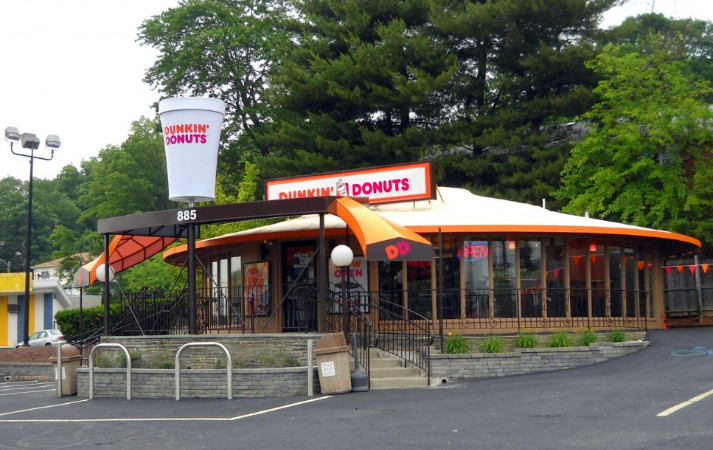
PatBooneDunkinDonutsNPlainfieldNJIn 1965, when the Augusta construction was slated to begin, a newspaper report announced, “The Pat Boone Restaurant Corp. has revised all plans and has just now completed reorganization with new, modernized plans for its restaurants.” Though it’s hard to imagine what could be more modern than “space age,” it’s possible the geodesic dome had been scrapped and that the North Plainfield NJ Dunkin Donuts pictured here was once a Dine-O-Mat as some people believe.

The company’s confusing advertisements for prospective investors required differing minimum investment amounts ranging from $2,500 to $10,000 for a “limited (inactive) partnership” in April of 1963, to $15,000 to become an “area controller” in October, then asking $10,000 for an “investment opportunity” in March of 1965. Did anyone ever get the 10% to 13% returns that were estimated?

© Jan Whitaker, 2013

15 Comments

Filed under chain restaurants, proprietors & careers, roadside restaurants, technology

Roadside attractions: Toto’s Zeppelin

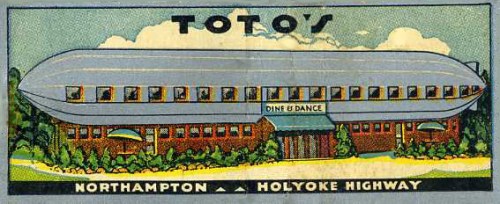
toto'sAs alcoholic beverages made their return in the early 1930s, supper clubs and roadhouses offering meals, entertainment, and good cheer sprang up on highways and byways across the nation. Eager to attract customers, some adopted unusual designs that, on the surface at least, promised something out of the ordinary.

Toto'smenuOne of them was Salvatore “Toto” Lobello’s place on the main road leading from Holyoke to Northampton MA. It looked like the German Graf Zeppelin that was always in the news with tales of travelers gliding through the sky while enjoying its deluxe dining and sleeping accommodations.

The fantastic building was a type of roadside architecture of the late 1920s and 1930s commonly associated with California where sandwich shops and refreshment stands resembled oversized animals and objects ranging from toads to beer kegs. The zeppelin-shaped building was constructed in 1933 by Martin Bros., a well-known Holyoke contractor experiencing serious financial distress at that time. The nightclub apparently failed to open and, in 1934, suffered fire damage (for the first, but not the last, time).

In December of 1935, after months of trying to obtain a liquor license, Toto Lobello announced the grand opening of the Zeppelin. He solved the licensing problem by teaming up with Lillian and Adelmar Grandchamp who were able to transfer the license from their recently closed downtown Holyoke restaurant, the Peacock Club.

toto's1936The advertisement for the opening of “New England’s Smartest Supper Club” announced that drinks would be available in the Modernistic Cocktail Lounge, which was on the ground floor below the dirigible-shaped dance hall. With Web Maxon and his orchestra providing dance music, and a promise of “Never a Cover Charge, Always a Good Time,” the Zeppelin soon became a popular place for nightlife generally and for dinner parties of organizations such as the Elks and the Knights of Columbus.

Toto's1936ADVToto Lobello also had a confectionery business in Northampton located on Green Street across from the campus of the all-women Smith College. Like the confectionery, the Zeppelin became one of the students’ favorite haunts for the 3-Ds (dining, dancing, and drinking). According to an informal survey in 1937 the majority of Smith students liked to drink, preferring Scotch and soda, champagne, and beer. Toto’s ranked as a top date destination.

Toto’s Zeppelin served lunch and dinner and a special Sunday dinner for $1.00. On Saturday nights Charcoal Broiled Steak was featured.

One year after Toto’s grand opening the restaurant/nightclub faced a licensing renewal challenge requiring it to withdraw its application until unspecified “improvements” were made to the facility. But a more serious problem was about to emerge when dirigibles suddenly lost their appeal following the May 1937 Hindenburg disaster in which 36 people perished. Not too much later, in November of 1938, fire would also completely destroy Holyoke’s Zeppelin. In rebuilding, Toto chose a moderne style with a pylon over the entrance.

In the mid-1950s Salvatore Lobello, owing the state a considerable sum for unpaid unemployment taxes, filed for bankruptcy. He closed his Northampton restaurant, auctioning off all the fixtures in 1957. The building, at the address now belonging to a pizza shop, was razed. The Holyoke restaurant continued in business until 1960 when it was seized by the federal government for nonpayment of taxes. It briefly did business as the Oaks Steak & Rib House, a branch of the Oaks Inn of Springfield, before its destruction by fire in 1961. [above, facing pages from the drinks menu, ca. 1950s, courtesy of “a lover of the 1930s, cocktails, and zeppelins.”]

© Jan Whitaker, 2013

3 Comments

Filed under odd buildings, roadside restaurants

Famous in its day: Dutchland Farms

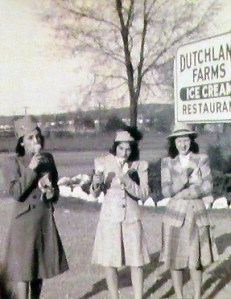
dutchlandHackensackThe Dutchland Farms story parallels that of Howard Johnson’s, its competitor and eventual conqueror. Both were chains of ice cream and lunch shops that began on Massachusetts roadways in the 1920s. But they experienced the Depression very differently. Howard Johnson’s expanded while Dutchland Farms shrank. Though Howard Johnson triumphed over its competitor, there is no doubt that Dutchland Farms strongly influenced HoJo’s development.

Unlike Howard Johnson’s, the Dutchland Farms chain grew out of a real dairy farm, established in 1897 by shoe manufacturer Fred F. Field. Years before the first Dutchland Farm dairy store – not yet a restaurant – opened in 1928, the dairy farm of the same name in Brockton MA had become nationally famous for its prize-winning herd of Holsteins. The ice cream produced by the farm in “28 flavors,” sometimes 30, was advertised as the only Grade A ice cream made in Massachusetts. (Most ice cream then was made from Grade B milk which has a higher bacterial count; now Grade B milk is mostly used for making cheese.)

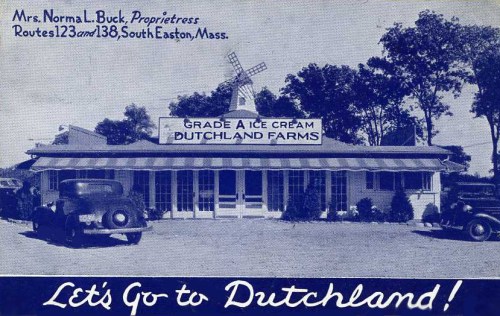
By 1933 the newly incorporated company had 50 roadside stores that sold milk, butter, and eggs, and also served toasted sandwiches, frankfurters, and fountain treats, as well as “Chinese Chop Suey” supplied by Hung’s Food Products Co. of Boston. Soon the menu expanded to include complete dinners. Menus displayed Dutchland Farms “registered” colors, orange, blue, and white, which also formed the color scheme for buildings. The canvas awnings on the white building depicted on the South Easton MA postcard below would have been in eye-catching orange and blue stripes.

DutchlandSouthEastonFifty was probably the greatest number of Dutchland Farms units in operation at any given time. In addition to eastern Massachusetts where most units were located, the company did business in  New Hampshire, Rhode Island, Connecticut, and New Jersey. Some restaurants were operated by the company itself but most were franchised, as was true of  Howard Johnson’s. Women formed 10 to 15% of Dutchland Farms proprietors, a large percentage for a restaurant chain.

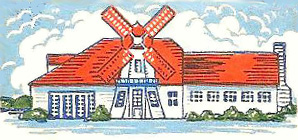
In addition to colorful awnings, Dutchland Farms buildings had two outstanding visual characteristics: orange roofs and decorative windmills which sat atop the roof or formed part of the building front. The roadside restaurants were situated on busy thoroughfares and both features were intended to attract motorists’ attention. Additional evidence of positioning for mobile customers were Dutchland Farms’ ample parking lots.

dutchlandfarmsIceCreamThe Depression was rough on Dutchland Farm operators. A dozen or more of the restaurants went out of business. Some proprietors shifted their allegiance to Howard Johnson. A Fairfield CT operator who opened a Dutchland Farms in 1935 switched to Howard Johnson’s after only a few months. Another, Louise Prout, co-proprietor of a Dutchland Farms in Lakeland NH and another in Pocasset MA, decided to go with Howard Johnson’s when she opened a restaurant in Cambridge in 1936.

Still other Dutchland Farms restaurants became independents. A proprietor near Newport RI rechristened his The Mile Post, while a Dedham MA Dutchland adopted the name of its proprietor, Mary Hartigan. The same fate would one day befall Howard Johnson’s. Louise Prout turned her Cambridge HoJos into The Clipper Ship, disguising the cupola, sheathing the front with dark paneling, and decorating the entry with wrought iron.

Dutchland Farms tried to reorganize its debts in 1939 but was sold to Howard Johnson’s in 1940. Johnson kept the orange, blue, and white colors but was barred from using the Dutchland Farms windmills on restaurants operating as Howard Johnson’s, and chose cupolas instead. However, some of the restaurants he acquired continued to do business as Dutchland Farms and, presumably, kept their windmills. The last Dutchland Farms restaurant I could find evidence of was in Quincy MA in 1951.

It is not obvious why Howard Johnson succeeded and Dutchland Farms failed. Was it because after Repeal Howard Johnson restaurants served alcoholic beverages whereas Dutchland Farms did not? Or was it due to how well the businesses were conducted? Or just luck?

© Jan Whitaker, 2012

20 Comments

Filed under roadside restaurants

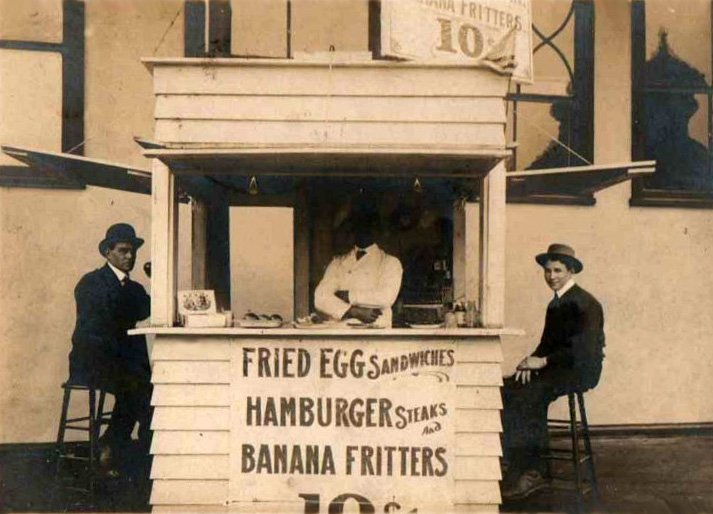
Image gallery: stands

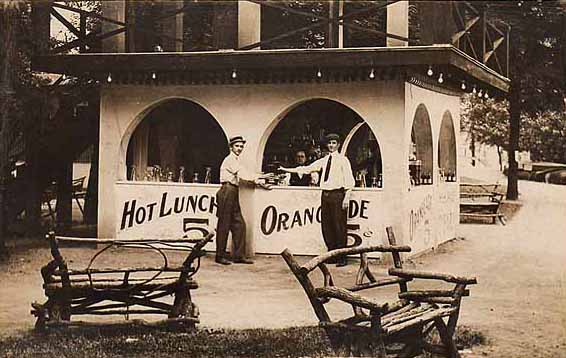
Perhaps the very earliest type of eating place is the stand which is largely in the open air on the street or in a marketplace. Who really knows how old they are? In this country today they are mostly found at fairs and carnivals, but they played a broader role in the 19th century and furnished the basis for other casual eateries such as standing-room-only quick lunchrooms, drive-ins, and fast food joints.

Remember that before some fast food chains started calling their units “restaurants” (what a shock it was the first time I heard McDonald’s called a restaurant!), they were called hamburger stands. Customers placed their orders at a walk-up window.

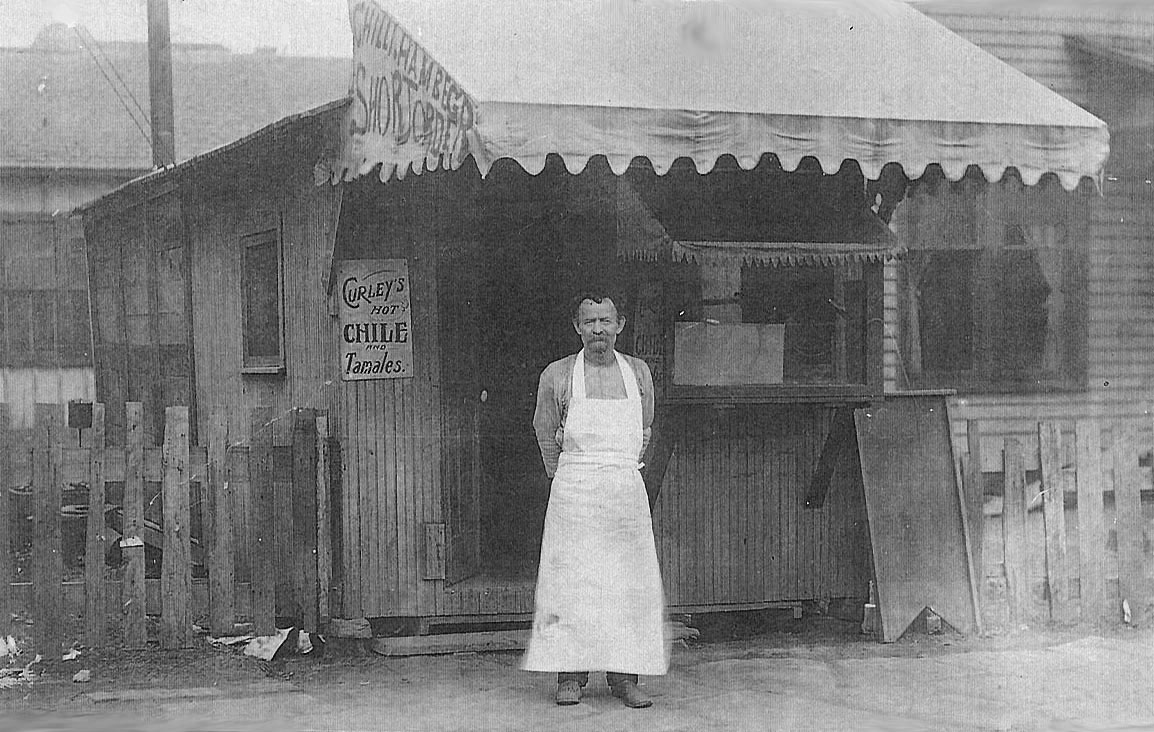
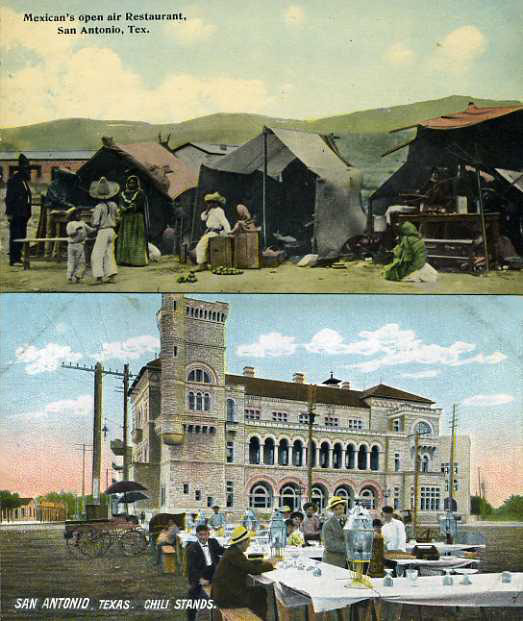
Stands were virtually synonymous with hamburgers and hot dogs in the 20th century, but through the decades they have also been places to get soft drinks (A&W rootbeer), coffee, doughnuts, ice cream, oysters, barbecue (Pig Stands), chili, and tamales.

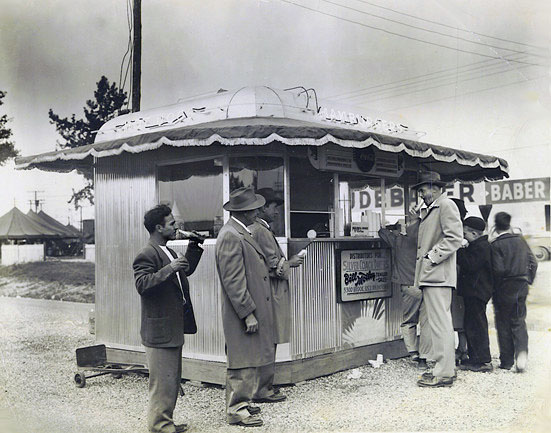
At a classic stand, patrons really do stand outdoors while eating, or take their food away to consume elsewhere. But, clearly this is not the only type. Coffee stands in New Orleans sometimes furnish a roof and tables and chairs, though no walls. Neddick’s sleek curvilinear hot dog stands in mid-century NYC had open fronts and no seating, but patrons could get out of the rain at least while they placed their orders.

Some stands provide tall stools for their patrons, perhaps out of a competitive spirit or because they serve one or more of their offerings in dishes that they don’t want to lose. Others might have benches nearby.

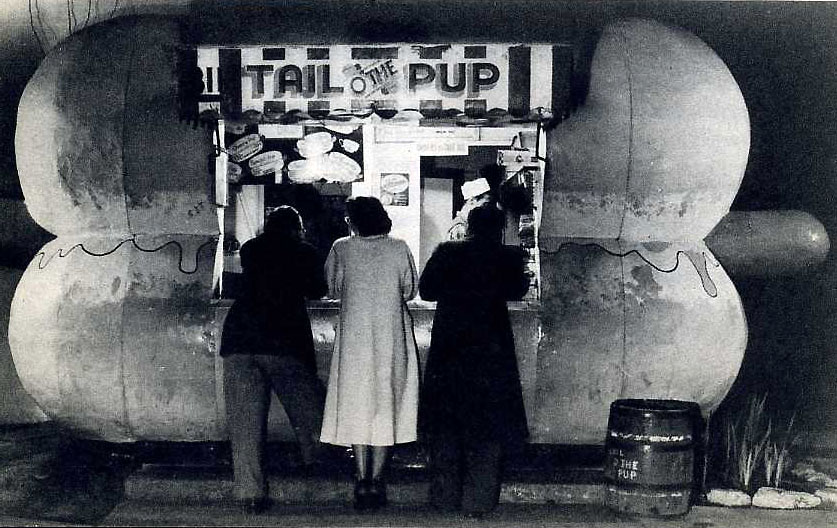
In southern California stands were often designed to resemble the food they purveyed, such as at the Tail o’ the Pup pictured here.

Stands have always been considered the lowliest of eating places. Amenities are in short supply and customers pay first and then get their food. Yet they are more democratic than elite restaurants. Typically, no one is turned away.

They have flourished in particular circumstances and settings. Produce, fish, and meat markets of the early 19th century were dotted with stands offering prepared foods. These were usually located under the market’s roof and did business year round, keeping a fire blazing in cold weather.

Stands popped up everywhere in new settlements or in those destroyed by natural disasters. An 1850 directory to San Francisco showed a number of “refreshment stands,” and even a few “refreshment tables” doing business. Booming oil and mining towns of the West had stands (and tents) furnished by enterprising camp followers. Stands were erected in empty lots following the Chicago fire of the 1870s and the San Francisco earthquake and fire of 1906.

Recently some open-air pop-up restaurants seem to have come close to reproducing aspects of earlier days of eating out, but mainly as an offbeat diversion for jaded sophisticates.

© Jan Whitaker, 2012

4 Comments

Filed under roadside restaurants

Footnote on roadhouses

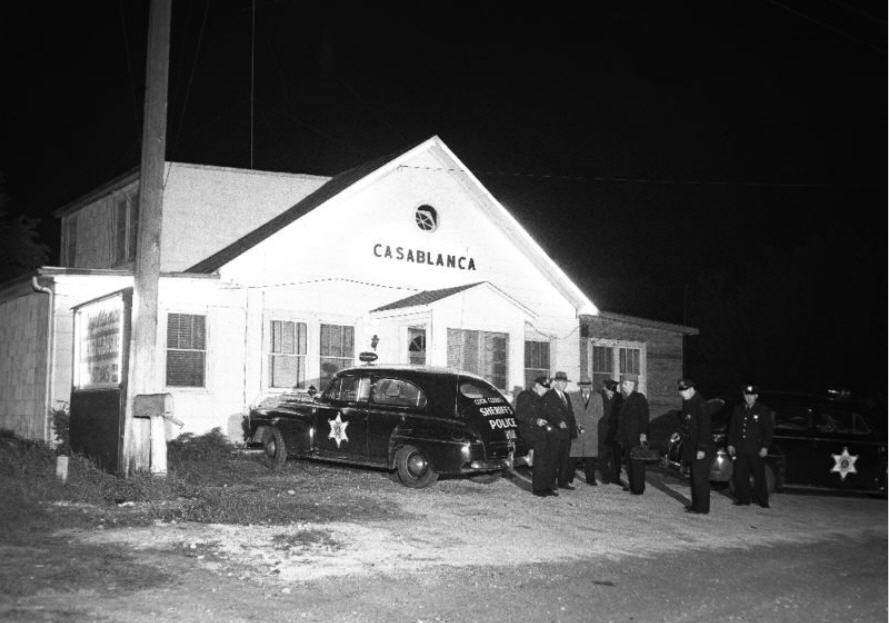
Is Casablanca one of the unluckiest names a restaurant could have? Granted, there is a fair amount of mayhem surrounding restaurants and cafes generally, at least judging from newspaper stories, but places with this name seem to have attracted more than their share of violent crime.

There is a fascination with the dark side of restaurants, witnessed by interest in revelations of filth, chaos, and bad tempers in the kitchens, not to mention the popularity of such topics as  gangster affiliations. This post is inspired by a reader living near Palatine IL outside Chicago, the location of the old Casablanca referred to in an earlier post on roadhouses. He wrote that he would “love to hear about the old-school ‘joints’ that used to pepper the ‘quiet’ suburbs.”

He is not alone. When I recently posted a photo of an old no-tell motel, the Coral Courts, on my hometown’s Facebook page, interest was notable. Likewise someone’s FB post recalling a horrid massacre at a roadhouse called Cousin Hugo’s just outside the borders of that formerly dry and ultra-proper suburb attracted comments like a magnet.

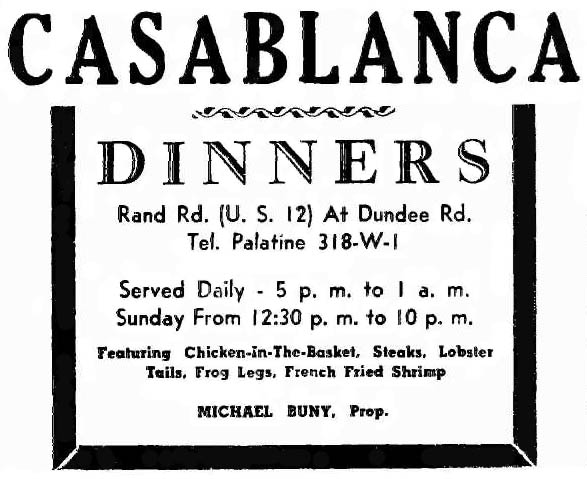
The Casablanca on Rand and Dundee Roads in Palatine was begun by Loretta Cooper, daughter of Polish immigrants in Chicago. She may have opened it in the early 1940s, but under another, unknown name. She would have been about 25 years old and already 7 years into her restaurant career. She started her first cafe, the Star Tavern in Chicago, around 1935 when she was only 18. Being underage she needed her older brother to act as the nominal manager.

Loretta proved to be a “survivor” in the restaurant business, owning a number of establishments over at least a 30-year period. She didn’t run the Casablanca for long, though, because by 1943 she had taken over the old Eddie’s Castle Café on Evergreen in Arlington Heights IL and renamed it Loretta’s Castle Café. It stayed in business until the late 1960s when the building was demolished. She and her husband Edward also ran a place in Arlington Heights called Cooper’s.

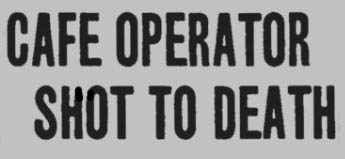
Loretta sold the roadhouse to Michael Buny around 1944 and he renamed it Casablanca after the Humphrey Bogart film that had come out two years earlier (thanks to his family member for this piece of the story). In May of 1949 he was killed in a holdup. When two hooded men entered the roadhouse one night with shotguns, he attempted to foil them by sneaking outside through the kitchen and getting a gun, evidently planning to ambush them when they left. He was shot by lookouts watching from the getaway car. Although the police rounded up suspects who went on trial in the early 1950s no convictions were secured. Years later one of the suspects was apprehended for home repair fraud.

Michael Buny’s wife and daughter ran the Casablanca after his death. In 1951, about two years after her father’s slaying, daughter Darlene was shot in the shoulder as she struggled with a tall scar-faced robber who broke into the café one night. It’s uncertain how long she kept the Casablanca going after that.

Quite by coincidence, I assume, a nightclub restaurant opened on Dundee Road in Palatine in the 1980s called Bogie’s, with decor inspired by the film Casablanca. Local history would have made for a riskier theme.

© Jan Whitaker, 2011

3 Comments

Filed under roadside restaurants

The checkered career of the roadhouse

Before the Civil War roadside drinking and eating places on the outskirts of cities were visited by people who enjoyed making them the destination of a leisurely buggy ride. In winter sleighs full of young people from Boston would go to North Cambridge or Arlington for steak dinners and dancing. Although they sometimes drew a rough crowd, such as the pickpockets and grifters who gathered for cattle fairs and races, these places were generally considered respectable.

As railroads spread across states such as Massachusetts following the war, fares fell and roadhouses drew an undesirable, rowdy crowd. They gradually began to fade away as cities grew. Yet their unsavory reputation lingered and grew more intense with suburbanization in the late 19th century. Minnesota legislated against roadhouses in 1915, and towns around Chicago fought them and often succeeded in having their liquor licenses taken away. Others, however, survived and became legit — for instance Busch’s Grove originally located on the outskirts of St. Louis.

The same reform fervor that attacked drinking (and prostitution) in roadhouses brought new life to them as they were turned into colonial-style “wayside” tea houses by middle-class women in the teens and 1920s. As a writer for Good Housekeeping magazine observed in 1911, these were just the sort of places to appeal to “quieter folks of good taste.” The most famous example, the Wayside Inn of Sudbury, Massachusetts, was bought in 1923 by Henry Ford to rescue it from its alcoholic past.

There were risks in opening a teetotalling establishment in an old watering hole. As the proprietor of a Pennsylvania roadhouse converted into the Huckleberry Inn discovered, old customers had a habit of coming by and demanding their accustomed drinks.

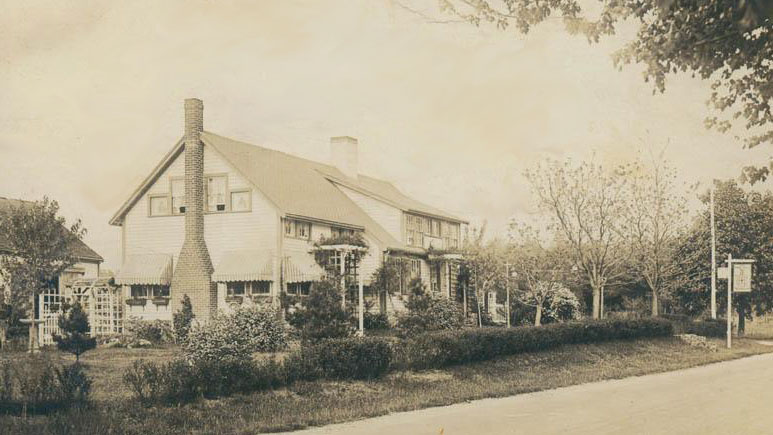
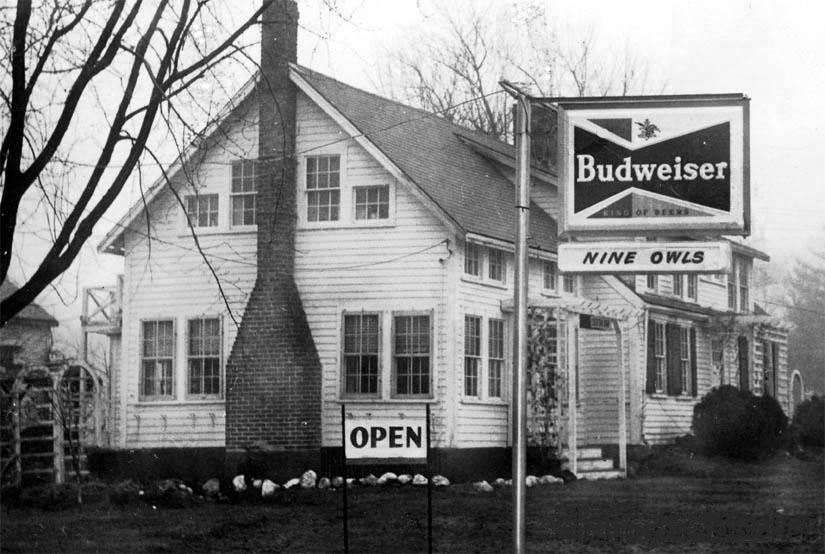
Was this the reason why liquor was found at the Nine Owls Tea Room in Pembroke, Massachusetts, when town police raided it in 1927? The Nine Owls, on Mattakeesett street, was run by Elizabeth Buxton, who had moved to town from Somerville with her family in the 1920s. Had it once been a roadhouse? It is not clear whether she founded the tea room or took it over from someone else, or exactly how long she was its proprietor. In 1932, a year after her husband was struck by a car and killed, she advertised for boarders but I have found no trace of her after that date.

As shown in the accompanying illustration, the Nine Owls eventually reverted to a roadhouse. In this photo, genteel elements from its tea room past such as window boxes, canvas awnings, and flower gardens are missing. A Budweiser sign is prominent. The reputation of the Nine Owls may have been pristine — but to me it has the look of a roadhouse in a Hollywood film noir. Its moodiness reminds me of the image of Casablanca in Palatine, Illinois, scene of a murder in 1949.

The Nine Owls was in operation under that name at least until 1970 when its owner, Edwin Mason, was killed in a motorcycle accident. At some later point the building burned down.

© Jan Whitaker, 2011

4 Comments

Filed under roadside restaurants