Category Archives: proprietors & careers

Diary of an unhappy restaurateur

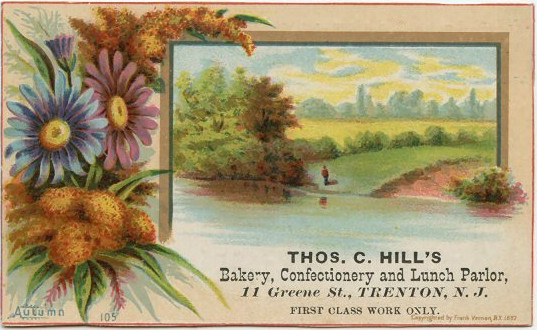
hill'sTrenton1882or1883Edmund Hill began working in his father’s bakery and restaurant full-time in 1873 when he was 18. His help was needed because of his father’s poor health. He wanted to go on to Yale, yet he devoted his career to the business, which was operated under his father’s name Thomas C. Hill.
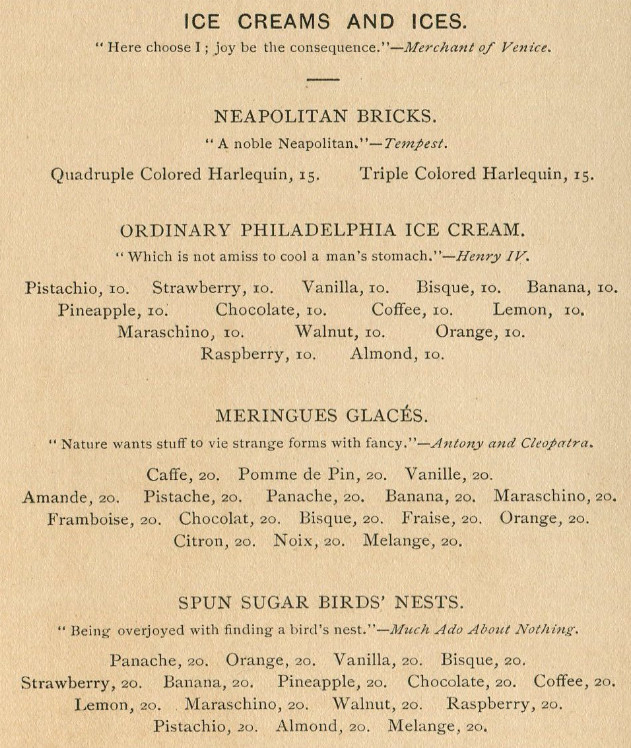
Hill'sMenuCardSAMPLEThomas Hill founded the business in 1860, rapidly becoming one of the city’s leading caterers and furnishing everything needed for soirees, suppers, and weddings except, as a 1866 newspaper story remarked, the brides and bridegrooms. Located in the center of Trenton, New Jersey, the restaurant advertised in 1882 that it was “the largest and finest between New York and Philadelphia” and could provide in its dining rooms or beyond all the fancy dishes of the day: boned turkeys, croquettes, rissoles, jellied meats, carved ice blocks, charlottes, spun sugar centerpieces, and bon bons. Hill’s hosted many organizations at its Greene Street location, including the Young Men’s Gymnastic Association whose members stuffed themselves in 1883 with many of the above plus a variety of ice creams, meringues, and walnut kisses. He specialized in fancy desserts, as is demonstrated by a portion of an 1883 souvenir menu shown here (courtesy of Henry Voigt — The American Menu).

Hill'sDiningRoomsEdmund’s diary from 1876 through 1885 has been transcribed and digitized by the Trenton Historical Society and makes fascinating reading. Among other things it gives rare glimpses into the running of a combined bakery, restaurant, confectionery, and catering business in the later 19th and early 20th centuries. Edmund was a reluctant restaurateur. As the Historical Society’s site says, “Edmund severely disliked, even hated, working in the restaurant business and he focused much of his energies elsewhere, such as pursuing real estate and civic affair concerns throughout Trenton.”

Despite Edmund’s lifelong disappointment over being forced to take up a trade, he ran a successful business which he diligently kept abreast with the progress of the times, remodeling the restaurant, increasing baking capacity, and installing electricity. In the 1880s Hill’s restaurant and catering service, almost certainly run on a temperance basis, was known throughout New Jersey. And it made money as his diary entry of December 31, 1881, shows: “Finished up accounts in store. We took in $18,146.60, against $15,294.40 last year. Very satisfactory all around.”

Edmund became an expert cake baker and could, and did, fill in for just about any employee. In 1880 he paid his German baker to teach him how to make the Vienna bread made popular by the 1876 Centennial Exposition in Philadelphia. (“Bargained with Karl to teach me baking for twenty five dollars.”) On at least two occasions he organized a series of public cooking lessons taught in Trenton by cookbook author Maria Parloa of New York. In his diary he wrote that he found her lecture on bass with tartar sauce, baked fish with hollandaise sauce, ginger bread and vegetables “very instructive.”
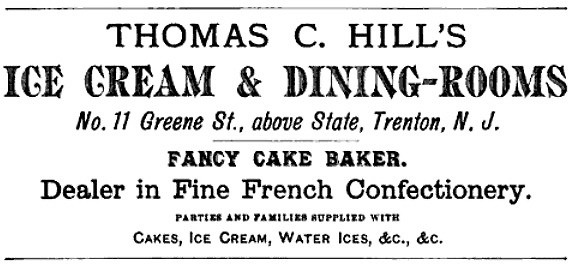
Hill'sADV1880When he traveled to New York City or other cities he often ate at leading restaurants and probably toured their facilities. He mentions going to Dorlon’s, the renowned oyster restaurant in Fulton Market as well as Delmonico’s, the Hotel Bellevue, the Astor House, and the Vienna Model Bakery, all in NYC. He went to Moretti’s – Charles Delmonico’s favorite place for ravioli – but evidently did not care for it. (“Do not like Italian cooking.”) He even attended the French Cooks Ball to check out the fare. (“Dresses and dancing were ridiculous. The tables were superb.”)

In addition to ensuring the reputation of Hill’s Restaurant and Bakery, he was a well-off, well-read man of the world who traveled to Europe several times, a successful real estate developer, a banker, a city councilman, an esteemed civic benefactor, as well as a devoutly religious family man. He was friends with famous people, including Leo Tolstoy, whose son he hosted at an honorary dinner at Delmonico’s. Yet, according to the Historical Society’s site, he never got over having to end his education to take over the family business and considered himself a failure.

He sold the restaurant building and all his catering equipment in 1905 while moving the bakery which continued in business for many years thereafter.

© Jan Whitaker, 2013
4 Comments

Filed under confectionery restaurants, proprietors & careers

Busboys

busboyHave you ever wondered how many items in a first-class restaurant are placed on and later removed from a table of two diners? Think of tablecloths, napkins, bread plates, water and wine glasses, candles, flower vases, six or more separate pieces of silverware for each, some of them replaced during the meal, salt and pepper shakers, condiment bottles, butter and olive oil holders, bread baskets, not to mention all of the food-bearing dishes in a multi-course meal . . .

In 1929 a highly systematized hotel chain that kept track of these things – probably the Statler – declared the number was 100. Most of the items were brought and removed by the waiter’s waiter, the busboy. (There were no busgirls then, few now.)

The busboy’s job also entailed ferrying heavy loads of dishes, glasses, and silverware – clean and dirty – to and from the kitchen which was often in the basement. And, should anything be broken or spilled by anyone, it was his job to clean it up. And to keep the waiter happy. In European restaurants, and perhaps a few in America, the waiter never entered the kitchen, this being delegated to his busboy.

Omnibus boy was the name of the position in the 19th century, meaning a restaurant worker who does all kinds of menial jobs. Around the turn of the last century it was shortened to busboy, and after World War I the longer word was rarely used. The word “boy” of course is routinely applied to holders of lowly jobs, all the more so if they are black or ethnic minorities as so often happens. Historically many busboys were in fact in their 30s and 40s.

The job can work out as an apprenticeship particularly useful for those who are learning English as an additional language. Many stories tell of those who began as busboys, such as Oscar Tschirky of Switzerland, maître d’hôtel of Delmonico’s and the Waldorf, who rose to high positions in hotels and restaurants. This was unusual. Mere survival was difficult enough in a position so strenuous and poorly paid. A bus boy revealed in 1920 that he received $15 a week plus meals  for working an 11-hour shift that ran from 7:30 pm until 6:30 am. Meals were no small thing to busboys, nor to other restaurant personnel. Some hotels and restaurants paid no wages to busboys, considering them in the employ of the waiters. In any case, waiters were, and are, expected to share their tips with busboys.

The classic European uniform for busboys – not often adopted in the US — consisted of a short black jacket, black tie (in contrast to the waiter’s white tie), and a long apron. Over time busboy uniforms have become varied, though usually inconspicuously so. However, in the 1980s busboys at Sonny Bono’s restaurant in Palm Springs wore T-shirts decorated with his picture.

© Jan Whitaker 2013

2 Comments

Filed under proprietors & careers

Greek-American restaurants

GreekrestaurantMarlboroMA

Ethnic restaurants are generally seen as places where people from cultures outside the U.S. provide meals similar to what they ate in their homelands. A high degree of continuity between restaurant owners, cooks, and cuisines is presumed, as in: the Chinese run Chinese restaurants in which Chinese cooks prepare Chinese dishes.

Questions are sometimes raised about whether, for example, Chinese restaurants in America have adapted to American consumer’s tastes to the point where the Chinese cuisine is not “authentic,” but few question how obviously true or historically accurate it is to assume that Chinese always cooked or served Chinese food.

History is rarely tidy. Chinese, Germans, and Italians cooked French food. Germans ran English chop houses. And people of almost all ethnicities — Irish, Italian, German, Croatian, Greek — cooked American food and owned American restaurants.

GreekPaul'sLuncheonette233Greek immigrants, in fact, have been especially inclined to run American restaurants which serve mainstream American food, with little suggestion of the Mediterranean. Typically they’ve been  the independent quick lunches, luncheonettes, coffee shops, and diners that are open long hours, serving breakfast, lunch, and dinner to working people. Many have been run under business names such as Ideal, Majestic, Elite, Cosmopolitan, Sanitary, Purity, or Candy Kitchen, rather than the proprietor’s name.

The emphasis on names suggesting quality or cleanliness is explained by the tendency of Americans in the early 20th century to brand Greek-run eateries as “greasy spoons” or “holes in the wall.” A negative attitude to Greek eating places is evident in the following piece of rhyme published in the Cleveland Plain Dealer in 1926 entitled “Where Greek Meets Greek”:

The other day I wandered in where angels fear to tread –
I mean the well known Greasy Spoon, where hungry gents are fed;
Where eats is eats and spuds is spuds, and ham is ham what am –
And the pork in the chicken salad is honest-to-goodness lamb.

GreekConstantineDrive-In

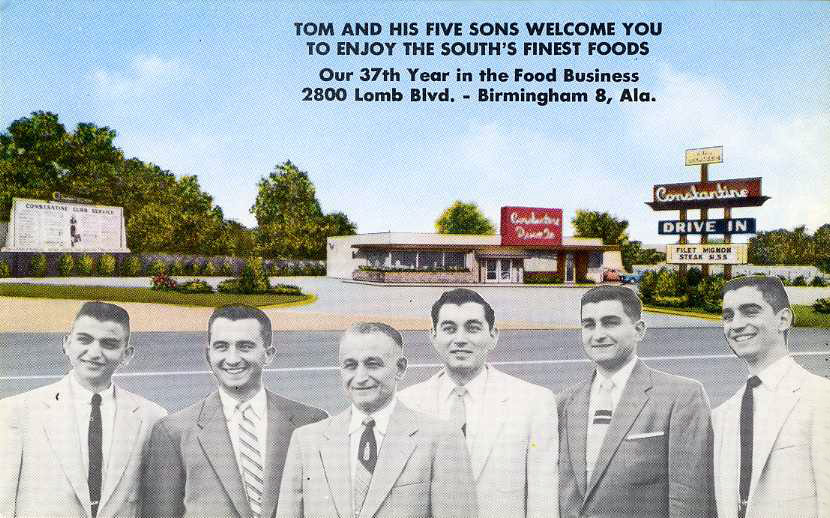
Certainly there were substandard Greek restaurants, but I’ve found that Greek-American proprietors had a propensity to plow profits into modern equipment and fixtures whenever possible.

Greek immigrants showed strong affinity with the restaurant business since the beginning of the 20th century when they began coming to the U.S. in large numbers. The reason for this is often attributed to a lack of English skills, but the first Greek restaurants, actually coffeehouses where patrons could linger, probably had more to do with the absence of women among early Greek migrants. Coffeehouses furnished community. Although in big Eastern cities many Greek restaurants continued to focus on Greek immigrants, many enterprising Greeks took the step of expanding beyond their compatriots. Some, such as Charles Charuhas who established the Washington, D.C. Puritan Dairy Lunch in 1906, were expanding or transitioning from the confectionery and fruit business.

While heavily invested in the New England lunch room business, especially in Providence RI and Lowell MA, Greek immigrants spread to many regions of the U.S, bringing restaurants to the restaurant-starved South. It is impressive that a Raleigh-based Greek trio opened its 15th restaurant in North Carolina as early as 1909. At that time, Greeks were said to be “invading” the lunch room trade in Chicago, operating about 400 places. Because of the simplicity of American cuisine, it was said that two months spent shadowing an American cook was all it took for Greek restaurateurs to pick up the necessary skills.

GreekTorchofAcropolisDallasOther successful Greek restaurateurs of the past century included John Raklios who at one point owned a chain of a couple dozen lunch rooms in Chicago. In New York City Bernard G. Stavracos ran the first-class restaurant The Alps on West 58th, established in 1907. The Demos Cafe in Muskegon MI was one of that city’s leading establishments. In Dallas The Torch of the Acropolis (pictured) had a 36-year-long run, closing in 1984, while the College Candy Kitchen was an institution in Amherst MA.

The children of successful Greek restaurant owners often preferred professional careers, but a new wave of Greek immigrants arrived after WWII, gravitating to diners, particularly it seems, in New Jersey. In 1989 the author of the book Greek Americans wrote that according to his estimate about 20% of the members of the National Restaurant Association had Greek surnames. And, as if demonstrating a flair for adaptation, according to a 1990 study, Greek-Americans were then dominating Connecticut’s pizza business.

GreekdinerDrimonesBrosNJ

© Jan Whitaker, 2013

54 Comments

Filed under lunch rooms, proprietors & careers, sanitation

Anatomy of a restaurateur: Kate Munra

With her Early-American-style ringlets and silk gowns, already outdated by 1900 when this portrait was taken, white-haired Katherine Sterrett Munra scarcely looks like a highly skilled hospitality professional. And yet she was.

She was a pinch hitter for the Oregon Rail & Navigation Company whose trains ran across Oregon through the rugged Blue Mountains. She worked at many of their establishments, plus oversaw food facilities at Oregon’s hotels and resorts as well as at a university and a department store.

In the 1870s, at the then-advanced age of 44, she moved to southern California from her hometown of Erie PA where she ran a boarding house and raised three children single-handedly. Her marriage had ended, probably through desertion or divorce. In the seven years she lived in California she married twice and ran two boarding houses. After her second husband’s death she married an accountant, Selkirk Munra, and they took a steamer to Oregon, assuming management of a hotel in Eugene.

Next they managed the O. R. & N.’s dining facility at Bonneville. When the railroad closed it down, they returned to Eugene as managers of another hotel there. We then find Kate running the student dining halls at the University of Oregon, Eugene. Next, in December of 1894 she went back to work for the railroad, choosing furnishings for the new log hotel and restaurant in Meacham. She managed it from its inauguration in January 1895 until it was destroyed by fire in 1902.

A publicity agent for the O. R. & N. may have been responsible for dubbing Kate “Grandma,” a dubious title commonly bestowed on women past 60. He heaped praise upon the Log Cabin, calling it a “frontier Delmonico’s” and a “mountain-gulch Waldorf ” where the rugged West melded with the “refined luxury of the metropolis.” “Cabin, tables, linen, china, silver, glass and waiter-girls are all the perfection of neatness and cleanliness, and the cookery is as dainty as that of the daintiest old-time private family,” he wrote. Although Kate learned to cook as a child and could have prepared the meals, her role was to supervise the kitchen and dining room staffs.

After the Log Cabin burned Kate managed the railroad’s hotel at Huntington OR, and then a private resort at Hood River called the Country Club Inn. In the winter of 1904, when the inn was closed for the season, she presided over the opening of a tea room at Portland’s Olds-Wortman department store. She might well have retired at this point, but in 1905 came an announcement that she would act as housekeeper for the Hotel Sommer in La Grande OR. She was 75.

Eventually she did retire, joining her daughter’s household in Portland and living until age 92. She was a suffragist and friend of Oregon suffrage leader Agnes Lane. In recognition of her pioneering role in Oregon’s development a peak in the Blue Mountains was named for her in 1915.

© Jan Whitaker, 2012

Other posts on restaurant women:
Richards Treat cafeteria
Miss Hulling’s cafeteria
Anna de Naucaze
Harriet Moody
Romany Marie
Mary Alletta Crump
Afro-American women
The Maramor
Mary Elizabeth’s
Women culinary professionals
Alice Foote MacDougall

2 Comments

Filed under proprietors & careers, women

Anatomy of a chef: Joseph E. Gancel

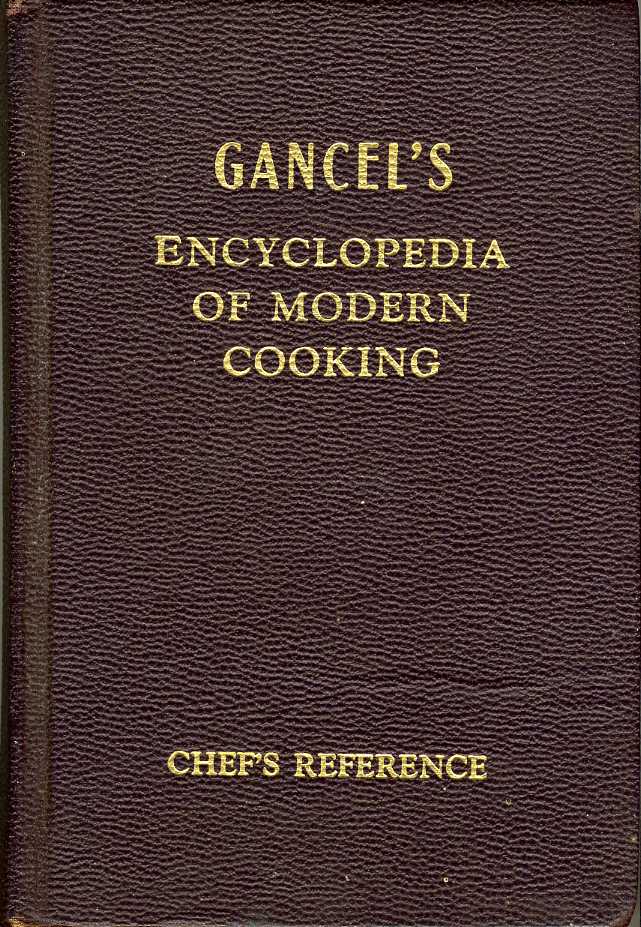
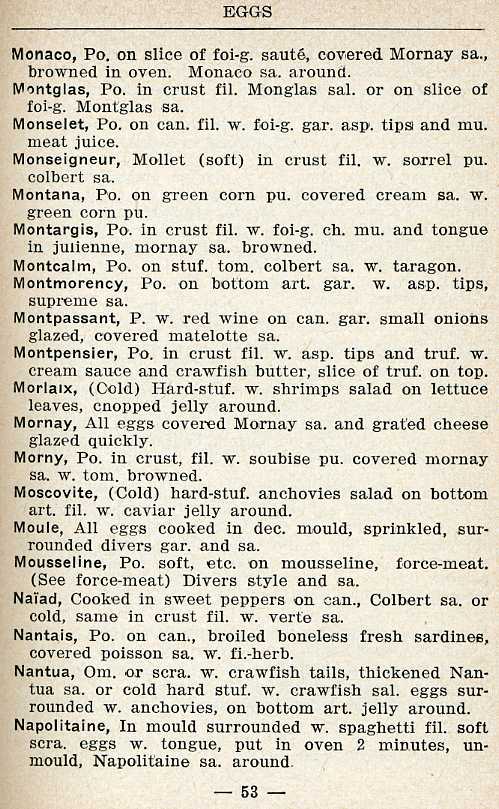
At an antiquarian book show last weekend I picked up a copy of Gancel’s Encyclopedia of Modern Cooking originally published in French in 1918, with an English version in 1920. Gancel’s Encyclopedia was an enlarged and enhanced version of his 1909 Ready Reference of Menu Terms which he compiled to assist waiters in explaining to diners the bewildering number of dishes, mostly in French, found on menus of the best restaurants of that time.

Joseph E. Gancel was a Frenchman who had a long career working in hotels and restaurants in the United States, France, and Belgium, as well as clubs and organizations such as the Brazilian Embassy in Brussels and the Press Club in Paris.

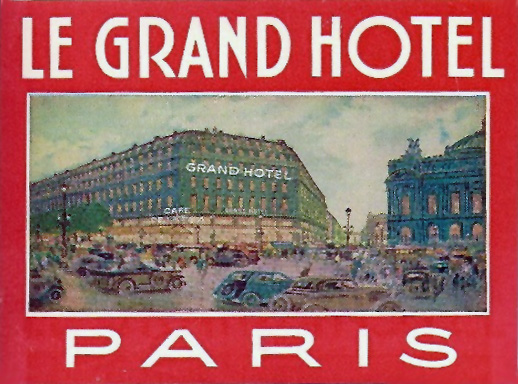
In 1874, at age 12, Joseph began his culinary apprenticeship in Rennes, France. In the 1880s he worked in the kitchens of European hotels such as Paris’s Grand Hotel and restaurants such as the Café de la Paix and the Moulin Rouge in Paris and the Antwerp branch of the Paris oyster house Rocher de Cancale.

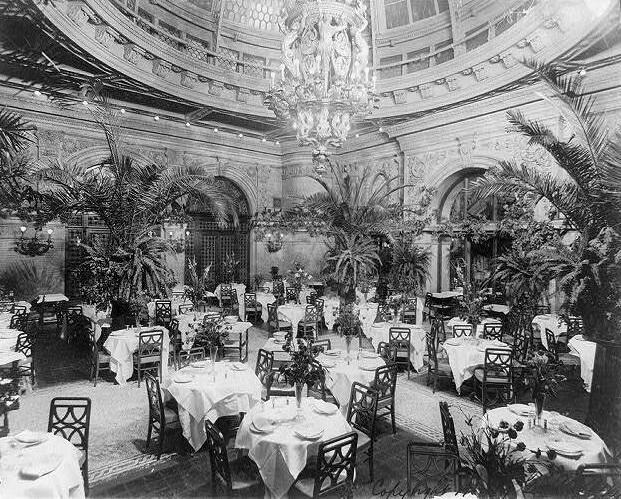
In 1892 he immigrated to the United States with his wife and five children, finding work at the Waldorf-Astoria [pictured], the Plaza, Sherry’s, and others. He worked at many places; I’ve counted 21 and I’m sure the total is greater. When he published his 1920 edition of the Encyclopedia, he was about 58 years old and living in San Francisco where he was a member of Cooks’ Union Local 44. The self-published book, mailed from the author’s lodging house, cost $2.50. I hope he made some money from the book – evidently he had not become rich as a chef.

Just how confusing menus could be is indicated by the number of egg dishes included in his 1920 book: 477! To keep the book pocket-size he had to do a lot of abbreviation, leading H. L. Mencken to say, rather wryly, “His terse, epigrammatic style touches the heart.” Readers trying to make sense of the above sample page might like to know that . . .
art. = artichokes
can. = canapé
dec. = decorated
foi-g. = foie gras
gar. = garnished
po. = poached
pu. = puree
sa. = sauce
sal. = salpicon (a filling of chopped meat, fish, or vegetables)

There are some curiosities in Gancel’s Encyclopedia. Only a handful of Asian menu items are described. He pretty much dismisses Asian cuisine with the sentence, “Culinary art is very poor in China and Japan.” Yet there is room in the book for esoteric dishes such as Sauterelles Rôties, which I must remember never to order. At least I now know how to eat Roast Locusts (“When cold, take off head, wings and tail, eat same as shrimps.”) and how to store them (“Salted locusts can be conserved in a jar, covered with mutton grease.”)

The Encyclopedia also reveals that Gancel was an advocate for kitchen workers. He was quite unhappy with conditions found in most hotel and restaurant kitchens. Noting the stark contrast between magnificent dining rooms and the squalid subterranean areas where meals are prepared, he wrote, “When you see the cooks come out of the basement kitchens, pale and very often rheumatic, it is no wonder that they are so, considering that they have been shut up in such an atmosphere, forced to inhale the gas from the range and the fumes generating in the cooking utensils. . . . Give to these men sanitary, hygienic, well lighted, and ventilated kitchens. Such would be an act of humanity as well as a public necessity.”

I agree.

© Jan Whitaker, 2012

5 Comments

Filed under proprietors & careers

Famous in its day: Richards Treat Cafeteria

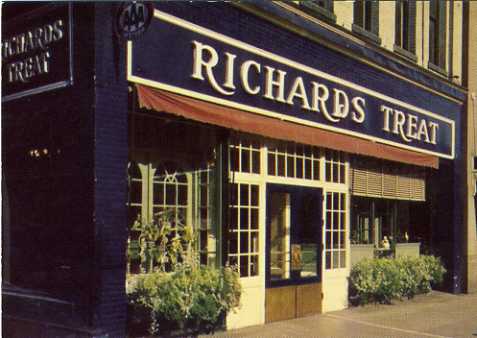
With its ham loaf and chicken pot pie, the Richards Treat Cafeteria on South Sixth Street in downtown Minneapolis was akin to other cafeterias and restaurants run by women, such as The Maramor in Columbus, Miss Hulling’s in St. Louis, and the Anna-Maude in Oklahoma City. Like its sisters, the Richards Treat was not known for culinary innovation but for preparing home-like dishes from scratch using fresh ingredients cooked in small batches.

The Richards Treat was opened in 1924 by two home economics professors at the University of Minnesota, Lenore Richards and Nola Treat, who ran the successful enterprise until 1957. The two met in 1915 when they both taught at Kansas State Agricultural College in Manhattan KS. They became close and decided to arrange their lives so they could work and live together from then on. “I am not and never have been married,” each wrote in 1923 when applying for passports prior to a European tour.

Nola Treat [pictured, 1923] had some experience in running cafeterias before 1924. She had set up a high school cafeteria in Decatur IL in 1911 when many schools provided no meal service. Following that she inaugurated student cafeterias and institutional management programs at several Midwestern state colleges and universities. Apparently she was well aware that many people disliked cafeterias, publishing an article titled “Why Cafeterias Fail” just months before opening her own. In it she said that it was unusual to find the sort of cafeteria which was “so attractive in appearance, and which serves such good food, that the most fastidious people will go to it.”

Perhaps that was why Richards and Treat always paid such close attention to their restaurant’s decor, which had little in common with the typical cafeteria’s institutional appearance. Theirs more nearly resembled a tea room with its antique cupboard of curly maple, pewter objects from the couple’s collection, and other decorative pieces brought back from their travels. Each table in the main dining room, including the one where they ate their own dinner nightly, held glowing candles in candlestick holders or candelabra.

In their cafeteria they attempted to provide a home substitute for patrons who might be unable to get home for meals or who lived in efficiency apartments. “The atmosphere of the dining room – its quiet, order, cleanliness – contribute to a feeling of well-being and satisfaction in the food,” observed Lenore [pictured, 1923] in a 1941 address to the Home Economics Association.

Their menus featured American cooking as understood by the middle-class American-born mainstream in the mid-20th century. An April 1933 menu offered a special 50-cent dinner of Veal Loaf with Mushroom Sauce, Buttered New Asparagus and Carrots, and desserts such as Fresh Strawberry Shortcake or Devils Food Cake, accompanied by Coffee, Milk, or Buttermilk.

For 15 or more years the cafeteria supplied cakes for dining cars of the Great Northern Railroad. When they learned, quite by accident, that the cakes’ top layers had a habit of sliding off when trains went over mountains en route to Seattle, they substituted sheet cakes. Cakes, cookies, bread, and house-made candy were popular sellers at the cafeteria’s bake counter where, in the 1940s, they also sold Laguna Pottery from California.

The cafeteria became a place where lawyers, judges, professional men and women, and newspaper reporters gathered, leading restaurant guidebook publisher Duncan Hines to characterize it as “Educated Food for Educated People.” The slogan was adopted by the Richards Treat.

They expanded several times, seating 300 by 1944, and winning loyal patrons despite stiff competition from other cafeterias such as The Forum and Miller’s Cafeteria. They also ran a coffee shop in the Northwestern Bank Building. Throughout their career they received many accolades, served on the editorial board of Restaurant Management magazine, and held top positions in the National Restaurant Association. Their book Quantity Cooking, published in 1922, with three subsequent editions, became a basic text used by the US military in World War II and restaurants throughout the country into at least the 1970s.

© Jan Whitaker, 2012

3 Comments

Filed under cafeterias, proprietors & careers, restaurants, women

Maxim’s three of NYC

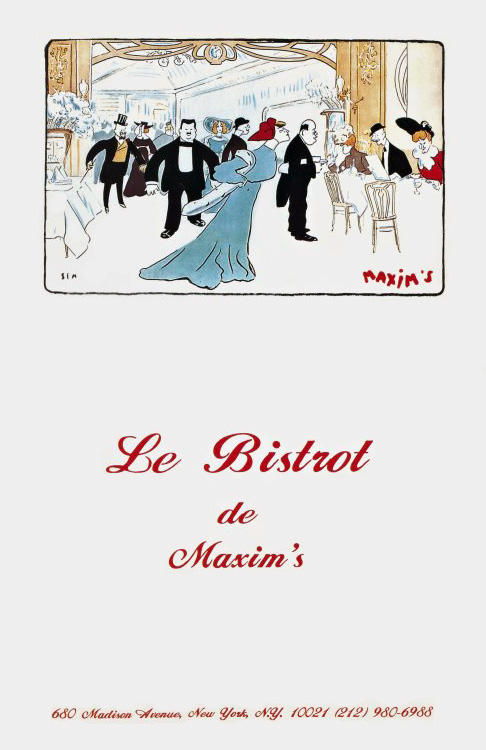
As some New Yorkers may recall, their city once boasted a certified branch of the famed Maxim’s de Paris. It opened in 1985 on two floors in the Carlton House on Madison and 61st. After seven years in which it went through many changes, it closed in 1992. It was grand and expensive, but despite its golden name never made it into the highest ranks of NYC restaurants.

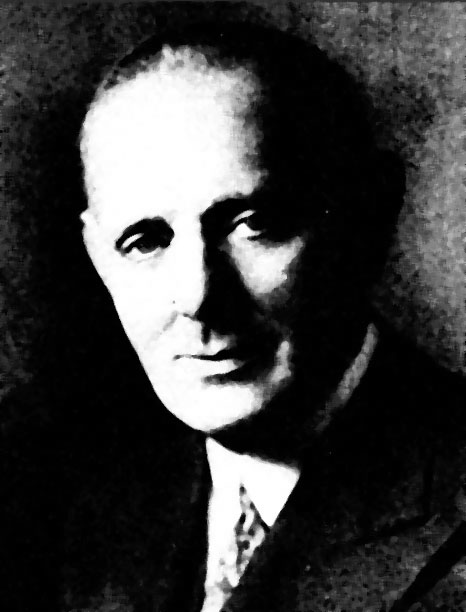
The proprietor of an earlier, independent Maxim’s in New York, Julius Keller [pictured below], once wrote that “the American people reveled in anything that savored of a European atmosphere,” but perhaps that was truer in his day than the 1980s. His Maxim’s thrived from 1909 until 1920 when it fell victim to wartime austerity.

It was one of the “lobster palaces” on and near Broadway that appeared before the First World War to cater to fun-seeking after-theater crowds. Typically the palaces adopted French names, poured champagne like water, and featured some form of entertainment as well as premium-priced chicken sandwiches and broiled crustaceans.

Keller, who liked to be called Jules because it was classier, was a Swiss immigrant who landed in New York solo in 1880 at age 16. After working as a waiter in a number of restaurants and hotels, and eventually owning a few, he found a promising location on 38th street between Broadway and Sixth Avenue. Activity was moving in that direction and he thought he could make a go of it despite the hundreds of thousands of dollars lost by four failed predecessors which included the Café des Ambassadeurs and the Café de France.

At first he operated under the name Café de France. Nobody came. So, being resourceful, he dressed his waiters like servants to Louis XIV, hired an orchestra, and, most importantly, borrowed the name of the famous Paris house of good food and naughty gaiety, Maxim’s. Success followed quickly. Each year on New Years Eve he gave away souvenir plates displaying the words, “Let us go to Maxim’s, where fun & frolic beams,” possibly lyrics from the 1899 French play The Girl from Maxim’s.

His clientele was made up of society figures, financiers, celebrities, and those indispensable “others” with money to spend. Maxim’s courtly tone had a tendency to slip occasionally, as was often the case with lobster palaces. On one occasion in 1911, 250 people coming from the annual automobile show jammed the place, causing quite a fracas when the staff had to forcibly eject them in the wee hours. But Keller drew the line at known criminals. He deliberately discouraged the patronage of gangster friends from the old days – when he had ventured into gambling and, as part of the operation of his Old Heidelberg, prostitution. He wanted Maxim’s to be first-class.

During his years operating Maxim’s Jules was known as “the father of café society,” and for providing male dance partners for lone women patrons in the dance craze of 1914. Among these was his discovery, Rudolph Valentino. He was proud of his restaurant. As he wrote in his 1939 autobiography Inns and Outs, his visit to the original Maxim’s convinced him “that the replica we had put together . . . suffered nothing from comparison.”

Given restaurant-world Francophilia and the fame of the Maxim’s name, it’s to be expected that there were namesakes scattered across the U.S.A. (even in pre-WWI Salt Lake City, a city not generally known for kicking up its heels). And it’s hardly surprising that there was yet another Maxim’s in New York, this one sprouting in the Depression among other Greenwich Village hotspots such as The Black Cat, The Blue Horse, and El Chico. Other than that it acquired new banquettes around 1931, I know absolutely nothing about it.

© Jan Whitaker, 2012

7 Comments

Filed under proprietors & careers

Service with a smile . . . somehow

Recently I read a NYT story about a new documentary film “Booker’s Place,” about a Mississippi waiter named Booker Wright. While working at Lusco’s, then operating as a de facto all-white restaurant in Greenwood, Wright appeared in a 1966 documentary called “Mississippi: A Self Portrait” in which people were interviewed about the  status of race relations at that time.

In the 1966 film Booker Wright gave viewers a glimpse of the indignities he experienced serving Lusco’s patrons who sometimes demeaned him or left him no tips. Following the airing of the show on television he lost his job at the restaurant where he had worked since he was a teenager. Patrons no longer wanted him to wait on them – he had broken the bubble by revealing his misery in playing the role of a happy-go-lucky black waiter.

No doubt he realized beforehand that his interview would put an end to the charade. After leaving Lusco’s he operated a restaurant of his own called Booker’s Place at which both whites and blacks were welcome.

As I read about the new documentary I immediately thought of a book called The American Colored Waiter, published initially in 1903 and revised several times. It is a manual written by John B. Goins, an African-American waiter in Chicago. Along with instructions on how to set tables properly, carve meat, and even restore rancid salad oil, Goins dispensed some poignant advice on how to “take it.”

No doubt all servers can relate to his words, but I believe they had special meaning to African-Americans, who were being eased out of the profession in Northern cities at that time.

With the eighteen years’ experience I have had I have found, from the beginning until this present time, that I have been getting the worst of it at all times …; and, my dear sir, if you expect to climb the ladder of success, expect always to get the worst of it while you are a waiter …

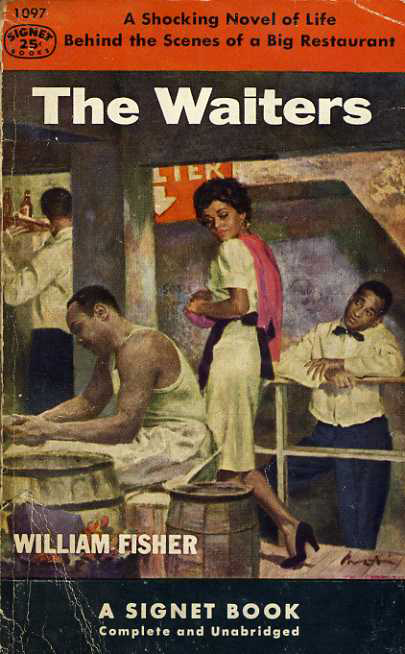
I also recalled a scene in the 1953 novel by William Fisher called The Waiters in which the book’s main character Asher Brown, a waiter at “the Fishbowl” on the seashore near Manhattan. Brown serves a party of inebriated white people and has the following exchange with one of them:

“Bring us some lobsters,” the man snapped.
“How’d you like them, sir?” Asher ventured timidly.
“Fat and ___” The man flashed a broad grin at his companions who scowled at Asher. “Listen, boy! Are you on the ball or not?”
Asher tried again. “Would you like them boiled or broiled, sir?”
“Bring us four large broiled lobsters,” the man commanded, in a morose growl. “And bring us some bread an’ butter right away, some of them biscuits.”
Asher had moved only a few feet away from the table, preparing to go to the kitchen, when the man called him back. “Hey, George,” he said importantly. Asher turned to face him with a tight-lipped expression. George, he repeated to himself. He oughta drop dead right here.

To read more about the making of “Booker’s Place: A Mississippi Story” see the blog written by his granddaughter Yvette Johnson.

© Jan Whitaker, 2012

3 Comments

Filed under miscellaneous, proprietors & careers, racism

Celebrity restaurants: Evelyn Nesbit’s tea room

Hundreds, maybe thousands, of celebrities have gone into the restaurant business when their careers waned. Their level of direct involvement may be high or low but all these ventures bank on the idea that a famous name will attract customers.

When Evelyn Nesbit opened her NYC tea room in May of 1921 she made sure that her name was prominently displayed. Located on West 52nd street just off Broadway, the sign saying “Evelyn Nesbit’s Specialty Shop” was visible from the theater district’s Great White Way.

She was then in her mid-30s, years away from her peak as a teenage artist’s model [above, age 16], “Gibson Girl,” Floradora showgirl, and millionaire’s wife. Her fame derived not only from her former good looks – from the years her image was displayed everywhere – but also from her involvement in a romantic triangle with prominent architect Stanford White and her insanely jealous husband Harry Thaw. After Thaw shot and killed White in 1906, she became notorious as a witness during the sensational “trial of the century.”

By 1921 she had divorced Thaw, had a son, returned sporadically to the stage, taken up sculpture, published a memoir, and married a second husband from whom she was estranged. Characteristically, she was in debt, owing the equivalent of a year’s income to a dress shop.

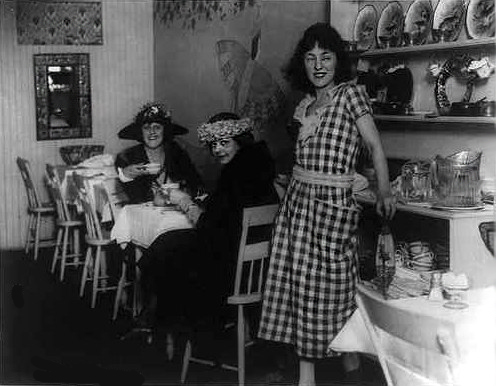
Her tea room enjoyed such a short, unsuccessful run that it is hard to learn much about it. Presumably she raised funds from friends to furnish it and pay the $300 monthly rent. She lived in two rooms upstairs. One account described the 100-seat tea room as “super-beautiful” and furnished with rich carpets, Oriental tapestries, and exotic plants, a description at odds with the homey scene in a 1922 photograph shown here.

In several interviews Evelyn made what sound like preposterous claims that she served food available nowhere else. “I am revolutionizing the restaurant business in New York,” she boasted. Her specialties included deep dish apple pie and ice cream which she said she made herself. “I amazed the chef, let me tell you, with what I know about cooking,” she said.

I found it surprising that she claimed to be a good cook; however I did discover that when she left the US for Paris in 1910, surely pregnant with her son, she told friends that she planned to rent a modest apartment on the outskirts of Paris, study sculpture, and do her own cooking.  Although she evidently hired someone else to cook for the tea room she said she furnished the recipes and did all the buying.

Things went wrong fast. During the first six months she (barely) survived three robberies, one kidnap attempt, one suicide attempt, and eviction for nonpayment of rent. On a second try in January of 1922 she was successfully evicted, after which she returned to cabaret dancing. In 1926, while performing at Chicago’s Moulin Rouge, she tried to kill herself again by swallowing Lysol. Her troubled brother took his own life two years later.

But Evelyn achieved happiness in later life and lived on to age 81. She moved to Southern California near her three grandchildren and their father, a pilot for Douglas Aircraft. She returned to her lifelong interest in art, teaching sculpture and ceramics at a community center. Easing her constant need for money, she received a $10,000 bequest when Thaw died in 1947 and was paid more than $50,000 for use of her life story in the 1955 movie “The Girl in the Red Velvet Swing.”

After many years away, she visited New York in 1955, reflecting on the great meals she had eaten during her heyday. Passing the former location of Sherry’s, she recalled “the wonderful terrapin they served.” She expressed surprise that she had managed to stay slim in her youth. “I ate so much in the old days I still wonder why I didn’t get fat,” she said referring to another performer’s, Lillian Russell’s, “upholstered” appearance. Heading off to a restaurant dinner, the ever-unsentimental Evelyn confessed, “You know what I really want to see most in New York? A nice big broiled Maine lobster.”

© Jan Whitaker, 2012

10 Comments

Filed under proprietors & careers, tea shops, women

Reuben’s: celebrities and sandwiches

Once upon a time there was a famous NYC restaurant called Reuben’s. Today there is a famous grilled sandwich of corned beef, Swiss cheese, sauerkraut, and Russian dressing on pumpernickel called a Reuben. Wouldn’t it make a nice story if the sandwich came from the restaurant?

The connection has been well researched yet it remains unresolved. For anyone who wants to examine the matter in detail, I recommend Jim Rader’s excellent account. He has the last word, inasmuch as there is one.

Two important points. 1) No one has come up with an early menu from Reuben’s that lists the Reuben sandwich as it is known today. It does appear under the name “Reuben’s Pioneer” on a 1971 menu but by then the sandwich could be found everywhere. 2) Despite being a publicity hound – and despite an Omaha woman winning a national contest for creating the sandwich in 1959 — founder Arnold Reuben never laid claim to it as his restaurant’s creation.

What is certain is that the fame of Reuben’s restaurant and delicatessen was built upon sandwiches — and the celebrity patrons who ate them.

I have seen a menu from Reuben’s said to be from 1922. Under the top heading “Reuben’s Famous Sandwiches” are listed 42 sandwiches. Nine are named after celebrities of stage and screen of that time. What is striking about the named sandwiches is that they cost more than the others. At the low end are ordinary sandwiches priced at 35 cents such as Salami, Corned Beef, and Liver Wurst. The special celebrity sandwiches range from 75 cents to a dollar, amounts that would then buy a whole dinner in many restaurants. The specially named sandwiches probably had more ingredients and may have been larger, but the aura of celebrity around them must have added a few cents too.

Naming sandwiches for celebrities was a publicity gimmick probably thought up by a press agent. The columnist Westbook Pegler claimed that Reuben’s initially acquired fame because of publicity generated by the audacious Harry Reichenbach who encouraged Arnold to sue a well-known New Yorker over the price of a ham in 1920. Thereafter, like Lindy’s and the Stork Club, Reuben’s was constantly in the nationally syndicated gossip columns of the 1920s, 30s, and 40s.

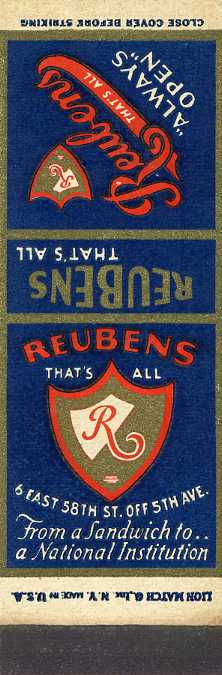
Arnold Reuben was a German Jew who, with his family, immigrated to the US as a young child around 1886. He helped out by peddling produce, then worked at a delicatessen. In 1908 he opened his own deli, which he later referred to as a “shtoonky little store.” By the end of the teens, he was thriving; he had incorporated his Pure Food Shop at 2102 Broadway and opened an eating place at 622 Madison Avenue which was popular with Broadway performers and stars from Hollywood. (Transitions from food store to restaurant are not uncommon and, as was also the case with Texas butcher shops-to-barbecues, often begins with sandwiches.) In 1928 he had a third restaurant in Philadelphia and was said to be “enormously rich.” Adopting the slogan “From a Sandwich to a National Institution,” he often told a story about the first celebrity sandwich he created – ham, cheese, turkey, cole slaw, and dressing — for a struggling young actress.

He experienced some financial difficulties in 1933 and filed for bankruptcy but only two years later was back on course with a bigger and better restaurant [pictured] to replace the one on Madison Avenue. Of critical importance to his comeback was the end of Prohibition. His opening announcement in the New York Times attested to this with a prominent display of the names of Reuben’s “friends,” seven liquor manufacturers and distributors.

In 1946 he opened a restaurant on West 57th near Carnegie Hall, with a front nearly identical to East 58th Street. Like his others it was open 24 hours. No doubt it, too, had a doorman who greeted patrons with the bywords “Reuben’s, that’s all.” Larger than the East 58th place, it was billed “A City in Itself,” and contained shops for delicatessen, flowers, chocolates, cigars, and theater tickets, as well as a perfume bar and a barber shop. Despite all, it silently disappeared a couple years later.

Arnold retired to Florida in the mid-1960s and sold the business, which he had turned over to his son to manage years earlier. Reuben’s in NYC continued under new ownership at various locations until 2001. A Reuben’s was also opened in Miami in the 1940s but I have not been able to determine its subsequent fate.

© Jan Whitaker, 2012

4 Comments

Filed under food, popular restaurants, proprietors & careers